
Environment
Will Toxic Lead Water be the norm in poor cities in America?
THE WESTSIDE GAZETTE — The officials will admit there is a lead crisis in the drinking water, in certain parts of the city in Newark New Jersey. This story appears to be similar to the one in Flint, because the city’s officials are in denial about the lead levels in the drinking water. Testing suggest Newark has some of the highest tap water lead levels of any large US city.


The officials will admit there is a lead crisis in the drinking water, in certain parts of the city in Newark New Jersey. This story appears to be similar to the one in Flint, because the city’s officials are in denial about the lead levels in the drinking water. Testing suggest Newark has some of the highest tap water lead levels of any large US city.
According to Mayor Ras Baraka’s statement, Newark city water is some of the safest and best in the state and the country. Water has not contributed to elevated levels of lead in our children’s blood.”
This is obviously not true, because back in 2016, 30 public schools had elevated water lead levels. That would mean that every child, adult, and school official had drunk the water, and there were traces of lead in their system.
In Flint, the city and state officials have admitted there was lead poisoning on a daily basis, and there appears to be other diseases such as, legionaries’ disease, and another half-dozen of other toxins found in the water. Residents who own a home in Flint have discovered their property cannot be sold, and is not worth anything.
The crisis in Flint could have been prevented if the Governor and state officials followed the federal law and EPA. It requires water systems which are sent through lead pipes must contain an additive that seals the lead into the pipe and the lead does not leak into the water.
The Governor was aware that the water in Flint had lead in the pipes. The change of water in the General Motors plant caused the car parts to corrode when being washed on the assembly line. The governor immediately took action to correct the problem.
“The Governor was appalled to hear that GM property was being damaged, so he jumped through a number of hoops and quietly spent $400,000 to hook GM back up to the Lake Huron water, while keeping the rest of Flint on the Flint River water. Which means that while the children and families in Flint were drinking lead-filled water, there was one – and only one – address in Flint that got clean water, the GM factory,” says filmmaker Michael Moore.
When a city is poor in America, no one appears to care if the residents live or die. At the GM plant in the same city, money and resources are spent to correct a problem, but where the poor people live nothing is done.
“Both (Newark and Flint) had city officials repeatedly saying there was no problem in the face of clear evidence to the contrary. Both affected low-income predominantly Black communities. And both required a citizen lawsuit to spur action,” says reporter Courtney Landwall.
In Flint an entire city is sick from a health condition that could have been avoided the same time, it was corrected at the GM plant. There is a water problem in Newark, and the officials
refuse to admit there is a problem, while it is killing the residents.
Lead exposure can cause cognitive dysfunction, cardiovascular and kidney problems, elevated blood pressure, and fertility issues. Children and pregnant women are most at risk, and many of these problems with lead in the water started in 2016, in Newark.
All over America there is toxic water problems in many major cities across the country, and the leaders deny that it exists. The wealthy and many major corporations get tax breaks, and the poor cities must cut cost, cut services, and lie to the residents.
None of this makes any sense in the richest country on the planet, but people and children are dying. It is up to the community organizers, community organizations, churches, and honest businesses to spread critical health information and speak truth to power.
This article originally appeared in The Westside Gazette.








Black Press
Oakland Coal Terminal Backed by Trump Would Be Bigger, Dirtier Than Promised, Says Report

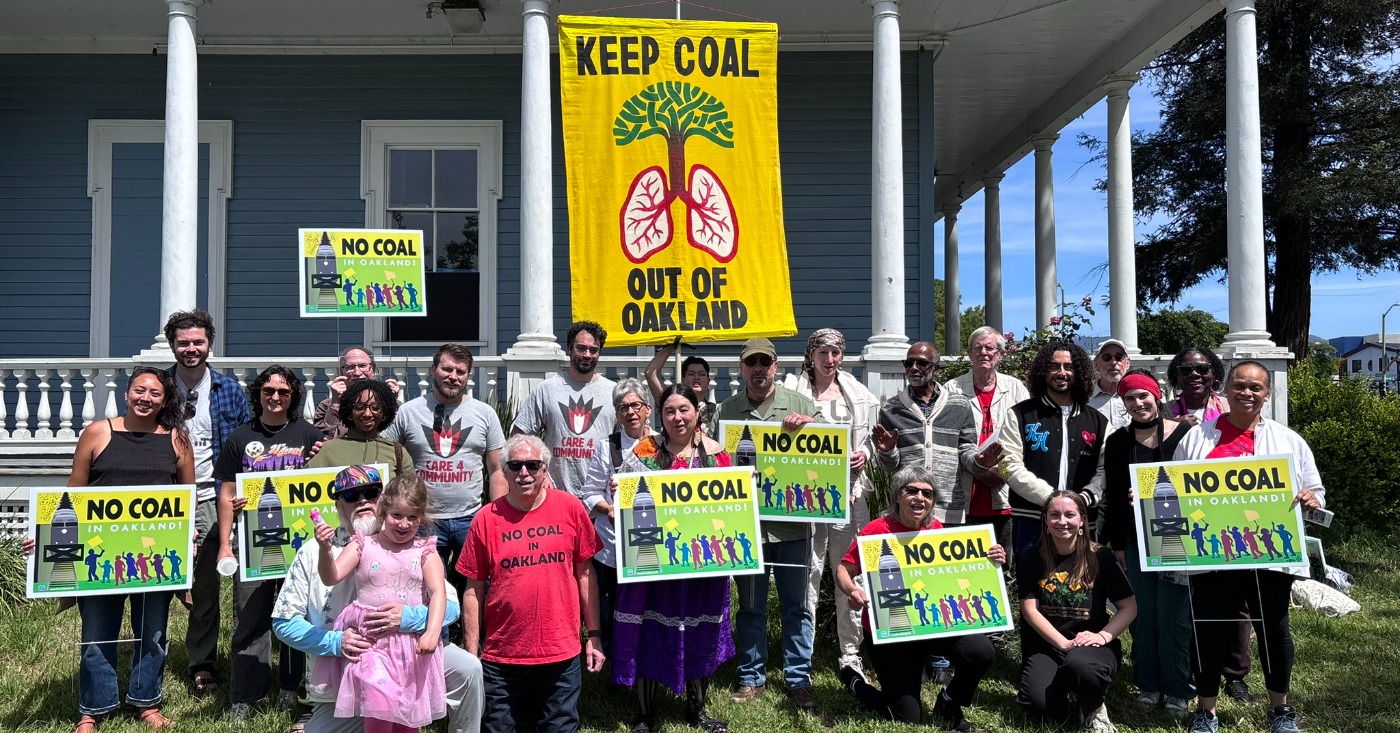
A recent feasibility study commissioned by potential investors says an Oakland coal terminal backed by President Donald Trump could export 13 million tons a year — three times the amount estimated in an earlier environmental review.
Surprisingly, the report also contradicts developers’ and project advocates’ repeated pledges that the coal would be stored in a covered terminal. Instead, the millions of tons of coal shipped annually from inland states to the West Gateway terminal in Oakland would be stored in “two open-air bunkers,” with about 150,000 tons of coal per stockpile, before being sent overseas, according to the recent report cited by the L.A. Times. (https://ruic.utah.gov/wp-content/uploads/2026/09/Port-Study-RUIC-Bulk-Commodity-Ocean-Terminals-Study.pdf)
Residents and clean air advocates have long expressed concerns that coal dust would worsen pollution in West Oakland and throughout the East Bay.
The proposed site of the Oakland Bulk and Oversized Terminal (OBOT) is located at the former Army base near the Port of Oakland, which developer Phil Tagami has been trying for years to turn into a shipping terminal despite determined community opposition.
Trump announced a $75-million investment in the project in June, about a third of its estimated cost. The new terminal would be the largest coal export site on the West Coast, transporting coal to Japan, South Korea, Taiwan, Vietnam and Malaysia, according to the Trump administration.
Opponents say a new terminal would undermine years of progress cleaning up the air in West Oakland, which has a history of disproportionate pollution and high asthma rates due to its proximity to the port and other industry.
According to No Coal in Oakland organizer Ted Franklin, who has been active for 11 years in the fight to stop the coal terminal, the report indicates that investors may be looking for a cheaper way to build the terminal.
“We were shocked but not surprised” by the report, Franklin said. “Basically, it seems that the plan now is to store open piles of coal, which is a less expensive project than creating a completely enclosed facility.”
The threats that the project poses are real, but it faces a lot of economic and legal hurdles, he said.
Coal production is in permanent decline worldwide, he said, wondering who was going to “invest money in an industry that has no future.”
Further, the project has not yet attracted big investors. “There’s no bank, no financing, no financial institution backing this,” he continued.
A major legal hurdle facing the project is the passage of Assemblymember Mia Bonta’s bill, AB 40, the Community-First Coal Review Act, signed into law by Gov. Gavin Newsom on Sept. 30.
The law requires developers of large-volume bulk coal facilities to complete a full Environmental Impact Report (EIR) under the California Environmental Quality Act (CEQA) before they can operate.
The law was specifically designed to block or delay the coal terminal project.
The report to potential developers was produced by consulting groups Norda Stelo and Wood Mackenzie in July and released this month. It was commissioned by the Rural Utah Infrastructure Coalition, made up of eight Utah counties that are considering investing about $43 million into the terminal to receive Utah coal.
The consultants produced their findings after visiting Oakland, examining engineering documents and holding discussions with Savage Cos., a Utah-based transport and logistics company selected to operate the facility
Research has shown that coal terminal operations can be dangerous to public health. The ports of Los Angeles and Long Beach moved away from open-air coal and petroleum coke storage three decades ago.
The report says that the site could process 12 million metric tons, or 13.2 million tons, of coal each year, three times more than the terminal’s approved environmental impact report from 2002 and its 2012 addendum. Neither document mentions coal specifically, but rather bulk commodities.
The coal arriving in Oakland could also be dirtier then had been previously stated, according to the report. Project officials previously said the terminal would handle only high-grade western bituminous coal from Utah, but the recent report says it will also handle Powder River Basin coal from Wyoming and Montana, known to be much dustier.
Nor does the report mention plans to cover the rail cars to prevent pollution, though project officials previously promised they would only utilize coal transported in covered rail cars.
“It appears the developers want to build something much bigger and more polluting than anything they previously revealed, either in court or to the West Oakland community,” said Colin O’Brien, deputy managing attorney at the nonprofit Earthjustice, speaking to the L.A. Times.
The report indicates that the project may be much more expensive and take longer to complete than anticipated. The Energy Department estimates the terminal will cost about $231 million, but the report places the price at between $430 million and $625 million.
The terminal will take 53 months to complete according to the report, significantly longer than Trump’s promise of exports beginning in 2028.
Ted Franklin’s column, “Utah Study Blesses Investment in Oakland Coal Terminal but Leaves Key Questions Unanswered” is available at https://nocoalinoakland.info/utah-study-blesses-investment-in-oakland/
Black Press
Ancestral Responsibility: Young Native Voters Fight Political Invisibility
NORTH DALLAS GAZETTE — Native American communities are mobilizing ahead of the November election to challenge long-standing systemic barriers and political invisibility. Recent data from the First Nations Development Institute refutes media narratives regarding Native voting patterns, showing that a majority of self-identified Native voters supported Kamala Harris in the 2024 election.

A mobilization is unfolding across tribal nations ahead of the November election. Driven by real data and a rising wave of young organizers, Native American voters are challenging systemic barriers to political power.
For generations, Native Americans have been treated as an invisible constituency in public life. Michael Roberts, president and CEO of the First Nations Development Institute, said that misrepresentations about native voters have clouded media narratives over recent years. Following the 2024 presidential election, relying on flawed national exit poll data, media placed some blame on Native Americans for the political shift.
“So while the media was trying to find a brown boogeyman on why Mr. Trump was in office … we had real data to show just the opposite,” noted Roberts.
A First Nations sample of 500 to 1,000 self-identified native voters revealed that 57 percent voted for Kamala Harris.
Roberts said the data showed attitudes reflective of the general public. Native voters are deeply concerned with inflation, the economy, affordability, and housing access. Yet they are also uniquely driven by tribal sovereignty, native languages, and cultural traditions. These cultural issues often drive them to the polls more than everyday pocketbook concerns.
Politically, Native Americans are not a monolith. With 475 tribes spread across 38 states and territories, traditional party lines are difficult to find. Roberts noted that analysts cannot view native voters through a simple black-and-white, Republican-or-Democrat lens.
Despite their potential to swing critical regions like Michigan and Alaska, native communities are largely ignored by major campaigns. First Nations data indicates that 50 percent or more of native voters have never been contacted by election campaigns. And nonprofit groups representing these communities remain severely underfunded.
Systemic barriers compound the neglect. Melissa Rogers, a professor of politics and policy at Claremont Graduate University, said upwards of 50 percent of native populations live within 20 miles of tribal homelands, debunking the myth of a sharp urban-rural Indian divide. Yet sadly, voting costs and distance barriers remain high on tribal lands.
Many reservations are so rural that residents must travel to distant county seats to collect mail or to register and vote. In Nevada, Duck Valley Reservation residents historically faced a 100-mile one-way drive to the Elko County seat just to cast a ballot or register in person.
Rogers noted that academic research shows tribal voting surges when registration and polling places are established directly on tribal lands.
Alternative options like mail-in voting face severe trust issues due to recent political attacks. Additionally, strict voter identification laws disproportionately disenfranchise native voters who often lack traditional physical addresses or state driver’s licenses.
In North Dakota, where the native vote is vital to a current Senate race, the state abruptly disallowed non-traditional addresses and post office boxes. Rogers warned that restrictive ballot deadlines, such as Arizona’s requirement that ballots arrive by election night, threaten to disenfranchise voters on the Navajo Nation due to slow rural mail delivery.
A historical skepticism remains, tied to past trauma. Rogers said federal government workers knocking on doors historically meant taking children, land, and resources from native households. The distrust extends to the census, which has long undercounted reservation populations.
A new crisis unfolds as federal proposals threaten to eliminate the American Indian and Alaska Native racial designations from official counts. Policy and funding decisions rely on these figures. Rogers warned that excluding native counts would devastate federal tribes.
In response, Native Organizers Alliance Executive Director Judith LeBlanc, a citizen of the Caddo Tribe of Oklahoma, said a national survey of 16,000 native people showed a fierce commitment to cultural continuity and essential human services.
When Congress pushed to try to make Big Cyprus into a wilderness area, which would have destroyed 11 traditional villages, burial grounds and medicine collection areas, her organization stood up for the rights of natives.
They also stood up for the rights of nature, and with the help of environmental groups, were able to document and mitigate the damage done by Alligator Alcatraz.
The organization’s surveys are fueling a new urgency among young voters. In Maine, Sage Phillips, co-coordinator of the Wabanaki Policy Youth Initiative, is leading youth to register voters, educate elders, and lobby the state house.
Wabanaki youth are pressuring candidates in gubernatorial, congressional, and local races to amend the 1980 Maine Indian Land Claims Settlement Act, which currently blocks local tribes from accessing beneficial federal laws.
Activists say the movement is about fulfilling an ancestral responsibility to protect sovereignty, lands, and future generations. But, the final hurdle rests on the integrity of the polling places themselves.
Over the last decade, targeted attacks on the voting system have made access significantly harder, Rogers said.
For information regarding local polling place availability, hours of operation, and rules ensuring a secure voting environment, citizens should check with official county election authorities and state election boards.
Ensuring that future elections remain open, equitable, and free of intimidation is critical for all citizens—especially American Indian voters.
The post Ancestral Responsibility: Young Native Voters Fight Political Invisibility appeared first on North Dallas Gazette.
Based on reporting by North Dallas Gazette.
Black Press
While Black Families Pay More for Power, Some Attorneys General Fight to Save High-Cost Coal
OUR WEEKLY LOS ANGELES / OUR WEEKLY ANTELOPE VALLEY — Black families are disproportionately affected by rising electricity costs nationwide, with residential prices projected to increase. Low-income households spend three times more of their income on energy, and Black households spend 43 percent more than white households, according to the American Council for an Energy-Efficient Economy.

Families across the country are opening their monthly utility bills with a growing sense of dread. Groceries cost more. Rent costs more. Now electricity has become one more expense pushing household budgets to the breaking point, and for many in the Black community – as usual – the squeeze is being felt hardest of all.
Residential electricity prices are expected to average more than 18 cents per kilowatt-hour in 2026, about 5 percent higher than last year, according to the U.S. Energy Information Administration. At the same time, demand for power is climbing fast as the nation adds data centers, factories, and other large energy users. And consumers remain exposed to a market rattled by global conflict and swings in fuel prices.
These costs do not land on everyone equally. For a family with little left over at the end of the month, even a modest jump in the light bill means less for food, transportation or medicine. Low-income households spend three times more of their income on energy than other households, and Black households spend 43 percent more than white households, according to the American Council for an Energy-Efficient Economy.
The question every public official should be asking, then, is simple: How does America add the reliable electricity it needs while keeping costs down for the families least able to absorb them?
Instead, a group of state attorneys general has chosen a very different fight.
In November 2024, Texas Attorney General Ken Paxton sued three of the nation’s largest asset managers, BlackRock, State Street and Vanguard, and was joined by a coalition of other states. The lawsuit claims the firms bought up large stakes in major coal producers and then used their influence as shareholders to pressure those companies to cut production in pursuit of climate goals. The attorneys general argue this restricted coal supply, raised coal prices and, in the end, raised electricity prices for consumers.
Paxton and his colleagues have presented the case as a way to bring down power bills. But when Paxton’s office announced its settlement with Vanguard, it billed the deal as an agreement “to protect the coal industry.” That wording tells us a great deal about whose interests are really at the center of this case.
Attorneys general have only so much time, staff, and money. Every hour spent on litigation against investment firms is an hour not spent on the problems that actually drive up household energy costs: transmission bottlenecks, permitting delays, an aging grid, energy efficiency and the shortage of new power generation.
There is actually an even deeper problem with making coal the centerpiece of an affordability strategy. Coal has been losing ground in the marketplace for decades.
Around 1990, coal supplied more than half of the nation’s electricity. By 2025, its share had fallen to about 17 percent. Most of that decline came from competition, chiefly cheaper natural gas, along with the growth of renewable energy and tougher environmental rules. In the first three months of 2026 alone, coal plant output fell 11 percent from a year earlier, while renewable generation grew. And this summer, Lazard’s annual analysis found renewables remain the lowest-cost option for new power plants, even as existing plants have become more competitive and continue to provide real value to the grid.
Coal’s decline did not begin with Wall Street, investment policies or the climate movement. It is the result of decades of change in America’s energy economy. Where a coal plant remains affordable and necessary to keep the lights on, utilities should keep running it. But keeping a useful plant open is very different from treating the survival of an entire industry as public policy. If other sources can provide power more cheaply, government has no business shielding coal from that competition.
For Black communities, the cost of coal does not stop at the utility bill. Burning coal produces air pollution and coal ash that must be managed, and the Environmental Protection Agency notes that coal ash contains contaminants like mercury, cadmium, and arsenic. A landmark NAACP study found that the roughly 6 million people living near coal plants had lower average incomes than the nation as a whole, and that people of color made up a majority of those living near the worst polluters. Too many of our neighborhoods carry both burdens at once: high energy bills and a greater share of the pollution. Any policy that claims to help consumers should account for both sides of that ledger.
The truth is that families do not much care whether the power running their refrigerator comes from a coal plant, a natural gas facility, or a wind farm. They care that it is there when they need it and that they can afford to pay for it.
Critics of environmental policy often complain that government should not pick winners and losers in energy markets. That principle should apply evenly. Financial firms should not be allowed to break antitrust laws in pursuit of climate goals. But government should be just as cautious about using its power to guarantee coal a permanent place in the market. Coal, natural gas, nuclear, wind, solar, battery storage, and new technologies should all compete on cost, reliability, and what the grid needs.
The real challenge before the nation is building enough reliable power, and building it quickly. Clinging to coal’s past, especially through the courts, does nothing to solve that.
At a time when so many Americans are struggling just to pay bills, it is fair to ask why state officials are pouring so much energy into protecting one industry. Attorneys general should be working to make power more plentiful and more affordable. Families facing economic hardships deserve more than to be invoked as props in a political fight between government officials and some of the world’s largest financial institutions.
Based on reporting by Our Weekly Los Angeles / Our Weekly Antelope Valley.
Black Press
Students from Stonecrest Help Families Grow Food
THE CHAMPION NEWSPAPER — Two Georgia college students from Stonecrest are utilizing agriculture, technology, and community education to help families across Georgia grow their own food, even without traditional farming spaces. Mason Wright, a Morris Brown College student and founder of Plant It Georgia Vertical Institute, and Kosey Henley, a University of Georgia student, developed a mobile agricultural laboratory.
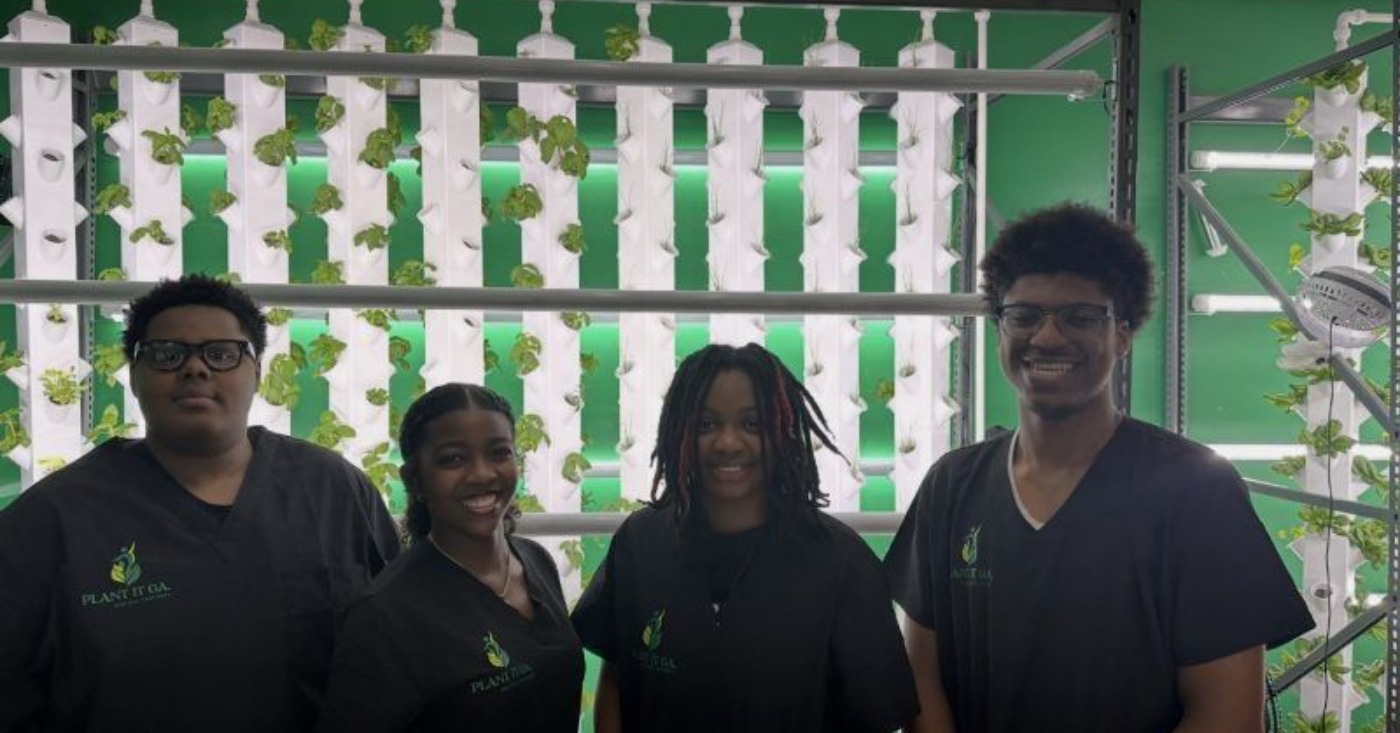
Two Georgia college students from Stonecrest are combining agriculture, technology, and community education to help families throughout Georgia grow their own food — even those without access to traditional growing spaces and equipment.
The two students recently completed the first prototype of Plant It Georgia’s mobile agricultural laboratory, which they said is an enclosed trailer equipped to introduce young people and families to growing food without relying on traditional farmland.
Mason Wright—a youth entrepreneur and a student at Morris Brown College—is the founder of Plant It Georgia Vertical Institute. The institute is an “educational initiative created to train young people in vertical farming, hydroponics, and other modern agricultural technologies,” according to Wright. Kosey Henley, a student at the University of Georgia, worked alongside Wright on the mobile lab.

The students said the idea came in response to an obstacle challenging many communities: transportation. Instead of requiring students to travel to the Plant It Georgia Vertical Institute, the program can take its lessons and growing systems directly into neighborhoods, schools, recreation centers, and other community spaces to teach students and their families about growing food in urban communities.
Inside the prototype, visitors will find hydroponic growing channels, lighting, and other equipment that show them how plants can grow in controlled environments. The laboratory aims to support hands-on lessons covering seed germination, water circulation, plant nutrition, lighting, harvesting, and the technology used to manage indoor crops, according to Wright.
The project comes as Georgia and the nation face an aging agricultural workforce.
According to the U.S. Department of Agriculture’s 2022 Census of Agriculture, Georgia had 63,492 agricultural producers, but only 4,770 were younger than 35. Nationally, the USDA counted 296,480 producers younger than 35, approximately 9 percent of all U.S. producers.
At the Plant It Georgia Vertical Institute, students are taught that farming does not always require acres of open land or heavy machinery. Vertical farming allows crops to grow upward in stacked systems while hydroponics uses nutrient-rich water instead of soil to feed the plants. These tactics make food production possible in classrooms, buildings, trailers, and densely populated urban communities, according to Wright.
Plant It Georgia’s growing systems can cultivate lettuce, tomatoes, collard greens, peppers, and a variety of culinary herbs, according to the news release. Students are taught the entire growing process — from placing seeds into starter materials and monitoring water and nutrients to caring for mature plants and harvesting fresh produce.
The program also introduces participants to careers connected to agricultural technology, plant science, environmental sustainability, food systems, and entrepreneurship.
Wright’s role as a Morris Brown College student and founder represents the connection between HBCU leadership, entrepreneurship, and community service, according to a news release. Wright also made headlines for opening Mason’s Super Dogs in Stonecrest in 2020 — which he now also operates on the Atlanta Beltline’s Eastside Trail. Henley brings another important academic connection through the University of Georgia, one of the state’s leading institutions in agriculture and agricultural research, according to the news release.
For event locations and more information, follow Plant It Georgia on Instagram (@plantitGA).
13 total views
Based on reporting by The Champion Newspaper.
Black Press
Neighborhood Empowerment Day in Deep East Oakland Brings Community Together After Recent Tragedy
Hosted by the 40×40 Council, the free, family-friendly resource fair featured health and wellness services, workshops, children’s activities, food, giveaways and local Black-owned businesses. Residents also connected with community organizations working to strengthen East Oakland.
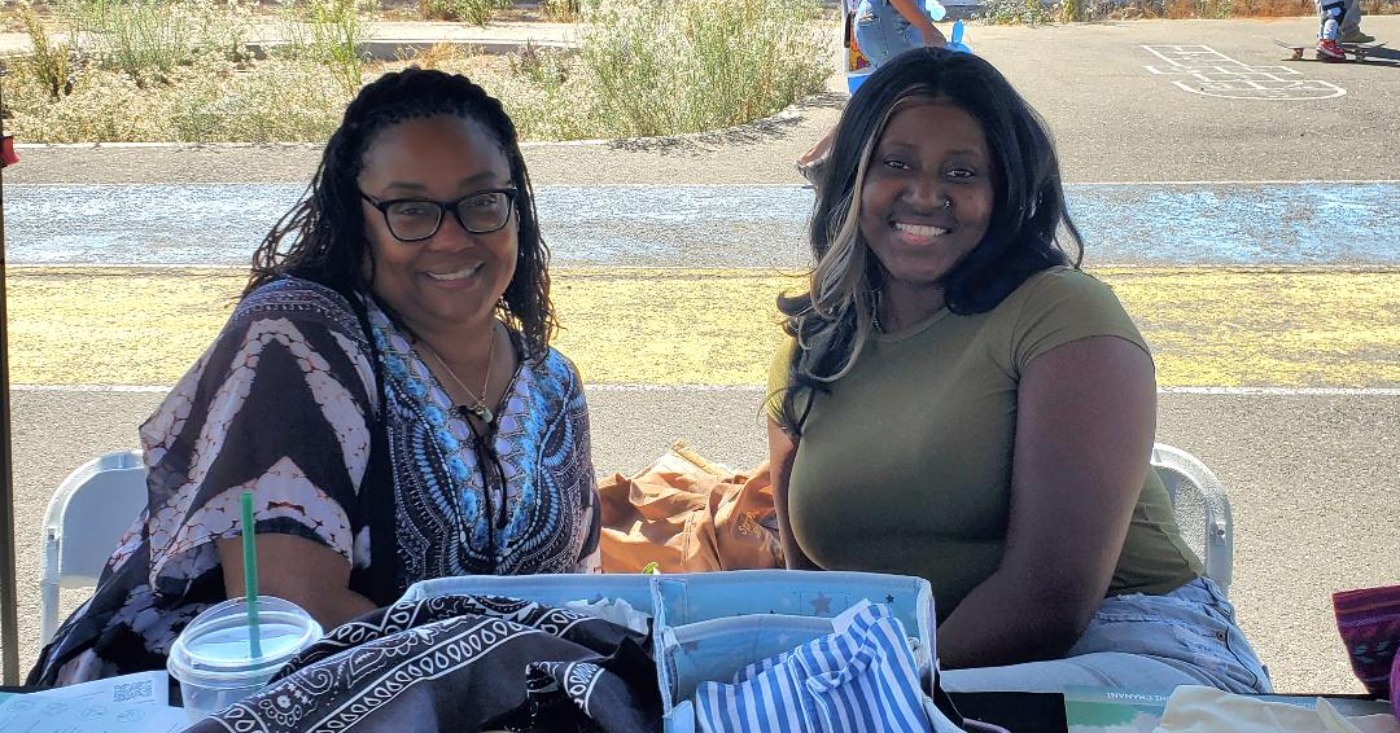
Families, residents and community organizations gathered at the Parker Community Resource Center on Saturday, Sept. 12, for the 40×40 Neighborhood Empowerment Day, transforming the site of a recent tragedy into a space for healing, resources, connection and joy.
Hosted by the 40×40 Council, the free, family-friendly resource fair featured health and wellness services, workshops, children’s activities, food, giveaways and local Black-owned businesses. Residents also connected with community organizations working to strengthen East Oakland.
The gathering came six weeks after a fatal shooting occurred at the Ney Avenue center on July 31. The violence happened shortly before 9 a.m. on the campus of the adult education center and claimed the life of 25-year-old Kimarii McLemore. A second person was injured.
McLemore was attending what was supposed to be her final day in an adult education carpentry class. The shooting deeply affected her family and traumatized students, staff members and residents who had viewed the center as a safe place where community members could pursue education, career training and a better future.
Neighborhood Empowerment Day offered residents an opportunity to return to the center in a spirit of unity and reclaim the space as an important neighborhood resource.
“Reclaiming the space after a tragedy means creating opportunities for people to gather, connect, experience joy and feel a sense of community once again,” said Tim Zenor-Davis, program manager at Roots Community Health. “After a trauma occurs, we see what happened, we acknowledge its impact, and we are continuing to show up.”
Throughout the afternoon, children and families participated in activities while residents received information about health, wellness and other community services. The event also gave local entrepreneurs and service providers an opportunity to connect with the community.
Complimentary meals included grilled burgers and tacos while a DJ played popular music.
Guests received blood pressure and eye-sight checks. A space to exercise on yoga mats was provided while headphones with guided meditation offered a moment to slow down and reflect.
The 40×40 Council includes the Black Cultural Zone, Brotherhood of Elders Network, East Oakland Youth Development Center and Roots Community Health. Together, the organizations have worked to address community violence and the deeper systemic conditions that have affected generations of East Oakland residents.
The council’s work has extended beyond responding to individual tragedies. As part of the broader Rise East initiative, the collaborative has focused on reversing decades of economic disinvestment, systemic poverty, health disparities and the displacement of Black legacy residents.
The 40×40 area stretches from Seminary Avenue to the San Leandro border and from MacArthur Boulevard to the Bay. More than 30,000 Black residents live within the area, which contains Oakland’s largest concentration of Black residents.
Organizers said the area has continued to demonstrate resilience despite experiencing community violence, declining investment and a significant life-expectancy gap compared with wealthier parts of the region.
The council seeks to help reshape East Oakland into a vibrant, multigenerational community where Black residents can remain, return, heal, prosper and build power.
Black Press
Neighborhood Empowerment Day in Deep East Oakland Brings Community Together After Recent Tragedy
Hosted by the 40×40 Council, the free, family-friendly resource fair featured health and wellness services, workshops, children’s activities, food, giveaways and local Black-owned businesses. Residents also connected with community organizations working to strengthen East Oakland.
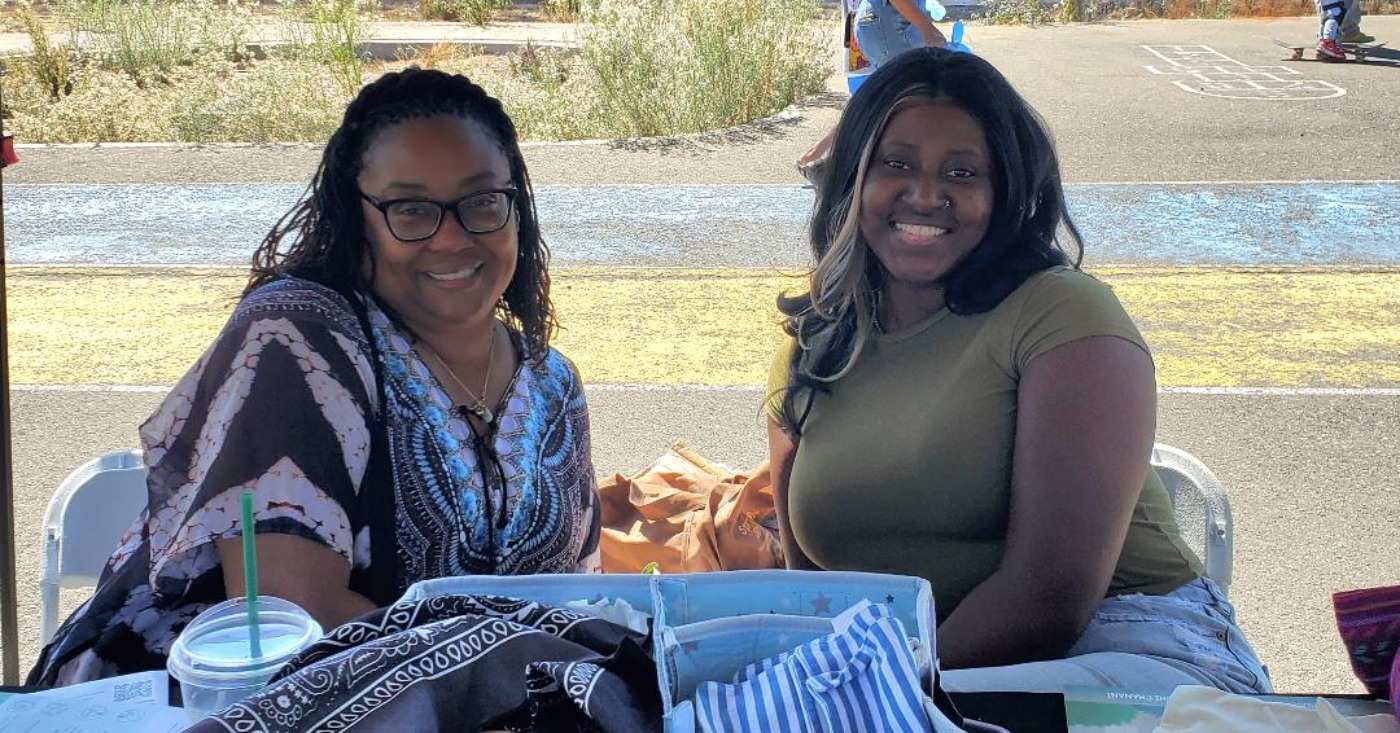
Families, residents and community organizations gathered at the Parker Community Resource Center on Saturday, Sept. 12, for the 40×40 Neighborhood Empowerment Day, transforming the site of a recent tragedy into a space for healing, resources, connection and joy.
Hosted by the 40×40 Council, the free, family-friendly resource fair featured health and wellness services, workshops, children’s activities, food, giveaways and local Black-owned businesses. Residents also connected with community organizations working to strengthen East Oakland.
The gathering came six weeks after a fatal shooting occurred at the Ney Avenue center on July 31. The violence happened shortly before 9 a.m. on the campus of the adult education center and claimed the life of 25-year-old Kimarii McLemore. A second person was injured.
McLemore was attending what was supposed to be her final day in an adult education carpentry class. The shooting deeply affected her family and traumatized students, staff members and residents who had viewed the center as a safe place where community members could pursue education, career training and a better future.
Neighborhood Empowerment Day offered residents an opportunity to return to the center in a spirit of unity and reclaim the space as an important neighborhood resource.
“Reclaiming the space after a tragedy means creating opportunities for people to gather, connect, experience joy and feel a sense of community once again,” said Tim Zenor-Davis, program manager at Roots Community Health. “After a trauma occurs, we see what happened, we acknowledge its impact, and we are continuing to show up.”
Throughout the afternoon, children and families participated in activities while residents received information about health, wellness and other community services. The event also gave local entrepreneurs and service providers an opportunity to connect with the community.
Complimentary meals included grilled burgers and tacos while a DJ played popular music.
Guests received blood pressure and eye-sight checks. A space to exercise on yoga mats was provided while headphones with guided meditation offered a moment to slow down and reflect.
The 40×40 Council includes the Black Cultural Zone, Brotherhood of Elders Network, East Oakland Youth Development Center and Roots Community Health. Together, the organizations have worked to address community violence and the deeper systemic conditions that have affected generations of East Oakland residents.
The council’s work has extended beyond responding to individual tragedies. As part of the broader Rise East initiative, the collaborative has focused on reversing decades of economic disinvestment, systemic poverty, health disparities and the displacement of Black legacy residents.
The 40×40 area stretches from Seminary Avenue to the San Leandro border and from MacArthur Boulevard to the Bay. More than 30,000 Black residents live within the area, which contains Oakland’s largest concentration of Black residents.
Organizers said the area has continued to demonstrate resilience despite experiencing community violence, declining investment and a significant life-expectancy gap compared with wealthier parts of the region.
The council seeks to help reshape East Oakland into a vibrant, multigenerational community where Black residents can remain, return, heal, prosper and build power.


Together Building Back Better

Homecoming Ends in Gunfire Outside FAMU: 12 Hurt, Six of Them Children
COMMENTARY: Bring on the Positive Calvary

Retirement Triggers Doctor to Pen Book for Young Audience

Fatigue, Bloating, and Inflammation: Spotting the Subtle Signs of MASLD

Metro Detroit Faith Leaders Call out Islamophobia in Michigan Senate Race

Dallas Trinity FC Signs Kaiya Brewer to Academy Contract

Dallas Mavericks Unite Players, Legends and the Oak Cliff Community at 2026 Community Tip-Off

Brooklyn Roots and Artistic Genius

NCCU Snap Three – Game Losing Streak with Win over Delaware State University

OP-ED: Haiti TPS: Have We Lost Sense of Humanity?

All Skinfolk Ain’t Kinfolk

Poll: Becerra Widens His Lead Over Hilton; Californians Split on Wealth Tax

Rulings Leave Questions Lingering in Nolan Wells Case

Latinas Deserve Equal Pay. Unions Help Make It Happen.

Why Black Artists Struggle to Sell Tours

Zakiya Jendayi Arrested, Locked Out of Home by Sheriff’s Deputies

COMMENTARY: The Audacity of Joyce Beatty

A $2.1 Trillion Wellness Industry Never Built a Daily Practice for Black Children. So This Atlanta Family Did.

Oakland Awarded More than $14 Million in State Funding

East Side Shoutout! Sports Talk & Guest Invite! #shorts

Black Girl Walk in the Rain at George Floyd Square | Protect Your Peace | MSR

Stop Overpaying for Car Insurance: Compare 3–5 Quotes #shorts

A $50K SUV Becomes $66K—Are the Options Worth It? #shorts

Dr. Charles Drew – Blood Banking and Preservation

15 Years Together: The Surprising Joy of Discovering Your Partner #shorts

Wala Blegay on the Future of Energy Grid Stability and Data Center Concerns

Gopher Football: Can They Rekindle 2019 Magic Or Are They Just Average? #shorts

The Conversation with Al McFarlane (10/27)

Citizen Savings Bank: Oldest Black-Owned Bank in US #shorts
-

 Featured1 week ago
Tamiko Armstead | 2026 Lifetime Achiever in Education
-

 Black History1 week ago
OP-ED: The Black Church Writes AI’s Next Chapter
-

 Black History1 week ago
Practitioners of African Traditional Spirituality Offer Ancestral Reverence Ritual Oct. 31
-
 Art1 week ago
Kickstarter CEO Everette Taylor Shares Tips on Creating and Growing a Business
-

 Black History1 week ago
Columbus’s Oldest Businesses Still Open: 10 That Have Lasted 75+ Years
-

 Black History1 week ago
COMMENTARY: BIG MAMA SAID: Don’t Throw Away the Gift Just Because It Came Wrapped Wrong
