
Business
Wells Fargo Increases Its Commitment to Black Homebuyers
Wells Fargo announced a commitment to create 250,000 African American homeowners by 2027; the mortgage giant also announced a plan to lend $60 billion for home purchases over that 10-year period.


By Stacy M. Brown (The Washington Informer/NNPA Member)
In 2017, Wells Fargo announced a commitment to create 250,000 African American homeowners by 2027.
In addition to lending $60 billion for home purchases over that 10-year period, the banking giant has committed to increase the diversity of its sales team, particularly African American home mortgage consultants.
Further, bank officials said they’ve dedicated $15 million for initiatives focused on homebuyer education and counseling for Black families.
This commitment is only part of the evidence that Wells Fargo has made over the past year to show that it values customers of color, said Cerita Battles, the senior vice president and head of retail diverse segments at Wells Fargo Home Mortgage.
“It is really important to understand that, as we made our intentions public, we did so with some of the country’s largest and most influential African American organizations standing by our side,” she said, noting that those organizations included the National Association of Real Estate Brokers (NAREB), the National Urban League (NUL) and the NAACP.
“Their support not only added a measure of accountability and a great deal of legitimacy to this commitment, but also the power and scope of their collective constituent networks,” Battles said.
NAREB and affiliates of NUL currently are engaged in homebuyer education and counseling to help African Americans prepare for homeownership while the NAACP’s Economic Development arm assists constituents with financial preparedness, which is a key component to being ready to purchase a home, she said.
“And, our commitment aligns very well with NAREB’s ‘2 million in 5 years’ initiative which is aimed at creating 2 million new African American homeowners in five years,” Battles said.
The commitment appears headed in a positive direction.
By the end of 2017, Wells Fargo reported that it helped 23,161 African American families with $5.7 billion in home loan originations which was a significant increase over the previous year and 99.7 percent of the bank’s first-year goal despite a falling mortgage market, Battles said.
The bank also dedicated more than $1.8 million in grants to support homebuyer education and counseling for African American audiences, exceeding its first-year goal.
Battles said the majority of support from that work comes primarily from three areas of the Wells Fargo Housing Foundation, including the National Housing Grant Program, the Homeownership Counseling Grant Program, and down payment assistance grants through NeighborhoodLIFT.
“We are also supporting new initiatives like HomeFree-USA’s Center for Financial Advancement Program which will offer financial education and expose students to the mortgage industry as a career option on the campuses of Historically Black Colleges and Universities (HBCUs),” Battles said. “And, the future holds great promise as we have several improvements that have been put in place for 2018 including doubling the amount of money dedicated to NeighborhoodLIFT.”
Battles said that Wells Fargo also plans to pilot new pricing models for home mortgages under $175,000 and to launch a national housing counseling program that the company can share across the entire mortgage industry.
The company’s homeownership commitment to African Americans has allowed them to also look inward.
[media-credit name=”Wells Fargo” align=”alignnone” width=”840″] [/media-credit]
“There is no doubt the mortgage industry lacks diversity, especially when it comes to the sales force. So, for us, one of the important pieces to this puzzle is to begin building a pipeline of new, young, energetic, bright minds who might not normally consider mortgage lending as a career choice,” Battles said. “We hope to achieve this through partnerships with organizations that can help get the word out to young African Americans as they grow and shape their thoughts and plans about the future.”
For instance, Wells Fargo is partnering with the National Association of Minority Mortgage Bankers of America which has built connections to HBCUs.
Battles said that those connections were great conduits for Wells Fargo to provide information either with materials or by showing up in person for events.
Comparably, HomeFree-USA’s Center for Financial Advancement Symposium is just beginning a program that Wells Fargo is supporting that works with similar intent.
“In fact, I recently had an opportunity to speak at their first event at Fisk University, a historically Black university located in Nashville, Tennessee,” Battles said, noting that she was counted among the 10 Black women executives from the mortgage industry who had the opportunity to speak from the heart about their personal and professional journeys.
“We described the attributes needed to be successful in life in front of 31 young women and faculty members,” Battles said. “We know that we can’t just depend on the coming workforce of the future. We also do our best to add seasoned veterans to our sales force. And this is really foundational; we leverage our relationships with realtors, builders and nonprofits to ensure that folks who are already in the market know that Wells Fargo is not only a viable option, but also has a program going that focuses on African American borrowers and their communities.”
The approach is two-pronged, Battles continued.
“We are engaging and attracting current experts while inspiring new generations to consider [the mortgage industry] as a career possibility for their future,” Battles said.
The Washington Informer is a member publication of the National Newspaper Publishers Association. Learn more about becoming a member at www.nnpa.org.








Black Press
Statement from the President of the National Association of Black Journalists on Press Ban
TEXAS METRO NEWS — The National Association of Black Journalists (NABJ) condemned President Donald Trump’s decision to deny access to MS NOW journalists and his threats against CNN and Politico due to unfavorable coverage. The NABJ stated that journalists hold power accountable for the American people, and government officials cannot grant or withhold access based on reporting they like or dislike.
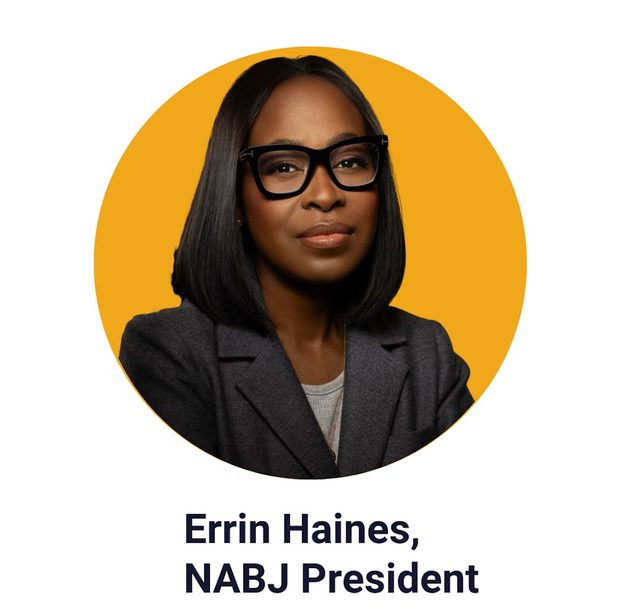
NABJ condemns President Donald Trump’s decision to deny access to MS NOW journalists and his threat to exclude CNN and Politico because of coverage he dislikes. The role of journalists is to hold power accountable on behalf of the American people. Government officials cannot reward reporting they find favorable with access, or withhold access as punishment for journalists who have scrutinized or criticized them. This retaliation is a threat not only to the news organizations being targeted, but to every journalist working to report independently and without fear of government reprisal. The White House belongs to the American people, and they have a right to know what their government is doing. Journalists must be free to ask difficult questions and report the answers. A free and independent press is not a privilege granted at the discretion of any president. It is a cornerstone to a healthy and functioning democracy. The First Amendment can never be optional.
Based on reporting by Texas Metro News.
Black History
HBCU Leaders, Corporate Partners Convene in D.C. to Strengthen Support for Black Colleges’ Athletic Programs
COLUMBUS TIMES — HBCU athletic conference commissioners, university presidents, and corporate leaders gathered in Washington on Tuesday, September 15, for the Salute to HBCU Sports Leadership Reception. This invitation-only event, hosted at Gensler’s K Street office, aimed to deepen investment in historically Black colleges and universities.
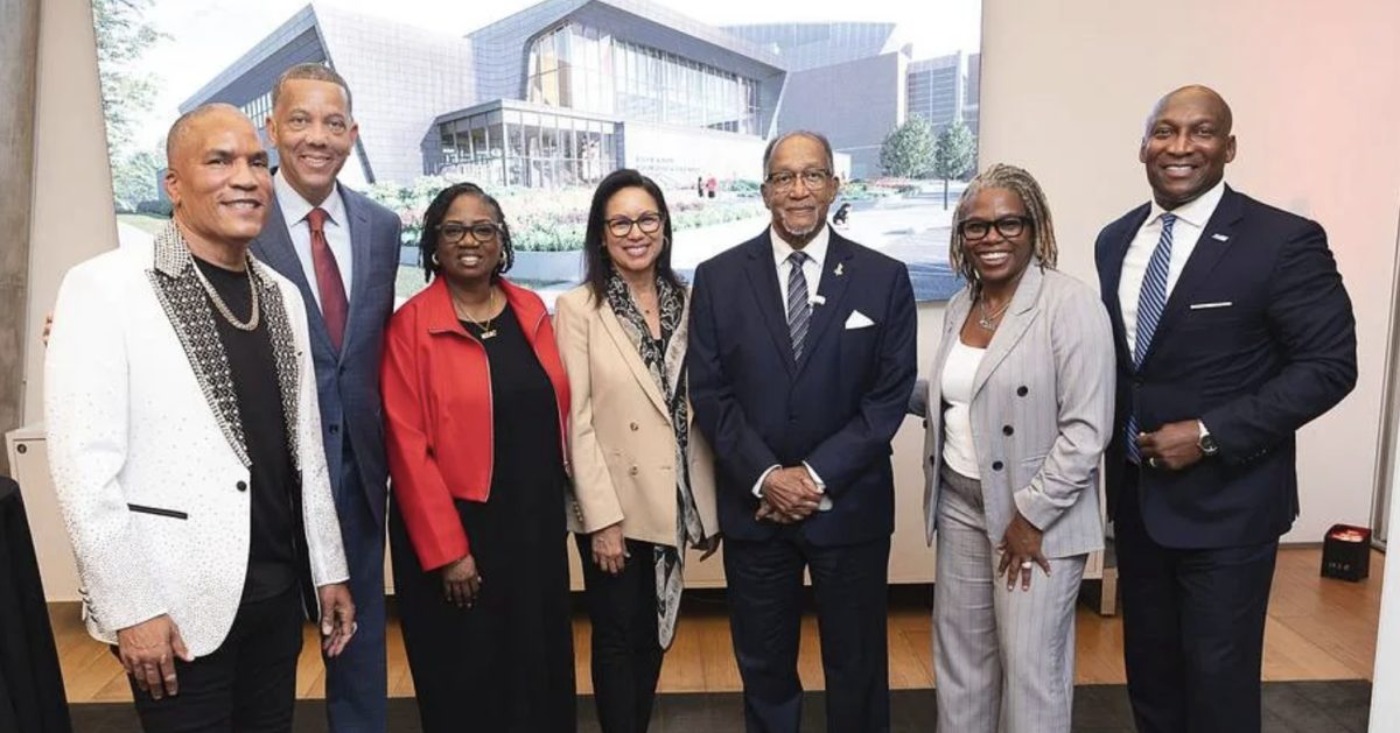
Commissioners from HBCU athletic conferences joined university presidents and corporate leaders in Washington on Tuesday, Sept. 15, for the Salute to HBCU Sports Leadership Reception — an invitation-only gathering aimed at deepening investment in historically Black colleges and universities.
Hosted at Gensler’s K Street office, the evening brought together conference commissioners, campus presidents, and executives from sports, media and design organizations under the theme “Building Partnerships. Celebrating Excellence. Advancing HBCUs.” Gensler highlighted its partnership with Paxton Baker on the event in a post on Instagram, showcasing the room full of HBCU presidents and conference leaders.
Five Conferences, One Room
Commissioners from four NCAA conferences and one NAIA conference were on hand, representing institutions that compete across Division I, Division II and the NAIA:
Anthony Holloman — Southern Intercollegiate Athletic Conference Charles McClelland — Southwestern Athletic Conference Jacqie McWilliams Parker — Central Intercollegiate Athletic Association Sonja Stills — Mid-Eastern Athletic Conference Kiki Baker Barnes — HBCU Athletic Conference
Their presence linked leadership from across the HBCU athletics landscape with campus administrators and organizations working in event management, design and media.
Presidents and Black Press Leadership in the Room
Among the university presidents in attendance were Prairie View A&M’s Tomikia P. LeGrande and Bowie State’s Aminta H. Breaux.
LeGrande’s appearance came just days after the Thurgood Marshall College Fund named her the recipient of its Educational Leadership Award, as announced by Prairie View A&M. She was honored at TMCF’s 39th Anniversary Gala on Sept. 12 in Washington. LeGrande has served as Prairie View A&M’s ninth president since June 2023.
Breaux, who has led Bowie State since July 2017, previously chaired the CIAA’s board of directors, according to her university biography.
Benjamin F. Chavis Jr., president and CEO of the National Newspaper Publishers Association, also attended — fitting, given the NNPA’s role as one of the reception’s presenting partners. Chavis and HBCU GO’s Lawrencia Moten conducted two 30-minute interview sessions with the conference commissioners, covering topics ranging from the NIL era to conference growth and the experience of leading HBCU athletics, according to HBCU GO President Curtis Symonds, who spoke with HBCU Legends about the sessions.
Corporate and Institutional Partners
Five organizations presented the reception together:
Gensler — the architecture and design firm that hosted the event Events DC — the District’s convention and sports authority USA Track & Field — the sport’s national governing body National Newspaper Publishers Association — representing Black newspaper publishers HBCU GO — the network dedicated to HBCU sports and culture
That mix of partners pointed to a range of possible collaborations ahead, from athletic facilities and event operations to sports programming and media coverage.
Building Beyond the Scoreboard
What stood out most was the mix of people in the room — conference commissioners setting strategy for their leagues, university presidents shaping institutional priorities, and corporate partners bringing resources and expertise from multiple industries.
With college athletics undergoing rapid change, particularly for HBCUs navigating the NIL era and shifting conference dynamics, the reception offered a venue for candid conversation and relationship-building. Its underlying purpose went beyond athletics: using sports as an entry point to broader opportunities in education, workforce development and economic growth for HBCUs.
Based on reporting by Columbus Times.
Black History
At CBCF Conference, a Panel Asks What Black Public Figures Owe the People Who Follow Them
COLUMBUS TIMES — The Congressional Black Caucus Foundation’s Annual Legislative Conference featured a panel titled “Platforms & Purpose: A Conversation With Black Men Leveraging Their Reach.” Actor and activist Kendrick Sampson, Rep. Jasmine Crockett, media personality Jason Lee, singer Eric Benét, and rapper Yung Joc discussed how public figures can translate influence into real-world change.
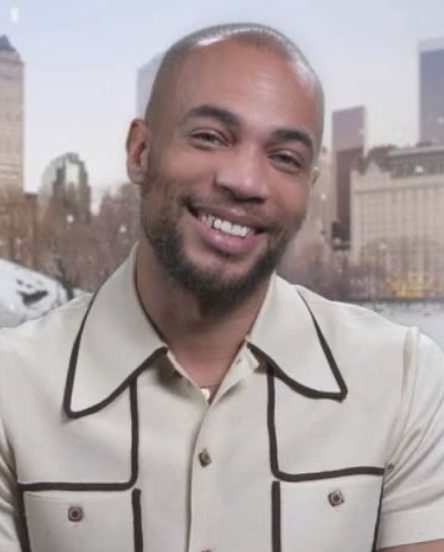
WASHINGTON — Among the more than 100 policy forums and brain trusts at this year’s Congressional Black Caucus Foundation Annual Legislative Conference was a conversation about influence itself: who has it, and what they do with it.
"Platforms & Purpose: A Conversation With Black Men Leveraging Their Reach" brought together actor and activist Kendrick Sampson, Rep. Jasmine Crockett, media personality Jason Lee, singer Eric Benét and rapper and radio host Yung Joc. The session looked at how entertainers, creators and elected officials can turn public attention into real-world change.
The panel took place at the 55th Annual Legislative Conference, a five-day event in Washington that began Wednesday. This year’s theme is "Rooted, Ready & Rising," and the conference coincides with the CBC Foundation’s 50th anniversary. CBCF President and CEO Nicole Austin-Hillery has said the gathering is meant to "combine celebration with purpose," while taking up issues including voting rights, economic opportunity, education, health disparities and criminal justice.
That mix of celebrity and policy is a long-running feature of the conference, which brings lawmakers, advocates, entrepreneurs, students and entertainers into the same rooms. The panel’s premise reflects a broader question as creators reach audiences that rival traditional media.
A career built on both stage and street
Sampson is a natural fit for that conversation. The Houston native is known for television and film work, including HBO’s Insecure, and for his activism off screen. He co-founded BLD PWR, a 501(c)(3) nonprofit that combines entertainment, education and activism.
The organization says its mission is to "reimagine and realize the liberated future we know our people deserve." It works to mobilize entertainment-industry figures and organize communities around racial, gender, immigration, economic and environmental justice, mental health and wellness, and opposition to state violence. BLD PWR emphasizes storytelling and community healing, and it centers the voices of Black, Indigenous and other marginalized communities.
What to watch
The conference runs through Sunday at the Walter E. Washington Convention Center. Details on sessions and registration are available through the CBC Foundation.
Based on reporting by Columbus Times.
Black Press
Newsom Signs Addictive Social Media Law to Protect Kids
Newsom said California’s approach focuses on the features that can encourage excessive social media use rather than taking the broader step of banning teenagers from the platforms altogether. He contrasted the measure with restrictions adopted in Australia and Malaysia that prevent teenagers from accessing social media or creating accounts.

Word Count: 391
Gov. Gavin Newsom has signed a new California law targeting addictive social media features that can keep children scrolling, giving the state new authority to restrict how platforms engage young users.
AB 1709, authored by Assemblymember Josh Lowenthal (D-Long Beach) prohibits social media companies from giving children under 16 access to personalized feeds, including “For You” pages, as well as other features designed to maximize screen time, such as infinite scrolling and video autoplay.
The law does not prevent children under 16 from using social media. Instead, platforms must deactivate the covered features for those users.
“This is about actually addressing the problem, the scrolling, the algorithms,” Newsom said Sept. 10 during a bill-signing event in the San Francisco Bay Area.
Newsom said California’s approach focuses on the features that can encourage excessive social media use rather than taking the broader step of banning teenagers from the platforms altogether. He contrasted the measure with restrictions adopted in Australia and Malaysia that prevent teenagers from accessing social media or creating accounts.
The law comes amid growing concerns about the impact of social media on children’s mental health and well-being. California lawmakers have increasingly focused on the design and business practices of technology platforms as part of efforts to protect young users.
AB 1709 is one of 13 youth online safety and privacy laws Newsom signed Sept.10. The package also includes measures regulating AI chatbots, increasing potential penalties for technology companies and establishing additional protections for children using digital services.
Lowenthal said the new rules represent a shift toward greater accountability for technology companies.
“We want oversight. We want accountability. We’re done asking nicely, and we’re demanding that there is a duty of care across these platforms — a duty that puts the wellness of our children ahead of profits,” Lowenthal said.
The law builds on California’s broader effort to regulate children’s online experiences. A separate law, AB 1043, will require users to provide their birth dates when setting up new phones or laptops beginning in January, with device manufacturers required to share users’ ages with apps.
Some youth online safety advocates have supported AB 1709 as a more targeted alternative to outright social media bans. Others have warned that the restrictions could make it harder for some LGBTQ+ young people to find support online and questioned how effectively age requirements can be enforced.
Black Press
Newsom Signs Addictive Social Media Law to Protect Kids
Newsom said California’s approach focuses on the features that can encourage excessive social media use rather than taking the broader step of banning teenagers from the platforms altogether. He contrasted the measure with restrictions adopted in Australia and Malaysia that prevent teenagers from accessing social media or creating accounts.

Word Count: 391
Gov. Gavin Newsom has signed a new California law targeting addictive social media features that can keep children scrolling, giving the state new authority to restrict how platforms engage young users.
AB 1709, authored by Assemblymember Josh Lowenthal (D-Long Beach) prohibits social media companies from giving children under 16 access to personalized feeds, including “For You” pages, as well as other features designed to maximize screen time, such as infinite scrolling and video autoplay.
The law does not prevent children under 16 from using social media. Instead, platforms must deactivate the covered features for those users.
“This is about actually addressing the problem, the scrolling, the algorithms,” Newsom said Sept. 10 during a bill-signing event in the San Francisco Bay Area.
Newsom said California’s approach focuses on the features that can encourage excessive social media use rather than taking the broader step of banning teenagers from the platforms altogether. He contrasted the measure with restrictions adopted in Australia and Malaysia that prevent teenagers from accessing social media or creating accounts.
The law comes amid growing concerns about the impact of social media on children’s mental health and well-being. California lawmakers have increasingly focused on the design and business practices of technology platforms as part of efforts to protect young users.
AB 1709 is one of 13 youth online safety and privacy laws Newsom signed Sept.10. The package also includes measures regulating AI chatbots, increasing potential penalties for technology companies and establishing additional protections for children using digital services.
Lowenthal said the new rules represent a shift toward greater accountability for technology companies.
“We want oversight. We want accountability. We’re done asking nicely, and we’re demanding that there is a duty of care across these platforms — a duty that puts the wellness of our children ahead of profits,” Lowenthal said.
The law builds on California’s broader effort to regulate children’s online experiences. A separate law, AB 1043, will require users to provide their birth dates when setting up new phones or laptops beginning in January, with device manufacturers required to share users’ ages with apps.
Some youth online safety advocates have supported AB 1709 as a more targeted alternative to outright social media bans. Others have warned that the restrictions could make it harder for some LGBTQ+ young people to find support online and questioned how effectively age requirements can be enforced.
Black Press
OP-ED: How Head Start Also Helps Parents
BLACKPRESSUSA NEWSWIRE — “I never thought I would be here before Head Start. It was rough. No childcare, job loss. I’ve been helpless,” she shared on stage at the National Head Start Conference in Baltimore. “When I applied, I did not think my daughter would get in. When I got the call, I cried tears of joy.”
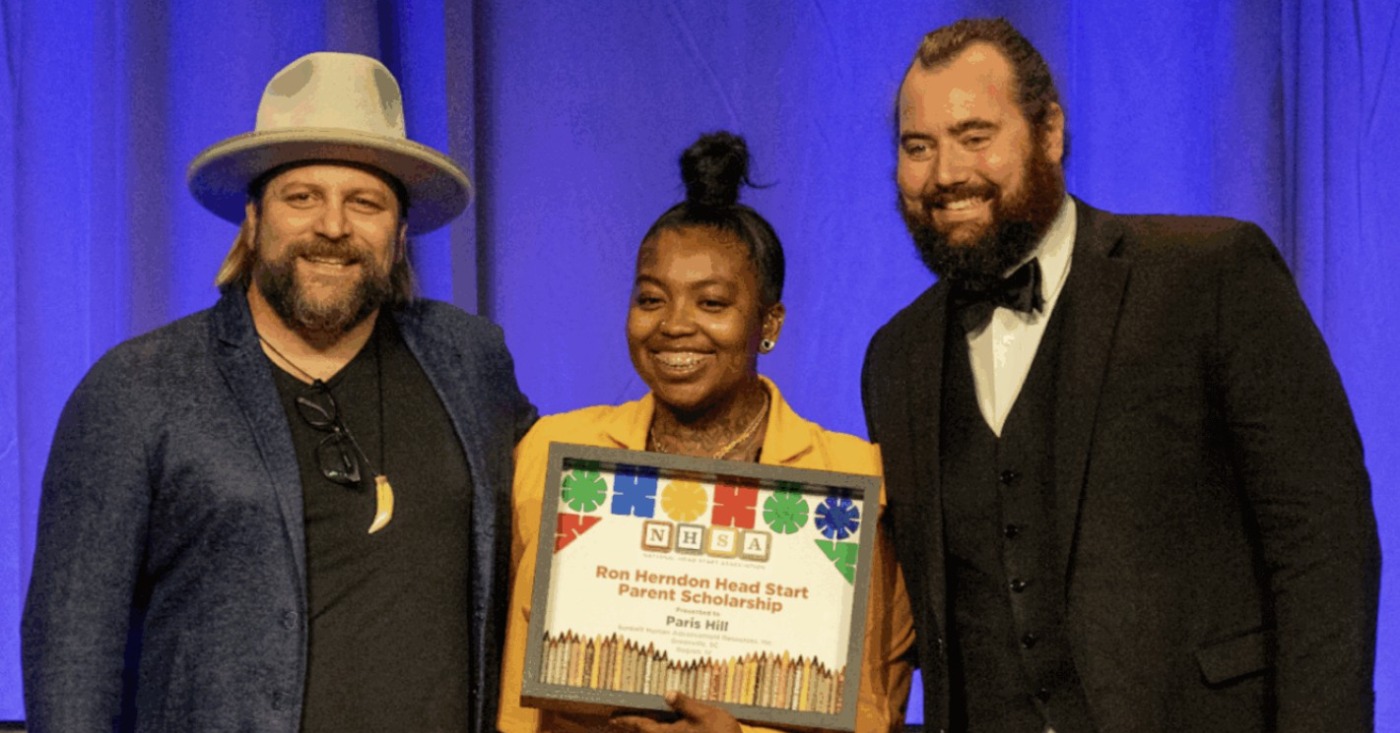
Ron Herndon Head Start Parent Scholarship awardee Paris Hill, of Sunbelt Human Advancement Resources in Greenville, South Carolina, says that Head Start has been instrumental in reaching her dreams.
“Head Start made me sit and realize my goals and what steps I needed to take to achieve them. They show compassion, love, and dedication to helping parents. They push you to do, to be, and to do better—not only as parents but for yourself.”
Hill embodies the spirit of NHSA’s Ron Herndon Scholarship, which celebrates a Head Start parent who goes above and beyond in their community.
During the pandemic, Hill participated in virtual classroom instruction with her children and engaged in parent virtual activities such as Parent Committee meetings and financial literacy classes. She recently contributed over 96 hours to her program.
“I never thought I would be here before Head Start. It was rough. No childcare, job loss. I’ve been helpless,” she shared on stage at the National Head Start Conference in Baltimore. “When I applied, I did not think my daughter would get in. When I got the call, I cried tears of joy.”
Hill enrolled in college and pursued a bachelor’s degree in applied sciences with a concentration in business management. She has met and exceeded her personal goal of becoming a nail technician and creating her own business.
The $2,500 parent scholarship supported her vision. “Head Start made me sit and realize my goals and what steps I needed to take to achieve them. They show compassion, love, and dedication to helping parents. They push you to do, to be, and to do better — not only as parents but for yourself.”
She has an uncommon career goal — to become a mortician — and has already found part-time work. She has found it rewarding to assist families who were going through challenging times because of the death of a loved one.
“When I first applied for the parent scholarship program, I was excited and this was my time to show what I’m capable of. It fills my heart with joy knowing I had a team of teachers and directors pushing me to do better and acknowledging me as parents and not just as a mom.”


Banking on Family Business

5 Free Car Checks: Don’t Get Ripped Off! #shorts

2024 Kia Seltos: Verdict & Buyer’s Guide #shorts

NEVER Sign a Contract Without Reading Every Line! #shorts

Here’s what you need to know about preventing warehouse accidents this season
Understanding neurodegenerative disorders and the recent innovations changing care

Your Vote Matters…Don’t Let Them Silence You!

Kia Seltos Review: Is It Worth Your Money? #shorts

The Color of Our Money is Green: Smartest Read #shorts

$67,590 GMC Acadia Denali Ultimate Buy It or Think Twice?

Arnold Perkins: At 85, a Life of Service, Faith and Giving Back

Women Learned Their Jail Strip Searches Were Recorded. Their Outrage Changed the Law

Black Americans Have Doubts About the U.S. Food System

Latest Massacre in Haiti Reveals Cruelty U.S. Deportations

When Praises Go Up: SUGC Nominated for Prestigious Stellar Award.

Booked and Unbound: The Legacy of Black Women’s Literary Circles

U.S. Sole Nation to Oppose U.N. Resolution Correcting Africa’s Size on World Maps

Prostate Cancer is Twice as Likely to Kill Black Men. Talking to Your Doctor Could Help Save Your Life

Outnumbered: Elbert Cox’s Equation for Greatness

Standoff for Justice: Our Homes Are Worth Fighting For
Banking on Family Business
5 Free Car Checks: Don’t Get Ripped Off! #shorts
2024 Kia Seltos: Verdict & Buyer’s Guide #shorts
NEVER Sign a Contract Without Reading Every Line! #shorts
Your Vote Matters…Don’t Let Them Silence You!
Kia Seltos Review: Is It Worth Your Money? #shorts
The Color of Our Money is Green: Smartest Read #shorts
$67,590 GMC Acadia Denali Ultimate Buy It or Think Twice?

HE SAID, HE SAID, HE SAID: Losing What I Never Had: Uncovering My Authentic Self —9.25.26 7PM ET

Racism vs. Democracy: Exposing America’s Caste System
-

 Black History5 days ago
The Youngest American Killed in the Vietnam War
-

 Black History5 days ago
Passing for White, Fighting for Black America: The Courage of Walter White
-
 Sports1 week ago
NFL: Week Two Recap | Jalen Hurts did not fold; Caleb Williams exits game with injury
-

 Black Press6 days ago
Mayor Lee Announces $1 Million Kaiser Permanente Grant for Pilot Program to Address Homelessness, Clean Up Public Spaces throughout Oakland
-

 Art5 days ago
Peter Magubane: a Camera Against Apartheid
-

 Black Press1 week ago
Event Preview: ‘Fashion v. Fascism’ – A Runway Revolution Is Coming to the Bay Area
