
Black History
Voter Suppression Goes to College
NNPA NEWSWIRE — If preliminary data estimates on the recent 2020 primaries in North Carolina are accurate, student voters on HBCU campuses must raise their turnout game come the general election this November.

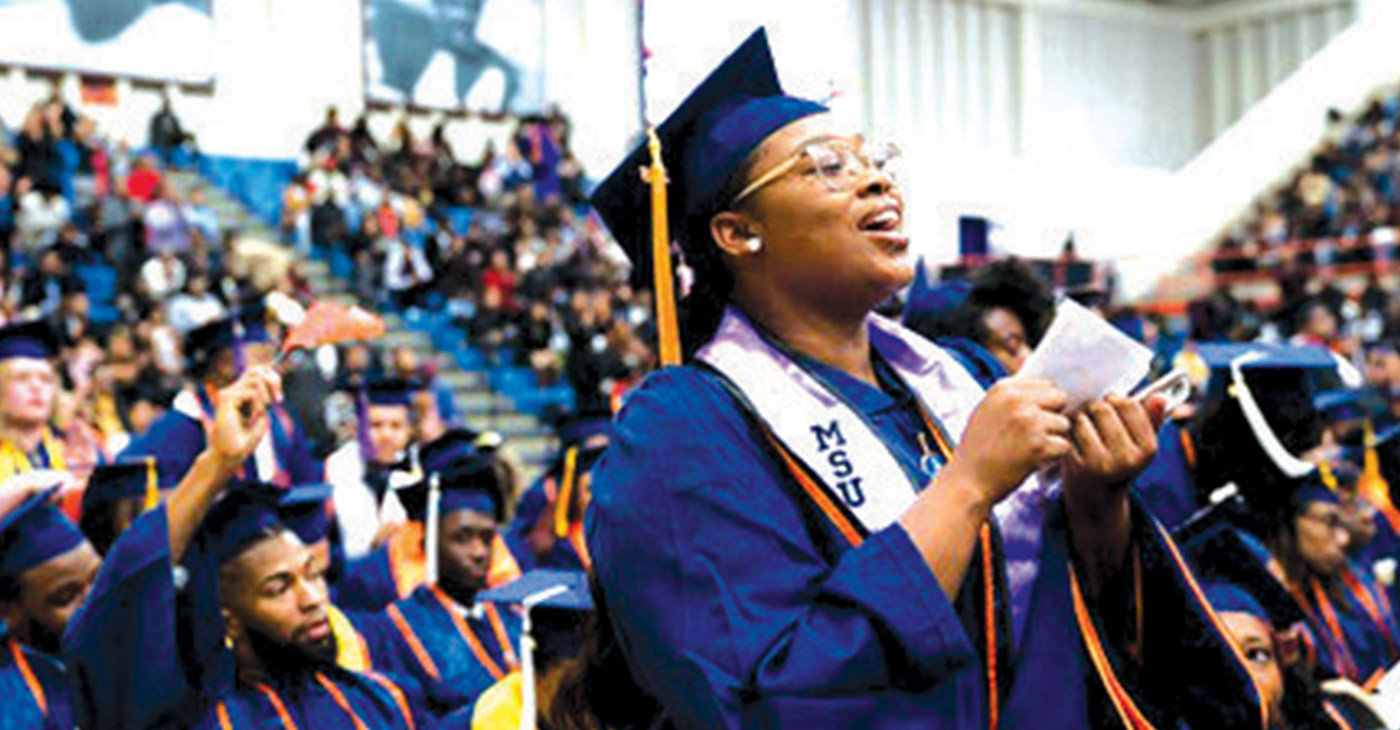
A GDN Student Engagement Exclusive
By Cash Michaels and Peter Grear, Greater Diversity News
If preliminary data estimates on the recent 2020 primaries in North Carolina are accurate, student voters on HBCU campuses must raise their turnout game come the general election this November.
So says Dr. William Busa, founder of EQV Analytics, a ‘North Carolina-focused campaign consulting firm serving Democratic candidates with advanced campaign analytics.
Dr. Busa served as digital director to NC Associate Justice Anita Earls 2018 campaign to the state’s high court.
Cautioning that his numbers right now are “95% accurate” because all of the 2020 primary data has not been released yet by the NC Board of Elections, Dr. Busa says they are close enough to being conclusive for him to draw worthy conclusions.
Busa analyzed student voter turnout from ten North Carolina campuses, three of them HBCUs – N.C. A&T University, in Greensboro, Winston-Salem State University and North Carolina Central University in Durham. All of the campuses analyzed were in precincts dominated by undergraduate students, generally 18 to 22.
Dr. Busa broke his analysis of college voting into early voting (February 13-29th) and voting on Primary Day (March 3rd). Traditionally, the bulk of college student voting occurs during the two-week early voting period.
According to the data, statewide early voting was at 11.4%. At least seven of the ten NC universities tracked for student early voting did much better, with six of the top schools coming in with two to three times the state’s overall voter turnout (Duke was at 34%, for instance).
Winston-Salem State University yielded only an 11.7 student voter turnout, .3% more than the state turnout.
North Carolina Central University, however, could only muster 7.9% student voter turnout.
When the numbers are crunched for Primary Day, Dr. Busa noted that student voting dramatically drops because college students generally find it more difficult to vote then and prefer the more flexible 15-day early voting period.
As a result, because 66% of North Carolina voters vote on Primary day, and college students don’t, they effectively caught up percentage-wise with the high college voting, leaving only Duke University (34.3%) to exceed both groups (NC was at 30.6%) in total voter turnout percentages, Busa says.
NCCU came in at the end of the university list at just 8%. NC A&T came in fourth overall at 20.6%. WSSU was at 13.4%.
Busa says his analysis proves several things – college students are early voters. Either they vote early, or not at all.
Second, the analysis also shows why Republican lawmakers try to keep polling places off university campuses, hoping that by making getting to a polling place more difficult, it would dissuade students from voting.
“It’s a very potent voter suppression tool,” Dr. Busa says. All ten of the campuses analyzed had a campus polling place.
Busa says ultimately, college and university administrations must put more resources behind their campus GOTV (get out the vote) efforts, like Duke University, to get the same stellar results that Duke is getting.
However, students are not sitting still. They’re fighting back against the agents of voter suppression and they are being helped by the NC NAACP, offering guidance and resources and Greater Diversity News, offering publicity.
The results of Busa’s analysis reveals a failure to effectively mobilize Black students to educate, organized and mobilize as voters. However, blame for this failure must be borne by Black leaders and leadership organizations. The leaders and organizations include HBCU Alumni Associations, elected officials, Divine Nine and the always present Black church community. Also, to be included, are Black civil rights leaders and organizations of the past and present.
Also, we must recognize leaders and organizations that are stepping up and trying to make a difference. There are many that recognize that the failed status quo cannot and must not be accepted.
One response that is in the works, is a series of conference calls with student leaders on HBCU and Primarily White campuses (SGAs and BSUs). This call is being coordinated by the NC NAACP and Greater Diversity News. Its purpose is to give the student leaders an opportunity to discuss voting rights and their efforts to resist voter suppression.
The students at NCCU have developed a voter mobilization model and are offering it as a guide to other campuses, while at the same time seeking feedback and ideas on strategies that other students are using. It is important to note that the efforts of the NCCU students are fully supported by the NCCU National Alumni Association. A student/alumni collaborative is being urged as a consideration for all HBCUs.
Here are the updated college turnout numbers (through election night). Final analysis is due any day now.
TURNOUT (%)
DUKE UNIV 34.3
UNC CHAPEL HILL 24.7
NC STATE UNIV 21.2
NC A&T STATE UNIV 20.6
UNC CHARLOTTE 18.5
APPALACHIAN STATE UNIV 14.9
WINSTON-SALEM STATE UNIV 13.4
UNC GREENSBORO 10.2
EAST CAROLINA UNIV 8.0
NC CENTRAL UNIV 8.0
Follow the growing activism of student leaders and ACTC developments by signing-up for GDN’s free eNews publication at GreaterDiversity.com. For additional information email – [email protected].


Black History
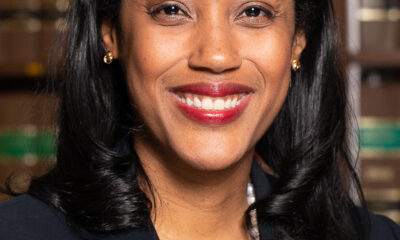
Annika Ashton First Black Woman and Jamaican Broward County Attorney
SOUTH FLORIDA TIMES — Annika E. Ashton is the new Broward County Attorney, becoming the first Black woman and Jamaican American to hold the position. Ashton, 42, was sworn in last month, replacing Andrew Meyers who retired after eight years.

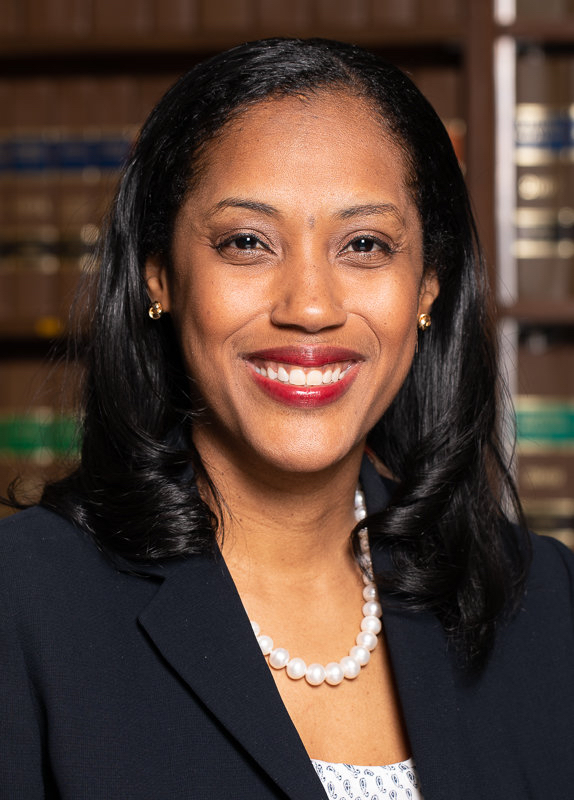
FORT LAUDERDALE, Fla. – Annika E. Ashton is the new Broward County Attorney, becoming the first Black woman and Jamaican American to assume the role.
Ashton, 42, was sworn in last month to replace Andrew Meyers who retired after eight years at the helm.
The Broward County Commission unanimously appointed Ashton, who was the Deputy Broward County attorney, in April 2026 and she took over on September 10, 2026 the official last day of Meyers’ tenure.
She will oversee more than 50 attorneys and a support staff.
Ashton’s appointment reflects overcoming racial and gender barriers to become the chief legal advisor for the county.
The Coral Springs resident thanked the commission and Broward County legal department for their support.
“I’m very excited to work with a really great office of people and have the support of the Broward County Commission,” Ashton said.
Broward County Commissioner Nan Rich called Ashton “the most qualified person to lead the County Attorney’s Office,” noting the county attorney position is one of only three the board is responsible for appointing
Ashton has worked for Broward County since 2014, starting as an assistant county attorney and rose to senior assistant county attorney before becoming deputy county attorney in 2019.
She graduated from Princeton University and Columbia Law School and clerked for the Hon. Adalberto Jordan on the U.S. District Court for the Southern District of Florida and the U.S. Court of Appeals for the Eleventh Circuit.
Ashton’s county work has included litigating federal court cases, drafting ordinances and contributing to the $1 billion expansion of the Broward County Convention Center in Fort Lauderdale.
She previously did private practice in New York and Miami.
According to her bio, Ashton was born in Spanish Town, Jamaica and raised with deepy family roots in Clarendon, particularly Palmer Cross.
She migrated to the U.S. and graduated from Ft. Lauderdale Boyd Anderson High School, earned her bachelor’s degree from Princeton University and law degree from Columbia Law School.
As the new chief attorney for Broward County, Ashton will provide legal counsel for commissioners and administrators, represent the county in litigation, drafting legal documents including preparing ordinances, government contracts and oversight of zoning issues.
Ashton will also advise commissioners on legal aspects of county projects, developments and public services, including environmental, transportation, and consumer protection issues in Broward County.
She is also a Past President of the Caribbean Bar Association.
Ashton credits her Jamaican upbringing for a stellar legal career.
She said women leadership in Jamaica helped her thrive, studying successful women in business and public service, as well as community figures like Cathy Levy, founder of the iconic Little People and Teen Players Club, who has been a stalwart of youth arts education in Jamaica for decades.
These early influences, along with the cultural ethos of resilience captured in the popular Jamaican refrain, “Wi likkle but wi tallawah,” she notes, helped shape her ambition and belief that she could make a meaningful impact on the world around her.
The post Annika Ashton first Black woman and Jamaican Broward County Attorney appeared first on South Florida Times.
Based on reporting by South Florida Times.
Black History
Cuts and Conversations Turns Barber Chairs into Space for Lifesaving Dialogue
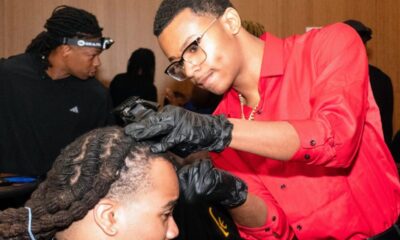
ALABAMA STATE UNIVERSITY – THE HORNET TRIBUNE — Alabama State University recently hosted “Cuts and Conversations,” an event that transformed barber chairs into a venue for vital dialogue about prostate cancer, a disease disproportionately affecting Black men.
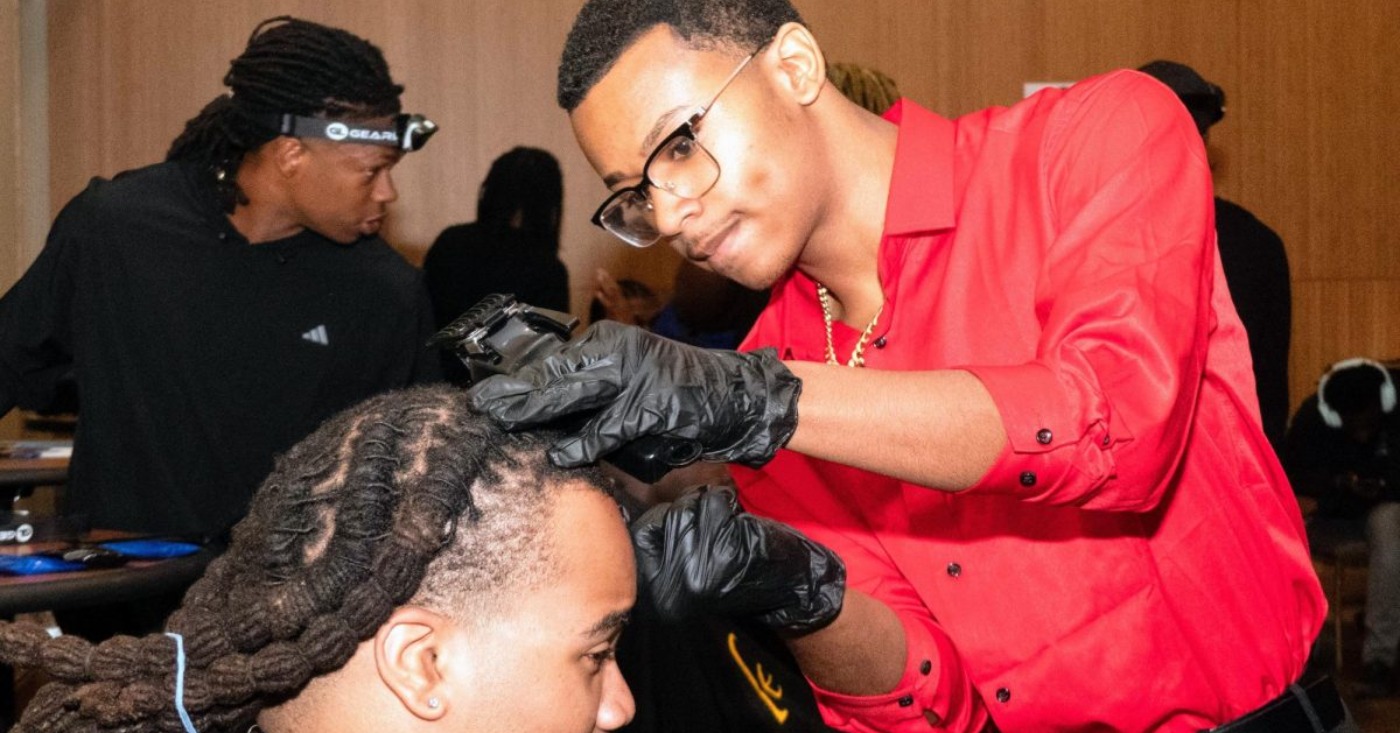
The sound of clippers buzzed with a different kind of conversation Monday at 11 a.m. as Alabama State University students and staff listened to barbers, cancer survivors and health professionals discuss a disease that disproportionately affects Black men.
Cuts and Conversations, held Sept. 28 in the John Garrick Hardy Center Ballroom, used free haircuts and the familiarity of the barbershop to open conversations about prostate cancer, early detection, family history and men’s health.
Tanjula Petty, Ed.D., vice president for Institutional Effectiveness, Strategic Initiatives and Transformation, and Willie S. Rockward, Ph.D., dean of the College of Science, Technology, Engineering and Mathematics, opened the forum and welcomed those in attendance.
For Petty, the message came from experience.
“I’m not just speaking to you based on research,” she said. “I’m talking to you from a place of experience.”
Petty said she exercised regularly, ate well and considered herself healthy when a doctor told her she had cancer. She challenged students to take what they learned back to their fathers, grandfathers and uncles.
“It’s not all about genetics; you may be the first in your family to experience it,” Petty said. “People ask me all the time, ‘Who in your family was diagnosed?’ Nobody. I’m the first.”
According to the Centers for Disease Control and Prevention, Black men are more likely to develop prostate cancer than other men and are more than twice as likely to die from the disease. The American Cancer Society recommends that Black men begin discussing prostate cancer screening with a health care provider at age 45 or at 40 for men at higher risk because of family history.
Three prostate cancer survivors were recognized during the event: Andy Maxwell, Leroy Huffman and Dandrea Evans Sr. Evans and Huffman shared their experiences with those in attendance.
Evans was 44 when a routine doctor’s visit led to his prostate cancer diagnosis. He had no symptoms.
“Initially it was the worst news you could ever hear because I didn’t feel like I had cancer. I felt great,” he said.
Evans said he turned to his faith and made the decision “to trust God through the process and to live.” Four years later, he said he is cancer-free.
“The more you know, the more you’ll be prepared to deal with it and understand it a little bit better,” Evans said.
The five-year survival rate is greater than 99% for prostate cancer diagnosed at a localized or regional stage, according to the American Cancer Society. That rate falls to 38% when the cancer has spread to distant parts of the body.
Huffman has worked at Heritage Barber & Style Shop for about 26 years, has cut hair for 63 years.
“Awareness about prostate cancer is the best thing that Black men should do,” Huffman said.
His advice was simple.
“Age is not the key here. Life is,” Huffman said.
Dawna Nelson, Ph.D., an associate professor of social work, licensed master social worker, and principal investigator for the Cuts and Conversations research project, said the project grew from years of community health work and conversations with Heritage about the role barbershops already play in Black communities. When funding became available, the partnership trained barbers to speak with clients about prostate cancer, early detection, and family history.
Heritage owner Vladimir “Boo Man” Averett said the shop wanted to be part of that work, particularly because of Huffman’s experience.
“He gives conversation all the time to us younger barbers as well as our clients about get checked, get checked, get checked,” Averett said.
For Averett, the message comes down to five words.
“It’s not about wealth. It’s about health,” Averett said.
The partnership extended to student barbers.
Brittany Hollins, planning and evaluation specialist in the Office of Institutional Effectiveness, Strategic Initiatives, and Transformation, said organizers worked with Student Life and athletics to identify student barbers who were trained at Heritage to carry those conversations to their peers.
“They’re cutting hair, and they’re having these conversations,” Hollins said. “And so it’s Cuts and Conversations today.”
Hollins’ grandfather died a little more than a year ago after his prostate cancer progressed to Stage 4.
“It is not an easy task to have that loved one at home on hospice, and you are being tasked to give them that last dose of morphine, and then you realize there’s no pulse,” Hollins said.
Beyond the personal stories, the event connected students with cancer research and health resources.
Manoj K. Mishra, Ph.D., director of the university’s Cancer Research Center and professor of biology, said the center supports cancer research, trains students, and works to increase cancer awareness in the community.
Pastor Lee B. Walker Jr. and Terrance “Wolfgang” Baldwin hosted a live recording of the “Off the Cuff” podcast, continuing the discussion about prostate cancer awareness and Black men’s health.
Five Horizons Health Services, the Alabama Department of Public Health, the university’s Cancer Research Center and Health Services were represented. Five Horizons also provided free HIV and sexually transmitted infection testing.
For the students in the barber chairs, the conversations made the message immediate.
Freshman Jonathan Alexandre said events such as Cuts and Conversations can make it easier for young Black men to begin talking about their health.
Freshman Elijah Kidd, a computer engineering major from Pensacola, Florida, said cancer has already touched his family through his uncle.
“Really just cherish every moment you have, because you never know when it might end,” Kidd said.
Senior Xavier Moore, a double major in music education and music performance, said the setting allowed younger and older Black men to learn from one another.
“Your health comes first,” Moore said.
Student barber Mark Coaxum II, a biology major who plans to become a doctor, brought the message back to action.
“Knowing the probability is good, but getting tested is best, because whether you’re probable or not, you never know,” Coaxum said. “It could be you.”
Nelson said she hopes those conversations continue long after the barber chairs are gone.
“The barbershop is where these conversations start, but then the next day they’re in the gym, and then the day after that on the golf course, and in the boardroom, and most importantly, at a family dinner table amongst the father and the son,” Nelson said.
For students who may think prostate cancer is years away, Nelson left them with a reason to start talking now.
“You are a son. You are a nephew. You are a grandson,” she said. “And if you take the time to talk to your fathers and your uncles and all of the men in your life about this, you are potentially saving their life, and you’re also at the same time empowering yourself so that when your time does come, you have all the information you need to be able to make good health choices.”
Based on reporting by Alabama State University – The Hornet Tribune.
Black History
National Civil Rights Museum Freedom Award Honors the Relentless Fight for Equality
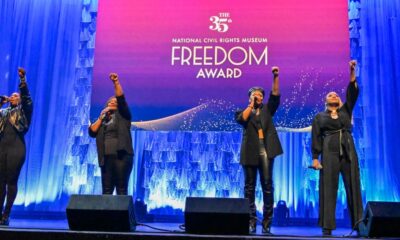
TRI-STATE DEFENDER — The National Civil Rights Museum’s 35th annual Freedom Award ceremony, held on Thursday, October 1, at the Orpheum Theatre, recognized a diverse group of civil rights leaders. Honorees included Fred Gray Sr., a legal strategist who represented Dr. Martin Luther King Jr.
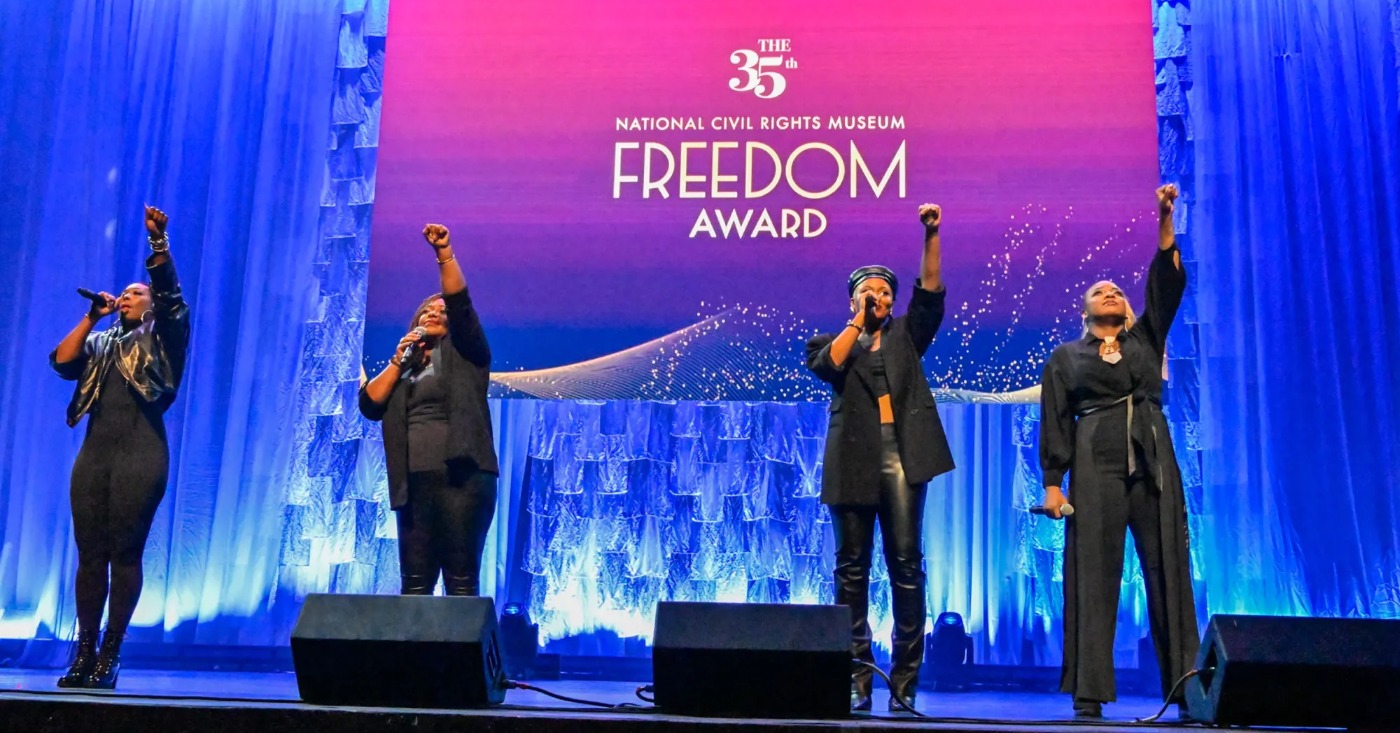
The honorees at the National Civil Rights Museum’s 35th annual Freedom Award ceremony held at the Orpheum Theatre on Thursday, Oct. 1, reflected a changing era of civil rights leadership.
Fred Gray Sr., one of the last surviving legal strategists of the Civil Rights Movement, helped dismantle segregation in America as the lawyer who represented Dr. Martin Luther King Jr. and Rosa Parks. Gray’s pioneering legacy now rests with the generations he helped empower, including fellow award recipients Rev. Shavon Arline-Bradley, Nneka Ogwumike and Bakari Sellers.
Arline-Bradley, an ordained minister, public health advocate, and president and CEO of the National Council of Negro Women since 2023, credits the women and civil rights legends who preceded her and built the organizations she now leads with making her work possible.
Nneka Ogwumike, WNBA champion and four-term president of the league’s players association, and Bakari Sellers, a lawyer, author, CNN political correspondent and former South Carolina legislator, represent a younger generation of human and civil rights activists. They are taking the fight into new arenas, from women’s sports and economic opportunity to voting rights, education and social justice.
Together, their stories shaped the event’s overall theme and mood, which celebrated the courage of freedom fighters of the past while embracing what civil rights leadership looks like now — and what it may become.
Before the ceremony, hundreds of guests gathered for photographs and interviews on the red carpet and hors d’oeuvres at the Halloran Centre for Performing Arts & Education next door to the Orpheum. Actor Larenz Tate hosted the event for the second consecutive year. Grammy Award-winning gospel artist Tamela Mann brought the audience to its feet with her performance of the hit song “Take Me to the King.” And local artist Garry Goin and the Freedom Award House Band performed a mix of R&B and liberation songs.
-

Fred Gray Jr. accepted the Freedom Award on behalf of his father, civil rights attorney Fred Gray Sr., who was unable to attend the ceremony. (Gary S. Whitlow/Tri-State Defender) -

Rev. Shavon Arline-Bradley, president and CEO of the National Council of Negro Women, was among the honorees at the National Civil Rights Museum’s 35th annual Freedom Award. (Gary S. Whitlow/Tri-State Defender) -

Nneka Ogwumike, WNBA champion and four-term president of the league’s players association, was honored at the National Civil Rights Museum’s 35th annual Freedom Award. (Gary S. Whitlow/Tri-State Defender) -

Bakari Sellers, lawyer, author, CNN political correspondent and former South Carolina legislator, was honored at the National Civil Rights Museum’s 35th annual Freedom Award. (Gary S. Whitlow/Tri-State Defender)
Taking the stage to accept the first award was Arline-Bradley, who reflected on the legacy that shaped her path to leadership.
“This honor means more to me than you can ever imagine,” Arline-Bradley said, describing the moment as the culmination of what she believes God had in store for her.
She paid tribute to Dorothy Height, whose leadership helped secure the headquarters for the women’s advocacy nonprofit on Pennsylvania Avenue in Washington, D.C. Arline-Bradley described the building, located on the same street as the White House, as a representation of Black women’s history, power and resilience.
“NCNW stands as the only Black and women-owned building on Pennsylvania Ave,” she continued.
During her speech, Arline-Bradley outlined what she believes it will take to achieve freedom and equality today.
“If America wants to get her healing, we’ve got to climb to the rooftop of justice,” she said.
And justice includes using Black economic power to support companies with compatible values, she continued.
Fred Gray Jr. accepted the award on behalf of his father, who was unable to attend the ceremony. Gray, who practices law alongside his father and brother, recalled his father’s decision to become a lawyer and return to Montgomery, Alabama, determined to challenge segregation.

Gray connected his father’s legal work to Memphis’ sanitation workers, whose 1968 strike became a defining moment in the city’s civil rights history. “At 95, if he was here, he would say to you, ‘I have done what I can do. The rest is up to you,’” Gray Jr. said.
Ogwumike used her acceptance speech to connect the growing visibility of women’s sports to a broader conversation about opportunity and equality.
“In this moment, there are greater and more opportunities for girls and women in sports,” Ogwumike said, pointing to the example provided by the WNBA’s professional athletes who serve as role models for young girls.
She also addressed what she described as threats to women’s rights and access, including debates surrounding Title IX, voting rights, reproductive healthcare and gender violence. “We refuse to be bullied and we refuse to be silenced and made to disappear,” Ogwumike said.
Her remarks were followed by a surprise video message from former Vice President Kamala Harris, who thanked Ogwumike for “being a fighter for the people” and congratulated the evening’s other honorees.
The final honoree, Bakari Sellers, has family ties to Memphis. His mother grew up in the city. His grandfather, the Rev. E.W. Williamson, once served as pastor of Middle Baptist Church and Olivet Baptist Church.

Sellers wrapped his remarks in light humor as he reflected on his conversations with other advocates and his own social justice journey. At one point, he paused, overcome with emotion, as he recalled visiting the National Civil Rights Museum earlier in the day and standing on the balcony where Dr. Martin Luther King Jr. was assassinated on April 4, 1968.
“The victories they won are being torn down all around us,” Sellers said.
To illustrate the cost and cruelty of social injustice, he asked the audience to imagine a 10-year-old student who might one day cure cancer but is struggling in school because of hunger.
“Somewhere we have forgotten that we come from a people of dreamers,” Sellers said. “We have forgotten the price that was paid.
“I am only 42 years old. I don’t really deserve this thing,” Sellers said. “But I will promise you this: Tomorrow I will work harder than I did yesterday.”
A video montage at the black-tie ceremony paid tribute to influential figures who died this year, including civil rights organizer Bernard Lafayette, a leader in the Nashville Movement, Freedom Rides and the Selma voting rights campaign; Rev. Jesse Jackson, the civil rights icon, minister and founder of Operation PUS;, Memphis civil rights activist Clara Ester; feminist leader and journalist Gloria Steinem; and country music legend and philanthropist Dolly Parton.
Museum President Russ Wigginton commented ahead of the program on the generational evolution of Freedom Award honorees. He noted that earlier generations of civil rights leaders often could measure progress through changes in laws, court decisions and government policy. Marches, sit-ins and other forms of direct action helped produce the landmark legal changes achieved during the Civil Rights era of the 1950s and 1960s.
But today, he said, the work can be more difficult to measure because much of it involves changing hearts and minds, increasing empathy and encouraging people to understand cultural differences.
“It is a delicate balancing act that requires patience and commitment,” Wigginton said.
He added, however, the fundamental goal remains unchanged: equal rights for everyone.
Based on reporting by Tri-State Defender.
Art
Montclair Brewery: Brewing Culture, Community, History
THE POSITIVE COMMUNITY — Montclair Brewery, located in Montclair, New Jersey, has evolved beyond a craft beer destination into a community gathering place. Founded by husband-and-wife team Leo and Denise Sawadogo, the brewery connects its beers to African, Caribbean, and African American history and culture.
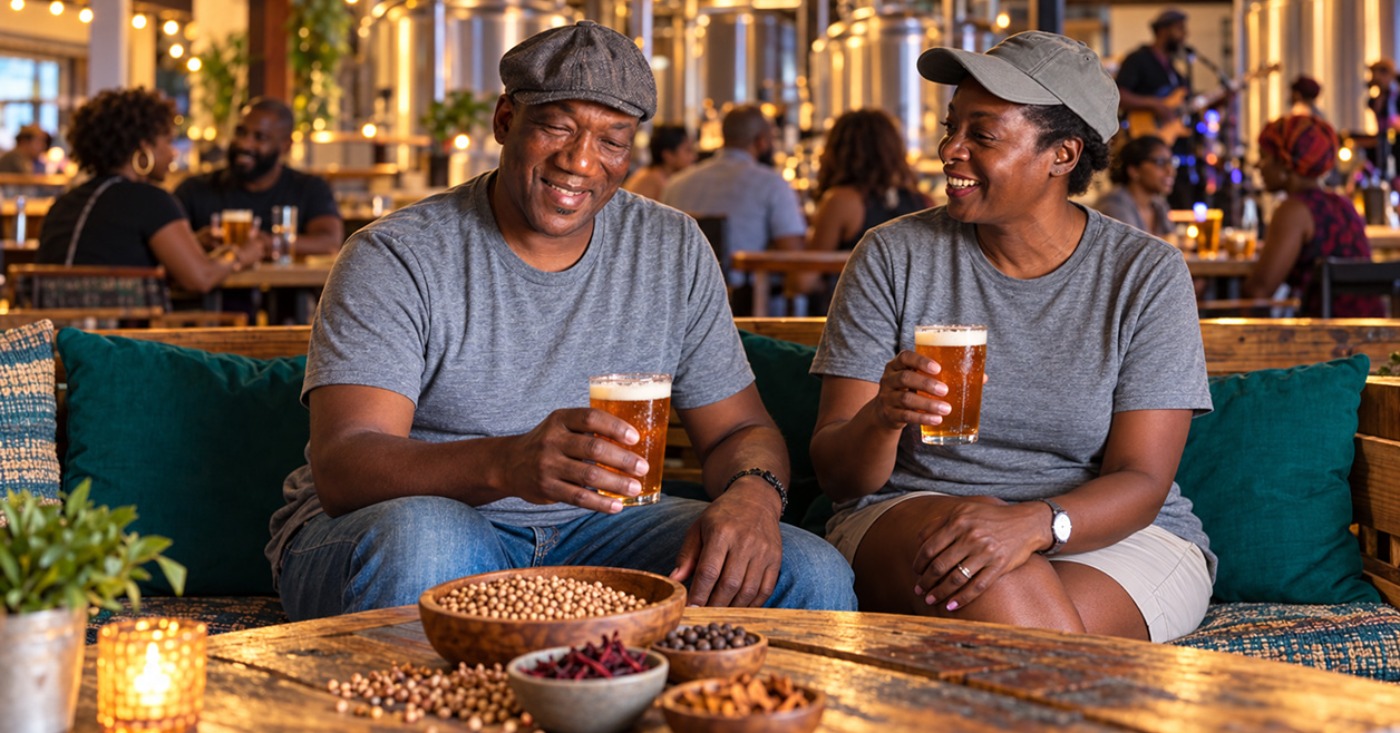
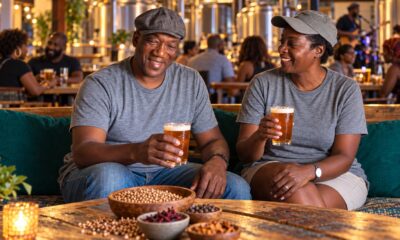
Montclair Brewery has become much more than a place to enjoy a craft beer. Located on Walnut Street in Montclair, New Jersey, the family-owned microbrewery has developed into a gathering place where beer, music, culture, history and community come together. Founded by husband-and-wife team Leo and Denise Sawadogo, the brewery has established a distinctive identity by connecting its beers to African, Caribbean and African American history and culture.
The story began with Leo Sawadogo’s passion for home brewing. Originally from Burkina Faso in West Africa, Leo grew up watching his mother brew traditional beverages using grains, herbs and spices. Brewing was part of his cultural experience long before craft beer became a major American trend. After years of making beer at home and sharing it with friends and family, Leo and Denise began imagining how they could transform that passion into a business. The company was established in 2014, and after years of planning and nearly a year of construction, Montclair Brewery opened its doors in October 2018.
The brewery represented an important milestone for Montclair because it became the town’s first microbrewery. But its significance extended beyond being a new business. Leo and Denise brought together two different cultural backgrounds: Leo’s West African heritage and Denise’s Jamaican roots. Those influences became part of the brewery’s personality and, importantly, part of the beers themselves. Instead of treating culture as something separate from the business, the couple made it an essential ingredient in their approach to brewing.
One of the brewery’s most distinctive traditions is its annual Black History Month beer series. These beers are often inspired by prominent figures, historical events and cultural traditions. Over the years, the brewery has created beers honoring people such as Harriet Tubman, Larry Doby, Maya Angelou, Chadwick Boseman and journalist Gil Noble. The brewery has also used its beers to celebrate African heritage and important moments in Black history. In 2026, for example, its series included beers inspired by Patrice Lumumba and Larry Doby.
The story behind each beer is almost as important as the beer itself. Montclair Brewery demonstrates how food and beverages can become vehicles for storytelling. A beer named for Larry Doby can introduce customers to the history of the baseball pioneer who broke the American League’s color barrier and later made Montclair his home. A beer inspired by Patrice Lumumba can encourage people to learn about African independence and the history of the Democratic Republic of Congo. In this way, the brewery turns a visit to a taproom into an opportunity for cultural discovery.
Montclair Brewery has also connected its business to local history. One example is the Howe House, one of Montclair’s historic homes associated with the town’s African American history. The brewery created a Belgian-style ale honoring James Howe and committed a portion of sales from the beer toward efforts to preserve the historic property. This illustrates a larger philosophy behind the brewery: its identity is not simply based on selling beer, but on using the business as a platform to recognize people, places and stories that deserve greater attention.
The brewery’s importance also comes from its role as a community gathering place. Its taproom offers indoor and outdoor seating and hosts a variety of events and activities. Music, entertainment, cultural programs and community gatherings have helped make the brewery part of Montclair’s social landscape. During the COVID-19 pandemic, when gathering in public spaces became difficult, the brewery adapted its business model by shifting toward bottling and outdoor operations. Its ability to adapt helped it survive a period that was devastating for many small businesses.
Another important part of Montclair Brewery’s story is representation within the craft-beer industry. Black-owned breweries remain a small portion of the American craft-brewing landscape, making the visibility of businesses like Montclair Brewery particularly significant. Denise has also become an important voice for women in the brewing industry, while Leo’s background and approach have helped challenge traditional ideas about who a brewer is supposed to be. Together, they demonstrate that the craft-beer industry can reflect a much broader range of cultures and experiences.
The brewery’s success has also allowed its reach to extend beyond Montclair. Its beers have received attention from regional and national media, and the company has participated in collaborations with other breweries and cultural organizations. One collaboration celebrated the 50th anniversary of hip-hop with the legendary DJ duo Awesome 2. Other beers have incorporated ingredients such as baobab fruit, sorghum and spices connected to African and Caribbean traditions. These collaborations and unusual ingredients help distinguish Montclair Brewery from breweries whose identities are based primarily on conventional beer styles.
Ultimately, Montclair Brewery represents an example of how a small business can become part of the cultural fabric of a community. Leo and Denise Sawadogo created a brewery from a personal passion, but they built something larger than a place to drink. Their beers tell stories about Africa, the Caribbean, Black America and Montclair itself. The brewery demonstrates that entrepreneurship can preserve history, celebrate culture and bring people together. In Montclair, every pint can become part of a larger conversation about heritage, creativity, community and the continuing evolution of Black-owned businesses in America.
Based on reporting by The Positive Community.
Black History
Listening as a Lifeline: A Doula’s Witness to Black Maternal Health
OAKLAND POST — Maternal mortality and pregnancy-related mortality use different time frames and methods and are not interchangeable. Finalized 2024 CDC data recorded 649 maternal deaths nationally. The overall rate was 17.9 deaths per 100,000 live births, but for non-Hispanic Black women it was 44.8, compared with 14.2 for White women and 12.1 for Hispanic women.
Word Count: 1058
Note: Client A, B & C, names are withheld for privacy; these accounts reflect my recollections as theirDoula.
Client A rocked her hips on a birthing ball, surrounded by pale wood and warm textiles in a softly lit Scandinavian-style office. I was her doula through a Southern California maternal health company combining nurse-led care, technology, and wraparound support.
She was a healthy Black woman in her thirties. Her baby girl was doing well; her partner took notes as we discussed labor and advocacy.
Then we turned to their chosen hospital. I knew it well—and remembered a phrase from another client’s experience: “Policy of Sovereignty.”
Client B had been told she needed a repeat cesarean as a precaution, though the reasoning was unclear. Her obstetrician, who performed her first cesarean two years earlier, had assured her throughout pregnancy that she was healthy, healed, and ready for a vaginal birth. We asked staff to review her chart, consult her obstetrician, and reconsider immediate surgery. Instead, they invoked the “Policy of Sovereignty.”
The physician on duty, we were told, had final authority, regardless of her established care plan. I asked whether an ultrasound or reassessing the baby’s position could offer clarity. Cesareans can be lifesaving. But were Client B’s history, informed consent, and circumstances guiding this decision—or was routine overriding individualized care? We kept asking for her obstetrician. Beneath every request was a deeper question: Was she being heard?
The Numbers Behind the Stories
Statistics arrive in clean columns. The experiences behind them do not.
Maternal mortality and pregnancy-related mortality use different time frames and methods and are not interchangeable. Finalized 2024 CDC data recorded 649 maternal deaths nationally. The overall rate was 17.9 deaths per 100,000 live births, but for non-Hispanic Black women it was 44.8, compared with 14.2 for White women and 12.1 for Hispanic women.
In California, Black birthing people experienced 56.5 pregnancy-related deaths per 100,000 live births during 2020–2022—3.8 times the White rate and four times the Asian rate.
As a doula serving Los Angeles and San Bernardino Counties, I see faces behind those numbers. I remember concerns raised softly, then firmly, then desperately. I am tired of watching Black families enter spaces meant to protect them, only to discover they must defend themselves while laboring, bleeding, trembling, or recovering.
Returning to Client A
Client A’s labor stretched nearly 48 hours. As her condition worsened, she, her partner, and I asked whether a cesarean should happen sooner. A provider questioned my place as a doula, then said she was next.
Six more hours passed.
She entered surgery visibly ill with a serious uterine infection, her baby malpositioned and stuck. Her partner later recalled the provider saying, “This baby would never have made it through the birth canal.”
Those words landed like a blow. Our urgency had been treated as ignorance. With Client B, we questioned why surgery was inevitable. With Client A, why it was delayed. Doula advocacy is not about one kind of birth. It is about informed consent, individualized care, and timely action. Hospital routine should never outweigh the person carrying the risk.
Survival Cannot Be the Standard
The Black maternal health crisis includes unequal care, untreated conditions, racial bias, delayed referrals, poor communication, and inadequate postpartum support. It is about birth plans respected only until a hospital becomes less busy and postpartum care that asks whether a mother survived, not whether she has what she needs to recover.
Survival cannot be the standard. Technology can support care, but it cannot replace human connection. An algorithm cannot detect fear in a patient’s eyes, and a mission statement alone cannot ensure adequate staffing or culturally responsive care.
The Story of Client C
Before I arrived, I heard the chaos through Client C’s phone. Staff struggled to locate her baby’s heartbeat on an external monitor as her fear and blood pressure rose. I pleaded for an internal electrode before surgery.
“There’s not enough time,” a nurse said.
“I would like to wait for my doula,” Client C called out.
But she was medicated, hurried through consent, and wheeled away while I listened.
In the operating room, after a shift change, another nurse placed an internal electrode and said, “The previous monitor wasn’t working.”
No one responded.
According to her father, the obstetrician avoided eye contact: “We need to move forward.”
Surgery may still have been necessary; that was not mine to determine. But if faulty equipment helped create the emergency, the family deserved acknowledgment and explanation—not silence. No family should have to wonder whether major surgery followed an unavoidable crisis or a machine failure no one recognized in time.
From Prevention to Accountability
After supporting nearly 100 families, I have learned that danger often begins before admission. I have urged clients to seek care—and heard why they feared returning: dismissed pain, harsh words, shame for asking questions.
Care cannot be holistic where Black families do not feel safe enough to speak or return. Representation matters, but providers of color cannot repair inequity alone. They need adequate staffing, mentorship, culturally responsive training, reliable equipment, and colleagues that are reflective of all the aforementioned. It’s not the Black providers job to care for just the Black patients, everyone should have the same goal.
The Momnibus Act, California’s Medi-Cal doula benefit, the Transforming Maternal Health Model and the Perinatal Equity Initiative require more than promises; they need sustained funding, reliable reimbursement and accountable implementation.
Birth should be sacred. Yet too many Black birthing people arrive carrying the burden of proving their pain is real. A doula can listen, educate, comfort, and advocate—but cannot repair a system that refuses to listen. The true measure of progress is what happens when a Black birthing person says, “Something is wrong.”
Are they believed? When equipment fails, is that failure acknowledged? Do families leave not merely alive, but safe, respected, supported, and whole?
Until those answers are consistently yes, California’s maternal health success story remains unfinished.
About the Author
Antoinette Stewart-Eneh is a mother of two, holistic maternal wellness advocate, and birth and postpartum doula who has supported families since 2019. She serves as program operations coordinator for Frontline Doulas, a volunteer client coordinator with the Joy in Birthing Foundation and a childbirth educator in South Los Angeles. She is studying to become a midwife and lactation educator.
Black History
COMMENTARY: Battling Black Voter Distrust
HOUSTON DEFENDER — Black voters have long been a reliable base for the Democratic Party, but political strategists and voters indicate that years of inconsistent engagement and unfulfilled expectations have created a trust gap.
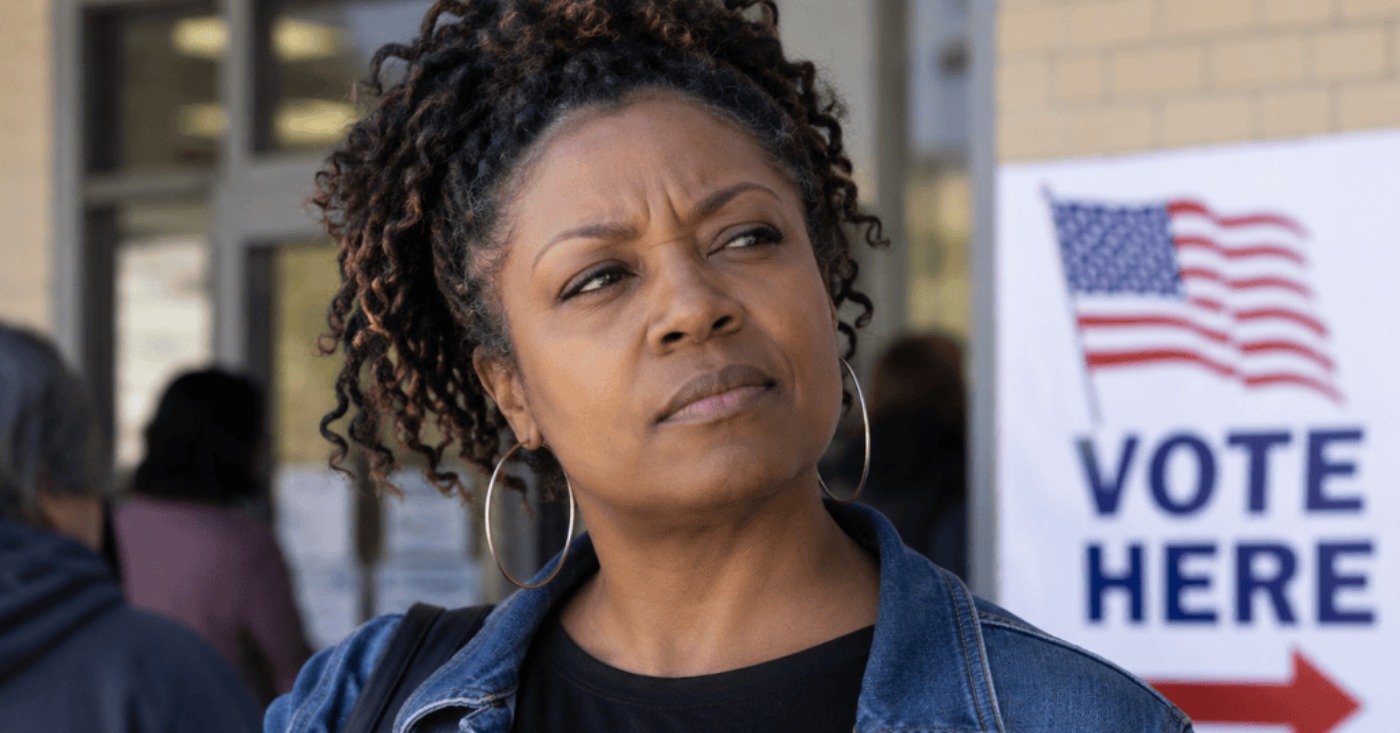
Black voters have been among the Democratic Party’s most dependable supporters for generations. But loyalty and trust are not the same thing.
With less than a month to go before the midterm elections, Black voters and political strategists say years of inconsistent engagement and unmet expectations have left some voters questioning whether the party has earned their continued support. The challenge now is bigger than winning votes. It’s convincing distrustful voters that staying politically engaged is worth it.

Communications strategist Ashley Etienne argues that Democrats have spent years taking one of their most reliable voting blocs for granted, creating a widening trust gap that threatens the party’s long-term prospects in Texas and nationally.
“Trust is the currency of persuasion,” she said. “We’re seeing distrust at an all-time high, especially with Black voters … distrust of the media, institutions, the Democratic Party, self-agreement. Campaigns don’t lose because they fail to talk to voters. They lose because they fail to listen.”
Etienne, who served as a senior adviser to Presidents Barack Obama and Joe Biden and communications director for Vice President Kamala Harris, said repairing that relationship requires something considerably more difficult than another campaign advertisement. It requires listening.
Black support remains strong, but not absolute
Recent polling suggests Democrats continue to hold a substantial advantage among Black voters heading into November, but that support isn’t universal.
A July 2026 Pew Research Center survey found 68% of Black registered voters said they would support the Democratic candidate for U.S. House in their district, compared with 8% who favored the Republican. Another 25% said they were either unsure or would support another candidate.

That uncertainty follows some erosion in Democratic support among Black voters in the 2024 presidential election. A Pew analysis of validated voters found 83% of Black voters supported Kamala Harris in 2024, compared with 92% who supported Joe Biden in 2020.
Pew found that shift was driven less by individual voters switching from one party to another than by differences in who turned out to vote.
The findings don’t suggest Black voters have abandoned Democrats. They do raise questions about whether longstanding party loyalty is enough to guarantee participation.
“We’ve been making that same argument decade after decade,” Etienne said. “Those are becoming less persuasive arguments.”
Why is trust disappearing?
The distrust isn’t necessarily about one candidate or one election. For some Black voters, frustration comes from feeling heavily courted during election season without seeing enough progress afterward on the issues affecting their daily lives.
Housing costs remain a concern. So do education, economic opportunity, neighborhood investment, and the cost of everyday necessities.
That creates a difficult dynamic for campaigns: Asking voters to participate in a political system that some believe has not delivered enough for them.
It also raises a separate question. What happens when frustration with political parties becomes disengagement from the political process altogether?
What happens when voters stay home?
The answer can become particularly consequential in local elections, where races can be decided by hundreds of votes rather than thousands.
Harris County Democratic Party Chair Traci Gibson has pointed to several 2024 judicial races decided by narrow margins. District judge candidate Elaine Palmer lost by 304 votes, while Jeralynn Manor lost by 647 votes.
Gibson also warned about voters who begin Harris County’s lengthy ballot but don’t finish it.
“If you go into these polls and you vote for the first five people and then you leave, that’s how we get Elaine Palmer losing by about 300 votes,” Gibson said.
The larger issue extends beyond any candidate or political party. Judges are elected. School boards make decisions affecting students and families. City and county officials determine how public dollars are spent. State lawmakers decide which bills become state law.
Those decisions are made regardless of how many eligible voters participate.
“We have to have strategies, we have to have plans, we have to have a mechanism in place for people to feel they are heard.”
Karla West
For voters distrustful of political parties or government institutions, political participation also doesn’t have to mean unquestioning loyalty to either party.
Voters can research candidates individually, compare their positions, attend or watch candidate forums and examine an incumbent’s record against previous campaign promises. They can also learn what the often-overlooked offices farther down the ballot actually control.
In that sense, distrust can become a reason for greater scrutiny rather than disengagement.
Candidates have work to do, too
Responsibility for rebuilding participation doesn’t fall solely on voters.
At a recent Third Ward town hall hosted by state Rep. Jolanda “Jo” Jones, Harris County Precinct 7 Constable James “Smokie” Phillips and Houston Black American Democrats, voters and political strategists called for more sustained campaign engagement.
“Investment drives outcomes. If you don’t invest in it, it doesn’t work,” Etienne said.
She argued that campaigns spend heavily on polling, consultants and advertising while directing too little money toward Black-led political infrastructure and organizations with established relationships in Black communities.
Shamier Bouie, chair of Houston Black American Democrats, said organizing cannot begin a few months before Election Day.
“It’s all about year-round organizing, and increased investment in Black voter outreach … more funding for Black-led organizations that have relationships, infrastructure, and experience in effectively engaging Black communities,” Bouie said.
The question of investment also surfaced in July when Democratic U.S. Senate candidate James Talarico pledged $25 million toward Black voter outreach. Some voters wanted specifics about where and how that money would be spent.
“We still need our kids, we still need our schools equitably funded,” said Augie Cahee, vice president of marketing web delivery at JPMorgan Chase & Co. “So, we want to know what you’re going to do with the money. Don’t stand up and tell me $25 million and you don’t have a plan.”
The exchange illustrated the larger trust problem: Voters aren’t simply asking candidates to talk to them. They want to know what happens after the conversation.
From distrust to accountability
Karla West, a precinct chair for downtown’s Precinct 16, said responsibility ultimately belongs on both sides.
“We fell asleep at the wheel,” West said of voter turnout.
But she also challenged political leaders.
“The Democratic Party did not say what they would do for you,” West said. “We haven’t heard a plan for years. I’m sick of it. We have to have strategies, we have to have plans, we have to have a mechanism in place for people to feel they are heard.”
Defender Reporter Tannistha Sinha contributed to this report.
Based on reporting by Houston Defender.


Annika Ashton First Black Woman and Jamaican Broward County Attorney

Cuts and Conversations Turns Barber Chairs into Space for Lifesaving Dialogue

NFL: Bryce Young is Proving “Patience is a Virtue”

National Civil Rights Museum Freedom Award Honors the Relentless Fight for Equality

Safety Concerns at Southern University

ROOTED IN CULTURE, LEADING IN BANKING

Montclair Brewery: Brewing Culture, Community, History

COMMENTARY: But God!

The Conversation with Al McFarlane

The Conversation with Al McFarlane 📱

Latest Massacre in Haiti Reveals Cruelty U.S. Deportations

Black Americans Have Doubts About the U.S. Food System

When Praises Go Up: SUGC Nominated for Prestigious Stellar Award.

Booked and Unbound: The Legacy of Black Women’s Literary Circles

The Youngest American Killed in the Vietnam War

U.S. Sole Nation to Oppose U.N. Resolution Correcting Africa’s Size on World Maps

COMMENTARY: Big Mama Said ‘Don’t Let Grief Break the Bank’

Prostate Cancer is Twice as Likely to Kill Black Men. Talking to Your Doctor Could Help Save Your Life

Outnumbered: Elbert Cox’s Equation for Greatness

Passing for White, Fighting for Black America: The Courage of Walter White
The Conversation with Al McFarlane
The Conversation with Al McFarlane 📱

Introduction, 2027 VW Atlas SEL Premium R Line Worth $58,135?

Welcome, 2027 VW Atlas SEL Premium R Line Worth $58,135?

Smart Car Buying: Ask These Questions Before You Buy! #shorts

2027 VW Atlas SEL Premium R Line Worth $58,135?

Unlock Auto Loans: Black-Owned Banks & Credit Unions #shorts

Find Black-Owned Banks & Auto Loan Pre-Approval Easily #shorts

Car Warranty Explained: Powertrain, Basic & Roadside! #shorts

NFN present Tonight: Inaugural Beyond IWDM50 Podcast – Northeast Sectional Focus
-
 Black Press5 days ago
OP-ED: Haiti TPS: Have We Lost Sense of Humanity?
-
 Black History1 week ago
Remembering Chauncey Bailey as Student Journalists Face Threats to Truth-Telling
-

 Black Press1 week ago
Poll: Becerra Widens His Lead Over Hilton; Californians Split on Wealth Tax
-
 Black History1 week ago
COMMENTARY: The Audacity of Joyce Beatty
-

 Black History1 week ago
Rulings Leave Questions Lingering in Nolan Wells Case
-
 Black History1 week ago
Baptist Minister Says Black Church Champions for Civil Rights to Reign but Hesitates to Let Black Women Lead
