
Featured
US House hears testimony on voter discrimination
LOUISIANA WEEKLY — Since the Democrats took control of the U.S. House last November, their efforts to restore the Voting Rights Act (VRA) — gutted by the U.S. Supreme Court in its 2013 Shelby County v. Holder decision — have continued despite entrenched Republican opposition. On Sept. 10, the House Judiciary’s Subcommittee on the Constitution, Civil Rights, and Civil Liberties once again focused the nation’s attention on the VRA with a hearing titled “Evidence of Current and Ongoing Voting Discrimination.”


By Benjamin Barber
(Special from Facing South) — Since the Democrats took control of the U.S. House last November, their efforts to restore the Voting Rights Act (VRA) — gutted by the U.S. Supreme Court in its 2013 Shelby County v. Holder decision — have continued despite entrenched Republican opposition.
On Sept. 10, the House Judiciary’s Subcommittee on the Constitution, Civil Rights, and Civil Liberties once again focused the nation’s attention on the VRA with a hearing titled “Evidence of Current and Ongoing Voting Discrimination.”
Witnesses included several prominent civil rights leaders: Derrick Johnson, NAACP president; Vanita Gupta, president and CEO of the Leadership Conference on Civil and Human Rights; Dale Ho, director of the American Civil Liberties’ Voting Rights Project; Myrna Perez, director of the Brennan Center for Justice’s Voting Rights and Elections Program, and Natalie A. Landreth, senior staff attorney at the Native American Rights Fund.
Also on the panel was J. Christian Adams, president and general counsel of the conservative Public Interest Legal Foundation and a former member of the Justice Department under the Bush administration. Adams has been known to spread false and exaggerated claims about voter fraud.
The witnesses began by reporting their findings of ongoing voter discrimination at the state and local level.
After the Supreme Court effectively struck down the Section 5 of the VRA that required states and counties with a history of voting discrimination — most of them in the South — to get federal preclearance for election law changes, Republican state lawmakers began promoting restrictive voting laws that explicitly targeted voters of color. Of the 13 Southern states, 11 adopted such laws in Shelby’s wake. Among them are states that were covered in whole by the preclearance requirement, including Alabama, Georgia, Mississippi, South Carolina, Texas, and Virginia, as well as those covered in part, such as North Carolina.
“Justice Ruth Bader Ginsburg famously warned about the Supreme Court’s decision striking down a part of the voting rights act was like, quote, throwing away your umbrella in a rainstorm, and sure enough, after the decision a downpour came with a wave of discriminatory voting laws,” said the ACLU’s Ho. Among them were measures that required voter ID, scaled back early voting periods, cut polling locations, restricted absentee ballots, and limited voter registration.
Gupta, who previously led the Obama Justice Department’s Civil Rights Division, emphasized the impact of polling place closures on voter turnout. She referenced a report recently released by The Leadership Conference that examined polling places in 750 counties once covered by Section 5. It found that 1,688 polling places were closed between 2012 and 2018, largely in Black communities. Polling place closures often lead to long lines, voter confusion, and transportation challenges.
“Without preclearance, states are under no obligation to evaluate the discriminatory impacts and potential harms of polling place closures,” said Gupta.
The NAACP’s Johnson pointed out that without preclearance and a responsive Justice Department the burden of combating voting discrimination has fallen on legal organizations and voting rights activists. “Our branches and members are asked to do what used to be the job of the federal government — protect the right to vote,” he said. “To be clear, we’re fighting back wherever and whenever we can. This is not sustainable. Congress must step up to combat this nation’s epidemic.”
Noting that prior to Shelby jurisdictions had to clear changes to their purge practices with the Justice Department, the Brennan Center’s Perez reported that almost 16 million people were removed from the voting rolls between 2014 and 2016. “It’s difficult to address the effects of bad purges until it is too late,” she said. “That’s why Section 5’s preclearance process is well tailored to address not only voter discrimination and other forms but the purge problem specifically”
Landreth focused on how losing preclearance protections has affected Native American voters. In the first election after Shelby in formerly preclearance-covered Arizona, for example, Maricopa County reduced the number of polling places from hundreds down to about 60 in 2016, resulting in voters standing in line for as long as six hours to cast a ballot. The voters were forced to sue to get polling places reopened.
“Why do these voters have to sue to not wait in a four- to six-hour line?” asked Landreth. “Because preclearance is gone.”
Besides detailing problems, the hearing also considered solutions — and all of the witnesses agreed that restoring Section 5 of the VRA was critical. There are currently several bills in Congress that would restore the VRA, all of them stalled in the legislative process because of inaction by Republican leaders.
“Make no mistake — Congress has ample evidence [of the need] to restore the Voting Rights Act to its full strength,” said Johnson. “No one can deny the strong record that supports immediate passage.”
This article originally appeared in the online magazine of the Institute for Southern Studies, www.southernstudies.org. The Institute for Southern Studies is a nonprofit research and media center that exposes injustice, strengthens democracy and builds a community for change in the South.
This article originally published in the September 16, 2019 print edition of The Louisiana Weekly newspaper.
This article originally appeared in The Louisiana Weekly.






Featured
A Career Path That Took an Unexpected Turn #shorts
Life rarely follows the blueprint we create. Discover how one unexpected detour turned into a fulfilling new career journey.


Life rarely follows the blueprint we create for ourselves. What started as a dream of academia and coffee shops evolved into a completely different path. Embracing the journey even when it doesn’t match the original vision. #CareerGrowth #LifeLessons #PersonalDevelopment #CareerChange
Featured
Black Media in Minnesota: The Community That Kept Us Going #shorts
Discover how community support fuels the resilience of Black media in Minnesota. See how independent voices are thriving despite systemic barriers.

Building a platform for new voices in Minnesota is a grind. Despite systemic barriers in the general market, community support remains the lifeline that keeps vital independent media alive and thriving. #BlackMedia #IndependentJournalism #CommunitySupport #MinnesotaHistory
Featured
The Conversation With Al McFarlane: (11/10/2026)
Al McFarlane returns for another insightful discussion. Tune in to catch the latest updates from this week’s conversation.
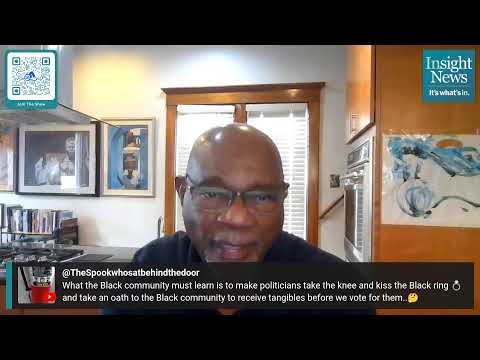
The conversation continues..
Black History
Don’t Pass the Torch. Expand the Circle.
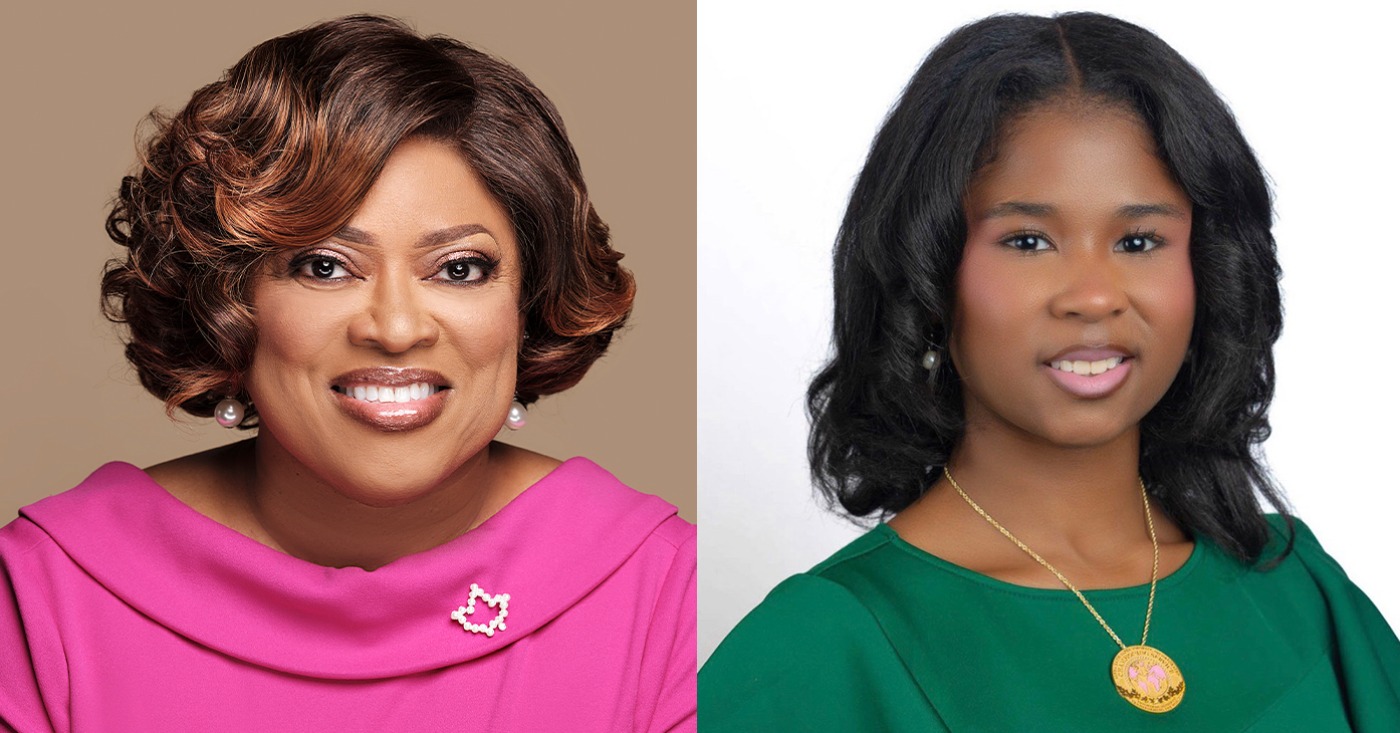
Alpha Kappa Alpha Sorority, Inc. is redefining mentorship by empowering undergraduate women to take active roles in high-level organizational governance. Instead of asking young leaders to wait their turn, the sorority is integrating students like Noah M.P. Harris into international boards and planning committees alongside seasoned veterans like Dr. Tonja L. Ringgold. This intergenerational model aims to combat professional burnout and systemic barriers by offering meaningful responsibility and guidance today, rather than in the distant future, to learn how this approach is transforming leadership. read more.

On Nov. 14, hundreds of undergraduate women gathering at Morgan State University in Baltimore for Alpha Kappa Alpha Sorority’s Undergraduate Leadership Institute will do more than listen to presentations. They will run the program. Graduate advisers will take seats in the back of the room.
This is intentional. Too many institutions invite young people to observe leadership without trusting them to exercise it. We believe the future of leadership depends not on one generation stepping aside for another, but on generations sharing responsibility now.
We have seen the difference from two vantage points.
For Dr. Ringgold, Morgan State is where that journey began. Initiated into Alpha Kappa Alpha’s Alpha Delta Chapter in 1982, she recently reunited with two sorority sisters who guided her as an undergraduate, including a former chapter president whose example still informs her leadership today. Forty-four years later, she returns as director of the sorority’s North Atlantic Region, keenly aware of what it means when someone invests in a young woman’s potential. The homecoming carries added significance: Alpha Delta, chartered in 1926, is celebrating its centennial; and the chapter that shaped her is still helping shape new leaders.
For Ms. Harris, leadership is not a distant destination. She is a Bowie State University senior and president of its Eta Chapter who, this summer, was elected Alpha Kappa Alpha’s International Second Vice President. As an undergraduate member of the sorority’s international governing board, she carries student perspectives into decisions affecting the organization. A 2025 Leadership Fellows experience encouraged her to seek that larger platform. To her, leadership is measured by the people she can serve, not simply the position she holds.
Our experiences challenge a familiar assumption: Young people must wait their turn. Founded in 1908 by Black college women, Alpha Kappa Alpha now counts more than 390,000 initiated members across more than 1,122 chapters. That reach brings a responsibility to open doors, not merely preserve tradition.
Deloitte’s 2026 global survey found that 76% of Gen Z respondents were interested in pursuing senior leadership roles eventually, although only 6% of surveyed Gen Z and millennials named leadership their primary career goal. Many cited burnout, excessive responsibility and work-life balance as concerns. Young people are not necessarily avoiding leadership. They are questioning the conditions under which it is exercised.
At a time when companies are pulling back on women’s advancement, Black women face persistent barriers. McKinsey and LeanIn.Org’s 2025 report found that among companies studied, only 60 Black women were promoted to manager for every 100 men. Telling young women to wait their turn cannot fix an unequal pathway to leadership.
Experience matters. Seasoned leaders carry institutional memory, hard-won judgment and relationships that take years to build. But experience cannot develop in a waiting room. Young leaders need meaningful assignments, honest guidance and room to make mistakes. Experienced leaders must also be prepared to reconsider familiar ways of doing things.
We see that exchange in our own relationship. Ms. Harris draws on Dr. Ringgold’s decades of sorority service and higher education experience. Dr. Ringgold listens when Ms. Harris speaks, recognizing that younger perspectives can challenge assumptions and reveal better approaches. Neither of us has all the answers. Both of us have something to contribute.
Our upcoming Undergraduate Leadership Institute will put that principle into practice. Undergraduate members will lead, with graduate members offering guidance and expertise. We’re taking the same approach in planning our 96th North Atlantic Regional Conference, scheduled for March 2027, where undergraduate counterparts will work alongside graduate vice chairs in operations, programming, social activities and logistics. They’ll help plan an event serving the entire region, not just their undergraduate peers.
That is the distinction between inclusion and influence. A seat at the table means little if the people invited cannot help determine what happens there.
Businesses, colleges, nonprofits and civic organizations can do the same. Pair mentorship with meaningful assignments. Involve emerging leaders in decisions before those decisions are final. Give them resources and room to grow. When they challenge a familiar practice, ask whether it still serves its purpose.
We should not ask experienced leaders to disappear or young leaders to wait. The goal isn’t to pass the torch and walk away. It’s to expand the circle of people empowered to lead and build stronger institutions together.
Dr. Tonja L. Ringgold is the North Atlantic Regional Director of Alpha Kappa Alpha Sorority, Incorporated. Noah M.P. Harris, a senior at Bowie State University, is the sorority’s International Second Vice President and president of its Eta Chapter.
Black Press
Kids on Campus: Success in Learning Together
The Association of Community College Trustees and the National Head Start Association have released the second annual report for Kids on Campus, an initiative placing Head Start classrooms directly on college campuses. With nearly 20 percent of U.S. undergraduates raising children, the program addresses childcare barriers that often prevent degree completion. The project aims to establish 50 partnerships by 2030 to support two-generation economic mobility. The new report highlights the initiative’s expansion across 19 states and identifies key growth opportunities to help student parents succeed. Read more.

The Association of Community College Trustees (ACCT) and the National Head Start Association (NHSA) released the Year Two Annual Report of the Kids on Campus initiative, which advances the success of parenting students and supports the school readiness of young children from low-income backgrounds by expanding Head Start classrooms onto community college campuses. The five-year initiative aims to establish at least 50 such partnerships by 2030.
Nearly one in five undergraduates in the United States — approximately 3.14 million students — are parenting while pursuing their college education. For many, access to high-quality, affordable, and convenient child care remains one of the biggest barriers to completing their degree.
The initiative’s core philosophy is rooted in two of the most effective strategies for reducing poverty: providing high-quality early childhood education and increasing adult economic mobility through education, training, and workforce pathways. Together, these approaches support two generations simultaneously, strengthening children’s development while helping parents pursue long-term economic success.
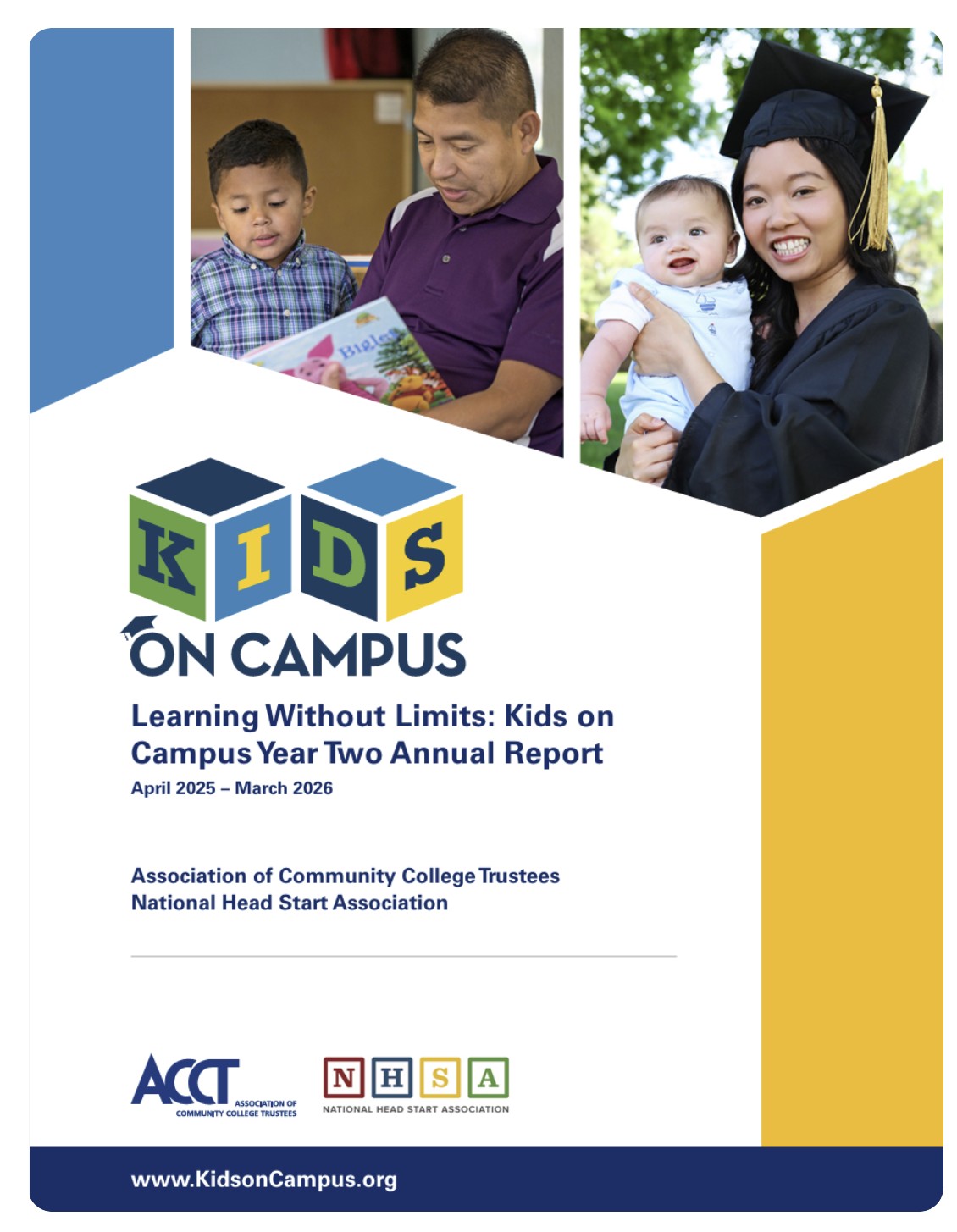
“When we support parents, we uplift students,” says Francisco Solis, president of San Antonio College (TX), which has a long-standing partnership with Head Start. “When families thrive, our community thrives. This is the power of a two-generation approach.”
The annual report outlines the rationale behind ACCT and NHSA’s work, progress to date, next steps, and opportunities for community colleges and Head Start programs to engage with Kids on Campus.
As of March 2026, at the end of year two of the initiative:
- 110 community colleges and 130 Head Start programs have taken initial steps to connect and engage with Kids on Campus.
- Partners have identified 43 potential matches between community colleges and Head Start programs interested in exploring partnerships across 19 states.
Five new Kids on Campus partnerships have launched in California, Illinois, Massachusetts, Maryland, and Texas, with two additional partnerships in advanced stages of development in Texas.
“Before I found the Head Start on my college campus, it was extremely difficult,” says Cristina Medina, a student parent at Palo Alto College, one of the newest Kids on Campus launched sites. “I was on the edge of mentally and emotionally giving up because being a full-time mom while going to school and work was hard with no support.”
The initiative continues to grow nationwide through expanded partnerships, technical assistance, and collaborative efforts to strengthen on-campus child care and early childhood education opportunities for student parents and families.
The report profiles active partnerships and explores the benefits and barriers they face, financial considerations, model sustainability, advice from the field, and what is next for Kids on Campus.
To access the full report, go to kidsoncampus.org/annual-report.
ACCT and NHSA invite community colleges, Head Start programs, and philanthropic supporters interested in transforming outcomes for children and families to contact [email protected].
Kids on Campus is supported by ECMC Foundation, Imaginable Futures, Lumina Foundation, the Annie E. Casey Foundation, Trellis Foundation, Crimsonbridge Foundation, and Seldin Haring-Smith Foundation.
Association of Community College Trustees (ACCT) is a non-profit educational organization of governing boards, representing more than 6,500 elected and appointed trustees who govern over 1,000 community, technical, and junior colleges in the United States and beyond. ACCT fosters the principles and practices of exemplary governance while promoting high-quality and affordable higher education, cutting-edge workforce and development training, student success, and the opportunity for all individuals to achieve economic self-sufficiency and security. Visit www.acct.org for more information.
The National Head Start Association (NHSA) believes that every child, regardless of circumstances at birth, has the ability to succeed in school and in life. The opportunities offered by Head Start lead to healthier and empowered children and families and stronger, more vibrant communities. NHSA is the voice for more than 750,000 children, 250,000 staff, and more than 1,600 Head Start grant recipients in the United States. Visit nhsa.org or follow @NatlHeadStart to learn more.
Black History
Nixon Unbought, Unbossed and Undeterred Following U.S. Senate Defeat – Free Press of Jacksonville
Angie Nixon, who garnered over 3 million votes in her bid for the U.S. Senate, expressed disappointment after losing to Ashley Moody with a narrow margin of 50-48. Despite the defeat, she remains dedicated to holding elected officials accountable on healthcare and community issues and plans to challenge Moody again in 2028. Nixon highlighted the essential role of Black women in her campaign, noting their significant support and efforts to mobilize voters. Despite a lower voter turnout in Duval County compared to previous elections, grassroots efforts by local activists, particularly Black women, were notable. Nixon aims to inspire future generations of leaders and voters, emphasizing the importance of civic engagement.
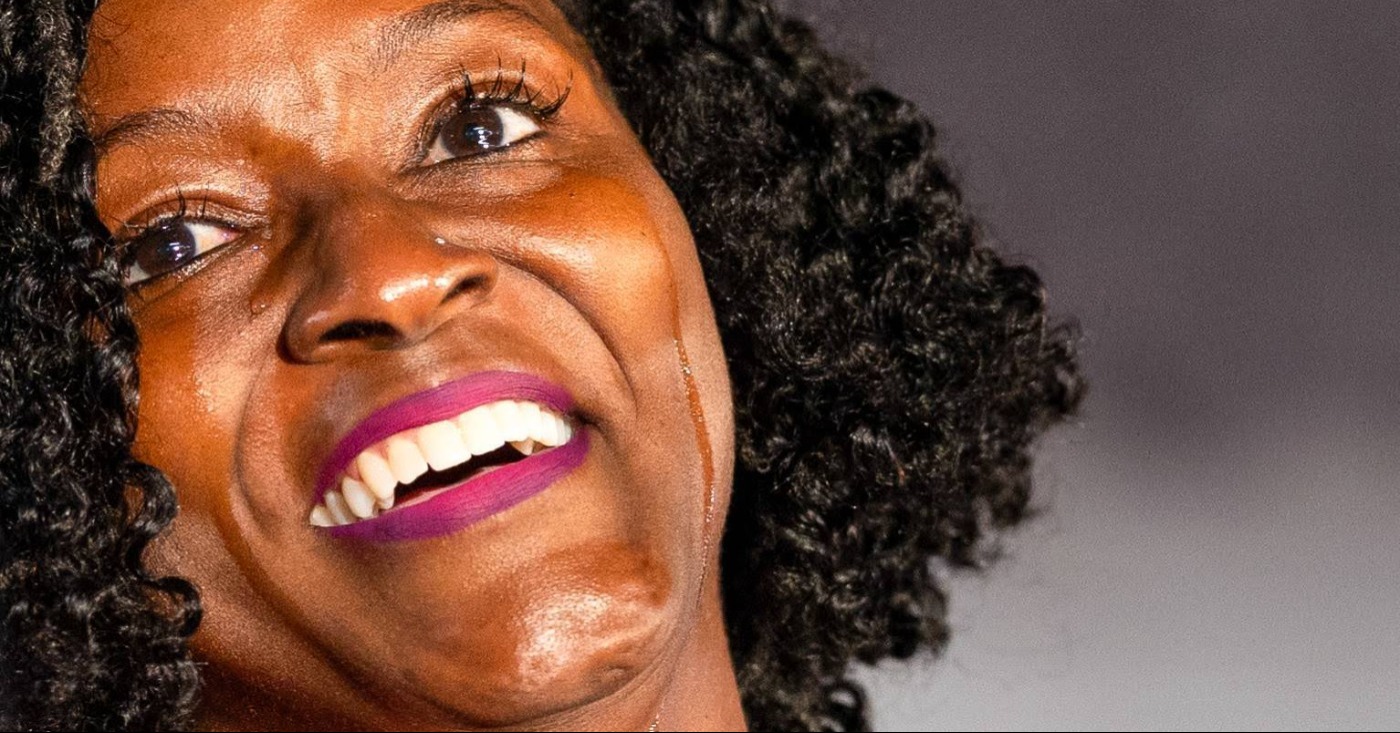
A Black woman from the heart of Moncrief earned the support of more than 3 million Floridians this election season.
Angie Nixon did not become the first Jacksonville resident to serve in the U.S. Senate since 1936.
At least not yet.
The 42-year-old organizer, small business owner, politician and mother says she will challenge Senator-elect Ashley Moody in 2028.
“I’m disappointed in the outcome, but I’m ready to get back to work – everyone is – because we’re going to make sure that Ashley Moody is held accountable for making sure that people have access to quality healthcare, a roof over their head, food on the table, and trying to lower these costs,” Nixon said on Tuesday night. “So, I’m OK. I’m not happy with the outcome, but I’m ready to get to work.”
That fact that Nixon came so close can only be attributed to the scores of Black women who supported her campaign.
Some were on staff, others volunteered, tens of thousands more voted for the former state representative who has used her bullhorn to bulldoze through staid situations in Tallahassee.
A Black woman has never won statewide office in Florida. Nixon’s 50-48 loss to Moody means it still hasn’t happened.
Not many politicians would walk onto a stage after losing a statewide race playing Bonecrusher’s “Never Scared”.
Nixon faced racist attacks from an advisor to President Donald Trump. Nazi rhetoric was used on Fox News to describe Nixon’s supporters. Yet, they traversed the state – from Marathon to Marianna; from Sarasota to South Florida – connecting with voters.
The forlorn, yet hopeful faces of so many Black women in the audience said more than their words could muster. Some were pastors, others were elected officials. One, Sandra Thompson, attended the March on Washington for Jobs and Freedom in 1963.
Thompson spent Election Day providing information to voters outside the Legends Center in Sherwood.
“It’s a very important election,” Thompson said. “We are electing our new leaders: the governor, a senator, and the House of Representatives. We need to get it right.”
If Thompson’s presence at Nixon’s campaign party was any indicator, people did not get it right.
Despite the chance to send a Jacksonville native to the U.S. Senate, hundreds of thousands of Duval County voters did not cast a ballot this year.
Preliminary data from the Duval County Supervisor of Elections shows only 55 percent of eligible voters participated this year.
Felicia Demps was not going to miss this election season. She brought five of her grandchildren with her inside the polling booth.
“They came home, and their teacher said, ‘We need to vote.’ I said, ‘Well, let’s go!”
Demps says she is a reliable Democrat who supported lowering property taxes, supported the 1-mil tax extension for Duval County Public Schools, and cares about community.
“Everyone needs to get together. Everyone wants the streets fixed until it’s time to vote,” Demps said. “The most important thing is: we want these things; but we won’t get out and vote.”
This year’s turnout is better than 2022, when Gov. Ron DeSantis won re-election for fun. But it’s lower than the 63 percent of Duval voters who turned out – many of whom hoped Andrew Gillum would become Florida’s first Black governor.
Black women were at the heart of the local effort to inform and motivate voters.
Cortina Floyd spent three hours waving signs along Moncrief Road ahead of the Northwest Classic football game between Raines and Ribault. Floyd and her Sigma Gamma Rho Sorority, Inc. sisters were among the nearly 50 people who sported Black Greek-letter organizations and informed voters last week.
“As a Black educator, I feel it’s important for me to do my civic duty,” Floyd said.
Exit polling indicates Black women in Jacksonville, in Florida and beyond, did their civic duty.
Afterward, girls of all ages danced on stage after the Associated Press called Florida’s Senate race in Moody’s favor. As they danced, they were unencumbered by the burdens and expectations that are placed on the bodies, minds, and souls of Black girls.
The organizer who lives on the Northside, in a household with multiple union members, says it was not her dream to run for the U.S. Senate. But the woman who openly invoked Shirley Chisholm and Fannie Lou Hamer on the campaign trail committed to doing what she could to help the next generation of girls.
“It’s not necessarily a dream personally. I just want to help people,” Nixon said on Tuesday night. “I wanted to make sure that we’re improving their lives. But the young people that came up to me tonight, they’re excited. They’re ready to continue to do the work and ready to, actually, build a better vision for their future. I’m all hands on deck with them, helping them grow as leaders and helping register more voters so that we can actually win.”


Your Car Insurance Could Be Costing You More Than You Think #shorts

A Career Path That Took an Unexpected Turn #shorts

Black Families: Compare Auto Insurance Quotes Every Year #shorts

Black Media in Minnesota: The Community That Kept Us Going #shorts

The Conversation With Al McFarlane: (11/10/2026)

Don’t Pass the Torch. Expand the Circle.

Kids on Campus: Success in Learning Together

Nixon Unbought, Unbossed and Undeterred Following U.S. Senate Defeat – Free Press of Jacksonville

PRESS ROOM: AutoNetwork.com Launches a Free Auto Section for Newspapers, Credit Unions, Banks, Churches, Schools and Nonprofits
The Workforce Is Changing — Get Ready Now!

All Skinfolk Ain’t Kinfolk

Practitioners of African Traditional Spirituality Offer Ancestral Reverence Ritual Oct. 31

Tamiko Armstead | 2026 Lifetime Achiever in Education

Oakland Awarded More than $14 Million in State Funding

HISTORY MADE: Keisha Lance Bottoms Becomes First Black Woman Elected Governor in American History

OP-ED: The Black Church Writes AI’s Next Chapter

Inside 820 S. Michigan: New Book Captures the Lost World of Ebony and Jet

OP-ED: If the ‘Cornell 7’ Were Black Men at an HBCU — America Wouldn’t Be This Sympathetic

Jendayi Arrest Raises Community Concerns Regarding Sheriff’s Chain of Command

Kickstarter CEO Everette Taylor Shares Tips on Creating and Growing a Business
Your Car Insurance Could Be Costing You More Than You Think #shorts
A Career Path That Took an Unexpected Turn #shorts
Black Families: Compare Auto Insurance Quotes Every Year #shorts
Black Media in Minnesota: The Community That Kept Us Going #shorts
The Conversation With Al McFarlane: (11/10/2026)

The Power of Transparency in Car Buying

The Chevy Bolt Handles Rough Roads—But How Noisy Is the Cabin? #shorts

Democratic Leadership Under Fire, Maxine Waters Challenged & Tyler Perry’s New Political Role 📱

Democratic Leadership Under Fire, Maxine Waters Challenged & Tyler Perry’s New Political Role

San Diego Supervisors’ Power Grab & Discretionary Funds
-
 Black History6 days ago
HISTORY MADE: Keisha Lance Bottoms Becomes First Black Woman Elected Governor in American History
-

 Featured1 week ago
Multi-Faith Leaders Representing 10 Million People Launch National Anti-Authoritarian Initiative
-
 Black History1 week ago
Christianity’s Racial History
-

 Black History1 week ago
Michael Shiner: The Enslaved Man Who Wrote His Way into American History
-
 Black History1 week ago
Five Hospitals Said No! Who Will Help Annette Henry Recover?
-
 Black History6 days ago
Hundreds of Black Christian Leaders Arriving in Israel for Martin Luther King-Inspired Mission
