
About Us
Unity-1 on the Road to Rebuilding
NEW ORLEANS DATA NEWS WEEKLY — On March 20th NOPD officers were in pursuit of what they believed was a car that was stolen. As officers became disengaged the car sped away and tragedy arose as the car crashed into Unity One Beauty Salon, causing a three alarm fire that left the iconic Broadmoor business building engulfed in flames leaving it presently inoperable. Also three lives were lost, the two young men in the vehicle and one women inside the salon who later succumbed to burns sustained in the fire.

By Edwin Buggage
On March 20th NOPD officers were in pursuit of what they believed was a car that was stolen. As officers became disengaged the car sped away and tragedy arose as the car crashed into Unity One Beauty Salon, causing a three alarm fire that left the iconic Broadmoor business building engulfed in flames leaving it presently inoperable. Also three lives were lost, the two young men in the vehicle and one women inside the salon who later succumbed to burns sustained in the fire.
After the fire an outpouring of support came from all over the city, state and nation regarding the rebuilding of what has become an institution in the African-American community. Data News Weekly spoke with Beverly Smith DPC (Doctor of Professional Cosmetology) who owns the business with her husband John Smith, who founded the business in 1981.
Unity One Trailblazer in Black Haircare Industry in New Orleans
As we is known the Black Haircare industry is a multi-billion dollar industry and was traditionally where Black Entrepreneurs could find support from the black community and build wealth. Today while there are still businesses like Unity-One that is Black Owned many have gone out of business.
But Beverly Smith is determined to continue the legacy they have built as they are on the road to rebuild their business.
“We are a family business that began in 1981 by my husband John Smith. I met him in 1982 and began working with him building our business that at one point had five locations and was the number one distributor of black hair care products in the Southeast region,” states Ms. Beverly, a name many have come to know her by in the community.
Continuing talking about the business she says, “We provide professional products to serve professionals in hair care industry the general public. We also have a salon as well. Beauty industry from all over the city gone on and started their own salon. We have been an incubator in the community for beauty professionals.”
Community Comes Together to Support Rebuilding Effort
Speaking of their contribution and the beginning stages of their rebuilding she says, “We are reaching out for resources. We have spoken to Mayor Cantrell and our City Councilman Jay Banks for support. We are a historic business with ties in the community and we plan on rebuilding bigger and better,” Ms. Beverly says with confidence and optimism ringing in her voice.
Speaking of their impact in the community she says, “We have helped the homeless to help transition to permanent housing. We offer training them how to run a business and grow. We have a product as well. Umoja Visions we employ people to work with the product line. Learn how to become entrepreneurs.”
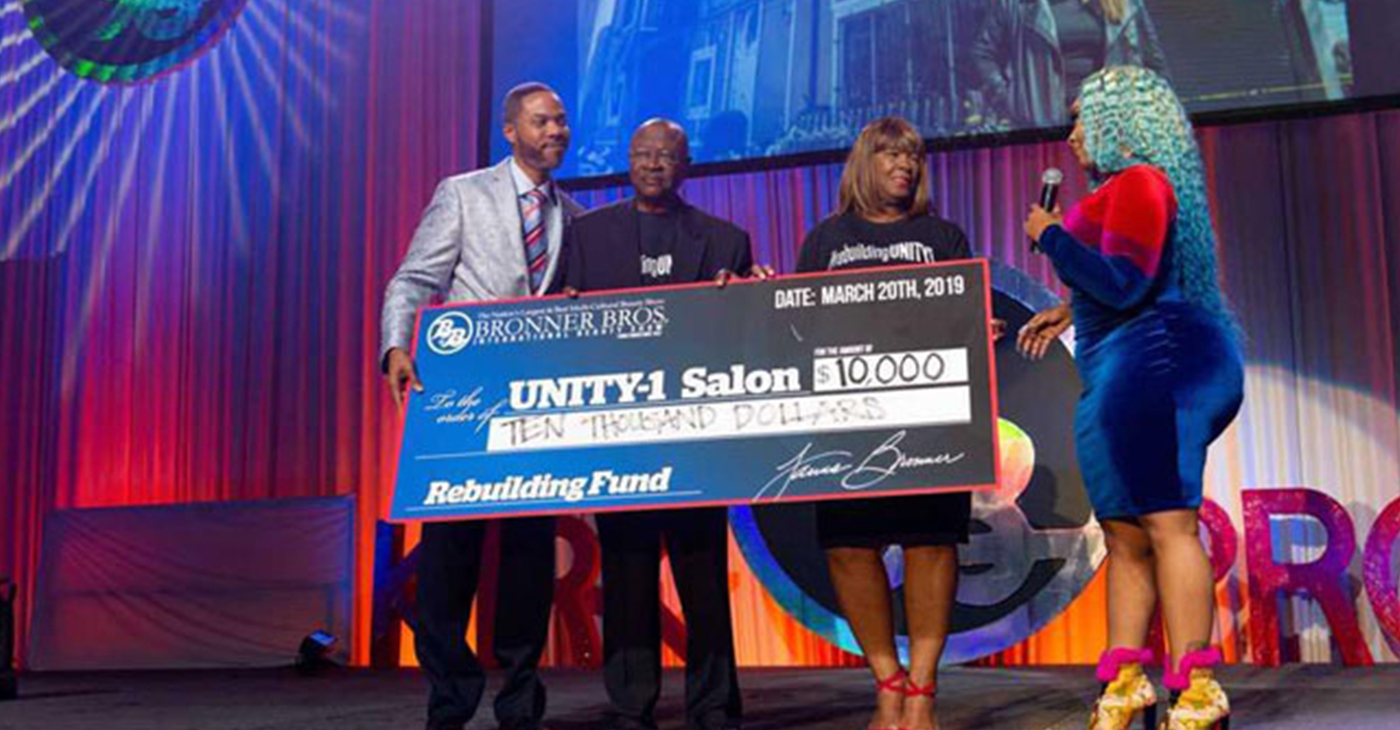
Recently, the Bronner Brother Hair International Beauty Show came to New Orleans. There was an outpouring of support for Unity One and its rebuilding. Speaking of when they were present a check for 10,000 dollars presented to them during an event Smith says, “Bronner Brother brought us on the main stage talked about our tragedy and asked everyone to support us and James and Jessica Bronner gave us a check to start restoration and renovations.”
Locally, fundraisers are also being held to help. Recently, at Bertha’s Place, a local bar held a fundraiser that was well attended with an outpouring of support. “We had DJ Captain Charles there, someone we have known for a long time. He lives in our neighborhood we have done many things for us. Bertha, is someone we have known her for a long time. We started our business around the same time. She is just like family.
Deborah planned and organized the party to assist with us getting some things for our immediate needs.”
They’re both opening their businesses is not the only thing they have in common; recently, Bertha’s Place was also damaged by fire. But today Bertha’s is in a new location and is going stronger than ever with the community continuing to support her. This is something that encourages Ms. Beverly, feeling their family business will travel down a similar path. “It touched her heart because she also had a fire to her business. It touched her heart, she said I understand your pain and if I can do anything to help. Love and prayers is phenomenal. It something to keep us motivated and moving toward rebuilding our business. People really care.”
Also closer to home in Broadmoor where their business is located neighboring business are pitching in to help, “Propeller, a business accelerator that works with small businesses is definitely reaching out. They have been very supportive and will be doing a fundraiser on April 15. I have also talked to Kathleen Rhodes of Rhodes Funeral home and they said they are willing to help in any way possible.”
The Value of Life
All lives matter and in this tragedy three lives were lost. With compassion and care in her voice she says, “I talked to one of the boy’s mother and the other one’s grandmother and I gave them my condolences. We were there to support them with their prayer vigil.” Speaking of the young lady who lost her life she says, “Ms. Shawan, was one of our customers. We all went to her funeral and supported them. I remember seeing her coming in the salon. She was a very quiet lady; she didn’t say much. Monica Scott would do her hair who is one of the salon managers. I remember her just loving being in the environment and my heart goes out to her family and her son Anthony who also use to come and get his haircuts and line ups.”
The Continuing Importance of Black Owned Businesses and Unity in the Community
In post Katrina New Orleans with its many changes; the importance of Black Institutions, business and cultural footprint is essential. Speak of the future of her business and other Black Businesses she says, “Being Black owned business is sometimes a challenge; oftentimes we do not get the funding and support we need. But I feel there has been an upside to it as well, being a role model for the community,” Smith says proudly.
“We have young people who are now adults say they watched us and because of our example wanted to become a business owner. We give a lot of hope and encouragement that you can become a business owner. The community is proud of what we’ve become and we’ve inspired them.”
For those who know of all they have given back, it is now time for them to be on the receiving end as an outpouring of love and support is there as Unity One is on the road to rebuild. “Unity means coming together as one. We need to unite and be on one accord. Whenever there is someone in need. The community can come together to help together we can stand but divided we will fall. Together we can accomplish more. The whole city, not just Broadmoor.”
This article originally appeared in the New Orleans Data News Weekly.











#BuyBlack
Black Press Celebrates Ties to Black Church in Annual Sunday Service
THE AFRO — The Black Press has sustained itself, keeping the mission alive even when faced with a variety of weapons formed against it. Early Black media professionals faced intimidation, sabotage and even death for the words and images they printed. The AFRO, for example, was founded August 13,1892 just months after The Free Speech and Headlight, a publication co-owned by teacher and activist Ida B. Wells, was burned to the ground on May 27, 1892.

By Alexis Taylor, AFRO Managing Editor
Emerging on March 16, 1827, with the debut of “Freedom’s Journal,” the Black Press was started by the intellect, hard work, and courage of John Russworm and Rev. Samuel Cornish.
Though Russworm was born in Jamaica in 1799 and Cornish was a free man born to free parents in Delaware in 1795, the two began their endeavor with one top goal in mind.
Sign up for our Daily eBlast to get coverage on Black communities from the media company that has been doing it right for over 133 years.
“We wish to plead our own cause,” they proclaimed together, in the first edition of the publication. “Too long have others spoken for us. Too long has the public been deceived by misrepresentations, in things which concern us dearly…”

Shown here is a copy of the first Black newspaper, “Freedom’s Journal.” The four-column offering, created in New York City by John Russwurm and Samuel Cornish, was first published on March 16, 1827. Credit: Image courtesy of the Library of Congress.
The Black Press has sustained itself, keeping the mission alive even when faced with a variety of weapons formed against it. Early Black media professionals faced intimidation, sabotage, and even death for the words and images they printed. The AFRO, for example, was founded on August 13, 1892, just months after The Free Speech and Headlight, a publication co-owned by teacher and activist Ida B. Wells, was burned to the ground on May 27, 1892.
In the 1940’s, dozens of Black papers, including The Baltimore AFRO, were surveilled by FBI Director J. Edgar Hoover, who desperately wanted to charge members of the Black Press with sedition or anything he could for informing and organizing Black people to make change.
Now, 199 years later, journalists, editors, publishers, photographers, and media professionals at large fight daily on behalf of Black communities for justice and equality, record Black history, entertain the masses, and moderate policy and social discussions focused on change. Today’s Black newspapers are working to keep up with consumer trends and integrate technology as it evolves. Though many things have changed for the Black Press, some– like government-sanctioned divestment–have remained the same.

Dr. Frances “Toni” Draper, AFRO News Publisher and CEO, shares a moment on Black Press Sunday with Dorothy Gilliam, the first Black reporter at The Washington Post. Credit: AFRO Photo / Alexis Taylor.
“The issues of today really have not changed. They’ve changed in how we report, but we are still dealing with inequities. We’re still dealing with racism. We’re still dealing with a higher proportion of certain diseases impacting our community,” said Dr. Frances “Toni” Draper, AFRO News Publisher and CEO. “We’re still dealing not only with the miseducation of the Negro– but the undereducation, as people seek to pull out books and other things from schools.”
“Those things are important, and it’s important to advocate,” said Draper. “The economic issues are still there. The inequities are everywhere.”
In 2026, Draper said members of the Black Press are tasked with covering local, national, and international news with a Black angle that matters to the Black community.
“Black consumers have some unique interests and unique challenges that you don’t expect the mainstream press to cover–they can’t–that’s why it’s important to have Black-owned press,” said Draper.
Washington Informer Publisher Denise Rolark Barnes said those who take up the fight for the Black Press today can draw strength from those who overcame the challenges of the past.
“They’ve basically laid a road map for us. We just have to stay strong, committed, and dedicated to make sure that we are passing the baton along to others who understand and appreciate the value that we give to our community,” said Barnes. “As long as we don’t forget the mission and we keep reflecting on our ancestors and the work that they did, I think going forward is not as heavy a burden as we feel that it might be today.”
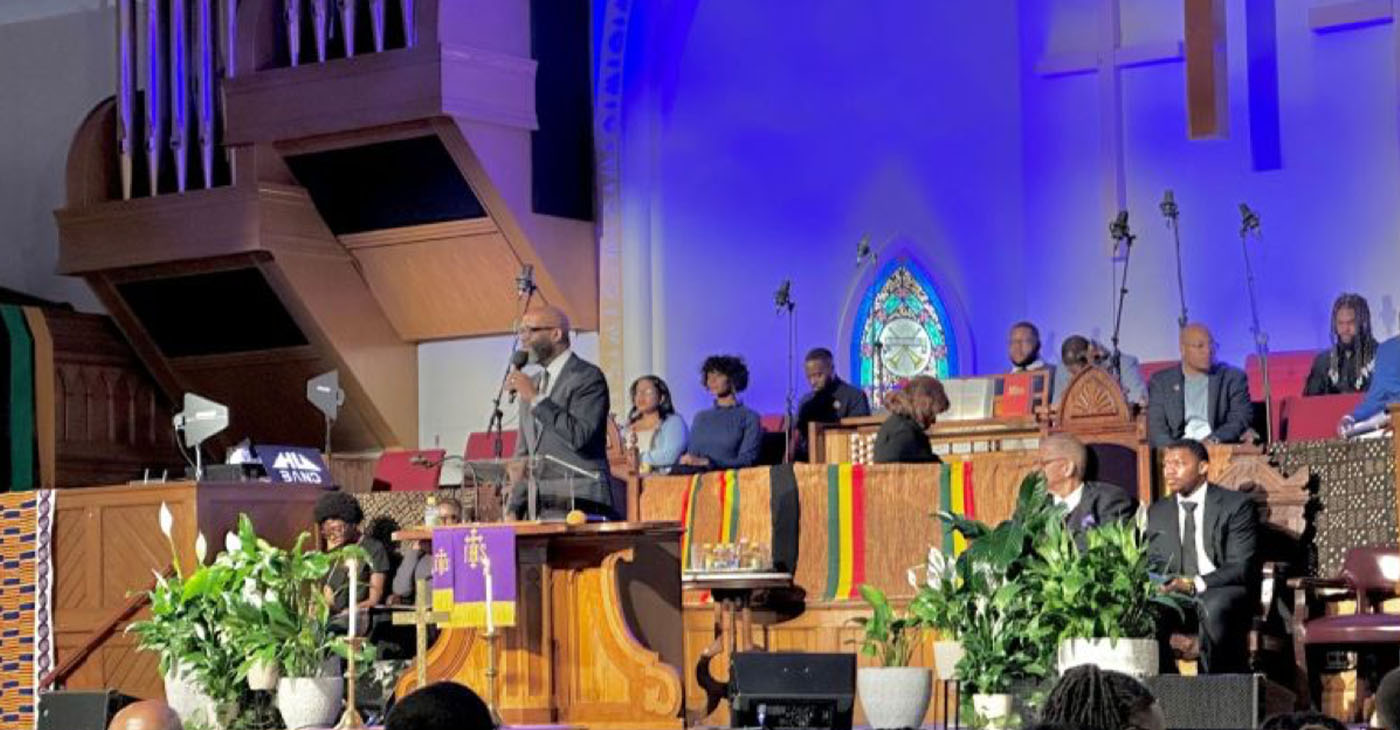
The two publishers came together almost 199 years to the day of the Black Press’ founding for Black Press Sunday, which preceded the Black Press Week celebration held from March 16 to March 20. The service was held in Washington, D.C., on March 15 at Metropolitan AME Church. Each year, the occasion represents the strong tie between the Black Church and the publications that worked hand in hand with faith institutions to inform and uplift the Black community.

Members of the Black Press come together for Black Press Sunday in Washington, D.C. Credit: Courtesy photo.
“There is a symbiotic relationship between the Black Press and the Black Church because everything the Black Church has done–for good or for ill– the Black Press has reported,” said Rev. William H. Lamar IV, Metropolitan AME pastor. “They have shared where we have been at our best, fighting for justice, equity, inclusion, beauty, and they have shared what we’ve been at our worst. And all of it has to be recorded.”
“The Black Press also helped to move us ahead politically when the radical Black folks were saying, ‘Y’all need to do what’s right, or we’re going to burn this down,’ and the more moderate people were saying, ‘We will play within the confines of the system.’ The Black Press held us together ideologically, politically, and socially. There is no healthy Black Church without a healthy Black Press, because both are called to the vocation of truth-telling.”
This year, the sermon focused on how Biblical Prophet Elijah prepared his successor, Elisha, to step into his shoes. Lamar encouraged Black media professionals to train up the next generation so well that they can proudly step up and carry on the Black Press no matter what comes their way.
Philip Lewis, president of the Washington Association of Black Journalists (WABJ), said he was heartened by the message.
“I know we’re on the right path by making sure that students are doing what they need to do to become the next journalists. I’m excited about it,” said Philip Lewis, president of the Washington Association of Black Journalists (WABJ). ”WABJ is in a unique position, especially in the nation’s capital, to advocate and support our journalists and continue to grow.”
“The Black Press is just as important today as it was 199 years ago,” he continued. “And even in the most extremely fractured time…I think it’s important that we have our own spaces where we can focus on stories that we care about. It’s important for us to be able to plead our own cause.”
As the Black Press Sunday festivities came to a close, Draper reflected on what her own ancestors would say if they could see the Black Press at 199 years.
“I think our ancestors, first of all, would say, ‘Wow, 199 years. That’s a long time.’ We celebrate the 1827 founding of Freedom’s Journal, and while it didn’t last but a few years or so, the impact was immeasurable,” she said. “I think the ancestors would say, ‘Look what has survived with a few resources.’
“If they could do it with a few resources, I think they would tell us, ‘Don’t complain about what you don’t have–use what you do. You might not be able to tell every story, but whatever story you tell, tell it well, make sure that it has an impact and that you’re doing something to really uplift and inform the community.’”
#BuyBlack
NNPA Fund Hosts Black Press Day 2026 At Howard University, Celebrating the Past and Looking Ahead to the Future
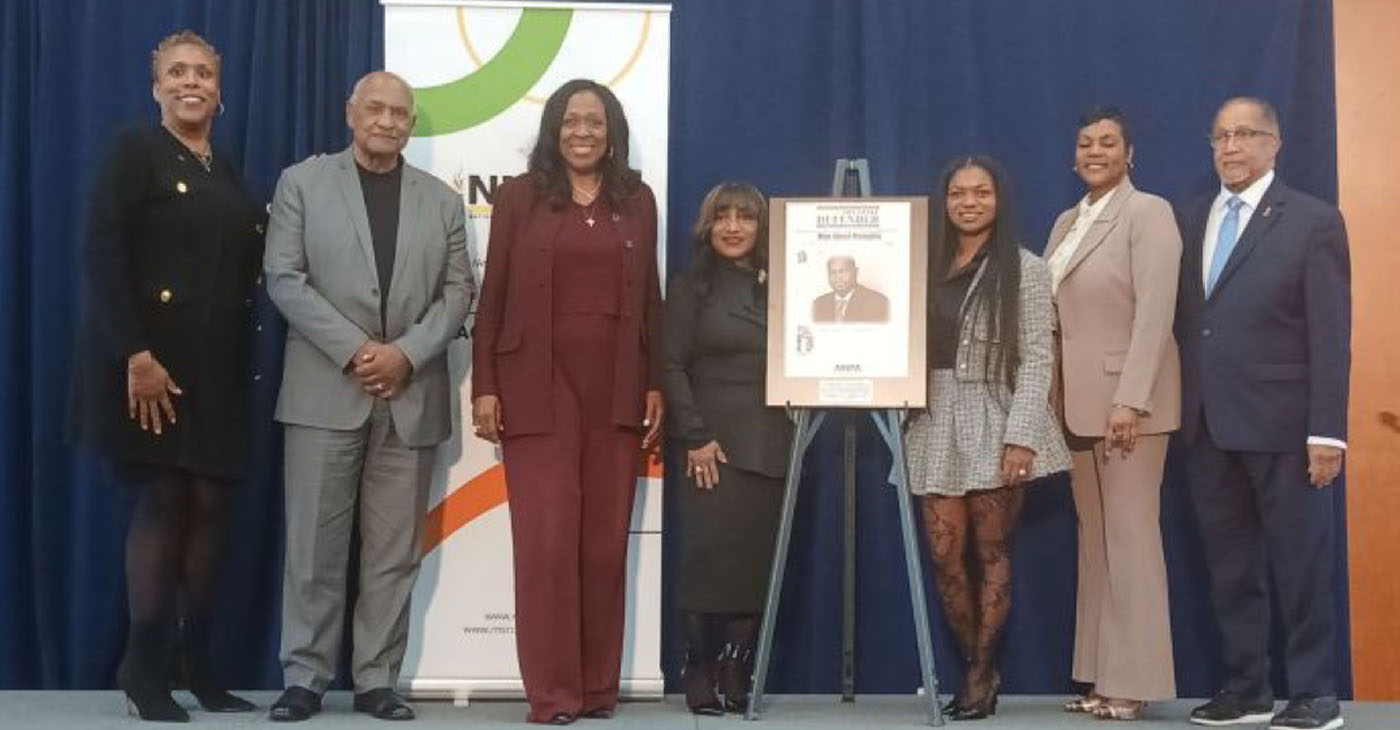
THE AFRO — As in years past, the most sacred part of the reception was the enshrinement presentation and plaque acceptance led by Karen Carter Richards, NNPA Fund chair, which celebrated the life of Bernal E. Smith II, who, prior to his death in 2017 at the age of 45, had been instrumental in restoring local ownership of The New Tri-State Defender in Memphis, Tenn., as its president and publisher.
By D. Kevin McNeir | Special to The AFRO
Nearly 100 members of the Black Press – some still honing their skills as journalists in college classrooms along with seasoned veterans representing Black publications from across the U.S.; and both friends of and corporate sponsors of the Black Press, gathered on the campus of Howard University (HU) on March, 18 for this year’s Black Press Week Reception.
The program, hosted by the National Newspaper Publishers Association (NNPA) Fund, now in its 50th year and led by Executive Director Kelly Hodges, was held in the HU Blackburn Center. Highlights from the reception included a State of the Black Press address delivered by NNPA President and CEO Dr. Benjamin Chavis Jr., musical selections from the Howard University Community Choir, an AI-themed fireside chat, and remarks from various speakers who updated the audience on recent initiatives related to the survival and growth of the Black Press.
As in years past, the most sacred part of the reception was the enshrinement presentation and plaque acceptance led by Karen Carter Richards, NNPA Fund chair, which celebrated the life of Bernal E. Smith II, who, prior to his death in 2017 at the age of 45, had been instrumental in restoring local ownership of The New Tri-State Defender in Memphis, Tenn., as its president and publisher.
Hodges described Smith as a visionary, a dynamic leader, and one of the NNPA’s most widely regarded voices representing the next generation of Black Press publishers.
“He was known for his commitment to community empowerment, social justice, and innovative media leadership,” Hodges said. “We chose to enshrine him into the NNPA Fund of Distinguished Black Publishers this year at Howard University where he will forever be recognized for his lasting contributions to African American journalism and the legacy of the Black Press.”
The Black Press Week 2026 reception opened with a welcome address from Karen Carter Richards, NNPA Fund chair and publisher of the Houston Forward Times, who invited the audience to join her in “celebrating the excellent legacy of those who have powered the Black Press over the past 199 years.”
John Warren, NNPA Fund board member, publisher of The San Diego Voice & Viewpoint and chair of the NNPA, delivered opening remarks that emphasized his decades-long connection and commitment to Howard University.
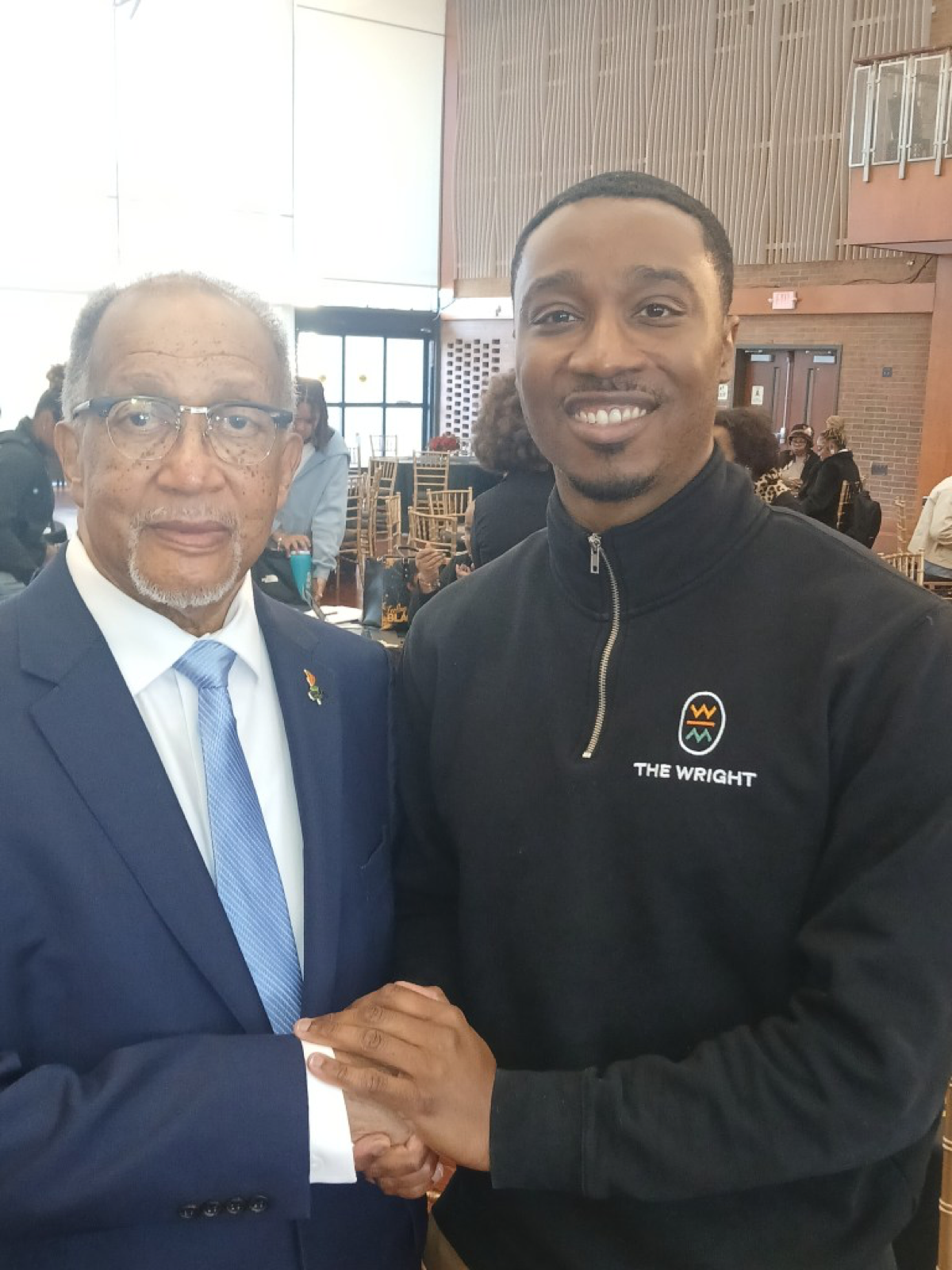
During Black Press Day 2026, held on the campus of Howard University on March 18, one recurring theme shared by featured speakers was the importance of providing more opportunities for intergenerational conversations among members of the Black Press. Pictured is Dr. Benjamin F. Chavis Jr., president and CEO, NNPA, an icon from the Civil Rights Movement, and Phil Lewis, Washington Association of Black Journalists, president, who moderated a fireside chat about the essential integration of AI in Black Press newsrooms during the program and who represents the cadre of young Black journalists who are making their way in the industry. Credit: AFRO Photo/D. Kevin McNeir.
“I’m a two-time graduate and of Howard who completed law school 42 years ago and I am excited to be back on this campus,” Warren said. “We have weathered some tough times but always survived because of powerful presidents who shepherded us through the storms. Howard University represents a vast and impressive history – stories that without the Black Press may have never been documented and would have been lost to future generations.”
Chavis, who chose as the theme for his address, “Legacy, Struggle, Innovation, and the Road Ahead,” said while the nation prepares to celebrate its 250th anniversary, Blacks must remember that our history did not begin in 1776 but rather thousands of years earlier on the African continent.
“Even in the face of unprecedented inhumanity, torture, rape, violence, lynchings, and the racist discrimination and enslavement of African people in America before and after 1776, we not only survived but held on to our sense of dignity, purpose, struggle, mission, and vision,” Chavis said. “Now, as we prepare for the 200th anniversary of the Black Press, we must consider what truths are we passing on to the next generation?
“What truths are we holding onto that shatter the sinful and hateful stereotypes that work to sustain our oppression rather than to ensure our liberation? We represent a sacred tradition of truth telling as members of the Black Press. However, it has never just been about the news – it has always been about freedom, justice, dignity, and self-determination,” said Chavis who added that the Black Press must continue to serve as a prophetic voice in the wilderness of American democracy as it challenges various forms of injustice.
As the Black Press continues its commitment to digitizing photographs and publications dating back to its founding in the early 19th century, Howard University serves as the home for archives that continue to grow and are housed on Howard’s campus under the auspices of the Moorland Spingarn Research Center (MSRC). Reports from two representatives of the NNPA’s ongoing digitization efforts, Brandon Nightingale, senior project manager, and Sijan Shrestha, MSRC scholar, provided critical information about the NNPA’s efforts to ensure that its past works remain available for future generations.
Chavis challenged his colleagues to ready themselves for the digital transformation which is sweeping across America and the world and to recognize that the shift from print to digital publishing is far from optional but is instead essential for those who wish to survive.
“This moment demands strategic resilience, intergenerational leadership to secure the future, and the ability to move forward as innovators who understand the benefits of emerging technologies like artificial intelligence and who are not afraid of the changes that it will inevitably bring to our industry,” he said. “But changes notwithstanding, our mission remains urgent and that cause first voiced in 1827 by the publishers of Freedom’s Journal which journeyed throughout two centuries of struggle and triumph, is still before us.
“The role of the Black Press is more vital today than ever before,” he continued. “As we honor the legacy of those like Frederick Douglass and Ida B. Wells, we must accept as our task the preparation of a new generation who will be called upon to carry the torch.”

 THE BLACK PRESS COVERS THE PROGRESS OF BLACK AMERICA
 Please partner with us to help save local news. Donate today.
News organizations and the journalists that support them are facing increasing risks. The NNPA is the trade association for more than 235 African American-owned community newspapers and media companies across the United States. Since its founding 88 years ago, the NNPA and our membership have consistently been the voice of the Black community and an incubator for news that makes history and impacts our country. As the largest and most influential Black-owned media resource in America, the NNPA delivers news, information, and commentary to over 20 million people each day online and 22 million print readers weekly.
We are reaching out to you today because we have important opportunities to develop new programs, including research and industry standards that will combat disinformation, strengthen our member publishers, significantly benefit everyone in our field, and help us save local journalism. Our goal is to raise $500,000 to fund these initiatives. Your contribution will directly offset the high costs of staffing and technology.
Please consider making a donation of $25 or more. A larger amount will help us fund the creation and distribution of a new research report that will guide industry best practices for years to come. Your support, at any level, makes a tangible difference and helps us continue our vital work.
Click here to make a secure donation online, or send a check by mail to:
National Newspaper Publishers Association
1816 12th Steet, NW
Washington, DC 20009
Thank you for your continued support and commitment to the Black Press of America.
Dr. Benjamin F. Chavis Jr.
President and CEO
National Newspaper Publishers Association
Black History
PRESS ROOM: Black Church and Black Press Unite to Empower Black America
BLACKPRESSUSA NEWSWIRE — “This is more than a symbolic gesture, it is a strategic and spiritual alignment.” When the Black Church and Black Media speak as one, we can ignite a movement. When we organize as one, we can shift the narrative. When we act as one, we cannot be ignored or denied,” the coalition stated.

Nashville, TN — July 25, 2025: In a historic announcement, a coalition of leading Black faith organizations and the National Newspaper Publishers Association (NNPA) unveiled a strategic partnership and plan to confront systemic disparities impacting African American communities nationwide.
Dr. Boise Kimber, President of the National Baptist Convention, USA, Inc.; Bishop J. Drew Sheard, Pre- siding Bishop of the Church of God in Christ (COGIC); Dr. Samuel Tolbert, President of the National Baptist Convention of America; and Dr. Benjamin F. Chavis Jr., veteran civil rights leader and President of the NNPA, are leading this collaboration between the Black church and Black Media.
“There is strength in unity. There is power in our collective voice. There is hope in our actions,” said Dr. Boise Kimber.
For generations, African American communities have endured deep-rooted inequities in healthcare, education, criminal justice, economic opportunity, and access to capital. These challenges are not new. The coalition intends to put an end to fragmented responses and speak with one clear, concise and consolidated voice.
The Black Church and Black Media, two institutions that have long anchored and uplifted Black America, are now coming together with renewed focus and purpose.
This partnership is grounded in shared values, spiritual conviction, cultural empowerment, and an unwavering commitment to truth, justice, and progress.
The coalition will focus on five core initiatives:
- Shaping a unified national narrative that challenges harmful stereotypes and amplifies stories of Black resilience, excellence, and innovation
- Mobilizing faith-based and media networks to address community disparities through solutions-focused advocacy and outreach
- Holding corporate America accountable by demanding responsible reinvestment in Black communities through sustainable partnerships, economic equity, and community-led development
- Empowering the next generation by reclaiming our narratives and creating new pathways for education, leadership, and entrepreneurship
- Holding elected officials accountable by spotlighting those whose policies do not align with the interests of the Black community. To earn our votes, they must heed our voices.
“This is more than a symbolic gesture; it is a strategic and spiritual alignment.” When the Black Church and Black Media speak as one, we can ignite a movement. When we organize as one, we can shift the narrative. When we act as one, we cannot be ignored or denied,” the coalition stated.
The coalition invites all stakeholders, faith leaders, media professionals, community organizers, educators, business leaders, and concerned citizens to join this movement for unity, justice, and progress.
Coalition Leaders,

Dr. Boise Kimber, President
National Baptist Convention USA, Inc.

J. Drew Sheard, Presiding Bishop
Church of God in Christ

Dr. Samuel C. Tolbert, President
National Baptist Convention of America

Dr. Benjamin F. Chavis, Jr. President and CEO
National Newspaper Publishers Association (NNPA)
Civil Rights Leader and Publisher
Black History
The Sacramento Observer and Savannah Tribune Win Big at 2025 NNPA Messenger Awards
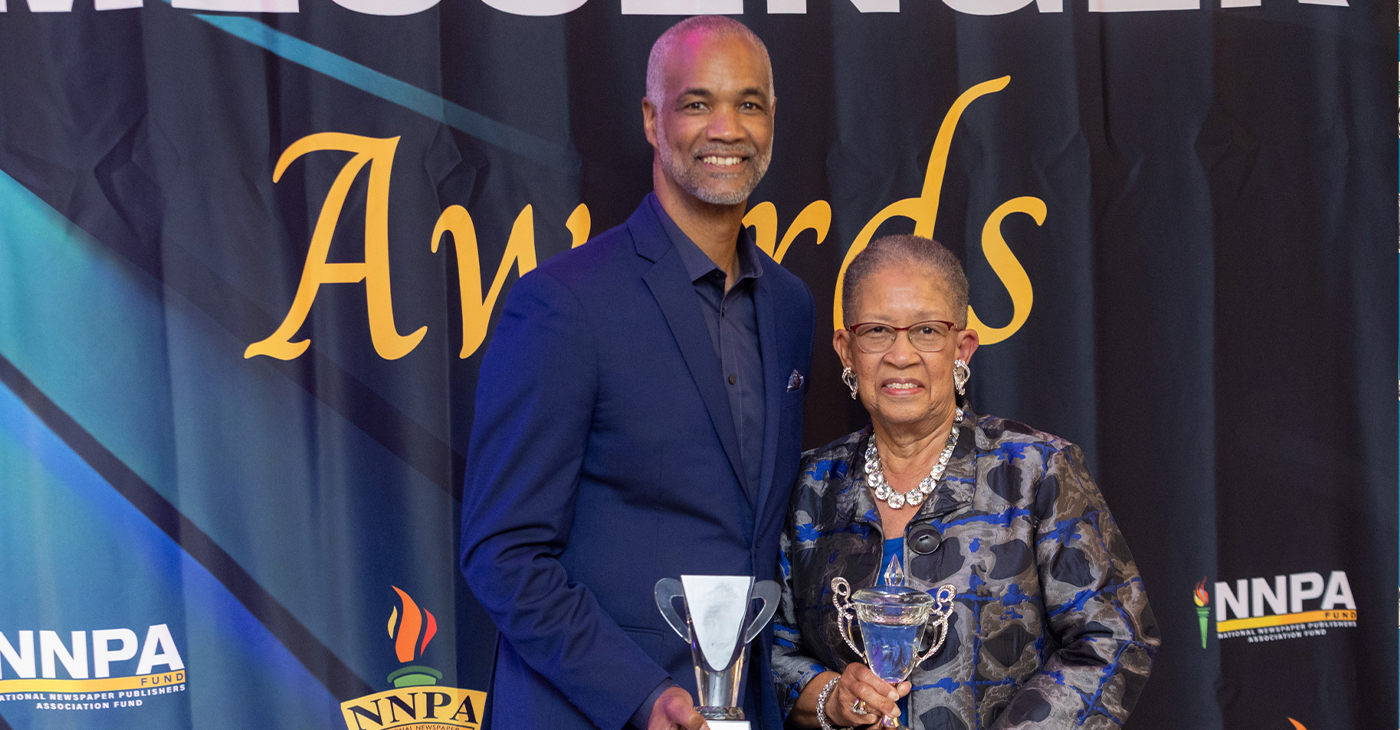
BLACKPRESSUSA NEWSWIRE — The Sacramento Observer earned the night’s most prestigious recognition, the John B. Russwurm Award, presented to the newspaper with the highest cumulative score across all award categories. The Observer achieved an impressive 154 points and took home first-place honors in Education Reporting, Business Reporting, Original Photography, Youth and Children Coverage, and Facebook Campaigns.

African American News & Issues
VIDEO: The Rev. Dr. Benjamin F. Chavis, Jr. at United Nations Permanent Forum on People of African Descent


WCCUSD Joins Statewide Organic School Food Purchasing Cooperative

Democrats, Community Groups Back Measure EE to Change How Oakland Is Governed

Four Tips to Help You Plan a Holiday “Staycation”

Veterans Housing Project Proposed for South Richmond

Mayor Lee Delivers 2026 State of the City Address: ‘Oakland Continues to Be on the Move’

Oakland Awarded More than $14 Million in State Funding

Jendayi Arrest Raises Community Concerns Regarding Sheriff’s Chain of Command

Marin County Supes Expand Small Business Options with Home Kitchen Pilot Program

Allen Temple Baptist Church Hosts Free Prostate Cancer Screenings on Oct. 17

AC Transit Labor Unions Back Director Joel Young

The Youngest American Killed in the Vietnam War

Latest Massacre in Haiti Reveals Cruelty U.S. Deportations

OPINION: Nolan Wells’ Death One of Several Signifying Racial Terror Lives on in U.S. South

Passing for White, Fighting for Black America: The Courage of Walter White

OP-ED: If AI Is the New Language of Power, Then NAN Wants Black Communities Fluent

OP-ED: Haiti TPS: Have We Lost Sense of Humanity?

OP-ED: How Does Your State Rank for Pre-K?

Henry O. Flipper: A Trailblazer at West Point and Beyond

Asm. Smallwood-Cuevas’s Bill Repealing ‘Racist’ CalWORKs ‘Man-in-the-House’ Rule Clears Legislature

NBA All-Star Damian Lillard Returns Home for 15th Annual Backpack Giveaway

Sherrell Dorsey on Tech, Black Innovation, and Impactful Businesses

Community-Centered Business: Adapting to Support a City in Need #shorts

The Conversation with Al McFarlane

Serve First: The Secret to Life and Business Success #shorts

Denise Upshaw – Founder, Black Houston Creative Network

Houston advocates breakdown Black voter fatigue

Digital Rearview Mirror Test: Blind Spots & Camera Views #shorts

HE SAID, HE SAID, HE SAID, Separating Fact, Fear, & Freedom w/ Allen Orr, FRI. 2.22.26 7PM EST

Hot Girl Walk at Sabathani Community Center | Ernestine Belton Playground | MSR

NEW INVESTIGATION INTO FEDERAL RESERVE GOVERNOR
-

 Black Press1 week ago
Zakiya Jendayi Arrested, Locked Out of Home by Sheriff’s Deputies
-
 Black Press1 week ago
A $2.1 Trillion Wellness Industry Never Built a Daily Practice for Black Children. So This Atlanta Family Did.
-
 BlackPressUSA6 days ago
Latinas Deserve Equal Pay. Unions Help Make It Happen.
-

 Art1 week ago
Montclair Brewery: Brewing Culture, Community, History
-

 Black History1 week ago
Listening as a Lifeline: A Doula’s Witness to Black Maternal Health
-

 Black Press1 week ago
COMMENTARY: But God!
