
2018 NNPA DTU Journalism Fellowship
Tuskegee University’s Dynamic Pitcher-Catcher Duo Participate in MLB’s All-Star Futures Game
Christian Marshall (left) and Elgin Woodside are baseball teammates at Tuskegee University. Marshall and Woodside participated in the 2018 SiriusXM All-Star Futures Game. (Christian Marshall)


By Daja E. Henry and Ila Wilborn (2018 NNPA DTU Journalism Fellows)
Over 38,000 people watched from the stands Sunday in Washington D.C.’s Nationals Park as Tuskegee University pitcher Christian Marshall stepped up to the plate to throw the ceremonial first pitch of the 2018 SiriusXM All-Star Futures Game. Elgin Woodside, a catcher for Tuskegee’s baseball team, assisted. Although the two were not yet prospects for the “Majors,” they both have a stake in the future of baseball.
“Growing up as kids, playing baseball, everyone has that dream of going to the [pros],” Marshall said, as he explained the feeling of pitching in a game with Minor League Baseball’s top prospects.
Woodside added: “Even though we never thought that moment would come to us, whenever we got in the moment, it didn’t feel like we were out of place. It felt like we were meant to be there, and all our hard work was paying off and God just gave us our blessing.”
As a part of the Major League Baseball’s All-Star Week, the 2018 SiriusXM All-Star Futures Game is meant to shine a spotlight on budding baseball stars. At the 20-year mark, the exhibition game “features the top Minor League prospects competing in a nine-inning contest as part of All-Star Sunday,” according to the league’s official website.
Marshall and Woodside are pitcher and catcher of Tuskegee University’s SIAC baseball team. The two bonded over baseball, however, long before they entered Tuskegee, in their hometown of New Orleans, Louisiana; both participated in the New Orleans MLB Urban Youth Academy.
“A lot of kids [in New Orleans] don’t get the opportunities we got,” Marshall said.
From 2005 up until June 2018, Louisiana was deemed the incarceration capital of the world. According to EdWeek, the state ranks 46th in K-12 achievement. Orleans Parish itself was named the most murderous county in 2017. Marshall and Woodside were determined not to become a part of those statistics.
The two are beginning their senior year at Tuskegee, both studying mechanical engineering. Marshall is interning this summer, testing parts for NASA in Pasadena, Calif. Woodside is assessing aerodynamics at Lockheed Martin in Stamford, Conn.
The two student athletes do not have much idle time.
“In the fall, even though we’re not in season, we’re still practicing,” Marshall said as he described their daily schedules that begin with workouts as early as 5 A.M. The rigorous coursework and hectic baseball schedules keep the two utilizing the creative work ethic they acquired back home at the MLB Youth Academy.
Though they have a lot on their plate, there is a driving force pushing them to reach for further success.
“Whenever you get tired, you’ve got to have something in the back of your mind that you can tap into,” Woodside said. “The things that I’m doing, it’s a reflection of me, but it’s also a reflection of something bigger.” Woodside explained how he is building a future that will make his entire and future family proud.
Marshall and Woodside exist in a rare intersection for young, Black men. As of 2017, the MLB reported 7.7 percent African American or African Canadian players. According to 2010 Census data, African American men made up just 3 percent of scientists and engineers working in the field. Their very existence in this intersection is a statement of triumph over the lack of access to vital resources that often plagues young Blacks.
While many African Americans get into basketball and football, it’s just not as easy to get into baseball. The lack of equipment, facilities and role models make it difficult for young, Black men to expose themselves to the sport. While in football and basketball, children can just pick up a ball and practice, baseball requires highly, specialized equipment like gloves, bats and balls, which puts children from low-income families at a disadvantage.
Exposure is the main factor that separates Marshall and Woodside from their counterparts. Marshall’s mother exposed him to baseball around six years-old. Woodside’s father put him into tee-ball at three years-old. While participating in the Urban Youth Academy, they both gained a baseball role model in Eddie Davis, a Black resident of New Orleans, who played minor league baseball in the Los Angeles Dodgers’ system.
Both expressed a level of difficulty finding mentors in engineering, as well. At times, they feel as if they are under a microscope. However, they remain humble, consistent and determined to overcome those obstacles.
“Knowledge is power. If you can get more knowledge and just learn how things operate, then I feel like that’ll be the key to overcoming any type of adversity there is at your workplace or in your life,” Marshall said.
Their mechanical engineering playbook includes asking a lot of questions, staying engaged and setting up lunch meetings to learn from people, who are in the positions they want to be in.
Tuskegee has been instrumental in creating a networking pipeline and served as a beneficial aspect of Woodside’s life, since he first began attending the university.
“It just felt like everybody was one big family,” Woodside said.
With just under 3,000 students enrolled in 2017, Tuskegee has the opportunity to provide its students with a close-knit atmosphere.
“It [isn’t] a big school, so you know you’re going to make connections that can last a lifetime,” Woodside said.
The teammates rely on their lifetime connection to help win games.
“The closeness that we have is like unspoken communication,” Marshall said. “Every game that I’ve pitched really well, he’s been the one catching for me the whole time.”
Woodside expressed equal admiration for Marshall.
“If it wasn’t for Christian Marshall, Elgin Woodside would not be the person that he is today,” Woodside said. “Christian was always there to pick me up.”
“When I’m on the mound and he’s on the plate, especially when we catch our groove, it feels like we’re unstoppable…almost.” Marshall said as he explained the natural chemistry that is critical in the makings of a great team.
Marshall continued: “We made the most of what we had at Tuskegee and I feel we made a major impact because of the mentality we brought into the program.”
Daja E. Henry (Howard University), Ila Wilborn (Florida A&M University) are 2018 NNPA Discover The Unexpected Journalism Fellows representing #TeamAuthentic. Follow their stories this summer at nnpa.org/dtu.












2018 NNPA DTU Journalism Fellowship
The Poor Peoples Campaign: A Declaration, Announcement, Beginning, Moving Forward Commitment
NNPA NEWSWIRE — In Los Angeles, CA, Bishop William J. Barber, II said “The same people that are blocking laws that uplift the poor are the same ones that are spewing so much of this racist violence and rhetoric… claiming that the whole society is at threat because of Black and Brown people. This rhetoric that is being spewed… can get in the minds of people and it can radicalize them. The real question about the killer is not ‘who is he?’ but ‘who radicalized him?’”


By Menra Mapfumo
The Poor People’s Campaign was established in 1968, by the Rev. Dr. Martin Luther King. Dr. King wanted the Poor People’s Campaign to highlight the need for economic equality and social justice.
Dr. King wanted to help poor people by demanding the means for basic necessities. In 1967, Dr. King said the Poor People’s Campaign would seek to “demand jobs, unemployment insurance, a fair minimum wage, and education for poor adults and children designed to improve their self-image and self-esteem.”

Photo: Mark Mahoney / Dream in Color Photography
In March 1968, Dr. King said the Poor People’s Campaign would be “the beginning of a new co-operation, understanding, and a determination by poor people of all colors and backgrounds to assert and win their right to a decent life and respect for their culture and dignity.”
On April 3, 1968, during the Memphis Sanitation workers strike, Dr. King told the workers, “We’ve got to give ourselves to this struggle until the end. Nothing would be more tragic than to stop at this point in Memphis. We’ve got to see it through.” His words further reinforced the mission of the Poor People’s Campaign.
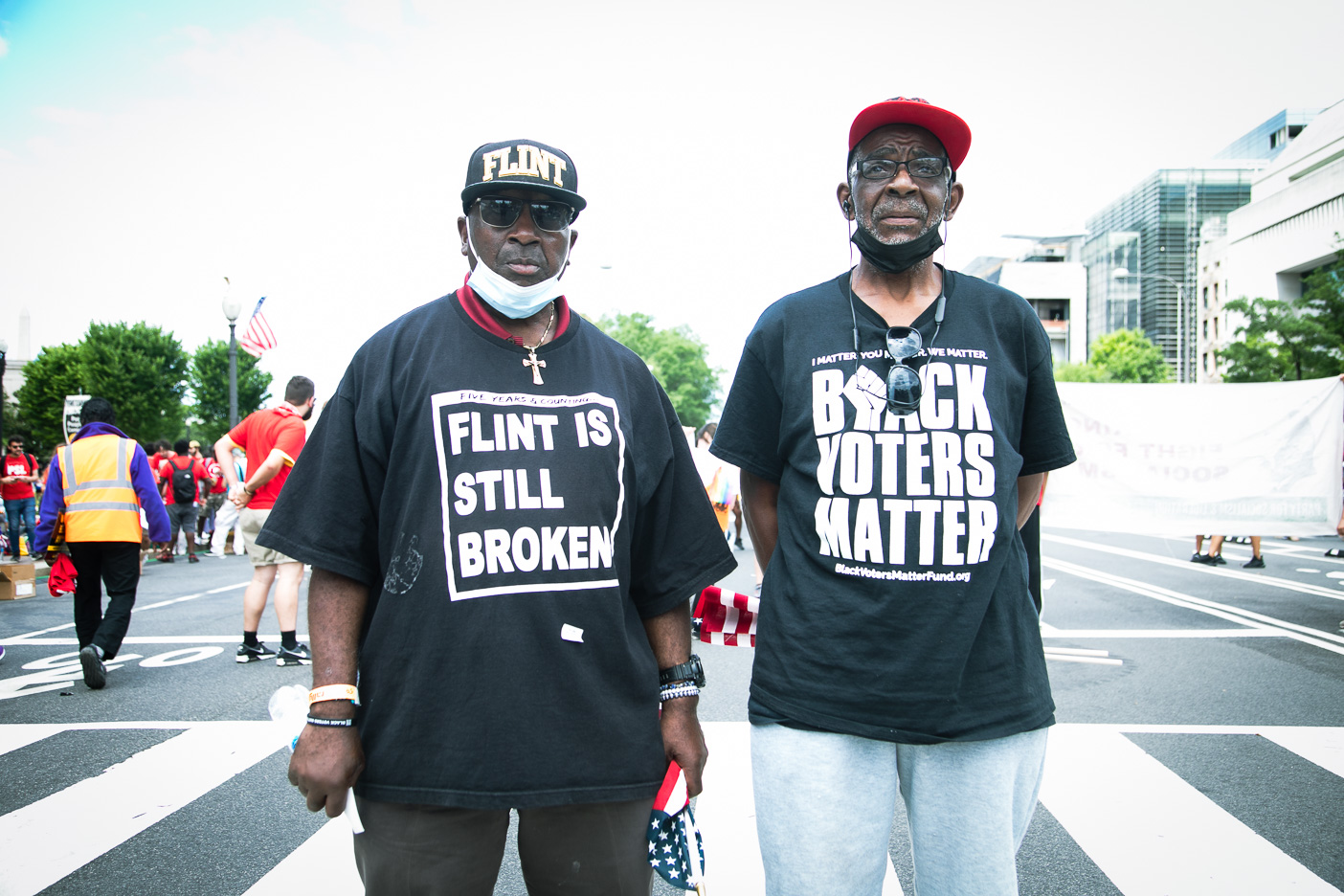
Photo: Mark Mahoney / Dream in Color Photography
Dr. King’s work is unfinished because on April 4, 1968, Dr. King was assassinated at the Lorraine Motel in Memphis, TN.
Bishop William J. Barber, II is continuing the efforts of the Poor People’s Campaign Dr. King began.
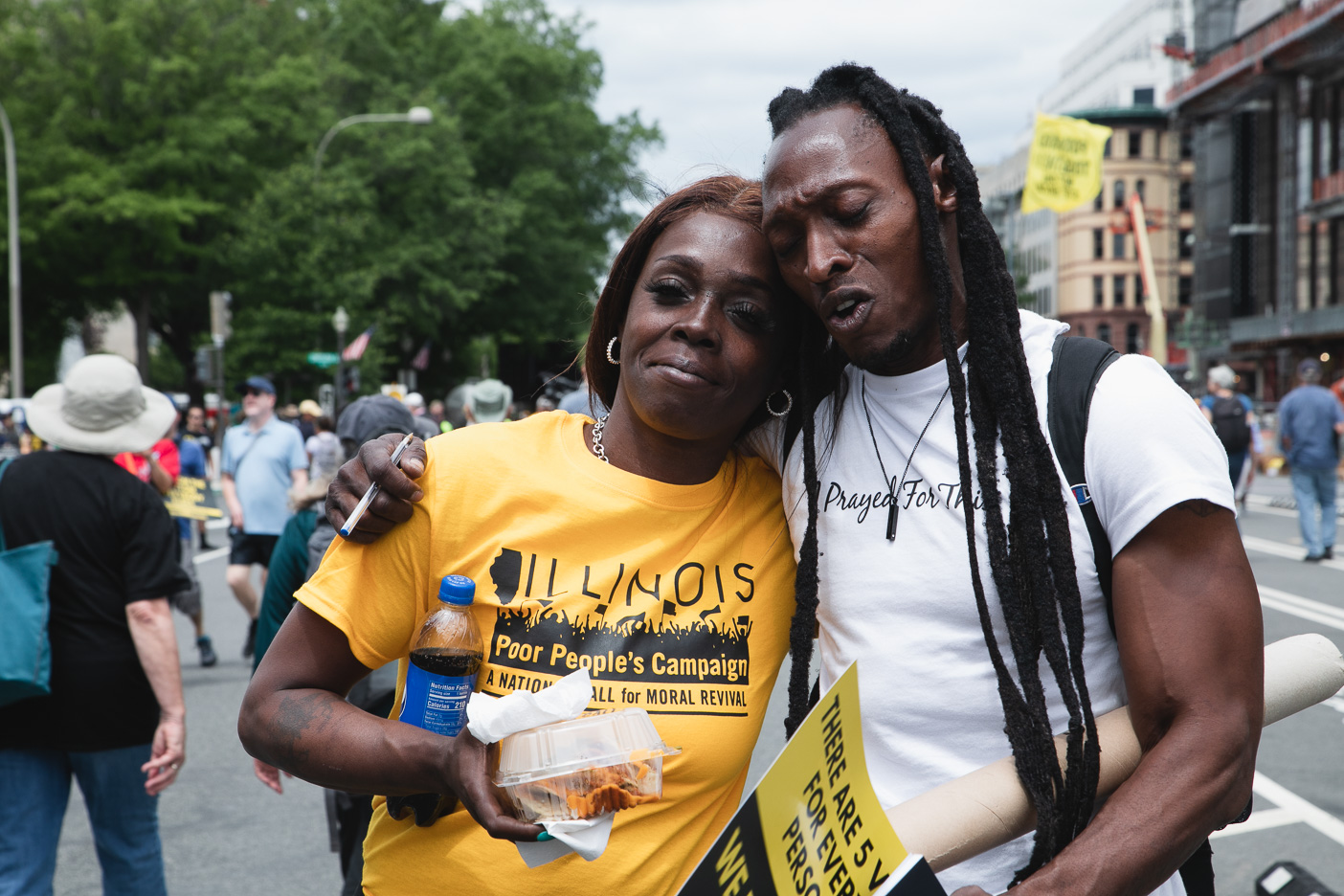
Photo: Mark Mahoney / Dream in Color Photography
Dr. Barber is mobilizing for a Mass Poor People’s & Low-Wage Workers’ Assembly and Moral March on Washington and to the Polls June 18. Recently he held mobilization marches for June 18 Los Angeles, the site of America’s largest homeless population, and in Memphis, the site of Dr. King’s martyrdom.
In both cities, marchers expressed how they felt about the Poor People’s Campaign. They expressed how they felt about poverty and homelessness in America. Some told their own stories of living in poverty and being homeless.
Marchers expressed how they felt about the mass shooting in Buffalo and if they felt there is a relation between poverty and gun violence.

Photo: Mark Mahoney / Dream in Color Photography
In Los Angeles, CA, Bishop William J. Barber, II said “The same people that are blocking laws that uplift the poor are the same ones that are spewing so much of this racist violence and rhetoric… claiming that the whole society is at threat because of Black and Brown people. This rhetoric that is being spewed… can get in the minds of people and it can radicalize them. The real question about the killer is not ‘who is he?’ but ‘who radicalized him?’”
“Secondly, this business of death is too broad in this country and we accept too much of it. A million people died from COVID. Poor people die five times higher in some ways… We keep having mass deaths and we talk about it for a day or two and then it goes away. Even before COVID, we had a quarter of a million people die from poverty, seven hundred people a day, and hardly a whimper being said about it. We had to decide we’re not just going to be quiet and accept death anymore.”
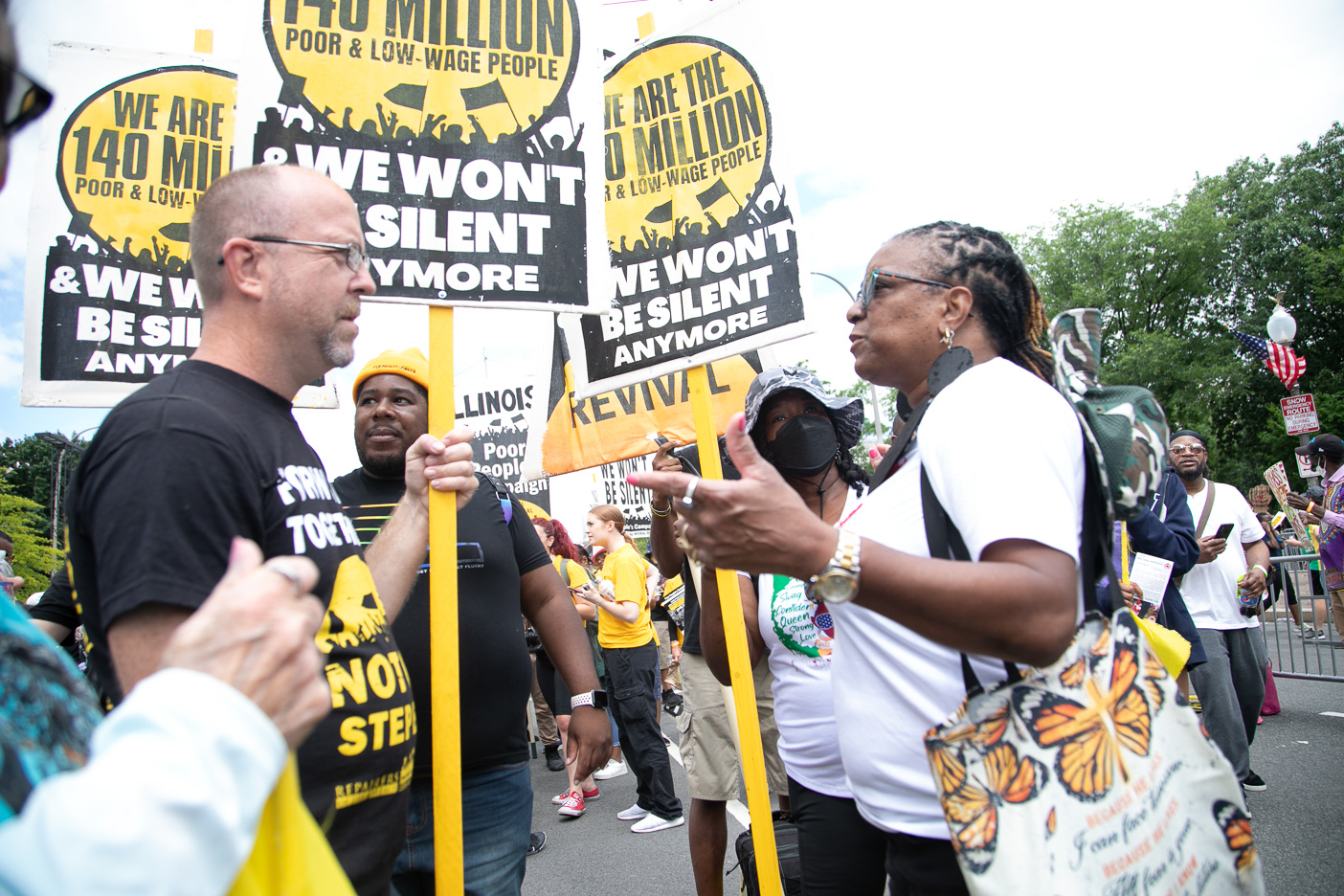
Photo: Mark Mahoney / Dream in Color Photography
“Lastly, we have to see if this attack of what happened in Buffalo is connected to the season of violence that we’re in. Go back to the University of Virginia when they were shouting ‘Jews will not replace us.’ This whole replacement theory that has its roots in some parts of Europe, in Nazism, as well as here in America, is violent in and of itself because it’s always trying to point out who has to go in order for some people to live… It always means somebody has to be destroyed.”
Bishop Barber expressed how he felt about the mobilization of the Poor People’s Campaign on June 18th.
Bishop Barber said, “I am feeling good about it. I have mixed feelings… Sometimes I get bothered that we still have to do it, but I am glad that I am alive to do it… There’s something going on in this country… and people are responding from every state in this country… Most of all poor, low wealth people are leading the way and what I love about them is none of them are talking about this as a day. They’re all talking about it as a declaration, as an announcement, as a beginning, as a moving forward, as a commitment.”
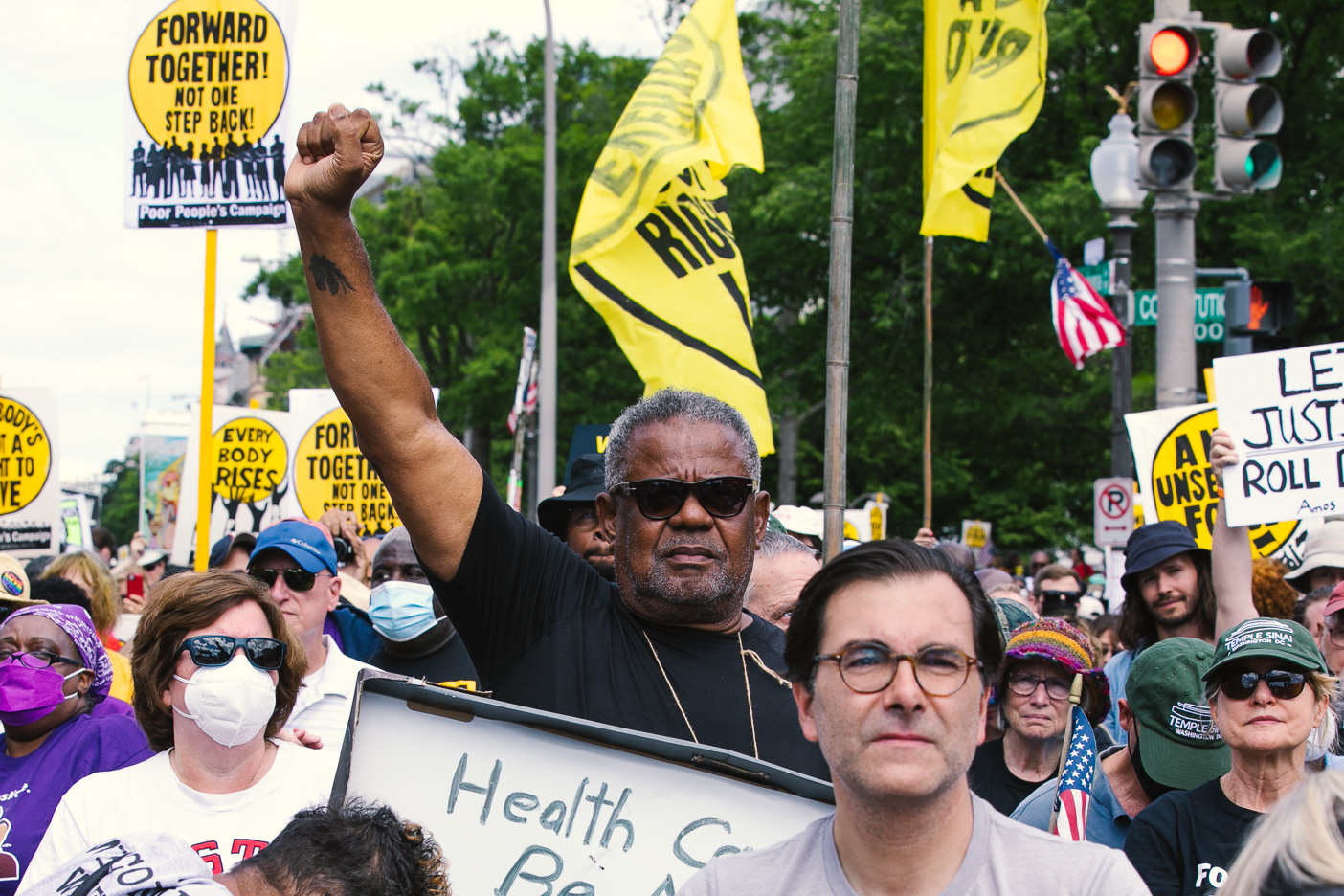
Photo: Mark Mahoney / Dream in Color Photography
Patrick Groman, a homeless man, and a chairman of the San Diego chapter of the California Homeless Union said, “Homeless is not a crime. We’ve been hearing… there’s been a lot of crime, a lot of activity and the majority of all these crimes all over the place are blamed on the homeless. You can’t just target one particular individual or all individuals… A lot of people don’t realize that when you’re homeless… you’re dealing with a lot of different individuals. You’re dealing with people who loss their jobs, dealing with [veterans], dealing with people with mental illness. There is not enough help and support out there.”
Irma Hall Wood spoke on what brought her to the Poor People’s Campaign rally in Los Angeles, CA.
Wood said, “My brothers are hurting, including myself. God looks up on each one of us as a whole. All of us are his children and he doesn’t want us to suffer. Why suffer when there are millions of dollars? There are more millionaires these days than ever before. Why are we suffering? We can’t pay our rent, we can’t have health insurance; Accessible quality health insurance…”
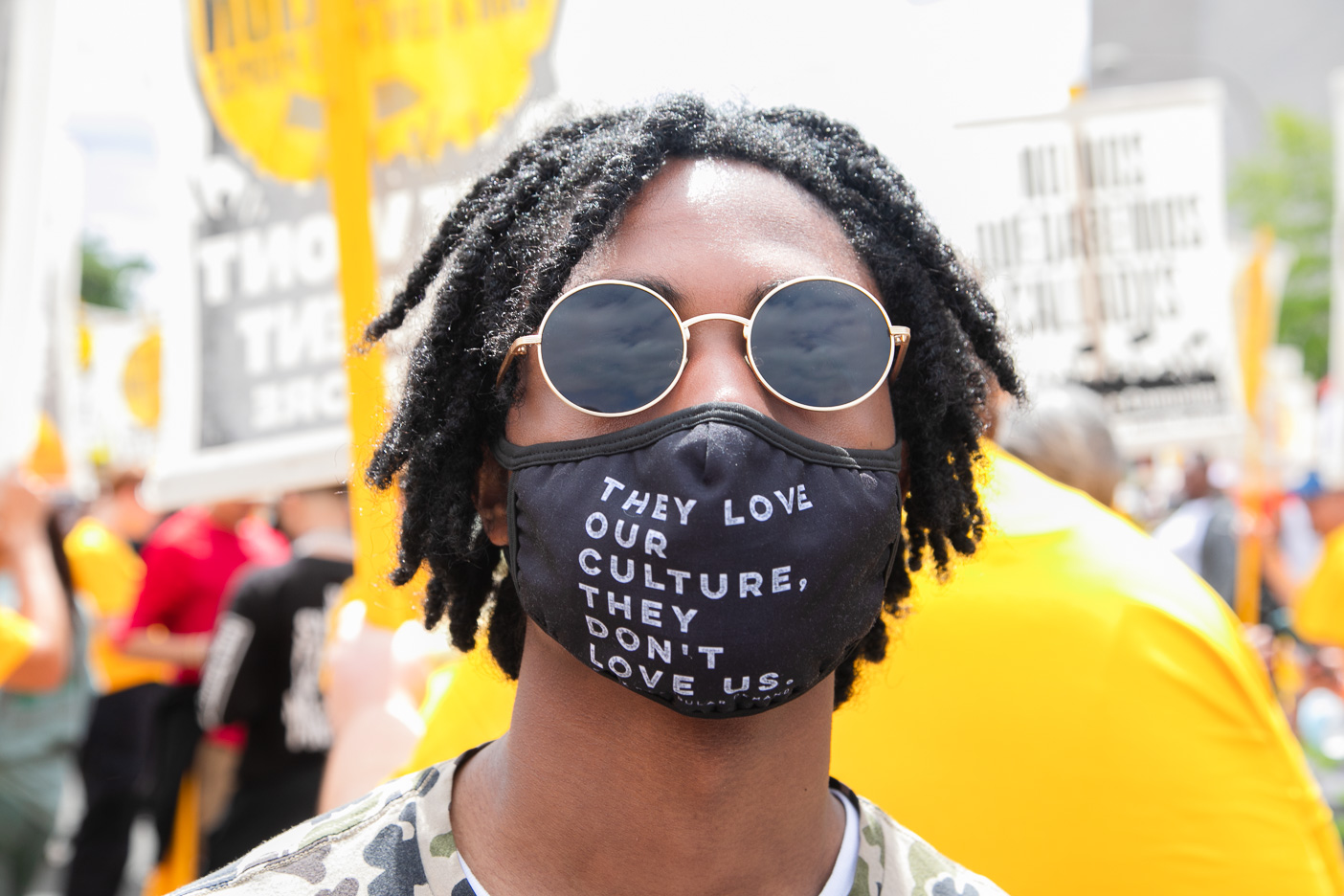
Photo: Mark Mahoney / Dream in Color Photography
Marcher and Memphis, TN resident, Jayonee Webster spoke on poverty.
Webster said, “Most of the city of Memphis is living on poverty wages and we really need to change those conditions. I grew up in poverty.”
Webster also spoke on if she felt she was continuing the work of Dr. King.
Webster said, “Absolutely. The Civil Rights Movement never ended and here we are today as an expression of that. An expression of lots of different movements coming together.
2018 NNPA DTU Journalism Fellowship
UAB Looks to Retain Participants in All of Us Research Program
BIRMINGHAM TIMES — Recruiting participants to a research program is one thing. Keeping those participants engaged over time is another. Investigators at the University of Alabama at Birmingham (UAB), which heads the Southern Network of the National Institutes of Health’s All of Us Research Program, will launch a new pilot study aimed at increasing participant retention rates in All of Us in the state of Alabama.

By Bob Shepard
Recruiting participants to a research program is one thing. Keeping those participants engaged over time is another. Investigators at the University of Alabama at Birmingham (UAB), which heads the Southern Network of the National Institutes of Health’s All of Us Research Program, will launch a new pilot study aimed at increasing participant retention rates in All of Us in the state of Alabama.
All of Us is a national program to accelerate health research and medical breakthroughs, enabling individualized prevention, treatment and care for all of us. The overall aim nationally is to enroll 1 million or more volunteers who will provide information over time for use in a wide range of health research studies. The program will oversample communities that have been underrepresented in biomedical research to make the program’s dataset the largest, most diverse resource of its kind.
Launched in May 2018, All of Us has enrolled more than 270,000 participants nationwide. The Southern Network, consisting of Alabama, Mississippi and Louisiana, has enrolled more than 17,700.
UAB investigators, funded by an additional $7 million funding award from NIH, will conduct a pilot study to discover better ways to engage and retain those enrollees. UAB will share lessons learned from this pilot with other All of Us partners to support retention efforts nationwide, particularly with other rural and hard-to-reach communities.
“Retaining research participants over the course of a multiple-year study can be difficult, especially in a large, multifaceted program such as All of Us,” said Bruce R. Korf, M.D., Ph.D., UAB chief genomics officer and co-principal investigator for the All of Us Southern Network. “The goal of this pilot study will be to assess retention models even as we continue enrollment efforts throughout the three-state Southern Network.”
The pilot will employ a retention navigator model, using specially trained navigators to interact directly with participants. Navigators will be recruited locally in areas where access to UAB or the other study sites is a barrier to recruitment and retention.
“Individuals may be more likely to remain involved in the program if they can relate to trusted ‘retention navigators,’ who can help them to understand and interact with All of Us and overcome barriers such as lack of internet or email access or fear of research studies,” said Mona Fouad, M.D., director of the UAB Minority Health and Health Disparities Research Center.
Reaching Remote Areas
The program will be utilizing a mobile clinical unit to reach remote areas, eliminating the need for participants to travel to UAB or one of the other study sites. The investigators will also assess the efficacy of traditional and new digital retention strategies.
“Use of enhanced digital and traditional retention techniques can improve participant engagement and increase the likelihood of follow-up by creating stronger and more frequent connections to the program,” said Cora E. Lewis, M.D., chair of the Department of Epidemiology in the School of Public Health and co-PI of the Southern Network.
The pilot will identify and engage health care providers, community leaders and community organizations in the target areas to assist in the identification and recruitment of navigators, and then recruit retention navigators in those targeted areas. Investigators hope to increase study retention by assisting participants in completing follow-up surveys online through the All of Us participant portal.
“Recruitment and retention of participants in clinical research is the key to finding the answers that can be transformative for the overall health of our state and region,” said Selwyn Vickers, M.D., senior vice president and dean of the UAB School of Medicine. “I applaud the leadership and staff of the Southern Network for their outstanding efforts thus far. I am confident that they will discover and fine-tune new strategies for keeping those who selflessly give of themselves to participate in All of Us active and engaged over the course of the research project.”
Alabamians age 19 or older, regardless of health status, are eligible to enroll in the program by visiting JoinAllofUs.org/UAB.
The All of Us Southern Network includes the University of Alabama at Birmingham, Cooper Green Mercy Health Services, Huntsville Hospital, Louisiana State University Health Sciences Center, Tulane University, Tuskegee University, UAB School of Medicine’s Montgomery Internal Medicine and Selma Family Medicine programs, UAB School of Medicine’s Huntsville Regional Medical Campus, University of Mississippi Medical Center, University of South Alabama Health System, and University Medical Center in Tuscaloosa.
This article originally appeared in The Birmingham Times.
2018 NNPA DTU Journalism Fellowship
Bahamians in New Orleans support island recovery
LOUISIANA WEEKLY — In the aftermath of Hurricane Dorian, a group of New Orleanians with Bahamian roots has organized a donation drive to provide aid to the Bahamas. The local association, which calls itself the Bahamian-New Orleans Connection (BNOC), plans to direct the money it raises to the Ranfurly Homes for Children and the Bahamas Crisis Centre, two organizations dedicated, respectively, to supporting children and families displaced by the Category 5 storm, which devastated the northernmost islands of the Bahamas in early September.

By Nicholas Hamburger
In the aftermath of Hurricane Dorian, a group of New Orleanians with Bahamian roots has organized a donation drive to provide aid to the Bahamas. The local association, which calls itself the Bahamian-New Orleans Connection (BNOC), plans to direct the money it raises to the Ranfurly Homes for Children and the Bahamas Crisis Centre, two organizations dedicated, respectively, to supporting children and families displaced by the Category 5 storm, which devastated the northernmost islands of the Bahamas in early September.
In addition to monetary donations, BNOC is collecting supplies such as non-perishable food, clothes and toiletries at Solid Rock Missionary Baptist Church, located at 2120 North Roman St., in the hopes of filling a large container and shipping it to the Bahamas at the end of the month. Solid Rock will be open to receive donations from 9 a.m. to 3 p.m. on October 15, October 17 and October 19.
As an archipelagic country positioned on the fringe of the West Indies, the Bahamas is no stranger to hurricanes, but it has never confronted a natural disaster of Dorian’s scale. Indeed, after making landfall with record-tying winds, Dorian stalled over the Abaco Islands and Grand Bahama Island, inundating the northern part of the country for days. Sixty-one people have been confirmed dead and hundreds are missing; meanwhile, roughly half the population of Great Abaco Island remains displaced, and approximately 45 percent of the homes on Grand Bahama have been severely damaged or rendered uninhabitable.
According to members of BNOC, New Orleans could serve as a model of reconstruction for the Bahamas.
“As Bahamians who lived through the experience of Katrina, we have a vast knowledge to pass on to the Bahamian people,” said Dario Carey, the pastor of Solid Rock who came to New Orleans from the Bahamas in 1998. “It’s our job to provide Bahamians a map to navigate through these turbulent times.”
Formed last winter, BNOC consists of over a dozen Bahamians, all of whom immigrated to New Orleans within the past forty years. Before Dorian battered part of the archipelago, the primary purpose of the group was to unite the small number of people who live in New Orleans and hail from the Bahamas, a dual geography bridged by a notable cultural kinship.
“We look at New Orleans as an extension of the islands because the culture is very similar,” explained Alexina Medley, the former principal of Warren Easton High School and a native of Nassau, the capital of the Bahamas. “For example, New Orleanians call it gumbo, we call it soup. They say jambalaya, we say peas and rice. They do couvillion, we do steamed fish on the stove.” Carey chimed in: “They call it Mardi Gras; we call it junkanoo.”
Economically, New Orleans and the Bahamas resemble each other as well, with tourism functioning as a crucial industry in both places. While Dorian has damaged the tourist capital of the country, Grand Bahama, Medley issued a piece of advice to holiday-makers reconsidering their upcoming visit to the country: “The Bahamas is not one big island; it’s a chain of islands. Don’t disregard the Bahamas because you feel as though it has been completely affected, when, in fact, the storm only hit two islands.”
Still, Dorian has left thousands of Bahamians without homes or jobs, the type of circumstances that often prompt migration. Given its proximity to the Bahamas, and its status as the country with the second-largest Bahamian population, the United States would be a fitting destination for Bahamian evacuees, but President Trump recently denied Temporary Protected Status to Bahamians seeking refuge in the U.S., breaking from American precedent.
Carey, however, does not envision a mass exodus from Grand Bahama or the Abacos.
“They’ll come to Florida to do some shopping,” he said, “and then they’ll be back in the Bahamas.” Medley concurred: “Bahamians are very proud, and they don’t travel far from home. If they come, I don’t see them staying, not in large numbers.”
In this way, Medley pointed out, Bahamians will likely also approximate New Orleanians, who largely returned to the city after being uprooted by Katrina in 2005. That year, and in the years that followed, Bahamians in Nassau raised a noteworthy amount of funds to assist recovery efforts in New Orleans. With the northern part of the Bahamas currently in need of aid, BNOC intends to reciprocate the generosity, nearly fifteen years later.
To donate directly to the Ranfurly Homes, visit www.ranfurlyhome.org, click “Support Ranfurly,” then click “Donate.” To donate directly to the Bahamas Crisis Centre, visit www.bahamascrisiscentre.org and click “Donate.” For more information on the Bahamian-New Orleans Connection relief effort, contact Dario Carey at (504) 342-8373.
This article originally published in the October 14, 2019 print edition of The Louisiana Weekly newspaper.
This article originally appeared in The Louisiana Weekly.
2018 NNPA DTU Journalism Fellowship
Customer on Front Line of DWP Billing Debacle Files $25,000 Claim Against City
LOS ANGELES SENTINEL — The man who sued the Los Angeles Department of Water and Power over grossly inaccurate utility billing he received years ago has filed a claim against the city over the way in which it handled the case, documents obtained by City News Service show.

By City News Service
The man who sued the Los Angeles Department of Water and Power over grossly inaccurate utility billing he received years ago has filed a claim against the city over the way in which it handled the case, documents obtained by City News Service show.
Antwon Jones, who was a plaintiff in a settlement in 2017 when the DWP was forced to refund customers after a massive billing snafu, claimed on Wednesday that the city owes him $25,000 due to “wrongful acts and omissions” and fraud committed by Paradis Law Group, which he retained during the first lawsuit.
However, Paradis had also committed to defending the DWP in a separate case and had secured about $30 million in consulting contracts to do so, creating what has been called a conflict of interest. The contracts with Paradis later were severed by the DWP.
Jones also said the city representatives breached their fiduciary duties to him by “unjustly enriching themselves” at his expense.
Claims are typically filed as a precursor to a lawsuit. If the city doesn’t honor the claim, it would give Jones the latitude to sue.
“Mr. Jones’ allegations against the city are completely without merit,” said Rob Wilcox, a spokesperson for the City Attorney’s Office. The city attorney facilitated the hiring of Paradis to help the DWP with its legal
issues years ago.
The debacle prompted a class-action lawsuit that led to a settlement requiring the DWP to reimburse customers about $67 million — new attorneys on the case reported last week that ratepayers could get an additional $50 million, as the settlement is being examined.
FBI agents served search warrants at the downtown headquarters of the Los Angeles DWP and City Hall East last week as part of a probe into the city’s handling of the litigation and settlement over the botched rollout of a DWP billing system.
The billing system in 2013 led to thousands of customers receiving inaccurate bills, with some being wildly overcharged.
The city and DWP, meanwhile, sued PricewaterhouseCoopers over its handling of the system’s rollout.
But PricewaterhouseCoopers earlier this year questioned the city’s relationship with Paul Paradis, an outside attorney it hired to handle the litigation against the company.
PricewaterhouseCoopers argued in court papers that the arrangement with Paradis was made specifically to secure a more favorable legal outcome for the city and DWP.
According to the Los Angeles Times, a class action lawsuit was filed on Wednesday in federal court by customer Dennis Bradshaw against City Attorney Mike Feuer and attorneys involved in the Jones lawsuit, alleging professional malpractice, unjust enrichment and more.
Bradshaw, a Los Angeles renter and DWP customer, received a credit to his December 2017 bill as part of the Jones settlement. His suit alleges that Jones’s attorneys and the city colluded to deprive the customers of their rights in that case, the Times reported.
This article originally appeared in The Los Angeles Sentinel.
2018 NNPA DTU Journalism Fellowship
How Idris Elba saved a fan’s life
ROLLINGOUT.COM — Idris Elba rushed to the aid of a fan who was in distress during a performance of his stage play, Tree. The “Luther” star leaped off stage to help Amanda Bilington when he saw she was having a seizure in the audience at the Upper Campfield Market in Manchester during the preview the production on Wednesday, July 3, 2019.
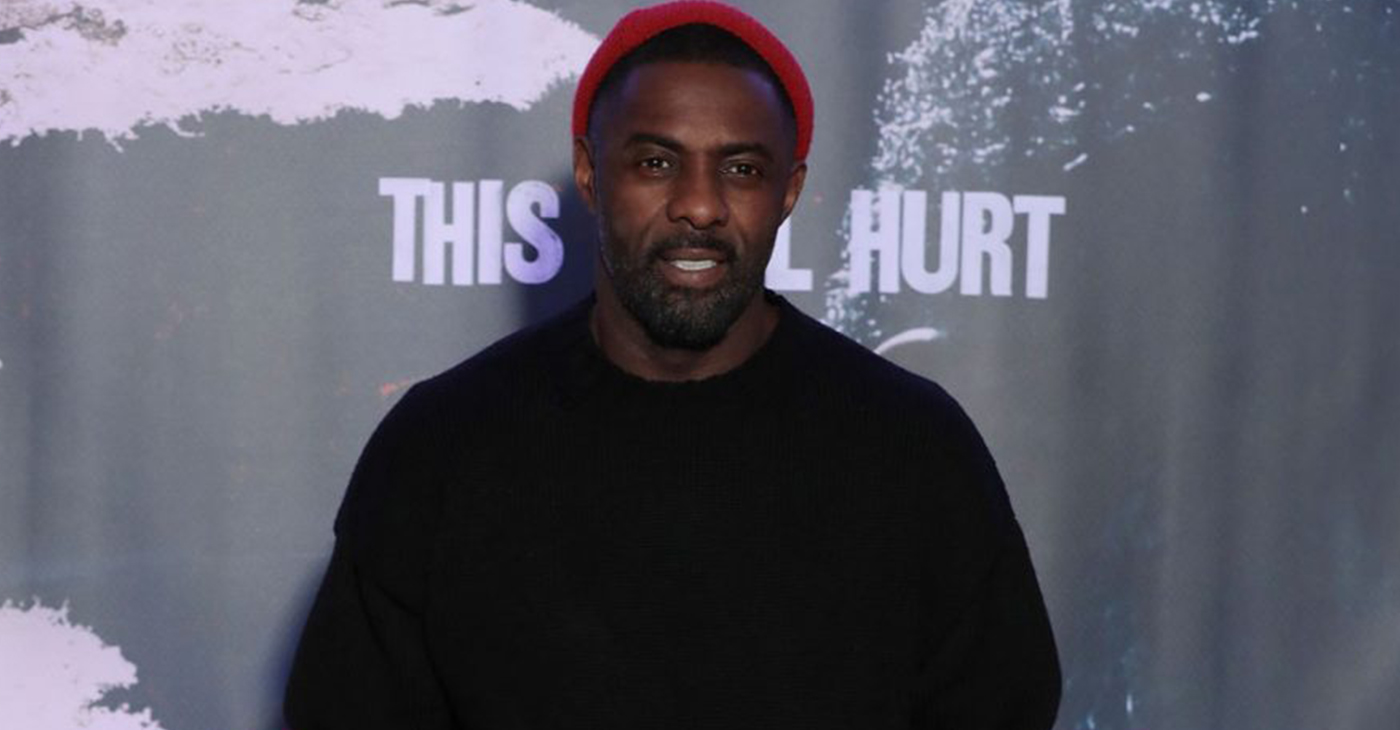
By Rollingout.com
Idris Elba rushed to the aid of a fan who was in distress during a performance of his stage play, Tree.
The “Luther” star leaped off stage to help Amanda Bilington when he saw she was having a seizure in the audience at the Upper Campfield Market in Manchester during the preview the production on Wednesday, July 3, 2019.
The 33-year-old theatre-goer who suffers from regular seizures didn’t realize the 46-year-old actor was standing by her side until she regained consciousness a little while later. Elba continued to stay with her until the paramedics arrived to take over her care.
“I would love to thank him personally but doubt I will cross paths with him, he’s very famous,” Bilington told the Daily Mirror newspaper.
Meanwhile, although Elba is busy with the play at the moment, the Mountain Between Us actor who is married to Sabrina Dhowre and has children Isan, 17, and five-year-old Winston from previous relationships, is working to spend as much time as possible with his loved ones.
“Everything’s a balance in life. I have to do the work, because it’s a popular time for me, and it’s best to have that. But also: I’m madly in love with my wife and my children,” he said in a recent interview with Vanity Fair.
“At home, I’m not famous, I’m me. And to my team and my family and the people that I work with every day when we build what we build, we’re not famous. You know what I mean? It’s day one every day,” Elba said.
2018 NNPA DTU Journalism Fellowship
Church Ministers Through Little Library
THE AFRO — St. Matthew’s Episcopal Church/ Iglesia Episcopal San Mateo in Hyattsville, MD. is using books as a means of bringing education, entertainment and hope to the community.
By Micha Green
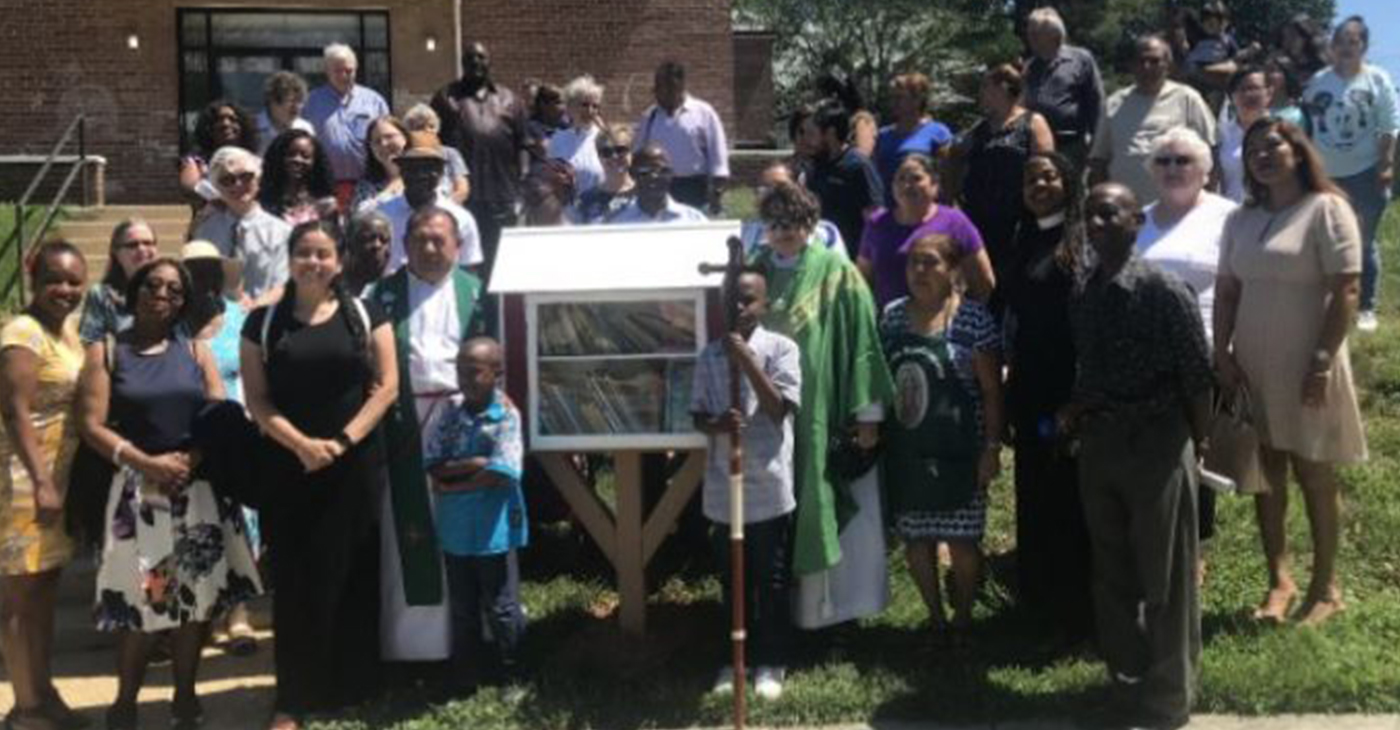
St. Matthew’s Episcopal Church/ Iglesia Episcopal San Mateo in Hyattsville, MD. is using books as a means of bringing education, entertainment and hope to the community.
Two days after St. Matthew’s church member Bernard Jarvis, 25, was gunned down in nearby Brentwood in Northeast, D.C., the parish unveiled a Little Library for children in the neighborhood between services on June 30. While the planning of the Little Library had been in the works for months, Rector Rev. Vidal Rivas and Associate Priest Sister Elena Thompson remembered Jarvis during the Little Library dedication.
As the community mourned the loss of Jarvis, the birth of the Little Library brought a clear sense of joy to those who attended its unveiling.
“I think this is a little hope, to say as we remember the member that passed away, we can still continue to support those little kids that are growing up and contributing to this Little Library in his memory as well,” Hyattsville City Council member Edoard Haba (Ward 4) told the AFRO.
Haba shared that he felt the creation of the Little Library was important to children’s education and thus kids’ overall growth.
“Education is important in youth and kids’ development,” he said.
The City Council member is so inspired by the Little Library concept that he is working to have more built throughout Hyattsville.
“As part of my vision for the community, I also plan to install a couple more of these Little Libraries throughout the community. We have three that are slated to be installed by the end of this month,” he said.
While Hyattsville already has a Little Library, according to Sister Thompson explained that the St. Matthew’s location is the only one solely dedicated to young people.
“The Little Library is a movement that is all across the country now, and they’re about a dozen Little Libraries already in Hyattsville, but this is the first one specifically dedicated to books for children,” she told the AFRO.
Thompson shared the logical and historic reasons why having a Little Library made sense for the neighborhood surrounding St. Matthew’s Episcopal Church/ Iglesia Episcopal San Mateo.
“We got the idea to put the Little Library here in two ways. One of which is that we have many children, when school gets out, walking right past our building. And the second is that this parish has a history of providing library services to the community, that goes back to the years in which the Hyattsville library was racially segregated,” she said.
According to Thompson, parish families worked to create an inclusive library.
“There was a family here named Hotchkiss who wanted to be sure that reading and books were available to all children. And so they and others established a parish library. The family of Owen Thomas gave a large grant, when this building was built in 1953, to make sure that there’d be a dedicated library space to which everyone could come,” she told the AFRO.
However, overtime, the demand for an inclusive library affiliated with the church became less as the public library eventually integrated.
“So we still have some of those old books, and we got into a discussion about what we should do with our old books from our old library and the children who are here in our church, in our day school and in the public school who come walking past us,” Thompson said. “And we brought up the idea of a Little Library and the Junior Warden immediately said, ‘I would like to build that.’ His name is Jose Ramirez. Jose went to his workshop, and over the next three months, built this library from scratch, and last Monday installed it.”
The need for a Little Library was further emphasized once installed, as community members began using it before the formal dedication.
“The community already responded- brought books, taken books and we are looking forward to a big outreach as well as an internal ministry for the Parish,” Thompson explained.
Using the ministry of education, the Episcopal Church Women (ECW) group at St. Matthew’s Episcopal Church/ Iglesia Episcopal San Mateo will be sharing the Little Library idea.
“Our ECW is going on a visit to another parish that has another school, and we hope to be able to tell them our story, and help them to begin a Little Library ministry of their own.”
This article originally appeared in The Afro.


Second Row Fold: Cargo Space Impact Explained #shorts

Planting seeds of economic mobility for St. Louis students

Revitalizing Civics: Reclaiming Our Constitution

FDIC Study: Minority Banks & Lending for Communities #shorts

Car Seat Access: Test Your Third Row Layout! #shorts

CeCe Winans and friends turn Chaifetz Arena into a house of praise

Unitarian Universalist Congregation of Montclair | Preacher: Rev. Mark Thompson 10.11.26

Black-Owned Banks: FDIC Data Reveals Shocking Truth #shorts

2026 Defender 130X: Is The $110k SUV Worth It? #shorts

Mastering the Used Car Market ep11

Latest Massacre in Haiti Reveals Cruelty U.S. Deportations

The Youngest American Killed in the Vietnam War

OPINION: Nolan Wells’ Death One of Several Signifying Racial Terror Lives on in U.S. South

Passing for White, Fighting for Black America: The Courage of Walter White

OP-ED: Haiti TPS: Have We Lost Sense of Humanity?

OP-ED: If AI Is the New Language of Power, Then NAN Wants Black Communities Fluent

OP-ED: How Does Your State Rank for Pre-K?

Henry O. Flipper: A Trailblazer at West Point and Beyond

Asm. Smallwood-Cuevas’s Bill Repealing ‘Racist’ CalWORKs ‘Man-in-the-House’ Rule Clears Legislature

NBA All-Star Damian Lillard Returns Home for 15th Annual Backpack Giveaway
Second Row Fold: Cargo Space Impact Explained #shorts
Planting seeds of economic mobility for St. Louis students
Revitalizing Civics: Reclaiming Our Constitution
FDIC Study: Minority Banks & Lending for Communities #shorts
Car Seat Access: Test Your Third Row Layout! #shorts
CeCe Winans and friends turn Chaifetz Arena into a house of praise
Unitarian Universalist Congregation of Montclair | Preacher: Rev. Mark Thompson 10.11.26
Black-Owned Banks: FDIC Data Reveals Shocking Truth #shorts
2026 Defender 130X: Is The $110k SUV Worth It? #shorts
Mastering the Used Car Market ep11
-

 Black Press1 week ago
Zakiya Jendayi Arrested, Locked Out of Home by Sheriff’s Deputies
-

 Black Press6 days ago
A $2.1 Trillion Wellness Industry Never Built a Daily Practice for Black Children. So This Atlanta Family Did.
-

 Art6 days ago
Montclair Brewery: Brewing Culture, Community, History
-
 Black History1 week ago
Listening as a Lifeline: A Doula’s Witness to Black Maternal Health
-
 BlackPressUSA4 days ago
Latinas Deserve Equal Pay. Unions Help Make It Happen.
-

 Black Press6 days ago
COMMENTARY: But God!
