
HBCU
TSU Celebrates Former Football Players
THE TENNESSEE TRIBUNE — Over the years, more than 150 TSU players went on to compete in the National Football League, Canadian Football League, and other professional leagues.

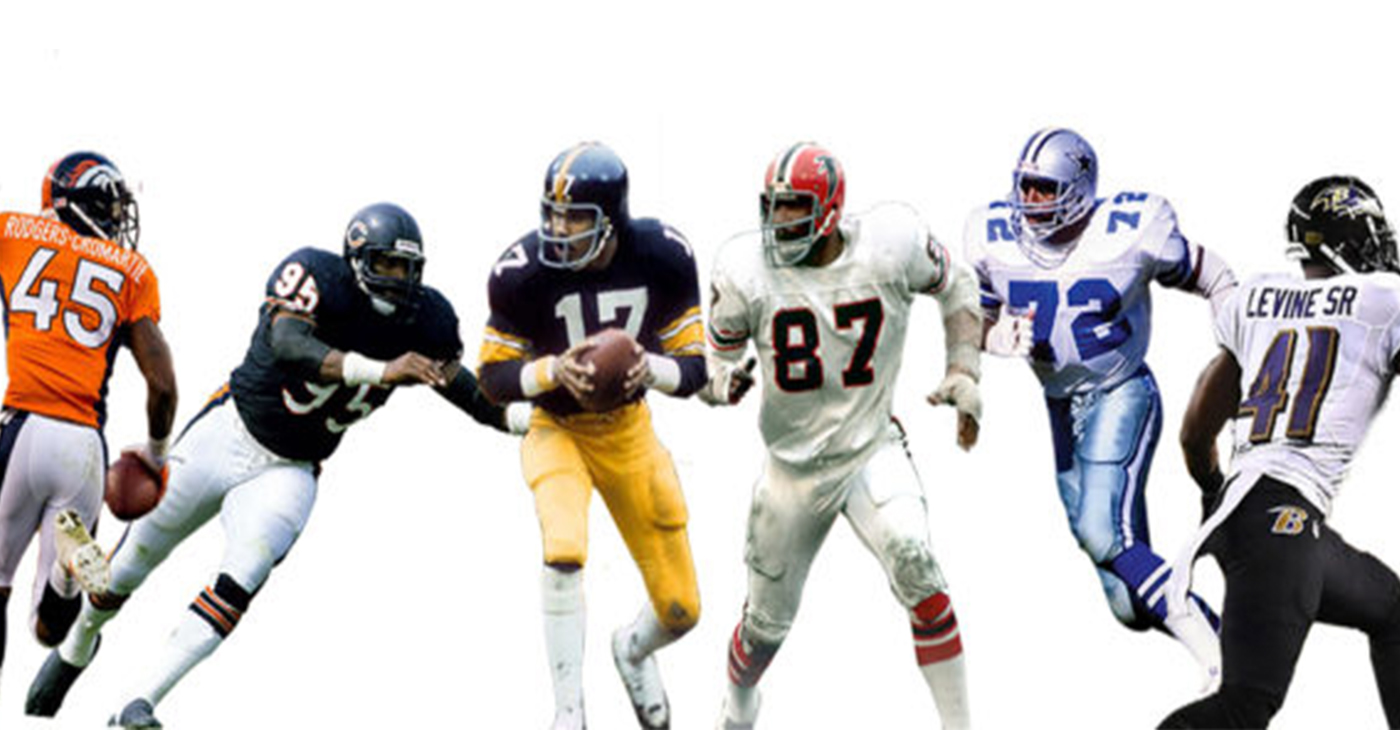
NASHVILLE, TN (TSU News Service) — The NFL Draft will highlight the future of professional football in a couple of weeks. However, on Friday, Tennessee State University will celebrate former TSU players who competed in the pros, including 21 in Super Bowls.
“Salute to Greatness-Excellence on the Gridiron” will take place at the Renaissance Nashville Hotel. A reception is scheduled for 6 p.m., followed by a program/dinner at 7 p.m.
The event leading up to the NFL Draft in Nashville on April 25 is part of TSU’s annual Coming Home-Legends Weekend, which will feature the Blue and White Game on April 13.
“Our history of sending students to play on the professional level of football is special,” says TSU Athletics Director Teresa Phillips. “Those who competed on the highest level were and are great representatives of the university and should be recognized. The ‘Salute to Greatness’ event seeks to bring these stars together to celebrate their collective successes.”
Over the years, more than 150 TSU players went on to compete in the National Football League, Canadian Football League, and other professional leagues.
Those players who did and will be at the April 12 event include Pro Football Hall of Famer Richard Dent, MVP of Super Bowl XX with the Chicago Bears; Ed “Too Tall” Jones, who appeared in three Super Bowls as a member of the Dallas Cowboys; and two-time Pro Bowler Dominique Rodgers-Cromartie, who played in Super Bowl XLVIII with the Denver Broncos.
“When I first learned of the event, I was very excited,” says Jones. “Tennessee State has always had a rich athletics program, even before I got here. This is not a championship team that will assemble, it is all the players coming back to support this as well. I’m looking forward to seeing all of the guys.”
Grant Winrow is the event’s chairman and special assistant to TSU President Glenda Glover. He says it’s great to “welcome our former players back to the school that gave them their start.”
“We thank President Glover for allowing us to carry this vision of celebration during our Coming Home weekend,” says Winrow, who is also director of special projects.
Chris Hope, a former Tennessee Titans Pro Bowler and Super Bowl champion safety with the Pittsburgh Steelers, will be the event’s keynote speaker. The master of ceremony is Emmy Award-winning sportscaster Hope Hines, considered a Nashville legend in sports coverage.
“For over six decades, players from Tennessee State University have been cornerstones of the National Football League,” says Hines, who covered TSU sports extensively. “In fact, only a very few colleges and universities have sent more players to the NFL than TSU. The ‘Salute to Greatness’ night is the perfect opportunity to celebrate over 60 years of the brotherhood of Big Blue players who have made Tennessee State University synonymous with the NFL.”
Traci Otey Blunt, a TSU alum and senior vice president of corporate communications for the NFL, agrees.
“I think it’s so dynamic what TSU has done for the sports community, business community, and beyond,” says Blunt. “I scream from the mountaintops that I’m a proud Tennessee State University graduate.”
In 2016, TSU was recognized at the John Wooten Leadership Awards in San Francisco for the number of players who competed in Super Bowls. The university’s football legacy dates back to Super Bowl I in 1967, when former TSU Tigers Willie Mitchell and Fletcher Smith made their appearance as teammates with the Kansas City Chiefs. More than 20 players have followed them over the years.
To learn more about TSU football and the university’s other athletic programs, visit https://www.tsutigers.com.
This article originally appeared in The Tennessee Tribune.






Black Press
Homecoming Ends in Gunfire Outside FAMU: 12 Hurt, Six of Them Children
SAN FRANCISCO SUN REPORTER — Twelve people were injured, including six children, after gunfire erupted near Florida A&M University’s Bragg Memorial Stadium following a homecoming celebration on Saturday night. Authorities report that the shooting stemmed from a dispute between individuals who knew each other, leaving eleven victims with gunshot wounds and one with an ankle injury.
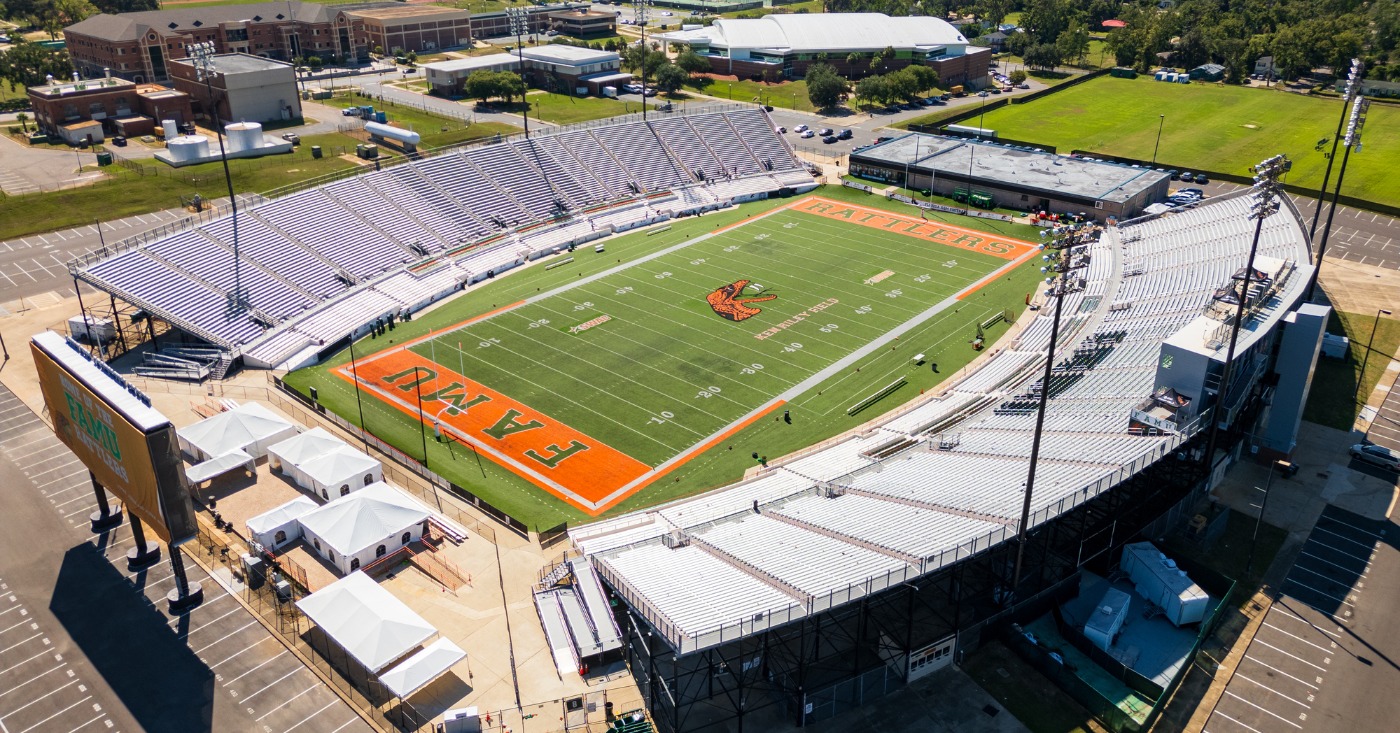
Twelve people were hurt, six of them children, when gunfire broke out near Florida A&M’s stadium as homecoming crowds headed home Saturday night. A 15-year-old has been charged.
TALLAHASSEE, Fla. — Homecoming is supposed to be the one weekend everybody comes back. Grandmothers in orange and green. Alumni who haven’t seen each other in twenty years. Kids on shoulders watching the band.
Saturday night, it ended in gunfire.
Twelve people were hurt in a shooting near Perry and Manatee streets, behind Florida A&M University’s Bragg Memorial Stadium, around 8 p.m. as crowds left the homecoming celebration, according to News4JAX. Eleven were shot. A twelfth hurt an ankle running from the gunfire. Six of the injured are children, including an 11-year-old.
By Sunday, five had been released from the hospital and six were still being treated, one in critical condition, CBS News reported. No one was killed.
What police say
A fight broke out first, police said, among people who knew each other. Then somebody started shooting. None of the people hit appear to have been the intended targets.
A 15-year-old was arrested and charged with multiple counts of attempted murder and possession of a firearm by a delinquent, according to CBS News. Police said more arrests are possible. The Sun-Reporter does not name minors charged with crimes.
“What should have been a weekend of celebration in our community instead became a night of fear and violence,” Tallahassee Police Chief Lawrence Revell said.
FAMU President Marva Johnson said she shares in the “outrage and profound sadness at the senseless and despicable shooting.” The university said the shooting happened near campus and that the campus remained safe.
Rattlers head football coach Quinn Gray put it plainest.
“No one should leave our celebration in an ambulance,” he wrote, “and no child should ever be caught in gunfire.”
Why it lands here
Homecoming at a historically Black college is a family reunion for the whole Black diaspora, and the Bay Area sends its share. Alumni, parents of students, kids who’ve already got their acceptance letters in mind. When something like this happens in Tallahassee, it happens to people we know.
Police are asking anyone with information or video to contact the Tallahassee Police Department.
Sources: CBS News and News4JAX. Photo: Bragg Memorial Stadium at Florida A&M University. Photo by Michael Rivera via Wikimedia Commons, CC BY-SA 4.0.
Based on reporting by San Francisco Sun Reporter.
Black Press
NCCU Snap Three – Game Losing Streak with Win over Delaware State University
NORTH CAROLINA CENTRAL UNIVERSITY – CAMPUS ECHO — North Carolina Central University snapped a three-game losing streak on Friday with a decisive 31-12 victory over Delaware State University. Despite allowing an early touchdown, the Eagles regained their composure through a strong ground game led by freshman running back Gino Addison, who recorded 214 rushing yards and two scores.
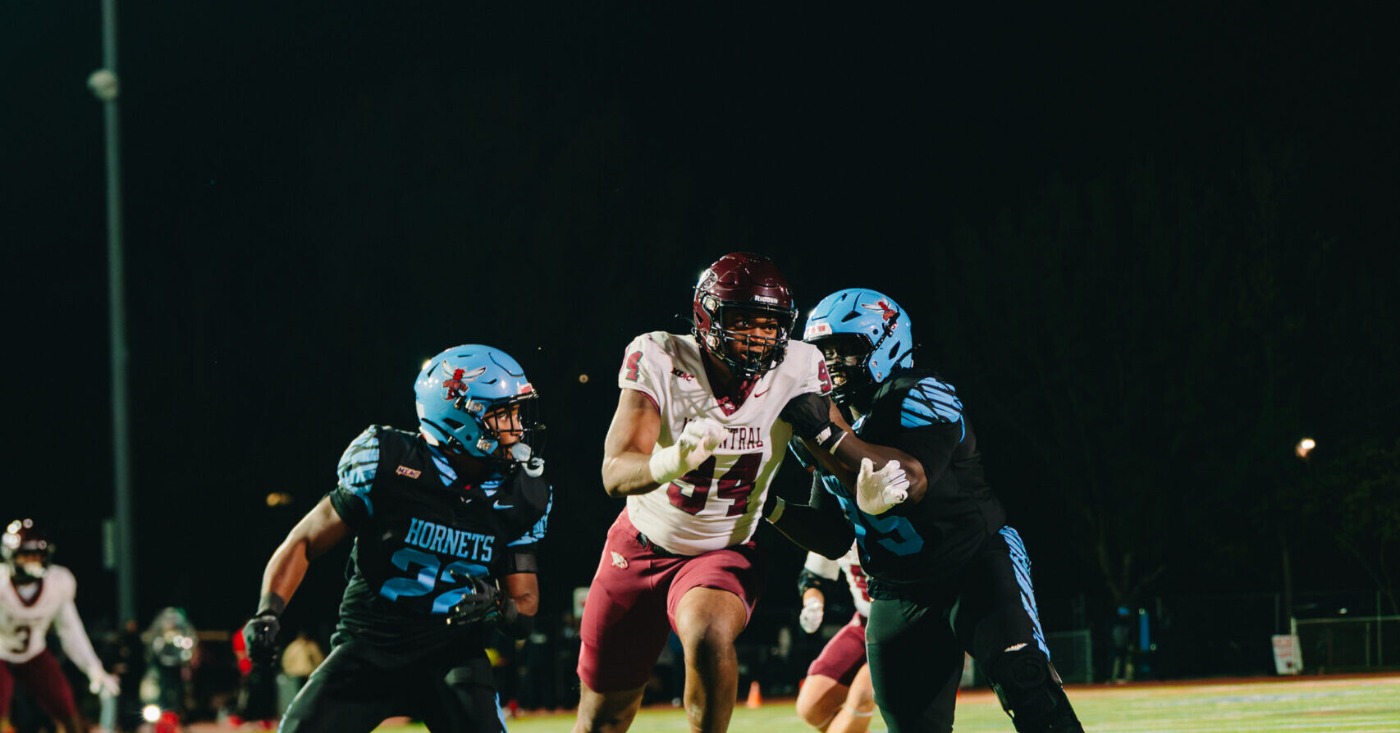
N.C. Central University snapped its three-game losing streak Friday, defeating Delaware State University 31-12.
After three consecutive losses, the Eagles entered Friday’s game determined to turn their season around. NCCU played with confidence, communicated effectively and showed greater consistency on both sides of the ball.
The Eagles’ offense struggled to maintain consistency early in the game but gradually found its rhythm, building momentum and moving the ball down the field. Despite allowing the Hornets to score an early touchdown, the Eagles remained focused and continued to fight.
Freshman running back Gino Addison recorded 214 rushing yards and two touchdowns, while sophomore running back Zion Dobson contributed 57 rushing yards and a touchdown.
Sophomore quarterback Cobey Thompkins also connected with fifth-year tight end Luke Bracey for a touchdown, adding to the Eagles’ offensive production.
Freshman specialist kicker Riley Daniels continued to deliver on extra-point attempts following touchdowns. Daniels also made an important tackle during a kickoff against the Hornets, contributing beyond his kicking duties.
The Eagles’ defense remained strong throughout the game, making it difficult for the Hornets to advance the ball and forcing them to punt multiple times.
Freshman defensive back Amari Sifford recorded two interceptions, while senior defensive lineman Zarion Walters contributed a sack to help limit Delaware State’s offensive opportunities.
The Eagles ability to maintain their composure and build momentum helped them secure the 31-12 victory over Delaware State University.
The Eagles enter next week with the record of 3-5.
NCCU will face Howard on October 31st against Howard at O’Kelly – Riddick Stadium streamed on ESPN+.
The post NCCU snap three – game losing streak with win over Delaware State University first appeared on Campus Echo Online.
Based on reporting by North Carolina Central University – Campus Echo.
Black Press
Virginia State Dominates Shaw 76-13 Behind Explosive Second-Quarter Surge
THE CAROLINIAN — Virginia State University delivered a dominant performance against Shaw University in a Central Intercollegiate Athletic Association matchup on Saturday, Oct. 17, securing a 76-13 victory. The Trojans took full control of the contest during a devastating second-quarter surge where they scored 35 unanswered points.
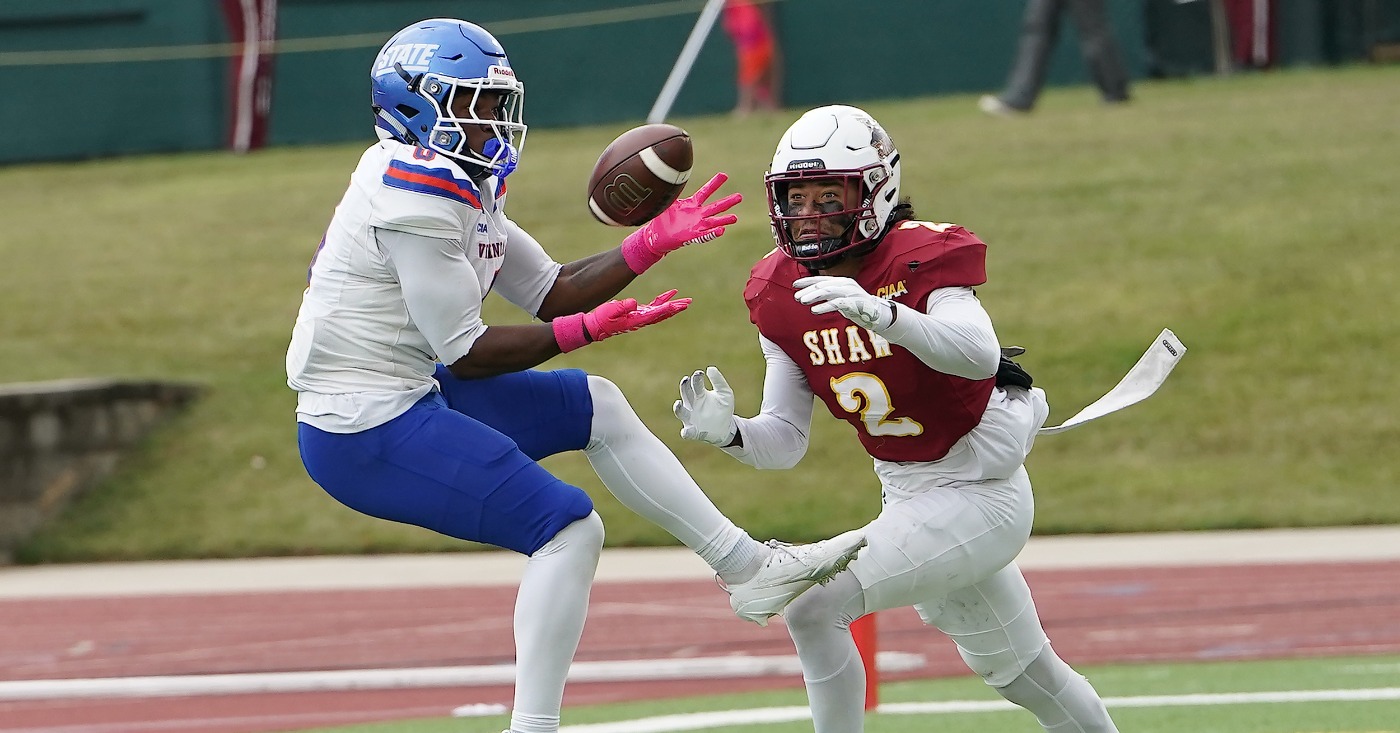
DURHAM, N.C. – Virginia State University delivered a commanding performance against Shaw University on Saturday, October 17, defeating the Bears 76-13 in a Central Intercollegiate Athletic Association (CIAA) football matchup. A devastating 35-0 scoring run in the second quarter helped Virginia State take control of the contest, leaving Shaw struggling to regain momentum.
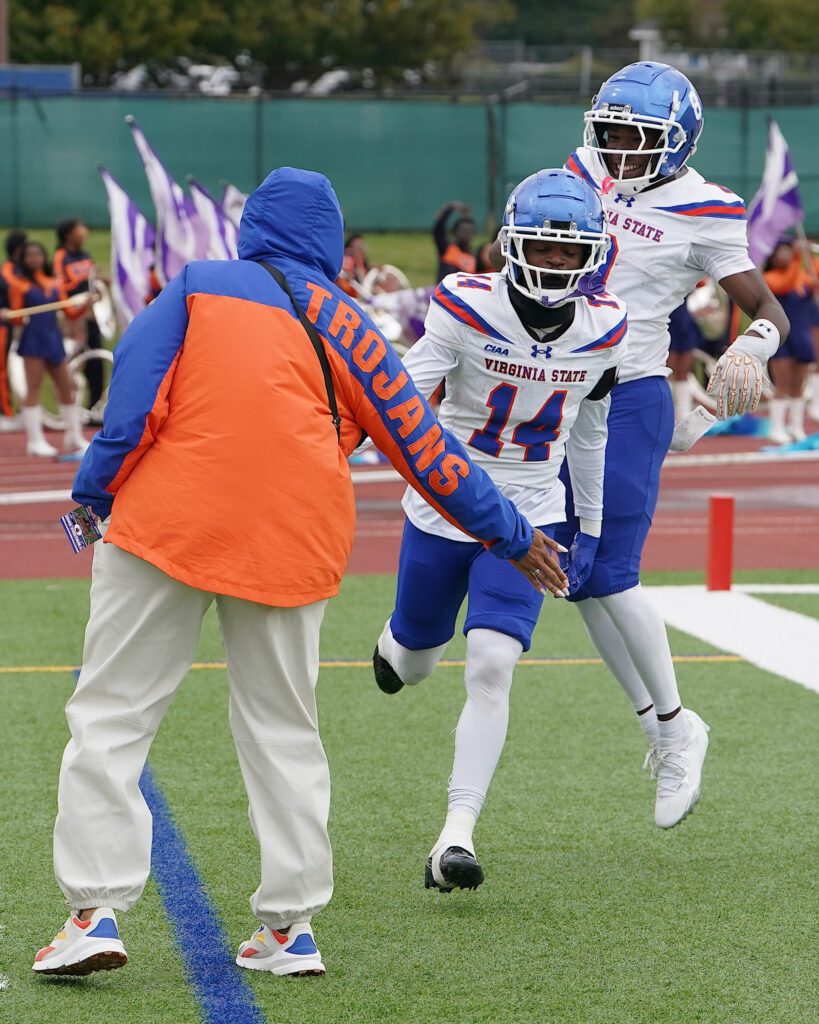
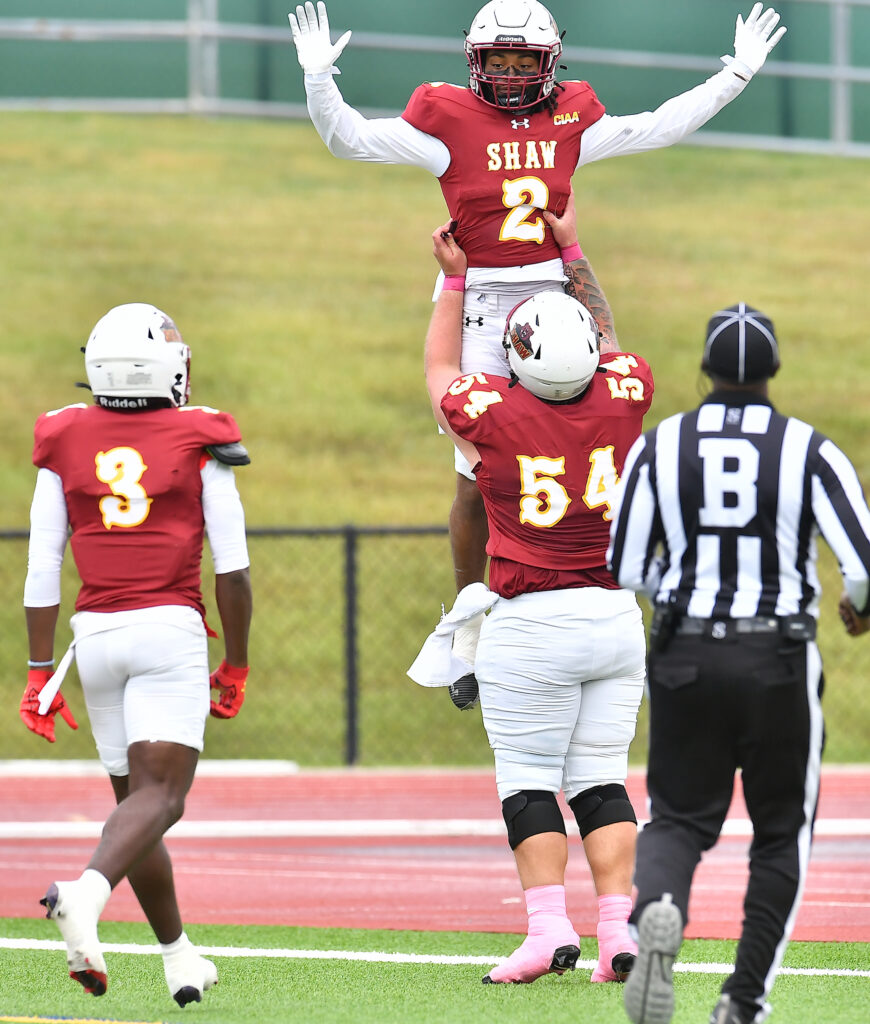
Shaw showed flashes of offensive potential early in the game, highlighted by a long touchdown reception from wide receiver Reggie King Jr. (2). King celebrated the score alongside teammate Ashton Williams (54), giving the Bears an early offensive highlight despite the eventual lopsided outcome.
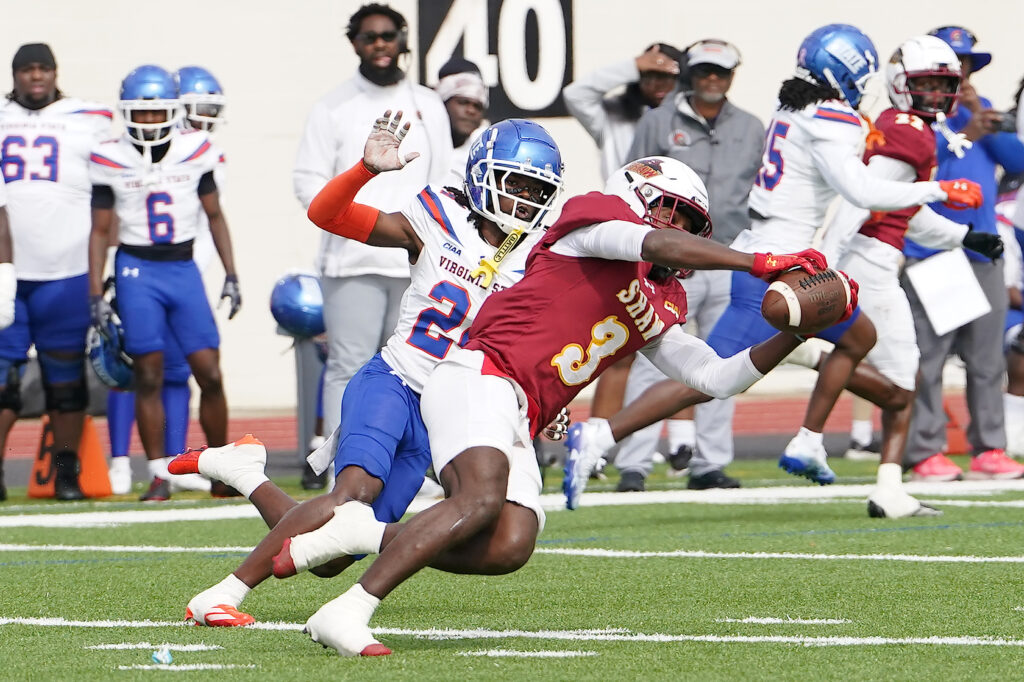
Wide receiver Floyd Lyles (3) also contributed to Shaw’s offensive efforts, securing a first-down reception while being defended by Virginia State cornerback Jamontae Dance-Anderson (24). However, the Bears struggled to sustain drives as Virginia State’s defense and special teams continued to create problems.
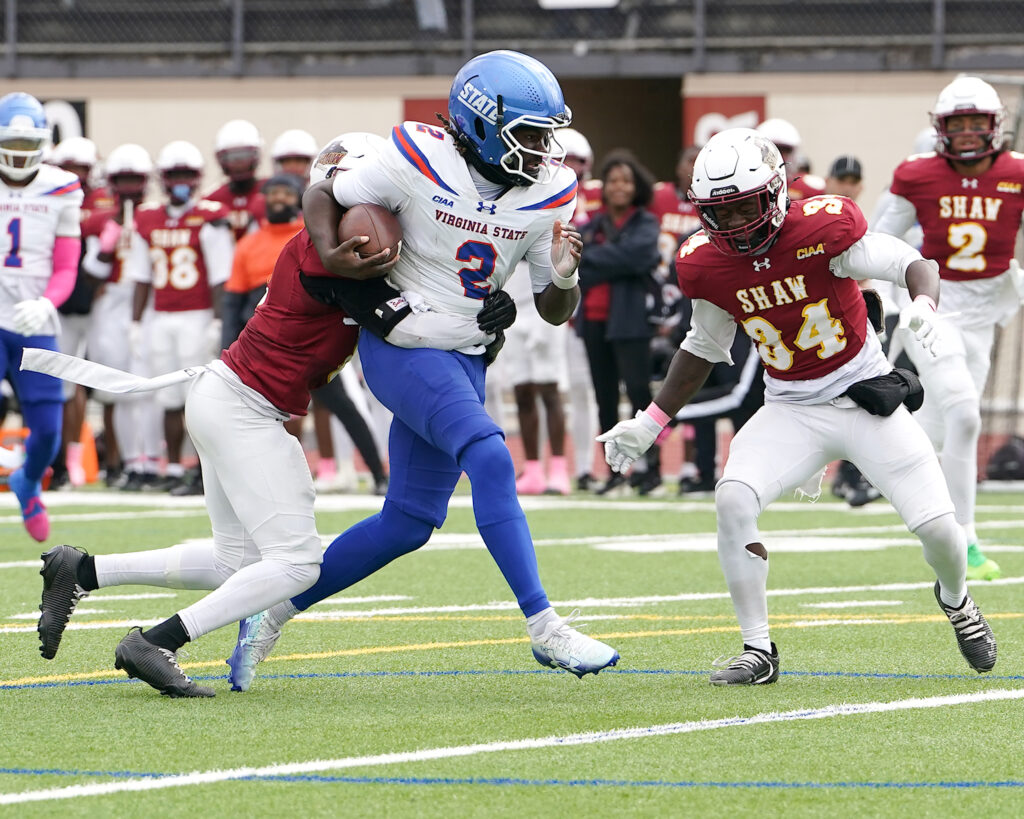
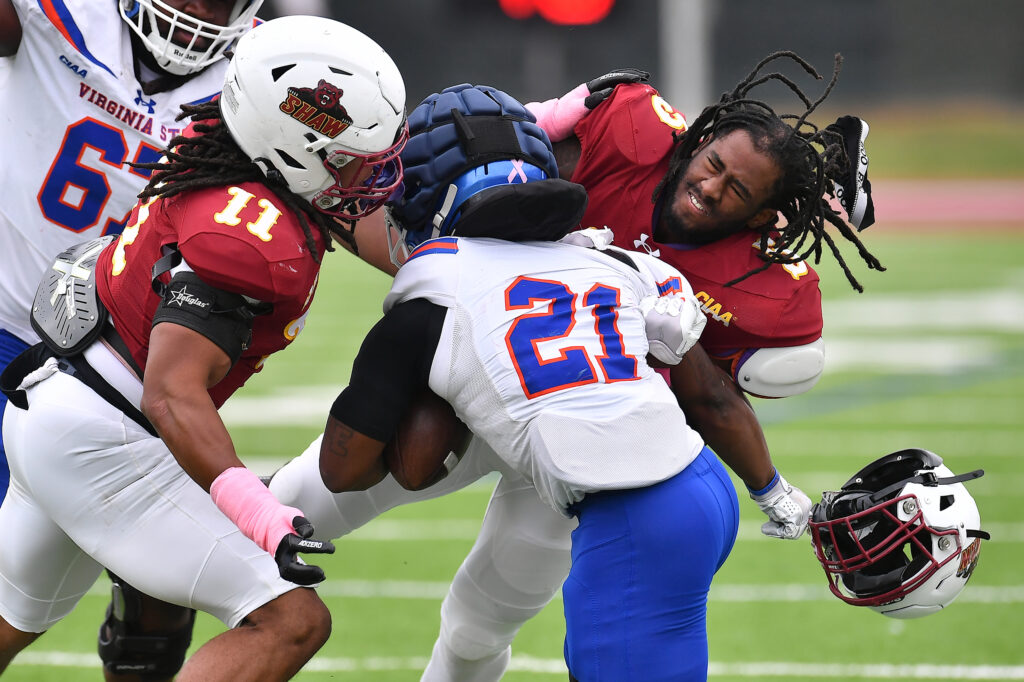
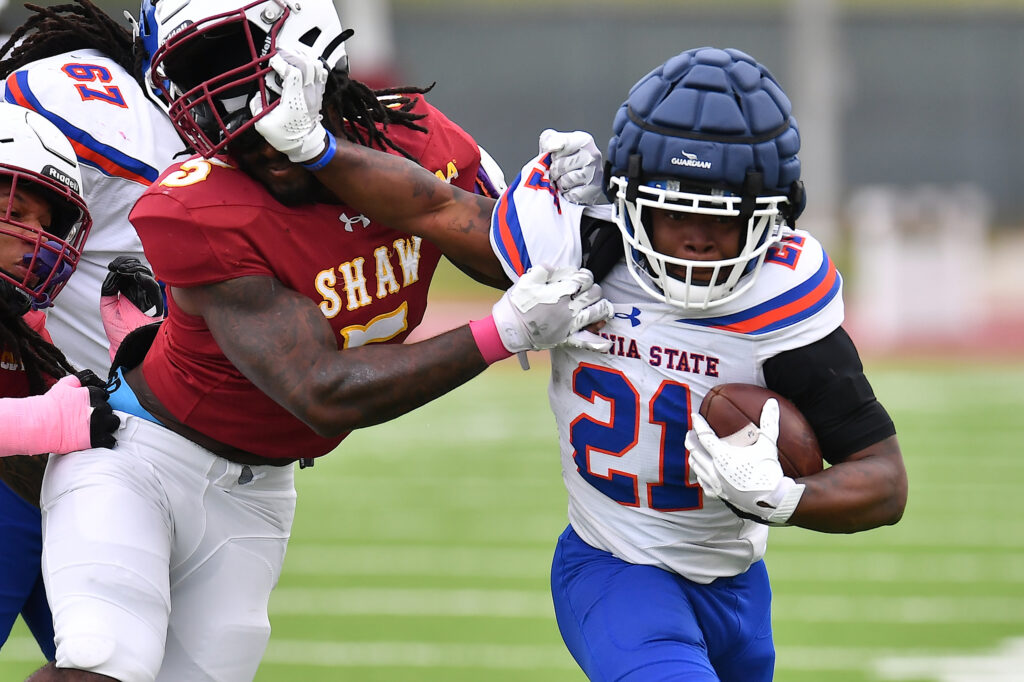
Virginia State’s offense proved difficult to contain, with quarterback Rashaan Matthews Jr. (2) extending plays with his legs and picking up a first down against the Shaw defense. Running back TJ Mordecai (21) added to the Trojans’ physical offensive attack, delivering a powerful stiff-arm against Shaw linebacker Quadir McEachin (5) during a first-half run.
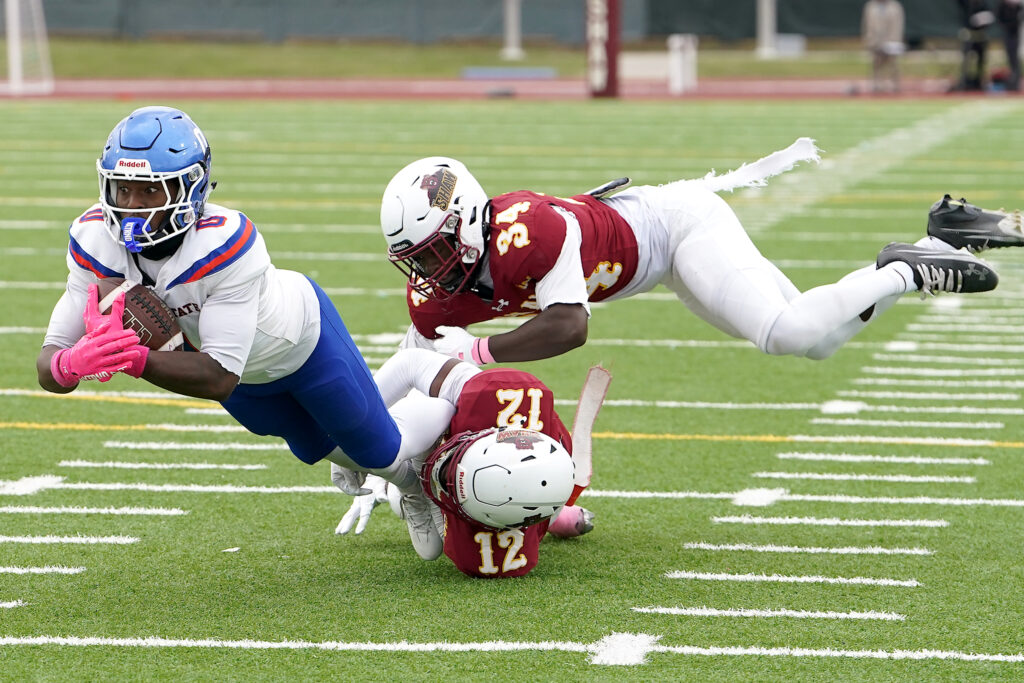
The Trojans also found success through the air. Wide receiver Kevin Gayles (0) made a first-down reception against Shaw defensive backs Sean McFadden (12) and Antonio Hardge (34). Later in the first half, Gayles hauled in a touchdown reception against Shaw cornerback Antonio Cotman (2), adding to Virginia State’s growing lead.
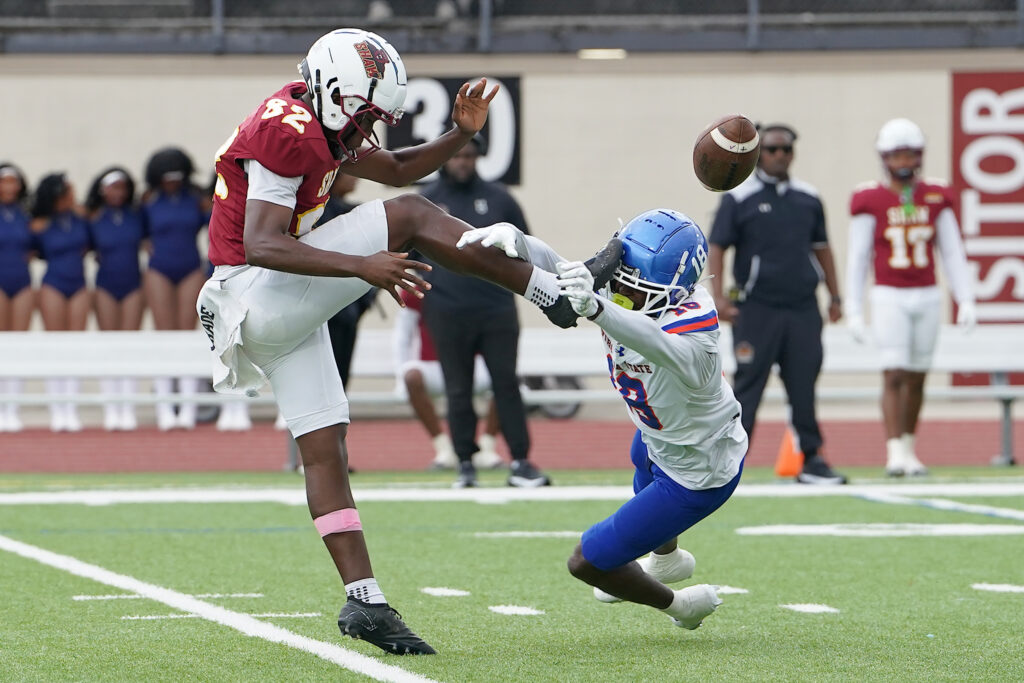
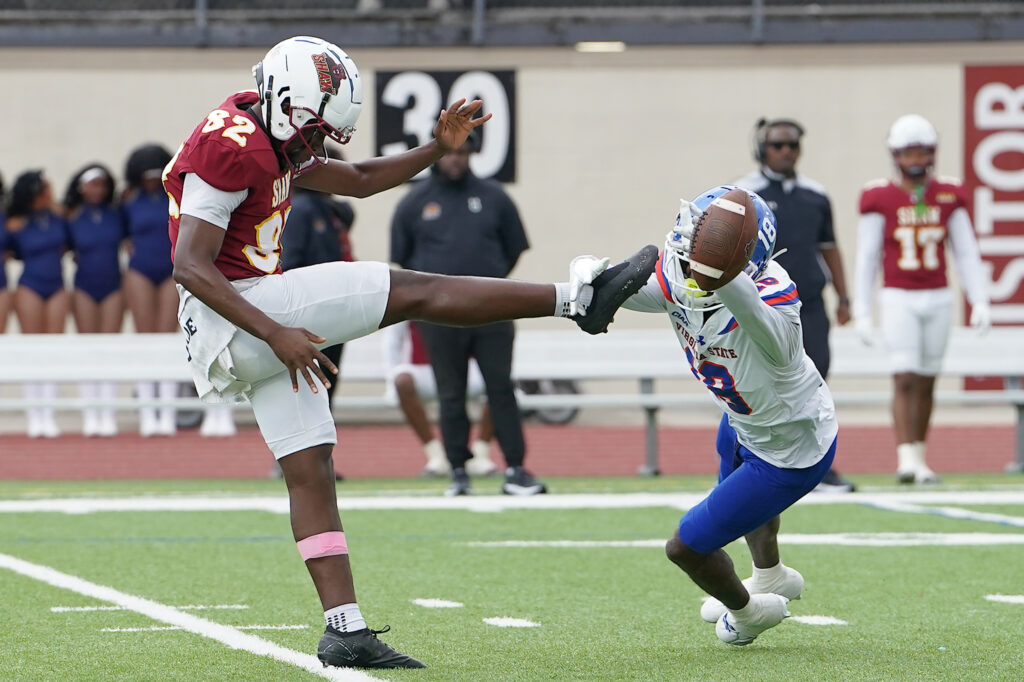
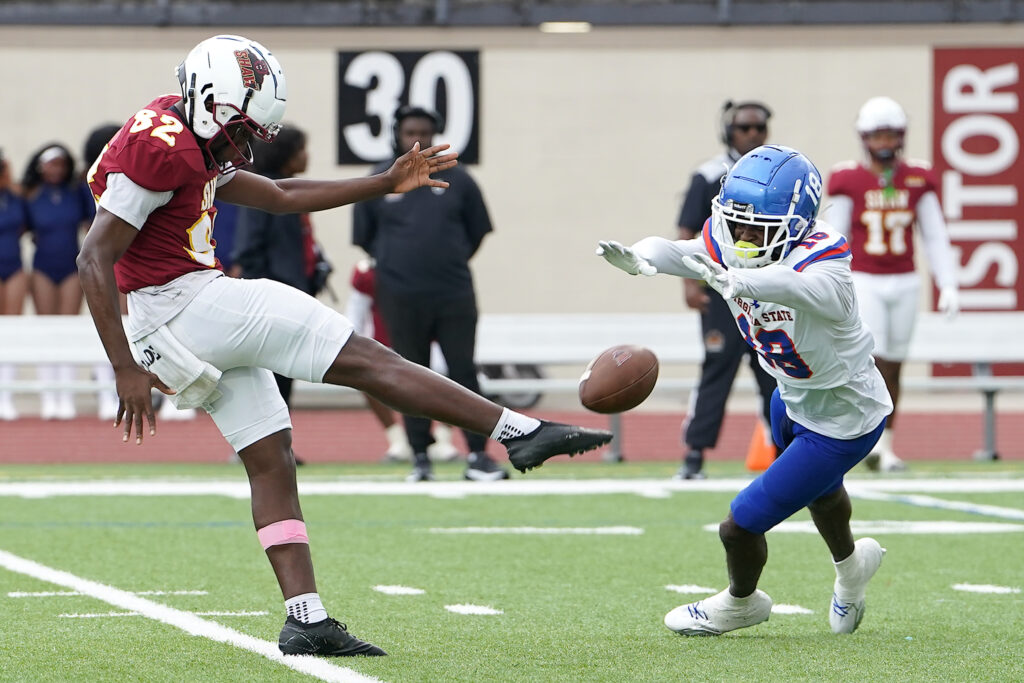
Special teams difficulties further complicated matters for the Bears. Virginia State’s Ian Wynn (18) blocked a punt attempt by Shaw punter Jethro Ommam (84) during the first half, providing another example of the Trojans’ ability to disrupt Shaw’s game plan.
The defining stretch came in the second quarter, when Virginia State erupted for 35 unanswered points. The scoring surge created a deficit Shaw could not overcome and demonstrated the Trojans’ ability to capitalize on opportunities on both sides of the ball.
Despite individual efforts from King, Lyles and several defensive players, Shaw was unable to slow Virginia State’s offensive production. The Trojans continued to build their advantage, ultimately securing a decisive 76-13 victory.
The loss highlighted the challenges facing Shaw as the Bears continue their CIAA schedule, particularly in limiting explosive plays, protecting the football on special teams and maintaining offensive consistency.
For Virginia State, the victory showcased an explosive offensive attack and a defense capable of disrupting opposing teams, reinforcing the Trojans’ competitive presence in CIAA football.
Based on reporting by The Carolinian.
Black Press
Roland Martin Brings Black Votes Matter to Tallahassee
FLORIDA SUN — Roland Martin brought his “Black Votes Matter 2026” live show to The Edison in Tallahassee as part of his “Roland on the Road” series, coinciding with Florida A&M University’s homecoming celebrations. The event drew a large crowd of Rattlers to the restaurant for a broadcast focused on the upcoming November general election.
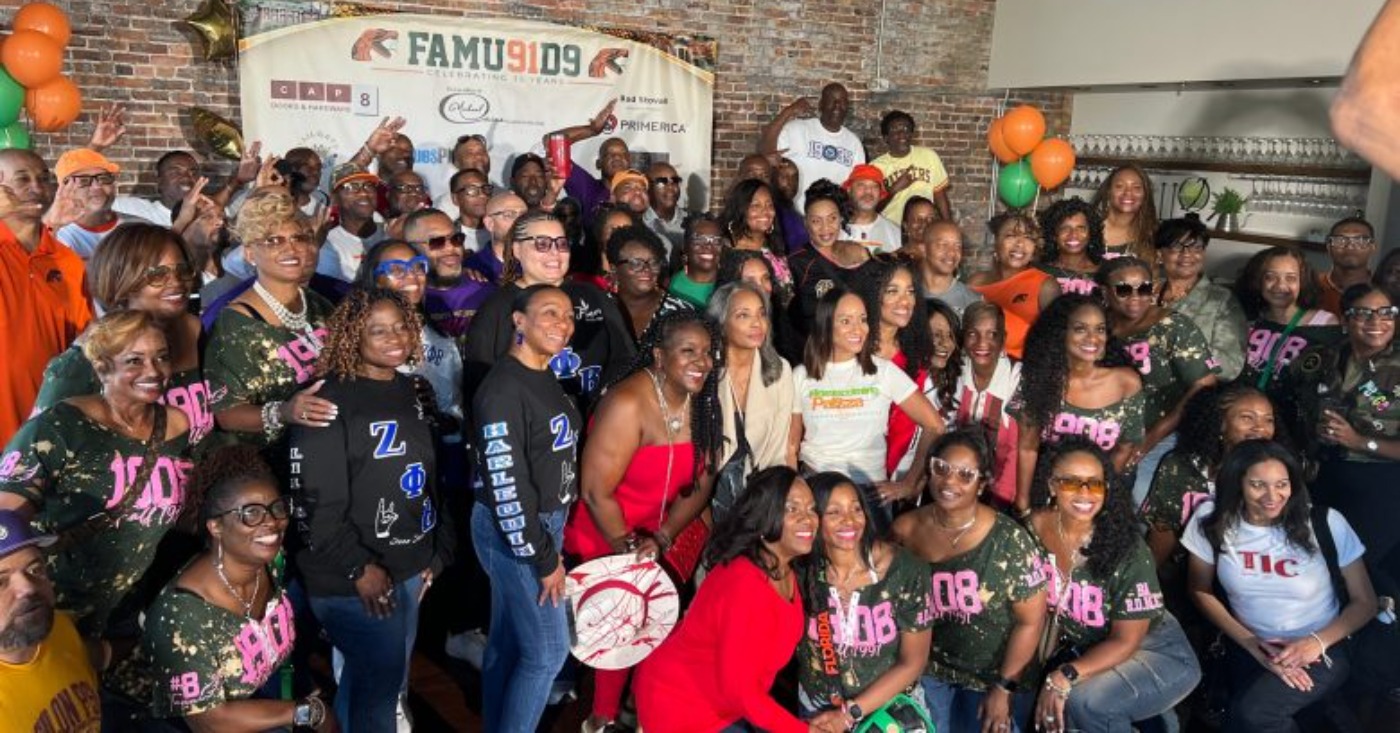
TALLAHASSEE — Roland Martin hosted his “Black Votes Matter 2026” live show at The Edison on Friday, Oct. 23, bringing an election-focused conversation to Florida A&M University’s homecoming celebrations.
Rattlers filled the restaurant to celebrate homecoming and watch the broadcast, according to event organizers. Democratic candidates, elected officials and entertainment figures joined the program as campaigns entered the final stretch before the Nov. 3 general election.
The Tallahassee stop was part of Martin’s “Roland on the Road” series. It focused on the role of Black voters in the 2026 election and issues affecting communities across Florida.
Candidates and elected officials on the program
The show’s published billing featured state Rep. Angie Nixon, Florida’s Democratic nominee for U.S. Senate; David Jolly, the Democratic nominee for governor; and film producer Will Packer.
Organizers’ confirmed guest list also included Joey Mendoza Atkins, the Democratic nominee for Florida agriculture commissioner, and state Reps. Gallop Franklin, Jervonte Edmonds and Rashon Young.
The event coincided with FAMU’s Oct. 18–25 homecoming week. The university’s schedule included Friday’s Homecoming Convocation and FAMFest marketplace, followed by Saturday’s parade and football game.
Affordability and voter participation
Briefing materials prepared for guests emphasized housing costs, property insurance, health care and voter participation. The planned interview format called for short conversations about lawmakers’ work and the issues facing Floridians.
The Florida Democratic Party framed its message around lowering household costs and supporting its candidates in November. Its briefing encouraged guests to discuss affordability and the importance of voting.
For Florida Black voters following the election, the program placed statewide campaigns alongside familiar figures from politics and entertainment. Holding the broadcast during homecoming also brought the election conversation into a gathering centered on Rattler traditions and reunions.
Florida’s general election is Tuesday, Nov. 3. Readers can find official election dates and contact information for their county elections office through the Florida Division of Elections.


TagsAngie NixonBlack Votes Matter 2026David JollyFAMU homecomingFlorida electionsFlorida legislatureJoey Mendoza Atkinsroland martinTallahasseeWill Packer
Based on reporting by Florida Sun.
Art
Kickstarter CEO Everette Taylor Shares Tips on Creating and Growing a Business
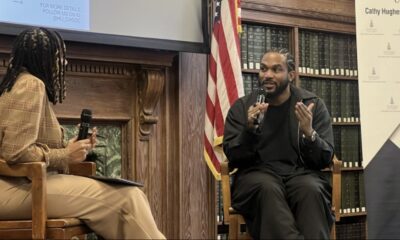
HOWARD UNIVERSITY NEWS SERVICE — Everette Taylor, the CEO of the global crowdfunding platform Kickstarter, recently visited Howard University to serve as the inaugural guest for the Cathy Hughes School of Communications’ new speaker series. Addressing students at the Founders Library, Taylor emphasized that the future of business belongs to those who are bold enough to take risks.
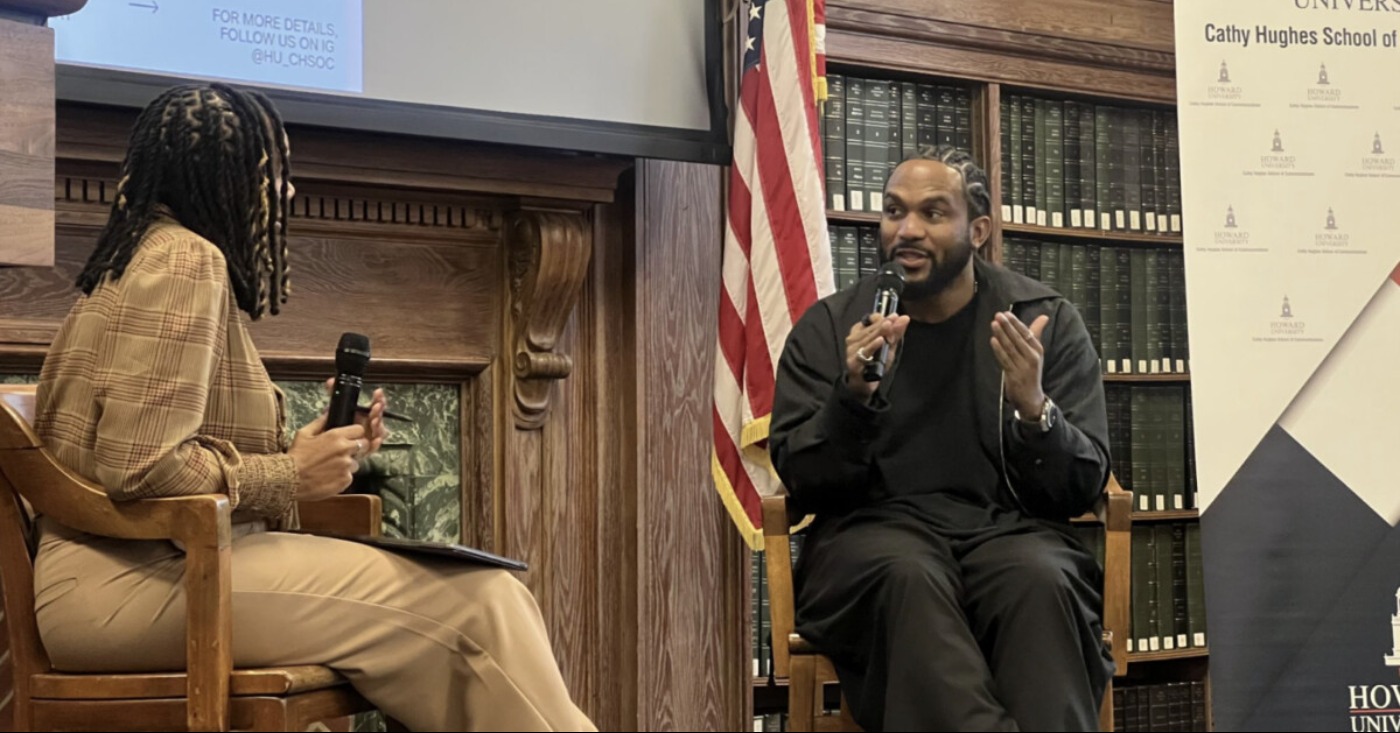
WASHINGTON (HUNS) — “The future belongs to creators who are bold,” Everette Taylor, CEO of crowdfunding platform Kickstarter, told students at Howard University during a recent visit.
As Taylor discussed his journey, he tested the boldness of students by inviting them to share their ideas during an impromptu pitch session at the Cathy Hughes School of Communications’ new speaker series in the Browsing Room of Founders Library. The inaugural speaker then shocked one group of students by pledging to invest in their thesis film, paying forward the opportunities that have lifted him as he struggled to pursue his dreams.
Taylor grew up in a low-income neighborhood in Richmond, Virginia, where he frequently encountered gang violence and drug dealing amid periods of homelessness.
Not feeling as if he conformed to conventional ideas of success, he eventually found inspiration in Jay-Z who balanced being an artist and an entrepreneur. Similarly, Taylor carved his own route, launching and growing various businesses.
He gained enough recognition to land on the 2018 Forbes’ 30 Under 30 list in marketing and advertising. In 2022, Forbes also named him as one of the top 50 most entrepreneurial CMOs when he was chief marketing officer of Artsy, an online art gallery and marketplace. That same year he took over Kickstarter, and the company reported a year-over-year revenue increase of 50% in the first quarter of 2026.
Taylor encouraged the audience through his story, but he also gave practical advice to help students who share his zeal to create and grow their business.
He explained that his mentor, Artsy CEO Mike Steib, helped him make the transition from being a CMO to becoming CEO at Kickstarter.
“These opportunities I don’t take for granted,” Taylor said, adding that Steib was “the first leader I had to take me under his wing.”
When he began his position at Kickstarter, Taylor said, “I had zero imposter syndrome, because I felt like I was ready for it, and it was because this person invested in me over the past few years.”
“A lot of my journey was me just hustling and being bold enough to ask for what I want, but I also need people to give me an opportunity.”
This idea of giving people opportunity impacts his business philosophy, as Taylor estimates that the number of African American employees grew exponentially since he’s been in leadership.
“Kickstarter was I think less than 2% Black, and at our peak I had gotten it to 20-something percent Black,” Taylor said.
Even then, Taylor also saw a need for representing other perspectives. “We still serve people globally, so we need people from different countries and cultures,” he said. “If you’re building a global company, it’s important to build a diverse base of people.”
“I always want to impact more lives, and that always leads to more results.”
Everette Taylor, CEO of Kickstarter
With the success Taylor had after becoming CEO of Kickstarter, he also found a need to prioritize his health.
“This is the first year that I’ve started the year with zero business goals,” he said. “For the first time, my goals have been centered around my health.”
He cites the illness of a friend who appeared to be healthy. Seeing his friend, who is also a successful entrepreneur, endure illness pushed him to prioritize his health.
“Business, I can do that in my sleep, but for me right now I’m so much more focused on setting goals for myself, and I know that’s going to impact the work that I do by feeling healthier and being a better version of myself.”
Samantha Housen, a sophomore public relations major and interior design minor from Harlem, attended the event to gain knowledge to grow her non-profit and for-profit businesses.
“I’m here because I want to explore more of the details of entrepreneurship from an actual professional,” Housen said, and to “see how his mindset could help me in my entrepreneurship.”
“My biggest takeaway is that I’m bold, and it’s OK to be bold,” she said. “I very much have the authority to do whatever I seek to do.”
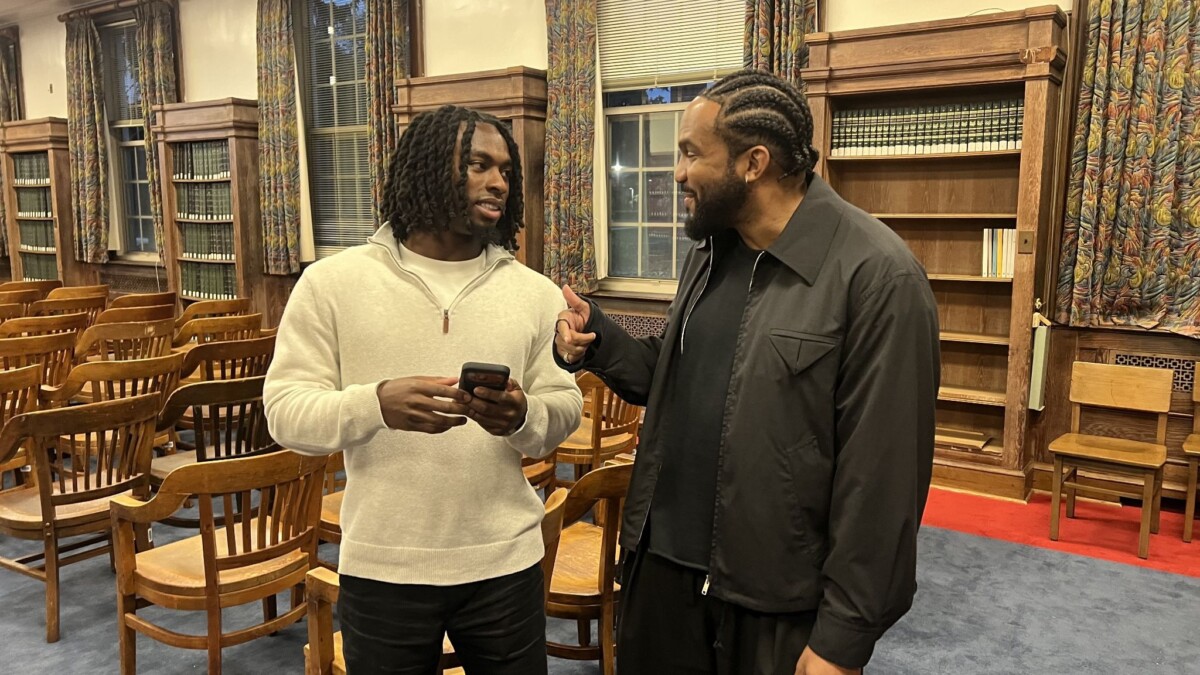
Kimberly Moffitt, Ph.D., dean of the Cathy Hughes School of Communications and host of the event, said she was excited about the speaker series.
“It’s because of students,” Moffitt said. “They felt like they weren’t hearing enough from people who are already post-graduation and successful. They wanted to hear those voices. So, this is an opportunity for me to bring folks to campus so they could reach out, talk and interact with folks that they aspire to be like or will be inspired by.”
Moffitt was excited for students to see someone who looked like them and carried themselves authentically in a position of high acclaim.
“He is showing you a different path, and letting you know that it’s OK to be who you are and show up in that space and not have to apologize,” Moffitt said of Taylor.
Moffitt also wants to encourage students to make the most of the speaker series. She gives details on upcoming speakers and the importance of hearing these people tell their stories.
“Those of you who want to be in TV and film, those jobs are different now,” she said. “You have to hustle in a different way.”
“I need our students to think about entrepreneurship in all that they do,” Moffitt added. “I want students to leave with that so that they have it in their back pocket should they need to draw on it.”
After the event. Taylor explained why boldness is essential to his success at Kickstarter.
“It’s for the grind and the ambition — not settling for status quo and mediocrity, and really going for it,” he said. “I always want to impact more lives, and that always leads to more results.”
Solomon Goins is a reporter for HUNewsService.com.
Based on reporting by Howard University News Service.
Black Press
OP-ED: If the ‘Cornell 7’ Were Black Men at an HBCU — America Wouldn’t Be This Sympathetic
ATLANTA DAILY WORLD — This article examines how the national conversation surrounding serious allegations against fraternity members might change if the incidents occurred at an HBCU involving Black men, rather than an Ivy League institution. It references recent high-profile cases at Cornell, Penn State, Baylor, and Stanford, prompting a re-evaluation of media scrutiny and public sympathy.
Instead of it taking place at an Ivy League school in Ithaca, New York, what would it look like if a national story concerning rape allegations from fraternity members took place on an HBCU campus in Atlanta, Washington, D.C., or Nashville?
Would President Donald Trump still feel “badly” for the alleged?
Do you think the Kappas, Sigmas, and Alphas would face the same scrutiny?
Might people use more compassionate language when discussing the case’s legalities?
We already know the answers to those questions.
Sunny Hostin from “The View” recounted a call she received from actress Cynthia Erivo, who said, ‘Sis, I know you, and I know your heart and your life’s work has been about protecting women and children. But the clip that I saw doesn’t reflect who you are.” Hostin’s initial remarks about the case focused on its legal aspects, lacking compassion for the alleged victims and other survivors who might have been affected. Hostin reflected, “Instead of leading with the law, I need to lead with empathy so that people can receive the message about the law. I was accused of defending these young men and victim-shaming, which is something I would never do since I spent the majority of my career prosecuting sex crimes.”
If you’re reading this, then you are already aware of the allegations against the “Cornell 7.” The news comes just weeks after 14 people were charged in connection with the alleged trafficking of kilos of cocaine on Penn State’s campus by members of white fraternities. A decade ago, the rape scandal at Baylor University dominated the news, which was around the same time as the Brock Turner case at Stanford.
I ask again: how would the news coverage, social media chatter, and podcast conversations differ if such incidents happened on HBCU campuses and included members of Black Greek-letter organizations?
Based on reporting by Atlanta Daily World.


Together Building Back Better

Homecoming Ends in Gunfire Outside FAMU: 12 Hurt, Six of Them Children
COMMENTARY: Bring on the Positive Calvary

Retirement Triggers Doctor to Pen Book for Young Audience

Fatigue, Bloating, and Inflammation: Spotting the Subtle Signs of MASLD

Metro Detroit Faith Leaders Call out Islamophobia in Michigan Senate Race

Dallas Trinity FC Signs Kaiya Brewer to Academy Contract

Dallas Mavericks Unite Players, Legends and the Oak Cliff Community at 2026 Community Tip-Off

Brooklyn Roots and Artistic Genius

NCCU Snap Three – Game Losing Streak with Win over Delaware State University

OP-ED: Haiti TPS: Have We Lost Sense of Humanity?

Remembering Chauncey Bailey as Student Journalists Face Threats to Truth-Telling

All Skinfolk Ain’t Kinfolk

Poll: Becerra Widens His Lead Over Hilton; Californians Split on Wealth Tax

Rulings Leave Questions Lingering in Nolan Wells Case

Latinas Deserve Equal Pay. Unions Help Make It Happen.

Why Black Artists Struggle to Sell Tours

Zakiya Jendayi Arrested, Locked Out of Home by Sheriff’s Deputies

COMMENTARY: The Audacity of Joyce Beatty

A $2.1 Trillion Wellness Industry Never Built a Daily Practice for Black Children. So This Atlanta Family Did.

East Side Shoutout! Sports Talk & Guest Invite! #shorts

Black Girl Walk in the Rain at George Floyd Square | Protect Your Peace | MSR

Stop Overpaying for Car Insurance: Compare 3–5 Quotes #shorts

A $50K SUV Becomes $66K—Are the Options Worth It? #shorts

Dr. Charles Drew – Blood Banking and Preservation

15 Years Together: The Surprising Joy of Discovering Your Partner #shorts

Wala Blegay on the Future of Energy Grid Stability and Data Center Concerns

Gopher Football: Can They Rekindle 2019 Magic Or Are They Just Average? #shorts

The Conversation with Al McFarlane (10/27)

Citizen Savings Bank: Oldest Black-Owned Bank in US #shorts
-

 Black History1 week ago
OP-ED: The Black Church Writes AI’s Next Chapter
-

 Featured1 week ago
Tamiko Armstead | 2026 Lifetime Achiever in Education
-
 Black History1 week ago
Practitioners of African Traditional Spirituality Offer Ancestral Reverence Ritual Oct. 31
-
 Art1 week ago
Kickstarter CEO Everette Taylor Shares Tips on Creating and Growing a Business
-

 Black History1 week ago
Columbus’s Oldest Businesses Still Open: 10 That Have Lasted 75+ Years
-
 Black History1 week ago
COMMENTARY: BIG MAMA SAID: Don’t Throw Away the Gift Just Because It Came Wrapped Wrong
