
National
Transcript Shows Concerns During Arizona Execution


Arizona Department of Correction Director Charles Ryan talks about the review of the execution of Joseph Rudolph Wood, in Phoenix, on Thursday July 24, 2014. (AP Photo/The Arizona Republic, Nick Oza)
FLORENCE, Ariz. (AP) — U.S. District Judge Neil V. Wake was attending a ceremony for a judicial colleague when he received an urgent — and unusual — request: Lawyers for a condemned inmate wanted him to stop an execution that didn’t seem to be working.
“He has been gasping, snorting, and unable to breathe and not dying,” lawyer Robin C. Konrad told the judge over the phone Wednesday, according to a transcript. “And we’re asking — our motion asks for you to issue an emergency stay and order the Department of Corrections to start lifesaving techniques.”
The judge asked his law clerk to quickly locate a phone number for an attorney for the state so he could find out what was happening. They conferenced in Jeffrey A. Zick, who was getting updates from the scene from Arizona’s corrections chief.
What followed provided a window in to the nearly two-hour execution of 55-year-old Joseph Rudolph Wood as the defense lawyer pleaded to stop it and the Arizona attorney assured the judge everything was fine. In the middle of the arguments, Zick informed them that Wood had died.
The execution brought new attention to the death penalty debate in the U.S. as opponents said it was proof that lethal injection is cruel and unusual punishment. On Thursday, the state’s top prison official said Arizona would temporarily put on hold any future executions as it reviewed what happened to Wood.
Department of Corrections Director Charles Ryan read a statement outside his office in which he dismissed the notion that the execution was botched, calling it an “erroneous conclusion” and “pure conjecture.” He did not take questions from reporters.
He said IV lines in the inmate’s arms were “perfectly placed” and insisted that Wood felt no pain. He said the Arizona attorney general’s office will not seek any new death warrants while his office completes a review of execution practices ordered by Gov. Jan Brewer.
Wood’s lawyer Dale Baich called it a “horrifically botched execution” that should have taken 10 minutes.
Wood gasped more than 600 times over an hour and a half. During the gasps, his jaw dropped and his chest expanded and contracted.
An Ohio inmate gasped in similar fashion for nearly 30 minutes in January. An Oklahoma inmate died of a heart attack in April, minutes after prison officials halted his execution because the drugs weren’t being administered properly.
States have scrambled in recent years to find alternative drugs because of a shortage rooted in European opposition to capital punishment. Arizona uses a combination of midazolam, a sedative, and hydromorphone, a painkiller.
Anesthesiology experts say they’re not surprised that the combination of drugs took so long to kill Wood.
“This doesn’t actually sound like a botched execution. This actually sounds like a typical scenario if you used that drug combination,” said Karen Sibert, an anesthesiologist and associate professor at Cedars-Sinai Medical Center. Sibert was speaking on behalf of the California Society of Anesthesiologists.
Sibert said midazolam would not completely render Wood incapacitated. If he’d felt pain or been conscious, he would have been able to open his eyes and move, she said.
Sibert says that medical patients who are under general anesthesia are typically connected to a bispectral index, a technology that measures a person’s level of consciousness and sends the information through a monitor. But for those who are only sedated, monitoring heart rate and blood pressure can suffice to determine whether there is brain activity.
“It’s fair to say that those are drugs that would not expeditiously achieve (death),” said Daniel Nyhan, a professor and interim director of the anesthesiology department at Johns Hopkins University School of Medicine.
The execution prompted a series of phone calls involving Ryan, Brewer’s office, lawyers and judges as the inmate gasped for more than 90 minutes.
Nearly two hours after he’d been sedated, Wood finally stopped taking those gasps that almost had a pattern to them. Every five seconds. Then every six seconds. Now seven.
While the gasps were occurring, Judge Wake was trying to determine if Wood was suffering pain.
“I am told that Mr. Wood is effectively brain dead and that this is the type of reaction that one gets if they were taken off of life support. The brain stem is working but there’s no brain activity,” Zick said, according to the transcript.
The judge then asked, “Do you have the leads connected to determine his brain state?”
The lawyer said he didn’t think so.
“Well if there are not monitors connected with him, if it’s just a visual observation, that is very concerning as not being adequate,” the judge said.
Moments later, Zick said he received a note indicating the snoring had stopped and Wood’s heart rate was slowing considerably. The judge asked him to call Ryan and find out the latest, and Zick left the call at 3:43 p.m.
“And again, I do need to make a decision within a few minutes as to whether to suspend the execution,” the judge said.
Zick got back on the line about four minutes later.
“The director indicated that in consultation with the IV team leader, who is a medical doctor, Mr. Wood is apparently comatose; that he cannot change course at this point,” he said.
The judge then weighed the pain question and whether it was too late to do anything. Then Zick interrupted.
“I just learned that the IV team leader has confirmed Mr. Wood’s death,” he said.
As they wrapped up, the judge offered a glimpse that the issue isn’t going away.
“So there will be time to deal with whatever consequence these events have for other plaintiffs,” he said.
Copyright 2014 The Associated Press. All rights reserved. This material may not be published, broadcast, rewritten or redistributed.









Black Press
Holiday Hosting Guide: Wines for Fried Turkey, Ham, Seafood and More
BLACKPRESSUSA NEWSWIRE — Adventurous types serving turducken this holiday might consider an earthy Oregon pinot noir. This meat trifecta deserves the soft tannins that will bring out the richness of the duck. Ham can be both salty and sweet. A dry rosé will pair with savory ham, and a zinfandel offers the fruit forwardness needed with a honey baked ham.

It’s that time of year to express gratitude for continual blessings and to stuff our faces with the legendary fried turkey. It might take more work to deep-fry a whole turkey than to roast it in a conventional oven. However, the sacrifice is worth it for the moist, succulent meat and that irresistible crisp crackling skin.
Wines That Pair well with fried turkey
* Beaujolais- light, very dry red wine from France
*Carricante–spicy dry white wine from Italy
*Champagne-versatile sparkling wine from France
*Chardonnay-unoaked version
*Cinsault-light dry red wine from France
*Gewurztraminer-dry spicy white wine from Germany
*Grenache Blanc–dry white wine from Spain
* Grüner Veltliner–savory dry white wine from Austria
* Lambrusco- sweet, bubbling red wine from Italy
*Pinot noir-light elegant dry red wine
* Rosé Prosecco- versatile, sparkling rosé, easy-drinking Italian wine
*Late Harvest Riesling-sweet white wine from Washington State
When a Fried Turkey isn’t on the menu
A classic turkey dinner with all the trimmings is a Thanksgiving Day feast.
Adventurous types serving turducken this holiday might consider an earthy Oregon pinot noir. This meat trifecta deserves the soft tannins that will bring out the richness of the duck. Ham can be both salty and sweet. A dry rosé pairs well with savory ham, and a zinfandel offers the fruit-forwardness needed for honey-baked ham.
Seafood dishes prepared with light sauces taste incredible with Sauvignon Blanc from New Zealand. Prime rib is an elegant showstopper; an aged Cabernet Sauvignon is a great choice when serving rich red meat. Look at the meal as a complete composition and try not to pair each dish with a separate wine. Experiment with wines you’ve never tried and choose quality products.
Budget-Friendly Options
Let’s keep it real, family: grocery prices are through the roof for all of us.
A couple of pounds of ground turkey, egg yolks, breadcrumbs, and poultry seasonings make excellent meatballs. A whole chicken is much less than a whole turkey and looks amazing on a platter. Simple, inexpensive desserts can be gelatin with fresh fruit, sugar cookies, and a mug of hot chocolate.
Are you invited to a neighbor’s home for Thanksgiving Day dinner? Take them up on it and bring a great bottle of wine or ask the hostess what she needs to complete the meal.
Enjoy the holidays and be happy with what you have; stay focused on good food, delicious wine, and those people you value most.
Black Press
OP-ED: America’s Healthcare System Isn’t Sustainable. What Would a Better Alternative Look Like?
BLACKPRESSUSA NEWSWIRE — Rather than waiting for Washington to impose changes from the top down, it’d be far better for patients, providers, insurers, employers, drug companies, and pharmacy benefit managers to work together now — to reimagine, and ultimately redesign, the system with a shared vision.

Virtually no one in America is satisfied with the healthcare status quo. Not doctors. Not hospital executives. Not drug or insurance company leaders. And most certainly not patients.
This nearly universal anger is setting the stage for seismic reforms. Policymakers in both parties are planning ambitious healthcare overhauls.
Rather than waiting for Washington to impose changes from the top down, it’d be far better for patients, providers, insurers, employers, drug companies, and pharmacy benefit managers to work together now — to reimagine, and ultimately redesign, the system with a shared vision.
America boasts the most talented doctors and best hospitals in the world. Our researchers develop the lion’s share of new medicines. And far more of those treatments are available here than in other peer nations, at least in theory.
Yet despite all these advantages, our current healthcare system fails to deliver the outcomes that matter most to families — because it was simply never designed to do so. We often cannot agree on what healthcare should ultimately accomplish, which outcomes matter most, or what tradeoffs we are willing to tolerate.
In the absence of this shared understanding, companies default to prioritizing their own short-term finances — even if that’s not in the long-term interests of patients, families, or society.
For instance, consider the dilemma facing health insurers. Americans frequently bounce from insurer to insurer as they change jobs, move states, retire and enroll in Medicare, or simply select new plans that better fit their needs.
So even when an expensive treatment would clearly improve a patient’s health and prevent future complications, the insurer or employer that shoulders the upfront cost likely will not reap the eventual savings.
Consider the dilemma posed by gene therapies, which target the underlying genetic malfunctions and mutations that cause certain diseases.
In many cases, a one-time dose of these therapies can completely cure a patient’s disease for life — and prevent millions of dollars in spending on hospitalizations and other care down the road. Multiple gene therapies are cost-effective, even with price tags exceeding $1 million.
In all likelihood, insurers that cover these therapies will see only a fraction of the return before patients switch plans. They therefore have a strong incentive to limit access, even when everyone agrees these treatments offer good value over a lifetime.
This behavior makes perfect sense from the perspective of an individual insurer or employer. But it makes no sense for society as a whole.
We need a genuinely market-based system in which providers, drug companies, and insurers can transparently compete for customers on both price and quality.
And that competition cannot happen unless we first adopt new valuation metrics to better understand the full costs and benefits of different treatments and care models — and then redesign payment and insurance rules so that organizations are rewarded, rather than penalized, for investing in patients’ long-term health.
The question is whether stakeholders can set aside their differences, agree on a shared definition of success, and implement reforms that improve patients’ long-term physical, mental, and financial health.
If they cannot, Washington will eventually impose changes from above.
Marc Boutin, J.D., a three-time cancer survivor and caregiver, is president and CEO of IVI and previously served as CEO of the National Health Council, where he led policy initiatives that helped shape national health care reform. This column originally appeared at DCJournal.com
Black History
PRESS ROOM: Delaware State University Certifies Record Fall 2026 Enrollment of 7,407 Students
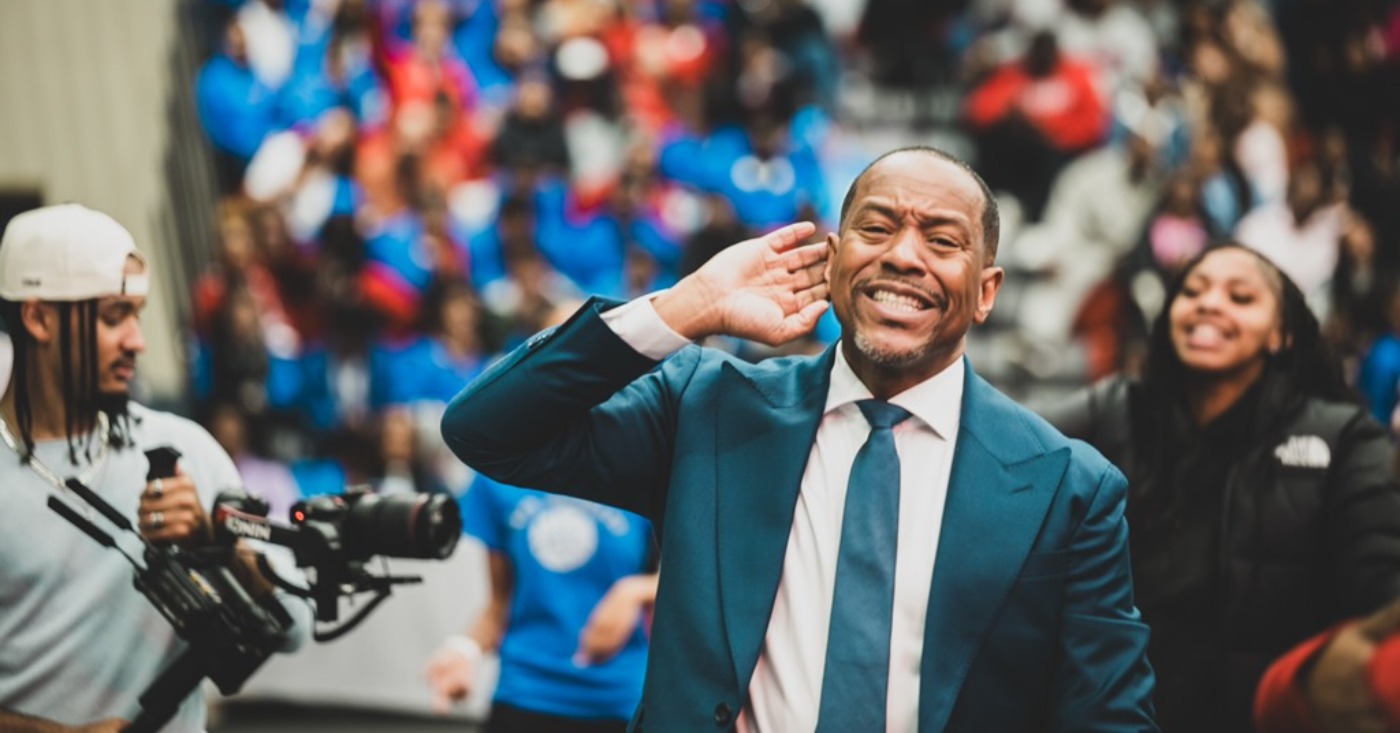
“This year’s growth came from a more intentional emphasis on students who were already here and decided to keep going, a central part of our work — and from a graduate school that working adults in Delaware and across the country are choosing in record numbers,” said Tony Allen, President of Delaware State University.
Returning students and graduate programs drive 12 percent growth
Incoming class stronger academically
In-state freshman class the largest in University history; INSPIRE Scholars make up more than 80 percent of new in-state freshmen
Dual enrollment up 56 percent, anchored by the newly named Williams School
Delaware State University has certified its Fall 2026 enrollment at 7,407 students, the largest in its 135-year history and an increase of 784 students, or 11.8 percent, over the 6,623 recorded at last fall’s census.
Of that total, 5,959 students are enrolled on the University’s two Dover campuses and in its online programs—up 7.8 percent from 5,528 a year ago and a record. The balance is enrolled through the University’s international partnership programs, a growing global portfolio that spans the Caribbean, Asia and Africa. Since 2020, when the University enrolled 5,027 students, enrollment has grown more than 47 percent.
In October, the University projected that it was approaching 7,000 students. The final count exceeded that projection, as additional online sessions and semester starts at international locations were added before the October 31 census. And in its first year, eHBCU, the online consortium for HBCUs led by Delaware State, has grown to include Alabama State University; the Southern University System, the only HBCU system in the country; and Pensole Lewis College of Business and Design, the Detroit HBCU for aspiring designers.
“This year’s growth came from a more intentional emphasis on students who were already here and decided to keep going, a central part of our work — and from a graduate school that working adults in Delaware and across the country are choosing in record numbers,” said Tony Allen, President of Delaware State University. “We have a continually growing number of students who concluded that Delaware State University is a force multiplier in their lives. Our work now is to be worthy of that decision every day.”
Delaware First.
In-state undergraduate enrollment rose 8.4 percent, and out-of-state undergraduate enrollment rose 4.5 percent. The new freshman class shows strong academic rigor, with an average high school GPA of 3.13. More than half of the University’s students are Delawareans, and this year’s in-state freshman class is the largest in University history. More than 80 percent of new in-state, full-time freshmen are INSPIRE Scholars — recipients of the four-year, full-tuition award for Delaware high school graduates who enroll in the fall after graduation, maintain a 2.75 grade point average, complete ten hours of community service each semester, and file the FAFSA each year. Sponsored in 2010 by Senator Brian Bushweller and later championed for expansion by Senator Trey Paradee and alumna Representative Stephanie Bolden, the program has brought more than 2,500 Delawareans to the University as INSPIRE Scholars.
“I came in as a freshman not sure I’d make it to a second year. What kept me here was that people noticed when I was struggling and didn’t let me drift. Two years later I’m on track to graduate on time, and I know exactly who to thank,” said Alana Carter Grimes, Senior, Accounting major from Wilmington, DE.
“You feel this in the classroom before you see it in a report. Students come in prepared, they stay, and they ask harder questions by sophomore year than they used to as juniors. That changes how we teach, and it should,” said Hakeem Lawal, Professor, Biology Department.
Graduate enrollment grew fastest.
Graduate enrollment increased 27.1 percent. Continuing graduate students were up 34.1 percent, and online graduate enrollment grew 46.1 percent — the highest in University history. “Graduate students are diligent with their time, for they understand the importance of it. They are choosing Delaware State because our programs are built for people who are working, raising families and serving their communities while they earn the credential that moves them forward,” said Dr. Gwendolyn Scott-Jones, Dean of the School of Graduate, Adult and Extended Studies. “A 27 percent increase in one year tells us the model is right. Our job is to keep every one of those students on a path to finish.”
The pipeline is widening. The number of high school students taking University courses for college credit rose 56 percent to 684, including 482 Delawareans and 199 students at the HBCU Early College Prep school in Queens, N.Y. The Williams School, the University’s early college school dedicated in September in honor of former President Harry L. Williams and Dr. Robin S. Williams, sends roughly two-thirds of its graduates to Delaware State.
Built to get students to the finish line.
The University’s growth is supported by a set of programs designed to take students from arrival to career. The Braven Accelerator, a three-credit sophomore-year career-readiness course, has been completed by more than 1,000 Delaware State students, and the University announced last month that it will expand the Braven partnership into a new Center for Economic Mobility that will reach every undergraduate. In October, the College of Business hosted its largest DEEP Day on record, with 720 students, and continues to lead the University’s Black Male Initiative in partnership with the Executive Leadership Council. The College of Agriculture, Science and Technology’s annual White Coat Ceremony on September 29, 2026, welcomed 213 first-year pre-health students into the health professions pathway.
“The road ahead is about meeting our students earlier in the educational experience, giving them real-world tools to be successful, knowing their highest aspirations and showcasing them to the world,” said Dr. Kareem McLemore, Head of Strategic Enrollment and International Affairs. “We pour in; they give back. That is the formula.”
Black History
Hoodoo Heritage Month Celebrates Origins of African American Folk Medicine
BLACKPRESSUSA NEWSWIRE — Hoodoo has largely been demonized, misunderstood, and misrepresented as a “folk magic system” for trickery and harm. Hoodoo practices have often been hidden in places like the Black church and “old wives’ tales,’ abandoned as a form of separation from the racial trauma of the South, or simply forgotten because no one was able to pass them on to the next generation.

In Oakland, October is known for the Black Cowboy Association’s Annual Parade and Festival at the beginning of the month, the Life is Living Festival toward the middle, and the Día de los Muertos celebration in Fruitvale. In recent years, the month has also become known for a national observance of Hoodoo Heritage Month.
Hoodoo Heritage Month celebrates the history, legacy, and practices of Hoodoo. Hoodoo is a spiritual tradition and way of life formed by enslaved Africans in America. It encompasses plant medicines, healing herbs, rituals, prayers, ancestral reverence, protective talismans, and other practices passed down for generations.
Mama Rue and the Walking the Dikenga Collective officially founded the month in 2019 in Chicago, Illinois, to preserve the tradition and honor the endurance of our ancestors and the value of these practices.
Some practitioners created calendars that provided an activity or ancestor to honor each day. One notable example is Oct. 2, deemed Nat Turner Day to honor the birth of the leader of the 1831 uprising in Southampton County, Virginia.
This is also an encouraged time to read literary works by Black authors who helped revive interest in these spiritual practices. Among them are local authors Michele E. Lee and Luisah Teish, who wrote “Working the Roots: Over 400 Years of Traditional African American Healing” and “Jambalaya,” respectively.
Hoodoo has largely been demonized, misunderstood, and misrepresented as a “folk magic system” for trickery and harm. Hoodoo practices have often been hidden in places like the Black church and “old wives’ tales,’ abandoned as a form of separation from the racial trauma of the South, or simply forgotten because no one was able to pass them on to the next generation.
Within the last 10 to 15 years, there’s been a resurgence in African diasporic religion and spirituality as a means to navigate ongoing oppression and racial terror, just as our ancestors did.
As the veneer hiding American racism eroded with the election of President Donald Trump in 2016, Millennials and Gen Z began looking to our past to move forward.
For instance, it is becoming more widely understood that the justification for chattel slavery and European colonization led to the demonization of African diasporic worship systems, including what would eventually be termed Hoodoo.
For Jzov Stith, a young Black, Bay Area resident, observing Hoodoo Heritage Month was a time of deep reverence. “It means reconnecting with sacred traditions of storytelling, cooking, dancing, sharing, and grieving [and] being in thoughtful conversation and collaboration with my beloved dead.”
Through online and in-person workshops, events, and classes, Hoodoo practitioners are sharing history and current research from their own efforts. Bushmama Africa, an Oakland curator, artist, and initiate in the Cuban diasporan tradition known as Lucumi, teaches indigo dyeing and Hoodoo broom-making. (Indigo was one of the first crops cultivated by enslaved Africans who brought their skill to what would become South Carolina and Georgia in the 1600s.)
“Elder women in my life hailed from places where Hoodoo was worked. They were the midwives [and] the prayer warriors. It’s what I do, but it’s also who I am. It’s a deep-rooted spiritual practice of our culture that deserves to be preserved and contained within our communities.”
Other sources for information on African American ancestral practices are “Mojo Workin’” by Katrina Hazzard-Donald, “The Conjuring of America” by Lindsey Stewart, and “The Book of Juju” by Juju Bae.
Online sources were used for this article.
Black Press
OP-ED: If Food Is Medicine, Teach Doctors How to Prescribe It
BLACKPRESSUSA NEWSWIRE — Since diet is first-line therapy for many of the most common chronic diseases afflicting Americans, physicians should be as comfortable evaluating nutrition evidence as they are interpreting the science behind the medications they prescribe. That starts with understanding how nutrition research differs from many other areas of medicine.

The Department of Health and Human Services recently announced an initiative to improve nutrition education across every stage of physician education and training. As part of the effort, dozens of medical schools have pledged to include 40 hours of nutrition training — or a competency-based equivalent — in their graduation requirements.
Those pledges target a longstanding gap. Medical schools currently devote less than 1% of lecture hours to nutrition, and until recently, roughly three-quarters of schools didn’t require a dedicated nutrition course.
As a cardiologist, I welcome this initiative.
But adding hours alone won’t be enough. More nutrition education won’t meaningfully improve our nation’s chronic disease crisis unless medical schools also rethink what they teach. For decades, medical and dietetic societies — even the government — have promoted similar dietary guidance, yet metabolic disease continues to rise.
Rather than repeat the same nutrition mantra, schools should focus on two priorities: teaching physicians how to evaluate nutrition evidence and translate it into individualized patient care.
Since diet is first-line therapy for many of the most common chronic diseases afflicting Americans, physicians should be as comfortable evaluating nutrition evidence as they are interpreting the science behind the medications they prescribe. That starts with understanding how nutrition research differs from many other areas of medicine.
A conventional drug trial can often isolate a single intervention and compare it with a placebo under tightly controlled conditions. Nutrition rarely fits that model.
Nutrition science therefore relies on observational studies, controlled feeding trials, mechanistic research, and clinical interventions.
Medical schools must teach future physicians how to weigh these different forms of evidence and understand what each study design can — and cannot — tell them.
Evaluating the evidence is only half the job — physicians also need to know how to apply it to the patient in front of them.
For decades, major medical groups have recommended a one-size-fits-all approach to healthy eating: reduce saturated fat, increase whole grains, eat less, and move more. But that conventional advice has failed to stem the rise of metabolic disease.
Today, approximately 90% of Americans show at least one sign of suboptimal metabolic health, while obesity and type 2 diabetes have steadily increased. It’s increasingly clear that a dietary strategy that works for a metabolically healthy patient may not be the best starting point for someone whose body is struggling to regulate glucose and insulin.
Future physicians need a toolkit that recognizes a range of evidence-based dietary approaches. For instance, research routinely shows that low-carbohydrate and ketogenic diets can improve glycemic control, weight, and other metabolic markers for many patients. Mediterranean-style or plant-based dietary patterns that emphasize whole, nutrient-dense foods can also offer benefits.
Medical schools must therefore teach future physicians how to match the right strategy to the right patient.
With this initiative, HHS has created an opportunity to rethink nutrition education for the next generation of physicians. Now it’s up to policymakers and accrediting bodies to ensure that the new requirements define competencies, not merely hours.
Get that right, and those 40 hours can produce better doctors — and healthier Americans.
Bret Scher, MD, is a board-certified cardiologist and lipidologist, and the founding medical director of the Coalition for Metabolic Health.
Black History
Black Barbershops Have Long Given Neighborhood Politics a Place to Unfold.
BLACKPRESSUSA NEWSWIRE — For generations, Black barbershops have served as more than just places for grooming; they have functioned as essential hubs for political debate, neighborhood news, and civic connection. During the era of segregation, these community-owned spaces provided a rare environment where Black residents could gather freely to discuss matters affecting their daily lives.
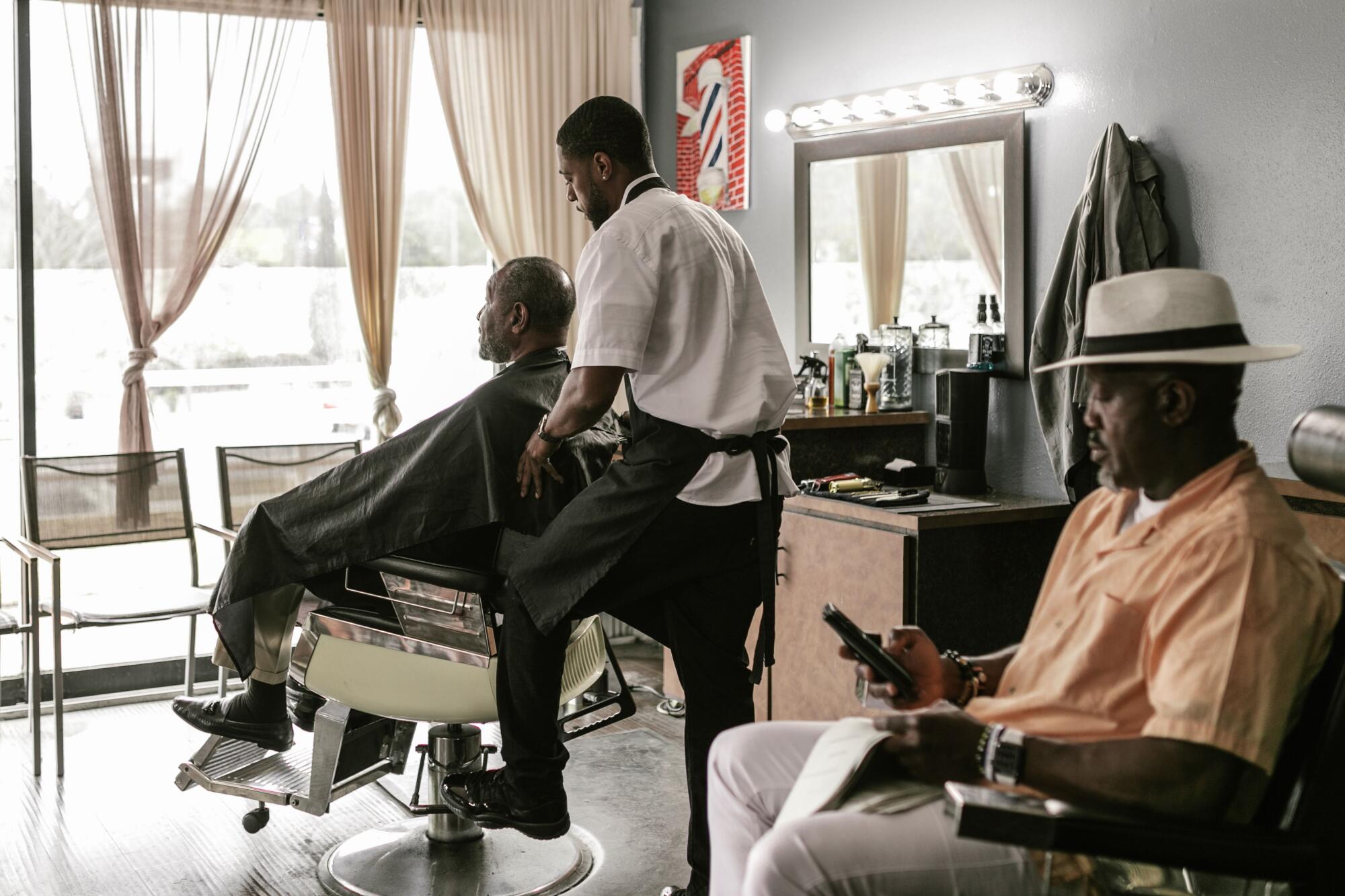
Black barbershops offer space for political debate, neighborhood news, and civic ties. The black barbershop also preserves local stories often missing from official records.
A haircut might bring you through the door. A conversation about a school closing, a city election, or a struggling business might keep you there. Inside a neighborhood shop, people can challenge opinions without needing a microphone.
A familiar storefront can hold decades of public life. Studying its past reveals people who earned a living, debated decisions, and helped neighbors interpret events.
Why Have Black Barbershops Been Important to Their Communities?
An African American barbershop has often combined a practical service with a gathering place. Under segregation, Black residents faced barriers in many public settings. Community-owned shops could offer more room for conversation and connection.
The National Museum of African American History and Culture describes barber and beauty shopsas places where customers discuss matters affecting their lives. Regular visits built relationships across generations.
Barbers often knew which families needed help or which businesses had opened. Waiting customers heard different viewpoints.
The importance of the shop came from trust built over many ordinary visits. A young customer might meet an older neighbor who understood the area’s past. Such relationships gave local conversations staying power and helped turn a routine appointment into a shared community experience.
How Did Black Barbershops Become Places for Political Discussion?
Politics often started with questions about rent, schools, jobs, or fair treatment. Customers connected those problems to elected leaders.
A University of Chicago report examined conversations inside a South Side Chicago shop. Researchers found that patrons debated:
- Political power
- Economic choices
- Leadership
They also disagreed with one another. A black barbershop did not require agreement. Customers could test ideas against those of neighbors.
Some shops supported voter registration and civic groups through personal relationships. Notices on counters or conversations with regulars could bring public issues into daily life. Yet lively debate was not the same as organized activism, and each shop had its own culture.
Black Barbers Built Businesses That Reached Beyond Haircuts
Enslaved and free Black men worked as barbers when many trades were restricted. Ownership later gave some black barbers a path toward greater financial independence, even under unfair laws.
Alonzo Herndon offers one example. According to the Georgia Historical Society, he operated Atlanta barbershops, including the Crystal Palace, and later built a major insurance business. His shops served white customers, reflecting segregation and unequal access.
Herndon’s success was unusual. Black business owners could still turn skilled work into jobs and property. Not all black companies grew large. Neighborhood shops kept commerce local.
Owners also faced rent, competition, and the challenge of building a steady customer base. Their business records can reveal how Black enterprise survived major shifts in the local economy.
Photographs and Newspapers Reveal Neighborhood History
Shop photos show storefront signs, neighboring businesses, clothing, and names painted on windows. Those clues help date images.
City directories can connect a shop name to an address, while maps show whether its block later changed. Each clue adds a piece to neighborhood history without requiring a famous owner or landmark.
Next, try the Library of Congress’s Chronicling America resources. Historic newspapers hold:
- Ads
- Openings
- Local events
- Owners’ names
Older records may use dated language. A useful starting checklist includes:
- Shop names and former street addresses
- Advertisements and business listings
- Photographs with dates or handwritten notes
- Local reporting about civic meetings
Compare records. An ad can confirm a shop’s address, not what customers discussed. Good neighborhood history separates documented facts from personal memories.
Customers’ Memories Fill Gaps in the Public Record
Customers may remember an owner’s nickname. Former barbers can explain busy hours or changes after a nearby factory closed.
Ask about routines and memorable events. Distinguish firsthand knowledge from secondhand stories.
When possible, interview more than one person. Different memories may show how workers and customers experienced the same event.
A recording can be useful, but permission comes first. Explain whether an interview will be shared publicly, kept privately, or donated to a library. Take note of:
- The date
- Place
- Speaker’s preferred name
Differences between memories are clues worth checking, not reasons to dismiss an account.
Modern Grooming Changes, but the Community Role Remains
Today’s African American barbershop operates amid appointment apps and new grooming services.
Some men also explore treatments beyond conventional haircuts. Many who are comparing long-term hair reduction with other grooming choices can learn more here.
A shop’s social value goes beyond its services. Many black barbers still:
- Listen to customers
- Pass along local information
- Create space for people of different generations to meet
The work of black business owners remains part of the wider story of black companies and community investment.
Frequently Asked Questions
How Can You Tell Whether an Old Barbershop Moved?
Start with city directories from several years. Match the owner’s name, phone number, and shop name at each address.
Property records or historical maps may show whether a street was renamed or a building was replaced. Moves may reflect development or shifting customers. Record each address and source.
Can You Share a Historic Barbershop Photo Online?
Owning a print does not guarantee copyright. Identify the:
- Photographer
- Date
- Source collection
A library may allow research access while limiting reuse. Copyright rules can vary by image and age, so avoid assuming that an old photo is free to publish.
Ask about permission when rights remain unclear. Credit the photographer and people pictured when their names are known. Respect requests from families who prefer sensitive images to remain private.
How Can You Preserve a Shop’s History After It Closes?
Collect photos, business cards, notices, and interviews. Label digital files and protect originals.
A local library, historical society, or community archive may help preserve the collection. Include the stories of workers and customers, not only the owner.
Public access can keep a vanished storefront connected to the people who remember it. A short exhibit or digital collection can help younger residents discover that history.
Keep the Black Barbershop Story Alive
A black barbershop can hold pieces of a town’s political, economic, and cultural history. Preserving those pieces starts with listening carefully and checking the record.
Continue exploring our other guides and articles for more stories about Black history, local businesses, and the communities they serve.
Content provided through ContentManagerIO.



Holiday Hosting Guide: Wines for Fried Turkey, Ham, Seafood and More

OP-ED: America’s Healthcare System Isn’t Sustainable. What Would a Better Alternative Look Like?

PRESS ROOM: Delaware State University Certifies Record Fall 2026 Enrollment of 7,407 Students

Hoodoo Heritage Month Celebrates Origins of African American Folk Medicine

OP-ED: If Food Is Medicine, Teach Doctors How to Prescribe It

NFL: Carolina now has 2-game lead in NFC South after win against Ravens

San Diego Black Judges: A Historic Shift on the Bench

She’s Turning Her Ovarian Cancer Story Into a Lifesaving Mission #shorts

Tahoe 15-Inch Head-Up Display: Can You Read It in Sunlight? #shorts

MC Scat Cat: The Story Behind Paula Abdul’s No. 1 Hit #shorts

HISTORY MADE: Keisha Lance Bottoms Becomes First Black Woman Elected Governor in American History

Secretary of State Shirley Weber Pushes Back Against DOJ Demands Over California Voter Rolls

Retirement Triggers Doctor to Pen Book for Young Audience

Capturing Black Life’s Beauty

Multi-Faith Leaders Representing 10 Million People Launch National Anti-Authoritarian Initiative

Christianity’s Racial History

Hundreds of Black Christian Leaders Arriving in Israel for Martin Luther King-Inspired Mission

Oakland Honors 60 Years of the Black Panther Party at the All Power to the People Gala

Message from the Associate Editor: Blindness, Hurts, Cops

Michael Shiner: The Enslaved Man Who Wrote His Way into American History
San Diego Black Judges: A Historic Shift on the Bench
She’s Turning Her Ovarian Cancer Story Into a Lifesaving Mission #shorts
Tahoe 15-Inch Head-Up Display: Can You Read It in Sunlight? #shorts
MC Scat Cat: The Story Behind Paula Abdul’s No. 1 Hit #shorts

Before You Quit Your Job, Make This Exit Plan #shorts

Black History and Freedom: A Powerful Spoken-Word Poem #shorts

Before You Quit Your Job, Build a Business That Can Support You #shorts

The Current Radio: Finding My Voice After B96 #shorts

“Gloomy Days”: A Powerful Song on Hope and Community #shorts

She Quit Her Job to Build a Smarter Business #shorts
-
 Black Press1 week ago
OP-ED: Closing the Next Digital Divide — Communities of Color Must Have a Voice in the AI Future
-

 Black History1 week ago
New NAACP Report Warns AI Could Deepen Health Disparities in Black Communities
-

 Black Press7 days ago
COMMENTARY: Thank You, Trump, for Making America Great Again!
-

 Black History1 week ago
“Blue Tsunami” Sweeps Georgia, Bottoms Makes History
-

 Black Press6 days ago
Black Men Encouraged to Start Prostate Cancer Screening at 45
-

 Black Press1 week ago
OP-ED: And Then What?
