
Minneapolis Spokesman-Reporter
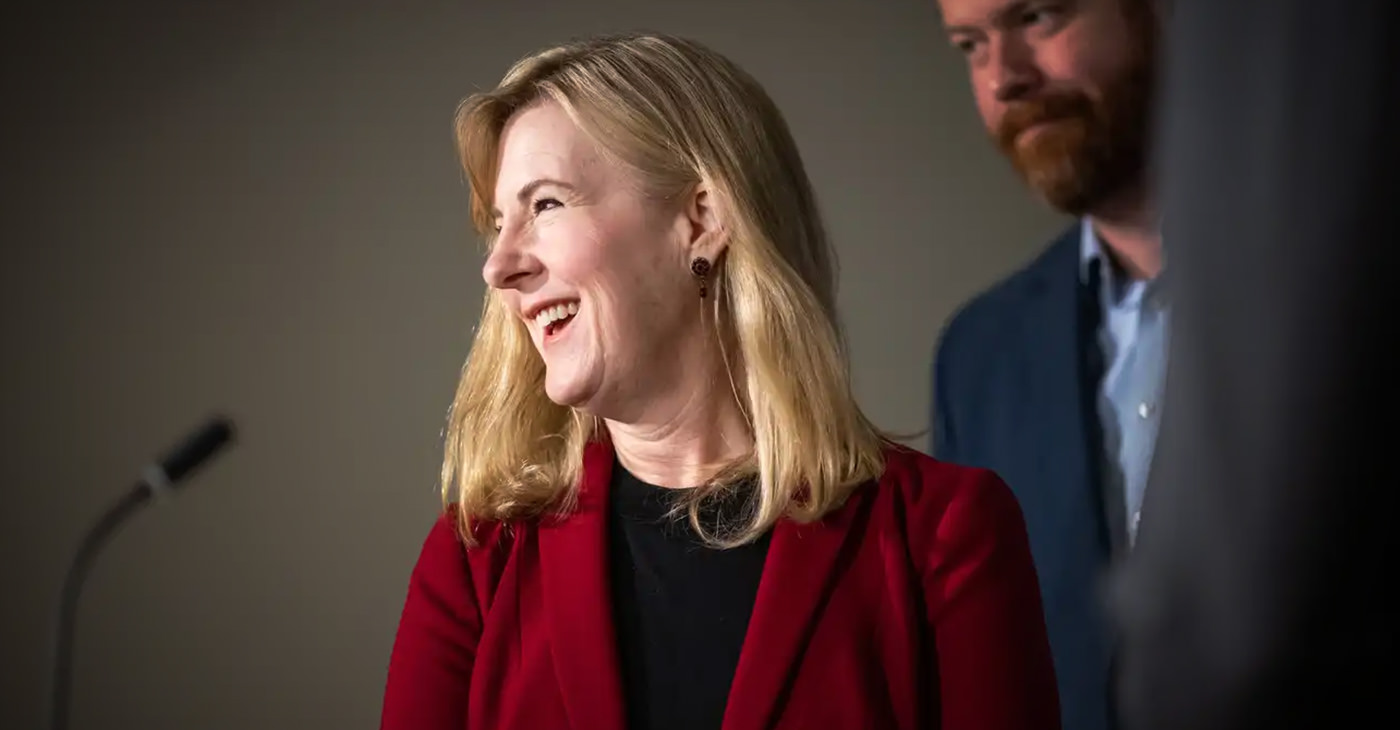
Tragedy in Brooklyn Park: Former Speaker Melissa Hortman and Husband Gunned Down in Politically Driven Attack
Investigators said that the attacker, who was dressed like a police officer and drove a police-style SUV, killed Hortman and her husband before allegedly hitting State Sen. John Hoffman and his wife in Champlin. The suspect remains at large.




#BuyBlack
From Brooklyn to Butner Road: Brandon Fulton Has Plans For His Land and Horses
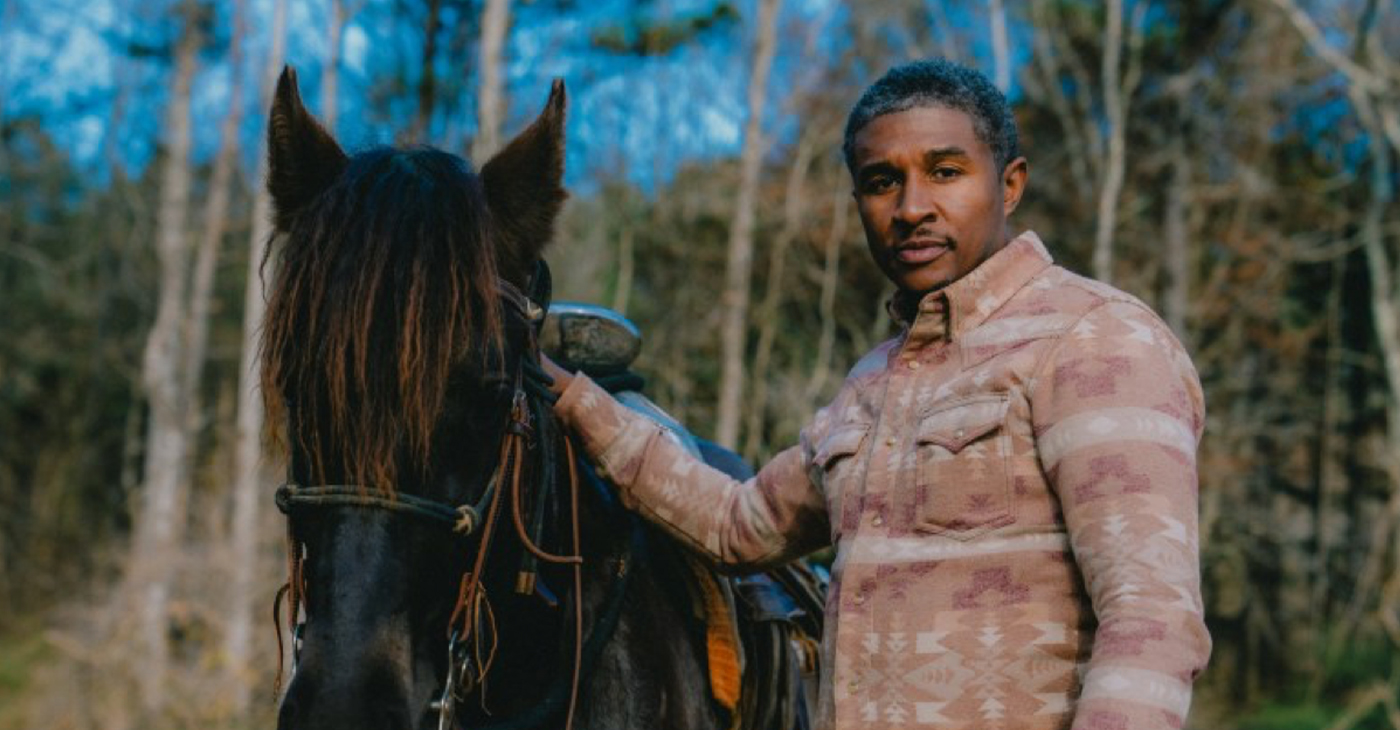
THE ATLANTA VOICE — Dubbed the “Urban Cowboy” for riding horses through Atlanta’s streets, Brandon Fulton shared that his love of horses started with his grandfather, who would periodically take him riding at an academy in Jamaica Bay. As a kid, it was a means of escape and one of his only outlets, but because it was on the other side of Brooklyn, the riding academy was hardly accessible to him without taking the bus and walking.
By Laura Nwogu | The Atlanta Voice
Red clay soil, wet from a day of rain, seeped into Brandon “Brannu” Fulton’s boots as he held the reins of an eye-catching Perilino horse he’d purchased three days prior. As the horse, with its ivory body and its gold mane, trotted along beside him past buildings under construction and steel containers, it was as if they were following a cadence only they knew. On Fulton’s 27 acres of land, poised for a dream and tucked away on the corner of Butner Road and Camp Creek Parkway, man and horse were right at home.
For the 44-year-old horseman and Clark Atlanta University graduate born in Brownsville, Brooklyn — long deemed one of New York’s most dangerous neighborhoods — it’s what dreams are made of. Dubbed the “Urban Cowboy” for riding horses through Atlanta’s streets, Fulton shared that his love of horses started with his grandfather, who would periodically take him riding at an academy in Jamaica Bay. As a kid, it was a means of escape and one of his only outlets, but because it was on the other side of Brooklyn, the riding academy was hardly accessible to him without taking the bus and walking.
“It was something I knew I’d enjoy, and I felt it. But when you’re still finding yourself and you’re a boy, it’s hard. We all have the ability to feel something, but we just don’t know how to identify it,” Fulton said. “And if you don’t have that environment or influence around you to drive that interest, then it kind of falls to the side.”
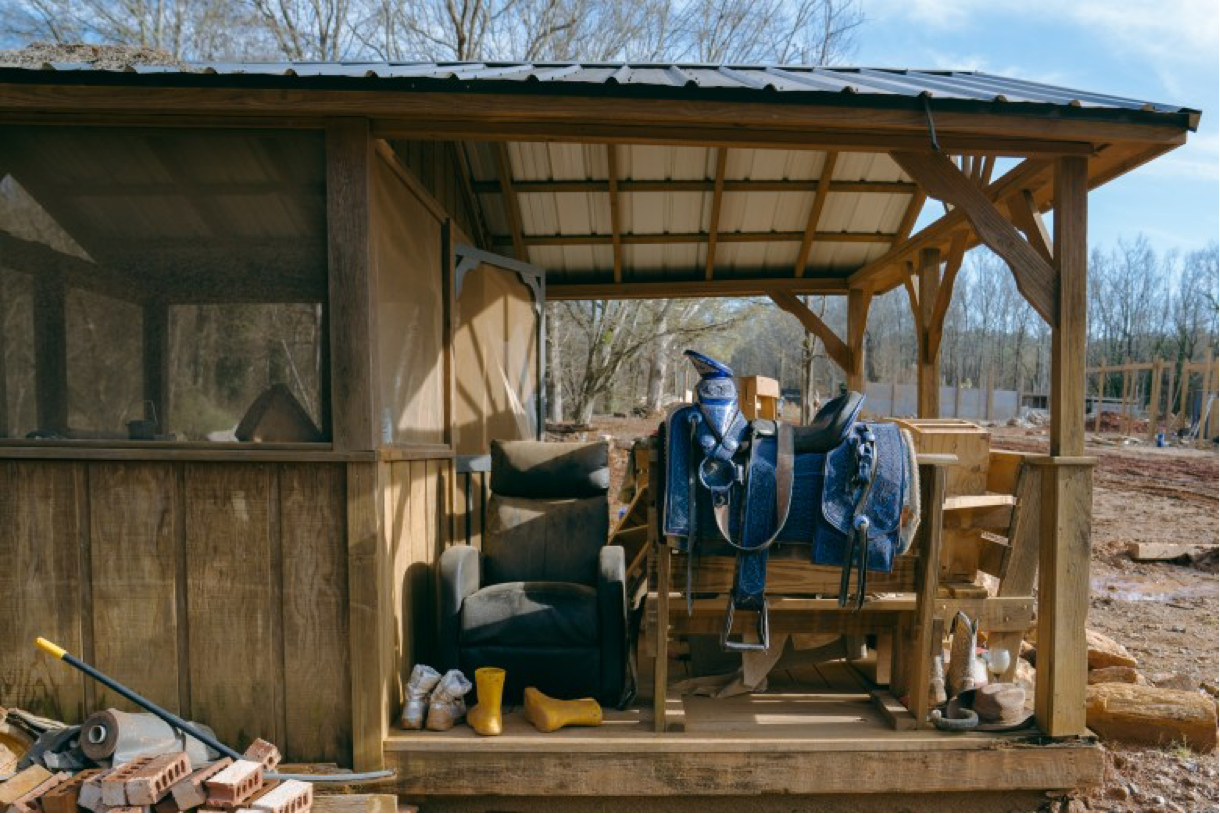
Fulton is currently battling Fulton County, years after charges of animal cruelty against him were dropped and his horses were seized. He still hasn’t been compensated for the seizure. Photo by Tabius McCoy/The Atlanta Voice
Dream Deferred
The reigns were soon tucked away, and the turntables came out, as Fulton explored a life of professional DJing. It took him everywhere, from spinning at college parties and touring across the U.S. to entertaining big celebrity parties and becoming the DJ for hip-hop artists such as St. Louis rapper J-Kwon. From the outside looking in, Fulton was living life. But the reality was that he felt lost. The fight to fit in, from the designer clothes to perming his hair and navigating the politics of the business, became unenjoyable.
“My spirit was starting to become stronger versus reality, and I just became depressed. I got so depressed, I wanted to commit suicide — I tried to. Because I felt like I didn’t know anything else. Horses were so out of my realm of thinking. I was like, “What am I gonna do?”
When he wrote the question, “Who are you?” On a piece of paper, the answer wasn’t that he wanted to sell out stadiums, own a diamond chain, have a platinum record, or drive a Ferrari. “It said, I just want to be happy. Be in a beach island environment, have a Jeep Wrangler with no doors, rusted. Have a simple little boat. Be around good music and ride horses.”

Photo by Tabius McCoy/The Atlamta Voice
Believe Kingdom
An unfulfilled dream was calling him. When Fulton encountered a horseman in Tijuana, Mexico, he realized that his dream wasn’t so out of reach — that it didn’t have to look a certain way and that he didn’t have to be wealthy to pursue his dream. The image of the unassuming man owning a bunch of horses resonated with him so much that he vowed to go all in once he left the life of DJing.
What started in a Brooklyn neighborhood soon began to flourish in Atlanta’s metro area. Fulton didn’t have any land or horses; all he had was an idea. He knew he still loved music and making people dance, so he incorporated that into his dream called Believe Kingdom, a place where the horses would become his records. His vision was to create a riding academy with American Paint horses, a breed known for its beautiful coat patterns.
“One of my hitting gems in the paint Academy was that it’s gonna be like a school, but the school will use horses as instrumental tools. I chose Paint Horses because I was drawn to them. When people looked at that Paint Horse, it didn’t matter if the horse was white, brown, or black; you just saw the horse for what it was. And the message would be to the kids that it doesn’t matter if you’re white, brown or Black, just be pure and healthy.”
After he bought his first American Paint, which he named Spinderella, Fulton found a facility in Loganville that housed horses. Soon, the duo began being booked for kids’ parties, entertaining crowds with tricks and spins. As his knowledge of horses grew, so did his number of horses, with names such as Hip-Hop, Rhythm and Blues, and NeoSoul. He later became a stunt coordinator for films, which allowed him to purchase his 27 acres of land for $150,000 in January 2016.
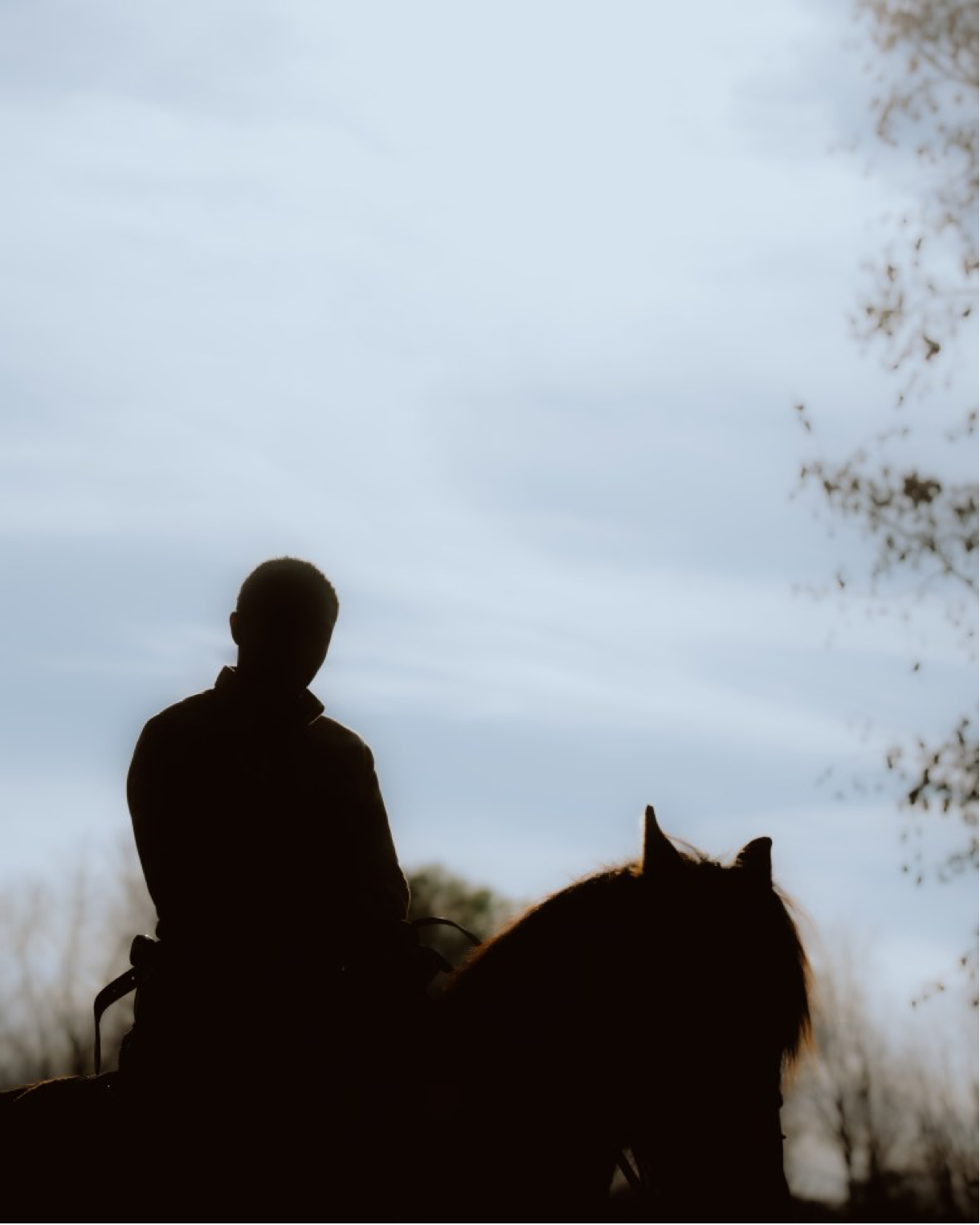
Photo by Tabius McCoy/The Atlanta Voice
Legal Troubles
However, his vision was halted a year later. In 2017, Fulton was charged with twelve counts of animal cruelty after complaints were called in. Fulton County later arrested him and seized seven of his prized horses. While he was cleared of animal cruelty charges a few months later, Fulton’s horses were never returned to him. He is now battling the county, suing directly under the Fifth Amendment’s Takings Clause, which states that, “nor shall private property be taken for public use, without just compensation.”
Fulton said it was never about the horses, but about him owning the land and the desires of outside developers.
“There are gatekeepers in everything, and I didn’t know that. I’m not perfect, but I have heart. I didn’t have a criminal record until I came to Atlanta. I’ve never been arrested in New York City; never been in any gang.
“Here, I realized that everything has an expectation of how it should look based on how people are programmed to circumstances. And for me, being here, there are a large group of people who don’t have the ability to see the beauty in what I’m doing the way I’m doing it, because to them, they haven’t been taught that that’s beautiful. I’m over here, walking through mud, dealing with the weather to keep them alive, to keep myself alive. It looks like a mess to you, but I’m trying to create something. And to create something, especially when you’re one person, it’s not as easy.”
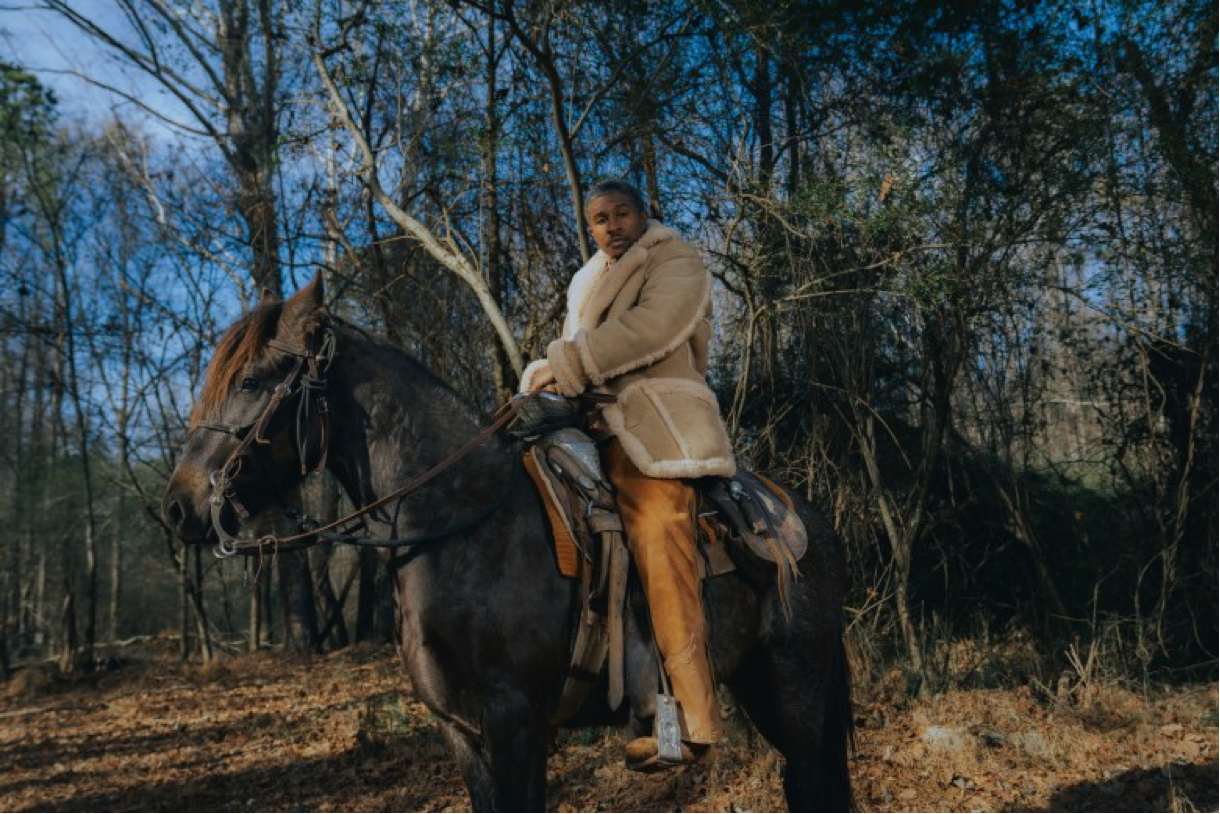
Photo by Tabius McCoy/The Atlanta Voice
The Dream Lives On
However, the one-man army that is Fulton hasn’t let his troubles deter his vision. He still plans to create a safe community for children who want to ride or learn about horses but don’t readily have access to them.
He enthusiastically stood between his land and the stream of Camp Creek that runs through it, an area he’s named Brooke. He outlined his plans for different parts of Believe Kingdom, including picnic tables and hammocks, a barn for staging the horses, cabins, and a souvenir shop. He also plans to incorporate a race track, a natural trail, and an area where wellness, music, and arts are the focus.
“I guess I’ve been chosen to be the person or the energy to create opportunities so other people won’t find themselves stuck at a job that they hate, and say, ‘Man, I wish I could have…’ For some reason, I was instilled with a spirit that’s given me the strength to go through all of this, because I was once the one deprived of it. So my story and everything they put me through actually helped me. Everything they put me through didn’t deter me from the goal.”
Fulton’s journey and the obstacles he’s had to jump over are now highlighted in a documentary directed by Adelin Gasana and produced by Julia Griggs.
‘The whole thing with me is showing that as long as you stay in your lane, you’ll make it no matter what you are. But you’ve got to go through some pain. You’ve got to be willing to take a few blows.”
Black History
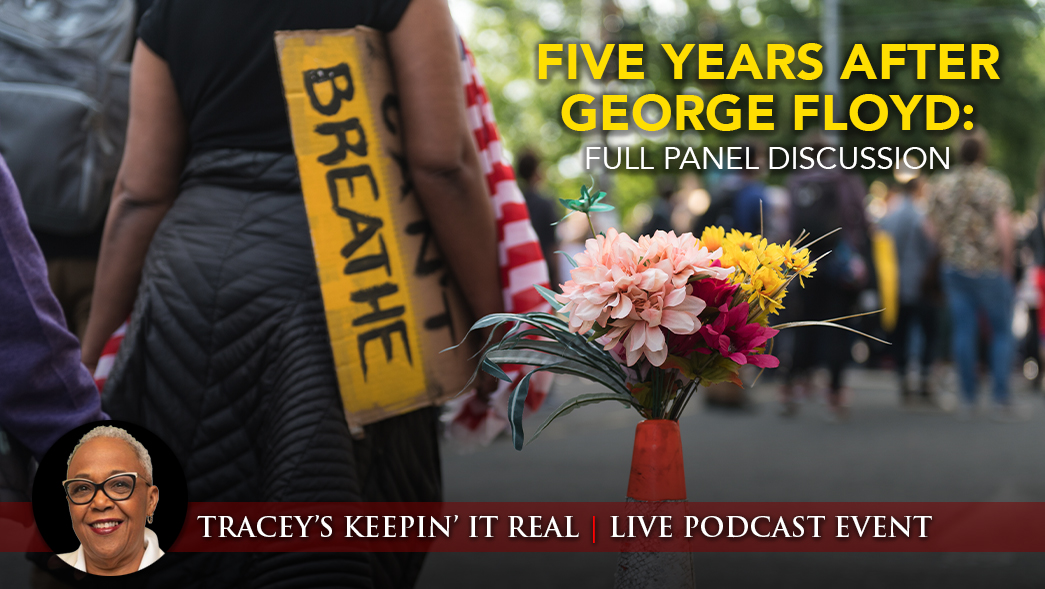
WATCH: Five Years After George Floyd: Full Panel Discussion | Tracey’s Keepin’ It Real | Live Podcast Event
Join us as we return to the city where it happened and speak with a voice from the heart of the community – Tracey Williams-Dillard, CEO/Publisher of the Minnesota Spokesman-Recorder.
Black History
FORTRESS MINNEAPOLIS: City ‘Violence Baits’ Community Ahead of Chauvin Trial
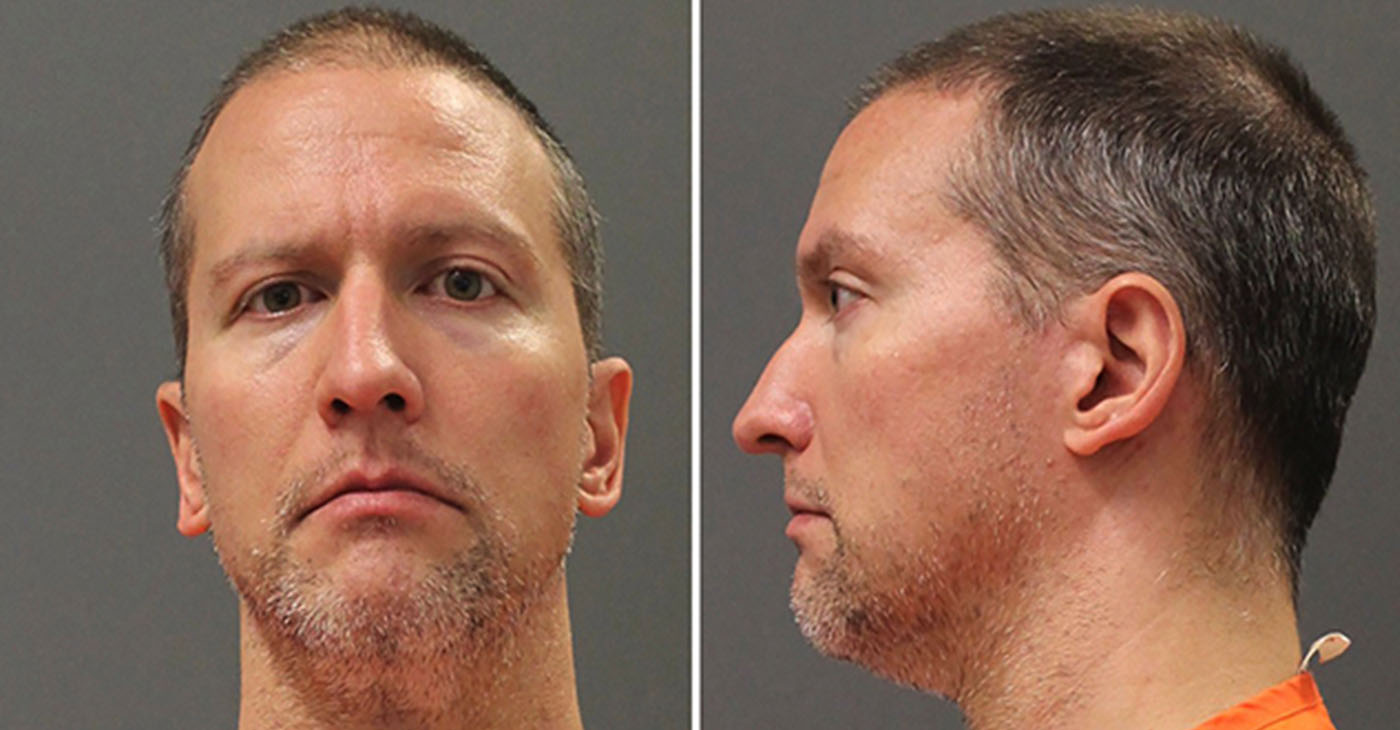
NNPA NEWSWIRE — In the run-up to the Chauvin trial, it appears the City has prepared for every possible contingency. Preparations include barricades, barbed wire, moats filled with razor wire, fences, concrete barriers, and boarded-up offices and storefronts. The city has also enlisted the help of over 1,000 fully armed law enforcement personnel from dozens of nearby agencies, 2,000 national guardsmen, dozens of grief counselors, trauma counselors and it is offering $175,000 contracts from the Office of Violence Prevention to qualified applicants.
By Mel Reeves, Editor Minnesota Spokesman-Recorder
[Editor’s note: Former Minnesota police officer Derek Chauvin is scheduled to stand trial for the second-degree murder of George Floyd on May 25th, 2020. A three-judge appeals panel of the Minnesota Court of Appeals has ordered a Minnesota judge to consider charging Chauvin with third-degree murder — a charge which was previously dismissed by Hennepin County District Judge Peter Cahill in October — in addition to his other charges.]
“It’s upsetting to see all the wire and barricades,” said Mary Moriarty, former Hennepin County Chief Public Defender, in reference to the city’s preparations for the trial of Derek Chauvin. “I think many members of our community view it as some kind of a reflection on them. Some perceive it as a message on how they [the city] think the verdict is going to come out. I wonder what message they are trying to send when the majority of the public protest was peaceful.”
The middle of downtown Minneapolis looks like a war zone.
In the run-up to the Chauvin trial, it appears the City has prepared for every possible contingency. Preparations include barricades, barbed wire, moats filled with razor wire, fences, concrete barriers, and boarded-up offices and storefronts. The city has also enlisted the help of over 1,000 fully armed law enforcement personnel from dozens of nearby agencies, 2,000 national guardsmen, dozens of grief counselors, trauma counselors and it is offering $175,000 contracts from the Office of Violence Prevention to qualified applicants.
The downtown federal building, Minneapolis City Hall and the Hennepin County Government Center have been completely fenced off. People have to enter through gates to get to the Government Center for services. Downtown Sixth Street between 3rd and 4th Avenues is completely shut down.
Violence baiting
Some see the over-preparedness as a kind of “violence baiting.” Violence baiting is like Red-baiting in that its intent is to discredit the validity of a political opponent and the opponent’s logical argument by accusing or inferring that an individual or group is violent or sympathetic to violence.
The city’s preparations in anticipation of violence can serve to infer or imply that the community—specifically the Black community—and those who protest against police violence do not have a legitimate cause, but rather are prone to violence and intend to use the trial as an excuse to be violent.
Much like how those who opposed Jim Crow were Red baited in an attempt to discredit the validity of their opposition to racism and segregation, violence baiting is used to discredit the movement against police violence.
It is highly disturbing that City, County and State officials would go to such extreme lengths to limit our right to peaceably assemble outside of the Hennepin County Government Center,” said Nekima Levy Armstrong of the Racial Justice Network in an interview with the Minnesota Spokesman Recorder.
Levy Armstrong last week took part in a press conference along with other anti-police violence activists groups denouncing the City’s draconian preparations in anticipation of protests surrounding Chauvin’s trial for the second-degree murder of George Floyd last Memorial Day. They also criticize what they see as the City’s continued failure to hold its police accountable.
“It is outlandish that they are encircling themselves in barbed wire, in fences,” said Michelle Gross of Communities United Against Police Brutality at the press conference. “They are more afraid and concerned with the people than they are with police violence.
“They want to make it seem like the protesters are violent and that they are the problem, not the police violence that led to the protest. What they should do is put this razor wire around the precinct so they can keep the cops inside who are brutalizing us,” said Gross.
Levy Armstrong said the preparations did not make her feel safer. “We do not believe the police will be here to protect the people. White Supremacists flooded the Twin Cities. They terrorized people in North Minneapolis, shot at and shot Black people, and they were not held accountable.” She pointed out that it was the police who were violent with those peacefully protesting.
“This is not how you demonstrate care for a city traumatized by police violence,” tweeted Minneapolis Fifth Ward Councilmember Jeremiah Ellison. He added that the city council “did not approve this plan, and I certainly don’t personally approve of it.”
Activists added that while the City was trying to intimidate them, they were concerned that the City was not doing all it could to prevent another George Floyd. Nor they say has it come up with a plan to discipline wayward cops who are reported for misconduct.
“I am hearing people talk about how expensive all this is and how that could be used for people who are in economic crisis,” said Moriarty. The State of Minnesota has allotted $35 million for security during the trial.
“In the nine months since George Floyd was killed, not one thing has changed,” said Gross. “They do not want to change the underlying cause of our complaints. City Hall has done nothing to address the problem of police violence.
“Last summer many people were harmed by police in response to the uprising. Five people lost eyes and others lost limbs and broken ribs. And we are the problem? I don’t recall any of us firing projectiles at the cops.
“Their [police] violence is the core of the problem,” Gross continued,” and this City and this State have not addressed the conditions that led to George Floyd being killed, which tells us that we will surely have another George Floyd.”
Social media influencers
The city had planned to pay what they called social media influencers to broadcast information to the various BIPOC communities during the trial. But after public outcry the idea was pulled earlier this week.
Minneapolis officials had said they wanted to make sure that “we get the word out about what’s happening with the trials and what the options are for community to engage.” But activists and others complained that it felt like the City was using social media influencers to do just that, attempt to influence the public’s perception of the trial.
Trial to be livestreamed
People will get to see the proceedings themselves as Court TV will live-stream the trial. The City has also mobilized legal professionals to help the community better understand the process. Moriarty said people would need little help figuring out the process: “At the end of the day, people know right from wrong.
“I remember thinking the Government Center is a public building. I remember feeling terribly we are there to help the public, and downtown is sending the message that the public is dangerous,” said the former public defender.
“We will be out here protesting to ensure that the City knows it has an obligation and the responsibility to end police violence,” promised Gross.
“He [Chauvin] deserves to spend time in prison for lynching a Black man in broad daylight under the guise of law and order,” said Levy Armstrong. “Likewise, the same officials who ordered the fences, barbed wire and barricades should also be held responsible for looking the other way while Minneapolis police were beating and killing people all of these years.”


NFN Live ON BEYOND IWDM50 PODCAST: FEATURING IMAM OMAR SHAKIR! Join us TONIGHT for Week 6

Uncle Luke Joins BlackPressUSA | Trump Responds to Nolan Wells Case 📱

Uncle Luke Joins BlackPressUSA | Trump Responds to Nolan Wells Case

Second Row Fold: Cargo Space Impact Explained #shorts

Planting seeds of economic mobility for St. Louis students

Revitalizing Civics: Reclaiming Our Constitution

FDIC Study: Minority Banks & Lending for Communities #shorts

Car Seat Access: Test Your Third Row Layout! #shorts

CeCe Winans and friends turn Chaifetz Arena into a house of praise

Unitarian Universalist Congregation of Montclair | Preacher: Rev. Mark Thompson 10.11.26

The Youngest American Killed in the Vietnam War

Latest Massacre in Haiti Reveals Cruelty U.S. Deportations

OPINION: Nolan Wells’ Death One of Several Signifying Racial Terror Lives on in U.S. South

Passing for White, Fighting for Black America: The Courage of Walter White

OP-ED: Haiti TPS: Have We Lost Sense of Humanity?

OP-ED: If AI Is the New Language of Power, Then NAN Wants Black Communities Fluent

OP-ED: How Does Your State Rank for Pre-K?

Henry O. Flipper: A Trailblazer at West Point and Beyond

Asm. Smallwood-Cuevas’s Bill Repealing ‘Racist’ CalWORKs ‘Man-in-the-House’ Rule Clears Legislature

NBA All-Star Damian Lillard Returns Home for 15th Annual Backpack Giveaway
NFN Live ON BEYOND IWDM50 PODCAST: FEATURING IMAM OMAR SHAKIR! Join us TONIGHT for Week 6
Uncle Luke Joins BlackPressUSA | Trump Responds to Nolan Wells Case 📱
Uncle Luke Joins BlackPressUSA | Trump Responds to Nolan Wells Case
Second Row Fold: Cargo Space Impact Explained #shorts
Planting seeds of economic mobility for St. Louis students
Revitalizing Civics: Reclaiming Our Constitution
FDIC Study: Minority Banks & Lending for Communities #shorts
Car Seat Access: Test Your Third Row Layout! #shorts
CeCe Winans and friends turn Chaifetz Arena into a house of praise
Unitarian Universalist Congregation of Montclair | Preacher: Rev. Mark Thompson 10.11.26
-
 Black Press1 week ago
Zakiya Jendayi Arrested, Locked Out of Home by Sheriff’s Deputies
-

 Black Press6 days ago
A $2.1 Trillion Wellness Industry Never Built a Daily Practice for Black Children. So This Atlanta Family Did.
-

 Art6 days ago
Montclair Brewery: Brewing Culture, Community, History
-
 Black History1 week ago
Listening as a Lifeline: A Doula’s Witness to Black Maternal Health
-
 BlackPressUSA4 days ago
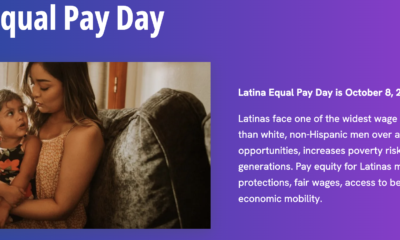
Latinas Deserve Equal Pay. Unions Help Make It Happen.
-

 Black Press6 days ago
COMMENTARY: But God!
