
Education
Toyota executive Chris Reynolds honored at Cass Tech
MICHIGAN CHRONICLE — Things have changed quite a bit since Christopher Reynolds attended Detroit Cass Technical High School 40 years ago.


By Branden Hunter
Things have changed quite a bit since Christopher Reynolds attended Detroit Cass Technical High School 40 years ago. The old nine-story building he attended classes in was torn down in 2011, his former teachers are all gone, and his old Cass Tech gear does not fit quite the same.
But one thing remains consistent; Cass Tech is a world-class educational facility, producing world-class students, prompting the current staff at the downtown Detroit high school to declare January 16 as “Chris Reynolds Day.”
Reynolds, 56, is the Chief Administrative Officer, Manufacturing and Corporate Resources for Toyota Motor North America, the highest ranking African-American auto executive in the world. He is responsible for the North American functions of manufacturing operations, accounting and finance, human resources, government affairs, corporate communications, corporate ztrategy, social innovation/diversity and inclusion, and legal, among others.
As a high-ranking auto executive, returning home to Detroit to attend the North American International Auto Show is something Reynolds does every year. He did not know that this particular trip to Detroit would see his former high school honoring him, but it was a proud moment.
“This probably means that I’m getting old,” Reynolds laughed, as he sat in the Sharon Allen band room inside Cass Tech’s new state-of-the art facility. “But what it really means is that I’m part of a continuum, seeing that Cass Tech didn’t stop after me. It thrived, you have all these great students who are doing wonderful things and are so full of potential, and that gives me the feeling that it’s a great legacy to pass on. It’s special to be a part of this Cass Tech legacy.
Reynolds entered high school in 1975 as a 12-year-old. He had skipped first and fifth-grade and was entering a diverse school, with well over 4,000 students. Reynolds admitted that he was not a popular jock in high school. Instead of playing football or basketball, he majored in science and arts and participated in the radio, tv, and speech club. Academics came first in his home, having an older brother that attended Cranbrook.
“Walking into Cass Tech this morning, I told one of the coaches that I didn’t play sports for two reasons,” Reynolds said. “For one, there was no sport that I could play at 12-years-old and my parents always made it clear that as opposed to me playing sports, they’d rather have me in the library reading books. You can always pick up the sports later.”
Reynolds had a full day visiting Cass Tech. He addressed an auditorium full of former and current Technicians, heard from the Cass Tech orchestra, took a tour of the six-story building, and a luncheon was held in the media center to honor one of Cass Tech’s most accomplished alums.
He attended Kalamazoo College after Cass Tech, earning a bachelor’s degree in political science with honors in 1983.He received his law degree from Harvard Law School in 1986. In 2007, Reynolds began working for Toyota as its lawyer nationally and before you know it, he was promoted as its global lawyer.
Prior to joining Toyota, Reynolds was a partner at the law firm of Morgan, Lewis and Bockius in New York City, where he also worked as manager of the New York office’s labor and employment law group. He served as a member of the firm’s advisory board and as chair of the firm’s diversity committee.
Earlier, Reynolds served as an Assistant United States Attorney in the criminal division of the U.S. Attorney’s Office, Southern District of New York, and as a law clerk for Judge Damon J. Keith, U.S. Court of Appeals, 6th Circuit in Detroit. Reynolds said Judge Keith has been like another father to him.
Not bad for someone from Woodingham and Margareta streets in Detroit.
“Mr. Reynolds is being extremely humble in what he does and his accomplishments to date,” said Leon C. Richardson, president and CEO of Chemico Systems. “You all are in the presence of greatness and Chris is a leading example of what you all can do as well. He’s the highest ranking African-American automotive industry and that’s a huge statement. He came down the same path as you all and you, too, can do this.”
Reynolds’ ability to relate to the students at Cass Tech is what allowed him to garner their full attention. He grew up in the Bagley neighborhood on Detroit’s west side near Seven Mile and Livernois and was the youngest of eight children: four by his mother and four by his stepfather. His stepfather worked at the Ford River Rouge Plant and his mother was a registered nurse.
He currently lives in Dallas, but his roots are here in Detroit. His life accomplishments and love of Detroit and Cass Tech rubbed off on many of the students he encountered, from the junior in ROTC who plays tennis and Reynolds recommended that she attend Kalamazoo College, to the students in the marketing class he gave a short marketing lesson to on Toyota, and the student he made sit up in the auditorium to listen to his speech.
“This was an amazing experience to have a man with such wisdom and experience come back to your school to talk to you,” said Cass Tech senior Quinton Howard, who plans to attend Wayne State University to study accounting. “Similar to Mr. Reynolds, I have family that works in the automotive industry and it feels close to home to have him here. It’s my passion to serve and I want to return the favor to Cass Tech students in 40 years, just like he is doing today.”
Cass Tech is a proud community and family atmosphere. Its unofficial motto is, “Cass Tech Number One, Second To None.” The 112-year-old institution demands excellence from all of its students, which is why its alumni base includes the likes of Diana Ross, Big Sean, John DeLorean, David Alan Grier, Della Reese, Esther Gordy, Terry Foster, Kwame Kilpatrick, Jourdan Lewis, and so many others.
Even when he goes for a run, he wears his Cass Tech football shirt with his name on the back, and people all over the world are familiar with the green and white of Cass Tech.
“If you can graduate from Cass Tech, you can do anything,” said Reynolds.
This article originally appeared in the Michigan Chronicle.











Black Press
Hutchinson Concedes: Ballots Still Being Counted in Oakland Board Elections
Oakland District 4 incumbent Mike Hutchinson has conceded his seat on the school board as ballot counting continues for Alameda County. Following ranked-choice tabulations, challenger Kathryn Camp holds a significant lead over the longtime representative whose term ends in January. While Hutchinson expressed pride in his legislative record and opposition to the board majority, other races remain highly competitive. Updates in Districts 2 and 6 show narrow margins and shifting leads as officials finalize the local election results, providing a new outlook for the district.
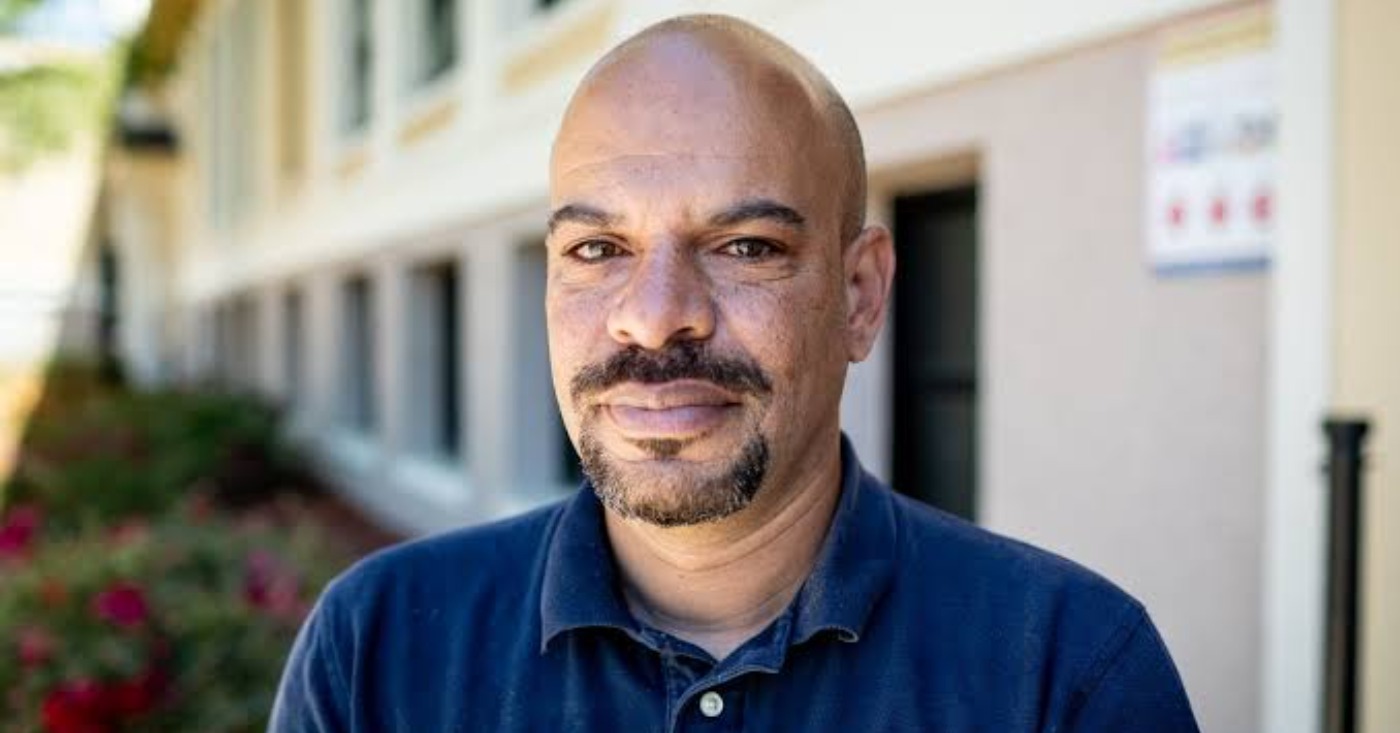
While the results of Oakland and Alameda County elections are still being counted, Oakland District 4 incumbent, Mike Hutchinson, has already conceded online. His term ends in January.
As of Monday, Nov. 9, after ranked-choice votes were tabulated, Hutchinson won 44.36%, while Kathryn Camp won 55.64%. Sylvia Pfeiffer Williams came in third.
Camp’s website describes her as “an Oakland mom, an OUSD parent, and an experienced leader who believes deeply in the power of opportunity and in our responsibility to make sure every child has a real chance to thrive.”
Writing on Facebook, Hutchinson wrote, “It appears that we did not win reelection to the school board. Although it is disappointing, it is not entirely unexpected given what we have faced over the last four years. I have often said that if doing the right thing costs me reelection then so be it.”
In summing up his achievements, he credited himself with the work of the district, the board, and the superintendent and celebrated his opposition to the school board progressive majority and the superintendent.
“During my six years in office, against all odds, and without a board majority, we changed the game. I’m proud to say that we accomplished more than I ever imagined was possible,” he wrote.
“I led through the pandemic and the safe and equitable reopening of the district. I ended the failed school closures policies,” he continued. “I authored and passed the 3 R’s, a comprehensive plan to engage in community conversations to decide how to re-envision, restructure, and redesign OUSD going forward.”
“I steadfastly took a stand against the school board majority over the last two years as they reversed our progress,” he said.
Many school observers and public-school advocates did not share Hutchinson’s enthusiasm for the role he has played.
At present, he often aligns with the Fiscal Crisis Management and Assistance Team (FCMAT), a state-funded agency that advocates for closing schools and cutting education programs, particularly in poorer districts that serve Black and Brown families.
Other school board races are showing mixed results. In District 2, School Board President Jennifer Brouhard is ahead of her challenger Arielle Fleisher, 50.99% to 49.01% as of Monday.
In the District 6 race, Board Vice President Valarie Bachelor is slightly ahead of two challengers in first-place votes at 37.82% but trails after ranked-choice votes are tabulated. With ranked-choice tabulations, Alexandra Williams is the current leader with 54.74% of the vote, ahead of Bachelor, who has 45.26%, as of Monday. Leana Powell came in third.
Williams has worked at public, private, and charter schools. She joined AIMS Academy, part of the American Indian Model Schools network in Oakland, as a math teacher in September 2024.
Black Press
Mayor Lee and Schools’ Supt. Saddler Issue Joint Statement on Recent ICE Activity in Oakland
POST NEWS GROUP — “We will not allow intimidation targeting our families, disrupting our schools, or dividing our neighborhoods. Our schools are sanctuaries where our children belong, and our workplaces and public spaces belong to all Oakland residents,” according to the statement.
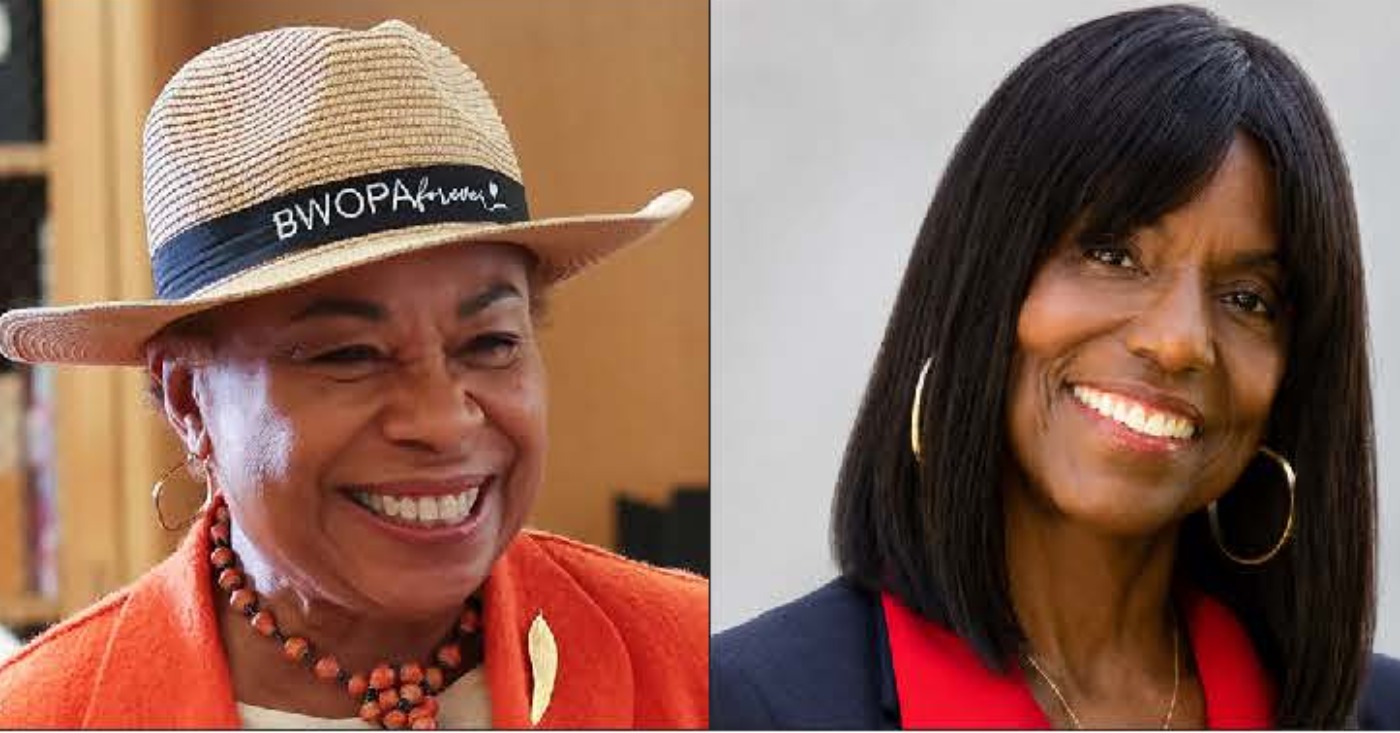
Oakland Mayor Barbara Lee and Oakland Unified School District Superintendent Denise Saddler issued a joint statement to city residents this week concerning increased ICE activity in Oakland and the Bay Area, which has the school community “on edge.”
“We want to remind everyone that OUSD is a ‘Sanctuary District’ inside Oakland, a Sanctuary City. That means your city and school district support you no matter where you came from or how you got here,” the statement said.
“It also means Oakland Stands United: ICE does not belong in Oakland. We will not tolerate actions designed to spread fear in our city,” the two leaders said.
“We will not allow intimidation targeting our families, disrupting our schools, or dividing our neighborhoods. Our schools are sanctuaries where our children belong, and our workplaces and public spaces belong to all Oakland residents,” according to the statement.
The city leaders reemphasized that the city and school district stand with every member of the community.
“We know our rights, and we will protect them every single day. In Oakland, everyone should know that the safety and well-being of all residents is paramount. The schools have strong protocols in place in case of ICE activity anywhere near our campuses.”
City residents are urged to make a report if they see or suspect ICE activity. “Please report it immediately to the Alameda County Immigration Legal Education Partnership (ACILEP) rapid response hotline at 510-241-4011 for immediate support,” according to the statement.
Black History
“Blue Tsunami” Sweeps Georgia, Bottoms Makes History
MOREHOUSE COLLEGE – THE MAROON TIGER — A political shift described as a “Blue Tsunami” has transformed the landscape of Georgia leadership following the recent election. Keisha Lance Bottoms made history when the race was called on Nov. 3, becoming the first woman and the first Black person elected as governor of Georgia.

The race was called on Nov. 3 at 9:24 p.m., which is much earlier than most elections. The atmosphere of the Marriott Marquis located in downtown Atlanta was only a mere sample of the excitement statewide. The event hall could barely hold the guests as the line for access passes extended across the entire lobby floor. Everyone came in some of their best attire, sporting unmistakable blue diamond pins with the words, “Keisha Lance Bottoms for governor.”
Now, Bottoms will become Georgia’s first woman and first Black governor when she takes office in January, making her the first Black woman to serve as governor of any U.S. state.
She described her campaign as reaching every corner of the state, “from the red hills of Georgia to the Blue Ridge Mountains of the Piedmont,” as cameras crowded in to capture the moment.
Joining her onstage were her mother, her children and her husband, Derek Bottoms, whom she met while attending Georgia State University College of Law and married in October 1994.
Supporters who had campaigned alongside Bottoms for 578 days shed tears of joy at her election watch party. Among those near the stage were U.S. Sen. Raphael Warnock ‘91, D-Ga., the senior pastor of Ebenezer Baptist Church, and the Rev. Jamal Harrison Bryant ‘94, the senior pastor of New Birth Missionary Baptist Church.
Eight Black women, many firsts
In 2025, Black women experienced disproportionate employment losses as the Trump administration implemented federal workforce cuts and rolled back diversity, equity and inclusion initiatives.
The losses disproportionately affected Black women across the country. In 2026, Georgia voters elected eight Black women to statewide office, marking a historic shift in the state’s political leadership. The South had something to say.
Georgia’s eight major statewide executive offices are the governor, lieutenant governor, attorney general, secretary of state, agriculture commissioner, insurance commissioner, labor commissioner and state school superintendent.
When the newly elected officials take office in January, Black women will hold seven of Georgia’s eight statewide executive offices, a first for the state, with Lt. Gov.-elect Josh McLaurin holding the eighth seat.
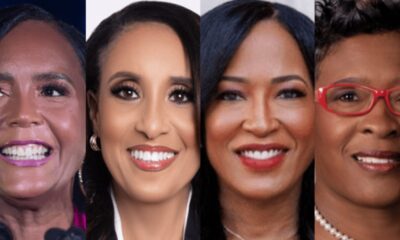
Several broke barriers of their own. Tanya Miller will become Georgia’s first elected woman attorney general. Penny Brown Reynolds, a former Fulton County judge, will become the first Black person elected Georgia secretary of state. Keisha Sean Waites, a former Atlanta City Council member, will become Georgia’s first Black woman insurance commissioner. Educator Lydia Powell will become its first Black woman state school superintendent, while Nikki Porcher will become its first Black woman labor commissioner.
Agriculture Commissioner-elect Katherine Juhan-Arnold founded Baby Katie’s Pharm & Kitchen, a nonprofit farm that provides fresh produce and agricultural education to underserved communities. Shelia Edwards, who won the District 5 race, will join Alicia Johnson as one of only two Black women on the Georgia Public Service Commission. Johnson became the first Black woman elected to a statewide partisan office outside the judiciary in Georgia after winning her commission seat in 2025.
“Georgia chose competence,” Brown Reynolds told The 19th. “We were not selected because we were Black women. I believe that we were selected because all of us bring something that Georgia desperately needs.”
Andra Gillespie, a political science professor at Emory University, told USA Today that the number of Black women elected to leadership positions in Georgia is unprecedented.
“Black women have definitely reached a point where they can not only run and be taken seriously for leadership positions in major parties,” she said.
The wins reached Congress too. State Rep. Jasmine Clark, D-Ga, became the first Black woman with a doctorate in science elected to Congress, winning Georgia’s 13th Congressional District seat, while U.S. Reps. Lucy McBath and Nikema Williams won reelection.
“Georgia has shown up”
Warnock said Georgia voters showed the power of organizing this election cycle and pledged to keep fighting for historically Black colleges and universities.
“I’m proud of Georgia. Georgia has shown up,” Warnock said. “Some 3 million of them early voted.”
He said churches played a key role in that turnout.
“What we saw, among other things, in this election cycle is the power of organizing, and the faith community has always been an important part of that,” he said.
When asked about the legislative priorities he plans to pursue with Keisha Lance Bottoms, Warnock highlighted his efforts to secure federal funding for historically Black colleges and universities.
Warnock pointed to a recent $97.1 million federal award supporting STEM programs at 10 historically Black colleges and universities and other minority-serving institutions, including Clark Atlanta University. His office has also reported securing more than $17 billion for HBCUs nationwide since he began his full Senate term.
With Governor-Elect Bottoms being an HBCU graduate of Florida A&M University, Georgia will have two HBCU alumni representing the people of the state.
“My own life is a testament to how these schools perform way above their weight,” he said. “And so I’ll continue to fight for them.”
His advice for current students was simple: “Morehouse gave me everything I needed to get ready,” he said. “I want the students to look at someone like me, and many others in various fields, and know that we sat in those same desks that they sit in. And so the sky is the limit.”
“Money doesn’t make you a success; character does”
Bryant said the win was personal, crediting Black men and Black churches for helping elect Bottoms.
“Super excited to know history was made, and to know that Black men supported a Black woman to get to this place,” he said.
The biggest hurdle, Bryant said, was getting Black churches involved and engaged, which he described as a return to the church’s tradition from the civil rights movement.
His advice for young men at Morehouse and across Georgia was direct.
“The takeaway lesson for all of us is money doesn’t make you a success,” Bryant said. “Character does.”
When the officials-elect take office in January, Black women will lead nearly every corner of Georgia’s executive branch. Bottoms announced her transition team Friday, Nov. 6. She and the seven other statewide officials-elect will be sworn in in January.
This site uses Akismet to reduce spam. Learn how your comment data is processed.
Based on reporting by Morehouse College – The Maroon Tiger.
Black History
“Blue Tsunami” Sweeps Georgia, Bottoms Makes History
MOREHOUSE COLLEGE – THE MAROON TIGER — A political shift described as a “Blue Tsunami” has transformed the landscape of Georgia leadership following the recent election. Keisha Lance Bottoms made history when the race was called on Nov. 3, becoming the first woman and the first Black person elected as governor of Georgia.

The race was called on Nov. 3 at 9:24 p.m., which is much earlier than most elections. The atmosphere of the Marriott Marquis located in downtown Atlanta was only a mere sample of the excitement statewide. The event hall could barely hold the guests as the line for access passes extended across the entire lobby floor. Everyone came in some of their best attire, sporting unmistakable blue diamond pins with the words, “Keisha Lance Bottoms for governor.”
Now, Bottoms will become Georgia’s first woman and first Black governor when she takes office in January, making her the first Black woman to serve as governor of any U.S. state.
She described her campaign as reaching every corner of the state, “from the red hills of Georgia to the Blue Ridge Mountains of the Piedmont,” as cameras crowded in to capture the moment.
Joining her onstage were her mother, her children and her husband, Derek Bottoms, whom she met while attending Georgia State University College of Law and married in October 1994.
Supporters who had campaigned alongside Bottoms for 578 days shed tears of joy at her election watch party. Among those near the stage were U.S. Sen. Raphael Warnock ‘91, D-Ga., the senior pastor of Ebenezer Baptist Church, and the Rev. Jamal Harrison Bryant ‘94, the senior pastor of New Birth Missionary Baptist Church.
Eight Black women, many firsts
In 2025, Black women experienced disproportionate employment losses as the Trump administration implemented federal workforce cuts and rolled back diversity, equity and inclusion initiatives.
The losses disproportionately affected Black women across the country. In 2026, Georgia voters elected eight Black women to statewide office, marking a historic shift in the state’s political leadership. The South had something to say.
Georgia’s eight major statewide executive offices are the governor, lieutenant governor, attorney general, secretary of state, agriculture commissioner, insurance commissioner, labor commissioner and state school superintendent.
When the newly elected officials take office in January, Black women will hold seven of Georgia’s eight statewide executive offices, a first for the state, with Lt. Gov.-elect Josh McLaurin holding the eighth seat.
Several broke barriers of their own. Tanya Miller will become Georgia’s first elected woman attorney general. Penny Brown Reynolds, a former Fulton County judge, will become the first Black person elected Georgia secretary of state. Keisha Sean Waites, a former Atlanta City Council member, will become Georgia’s first Black woman insurance commissioner. Educator Lydia Powell will become its first Black woman state school superintendent, while Nikki Porcher will become its first Black woman labor commissioner.
Agriculture Commissioner-elect Katherine Juhan-Arnold founded Baby Katie’s Pharm & Kitchen, a nonprofit farm that provides fresh produce and agricultural education to underserved communities. Shelia Edwards, who won the District 5 race, will join Alicia Johnson as one of only two Black women on the Georgia Public Service Commission. Johnson became the first Black woman elected to a statewide partisan office outside the judiciary in Georgia after winning her commission seat in 2025.
“Georgia chose competence,” Brown Reynolds told The 19th. “We were not selected because we were Black women. I believe that we were selected because all of us bring something that Georgia desperately needs.”
Andra Gillespie, a political science professor at Emory University, told USA Today that the number of Black women elected to leadership positions in Georgia is unprecedented.
“Black women have definitely reached a point where they can not only run and be taken seriously for leadership positions in major parties,” she said.
The wins reached Congress too. State Rep. Jasmine Clark, D-Ga, became the first Black woman with a doctorate in science elected to Congress, winning Georgia’s 13th Congressional District seat, while U.S. Reps. Lucy McBath and Nikema Williams won reelection.
“Georgia has shown up”
Warnock said Georgia voters showed the power of organizing this election cycle and pledged to keep fighting for historically Black colleges and universities.
“I’m proud of Georgia. Georgia has shown up,” Warnock said. “Some 3 million of them early voted.”
He said churches played a key role in that turnout.
“What we saw, among other things, in this election cycle is the power of organizing, and the faith community has always been an important part of that,” he said.
When asked about the legislative priorities he plans to pursue with Keisha Lance Bottoms, Warnock highlighted his efforts to secure federal funding for historically Black colleges and universities.
Warnock pointed to a recent $97.1 million federal award supporting STEM programs at 10 historically Black colleges and universities and other minority-serving institutions, including Clark Atlanta University. His office has also reported securing more than $17 billion for HBCUs nationwide since he began his full Senate term.
With Governor-Elect Bottoms being an HBCU graduate of Florida A&M University, Georgia will have two HBCU alumni representing the people of the state.
“My own life is a testament to how these schools perform way above their weight,” he said. “And so I’ll continue to fight for them.”
His advice for current students was simple: “Morehouse gave me everything I needed to get ready,” he said. “I want the students to look at someone like me, and many others in various fields, and know that we sat in those same desks that they sit in. And so the sky is the limit.”
“Money doesn’t make you a success; character does”
Bryant said the win was personal, crediting Black men and Black churches for helping elect Bottoms.
“Super excited to know history was made, and to know that Black men supported a Black woman to get to this place,” he said.
The biggest hurdle, Bryant said, was getting Black churches involved and engaged, which he described as a return to the church’s tradition from the civil rights movement.
His advice for young men at Morehouse and across Georgia was direct.
“The takeaway lesson for all of us is money doesn’t make you a success,” Bryant said. “Character does.”
When the officials-elect take office in January, Black women will lead nearly every corner of Georgia’s executive branch. Bottoms announced her transition team Friday, Nov. 6. She and the seven other statewide officials-elect will be sworn in in January.
This site uses Akismet to reduce spam. Learn how your comment data is processed.
Based on reporting by Morehouse College – The Maroon Tiger.
Black History
Don’t Pass the Torch. Expand the Circle.
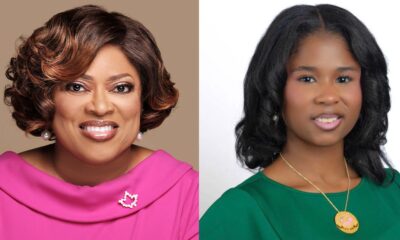
Alpha Kappa Alpha Sorority, Inc. is redefining mentorship by empowering undergraduate women to take active roles in high-level organizational governance. Instead of asking young leaders to wait their turn, the sorority is integrating students like Noah M.P. Harris into international boards and planning committees alongside seasoned veterans like Dr. Tonja L. Ringgold. This intergenerational model aims to combat professional burnout and systemic barriers by offering meaningful responsibility and guidance today, rather than in the distant future, to learn how this approach is transforming leadership. read more.
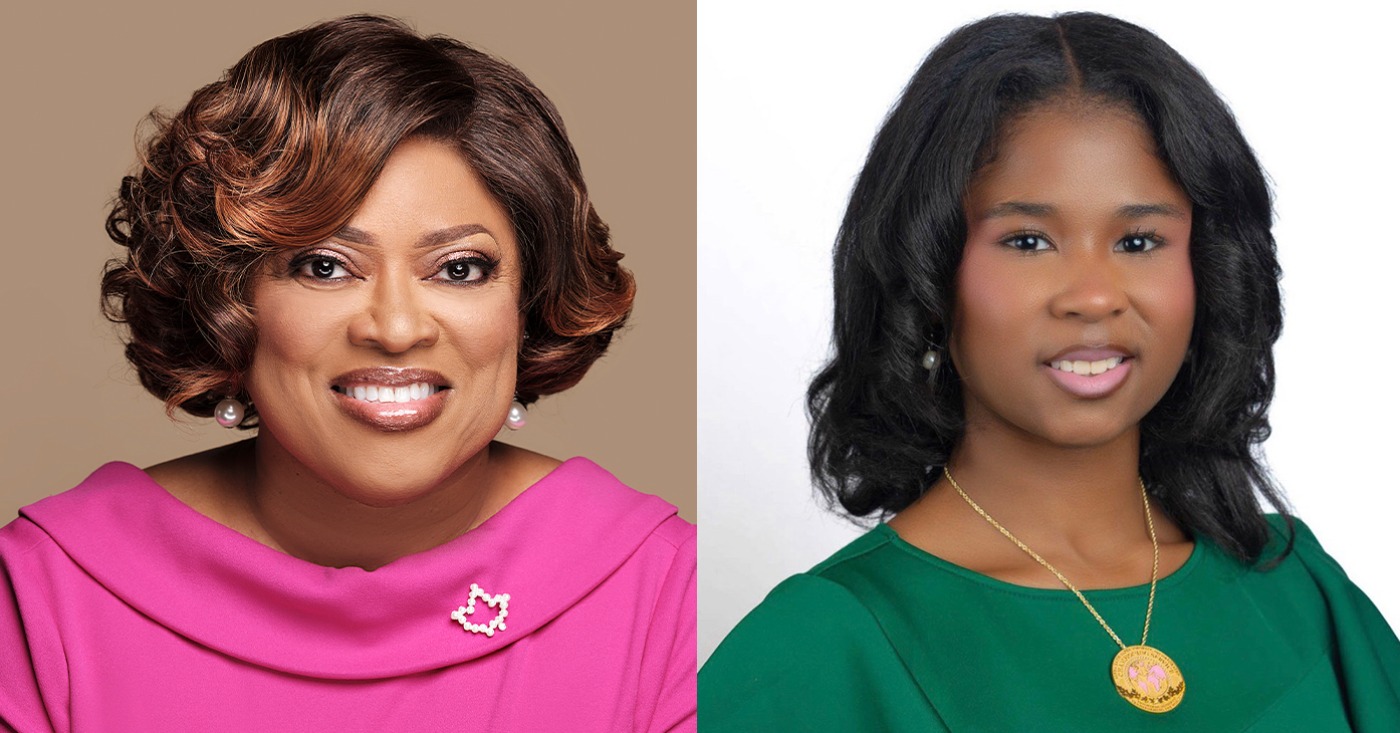
On Nov. 14, hundreds of undergraduate women gathering at Morgan State University in Baltimore for Alpha Kappa Alpha Sorority’s Undergraduate Leadership Institute will do more than listen to presentations. They will run the program. Graduate advisers will take seats in the back of the room.
This is intentional. Too many institutions invite young people to observe leadership without trusting them to exercise it. We believe the future of leadership depends not on one generation stepping aside for another, but on generations sharing responsibility now.
We have seen the difference from two vantage points.
For Dr. Ringgold, Morgan State is where that journey began. Initiated into Alpha Kappa Alpha’s Alpha Delta Chapter in 1982, she recently reunited with two sorority sisters who guided her as an undergraduate, including a former chapter president whose example still informs her leadership today. Forty-four years later, she returns as director of the sorority’s North Atlantic Region, keenly aware of what it means when someone invests in a young woman’s potential. The homecoming carries added significance: Alpha Delta, chartered in 1926, is celebrating its centennial; and the chapter that shaped her is still helping shape new leaders.
For Ms. Harris, leadership is not a distant destination. She is a Bowie State University senior and president of its Eta Chapter who, this summer, was elected Alpha Kappa Alpha’s International Second Vice President. As an undergraduate member of the sorority’s international governing board, she carries student perspectives into decisions affecting the organization. A 2025 Leadership Fellows experience encouraged her to seek that larger platform. To her, leadership is measured by the people she can serve, not simply the position she holds.
Our experiences challenge a familiar assumption: Young people must wait their turn. Founded in 1908 by Black college women, Alpha Kappa Alpha now counts more than 390,000 initiated members across more than 1,122 chapters. That reach brings a responsibility to open doors, not merely preserve tradition.
Deloitte’s 2026 global survey found that 76% of Gen Z respondents were interested in pursuing senior leadership roles eventually, although only 6% of surveyed Gen Z and millennials named leadership their primary career goal. Many cited burnout, excessive responsibility and work-life balance as concerns. Young people are not necessarily avoiding leadership. They are questioning the conditions under which it is exercised.
At a time when companies are pulling back on women’s advancement, Black women face persistent barriers. McKinsey and LeanIn.Org’s 2025 report found that among companies studied, only 60 Black women were promoted to manager for every 100 men. Telling young women to wait their turn cannot fix an unequal pathway to leadership.
Experience matters. Seasoned leaders carry institutional memory, hard-won judgment and relationships that take years to build. But experience cannot develop in a waiting room. Young leaders need meaningful assignments, honest guidance and room to make mistakes. Experienced leaders must also be prepared to reconsider familiar ways of doing things.
We see that exchange in our own relationship. Ms. Harris draws on Dr. Ringgold’s decades of sorority service and higher education experience. Dr. Ringgold listens when Ms. Harris speaks, recognizing that younger perspectives can challenge assumptions and reveal better approaches. Neither of us has all the answers. Both of us have something to contribute.
Our upcoming Undergraduate Leadership Institute will put that principle into practice. Undergraduate members will lead, with graduate members offering guidance and expertise. We’re taking the same approach in planning our 96th North Atlantic Regional Conference, scheduled for March 2027, where undergraduate counterparts will work alongside graduate vice chairs in operations, programming, social activities and logistics. They’ll help plan an event serving the entire region, not just their undergraduate peers.
That is the distinction between inclusion and influence. A seat at the table means little if the people invited cannot help determine what happens there.
Businesses, colleges, nonprofits and civic organizations can do the same. Pair mentorship with meaningful assignments. Involve emerging leaders in decisions before those decisions are final. Give them resources and room to grow. When they challenge a familiar practice, ask whether it still serves its purpose.
We should not ask experienced leaders to disappear or young leaders to wait. The goal isn’t to pass the torch and walk away. It’s to expand the circle of people empowered to lead and build stronger institutions together.
Dr. Tonja L. Ringgold is the North Atlantic Regional Director of Alpha Kappa Alpha Sorority, Incorporated. Noah M.P. Harris, a senior at Bowie State University, is the sorority’s International Second Vice President and president of its Eta Chapter.
Black Press
Kids on Campus: Success in Learning Together
The Association of Community College Trustees and the National Head Start Association have released the second annual report for Kids on Campus, an initiative placing Head Start classrooms directly on college campuses. With nearly 20 percent of U.S. undergraduates raising children, the program addresses childcare barriers that often prevent degree completion. The project aims to establish 50 partnerships by 2030 to support two-generation economic mobility. The new report highlights the initiative’s expansion across 19 states and identifies key growth opportunities to help student parents succeed. Read more.

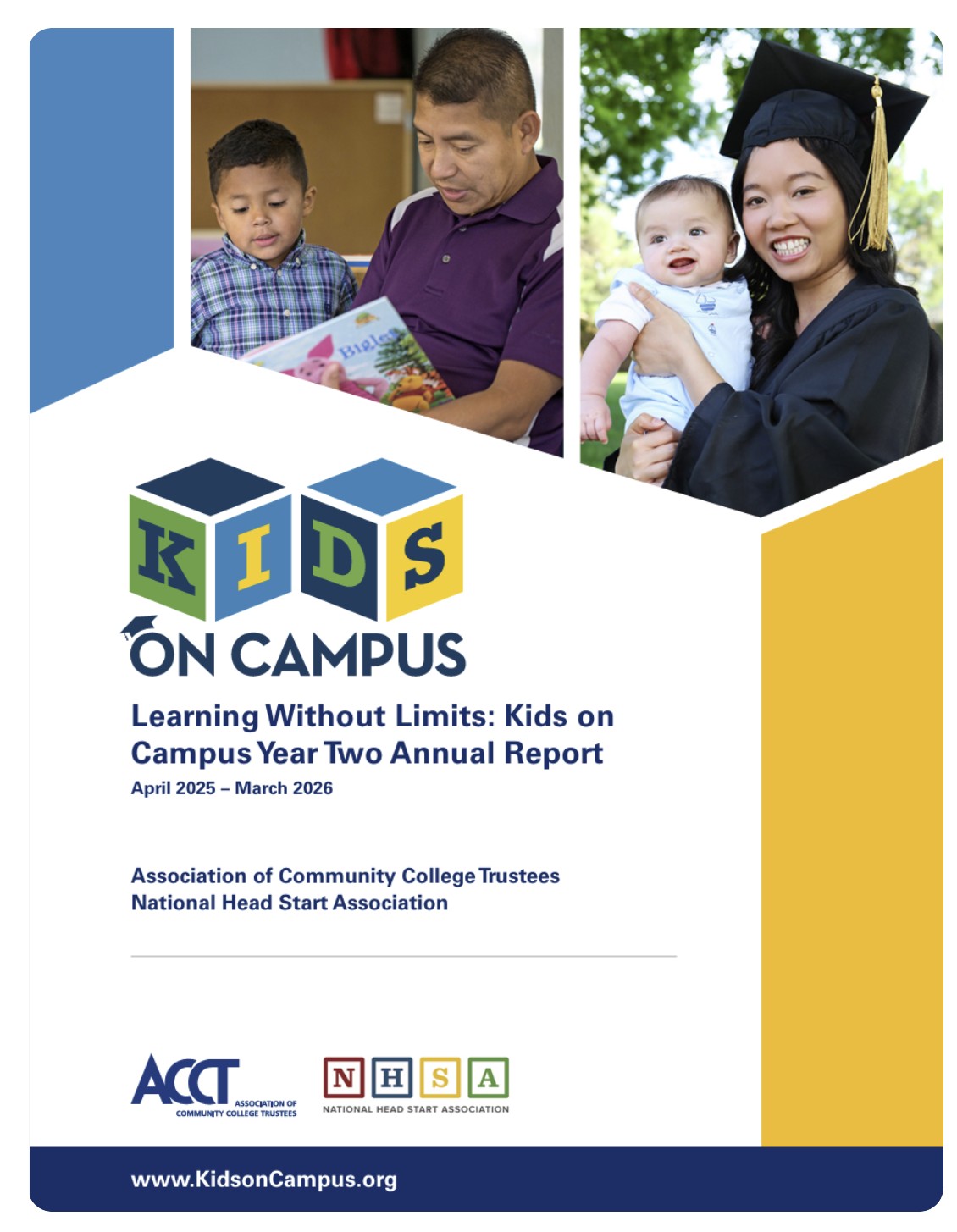
The Association of Community College Trustees (ACCT) and the National Head Start Association (NHSA) released the Year Two Annual Report of the Kids on Campus initiative, which advances the success of parenting students and supports the school readiness of young children from low-income backgrounds by expanding Head Start classrooms onto community college campuses. The five-year initiative aims to establish at least 50 such partnerships by 2030.
Nearly one in five undergraduates in the United States — approximately 3.14 million students — are parenting while pursuing their college education. For many, access to high-quality, affordable, and convenient child care remains one of the biggest barriers to completing their degree.
The initiative’s core philosophy is rooted in two of the most effective strategies for reducing poverty: providing high-quality early childhood education and increasing adult economic mobility through education, training, and workforce pathways. Together, these approaches support two generations simultaneously, strengthening children’s development while helping parents pursue long-term economic success.
“When we support parents, we uplift students,” says Francisco Solis, president of San Antonio College (TX), which has a long-standing partnership with Head Start. “When families thrive, our community thrives. This is the power of a two-generation approach.”
The annual report outlines the rationale behind ACCT and NHSA’s work, progress to date, next steps, and opportunities for community colleges and Head Start programs to engage with Kids on Campus.
As of March 2026, at the end of year two of the initiative:
- 110 community colleges and 130 Head Start programs have taken initial steps to connect and engage with Kids on Campus.
- Partners have identified 43 potential matches between community colleges and Head Start programs interested in exploring partnerships across 19 states.
Five new Kids on Campus partnerships have launched in California, Illinois, Massachusetts, Maryland, and Texas, with two additional partnerships in advanced stages of development in Texas.
“Before I found the Head Start on my college campus, it was extremely difficult,” says Cristina Medina, a student parent at Palo Alto College, one of the newest Kids on Campus launched sites. “I was on the edge of mentally and emotionally giving up because being a full-time mom while going to school and work was hard with no support.”
The initiative continues to grow nationwide through expanded partnerships, technical assistance, and collaborative efforts to strengthen on-campus child care and early childhood education opportunities for student parents and families.
The report profiles active partnerships and explores the benefits and barriers they face, financial considerations, model sustainability, advice from the field, and what is next for Kids on Campus.
To access the full report, go to kidsoncampus.org/annual-report.
ACCT and NHSA invite community colleges, Head Start programs, and philanthropic supporters interested in transforming outcomes for children and families to contact [email protected].
Kids on Campus is supported by ECMC Foundation, Imaginable Futures, Lumina Foundation, the Annie E. Casey Foundation, Trellis Foundation, Crimsonbridge Foundation, and Seldin Haring-Smith Foundation.
Association of Community College Trustees (ACCT) is a non-profit educational organization of governing boards, representing more than 6,500 elected and appointed trustees who govern over 1,000 community, technical, and junior colleges in the United States and beyond. ACCT fosters the principles and practices of exemplary governance while promoting high-quality and affordable higher education, cutting-edge workforce and development training, student success, and the opportunity for all individuals to achieve economic self-sufficiency and security. Visit www.acct.org for more information.
The National Head Start Association (NHSA) believes that every child, regardless of circumstances at birth, has the ability to succeed in school and in life. The opportunities offered by Head Start lead to healthier and empowered children and families and stronger, more vibrant communities. NHSA is the voice for more than 750,000 children, 250,000 staff, and more than 1,600 Head Start grant recipients in the United States. Visit nhsa.org or follow @NatlHeadStart to learn more.


San Diego’s Black Community & Why Unity Matters Now

Lower Loan Rates and Build Financial Confidence #shorts

How Community Leaders Are Tackling the Racial Wealth Gap #shorts

Leaving Home to Find Something Different #shorts

Financial Peace Starts With These Simple Saving Habits #shorts

Ask for HELP Before Taking a PREDATORY Business Loan #shorts

The EV Money Guide Every Black Buyer Needs #shorts

69th Annual GRAMMYs: See the Full List of Nominees!

Choose the Right School, Not the Biggest Name #shorts

Free Financial Coaching: Build a Plan for Your Future #shorts

Practitioners of African Traditional Spirituality Offer Ancestral Reverence Ritual Oct. 31

Tamiko Armstead | 2026 Lifetime Achiever in Education

HISTORY MADE: Keisha Lance Bottoms Becomes First Black Woman Elected Governor in American History

OP-ED: The Black Church Writes AI’s Next Chapter

Kickstarter CEO Everette Taylor Shares Tips on Creating and Growing a Business

BLACK MEN VOTE: Mobilizing 100,000 Black Men Ahead of the Midterms 📱

NFN live presents 🎙️ THE ROAD TO BEYOND IWDM 50: WE CANNOT STOP NOW! 8-Week Podcast

Black Household Wealth Plummeted 25% in Three Years, New Data Shows

Secretary of State Shirley Weber Pushes Back Against DOJ Demands Over California Voter Rolls

Columbus’s Oldest Businesses Still Open: 10 That Have Lasted 75+ Years
San Diego’s Black Community & Why Unity Matters Now
Lower Loan Rates and Build Financial Confidence #shorts
How Community Leaders Are Tackling the Racial Wealth Gap #shorts
Leaving Home to Find Something Different #shorts
Financial Peace Starts With These Simple Saving Habits #shorts
Ask for HELP Before Taking a PREDATORY Business Loan #shorts
The EV Money Guide Every Black Buyer Needs #shorts
Choose the Right School, Not the Biggest Name #shorts
Free Financial Coaching: Build a Plan for Your Future #shorts

Kamasi Washington at City Winery
-
 Black History1 week ago
Keisha Lance Bottoms to Govern State Where Her Great-Great-Grandfather Was Enslaved
-
 Black History7 days ago
Don’t Pass the Torch. Expand the Circle.
-
 Black Press3 days ago
OP-ED: Closing the Next Digital Divide — Communities of Color Must Have a Voice in the AI Future
-
 Black History1 week ago
Meet Scott Colom, the Mississippi Democrat Leading Tight Mississippi Senate Race
-
 Black Press1 week ago
Eight Black Women Win Georgia Statewide Offices
-

 Featured7 days ago
Democratic Leadership Under Fire, Maxine Waters Challenged & Tyler Perry’s New Political Role 📱
