
BlackPressUSA
‘Threat to Health Care and Civil Rights’ Judge Barrett Confirmed by GOP Senate
NNPA NEWSWIRE — “After refusing a Democratic nominee to the Supreme Court because an election was eight months away, they will confirm a Republican nominee before an election that is eight days away,” said Senate Minority Leader Chuck Schumer of New York, who is a Democrat.


By Stacy M. Brown, NNPA Newswire Senior National Correspondent
@StacyBrownMedia
Amy Coney Barrett, a conservative judge with a stated opposition to the Affordable Care Act and many Civil Rights laws, was confirmed on Monday, October 26, 2020, as the next Supreme Court Justice.
Only Maine Republican Sen. Susan Collins defected, while Democrats boycotted the formal vote.
“After refusing a Democratic nominee to the Supreme Court because an election was eight months away, they will confirm a Republican nominee before an election that is eight days away,” said Senate Minority Leader Chuck Schumer of New York, who is a Democrat.
“The Republican majority is lighting its credibility on fire. This hypocritical, 180-degree turn is spectacularly obvious to the American people. The American people will suffer the consequences of Judge Barrett’s far-right, out of the mainstream views for generations,” Schumer warned.
The high court now has three appointees of President Donald Trump and a 6-3 supermajority.
It also sets up a window for Trump to sabotage the General Election, one in which polls show he trails by double-digits heading into the final week of campaigning.
“In the crudest possible disparagement of Justice Ginsberg’s work, the Senate has continued its court-packing with the confirmation of far-right extremist Amy Coney Barrett to the U.S. Supreme Court. Not only an insult to the memory of a tireless advocate for human rights, outspoken protector of equality, and lifelong advocate for justice, the move is an unapologetic and hypocritical power grab by Trump and his co-conspirators in the Senate,” stated Marcela Howell, the president, and CEO of In Our Own Voice: National Black Women’s Reproductive Justice Agenda.
Among the issues the Supreme Court will soon hear are Pennsylvania ballot extensions.
Just two days before Barrett’s confirmation, the GOP in the Keystone State asked the U.S. Supreme Court to block a ballot receipt extension that would allow them to be counted if received within three days of Election Day – even if they do not have a legible postmark.
Three Wisconsin petitions are also before the court that concern Democrats who ask the justices to allow the counting of ballots six days after the election and whether COVID vulnerable voters and others in the state can secure replacement mail-in ballots via email.
Also, a Republican candidate for Minnesota’s 2nd Congressional District has asked the court to intervene in a case concerning whether his election takes place on November 3 or on February 9.
The controversy arose after the recent death of Legal Marijuana Now Party candidate Adam Weeks which caused the contest to be moved to next year as required by state law.
The court is preparing to hear whether a New York prosecutor will get access to Trump’s financial documents from January 2011 to August 2019, including his tax returns.
It’s believed Coney would side with Trump, raising concerns that if the high court has to decide the 2020 presidential election, the president will retain the office because he’s appointed Coney and two other justices: Neil Gorsuch and Brett Kavanaugh.
Schumer noted that abortion rights are also on the line.
Many believe Barrett’s confirmation signals the end of Roe v. Wade, the 1973 landmark Supreme Court decision.
In Mississippi, a federal judge struck down the law in November 2018, and the 5th U.S. Circuit Court of Appeals upheld the ruling late last year.
Republican Sen. Lisa Murkowski of Alaska said she believes Barrett would uphold Roe v. Wade.
“I believe that, given how she outlined, not only to me but how she spoke to the issue of reliance when she was before the committee, I believe that she will look at that and weight that in any matters in any cases that come before her that take up Roe v. Wade,” Murkowski said.
“I don’t see her overturning the decision in Roe v. Wade, based on based on the weighting of other reliance factors,” she added.
Another significant case facing the U.S. Supreme Court this fall is the Affordable Care Act’s fate, which Barrett has gone on record opposing.
With no replacement for the health care law – commonly known as Obamacare – it’s estimated that more than 22 million Americans will lose coverage. That number includes a large swath of African Americans and others with preexisting conditions.
“Without a replacement in place for Obamacare, the loss of this act will make things more difficult for those who need healthcare the most, in particular, the underrepresented and underserved communities, and those with preexisting conditions,” stated Dawon Hawkins, the Chief People and Training Officer for the health care startup Xcelrate UDI.
“Obamacare has provided affordable healthcare for millions of Americans, particularly 25 million Americans who will be left uninsured,” Hawkins continued.
“Under Obamacare, Medicaid eligibility expanded, enabling low-income uninsured adults to have healthcare access they desperately needed finally. This expansion greatly benefitted minority communities, who were otherwise unable to access healthcare services, let alone the ability to pay for healthcare.”
Losing coverage could also prove devasting for women and expecting mothers, shared Andrea Ippolito, a health tech expert and founder of SimpliFed, a company that assists mothers who breastfeed.
“Right now, under the Affordable Care Act, it is your right to have access to lactation support and counseling without cost-sharing for as long as you are breastfeeding. If the ACA gets struck down, the insurers will not be required to cover it, which could have devastating impacts on new parents,” Ippolito noted.
The confirmation earned the ire of American Federation of Teachers President Randi Weingarten.
“Just days before voters elect the next president, with nearly 60 million ballots already cast, Majority Leader Mitch McConnell’s Senate ignored the will of the people and installed another ideological soulmate for President Donald Trump on the Supreme Court,” Weingarten said in a statement.
“It’s a flagrant miscarriage of justice, and it flies in the face of our representative democracy. In fact, McConnell and Judge Amy Coney Barrett said so themselves, in 2016 when President Barack Obama nominated Merrick Garland to the Supreme Court nearly nine months before the presidential election.
“But, as usual, Senate Republicans have changed the rules and trampled on the voices of the very people who elected them. To them, it was never about appointing a qualified judge to simply apply the law; they want Barrett on the court because of her right-wing views on access to healthcare, reproductive rights and freedom, voting rights, LGBTQ equality, immigrant justice, criminal justice, disability rights, and other issues that make a difference in the lives of most people.
“This confirmation should frighten every person in this country who believes in fairness, rules and having a say in how we’re governed. Barrett’s lifetime appointment to the Supreme Court swings it in an extreme direction that does not reflect the American people’s values.
“Make no mistake: This Senate chose to fast-track a political process instead of passing COVID-19 relief and helping the millions of Americans struggling to find work and access care during this pandemic. This choice reflects a pattern of cruelty and neglect that should disqualify everyone from public office.
“But even under normal circumstances, Barrett’s record is enormously troubling. Throughout her brief career as a judge on the U.S. Court of Appeals, she ruled to undermine workers’ rights and against sexual assault survivors.
“At her confirmation hearing, she evaded questions on the right of Americans to have access to healthcare, Medicare and Social Security; she refused to acknowledge systemic racism, and she was not clear that discriminatory barriers in voting exist.
“Barrett even refused to acknowledge basic facts about our democracy – that presidents should commit to a peaceful transition of power, that voter intimidation is illegal, and that presidents cannot change the date of an election. Her judicial philosophy closes every door that Justice Ruth Bader Ginsberg ever opened.”








Black History
Hundreds of Black Christian Leaders Arriving in Israel for Martin Luther King-Inspired Mission
Hundreds of African American and African Christian leaders are visiting Israel for the ‘Unfinished Business Pilgrimage,’ inspired by Dr. Martin Luther King’s plans for a pilgrimage in 1967 that was canceled due to the Six Day War. The event aims to promote pro-Israel sentiments amidst rising antisemitism and will expand to thousands of participants in 2027. Pastor Dumisani Washington emphasizes the importance of Black Americans recognizing their role in supporting Israel. Pilgrimage leaders are also delivering gifts to victims of recent violence, reiterating the historical bond between Jewish and Black communities in advocating for justice. Pastor Michael A. Stevens highlights the need for education against antisemitism while suggesting that Israel should be more attuned to issues affecting Black lives.

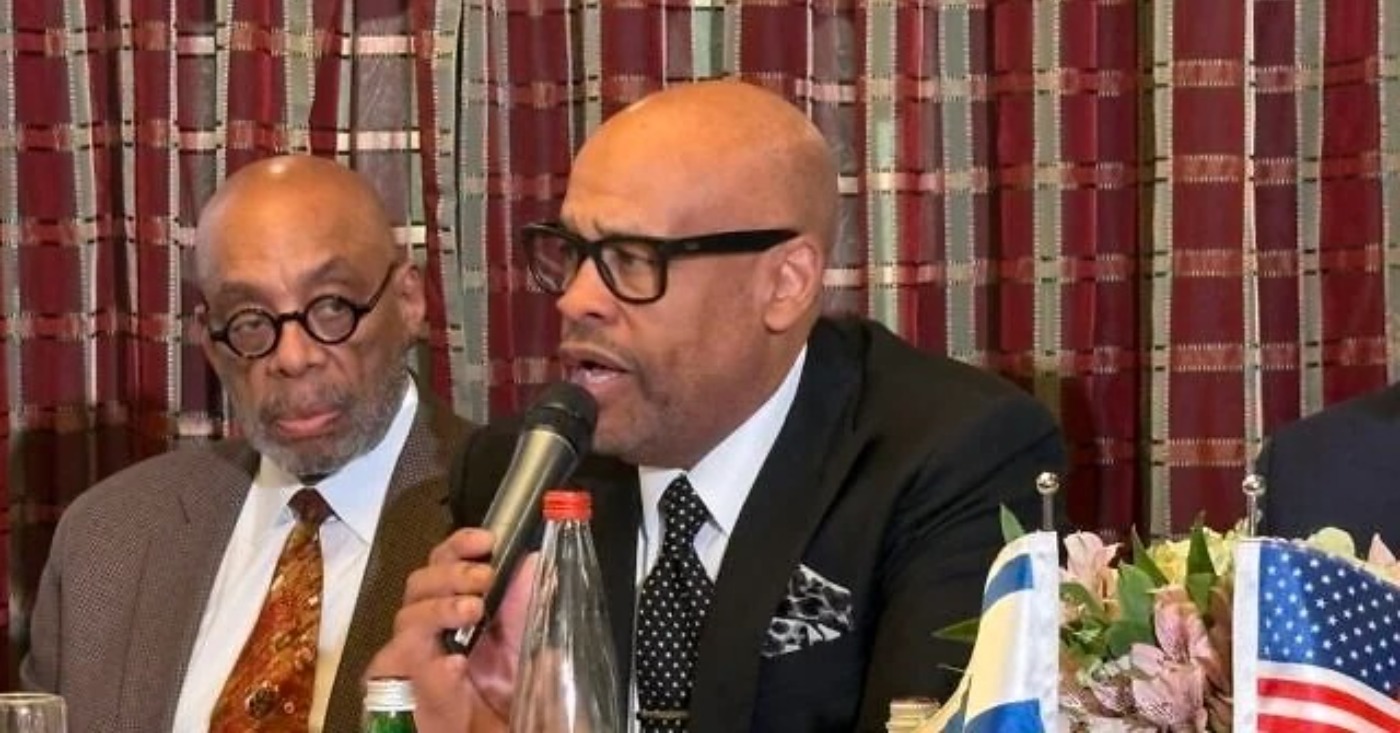
As support for Israel declines precipitously in the US, hundreds of African-American and African pastors and Christian leaders are arriving in Israel this week for a mission inspired by the slain US civil rights leader Rev. Dr. Martin Luther King.
King planned to bring thousands of pilgrims to Israel and Jordan in 1967, but that trip was postponed because of the Six Day War and the political implications of such a trip. He said he would look into coming the next year, but was assassinated in April 1968.
“There were no mass pilgrimages” back then, says Pastor Dumisani Washington, a pro-Israel activist, at a press conference in Jerusalem. “We as Black Americans recognize that Black Americans were about to start something that no one else was doing.”
The “Unfinished Business Pilgrimage” will expand to thousands of participants next year, say organizers, to mark 60 years since King’s planned visit.
“We felt a burden in our heart,” Washington continues. “We see the rising antisemitism on the right and on the left.”
There is a “mountain of support rising from the Black church,” says Pastor Michael A. Stevens, Sr.
The leaders of the pilgrimage present gifts to victims of the Hamas-led October 7, 2023, massacre, including freed hostage Elkana Bohbot; Hila Abir, whose brother Lotan was murdered at the Nova music festival; and Daniel Lischinsky, whose son Yaron was murdered alongside his fiancée Sarah Milgrim at an Israeli embassy event in Washington, DC.
Ther rest of the participants arrive tomorrow, and will visit biblical sites across the country, as well as the site of the Nova massacre.
Steven says that Jewish and Black Americans had a tradition of coming together to “establish what was right, and to set the tone for the nation and for the world.”
“If anyone should stand with our Jewish brothers and sisters, it ought to be African-Americans, it ought to be Africans,” he continues.
Though rates of antisemitism have risen among people of color, Stevens tells The Times of Israel, “I still think we are the lowest-hanging fruit to educate and to learn.” He says, “The African-American Church is still the most influential institution in all of America, in fact, at least in the Black community.”
Stevens says one of the objectives of the mission is to spread awareness that “we cannot have antisemitism in our culture, period.”
At the same time, he says that Israel could improve its approach to Black America: “I believe Israel could be more attentive to the fact that a lot of the loss of lives that we see looks like us. Whether it’s in Gaza, whether it’s Ethiopians and racism.”
Reverend Dr. Benjamin F. Chavis. Jr. is on this delegation representing the Black Press of America and Spill the Honey as a present-day fulfillment of the dream and prior plan of Reverend Dr. Martin Luther King, Jr in 1967 to lead a 5000 Black Clergy Pilgrimage to Israel.
Black History
Christianity’s Racial History
THE POSITIVE COMMUNITY — Historian and author Jemar Tisby is challenging the traditional narratives of American religious history through his acclaimed work, The Color of Compromise. His research provides a comprehensive examination of how Christian institutions have historically participated in, accommodated, or resisted racial injustice from the colonial era to the present day.
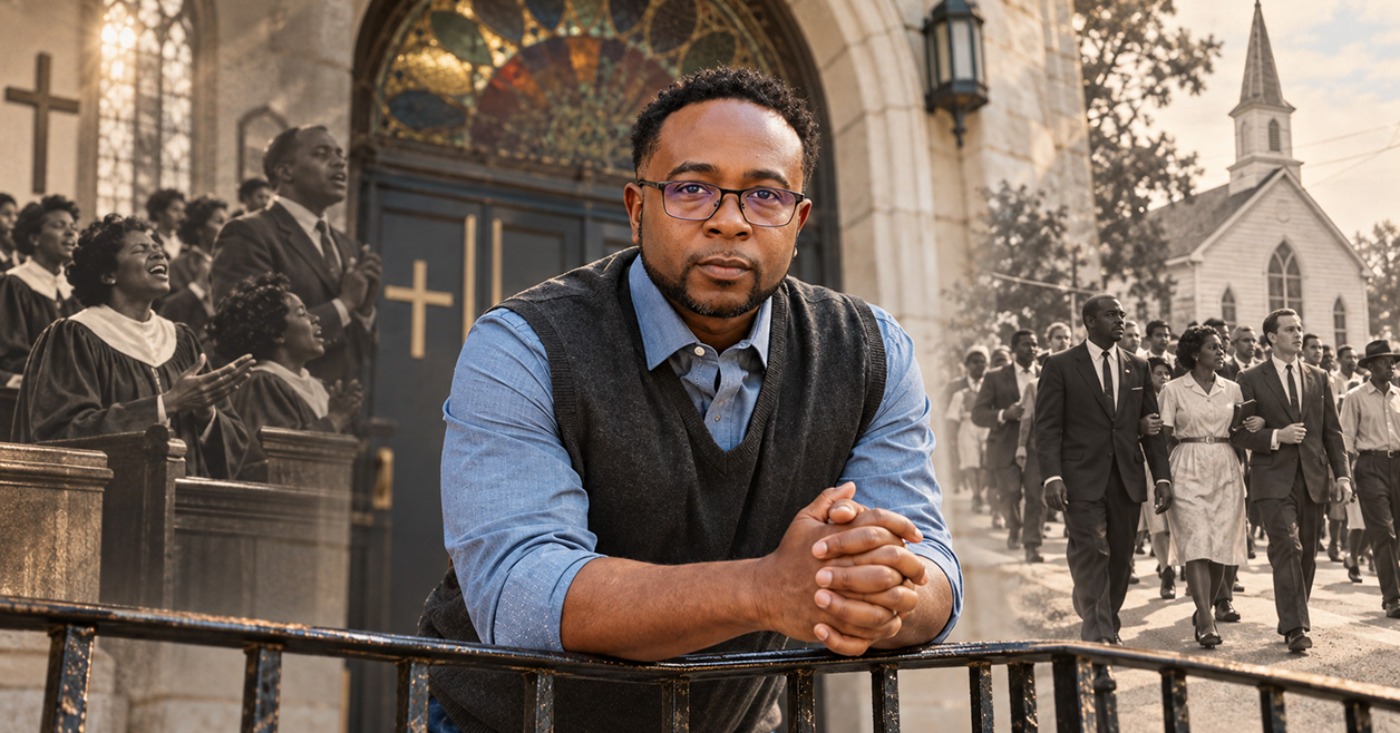
Jemar Tisby is a historian, author, and public speaker whose work examines the relationship between Christianity, racism, and American history. Through his writing, he challenges readers to reconsider the role religious institutions have played in shaping racial attitudes and social structures. His widely recognized book, The Color of Compromise: The Truth About the American Church’s Complicity in Racism, explores how Christian churches have participated in, accommodated, and sometimes resisted racial injustice throughout American history. Tisby’s work encourages readers to examine the past honestly and consider what meaningful change requires today.
One of the central arguments in The Color of Compromise is that racism in America cannot be understood without examining the influence of religious institutions. Christianity has often been associated with messages of love, justice, compassion, and equality. Yet churches and Christian leaders have sometimes supported systems that denied African Americans their freedom and dignity. Tisby examines this contradiction, demonstrating how religious beliefs and institutions could be used to justify racial oppression rather than challenge it.
The book takes readers back to the era of European colonization and slavery, when religious arguments were frequently used to defend the enslavement of Africans. Some Christian leaders claimed that slavery was compatible with biblical teachings, while others used Christianity to encourage resistance to the institution. Enslaved Africans developed their own spiritual traditions, drawing strength from their faith while enduring violence, separation from family, and the denial of basic human rights. Tisby highlights the importance of understanding how Christianity became intertwined with the development of American slavery.
Tisby also explores the role of churches during the Civil War and Reconstruction. Although emancipation ended legal slavery, it did not eliminate racial prejudice or the struggle for equal citizenship. Some religious communities supported efforts to educate formerly enslaved people and establish independent Black institutions. Others tolerated or defended segregation and white supremacy. The period demonstrates how Christian institutions faced a choice between challenging racial injustice and preserving existing social arrangements.
Another important subject in the book is the relationship between Christianity and Jim Crow segregation. During the late nineteenth and early twentieth centuries, racial segregation became deeply embedded in American society. Many churches reflected the same divisions, maintaining separate congregations and unequal opportunities for worship and leadership. Tisby argues that compromise occurred not only when Christians openly defended racism but also when they remained silent or accepted discriminatory practices to avoid conflict. This distinction is essential to understanding the book’s central message.
The civil rights movement provides another significant chapter in this history. Black churches played a vital role in organizing demonstrations, supporting community leadership, and providing spiritual encouragement to people fighting racial discrimination. Figures such as the Reverend Dr. Martin Luther King Jr. drew upon Christian teachings to challenge segregation and demand equal rights. However, not all white Christian congregations supported the movement. Tisby examines the difference between those who actively opposed racism and those who hesitated to challenge the racial status quo.
A major strength of Tisby’s writing is his attention to the difference between individual prejudice and institutional racism. A person may believe in treating others fairly while participating in organizations or traditions that produce unequal outcomes. Similarly, a church may preach love and acceptance while failing to confront discriminatory practices within its own community. Tisby encourages Christians to look beyond personal intentions and examine the consequences of their actions, their institutional policies, and their willingness to address injustice.
The book also challenges contemporary Christians to consider how the legacy of racial compromise continues to affect American religious life. Questions about church leadership, worship communities, racial representation, education, and public policy remain important. Tisby argues that acknowledging historical wrongdoing is not about assigning personal guilt to every modern Christian. Rather, it is about understanding how past decisions shaped the present and recognizing the responsibility to pursue greater fairness, accountability, and inclusion.
Tisby’s work has become an important contribution to conversations about race and religion because it asks readers to move beyond comfortable narratives about American Christianity. His historical approach encourages people to examine uncomfortable evidence, listen to the experiences of African Americans, and recognize the difference between professing moral principles and practicing them. The book also raises questions about what genuine reconciliation requires, emphasizing that meaningful progress involves more than expressions of goodwill. It requires a willingness to confront injustice and make changes that reflect the values Christians claim to uphold.
Ultimately, The Color of Compromise is a call for historical honesty, moral reflection, and meaningful action. Jemar Tisby challenges churches and individual believers to understand how Christianity has been used both to support oppression and to inspire resistance against it. His message is especially relevant in a society still wrestling with racial inequality and the consequences of its history. By examining the past with courage and integrity, readers can better understand the responsibilities of faith in the present. The book reminds us that the true test of religious conviction is not simply what people profess to believe, but whether their actions reflect justice, compassion, and respect for the dignity of every human being.
Based on reporting by The Positive Community.
Black History
Learn Black History and Win Your Next Game Night
INDIANAPOLIS RECORDER — Dr. Maxine Bryant, a culture keeper and professor, is combatting book bans and historical inaccuracies through the launch of GriotSpeaks: The Game. The new board game is designed to celebrate the African diaspora by incorporating elements of geography, literature, music, and the Gullah Geechee culture.

Maxine Bryant, Ph.D., creator and founder GriotSpeaks, is sharing the history of the African diaspora through her new board game.
Bryant often quotes the African proverb: “Until the lion tells the story, the hunter will always be the hero.” She said for the hunter has been telling the story of the African diaspora for “far too long.”
The game is based in African culture. The spaces on the board feature the countries of the African diaspora and it uses gold bars and cowrie shells as currency while special game spaces showcase symbols such as the Sankofa bird, a pyramid and an Ankh.
Bryant, a culture keeper and educator, created the game to add a bit of fun to her ongoing mission of dispelling myths and sharing accurate history. She used the history lessons she taught over the years as the foundation for the game’s trivia questions. Bryant said she is even more motivated to correct the inaccurate narratives due to recent book bans and efforts to minimize or omit the contributions of Black people.
“We can’t tell our story if we don’t know our story,” Bryant said.
History buffs may start the game with a slight advantage, but even players with limited knowledge have a chance to win with some strategic play. During one game demonstration, she said, an 11-year-old beat her with the clever use of one of the game’s wild cards.
Bryant’s goal is for people to learn new information while having a good time with one another. She sat down with the Recorder to share her inspiration for the game and how she hopes it will influence the culture.
This interview has been edited for length and clarity.
What was the inspiration for creating a game?
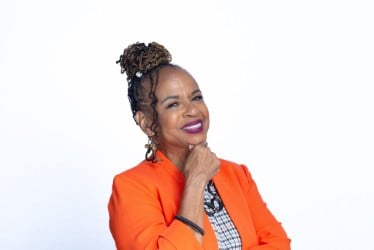
Maxine Bryant: In all honesty, God gave me the vision for the game.
I put that board game together the way God showed me in in this vision, if you will, it was to be educational, informative, and entertaining. And so, I knew I wanted it to encompass all of the diaspora and with the educational part of it. Since I am a professor, it needed to encompass the critical areas of our history.
So, it’s geography; it’s the resistance, the protest — all of that. It’s … literature, music, the Gullah Geechee culture, storytelling, the whole gamut, and then Black people.
What are some of the things people are surprised to finally learn while playing the game?
Bryant: The genius of Black people.
Many people know Madam C.J. Walker, although I’m finding out that not everybody does. But one of the questions (asks about) who invented the hot comb? Everybody thinks Madam C.J. Walker, but no, that was not her thing. Her thing was hair care and strengthening hair. It was a man (Walter H. Sammons) who created the hot comb. So, people are amazed at what they’re learning.
How do you hope that this new knowledge helps people see the world?
Bryant: So, what I hope people learn is our true history, the history of our struggle, and our resistance, the history of our greatness, and information about our culture. That positions us then to be able to stand tall in knowledge of self.

One of the things I wholeheartedly believe in is that little Black boys and little Black girls who grow up with the message that you are nothing because you are Black … it’s easy for me to take you out. But if I look at you and I know that you’re great and I’m great, I may just have a different kind of level of respect for you.
I think that having a sense of self can impact how I look at myself and how I look at people who look like me.
Is there anything else you want to share?
Bryant: In my mind, this game is a must-have. It is so unique. Now, within the culture, we have trivia games and usually they’re trivia about sports or about entertainment and some about history, right? And usually, it pertains to people in the United States or events in the United States, culture in the United States.
This game contains movement around a physical board like Monopoly, but it also encompasses the entire African diaspora so it’s not just the United States. People who played this game tell me … they’ve never seen anything like it.
GriotSpeaks: The Game is best suited for players 17 and older. The game is available for purchase through Amazon or at the GriotSpeaks website.
Contact Editor-in-Chief Camike Jones at 317-762-7850.
The post Learn Black history and win your next game night appeared first on Indianapolis Recorder.
Based on reporting by Indianapolis Recorder.
Black Press
DOJ Fights to Keep Rep. Ilhan Omar’s Search Warrant Sealed: Report
GARLAND JOURNAL — Federal prosecutors are petitioning a U.S. District Court to maintain the seal on a search warrant and related records following an FBI search of Rep. Ilhan Omar’s Washington, D.C., home.

Federal prosecutors are trying to keep sealed the search warrant and related records from and FBI search of Rep. Ilhan Omar’s Washington, D.C., home earlier this month.
According to The Washington Post, a coalition of more than a dozen media organizations, including the Post, is seeking access to the warrant and related records. U.S. District Judge James Boasberg, an appointee of former President Barack Obama, is overseeing the dispute.
In a Tuesday (October 27) court filing, U.S. Attorney Jeanine Pirro argued that the request was premature because investigators are still reviewing evidence seized during the October 12 search and have not decided whether to file charges or whom to charge.
“This request sounds rash because it is rash,” Pirro wrote, according to The Hill. She argued that releasing the records could expose investigative sources and compromise the probe.
“Unsealing everything now imperils the investigation,” the Justice Department wrote, according to the Post.
The media organizations argue that the warrant application and supporting affidavit could reveal the investigation’s targets, the evidence investigators have gathered, and how the probe began, according to the Post.
The October 12 search was part of a federal investigation into allegations that Omar or members of her family misrepresented information on immigration paperwork. The congresswoman has denied wrongdoing and accused the Trump administration of politically targeting her.
As BIN previously reported, the Trump administration has also explored whether Omar could be stripped of her U.S. citizenship.
During an MS NOW interview on Wednesday (October 21), Omar announced plans to move out of her Washington residence, citing safety concerns after the search made her address public.
According to The Washington Post, prosecutors said in the filing that they may not oppose releasing some warrant records, with appropriate redactions, once the warrant has been fully executed and a public charging decision has been announced.
The Black Information Network is your source for Black News! Get the latest news 24/7 on The Black Information Network. Listen now on theiHeartRadio appor clickHEREto tune in live. In this article:DOJ Fights To Keep Rep. Ilhan Omar’s Search Warrant Sealed, U.S. District Judge James Boasberg
Based on reporting by Garland Journal.
Black History
Five Hospitals Said No! Who Will Help Annette Henry Recover?
Annette Henry, a 67-year-old Oakland woman, is struggling to access essential medical care after a devastating stroke left her with a rare neuropathic pain syndrome. Despite medical documentation confirming her need for inpatient rehabilitation, five different Bay Area hospitals have denied her admission, often citing her inability to meet rigid therapy thresholds. Her family’s efforts to seek intervention from state and federal lawmakers have yielded no results, leaving Henry at home without a clear path to recovery. To see how these systemic failures are impacting her health, read more.
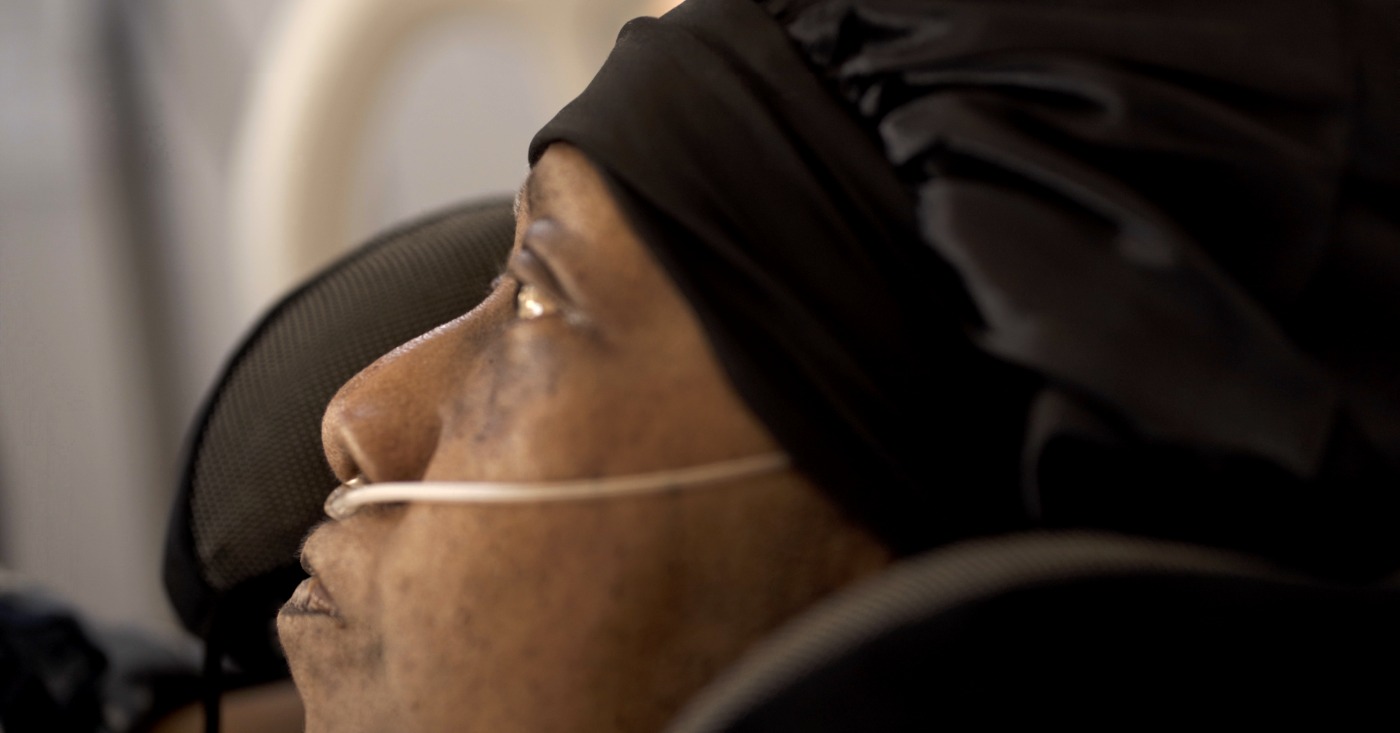
A tangle of red tape and contradictions between health providers and Medicare rules have impeded an Oakland woman’s ability to recover from a stroke she had last year.
Her family – who are her caretakers – have reached out to various professionals and state and federal lawmakers for help to no avail.
At 67, Annette Henry needs inpatient stroke rehabilitation after a devastating stroke in May 2025. Since then, multiple Bay Area hospitals have denied it. She was accepted into a rehabilitation facility in June 2025 but discharged prematurely in July, in essentially the same condition.
Three hospitals where she was a patient pushed skilled nursing over inpatient rehabilitation. Two more declined referrals.
Now at home, Henry is caught in a system that measures her need for treatment against the limitations treatment should address.
Medical professionals have documented her need for a higher level of care.
In August 2025, a Medicare Quality Improvement Organization (QIO) overturned Henry’s discharge from an inpatient rehabilitation facility (IRF).
The QIO’s independent physician reviewer found she had not received the “intensive therapy program outlined on admission,” according to the Aug. 30, 2025, determination letter. Yet the decision did not secure her readmission or guarantee continued rehabilitation.
Henry has central post-stroke pain, a rare neuropathic pain syndrome that can make movement and touch intensely painful. Her pain specialist recommended inpatient rehabilitation alongside pain management.
Nevertheless, facilities have cited her inability to tolerate three hours of daily therapy as a reason to deny inpatient rehabilitation.
That practice raises questions about Medicare coverage policy. In Hooper v. Sullivan, No. H-80-99 (D. Conn. 1989), the court recorded the parties’ agreement that denials based on numerical utilization screens, diagnostic screens, treatment norms, the “three-hour rule,” or other “rules of thumb” were not appropriate.
CMS subsequently cited Hooper in its Aug. 7, 2009, final rule (74 Fed. Reg. 39762, 39794). The policy is also addressed in the Medicare Benefit Policy Manual, Chapter 1, Section 110, and CMS’s June 1 Review Choice Demonstration for IRF Services: Operational Guide.
These authorities underscore the need for individualized assessments rather than rigid numerical thresholds.
The central contradiction is stark: the pain and disability that make rehabilitation necessary have been cited as reasons to deny it. UCSF Stanyan’s April 7 discharge summary for Henry states that acute rehabilitation unit (ARU) placement was declined for “inability to tolerate three hours of therapy daily.” Without appropriate treatment, Henry risks further decline.
Her records document complications associated with prolonged immobility.
Orthopedics documented flexion contractures of the small and ring fingers on March 19.
Chest imaging on April 1 showed bibasilar dependent atelectasis, a condition involving reduced inflation of the lower portions of both lungs. These concerns can be examined through her medical records and photographs.
“What does a ‘not reasonable’ discharge look like?” her family asks. For them, it looks like an appeal decision recognizing a problem without ensuring a remedy: repeated referrals, denials and a patient still without the rehabilitation her treating professionals have recommended.
The family has sought help from the California Department of Public Health and the federal Office for Civil Rights to no avail. They contacted U.S. Rep. Lateefah Simon in June 2025, while Henry was in rehabilitation; Senator Alex Padilla in May 2026; and Senator Adam Schiff in September 2026.
DeCuir says the family received no meaningful assistance and was redirected to the QIO or advised working with a social worker after Henry had already been discharged.
The consequences extend beyond rehabilitation. The family reports that Henry has struggled to attend in-person specialist or any appointments and needs in-person evaluation and treatment for complications, recommended evaluations, health screenings and preventive care.
Her mobility limitations have become barriers to broader medical care. Every office tells her their office is not set up to accommodate her. This has happened with specialty care, out-patient services, screenings and physical therapy.
Henry is a Black woman on Medicare, and her family believes her experience raises concerns about unequal access to intensive rehabilitation. Research has documented disparities in discharge to inpatient rehabilitation rather than skilled nursing, underscoring the importance of individualized review.
CMS, state regulators and healthcare providers should examine Henry’s records, assess her needs on their clinical merits and explain how the applicable coverage standards were applied, and whether they are being enforced.
Rehabilitation is not a reward for patients who can already tolerate treatment. It is care intended to help people recover function. Henry’s case asks whether a system designed to support recovery can leave a patient without a path to it.
Black Press
Oakland NAACP, BWOPA Speak Out Against Alleged Harassment of Black Women Political Leaders
The Oakland NAACP and the Oakland/Berkeley chapter of Black Women Organized for Political Action have issued a joint statement condemning a pattern of harassment, intimidation, and discrimination directed at Black women in politics. Leadership from both organizations noted that these concerns reflect a rise in online hostility and political attacks against public servants. The allegations emerged amid a contentious race for the Oakland Unified School District Board of Education, prompting a public debate over accountability and political conduct. Read more to learn how the involved parties have responded.

The Oakland branch of the NAACP and the Oakland/Berkeley chapter of Black Women Organized for Political Action (BWOPA) have issued a joint statement condemning what they describe as harassment, intimidation and discrimination targeting Black women in politics.
Founded in 1968, BWOPA is a California-based nonprofit advocacy and membership organization that is focused on increasing Black women’s participation and influence in the political process.
Danielle Motley-Lewis, president of BWOPA’s Oakland/Berkeley chapter, told California Black Media (CBM) that the statement reflects growing concerns about online hostility and political attacks directed at Black women candidates, elected officials and public servants.
“These allegations deserve serious attention and should not be dismissed as ordinary political disagreements,” the organizations said in their statement.
The concerns have surfaced amid a contentious race for the Oakland Unified School District (OUSD) Board of Education’s District 6 seat, where candidate LeAna Powell has reported experiencing harassment during her campaign.
Powell is running against Alexandra Williams and incumbent Valarie Bachelor, the school board’s vice president. All three candidates are Black women.
Motley-Lewis said the organizations’ statement addresses concerns extending beyond the school board contest, although Powell’s experiences helped bring the issue into focus.
“I could only speak to what I witnessed on social media. There were various types of harassment online,” Motley-Lewis said of the back-and-forth about the candidates online.
“It was unnerving.”
Powell, a former aide to former Oakland Mayor Sheng Thao, previously filed an informal complaint with the Oakland Public Ethics Commission alleging that Thao, then a City Council member, pressured city employees to work on her mayoral campaign.
Thao was recalled in November 2024 and left office Dec. 17 of that year. She subsequently faced federal charges related to an alleged bribery scheme. The criminal proceedings are separate from the dispute involving Powell’s school board campaign.
Powell also filed a complaint with the NAACP concerning what she described as harassment during her campaign.
Among those publicly criticizing Powell is Brandon Harami, a former Oakland mayoral staffer and LGBTQ+ advocate who said he previously worked with Powell in Thao’s office.
In a Sept. 27 Facebook post, Harami questioned Powell’s qualifications, judgment and political associations.
“District 6 candidate for School Board LeAna Powell does not have the maturity nor spine required to be on the school board,” Harami wrote.
Motley-Lewis said the organizations had documented or witnessed conduct they considered troubling, although she emphasized that their concerns were not limited to Harami or Powell.
Harami has denied the allegations and accused the organizations of misrepresenting his conduct.
In an Oct. 11 Instagram post, he called the joint statement a political smear and demanded that BWOPA and the Oakland NAACP retract it.
He argued that the organizations’ characterization of his actions unfairly portrayed him as having a history of harassment and discrimination. He also contended that the allegations were being used to silence LGBTQ+ voices.
Motley-Lewis said she declined Harami’s request for a retraction because the statement addressed a broader pattern of conduct affecting Black women in politics.
“I was open to brokering that conversation. However, (Harami) was unwilling,” Motley-Lewis said. “He did reach out to BWOP to retract our statement, and I advised him that I would not be doing that. The statement that he was included in (addressed) a broader problem that is experienced by various women.”


Hundreds of Black Christian Leaders Arriving in Israel for Martin Luther King-Inspired Mission

Choose a Deductible You Can Actually Afford #shorts

Election Day Voting in Bakersfield

Sunnyside Capital Plan

What is the plan for success post-midterms?

Vietnam: A Black veteran’s ‘Soldiers Story’

News Observer Weekly — November 4, 2026 | Top 5 Stories of the Week
How to Turn Your App Idea Into a Profitable Business With Amanda Spann

Test the Enclave’s Sunroof Before You Buy #shorts

A NEW CHAPTER IN AMERICAN POLITICS 📱

All Skinfolk Ain’t Kinfolk

Practitioners of African Traditional Spirituality Offer Ancestral Reverence Ritual Oct. 31

A $2.1 Trillion Wellness Industry Never Built a Daily Practice for Black Children. So This Atlanta Family Did.

Latinas Deserve Equal Pay. Unions Help Make It Happen.

Oakland Awarded More than $14 Million in State Funding

Tamiko Armstead | 2026 Lifetime Achiever in Education

Montclair Brewery: Brewing Culture, Community, History

Should You Have to Pay to Hear the Gospel?

Master P Encourages Norwood Elementary Students to Dream Big, Work Hard

OP-ED: The Black Church Writes AI’s Next Chapter
Choose a Deductible You Can Actually Afford #shorts
Election Day Voting in Bakersfield
Sunnyside Capital Plan
What is the plan for success post-midterms?
Vietnam: A Black veteran’s ‘Soldiers Story’
News Observer Weekly — November 4, 2026 | Top 5 Stories of the Week
Test the Enclave’s Sunroof Before You Buy #shorts
A NEW CHAPTER IN AMERICAN POLITICS 📱

A NEW CHAPTER IN AMERICAN POLITICS

What Dexter McCoy victory means for Black Ft. Bend Co.
-
 Black Press1 week ago
Secretary of State Shirley Weber Pushes Back Against DOJ Demands Over California Voter Rolls
-

 Art1 week ago
Capturing Black Life’s Beauty
-

 Black History1 week ago
Retirement Triggers Doctor to Pen Book for Young Audience
-

 Featured2 days ago
Multi-Faith Leaders Representing 10 Million People Launch National Anti-Authoritarian Initiative
-

 Black History1 week ago
Oakland Honors 60 Years of the Black Panther Party at the All Power to the People Gala
-

 Black Press1 week ago
Fatigue, Bloating, and Inflammation: Spotting the Subtle Signs of MASLD

