
Health
Thief Fakes Heart Attack So Friend Can Steal Toys


This May 28, 2013, file photo, shows a sign outside a Wal-mart store in Duarte, Calif. (AP Photo/Damian Dovarganes, File)
LAKE WALES, Fla. (AP) — Authorities say a man faked a heart attack inside a Florida Wal-Mart store so his friend could steal toys.
The men — 30-year-old Tarus Scott and 27-year-old Genard Dupree — were arrested Tuesday on grand theft charges.
The Polk County Sheriff’s office says the men filled a shopping cart with a motorized power wheel Barbie car, Leap Frog tablet and a Barbie Glam vacation house. They walked through the store together.
Video surveillance shows Dupree on the floor near the store entrance, clutching his chest. As concerned citizens checked on him, Scott walked out of the store with the cart. Once Scott was outside, Dupree got up and walked out. They left in a silver SUV, but deputies caught up with them.
It’s not known whether they have attorneys.
Copyright 2014 The Associated Press. All rights reserved. This material may not be published, broadcast, rewritten or redistributed.








Black Press
Allen Temple Baptist Church Hosts Free Prostate Cancer Screenings on Oct. 17
The summit’s mission is to reduce the impact of prostate cancer through education, early detection, research, and support. It is presented in partnership with The Oakland Institute of Health, Inc., SCAN, Brotherhood of Elders Network, UCSF Helen Diller Family Comprehensive Cancer Center, Alameda County Public Health Department, Stanford Medicine Cancer Center, Impact Oakland Now, Bay Area Umoja Health, Bay Area Black Nurses Association, Inc., and 100 Black Men of the Bay Area, Inc.

The Prostate Cancer 2500™ Care Summit brings together health systems, community organizations, and survivors to put early detection within reach
Black men in America are diagnosed with prostate cancer more often than other men and are about twice as likely to die from it. Early detection changes that outcome.
On Saturday, Oct. 17 from 10 a.m. to 2 p.m., Allen Temple Baptist Church will host the Prostate Cancer 2500™ Care Summit (#PC2500), a free event open to the entire community.
. Attendees can receive prostate cancer screenings and health consultations on site, learn about prevention and nutrition, ask medical experts questions in an interactive Q&A, and hear from survivors who will share their stories and offer support.
Screening is recommended beginning at age 45, and at age 40 for Black men with a family history of prostate cancer. All men are welcome, and families are encouraged to attend.
The summit’s mission is to reduce the impact of prostate cancer through education, early detection, research, and support. It is presented in partnership with The Oakland Institute of Health, Inc., SCAN, Brotherhood of Elders Network, UCSF Helen Diller Family Comprehensive Cancer Center, Alameda County Public Health Department, Stanford Medicine Cancer Center, Impact Oakland Now, Bay Area Umoja Health, Bay Area Black Nurses Association, Inc., and 100 Black Men of the Bay Area, Inc.
For more information prior to the event, reach out to Rev. Charlotte Y. Williams at (510) 604-5242 | [email protected]
For more information on the day of the event, reach out to Deacon Dwight Williams (510) 501-1650 [email protected]. The church is located at 8501 International Blvd., Oakland, CA 94621 The service is free and free parking and refreshments will be provided. The site is accessible to persons with disabilities. To pre-register, go to Allen-Temple.org
Allen Temple Baptist Church was organized in 1919 in Oakland. For 107 years, ATBC has served as a bright beacon of faith, hope, and love beyond its’ four walls. Allen Temple is committed to sharing the love of God and the message of Good News throughout the world. We welcome people of all ages and cultural backgrounds as we joyfully celebrate worship and fellowship, and carry out ministries of evangelism, discipleship, education, community outreach, and global missions. Allen Temple’s holistic, prophetic and social justice ministries address the needs of the whole person as well as the whole community. Dr. Jacqueline A. Thompson.
Rev. Charlotte Y. Williams is the minister and director of Communications at Allen Temple Baptist Church.
Art
Houston’s ‘call Me Mother’ Exhibit Opens Today, Spotlighting Black Maternal Health
AFRICAN-AMERICAN NEWS AND ISSUES – DALLAS — The Health Museum in Houston today opens “The Call Me Mother Experience,” an exhibition spotlighting Black maternal health through art and personal storytelling. Curated by Houston’s first Black poet laureate, Deborah D.E.E.P. Mouton, the project originated from her own poem written during a miscarriage.

HOUSTON — A new exhibition opening Sunday, Oct. 4, at The Health Museum is bringing Black maternal health into public view through art and personal storytelling.
The Call Me Mother Experience will be on display through Feb. 28, 2027. The museum lists a preview reception today from 3 to 5 p.m. at 1515 Hermann Drive, with tickets priced at $5 for members and $15 for nonmembers.
A personal story becomes a community conversation
According to the museum, founder, curator and lead artist Deborah D.E.E.P. Mouton developed the project from a poem she wrote during a miscarriage. The installation combines films, recorded interviews, visual artwork and contributions created with community members.
Mouton, Houston’s first Black poet laureate, discussed the exhibition and her connection to its subject in an Oct. 1 appearance on KPRC’s Houston Life. The station described the project as addressing the unequal burden of pregnancy-related illness and death faced by Black women in Harris County.
An announcement distributed by the Call Me Mother Experience says the initiative will also reach community locations and faith-based organizations across Greater Houston. Those additional settings are intended to extend the conversation beyond a museum visit.
What visitors can expect
The museum says reception guests can explore the exhibit, hear the curator and meet participating artists. Reception admission includes general museum entry; refreshments are available while supplies last.
The featured image accompanying this article is an original illustrative concept, not a photograph of the exhibition or its artwork.
Sources and visitor information:The Health Museum exhibition listing; preview reception details and tickets; KPRC Houston Life; organizer announcement.
The post Houston’s ‘Call Me Mother’ Exhibit Opens Today, Spotlighting Black Maternal Health appeared first on African American News and Issues.
Based on reporting by African-American News and Issues – Dallas.
Black History
Morehouse School of Medicine Fall Convocation Has Strong Ties to Nashville
TENNESSEE TRIBUNE — Morehouse School of Medicine recently held its 42nd Fall Convocation and White Coat and Pinning Ceremony, which highlighted strong connections to Nashville. Dr. Valerie Montgomery Rice, in her 12th year as president and CEO, leads the institution, which welcomed 355 new students.
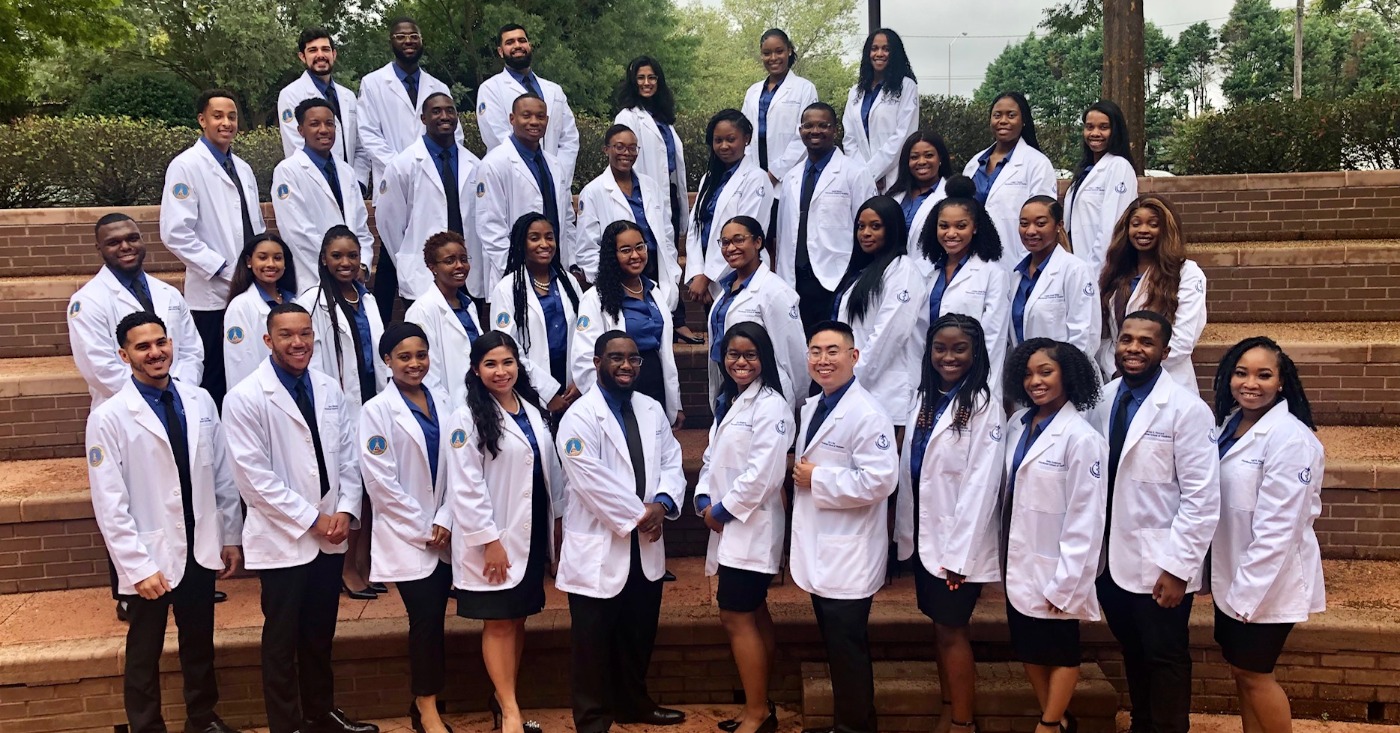
Morehouse School of Medicine held its 42nd Fall Convocation and White Coat and Pinning Ceremony on September 18, and it featured strong ties to Nashville. Dr. Valerie Montgomery Rice is completing her 12th year as president and CEO of Morehouse School of Medicine (MSM). The school boasts 355 students seeking degrees and certificates in the medical field.
“This entering class represents the future of medicine, science, public health and health care leadership,” said Valerie Montgomery Rice, MD, and FACOG. “As these students begin their journeys at Morehouse School of Medicine, they join a community grounded in excellence, service and our shared commitment to advancing health equity. We look forward to supporting their development as leaders who will transform the health and well-being of the communities they serve.”
Infectious diseases physician and scientist Dr. Barney S. Graham, MD, and PhD, served as the keynote speaker. He serves as the director of the David Satcher Global Health Equity Institute, professor of Medicine and Microbiology, Biochemistry and Immunology at Morehouse School of Medicine. He is an inventor of vaccines and monoclonal antibodies approved for human use to prevent or treat RSV, COVID-19 and Ebola. He joined MSM in 2022. He served in various positions at Vanderbilt University for 21 years.
Dr. Graham told the audience to “Embrace the Unseen” and focused on three points: Do the Best You can with what’s in front of you, Do what makes you come alive and Do the right thing even when no one is looking. He added, “Anything you do to improve mental and physical wellness and promote disease prevention will reduce health disparity by reducing the resources needed for treatment.”
His remarks commanded a roaring applause from the audience, which included his wife, Dr. Cynthia Turner Graham, and the former First Lady of Tennessee State University, Mrs. Edwina Hefner, a close friend to the family.
Based on reporting by Tennessee Tribune.
Black Press
OP-ED: Proposition 44 Would Put a Price on Trust
The danger in Proposition 44 is not only its 90 percent figure. It is that the meaning of “qualifying” spending will be worked out later. A clinic preparing a budget today may not know whether a navigator, health educator, transportation program, outreach worker, technology upgrade, or other patient-support service will be counted the way it expects. Yet the financial consequence of getting it wrong could be immediate.

Black History
Cuts and Conversations Turns Barber Chairs into Space for Lifesaving Dialogue
ALABAMA STATE UNIVERSITY – THE HORNET TRIBUNE — Alabama State University recently hosted “Cuts and Conversations,” an event that transformed barber chairs into a venue for vital dialogue about prostate cancer, a disease disproportionately affecting Black men.
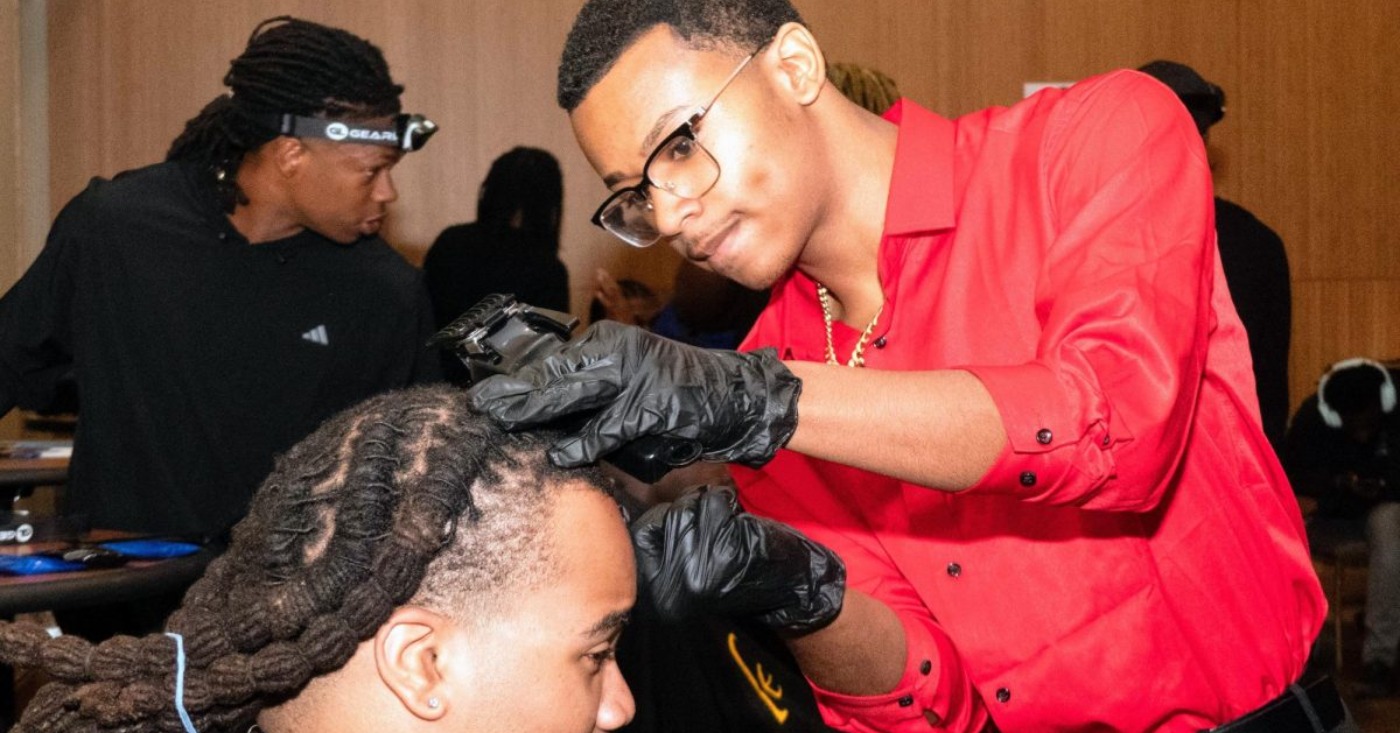
The sound of clippers buzzed with a different kind of conversation Monday at 11 a.m. as Alabama State University students and staff listened to barbers, cancer survivors and health professionals discuss a disease that disproportionately affects Black men.
Cuts and Conversations, held Sept. 28 in the John Garrick Hardy Center Ballroom, used free haircuts and the familiarity of the barbershop to open conversations about prostate cancer, early detection, family history and men’s health.
Tanjula Petty, Ed.D., vice president for Institutional Effectiveness, Strategic Initiatives and Transformation, and Willie S. Rockward, Ph.D., dean of the College of Science, Technology, Engineering and Mathematics, opened the forum and welcomed those in attendance.
For Petty, the message came from experience.
“I’m not just speaking to you based on research,” she said. “I’m talking to you from a place of experience.”
Petty said she exercised regularly, ate well and considered herself healthy when a doctor told her she had cancer. She challenged students to take what they learned back to their fathers, grandfathers and uncles.
“It’s not all about genetics; you may be the first in your family to experience it,” Petty said. “People ask me all the time, ‘Who in your family was diagnosed?’ Nobody. I’m the first.”
According to the Centers for Disease Control and Prevention, Black men are more likely to develop prostate cancer than other men and are more than twice as likely to die from the disease. The American Cancer Society recommends that Black men begin discussing prostate cancer screening with a health care provider at age 45 or at 40 for men at higher risk because of family history.
Three prostate cancer survivors were recognized during the event: Andy Maxwell, Leroy Huffman and Dandrea Evans Sr. Evans and Huffman shared their experiences with those in attendance.
Evans was 44 when a routine doctor’s visit led to his prostate cancer diagnosis. He had no symptoms.
“Initially it was the worst news you could ever hear because I didn’t feel like I had cancer. I felt great,” he said.
Evans said he turned to his faith and made the decision “to trust God through the process and to live.” Four years later, he said he is cancer-free.
“The more you know, the more you’ll be prepared to deal with it and understand it a little bit better,” Evans said.
The five-year survival rate is greater than 99% for prostate cancer diagnosed at a localized or regional stage, according to the American Cancer Society. That rate falls to 38% when the cancer has spread to distant parts of the body.
Huffman has worked at Heritage Barber & Style Shop for about 26 years, has cut hair for 63 years.
“Awareness about prostate cancer is the best thing that Black men should do,” Huffman said.
His advice was simple.
“Age is not the key here. Life is,” Huffman said.
Dawna Nelson, Ph.D., an associate professor of social work, licensed master social worker, and principal investigator for the Cuts and Conversations research project, said the project grew from years of community health work and conversations with Heritage about the role barbershops already play in Black communities. When funding became available, the partnership trained barbers to speak with clients about prostate cancer, early detection, and family history.
Heritage owner Vladimir “Boo Man” Averett said the shop wanted to be part of that work, particularly because of Huffman’s experience.
“He gives conversation all the time to us younger barbers as well as our clients about get checked, get checked, get checked,” Averett said.
For Averett, the message comes down to five words.
“It’s not about wealth. It’s about health,” Averett said.
The partnership extended to student barbers.
Brittany Hollins, planning and evaluation specialist in the Office of Institutional Effectiveness, Strategic Initiatives, and Transformation, said organizers worked with Student Life and athletics to identify student barbers who were trained at Heritage to carry those conversations to their peers.
“They’re cutting hair, and they’re having these conversations,” Hollins said. “And so it’s Cuts and Conversations today.”
Hollins’ grandfather died a little more than a year ago after his prostate cancer progressed to Stage 4.
“It is not an easy task to have that loved one at home on hospice, and you are being tasked to give them that last dose of morphine, and then you realize there’s no pulse,” Hollins said.
Beyond the personal stories, the event connected students with cancer research and health resources.
Manoj K. Mishra, Ph.D., director of the university’s Cancer Research Center and professor of biology, said the center supports cancer research, trains students, and works to increase cancer awareness in the community.
Pastor Lee B. Walker Jr. and Terrance “Wolfgang” Baldwin hosted a live recording of the “Off the Cuff” podcast, continuing the discussion about prostate cancer awareness and Black men’s health.
Five Horizons Health Services, the Alabama Department of Public Health, the university’s Cancer Research Center and Health Services were represented. Five Horizons also provided free HIV and sexually transmitted infection testing.
For the students in the barber chairs, the conversations made the message immediate.
Freshman Jonathan Alexandre said events such as Cuts and Conversations can make it easier for young Black men to begin talking about their health.
Freshman Elijah Kidd, a computer engineering major from Pensacola, Florida, said cancer has already touched his family through his uncle.
“Really just cherish every moment you have, because you never know when it might end,” Kidd said.
Senior Xavier Moore, a double major in music education and music performance, said the setting allowed younger and older Black men to learn from one another.
“Your health comes first,” Moore said.
Student barber Mark Coaxum II, a biology major who plans to become a doctor, brought the message back to action.
“Knowing the probability is good, but getting tested is best, because whether you’re probable or not, you never know,” Coaxum said. “It could be you.”
Nelson said she hopes those conversations continue long after the barber chairs are gone.
“The barbershop is where these conversations start, but then the next day they’re in the gym, and then the day after that on the golf course, and in the boardroom, and most importantly, at a family dinner table amongst the father and the son,” Nelson said.
For students who may think prostate cancer is years away, Nelson left them with a reason to start talking now.
“You are a son. You are a nephew. You are a grandson,” she said. “And if you take the time to talk to your fathers and your uncles and all of the men in your life about this, you are potentially saving their life, and you’re also at the same time empowering yourself so that when your time does come, you have all the information you need to be able to make good health choices.”
Based on reporting by Alabama State University – The Hornet Tribune.
Black Press
A $2.1 Trillion Wellness Industry Never Built a Daily Practice for Black Children. So This Atlanta Family Did.
BLACKPRESSUSA NEWSWIRE — As Black parents strive to raise resilient, confident, brilliant children within systems that too often underestimate them, an Atlanta-based company launches an app that delivers a five-minute daily wellness practice, backed by forty years of research, to help build the identity, confidence and self-worth their children carry into every room.
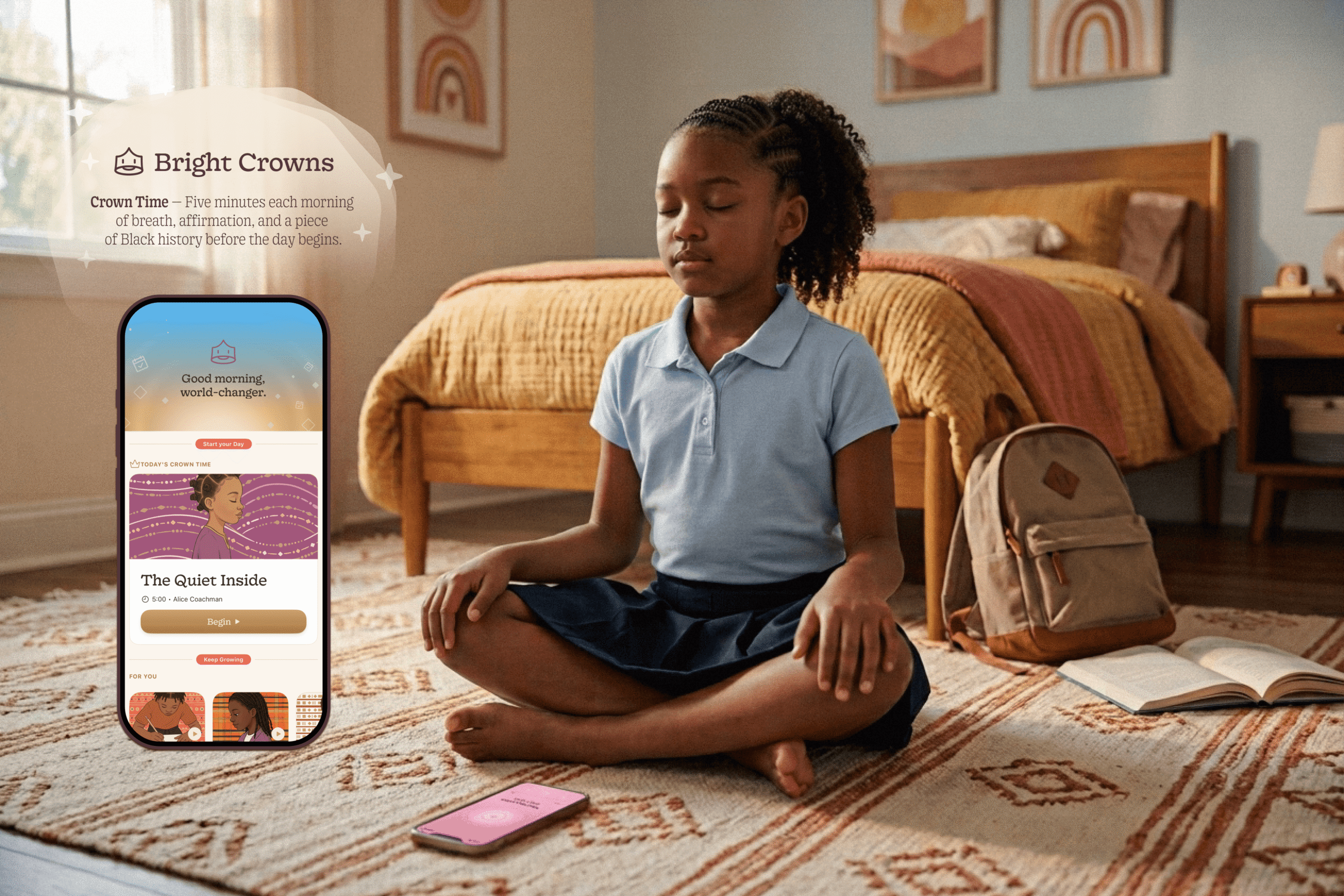
As Black parents strive to raise resilient, confident, brilliant children within systems that too often underestimate them, an Atlanta-based company launches an app that delivers a five-minute daily wellness practice, backed by forty years of research, to help build the identity, confidence, and self-worth their children carry into every room.
ATLANTA — October 6, 2026 — Every morning, Black children walk into classrooms and spaces that weren’t designed with them in mind. They carry a quiet, daily weight most adults never see. There is no shortage of national conversation about the challenges they face; there has been far less discussion about what actually helps. Yet the research has pointed to answers for decades: a grounded sense of who they are, the steadying power of breath, and the pride that comes from knowing their history and their own worth. What was missing was a way to deliver those answers to Black children, consistently and easily, every single day. Until now.
Bright Crowns, the first daily wellness practice built specifically for Black children, launched and is available now on the Apple App Store. The morning practice takes just five minutes and fits easily into a busy day.
“As much as we’d like to, we can’t always lighten the load our children carry each day,” said co-founder and CEO Tia Harley. “But we can help make them strong enough to carry it — with their heads held high.”
Here is what the Bright Crowns wellness practice delivers. Each morning, a child opens the app and hears a voice that sounds like home. The breath comes first, to help them settle and notice what they’re feeling. Then an affirmation that names who they are and the people they come from. Then the story of someone from Black history whose life is proof of the strength being built in them that day. A new figure every day, all year long, not just in February. Not a history lesson, but evidence of what they already carry inside. They start each day steady, certain, and ready for whatever it holds.
The arc is deliberate: Breathe. Belong. Become. That five-minute morning session is called Crown Time, and Bright Crowns doesn’t stop there. Its practices carry a child through the whole day. Crown Ready steadies a child before a hard test or a game. Crown Reset meets a big feeling the moment it rises. Crown Together is a weekend reflection a parent reads aloud. And Bedtime Crown carries them into sleep with folktales from the African diaspora. Instead of points or badges, children earn crowns drawn from real African kingdoms — an inheritance, not a reward. A badge says good job; a crown says this was always yours.
“Bright Crowns isn’t about making a child feel better for five minutes,” said Tia Harley. “It’s about giving them tools that compound: steadiness, identity, and resilience they carry long after the session ends, into the classroom, under pressure, and into rooms where they may be the only one.”
Built on joy. Backed by forty years of science. Husband-and-wife team David and Tia Harley built Bright Crowns out of love for their own children. Then they discovered that every piece of what they had built had already been supported by research. A landmark study in the journal Science found that a brief, culturally grounded practice measurably narrowed the racial achievement gap for Black students, without any change to the school itself. Research has since identified ethnic-racial identity as a key protective factor for Black youth mental health in the Annual Review of Clinical Psychology, and a meta-analysis of 76 mindfulness programs for young people found significant improvements in stress, attention, emotional regulation, and academic engagement. Psychologists have a name for what these build together: hardiness, the inner architecture that lets a person meet difficulty without breaking. It has been studied since 1979, when psychologist Suzanne Kobasa first identified it, and the research is clear that it is teachable, built through brief, consistent daily practice. “The research showed that while the school didn’t change,” Tia Harley said, “what those children carried into it did.”
A category built, not borrowed. Wellness has grown into one of the largest industries in the world, worth roughly $2.1 trillion in the U.S. alone, with apps for sleep, focus, breathing, and meditation. Yet when the Harleys went looking for a daily wellness practice built for their own Black children, they found none. What existed was generic: polished and useful, but spoken in voices and settings that never felt like home, and asking a Black child to set part of themselves aside just to belong there. “A Black child’s identity isn’t separate from their wellness. It’s part of it,” said Tia Harley. Bright Crowns wasn’t adapted for Black children after the fact. It was built with them in mind from the very beginning, the first of its kind, and one this community has long deserved.
David Harley, an award-winning creative director, began building a morning wellness routine at their family’s kitchen table, and he and Tia joined forces to grow it into what Bright Crowns is today. The two brought professional rigor to a labor of love: David, with two decades leading multicultural campaigns for major brands, and Tia, who led business development and partnerships at Google. They built Bright Crowns to a standard they’d trust with their own children. Then they used it with their two kids every morning for more than a year before it reached anyone else. “We built it for our children first,” Tia Harley said. “We watched them change: quicker to recover from tough moments, more willing to try hard things, holding their heads a little higher. Then we realized every Black family we knew needed the same thing.” The launch arrives as Black families across the country are thinking hard about how to prepare and educate their children in schools and spaces that weren’t always designed with them in mind. Bright Crowns speaks to the part that travels with a child into any classroom: the certainty of who they are.
Availability. Bright Crowns is available now on the Apple App Store with a free 7-day trial. Families who join by December 31, 2026 lock in the Founding Family rate of $69.99 for the first year; one subscription includes every child in the home. Learn more and download at hellobrightcrowns.com.
“Our children are already brilliant,” said co-founder and chief product officer David Harley. “We don’t teach them to survive. We teach them they were born to thrive. Their crowns are already on — we just help them remember.”
###
About Bright Crowns
Bright Crowns is a five-minute daily wellness practice built for Black children, available now on the Apple App Store. It is the first daily practice of its kind, grounded in decades of research on identity, mindfulness, and resilience. Founded by husband-and-wife team David and Tia Harley, parents of two, Bright Crowns pairs deep cultural fluency with the quality families expect and deserve. It helps Black children feel steady in themselves, certain of who they are, and ready to show the world what they’re made of. Learn more at hellobrightcrowns.com.
Media Contact
Tia Harley, Co-Founder
[email protected]
(404) 491-9637
Digital Press Kit: hellobrightcrowns.com/press
hellobrightcrowns.com


WCCUSD Joins Statewide Organic School Food Purchasing Cooperative

Democrats, Community Groups Back Measure EE to Change How Oakland Is Governed

Four Tips to Help You Plan a Holiday “Staycation”

Veterans Housing Project Proposed for South Richmond

Mayor Lee Delivers 2026 State of the City Address: ‘Oakland Continues to Be on the Move’

Oakland Awarded More than $14 Million in State Funding

Jendayi Arrest Raises Community Concerns Regarding Sheriff’s Chain of Command

Marin County Supes Expand Small Business Options with Home Kitchen Pilot Program

Allen Temple Baptist Church Hosts Free Prostate Cancer Screenings on Oct. 17

AC Transit Labor Unions Back Director Joel Young

The Youngest American Killed in the Vietnam War

Latest Massacre in Haiti Reveals Cruelty U.S. Deportations

OPINION: Nolan Wells’ Death One of Several Signifying Racial Terror Lives on in U.S. South

Passing for White, Fighting for Black America: The Courage of Walter White

OP-ED: If AI Is the New Language of Power, Then NAN Wants Black Communities Fluent

OP-ED: Haiti TPS: Have We Lost Sense of Humanity?

OP-ED: How Does Your State Rank for Pre-K?

Henry O. Flipper: A Trailblazer at West Point and Beyond

Asm. Smallwood-Cuevas’s Bill Repealing ‘Racist’ CalWORKs ‘Man-in-the-House’ Rule Clears Legislature

NBA All-Star Damian Lillard Returns Home for 15th Annual Backpack Giveaway

Sherrell Dorsey on Tech, Black Innovation, and Impactful Businesses

Community-Centered Business: Adapting to Support a City in Need #shorts

The Conversation with Al McFarlane

Serve First: The Secret to Life and Business Success #shorts

Denise Upshaw – Founder, Black Houston Creative Network

Houston advocates breakdown Black voter fatigue

Digital Rearview Mirror Test: Blind Spots & Camera Views #shorts

HE SAID, HE SAID, HE SAID, Separating Fact, Fear, & Freedom w/ Allen Orr, FRI. 2.22.26 7PM EST

Hot Girl Walk at Sabathani Community Center | Ernestine Belton Playground | MSR

NEW INVESTIGATION INTO FEDERAL RESERVE GOVERNOR
-

 Black Press1 week ago
Zakiya Jendayi Arrested, Locked Out of Home by Sheriff’s Deputies
-

 Black Press1 week ago
A $2.1 Trillion Wellness Industry Never Built a Daily Practice for Black Children. So This Atlanta Family Did.
-
 BlackPressUSA6 days ago
Latinas Deserve Equal Pay. Unions Help Make It Happen.
-

 Art1 week ago
Montclair Brewery: Brewing Culture, Community, History
-
 Black History1 week ago
Listening as a Lifeline: A Doula’s Witness to Black Maternal Health
-

 Black Press1 week ago
COMMENTARY: But God!
