
Religion
The Religion Corner: The Law of Impermanence

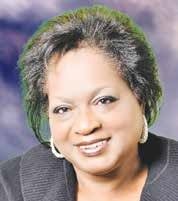
Lyndia Grant
It has been nearly three years since God enabled me to keep my radio talk show going, which airs each Friday at 6 p.m. on Radio One’s WYCB AM 1340 on your radio dial. The show shares good news about health, inspirational stories and politics.
On my radio show last week, I interviewed one of the major organizers, Aleta Alston-Toure, as she leads the charge to help Marissa Alexander. Calls are increasing for the total release and exoneration of Alexander, the African-American mother of three who was sentenced to 20 years in prison for firing what she maintains was a warning shot at her abusive husband. Alexander was prosecuted by Angela Corey, who also oversaw the case against George Zimmerman in the Trayvon Martin killing. Alexander said she was defending herself when she fired a shot into a wall near her husband and attempted to use Florida’s “Stand Your Ground” law in her defense.
The 20-year conviction of Alexander in the Old Duval County Courthouse was unreal for all of us that witnessed this atrocity.
Hearing Alexander’s daughter’s plea for her mother to the jury was more than an emotional cry but a humane beckoning. Then, “We Who Believe in Freedom Cannot Rest” filled the courtroom as the Dream Defenders belted out the lyrics as a nonviolent protest. The song spoke to the true sentiment that we all shared, despite the urging of police and the judge to remove these freedom fighters from the courtroom and the courthouse. After 12 minutes of deliberation, a jury of six convicted Alexander of three counts of aggravated assault with a deadly weapon with no intent to harm. Her sentence was set at 20 years partly due to the state’s mandatory minimum sentencing laws.
Alexander had just given birth eight days prior to this incident. She left the hospital after breastfeeding her premature infant in the intensive care unit and returned to her home that she had purchased with her previous husband, the father of her twins. She was attacked in her bathroom by her abusive husband, a man who had assaulted her many times before. She fired a warning shot into a wall in the hope that her husband would leave her alone.
Alexander won an appeal in September 2013 and was released on bail in November. Her trial will take place in December. Her bail and leg ankle brace saddle her with a debt of $2,500 per month; if found guilty, Alexander could be sentenced to a mandatory 60 years in prison.
Alexander proved to be one of the 324,000 pregnant women in the U.S. that are physically or sexually assaulted by an intimate partner every year. Eighty-five to 90 percent of women in prison have a history of being victims of violence prior to their incarceration, including domestic violence, sexual violence, and child abuse.
Black women aren’t seen as victims because the courts are not empathetic to the fear black women have for their lives; they are always asked, “Why did you not retreat?”
Alexander’s case is one glaring example of how black women have been severely scrutinized by police and underserved. Alexander’s abuser was able to become a “domestic violence survivor” in the Hubbard House (a battered women’s shelter in Florida) while she faces 60 years in jail for defending herself against abuse. Within domestic violence advocacy circles, black women may be seen, but rarely are their voices heard, which allows our communities to overlook the fact that domestic violence is the leading cause of death among black women.
Black women are seen as expendable, replaceable, and easily forgotten. In March 2012 the jury convicted her after only 12 minutes of deliberation. Alston-Toure, who has visited Alexander in jail, is also calling for Corey to resign.
Lyndia Grant is an author, inspirational and motivational speaker, radio talk show host and columnist; visit her new website atwww.lyndiagrant.com and call 202-518-3192. Tune in Fridays at 6 p.m. to the radio talk show, 1340 AM, WYCB, a Radio One Station.








Black Press
Should You Have to Pay to Hear the Gospel?
ST. LOUIS AMERICAN — Pastor Philip Anthony Mitchell of Atlanta’s 2819 CHURCH and Tim Timberlake of Celebration Church in Jacksonville, Florida, are at the center of a social media debate. The controversy stems from ticket prices for their “Street Preachers” podcast tour, with general admission tickets reportedly costing around $60 and VIP options up to $200.

For generations, the Black church has passed the offering plate to keep the lights on, pay the preacher, help the poor and carry the Gospel beyond its walls. But what happens when the preacher leaves the sanctuary, takes a popular Christian podcast on tour — and charges admission?
That question has placed Pastor Philip Anthony Mitchell, founder and lead pastor of Atlanta’s fast-growing 2819 CHURCH, at the center of a heated social media debate.
Mitchell and Tim Timberlake, senior pastor of Celebration Church in Jacksonville, Florida, host “Street Preachers,” which its official website describes as a “raw, unfiltered podcast” committed to spreading the Gospel.
‘A brood of vipers’
The controversy began after ticket prices for the podcast’s 2026 tour circulated online. General admission tickets reportedly cost about $60 before fees, with premium options, including a VIP meet-and-greet package, priced at $200. Critics questioned whether ministers should charge people to hear the Gospel.
Others defended the pastors, arguing that Christian events require venues, transportation, security, equipment and staff.
Mitchell answered critics from the pulpit last month, calling them “a brood of vipers.” He said the podcast is a separate, personal project and that neither his church nor Timberlake’s is bankrolling it.
“Now we have decided to go on a tour to take the gospel to cities, and because that’s not funded by 2819, and it’s not funded by Celebration Church, Tim and I gotta do that with our own pockets,” Mitchell said. “It’s why there is tickets. We have to pay for venues and security and productions and staff from our own pockets.”
Mitchell called some critics “ignorant” and said they did not know that a child was healed through faith during one of the events.
“And you want to complain about a 60 ticket?” he said. “So hate on!”
Worship service vs. media event
Mitchell maintains that “Street Preachers” is an independently produced podcast tour, not a worship service, and that ticket revenue helps cover production costs.
Yet the presence of pastors, Scripture and Gospel language makes the distinction less clear to some believers.
The official tour website lists all eight 2026 stops as sold out. Promotional material announcing additional dates promised, “Better ticket options. Same Gospel. Same move of God.”
Corporate prayer gathering
The language gets to the heart of the dispute. Some Christians argue that no one should be kept outside because they cannot afford a ticket. Others say the Gospel remains free even when people pay for the venue and experience surrounding its presentation.
The paid podcast tour, however, is not Mitchell’s only large-scale gathering. On Oct. 10, 2819 CHURCH will host “ACCESS — That Powerful Hour of Prayer” at AT&T Stadium in Arlington, Texas. Admission is free.
2819 CHURCH has said 80,000 free tickets were claimed before registration reopened.
The contrast raises another question: What makes one Gospel-centered event a ministry supported by donors and another a production supported by customers?
Unfiltered preaching, youth appeal
Mitchell’s congregation, composed largely of young Black adults, grew from fewer than 200 weekly worshippers in 2023 to about 6,000, according to the church. Some worshippers arrive before sunrise to secure a place inside.
His appeal rests partly in an intense, vulnerable and raw preaching style.
“I’m preaching without watering that down, without filtering out things that we think might be too controversial,” Mitchell told The Associated Press.
That visibility has also brought scrutiny of his theology, associations, travel, security and the businesses surrounding his ministry.
But the controversy reaches beyond Mitchell and Timberlake. Christian music concerts charge admission. Seminaries charge tuition. Religious publishers sell Bibles, books and devotionals. Churches pay musicians, media teams and guest preachers. Money becomes particularly uncomfortable, however, when an event is presented simultaneously as ministry and entertainment.
Ministry vs. entertainment
Supporters should not assume every dollar collected becomes personal profit. Critics, however, question whether lower-cost seats, sponsored tickets or free admission for people who cannot pay should be part of a Gospel-centered event.
The Black church always has required resources for ministry. It also has carried a sacred responsibility to make room for people with little or nothing to give.
The sold-out “Street Preachers” tour shows people are willing to pay to attend. The free ACCESS gathering offers a different model. The challenge is preserving that open door as Christian ministry increasingly adopts the machinery — and economics — of popular entertainment.
The post Should you have to pay to hear the Gospel? appeared first on St. Louis American.
Based on reporting by St. Louis American.
Black History
Ghana’s Ministry of Foreign Affairs Publishes Global Circle’s Vatican Reparations Call in Special Edition Alongside Heads of State
GLOBAL CIRCLE FOR REPARATIONS AND HEALING — Ghana’s Ministry of Foreign Affairs has published the Global Circle for Reparations and Healing’s submission, “From Accra to the Vatican,” in a special edition of The Ghanaian Envoy. This marks the first time a sovereign state has incorporated the Reparations Presentment to the Holy See into its official record. The 175-page edition, titled “Creating A New World,” also documents Ghana’s campaign that led to UN Resolution A/RES/80/250, which recognized the trafficking and enslavement of Africans as the gravest crime against humanity.
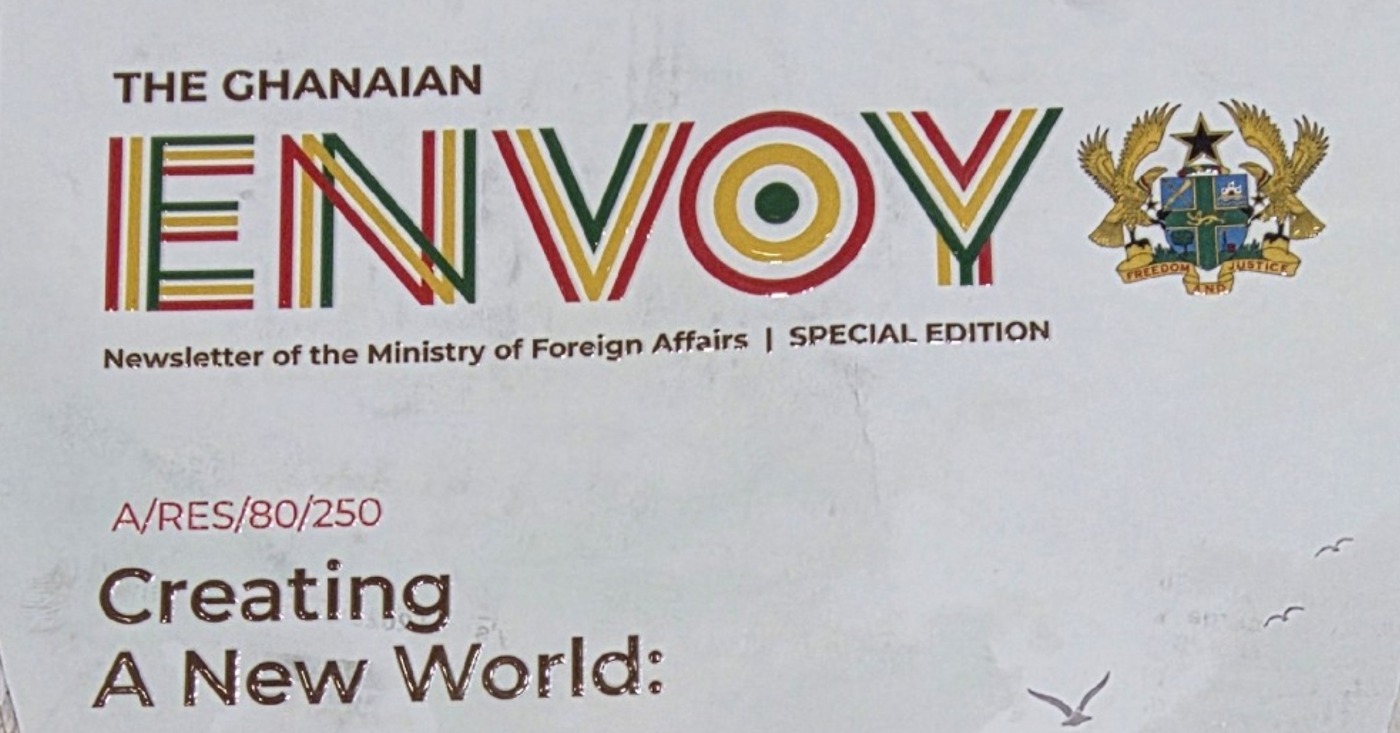
“From Accra to the Vatican” appears in The Ghanaian Envoy Special Edition on UN Resolution A/RES/80/250 — the first time a sovereign state has carried the Reparations Presentment to the Holy See into its official record
ACCRA, Ghana / CHICAGO, Illinois — October 7, 2026 — The Global Circle for Reparations and Healing today announced that its submission to Ghana’s Ministry of Foreign Affairs, “From Accra to the Vatican: A Call for a Global Plan of Action on Catholic Church Redress”, has been published in the Special Edition of The Ghanaian Envoy, the official newsletter of the Ministry of Foreign Affairs of the Republic of Ghana. The 175-page edition, titled “Creating A New World,” documents the Ghana-led campaign that culminated on March 25, 2026, in United Nations General Assembly Resolution A/RES/80/250, which declared the trafficking of enslaved Africans and the racialized chattel enslavement of Africans the gravest crime against humanity.
The Global Circle’s submission, authored by Co-Convener Kamm Howard, appears in Part V of the edition, “What Repair Must Now Mean,” at page 161. It shares the volume with statements by President John Dramani Mahama of Ghana, President Joseph Nyuma Boakai Sr. of Liberia, President Netumbo Nandi-Ndaitwah of Namibia, President Bassirou Diomaye Diakhar Faye of Senegal, President Carlos Manuel Vila Nova of São Tomé and Príncipe, President Emmanuel Macron of France, Prime Minister Mia Amor Mottley of Barbados, United Nations Secretary-General António Guterres, Foreign Minister Samuel Okudzeto Ablakwa, African Union Commissioner Amma Twum-Amoah, CARICOM Reparations Commission Chair Sir Hilary Beckles, Nobel Laureate Wole Soyinka, Dr. Julius Garvey, and Congressional Black Caucus Executive Director Vincent Evans, among others.
The submission traces the Global Circle’s delivery of the Reparations Presentment to the Holy See in Vatican City on July 18, 2022, the document’s subsequent use by the former Vice President of Costa Rica and the Vice President of Colombia in their engagements with Pope Francis, and the partial response contained in Pope Leo XIV’s May 2026 encyclical Magnifica Humanitas. It argues that while three of the Presentment’s seven demands have entered the Church’s official language in diluted form, four remain wholly unmet: rescission of the papal bulls that authorized African enslavement, the Church’s call upon other offending Western nations to make redress, the establishment of a joint Vatican–African Diaspora–African Papal Commission on Reparations and Healing, and a substantial financial commitment to repair. The submission asks Ghana to adopt the Presentment as the reference instrument for a Vatican track within the Accra Next Steps Commitments and to convene a first meeting of Global African reparationists toward a collective response.
“For four years the Presentment has been a civil society document carried by civil society hands,” said Kamm Howard, Co-Convener of the Global Circle and Commissioner of the National African American Reparations Commission. “Ghana has now placed it in the official record of a sovereign state, in a volume that opens with a President’s address to the General Assembly and closes by asking what repair must mean. That is not a courtesy. It is a signal to every government, every reparations commission, and every African Catholic that the claim against the Holy See belongs on the state agenda, and that the state which broke the deadlock at the United Nations is prepared to see it there.”
The significance of the publication extends beyond the Vatican file. The Presentment was created as a legal claims instrument by Howard in 2014 and first delivered to corporations and institutions in the United States, where it secured significant concessions. Its appearance in a foreign ministry’s official publication, translated and distributed in English, French, Portuguese, Spanish, and Italian, establishes the reparations presentment as a recognized instrument of international reparatory diplomacy, one that other states and descendant communities can adopt without drafting a new framework of their own. The Global Circle has described this catalytic potential as the “N’namba Effect,” after the Evanston, Illinois, reparations initiative – led by N’nanba Robin Rue Simmons – that gave municipalities across the United States the model, permission, and courage to act.
“The Vatican told us in 2022 that it moves in fifteen-year increments,” Howard added. “Ghana has just demonstrated at the United Nations that a determined state can compress that timeline to a single vote. We are asking Ghana to do for the Church what it did for the General Assembly, and we are asking Global Africa to organize behind that ask with one document, one voice, and one set of demands.”
The Global Circle has written to President Mahama and Foreign Minister Ablakwa to express its gratitude and to propose that its Vatican and Interreligious Actors Working Group lead the first meeting on a collective Vatican response under the auspices of the Government of Ghana. The Global Circle has also formally advised the Congressional Black Caucus of the publication in connection with its pending request that the Caucus recognize the Presentment as the foundational document for reparations engagement with the Roman Catholic Church and join the Government of Ghana in this global call to action.
###
About the Global Circle for Reparations and Healing
The Global Circle for Reparations and Healing was convened in 2022 to help build united global reparations front across Africa and its worldwide diaspora. In July 2022 the Global Circle delivered the Reparations Presentment to the Holy See in Vatican City. It co-organized Accra Summit I in August 2022 with the Government of Ghana and the Africa Transitional Justice Legacy Fund, and led the organization of Accra Summit II: Centering Healing Across Global Africa in March 2025 in partnership with the African Union. The Reparations Presentment to the Holy See is available in English, French, Italian, Portuguese, and Spanish at gcrh.org.
Media Contact
Global Circle for Reparations and Healing
Kamm Howard, Co-Convenor
[email protected] 773 520 0369
gcrh.org
Black Press
COMMENTARY: But God!
THE POSITIVE COMMUNITY — Reverend J. Loren Russell discusses the concept of unmerited grace, drawing from Ephesians 2:1-10 CEV. The passage highlights that humanity was once separated from God due to sin, following worldly ways and selfish desires, which made them deserving of punishment.

Ephesians 2:1–10 CEV
“In the past you were dead because you sinned and fought against God. You followed the ways of this world and obeyed the devil. He rules the world, and his spirit has power over everyone who doesn’t obey God. Once we were also ruled by the selfish desires of our bodies and minds. We had made God angry, and we were going to be punished like everyone else. But God was merciful! We were dead because of our sins, but God loved us so much he made us alive with Christ, and God’s gift of undeserved grace is what saves you. God raised us from death to life with Christ Jesus, and he has given us a place beside Christ in heaven. God did this so in the future world he could show how truly good and kind he is to us because of what Christ Jesus has done. You were saved by faith in God, who treats us much better than we deserve. This is God’s gift to you, and not anything you have done on your own. It isn’t something you have earned, so there is nothing you can brag about. God planned for us to do good things and to live as he has always wanted us to live. This is why he sent Christ to make us what we are.”
If it were not for the love of God, none of us would be worth anything. In fact, we would be walking dead, looking for a grave to lay down in.
These are not my words. Paul tells the Ephesian church that we were all dead because of our sins. But God brought us to life through His undeserved grace. In other words, we did not then, and we do not now, deserve His grace. The reason we were then, and are now, eligible to be made alive is not because we deserve it, but because the Lord is truly good and kind to us because of what Christ Jesus has done.
Notice the conjunction, or antithesis, “but.” It serves as a directional signal. It changes the direction of the conversation and points us toward unmerited favor. We were dead—but God! We were sinners—but God! We were undeserving—but God! We were headed in the wrong direction—but God!
Although we do not deserve God’s grace, He extends it to us anyway. The Apostle John told us, “For God so loved the world that He gave His only begotten Son, that whoever believes in Him should not perish…” And here we go again—“but” has everlasting life.
That “but” symbolizes God’s grace, God’s favor, and God’s love for undeserving people who, by no merit of their own, are pardoned in this life and given a place in the Lord’s Kingdom yet to come.
When we see or say “But God,” it should force us to recognize both our unworthiness and the Lord’s sovereignty over all things—including us. The truth is that we cannot take credit for what only God could do. We didn’t save ourselves and we didn’t earn His grace. We didn’t deserve His mercy. But God!
I don’t know about you, but I thank God every day for the opportunity to look at my own life and say:
“BUT GOD!”
If God has ever stepped into your situation and changed the direction of your story, you ought to be able to say it with me:
BUT GOD!
Be Blessed!
Rev. J. Loren Russell is an associate minister at Goodwill Baptist Church and is the clergy officiant of the Evangelical Church of God, all in the Bronx, President/CEO of The JLR Company for Church Financial & Strategic Consulting (718-328-8096), and hosts “Matters of Faith – The Radio Show” on Monday nights from 8:00 – 10:00 PM on Facebook Live. Be sure to Friend “Matters of Faith” on YouTube and email us at [email protected]. Order your copy of Matters of Faith: The eBook at www.smashwords.com/books/view/993177.
Based on reporting by The Positive Community.
Black History
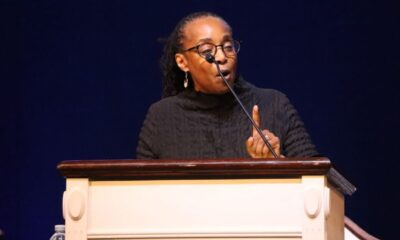
Baptist Minister Says Black Church Champions for Civil Rights to Reign but Hesitates to Let Black Women Lead
HOWARD UNIVERSITY NEWS SERVICE — During a recent service at Howard University’s Andrew Rankin Memorial Chapel, Rev. Judy Fentress-Williams called on the Black church to be more steadfast in elevating Black women to the pulpit. The renowned biblical scholar noted that while she experienced less pushback in her specific context, many women delay answering a call to ministry due to a lack of acceptance for women in leadership roles.
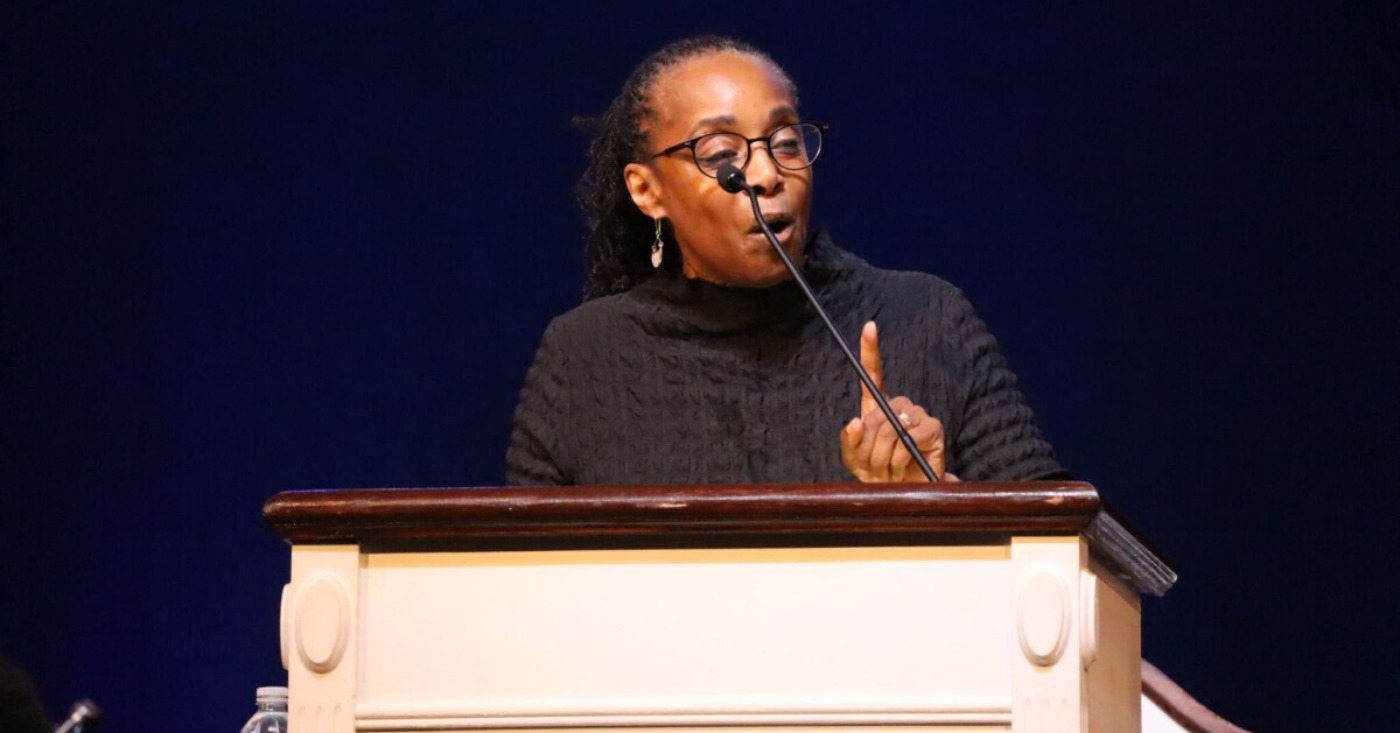
WASHINGTON (HUNS) – On the second Sunday service of the semester at the Andrew Rankin Memorial Chapel at Howard University, Rev. Judy Fentress-Williams, called on the Black church to be more steadfast in its efforts to elevate Black women to the pulpit.
On August 30, the renowned biblical scholar and senior teaching assistant of the Alfred Street Baptist Church in Alexandria, Virginia, spoke on the Biblical parable of the mustard seed with her sermon titled “Think Small”. Her sermon urged young people not to abandon their purpose in pursuit of accolades, but instead to pursue freedom and belonging without having to prove themselves. This sentiment is difficult for Black women who want to become senior leaders.
“Because of the unique context that was Alfred Street Baptist Church, I didn’t get pushback because I was a woman,” Rev. Fentress-Williams said. “What I will say is that I think I was slow to answer my call to ministry, and that’s typical for many women. Many women hear a call to ministry and say, no, that’s called a teacher.”
Despite teaching for 20 years, her journey into ministry illustrates the lack of acceptance for women to fully pursue their calling.
According to the Pew Research Center, 73% of Black adults identify as Christians (65% being Protestant, 4% being Catholics, and the other 4% associated with the Church of Jesus Christ of Latter-day Saints and Jehovah’s Witnesses). However, Black women who make up 64% of congregations within the Protestant faith only account for 1% of senior leadership.
The disparity highlights how the Black church remains patriarchal in its authority. Rev. Kelly U. Farrow, founder of the Circle of Sacred Fire, a non-profit initiative that connects the 1% and dismantles those patriarchal beliefs.
Since 2018, the organization has curated teachings in sermon design and sisterhood for Black women. The organization has 58 circles nationwide, including collegiate chapters.
“[It] is critical because representation matters. We need to see every diversity, every gift, every voice, every shade, every age group in leadership at this time. Without representation, we are only singing and sharing half the song.” Rev. Farrow said.
Representation remains critical for younger generations already experiencing the pushback. Andrea Pool, president of Howard’s Community Gospel Choir, says being a young woman holding the highest position in the organization has made others question her ability to lead.
“I think coming to D.C. definitely just exposed me to a lot because with me being raised by people who were in the church, with my mom being a minister,” Pool said. “I didn’t realize there was another world out there that didn’t appreciate having females in leadership.”
The choir forges an acceptance of many Christian beliefs amongst members to stand on biblical principles. However, Pool is adamant about leaning on women leaders, like her mother, to remind her that identity and relationships alone are not what will make her a great leader.
“I think women in leadership can take younger generations, honestly, everywhere. I think in [the] church it is important to understand that men aren’t the only people who can lead. They aren’t the only people who can bring people to Christ.” Pool said.
Based on reporting by Howard University News Service.
Black History
IN MEMORIAM: The Rev. Leon “Sonny” Clark, Longtime Orange County Pastor and Community Leader, Dies at 72
Rev. Leon William “Sonny” Clark, the longtime pastor of New Spirit Baptist Church in Santa Ana and a prominent faith and community leader in Orange County, passed away on September 9 at the age of 72. Born in Bennettsville, South Carolina, Clark was a U.S. Navy veteran who dedicated his life to service. He served various Southern California churches before leading New Spirit Baptist Church for over 22 years, extending his work into counseling, mentoring, and civic engagement, and supporting the African American community. To learn more about his life and contributions, read more.
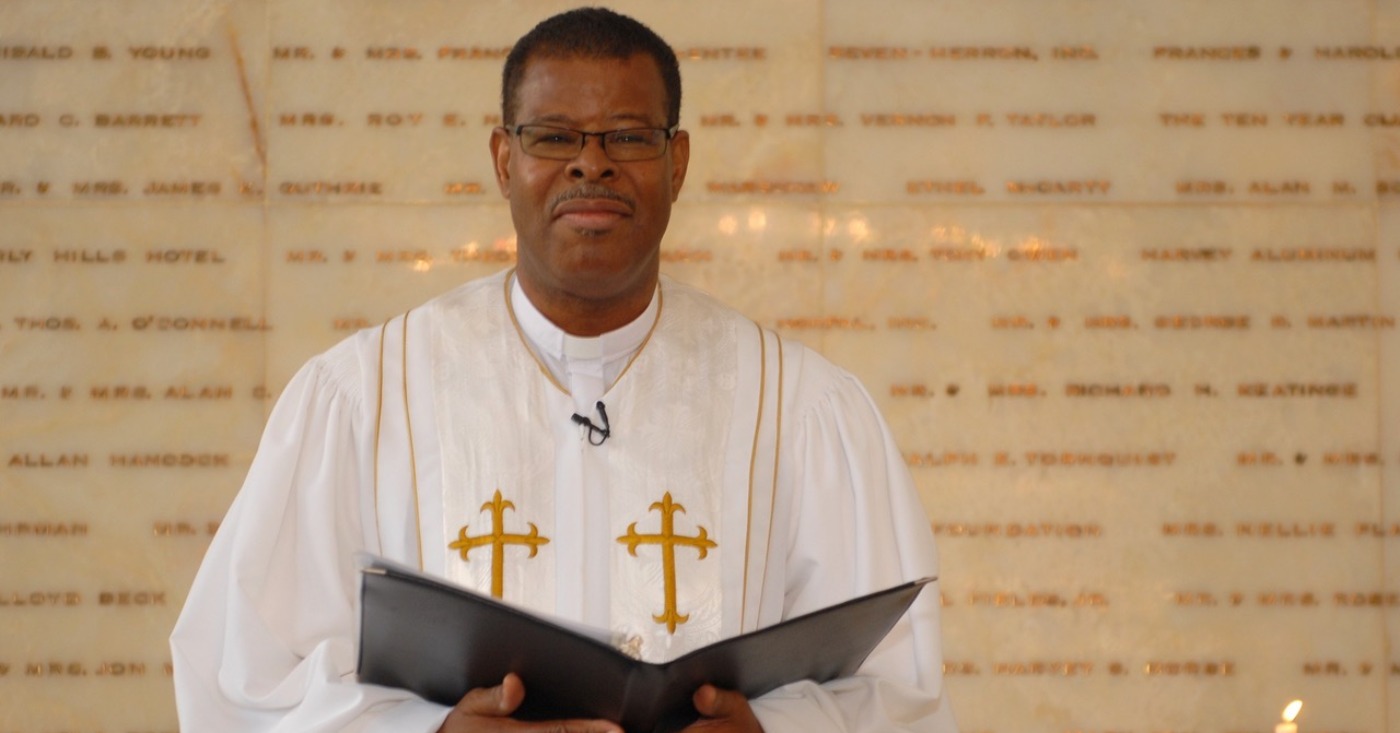
Rev. Leon William “Sonny” Clark, longtime pastor of New Spirit Baptist Church in Santa Ana and a respected faith and community leader in Orange County, died Sept. 9. He was 72.
Born Oct. 2, 1953, in Bennettsville, South Carolina, Clark was a U.S. Navy veteran who later built a life of service centered on family, faith, ministry, and community.
Clark began his formal ministry at Metropolitan Baptist Church in Altadena in 1978. After acknowledging his call to ministry in 1980, he preached his first sermon and went on to serve churches throughout Southern California, including Second Baptist Church in Riverside, Mount Vernon Baptist Church in Rubidoux, Antioch Missionary Baptist Church in Pomona, and Friendship Baptist Church in Yorba Linda.
In November 2003, Clark was called to lead New Spirit Baptist Church in Santa Ana, where he served as pastor for more than 22 years. His work extended beyond the pulpit through counseling, mentoring, civic engagement, and efforts to strengthen Orange County’s African American community.
Clark served on the Orange County Heritage Council and supported efforts to preserve and celebrate African American history and culture. He helped organize the Orange County Black History Parade and Unity Festival, served on the Interfaith Committee and the Orange County Transit Authority, and served as president of the Orange County Ministers Conference.
In 2024, the City of Santa Ana recognized Clark for his contributions to the community. He also received the Orange County Southern Baptist Association Hall of Faith Award and was previously honored as Pastor of the Year by the Orange County Heritage Council.
Clark is survived by his wife, Andrea Joyles Clark; six children, Shawn Williams, Le Ondra Clark Harvey, Kyla Coward, Joshua Clark, Marissa Clark and Ashley Clark; grandchildren and great-grandchildren; siblings; extended family; and the New Spirit Baptist Church congregation.
A wake will be held Thursday, Oct. 1, from 4 to 8 p.m. at New Spirit Baptist Church, 701 S. Sullivan St. in Santa Ana, with a remembrance service from 5 to 6:30 p.m.
A Celebration of Life will be held Friday, Oct. 2, at Friendship Baptist Church, 17145 Bastanchury Road in Yorba Linda. Viewing begins at noon, followed by the service at 1 p.m.
Burial will take place Monday, Oct. 5, at 10:15 a.m. at Riverside National Cemetery.
Clark often shared a guiding principle that shaped his ministry: “Start where you are. Use what you have. Do what you can.”
Black History
In Wake of Death on Doorstep, Williams Chapel Baptist Church Calls for Better Care, Funding for Unhoused
An unhoused individual was found deceased on the steps of Williams Chapel Baptist Church in East Oakland at approximately 6:30 a.m. Monday. The church, located at 1410 10th Ave., extended condolences to the individual’s family, noting the tragedy reflects a broader crisis. Williams Chapel Baptist Church provides shelter and referral services, working with West Side Missionary Baptist Church. They call for increased funding and collaboration to expand services for unhoused individuals. Read more to learn about the church’s efforts and the call for solutions.
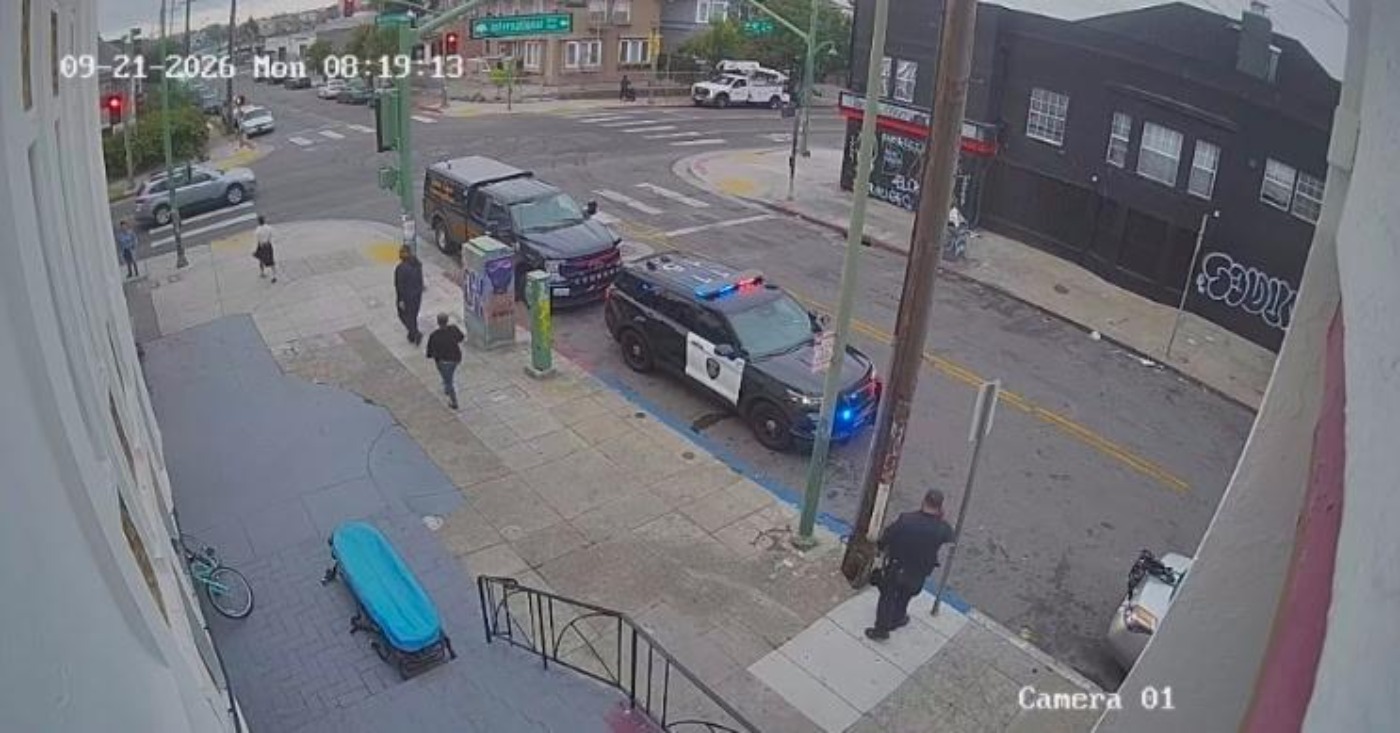
Church extends condolences to individual’s family and loved ones
At approximately 6:30 a.m. Monday, an unhoused individual was found deceased on the steps of Williams Chapel Baptist Church, located at 1410 10th Ave. on the corner of 10th and International in East Oakland.
The individual appears to have come to the church seeking safety and may have needed medical support. We extend our deepest condolences and prayers to the individual’s family and loved ones.
This tragedy reflects a broader crisis affecting unhoused individuals and families throughout the Bay Area. Too many people are living without reliable shelter or timely access to medical care, mental health support, and other essential services. Limited funding and insufficient resources continue to leave vulnerable people without the help they need.
Williams Chapel Baptist Church, a member of the Interfaith Council of Alameda County, works alongside West Side Missionary Baptist Church to provide safe-haven overnight parking, tiny-home emergency shelter, and wraparound referral services to the unhoused.
With funding, both East and West Oakland sites can increase to full capacity and extend to other congregations, creating more safe places for people living on the streets to seek shelter, support, and connection to services.
We invite government agencies, nonprofit organizations, interfaith communities, businesses, and neighbors to join us in this work. By working together with compassion and purpose, we can develop meaningful solutions and help more people experiencing homelessness receive care, stability, and dignity.


Defender ONE-on-ONE: U.S. Rep. Christian Menefee

Unlock Your Best Auto Loan: Ask These Questions! #shorts

News Observer Weekly — October 7, 2026 | Top 5 Stories of the Week

Atlas Family Comfort: Worth the Extra Cash? #shorts

Antron Brown Takes His Impact Beyond the Racetrack

Headlines and Hot Topics with Rodney Perry

Headlines and Hot Topics with Rodney Perry 📱

Houston’s ‘call Me Mother’ Exhibit Opens Today, Spotlighting Black Maternal Health

Should You Have to Pay to Hear the Gospel?

NCCU Ramping up for the 89th Ultimate Homecoming Experience

Latest Massacre in Haiti Reveals Cruelty U.S. Deportations

Booked and Unbound: The Legacy of Black Women’s Literary Circles

The Youngest American Killed in the Vietnam War

COMMENTARY: Big Mama Said ‘Don’t Let Grief Break the Bank’

U.S. Sole Nation to Oppose U.N. Resolution Correcting Africa’s Size on World Maps

Passing for White, Fighting for Black America: The Courage of Walter White

U.S. Open Influencers Spark Backlash over Ring Lights, Filming as Gauff and Osaka Speak Out

Prostate Cancer is Twice as Likely to Kill Black Men. Talking to Your Doctor Could Help Save Your Life

OPINION: Nolan Wells’ Death One of Several Signifying Racial Terror Lives on in U.S. South

OP-ED: If AI Is the New Language of Power, Then NAN Wants Black Communities Fluent
Defender ONE-on-ONE: U.S. Rep. Christian Menefee
Unlock Your Best Auto Loan: Ask These Questions! #shorts
News Observer Weekly — October 7, 2026 | Top 5 Stories of the Week
Atlas Family Comfort: Worth the Extra Cash? #shorts
Antron Brown Takes His Impact Beyond the Racetrack
Headlines and Hot Topics with Rodney Perry
Headlines and Hot Topics with Rodney Perry 📱

Jamal’s Take: Cowboys’ Epic Comeback Win and Dak’s Dominance Against Houston

REBROADCAST: HE SAID, HE SAID, HE SAID:Author Derrick M. Jackson — FRI. 10.9.26 7PM E

2026 Land Rover Defender 130 X Interior 360 Video
-

 Black Press6 days ago
OP-ED: Haiti TPS: Have We Lost Sense of Humanity?
-
 Black History1 week ago
Remembering Chauncey Bailey as Student Journalists Face Threats to Truth-Telling
-
 Black Press1 week ago
Poll: Becerra Widens His Lead Over Hilton; Californians Split on Wealth Tax
-
 Black History1 week ago
COMMENTARY: The Audacity of Joyce Beatty
-

 Black History1 week ago
Rulings Leave Questions Lingering in Nolan Wells Case
-
 Black History1 week ago
Baptist Minister Says Black Church Champions for Civil Rights to Reign but Hesitates to Let Black Women Lead
