
Entertainment
The N*gga Project Experience


Mulemvo Nianda
by Kimetha Hill
Special to the NNPA from the San Diego Voice & Viewpoint
Nigger. A very abrasive word. A very volatile word. A very powerful word. A word that has caused generations of damage to an entire culture of people. The word comes from very dark roots, but has somehow “conformed” to the liking of many, many black folks. Now a “term of endearment” the word, “nigga” is thrown around like “hello” among circles of young people. Mulemvo Nianda, documentary filmmaker and sociology student, grew frustrated with the use of the word especially among the younger generations and developed a short documentary on the word.
“The motivation behind it was all the negativity I saw going on with the N-word,” said Nianda. He describes how the word is littered among popular rap songs of stars including Nicki Minaj and other artists who choose to utilize limited vocabulary in their expressions. “All of these songs are coming out and nobody was really saying anything or giving an alternative to it. So I felt that I should take it upon myself to put out an alternative for the young people to look at,” he added.
Inspired by his Black Studies class, Nianda set out to interview people at random in a “man on the street” type setting to capture reactions to the word “nigga” on camera. Thus, The Nigga Project Experience was birthed.
“I put out The Nigga Project by going around the city and asking different people how they felt about the word. And then it formulated into the first documentary, The Nigga Project Part I. The demand was high for it so I did Part II.”
The Nigga Project is an extension of a research project on which Nianda worked during his studies. Diving into the community and asking questions was something that came naturally to him. In Part I, Nianda felt it best to randomly select people for responses to the word. Some were classmates, some were old, very few were young, but his selection was random.
“I tried to target young men, but a lot of the younger men didn’t want to get on camera. The older generation was more willing to be on camera and talk about it and how they felt. In Part I, I only have one or two young people in it because they didn’t want that face time.” And though they may have still chosen to discuss their feelings with Nianda, they opted not to be interviewed on camera.
The reactions to the word were interesting, and Nianda points to the emotion the word provoked in many who were interviewed.
“The majority of the responses were not necessarily positive. But with the young people, I found that they were more accepting of it,” says Nianda as he cites the uses that can be heard in younger generation circles. “That’s my nigga, that’s my homie, that’s my brother.” But he says, “With the older generation, 35 and up, it’s more so like a negative word, a term that we shouldn’t be using. A lot of them want to eradicate the word, but they don’t really know how to.”
As the project grew, the generation divide was made clear to Nianda. The word provokes emotions, emotions of pain and hurt for older generations, emotions that seem to be lacking among the consciousness of youth. But Nianda felt instead of condemning the youth, education on the word must happen.
“A lot of them [youth] don’t know the history behind the word, and when they do know it’s still kind of like ‘That doesn’t have anything to do with me. That was then.’ They don’t really have an emotional connection to the word. And that was another goal of The Nigga Project – to emotionally connect the youth to the origin behind the word – the real intent behind the word. A lot of them don’t know that it’s negative. And if they do know it’s negative, they don’t really care that it’s negative. So if I could emotionally connect them to the original intent behind it, I felt that would give them a standpoint to go from.”
Nianda’s documentary has been shown at several venues around San Diego, as his aim is to spark as much discussion about the word as possible. He took his film everywhere including restaurants, beauty salons, the Urban League and the Jacobs Center.
“We try to go to different spots and have discussions afterwards. And it’s a mixed crowd, it’s not just blacks that come. I feel like everybody can chime in on the topic regardless of race, whether you agree with the word or not. I feel like everybody should have a voice. And that’s what happens at the discussions. We just give people the opportunity to share how they feel about the word,” says Nianda. “Maybe somebody in the room can be educated on a different perspective.” It is through these discussions that Nianda hopes to bridge the generation gap and enlighten the masses.
“I just want to give a voice to the younger generation. I feel like a lot of them do have a voice, but they don’t feel like the older generation is going to hear them. The older generation is focused in other things that they kind of lag behind in teaching us on how to carry ourselves, or how to be or do certain things.”
In Part III, Nianda says he will specifically target young black men since the word is used so heavily in those circles. He plans to hold a youth summit at the Malcolm X Library in July where his documentary will be shown.
What began as an extension of a research project on YouTube has grown to reach a large audience. “I’m just happy to see the people and educate our community,” he says.







Black Press
From Historic Memories to New Possibilities: Oakland Celebrates Coliseum 60
More than 75 people gathered at Youth UpRising in East Oakland on Friday, September 18, for Coliseum 60, an event marking six decades of sports, entertainment, employment, and community memories at the Oakland-Alameda County Coliseum Complex. Held 60 years to the day after the Coliseum first opened, the celebration featured cultural performances and a mini-documentary highlighting its history. Speakers reflected on the venue’s significant role in the community and its future possibilities. Read more to learn about the individuals and stories honored during this special event.
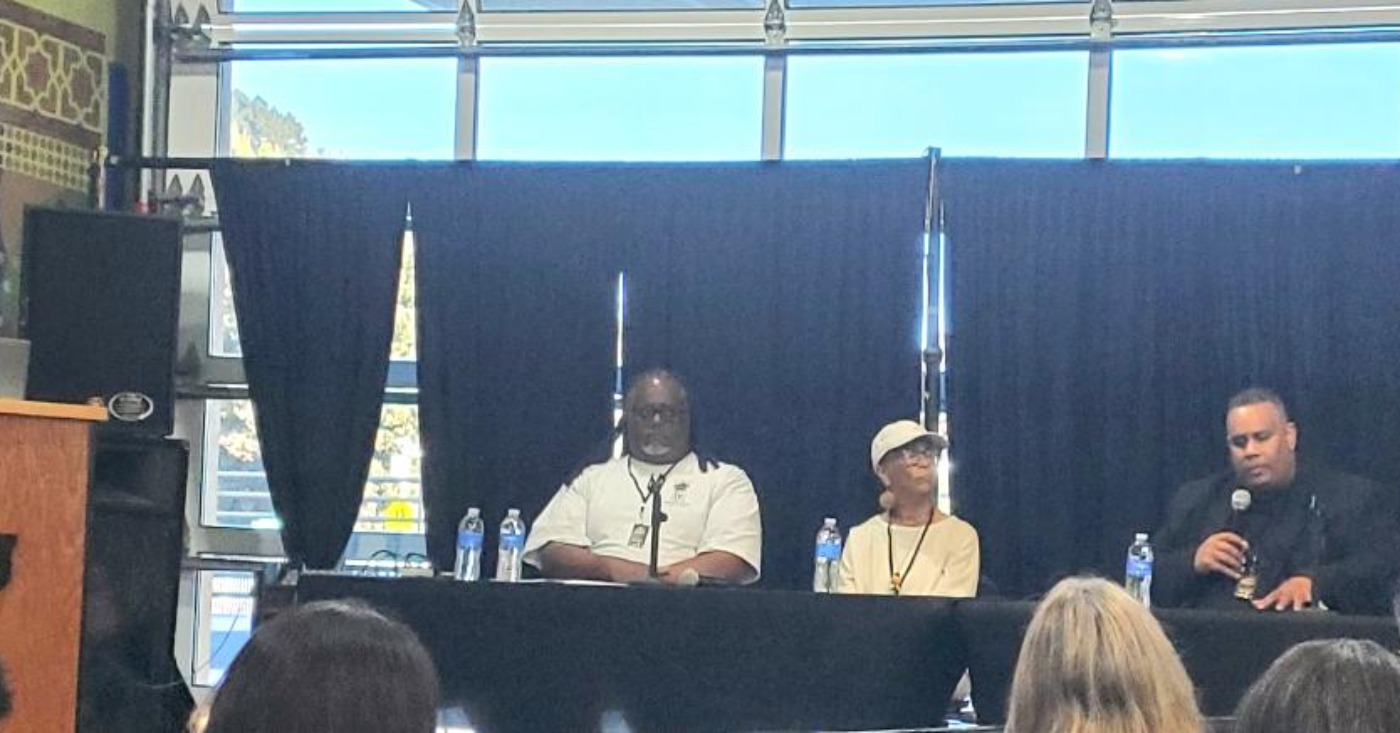
More than 75 people gathered at Youth UpRising in East Oakland on Friday, Sept. 18, for Coliseum 60, a celebration honoring six decades of sports, entertainment, employment and community memories connected to the Oakland-Alameda County Coliseum Complex.
Held 60 years to the day after the Coliseum opened, the event carried the theme, “One Community. One Legacy. One Future. Forward Together.”
The celebration opened with the national anthem performed by sisters Anese Jade, Amina Benjamin and Zaza Benjamin. Diamano Coura West African Dance Company contributed African dance and drumming, bringing movement, rhythm and cultural expression to the program.
A mini documentary highlighted the Coliseum’s sports history and its broader role as an entertainment destination. Archival material recalled performances by Prince and Tina Turner, along with memorable games featuring the Warriors, Oakland A’s and Raiders.
“The Coliseum 60 is about much more than celebrating a building or looking back at 60 years of history,” said event organizer Quixote Atkins of VillageGIVE.
“It’s about the people who made that history possible: the families, workers, athletes, artists, community leaders, fans and generations who gathered there and created memories together.”
A panel exploring that history featured author, historian and former Black Panther Party member Tareka Lewis; stagehand and union representative Keith Brown; and Ray Bobbitt, president of the African American Sports and Entertainment Group AASEG. Lewis described her family as fourth-generation Bay Area pioneers.
“My family and Black families who arrived even earlier helped build the Bay Area, grew businesses and established culture here,” Lewis said. “This should be taught in the public schools.”
Lewis recalled Oakland’s influence on sports, music and literature, from the Raiders’ beginnings at Laney College to stars such as The Pointer Sisters and Rickey Henderson who attended Oakland public schools. She also advocated for school museums, historical timelines, entrepreneurship training and investments benefiting corridors such as Bancroft Avenue and High Street.
Keith Brown, a member of Local 107 of the International Alliance of Theater and Stage Employees (IATSE) who began working at the Coliseum in 2011, remembered the Ringling Bros. and Barnum & Bailey Circus, the Ice Capades, baseball bat giveaways and Nelson Mandela’s 1990 appearance.
“The special events are amazing, but it’s the workers that make the memories real for everyone,” Brown said. “They make the magic happen at the Coliseum.”
The program recognized longtime workers, including beer-stand manager Robert Preston, who served for 40 years, and Kenyatta Gentry, who worked as a vendor for 24 years and used her earnings to purchase her first apartment. Union workers Jose Gonzales and Carmen Sandoval were also honored. Speakers emphasized that Coliseum employment provided generations of residents with union wages and benefits.
Dr. Denise Saddler, the superintendent of the Oakland Unified School District (OUSD) was also honored. Saddler shared her family’s history of working at the Coliseum.
District 7 Oakland City Councilmember Ken Houston discussed the complex ownership arrangements involving the city, county and private interests.
“This was the most complex deal of its kind in the country,” Houston said.
Prior to moving from the East Coast, Alameda County Supervisor and Coliseum Joint Powers Authority Chair Nate Miley recalled learning about Oakland through its three professional sports teams. As an elected official and public servant, Miley fought hard to keep the Golden State Warriors, Oakland As, and the Raiders, but he is hopeful for the future.
“The story is not over for the Coliseum,” Miley said. “We’re entering a new chapter.”
Bobbitt said the departure of three teams had once seemed unimaginable, but he maintained that Oakland’s future remains bright.
“Oakland is a cultural superpower worldwide,” Bobbitt said. “We’re going to write the future where we participate and drive the redevelopment.”
Bobbitt highlighted AASEG’s four-year partnership with Castlemont High School’s architecture program, which engages students in reimagining and creating redevelopment concepts for the Coliseum property. “The youth will always move us forward. They are the future.”
In closing, Atkins said, “September 18 is the celebration, but what we build together afterward is the legacy.”
Black History
At CBCF Conference, a Panel Asks What Black Public Figures Owe the People Who Follow Them
COLUMBUS TIMES — The Congressional Black Caucus Foundation’s Annual Legislative Conference featured a panel titled “Platforms & Purpose: A Conversation With Black Men Leveraging Their Reach.” Actor and activist Kendrick Sampson, Rep. Jasmine Crockett, media personality Jason Lee, singer Eric Benét, and rapper Yung Joc discussed how public figures can translate influence into real-world change.
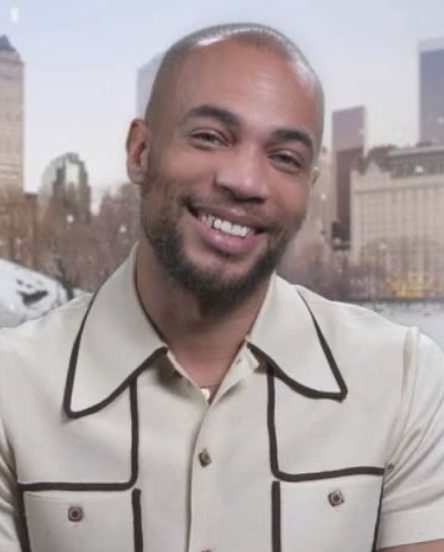
WASHINGTON — Among the more than 100 policy forums and brain trusts at this year’s Congressional Black Caucus Foundation Annual Legislative Conference was a conversation about influence itself: who has it, and what they do with it.
"Platforms & Purpose: A Conversation With Black Men Leveraging Their Reach" brought together actor and activist Kendrick Sampson, Rep. Jasmine Crockett, media personality Jason Lee, singer Eric Benét and rapper and radio host Yung Joc. The session looked at how entertainers, creators and elected officials can turn public attention into real-world change.
The panel took place at the 55th Annual Legislative Conference, a five-day event in Washington that began Wednesday. This year’s theme is "Rooted, Ready & Rising," and the conference coincides with the CBC Foundation’s 50th anniversary. CBCF President and CEO Nicole Austin-Hillery has said the gathering is meant to "combine celebration with purpose," while taking up issues including voting rights, economic opportunity, education, health disparities and criminal justice.
That mix of celebrity and policy is a long-running feature of the conference, which brings lawmakers, advocates, entrepreneurs, students and entertainers into the same rooms. The panel’s premise reflects a broader question as creators reach audiences that rival traditional media.
A career built on both stage and street
Sampson is a natural fit for that conversation. The Houston native is known for television and film work, including HBO’s Insecure, and for his activism off screen. He co-founded BLD PWR, a 501(c)(3) nonprofit that combines entertainment, education and activism.
The organization says its mission is to "reimagine and realize the liberated future we know our people deserve." It works to mobilize entertainment-industry figures and organize communities around racial, gender, immigration, economic and environmental justice, mental health and wellness, and opposition to state violence. BLD PWR emphasizes storytelling and community healing, and it centers the voices of Black, Indigenous and other marginalized communities.
What to watch
The conference runs through Sunday at the Walter E. Washington Convention Center. Details on sessions and registration are available through the CBC Foundation.
Based on reporting by Columbus Times.
Black Press
BOOK REVIEW: ‘Laws of Solomon’ Reveals Tender Heart of Former Child Soldier
The monsters that came to him early in his sleep were the easy ones. It was the later demons that stole Solomon Nangobi’s sleep, the spirits of all the people he killed when he was a child soldier in Uganda, and when he was a fixer in New York as an adult. Their ghosts called to him with urgent voices, though he left that life behind long ago.
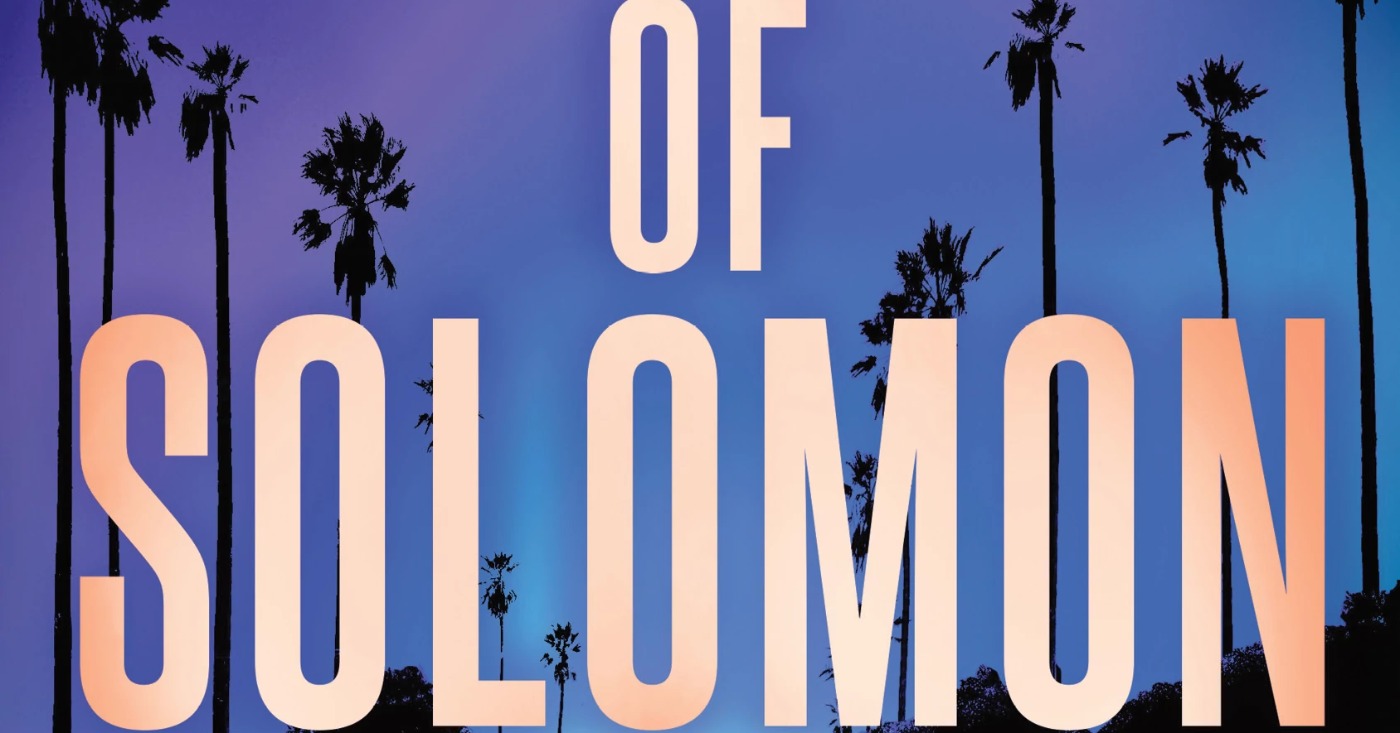
Author: Eriq La Salle, Copyright: c.2026, Publisher: Poisoned Pen Press, SRP: $18.99, Page Count: 304 pages
Finally, after so much work, you’ve left your past behind.
That’s what you tell yourself: what’s done is done and you can’t undo history. It’s over. You try not to think about last month, last year, a decade back because what does it matter? As in the new novel, “Laws of Solomon” by Eriq La Salle, remembering is too full of pain.
The monsters that came to him early in his sleep were the easy ones. It was the later demons that stole Solomon Nangobi’s sleep, the spirits of all the people he killed when he was a child soldier in Uganda, and when he was a fixer in New York as an adult. Their ghosts called to him with urgent voices, though he left that life behind long ago.
Now, his days were filled working the soil in gardens near Malibu, and he loved the quiet life.
Still, he kept his guns.
And he was glad: when Solomon recognized two Zeta gunmen stalking a well-dressed man, woman, and child through the gardens, he couldn’t walk away. He stopped the gangsters with bullets, but not before the adults and their bodyguards were dead. The child, an 8-year-old boy named Gaby, was safe, but Gaby couldn’t tell Solomon what was going on.
What became quickly certain, however, was that Solomonwas now Gaby’s guardian, and the Zeta crime boss wanted them dead, too.
When he was the same age as Gaby, Solomon saw unspeakable things, the murder of his parents, the destruction of his homeland, and the atrocities that Uganda dictator Idi Amin’s soldiers committed. He learned to kill, he observed, and he was hardened, understanding as a small boy that revenge was often necessary and needed, and that blood would shed at those times.
But Gaby was pure, an innocent, a child.
Solomon reached out to his contacts to try to get the boy to safety, but being a contact of a marked man was likewise a dangerous thing: the monsters outside were worse than the ones inside him.
Two words for you: ‘Whoo weee.’ That’s what you’re going to say when you close the back cover of “Laws of Solomon,” knowing that you’ve just been taken on a wild up-and-down, around-and-round ride.
La Salle makes it impossible not to like Solomon, an African man who has, over time, lost nearly everything dear to him and who has no faith in much of anything. Readers get that part of the story eventually, and there’s historical authenticity in some of it, but we never really get to know Solomon, which makes the book feel dark and dangerous. Along the way, we meet and get to know his helpers, which buoys Solomon’s chase to find safety for the boy, and your heart won’t stop pounding.
Keep in mind that this is a thriller partially set in 1970s Uganda, so expect lots of violence but don’t expect a lot of people to live. If you’re up for that, find “Laws of Solomon.” You won’t be able to leave it behind.
Art
Event Preview: ‘Fashion v. Fascism’ – A Runway Revolution Is Coming to the Bay Area
“Every piece on this runway translates what is happening under fascism into a feeling,” explains Erica Furlong, the FVF creative director. “One designer’s trench coat is covered in pockets stamped ‘TRUTH,’ ‘MEMORY,’ ‘HOPE,’ ‘VOTE,’ ‘FUTURE,’ because that’s literally what gets seized first, pocket by pocket, under fascist decline. Fashion can hold grief and hope in the same silhouette, and that tension is exactly what this moment needs.”
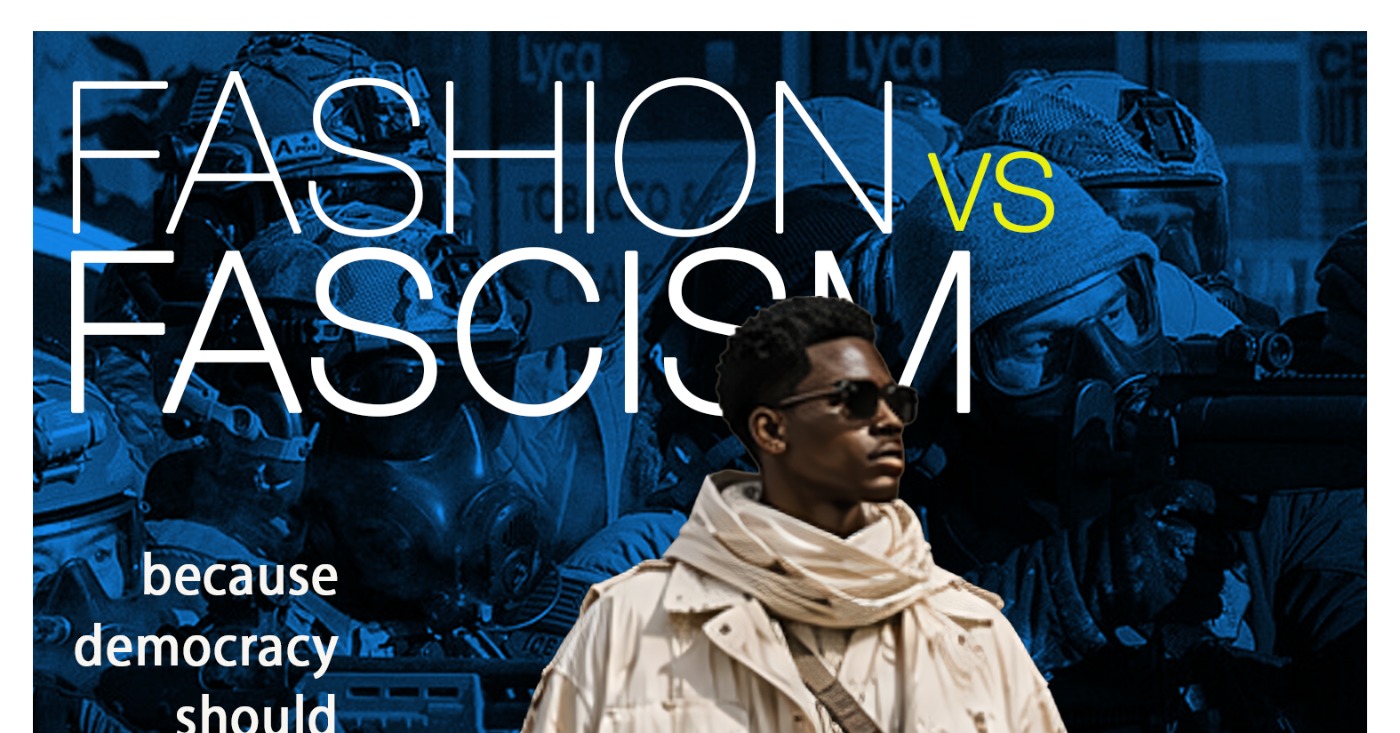
“Fashion vs. Fascism” (FVF) is a visually immersive evening of fashion, music and political theater exposing the rise of fascism in the U.S. and the need to resist. Democracy is under siege, and culture is one of our most potent defenses, organizers say.
Called a live “runway revolution,” FvF premieres Oct. 3 at The Rotunda, 300 Frank Ogawa Plaza in downtown Oakland.
A play that is part fashion show, part protest, part performance art, FvF stages five runway collections spotlighting the pillars of contemporary fascist politics and the urgent need to resist: the myth of a “glorious past,” the manufactured emergencies used to justify surveillance and crackdowns, and the oligarchs and grifters profiting from it all. Runway fashion shares the stage with political theater and live music, with a closing call to action.
“We need lawsuits, ballots and mass protests, but none of it lands if we’re not also fighting for people’s imagination,” says Linda Burnham, co-producer of the show. “People are exhausted and scared. FvF will expose the absurdities of fascist mythology and ideology in ways a news headline cannot and spark new ideas about how to resist.”
“Fascism doesn’t win by policy alone. It wins by telling a story. A myth about a ‘Golden Age.’ A permanent emergency that makes cruelty seem necessary. That’s not an accident, it’s a strategy, and it works on the same terrain as culture: image, spectacle, emotion,” says Aya De León, the show’s playwright.
“Every piece on this runway translates what is happening under fascism into a feeling,” explains Erica Furlong, the FVF creative director. “One designer’s trench coat is covered in pockets stamped ‘TRUTH,’ ‘MEMORY,’ ‘HOPE,’ ‘VOTE,’ ‘FUTURE,’ because that’s literally what gets seized first, pocket by pocket, under fascist decline. Fashion can hold grief and hope in the same silhouette, and that tension is exactly what this moment needs.”
At its best, fashion is about creativity, diversity, innovation, experimentation and the free exchange of ideas. Fascism, by contrast, demands conformity and control, while suppressing dissent.
FVF was created, organizers say, because democracy should always be in style.
Featured designers include Erica Varize, Rickie Lee, Tianna Charity, Julie Wong, and Maria Flores. The evening features a script by lead playwright Aya De León, musical performances by Mindeullae Project and DJ Emancipation, and other special guests.
FvF is designed to travel. Following the Oakland premiere, FvF will extend its reach through a documentary short, a curriculum on contemporary fascism in the U.S., and a full replication playbook — design templates, script, and curriculum — so organizers in other cities can stage their own version of the show.
Get more details at www.fashionvfascism.org.
Art
Event Preview: ‘Fashion v. Fascism’ – A Runway Revolution Is Coming to the Bay Area
“Every piece on this runway translates what is happening under fascism into a feeling,” explains Erica Furlong, the FVF creative director. “One designer’s trench coat is covered in pockets stamped ‘TRUTH,’ ‘MEMORY,’ ‘HOPE,’ ‘VOTE,’ ‘FUTURE,’ because that’s literally what gets seized first, pocket by pocket, under fascist decline. Fashion can hold grief and hope in the same silhouette, and that tension is exactly what this moment needs.”
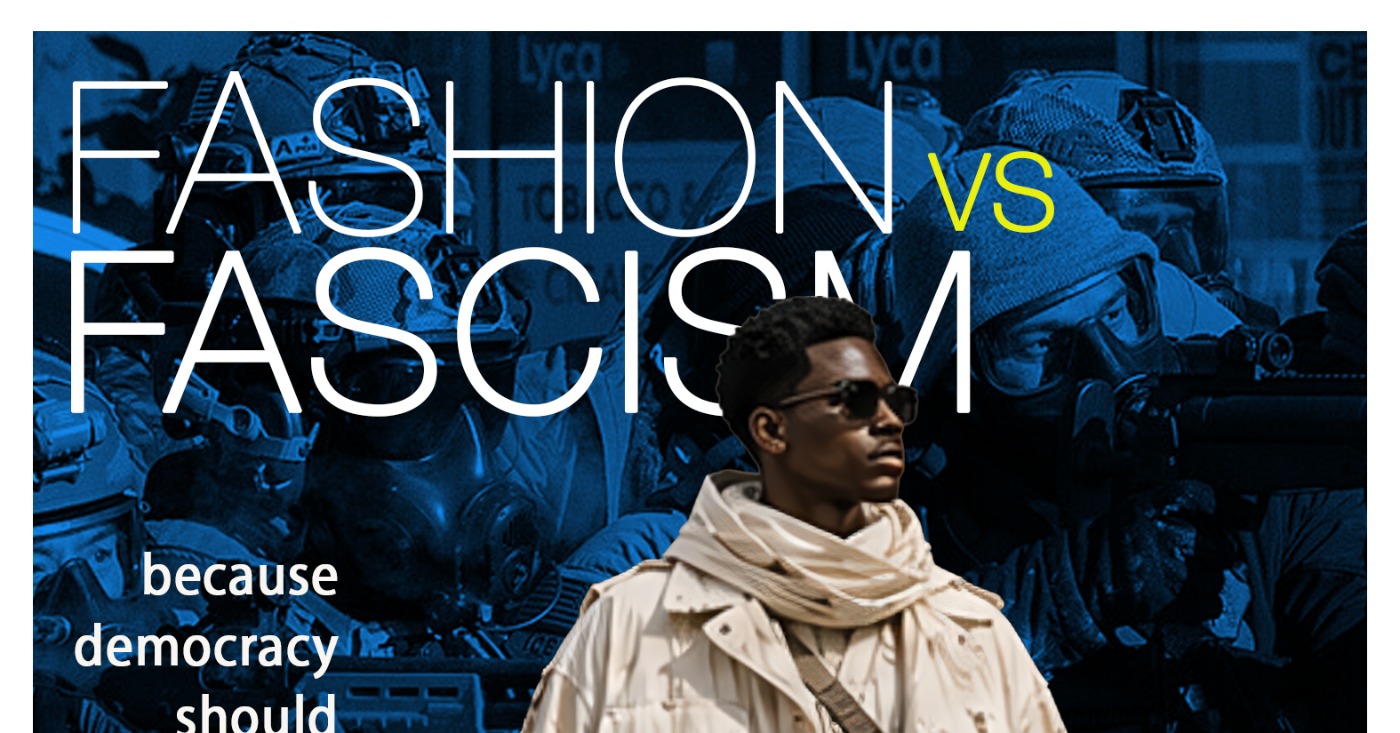
“Fashion vs. Fascism” (FVF) is a visually immersive evening of fashion, music and political theater exposing the rise of fascism in the U.S. and the need to resist. Democracy is under siege, and culture is one of our most potent defenses, organizers say.
Called a live “runway revolution,” FvF premieres Oct. 3 at The Rotunda, 300 Frank Ogawa Plaza in downtown Oakland.
A play that is part fashion show, part protest, part performance art, FvF stages five runway collections spotlighting the pillars of contemporary fascist politics and the urgent need to resist: the myth of a “glorious past,” the manufactured emergencies used to justify surveillance and crackdowns, and the oligarchs and grifters profiting from it all. Runway fashion shares the stage with political theater and live music, with a closing call to action.
“We need lawsuits, ballots and mass protests, but none of it lands if we’re not also fighting for people’s imagination,” says Linda Burnham, co-producer of the show. “People are exhausted and scared. FvF will expose the absurdities of fascist mythology and ideology in ways a news headline cannot and spark new ideas about how to resist.”
“Fascism doesn’t win by policy alone. It wins by telling a story. A myth about a ‘Golden Age.’ A permanent emergency that makes cruelty seem necessary. That’s not an accident, it’s a strategy, and it works on the same terrain as culture: image, spectacle, emotion,” says Aya De León, the show’s playwright.
“Every piece on this runway translates what is happening under fascism into a feeling,” explains Erica Furlong, the FVF creative director. “One designer’s trench coat is covered in pockets stamped ‘TRUTH,’ ‘MEMORY,’ ‘HOPE,’ ‘VOTE,’ ‘FUTURE,’ because that’s literally what gets seized first, pocket by pocket, under fascist decline. Fashion can hold grief and hope in the same silhouette, and that tension is exactly what this moment needs.”
At its best, fashion is about creativity, diversity, innovation, experimentation and the free exchange of ideas. Fascism, by contrast, demands conformity and control, while suppressing dissent.
FVF was created, organizers say, because democracy should always be in style.
Featured designers include Erica Varize, Rickie Lee, Tianna Charity, Julie Wong, and Maria Flores. The evening features a script by lead playwright Aya De León, musical performances by Mindeullae Project and DJ Emancipation, and other special guests.
FvF is designed to travel. Following the Oakland premiere, FvF will extend its reach through a documentary short, a curriculum on contemporary fascism in the U.S., and a full replication playbook — design templates, script, and curriculum — so organizers in other cities can stage their own version of the show.
Get more details at www.fashionvfascism.org.
Black History
Tradition Comes to the Streets in 11th Annual Black-Eyed Pea Festival at the Freedom Farmers Market
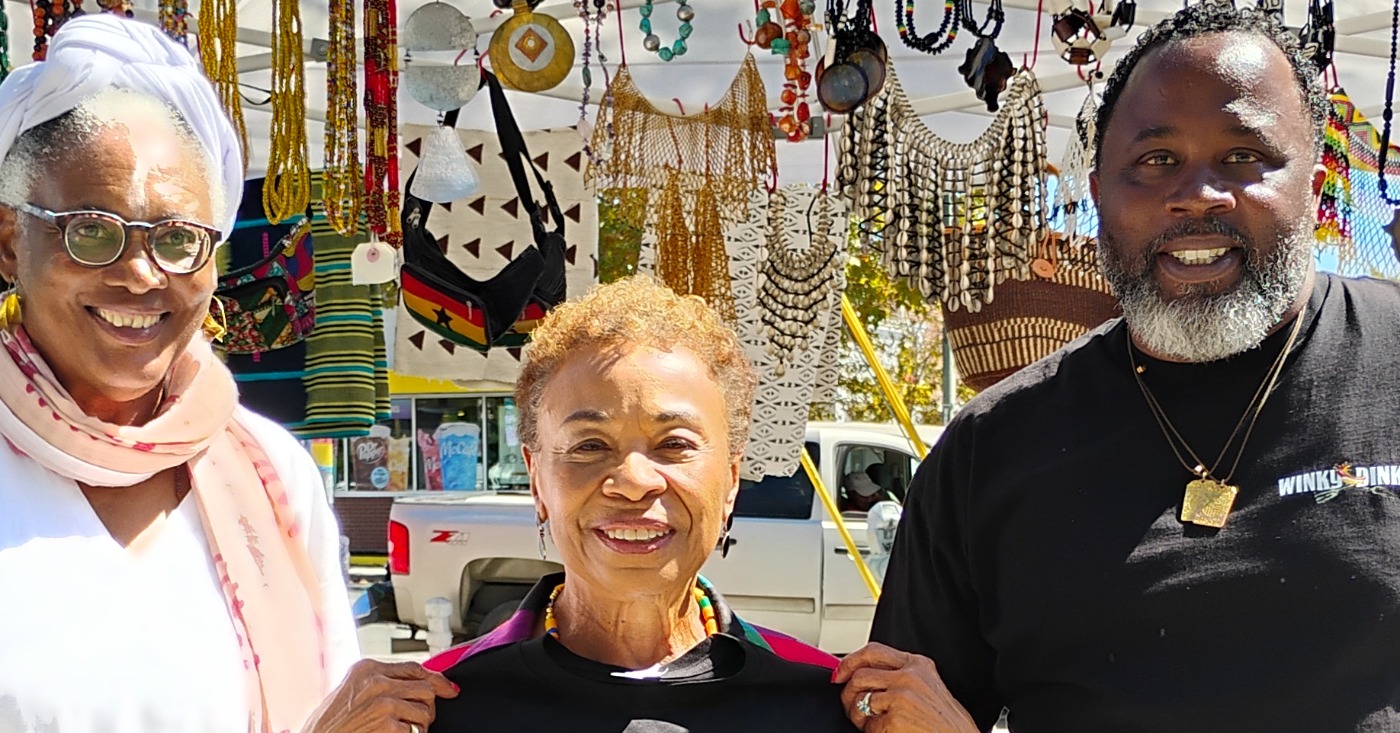
Mayor Barbara Lee stops by to support vendors, Winky Dinky Dogs owner Tyranny Allen
A streamlined Oakland Black-Eyed Pea Festival took place on Sat. Sept. 12 in the lower Temescal neighborhood on the blocked off street that connect Shattuck and Telegraph avenues.
An early start brought together vendor regulars from festival partner, the Freedom Farmers’ Market, and vendors who have supported the festival at its previous location at Marston Campbell Park.
Wanda Ravernell, the festival producer/director was on the verge of cancelling the festival because of funding limitations in May before reaching out to Elaine Smith, president of Farms to grow, Inc., which supervisors the market.
From its start in 2014, the festival has focused on the traditions of African American culture through music, food and art. That emphasis included fresh food vendors, particularly growers of African American legacy crops like black-eyed peas, yams, watermelon, collard greens and okra, which all originate in Africa.
To Fresno farmer Will Scott of Scott Family Farms, the Freedom Farmers’ Market allows him to bring those crops to the inner city – and support the nutrition of African Americans.
Shortly after the festival opened Saturday morning with prayers and salutes to the ancestors by Wakan Wiya Two-Spirit Drum and Awon Ohun Omnira, led M. Zamora and Otobaji Stewart respectively, 86-year-old Scott, the son of a sharecropper, announced that he will put other endeavors aside to dedicate the rest of his life to raise those foods.
Smith shared that Farms to Grow assists Black farmers in helping them overcome one of their main impediments to success – distribution – while creating alliances to help Black people maintain farmland and make it prosperous for younger generations to keep farming and farmland in the family.
As the morning progressed to afternoon, a steady stream of visitors drifted from booth to booth, chatting with vendors and each other.
Scott noted that a market day like this was what he was accustomed to in his youth, where the market was not just about buying things but also a place for valuable social exchange.
The social aspect became even pronounced shortly after midday when Oakland Mayor Barbara Lee stopped by to shop and visit with some of the vendors, including Ellen Bimpeh of Sankofa, and Ravernell who was selling T-shirts designed by Stewart.
Lee is also a fan of Winky Dinky Dogs, an eatery owned by Tyranny Allen whose second brick-and-mortar venture further anchors a hub of businesses at that corner.
As he has in previous years, Andre Thierry of Accordion Soul, closed the festival with a 90-minute set that brought young and the young-at-heart on their feet to dance in a line or as impromptu couples.
And, surprisingly, the man Allen refers to as the mayor of 45th Street, came out on cane and chair to sit by the curb in the sun and listen to music reminiscent of his Louisiana roots. His appearance seemed to echo Scott’s observance about the market: to bring people together.
The Freedom Farmers’ Market is located at 4521 Telegraph Avenue in Oakland and is open on the second and fourth Saturdays of each month until Nov. 14. For more information and to apply to be a vendor, go to https://www.farmstogrow.org/freedomfarmersmarket


Devon Alexander Helps St. Louis Kids Build Confidence Through Boxing

Black Families: Master Your Money, Build Black Futures! #shorts

NFN live presents 🎙️ THE ROAD TO BEYOND IWDM 50: WE CANNOT STOP NOW! 🎙️

COMMENTARY: The Audacity of Joyce Beatty

Consumer Complaints: Are YOU Being Ripped Off By Car Loans? #shorts

Black Owned Banks and Credit Unions — Finding Your Community Lender USE

Houston artist Daniel Yisa redefines art therapy

Project Row Houses launches Southern Survey Biennial III

Kedrick Winfield helps finance city and people development

2027 Chevy Bolt Under $30K—Check These 2 Things First

Arnold Perkins: At 85, a Life of Service, Faith and Giving Back

Women Learned Their Jail Strip Searches Were Recorded. Their Outrage Changed the Law

Black Americans Have Doubts About the U.S. Food System

Latest Massacre in Haiti Reveals Cruelty U.S. Deportations

When Praises Go Up: SUGC Nominated for Prestigious Stellar Award.

Booked and Unbound: The Legacy of Black Women’s Literary Circles

U.S. Sole Nation to Oppose U.N. Resolution Correcting Africa’s Size on World Maps

Prostate Cancer is Twice as Likely to Kill Black Men. Talking to Your Doctor Could Help Save Your Life

Outnumbered: Elbert Cox’s Equation for Greatness

Standoff for Justice: Our Homes Are Worth Fighting For
Devon Alexander Helps St. Louis Kids Build Confidence Through Boxing
Black Families: Master Your Money, Build Black Futures! #shorts
NFN live presents 🎙️ THE ROAD TO BEYOND IWDM 50: WE CANNOT STOP NOW! 🎙️
Consumer Complaints: Are YOU Being Ripped Off By Car Loans? #shorts
Black Owned Banks and Credit Unions — Finding Your Community Lender USE
Houston artist Daniel Yisa redefines art therapy
Project Row Houses launches Southern Survey Biennial III
Kedrick Winfield helps finance city and people development
2027 Chevy Bolt Under $30K—Check These 2 Things First

Headlines and Hotlines 📱
-
 Black History6 days ago
The Youngest American Killed in the Vietnam War
-
 Black History6 days ago
Passing for White, Fighting for Black America: The Courage of Walter White
-
 Sports1 week ago
NFL: Week Two Recap | Jalen Hurts did not fold; Caleb Williams exits game with injury
-
 Black Press7 days ago
Mayor Lee Announces $1 Million Kaiser Permanente Grant for Pilot Program to Address Homelessness, Clean Up Public Spaces throughout Oakland
-
 Art6 days ago
Peter Magubane: a Camera Against Apartheid
-
 Black Press6 days ago
OP-ED: How Head Start Also Helps Parents
