
Minnesota Spokesman-Recorder
Strategies Proposed for Raising People from Poverty
MINNESOTA SPOKESMAN-RECORDER — Earlier this year, the U.S. Partnership on Mobility from Poverty published a report titled, Restoring the American Dream: What Would it Take to Dramatically Increase Mobility from Poverty?


Well, they passed a law in ’64
To give those who ain’t got a little more
But it only goes so far
Because the law don’t change another’s mind
When all it sees at the hiring time
Is the line on the color bar
—Bruce Hornsby and the Range, “The Way it Is”
Earlier this year, the U.S. Partnership on Mobility from Poverty published a report titled, Restoring the American Dream: What Would it Take to Dramatically Increase Mobility from Poverty? Funded by the Bill and Melinda Gates Foundation and supported by the Washington, D.C.-based Urban Institute, this partnership set out to design and implement a series of comprehensive strategies to support current best practices and discover new and innovative approaches to help lift people out of poverty.
The partnership worked directly with community residents living in poverty, public agencies, policymakers, nonprofit organizations, scholars, activists, journalists, social entrepreneurs, and members of the business and faith communities in developing five primary strategies, which are:
- Change the narrative.
- Create access to good jobs.
- Ensure that zip code is not destiny.
- Provide support that empowers.
- Transform data use.
With regard to changing the narrative, the partnership cited three of the most common and erroneous accounts in our discourse on poverty: that “people in poverty have no one to blame but themselves; people in poverty are helpless victims; and the rare, spectacular “rags-to-riches” stories prove that the American dream is still achievable.”
The partnership’s chair, David T. Ellwood, and its executive director, Nisha G. Patel, contend that in order to successfully deflect and debunk these myths we must “humanize” the poor, highlight and confront the systematic realities that help to create and perpetuate poverty, and work directly with others who can refashion and disseminate a new narrative.
All are great ideas, as are the other four strategies that they lay out in this report. The report also speaks directly to several key factors related to poverty and opportunity in America, including the arguments that:
- Hard work is not enough.
- Place matters
- Disparities by race, gender, and immigration status persist
- Poverty is isolating and stigmatizing.
Concerning the concept that “place matters,” the partnership employs the research of Stanford University economist Raj Chetty, who reveals that those living in poverty in cities with dynamic economies (e.g., Boston, Washington, D.C., San Francisco and Seattle) are significantly more likely to advance financially than those residing in America’s rust belt or southern cities.
Steve Dubb, senior editor and columnist for the Nonprofit Quarterly, believes that the partnership’s strategies are sensible and promising. Nonetheless, he asks the critical question, “Are they enough?” adding that “It is notable…what strategies are not included.”
Dubb notes that there is a sole reference to unions, which have “historically been economic ladders,” and absolutely no mention of co-ops, another “promising strategy.” And, in spite of the report’s emphasis on employment, Dubb addresses the absence of any discussion regarding inequities in America’s healthcare and education systems, which are equally as important.
In fairness, as Dubb concedes, the partnership is still working to develop additional ideas and strategies, which will “hopefully fill in some of the gaps.” But while all of these ideas may have the potential to impact change, we still cannot ignore the historical legacy of both individual and institutionalized racism, which recording artist Bruce Hornsby pointed out in his 1986 number one song “The Way it Is” (referenced above). The same sentiment was also presented in the Prince-penned song “Uncle Sam,” recorded by Tevin Campbell in 1993, which speaks of “uncivilized rights with unenforced laws.”
This is why it is paramount that we continue the fight to dismantle the structural forces that cause poverty and reinforce racial disparity while providing equitable access for all Americans to quality education, living wage employment, and adequate health care, among other resources.
This article originally appeared in the Minnesota Spokesman-Recorder.










Featured
Unscripted Sports Talk: Featuring Local Media Stars! #shorts
Vince Wright ditches the script to uncover the heart of local media. Catch authentic, unscripted conversations that celebrate the power of community storytelling.


Vince Wright ditches the script to capture authentic human connection. By centering diverse voices and local perspectives, he transforms podcasting into a powerful community tool. Raw, honest, and completely unscripted. #PodcastTips #Storytelling #LocalMedia #AuthenticVoice
Featured
Par 365: Making Indoor Golf More Accessible in Minnesota #shorts
Par 365 is bridging Minnesota’s golf divide with accessible high-end simulators and an inclusive space for all skill levels. Experience the future of local golf.

Minnesota has a massive golf culture, but a significant divide remains between golfers and non-golfers. Par 365 is bridging this gap by combining high-end simulator technology with an inclusive bar and event space designed to be affordable and approachable for all skill levels. #GolfCulture #MinnesotaGolf #InclusiveSports #GolfTechnology #SmallBusiness
Featured
Honoring Clem Haskins: A Basketball Legend’s Legacy at UMN #shorts
Explore the complex legacy of Clem Haskins and his defining impact on University of Minnesota basketball history. A deep dive into a legendary collegiate career.
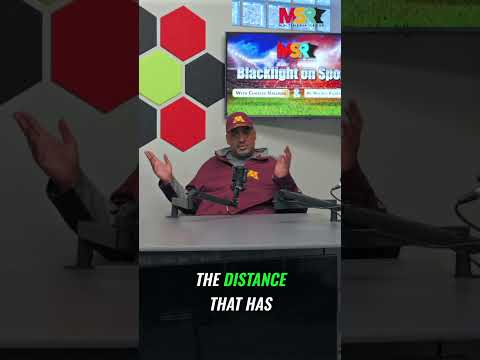
Examining the complex history between Clem Haskins and the University of Minnesota. A look back at the defining moments and the impact of their shared past on collegiate athletics. #ClemHaskins #MinnesotaGophers #CollegeBasketball #SportsHistory
Featured
OTR @ Par 365
Thomas Jackson discusses his journey from pandemic golfer to the founder of Par365, a Roseville space dedicated to making the sport accessible and community-focused.
Thomas Jackson’s favorite part about being a Black business owner in Minnesota is the ability to create community, perspective, autonomy and authentic experiences.
On this episode of MSR On the Radar, Jackson joins host Damenica Ellis to talk about discovering golf during the COVID-19 pandemic and how that hobby became Par365, an indoor golf simulator, bar, restaurant and event space in Roseville that he and his wife opened in December 2023. Their mission was to make golf more accessible, more affordable and more approachable.
Jackson shares how breaking into the industry took marketing, local partnerships and social events, why intimidated newcomers needed extra encouragement, and the programming Par365 built in response, including Golf 101 sessions and a speaker series for middle and high school students. He also talks about moving from a corporate product development career to full-time entrepreneurship, balancing the business with family life, and his advice for aspiring entrepreneurs: compress your vision into a minimum viable product and grow at a reasonable pace.
Listen to the full conversation.
Featured
OTR w LeBrent Speed
LeBrent Speed shares how his B3 Project is revolutionizing networking by prioritizing community impact and mentorship over simple sales.
LeBrent Speed founded The Better Black Business (B3) Project to intentionally combine commerce and community for Black entrepreneurs and authentic allies. Just over two years in, the professional networking program has more than 100 members and is expanding to other cities.
On this episode of MSR On the Radar, Speed shares how a licensed minister who always aspired to work in business became BNI’s first Black regional director, and why he saw a need for more intentional Black networking spaces. He explains B3’s founding principle of serving over selling, defines networking as the intentional pursuit of impactful relationships, and talks about his nonprofit, The Better Black Business Initiative, which trains Black youth, next-generation allies and justice-impacted people to become entrepreneurs.
Speed also discusses his first book, “The Transformation Code: 5 Keys to Transforming Your Life and Impacting the World,” and how it grew out of one of the lowest periods of his life.
Listen to the full conversation.
Featured
OTR w Terresa Moses @ Black Garnett Books
Terresa Moses shares her journey from social justice design to running Black Garnet Books. Discover how she builds community through storytelling and entrepreneurship.
Terresa Hardaway says her favorite part of being a business owner is the chance to intentionally build community. In 2017, she co-founded Blackbird Revolt, a design studio focused on social justice, anti-racism and abolition. In 2024, she acquired Black Garnet Books.
Blackbird Revolt helps government agencies, nonprofits and grassroots organizations with branding, animation, video and audio production, fabrication and other creative work. At Black Garnet Books, Hardaway uses storytelling to show what Black liberation looks like, curating Black and Brown authors and hosting events that center community.
She also shares how she adapted her bookstore during Operation Metro Surge, how her network gave her the confidence to become an entrepreneur, and her advice for anyone starting a business: have a plan, know who you are, and surround yourself with people who will remind you when you forget.
Hardaway is an associate professor of graphic design and director of design justice at the University of Minnesota’s College of Design.

San Diego’s State Workers Demand Better Pay in Major Strike

Unscripted Sports Talk: Featuring Local Media Stars! #shorts

Par 365: Making Indoor Golf More Accessible in Minnesota #shorts

Honoring Clem Haskins: A Basketball Legend’s Legacy at UMN #shorts
NFN live presents Beyond IWDM 50 Podcast
The Hidden Cost of Insurance Loyalty

Retrospectro Talks Viral Videos, Lean Squad, Music & More | Interview

CBCF’s ALC 55 Recap | September 2026

The Washington Informer Celebrates 62 Years | Recap

Heated Seats & Sliding Window: Ultimate Truck Comfort #shorts

OP-ED: Haiti TPS: Have We Lost Sense of Humanity?

Remembering Chauncey Bailey as Student Journalists Face Threats to Truth-Telling

All Skinfolk Ain’t Kinfolk

Poll: Becerra Widens His Lead Over Hilton; Californians Split on Wealth Tax

Rulings Leave Questions Lingering in Nolan Wells Case

Latinas Deserve Equal Pay. Unions Help Make It Happen.

Zakiya Jendayi Arrested, Locked Out of Home by Sheriff’s Deputies

Why Black Artists Struggle to Sell Tours

COMMENTARY: The Audacity of Joyce Beatty

A $2.1 Trillion Wellness Industry Never Built a Daily Practice for Black Children. So This Atlanta Family Did.
San Diego’s State Workers Demand Better Pay in Major Strike
Unscripted Sports Talk: Featuring Local Media Stars! #shorts
Par 365: Making Indoor Golf More Accessible in Minnesota #shorts
Honoring Clem Haskins: A Basketball Legend’s Legacy at UMN #shorts
Retrospectro Talks Viral Videos, Lean Squad, Music & More | Interview
CBCF’s ALC 55 Recap | September 2026
The Washington Informer Celebrates 62 Years | Recap
Heated Seats & Sliding Window: Ultimate Truck Comfort #shorts

Test Subaru’s 11.6-Inch Screen in REAL Daylight #shorts

EV Range Anxiety? Your Daily Commute Needs Just One Overnight Charge #shorts
-

 Black History1 week ago
OP-ED: The Black Church Writes AI’s Next Chapter
-

 Featured6 days ago
Tamiko Armstead | 2026 Lifetime Achiever in Education
-
 Black History1 week ago
Practitioners of African Traditional Spirituality Offer Ancestral Reverence Ritual Oct. 31
-
 Art1 week ago
Kickstarter CEO Everette Taylor Shares Tips on Creating and Growing a Business
-
 Black History1 week ago
Columbus’s Oldest Businesses Still Open: 10 That Have Lasted 75+ Years
-
 Black History1 week ago
COMMENTARY: BIG MAMA SAID: Don’t Throw Away the Gift Just Because It Came Wrapped Wrong
