
Commentary
Spiritually Speaking… Ever Think You’d Be Target Practice
Scripture tells us that accepting Jesus Christ as a way of life is never an easy task. Being crucified, thrown to the lions for fun and games, beheaded or ostracized were all very real possibilities for those who believed and then lived according to the Word of God. Is today so different? Once you commit your life to Christ, isn’t it interesting the kind of attention you attract.

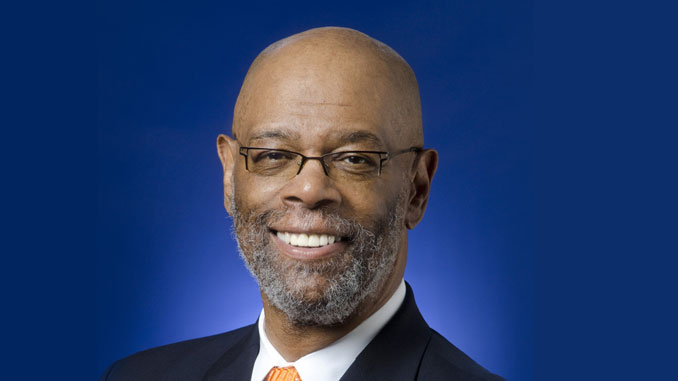
Just how hard is it to be a card carrying Christian these days? I mean we’ve got card carrying Democrats and Republicans. You can get a membership card for every organization from the NAACP to the ACLU. The more I study the more I’m moved to realize that being a professed card carrying Christian, man or woman of faith, is, as I’ve said countless times, tantamount to putting a bull’s eye on your back and inviting an artillery barrage on your location.
Scripture tells us that accepting Jesus Christ as a way of life is never an easy task. Being crucified, thrown to the lions for fun and games, beheaded or ostracized were all very real possibilities for those who believed and then lived according to the Word of God. Is today so different? Once you commit your life to Christ, isn’t it interesting the kind of attention you attract. “Be self controlled and alert. Your enemy the devil prowls around like a roaring lion looking for someone to devour. Resist him, standing firm in faith, because you know that your brothers throughout the world are undergoing the same kind of sufferings.” 1 Peter 5:8-9. Looking around the world today, it is ludicrous not to recognize that religious persecution is still the number one cause of war and man’s inhumanity to man. CNN will attest to the fact that people all over the planet are being systematically annihilated for the so called God they worship. We sometimes take for granted the religious freedom we have in this country and I believe it has lulled us into a sense that being a Christian is easy. Well it’s not and never has been. It’s empowering. It’s enlightening. It’s eternal. But it is not easy.
The good news is, we are not alone and never have been. Living for God is a reality of human existence. Christians believe in life after physical death. We have some insight into what to expect. Faith lets us know the difference between the physical and the eternal. Is it no wonder then, that belief in a deity who demands love and appreciates mercy causes an adverse reaction from those who believe otherwise? Isn’t it a wonder that those who love Christ invite the wrath of Lucifer in all his forms? That target on your back should be worn like a red badge of courage, because courage is what it’s going to take to first withstand the ridicule of the world and next the scorn of those who would tempt the weaknesses of your passions and addictions, let alone threaten your very life. I continue to be moved by the acts of faith contained in the bible and those we see everyday, where a simple declaration that Christ is the Son of God is an invitation to certain and immediate harm and yes even death. Let me at least acknowledge that there is a target on my back and thereby tell the world I’m easy to find.
James
[email protected]











Black Press
Four Tips to Help You Plan a Holiday “Staycation”
“A great staycation starts when you treat your hometown like a destination – book one ‘anchor’ experience, stay somewhere that changes your scenery, and leave room for a little spontaneity,” said Steve Orens, President of FROSCH by Chase Travel, a leading travel agency. “My favorite staycation tip is to make it easy on yourself: choose a walkable area, plan one highlight each day, and let the hotel do the heavy lifting – warm beds, quick breaks, and fewer logistics.”

Holiday travel can be exciting, but between costs, crowded airports and packed schedules, sometimes the idea of staying home can be much more appealing.
If you still want to get away without the hassle of an actual getaway, consider a holiday staycation.
By remaining close to home, you can experience your city from a fresh perspective without the stress of a long trip. Whether you book a night at a local hotel, check out a new neighborhood or just finally get around to seeing that landmark attraction that’s been on your to-do list, you can make staying at home feel like a real getaway.
Here are four tips you can use to create an amazing holiday at home this season:
1. Treat your hometown like a destination
One common theme surrounding area attractions is that they’re more likely to be packed with tourists than locals. If that popular museum, tour or other institution is always “there,” it can be easy to avoid it and say you’ll get there eventually.
A staycation provides a great opportunity to approach those kinds of places like a tourist. Start by making a short list of places or experiences you’ve always wanted to try but never seem to prioritize. You might include a museum, holiday market, historic site, restaurant or neighborhood, or you might attend a holiday-related performance that’s an annual late fall or winter tradition in your area.
“A great staycation starts when you treat your hometown like a destination – book one ‘anchor’ experience, stay somewhere that changes your scenery, and leave room for a little spontaneity,” said Steve Orens, President of FROSCH by Chase Travel, a leading travel agency. “My favorite staycation tip is to make it easy on yourself: choose a walkable area, plan one highlight each day, and let the hotel do the heavy lifting – warm beds, quick breaks, and fewer logistics.”
2. Spend the night away
A hotel stay can provide a change of scenery that makes you feel like you’re enjoying a getaway.
Consider a traditional hotel, bed and breakfast or rental property where you can walk to restaurants, shopping, entertainment or holiday activities. An upscale hotel can also be the centerpiece of your staycation, allowing you to enjoy fine dining, a fitness center, spa services or other on-site experiences.
If you want a quieter, more relaxed experience, find a hotel “off the beaten path,” but still close to home, to enjoy the rhythms and sounds of nature.
3. Be flexible
If your schedule allows, plan your staycation for a weekday or less crowded period — like the days between Christmas and New Year’s Eve — rather than a peak weekend. Hotel rates in the middle of the week tend to be cheaper, and it might be easier to grab a restaurant reservation or performance tickets. Locations might be less crowded as well during the week, making it easier to get around.
Book some experiences in advance to save money but stay open to spontaneous opportunities once you arrive. You might find some great last-minute deals.
4. Try something new
Even if you think you’ve seen everything your hometown has to offer, there’s always something new to explore or discover.
Check out a neighborhood you usually drive through and visit the local shops and other businesses. You can also try a new cuisine at a neighborhood restaurant or kitchen.
Sometimes what’s old can be new again during the holiday season, so if you want to go back to your favorite restaurants and other popular spots, do so with fresh eyes. Order from the eatery’s holiday menu or take a walk when lights, decorations and seasonal programming transform many communities.
Other helpful tips
Although staying at home can eliminate major travel costs, expenses can still add up quickly. Make a staycation budget and then consider ways to help keep costs down.
“A ‘smart’ staycation is one you can pay for comfortably: choose dates with better rates, book flexible options, and keep a small buffer for surprises,” added Orens. “The goal of a staycation is a real reset. Even if you’re close to home, give yourself permission to unplug and find moments to treat yourself – say yes to room service, a spa hour, or a new restaurant you’ve been saving for ‘someday.’”
If you have rewards points from credit cards or loyalty programs, put them toward your hotel to get a free or cheaper night’s stay. Local museums, cultural institutions and attractions often have resident discounts, reduced-price admission days or seasonal offers. Community calendars can provide information about free or low-cost events like holiday concerts, light displays, markets, park activities and other events. If a performance doesn’t normally sell out, wait until the day before or day of to buy tickets, as prices are often reduced and you can find great seats.
With a little creativity, you might find everything you’d want in a holiday vacation. You can enjoy good food, new experiences and an escape from your daily routine – all right at home.
For more financial health tips, visit https://www.chase.com/travel/guide.
For informational/educational purposes only: Views and strategies described in this article or provided via links may not be appropriate for everyone and are not intended as specific advice/recommendation for any business. Information has been obtained from sources believed to be reliable, but JPMorgan Chase & Co. or its affiliates and/or subsidiaries do not warrant its completeness or accuracy. The material is not intended to provide legal, tax, or financial advice or to indicate the availability or suitability of any JPMorgan Chase Bank, N.A. product or service. You should carefully consider your needs and objectives before making any decisions and consult the appropriate professional(s). Outlooks and past performance are not guarantees of future results. JPMorgan Chase & Co. and its affiliates are not responsible for, and do not provide or endorse third party products, services, or other content.
Deposit products provided by JPMorgan Chase Bank, N.A. Member FDIC. Equal Opportunity Lender.
© 2026 JPMorgan Chase & Co.
Black Press
Jendayi Arrest Raises Community Concerns Regarding Sheriff’s Chain of Command
Judge Sandra K. Bean ordered a legally inherited home to be taken from beneficiary Jendayi, citing “undue influence,” and gave it to Court Administrator Phillip Campbell, who Jendayi believes will quickly sell the house and pay himself more than $600,000 in court fees. The disinherited sisters will get the remainder of the proceeds of the sale.
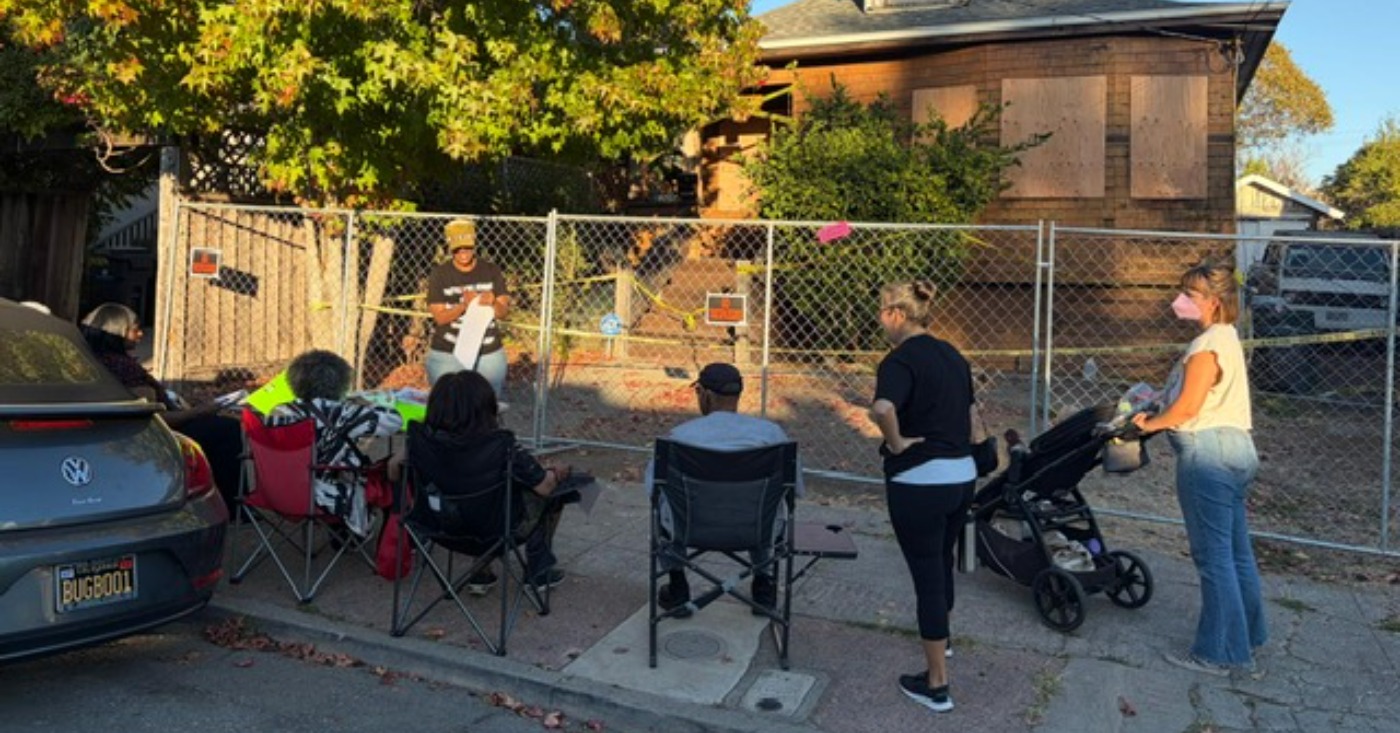
Last Thursday, Zakiya Jendayi parked on the side of the René C. Davidson Courthouse in Oakland to file an emergency stay request in what Jendayi asserts was the “legal” theft of her home of 13 years by a court administrator in her ongoing battle for her rightful inheritance in a probate battle.
But before she could fully emerge from the car at 12th and Oak streets, she was arrested by Alameda County Sheriffs for disobeying a court order and obstruction.
According to observers who have read the transcripts, the Hamlin v. Jendayi case, now in its sixth year, has resulted in what they describe as a gross miscarriage of justice.
Judge Sandra K. Bean ordered a legally inherited home to be taken from beneficiary Jendayi, citing “undue influence,” and gave it to Court Administrator Phillip Campbell, who Jendayi believes will quickly sell the house and pay himself more than $600,000 in court fees. The disinherited sisters will get the remainder of the proceeds of the sale.
Dr. Laura Dean Head named Jendayi as the beneficiary and executor over her estate after Jendayi took care of her during the last months of her life. Head’s disinherited sisters, Della Hamlin and Helaine Head, challenged the validity of Head’s will and trust, despite not being able to recognize Head in a photo during the trial, and Della stating she hadn’t spoken to her sister since 1997 or 1998 and would not have taken care of her during her hospice.
The appellate court upheld Bean’s ruling, which Jendayi asserts was based on a failure to fully consider the transcripts. “They never read the transcripts because if they had, they would have seen the truth,” Jendayi said.
Accompanied by Alameda Couty Sheriff’s Department deputies, Campbell arrived unannounced at Jendayi’s home on Oct. 1 – at the same time Jendayi was being arrested – to change the locks, board up the windows, and place a fence around the property.
Neither Jendayi, nor her supporters who had been in touch with Alameda County leadership and the Sheriff’s Department and been given the impression that nothing would happen without warning had been told Campbell was coming.
“I went to the courthouse to file an emergency stay document, and while getting out of the car, a sheriff immediately approached me and put handcuffs on me before I could stand up,” Jendayi said in recounting the events of Oct. 1. “I asked him if he had a warrant. He said ‘yes,’ and seven other officers immediately approached and surrounded me, with an additional three sheriffs standing back observing.
“I asked why it was necessary to have 10 officers to arrest me. They would not answer. I asked if the sergeant was there and asked if I could speak to him, but the sergeant refused to approach while another officer started taunting me over and over, stating, ‘I was at your house. I was at your house when you refused to surrender. We got you now.’
“The officer put the handcuffs on tight. I asked him to please loosen them. He refused and said they weren’t too tight. Then a Black, female deputy named Lewis, came over and asked him to loosen the handcuffs. Three times the white male officers were overly aggressive with me, and each time Deputy Lewis would step up and they would fall back. They said I was under arrest for refusing to surrender the house on Aug. 25.
“I asked them if I could file my paperwork, and they said, ‘No.’ Several officers asked me if I was on drugs. I felt like my life was in danger. I asked to speak to Deputy Lewis, and she came. I said, ‘Please tell my mother and Joyce Gordon that I would never kill myself.’ I did not want to end up like Sandra Bland, who was murdered by police officers in a Texas jail.”
Zendayi said they then took her to a section in the basement of the courthouse, placed her in a holding cell, and confiscated her belongings around 3 p.m. “They went through everything, took both cell phones, and asked if they could turn off my phones. I said ‘no,’ so they placed them in airplane mode.”
Then she was taken in a van to Santa Rita Jail in Dublin, which, because of traffic took almost two hours. “They asked me if I was on drugs and asked me to give a urine sample. I refused. They took a mug shot, and I was told it would be Monday before I could go to court. They put me in a cell with feces on the wall.
An hour after being detained, a deputy asked Jendayi if she knew someone who worked for the county and then asked if knew someone from the Sheriff’s Office and answered ‘no’ to both questions. He said, “You must know someone because we received orders to release you immediately. You’ll be out of here in about 40 minutes.”
“Rev. Raymond Langford of the Oakland Private Industry Council has been helping me to negotiate for more time to stay in my home,” Jendayi said. “I have an appeal with the Northern District Court of Appeals, where I’ve been promised they will review my case based on its merits. I was hoping to stay (in my home) until they reached a determination.
Rev. Langford reached out to Alameda County Supervisor Nikki Fortunata Bas and Chief Administrator David Brown, and they’ve been in contact with Sheriff Yesenia Sanchez.
“They weren’t going to give me the time I requested, but they did say that I would have time to move my belongings and would also be notified when they were coming,” Jendayi said. “None of that occurred.”
Langford said he spoke to Brown, Fortunato Bas and Sanchez right after the first attempt to evict Jendayi on Aug. 25 as well as the Alameda County Counsel and others to negotiate a time for Jendayi to move her belongings.
“There is no truth to the statement that there was no contact [with court and law enforcement officials.] There was an obvious miscommunication between Sanchez and her officers. They don’t have to inform the public of their actions, I understand that, but Zakiya and the community were concerned after they confiscated her guns.”
(Jendayi relinquished her weapons on Aug. 25 when sheriff’s deputies came to forcibly evict her while her petition for bankruptcy was still pending and should have interrupted the eviction process.)
“The Sheriffs have their own trust issues, and they need to work on that. They are not following the chain of command. David Brown, Fortunato Bas’s chief of staff, was puzzled also. He was told they would be informed when they would be returning. He was also blindsided like all of us.”
“(The Sheriffs’ Department) can come to the supervisors and get millions of dollars, but they can’t exhibit the courtesy to inform a citizen when she needs to move.”
“We, our group, ‘Friends of Zakiya,’ took a letter to Sanchez’s office citing Zakiya’s health issues, asking for more time just last week. Sanchez was a person who ran on the platform that she would not run the Sheriff’s Department on a military strategy, which they did on an African American senior in a comfortable, safe community.
“We understand they have to do their job, but we don’t want them targeting and profiling seniors. There has to be some accountability to the community,” Lankford said.
Supervisor Nikki Bas, deeply concerned with what has occurred, is joining with Supervisor Nate Miley to request a meeting with Attorney General Rob Bonta to request an independent investigation.
Black Press
AC Transit Labor Unions Back Director Joel Young
ATU Local 192 Vice President Nathaniel Arnold stated “our support reflects confidence in Young’s leadership and experience as the longest-serving member of AC Transit’s current Board of Directors. His experience is particularly important as AC Transit confronts serious fiscal challenges while working to preserve and strengthen service.

In the AC Transit Ward 3 election, AC Transit’s labor organizations have recently expressed their endorsement for Director Joel Young, recognizing his longstanding commitment to public transportation, workforce investment, and the employees who keep AC Transit moving every day.
Those unions include the Amalgamated Transit Union Local 192, the International Brotherhood of Electrical Workers Local 1245, and the American Federation of State, County and Municipal Employees Local 3916.
ATU Local 192 Vice President Nathaniel Arnold stated “our support reflects confidence in Young’s leadership and experience as the longest-serving member of AC Transit’s current Board of Directors. His experience is particularly important as AC Transit confronts serious fiscal challenges while working to preserve and strengthen service.
“At a time when difficult decisions lie ahead, Young brings institutional knowledge, longstanding relationships, and a demonstrated commitment to public transportation.
“Since joining the board in 2009, Young has served in key leadership roles, including president and vice president, helping guide AC Transit through periods of growth, innovation, and change.
During his tenure, he helped AC Transit secure more than $600 million in funding to support critical transportation investments. Young has also helped advance workforce development initiatives, support transit technology improvements, expand AC Transit’s zero-emission bus fleet, and strengthen the District’s national presence on transportation policy issues.
His leadership has extended beyond the Bay Area.
Young has represented AC Transit on the national stage, including participation in the White House Roundtable on Clean Bus Manufacturing, where transit leaders and policymakers discussed the future of clean transportation and domestic manufacturing.
Black Press
All Skinfolk Ain’t Kinfolk
An old saying coined by Floridian Zora Neale Hurston in her final major nonfiction work, Dust Tracks on a Road, set in Florida. “All skinfolk ain’t kinfolk” is an idiom that distinguishes shared identity from shared interests.

Byron Donalds wants to be Florida’s next governor. Not on our watch.
Our stance is rooted in an old saying coined by Floridian Zora Neale Hurston in her final major nonfiction work, Dust Tracks on a Road, set in Florida. “All skinfolk ain’t kinfolk” is an idiom that distinguishes shared identity from shared interests.
The congressman has done little to advance the cause of Black workers. In fact, on the AFL-CIO’s legislative scorecard, which tracks how legislators vote on the issues and policies that matter to working people, Rep. Donalds has voted against working people every time except once – giving him a lifetime score of 1%.
He has built his political identity around his support for Donald Trump and his embrace of Gov. Ron DeSantis, two political figures whose policies have undermined, undercut and trampled on our rights and freedoms.
As governor, DeSantis has been nearly surgical with his assault on the Black community, especially in education, where he undermined the state’s Historically Black Colleges and Universities through installing crony politicians; banned books by and about us from school libraries, rejected the country’s first AP course on Black culture, and instituted the STOP WOKE Act, which 11th Circuit judge rightfully demeaned as a “breathtaking assertion of power to ban unpopular ideas from public discourse.”
But he didn’t stop there. Next was Black employment.
As national labor leaders, we have witnessed the relationship between strong worker representation and stronger communities – especially for Black communities who over index when it comes to union membership. Like us, they have experienced the power of collective bargaining to help educators advocate for classroom resources, nurses raise concerns about patient care, and public employees seek fair compensation and safer working conditions. We have also seen the consequences when workers have fewer avenues to influence decisions affecting their livelihoods.
So it should come as no surprise that in 2023, DeSantis signed Senate Bill 256, imposing new restrictions on many public-sector labor unions by creating new challenges for unions seeking to maintain their bargaining certifications. This law is a direct threat to the sovereignty of American workers who have historically used unions to negotiate wages, benefits, workplace protections and the conditions under which essential public services are delivered.
The struggle for civil rights and the struggle for workers’ rights have long intersected. From A. Philip Randolph’s organizing of the Brotherhood of Sleeping Car Porters to the 1968 Memphis sanitation workers’ strike, demands for economic dignity have stood alongside demands for equal treatment under the law.
Dr. Martin Luther King Jr. understood that the promise of civil rights could not be fully realized without economic justice. His final campaign in Memphis reflected the conviction that workers’ rights, racial equality and human dignity were inseparable.
That history offers an important lesson for the present: Political representation and substantive policy representation are not necessarily the same thing.
That is history Byron Donalds has either forgotten or refuses to consider. Either way, it lays bare his disconnect from the collective vision of America most Black people share – one that acknowledges real differences while working to reduce the negative impacts of those differences. Donalds has adopted a different vision – one that thinks it more valiant to turn a blind eye to the disparate outcomes race creates in employment, education, and health care rather than admit there are real, structural issues that need to be addressed.
One person who does seem to understand and is working to do better is Donalds’ opponent, David Jolly, a former Republican congressman now running as a Democrat. He has positioned his candidacy as an alternative to the DeSantis approach, emphasizing affordability, public schools and a different direction for state government. And while we may not share skin color or a cultural history with Jolly, we do share his commitment to fight for equality and the dignity of the American worker.
The November 3 gubernatorial election presents Floridians with a choice between candidates offering different approaches to governing. Byron Donalds has sided with DeSantis who has made their disdain for Black people loud and law, and Jolly who sided with us and our understanding of community and collective power.
Every election is an opportunity to examine not only what candidates promise, but also what their records and policy commitments reveal.
For working people, that examination must include a fundamental principle: Economic prosperity and democratic participation are strongest when the people who do the work have a meaningful voice in shaping their future.
Florida’s next chapter will be written through the decisions of its people and the accountability they demand of those entrusted with public office.
That is the enduring promise of democracy—and a responsibility that belongs to all of us.
Fredrick D. Redmond, the highest-ranking African American labor official in history, is the Secretary-Treasurer of the AFL-CIO, the nation’s largest labor federation representing 65 unions and nearly 15 million workers.
Fedrick C. Ingram is the Secretary-Treasurer of the American Federation of Teachers (AFT), representing 1.8 million educators, healthcare workers, and public employees.


Byron Donalds wants to be Florida’s next governor. Not on our watch.
Our stance is rooted in an old saying coined by Floridian Zora Neale Hurston in her final major nonfiction work, Dust Tracks on a Road, set in Florida. “All skinfolk ain’t kinfolk” is an idiom that distinguishes shared identity from shared interests.
The congressman has done little to advance the cause of Black workers. In fact, on the AFL-CIO’s legislative scorecard, which tracks how legislators vote on the issues and policies that matter to working people, Rep. Donalds has voted against working people every time except once – giving him a lifetime score of 1%.
He has built his political identity around his support for Donald Trump and his embrace of Gov. Ron DeSantis, two political figures whose policies have undermined, undercut and trampled on our rights and freedoms.
As governor, DeSantis has been nearly surgical with his assault on the Black community, especially in education, where he undermined the state’s Historically Black Colleges and Universities through installing crony politicians; banned books by and about us from school libraries, rejected the country’s first AP course on Black culture, and instituted the STOP WOKE Act, which 11th Circuit judge rightfully demeaned as a “breathtaking assertion of power to ban unpopular ideas from public discourse.”
But he didn’t stop there. Next was Black employment.
As national labor leaders, we have witnessed the relationship between strong worker representation and stronger communities – especially for Black communities who over index when it comes to union membership. Like us, they have experienced the power of collective bargaining to help educators advocate for classroom resources, nurses raise concerns about patient care, and public employees seek fair compensation and safer working conditions. We have also seen the consequences when workers have fewer avenues to influence decisions affecting their livelihoods.
So it should come as no surprise that in 2023, DeSantis signed Senate Bill 256, imposing new restrictions on many public-sector labor unions by creating new challenges for unions seeking to maintain their bargaining certifications. This law is a direct threat to the sovereignty of American workers who have historically used unions to negotiate wages, benefits, workplace protections and the conditions under which essential public services are delivered.
The struggle for civil rights and the struggle for workers’ rights have long intersected. From A. Philip Randolph’s organizing of the Brotherhood of Sleeping Car Porters to the 1968 Memphis sanitation workers’ strike, demands for economic dignity have stood alongside demands for equal treatment under the law.
Dr. Martin Luther King Jr. understood that the promise of civil rights could not be fully realized without economic justice. His final campaign in Memphis reflected the conviction that workers’ rights, racial equality and human dignity were inseparable.
That history offers an important lesson for the present: Political representation and substantive policy representation are not necessarily the same thing.
That is history Byron Donalds has either forgotten or refuses to consider. Either way, it lays bare his disconnect from the collective vision of America most Black people share – one that acknowledges real differences while working to reduce the negative impacts of those differences. Donalds has adopted a different vision – one that thinks it more valiant to turn a blind eye to the disparate outcomes race creates in employment, education, and health care rather than admit there are real, structural issues that need to be addressed.
One person who does seem to understand and is working to do better is Donalds’ opponent, David Jolly, a former Republican congressman now running as a Democrat. He has positioned his candidacy as an alternative to the DeSantis approach, emphasizing affordability, public schools and a different direction for state government. And while we may not share skin color or a cultural history with Jolly, we do share his commitment to fight for equality and the dignity of the American worker.
The November 3 gubernatorial election presents Floridians with a choice between candidates offering different approaches to governing. Byron Donalds has sided with DeSantis who has made their disdain for Black people loud and law, and Jolly who sided with us and our understanding of community and collective power.
Every election is an opportunity to examine not only what candidates promise, but also what their records and policy commitments reveal.
For working people, that examination must include a fundamental principle: Economic prosperity and democratic participation are strongest when the people who do the work have a meaningful voice in shaping their future.
Florida’s next chapter will be written through the decisions of its people and the accountability they demand of those entrusted with public office.
That is the enduring promise of democracy—and a responsibility that belongs to all of us.
Fredrick D. Redmond, the highest-ranking African American labor official in history, is the Secretary-Treasurer of the AFL-CIO, the nation’s largest labor federation representing 65 unions and nearly 15 million workers.
Fedrick C. Ingram is the Secretary-Treasurer of the American Federation of Teachers (AFT), representing 1.8 million educators, healthcare workers, and public employees.

By Fred Redmond
Everywhere you look, everything costs too much. Families are stretching every paycheck to cover soaring grocery bills. Too many are struggling to make rent. Child care, health care and gas bills continue to strain household budgets. Working people are doing everything right, yet too many are still falling behind.
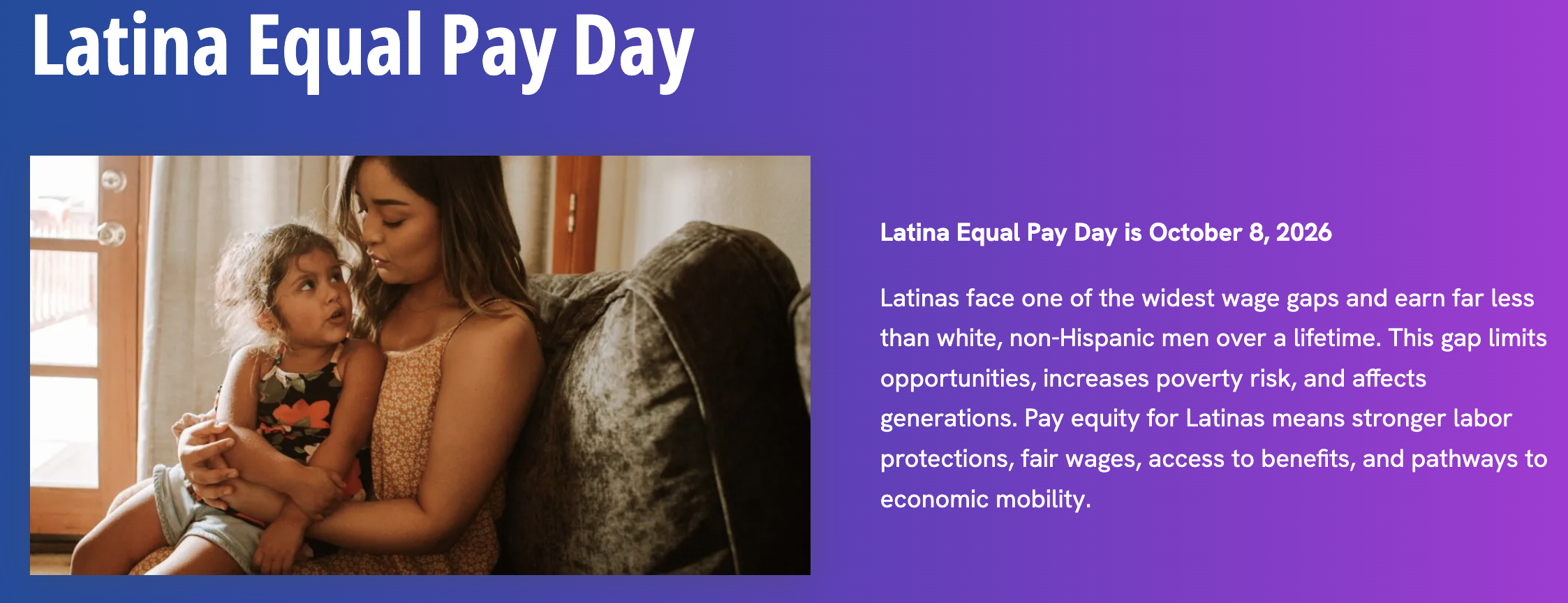
For Latina workers, this crisis is compounded by a persistent and unjust pay gap. That’s why we observe Latina Equal Pay Day on Oct. 8 this year. It brings attention to the fact that among full-time, year-round workers, Latinas earned just 60 cents in 2025 for every dollar earned by white men. That wage gap isn’t just a statistic—it means smaller paychecks, fewer opportunities to build wealth, less financial security and harder choices about how to provide for their families.
Latinas deserve equal pay for equal work. Full stop. Anything less hurts working families and weakens our economy. A union contract can help level the playing field.
The evidence is clear. Hispanic workers overall receive a large wage boost from union membership, with a 16.4% wage premium compared with nonunion Latino workers. Latinas in a union earn about $15,288 more per year than Latinas who are not in a union. Most importantly, union contracts also help narrow the gender pay gap: Women working full time in union jobs earn 86.2 cents for every dollar earned by men who are union members—a significantly smaller gap than among nonunion workers.
Negotiated contracts replace arbitrary decisions with clear wage scales, transparent pay systems and enforceable workplace standards. Instead of leaving pay to bias or favoritism, union contracts establish fair standards that workers can enforce.
A report from the Economic Policy Institute finds that strengthening workers’ rights to organize and increasing union density would significantly reduce racial wage gaps while strengthening our economy and our democracy. Communities with higher union membership invest more in public education, are more likely to expand access to health care and provide stronger unemployment protections when people lose their jobs.
Our labor movement has always understood that civil rights and workers’ rights are inseparable. Dr. Martin Luther King Jr. recognized that truth when he stood with striking sanitation workers in Memphis, Tennessee. Today, we carry that legacy forward by fighting for workplaces where every worker is respected, protected and paid fairly.
Latina Equal Pay Day should not simply remind us how far we still have to go. It should remind us that we already know how to make progress. Progress happens when workers organize. It happens when we bargain together. And it happens when we stand in solidarity with one another. That’s why we must elect leaders who will fight to protect workers’ rights, strengthen unions and defend our democracy.
We must recommit ourselves to building an economy where every worker is valued, every paycheck reflects the dignity of work and every Latina receives the equal pay she has long deserved. Because when Latinas are paid fairly, every family can afford to build a better future.
Fred Redmond, the highest-ranking African American labor official in history, is the secretary-treasurer of the AFL-CIO, the nation’s largest labor federation representing 65 unions and nearly 15 million workers.


WCCUSD Joins Statewide Organic School Food Purchasing Cooperative

Democrats, Community Groups Back Measure EE to Change How Oakland Is Governed

Four Tips to Help You Plan a Holiday “Staycation”

Veterans Housing Project Proposed for South Richmond

Mayor Lee Delivers 2026 State of the City Address: ‘Oakland Continues to Be on the Move’

Oakland Awarded More than $14 Million in State Funding

Jendayi Arrest Raises Community Concerns Regarding Sheriff’s Chain of Command

Marin County Supes Expand Small Business Options with Home Kitchen Pilot Program

Allen Temple Baptist Church Hosts Free Prostate Cancer Screenings on Oct. 17

AC Transit Labor Unions Back Director Joel Young

The Youngest American Killed in the Vietnam War

Latest Massacre in Haiti Reveals Cruelty U.S. Deportations

OPINION: Nolan Wells’ Death One of Several Signifying Racial Terror Lives on in U.S. South

Passing for White, Fighting for Black America: The Courage of Walter White

OP-ED: If AI Is the New Language of Power, Then NAN Wants Black Communities Fluent

OP-ED: Haiti TPS: Have We Lost Sense of Humanity?

OP-ED: How Does Your State Rank for Pre-K?

Henry O. Flipper: A Trailblazer at West Point and Beyond

Asm. Smallwood-Cuevas’s Bill Repealing ‘Racist’ CalWORKs ‘Man-in-the-House’ Rule Clears Legislature

NBA All-Star Damian Lillard Returns Home for 15th Annual Backpack Giveaway

Sherrell Dorsey on Tech, Black Innovation, and Impactful Businesses

Community-Centered Business: Adapting to Support a City in Need #shorts

The Conversation with Al McFarlane

Serve First: The Secret to Life and Business Success #shorts

Denise Upshaw – Founder, Black Houston Creative Network

Houston advocates breakdown Black voter fatigue

Digital Rearview Mirror Test: Blind Spots & Camera Views #shorts

HE SAID, HE SAID, HE SAID, Separating Fact, Fear, & Freedom w/ Allen Orr, FRI. 2.22.26 7PM EST

Hot Girl Walk at Sabathani Community Center | Ernestine Belton Playground | MSR

NEW INVESTIGATION INTO FEDERAL RESERVE GOVERNOR
-

 Black Press1 week ago
Zakiya Jendayi Arrested, Locked Out of Home by Sheriff’s Deputies
-

 Black Press1 week ago
A $2.1 Trillion Wellness Industry Never Built a Daily Practice for Black Children. So This Atlanta Family Did.
-
 BlackPressUSA6 days ago
Latinas Deserve Equal Pay. Unions Help Make It Happen.
-

 Art1 week ago
Montclair Brewery: Brewing Culture, Community, History
-

 Black History1 week ago
Listening as a Lifeline: A Doula’s Witness to Black Maternal Health
-

 Black Press1 week ago
COMMENTARY: But God!
