
Food
Showcase to Highlight Alternative Holiday Food Choices
WASHINGTON INFORMER — With the holiday season fast approaching, a coalition committed to food equity has set out to curb District residents’ unhealthy dietary choices with a gathering that will familiarize them with locally produced foods and spices they can share with the whole family. The inaugural Ethnic Eats Holiday Party, hosted by the Fresh Food Factory Market and United Nations of Individuals Fighting Impossibilities, will take place at Martha’s Table on Elvans Road in Southeast in early November.


By Sam P. K. Collins
With the holiday season fast approaching, a coalition committed to food equity has set out to curb District residents’ unhealthy dietary choices with a gathering that will familiarize them with locally produced foods and spices they can share with the whole family.
The inaugural Ethnic Eats Holiday Party, hosted by the Fresh Food Factory Market and United Nations of Individuals Fighting Impossibilities, will take place at Martha’s Table on Elvans Road in Southeast in early November.
There, guests will learn how to use various vegetables, fruits, herbs and spices in uniquely prepared holiday meals that can be ordered in large quantities.
“This is a chance to introduce them to a better quality of life and different food options. We host various demos and trainings to help people understand what foods are best and in what circumstances,” said Amanda Stephenson, owner of the Fresh Food Factory Market, a business based in the Anacostia Arts Center.
On Nov. 2, the Ethnic Eats Holiday Party will feature more than 15 local caterers, crafters, bakers and chefs sharing a bevy of freshly prepared holiday hors d’oeuvres, appetizers, entrees and desserts — not much different than what residents usually consume during the holidays.
Stephenson expressed her hope that families watching the demonstrations would be compelled to start a relationship with the local vendors that will lead to better health outcomes.
“In the last months of the year, people gain one to three pounds, and that’s not good for them,” she said. “We’re consciously countering that and hoping that people connected with various organizations can order through these vendors during the holiday season.”
Some experts designate the holiday season as the time for overindulging in readily available food that’s high in calories and fat. Eating more fruits and vegetables, engaging in more aerobic activity and avoiding holiday treats on display have been heralded as methods of maintaining weight in the weeks between Thanksgiving and Christmas
The Ethnic Eats Holiday Party counts among several efforts to raise the public consciousness about the perils of unhealthy food. Earlier this month, several D.C. Council members, with the support of the Don’t Mute My Health coalition, introduced legislation for an excise tax on sugary drinks they said would curb consumption and fund public health programs for communities east of the Anacostia River.
People living in Wards 7 and 8, home to a significant portion of the District’s food deserts, would have much to gain from expanded food options, Last year, a report by the Washington Council of Governments and Virginia Commonwealth University showed a nearly 30-year gap in life expectancy between D.C. residents living in the affluent Ward 3 and Ward 8. In Ward 8, people suffer from diabetes, hypertension and other diet-related chronic ailments related to not having enough walkable grocery stores.
Since opening in the Anacostia Arts Center in May, the Fresh Food Factory Market has exposed Ward 8 residents to spices and grains originating from India, Ethiopia. Haiti, Ghana and other places of significance to the District’s immigrant population. EasyNTasty Jollof Rice counts among the several products gracing its shelves.
Penelope Cudjoe, one of the masterminds behind the manufactured West African food staple, has been scheduled to lead a cooking demonstration at Martha’s Table on Nov. 2. Since launching their venture four years ago, she and her husband Kwamena Cudjoe have built a following among jollof rice eaters, old and new, that frequent nearly two dozen stores in the D.C. metropolitan area.
Penelope Cudjoe, whose relationship with the Fresh Food Factory Market grew out of concern for Ward 8 residents seeking alternative food options, said the partnership has been mutually beneficial.
“Since we started at Fresh Food Factory Market, our product has done very well for those who don’t know how to cook jollof rice,” said Cudjoe, co-owner of AMAC Foods International, LLC, a Gaithersburg, Maryland-based business that produces EasyNTasty Jollof Rice.
“Jollof rice is an old food but this is the first time it has been packaged,” Cudjoe said. “It’s similar to jambalaya. We cut back on the cooking hours from more than an hour to just 35 minutes. If you use our product, you use less oil and no tomatoes, MSG and artificial colors. These are all-natural, plant-based ingredients used in an FDA-approved facility in the United States.”
This post originally appeared in The Washington Informer.














Black Press
The Jerk Man Partners with Top Chef Alum Nelson German for Thanksgiving Campaign
THE BALTIMORE TIMES — The campaign invites families to bring a new flavor to their Thanksgiving tables with The Jerk Man’s signature jerk turkey recipe, accompanied by Chef Nelson German’s cocktail and mocktail pairings. Balanced for heat, flavor, and spice, The Jerk Man offers a bold new take on a holiday classic.

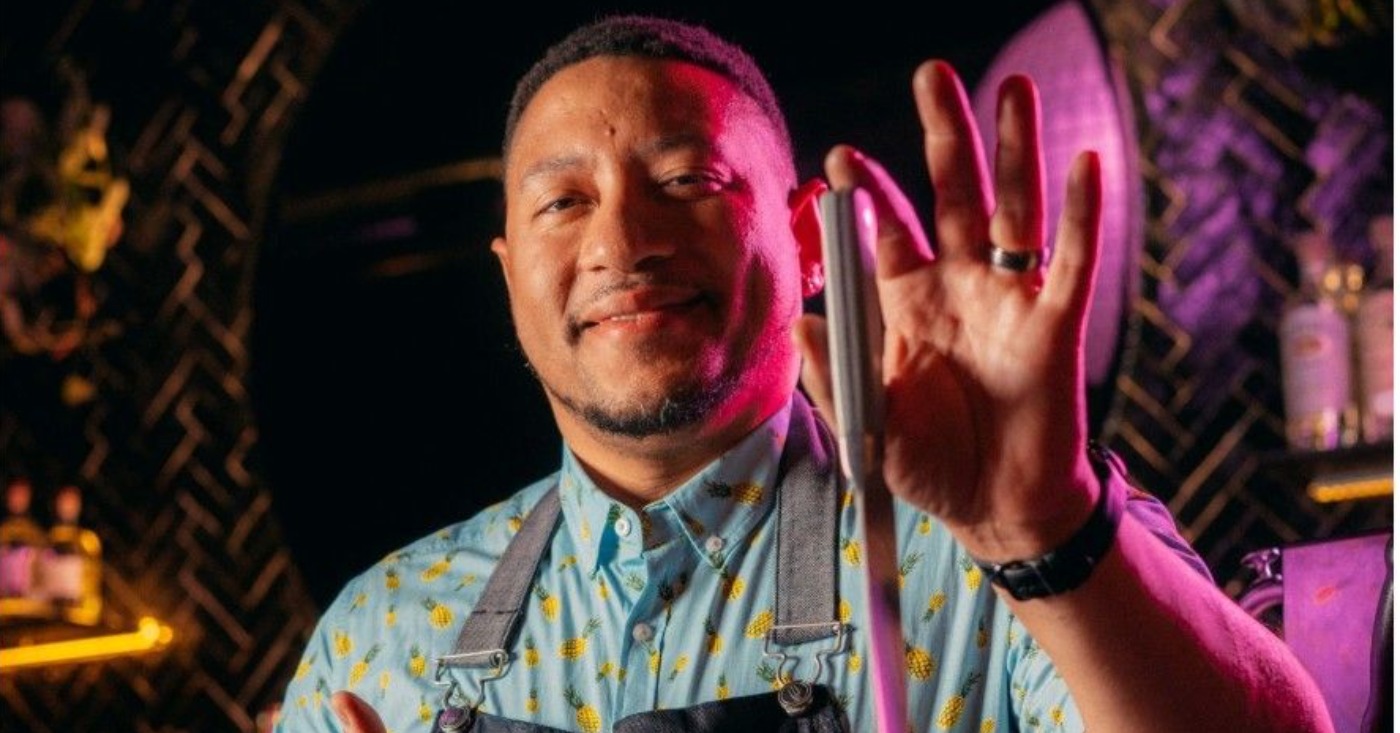
“Bring the Jerk to Thanksgiving” puts a real Jamaican spin on the holiday table with a signature jerk turkey recipe and cocktail and mocktail pairings.
Chicago, IL – The Jerk Man, a Jamaican jerk dry rub made in Jamaica, has partnered with Chef Nelson German, Top Chef alumnus, restaurateur, and author, for its first-ever “Bring the Jerk to Thanksgiving” campaign.
The campaign invites families to bring a new flavor to their Thanksgiving tables with The Jerk Man’s signature jerk turkey recipe, accompanied by Chef Nelson German’s cocktail and mocktail pairings. Balanced for heat, flavor, and spice, The Jerk Man offers a bold new take on a holiday classic.
Thanksgiving is about the people, stories, and traditions that bring families and friends together. “Bring the Jerk to Thanksgiving” celebrates that spirit, inviting home cooks to give the turkey its own place among the most-loved dishes on the table.
A Top Chef’s Guide to Thanksgiving with Flavor
Named one of TIME’s 2026 Latino Leaders, Chef Nelson German is known for his Afro-Latino culinary perspective and restaurants including alaMar Kitchen & Bar, Sobre Mesa, and Meski. He recently released the cookbook Caribbean Cocktails: Drinks and Bites from the Afro-Latino Diaspora.
“Food is how I bring people together and share a little of who I am,” said Chef German. “My Dominican roots and Caribbean heritage are always part of that, especially around the holidays. I love using Jerk Man Jerk Seasoning on my Thanksgiving turkey because it brings that authentic Jamaican flavor, with bold spices and beautiful heat that make every bite even more delicious than the last. It’s my way of bringing Island culture to a holiday classic and giving everybody at the table a reason to come back for more.”
The idea is simple: honor the traditions everyone loves, and give them another reason to ask for seconds.
Real Jamaican Jerk, Made in Jamaica. Your Way.
The Jerk Man Jamaican Jerk Dry Rub is made in Jamaica with allspice (pimento) and Scotch bonnet, the heart of real jerk, and balanced for heat, flavor, and spice so you taste the jerk, not just the burn. It comes in two heat levels, Spicy and Mild, and because it’s a dry rub, you’re in control: use a little for a gentle kick or more for full jerk. It’s made for the holiday table and stays by the stove all year.
Home cooks can use it to bring real Jamaican jerk to season:
The turkey: a real Jamaican jerk kick for the star of the holiday table.
Sweet potatoes: a savory, spice-filled makeover for a classic side.
Roasted vegetables: everyday vegetables turned into crowd-pleasers.
Holiday leftovers: a jerk twist on the day-after turkey sandwich.
The campaign also features “The Toast,” pairing jerk turkey with Caribbean-inspired holiday cocktails and mocktails, inspired by Chef German’s new book, Caribbean Cocktails: Drinks and Bites from the Afro-Latino Diaspora. Published by Ten Speed Press in June 2026 and written with Andréa Lawson Gray, a James Beard Award-winning author, Caribbean Cocktails includes more than 40 drink recipes and 20 food recipes.
Recipes for The Jerk Man 24-hour Jamaican Jerk Turkey and Two Signature cocktails below:
THE JERK MAN 24-HOUR JAMAICAN JERK TURKEY (For a 12–14 lb whole turkey)
3/4 cup The Jerk Man Spicy Dry Rub
6 scallions, roughly chopped
1 medium yellow onion, chopped
6 cloves garlic
2–3 Scotch bonnet peppers
1½ tablespoons fresh thyme leaves
1 tablespoon freshly grated ginger
2 tablespoons ground Jamaican pimento (allspice)
1 teaspoon ground cinnamon
1/2 teaspoon ground nutmeg
1 teaspoon freshly ground black pepper
2 tablespoons dark brown sugar
1/4 cup soy sauce
¼ cup fresh lime juice
1 tablespoon Jamaican Browning
2 tablespoons white vinegar
3 tablespoons neutral oil
2 tablespoons water, as needed for blending
JERK MAN SIGNATURE COCKTAILS BY CHEF NELSON GERMAN
Pineapple Old Fashioned
Doctor Bird pineapple rum, Pasión añejo t
Black Press
Richmond Neighbors Put Pantry Power on the Map
Richmond Area Mutual Aid has released a new digital map identifying Little Free Food Pantries across the city to help residents combat rising grocery costs. These neighborhood outposts operate on a mutual aid model, encouraging community members to leave shelf-stable goods and fresh produce for those in need. While some locations began as small pandemic-era projects, they have evolved into essential hubs supported by local families, retirees, and nonprofit organizations. Organizers are now seeking new hosts to expand this autonomous network further. Read more.
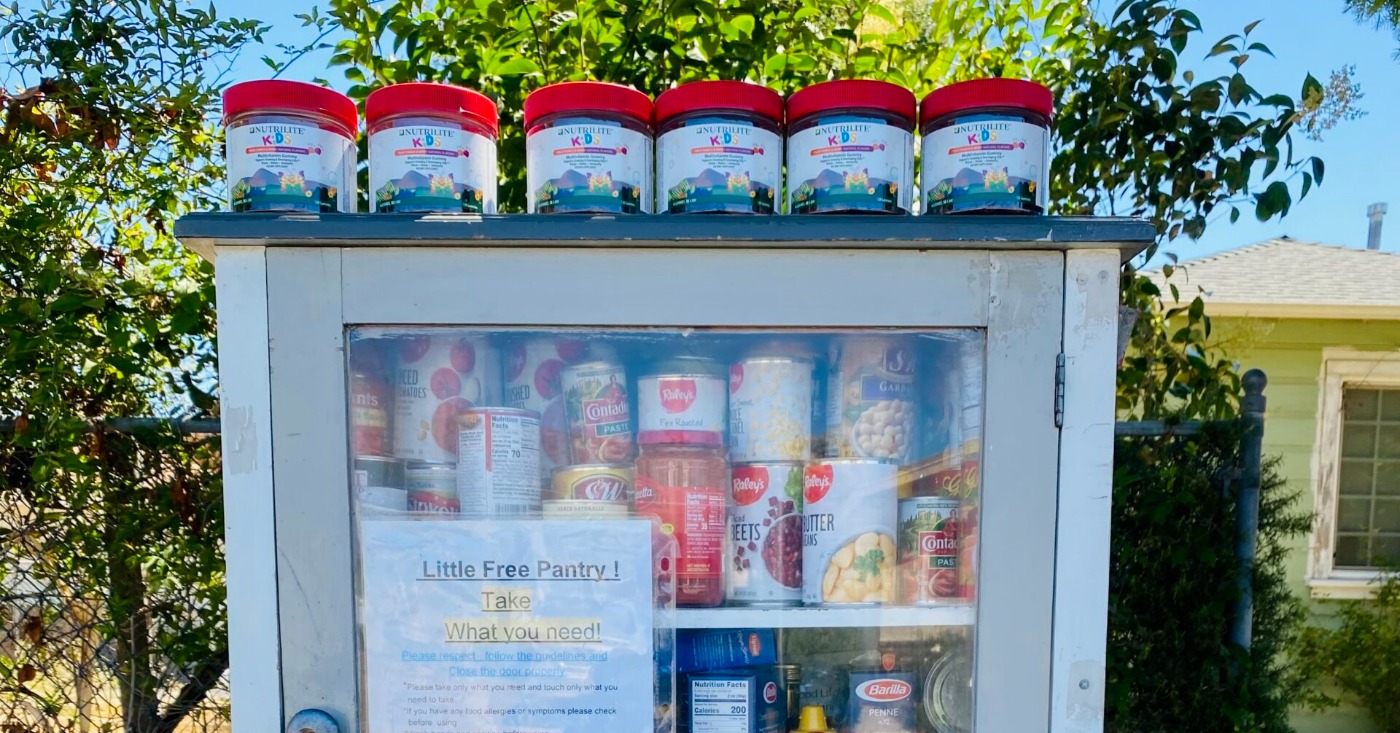
In Richmond, a small cabinet can carry a big message: dinner is here, no questions asked. Richmond Area Mutual Aid (RAMA) has created a map of current Little Free Food Pantries across the city. The neighborhood outposts encourage anyone to take what they need and leave what they can.
The map connects residents with pantries that may be as simple as a shelf, box or cabinet outside a home or business. According to RAMA’s website, the spaces can hold shelf-stable groceries and fresh produce that can safely spend some time outside refrigeration. The operating principle is as clear as the group’s motto: “Give what you can, take what you need.”
One of the map’s sites is near 34th Street and Roosevelt Avenue, where Achala Jayagoda and her family host a pantry that began as a Little Free Food Table during the pandemic. Her son, Eagle, founded it. The pantry has since grown into a lasting neighborhood resource. Amid the high cost of food, Jayagoda said supplies can disappear with startling speed.
“It continues to serve the community with everyone’s support,” Jayagoda toldTthe Richmond Standard. She said the people who contribute are not only nearby neighbors, but donors from elsewhere in Richmond and, at times, beyond the city. A few nonprofit organizations pitch in, too.
Jayagoda has also heard from retirees who collect end-of-day giveaways from grocery stores and bakeries and bring them to the pantry. Sometimes the deliveries include fresh food. At first concerned about leaving perishables out, she said it turns out those items move quickly. It’s a sign, in her view, of how urgently people need the help.
In fact, the pantry can be emptied within hours. Then the same community that uses it swings back into action. “Thankfully, the community helps restock it as quickly as possible so people can continue getting food,” Jayagoda said. As the holidays approach, she hopes that circle of giving will widen to reach more families.
RAMA describes itself on its website as a group of neighbors from Richmond and nearby communities working toward a place that is “safe, joyful and thriving.” The pantry project turns that broad aim into something concrete: a can of beans, a bag of rice, a loaf of bread—and a nearby place to share it.
Keeping each pantry going takes more than a sturdy box. RAMA’s website says every location needs an individual or organization willing to place the pantry on its property, and a team of stewards who can stock and clean it. A host may also serve as a steward. That local team is the point: RAMA wants each pantry to become an autonomous neighborhood hub supported over time by people who live nearby.
For residents ready to start one, RAMA says it can guide or support pantry construction and installation, share reclaimed food and help hosts adapt shelving or other materials into a workable setup. RAMA has announced free pantry build days Nov. 14 and Dec. 12; residents can email [email protected] for details.
Check out the Richmond pantry map below and get more information from RAMA at https://www.wegotusrichmond.org/pantries/. Visit RAMA on Instagram at @RichmondAreaMutualAid.
Black History
From Backyard Grilling to Jack London Square: Jamale Carlyle’s Chicken Wing Success Story
Jamale Carlyle turned a backyard hobby into a flourishing business after using grilling to cope with the loss of his mother and sister. The former corporate executive and CPA transitioned from a twenty-year career in the power industry to selling chicken wings at farmers’ markets in Tracy and Oakland. Following immediate success and viral social media attention, Carlyle opened two permanent storefronts and established a charitable partnership to support local youth. His journey highlights a unique path from internal auditing to community entrepreneurship. Read more.
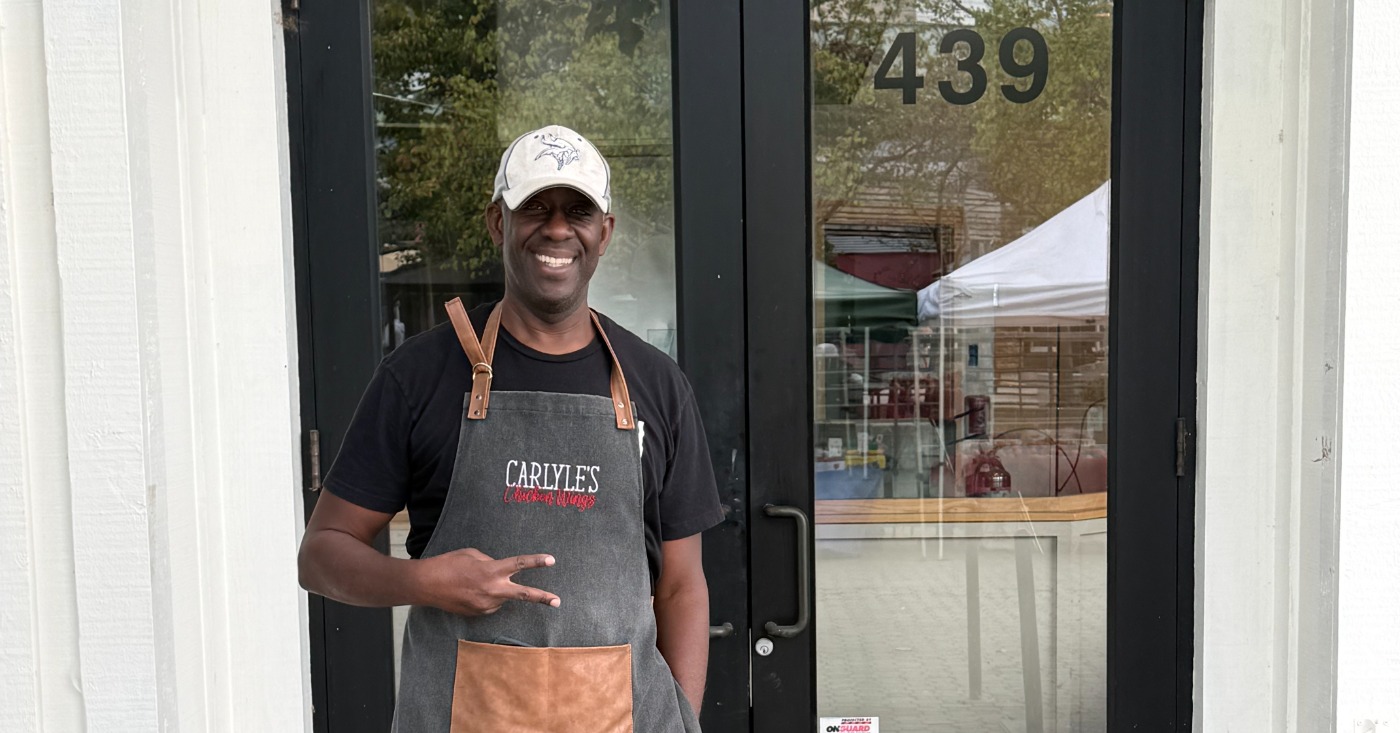
For Jamale Carlyle, what began as a way to cope with personal loss has grown into a thriving chicken wing business with locations in Tracy and Oakland’s Jack London Square.
Raised in Los Angeles, Carlyle remains a southern kid at heart, guided by the values and principles instilled in him growing up. In 2020, he lost his sister, and two months later, his mother passed away. The losses left him grieving half of his immediate family and searching for a way forward.
He turned to God, and to two favorite pastimes: grilling chicken wings and deep sea fishing. Friends who gathered in his backyard encouraged him to turn his chicken wings into a business.
Carlyle had built a successful corporate career before becoming an entrepreneur. An economics graduate of the University of California, Irvine, he earned a master’s degree in accounting from the University of Southern California and became a certified public accountant (CPA).
He spent more than 20 years in the power industry, including working for Edison International in Los Angeles and Boston. He later joined JP Energy Partners in Dallas, helping its team take the company public.
After moving to San Francisco in 2016, Carlyle spent 10 years with Pattern Energy, a wind energy company, where he served as vice president of Internal Audit and took on numerous corporate responsibilities.
But in 2025, grilling became more than a hobby. Carlyle began selling his wings at farmers’ markets, initially dedicating four hours every Saturday. Nervous about his first outing in Tracy, he wondered whether his friends had simply been encouraging. Instead, he sold out on opening day.
He later brought his business to Jack London Square’s Farmers Market, where he again sold out on his first day. As demand grew, he expanded into catering before opening his Tracy storefront in May 2026 and his Jack London Square location in July.
Social media helped fuel the momentum. In Tracy, enthusiastic reviews on the community’s Rants and Raves Facebook page brought customers through the door. His Jack London Square debut also gained traction online, generating approximately 100,000 views on social media on his on opening day.
Still processing the rapid growth, Carlyle describes the business as something that began in his backyard as a stress reliever and became an unexpected calling, and a way of giving back.
“Giving back” has led to a partnership with Mike Jenkins, owner of Oakland Strong, a nonprofit gym known for Olympic style weight lifting and developing national and international champions. After Jenkins visited Carlyle’s store with members of his team, Carlyle returned the visit, and the two began discussing ways to partner to support the community.
“I’m really big on charity. I believe in giving back to the community,” Carlyle said. “I knew before I opened my store, I’d be doing something like this, this is what God wants me to do.”
Their collaboration will introduce the “Oakland Strong Bowl,” featuring 10 dry-rub Cajun wings and a vegetable-rice bowl for $17.99, with $2 from each purchase donated to the Oakland Strong Foundation. The initiative is expected to launch in early November.
“This builds community in Oakland and Jack London Square,” Carlyle said.
Looking ahead, Carlyle plans to expand the menu with chicken thighs, chicken tacos and additional sides. He is also pursuing a liquor license to create a destination where customers can enjoy wings while watching sports.
For now, he is focused on growing his two locations. But with customers embracing his food and his commitment to giving back, Carlyle sees the possibility of bringing his chicken wings to more communities throughout the Bay Area.
Black Press
Trader Vic’s Returns to Its Oakland Roots
Trader Vic’s, the internationally recognized brand and birthplace of the original Mai Tai, has officially returned to its roots in Oakland. Originally founded in 1934 on San Pablo Avenue before moving to Emeryville, the hospitality giant has launched Trader Vic’s Outpost at Oakland International Airport’s Terminal 2. The new full-service location offers travelers breakfast, lunch, dinner, and cocktails in a 108-seat space designed to celebrate the city’s status as a top national food destination. Visit the website to read more.
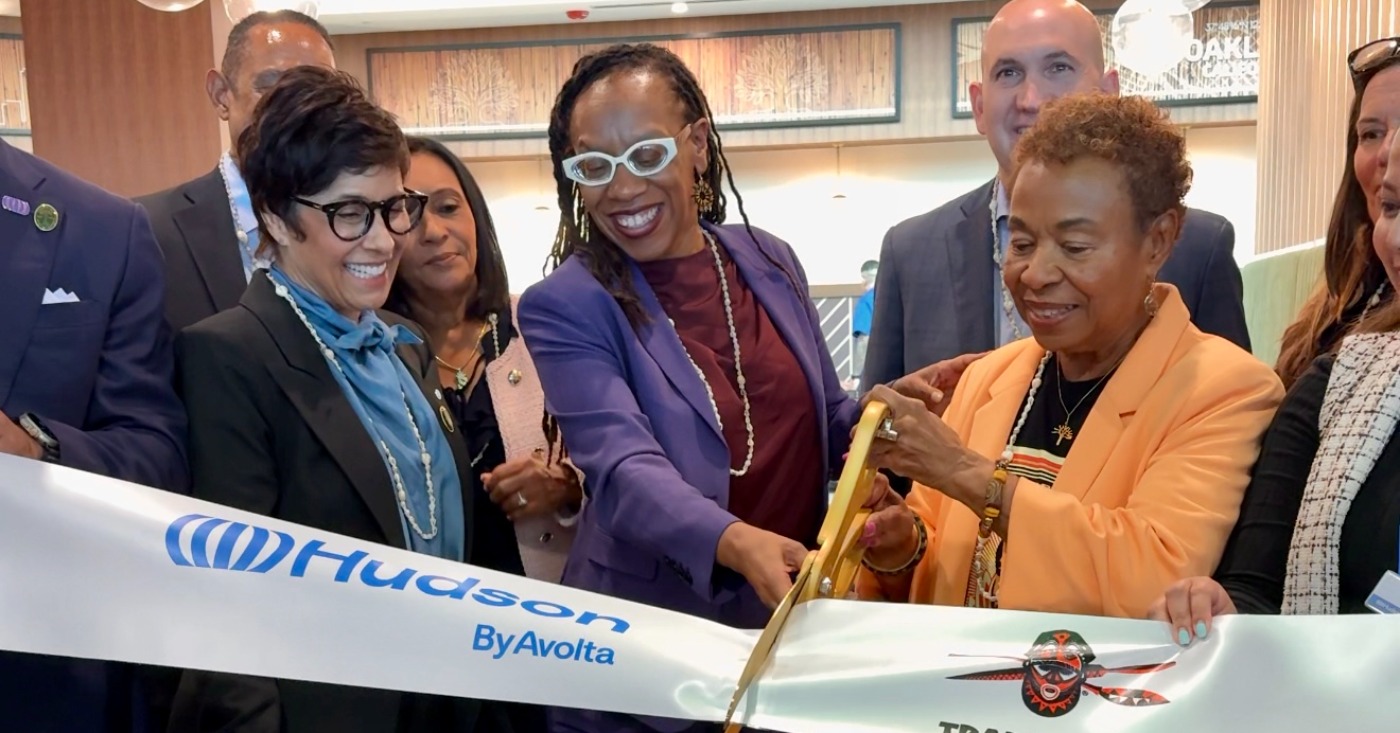
Oakland has always been a city of innovators, entrepreneurs, visionaries, and world-class hospitality. Trader Vic’s—the birthplace of the original Mai Tai – first opened in Oakland back in 1934 on San Pablo Avenue, long before becoming an internationally recognized global brand.
More than 50 years after it moved to Emeryville, Trader Vic’s is returning to its roots. Oakland Mayor Barbara Lee touts the return as another victory for Oakland.
“My administration is deeply committed to backing businesses like Trader Vic’s and Plum Market—partners who invest in our city, uplift our local workforce, and support thousands of local jobs,” Lee said.
The latest Trader Vic’s – called Trader Vic’s Outpost – is located at the Oakland International Airport in Terminal 2 near Gate 25 and had a soft opening in August.
With 108 dining seats, 28 bar seats and a counter for standing-room customers, travelers from around the world can have a full-service restaurant and bar experience or take-out for those with planes to catch.
Open from 6 a.m. to 10 p.m., breakfast, lunch, dinner, cocktails will be served.
Trader Vic’s returning to its roots confirms Condé Nast’s decision to name Oakland the #1 Food City in America two years in a row, and just earlier this month, ranked Oakland #6 on their list of Best Cities in the U.S.!
“The opening at OAK is incredibly meaningful for us,” said Rhett Rosen, CEO of Trader Vic’s Hospitality Group, according to the company website. “Trader Vic’s was born in the Bay Area, and this new location gives us the chance to welcome travelers with a taste of that original spirit before they take off. It brings together everything people love about Trader Vic’s — great cocktails, flavorful food, warm hospitality and a little sense of escape — in a place that connects Oakland to the world.”
Trader Vic’s is an Oakland institution and one of the region’s most recognizable hospitality brands, said Port of Oakland Director of Aviation Craig Simon on the web site.
“Travelers are increasingly seeking dining options that are memorable, locally rooted, and uniquely representative of the communities they are visiting. Trader Vic’s delivers all of that while providing a high-quality food and beverage experience for our guests. We are proud to welcome this hometown favorite to Terminal 2,”
The original Trader Vic’s in Oakland:
In 1934, with an investment of $500, Bergeron opened his initially small restaurant at 65th Avenue and San Pablo, serving comfort foods for lunch and dinner and beers and whiskeys. As his clientele grew, so did his restaurant, expanding space and menu options. After visiting this establishment, famed San Francisco Chronicle columnist Herb Caen proclaimed that the “best restaurant in San Francisco is in Oakland.”
There were as many as 25 franchises worldwide, including the U.S. Trader Vic’s is now headquartered in Martinez.
Black Press
OP-ED: She’s Not Non-Compliant, She’s Hungry: Addressing Food Justice to Improve Breast Cancer Outcomes
CHICAGO DEFENDER — Food insecurity in Chicago’s South Side and surrounding suburbs disproportionately affects Black women with breast cancer, impacting their treatment and recovery.

Here’s a transformational idea: everyone should have access to safe, healthy and affordable food.
If this idea doesn’t feel radical to you, then perhaps you haven’t spent much time in the Southside of Chicago and its adjoining suburbs.
Food insecurity is rampant in our neighborhoods. If you live in Washington Heights, you are practically guaranteed to experience lower food access than the average Chicagoan – with similar circumstances in the South Shore, West Englewood or West Pullman.
It has been clearly documented that “Food is Medicine.” In fact, according to countless scientific studies, good nutrition is critical during cancer treatment. It empowers your body to maintain muscle, rebuild damaged tissues and better withstand aggressive radiation or chemotherapy. A patient with access to nutritious food will experience fewer side effects, like fatigue and nausea, and will have less need for extra medicines. In short, good food improves a patient’s daily life.
Instead, though, a Black woman with breast cancer in our South Side neighborhoods or suburbs has the opposite experience. In fact, if “food is medicine,” then we are inarguably in a crisis, and it is disproportionately affecting Black women with breast cancer.
As co-authors of the Pinkprint and members of the Chicago Better Together Breast Cancer Disparities Think Tank, an initiative launched to address the disproportionate impact of breast cancer mortality on Black women in Chicago’s South Side and South Suburbs, we know that by combining data-informed strategies with community-driven advocacy and leadership, we will create equitable, sustainable outcomes for those most affected by breast cancer and the lack of access to nutritious foods in their communities.
Solutions start as local initiatives. We must pilot community-driven solutions in areas with the highest breast cancer mortality rates and limited access to nutritious food.
Existing local programs – food pantries, community fridges and even hospital-run delivery systems – are a critical piece of this local infrastructure. They are just a component, though, of the robust nutrition infrastructure the South Side lacks. In the long-term, our neighborhoods need clean, well-stocked grocery stores – and we must demand that our elected officials do everything they can to attract and retain these food corporations to invest in our communities.
This is just one item on their to-do list. Long-term solutions will include policy changes and targeted incentives at the city, state and federal levels. Just this spring, over 150,000 people in Illinois lost SNAP benefits, a devastating cut with ripple effects across families into entire neighborhoods. These cuts disproportionately affect people in the South Side of Chicago – not to mention, overwhelm food banks and other centers that serve as part of our social safety net. The Families Receiving Emergency Support for Hunger (FRESH) program in Illinois provides a one-time, automatic $400 cash payment per eligible household member to residents who lost their SNAP food benefits. This will help ease the immediate negative effects of these cuts and is much appreciated. But it is not a long-term solution.
When we started conversations in work groups about this project, we started with the idea that Black women deserve equitable access to quality breast cancer care. Any conversation about breast cancer care and goals for improved outcomes, must include a conversation about nutrition justice.
Nutrition justice is not just a transformational ideal: it is an idea that will literally transform our neighborhoods and the quality of life of every single person living in them. It will put grocery stores in empty storefronts; it will deliver food to a breast cancer patient going through chemotherapy.
Nutrition justice will help improve breast cancer outcomes for Black women on Chicago’s South Side. And Black women should not have to wait.
This op-ed is the second in a series focusing on eliminating breast cancer mortality in Black women on Chicago’s Southside. The authors are part of the Chicago Better Together Breast Cancer Disparities Think Tank, an initiative launched to address the disproportionate impact of breast cancer mortality on Black women in Chicago’s Southside and South Suburbs. Together with other community leaders, they have co-authored the Pinkprint, a strategic multistep plan and call-to-action on this critical issue.
The post She’s Not Non-compliant, She’s Hungry: Addressing Food Justice to Improve Breast Cancer Outcomes appeared first on Chicago Defender.
Based on reporting by Chicago Defender.
Black Press
WCCUSD Joins Statewide Organic School Food Purchasing Cooperative
Other districts involved include: Alameda USD, Albany USD, Berkeley USD, Capistrano USD, Cupertino Union SD, Hayward USD, Laguna Beach USD, Lagunitas Elementary SD, Mt. Diablo USD, North Monterey County USD, Pajaro Valley USD, San Leandro USD, San Ramon Valley USD, Santa Clara USD, Sausalito Marin City SD, Tahoe-Truckee USD and West Contra Costa USD.
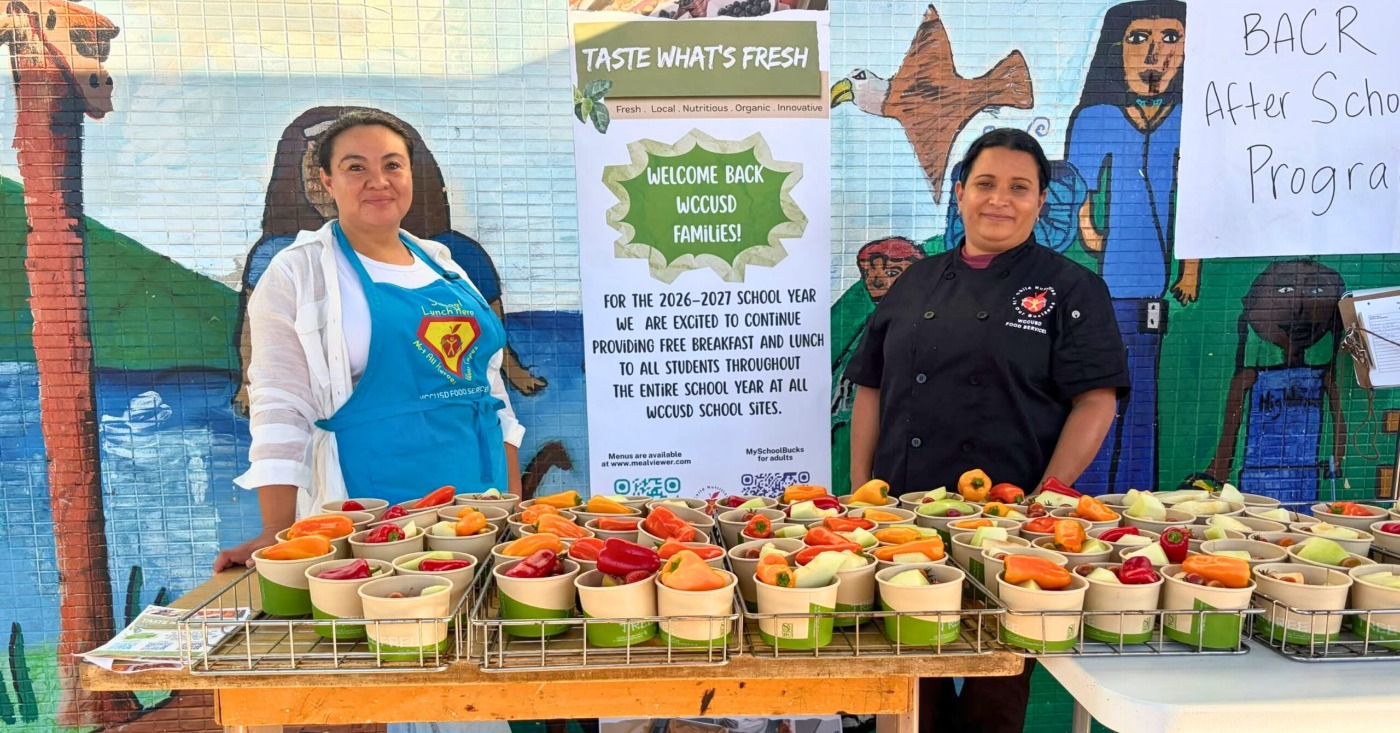
Seventeen California public school districts, including West Contra Costa Unified (WCCUSD), have joined a purchasing cooperative to pool their buying power and expand access to organic food in school meals.
The nonprofit Conscious Kitchen recently announced the launch of the Conscious Organic School Food Purchasing Cooperative. Its founding districts serve more than 300,000 students combined.
The cooperative partnered with food distributors UNFI and Sysco to expand the organic products available to participating districts. Combining schools’ purchasing demand helps distributors plan with suppliers while creating more dependable markets for organic farmers and food makers, according to Conscious Kitchen.
Other eligible California school districts can access the cooperative’s products and pricing through its existing contracts without conducting their own bids. Mt. Diablo Unified School District serves as the lead district for the cooperative’s grocery bid.
Other districts involved include: Alameda USD, Albany USD, Berkeley USD, Capistrano USD, Cupertino Union SD, Hayward USD, Laguna Beach USD, Lagunitas Elementary SD, Mt. Diablo USD, North Monterey County USD, Pajaro Valley USD, San Leandro USD, San Ramon Valley USD, Santa Clara USD, Sausalito Marin City SD, Tahoe-Truckee USD and West Contra Costa USD.
Barbara Jellison, WCCUSD’s executive director of food services, said the cooperative builds on years of work bringing fresh, organic food into school kitchens.
“The next challenge has always been how to make that possible for more districts,” Jellison said. “The Co-op gives schools a way to take what we have learned and move it to a completely different scale.”


San Diego Supervisors’ Power Grab & Discretionary Funds

How Restaurant Apprenticeships Taught Me to Run a Business #shorts

Documenting History: Why Today’s Stories Matter Tomorrow #shorts

Planning to Buy an EV? Check Charging Before You Buy #shorts

A Black Culture Café Rooted in Community and Connection #shorts
The Mission to Cultivate Black Leadership

Black Music Awards: The Fight to Recognize Prince and Black Artists #shorts

The Black Entrepreneurs Building the EV Green Book #shorts

Shaunie Grigsby on Building Flava Cafe, a Social Enterprise in St. Paul | On The Radar | MSR

Chevy Bolt RS Charging Specs: 65 kWh Battery and 150 kW Fast Charging #shorts

All Skinfolk Ain’t Kinfolk

Practitioners of African Traditional Spirituality Offer Ancestral Reverence Ritual Oct. 31

Tamiko Armstead | 2026 Lifetime Achiever in Education

Oakland Awarded More than $14 Million in State Funding

HISTORY MADE: Keisha Lance Bottoms Becomes First Black Woman Elected Governor in American History

OP-ED: The Black Church Writes AI’s Next Chapter

Inside 820 S. Michigan: New Book Captures the Lost World of Ebony and Jet

Jendayi Arrest Raises Community Concerns Regarding Sheriff’s Chain of Command

OP-ED: If the ‘Cornell 7’ Were Black Men at an HBCU — America Wouldn’t Be This Sympathetic

Kickstarter CEO Everette Taylor Shares Tips on Creating and Growing a Business
San Diego Supervisors’ Power Grab & Discretionary Funds
How Restaurant Apprenticeships Taught Me to Run a Business #shorts
Documenting History: Why Today’s Stories Matter Tomorrow #shorts
Planning to Buy an EV? Check Charging Before You Buy #shorts
A Black Culture Café Rooted in Community and Connection #shorts
Black Music Awards: The Fight to Recognize Prince and Black Artists #shorts
The Black Entrepreneurs Building the EV Green Book #shorts
Shaunie Grigsby on Building Flava Cafe, a Social Enterprise in St. Paul | On The Radar | MSR
Chevy Bolt RS Charging Specs: 65 kWh Battery and 150 kW Fast Charging #shorts

L I V E | Mississippi Senate Race UPDATE
-
 Black History5 days ago
HISTORY MADE: Keisha Lance Bottoms Becomes First Black Woman Elected Governor in American History
-

 Featured1 week ago
Multi-Faith Leaders Representing 10 Million People Launch National Anti-Authoritarian Initiative
-

 Black History7 days ago
Christianity’s Racial History
-
 Black History7 days ago
Michael Shiner: The Enslaved Man Who Wrote His Way into American History
-

 Black History7 days ago
Five Hospitals Said No! Who Will Help Annette Henry Recover?
-

 Black History6 days ago
Hundreds of Black Christian Leaders Arriving in Israel for Martin Luther King-Inspired Mission
