
BlackPressUSA
#REPLAY — HE SAID… HE SAID… HE SAID…: "CODE SWITCHING — PREFERENCE & LINGUAL PRIVILEGE"



Black Press
Mayor Lee and Schools’ Supt. Saddler Issue Joint Statement on Recent ICE Activity in Oakland
POST NEWS GROUP — “We will not allow intimidation targeting our families, disrupting our schools, or dividing our neighborhoods. Our schools are sanctuaries where our children belong, and our workplaces and public spaces belong to all Oakland residents,” according to the statement.

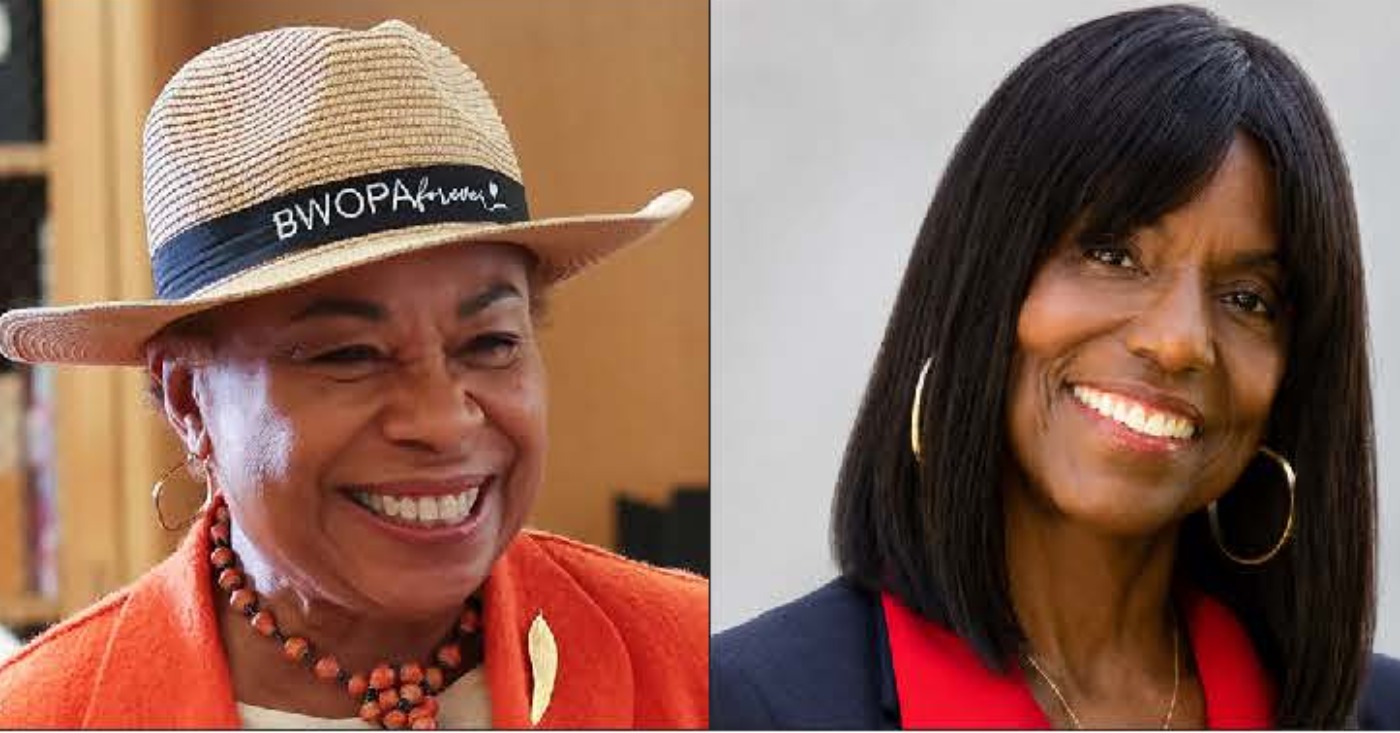
Oakland Mayor Barbara Lee and Oakland Unified School District Superintendent Denise Saddler issued a joint statement to city residents this week concerning increased ICE activity in Oakland and the Bay Area, which has the school community “on edge.”
“We want to remind everyone that OUSD is a ‘Sanctuary District’ inside Oakland, a Sanctuary City. That means your city and school district support you no matter where you came from or how you got here,” the statement said.
“It also means Oakland Stands United: ICE does not belong in Oakland. We will not tolerate actions designed to spread fear in our city,” the two leaders said.
“We will not allow intimidation targeting our families, disrupting our schools, or dividing our neighborhoods. Our schools are sanctuaries where our children belong, and our workplaces and public spaces belong to all Oakland residents,” according to the statement.
The city leaders reemphasized that the city and school district stand with every member of the community.
“We know our rights, and we will protect them every single day. In Oakland, everyone should know that the safety and well-being of all residents is paramount. The schools have strong protocols in place in case of ICE activity anywhere near our campuses.”
City residents are urged to make a report if they see or suspect ICE activity. “Please report it immediately to the Alameda County Immigration Legal Education Partnership (ACILEP) rapid response hotline at 510-241-4011 for immediate support,” according to the statement.
Black History
Mississippi Congressman Bennie Thompson Congratulates Scott Colom on Historic Victory
POST NEWS GROUP — “My relationship with Scott dates back to his participation in the Mississippi Black Leadership Institute, which I helped establish in partnership with the NAACP to develop the next generation of public servants. As one of the program’s first graduates, Scott demonstrated the leadership and commitment to public service that would later define his career.
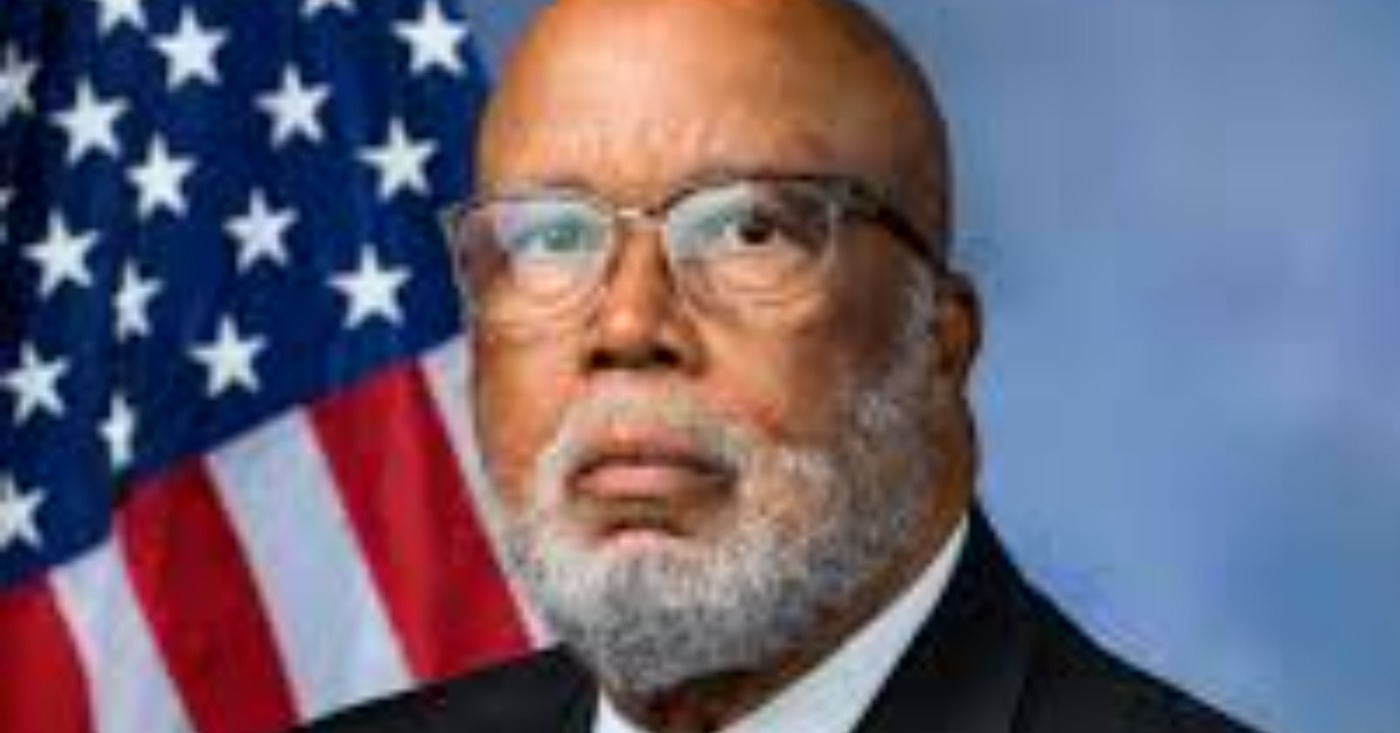
Today, Congressman Bennie G. Thompson (MS-02) issued the following statement on Mississippi Senator-elect Scott Colom’s historic election to the United States Senate:
“I am incredibly proud of Senator-elect Scott Colom and his historic victory. Having known Scott for many years, it has been a pleasure to watch him grow into the leader he is today. His campaign brought together Mississippians from every walk of life — young and old, Black and white, rural and urban —I n a way I have never witnessed in more than 50 years of public service. This victory demonstrates the power of grassroots organizing and what people can accomplish when they come together for a common purpose.
“My relationship with Scott dates back to his participation in the Mississippi Black Leadership Institute, which I helped establish in partnership with the NAACP to develop the next generation of public servants. As one of the program’s first graduates, Scott demonstrated the leadership and commitment to public service that would later define his career.
Recognizing that potential, I encouraged him to run for district attorney of Mississippi’s 16th Judicial District, where he defeated a 28-year incumbent and went on to serve three terms.
“Having witnessed Scott’s leadership firsthand, I had every confidence in his ability to serve as a federal judge when I recommended him to President Joe Biden for nomination in 2022. Former Senator Cindy Hyde-Smith’s decision to block his nomination by withholding her blue slip was disappointing, but it did not lessen my confidence in him or his commitment to serving Mississippi.
“To see him now elected to the very Senate where his nomination was blocked is especially meaningful and a testament to his perseverance and the trust Mississippians have placed in his leadership.”
“Scott has the experience, character, and determination to be an effective advocate for Mississippi. Throughout my career, I have fought to make sure those at the bottom have an opportunity to move up, and I know he shares that commitment.
Having another Mississippi Democrat alongside me in Congress who understands the needs of Mississippians means a great deal. Together, we will fight to improve access to health care, strengthen public education, expand economic opportunities, and ensure our rural and underserved communities are not left behind.
“I look forward to working with Senator-elect Colom and am pleased to welcome him to the Mississippi Congressional Delegation.”
Black Press
Farms to Grow, Inc. Hosts the 8th Annual Sweet Potato Pie Tasting Contest
POST NEWS GROUP — For years, one baker dominated the competition and proudly held the Best N’ West crown. Then, in 2024, a longtime friend rose to the challenge and snatched the title away. Not to be outdone, the former champion reclaimed the crown in 2025, setting the stage for an exciting showdown this year.
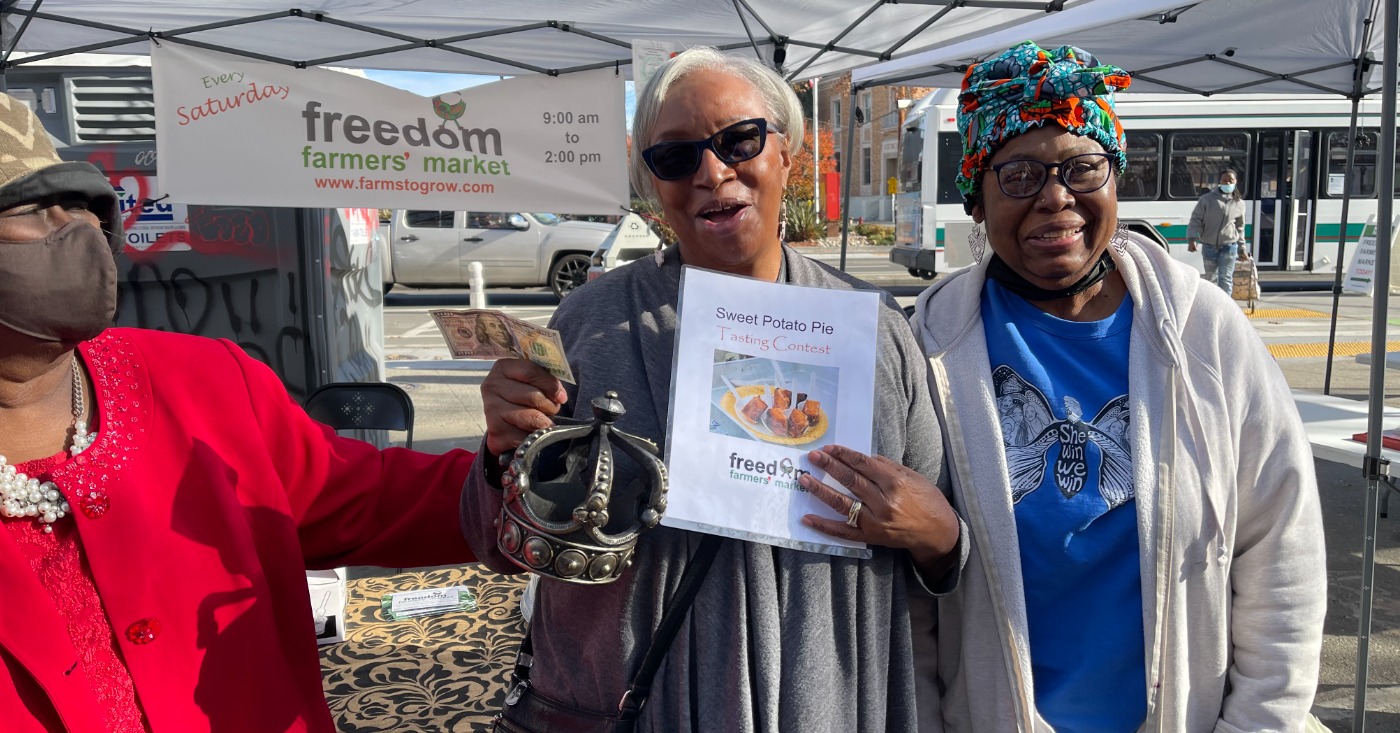
Community Invited to Crown the 2026 ‘Best N’ West’ Sweet Potato Pie Champion
Farms to Grow, Inc. invites sweet potato pie lovers, food enthusiasts, and friendly rivals to gather for the Eighth Annual Sweet Potato Pie Tasting Contest on Saturday, Nov.14, 10 a.m.–12 p.m. at the Freedom Farmers’ Market, 4521 Telegraph Ave., Oakland, CA.
Community members are encouraged to come hungry, cast their votes as official judges, and be part of the crowning of the next Best N’ West Sweet Potato Pie Champion.
Creating a championship-worthy sweet potato pie is no simple task. It takes the perfect blend of spices, carefully selected sweet potatoes, and a magical crust. Each year, contestants bring their best recipes to the table, competing for bragging rights, a beautiful crown, and a cash prize.
For years, one baker dominated the competition and proudly held the Best N’ West crown. Then, in 2024, a longtime friend rose to the challenge and snatched the title away. Not to be outdone, the former champion reclaimed the crown in 2025, setting the stage for an exciting showdown this year.
Now the question on everyone’s mind is: Who will take home the crown in 2026?
Will the reigning Best N’ West queen defend her title? Will her rival and friend reclaim the throne? Or will a newcomer surprise everyone and emerge victorious?
The Sweet Potato Pie Tasting Contest has become a beloved community tradition at the Freedom Farmers’ Market season, bringing on friendly competition. Beyond the delicious pies, attendees can purchase fresh sweet potatoes grown by black farmers, enjoy live music, and help decide who earns the title of Best N’ West Sweet Potato Pie Champion.
Farms to Grow, Inc. works to preserve Black agricultural heritage, strengthen local food systems, and support farmers through education, advocacy, market development, and community-based programs that increase access to fresh, locally grown food.
Black History
“Blue Tsunami” Sweeps Georgia, Bottoms Makes History
MOREHOUSE COLLEGE – THE MAROON TIGER — A political shift described as a “Blue Tsunami” has transformed the landscape of Georgia leadership following the recent election. Keisha Lance Bottoms made history when the race was called on Nov. 3, becoming the first woman and the first Black person elected as governor of Georgia.

The race was called on Nov. 3 at 9:24 p.m., which is much earlier than most elections. The atmosphere of the Marriott Marquis located in downtown Atlanta was only a mere sample of the excitement statewide. The event hall could barely hold the guests as the line for access passes extended across the entire lobby floor. Everyone came in some of their best attire, sporting unmistakable blue diamond pins with the words, “Keisha Lance Bottoms for governor.”
Now, Bottoms will become Georgia’s first woman and first Black governor when she takes office in January, making her the first Black woman to serve as governor of any U.S. state.
She described her campaign as reaching every corner of the state, “from the red hills of Georgia to the Blue Ridge Mountains of the Piedmont,” as cameras crowded in to capture the moment.
Joining her onstage were her mother, her children and her husband, Derek Bottoms, whom she met while attending Georgia State University College of Law and married in October 1994.
Supporters who had campaigned alongside Bottoms for 578 days shed tears of joy at her election watch party. Among those near the stage were U.S. Sen. Raphael Warnock ‘91, D-Ga., the senior pastor of Ebenezer Baptist Church, and the Rev. Jamal Harrison Bryant ‘94, the senior pastor of New Birth Missionary Baptist Church.
Eight Black women, many firsts
In 2025, Black women experienced disproportionate employment losses as the Trump administration implemented federal workforce cuts and rolled back diversity, equity and inclusion initiatives.
The losses disproportionately affected Black women across the country. In 2026, Georgia voters elected eight Black women to statewide office, marking a historic shift in the state’s political leadership. The South had something to say.
Georgia’s eight major statewide executive offices are the governor, lieutenant governor, attorney general, secretary of state, agriculture commissioner, insurance commissioner, labor commissioner and state school superintendent.
When the newly elected officials take office in January, Black women will hold seven of Georgia’s eight statewide executive offices, a first for the state, with Lt. Gov.-elect Josh McLaurin holding the eighth seat.
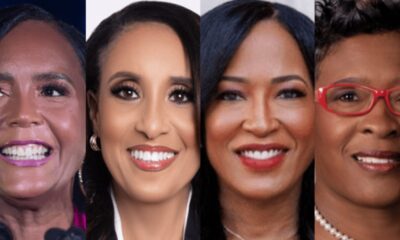
Several broke barriers of their own. Tanya Miller will become Georgia’s first elected woman attorney general. Penny Brown Reynolds, a former Fulton County judge, will become the first Black person elected Georgia secretary of state. Keisha Sean Waites, a former Atlanta City Council member, will become Georgia’s first Black woman insurance commissioner. Educator Lydia Powell will become its first Black woman state school superintendent, while Nikki Porcher will become its first Black woman labor commissioner.
Agriculture Commissioner-elect Katherine Juhan-Arnold founded Baby Katie’s Pharm & Kitchen, a nonprofit farm that provides fresh produce and agricultural education to underserved communities. Shelia Edwards, who won the District 5 race, will join Alicia Johnson as one of only two Black women on the Georgia Public Service Commission. Johnson became the first Black woman elected to a statewide partisan office outside the judiciary in Georgia after winning her commission seat in 2025.
“Georgia chose competence,” Brown Reynolds told The 19th. “We were not selected because we were Black women. I believe that we were selected because all of us bring something that Georgia desperately needs.”
Andra Gillespie, a political science professor at Emory University, told USA Today that the number of Black women elected to leadership positions in Georgia is unprecedented.
“Black women have definitely reached a point where they can not only run and be taken seriously for leadership positions in major parties,” she said.
The wins reached Congress too. State Rep. Jasmine Clark, D-Ga, became the first Black woman with a doctorate in science elected to Congress, winning Georgia’s 13th Congressional District seat, while U.S. Reps. Lucy McBath and Nikema Williams won reelection.
“Georgia has shown up”
Warnock said Georgia voters showed the power of organizing this election cycle and pledged to keep fighting for historically Black colleges and universities.
“I’m proud of Georgia. Georgia has shown up,” Warnock said. “Some 3 million of them early voted.”
He said churches played a key role in that turnout.
“What we saw, among other things, in this election cycle is the power of organizing, and the faith community has always been an important part of that,” he said.
When asked about the legislative priorities he plans to pursue with Keisha Lance Bottoms, Warnock highlighted his efforts to secure federal funding for historically Black colleges and universities.
Warnock pointed to a recent $97.1 million federal award supporting STEM programs at 10 historically Black colleges and universities and other minority-serving institutions, including Clark Atlanta University. His office has also reported securing more than $17 billion for HBCUs nationwide since he began his full Senate term.
With Governor-Elect Bottoms being an HBCU graduate of Florida A&M University, Georgia will have two HBCU alumni representing the people of the state.
“My own life is a testament to how these schools perform way above their weight,” he said. “And so I’ll continue to fight for them.”
His advice for current students was simple: “Morehouse gave me everything I needed to get ready,” he said. “I want the students to look at someone like me, and many others in various fields, and know that we sat in those same desks that they sit in. And so the sky is the limit.”
“Money doesn’t make you a success; character does”
Bryant said the win was personal, crediting Black men and Black churches for helping elect Bottoms.
“Super excited to know history was made, and to know that Black men supported a Black woman to get to this place,” he said.
The biggest hurdle, Bryant said, was getting Black churches involved and engaged, which he described as a return to the church’s tradition from the civil rights movement.
His advice for young men at Morehouse and across Georgia was direct.
“The takeaway lesson for all of us is money doesn’t make you a success,” Bryant said. “Character does.”
When the officials-elect take office in January, Black women will lead nearly every corner of Georgia’s executive branch. Bottoms announced her transition team Friday, Nov. 6. She and the seven other statewide officials-elect will be sworn in in January.
This site uses Akismet to reduce spam. Learn how your comment data is processed.
Based on reporting by Morehouse College – The Maroon Tiger.
Black History
“Blue Tsunami” Sweeps Georgia, Bottoms Makes History
MOREHOUSE COLLEGE – THE MAROON TIGER — A political shift described as a “Blue Tsunami” has transformed the landscape of Georgia leadership following the recent election. Keisha Lance Bottoms made history when the race was called on Nov. 3, becoming the first woman and the first Black person elected as governor of Georgia.

The race was called on Nov. 3 at 9:24 p.m., which is much earlier than most elections. The atmosphere of the Marriott Marquis located in downtown Atlanta was only a mere sample of the excitement statewide. The event hall could barely hold the guests as the line for access passes extended across the entire lobby floor. Everyone came in some of their best attire, sporting unmistakable blue diamond pins with the words, “Keisha Lance Bottoms for governor.”
Now, Bottoms will become Georgia’s first woman and first Black governor when she takes office in January, making her the first Black woman to serve as governor of any U.S. state.
She described her campaign as reaching every corner of the state, “from the red hills of Georgia to the Blue Ridge Mountains of the Piedmont,” as cameras crowded in to capture the moment.
Joining her onstage were her mother, her children and her husband, Derek Bottoms, whom she met while attending Georgia State University College of Law and married in October 1994.
Supporters who had campaigned alongside Bottoms for 578 days shed tears of joy at her election watch party. Among those near the stage were U.S. Sen. Raphael Warnock ‘91, D-Ga., the senior pastor of Ebenezer Baptist Church, and the Rev. Jamal Harrison Bryant ‘94, the senior pastor of New Birth Missionary Baptist Church.
Eight Black women, many firsts
In 2025, Black women experienced disproportionate employment losses as the Trump administration implemented federal workforce cuts and rolled back diversity, equity and inclusion initiatives.
The losses disproportionately affected Black women across the country. In 2026, Georgia voters elected eight Black women to statewide office, marking a historic shift in the state’s political leadership. The South had something to say.
Georgia’s eight major statewide executive offices are the governor, lieutenant governor, attorney general, secretary of state, agriculture commissioner, insurance commissioner, labor commissioner and state school superintendent.
When the newly elected officials take office in January, Black women will hold seven of Georgia’s eight statewide executive offices, a first for the state, with Lt. Gov.-elect Josh McLaurin holding the eighth seat.
Several broke barriers of their own. Tanya Miller will become Georgia’s first elected woman attorney general. Penny Brown Reynolds, a former Fulton County judge, will become the first Black person elected Georgia secretary of state. Keisha Sean Waites, a former Atlanta City Council member, will become Georgia’s first Black woman insurance commissioner. Educator Lydia Powell will become its first Black woman state school superintendent, while Nikki Porcher will become its first Black woman labor commissioner.
Agriculture Commissioner-elect Katherine Juhan-Arnold founded Baby Katie’s Pharm & Kitchen, a nonprofit farm that provides fresh produce and agricultural education to underserved communities. Shelia Edwards, who won the District 5 race, will join Alicia Johnson as one of only two Black women on the Georgia Public Service Commission. Johnson became the first Black woman elected to a statewide partisan office outside the judiciary in Georgia after winning her commission seat in 2025.
“Georgia chose competence,” Brown Reynolds told The 19th. “We were not selected because we were Black women. I believe that we were selected because all of us bring something that Georgia desperately needs.”
Andra Gillespie, a political science professor at Emory University, told USA Today that the number of Black women elected to leadership positions in Georgia is unprecedented.
“Black women have definitely reached a point where they can not only run and be taken seriously for leadership positions in major parties,” she said.
The wins reached Congress too. State Rep. Jasmine Clark, D-Ga, became the first Black woman with a doctorate in science elected to Congress, winning Georgia’s 13th Congressional District seat, while U.S. Reps. Lucy McBath and Nikema Williams won reelection.
“Georgia has shown up”
Warnock said Georgia voters showed the power of organizing this election cycle and pledged to keep fighting for historically Black colleges and universities.
“I’m proud of Georgia. Georgia has shown up,” Warnock said. “Some 3 million of them early voted.”
He said churches played a key role in that turnout.
“What we saw, among other things, in this election cycle is the power of organizing, and the faith community has always been an important part of that,” he said.
When asked about the legislative priorities he plans to pursue with Keisha Lance Bottoms, Warnock highlighted his efforts to secure federal funding for historically Black colleges and universities.
Warnock pointed to a recent $97.1 million federal award supporting STEM programs at 10 historically Black colleges and universities and other minority-serving institutions, including Clark Atlanta University. His office has also reported securing more than $17 billion for HBCUs nationwide since he began his full Senate term.
With Governor-Elect Bottoms being an HBCU graduate of Florida A&M University, Georgia will have two HBCU alumni representing the people of the state.
“My own life is a testament to how these schools perform way above their weight,” he said. “And so I’ll continue to fight for them.”
His advice for current students was simple: “Morehouse gave me everything I needed to get ready,” he said. “I want the students to look at someone like me, and many others in various fields, and know that we sat in those same desks that they sit in. And so the sky is the limit.”
“Money doesn’t make you a success; character does”
Bryant said the win was personal, crediting Black men and Black churches for helping elect Bottoms.
“Super excited to know history was made, and to know that Black men supported a Black woman to get to this place,” he said.
The biggest hurdle, Bryant said, was getting Black churches involved and engaged, which he described as a return to the church’s tradition from the civil rights movement.
His advice for young men at Morehouse and across Georgia was direct.
“The takeaway lesson for all of us is money doesn’t make you a success,” Bryant said. “Character does.”
When the officials-elect take office in January, Black women will lead nearly every corner of Georgia’s executive branch. Bottoms announced her transition team Friday, Nov. 6. She and the seven other statewide officials-elect will be sworn in in January.
This site uses Akismet to reduce spam. Learn how your comment data is processed.
Based on reporting by Morehouse College – The Maroon Tiger.
Black Press
OP-ED: And Then What?
BLACKPRESSUSA NEWSWIRE — Last week, Democrats regained control of both houses of Congress, flipping at least 43 House seats and seven Senate seats. We flipped five governorships; 500 legislative seats took districts that have been red for a generation and turned them blue, and there are even more races left to be called.

The historic Blue Tsunami we all witnessed across this country provided a clear mandate for Democrats and a clear demonstration that Americans want our elected officials focused on fixing the real problems they face every day instead of promoting a meaningless culture war that has zero impact on our lives while corporate fat cats pick our pockets to line their own.
But, that being said, I can’t help but remember the words of Young Jeezy: And then what?
Look, I’m as blown away by the election results as anyone.
Last week, Democrats regained control of both houses of Congress, flipping at least 43 seats in the House and seven in the Senate. We flipped five governorships; 500 legislative seats took districts that have been red for a generation and turned them blue, and there are even more races left to be called.
According to The New York Times, the Black voter share grew dramatically. In Alabama, it went from 22% in 2024 to 26% in 2026. In Mississippi, it went from 30% in 2024 to 33% in 2026; in South Carolina, it went from 21% in 2024 to 24% in 2026. In Louisiana, it went from 27% in 2024 to 30% in 2026, and in Georgia, it went from 29% in 2024 to 32% in 2026.
That’s a three- to four-percent growth in all of those states, and even in states like Michigan, Illinois, and New York, where there was no measurable change, that’s compared to a presidential year, which, in and of itself, is absolutely huge.
In North Carolina, Senator-elect Roy Cooper got more votes from early voting than Michael Whatley got in total, and the same thing happened in Texas and Georgia. So, yes, I’m pretty excited.
But I’m also a realist because I know progress isn’t permanent and things can change in a heartbeat, especially if you don’t keep your eye on the ball. I know that we need to protect this electoral progress, so we can’t afford to mismanage our politics, our policies, or the promises we made on the campaign trail.
We can’t afford to mismanage the broad coalition that propelled us to a historic election night.
That’s what the Republicans did, and we see what it got them.
In 1967, Dr. King spoke at a similar moment, saying we had to choose between chaos and community, and in 2005, Young Jeezy asked the same question: “And then what?”
Our “what” is simple:
- We have to lower the cost of living.
- We have to save affordable healthcare.
- We have to hold the crooks who’ve been running this country for the past two years accountable for their crimes.
Does that mean we launch a campaign of retribution that gets us bogged down in some neverending impeachment fight? Of course not.
We stand up against corruption while working for the people because they need our help more than they need political payback.
We choose community because we know too well what chaos looks like.
It looks like skyrocketing foreclosure rates and car repossessions. It looks like more than half of Americans are forced to rely on credit cards to pay for basic needs like groceries, rent and utilities, student debt has jumped since the Trump administration reversed course on Biden repayment and forgiveness plans and an unconstitutional war that costs us record-high diesel prices and fertilizer costs, along with 16 unnecessary American deaths.
It looks like Americans are having to take out loans to pay for groceries even though they’re making six figures, and affordable housing is sitting vacant because folks still can’t afford it, particularly with the dramatic cuts to SNAP and Medicaid we saw in Trump’s “Big Ugly Bill.”
According to the Federal Reserve, the net worth of Black households is down 25%. That’s chaos.
We choose community. We choose raising the minimum wage, tackling price gouging, expanding voting rights, and putting back the subsidies that helped you pay for health insurance. We chose standing up for each other.
Young Jeezy asked the question, “And then what?” Community is the answer, and it’s time to get to work.


Mayor Lee and Schools’ Supt. Saddler Issue Joint Statement on Recent ICE Activity in Oakland

Mississippi Congressman Bennie Thompson Congratulates Scott Colom on Historic Victory

Farms to Grow, Inc. Hosts the 8th Annual Sweet Potato Pie Tasting Contest

HBCU Round-Up: Jackson State UPSET by Alabama State

The SEC Championship Game is ending. College football will feel the loss.

Chevy Bolt RS: The Real Cost and Charging Question #shorts

NFN presents Pioneer Lunch & Learn

Frontier 3.8L V6 SUV: Quiet Cabin, Strong Acceleration #shorts

Sterling vs. North Forest (9-12-26) | Houston High School Football

Westbury vs. Dulles (9-4-26) | Houston High School Football

Practitioners of African Traditional Spirituality Offer Ancestral Reverence Ritual Oct. 31

Tamiko Armstead | 2026 Lifetime Achiever in Education

HISTORY MADE: Keisha Lance Bottoms Becomes First Black Woman Elected Governor in American History

OP-ED: The Black Church Writes AI’s Next Chapter

Kickstarter CEO Everette Taylor Shares Tips on Creating and Growing a Business

BLACK MEN VOTE: Mobilizing 100,000 Black Men Ahead of the Midterms 📱

NFN live presents 🎙️ THE ROAD TO BEYOND IWDM 50: WE CANNOT STOP NOW! 8-Week Podcast

Black Household Wealth Plummeted 25% in Three Years, New Data Shows

Secretary of State Shirley Weber Pushes Back Against DOJ Demands Over California Voter Rolls

Columbus’s Oldest Businesses Still Open: 10 That Have Lasted 75+ Years
Chevy Bolt RS: The Real Cost and Charging Question #shorts
NFN presents Pioneer Lunch & Learn
Frontier 3.8L V6 SUV: Quiet Cabin, Strong Acceleration #shorts
Sterling vs. North Forest (9-12-26) | Houston High School Football
Westbury vs. Dulles (9-4-26) | Houston High School Football

Yates vs. Madison (9-5-26) | Houston High School Football

Yates vs. Worthing (9-8-26) | Houston High School Volleyball

Black Veterans’ Fight for Equality…The Forgotten Cost of Service

Which Car Comfort Features Are Worth Paying For? #shorts

Choosing a Truck Bed? Test Your Gear Before You Buy #shorts
-
 Black History1 week ago
Keisha Lance Bottoms to Govern State Where Her Great-Great-Grandfather Was Enslaved
-
 Black History1 week ago
IN MEMORIAM: Marcia Ann Gillespie, Editor of Essence and Ms. Magazines, Dies at 82
-
 Black History5 days ago
Don’t Pass the Torch. Expand the Circle.
-
 Black History6 days ago
Meet Scott Colom, the Mississippi Democrat Leading Tight Mississippi Senate Race
-
 Black Press1 week ago
Eight Black Women Win Georgia Statewide Offices
-

 Featured6 days ago
Democratic Leadership Under Fire, Maxine Waters Challenged & Tyler Perry’s New Political Role 📱
