
Education
Public Schools Are More Segregated Now than They Were 40 Years Ago


By Rushern Baker (County Executive, Prince Georges County, Md.)
On November 4, 1952, Dr. Helen Kenyon addressed the Women’s Society of Riverside Church in New York City and opined that, “Eleven o’clock Sunday morning is the most segregated hour in America.” Dr. Martin Luther King, Jr. often paraphrased the quote.
Today, sadly, our public schools best reflect Dr. Kenyon’s and Dr. King’s sentiment as the most segregated place in America.
The rampant re-segregation of American public schools poses a greater threat to the trajectory of America’s progress than terrorism, nuclear proliferation, and Russian meddling in our elections. Sixty-two years after Brown v. Board, the GAO (Government Accountability Office) reported that from the years 2000-2014, both the percentage of K-12 public schools in high-poverty and the percentage of African American and Hispanic students enrolled in public schools more than doubled, and the percentage of all schools with so-called racial or socioeconomic isolation grew from 9 percent to 16 percent.
Research shows that racial and socioeconomic diversity in our classrooms leads to higher than average test scores, greater college enrollment rates, and the narrowing of achievement gaps. These gains don’t just apply to poor and minority children either—every student benefits from learning and engaging with peers from different backgrounds. Despite the evidence, today our public schools are more segregated than they were 40 years ago.
As an advocate for children and families, and as a public servant, who has fought for more resources for students, I believe we must act boldly to save free, high-quality public education for all.
Some of the very leaders tasked with solving the negative effects from school re-segregation offer shortsighted policies that exacerbate racial and economic divisions. The ripple-effect, consequences of their misguided thinking remains the greatest policy foible of the modern era. Lazy logic behind bad policy feeds a perception that that the achievement gap exists simply, because poor and minority students learn differently than their wealthier, White peers. Rather, it is directly tied to declining enrollment, lower property values, and the dwindling resources available to tackle mounting challenges in the communities that surround underperforming public schools.
The greatest irony remains that those promoting harmful education policies use the same language of “giving every child a chance at a high-quality education” to pitch their tax-dollar-poaching and resource-pilfering experiments to desperate parents.
Rather than making public education a number one priority, a Hunger-Games-like competition for vouchers and charter schools leaves parents and students fending for themselves. The families that lose the education lottery end up at schools with increased needs and declining resources. In Maryland, our Governor’s BOOST voucher program set aside $5 million dollars of public money to help 2,400 families pay for their child’s education. Yet, 80 percent of the families receiving these grants had children who were already enrolled in private schools.
Vouchers, whose American roots can be traced back to some Southern states’ attempts to avoid integration, perpetuate segregated education and are nothing more than a thinly-veiled attempt to cut off funds to public schools. It gets even worse. Some communities have simply seceded from the larger school district, as we’ve seen in Alabama and Tennessee, to keep from integrating their schools. Since 2000, the U.S. Justice Department has released 250 communities from their desegregation orders and consequently facilitated their financial and administrative secession from their school districts.
After all those factors lead to a dip in school performance, students and their communities are stigmatized as “failing.” Schools close. Quality of life drops; economic prospects dwindle; public safety decreases; and the cycle repeats, so that higher needs populations receive even fewer resources.
I know. I’ve lived through it. It’s time to back up the big talk of “opportunity for all” with policies that don’t ask parents to compete for a few spots, but instead, make public dollars work for every child.
We’ve embraced this mission in my home of Prince George’s County, Maryland where I serve as County Executive. Though we know our best days are to come, we’ve seen incredible progress: increased enrollment; higher graduation rates; an increase in innovative academic programs; and more students receiving college scholarships.
The debate over how we improve public education can’t begin with state-funded segregation, which harms communities and students, especially our most vulnerable. Let’s secure our children’s futures and the future of America by making a meaningful investment in quality public schools for all.
Rushern Baker, a graduate of Howard University, is the county executive in Prince George’s County, Maryland. You can follow him on Twitter at @CountyExecBaker.












Art
Houston’s ‘call Me Mother’ Exhibit Opens Today, Spotlighting Black Maternal Health
AFRICAN-AMERICAN NEWS AND ISSUES – DALLAS — The Health Museum in Houston today opens “The Call Me Mother Experience,” an exhibition spotlighting Black maternal health through art and personal storytelling. Curated by Houston’s first Black poet laureate, Deborah D.E.E.P. Mouton, the project originated from her own poem written during a miscarriage.

HOUSTON — A new exhibition opening Sunday, Oct. 4, at The Health Museum is bringing Black maternal health into public view through art and personal storytelling.
The Call Me Mother Experience will be on display through Feb. 28, 2027. The museum lists a preview reception today from 3 to 5 p.m. at 1515 Hermann Drive, with tickets priced at $5 for members and $15 for nonmembers.
A personal story becomes a community conversation
According to the museum, founder, curator and lead artist Deborah D.E.E.P. Mouton developed the project from a poem she wrote during a miscarriage. The installation combines films, recorded interviews, visual artwork and contributions created with community members.
Mouton, Houston’s first Black poet laureate, discussed the exhibition and her connection to its subject in an Oct. 1 appearance on KPRC’s Houston Life. The station described the project as addressing the unequal burden of pregnancy-related illness and death faced by Black women in Harris County.
An announcement distributed by the Call Me Mother Experience says the initiative will also reach community locations and faith-based organizations across Greater Houston. Those additional settings are intended to extend the conversation beyond a museum visit.
What visitors can expect
The museum says reception guests can explore the exhibit, hear the curator and meet participating artists. Reception admission includes general museum entry; refreshments are available while supplies last.
The featured image accompanying this article is an original illustrative concept, not a photograph of the exhibition or its artwork.
Sources and visitor information:The Health Museum exhibition listing; preview reception details and tickets; KPRC Houston Life; organizer announcement.
The post Houston’s ‘Call Me Mother’ Exhibit Opens Today, Spotlighting Black Maternal Health appeared first on African American News and Issues.
Based on reporting by African-American News and Issues – Dallas.
Black Press
NCCU Ramping up for the 89th Ultimate Homecoming Experience
NORTH CAROLINA CENTRAL UNIVERSITY – CAMPUS ECHO — N.C. Central University is preparing for its 89th Ultimate Homecoming Experience, a week-long celebration. Thousands of students, family, friends, and alumni are expected to gather on campus for festivities including the Homecoming Countdown, parade, Miss and Mister NCCU Coronation, concerts, and the football game.

This Saturday N.C. Central University will kick off its 89th Ultimate Homecoming Experience — a week-long celebration bringing thousands of students, family, friends and alumni to campus.
This year’s festivities include the Homecoming Countdown, parade, Miss and Mister NCCU Coronation, concerts and the football game.
The number of visitors to the football game on Saturday, Oct. 10 is expected to reach at least 10,000 — O’Kelly Riddick Stadium’s capacity, with NCCU’s recent enrollment increase of more than 10,000 students.
The Eagles will face William & Mary after playing against the Campbell University’s Fighting Camels on Oct 3.
Students are already expressing excitement for the upcoming festivities.
“I’m excited for homecoming because I can meet alumni and go outside and party with my fellow eagles,” Digital Filmmaking junior Rhese Gardner said. “I’m also really looking forward to the Greek Bowl because there’s a lot going on.”
He added that even though he’s disappointed this semester’s Oil Spill was canceled, he’s still excited for the other events like the parade and concerts.
Here is a list of the week’s on-campus events:
- Oct. 3 – Homecoming Countdown
- Oct. 4 – Gospel Concert
- Oct. 5 – Coronation of Miss and Mister NCCU
- Oct. 6 – 10:40 Break
- Oct. 6 – Homecoming Experience Showcase
- Oct. 7 – Fried Chicken Wednesday
- Oct. 7 – Festival Block Party
- Oct. 7 – Late Night Breakfast
- Oct. 8 – Back to the Nest Young Alumni Mixer
- Oct. 8 – Old School Greek Stroll Off
- Oct. 8 – Hip-Hop Concert
- Oct. 9 – Step Show
- Oct. 10 – Football Game
The post NCCU ramping up for the 89th Ultimate Homecoming Experience first appeared on Campus Echo Online.
Based on reporting by North Carolina Central University – Campus Echo.
Black History
Morehouse School of Medicine Fall Convocation Has Strong Ties to Nashville
TENNESSEE TRIBUNE — Morehouse School of Medicine recently held its 42nd Fall Convocation and White Coat and Pinning Ceremony, which highlighted strong connections to Nashville. Dr. Valerie Montgomery Rice, in her 12th year as president and CEO, leads the institution, which welcomed 355 new students.
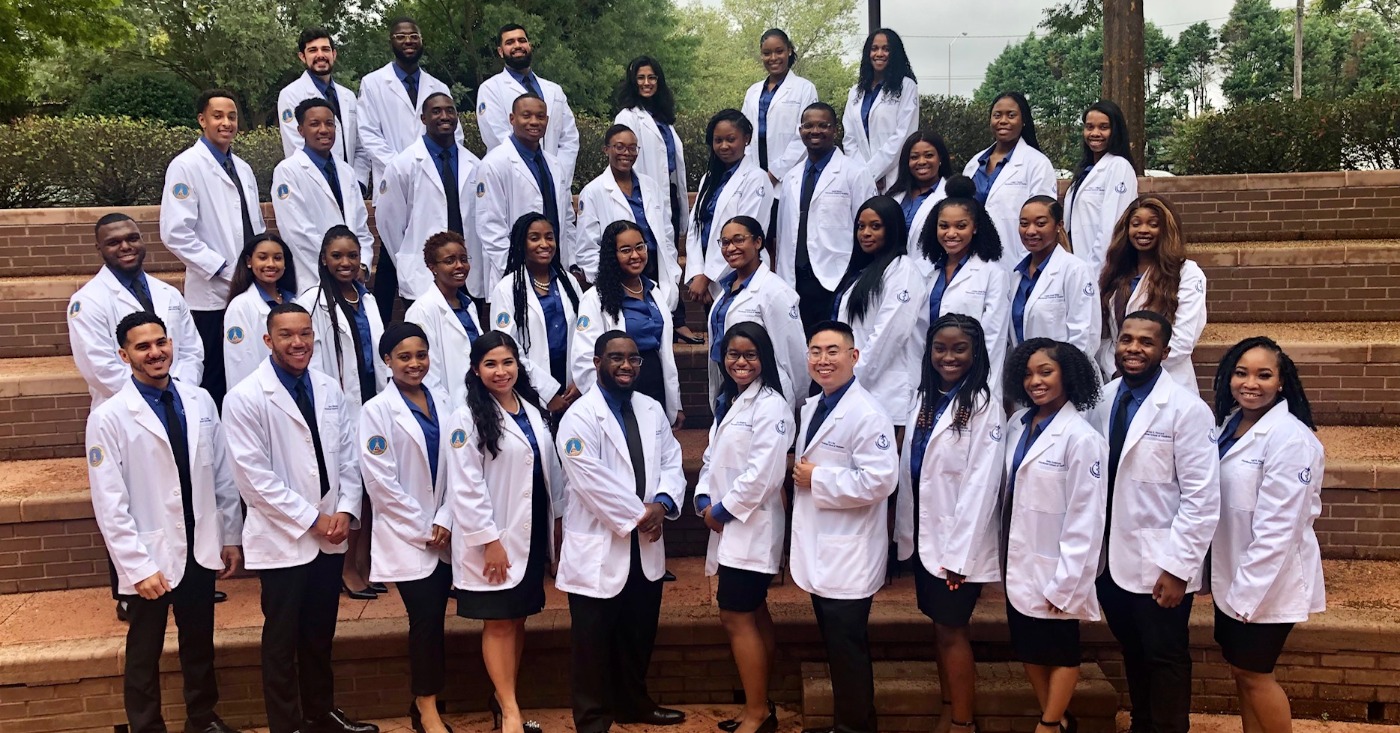
Morehouse School of Medicine held its 42nd Fall Convocation and White Coat and Pinning Ceremony on September 18, and it featured strong ties to Nashville. Dr. Valerie Montgomery Rice is completing her 12th year as president and CEO of Morehouse School of Medicine (MSM). The school boasts 355 students seeking degrees and certificates in the medical field.
“This entering class represents the future of medicine, science, public health and health care leadership,” said Valerie Montgomery Rice, MD, and FACOG. “As these students begin their journeys at Morehouse School of Medicine, they join a community grounded in excellence, service and our shared commitment to advancing health equity. We look forward to supporting their development as leaders who will transform the health and well-being of the communities they serve.”
Infectious diseases physician and scientist Dr. Barney S. Graham, MD, and PhD, served as the keynote speaker. He serves as the director of the David Satcher Global Health Equity Institute, professor of Medicine and Microbiology, Biochemistry and Immunology at Morehouse School of Medicine. He is an inventor of vaccines and monoclonal antibodies approved for human use to prevent or treat RSV, COVID-19 and Ebola. He joined MSM in 2022. He served in various positions at Vanderbilt University for 21 years.
Dr. Graham told the audience to “Embrace the Unseen” and focused on three points: Do the Best You can with what’s in front of you, Do what makes you come alive and Do the right thing even when no one is looking. He added, “Anything you do to improve mental and physical wellness and promote disease prevention will reduce health disparity by reducing the resources needed for treatment.”
His remarks commanded a roaring applause from the audience, which included his wife, Dr. Cynthia Turner Graham, and the former First Lady of Tennessee State University, Mrs. Edwina Hefner, a close friend to the family.
Based on reporting by Tennessee Tribune.
Black Press
OP-ED: How One State Invests in Fast-Track Training to Overcome Childcare Worker Shortages, Center Closures
BLACKPRESSUSA NEWSWIRE — “If North Carolina is going to produce the qualified workforce necessary to meet the demand for high-quality childcare services in a timely manner, the state must lean less heavily on higher education to train and prepare early childhood professionals and more heavily on strategies that are more accessible, affordable, flexible, and expeditious,” the report’s authors wrote.
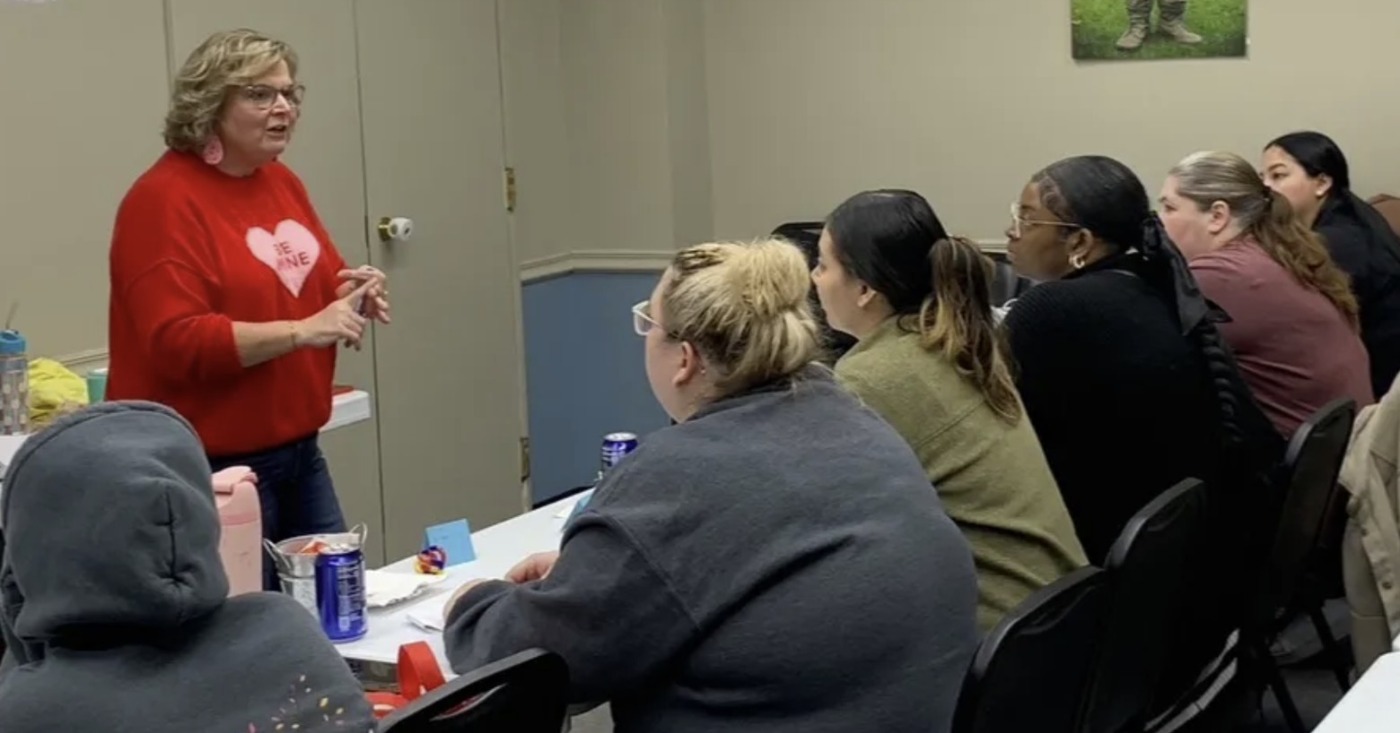
About a week after finishing the Early Childhood Workforce Ready Academy in Wayne County, North Carolina, Dominque McBride walked into Little Bulldogs Academy in Goldsboro.
She carried a packet filled with certifications — such as CPR, first aid, playground safety — that she earned while undergoing intensive training during the two-week academy in February 2024.
At the end of the interview, McBride walked out with a job.
Typically, that type of training can take months to a year to complete, said Shelly Willis, director of program coordination and evaluation with Partnership for Children of Wayne County, which offers the academy.
On top of that, students would have had to pay for the various certifications and classes and squeeze them in between jobs and their lives at home.
But McBride and more than 100 other people got the training for free over the past two years, thanks to grants from the Camber Foundation, according to Valerie Wallace, executive director of the Partnership for Children of Wayne County. She said the organization, which supports community projects in 41 eastern North Carolina counties, has pumped $145,000 into the childcare academies in Wayne and Johnston counties.
McBride said the academy prepared her for her first job in childcare, and made it easy to get all the required certifications and training in one place, in a short time.
“If I had to do it on my own, I think I would have been overwhelmed,” McBride told NC Health News.
Now, state legislators want to take that model and expand it across the state. They included $1.5 million in one-time funding in the state budget passed in July. The training support is part of a slate of efforts added to this year’s budget to tackle staffing shortages and long waitlists for childcare in North Carolina.
From March 2018 to June 2026, North Carolina has lost a net 1,072 childcare sites, according to the NC Early Care and Learning dashboard. Enrollment dropped by 28,183 children — or 11.5% — during that same time.
The NC Chamber touted such academies as a way to address chronic staffing shortages driving those closures in a February 2025 report.
“If North Carolina is going to produce the qualified workforce necessary to meet the demand for high-quality childcare services in a timely manner, the state must lean less heavily on higher education to train and prepare early childhood professionals and more heavily on strategies that are more accessible, affordable, flexible, and expeditious,” the report’s authors wrote.
‘At a crossroads’
The National Conference of State Legislatures also recently highlighted such academies for quick training to alleviate workforce shortages.
The recommendation is included in the report “Childcare at a Crossroads: A State Legislative Framework for Strengthening Childcare Systems,” released on July 27. The report was developed by a bipartisan work group of 13 state legislators from across the country that included North Carolina state Sen. Jim Burgin, R-Harnett.
The legislators wrote that childcare has become “one of the most urgent and complex challenges facing states.”
“It affects children’s development and well-being, parents’ ability to work, employers’ access to a stable workforce and the economic vitality of communities large and small,” they said in the report. “Rural and urban. Red and blue. No state is unaffected, and no ideology holds all the answers.
“As costs rise, workforce shortages persist and demand remains strong, state policymakers face important decisions,” the report’s authors continued. “The childcare system is at a crossroads, and decisions made now will shape how well systems meet the needs of families and economies in the years ahead.”
North Carolina has struggled to meet the need. Lack of childcare costs the state $5.65 billion every year in economic activity, according to a 2024 report from the U.S. Chamber of Commerce Foundation, the NC Chamber Foundation, and advocacy organization NC Child.
Since 2018, childcare employment in the state rose by just 1%, or 419 people, even as the state’s population grew by around a million people.
Where that growth has occurred has been uneven.
Small centers and family childcare homes make up most of the closures, according to research shared July 9 by Afton Partners, an Illinois-based consultant firm that specializes in several areas, including early education. The group presented the findings earlier in the year to members of the North Carolina Task Force on Child Care and Early Education.
Meanwhile, more large centers have opened, mainly in urban areas, according to the Afton research.
Many counties, including Wayne, have lost workers and childcare slots from 2018 to 2026.
In Wayne County, state data shows there are nine fewer childcare facilities than in 2018. Average monthly enrollment dropped by more than 1,000 kids during that same time. And average monthly employment is down by 420 workers.
The state faces a double whammy: demand for more childcare slots and a lack of workers.
The biggest problem in childcare is having qualified teachers, Burgin said as part of a panel discussion on the “Childcare at a Crossroads” report at the National Conference of State Legislatures conference in Chicago last month.
“We’ve made the restrictions so high that by the time that they get enough qualified people on board, those people will go find other jobs, usually in the school system,” he said.
He told the audience that North Carolina directed millions of dollars to tackling the childcare workforce issue in the state’s latest budget.
The bipartisan work group’s report highlighted North Carolina’s childcare academies, like the program in Wayne County.
Other efforts in the report included a high school student training program in South Dakota, scholarships and stipends for people pursuing childcare degrees in Delaware, and a pilot program in New Mexico that gives stipends to people in workforce training for childcare.
In West Virginia and Rhode Island, there are also apprenticeships that target the childcare work force.
Like some other states, North Carolina included in its recent budget stipends for graduates who stay with an employer for at least a year.
‘A huge step forward’
The N.C. Child Fatality Task Force has been recommending since 2024 that North Carolina support efforts to improve the childcare system, including increasing subsidies to childcare centers, especially in the wake of additional federal childcare stabilization grants that sunsetted as the COVID pandemic wound down.
Childcare funding was one of the four task force recommendations for this year.
In July, the General Assembly passed a budget with $97 million in federal funding to increase reimbursement rates to providers of subsidized childcare and to create a much-welcomed floor rate. The budget also transfers $16.8 million from the federal Temporary Assistance for Needy Families block grant to the state’s childcare subsidy program.
Creating a rate floor means that, for the first time, all facilities will get at least the statewide average for subsidized care. Without that base rate, subsidies have ranged widely across the state, which has made it difficult for some facilities to survive.
The state’s childcare subsidy program uses state and federal money to help pay for childcare for low- to moderate-income families who qualify. Families still have to cover a co-pay. The subsidy can be used for children through age 12, or up to age 18 for children with special needs.
While the state doesn’t set salaries for childcare workers, increasing the subsidy gives providers the flexibility to pay workers more.
Low pay has been an issue in attracting and maintaining childcare workers. Starting median hourly wages for childcare teachers in 2023 was $14 per hour, according to the 2023 North Carolina Child Care Workforce Study by Early Years (formerly Child Care Services Association.) That’s the same or less than entry-level jobs at retail stores such as Target and Walmart and fast food restaurants such as Five Guys and Whataburger.
“With our current economic situation and the prices of everything increasing, it is very difficult to stay in the field of childcare and make ends meet with the average pay offered,” McBride said in an email.
“It’s not only about attracting people to the field, but encouraging them to stay,” she added.
To quickly train childcare workers, legislators funneled $1.5 million in one-time funding to replicate childcare academies modeled after the program in Wayne County across the state. Two-thirds of that funding will cover tuition costs. The remaining $500,000 will pay for stipends of $500 for every student hired within three months of graduating and who stays employed for at least one year at the same childcare program.
“This funding for child care is a huge step forward in helping to stabilize North Carolina’s child care system,” Kella Hatcher, executive director of the Child Fatality Task Force, said in an email.
A model program
In Wayne County, Wallace and Willis with the Partnership for Children are hoping the increased subsidy rate, along with a new rate floor, will ease high turnover while the academies help train new childcare workers more quickly.
They’ve had about a dozen people sign up for each session, the most recent of which ran from Aug. 3 through Aug. 14. It was the first of three planned for this year under the Camber grant.
“Those may not seem like high numbers, but if you can put that many people to work, it makes a huge difference in a childcare,” said Wallace. “Our numbers are going to be fewer, but they’re mighty if we give these folks the necessary training that they need.”
Wallace said they’ve tweaked their academy a little bit every year to make it stronger and attract more people.
“We’ve learned with each academy that we’ve done, and last year we worked with the North Carolina Partnership for Children to try to get this to be aligned,” in anticipation of the state creating a pilot program, Wallace said. “So if people were doing it across the state, everybody was doing the same curriculum, and it was going to be consistent with what people were coming out of the academies with.”
They’re not sure if they’ll add more academy classes this year based on what was passed in the state budget. It depends on whether their program is considered aligned with the state plan. They could add up to three more sessions later in the fiscal year based on that state plan, Wallace said.
The training allows students like McBride to be hired immediately.
McBride, 29, was working for the Wayne County Department of Social Services when her mother saw a notice in 2024 about the free training to become a childcare worker. It came at a perfect time for McBride, who was disillusioned with the paperwork involved in her DSS job.
And she always wanted to teach and work with children, she said. In her now-former job at Little Bulldogs, she worked with the 2-year-olds.
“It can be very chaotic,” she said, describing children that age as wanting to be more autonomous but not quite ready for that. “But I enjoyed every bit of it.”
Every day, she saw the need for more childcare workers.
“We weren’t getting enough childcare teachers as much as we were getting kids,” McBride said. “We couldn’t keep up.”
Her work at Little Bulldogs inspired McBride to go back to school for a degree in early childhood education with a focus on special education. She now works with children on the autism spectrum at Action Behavior Center in Clayton.
She’s grateful for Wayne County’s childcare academy.
“It definitely helps you prepare,” she said. “The one thing that can deter you is feeling like you’re not equipped to do it.”
This article first appeared on North Carolina Health News and is republished here under a Creative Commons Attribution-NoDerivatives 4.0 International License.
Black Press
Jaguars Do Better: Top of Ladder or Resting at the Bottom
SOUTHERN UNIVERSITY – SOUTHERNDIGEST — Southern University received a No. 48 ranking in the U.S. News annual HBCU rankings for 2027, tying with Bethune-Cookman University, Philander Smith College, Savannah State University, Stillman College, and West Virginia State University.

On September 22, U.S. News released its annual HBCU rankings for 2027. Southern University was ranked No. 48, tying with Bethune-Cookman University, Philander Smith College, Savannah State University, Stillman College, and West Virginia State University. When I first saw the ranking, I had mixed feelings about where Southern was ranked. Did I feel like Southern needed to be ranked No. 48? Yes and no. On one hand, I understand how the university received that ranking based on the factors U.S. News uses for their rankings. On the other hand, when I look at some of the other schools that ranked higher than Southern, in my humble opinion, we should have been ranked higher.
To understand why Southern was ranked No. 48, it is important to look at the factors U.S. News uses for their rankings. The rankings consider graduation rates, freshman retention rates, financial resources, faculty information, peer assessments, and student outcomes after graduation. I understand why these factors matter because they can indicate how well a university supports its students, prepares them for life after college, and how students can benefit from attending that institution.
One of the biggest factors affecting our ranking is our graduation rate. The graduation rate measures how many first-time, full-time, degree-seeking students complete their degree within four years. Based on my research, the newest official data available from Southern lists the four-year graduation rate at about 10%. Even though that number is concerning, I believe that number needs more context. Some of Southern’s major programs, including Engineering, can take students five years to complete because of their demanding requirements and how their degree flowcharts are set up. So, while the four-year graduation rate is something Southern needs to improve, I don’t think it tells the whole story of how long it takes every Southern student to graduate.
Another issue is admissions. Southern University talks frequently about the “Southern Standard,” but I think there needs to be more consistency between the standard we expect and the students we admit. Southern should continue providing the opportunities it already provides, but I also believe the university should try to recruit more students who have already shown that they can uphold a certain academic, personal, and professional standard. Additionally, students who are admitted should receive the support and resources they need to succeed.
Overall, I understand why Southern was ranked No. 48, but in my opinion, we could and should be higher. The ranking shows areas where Southern needs to improve, but it should not define the university as a whole. Instead, it should encourage Southern to look at admissions, student support, graduation rates, career opportunities, and whether every major receives the attention it deserves. Southern is more than just a number, but if we want that number to change, we have to be willing to look honestly at what is behind it, including making sure that strong programs like Nursing and Engineering continue to provide opportunities while majors such as Agriculture, Criminal Justice, Education, and Social Sciences receive the same attention and opportunities for their students. At the end of the day, the goal should not only be to move up in the rankings, but to ensure every student at Southern has the support, accessibility to opportunities, and resources they need to succeed, not only while attending Southern, but in their future post graduation careers.
Based on reporting by Southern University – SouthernDIGEST.
Black Press
Master P Encourages Norwood Elementary Students to Dream Big, Work Hard
BIRMINGHAM TIMES — Music mogul Percy Miller, known as Master P, visited Norwood Elementary School on Friday alongside his mascot sidekick, Captain Ace. Teachers and students, dressed in school colors, welcomed Miller, who shared lessons on education, consistency, networking, and the importance of not letting circumstances define one’s future.

Music mogul Percy Miller, better known as Master P, visited Norwood Elementary School on Friday with his mascot sidekick, Captain Ace. (Birmingham City Schools) ”
The sounds of students singing filled Norwood Elementary School Friday morning as teachers dressed in camouflage and students wearing their school colors of green welcomed a special guest whose career has been built on music, entrepreneurship and perseverance.
Before taking the stage at the Birmingham-Jefferson Convention Complex (BJCC) Friday night, music mogul and entrepreneur Percy “Master P” Miller spent the morning with Birmingham students, sharing lessons about education, consistency, networking and the importance of refusing to let circumstances determine their futures.
Miller was joined by Captain Ace, the blue-dog mascot and educational character associated with his school visits and assemblies. Together, they turned the celebrity appearance into a lesson centered on positive choices, learning, and believing in one’s potential.
The visit also brought together Birmingham city and school leaders, including Mayor Randall L. Woodfin, Birmingham City Schools Superintendent Dr. Mark Sullivan and members of the school system’s staff and leadership.
At the conclusion of the assembly, Woodfin and Sullivan presented Miller with a proclamation honoring his visit to Norwood Elementary.
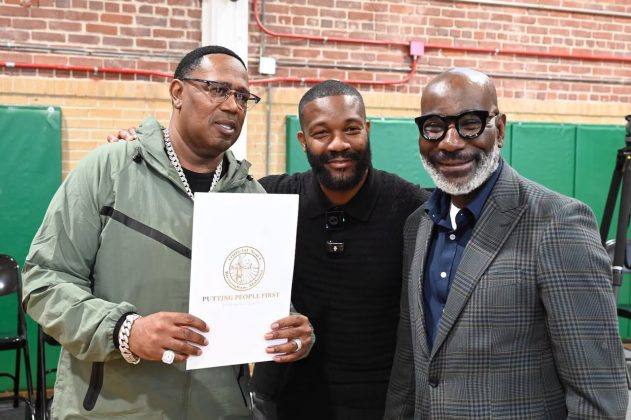
For Miller, however, the morning was less about recognition and more about the children sitting in front of him.
“I love the kids,” Miller told the students. “Even though I got a show, I’m like, no, I got to come and touch the kids because that’s the future.”
Miller said his focus is on what he described as “saving the next generation” and educating young people so they can recognize their potential.
“I want these kids to know that they can fly over all this negative,” he said.
That message became personal when Miller reflected on his own childhood.
He told students he grew up living with his grandparents, who had 12 children. His family lived in a three-bedroom housing project, but Miller said he refused to allow his circumstances to define what was possible for him.
“I didn’t let my condition stop me, and I don’t want you guys to let your condition stop you,” he told the students.
Miller repeatedly returned to the idea that dreams require action.
“There’s no limit to your dreams,” he said, emphasizing that success requires work and that students cannot “cheat the game of life.”
He then asked the students how many of them wanted to be successful. The room responded.
Miller used a familiar example to explain one of his central lessons: McDonald’s.
After asking students what the restaurant sells, he shifted the conversation from hamburgers to consistency.
“McDonald’s is selling consistency,” Miller said.
He explained that a Big Mac is expected to taste the same wherever it is purchased, using that familiarity as an analogy for persistence.
“Keep doing something, not giving up,” he told the students. “Keep chasing your dreams, doing something every day to get that, even when it don’t look like it’s gonna happen.”

“Somebody’s gonna make it big.”
Miller also challenged the students to think about the relationships they are building now. He asked whether they understood what networking means before explaining that the people sitting beside them today could become important figures in their lives tomorrow.
Miller shared a story about a girl he knew when he was in school — someone he said other people did not like or treated negatively. Years later, she became a bank president. When Miller needed a loan, he said, she remembered how kind he had been to her when they were younger.
“You never know who’s gonna be what in here,” Miller said.
He encouraged students to introduce themselves to others, learn their names and treat people well.
“That’s networking,” he said.
For Miller, the lesson went beyond professional connections. He encouraged students to recognize the possibility within one another.
“Who’s gonna be a doctor? Who’s gonna be a lawyer? Who gonna be a teacher?” he asked. “Who gonna be the president of the bank? Who gonna be the mayor? Who gonna be the superintendent?”
Miller said students cannot know where their classmates will end up, which makes how they treat one another today important.
“Somebody’s gonna make it big,” he said. “And it could be all you guys.”

Moments of Celebration
The visit was also filled with moments of celebration. Before Miller addressed the students, Norwood teachers and scholars welcomed him with a robust singalong to “The Affirmation Song,” creating an energetic introduction to the morning’s message.
The appearance of Captain Ace added another layer to the program. The character is part of Miller’s educational work with children, with school assemblies and musical programs addressing topics including anti-bullying, stranger danger and mental health awareness.
Miller said he has spent years making time for young people because he sees them as the future.
The message aligned with the presence of Birmingham’s education and civic leadership throughout the morning. Woodfin and Birmingham City Schools leadership have increasingly emphasized connecting children with educational, enrichment and career opportunities across the city. Earlier this year, the city announced its Children and Youth Commission’s Cradle-to-Career Roadmap, a strategy designed to connect the systems and resources influencing children from early education through adulthood.
For Norwood students, however, the morning offered a more immediate lesson: the opportunity to see someone who built a career from a childhood that did not necessarily predict the future he ultimately created.
As Miller prepared to leave, he encouraged students to keep working, keep learning and keep believing in themselves.
“I kept going,” he told them, reflecting on the people who once told him he would not succeed. “That’s what I want you guys to do. Keep going, no matter what your conditions is. No matter what your environment is.”
Based on reporting by Birmingham Times.


Defender ONE-on-ONE: U.S. Rep. Christian Menefee

Unlock Your Best Auto Loan: Ask These Questions! #shorts

News Observer Weekly — October 7, 2026 | Top 5 Stories of the Week

Atlas Family Comfort: Worth the Extra Cash? #shorts

Antron Brown Takes His Impact Beyond the Racetrack

Headlines and Hot Topics with Rodney Perry

Headlines and Hot Topics with Rodney Perry 📱

Houston’s ‘call Me Mother’ Exhibit Opens Today, Spotlighting Black Maternal Health

Should You Have to Pay to Hear the Gospel?

NCCU Ramping up for the 89th Ultimate Homecoming Experience

Latest Massacre in Haiti Reveals Cruelty U.S. Deportations

Booked and Unbound: The Legacy of Black Women’s Literary Circles

The Youngest American Killed in the Vietnam War

U.S. Sole Nation to Oppose U.N. Resolution Correcting Africa’s Size on World Maps

Passing for White, Fighting for Black America: The Courage of Walter White

U.S. Open Influencers Spark Backlash over Ring Lights, Filming as Gauff and Osaka Speak Out

Prostate Cancer is Twice as Likely to Kill Black Men. Talking to Your Doctor Could Help Save Your Life

OPINION: Nolan Wells’ Death One of Several Signifying Racial Terror Lives on in U.S. South

OP-ED: If AI Is the New Language of Power, Then NAN Wants Black Communities Fluent

OP-ED: How Does Your State Rank for Pre-K?
Defender ONE-on-ONE: U.S. Rep. Christian Menefee
Unlock Your Best Auto Loan: Ask These Questions! #shorts
News Observer Weekly — October 7, 2026 | Top 5 Stories of the Week
Atlas Family Comfort: Worth the Extra Cash? #shorts
Antron Brown Takes His Impact Beyond the Racetrack
Headlines and Hot Topics with Rodney Perry
Headlines and Hot Topics with Rodney Perry 📱

Jamal’s Take: Cowboys’ Epic Comeback Win and Dak’s Dominance Against Houston

REBROADCAST: HE SAID, HE SAID, HE SAID:Author Derrick M. Jackson — FRI. 10.9.26 7PM E

2026 Land Rover Defender 130 X Interior 360 Video
-

 Black Press6 days ago
OP-ED: Haiti TPS: Have We Lost Sense of Humanity?
-

 Black History1 week ago
Remembering Chauncey Bailey as Student Journalists Face Threats to Truth-Telling
-

 Black Press1 week ago
Poll: Becerra Widens His Lead Over Hilton; Californians Split on Wealth Tax
-
 Black History1 week ago
COMMENTARY: The Audacity of Joyce Beatty
-

 Black History1 week ago
Rulings Leave Questions Lingering in Nolan Wells Case
-

 Black History1 week ago
Baptist Minister Says Black Church Champions for Civil Rights to Reign but Hesitates to Let Black Women Lead
