
Oklahoma Eagle
PRESS ROOM: Sen. Matthews Named To Leadership Post, Receives Committee Assignments
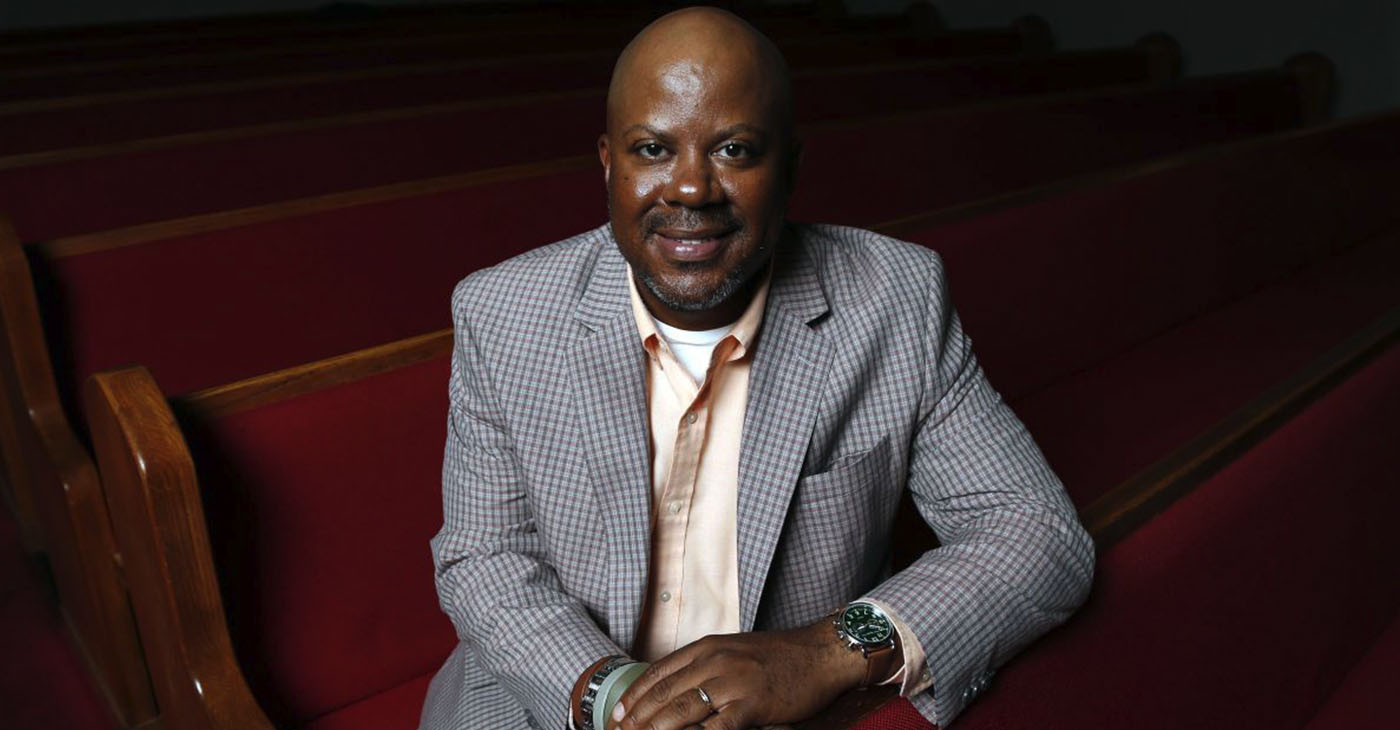
OKLAHOMA EAGLE — State Sen. Kevin Matthews has been named Caucus Chair for the Senate Democratic Caucus for the 57th Oklahoma State Legislature.


The Oklahoma Eagle Newswire
State Sen. Kevin Matthews has been named Caucus Chair for the Senate Democratic Caucus for the 57th Oklahoma State Legislature. As Caucus Chair, Matthews will organize and preside over caucus meetings and help identify issues and legislation of importance Senate Democrats.
“While Democrats comprise the minority of the Senate, the fact remains every single member of the Senate represents just over 78,000 Oklahomans,” said Matthews, D-Tulsa. “It is our responsibility to give those citizens a voice and promote public policy measures that best represents their concerns and needs. As Caucus Chair, I will help keep that responsibility front and center.”
Matthews has also received his committee assignments for the next two years. Matthews will serve on the full Senate Appropriations Committee, the Appropriations Subcommittee on General Government and Transportation, the Energy Committee, Public Safety Committee, Retirement and Insurance Committee, and the Transportation Committee.
“I’m looking forward to working with my fellow Democratic Caucus members to promote public policy aimed at lifting our citizens and improving lives. We must to continue to improve our investments in education. There are still thousands of Oklahomans here in this district who don’t have access to affordable health and mental health care. We need more criminal justice reform that utilizes alternative programs for nonviolent offenders.
We also need to pursue economic development plans that will result in good paying jobs for more of our citizens,” Matthews said. “These are the kind of public policy goals that will truly make our communities and our state better not only for us, but for future generations.”
For more information, contact Sen. Kevin Matthews at 405-521-5598 or email [email protected].
This article originally appeared in the Oklahoma Eagle.










Black Press
From the Streets to Seminary, Morning Star Baptist Church Pastor Traded Happiness for Joy
OKLAHOMA EAGLE — “You come to church to worship. You leave church to serve,” said Rodney Goss, pastor of Morning Star Baptist Church in north Tulsa. “My job is to inform you so that you can make educated decisions and know what direction to walk in on your own.”


By Kimberly Marsh | Oklahoma Eagle
On Easter morning in 1970, 4-year-old Rodney Goss sat on the stoop of his Trenton, New Jersey home waiting for a father he never knew. Goss was outside for hours, dressed in his thick-heeled platform shoes and green plaid jacket.
When his mom told him to go inside, she uttered a phrase he hasn’t forgotten: “He ain’t comin’.”
“That was the greatest disappointment of my life, and that was the beginning of my journey for happiness,” he said.
That journey has taken him to the streets, jail, seminary, and, for the past 10 years, the pulpit.
The 59-year-old serves as pastor of Morning Star Baptist Church in north Tulsa. Even though he’s older now, he says he’s still in the pursuit of happiness.
“I got seashells and pockets of gratification, but that happiness is so fleeting,” Goss told The Eagle. “It wasn’t until I found the joy of God that I realized that I don’t have to be happy every day.”

Congregants of Morning Star Baptist Church gather for a Sunday morning service, praise and worship and fellowship. Credit: Molly McElwain / Tulsa Flyer.
It took time for him to get there. Growing up in his neighborhood, Goss remembers being different.
He said the other boys on his block idolized flashy drug dealers and new cars, but he was more interested in books and school.
In the fourth grade, he and his mom moved to the suburbs, where life was completely different. Goss walked along picket fences in Lawrence Township, where he met white people for the first time and enjoyed Little League baseball.
“I knew what dreaming looked like,” he said. “I knew what getting good grades looked like. I knew what talking about college was like and having friends that didn’t look like me.”
But it was short-lived as he eventually returned to his old stomping grounds. He got mixed up with drugs and crime, but, knowing more about life’s possibilities, he turned himself in on Thanksgiving 1988.
Goss said the judge told him “because of the sincereness of your heart” he would only sentence him to six months in jail. “Everybody else was getting 25 years,” he said. “I did 47 days.”
During that short period, he found God on the inside and began using his words on the outside to help others dream bigger.
That moment affects his ministry even to this day. Part of his time as a pastor is focused on helping kids expand their horizons beyond their day-to-day circumstances.

Pastor Rodney Goss and congregants of Morning Star Baptist Church congratulate and welcome a group of children who chose to be baptized. They were presented with certificates and given a church-wide welcome. Credit: Molly McElwain / Tulsa Flyer.
“That’s what changed my life, just being able to see life more than what that street or what that block was,” Goss said.
Now he’s on a mission to connect faith with real life and equip his congregation with the spiritual resources they need to serve the community.
“You come to church to worship. You leave church to serve,” he said. “My job is to inform you so that you can make educated decisions and know what direction to walk in on your own.”
Through it all, he says, the most important lesson he’s learned is the difference between happiness and joy.
“Happiness is a personal journey. Happiness always comes with a condition. But joy is my contentment with the world as it is,” Goss said. “I’m joyful when I love God for who he is and just loving him for who he is in spite of what he does. That’s the joy that the world didn’t give and the world can’t take away.”
Black History
Vernon AME Church Absorbed the Terror of the Tulsa Race Massacre. Now It Will ‘Teach Truth.’
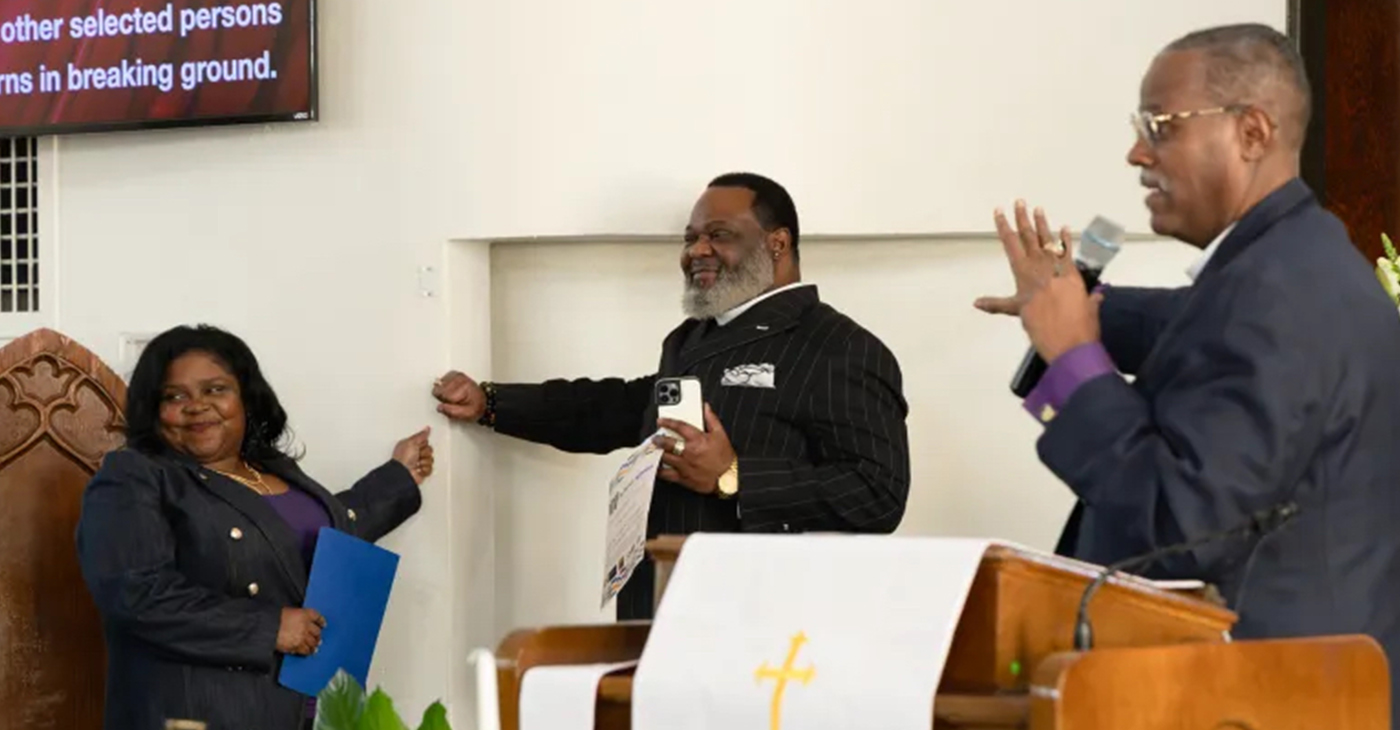
OKLAHOMA EAGLE — Church officials say Vernon is the last remaining Black-owned structure still standing in the area after it was rebuilt in 1925. “Vernon absorbed the trauma, the terror, the smoke and the fear and stood as a witness. Now, the church that absorbed trauma will teach truth,” Kristi Williams, a member and massacre descendant, said Thursday.
By Shaunicy Muhammad | The Oklahoma Eagle
More than a century after the 1921 Tulsa Race Massacre, members of Greenwood’s Vernon AME Church are determined to tell their own stories.
Archivists, archeologists and elected officials lined the pews of the church Thursday for the unveiling of The Vernon Witness, a multi-year project to preserve the church’s basement and turn it into a museum and cultural center.
Survivors found refuge by hiding in the basement as the upper floors of the church were destroyed.
Church officials say Vernon is the last remaining Black-owned structure still standing in the area after it was rebuilt in 1925.
“Vernon absorbed the trauma, the terror, the smoke and the fear and stood as a witness. Now, the church that absorbed trauma will teach truth,” Kristi Williams, a member and massacre descendant, said Thursday.
Williams, who founded community education program Black History Saturdays, spearheaded the preservation initiative. She sees the space as “not just history but inheritance.”
The initial phase of the preservation project is expected to take about 18 months. It is made possible, in part, due to $1.5 million in funding from The Mellon Foundation.

Kristi Williams speaks during The Vernon Witness interpretive center groundbreaking at Vernon AME on Feb. 12, 2026.
Alicia Odewale, a Tulsa native and one of the archeologists working on the project, said at its completion, visitors will see over 5,000 artifacts from the church and Greenwood.
“Everything our ancestors left behind to tell that story will be restored,” Odewale continued.
Odewale was teaching college courses in Texas when she first got the call from Williams to work on the project. She told The Eagle she believes it was God’s divine timing to bring her back home to join the team.
She sees the preservation of the church as a call “to bring our artifacts home and bring our people home.” Odewale and others on the team of preservationists said one of their primary concerns is ensuring artifacts are properly preserved — something they say has not always happened in the past.
“I was angry about how some artifacts were, frankly, thrown away,” Odewale told The Eagle following the ceremony. “It’s crazy how our history keeps being literally thrown away because we don’t have a place to store our artifacts, we don’t have a place to display them and keep them from being thrown away. These are the things that our ancestors left behind for us.”
The museum space will also illustrate the church’s founding, highlight members of the congregation and tell the story of how they rebuilt.

A scene from The Vernon Witness interpretive center groundbreaking at Vernon AME on Feb. 12, 2026.
Williams envisions an exhibit where visitors will hear some of the sounds people heard during the massacre as they hid from the violence. “I want people to really feel it,” she said.
Ultimately, Williams wants Tulsans young and old to embrace where they come from.
“Our history is being taken from us. It’s being deleted as we speak,” Williams said. “Knowing your history, there’s a power in that. It helps with identity and knowing who you are.”
Art
Burnt Sienna, A Creative Passion & The Identity of An Artist: Charisa Dene Jacobs
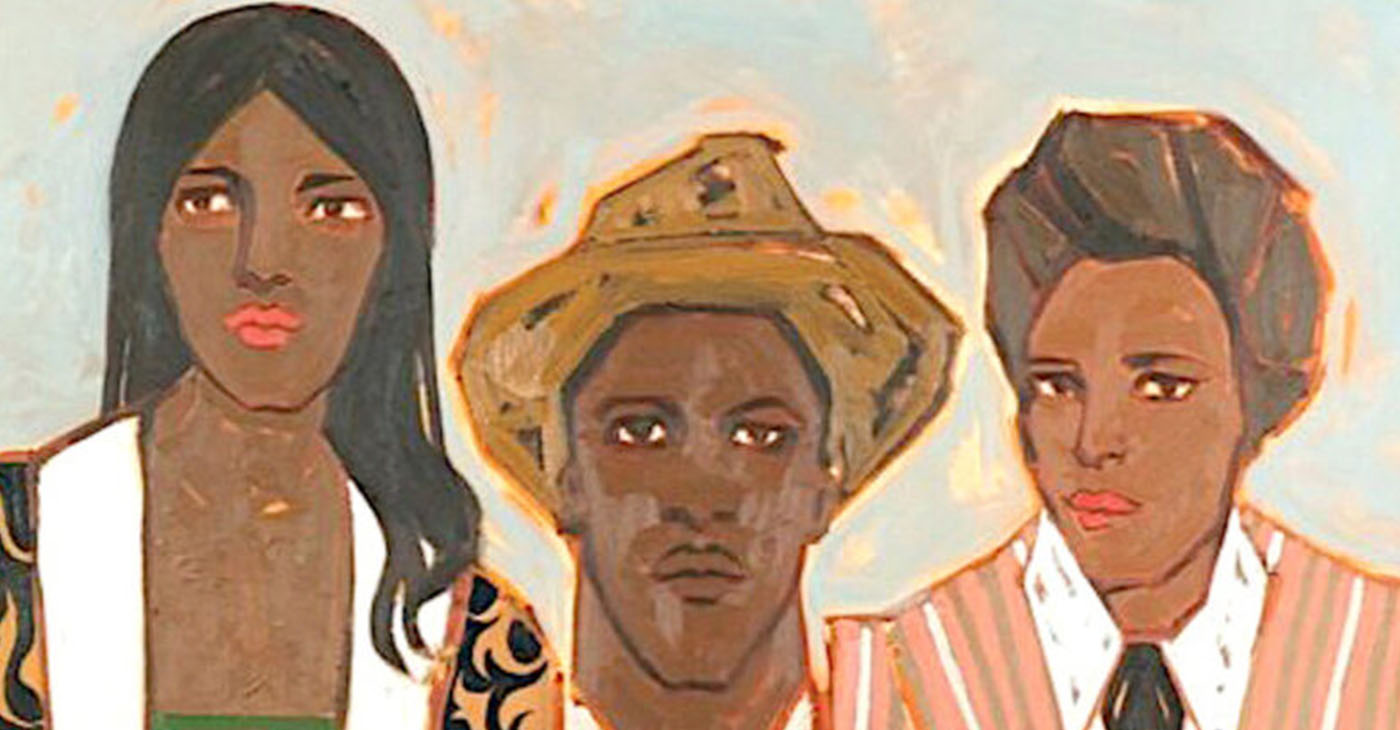
OKLAHOMA EAGLE — In Charisa Dene Jacobs’ “Heritage,” “Beloved,” and “Sanctuary” collections, the underlying and grounding effect of burnt sienna is one aspect of the Tulsa, Oklahoma artist’s identity. Her bold brushwork, apparent connection to subjects and expressive application of color equally inform her mark.
By Ross D. Johnson | Oklahoma Eagle
Identity, through art, is seldom accomplished with intent.
Applied brushwork, the effect of technique, scale, pigment, and preferred subjects may engender a sentiment or feeling from the observer, yes, but an artist’s identity is slower to evolve.
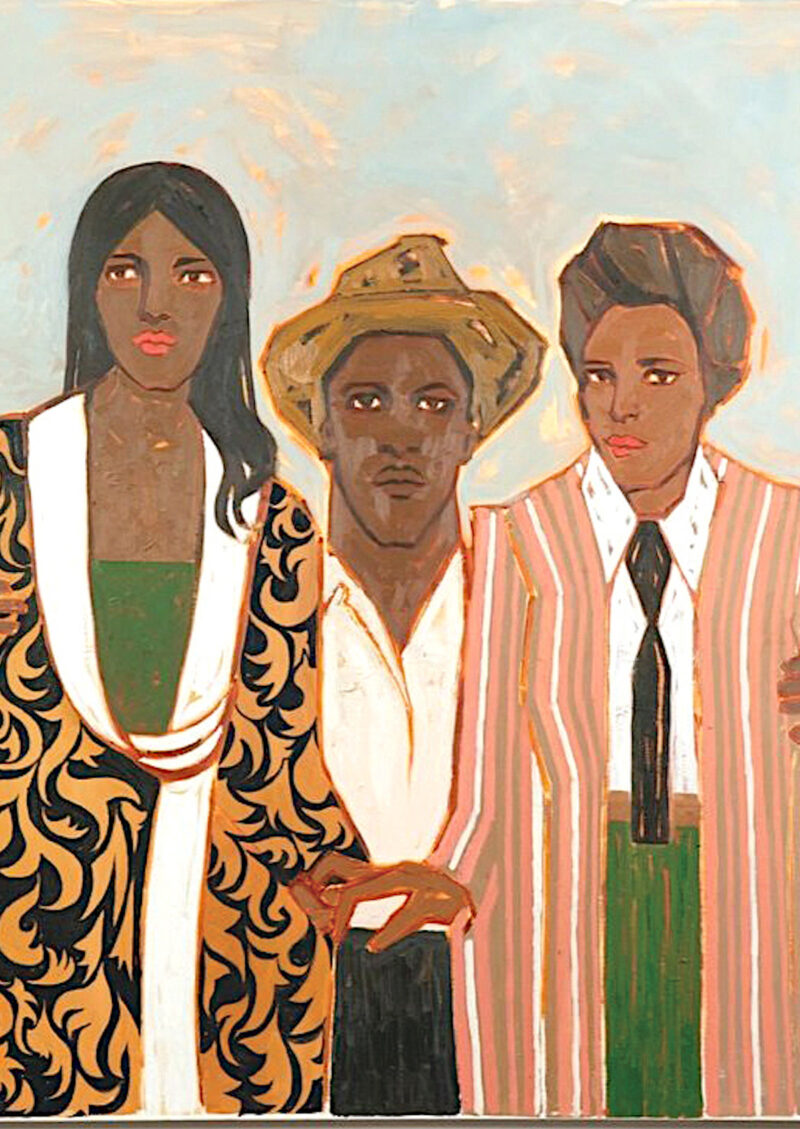
The Messengers, 2020 | Oil on Canvas | 48 x 48 inches. Photo Charisa Dene Jacobs
An artist, sadly, may enjoy a life of profound creativity, pleasures, trials, and celebrations, yet be denied a broadly recognized identity.
In Charisa Dene Jacobs’ “Heritage,” “Beloved,” and “Sanctuary” collections, the underlying and grounding effect of burnt sienna is one aspect of the Tulsa, Oklahoma artist’s identity. Her bold brushwork, apparent connection to subjects and expressive application of color equally inform her mark.
Jacobs’ identity isn’t simply a mark of consistency or recognition. Each work and series, shared Jacobs, is “my own personal journey of identity. A diary of…. how I am navigating through life.”
Madame x Josephine
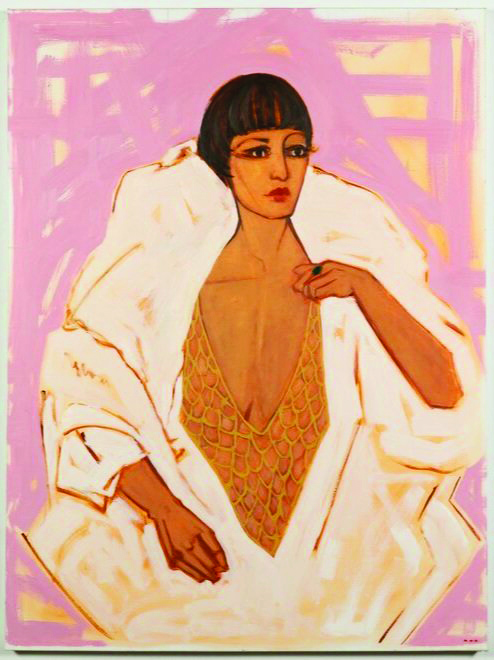
Josephine Baker, 2020 | Oil On Canvas | 48 x 36 inches. By Charisa Dene Jacobs
“An expression of the romantic,” as described by Jacobs, “Madame x Josephine” (2020) is the result of what occurs when you “make it your own.”
Inspired by the works of John Singer Sargent and vintage photographs of Black Americans, Jacobs has created twelve works for the collection. Charisa’s “Madame X” appears to have evolved the late 19th century signature work of Sargent, producing a contemporary subject, Madame Pierre Gautreau. Absent is the pale-skinned, powdered visage of the Parisian socialite, reimagined is a work that continues to draw attention to Gautreau’s hourglass figure and free spirit.
“Josephine Baker” and “Josephine Baker II” (2020), the eponymously titled works of the collection, are striking representations of the iconic American-born French dancer, singer and actress who was the first Black woman to star in a major motion picture. Baker’s countenance, in both works, is a key focal point, possessing a depth of passion, challenge and triumph.
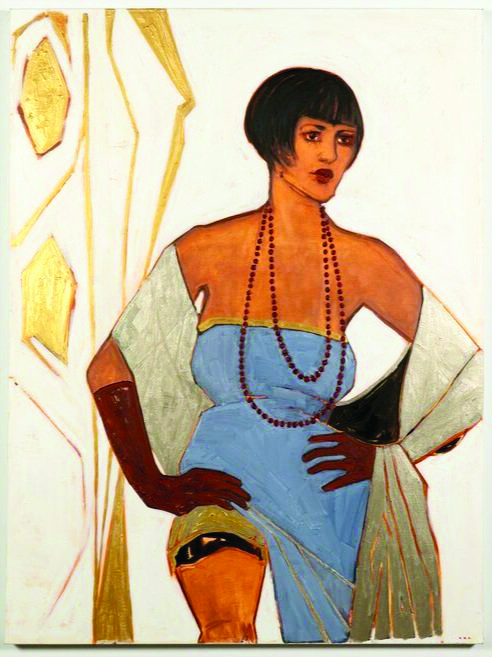
Josephine Baker II, 2020 | Oil On Canvas | 48 x 36 inches. By Charisa Dene Jacobs
“Black Man in Suit,” Jacobs’ work dedicated to her father, Claude Jerome Jacobs Jr., and the beloved Sidney Poitier, reflects the artist’s personification of being a “classy man.” Meaningful beyond cliché, “a classy man,” as depicted through Poitier’s roles, and certainly Jacobs Jr. life, was and is committed to encouraging the best of humanity, an enduring and selfless pursuit of justice and being unshaken by the challenges related these pursuits.
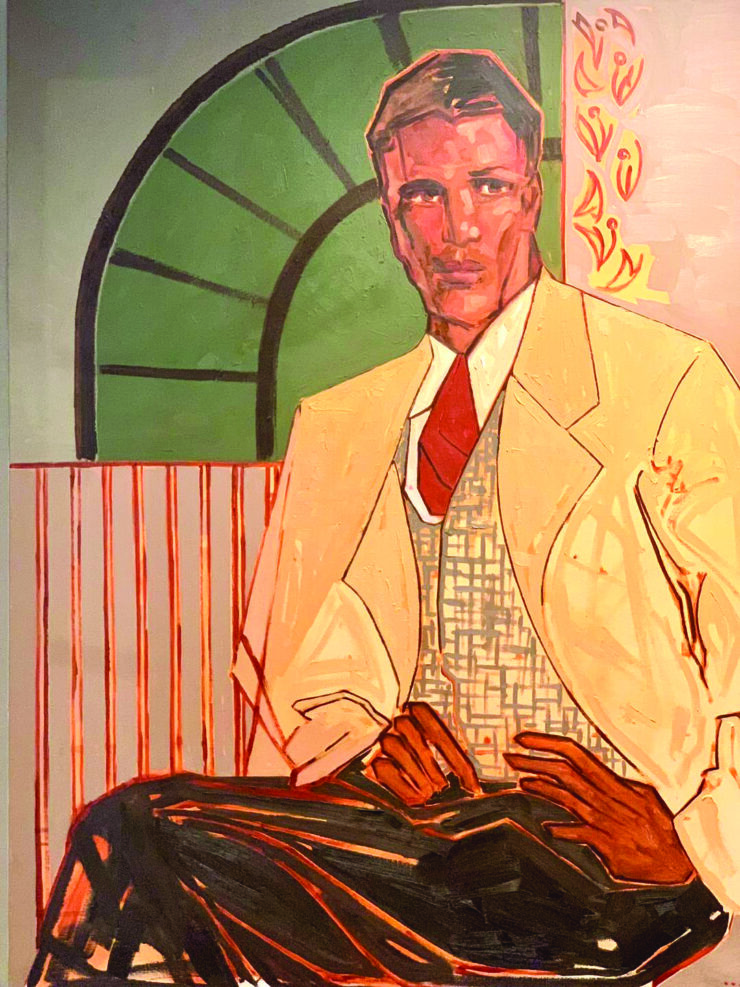
Black Man in Suit, 2020 | Oil On Canvas | 48 x 36 inches. By Charisa Dene Jacobs
In a wool and patterned waistcoat, breaking beneath a burnt sienna tie, framed by a neutral-colored jacket of the era, Jacobs’ “Black Man In Suit” is an iconic figure admired by all.
The Black American Cowboy
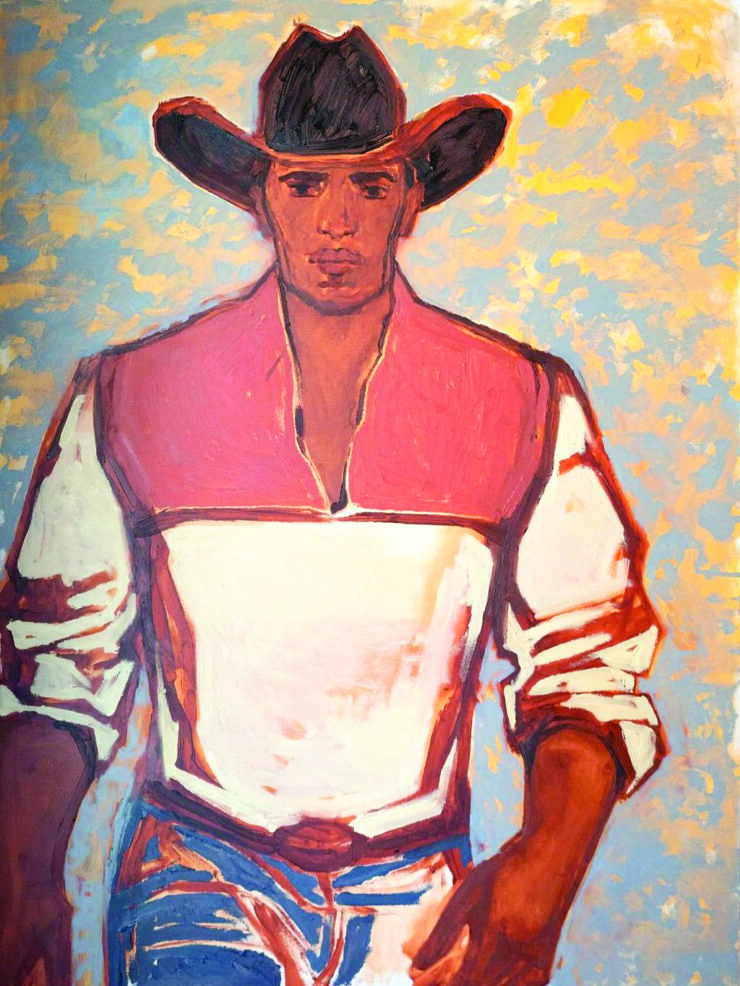
After a Day’s Work, The Black American Cowboy, 2022 | Oil On Canvas | 60 X 48. By Charisa Dene Jacobs
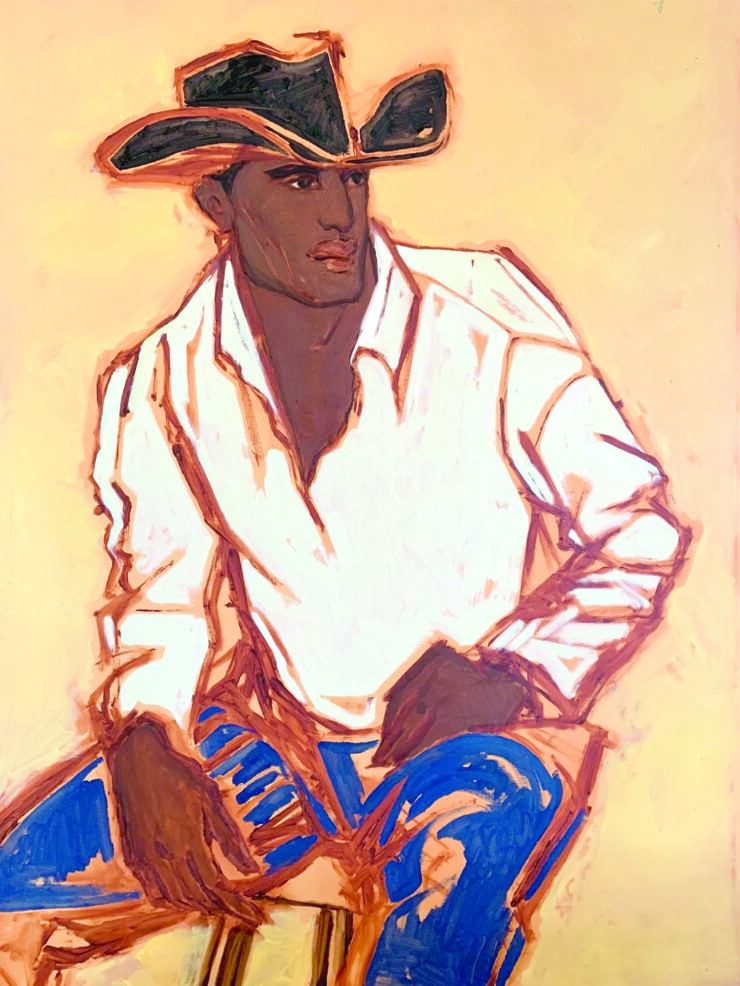
The Maverick , 2022 | 48 X 36 | Oil On Canvas. By Charisa Dene Jacobs
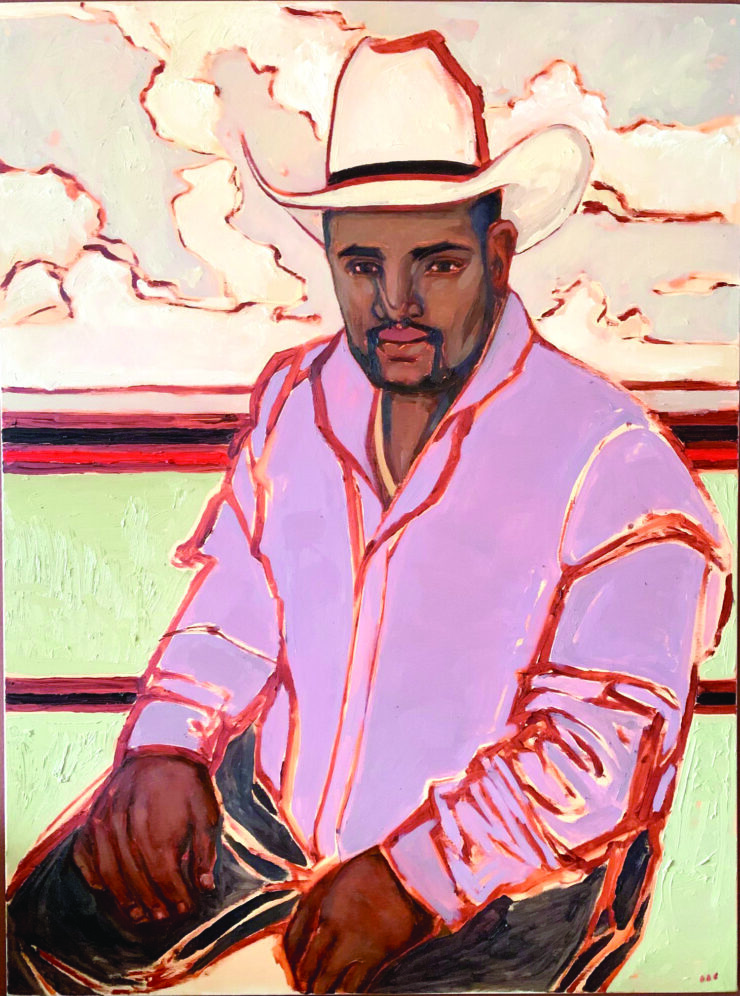
William (Humpty) Whayne Jr. (2022) Tie-Down Calf Roper from Oklahoma | Oil on Canvas. By Charisa Dene Jacobs
“There are certain things that I must do, Black American Cowboy” is one such collection, shared Charisa, who embraces the power of identity and its ability to positively shape the perceptions of all people.
The “Black American Cowboy”, a collection of history-inspired works exhibited in the Vast Bank N. Elgin Avenue office lobby in April 2024, frames each subject with Jacobs’ signature burnt sienna brushwork. Placed upon the warm palette of Oklahoma’s midday skies and grasslands each Black American Cowboy is a source of story and personal narrative. Each subject of great physical structure.
“After a Day’s Work” (2022) and “The Maverick” (2022) reflect Jacobs’ application of color with a perceived intent to ground subjects, center the men of her work, and often appear to be marks of their spirit or passion. Accented by tints and shades denim or canvas blue, and a red hue of puce, Black American Cowboys appear as both icons and common upon canvases.
Jacobs offers viewers context about the collection, sharing that “research shows that 25 to 30 percent of American Cowboys were Black American,” insight fully substantiated by historians like Kenneth Porter.
William (Humpty) Whayne Jr., a subject of Jacobs’ “The Black American Cowboy” collection, is a North Tulsa professional rodeo competitor who she describes as adding “an authentic masculine beauty” to her work. Whayne Jr.’s inclusion in the collection, cast before a background of an early Oklahoma sky above his family’s roping arena, reflects a sincere effort to offer viewers a greater sense of the past, present and future of “The Black American Cowboy.”
The Beloved Collection

Beloved (Sanctuary), 2021 | 60 x 48 inches | Oil On Canvas. By Charisa Dene Jacobs
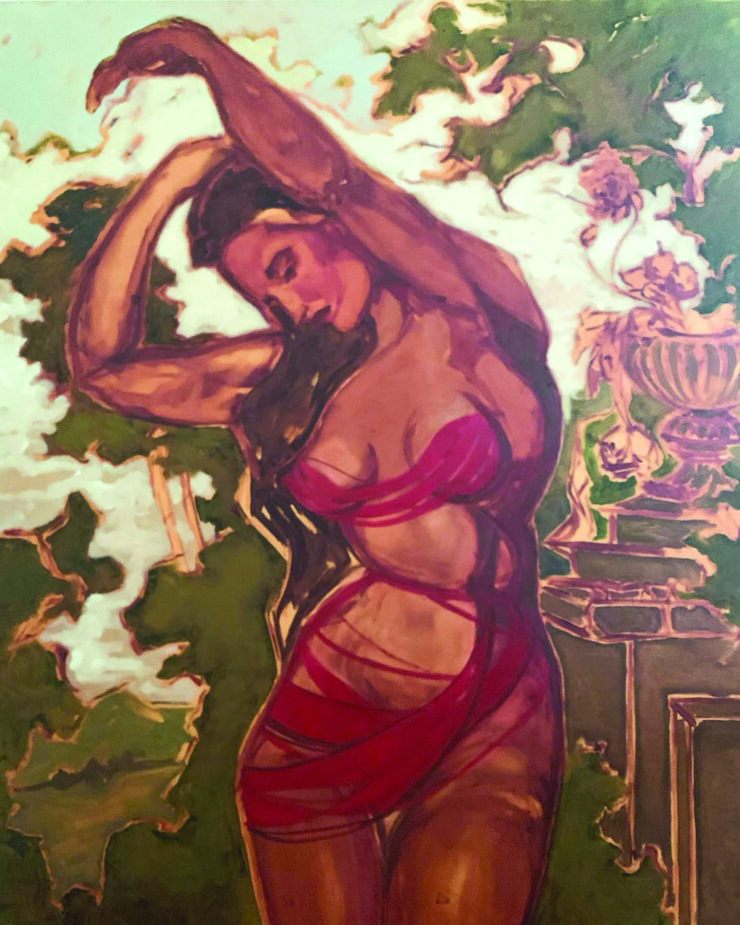
The Bride Oil on Canvas 60X48. By Charisa Dene Jacobs
“A casting away of the stigma of shame often attached to the female nude form and celebrating her as a holy creation” is the stated foundation of Jacobs’ “Beloved” collection. The artist’s work is a welcomed symphony of mood and palette, framed in hues of green and red, centered by subjects unbound, free from stereotype, public perception and forced role.
“Sanctuary,” speculatively, because of the linear perspective effected by the tapered cloud background, the throw that rests beneath her which drapes out of frame and the negative space created between the arm of the couch and the pillows that adorn it, underscore a subject that appears simply beloved.
Jacobs’ work, throughout the collection, is stunning. The signature application of burnt sienna is present, yes, but far less conspicuous, a compliment to her ability to draw viewer’s attention to subjects.
We know now…
Charisa Dene Jacobs’ work, so closely aligned with her life’s journey, passions upon canvas, challenges, accomplishments and shared discoveries are framed by an identity… A familiarity born of brushwork, hue, tone and shade.
The casual art observer, a place that most occupy, may be assured that the relationship between burnt sienna and Jacobs is one of identity.
The casual art observer may be assured an identity of bold statements, profound beauty and heritage.
An identity of sincere passion and creativity.
An identity worthy of embrace.
Burnt sienna.
Black History
The TINA TURNER Musical Reveals Trials and Triumphs
THE OKLAHOMA EAGLE — The 1993 movie “What’s Love Got to Do with It” portrayed the relationship between Ike and Tina Turner as abusive before their breakup. Ike was also said to victimize Tina, as she shared in a 2018 interview with Oprah Winfrey. But Deon Releford-Lee, the actor who plays Ike in the Broadway musical, says there is more to Ike’s story than is told on screen. In preparing for the part, the Broadway actor searched for the triggers that made Ike who he was known to be.

By Kimberly Marsh | The Oklahoma Eagle
According to Tulsans who knew him and the actor who plays him in the musical Tina, The Tina Turner Musical, Ike Turner may have had multiple sides to his personality. However, the Ike Turner the public has seen is a violent man.
The arc of Tina Turner’s career is well-known. Although Ike’s story is lesser known, he had a powerful influence on Tina’s life and career. They had a family together, and he witnessed Tina rise to superstardom.

Naomi Rodgers performing ‘What’s Love Got to Do with It?” as Tina Turner in the North American touring production of “TINA – THE TINA TURNER MUSICAL.” Photo by Matthew Murphy for MurphyMade.
The 1993 movie, “What’s Love Got to Do with It,” portrayed the relationship between Ike and Tina Turner as abusive before their breakup. Ike was also said to victimize Tina, as she shared in a 2018 interview with Oprah Winfrey. But Deon Releford-Lee, the actor who plays Ike in the Broadway musical, says there is more to Ike’s story than is told on screen. In preparing for the part, the Broadway actor searched for the triggers that made Ike who he was known to be.
Ike is part of the musical until the breakup and the start of Tina’s solo career in the second act. Because of the problematic themes of domestic violence, the musical is recommended for ages 14 and older.

Naomi Rodgers performed “Proud Mary” as Tina Turner and the cast of the North American touring production of “TINA – THE TINA TURNER MUSICAL.” Photo by Matthew Murphy and Evan Zimmerman for MurphyMade.
Ike Turner
In an interview with The Oklahoma Eagle, Releford-Lee said playing Ike Turner was a healing experience for him. While “villains” have challenging roles, Releford-Lee said it is liberating in some respects, and he embraces the challenge.
“I have a wealth of knowledge of difficult things to play. My focus is to do as much…research as possible to figure out who this human was, what happened in his path, and what maybe led him to the places to do some of the horrible things he did. Not to excuse their behavior because it’s deplorable, right? We don’t just walk around hating people, throwing them around, forcing them, and manipulating them to do things,” Releford-Lee said. He described Ike’s aggressive behavior, especially with his wife.
Channeling that aggressive hyper-masculine energy takes a toll but also frees Releford-Lee to be softer, more feminine, more free, and more in touch with his emotions off-stage. Having played many villains in the past, he said he learned to become “Okay with my ugliness because that ugliness is in all of us.”
“Ike was a Black man who wrote music and was one of the fathers of Rock ‘n’ Roll but never received the credit,” Releford-Lee said. As Tina took center stage and became the superstar she was, Ike was overlooked.

Zurin Villanueva performed as Tina Turner and Garrett Turner as Ike Turner in the North American touring production of “TINA – THE TINA TURNER MUSICAL.” Photo by Matthew Murphy and Evan Zimmerman for MurphyMade.
“Those are the things that I focus on to help ground me in the (character) because being rejected for being Black, being talented, being othered, is something that I can connect to.”
Tulsa Connections
In an article published in June 2023 following Tina’s death, The Oklahoma Eagle Editor Gary Lee reflected on the days when the Ike and Tina Revue came to Tulsa and performed at the Big Ten Ballroom. The Ike and Tina Revue was a Big Ten headliner several times in the 1960s, and they performed together until their 1976 divorce.
Tulsa musician and radio personality Bobby Eaton Jr. knew them both and witnessed much of what was happening around them on the road. Eaton recently held a launch party for his new band, Eaton Out. During the performance, he recounted working with Ike and Tina Turner as the youngest guy in the band. Eaton said he appreciated Ike as a band leader, a musician/composer, and a businessman who showed him the ropes in the industry. But Eaton acknowledged that the relationship was not easy.
“Tina was there, and a lot of fights and a lot of crazy stuff went on back in those days, but at the same, I couldn’t wait to get away because they had too much drama going on.”
Singer Michelle Love, a/k/a Sweet Randi Love, became an Ikette in 1993 and knew him during the last decade of his life when he revived his career as a frontman. She joined the band despite being familiar with the tumultuous relationship Tina described.
“We were more like a family unit. When it came to work, though, he was a real hard ass. I don’t want to say it like that. But you know what I mean? He was serious when it came to work. As far as that goes, he didn’t play any games because he was like, this is me on stage, and it represents me.
“After the Tina stuff, Ike was self-conscious…about every little thing that he did because he had already gotten kind of a bad rap behind the movie. So, he was a real stickler as far as that goes,” Love said, “But when it was time for everybody to go home and we were calming down, Ike was just a big old teddy bear. Honestly, he was really. I think a lot of what he went through, you know, in the past team as well, had a lot to do with his insecurities. During the Jim Crow days, he went through quite a bit. So, there’s a lot that people don’t know about him. As far as his background story goes, I’m not trying to take away from Tina’s background story because she has a story to tell, but it might explain why he was the way he was.”
Ike was released from prison in 1991 after serving 18 months for drug offenses. Cocaine was his drug of choice, and it flowed freely, in large quantities, around him. Ike’s drug addiction relapse in 2004 led to his drug overdose in 2007.
Love has returned to Tulsa and continues to sing and perform with Sweet Randi Love and The Love Thang band.
About Deon Releford-Lee
Releford-Lee attended Fayetteville State University in North Carolina, an HBCU. At the university, he studied dance and theater. He began working professionally when he was still not old enough to play certain roles, portraying more mature characters. Although getting attention was difficult, he worked his way from ensemble to lead roles. A move to New York City followed, leading to his current role as Ike.
Deon Releford-Lee plays Ike Turner in the TPAC production TINA: The Tina Turner Musical.
Releford-Lee plays Ike full-time every night but has two understudy actors for this incredibly physical and emotional role. A self-described Bohemian, Releford-Lee’s personality is very different from Ike’s, and he is shocked when audience members have no idea who he is when the cast goes out to greet them.
Following a night onstage, he does breathwork to unwind and get out of character, which can take about 15 minutes to exit.
“I realized that when I’m feeling anxious, it’s mostly because physically I’m not breathing at all. I’m holding my breath, so I’m just reminding myself to breathe. I’m someone who doesn’t leave the theater right away. I just kind of sit there for a bit, take off my costume, take off my wig, put my jewelry on, put my own clothes back on, and just kind of sit and listen to music, and then move on.”
Releford-Lee said people will learn a little more through Ike’s backstory, how the industry treated him, and why he was the way he was.
“And in the same breath, you’re also seeing him being manipulative and hurtful. And the audience is kind of on his side in one second, and then the very next second, betrayed by him.
“I love the moment where Tina and Ike first meet because you see them laughing, you see them enjoying each other. It’s one of the only times of fun between them. And I think that’s beautiful. I love watching Tina discover herself in the second act.”
Celebrity Attractions describes “Tina-The Tina Turner Musical” as the inspiring journey of a woman who broke barriers and became the Queen of Rock ‘n’ Roll. “Set to the pulse-pounding soundtrack of her most beloved hits, this electrifying sensation will send you soaring to the rafters.” Tina Turner won 12 Grammy Awards and her live shows were seen by millions, with more concert tickets sold than any other solo performer in music history. Featuring her songs, “Tina–The Tina Turner Musical” is written by Pulitzer Prize-winning playwright Katori Hall and directed by the internationally acclaimed Phyllida Lloyd.

LOCAL & STATE
Rev. Kevin Taylor
Illustration. The Oklahoma Eagle
January is a month that we celebrate Martin Luther King Jr. and reflect on his life, legacy, impact, and vision for a “beloved community.” Likewise, we listen with fresh interest to his words, speeches, books, and articles in search of meaning amid our social and political challenges. And we decry the whitewashing of his message for political expediency or bogus proof of a post-racial world.
Had he not been assassinated on the balcony of the Lorraine Motel in Memphis in 1968, on January 15, Dr. King would have turned 95. He would surely be concerned about the wars in Europe and the Middle East and the humanitarian crises abroad in Gaza, Afghanistan, Haiti, Ukraine, and elsewhere. He would most certainly also be worried about the issues facing Americans right here at home, including immigration, homelessness, healthcare inequities, income inequality, among others
Perhaps most urgently, as a Baptist minister, husband, father, and grandfather, Dr. King would have pressing concerns about the rise of Trumpism, authoritarianism, political violence, evangelical idol worship, and the assault on truth. He was a leader who recognized the need for us all to engage in politics. He would likely be alarmed about the upcoming presidential election.
The January/February 2024 issue of The Atlantic magazine demonstrates why Black Americans – and indeed all Americans – should be alarmed by a second Trump term. Several prominent thinkers use the magazine edition to make the case that a second Trump term would be more detrimental to democracy than the first term was.
For churchgoers and church leaders, there are particular concerns. For instance, not only are parishioners’ autonomy over their bodies on the ballot, but a Trump presidency could also mean that clergypersons are jailed as “enemy combatants” for opposing Trump’s policies and/or supporting our social justice efforts in and out of our pulpits. After all, what good are the rights – free speech, freedom of assembly, the courts, a free press, civil demonstrations, marches, an independent judiciary, among others – we enjoy today if the mechanisms of change Dr. King and other civil rights leaders effectively relied on for generations are no longer tools in our toolboxes?
One of my heavy concerns is that many eligible voters will grow apathetic to the inevitability of a Biden v. Trump rematch and choose not to vote – or to vote for a third-party candidate. Lest we forget that in 2016, more than 10,000 Michiganders left the choice for president blank on their general election ballots, helping cement Trump’s surprise win in that state – and in the presidential race that year. And the record shows that millions of eligible voters, including Black Americans, sat out during the elections altogether. How many of those who stayed home sat on their pew, got their hair done at the local salon or barbershop, or even sang, “We Shall Overcome” at the local King Day celebration?
As Dr. King observed, “The ultimate measure of a man is not where he stands in moments of comfort and convenience, but where he stands at times of challenge and controversy.” I choose to stand up for our democracy. I invite you to do the same. Here are some steps I encourage taking:
- Resisting the temptation to wait to begin get-out-the-vote efforts until after the party nominating conventions later this summer.
- Making a copy of at least one of the articles in the Atlantic’s special section and sharing it with your friends, colleagues and worshipers.
For my fellow church leaders, some particular recommendations:
- Activating your social action commission/ministry to immediately begin registering congregants to vote. Take no one’s registration status for granted.
- Including a voter registration card in the welcome packet/bag presented to all your visitors.
- Devoting at least one bible study per quarter to addressing the historical and contemporary importance of voting and analyzing the salient campaign issues from a Christian perspective.
- Encouraging congregants to vote in your state’s primary election with announcements on the same in the weekly bulletin and/or ministry highlights from the pulpit.
- Screening “Selma, Eyes of the Prize: The Civil Rights Years,” “Rigged: The Voter Suppression Handbook,” or similar as part of your Rev. Dr. Martin Luther King Jr. Day, and/or Black History Month observances.
- Using your local Juneteenth celebration, church picnic, organized lay meetings, or other milestone(s) of significance as voter mobilization opportunities and/or demystifying the Electoral College.
- Combatting voter apathy by asking your parishioners to make a list of people they know in Arizona, Georgia, Michigan, Nevada, New Hampshire, Pennsylvania, and Wisconsin (i.e., family, social media contacts, etc.) and messaging 3-5 of them each month encouraging them to register, vote, and challenging those 3-5 people to do the same.
Sadly, it took the violence on the Edmund Pettus Bridge in Selma, Ala., in March 1965 for America to see – and for likeminded persons of faith across the nation to answer the clarion call from Dr. King about – the inherent dangers of denying disenfranchised people the right to vote.
As we gather to celebrate King, let us not allow ourselves to simply say we celebrated MLK Day 2024 and nothing else. Let us not allow the violence and mayhem of Jan. 6, 2021, fade from our memories lest the sacrifices of Dec. 1, 1955; March 7, 1965; April 4, 1968; Nov. 4, 2008; and June 17, 2015, to be in vain.
Rev. Kevin T. Taylor is a regular contributor to The Oklahoma Eagle. He is pastor at Israel A.M.E. Church (Albany, N.Y.), a writer, and Black community advocate.
The post MLK Inspires Us To Be Politically Active appeared first on The Oklahoma Eagle.
Black History
FAITH: Encouragement for the Discouraged
OKLAHOMA EAGLE — Perseverance seems to be an outdated concept in our day of instant everything. If it doesn’t come easy, why pursue it? If it’s hard or requires endurance, maybe it isn’t your thing. God encourages the discouraged to persevere. He cares about the discouragement we are facing. The Lord does not ask us to gloss over or ignore our situation. He simply asks that in all our troubles to remember that He understands and cares for us.


Black-Owned Banks: FDIC Data Reveals Shocking Truth #shorts

2026 Defender 130X: Is The $110k SUV Worth It? #shorts

Mastering the Used Car Market ep11

2026 Defender 130 X Is It Worth $110,110 for Your Family?

“Money, Power, and Respect,” (SEIU) President April Verrett

Car Takeoff Hesitation? Daylight Test Drive Guide #shorts

Your Vote Matters…Protect Your Freedoms!

The Black Bank That Survived the 1893 Panic #shorts

Why A Black Bank Started From A House #shorts

Defender ONE-on-ONE: U.S. Rep. Christian Menefee

Latest Massacre in Haiti Reveals Cruelty U.S. Deportations

The Youngest American Killed in the Vietnam War

OPINION: Nolan Wells’ Death One of Several Signifying Racial Terror Lives on in U.S. South

Passing for White, Fighting for Black America: The Courage of Walter White

OP-ED: Haiti TPS: Have We Lost Sense of Humanity?

OP-ED: If AI Is the New Language of Power, Then NAN Wants Black Communities Fluent

OP-ED: How Does Your State Rank for Pre-K?

Henry O. Flipper: A Trailblazer at West Point and Beyond

NFL: NFC Preview | The Rams will NOT make the Super Bowl

Asm. Smallwood-Cuevas’s Bill Repealing ‘Racist’ CalWORKs ‘Man-in-the-House’ Rule Clears Legislature
Black-Owned Banks: FDIC Data Reveals Shocking Truth #shorts
2026 Defender 130X: Is The $110k SUV Worth It? #shorts
Mastering the Used Car Market ep11
2026 Defender 130 X Is It Worth $110,110 for Your Family?
“Money, Power, and Respect,” (SEIU) President April Verrett
Car Takeoff Hesitation? Daylight Test Drive Guide #shorts
Your Vote Matters…Protect Your Freedoms!
The Black Bank That Survived the 1893 Panic #shorts
Why A Black Bank Started From A House #shorts
Defender ONE-on-ONE: U.S. Rep. Christian Menefee
-

 Black Press5 days ago
A $2.1 Trillion Wellness Industry Never Built a Daily Practice for Black Children. So This Atlanta Family Did.
-

 Black Press7 days ago
Zakiya Jendayi Arrested, Locked Out of Home by Sheriff’s Deputies
-

 Black History7 days ago
Listening as a Lifeline: A Doula’s Witness to Black Maternal Health
-

 BlackPressUSA3 days ago
Latinas Deserve Equal Pay. Unions Help Make It Happen.
-

 Black Press5 days ago
COMMENTARY: But God!
-
 Black Press7 days ago
‘We Don’t Talk Trash — We Pick Up Trash!’
