
Commentary
PRESS ROOM: 2023 APGA Farmers Insurance® Fall Series Finale
NNPA NEWSWIRE — Leading up to the Fall Series Finale, the APGA Foundation is hosting a golf clinic for underserved youth on Sunday, November 5th at Chester Washington Golf Course in Los Angeles from 12-4:30 pm. The day will include a mental health and wellness discussion run by clinically trained personnel, a career development program with the APGA Foundation, and a fun-filled golf clinic conducted by APGA Tour pros.


EVENT: The 2023 APGA Farmers Insurance® Fall Series Finale will take place November 7-9 at Tustin Ranch Golf Club in Tustin, CA. The Advocates Professional Golf Association (APGA) Tour was established in 2010 as a non-profit organization with the mission to bring greater diversity to the game of golf. The event will include a diverse field of approximately 50 golfers playing for a $45,000 purse and will allow players to establish a position in the Farmers Insurance Fall Series bonus pool.
The APGA Farmers Insurance Fall Series is a three-event series designed to further the APGA Tour’s mission of bringing greater diversity to the game of golf and to provide additional playing and earning opportunities to APGA Tour players. Chase Johnson won the first two events of the 2023 series at both the APGA Farmers Insurance Cincinnati and APGA Farmers Insurance Austin.
Leading up to the Fall Series Finale, the APGA Foundation is hosting a golf clinic for underserved youth on Sunday, November 5th at Chester Washington Golf Course in Los Angeles from 12-4:30 pm. The day will include a mental health and wellness discussion run by clinically trained personnel, a career development program with the APGA Foundation, and a fun-filled golf clinic conducted by APGA Tour pros. Youths ages 13-17 will attend and are asked to write an essay on the importance of mental health and well-being for the opportunity to earn a scholarship. Please find further details here.
MEDIA: Media are invited to cover the practice rounds or competition rounds of the tournament. Please find details below for reference. For story ideas, specific times, onsite questions or additional information, please contact the below:
CONTACTS: Chris Reimer, CR PR Group, [email protected]
Erin Alexander, APGA Director of Marketing & Sponsorships, [email protected]
DATE: November 7-9, 2023
FORMAT: Approximately 50 players, two-day, 36-hole stroke-play competition, no cut
Nov. 7: Practice Round: starting at 10 AM PST
Nov. 8: Round 1 of competition, starting at approximately 8 AM PST
Nov. 9: Round 2, the final round of competition, starting at approximately 8 AM PST
SITE: Tustin Ranch Golf Club, Tustin, California
PURSE: $45,000 purse, $15,000 to the winner
Tournaments in the APGA Tour Farmers Insurance Fall Series:
- 3-5 – APGA Farmers Insurance @ Sharon Woods Golf Course – $25,000 purse, $7,500 to the winner
- 2-4 – APGA Farmers Insurance Austin – $25,000 purse, $7,500 to the winner
- 7-9 – APGA Farmers Insurance Fall Series Finale – $45,000 purse, $15,000 to the winner
The top-performing players from the three events will receive additional money from the Fall Series Bonus Pool
Current Top 5 in the APGA Tour Farmers Insurance Fall Series
| Place | Name |
| 1 | Chase Johnson |
| 2 | Varun Chopra |
| 3 | Ryan Ellerbrock |
| 4 | Gabe Lench |
| 5 | Aaron Beverly |
Jeff Dailey Award
In January 2023, the APGA Tour announced that the top player at the end of the season will receive the Jeff Dailey APGA Tour Player of the Year award. This honor will be given to the APGA Tour member who earns the most combined points in the APGA Tour competition throughout the Lexus Cup season, the APGA Farmers Insurance Fall Series, and two Cisco Invitational events. The award, which is named after former Farmers Insurance CEO Jeff Dailey in recognition of his long-time support of the APGA Tour, will include a $25,000 bonus for the winner.
“We launched the APGA Tour in 2010 thanks to a $10,000 contribution that came from Farmers Insurance and through the support of Jeff Dailey,” said APGA Tour CEO Ken Bentley. “The APGA Tour has made incredible progress over the years and Jeff has been a catalyst of our momentum and success. As we look at the future, we want to make sure that his impact on our Tour isn’t forgotten. Having this award in his name is fitting and will serve as a reminder that with the sustained help of dedicated and passionate supporters, change can happen.”
Current Top 5 in the APGA Tour Jeff Dailey Award Standings
| Place | Name | Points |
| 1 | Chase Johnson | 4,468 |
| 2 | Marcus Byrd | 4,246 |
| 3 | Kevin Hall | 2,592 |
| 4 | Wyatt Worthington II | 2,570 |
| 5 | Kamaiu Johnson | 2,394 |
Player Profiles
Marcus Byrd has enjoyed one of the best seasons in APGA Tour history with four victories in five Lexus Cup tournaments and an additional victory at the season-opening APGA Farmers Insurance Invitational (not an official Lexus Cup event). This record-setting streak earned him the Lexus Cup title earlier this year and the $20,000 Lexus Cup bonus. By winning the Lexus Cup, Byrd also takes home the 2023 APGA Mastercard Player Achievement Award winner which includes status on 2024 PGA TOUR Americas and an additional $50,000 bonus from Mastercard to cover travel costs for next season. His record-setting season consisted of four APGA Tour victories at the APGA Farmers Insurance Invitational at Torrey Pines, APGA Florida, APGA at Deere Run, and APGA Valhalla. He also secured a 7th-place finish at the Mastercard APGA Tour Championship, a 5th-place finish at the APGA Cisco Invitational, and a 4th place finish at the APGA Billy Horschel Invitational just last month. Byrd is also an ambassador with Invited Clubs for their Gateway Club program which provides select First Tee participants in Atlanta, Houston, Dallas, Washington D.C., and Scottsdale with complimentary memberships to help support diversity in golf in the recreational space. Byrd, who lives in Atlanta, recently spent time with First Tee Metro Atlanta Gateway Club participants at a local Invited Club.
Wyatt Worthington II won the APGA Tour event in Las Vegas earlier this year and added a second win this season at the APGA Cisco Invitational @ Pebble Beach Resorts. Just last month, he finished T5 at the APGA Farmers Insurance Austin and T10 at the Billy Horschel APGA Invitational presented by Cisco. Earlier this year, he qualified and competed at this year’s PGA Championship for the third time in his career – he also competed in the 2016 and 2022 PGA Championships. In 2016, he was the first African-American head professional to qualify for the PGA Championship in 25 years. In 2021, Worthington won the 76th Southern Ohio PGA Professional Championship by five strokes.
Varun Chopra earned his first-ever professional victory in August at the APGA Mastercard Tour Championship. His strong play has continued since then with a runner-up finish at the APGA TOUR Farmers Insurance Cincinnati, T7 at the APGA Cisco Invitational @ Pebble Beach Resorts, and T9 at the APGA Farmers Insurance Austin. Chopra played collegiately first at Illinois in 2018 and transferred to Northwestern in 2021 where he was named to multiple all-academic Big-10 teams. Chopra has also made two Korn Ferry Tour starts in 2023, successfully Monday Qualifying for both events.
Troy Taylor II is the son of Ohio State Basketball player Troy Taylor, Sr. He recently graduated from Michigan State and finished No. 1 in the APGA Collegiate Rankings this summer before turning professional last month. Taylor has finished 11th or better in his first five professional starts, including a solo fourth-place finish most recently at the APGA Cisco Invitational @ Pebble Beach Resorts. Taylor was joined by Joel Basalaine of Livingstone College (#2), Gary Bullard of Army (#3), Troy Stribling Jr. of Florida A&M University (#4), and Jason Johnson Jr. of Alabama A&M University (#5) in this year’s top 5 of the APGA Collegiate Rankings.
Quinn Riley earned his first career APGA Tour victory at the two-man team event at TPC Louisiana with partner Christian Heavens. Riley finished as the No. 1 player in the 2022 APGA Tour Collegiate Rankings as the top black college golfer in the country following his career at Duke University. Riley has nearly won multiple times on the APGA Tour since joining midseason in 2022 but was able to break through in Louisiana as part of a solid season that saw him finish third in the Lexus Cup Standings. In college, Riley was the individual medalist at the Stitch Intercollegiate in April 2022 at Lonnie Poole GC in Cary and led the Blue Devils with a top-20 finish at the ACC Championship in Panama City Beach. He started playing at a local First Tee program in Raleigh and attended the REX Hospital Open when he was 11 years old for a First Tee Clinic.
APGA TOUR 2023 SCHEDULE/RESULTS
| Date | Tournament | Winner |
| Jan 28-29 | APGA Farmers Insurance Invitational | Marcus Byrd |
| Feb 26-28 | APGA Black History Month Classic | Kevin Hall |
| March 20-21 | APGA Florida @ St. Johns Golf & Country Club | Marcus Byrd |
| April 9-11 | APGA Las Vegas @ TPC Las Vegas | Wyatt Worthington II |
| May 1-2 | APGA at PGA Golf Club | Kevin Hall |
| May 7-9 | APGA Scottsdale @ TPC Scottsdale | Kamaiu Johnson |
| May 28-30 | APGA Deere Run @ TPC Deere Run | Marcus Byrd |
| July 23-25 | APGA at Valhalla | Marcus Byrd |
| July 30-Aug 1 | APGA Two Man Classic @ TPC Louisiana | Christian Heavens & Quinn Riley |
| Aug 8-10 | APGA Ascension Classic | Chase Johnson |
| Aug 13-15 | APGA Mastercard Tour Championship | Varun Chopra |
| Sept 2-4 | APGA Farmers Insurance Cincinnati | Chase Johnson |
| Sept. 16-19 | APGA Cisco Invitational @ Pebble Beach Resorts | Wyatt Worthington II |
| Oct. 2-4 | APGA Farmers Insurance Austin | Chase Johnson |
| Oct. 18-20 | Billy Horschel APGA Invitational presented by Cisco | Gabe Lench |
Cisco Junior Series presented by the APGA and the Cameron Champ Foundation
The Cisco Junior Series presented by the APGA and the Cameron Champ Foundation is designed to promote the growth of the game in young people of diverse backgrounds. The series creates new opportunities for male and female junior golfers to gain valuable playing experience and exposure to the game from a young age. The APGA Farmers Insurance Fall Series Finale will be the third event in this series and will feature six male and two female junior golfers playing alongside APGA Tour players at Tustin Ranch Golf Course. The male winner of the four-event series will earn a spot in the 2024 APGA Farmers Insurance Invitational at Torrey Pines, while the female winner will earn a spot in the 2024 Farmers Insurance Open pro-am and an exemption into 2024 AJGA Annika Invitational.
ABOUT THE APGA TOUR
The APGA Tour was established in 2010 as a non-profit organization with the mission to bring greater diversity to the game of golf. The APGA Tour Board of Directors works to accomplish this by hosting and operating professional golf tournaments, player development programs, and mentoring programs, and by introducing the game to inner city young people. In addition to conducting an expected 18 tournaments awarding close to $1 million in prize and bonus money in 2023, the APGA has organized a Player Development Program to aid young minority golfers as they work to chase their goals in professional golf.







Black Press
Should You Have to Pay to Hear the Gospel?
ST. LOUIS AMERICAN — Pastor Philip Anthony Mitchell of Atlanta’s 2819 CHURCH and Tim Timberlake of Celebration Church in Jacksonville, Florida, are at the center of a social media debate. The controversy stems from ticket prices for their “Street Preachers” podcast tour, with general admission tickets reportedly costing around $60 and VIP options up to $200.


For generations, the Black church has passed the offering plate to keep the lights on, pay the preacher, help the poor and carry the Gospel beyond its walls. But what happens when the preacher leaves the sanctuary, takes a popular Christian podcast on tour — and charges admission?
That question has placed Pastor Philip Anthony Mitchell, founder and lead pastor of Atlanta’s fast-growing 2819 CHURCH, at the center of a heated social media debate.
Mitchell and Tim Timberlake, senior pastor of Celebration Church in Jacksonville, Florida, host “Street Preachers,” which its official website describes as a “raw, unfiltered podcast” committed to spreading the Gospel.
‘A brood of vipers’
The controversy began after ticket prices for the podcast’s 2026 tour circulated online. General admission tickets reportedly cost about $60 before fees, with premium options, including a VIP meet-and-greet package, priced at $200. Critics questioned whether ministers should charge people to hear the Gospel.
Others defended the pastors, arguing that Christian events require venues, transportation, security, equipment and staff.
Mitchell answered critics from the pulpit last month, calling them “a brood of vipers.” He said the podcast is a separate, personal project and that neither his church nor Timberlake’s is bankrolling it.
“Now we have decided to go on a tour to take the gospel to cities, and because that’s not funded by 2819, and it’s not funded by Celebration Church, Tim and I gotta do that with our own pockets,” Mitchell said. “It’s why there is tickets. We have to pay for venues and security and productions and staff from our own pockets.”
Mitchell called some critics “ignorant” and said they did not know that a child was healed through faith during one of the events.
“And you want to complain about a 60 ticket?” he said. “So hate on!”
Worship service vs. media event
Mitchell maintains that “Street Preachers” is an independently produced podcast tour, not a worship service, and that ticket revenue helps cover production costs.
Yet the presence of pastors, Scripture and Gospel language makes the distinction less clear to some believers.
The official tour website lists all eight 2026 stops as sold out. Promotional material announcing additional dates promised, “Better ticket options. Same Gospel. Same move of God.”
Corporate prayer gathering
The language gets to the heart of the dispute. Some Christians argue that no one should be kept outside because they cannot afford a ticket. Others say the Gospel remains free even when people pay for the venue and experience surrounding its presentation.
The paid podcast tour, however, is not Mitchell’s only large-scale gathering. On Oct. 10, 2819 CHURCH will host “ACCESS — That Powerful Hour of Prayer” at AT&T Stadium in Arlington, Texas. Admission is free.
2819 CHURCH has said 80,000 free tickets were claimed before registration reopened.
The contrast raises another question: What makes one Gospel-centered event a ministry supported by donors and another a production supported by customers?
Unfiltered preaching, youth appeal
Mitchell’s congregation, composed largely of young Black adults, grew from fewer than 200 weekly worshippers in 2023 to about 6,000, according to the church. Some worshippers arrive before sunrise to secure a place inside.
His appeal rests partly in an intense, vulnerable and raw preaching style.
“I’m preaching without watering that down, without filtering out things that we think might be too controversial,” Mitchell told The Associated Press.
That visibility has also brought scrutiny of his theology, associations, travel, security and the businesses surrounding his ministry.
But the controversy reaches beyond Mitchell and Timberlake. Christian music concerts charge admission. Seminaries charge tuition. Religious publishers sell Bibles, books and devotionals. Churches pay musicians, media teams and guest preachers. Money becomes particularly uncomfortable, however, when an event is presented simultaneously as ministry and entertainment.
Ministry vs. entertainment
Supporters should not assume every dollar collected becomes personal profit. Critics, however, question whether lower-cost seats, sponsored tickets or free admission for people who cannot pay should be part of a Gospel-centered event.
The Black church always has required resources for ministry. It also has carried a sacred responsibility to make room for people with little or nothing to give.
The sold-out “Street Preachers” tour shows people are willing to pay to attend. The free ACCESS gathering offers a different model. The challenge is preserving that open door as Christian ministry increasingly adopts the machinery — and economics — of popular entertainment.
The post Should you have to pay to hear the Gospel? appeared first on St. Louis American.
Based on reporting by St. Louis American.
Black Press
NCCU Ramping up for the 89th Ultimate Homecoming Experience
NORTH CAROLINA CENTRAL UNIVERSITY – CAMPUS ECHO — N.C. Central University is preparing for its 89th Ultimate Homecoming Experience, a week-long celebration. Thousands of students, family, friends, and alumni are expected to gather on campus for festivities including the Homecoming Countdown, parade, Miss and Mister NCCU Coronation, concerts, and the football game.
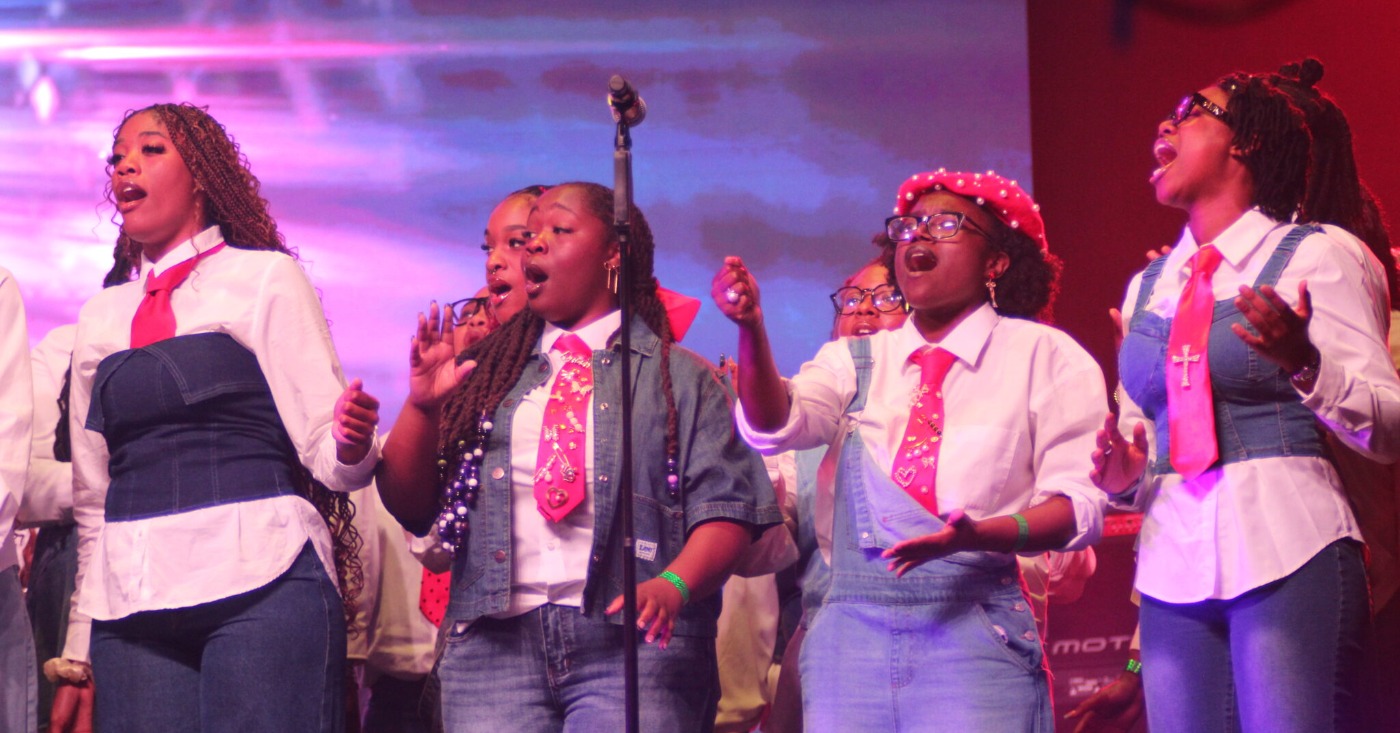
This Saturday N.C. Central University will kick off its 89th Ultimate Homecoming Experience — a week-long celebration bringing thousands of students, family, friends and alumni to campus.
This year’s festivities include the Homecoming Countdown, parade, Miss and Mister NCCU Coronation, concerts and the football game.
The number of visitors to the football game on Saturday, Oct. 10 is expected to reach at least 10,000 — O’Kelly Riddick Stadium’s capacity, with NCCU’s recent enrollment increase of more than 10,000 students.
The Eagles will face William & Mary after playing against the Campbell University’s Fighting Camels on Oct 3.
Students are already expressing excitement for the upcoming festivities.
“I’m excited for homecoming because I can meet alumni and go outside and party with my fellow eagles,” Digital Filmmaking junior Rhese Gardner said. “I’m also really looking forward to the Greek Bowl because there’s a lot going on.”
He added that even though he’s disappointed this semester’s Oil Spill was canceled, he’s still excited for the other events like the parade and concerts.
Here is a list of the week’s on-campus events:
- Oct. 3 – Homecoming Countdown
- Oct. 4 – Gospel Concert
- Oct. 5 – Coronation of Miss and Mister NCCU
- Oct. 6 – 10:40 Break
- Oct. 6 – Homecoming Experience Showcase
- Oct. 7 – Fried Chicken Wednesday
- Oct. 7 – Festival Block Party
- Oct. 7 – Late Night Breakfast
- Oct. 8 – Back to the Nest Young Alumni Mixer
- Oct. 8 – Old School Greek Stroll Off
- Oct. 8 – Hip-Hop Concert
- Oct. 9 – Step Show
- Oct. 10 – Football Game
The post NCCU ramping up for the 89th Ultimate Homecoming Experience first appeared on Campus Echo Online.
Based on reporting by North Carolina Central University – Campus Echo.
Black History
Ghana’s Ministry of Foreign Affairs Publishes Global Circle’s Vatican Reparations Call in Special Edition Alongside Heads of State
GLOBAL CIRCLE FOR REPARATIONS AND HEALING — Ghana’s Ministry of Foreign Affairs has published the Global Circle for Reparations and Healing’s submission, “From Accra to the Vatican,” in a special edition of The Ghanaian Envoy. This marks the first time a sovereign state has incorporated the Reparations Presentment to the Holy See into its official record. The 175-page edition, titled “Creating A New World,” also documents Ghana’s campaign that led to UN Resolution A/RES/80/250, which recognized the trafficking and enslavement of Africans as the gravest crime against humanity.

“From Accra to the Vatican” appears in The Ghanaian Envoy Special Edition on UN Resolution A/RES/80/250 — the first time a sovereign state has carried the Reparations Presentment to the Holy See into its official record
ACCRA, Ghana / CHICAGO, Illinois — October 7, 2026 — The Global Circle for Reparations and Healing today announced that its submission to Ghana’s Ministry of Foreign Affairs, “From Accra to the Vatican: A Call for a Global Plan of Action on Catholic Church Redress”, has been published in the Special Edition of The Ghanaian Envoy, the official newsletter of the Ministry of Foreign Affairs of the Republic of Ghana. The 175-page edition, titled “Creating A New World,” documents the Ghana-led campaign that culminated on March 25, 2026, in United Nations General Assembly Resolution A/RES/80/250, which declared the trafficking of enslaved Africans and the racialized chattel enslavement of Africans the gravest crime against humanity.
The Global Circle’s submission, authored by Co-Convener Kamm Howard, appears in Part V of the edition, “What Repair Must Now Mean,” at page 161. It shares the volume with statements by President John Dramani Mahama of Ghana, President Joseph Nyuma Boakai Sr. of Liberia, President Netumbo Nandi-Ndaitwah of Namibia, President Bassirou Diomaye Diakhar Faye of Senegal, President Carlos Manuel Vila Nova of São Tomé and Príncipe, President Emmanuel Macron of France, Prime Minister Mia Amor Mottley of Barbados, United Nations Secretary-General António Guterres, Foreign Minister Samuel Okudzeto Ablakwa, African Union Commissioner Amma Twum-Amoah, CARICOM Reparations Commission Chair Sir Hilary Beckles, Nobel Laureate Wole Soyinka, Dr. Julius Garvey, and Congressional Black Caucus Executive Director Vincent Evans, among others.
The submission traces the Global Circle’s delivery of the Reparations Presentment to the Holy See in Vatican City on July 18, 2022, the document’s subsequent use by the former Vice President of Costa Rica and the Vice President of Colombia in their engagements with Pope Francis, and the partial response contained in Pope Leo XIV’s May 2026 encyclical Magnifica Humanitas. It argues that while three of the Presentment’s seven demands have entered the Church’s official language in diluted form, four remain wholly unmet: rescission of the papal bulls that authorized African enslavement, the Church’s call upon other offending Western nations to make redress, the establishment of a joint Vatican–African Diaspora–African Papal Commission on Reparations and Healing, and a substantial financial commitment to repair. The submission asks Ghana to adopt the Presentment as the reference instrument for a Vatican track within the Accra Next Steps Commitments and to convene a first meeting of Global African reparationists toward a collective response.
“For four years the Presentment has been a civil society document carried by civil society hands,” said Kamm Howard, Co-Convener of the Global Circle and Commissioner of the National African American Reparations Commission. “Ghana has now placed it in the official record of a sovereign state, in a volume that opens with a President’s address to the General Assembly and closes by asking what repair must mean. That is not a courtesy. It is a signal to every government, every reparations commission, and every African Catholic that the claim against the Holy See belongs on the state agenda, and that the state which broke the deadlock at the United Nations is prepared to see it there.”
The significance of the publication extends beyond the Vatican file. The Presentment was created as a legal claims instrument by Howard in 2014 and first delivered to corporations and institutions in the United States, where it secured significant concessions. Its appearance in a foreign ministry’s official publication, translated and distributed in English, French, Portuguese, Spanish, and Italian, establishes the reparations presentment as a recognized instrument of international reparatory diplomacy, one that other states and descendant communities can adopt without drafting a new framework of their own. The Global Circle has described this catalytic potential as the “N’namba Effect,” after the Evanston, Illinois, reparations initiative – led by N’nanba Robin Rue Simmons – that gave municipalities across the United States the model, permission, and courage to act.
“The Vatican told us in 2022 that it moves in fifteen-year increments,” Howard added. “Ghana has just demonstrated at the United Nations that a determined state can compress that timeline to a single vote. We are asking Ghana to do for the Church what it did for the General Assembly, and we are asking Global Africa to organize behind that ask with one document, one voice, and one set of demands.”
The Global Circle has written to President Mahama and Foreign Minister Ablakwa to express its gratitude and to propose that its Vatican and Interreligious Actors Working Group lead the first meeting on a collective Vatican response under the auspices of the Government of Ghana. The Global Circle has also formally advised the Congressional Black Caucus of the publication in connection with its pending request that the Caucus recognize the Presentment as the foundational document for reparations engagement with the Roman Catholic Church and join the Government of Ghana in this global call to action.
###
About the Global Circle for Reparations and Healing
The Global Circle for Reparations and Healing was convened in 2022 to help build united global reparations front across Africa and its worldwide diaspora. In July 2022 the Global Circle delivered the Reparations Presentment to the Holy See in Vatican City. It co-organized Accra Summit I in August 2022 with the Government of Ghana and the Africa Transitional Justice Legacy Fund, and led the organization of Accra Summit II: Centering Healing Across Global Africa in March 2025 in partnership with the African Union. The Reparations Presentment to the Holy See is available in English, French, Italian, Portuguese, and Spanish at gcrh.org.
Media Contact
Global Circle for Reparations and Healing
Kamm Howard, Co-Convenor
[email protected] 773 520 0369
gcrh.org
Black Press
OP-ED: Proposition 44 Would Put a Price on Trust
The danger in Proposition 44 is not only its 90 percent figure. It is that the meaning of “qualifying” spending will be worked out later. A clinic preparing a budget today may not know whether a navigator, health educator, transportation program, outreach worker, technology upgrade, or other patient-support service will be counted the way it expects. Yet the financial consequence of getting it wrong could be immediate.

Black Press
OP-ED: Proposition 40: It’s Time to Play Chess, Not Checkers
Proposition 40 would impose a one-time 5 percent tax on the wealth of Californians with more than $1 billion in assets. Most of that money would go toward health care, with the remainder supporting food assistance and education-related programs.

Black Press
Jaguars Do Better: Top of Ladder or Resting at the Bottom
SOUTHERN UNIVERSITY – SOUTHERNDIGEST — Southern University received a No. 48 ranking in the U.S. News annual HBCU rankings for 2027, tying with Bethune-Cookman University, Philander Smith College, Savannah State University, Stillman College, and West Virginia State University.

On September 22, U.S. News released its annual HBCU rankings for 2027. Southern University was ranked No. 48, tying with Bethune-Cookman University, Philander Smith College, Savannah State University, Stillman College, and West Virginia State University. When I first saw the ranking, I had mixed feelings about where Southern was ranked. Did I feel like Southern needed to be ranked No. 48? Yes and no. On one hand, I understand how the university received that ranking based on the factors U.S. News uses for their rankings. On the other hand, when I look at some of the other schools that ranked higher than Southern, in my humble opinion, we should have been ranked higher.
To understand why Southern was ranked No. 48, it is important to look at the factors U.S. News uses for their rankings. The rankings consider graduation rates, freshman retention rates, financial resources, faculty information, peer assessments, and student outcomes after graduation. I understand why these factors matter because they can indicate how well a university supports its students, prepares them for life after college, and how students can benefit from attending that institution.
One of the biggest factors affecting our ranking is our graduation rate. The graduation rate measures how many first-time, full-time, degree-seeking students complete their degree within four years. Based on my research, the newest official data available from Southern lists the four-year graduation rate at about 10%. Even though that number is concerning, I believe that number needs more context. Some of Southern’s major programs, including Engineering, can take students five years to complete because of their demanding requirements and how their degree flowcharts are set up. So, while the four-year graduation rate is something Southern needs to improve, I don’t think it tells the whole story of how long it takes every Southern student to graduate.
Another issue is admissions. Southern University talks frequently about the “Southern Standard,” but I think there needs to be more consistency between the standard we expect and the students we admit. Southern should continue providing the opportunities it already provides, but I also believe the university should try to recruit more students who have already shown that they can uphold a certain academic, personal, and professional standard. Additionally, students who are admitted should receive the support and resources they need to succeed.
Overall, I understand why Southern was ranked No. 48, but in my opinion, we could and should be higher. The ranking shows areas where Southern needs to improve, but it should not define the university as a whole. Instead, it should encourage Southern to look at admissions, student support, graduation rates, career opportunities, and whether every major receives the attention it deserves. Southern is more than just a number, but if we want that number to change, we have to be willing to look honestly at what is behind it, including making sure that strong programs like Nursing and Engineering continue to provide opportunities while majors such as Agriculture, Criminal Justice, Education, and Social Sciences receive the same attention and opportunities for their students. At the end of the day, the goal should not only be to move up in the rankings, but to ensure every student at Southern has the support, accessibility to opportunities, and resources they need to succeed, not only while attending Southern, but in their future post graduation careers.
Based on reporting by Southern University – SouthernDIGEST.


Atlas Family Comfort: Worth the Extra Cash? #shorts

Antron Brown Takes His Impact Beyond the Racetrack

Headlines and Hot Topics with Rodney Perry

Headlines and Hot Topics with Rodney Perry 📱

Houston’s ‘call Me Mother’ Exhibit Opens Today, Spotlighting Black Maternal Health

Should You Have to Pay to Hear the Gospel?

NCCU Ramping up for the 89th Ultimate Homecoming Experience

Botham Jean’s Killer Granted Parole 7 Years After His Murder

Morehouse School of Medicine Fall Convocation Has Strong Ties to Nashville

Ghana’s Ministry of Foreign Affairs Publishes Global Circle’s Vatican Reparations Call in Special Edition Alongside Heads of State

Latest Massacre in Haiti Reveals Cruelty U.S. Deportations

Booked and Unbound: The Legacy of Black Women’s Literary Circles

The Youngest American Killed in the Vietnam War

COMMENTARY: Big Mama Said ‘Don’t Let Grief Break the Bank’

U.S. Sole Nation to Oppose U.N. Resolution Correcting Africa’s Size on World Maps

Passing for White, Fighting for Black America: The Courage of Walter White

U.S. Open Influencers Spark Backlash over Ring Lights, Filming as Gauff and Osaka Speak Out

Prostate Cancer is Twice as Likely to Kill Black Men. Talking to Your Doctor Could Help Save Your Life

OPINION: Nolan Wells’ Death One of Several Signifying Racial Terror Lives on in U.S. South

OP-ED: If AI Is the New Language of Power, Then NAN Wants Black Communities Fluent
Atlas Family Comfort: Worth the Extra Cash? #shorts
Antron Brown Takes His Impact Beyond the Racetrack
Headlines and Hot Topics with Rodney Perry
Headlines and Hot Topics with Rodney Perry 📱

Jamal’s Take: Cowboys’ Epic Comeback Win and Dak’s Dominance Against Houston

REBROADCAST: HE SAID, HE SAID, HE SAID:Author Derrick M. Jackson — FRI. 10.9.26 7PM E

2026 Land Rover Defender 130 X Interior 360 Video

Dr. Bettina Drake Becomes First Michael F. Neidorff Professor at WashU Medicine

2027 VW Atlas SEL Premium R-Line: Worth $58K? #shorts

REBROADCAST! — ASK ALMA! — TUES 10.6.26 7PM EST
-

 Black Press6 days ago
OP-ED: Haiti TPS: Have We Lost Sense of Humanity?
-
 Black History1 week ago
Remembering Chauncey Bailey as Student Journalists Face Threats to Truth-Telling
-
 Black Press1 week ago
Poll: Becerra Widens His Lead Over Hilton; Californians Split on Wealth Tax
-
 Black History1 week ago
COMMENTARY: The Audacity of Joyce Beatty
-

 Black History1 week ago
Rulings Leave Questions Lingering in Nolan Wells Case
-
 Black History1 week ago
Baptist Minister Says Black Church Champions for Civil Rights to Reign but Hesitates to Let Black Women Lead
