
East Texas Review
Pokes pluck Falcons
EAST TEXAS REVIEW — In the National Football League, the National Football Conference’s Eastern Division is defensively oriented. The offenses are barely adequate.


In the EastTexasReview is defensively oriented. The offenses are barely adequate. The Washington Redskins have the division’s top-ranked offense, and theirs ranks just 22nd out of the league’s 32 franchises. These four teams win or lose according to defensive performances, solidifying the old axion that offense sells tickets, but defense wins games. This was the case November 17 when the Dallas Cowboys traveled to Georgia for a pivotal game with the Atlanta Falcons.
The first half of the 2018 regular season was a trial for the Pokes when they were the visitors. They lost all four of their away games and failed to win two games in a row as they stumbled to a 3-5 record. With desperation setting in, they flew to the City of Brotherly Love and decisioned the defending Super Bowl champion Philadelphia Eagles 27-20. A week later, it was time to face the Falcons, who had earlier done Dallas a favor by dumping division rival Washington 38-14. The Atlanta game was a showcase of rotgut drama.
Although Cowboy running back Ezekiel Elliot managed to put on a sterling performance through the stingy Atlanta defense with 201 yards gained from scrimmage, it was rookie number one draft selection linebacker Leighton Vander Esch who stole the speaker’s podium with an interception, eight tackles and multiple passes defensed. It was a sorely needed performance from a roster with an ominously long list of starters on injured reserve.
In a field goal-glutted game (seven by both teams) Cowboy kicker Brett Mahrer missed what could have been a crucial extra point, resulting in the teams being tied at nineteen as time dwindled. Mahrer redeemed himself with a last-second 42-yard placement to beat the Falcons 22-19. These back-to-back road victories raise Dallas to a 5-5 record and perhaps will establish a degree of momentum. These wins also mean Dallas’ playoff hopes are still alive providing they finish the regular season significantly stronger than they started it. On this same day Washington and Philadelphia suffered pivotal losses, meaning the NFC East is still up for grabs.
The coming, Thanksgiving Day game versus the Redskins (who just lost starting quarterback Alex Smith to a season-ending broken leg) will be key, especially considering the Cowboys lost earlier at Washington. The Skins’ offense is now led by former Longhorn quarterback, Colt McCoy and 33-year-old runner Adrian Peterson—an East Texan from Palestine native. Neutralizing these two Texans is the next, vital assignment for the battered but game Cowboy defense.
This article originally appeared in the East Texas Review.














Community
Neighborhood Park Projects: City Seeks Input
EAST TEXAS REVIEW — Improvements are on the way for several neighborhood parks, and the Longview Parks and Recreation Department is seeking feedback on the bond-funded enhancements. A series of community meetings have been scheduled to discuss upgrades to Lois Jackson Park, McWhorter Park, Patterson Park, Spring Creek Park, Stamper Park and Womack Field. The meetings will be hosted by Parks staff and the corresponding city council member.

By East Texas Review
Improvements are on the way for several neighborhood parks, and the Longview Parks and Recreation Department is seeking feedback on the bond-funded enhancements. A series of community meetings have been scheduled to discuss upgrades to Lois Jackson Park, McWhorter Park, Patterson Park, Spring Creek Park, Stamper Park and Womack Field. The meetings will be hosted by Parks staff and the corresponding city council member.
The Lois Jackson Park community meeting, hosted by District 6 Councilman Steve Pirtle, will take place at 6 p.m., Tuesday, June 4, at the Longview First Church of the Nazarene, 2601 H.G. Mosley Pkwy.
The Stamper Park and Womack Field community meeting, hosted by District 2 Councilwoman Nona Snoddy, will take place at 6 p.m., Tuesday, June 11, at Stamper Park Resource Center, 502 S. Center St.
The Spring Creek Park community meeting, hosted by District 4 Councilwoman Kristen Ishihara, will take place at 6 p.m., Tuesday, June 18, at IBEW Local 738, 2914 E. Marshall Ave.
The Patterson Park community meeting, hosted by District 4 Councilwoman Kristen Ishihara, will take place at 6 p.m., Thursday, June 20, at Longview Christian School, 1236 Pegues Pl.
The McWhorter Park community meeting, hosted by District 1 Councilman Ed Moore, will take place at 7 p.m., Tuesday, July 9, at Pine Tree ISD Community Center, 1701 Pine Tree Rd.
In November 2018, Longview voters approved $24.71 million for parks improvements, some of which is being utilized to upgrade existing neighborhood parks. This series of community meetings focuses on the neighborhood parks that have been included in the first phase of bond package implementation.
For more information about the November 2018 bond election, please visit LongviewTexas.gov/Bond. For more information about the Parks and Recreation Department, contact 903-237-1270 or LongviewTexas.gov/Parks.
This article originally appeared in the East Texas Review.
East Texas Review
Texas Legislature Concludes Session With Top Priorities Accomplished
EAST TEXAS REVIEW — The 86th Legislative session concluded Monday, with lawmakers delivering on a promise made by state leadership back in January: sweeping school finance and property tax reform. “In my inaugural address I said that this will be the session we enact historical school finance reform by putting more money into the classroom, paying our teachers more, reducing recapture and cutting property taxes,” said Governor Greg Abbott in a press release issued late Saturday. “… without a court order, the legislature did just that by passing one of the most transformative educational bills in recent Texas history.”
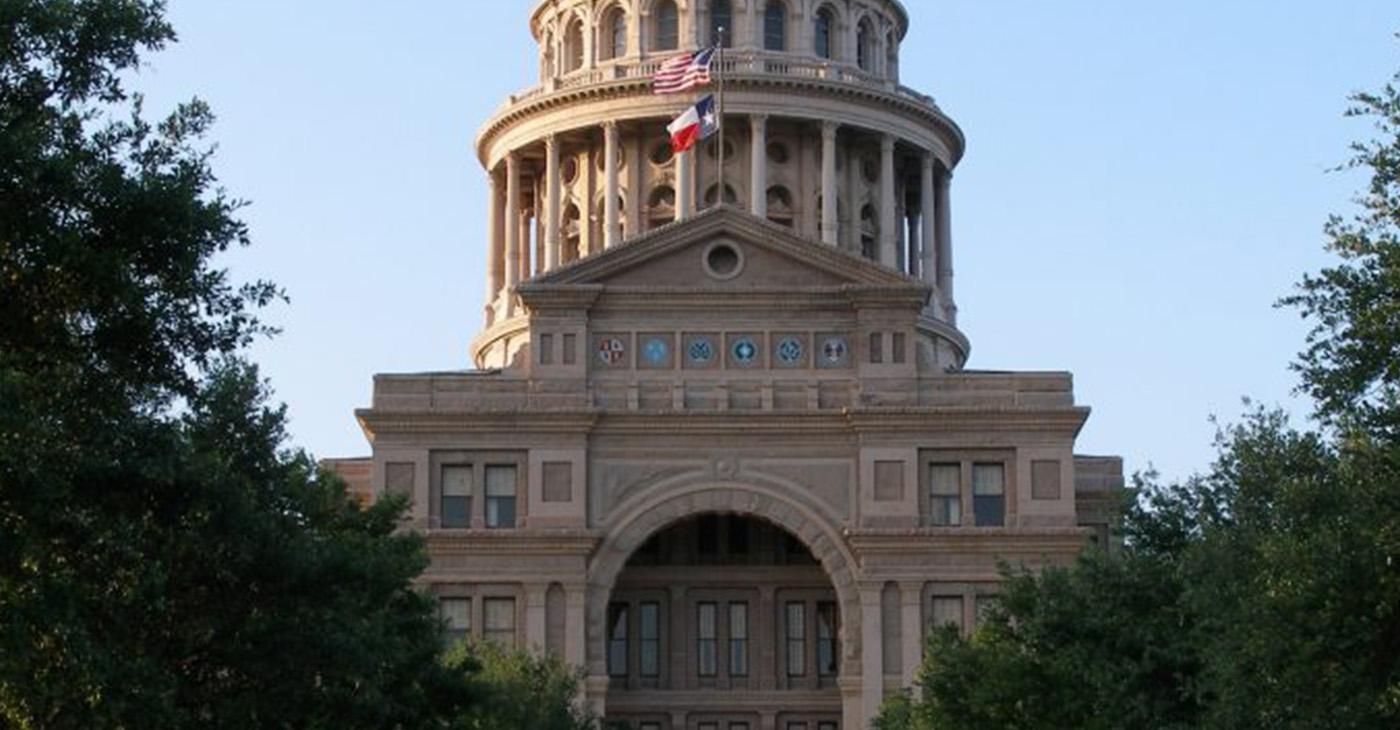
Teachers would see a salary increase, but it wouldn’t be the even, across-the-board $5,000 originally included in the Senate version
By Richard Lee
The 86th Legislative session concluded Monday, with lawmakers delivering on a promise made by state leadership back in January: sweeping school finance and property tax reform. “In my inaugural address I said that this will be the session we enact historical school finance reform by putting more money into the classroom, paying our teachers more, reducing recapture and cutting property taxes,” said Governor Greg Abbott in a press release issued late Saturday. “… without a court order, the legislature did just that by passing one of the most transformative educational bills in recent Texas history.”
The two bills saw final passage in both chambers Saturday evening. The first, HB 3, was shepherded through the process on the Senate side by Education Committee Chair and Friendswood Senator Larry Taylor. He said it represents groundbreaking reform for an education system that has lagged behind the changing needs of Texas schoolchildren. “What we are doing here today…will move us towards continued prosperity for this state,” he said. In all, the bill would put $4.5 billion more into the classroom. This money would flow through funding formulas, and would direct more to students with economic disadvantages, those still learning English, and those with dyslexia. It would create an optional July term for eligible students and full-day, quality Pre-K programs for students from low-income backgrounds. The only outcomes-based funding in the final version would reward schools for every student they graduate ready for college, the workforce or the military.
Teachers would see a salary increase, but it wouldn’t be the even, across-the-board $5,000 originally included in the Senate version. Instead, it would create a mechanism by which teacher pay would increase whenever the legislature ups the basic allotment, the fundamental variable in school formula funding. HB 3 would raise that more than $1,000, to $6,160, of which nearly a third must go towards salaries for non-administrative public-school employees. Districts would also have the option of developing a system to identify their best teachers and pay them more, but that system couldn’t factor in results from state accountability tests. There are also incentives for teachers who are willing to teach at high-need or rural campuses. Administrators will have flexibility in how these funds get distributed, so the actual amount of increased pay will vary district to district. In all, the bill puts about $2 billion towards teacher and other public-school salary increases.
The bill would also reduce local school property tax rates by an estimated 13 cents per $100 valuation by 2021, providing more than $5 billion in property tax relief within 2 years. It also seeks to rein in rate growth by requiring districts to seek voter approval if they wish to exceed a 2.5 percent rate increase in any year. SB 2, by Houston Senator Paul Bettencourt, would create a similar limit for most municipal tax rates, at 3.5 percent. That bill also includes a number of transparency and taxpayer education provisions. If voters approve no rate increases above these new limits, it would save an estimated $980 million in property taxes statewide by 2024. “This is astonishing tax relief,” Bettencourt said of the two bills.
Following passage of both measures, Lt. Governor Patrick thanked the Speaker of the House, the Governor, and both chambers for working together to accomplish a landmark session. “This is truly an historic evening,” he said. “It’s going to save taxpayers a lot of money, give teachers more money and change the way we educate students and finance and make us number one in the country to lead on education reform.”
The Legislature is scheduled to reconvene again in January of 2021, when lawmakers will see how well these education and property tax reforms worked over the 19-month interim. Until then, the Senate stands adjourned sine die.
This article originally appeared in the East Texas Review.
East Texas Review
You Had Me at Hello: ‘I finally had the nerve’ to pop the question
THE BIRMINGHAM TIMES – Adrian and Starsha met in 2007 when they both worked at a pharmaceutical warehouse in Pelham. “We would cross paths at work but we never dated,” said Starsha, a native of Jemison. Starsha eventually left that job. In 2016 Adrian, who grew up in Alabaster, said he received a friend suggestion from Facebook for Starsha and he accepted it.

By Anita Debro
“You Had Me at Hello’’ highlights married couples and the love that binds them. If you would like to be considered for a future “Hello’’ column, or know someone who would, please send nominations to Erica Wright at [email protected]. Include the couple’s name, contact number(s) and what makes their love story unique.
ADRIAN AND STARSHA RHINEHART
Live: Calera
Married: March 23, 2019.
Met: Adrian and Starsha met in 2007 when they both worked at a pharmaceutical warehouse in Pelham. “We would cross paths at work but we never dated,” said Starsha, a native of Jemison. Starsha eventually left that job. In 2016 Adrian, who grew up in Alabaster, said he received a friend suggestion from Facebook for Starsha and he accepted it.
“I saw her face and I remembered she was a pretty girl,” Adrian said. A few days later, Starsha said she sent him a message and they started talking. After a few conversations, Starsha suggested they meet up for a date.
First date: Adrian and Starsha met up at Chow Time Chinese restaurant in Hoover. “I liked her attitude and her spiritual relationship with God,” Adrian said. Starsha said she felt Adrian was special even before the date. “I knew he was going to be my husband,” she said. “But I still prayed on it.”
Starsha said she liked that he was a “Godly man . . . I knew he was not the typical guy and he was looking for love,” she said. Adrian said he and Starsha dated for a few months before the relationship became serious.
Previous relationships: Adrian had been married before and Starsha said she had been in a few relationships that did not work. He said the couple took it slow. “I wasn’t sure I wanted to be married or in a serious relationship again,” he said. “I wanted to be sure that if I did, that it was true love.”
The proposal: On Valentine’s Day 2018, Adrian took Starsha to a photo studio to take pictures. “I just thought it was a regular photo shoot,” Starsha said. But Adrian had other plans. Starsha said the photographer told her to do a pose, but then told her that pose wasn’t working. When she turned around towards Adrian he was on bended knee. “I was really shocked. I could not believe that that was happening,” she said. Adrian said he had decided around New Year’s Day that year that he was ready to pop the question. “I finally had the nerve to do it,” he said.
The wedding: The couple married at Jemison City Hall in front of about 200 people. The wedding included 24 people in the bridal party. “I remember being nervous and excited at the same time,” Adrian said. Adrian sung “Stand by Me” and surprised her with a horse and carriage ride. Starsha said her wedding day was a “dream come true” made possible by her wedding coordinator, Shevelle Brown.
Words of Wisdom: Couples should put God first, Starsha said. “God should be the foundation of the relationship.” Adrian agreed. He said that people who are wary of being in a relationship after a failed attempt should “trust in God. Anything is possible.”
“If a relationship is meant to be, it will happen,” Starsha said.
Happily ever after: Starsha, the mother of a 6-year-old from a previous relationship, recently started working as a corrections officer for Alabama Therapeutic Educational Facility in Columbiana. Adrian is a crane operator at Glidewell Specialties Foundry in Calera. The couple enjoy dining out and especially enjoy getting dressed up for elegant formal events.
This article originally appeared in The Birmingham Times.
East Texas Review
Military Times: Bankrupt vets can lose their disability benefits. This new effort would protect them.
EAST TEXAS REVIEW — Two senators just introduced a bill designed to shield veterans’ disability benefits from debt collectors.

By Joshua Axelrod
Two senators just introduced a bill designed to shield veterans’ disability benefits from debt collectors.
When a disabled vet declares bankruptcy currently, the law allows debtors to count a veteran’s disability benefits as disposable income, allowing them to seize the benefits.
Yet Social Security disability benefits are exempted by law from being lumped into a person’s disposable income in bankruptcy filings, and disability benefits in any form aren’t taxable and therefore generally not considered disposable income.
The Honoring American Veterans in Extreme Need (HAVEN) Act seeks to create the same immunity in bankruptcy cases for benefits provided by the VA and Department of Defense to disabled veterans and their surviving spouses.
Sen. Tammy Baldwin, D-Wis., and Sen. John Cornyn, R-Texas, introduced the bill, which has already been endorsed by 10 Republican and 10 Democratic senators. It has also earned the support of organizations like the American Legion, Disabled Veterans of America and the American Bankruptcy Institute, among others.
“Right now, veterans and their families are forced to dip into their disability-related benefits to pay off bankruptcy creditors,” said Baldwin during an unveiling event for HAVEN in her Senate office. “And that’s not right. This reform will protect veterans’ disability benefits when they fall on hard times.”
Supporters of the legislation say it’s unfair that veterans may be forced to give up their disability benefits when declaring bankruptcy, while the general population receiving similar benefits through Social Security does not.
“The effect is to shove veterans out of the protections that every other disabled American gets,” said Holly Petraeus, a HAVEN supporter and former assistant director of the Consumer Financial Protection Bureau. “We knew that was not right and were sure that was not intended with the original legislation, but that was the effect that it had.”
Matthew Shuman, the American Legion’s national legislative director, felt similarly.
“So often we find that veterans and service members and their families are exempted because they do great things,” he said. “It’s not often that we find the other way around.”
Baldwin and others involved with HAVEN say the bill could also help veterans’ mental-health issues by easing their financial burdens. John Thompson, a veteran and bankruptcy lawyer with the ABI, brought up “startling statistics” surrounding veteran suicides.
“We know that one of the single greatest contributing factors to that is financial distress,” he said. “And this is going to go a long way to easing that financial distress for many American veterans.”
A few of the bill’s supporters made the point that bankruptcy isn’t inherently a bad thing and, in fact, can allow a veteran to start over financially.
Jay Bender, an Alabama lawyer and ABI member, said that the fear of losing their disability benefits to creditors might deter veterans from filing for bankruptcy.
“There’s benefits to going through bankruptcy, to get the fresh start,” he said. “We should remove the impediment that currently exists that restricts this access for disabled vets.”
Baldwin agreed, adding that fewer barriers for veterans to file for bankruptcy creates more opportunities for them to turn their lives around and resume their contributions to the economy.
“When somebody has financial woes that are so significant that they have to declare bankruptcy, if given a second chance they have a much more promising path to becoming taxpayers again,” she said. “If not given that chance, people are not necessarily going to resume a productive job. We like to create new taxpayers.”
Shane Liermann, Disabled American Veterans’ national legislative director, highlighted what’s truly at stake for veterans who face the prospect of having their disability benefits snatched away by debtors in a bankruptcy scenario.
“Disability compensation for many of our veterans is the difference between being able to provide the necessities for their family and not,” he said. “The notion that disability compensation can be considered disposable income is outrageous.”
This article originally appeared in the East Texas Review.
East Texas Review
The Texas Snake Man: Jackie Bibby and His Rattlesnake Roundups
EAST TEXAS REVIEW — Jackie holds no less than five Guinness World Records.

By U.S. Sen. John Cornyn, R-Texas
Some might say that Jackie Bibby has an unusual hobby. It has cost him a finger and a leg, but that hasn’t stopped him from performing with venomous rattlesnakes. And don’t let his injuries fool you into thinking he’s not one of the best in the business. In more than 50 years of performing with hundreds of thousands of rattlesnakes, he’s only been bitten about a dozen times.
Jackie holds no less than five Guinness World Records, and he didn’t come by them easily. For example, he’s held the most rattlesnakes in his mouth ever recorded: thirteen at once. He’s laid in a bathtub with 195 live rattlesnakes. And he’s crawled headfirst inside a sleeping bag alongside 24 of them.
Although his talent is uncommon, it’s in such high demand in Texas that he’s able to perform every weekend. Springtime is when his dance card becomes especially full.
In early March, winter hibernation ends and rattlesnakes awaken from their months-long slumber. As they come out from their underground dens, rattlesnake handlers are at the ready to capture the stars of their roundups. March also brings the celebration of St. Patrick, who according to legend banished all snakes from Ireland. At least one Texas festival, San Patricio’s Rattlesnake Races, purposefully coincides with St. Patrick’s Day to celebrate his famous defeat of the reptile.
Rattlesnake festivals in Texas first rose in popularity about 60 years ago. Snakebites had taken too many Texans, and cattle too were suffocating from swollen noses following rattlesnake bites. The roundups began as a way to control the population, and have since turned into fairs to celebrate spring, raise funds for local charitable causes, and educate Texans about benefits and dangers of the snakes that share our habitat.
Festivals and roundups all across the state showcase daredevil handlers performing bold and dangerous acts, demonstrations of milking the venomous snakes to produce the antidote, and fryers filled with fresh rattlesnake meat, seasoned with garlic and lemon for taste. And of course, each roundup hums with the distinct sound of thousands of rattlers shaking in unison.
Jackie Bibby got his start at Brownwood’s annual Lone Star Expo and Rattlesnake Roundup, and now he headlines festivals every weekend. There’s the Big Spring Rattlesnake Roundup, the Freer Rattlesnake Roundup in the Eagle Ford Shale, and the National Rattlesnake Sacking Championship in Taylor, Texas (by the way, Jackie holds that world record too: he sacked 10 rattlesnakes in 17.11 seconds). The Sweetwater Rattlesnake Roundup, which typically kicks off the spring season, boasts that it’s the oldest and the world’s largest.
You’re likely to see Jackie Bibby at most of these – if not all of them. After all, he didn’t earn the “Texas Snake Man” title sitting at home. Jackie certainly makes charming snakes look easy, but take his amputated leg as a queue – this hobby is not for the faint of heart.
This article originally appeared in the East Texas Review.
Business
Texas: AG Paxton Announces $575 Million Settlement with Wells Fargo for Violating Consumer Protection Laws
EAST TEXAS REVIEW — Attorney General Ken Paxton has announced that Wells Fargo Bank N.A. will pay $575 million to resolve claims that the bank violated consumer protection laws in Texas, 49 other states and the District of Columbia.

AUSTIN– Attorney General Ken Paxton has announced that Wells Fargo Bank N.A. will pay $575 million to resolve claims that the bank violated consumer protection laws in Texas, 49 other states and the District of Columbia through alleged unfair and deceptive trade practices. Texas’ share of the settlement is approximately $47 million. The agreement represents the most significant engagement involving a national bank by state attorneys general acting without a federal law enforcement partner.
Between 2009 and 2016, Wells Fargo opened as many as 3.5 million bank accounts, transferred funds, filed credit card applications and issued debit cards without customers’ knowledge or consent. The bank disclosed that it found 528,000 unauthorized enrollments of customers in its online bill payment service.
In addition, Wells Fargo improperly referred customers for enrollment in third-party renters and life insurance policies; charged auto loan customers for insurance they did not need; failed to ensure that customers received refunds of unearned premiums on certain optional auto finance products; and incorrectly charged customers for mortgage rate-lock extension fees.
The multistate coalition of state attorneys general accused Wells Fargo of imposing aggressive and unrealistic sales goals on bank employees. Workers who met the bank’s sales goals received bonuses, and those who did not risked losing their jobs.
“This settlement holds Wells Fargo accountable for its widespread victimization of its customers through unfair and deceptive trade practices,” Attorney General Paxton said. “My office will continue to do what’s necessary to protect consumers and the integrity of our banks and financial institutions.”
Wells Fargo established a consumer redress review program through which customers who have not been compensated through other remediation programs already in place can have their inquiry or complaint reviewed by a bank escalation team for possible relief. Wells Fargo will create and maintain a website for consumers to use to access the program and will provide periodic reports to the states about the program’s progress. More information on the redress review program, including Wells Fargo escalation phone numbers and the website address, will be available on or before February 26, 2019.
Wells Fargo also agreed to provide remediation of more than $385 million to approximately 850,000 auto finance customers improperly charged premiums, interest and fees for force-placed collateral protection insurance. The remediation will include payments to over 51,000 customers whose vehicles were repossessed. The bank will provide refunds totaling more than $37 million to certain auto finance customers who were deprived of proper refunds for unearned portions of optional Guaranteed Asset/Auto Protection (GAP) products sold as part of motor vehicle financing agreements. Wells Fargo will refund over $100 million to residential mortgage customers for improper rate lock extension fees.
Previously, Wells Fargo committed to providing restitution to consumers in excess of $600 million, and it will pay over $1 billion in civil penalties to the federal government. An order from the Federal Reserve requires the bank to strengthen its corporate governance and controls, and restricts Wells Fargo from exceeding its current total asset size.
View the multistate agreement with Wells Fargo here: https://bit.ly/2EOJtet
This article originally appeared in the East Texas Review.


Building Wealth, Inspiring Hope & Celebrating Our Legacy

Style Takes Center Stage at the 39th Annual Salute to Excellence in Education

Car Review: Seat Comfort & Dashboard Glare Issues #shorts

134 Black-Owned Banks Founded: See How Many Remain Today! #shorts

Dr. Earleen Patterson’s 30 Year Legacy of Education and Service at SIUE

Latinas Deserve Equal Pay. Unions Help Make It Happen.

Defender ONE-on-ONE: U.S. Rep. Christian Menefee

Unlock Your Best Auto Loan: Ask These Questions! #shorts

News Observer Weekly — October 7, 2026 | Top 5 Stories of the Week

Atlas Family Comfort: Worth the Extra Cash? #shorts

Latest Massacre in Haiti Reveals Cruelty U.S. Deportations

The Youngest American Killed in the Vietnam War

Booked and Unbound: The Legacy of Black Women’s Literary Circles

Passing for White, Fighting for Black America: The Courage of Walter White

OPINION: Nolan Wells’ Death One of Several Signifying Racial Terror Lives on in U.S. South

Prostate Cancer is Twice as Likely to Kill Black Men. Talking to Your Doctor Could Help Save Your Life

OP-ED: Haiti TPS: Have We Lost Sense of Humanity?

OP-ED: If AI Is the New Language of Power, Then NAN Wants Black Communities Fluent

OP-ED: How Does Your State Rank for Pre-K?

Henry O. Flipper: A Trailblazer at West Point and Beyond
Building Wealth, Inspiring Hope & Celebrating Our Legacy
Style Takes Center Stage at the 39th Annual Salute to Excellence in Education
Car Review: Seat Comfort & Dashboard Glare Issues #shorts
134 Black-Owned Banks Founded: See How Many Remain Today! #shorts
Dr. Earleen Patterson’s 30 Year Legacy of Education and Service at SIUE
Defender ONE-on-ONE: U.S. Rep. Christian Menefee
Unlock Your Best Auto Loan: Ask These Questions! #shorts
News Observer Weekly — October 7, 2026 | Top 5 Stories of the Week
Atlas Family Comfort: Worth the Extra Cash? #shorts

Antron Brown Takes His Impact Beyond the Racetrack
-
 Black Press1 week ago
OP-ED: Haiti TPS: Have We Lost Sense of Humanity?
-

 Black History1 week ago
Why Black Artists Struggle to Sell Tours
-

 Auto1 week ago
Consumers and States Awarded $694 Million After Predatory Auto Lender Settles Lawsuit
-

 Art1 week ago
From Ma Rainey to AI: New Technology Amplifies an Old Fight over Artist Control
-

 Black Press1 week ago
TILGHMAN: Why Parents of Children with IEPs Should Know Their School Bus Driver
-

 Black Press1 week ago
COMMENTARY: Property Is Power! What Is a Gift of Equity and What Could It Mean for Black America?
