
Education
OP-ED: The Future of American Education: A Call to Action
NNPA NEWSWIRE – Education is a non-negotiable priority. Parents and community leaders must work to safeguard the education system. The future of our children—and the fabric of our society—depends on advocating for policies that give every student the chance to succeed.


By Anthony Tilghman
Education is the cornerstone of success, and this fundamental right must be upheld without compromise.
President-elect Donald Trump has vowed to dismantle the Department of Education, a bold and contentious move that has sparked nationwide debate. His decision addresses frustrations over perceived federal overreach and alleged “woke” indoctrination in schools. Against declining academic performance, Trump envisions a comprehensive restructuring to rectify mismanagement of taxpayer funds and undue influence on the nation’s youth.
During a September rally in Wisconsin, Trump reaffirmed his commitment, stating, “We will ultimately abolish the federal Department of Education.” His pledge resonates with voters eager for educational reform and accountability.
The department primarily focuses on funding programs such as Title I, which aids low-income districts, and special education initiatives rather than direct instructional oversight. Critics question its overall efficacy, proposing to reallocate responsibilities to other agencies. Suggestions include shifting the student loan program to the Treasury Department, delegating Title IX enforcement to the Justice Department, and converting Title I funding into state block grants with reduced federal oversight.
Trump’s initiative reflects a broader conservative critique of federal education policy, advocating for increased local autonomy and reduced federal intervention. As education reform discussions intensify, the consequences of eliminating the Department of Education will shape future policy debates and electoral outcomes.
The education system faces extraordinary disruptions exacerbated by the pandemic. Despite additional COVID funding, many students experienced alarming setbacks in core subjects, raising concerns about long-term implications.
Recent data highlights troubling trends among nine-year-olds:
- A five-point decline in reading scores in 2022, the largest drop since 1990.
- A seven-point decline in math scores, marking the first decrease in this age group for the subject.
These statistics underscore the pandemic’s impact on learning, emphasizing the urgent need for effective strategies to support student recovery and ensure success.
Immediate action must address both knowledge gaps and disparities worsened by the crisis. Educators and policymakers must focus on innovative solutions that ensure every student has the opportunity to thrive.
The Role of the Department of Education
The U.S. Department of Education primarily handles funding and policy enforcement, leaving curricular oversight to state and local governments. Key functions include:
- Funding:
- Title I Grants: Allocates $18.4 billion annually to support low-income districts, enhancing educational equity.
- Special Education: Provides $15.5 billion yearly to assist schools in serving students with disabilities under the Individuals with Disabilities Education Act (IDEA).
- Civil Rights Enforcement:
- Ensures compliance with Title IX and other civil rights laws, protecting students from discrimination based on sex, race, disability, or other factors.
- Higher Education Oversight:
- Establishes regulations for institutions participating in federal student aid programs, overseeing the $1.6 trillion federal student loan system.
Education is a non-negotiable priority. Parents and community leaders must work to safeguard the education system. The future of our children—and the fabric of our society—depends on advocating for policies that give every student the chance to succeed.
Anthony Tilghman
Award-Winning Photojournalist, Executive Director of #MakeSmartCool Inc.
“Every child deserves the tools to learn, grow, and succeed. Education is the foundation for brighter futures. Join us this #GivingTuesday to support #MakeSmartCool, an initiative dedicated to literacy programs and empowering youth through education. Together, we can unlock potential and inspire future leaders!”



Black Press
OPINION: OUSD Kids Are Eager to Learn. Our Board Is Holding Them Back
Oakland Unified School District students are facing a literacy crisis, with fewer than one in three reading at grade level. Despite receiving significant per-pupil funding, the district is struggling with what county officials describe as a decision-making problem rather than a lack of revenue. Oakland Parents for Quality Education and the local NAACP are now sounding the alarm over fiscal instability, alleging that board leadership has failed to identify necessary budget cuts while ignoring warnings from school principals. To understand how these leadership decisions are impacting campus resources and student equity, read more.


Oakland Unified students are falling behind: fewer than 1 in 3 read at grade level, and the numbers are worse for Black and Latino students. This is happening in a district that has received more per student than even the highest-funded states. As Alameda County Superintendent of Schools Alysse Castro has said, “OUSD’s biggest problem isn’t a revenue problem. It’s a decision-making problem.”
That is why Grace Park-Bradbury and I, two OUSD parents, started Oakland Parents for Quality Education, the ParentPAC. We believe our kids deserve a school board that faces hard decisions honestly. This board has not.
The county has warned them repeatedly. Earlier this year Castro said the new teachers’ contract “endangers” the district’s fiscal stability. That wasn’t because of the raises, but because the district was counting on cuts it had not identified.
Days later the board passed a budget that assumed $30 million in still-unnamed reductions. Board President Jennifer Brouhard and Vice President Valarie Bachelor voted yes. Director Mike Hutchinson voted no. The plan to name those cuts isn’t scheduled until mid-December, after the election.
The Oakland NAACP called for public forums and honest answers about the management of public funds. This fall Castro approved the budget only conditionally, noting that “a budget can be balanced but not be good for kids.”
Principals have spoken out as well. In January, 30 school leaders wrote that asking schools to do more with less “erodes the dignity of our profession” and “unconscionably compromises the quality of education our students receive.”
In April, 60 principals raised concerns that “have diminished our confidence in our current leadership,” warning that district decisions had produced “a structural deficit and cash-strapped schools.”
In June, all 15 high school principals objected to using voter-approved Measure N and H reserves for expenses already in the budget. The district did it anyway. The measures’ citizen oversight commission has demanded the money back. Auditors found the board had the legal authority, but as Castro observed, legality does not settle whether it was what voters thought they were approving.
Opponents claim we want to close schools. Our candidates do not all agree on consolidation. Hutchinson has fought closures for years, yet he also wrote the 3Rs proposal examining how many schools the district should operate.
What our candidates share is a willingness to weigh every option openly. This board told the superintendent not to even consider consolidation, and every school is being cut instead. As principals representing two-thirds of OUSD schools wrote, “the gradual starvation of our schools is also an equity issue.” Closures disrupt families, especially in Black and Brown neighborhoods. So does starving every campus.
You may have seen ads calling us a front for out-of-town billionaires. Every contribution is publicly reported, and 140 Oakland families have given. The people sounding the alarm are principals, citizen commissioners, the county superintendent, and the NAACP. None of them are billionaires. They are the people who see our schools up close.
Oakland schools are staffed by excellent principals and teachers. Our kids are like kids everywhere: eager to learn if given a real chance. They are being held back by a board that will not make hard choices.
In District 2, vote for Arielle Fleisher. In District 4, rank Kathryn Camp and Mike Hutchinson first and second. In District 6, rank Alexandra Williams and LeAna Powell first and second. Leave your third choice blank.
Vote like our children’s future depends on it. Because it does.
Edmund Chun co-founded Oakland Parents for Quality Education and is an OUSD parent.
Black Press
COMMENTARY: Valarie Bachelor and Jennifer Brouhard are Excellent School Board Members and Deserve to Be Reelected
For the first time in 22 years, the Oakland Unified School District has successfully exited state control, marking a significant shift in local educational leadership. Board President Jennifer Brouhard and Vice President Valarie Bachelor are credited with stabilizing the district by averting teacher strikes, ensuring full classroom staffing, and prioritizing funding for student-centered programs like the Black Thriving Community Schools initiative. While the incumbents focus on preventing further school closures and improving student math and reading proficiency, wealthy opposition donors are funding a different vision for the district. Read more.
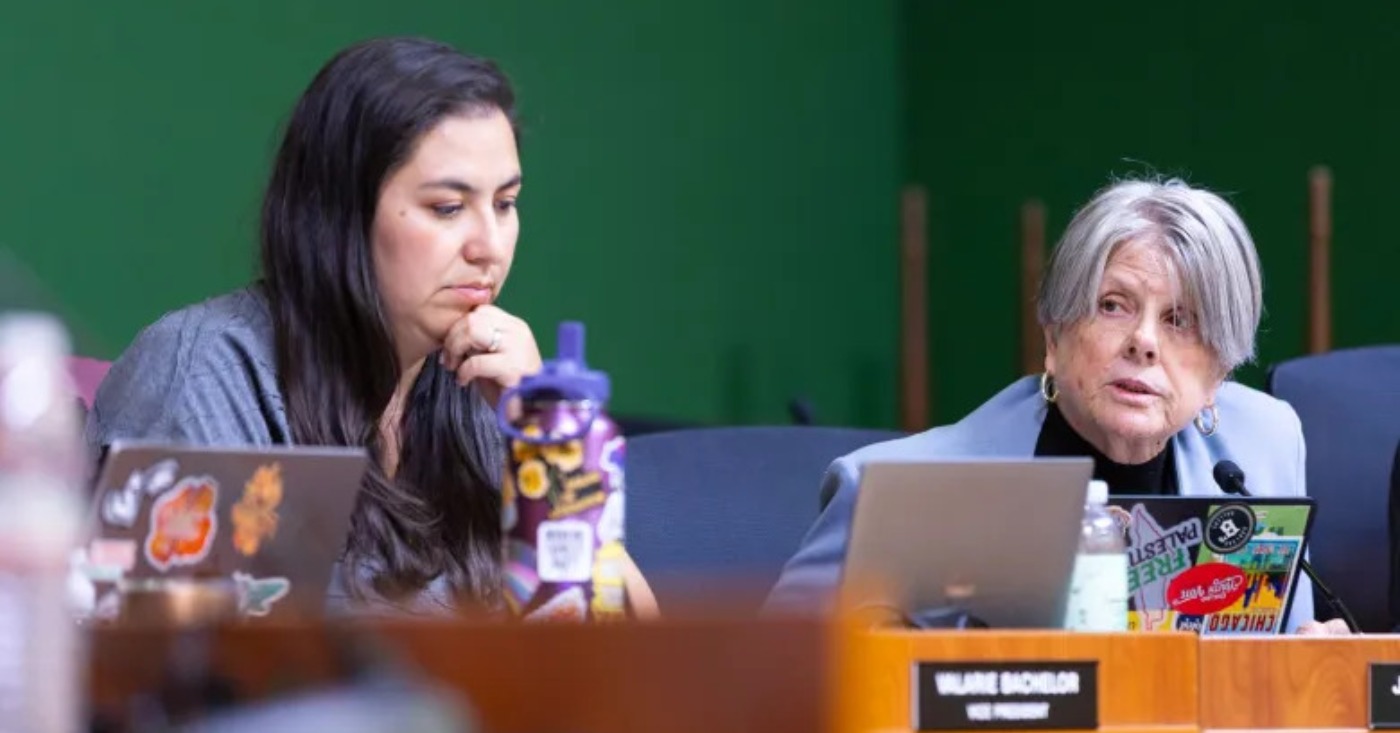
Oakland schools have excellent leadership right now. I know it’s hard to believe – because there is so much wrong with the national education picture.
This school year:
- The Oakland Unified School District escaped from state control after 22 years.
- Every classroom had a teacher at the beginning of the year, unlike past years when many classes started the year with day-to-day substitute teachers.
- Dr. Denise Saddler, an African American woman, is leading the district as Superintendent. She was an excellent choice with vast understanding of Oakland, of schools, and of educational systems.
- The school board and teachers managed to avert a teachers’ strike by strategizing, listening and compromising.
- The school board does not plan to close more schools for the first time in decades.
The two women leading the school board are excellent educators.
Board President Jennifer Brouhard (District 2) served as an Oakland teacher and was awarded a Fulbright Distinguished Award in Teaching and the U.C. Berkeley Social Science Project Teacher of the Year Award.
When Brouhard joined the board four years ago, she voted to reverse the vote of the previous board which had planned to close Brookfield, Carl B. Munck, Grass Valley, Fred T. Korematsu Discovery Academy and Horace Mann elementary. Half the students at Carl Munck and at least a third of the students at several others were African American.
She focused funding on classrooms rather than paying outside consultants. For that, she and her colleagues have incurred the wrath of real estate developers and school privatizers who want to get their hands on public property.
Board Vice President Valerie Bachelor (District 6) has worked on important facilities projects. She helped to set up the first school-based dental project at Frick United Academy of Language. She championed the Melrose Leadership Academy groundbreaking and the Skyline dining facilities.
Bachelor facilitated a balanced budget, which was pivotal in helping the district finally end state control. She also has worked to direct funding toward student-centered programs like the Black Thriving Community Schools Program.
The people financing the opposition candidates are Ryan Graciano, co-founder of Credit Karma, which made $ 2.7 billion last year; and Gagan Biyani, who says he became a millionaire at age 25.
The literature produced on behalf of the opposition supports closing schools, which harms student and could put us back under state control.
Looking at past school years, parents and educators can see how far the district has come. Oakland students and families have seen 25%-30% of educators leave their classrooms for districts with more competitive salaries.
But this year, we saw a change in those trends.
Since Jennifer and Valarie have taken office, Oakland Black student progress in reading and math is outpacing California’s state average. California School Dashboard data show that from 2023 to 2026, Black students in OUSD made greater progress toward proficiency than Black students statewide overall in both English Language Arts and math.
To read more, go to Education Week, “The Harm of School Closures Can Last a Lifetime, New Research Shows” (2024), www.edweek.org/leadership/the-harm-of-school-closures-can-last-a-lifetime-new-research-shows/2024/06
About the Authors
Dr. Kitty Kelly is a Professor of Education and Urban Studies. Dr. Kimberly Mayfield is Dean at Kalmanovitz School of Education, Saint Mary’s College of California.
Oakland Post Publisher Paul Cobb, a former Oakland school board member, contributed to this article.
Black Press
OUSD Receives State Review of District Finances; Outlines Progress Since January
The Fiscal Crisis and Management Assistance Team has released a Fiscal Health Risk Analysis for the Oakland Unified School District, labeling the district at high risk for insolvency based on January data. Despite this designation, the Alameda County Office of Education recently noted that OUSD has produced a materially stronger budget submission than in previous years. Superintendent Dr. Denise Saddler stated that the district is actively working to balance its budget and address specific state findings to ensure long-term stability. Find out more about the district’s recovery plan and the challenges facing other California schools by reading more.
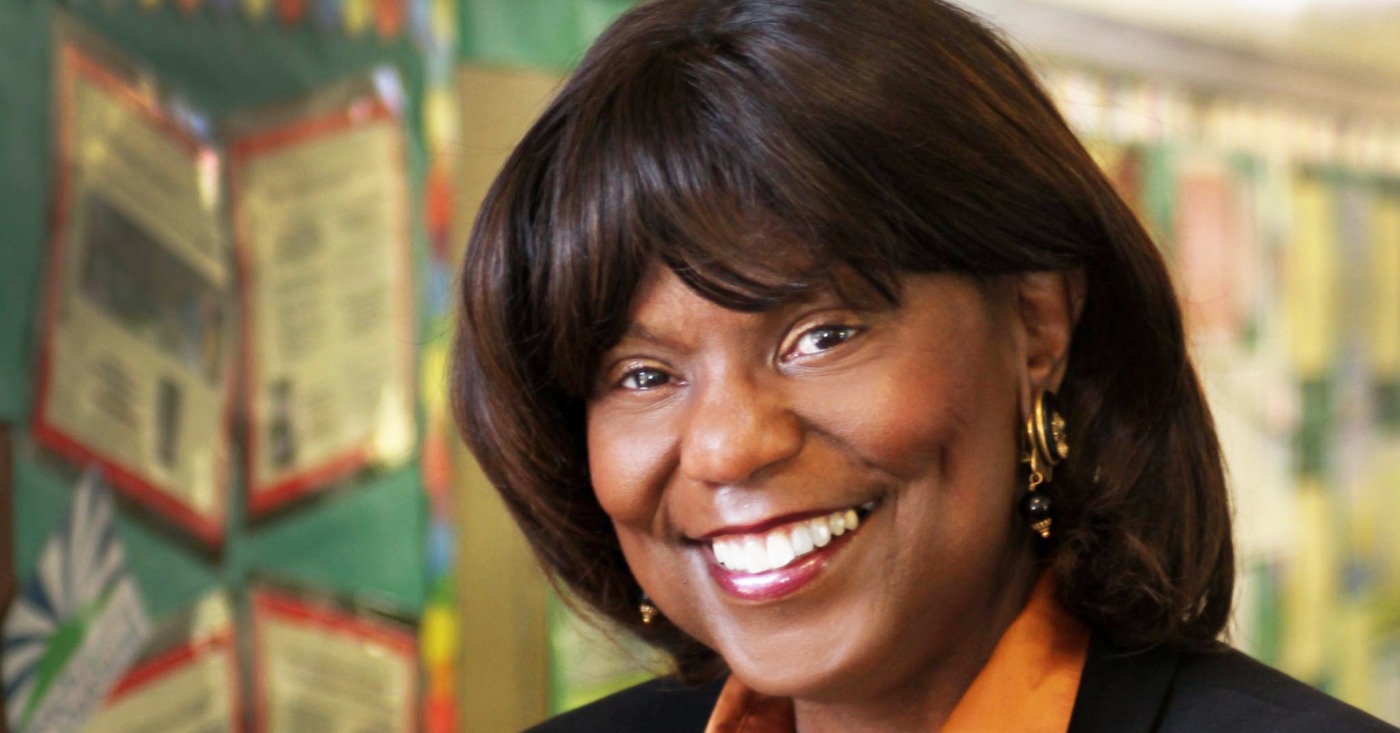
Alameda County Office of Education has called the budget ‘a materially stronger submission than the district has filed in recent years’
Caption: Dr. Denise Saddler. Courtesy photo.
The Fiscal Crisis and Management Assistance Team (FCMAT), the state-funded nonprofit in charge of advocating for budget cuts and school closures in local school districts, on Thursday released its Fiscal Health Risk Analysis (FHRA) of Oakland Unified School District.
FCMAT initiated the review after the Alameda County Superintendent of. Schools issued a ‘Notice of Going Concern’ last April. Basing its analysis on the district’s 2025-26 Second Interim Report which reflects financial data as of Jan. 31, FCMAT rated the district’s risk for fiscal insolvency as “high.”
But a later review of the district’s financial reports demonstrated faith in OUSD to turn things around. In its Sept. 15 letter conditionally approving the district’s budget, the Alameda County Office of Education called the budget “a materially stronger submission” than the district has filed in recent years.”
The County Office of Education noted that closing a structural deficit requires staff to bring forward hard choices, that the Board make them, and staff to carry them out. The county found all three appear to be happening in OUSD. The district is rebuilding the reserves it needs to remain stable, and it still has challenging work ahead.
The district’s progress reflects difficult choices by the Board of Education and staff. In June, the board adopted one plan for the district’s financial recovery and approved the 2026-27 budget.
Emphasizing how much progress the district has made in the last few years, OUSD Superintendent Dr. Denise Saddler said, “We are working to balance our budget and fund the programs that show results for our children. FCMAT’s findings are part of that work, and we will address the findings in the report.”
Oakland is not alone under state scrutiny. This year, FCMAT also rated 11 other districts, including San Francisco, Los Angeles, Antioch,
Burbank, Saddleback Valley, Petaluma, San Ysidro, Rincon Valley Union, Pleasanton, Santa Rosa, and Pacifica as high risk for fiscal insolvency.
Those districts range from a 2,600-student elementary district to the second-largest school system in the nation. Across these districts, FCMAT found many of the same pressures: compensation growing faster than revenues, rising special education costs, declining enrollment, and budgets that count on reductions not yet named.
That pattern points to the challenge facing public schools across California, and Oakland Unified intends to help lead the response, according to a district press statement.
California districts are navigating the challenges of a rapidly changing state and an evolving educational landscape. As one of California’s most diverse urban school districts, Oakland Unified faces these pressures with a distinct responsibility to the students, families, and communities it serves. While standing in solidarity with districts statewide, according to OUSD.
Oakland Unified remains steadfast in its commitment to educational equity, innovation, and student achievement, demonstrating that even in the face of significant challenges, its mission to provide every student with a high-quality education remains unwavering, the district said.
Black Press
Home Nursing Visits Provide Wide-Ranging Benefits for Mothers, Young Children
Researchers at the University of Chicago led by Nobel Laureate James Heckman found that the Nurse-Family Partnership program significantly improves the lives of first-time mothers with limited incomes. By utilizing registered nurses for home visits from pregnancy until age 2, the program fosters stronger social, emotional, and academic development in children while reducing maternal anxiety. A long-term analysis of 1,138 participants reveals lasting cognitive benefits and healthier home environments for families. Discover how these early interventions impact specific developmental milestones as children reach adolescence and read more.

This story was originally published by EdSource.
Children born to first-time mothers with limited incomes who received home nursing visits showed increased mental health, stronger social and emotional development and academic gains, according to researchers who analyzed the impact of the Nurse-Family Partnership program, one of the largest home visiting programs in the country.
Researchers also found the program reduces anxiety and improves the parenting skills of mothers. It also has a positive impact on home environments and behavior skills in children, researchers found. Researchers said the benefits of the program “warrant continued and increased investment.”
The Nurse-Family Partnership program utilizes trained registered nurses who work closely with families during pregnancy and up to age 2. The nurses teach them to maintain proper health, develop parenting skills and establish work and family goals.
The research team that conducted the analysis was led by James Heckman, a Nobel Laureate in economics and professor and director of the Center for Economics of Human Development at the University of Chicago. The study was titled “Nurse-Family Partnership: Parental education and early health result in better child outcomes.”
“This study of Nurse-Family Partnership (NFP) shows that parenting early in life very much matters, and that voluntary programs that work closely with parents to strengthen parenting skills and provide early health can make a difference,” the study states. Researchers analyzed information on the health and well-being of mothers and children from pregnancy up to age 12. The study includes a sample size of 1,138 participants. The study analyzed outcomes for children who participated in the program, compared to children who were not part of the program but received some services at the same ages.
A family’s participation in the Nurse-Family Partnership program ends when a child turns 2 but the study found long-term benefits. For instance, the study found that young boys who participated in the program scored higher than peers that did not participate in the program on reading and math assessments, as 12-year-olds, the age when they were last assessed. Researchers said this academic achievement could be attributed, in large part, to the program’s impact — seen as early as age 6 — on cognitive skills, such as a child’s ability to understand, reason, learn and remember.
While the study found the program improved cognitive skills for both boys and girls at age 6, it did not find any significant effect on reading and math achievement for 12-year-old girls who participated in the program. Researchers did not directly address reasons for this in the study.
During home visits, nurses help to promote healthy eating, prenatal care and eliminating the use of tobacco, alcohol and illegal drugs, the study states. After delivery, nurses help to foster strong parenting skills and show new moms how to interact with their children. For example, parents are encouraged to read to their children. Mothers are also given advice on goal setting in areas such as work, school and family planning.
The study divided its analysis into five categories: child health, family environments, child cognition (thinking, learning, understanding), social and emotional development (behaviors and attitudes) and achievement scores on math and reading. For example, The Peabody Picture Vocabulary Test, which measures what experts in the field call English receptive language skills. That refers to words young children can identify and understand when they hear them.
Other key findings in the study include:
- Improved birth weight for infant boys. Boys were healthier at the time of delivery. If left untreated, low birth weight is associated with developmental problems that can persist as a child grows.
- Healthier home environments, parenting attitudes and maternal mental health “significantly improved” among participating mothers for boys and girls by age 2. Mothers of young girls specifically experienced less anxiety, more self-control, higher self-esteem and greater emotional stability, the study states. Under the same categories for boys, results show “mixed.”
- Girls showed more improvement in social and emotional skills, the ability to manage and understand emotions. They specifically improved in areas such as warmth and sensitivity.
- By age 6, both boys and girls who participated in the program showed better cognitive skills, such as thinking, reading, memory and learning.
- Long-term benefits of the program were more evident for boys than girls. For example, by age 12 boys outperformed peers who were not a part of the program in reading and math achievement. Study states “much weaker long-term effects” for girls.
- Positive effects overall were associated with the program’s impact on mothers’ health and early investment in young children.
Black Press
Former Trustee Alena Maunder Seeks Reelection to Sausalito Marin City School District Board
Alena Maunder, a third-generation Marin City resident and registered nurse with over 20 years of healthcare experience, is seeking reelection to the Sausalito Marin City School District Board. Having previously served as a trustee from 2020 to 2024, Maunder highlights her background in governance, fiscal oversight, and community advocacy as key qualifications for the role. Her platform focuses on academic excellence, mental health supports, and special education. She remains committed to fostering stronger relationships between families and educators to ensure student success. Read more about her campaign priorities.
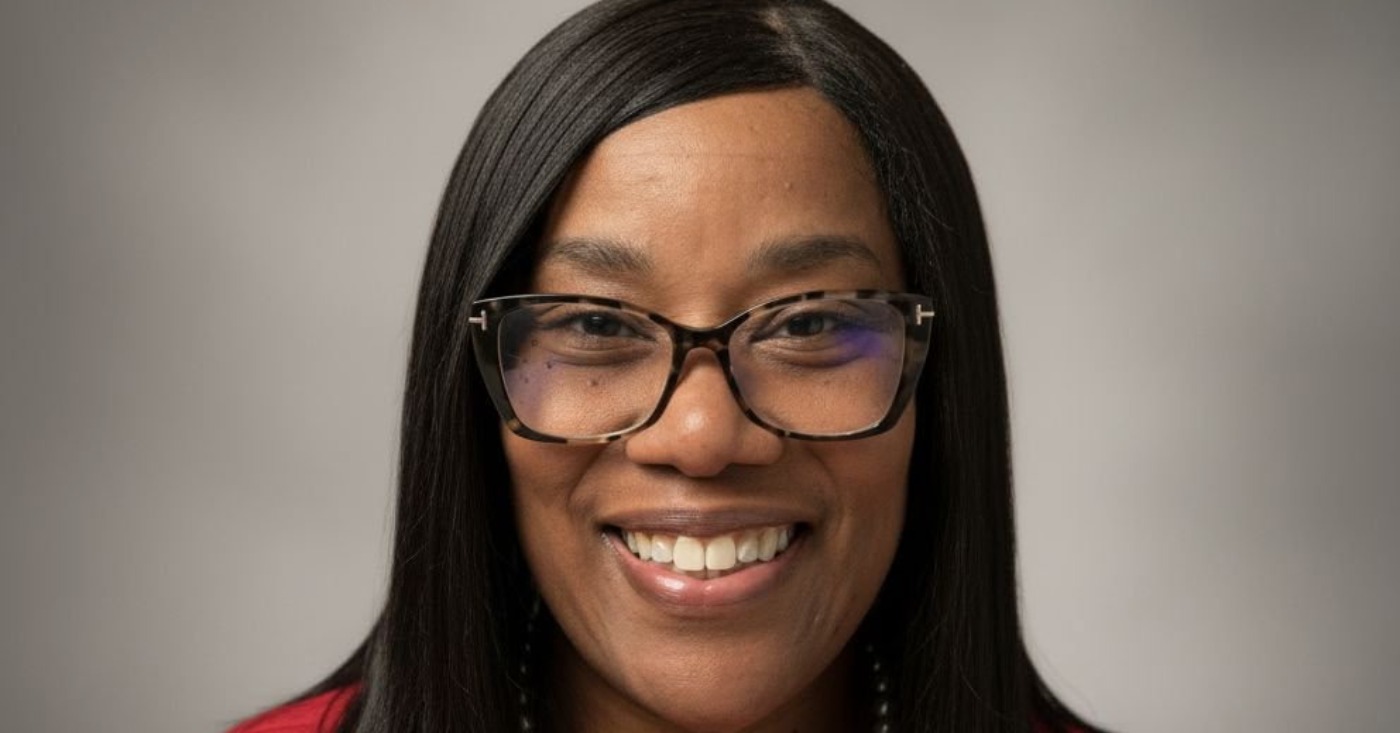
Alena Maunder is a third-generation Marin City resident, parent, community advocate, and former Sausalito Marin City School District Trustee who served from 2020 to 2024.
Professionally, Alena is a registered nurse with more than 20 years of healthcare experience and nine years in leadership. She holds degrees in Psychology and Nursing, as well as a Master of Science in Nursing.
With school board experience, she brings a strong understanding of governance, fiscal oversight, accountability, and the importance of stable district leadership.
Alena has also remained actively involved in Marin City through community service, youth programs, and initiatives focused on strengthening opportunities and resources for children and families.
Maunder is seeking to return to the Board to continue advocating for academic excellence, fiscal responsibility, strong special education and mental-health supports, and meaningful community engagement. She is committed to strengthening relationships among students, educators, families, and the Marin City and Sausalito communities while ensuring every student has the opportunity to succeed.
Her campaign reflects her commitment to “Experienced Leadership. Students First.”
Learn more at www.electalenasmcsd.com.
Black Press
Early Childhood Nonprofit Celebrates a Century of Success
BLACKPRESSUSA NEWSWIRE — “Our work has never been more urgent,” said NAEYC CEO Michelle Kang. “We need systems that truly value children and the people who care for and educate them. Early childhood educators are the workforce behind the workforce—skilled, dedicated professionals whose impact reaches children, families, businesses, and communities nationwide. By recognizing these educators’ expertise, investing in their compensation, and elevating their contributions, we invest in our collectiv

The National Association for the Education of Young Children (NAEYC) commemorates its 100th anniversary this year, marking a century of advocacy, innovation, and leadership in early childhood education (ECE).
Founded in 1926 as the National Association for Nursery Education, NAEYC began with a simple but powerful belief: young children deserve better, and the people who care for them deserve a voice. Today, NAEYC stands as the nation’s largest early childhood education association, with tens of thousands of members, 50 affiliates in nearly every state, more than 5,800 accredited early learning programs serving over half a million children and nearly half a million families, and nearly 180 accredited higher education programs teaching the next generation of early childhood educators.
“Our work has never been more urgent,” said NAEYC CEO Michelle Kang. “We need systems that truly value children and the people who care for and educate them. Early childhood educators are the workforce behind the workforce—skilled, dedicated professionals whose impact reaches children, families, businesses, and communities nationwide. By recognizing these educators’ expertise, investing in their compensation, and elevating their contributions, we invest in our collective future.”
A Century of Progress
Over the past 100 years, NAEYC has created the foundational infrastructure of the early childhood education field. Key milestones include:
- Publishing the first professional standards in 1929
- Collaborating to develop the Child Development Associate (CDA) credential in the 1970s
- Launching the first voluntary national accreditation system in 1985
- Establishing Developmentally Appropriate Practice guidelines in 1987 to promote each child’s optimal development and learning
- Creating the field’s first Code of Ethics in 1989
More recently, NAEYC convened Power to the Profession (2017–2020), a national collaboration of 15 organizations and 11,000+ educators that developed the “Unifying Framework,” which defines shared career pathways, qualifications, and compensation recommendations for the early childhood workforce.
A Crisis of Today
While the science is clear that high-quality early childhood education changes trajectories for children, families, and communities, today’s early childhood educators remain undervalued and under-supported. Early childhood educators currently earn a median wage of $15.41 per hour, even as families pay an average of $13,128 per year for child care.
“Families can’t afford to pay more, educators can’t afford to earn less,” said Kang. “Our entire nation suffers as parents can’t find or afford the high-quality care they need, pulling themselves out of the workforce in the process.”
A Year of Reflections and Events
As the centerpiece of its centennial commemoration, NAEYC has launched A Year of Reflections, a storytelling initiative inviting educators, families, and advocates to share the moments, mentors, and milestones that have shaped their journeys in early childhood education. Monthly themes throughout 2026—from beginnings to workforce advocacy to a vision for the future—aim to not only surface important stories and storytellers in the field but will help inform NAEYC’s next chapter.


OPINION: We Can Restore Checks and Balances on Trump

AG Bonta Announces Action on Cryptocurrency, Sextortion Fraud – Increasingly Targeting Gen-Z

21st Annual Taste of Soul: California’s Largest Black Street Festival Comes Alive With Culture, Music and Connections

Michael Shiner: The Enslaved Man Who Wrote His Way into American History

COMMENTARY: Your California Living Trust Could Be Next: When Evidence Isn’t Enough

Loop Capital’s James Reynolds Keynotes the OAACC 23rd Annual Business Awards Luncheon

Post News Group Nov. 3 Election Endorsements

Oakland Latino Chamber of Commerce Hosts CHCC Convention, Generating $3 Million in Economic Impact

Maintenance As A Money Move

OPINION: OUSD Kids Are Eager to Learn. Our Board Is Holding Them Back

All Skinfolk Ain’t Kinfolk

Practitioners of African Traditional Spirituality Offer Ancestral Reverence Ritual Oct. 31

Latinas Deserve Equal Pay. Unions Help Make It Happen.

A $2.1 Trillion Wellness Industry Never Built a Daily Practice for Black Children. So This Atlanta Family Did.

Zakiya Jendayi Arrested, Locked Out of Home by Sheriff’s Deputies

Oakland Awarded More than $14 Million in State Funding

Tamiko Armstead | 2026 Lifetime Achiever in Education

Montclair Brewery: Brewing Culture, Community, History

Should You Have to Pay to Hear the Gospel?

Listening as a Lifeline: A Doula’s Witness to Black Maternal Health
Maintenance As A Money Move

Buick Enclave Safety Tech: What It Can—and Can’t—Do #shorts

ELECTION DAY 2026: Black Voter Turnout, Trump’s Clemency Controversy & a $495M Prison Deal 📱

ELECTION DAY 2026: Black Voter Turnout, Trump’s Clemency Controversy & a $495M Prison Deal

Trump as a Distraction…Focus on the Ballot and 2028

Kids Escape City Chaos for Camp Paradise #shorts

Don’t Name Things After Me If I Can’t Enjoy Them! #shorts

EVs Cost Less Than Half as Much to Fuel—Check Your Local Savings #shorts

Unity is Power: Building Success Against All Odds! #shorts

Cómo publicar su DBA en el condado de Kern o Los Ángeles desde su teléfono
-
 Black Press1 week ago
Secretary of State Shirley Weber Pushes Back Against DOJ Demands Over California Voter Rolls
-

 Art1 week ago
Capturing Black Life’s Beauty
-

 Black History7 days ago
Retirement Triggers Doctor to Pen Book for Young Audience
-

 Black History1 week ago
Oakland Honors 60 Years of the Black Panther Party at the All Power to the People Gala
-

 Black Press7 days ago
Fatigue, Bloating, and Inflammation: Spotting the Subtle Signs of MASLD
-

 Black Press1 week ago
When Your Faith Is Put to the Test
