
BlackPressUSA
OP-ED: Stop Excluding People of Color in Environmental Policies
NNPA NEWSWIRE — Protecting the environment should be about protecting people, regardless of the color of their skin, ethnicity or race, or where they live or how much money they make. The fight to save our planet should be about ensuring a long and successful sustainable future – for everyone.


By Dr. Benjamin F. Chavis, Jr., President and CEO, National Newspaper Publishers Association
The deadly destruction wrought by the coronavirus pandemic has laid bare the harsh inequities in American society, disproportionately ravaging Black America and other communities of color, as well as individuals who were on the social margins long before the crisis.
The inequities have surfaced in obvious ways, including early data released by states showing that the virus is killing African Americans at disproportionately high rates, a disturbing trend that illustrates the substandard availability of health care in Black America.
The inequities have also surfaced in subtle ways, such as policy decisions that fail to reflect the needs and day-to-day realities of low-income communities and communities of color. The irony is that many of these policies are well-meaning. But in some cases, they also have had troubling unintended consequences.
Consider the area of environmental policy. Protecting the environment should be about protecting people, regardless of the color of their skin, ethnicity or race, or where they live or how much money they make. The fight to save our planet should be about ensuring a long and successful sustainable future – for everyone.
Yet, there are many in the mainstream environmental movement who continuously overlook the needs and realities faced by some of our most underserved and vulnerable communities. That includes the mainstream environmental advocacy community’s push to enforce plastic bags bans in favor of reusables, despite the fact that cardboard paper and other reusables pose a clear public health risk – especially for workers on the front lines of the pandemic response.
Why, for example, is it smart public policy to insist that grocery workers be exposed to reusable bags, when research shows these bags can be repositories of the COVID-19 virus? The majority of these essential workers are low-income people of color who are disproportionately bearing the brunt of the COVID-19 crisis, dying from the deadly disease at twice the rate of white people.
Additionally, in New York, it is well-documented that a statewide plastic bag ban also disproportionately hurts Black and Latino-owned businesses and shoppers. Though there is an exemption in this ban for recipients of benefits like WIC and food stamps from paying the five-cent tax on paper bags, working-class people of color and low-income New Yorkers still must pay.
Some stores have been charging for both plastic and paper, and in some cases, more than five cents a bag. Five cents might not seem like much. But five cents (or more) per bag adds up, especially when one is living paycheck-to-paycheck, or, as is more likely at this moment, not working at all due to the financial toll of the COVID-19 crisis.
Some environmentalists have argued that opponents of the bag ban are trying to capitalize on the COVID-19 crisis by recommending a suspension of any bag regulations. Again, it appears that some mainstream environmentalists only use research data to support policies that reflect their privileged vantage point without respect to the impact of those policies on the underprivileged.
I coined the term environmental racism in 1982 while involved in the Warren County, NC protests against the digging of a PCB landfill in the heart of a poor Black agricultural community. At that time there were some who thought that environmental issues were should not be considered as civil rights or as racial justice issues. There was in the past, and it continues in the current public discourse, a kind of arrogance by the privileged who think they know what is best for the underprivileged.
Today as the environmental justice movement has grown into a global campaign for change led by grassroots activists and leaders from people of color communities throughout the world, we all now know much more about the intersection between the issues of racial justice and environmental justice.
I recall vividly back in the late 1980’s when I co-authored and published the landmark study for the United Church of Christ Commission for Racial Justice: Toxic Waste and Race in the United States, the established environmental movement was unnerved that people of color would dare to do empirical research and define our own reality with respect to exposures to environmental hazards. Our national study proved that there was a deliberate link between race and the placement of toxic waste facilities in America.
In adherence to a blind devotion to a privileged ideology, some who call themselves environmentalists often neglect to take into consideration the day-to-day concerns of millions of low-income and Americans of color living in urban centers that are also communities that house hazardous sanitation sites, incinerators, rail yards, power plants and other environmental threats.
Some mainstream environmental groups consistently insist on pushing for policies that make life harder for people of color and poor communities, arguing that the hardship – if they recognize it at all – is a necessary price to pay in order to achieve their overall goals that those of privilege have exclusively envisioned as the standard for all others to obey.
As the pandemic continues, we need to let go of high-minded ideological arguments and do everything possible to protect workers on the front lines – including grocery clerks and those who make deliveries. Some states have temporarily lifted their bans or eradicated them altogether. A number of grocery stores are bringing back plastic bags and telling customers not to bring their own reusable bags.
Due to the crisis, New York has twice extended non-enforcement of its plastic bag ban in the face of a lawsuit that challenges its constitutionality. This is not enough. The state should give essential workers and shoppers alike a sense of protection during the pandemic and bag the plastic ban altogether.
More often than not, these life-changing decisions are being made without the consultation or input from the affected communities of color. Close to 40 years later we still remain on the outside of these conversations, continuously overlooked by many in the mainstream environmental movement as well as in local and state governments.
There is an obvious divide between the members of the mainstream environmentalism movement and the environmental justice community, primarily made up of urban Black and brown people. Until both parties can come together and pay the necessary attention to the pervasive environmental concerns that our communities endure on a daily basis the rift will only deepen, if not completely fracture. Exclusion of people of color will not solve the nation’s or the world’s environmental challenges.










BlackPressUSA
OP-ED: Three Reasons Florida Is Ready For A Change Election Next Week
BLACKPRESSUSA NEWSWIRE — These acts of solidarity mean something to the men, women and children in our communities who often feel like no one cares about them and the issues that affect them. By locking arms and walking together with other organizations, we show not only that we care, but that we have a plan to fight against injustice. And once the people see a plan and results, the hunger for justice grows.
For the last month, I have been crisscrossing my home state of Florida, connecting with families, communities, and voters about the November elections. Are people scared? Yes. Are they worried? No doubt. But most importantly, the primary feeling in the streets and homes of Floridians is that people are fed up and they want change.
They have had enough of the attacks on education, the skyrocketing cost of living, the scapegoating of minorities, the lies, the grifting and greed. The status quo is no longer acceptable, and when voters go to the ballot box, they will be voting for change. Why am I so confident? Because I’ve seen this before—we all have. In 2008, America was frustrated with a vastly unpopular president, caught in an equally unpopular war while presiding over a shrinking economy and rising prices. The result? America turned the page with the historic election of Barack Obama, ushering in an era of prosperity and peace.And Florida is ready for this moment, as I believe it sits at the epicenter of three converging factors that will be the path to victory.
First, and perhaps most crucially, labor unions have embraced their duty to protect the rights of workers in the state. That may seem obvious, but when you consider the state’s anti-union legislation—namely Florida’s Senate Bill 256, which creates new and restrictive challenges to unions’ bargaining powers—you understand the scope of the issue. When you attack workers’ rights to advocate for their wages, working conditions and benefits, you send a message that their voices don’t matter. That’s why unions like ours, the Florida Education Association, United Teachers of Dade and countless others, have not folded in the face of adversity; we have stood 10 toes down in our ongoing fight for workers’ rights. We have maintained our infrastructure, our membership networks and, most importantly, our alliances with others.
Those alliances are a second factor in the upcoming change election, because it is simply not enough to maintain democracy; we must continue to expand it, and that requires community. I saw that community-building firsthand when I joined the National Black Justice Coalition, civil rights attorney Ben Crump, and elected officials like state Reps. Fentrice Driskell and Dianne Hart at the state capitol to push back against Gov. Ron DeSantis’ plan to cancel the nation’s first Advanced Placement course focusing on Black culture.
My union also worked with the local NAACP to furnish 10,000 books for new Freedom Libraries in response to the governor’s “Stop WOKE” act, which marked Black stories and history as too “woke” and unfit for our kids.
These acts of solidarity mean something to the men, women and children in our communities who often feel like no one cares about them and the issues that affect them. By locking arms and walking together with other organizations, we show not only that we care, but that we have a plan to fight against injustice. And once the people see a plan and results, the hunger for justice grows. But while we will never stop fighting for American workers and their families, there is a limit to what unions can achieve on our own. Which is why, especially in our democracy, we look for trusted, competent leaders to represent, advocate for and legislate on behalf of the people—all the people.
That brings me to the third crucial element: candidates who can capitalize on the moment. As I said earlier this summer, “The true test of this political moment is whether we can capitalize on the localized excitement of the August Primary to fuel a historic turnout engine for the General Election.” It’s clear to me that the rampant illegality and incompetence of the Trump administration not only is a drag on Republican candidates (see how they run), but also has created a wide open lane for Democrats to use. But that opportunity is useless without leaders the people believe in. Thankfully, we have that in abundance across the board, including folks like David Jolly, Gwen Graham, Angie Nixon, Annette Taddeo and Jose Javier Rodriguez. I have stood next to many leaders—presidents, senators and more; I know greatness when I feel it, and I can tell the people feel it too. These candidates have both hands on the pulse of Florida and know that anyone NOT fighting for higher wages, better investment in public education and lowering healthcare costs is the wrong person for Florida. They are fearless, principled and dedicated to justice—the exact opposite of the current leadership Florida has watched wreck the state one institution at a time.
The stars have aligned. The stage has been set. And now, the last element, the only thing needed for change—the kind of change Florida has been begging for—is you. Closed mouths don’t get fed, so if you have any illusions about sitting this election out because you’re not convinced it will affect you, think about the last seven years in Florida and ask yourself if you would like to repeat them. If you are fine with the status quo, the rising costs, the attacks on education and culture, then perhaps change is not for you. But if you are like the thousands of people I have seen and talked to in the last month, you are ready to turn the page. That starts with your vote: Whether early, by mail or in person, NOW is the time to make your voice heard.
Black Press
20 Years of California Climate Law: Gov. Newsom and Former Gov. Schwarzenegger Lead Milestone Celebration
Gov. Gavin Newsom and former Gov. Arnold Schwarzenegger recently gathered at the California Economic Summit to mark the 20th anniversary of the Global Warming Solutions Act. The bipartisan celebration highlighted how the landmark law established a framework for reducing greenhouse gas emissions through the state’s cap-and-invest program. While the governors credited these policies with fostering clean-energy innovation and driving economic growth, critics continue to raise concerns regarding the impact of environmental regulations on energy affordability for residents. Read more to learn about the state’s climate milestones.

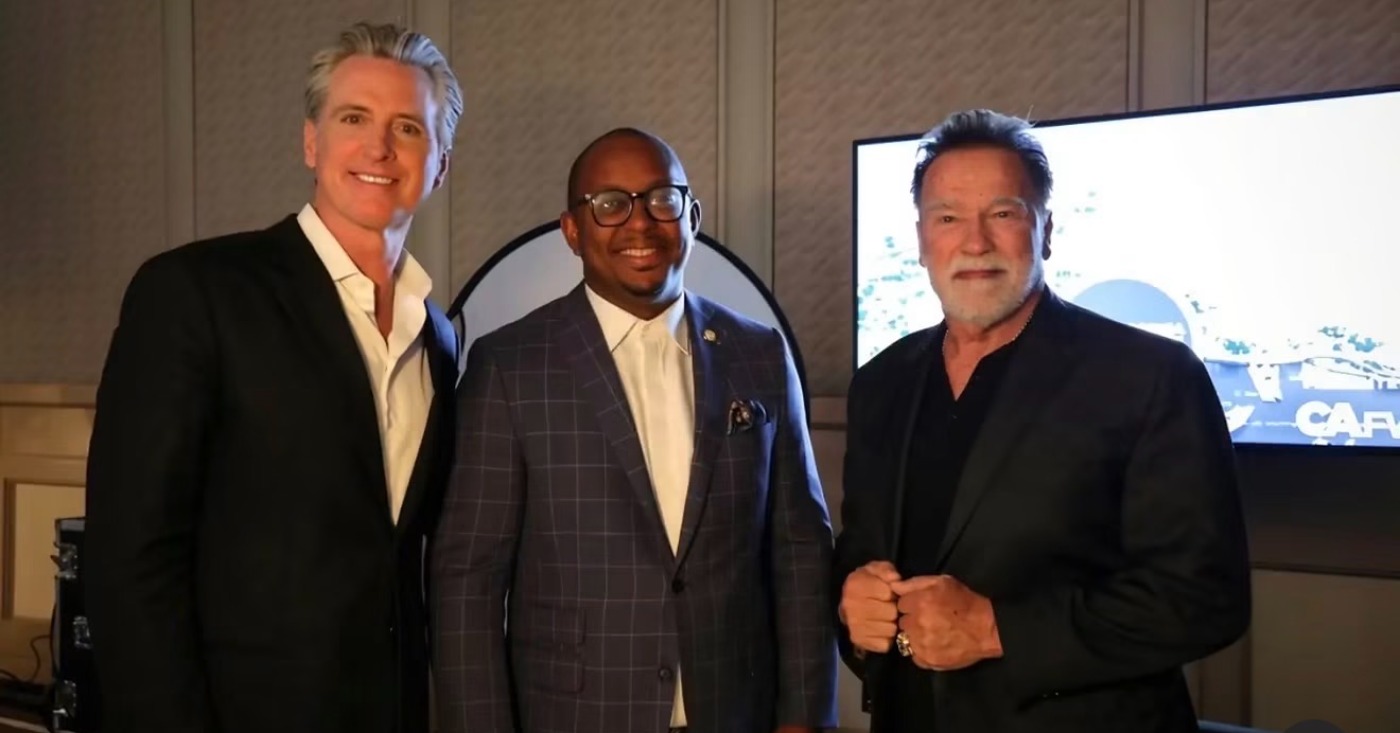
California Gov. Gavin Newsom and former Gov. Arnold Schwarzenegger celebrated two decades of the state’s landmark climate law on Wednesday, Oct. 14, highlighting California’s efforts to reduce greenhouse gas emissions while growing its economy and expanding clean-energy investment.
The Democratic governor and Republican former governor appeared together at the 15th annual California Economic Summit in Long Beach to mark the 20th anniversary of Assembly Bill 32, the Global Warming Solutions Act, which Schwarzenegger signed in September 2006. The law established a framework for reducing California’s greenhouse gas emissions and helped lay the groundwork for the state’s cap-and-invest program.
“We’ve shown the world what a state can accomplish,” Schwarzenegger said, highlighting California’s climate leadership.
Newsom credited Schwarzenegger’s decision to sign AB 32 with helping create the state’s cap-and-invest program, which requires companies to reduce their emissions, purchase allowances, or fund projects that offset pollution. Revenue from the program supports climate initiatives, affordable housing and transportation projects, as well as electricity bill credits for residents.
Newsom said California has reinvested $16 billion to offset residents’ electricity costs since the program began and expects to receive another $8 billion over the next four years.
He also argued that predictable climate policies encourage businesses to invest in California’s clean-energy economy, pointing to Tesla as an example of the opportunities the state’s regulatory framework created.
“There’s no Elon Musk without what Gov. Schwarzenegger did because there would be no Tesla,” Newsom said.
Schwarzenegger agreed that long-term policy certainty helps attract investment, arguing that California’s climate initiatives demonstrate that environmental protections and economic development can advance together.
The state extended its cap-and-invest program through 2045 last year, giving businesses a longer-term framework for planning investments and meeting emissions requirements.
However, California’s approach continues to face criticism over energy affordability and regulatory costs. Wayne Winegarden, a senior fellow at the Pacific Research Institute, argued that assessments of the state’s climate policies should better account for the high energy costs Californians face. Critics have also questioned how much of the state’s economic growth can be directly attributed to its environmental regulations.
The governors’ joint appearance underscored their shared support for climate action despite their political differences. Schwarzenegger has criticized Newsom’s support for Proposition 50, the 2025 redistricting measure that temporarily allowed California lawmakers to redraw congressional districts.
The anniversary comes as California continues to pursue emissions reductions and clean-energy investment while facing questions about the cost of its climate policies for households and businesses.
Black Press
Becerra Hosts Meet-and-Greet With Black Leaders in L.A.
Democratic gubernatorial candidate Xavier Becerra recently met with Black elected officials and community leaders in South Los Angeles to outline his platform for California’s future. Introduced by L.A. County Supervisor Holly Mitchell, Becerra detailed his priorities for expanding affordable housing, protecting healthcare access, and defending diversity and inclusion initiatives. The discussion addressed immediate challenges such as homelessness accountability, the impact of federal funding cuts, and the rising role of artificial intelligence in public life. Read more to learn how Becerra plans to address these issues.
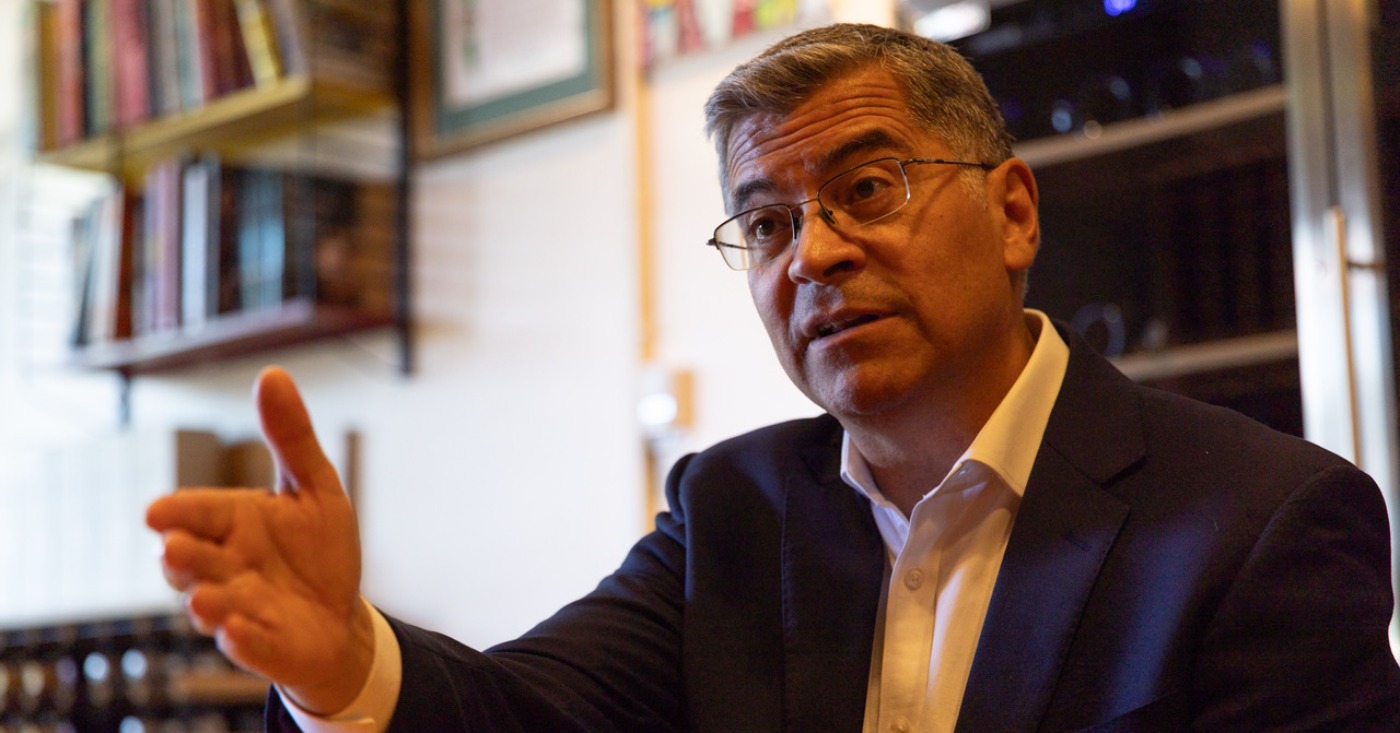
Democratic gubernatorial candidate Xavier Becerra outlined his priorities for housing, health care, education and civil rights during an Oct. 15 meeting with Black elected officials and community leaders in South Los Angeles.
Los Angeles County Supervisor Holly Mitchell introduced Becerra, citing his experience in the Legislature, Congress and federal government.
“We need people who have walked where we have walked and understand the communities that we all live in, come from, and represent,” Mitchell said.
Becerra pledged to defend diversity, equity and inclusion programs against federal opposition and criticized voter identification requirements as barriers to voting.
“If there’s a fight for that diversity, that strength, that inclusion, that equity, count me in, and let me use the governor’s office to make it clear,” he said.
Identifying housing and health care as immediate priorities, Becerra said more than 40,000 housing units are awaiting financing. He cited Proposition 1, a housing bond measure on November’s ballot, as a potential funding source.
“Prop 1 would give us the money to help start getting those moving,” he said. “And the more you build, the more you relieve the pressure, the demand for housing, which means you can probably see the price stabilize as well.”
On homelessness, he demanded measurable results from cities and counties receiving state funding.
“We will demand accountability when it comes to homelessness,” he said. “I’m not willing to let $1 from the state, from taxpayers, go to a city or a county unless they can show me how they’re going to use the dollar and what the results will be.”
He advocated temporary shelter, mental health and substance use treatment, and intervention before families lose their homes.
Becerra warned that federal Medicaid cuts could leave millions without coverage and threaten hospitals and clinics.
“If these families lose their insurance and still go in for care, now the doctors and the hospitals won’t get paid,” he said. “I want to make sure neither the patients nor the providers feel like Trump’s cuts are going to undermine our health care system.”
He said he is consulting providers and insurers but offered no financing plan.
Addressing surveillance and artificial intelligence, Becerra urged safeguards against discriminatory tracking and dangerous technology, including possible government authority to shut down unsafe AI systems.
“Once you give up your privacy, you can’t get it back,” he said.
He also criticized federal immigration enforcement and advocated comprehensive immigration reform, citing uncertainty for families and employers dependent on immigrant labor.
On education, Becerra supported expanded early childhood learning, tutoring, stronger academic standards and experienced teachers in underperforming schools. He opposed directing public education funding toward for-profit private schools.
“Keep your taxpayer dollars in our public community schools,” he said. “Don’t let those tax dollars go to for-profit private schools first, because it’s already tough enough as it is.”
He said schools must address learning gaps early rather than advancing students without grade-level skills.
“Too many of our kids are starting even kindergarten, and they’re not ready to learn,” he said. “And is it surprising that by the third grade they’re not reading or doing math at grade level?”
He also urged districts to assign skilled teachers to schools with the greatest needs, working with unions to address compensation.
Black Press
Early Childhood Nonprofit Celebrates a Century of Success
BLACKPRESSUSA NEWSWIRE — “Our work has never been more urgent,” said NAEYC CEO Michelle Kang. “We need systems that truly value children and the people who care for and educate them. Early childhood educators are the workforce behind the workforce—skilled, dedicated professionals whose impact reaches children, families, businesses, and communities nationwide. By recognizing these educators’ expertise, investing in their compensation, and elevating their contributions, we invest in our collectiv

The National Association for the Education of Young Children (NAEYC) commemorates its 100th anniversary this year, marking a century of advocacy, innovation, and leadership in early childhood education (ECE).
Founded in 1926 as the National Association for Nursery Education, NAEYC began with a simple but powerful belief: young children deserve better, and the people who care for them deserve a voice. Today, NAEYC stands as the nation’s largest early childhood education association, with tens of thousands of members, 50 affiliates in nearly every state, more than 5,800 accredited early learning programs serving over half a million children and nearly half a million families, and nearly 180 accredited higher education programs teaching the next generation of early childhood educators.
“Our work has never been more urgent,” said NAEYC CEO Michelle Kang. “We need systems that truly value children and the people who care for and educate them. Early childhood educators are the workforce behind the workforce—skilled, dedicated professionals whose impact reaches children, families, businesses, and communities nationwide. By recognizing these educators’ expertise, investing in their compensation, and elevating their contributions, we invest in our collective future.”
A Century of Progress
Over the past 100 years, NAEYC has created the foundational infrastructure of the early childhood education field. Key milestones include:
- Publishing the first professional standards in 1929
- Collaborating to develop the Child Development Associate (CDA) credential in the 1970s
- Launching the first voluntary national accreditation system in 1985
- Establishing Developmentally Appropriate Practice guidelines in 1987 to promote each child’s optimal development and learning
- Creating the field’s first Code of Ethics in 1989
More recently, NAEYC convened Power to the Profession (2017–2020), a national collaboration of 15 organizations and 11,000+ educators that developed the “Unifying Framework,” which defines shared career pathways, qualifications, and compensation recommendations for the early childhood workforce.
A Crisis of Today
While the science is clear that high-quality early childhood education changes trajectories for children, families, and communities, today’s early childhood educators remain undervalued and under-supported. Early childhood educators currently earn a median wage of $15.41 per hour, even as families pay an average of $13,128 per year for child care.
“Families can’t afford to pay more, educators can’t afford to earn less,” said Kang. “Our entire nation suffers as parents can’t find or afford the high-quality care they need, pulling themselves out of the workforce in the process.”
A Year of Reflections and Events
As the centerpiece of its centennial commemoration, NAEYC has launched A Year of Reflections, a storytelling initiative inviting educators, families, and advocates to share the moments, mentors, and milestones that have shaped their journeys in early childhood education. Monthly themes throughout 2026—from beginnings to workforce advocacy to a vision for the future—aim to not only surface important stories and storytellers in the field but will help inform NAEYC’s next chapter.
Black History
Together Building Back Better
AFRICAN-AMERICAN NEWS AND ISSUES – DALLAS — For more than 57 years, the SHAPE Community Center has served as a cornerstone of Houston’s Third Ward, providing essential programs based on principles of unity and collective responsibility. Known as “The United Nations of The ‘Hood,” the center recently faced its most difficult challenge following a devastating electrical fire at the Nia Becnel Family Center.
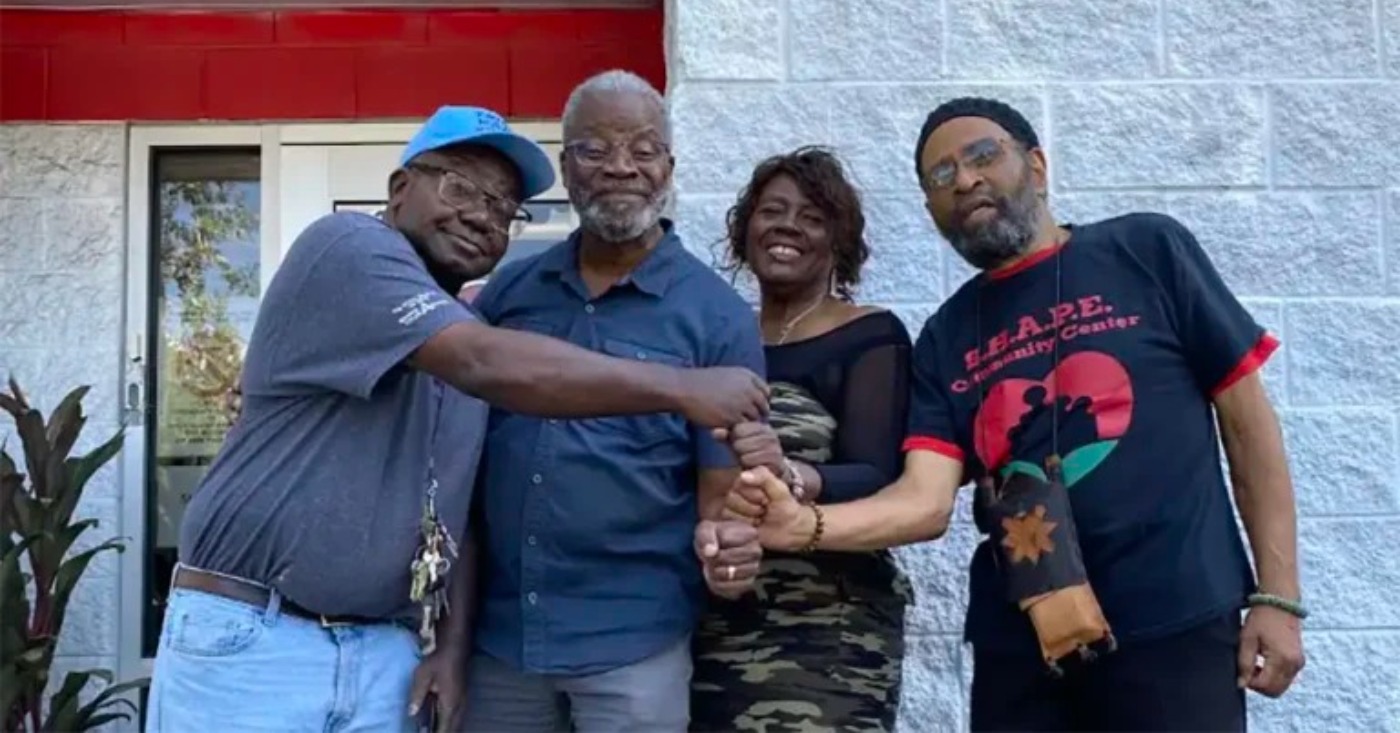
I’m going through the most challenging experience of my life with SHAPE,” said Deloyd Parker. He has served as the executive director of the historic SHAPE Community Center for over 57 years and is still energetic and driven by the love of serving the people. Known as “The United Nations of The ‘Hood,” SHAPE is a precious cornerstone of Houston’s Third Ward, serving generations of families through programs and activities, with emphasis on Unity, Self-Determination, Collective Work & Responsibility, Cooperative Economics, Purpose, Creativity, and Faith.
January 2027 will mark two years since a devastating electrical fire took place at SHAPE’s Nia Becnel Family Center, located at 3815 Live Oak. The building and priceless historical items were significantly damaged and lost. That included the “Wall of Fame” photo collection that adorned the interior walls. Nedzra Ward, President of the Board of Directors, shared how the fi rst few days aft er the fire were very trying for everyone who loved SHAPE and those who visited the sacred grounds were in shock and silence. “We knew we had to start working to get things back up,” said Ms. Ward who has been apart of SHAPE’s staff and board for decades. In the aftermath, Ms. Ward called the insurance company and then reached out to Charles Cave to be the lead project manager. They also reached out to engineers Brian Smith, Barbara Smith and Frank Brown, and other experts to formulate the group known as Together Building Back Better (TBBB).
The team met weekly at the Harambee Admin Building located at 3903 Almeda Rd. And to continue serving the people, Mr. Parker and team worked to get that building certified and operational, especially for the children. “Deloyd never stopped. He was the driving force for everything. He made sure that someone was taking care of licenses and that this place was being refigured. His whole goal was to have these kids back and in a safe environment,” said Ms. Ward. “We have served the people for 57 years and as a result of serving the people, the people are coming through,” said Mr. Parker. “It’s going to take more than a fi re to put us out.
Volunteers from the community stepped up to help at Harambee Admin Building. Many programs, events and activities have resumed including the weekly Elders Institute of Wisdom and enrollment is now open for the 2026-2027 After School Enrichment Program. Soft opening scheduled for November The desire was to reopen the gutted Live Oak location within a year but Ms. Ward and Mr. Cave described the many challenges SHAPE has faced in this rebuilding effort. The insurance did not cover everything that’s needed and tariffs
The post TOGETHER BUILDING BACK BETTER appeared first on African American News and Issues.
Based on reporting by African-American News and Issues – Dallas.
Black Press
Homecoming Ends in Gunfire Outside FAMU: 12 Hurt, Six of Them Children
SAN FRANCISCO SUN REPORTER — Twelve people were injured, including six children, after gunfire erupted near Florida A&M University’s Bragg Memorial Stadium following a homecoming celebration on Saturday night. Authorities report that the shooting stemmed from a dispute between individuals who knew each other, leaving eleven victims with gunshot wounds and one with an ankle injury.

Twelve people were hurt, six of them children, when gunfire broke out near Florida A&M’s stadium as homecoming crowds headed home Saturday night. A 15-year-old has been charged.
TALLAHASSEE, Fla. — Homecoming is supposed to be the one weekend everybody comes back. Grandmothers in orange and green. Alumni who haven’t seen each other in twenty years. Kids on shoulders watching the band.
Saturday night, it ended in gunfire.
Twelve people were hurt in a shooting near Perry and Manatee streets, behind Florida A&M University’s Bragg Memorial Stadium, around 8 p.m. as crowds left the homecoming celebration, according to News4JAX. Eleven were shot. A twelfth hurt an ankle running from the gunfire. Six of the injured are children, including an 11-year-old.
By Sunday, five had been released from the hospital and six were still being treated, one in critical condition, CBS News reported. No one was killed.
What police say
A fight broke out first, police said, among people who knew each other. Then somebody started shooting. None of the people hit appear to have been the intended targets.
A 15-year-old was arrested and charged with multiple counts of attempted murder and possession of a firearm by a delinquent, according to CBS News. Police said more arrests are possible. The Sun-Reporter does not name minors charged with crimes.
“What should have been a weekend of celebration in our community instead became a night of fear and violence,” Tallahassee Police Chief Lawrence Revell said.
FAMU President Marva Johnson said she shares in the “outrage and profound sadness at the senseless and despicable shooting.” The university said the shooting happened near campus and that the campus remained safe.
Rattlers head football coach Quinn Gray put it plainest.
“No one should leave our celebration in an ambulance,” he wrote, “and no child should ever be caught in gunfire.”
Why it lands here
Homecoming at a historically Black college is a family reunion for the whole Black diaspora, and the Bay Area sends its share. Alumni, parents of students, kids who’ve already got their acceptance letters in mind. When something like this happens in Tallahassee, it happens to people we know.
Police are asking anyone with information or video to contact the Tallahassee Police Department.
Sources: CBS News and News4JAX. Photo: Bragg Memorial Stadium at Florida A&M University. Photo by Michael Rivera via Wikimedia Commons, CC BY-SA 4.0.
Based on reporting by San Francisco Sun Reporter.


What was hidden under the First Baptist Church of Williamsburg #history #facts #americanhistory

Young Black voters in Houston defy labels

Black Banks Can Compete: Honest Truth About Their Offers #shorts

The Conversation With Al McFarlane (10/29)

Chevy Silverado: Huge Ride for the Week! #shorts

Black Houston turns out as Harris County early voting surges
Let’s Talk – Entrepreneurship and Mental Health
AutoNetwork Live Stream

OP-ED: Three Reasons Florida Is Ready For A Change Election Next Week

Before You Buy This Enclave SUV, Test It on the HIGHWAY #shorts

OP-ED: Haiti TPS: Have We Lost Sense of Humanity?

All Skinfolk Ain’t Kinfolk

Latinas Deserve Equal Pay. Unions Help Make It Happen.

Why Black Artists Struggle to Sell Tours

A $2.1 Trillion Wellness Industry Never Built a Daily Practice for Black Children. So This Atlanta Family Did.

Zakiya Jendayi Arrested, Locked Out of Home by Sheriff’s Deputies

Oakland Awarded More than $14 Million in State Funding

OP-ED: Washington Has a Chance to Save Veterans’ Lives

Consumers and States Awarded $694 Million After Predatory Auto Lender Settles Lawsuit

From Ma Rainey to AI: New Technology Amplifies an Old Fight over Artist Control
What was hidden under the First Baptist Church of Williamsburg #history #facts #americanhistory
Young Black voters in Houston defy labels
Black Banks Can Compete: Honest Truth About Their Offers #shorts
The Conversation With Al McFarlane (10/29)
Chevy Silverado: Huge Ride for the Week! #shorts
Black Houston turns out as Harris County early voting surges
Before You Buy This Enclave SUV, Test It on the HIGHWAY #shorts

RESILIENCE Dance Company brings “Entry Points” to COCA

Test Drive With the Radio Off—and Check Those Tires #shorts

Loyalty Could Be COSTING You on Car Insurance—Compare Rates Every Year #shorts
-

 Featured1 week ago
Tamiko Armstead | 2026 Lifetime Achiever in Education
-
 Featured1 week ago
BLACK MEN VOTE: Mobilizing 100,000 Black Men Ahead of the Midterms 📱
-

 Art3 days ago
Capturing Black Life’s Beauty
-
 Black Press4 days ago
Secretary of State Shirley Weber Pushes Back Against DOJ Demands Over California Voter Rolls
-

 Black Press1 week ago
OP-ED: For Us It’s Feel-a-Nomics
-
 Featured1 week ago
Yoji Senna: Inside Brazil’s social safety net — free health, transport, and perks
