
Commentary
OP-ED: President Biden’s Lasting Legacy
NNPA NEWSWIRE — How poetic is it that the first woman, the first Black American, and first Asian American to be elected vice president of this great country at the behest of Joe Biden, has set a new standard and brought us into the 21st century?

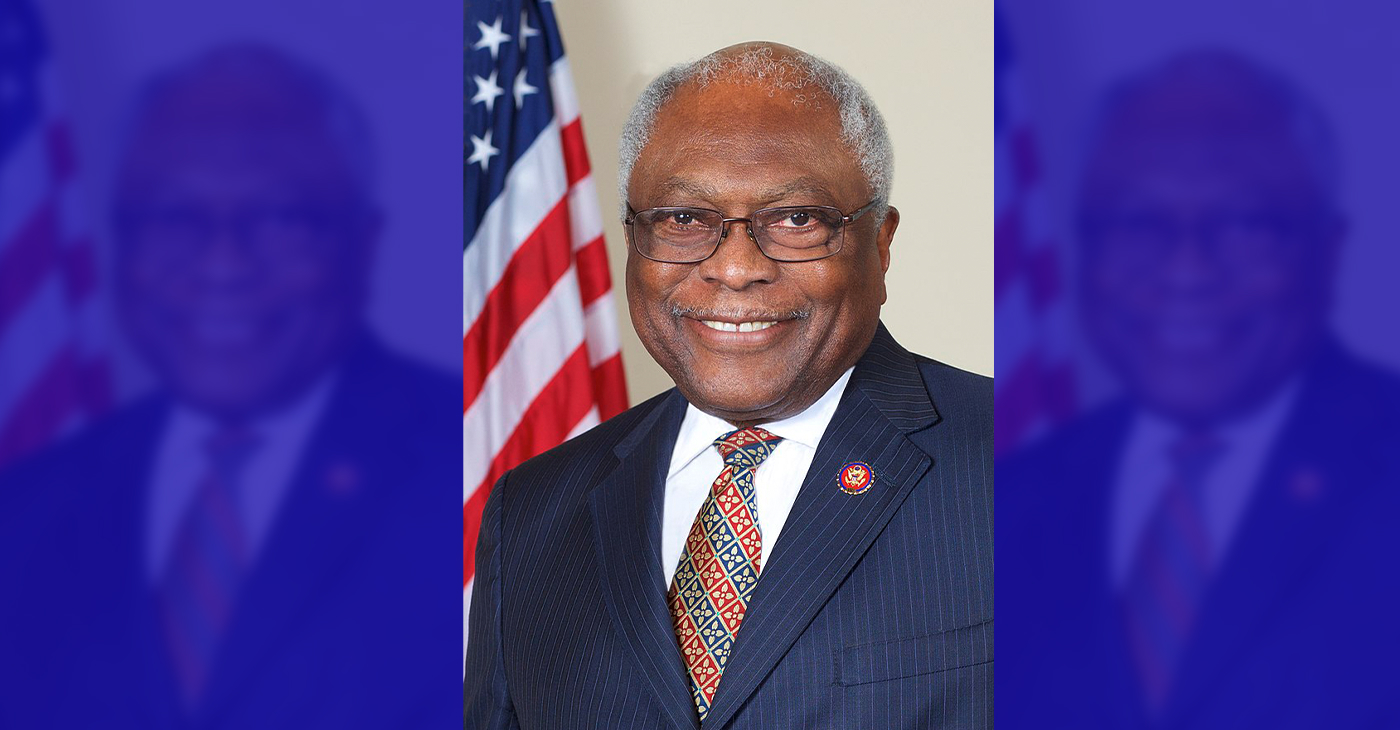
By: Assistant Democratic Leader James E. Clyburn
Much ink has been spilled about what President Biden hasn’t done with little regard for the successes that would secure any previous administration’s legacy as being the most productive since President Lyndon B. Johnson’s Great Society. This administration has secured $132 billion in student loan debt relief for 3.6 million borrowers, including $53.5 billion for public servants and nearly $12 billion for borrowers with disabilities. However, the prevailing narrative centers on the Republicans-led rejection of his targeted student debt relief plan that was upheld by a right-leaning U.S. Supreme Court.
I’ve heard rumblings that this president has failed the Black community when, in fact, he has invested over $7 billion in HBCUs in 3 short years, produced the lowest Black unemployment rate on record, and begun the earnest work of closing the digital divide for Black families by making broadband accessible and affordable. The November Consumer Price Index revealed that inflation fell to 3.1% — down two-thirds from its peak; that consumers are paying less for essentials such as milk, eggs, and other appliances; and the median gas price has fallen below $3.00. With wages higher than before the pandemic and the creation of 14.1 million jobs, can anyone honestly argue with President Biden’s record?
Despite this incredible record, what will arguably become President Biden’s greatest and most lasting achievements was reached this month with the confirmation of his 160th judge to lifetime appointments on the federal bench. I repeat and italicize for emphasis: 160 judges confirmed for lifetime appointments on the federal bench. This number includes well over 100 women, more Black female appellate judges than all former presidents combined, and roughly 60% being women of color. This number also includes the first Black woman on the Supreme Court, Justice Ketanji Brown Jackson; the first South Asian woman judge; and the first Navajo federal judge.
It’s hard to overstate the importance of this milestone. Every president selects judges whose record reflects the values they hold dear. Donald Trump’s Federalist Society-sponsored selections reflected his extremism and penchant for vitriol. Trump’s appointed judges are wreaking havoc today, as evidenced by this summer’s U.S. Supreme Court overturning of affirmative action and Roe v. Wade. We should all take pride in the fact that under President Biden, the daughter of two public school teachers can ascend to the highest court of the land and that a first-generation Chicago native can make history as the first Muslim woman on the federal bench. It’s only fitting that this process made possible another glass-breaking moment: this month, Vice President Harris set the record for breaking the most ties in the Senate by a vice president. The record was previously held by John C. Calhoun, a staunch defender of slavery. How poetic is it that the first woman, the first Black American, and first Asian American to be elected vice president of this great country at the behest of Joe Biden, has set a new standard and brought us into the 21st century?
This is what this country is all about: moving the needle closer toward justice at every possible turn. With President Biden’s legislative successes, from clean energy investments in the Inflation Reduction Act to the manufacturing renaissance made possible by the CHIPS and Science Act, to the historic investments for veterans in the PACT Act, we are laying the foundation for a more secure, stable and successful future for our children and grandchildren. But foundations are worth little without a complete structure. When undergirded by the decisions his judicial nominees are capable of rendering, President Biden is framing structures that will ensure that “the greatness of this country will be accessible and affordable for all Americans” for generations to come.




Black History
Tradition Comes to the Streets in 11th Annual Black-Eyed Pea Festival at the Freedom Farmers Market

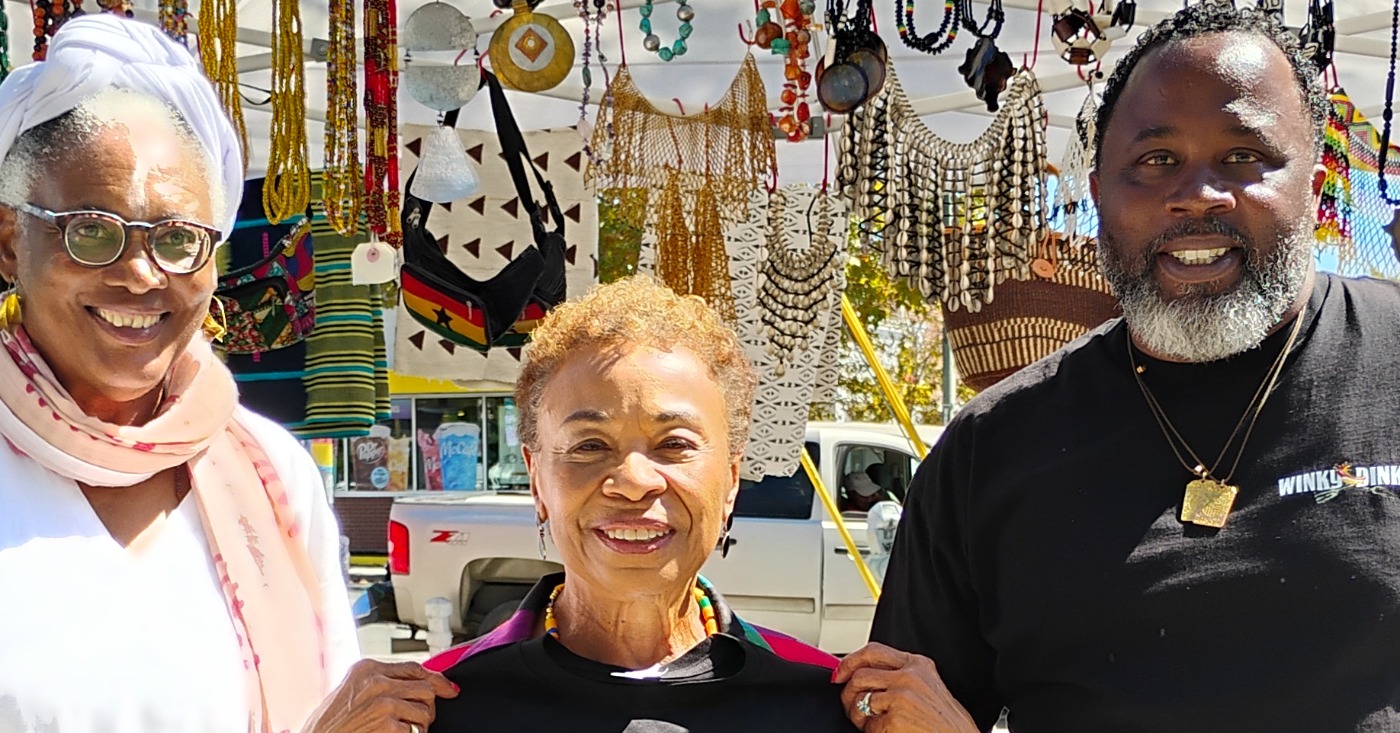
Mayor Barbara Lee stops by to support vendors, Winky Dinky Dogs owner Tyranny Allen
A streamlined Oakland Black-Eyed Pea Festival took place on Sat. Sept. 12 in the lower Temescal neighborhood on the blocked off street that connect Shattuck and Telegraph avenues.
An early start brought together vendor regulars from festival partner, the Freedom Farmers’ Market, and vendors who have supported the festival at its previous location at Marston Campbell Park.
Wanda Ravernell, the festival producer/director was on the verge of cancelling the festival because of funding limitations in May before reaching out to Elaine Smith, president of Farms to grow, Inc., which supervisors the market.
From its start in 2014, the festival has focused on the traditions of African American culture through music, food and art. That emphasis included fresh food vendors, particularly growers of African American legacy crops like black-eyed peas, yams, watermelon, collard greens and okra, which all originate in Africa.
To Fresno farmer Will Scott of Scott Family Farms, the Freedom Farmers’ Market allows him to bring those crops to the inner city – and support the nutrition of African Americans.
Shortly after the festival opened Saturday morning with prayers and salutes to the ancestors by Wakan Wiya Two-Spirit Drum and Awon Ohun Omnira, led M. Zamora and Otobaji Stewart respectively, 86-year-old Scott, the son of a sharecropper, announced that he will put other endeavors aside to dedicate the rest of his life to raise those foods.
Smith shared that Farms to Grow assists Black farmers in helping them overcome one of their main impediments to success – distribution – while creating alliances to help Black people maintain farmland and make it prosperous for younger generations to keep farming and farmland in the family.
As the morning progressed to afternoon, a steady stream of visitors drifted from booth to booth, chatting with vendors and each other.
Scott noted that a market day like this was what he was accustomed to in his youth, where the market was not just about buying things but also a place for valuable social exchange.
The social aspect became even pronounced shortly after midday when Oakland Mayor Barbara Lee stopped by to shop and visit with some of the vendors, including Ellen Bimpeh of Sankofa, and Ravernell who was selling T-shirts designed by Stewart.
Lee is also a fan of Winky Dinky Dogs, an eatery owned by Tyranny Allen whose second brick-and-mortar venture further anchors a hub of businesses at that corner.
As he has in previous years, Andre Thierry of Accordion Soul, closed the festival with a 90-minute set that brought young and the young-at-heart on their feet to dance in a line or as impromptu couples.
And, surprisingly, the man Allen refers to as the mayor of 45th Street, came out on cane and chair to sit by the curb in the sun and listen to music reminiscent of his Louisiana roots. His appearance seemed to echo Scott’s observance about the market: to bring people together.
The Freedom Farmers’ Market is located at 4521 Telegraph Avenue in Oakland and is open on the second and fourth Saturdays of each month until Nov. 14. For more information and to apply to be a vendor, go to https://www.farmstogrow.org/freedomfarmersmarket
Black Press
Neighborhood Empowerment Day in Deep East Oakland Brings Community Together After Recent Tragedy
Hosted by the 40×40 Council, the free, family-friendly resource fair featured health and wellness services, workshops, children’s activities, food, giveaways and local Black-owned businesses. Residents also connected with community organizations working to strengthen East Oakland.
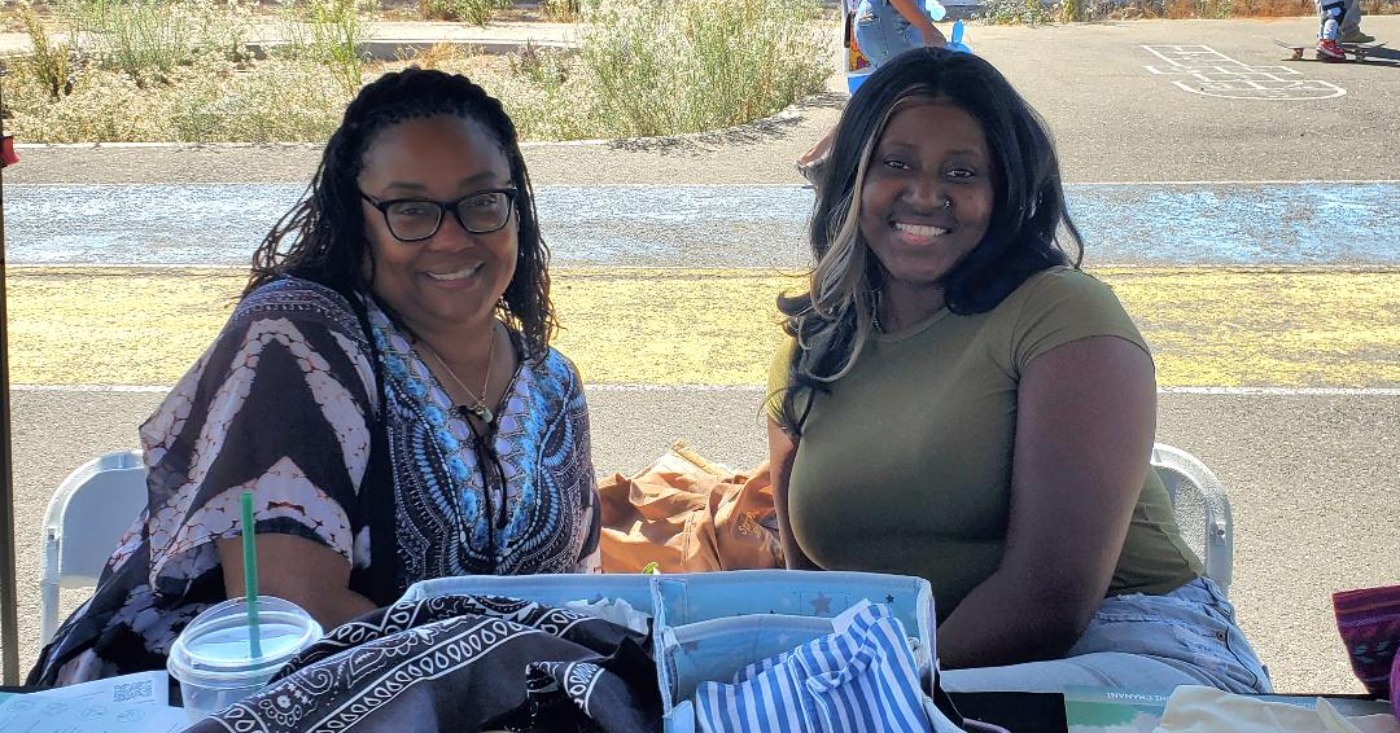
Families, residents and community organizations gathered at the Parker Community Resource Center on Saturday, Sept. 12, for the 40×40 Neighborhood Empowerment Day, transforming the site of a recent tragedy into a space for healing, resources, connection and joy.
Hosted by the 40×40 Council, the free, family-friendly resource fair featured health and wellness services, workshops, children’s activities, food, giveaways and local Black-owned businesses. Residents also connected with community organizations working to strengthen East Oakland.
The gathering came six weeks after a fatal shooting occurred at the Ney Avenue center on July 31. The violence happened shortly before 9 a.m. on the campus of the adult education center and claimed the life of 25-year-old Kimarii McLemore. A second person was injured.
McLemore was attending what was supposed to be her final day in an adult education carpentry class. The shooting deeply affected her family and traumatized students, staff members and residents who had viewed the center as a safe place where community members could pursue education, career training and a better future.
Neighborhood Empowerment Day offered residents an opportunity to return to the center in a spirit of unity and reclaim the space as an important neighborhood resource.
“Reclaiming the space after a tragedy means creating opportunities for people to gather, connect, experience joy and feel a sense of community once again,” said Tim Zenor-Davis, program manager at Roots Community Health. “After a trauma occurs, we see what happened, we acknowledge its impact, and we are continuing to show up.”
Throughout the afternoon, children and families participated in activities while residents received information about health, wellness and other community services. The event also gave local entrepreneurs and service providers an opportunity to connect with the community.
Complimentary meals included grilled burgers and tacos while a DJ played popular music.
Guests received blood pressure and eye-sight checks. A space to exercise on yoga mats was provided while headphones with guided meditation offered a moment to slow down and reflect.
The 40×40 Council includes the Black Cultural Zone, Brotherhood of Elders Network, East Oakland Youth Development Center and Roots Community Health. Together, the organizations have worked to address community violence and the deeper systemic conditions that have affected generations of East Oakland residents.
The council’s work has extended beyond responding to individual tragedies. As part of the broader Rise East initiative, the collaborative has focused on reversing decades of economic disinvestment, systemic poverty, health disparities and the displacement of Black legacy residents.
The 40×40 area stretches from Seminary Avenue to the San Leandro border and from MacArthur Boulevard to the Bay. More than 30,000 Black residents live within the area, which contains Oakland’s largest concentration of Black residents.
Organizers said the area has continued to demonstrate resilience despite experiencing community violence, declining investment and a significant life-expectancy gap compared with wealthier parts of the region.
The council seeks to help reshape East Oakland into a vibrant, multigenerational community where Black residents can remain, return, heal, prosper and build power.
Black Press
Neighborhood Empowerment Day in Deep East Oakland Brings Community Together After Recent Tragedy
Hosted by the 40×40 Council, the free, family-friendly resource fair featured health and wellness services, workshops, children’s activities, food, giveaways and local Black-owned businesses. Residents also connected with community organizations working to strengthen East Oakland.
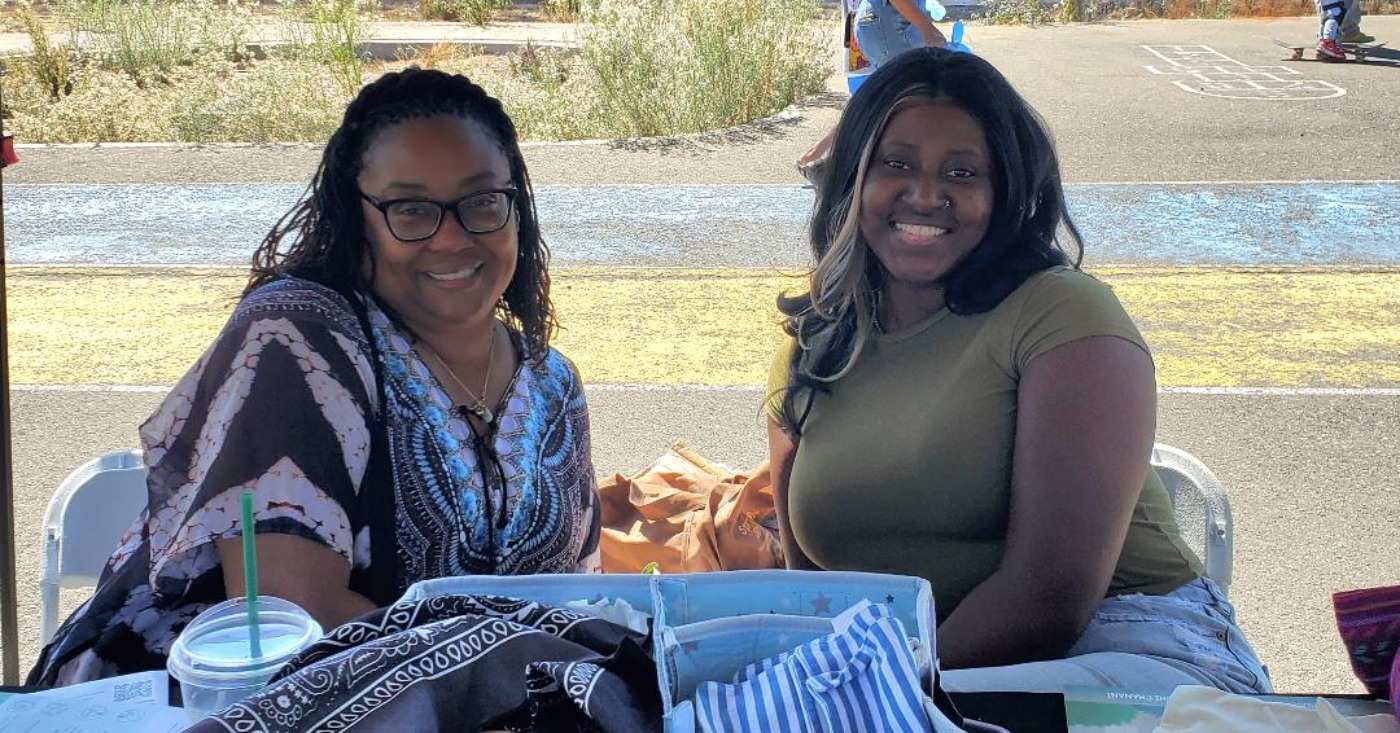
Families, residents and community organizations gathered at the Parker Community Resource Center on Saturday, Sept. 12, for the 40×40 Neighborhood Empowerment Day, transforming the site of a recent tragedy into a space for healing, resources, connection and joy.
Hosted by the 40×40 Council, the free, family-friendly resource fair featured health and wellness services, workshops, children’s activities, food, giveaways and local Black-owned businesses. Residents also connected with community organizations working to strengthen East Oakland.
The gathering came six weeks after a fatal shooting occurred at the Ney Avenue center on July 31. The violence happened shortly before 9 a.m. on the campus of the adult education center and claimed the life of 25-year-old Kimarii McLemore. A second person was injured.
McLemore was attending what was supposed to be her final day in an adult education carpentry class. The shooting deeply affected her family and traumatized students, staff members and residents who had viewed the center as a safe place where community members could pursue education, career training and a better future.
Neighborhood Empowerment Day offered residents an opportunity to return to the center in a spirit of unity and reclaim the space as an important neighborhood resource.
“Reclaiming the space after a tragedy means creating opportunities for people to gather, connect, experience joy and feel a sense of community once again,” said Tim Zenor-Davis, program manager at Roots Community Health. “After a trauma occurs, we see what happened, we acknowledge its impact, and we are continuing to show up.”
Throughout the afternoon, children and families participated in activities while residents received information about health, wellness and other community services. The event also gave local entrepreneurs and service providers an opportunity to connect with the community.
Complimentary meals included grilled burgers and tacos while a DJ played popular music.
Guests received blood pressure and eye-sight checks. A space to exercise on yoga mats was provided while headphones with guided meditation offered a moment to slow down and reflect.
The 40×40 Council includes the Black Cultural Zone, Brotherhood of Elders Network, East Oakland Youth Development Center and Roots Community Health. Together, the organizations have worked to address community violence and the deeper systemic conditions that have affected generations of East Oakland residents.
The council’s work has extended beyond responding to individual tragedies. As part of the broader Rise East initiative, the collaborative has focused on reversing decades of economic disinvestment, systemic poverty, health disparities and the displacement of Black legacy residents.
The 40×40 area stretches from Seminary Avenue to the San Leandro border and from MacArthur Boulevard to the Bay. More than 30,000 Black residents live within the area, which contains Oakland’s largest concentration of Black residents.
Organizers said the area has continued to demonstrate resilience despite experiencing community violence, declining investment and a significant life-expectancy gap compared with wealthier parts of the region.
The council seeks to help reshape East Oakland into a vibrant, multigenerational community where Black residents can remain, return, heal, prosper and build power.
Black Press
Community Action Group ‘Friends of Zakiya’ Ask Sheriff for Time
“Friends and Neighbors of Zakiya,” a community group of more than 60 neighbors, friends and community activists, is standing strong with Jendayi. The group holds weekly vigils every Tuesday from 6 p.m.-7p.m. at Jendayi’s residence at 3614 Randolph Ave. in Oakland.
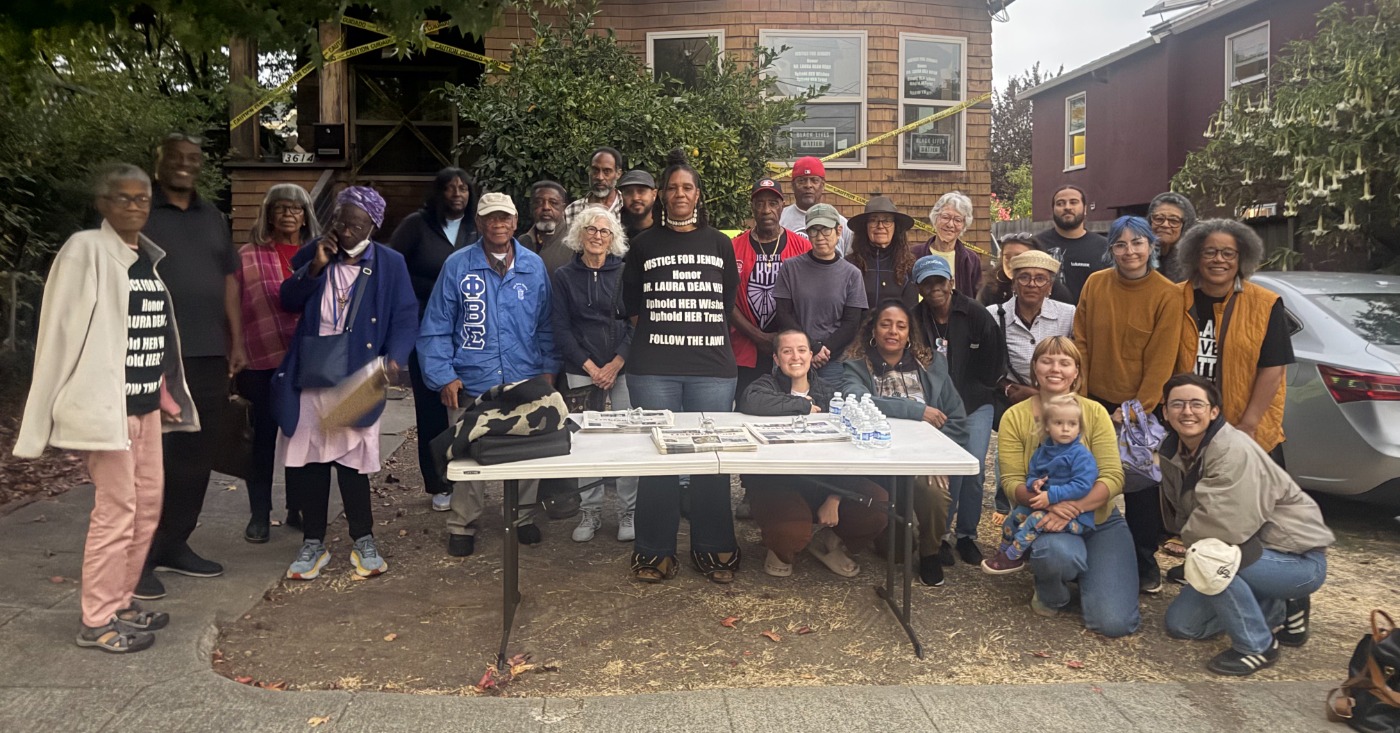
Zakiya Jendayi received good news Monday, Sept. 14, when the appellate court ruled in her favor in the Hamlin v. Jendayi case, agreeing to hear the case on its merits regarding her motion to have Judge Sandra K. Bean’s ruling invalidated based upon Laura Dean Head’s living trust.
The bad news is that, at the time of this writing, the Sheriff’s Department was scheduled to evict Jendayi from her home yesterday.
“Friends and Neighbors of Zakiya,” a community group of more than 60 neighbors, friends and community activists, is standing strong with Jendayi. The group holds weekly vigils every Tuesday from 6 p.m.-7p.m. at Jendayi’s residence at 3614 Randolph Ave. in Oakland.
The group is asking the community to join them and to make calls to Congresswoman Lateefah Simon, Attorney General Rob Bonta, Sheriff Yesenia Sanchez and DA Ursula Jones Dickson to stop what they deem the illegal eviction of Jendayi from her home of 13 years.
“I would hope that the Sheriff listens because, unlike the courts, my friends and neighbors have read the transcripts and seen for themselves the 42 findings that result in 35 false, six misleading, and one that is an error, which unbelievably the appeals court upheld.” says Jendayi. “With this new appeal, the court quite possibly will return my home to me, and so this makes no sense. The Sheriff is threatening to move forward to remove me before my appeal is heard.”
“This makes no sense,” says group member Rev. Raymond Langford. “She’s not a criminal, and she’s never had a criminal record. This situation has been horribly impactful on her physical and mental health. She’s now medically compromised due to all this stress, and all we’re asking for is time to see if the courts are in error. She should be given the opportunity for the appeal to be heard. That’s called justice, nothing more, nothing less.”.
Friends and Neighbors of Zakiya are organizing future protest actions to secure more time for Jendayi. They will be seen in front of the offices of Bonta, Simon and Sanchez, demanding that she have the opportunity for her case to be heard.
The Post is asking that the public join Friends and Neighbors of Zakiya and use the information listed to join in this fight for justice.
Friends and Neighbors of Zakiya asks you to sign the petition by activating the QR code below to enact a stay in Jendayi’s pending eviction from her home and to pursue a full and independent investigation into the ruling that invalidated Dr. Head’s trust.

Advice
Outdoor activities keep you active, but UV exposure can accelerate chronic eye conditions
BLACKPRESSUSA NEWSWIRE — Never underestimate signs of eye problems because if left unaddressed, they can lead to vision impairment or vision loss. Some symptoms should even prompt you to get immediate professional help, as they may indicate emergency sight-threatening conditions.


Outdoor activities, if done for prolonged periods without adequate ultraviolet (UV) protection, can accelerate eye conditions like cataracts and age-related macular degeneration (AMD). Eye/eyelid cancers are other solar radiation risks of unprotected outdoor time.
You’d want to implement the above UV vision protection strategies more than ever, as the number of days with high ultraviolet index values is on the rise. The World Meteorological Organization notes that measurements show a significant uptick in the number of days with high UV indices over the past decades.
What Are Some Common Eye Conditions?
Refractive errors are among the most common eye conditions that result from the eyes being unable to bend (refract) light correctly. They can occur due to certain physical traits, including:
- The eyeball either being too short or too long
- The cornea’s shape either being too flat or too steep
- The flexibility of the lens inside the eye changing as a result of getting older (e.g., the lens becomes stiff due to advancing age)
Refractive errors are so common they impact over 150 million people in the U.S., per the NEI (National Eye Institute). Some have nearsightedness, also called myopia, while others have farsightedness, also known as hyperopia. In older people, presbyopia, which makes close-up things look blurry, is also prevalent.
Astigmatism is another common refractive error that causes blurriness with both near and far vision. It results from the eyes having an irregular shape (egg or oval shape instead of round). Some people may also have this alongside another refractive error.
What Are the Signs of Serious Eye Problems?
Never underestimate signs of eye problems because if left unaddressed, they can lead to vision impairment or vision loss. Some symptoms should even prompt you to get immediate professional help, as they may indicate emergency sight-threatening conditions.
If you, a family member, or a friend ever experiences any of the following, please seek the help of an emergency optometrist, ophthalmologist, or eye hospital right away.
- Partial or total loss of sight
- Sudden double vision
- A dark curtain, veil, or shadow that moves across the vision
- A sudden, unexplained increase in eye floaters and flashes
- Intense pain in and around the eyes
- Severe redness and inflammation
- Extreme light sensitivity
- Physical trauma to the eyes, particularly deep punctures, cuts, or chemical splashes
What Chronic Eye Conditions Can Unprotected Outdoor UV Exposure Cause or Accelerate?
Spending time in nature doing outdoor activities has become more popular among folks in the U.S., with participation rates increasing over the years.
A new report from the Outdoor Industry Association (OIA), for instance, shows that in 2025, 183.2 million Americans got outside. It represents nearly six in ten people aged 6 and older and reflects an increase of 30 million from 2019’s total participants.
Nature time and outdoor activities have undeniable health benefits, from lowering stress to supporting better heart health. They can, however, still pose safety risks, particularly if people ignore basic precautions, such as those for outdoor lens safety, skin protection, and dehydration prevention.
Without proper preparation and long-term ocular protection, your eyes can take a hit from UV overexposure, as this can increase the risk of or accelerate the following eye conditions.
Cataracts
Prolonged or consistent exposure to UV rays without any protection can trigger oxidative stress in the eyes. Over time, the sun’s UV light can damage the protein inside your eyes’ lenses. The damage breaks down the proteins and causes them to clump up and form cataracts.
Cataracts are highly common, with the risk increasing with age. The longer they go untreated, the more vision loss they can cause and may even lead to blindness.
Age-Related Macular Degeneration
The oxidative stress caused by unprotected UV exposure can contribute to the development or acceleration of AMD. It’s a progressive disease that damages the eyes’ macula (central part of the retina at the back of the eye), blurring central, straight-ahead vision.
Developing AMD can put you at risk of experiencing difficulty:
- Reading
- Recognizing faces
- Driving
- Completing focus tasks
Eye/Eyelid Cancers
Prolonged exposure to the sun’s potent UV rays can harm the sensitive areas of the eyes, including the delicate tissues in and around the eyelids. In some cases, this damage can trigger the development of certain cancers.
How to Safeguard Your Vision From Harmful UV Rays
Making it a habit to wear sunglasses whose label states “100% UV protection” or “UV400” should be one of your top priorities to protect your eyes from the sun’s UV rays. If you’re not keen on having to switch from prescription specs to sunglasses, don’t worry, as you can get specialty glasses.
You can, for example, fit stylish designer pieces, whether it’s Gucci, Prada, or Versace eyeglasses, with prescription sun care, UV-protective tinted lenses. There are also photochromic (transition) lenses that automatically darken when exposed to UV.
Wear a wide-brimmed hat to maximize sun protection, too. It can safeguard not just your eyes but also your face and even neck from direct sunlight.
Frequently Asked Questions
Can You Reverse UV-Related Eye Conditions?
Some UV-related eye conditions are reversible, such as eye dryness and surface irritation caused by an isolated incident of overexposure to the sun’s rays. Another is photokeratitis, which is similar to a sunburn, except it affects the eyes.
Resting (moving to a dimmer area) and applying cool, damp compresses to the eyes can help relieve these conditions’ temporary symptoms.
Many other UV-related eye conditions, however, are chronic or permanent. Cataracts and AMD, for instance, are non-reversible. They are, however, treatable. There’s surgery for cataracts, while AMD’s management often involves injections or laser therapies.
What Is the Most Common Degenerative Eye Disease?
AMD is the most common degenerative eye disease.
The latest statistics cited by the American Macular Degeneration Foundation put the number of Americans 40 years and older diagnosed with some form of macular degeneration at 20 million. It further notes that close to 1.5 million people have late-stage, vision-threatening AMD.
Don’t Let UV Rays Ruin Your Eyesight
UV radiation can contribute to or accelerate various eye conditions, some of which could be permanent, such as cataracts and AMD. It should be enough reason for you to always wear sunglasses with a UV400 or 100% UV protection rating.
Find more health and lifestyle guides or the latest events and news impacting the Black community by checking out the rest of our platform.
Black Press
Event Preview: ‘Fashion v. Fascism’ – A Runway Revolution Is Coming to the Bay Area
“Fashion v. Fascism” (FVF) is an upcoming visually immersive event combining fashion, music, and political theater to expose the rise of fascism in the U.S. and advocate for resistance. Described as a live “runway revolution,” FVF premieres October 3 at The Rotunda in downtown Oakland. The event will feature five runway collections spotlighting elements of contemporary fascist politics, accompanied by political theater and live music, culminating in a call to action. Organizers state that culture is a potent defense when democracy is under siege. Read more to learn about this unique event.

“Fashion vs. Fascism” (FVF) is a visually immersive evening of fashion, music and political theater exposing the rise of fascism in the U.S. and the need to resist. Democracy is under siege, and culture is one of our most potent defenses, organizers say.
Called a live “runway revolution,” FvF premieres Oct. 3 at The Rotunda, 300 Frank Ogawa Plaza in downtown Oakland.
A play that is part fashion show, part protest, part performance art, FvF stages five runway collections spotlighting the pillars of contemporary fascist politics and the urgent need to resist: the myth of a “glorious past,” the manufactured emergencies used to justify surveillance and crackdowns, and the oligarchs and grifters profiting from it all. Runway fashion shares the stage with political theater and live music, with a closing call to action.
“We need lawsuits, ballots and mass protests, but none of it lands if we’re not also fighting for people’s imagination,” says Linda Burnham, co-producer of the show. “People are exhausted and scared. FvF will expose the absurdities of fascist mythology and ideology in ways a news headline cannot and spark new ideas about how to resist.”
“Fascism doesn’t win by policy alone. It wins by telling a story. A myth about a ‘Golden Age.’ A permanent emergency that makes cruelty seem necessary. That’s not an accident, it’s a strategy, and it works on the same terrain as culture: image, spectacle, emotion,” says Aya De León, the show’s playwright.
“Every piece on this runway translates what is happening under fascism into a feeling,” explains Erica Furlong, the FVF creative director. “One designer’s trench coat is covered in pockets stamped ‘TRUTH,’ ‘MEMORY,’ ‘HOPE,’ ‘VOTE,’ ‘FUTURE,’ because that’s literally what gets seized first, pocket by pocket, under fascist decline. Fashion can hold grief and hope in the same silhouette, and that tension is exactly what this moment needs.”
At its best, fashion is about creativity, diversity, innovation, experimentation and the free exchange of ideas. Fascism, by contrast, demands conformity and control, while suppressing dissent.
FVF was created, organizers say, because democracy should always be in style.
Featured designers include Erica Varize, Rickie Lee, Tianna Charity, Julie Wong, and Maria Flores. The evening features a script by lead playwright Aya De León, musical performances by Mindeullae Project and DJ Emancipation, and other special guests.
FvF is designed to travel. Following the Oakland premiere, FvF will extend its reach through a documentary short, a curriculum on contemporary fascism in the U.S., and a full replication playbook — design templates, script, and curriculum — so organizers in other cities can stage their own version of the show.
Get more details at www.fashionvfascism.org.


Oakland Mayor Reads to Children at Bookout Block Party at Marcus Books Store

Tradition Comes to the Streets in 11th Annual Black-Eyed Pea Festival at the Freedom Farmers Market

Attorney General Rob Bonta Continues Opposition to President Trump’s Tariff Regime

Neighborhood Empowerment Day in Deep East Oakland Brings Community Together After Recent Tragedy

Neighborhood Empowerment Day in Deep East Oakland Brings Community Together After Recent Tragedy

Community Action Group ‘Friends of Zakiya’ Ask Sheriff for Time

Oakland Launches Aerbits Program to Identify, Report Abandoned Trash

Mayor Lee Announces $1 Million Kaiser Permanente Grant for Pilot Program to Address Homelessness, Clean Up Public Spaces throughout Oakland

Alameda County DA Ursula Jones Dickson Says Key to Optimal Use of DA’s Office Is Knowledge

2024 Audi Q3 S line Quattro: Base MSRP & Features #shorts

You Had Me at Hello: the Love and Legacy of Grace Nail and James Weldon Johnson

Arnold Perkins: At 85, a Life of Service, Faith and Giving Back

Young Black Men Suffering in Silence A curse that can be Broken

Young Black Men Suffering in Silence A curse that can be Broken

🎷 Jazz is taking over D.C.!

BSPNTX Announces 2026-27 Scholarships Recipients

Women Learned Their Jail Strip Searches Were Recorded. Their Outrage Changed the Law

Black Americans Have Doubts About the U.S. Food System

Barbados – Julius Garvey, Son of Marcus Garvey, Joins PM Mottley in the Rededication of the Garvey Amphitheater

IN MEMORIAM: Dolly Parton Dead at 80 — How She Built a Legacy of Love and Earned Her Place in Black Culture
2024 Audi Q3 S line Quattro: Base MSRP & Features #shorts

Subaru Outback Turbo: Real Power Unleashed! #shorts

DON’T Buy the 2027 Seltos X Line SX Until You Watch This

Headlines and Hotlines

Headlines and Hotlines 📱

Small Cup Holders & Hidden Controls: Car Buying Pet Peeves #shorts

Don’t Get RIPPED OFF! Car Dealership Fees EXPLAINED #shorts

DMV DOES on Being More Than a Book Club | Let’s Talk

Talking with TotallyRandie: The AsOneFoundation

The Complete Negotiation Framework — Every Stage, Every Tactic, Every Win
-
 Black History1 week ago
Latest Massacre in Haiti Reveals Cruelty U.S. Deportations
-
 Black History1 week ago
Henry O. Flipper: A Trailblazer at West Point and Beyond
-

 Black History1 week ago
OP-ED: If AI Is the New Language of Power, Then NAN Wants Black Communities Fluent
-
 Black Press1 week ago
Asm. Smallwood-Cuevas’s Bill Repealing ‘Racist’ CalWORKs ‘Man-in-the-House’ Rule Clears Legislature
-

 Black Press6 days ago
OP-ED: How Does Your State Rank for Pre-K?
-

 Black Press1 week ago
California Legislature Sends Historic Native American Apology Bill to Gov. Newsom’s Desk
