
Music
OP-ED: Gladys Knight Has the Right to Be Wrong
WASHINGTON INFORMER — Gladys Knight is poised to board that “Midnight Train to Georgia,” returning to her hometown of Atlanta.


By D. Kevin McNeir
Gladys Knight is poised to board that “Midnight Train to Georgia,” returning to her hometown of Atlanta where she’ll perform the national anthem prior to Super Bowl LIII on Feb. 3.
And despite the many Grammy and Soul Train Music Awards, the #1 or Top Ten hits, or decades of success first with the Pips and then as a solo artist that go back to the 1960s, many of her fans have expressed disappointment and anger because of the decision made by the “Empress of Soul” to participate at the event.
The NFL, more correctly its all-white “team” of owners, in response to the controversy over “kneeling players,” as represented by the since unemployed poster boy quarterback Colin Kaepernick, recently adopted a new policy, with the boisterous support of Donald Trump no less, which fines players who do not stand during America’s so-called song of freedom. Sure, players can remain in the locker room but kneeling silently on the sidelines, even if, as Kaepernick and others believed, it’s done as a means of expressing their right as American citizens to protest racial discrimination and police brutality, has no place in the multi-billion-dollar industry of professional football.
Maybe Colin should have cracked open his history books, looking back at 1968, when, just months after the assassination of Dr. Martin Luther King Jr., two African-American U.S. Olympic runners, Tommie Smith and John Carlos, raised their fists in a Black power salute during their medal ceremony – before being ostracized and repeatedly attacked with racist slurs upon their return home. [Incidentally, there was no such backlash during the 1936 Olympics in Berlin when white athletes gave the Nazi salute].
Forget the racist lyrics in the third verse of Francis Scott Key’s “The Star-Spangled Banner” which children never learn in elementary school, which performers never sing and which some interpreters of these lyrics contend that Key was taking pleasure in the deaths of freed black slaves who had fought with the British against the U.S. [Yes, Key owned slaves, was an anti-abolitionist and even referred to Blacks as “a distinct and inferior race of people.”]
Forget the complicated relationship Black athletes have expressed with the anthem and the flag for which the song is played, including baseball pioneer Jackie Robinson who said in his 1972 autobiography “I Never Had it Made:” “I cannot stand and sing the anthem, I cannot salute the flag, I know that I am a black man in a white world.’
Forget the potential upheaval that Black athletes could cause if every Black player (70.3 percent) in the NFL and every NCAA Division 1 Black college football player (46.9 percent) stood in solidarity with Kaepernick, along with hundreds of thousands of other Americans, Black and white, and boycotted the NFL, refusing to put on their uniforms and take to the field.
What if the millions of fans, just in the U.S. turned off their TVs on Sundays, withdrew their memberships from fantasy football betting pools, put their favorite team jerseys and caps in mothballs and cancelled plans to purchase season tickets?
There have been some unforgettable renderings of the national anthem during previous Super Bowls, from Whitney Houston, Neil Diamond, and Billy Joel, to Aretha Franklin, Jose Feliciano and Marvin Gaye – even Ray Charles whose recording of “America the Beautiful” has yet to be equaled by any singer of any race.
So why can’t Gladys get paid like everyone else?
How do folks feel justified in blasting her for performing at the Super Bowl while making side bets in the office, the barbershop or in Vegas hoping to choose correctly as to which team will win or lose in their efforts to secure a big pay day of their own?
Gladys Knight has said she’s been fighting for civil rights for the majority of her life. I have no doubt that she’s done her share for the cause. But that hasn’t stopped the Twitter feed from exploding with all kinds of accusations and criticism. Ah, the beauty of free speech!
Still, if you really don’t like Gladys singing this Sunday, then don’t watch the game. Don’t read the scores in the paper the next day. Don’t bother checking the highlights or conversations on social media. Just read a good book.
This article originally appeared in the Washington Informer.












Art
Brooklyn Roots and Artistic Genius
THE POSITIVE COMMUNITY — Jean-Michel Basquiat emerged from Brooklyn to become one of the most influential artists of the late twentieth century. Born in 1960 to a Haitian father and a mother of Puerto Rican descent, his upbringing was defined by a rich blend of Caribbean cultural traditions and the linguistic diversity of New York City.

Jean-Michel Basquiat was one of the most influential artists to emerge from New York City during the late twentieth century. Born on December 22, 1960, in Brooklyn, New York, he transformed his experiences growing up in the city into a distinctive artistic language that combined painting, poetry, history, music, and social commentary. His work explored Black identity, racism, power, and the experiences of people whose stories had often been overlooked by mainstream institutions. Although his career lasted only a few years, Basquiat left a lasting mark on contemporary art.
Basquiat grew up in a family that exposed him to several cultural influences. His father, Gérard Basquiat, was born in Haiti, while his mother, Matilde Andrades, was born in New York to Puerto Rican parents. Through his parents, Jean-Michel was connected to Haitian, Puerto Rican, and broader Caribbean cultural traditions. Growing up in Brooklyn, he experienced the diversity of New York City, where different languages, communities, musical styles, and artistic expressions existed side by side. These influences would later become visible in his paintings, which frequently incorporated historical references, handwritten words, and symbols.
His mother played an important role in encouraging his early interest in art. Matilde recognized her son’s artistic ability and introduced him to museums, books, and cultural experiences. One important childhood event occurred when Basquiat was seven years old and was struck by a car while playing in the street. During his recovery, his mother gave him a copy of Gray’s Anatomy, a medical reference book that illustrated the human body in considerable detail. Its anatomical drawings influenced his lifelong interest in skeletons, skulls, and the internal structures of the human body. These images later became recurring features in his artwork.
Basquiat was one of four children born to Gérard and Matilde, although the family had experienced the loss of an older son before his birth. He had two younger sisters, Lisane and Jeanine, with whom he shared his early family life. His parents eventually separated, and his mother experienced periods of serious personal difficulties that affected the family. These circumstances formed part of a complicated childhood that included both encouragement and hardship. Although his family relationships were not always easy, his mother’s early support for his artistic interests remained an important influence on his development.
Basquiat’s upbringing was also shaped by language and cultural diversity. He grew up speaking English, French, and Spanish, reflecting the backgrounds of his parents and the environment in which he was raised. In 1974, his family moved to Puerto Rico for a period before returning to Brooklyn in 1976. These experiences exposed him to different cultural perspectives and helped establish the broad historical and cultural interests that later appeared in his work. His paintings often included words and references drawn from different languages, histories, and communities, creating a visual expression of his multicultural identity.
As a teenager, Basquiat became increasingly connected to Manhattan’s downtown art and music scenes. He eventually left home and supported himself through various activities, including selling handmade postcards and painted T-shirts. Along with his friend Al Diaz, he began creating cryptic graffiti under the name SAMO, short for “Same Old.” Their messages appeared on walls around Lower Manhattan and attracted attention for their wit, unusual phrasing, and criticism of established social and cultural conventions. This early work helped Basquiat develop a reputation as an original voice in New York’s underground creative community.
By the early 1980s, Basquiat had moved from street-based expression into the world of professional painting. His work attracted attention through exhibitions that introduced his distinctive style to collectors, critics, and fellow artists. His paintings combined bold colors, rough lines, repeated symbols, handwritten phrases, and images of human figures. Rather than following traditional expectations of polished painting, he created works that appeared energetic, fragmented, and emotionally direct. His artistic approach reflected the rhythms of New York City, where street culture, hip-hop’s emerging influence, punk music, and experimental art intersected.
A central theme in Basquiat’s work was the experience of Black people in a society shaped by racial inequality. He frequently portrayed historical figures, athletes, musicians, and other individuals whose achievements deserved recognition. Crowns appeared throughout his paintings as symbols that could suggest dignity, authority, and the importance of people who had been marginalized. His work also challenged colonialism, racism, and the unequal distribution of power. Rather than presenting history as a distant collection of events, Basquiat brought it into the present, encouraging viewers to consider whose stories were celebrated and whose were neglected.
Music was another important element of Basquiat’s creative life. He played in a band that eventually became known as Gray, exploring experimental sounds alongside his visual art. He was influenced by jazz and the broader musical culture of New York, and his paintings often possess a rhythm that resembles improvisation. Words, marks, and images seem to compete for attention while creating an overall composition. His artistic process shared something with jazz musicians who build a performance through experimentation, repetition, and unexpected changes. This connection between music and painting helped distinguish Basquiat from many of his contemporaries.
Basquiat also developed a significant relationship with Andy Warhol, one of the most recognizable artists of the twentieth century. The two artists collaborated on paintings during the 1980s, combining different approaches to imagery, color, and popular culture. Their relationship brought Basquiat into contact with an influential figure in the established art world, although it also highlighted the tensions between artistic creativity, celebrity, and commercial success. As his reputation grew, Basquiat had to navigate an industry that increasingly treated his identity and personal story as part of the appeal of his work. Nevertheless, he continued to produce paintings that expressed his individual perspective and challenged conventional ideas about art.
Despite his extraordinary success, Basquiat’s life was tragically short. He died in New York City on August 12, 1988, at just 27 years old, from an accidental drug overdose. His death ended a remarkably productive period in which he had moved from an underground artist in Brooklyn and Manhattan to an internationally recognized painter. His final years have also encouraged broader discussions about the pressures faced by young artists, the demands of celebrity, and the difficulties of maintaining personal well-being while working in a highly competitive industry. His death remains a painful reminder of the distance between public recognition and the private struggles a person may experience.
Today, Jean-Michel Basquiat’s legacy extends far beyond the galleries in which his paintings are displayed. His work is held by major museums, studied by scholars, and admired by artists across generations. His Brooklyn upbringing, Haitian and Puerto Rican heritage, family experiences, and encounters with New York’s streets all contributed to the development of an artistic vision that was unmistakably his own. Basquiat demonstrated that an artist did not need to follow traditional academic pathways to create work of lasting significance. His paintings continue to speak about identity, inequality, history, and the power of creative expression. From the streets of New York to the world’s leading museums, Basquiat remains a symbol of artistic independence and the enduring influence of Black creativity.
Based on reporting by The Positive Community.
Black Press
Should You Have to Pay to Hear the Gospel?
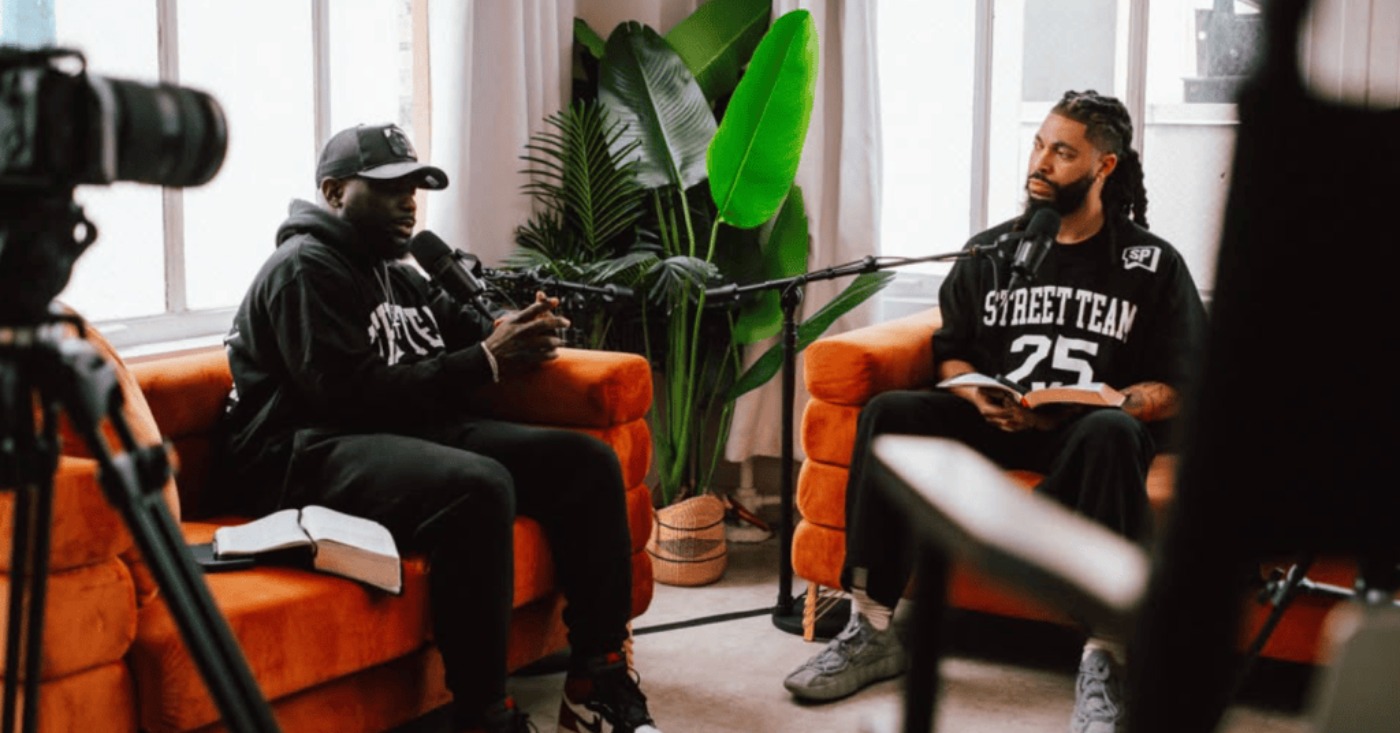
ST. LOUIS AMERICAN — Pastor Philip Anthony Mitchell of Atlanta’s 2819 CHURCH and Tim Timberlake of Celebration Church in Jacksonville, Florida, are at the center of a social media debate. The controversy stems from ticket prices for their “Street Preachers” podcast tour, with general admission tickets reportedly costing around $60 and VIP options up to $200.
For generations, the Black church has passed the offering plate to keep the lights on, pay the preacher, help the poor and carry the Gospel beyond its walls. But what happens when the preacher leaves the sanctuary, takes a popular Christian podcast on tour — and charges admission?
That question has placed Pastor Philip Anthony Mitchell, founder and lead pastor of Atlanta’s fast-growing 2819 CHURCH, at the center of a heated social media debate.
Mitchell and Tim Timberlake, senior pastor of Celebration Church in Jacksonville, Florida, host “Street Preachers,” which its official website describes as a “raw, unfiltered podcast” committed to spreading the Gospel.
‘A brood of vipers’
The controversy began after ticket prices for the podcast’s 2026 tour circulated online. General admission tickets reportedly cost about $60 before fees, with premium options, including a VIP meet-and-greet package, priced at $200. Critics questioned whether ministers should charge people to hear the Gospel.
Others defended the pastors, arguing that Christian events require venues, transportation, security, equipment and staff.
Mitchell answered critics from the pulpit last month, calling them “a brood of vipers.” He said the podcast is a separate, personal project and that neither his church nor Timberlake’s is bankrolling it.
“Now we have decided to go on a tour to take the gospel to cities, and because that’s not funded by 2819, and it’s not funded by Celebration Church, Tim and I gotta do that with our own pockets,” Mitchell said. “It’s why there is tickets. We have to pay for venues and security and productions and staff from our own pockets.”
Mitchell called some critics “ignorant” and said they did not know that a child was healed through faith during one of the events.
“And you want to complain about a 60 ticket?” he said. “So hate on!”
Worship service vs. media event
Mitchell maintains that “Street Preachers” is an independently produced podcast tour, not a worship service, and that ticket revenue helps cover production costs.
Yet the presence of pastors, Scripture and Gospel language makes the distinction less clear to some believers.
The official tour website lists all eight 2026 stops as sold out. Promotional material announcing additional dates promised, “Better ticket options. Same Gospel. Same move of God.”
Corporate prayer gathering
The language gets to the heart of the dispute. Some Christians argue that no one should be kept outside because they cannot afford a ticket. Others say the Gospel remains free even when people pay for the venue and experience surrounding its presentation.
The paid podcast tour, however, is not Mitchell’s only large-scale gathering. On Oct. 10, 2819 CHURCH will host “ACCESS — That Powerful Hour of Prayer” at AT&T Stadium in Arlington, Texas. Admission is free.
2819 CHURCH has said 80,000 free tickets were claimed before registration reopened.
The contrast raises another question: What makes one Gospel-centered event a ministry supported by donors and another a production supported by customers?
Unfiltered preaching, youth appeal
Mitchell’s congregation, composed largely of young Black adults, grew from fewer than 200 weekly worshippers in 2023 to about 6,000, according to the church. Some worshippers arrive before sunrise to secure a place inside.
His appeal rests partly in an intense, vulnerable and raw preaching style.
“I’m preaching without watering that down, without filtering out things that we think might be too controversial,” Mitchell told The Associated Press.
That visibility has also brought scrutiny of his theology, associations, travel, security and the businesses surrounding his ministry.
But the controversy reaches beyond Mitchell and Timberlake. Christian music concerts charge admission. Seminaries charge tuition. Religious publishers sell Bibles, books and devotionals. Churches pay musicians, media teams and guest preachers. Money becomes particularly uncomfortable, however, when an event is presented simultaneously as ministry and entertainment.
Ministry vs. entertainment
Supporters should not assume every dollar collected becomes personal profit. Critics, however, question whether lower-cost seats, sponsored tickets or free admission for people who cannot pay should be part of a Gospel-centered event.
The Black church always has required resources for ministry. It also has carried a sacred responsibility to make room for people with little or nothing to give.
The sold-out “Street Preachers” tour shows people are willing to pay to attend. The free ACCESS gathering offers a different model. The challenge is preserving that open door as Christian ministry increasingly adopts the machinery — and economics — of popular entertainment.
The post Should you have to pay to hear the Gospel? appeared first on St. Louis American.
Based on reporting by St. Louis American.
Black Press
Master P Encourages Norwood Elementary Students to Dream Big, Work Hard
BIRMINGHAM TIMES — Music mogul Percy Miller, known as Master P, visited Norwood Elementary School on Friday alongside his mascot sidekick, Captain Ace. Teachers and students, dressed in school colors, welcomed Miller, who shared lessons on education, consistency, networking, and the importance of not letting circumstances define one’s future.
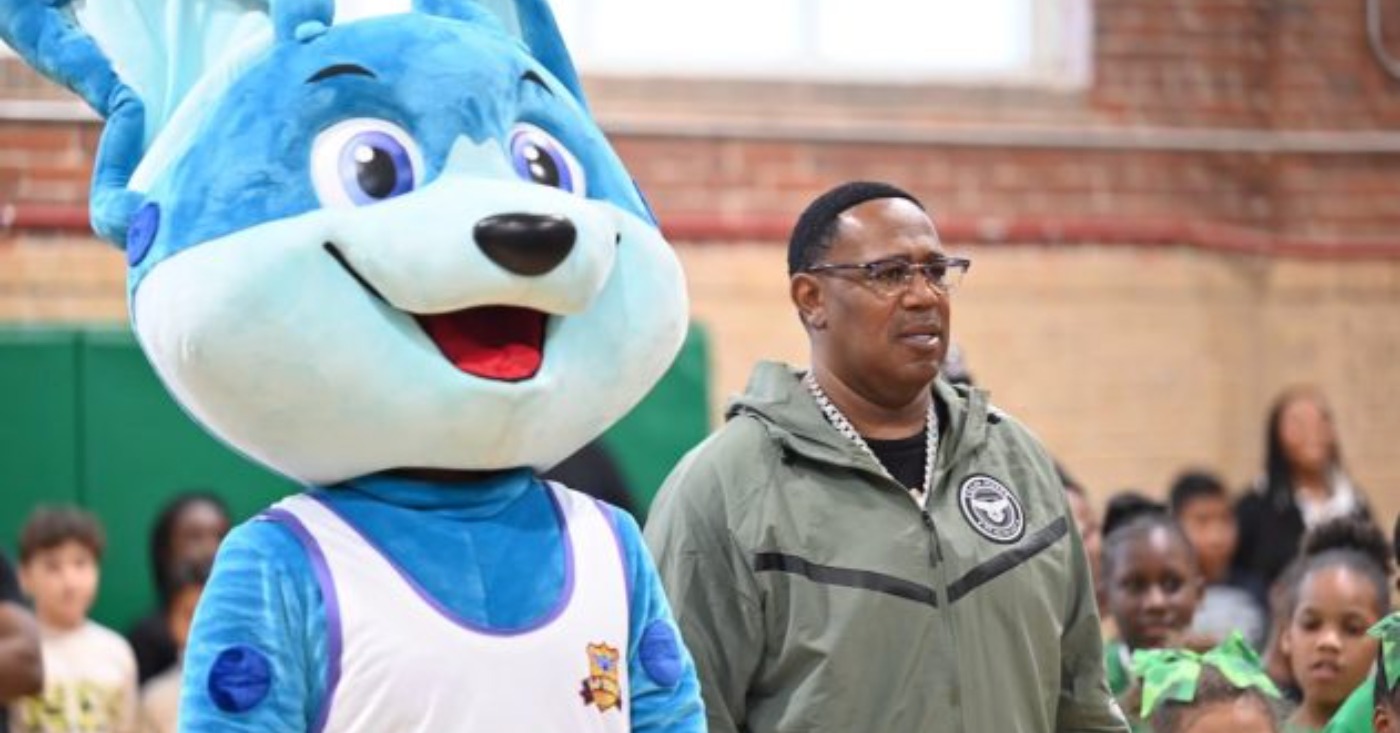
Music mogul Percy Miller, better known as Master P, visited Norwood Elementary School on Friday with his mascot sidekick, Captain Ace. (Birmingham City Schools) ”
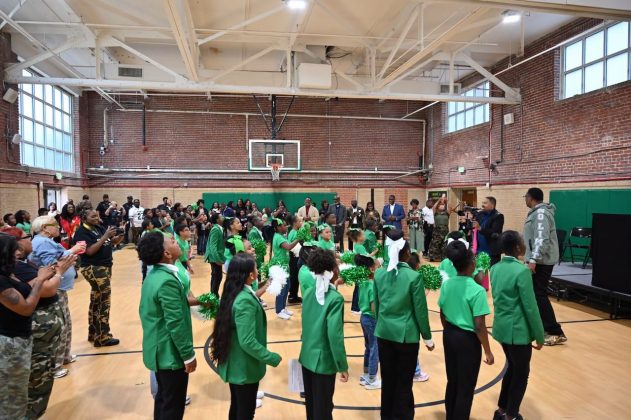
The sounds of students singing filled Norwood Elementary School Friday morning as teachers dressed in camouflage and students wearing their school colors of green welcomed a special guest whose career has been built on music, entrepreneurship and perseverance.
Before taking the stage at the Birmingham-Jefferson Convention Complex (BJCC) Friday night, music mogul and entrepreneur Percy “Master P” Miller spent the morning with Birmingham students, sharing lessons about education, consistency, networking and the importance of refusing to let circumstances determine their futures.
Miller was joined by Captain Ace, the blue-dog mascot and educational character associated with his school visits and assemblies. Together, they turned the celebrity appearance into a lesson centered on positive choices, learning, and believing in one’s potential.
The visit also brought together Birmingham city and school leaders, including Mayor Randall L. Woodfin, Birmingham City Schools Superintendent Dr. Mark Sullivan and members of the school system’s staff and leadership.
At the conclusion of the assembly, Woodfin and Sullivan presented Miller with a proclamation honoring his visit to Norwood Elementary.
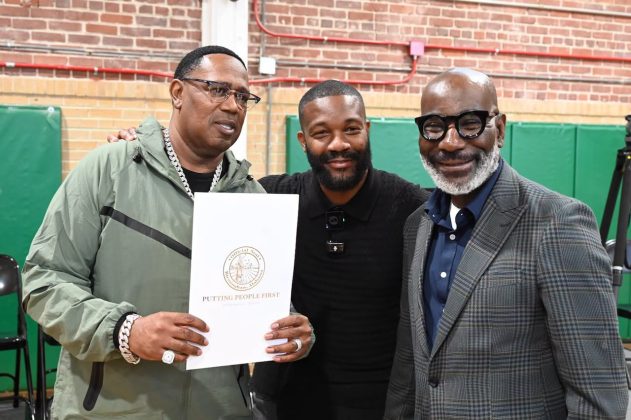
For Miller, however, the morning was less about recognition and more about the children sitting in front of him.
“I love the kids,” Miller told the students. “Even though I got a show, I’m like, no, I got to come and touch the kids because that’s the future.”
Miller said his focus is on what he described as “saving the next generation” and educating young people so they can recognize their potential.
“I want these kids to know that they can fly over all this negative,” he said.
That message became personal when Miller reflected on his own childhood.
He told students he grew up living with his grandparents, who had 12 children. His family lived in a three-bedroom housing project, but Miller said he refused to allow his circumstances to define what was possible for him.
“I didn’t let my condition stop me, and I don’t want you guys to let your condition stop you,” he told the students.
Miller repeatedly returned to the idea that dreams require action.
“There’s no limit to your dreams,” he said, emphasizing that success requires work and that students cannot “cheat the game of life.”
He then asked the students how many of them wanted to be successful. The room responded.
Miller used a familiar example to explain one of his central lessons: McDonald’s.
After asking students what the restaurant sells, he shifted the conversation from hamburgers to consistency.
“McDonald’s is selling consistency,” Miller said.
He explained that a Big Mac is expected to taste the same wherever it is purchased, using that familiarity as an analogy for persistence.
“Keep doing something, not giving up,” he told the students. “Keep chasing your dreams, doing something every day to get that, even when it don’t look like it’s gonna happen.”
“Somebody’s gonna make it big.”
Miller also challenged the students to think about the relationships they are building now. He asked whether they understood what networking means before explaining that the people sitting beside them today could become important figures in their lives tomorrow.
Miller shared a story about a girl he knew when he was in school — someone he said other people did not like or treated negatively. Years later, she became a bank president. When Miller needed a loan, he said, she remembered how kind he had been to her when they were younger.
“You never know who’s gonna be what in here,” Miller said.
He encouraged students to introduce themselves to others, learn their names and treat people well.
“That’s networking,” he said.
For Miller, the lesson went beyond professional connections. He encouraged students to recognize the possibility within one another.
“Who’s gonna be a doctor? Who’s gonna be a lawyer? Who gonna be a teacher?” he asked. “Who gonna be the president of the bank? Who gonna be the mayor? Who gonna be the superintendent?”
Miller said students cannot know where their classmates will end up, which makes how they treat one another today important.
“Somebody’s gonna make it big,” he said. “And it could be all you guys.”

Moments of Celebration
The visit was also filled with moments of celebration. Before Miller addressed the students, Norwood teachers and scholars welcomed him with a robust singalong to “The Affirmation Song,” creating an energetic introduction to the morning’s message.
The appearance of Captain Ace added another layer to the program. The character is part of Miller’s educational work with children, with school assemblies and musical programs addressing topics including anti-bullying, stranger danger and mental health awareness.
Miller said he has spent years making time for young people because he sees them as the future.
The message aligned with the presence of Birmingham’s education and civic leadership throughout the morning. Woodfin and Birmingham City Schools leadership have increasingly emphasized connecting children with educational, enrichment and career opportunities across the city. Earlier this year, the city announced its Children and Youth Commission’s Cradle-to-Career Roadmap, a strategy designed to connect the systems and resources influencing children from early education through adulthood.
For Norwood students, however, the morning offered a more immediate lesson: the opportunity to see someone who built a career from a childhood that did not necessarily predict the future he ultimately created.
As Miller prepared to leave, he encouraged students to keep working, keep learning and keep believing in themselves.
“I kept going,” he told them, reflecting on the people who once told him he would not succeed. “That’s what I want you guys to do. Keep going, no matter what your conditions is. No matter what your environment is.”
Based on reporting by Birmingham Times.
Black History
Why Black Artists Struggle to Sell Tours
HOUSTON DEFENDER — Recent industry reports and artist comments indicate that Black artists are struggling to sell concert tickets, highlighting a larger crisis in the touring business. This trend, dubbed “blue dot fever,” refers to empty seats at venues and has led to major touring acts canceling or postponing shows since spring 2026.
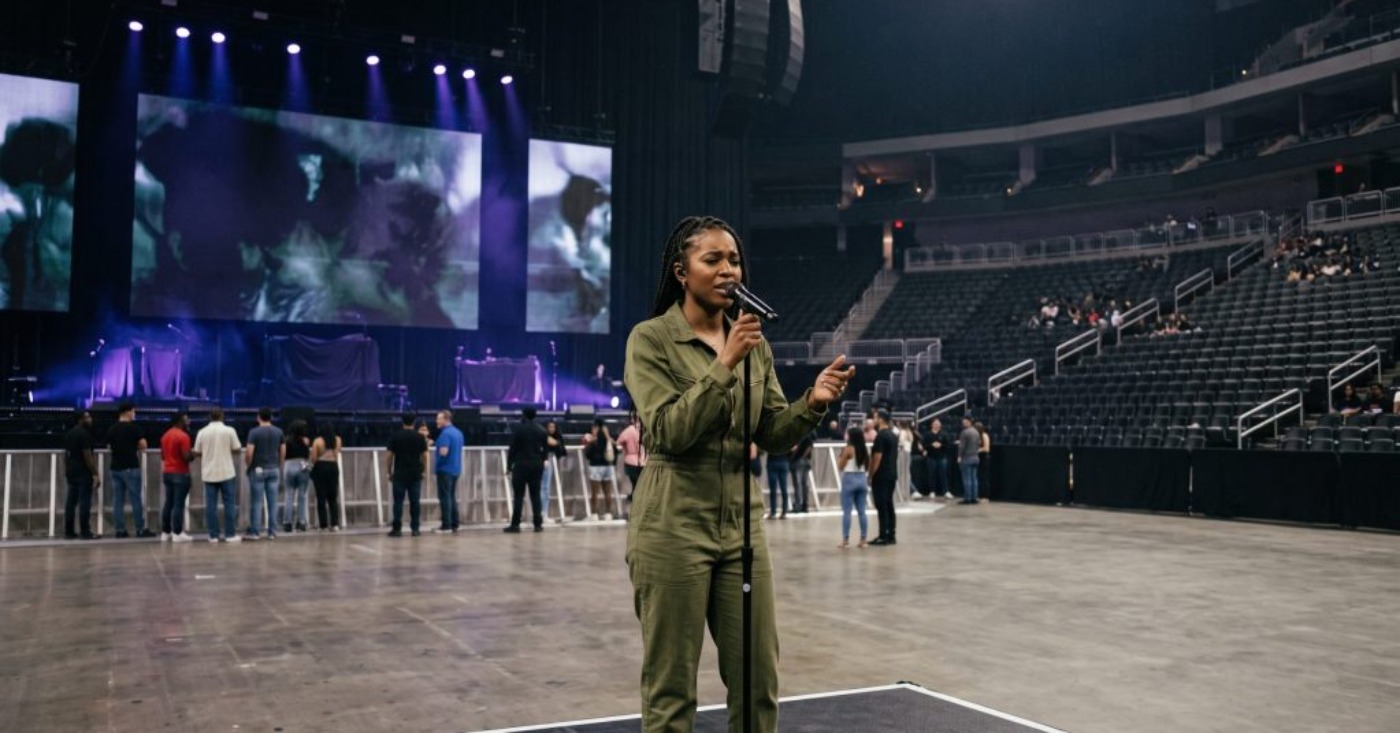
The internet chatter about Black artists struggling to sell concert tickets points to a much larger crisis reshaping the touring business, according to recent industry reporting and artists’ own comments.
Since spring 2026, a wave of major touring acts across genres have canceled or postponed shows due to sluggish ticket sales, a trend some in the industry have dubbed “blue dot fever,” a reference to the blue markers that indicate empty seats on Ticketmaster’s venue maps.
The phenomenon is not limited to Black performers, but several recent examples involving Black artists have fueled online conversation about whether Black touring acts face extra hurdles. For a market like Houston, home to a large hip-hop and R&B fan base and a steady stream of major tour stops, the debate carries added weight.
Here are five reasons the touring business has gotten tougher for artists trying to fill seats.
Blue dot fever is spreading industrywide
Black hip-hop megastars like Ludacris, T.I., Rick Ross, and BigXThaPlug felt the impact of Blue Dot Fever after struggling to sell tickets. Industry watchers say many artists are being booked into venues too large for their current draw, leaving sections visibly empty, discouraging last-minute buyers. The trend cuts across genres, but it has compounded challenges already facing some Black touring artists this year.
Fans keep comparing every artist to music’s biggest superstars
Grammy-winning singer Melanie Fiona recently weighed in on the online conversation about canceled shows and slow sales, explaining that most artists do not have the resources or reach of music’s top-tier headliners. The trade outlet Ticket News has made a similar point, noting that few artists can match the pricing structure or demand generated by superstar-level tours. When any artist falls short of that bar, fans and social media users are quick to call it a flop, even when the artist is still performing at a healthy level for their career stage.
Stadium bookings are outpacing actual demand
A hip-hop stadium concert set to take place in Louisville in October 2026, featuring Ludacris, T.I., Rick Ross, and BigXThaPlug, reportedly had nearly 47,000 seats still available as showtime approached. The example illustrates a broader booking problem. Venues sized for arena or stadium crowds do not always match the number of fans willing or able to buy tickets, regardless of an artist’s streaming numbers or name recognition. Some promoters are now facing pressure to book smaller, more intimate venues that better match an act’s current draw.
Rising costs are squeezing fans’ entertainment budgets
Housing, groceries, and everyday expenses have climbed for many households, and live music is often one of the first expenses fans cut. Older or legacy acts leaning on nostalgia appear to be hit hardest, since higher ticket and fee prices make attending a bigger financial decision than it once was. Newer or lower-profile Black artists competing for the same limited entertainment dollars face an uphill climb, especially when fans have to choose between one or two shows a year instead of several.
Social media shape who gets mainstream exposure
Does TikTok Dominate the music industry.
Black artists in hip-hop and R&B often compete for airplay and playlist placement within genre-specific categories rather than mainstream ones, which can limit the crossover exposure that turns streaming success into ticket sales. Artists working outside those two genres, including gospel, jazz, and Afrobeats-influenced acts, face a similar challenge in reaching audiences beyond their dedicated fan bases. Whether that structural gap is driving today’s sales slump remains an open question that industry analysts and artists are actively debating.
Based on reporting by Houston Defender.
Art
From Ma Rainey to AI: New Technology Amplifies an Old Fight over Artist Control
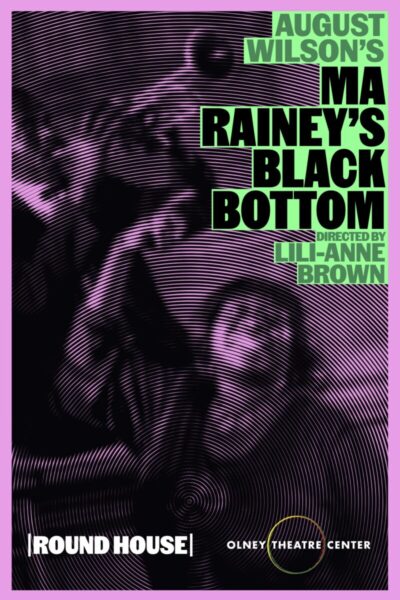
HOWARD UNIVERSITY NEWS SERVICE — August Wilson’s “Ma Rainey’s Black Bottom” explores Ma Rainey’s struggle for control over her music during a 1920s recording session, highlighting conflicts over art, money, and power dynamics between musicians and business interests. Round House Theatre’s production, running through October 18 in Bethesda, Maryland, stages this historical fight, drawing parallels to contemporary issues.

In August Wilson’s “Ma Rainey’s Black Bottom,” Ma Rainey fights to control what happens to her music once she enters the recording studio. Today, musicians are confronting a new question: What happens when artificial intelligence can profit from the identity attached to their music?
Round House Theatre’s production of “Ma Rainey’s Black Bottom,” which runs through Oct. 18 in Bethesda, Maryland, brings an older struggle over artistic control to the stage. Set during a recording session in 1920s Chicago, Wilson’s play follows Ma and her band as conflicts over art, money and control expose the imbalance between the musicians creating the work and the people conducting the business around it. That same question of who can profit from an artist’s value is now being tested in a very different setting nearly a century later.
Musicians Jason Isbell, David Lowery, Guy Forsyth and Eduardo Calle filed a class-action lawsuit on Aug. 31 against AI music company Suno. They allege that the company commercially exploits artists through an AI system capable of generating music imitating artists’ identities and styles without permission. Suno disputes the allegations.
The U.S. Copyright Office has also studied AI-generated digital replicas and recommended federal legislation to address gaps in protections against unauthorized replicas of a person’s voice or appearance. Its broader AI inquiry received more than 10,000 public comments.
For Nicole Michelle Haskins, who portrays Ma Rainey in the Round House production, the struggle over power begins with understanding Ma as more than a demanding recording star.
“She is the only advocate she has,” Haskins said. “The choices presented to her are to surrender or fight. Ma chooses to fight.”
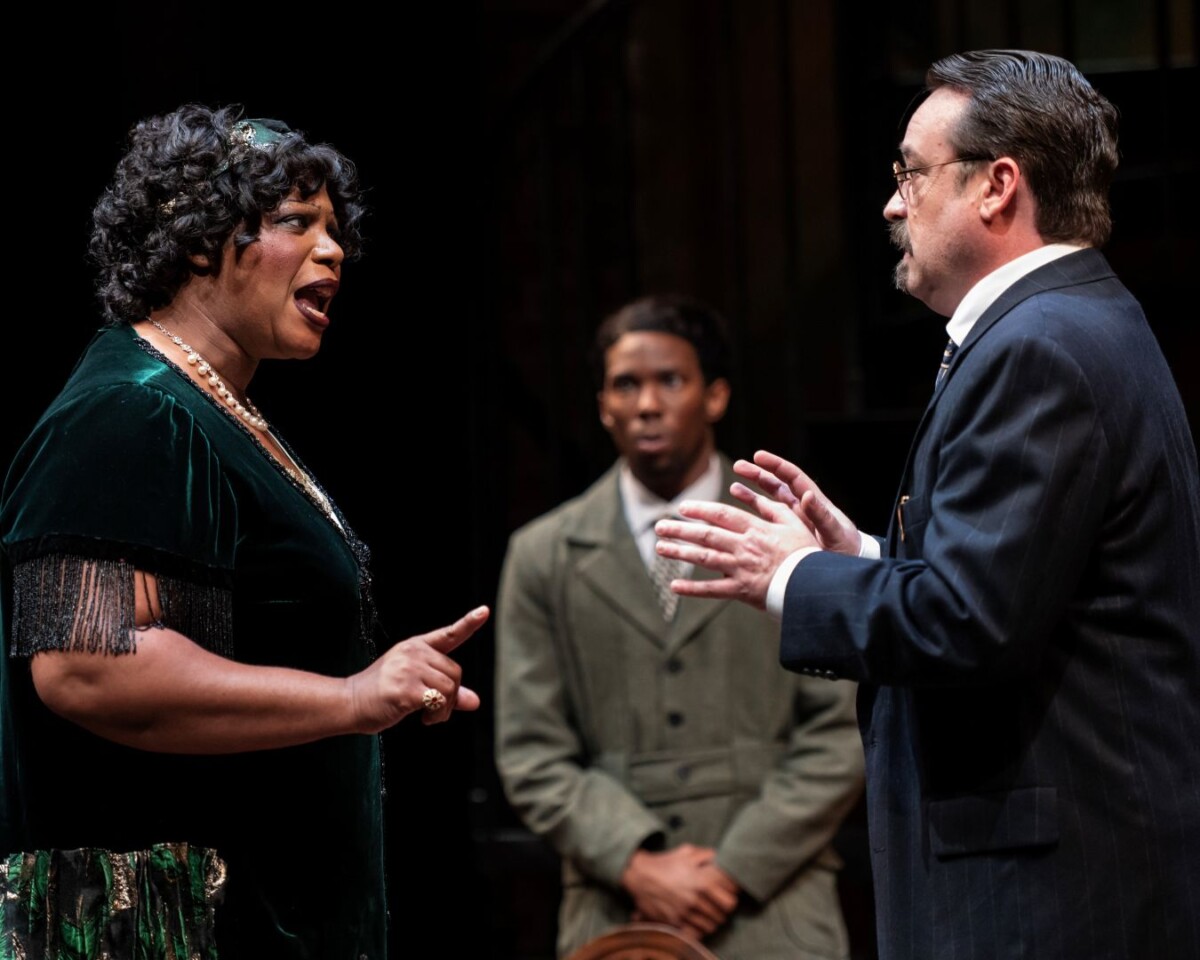
Haskins said Ma enters the recording studio knowing the value that she brings, even as the people around her repeatedly challenge her decisions. She exercises her leverage and pushes back when others attempt to dictate how the session will proceed.
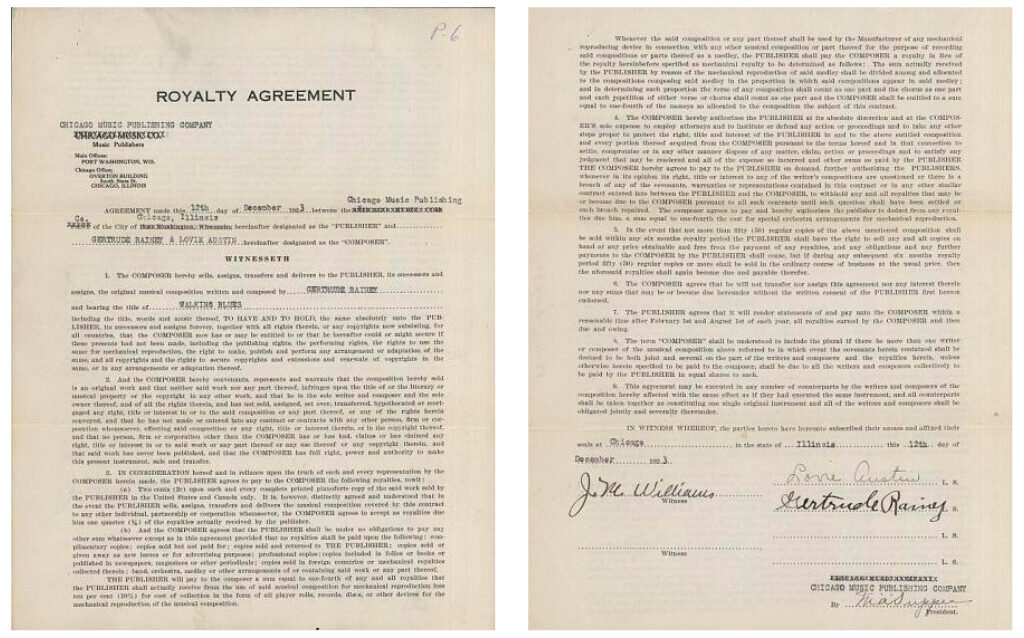
The real Gertrude “Ma” Rainey was one of the earliest Black women to record blues commercially. Between 1923 and 1928, she made more than 100 recordings for Paramount Records, according to the Smithsonian.
One surviving agreement shows how at least part of that business worked. A Dec. 12, 1923, royalty agreement for “Walking Blues,” signed by Rainey and composer Lovie Austin, provided them two cents for each printed piano copy sold in the United States and Canada. They were also entitled to one-fourth of the royalties the publisher received from mechanical reproductions, minus a 10% collection cost.
For Haskins, portraying a character negotiating those relationships does not feel entirely removed from being an artist today.
“The life that I live as an artist is not that dissimilar from the world that August Wilson has written,” Haskins said.
The technology surrounding artists, however, has changed dramatically.
The scale of AI-generated music has grown quickly. In July, streaming service Deezer said it was receiving about 90,000 fully AI-generated tracks a day, more than half of its daily uploads. Those tracks accounted for less than 3% of all streams.
The lawsuit against Suno is not primarily a traditional copyright case about whether an AI-generated song copied a particular recording. Instead, the musicians rely largely on state right-of-publicity laws, which concern the commercial use of a person’s identity.
According to the complaint, users can enter musicians’ names and use them as a retrieval key for AI-generated music drawing on characteristics associated with those artists. The plaintiffs argue that an output does not have to copy a specific song or perfectly reproduce an artist’s voice for the artist’s commercial identity to be exploited.
Suno disputes that characterization of its technology. The company has said it does not use artists’ names as training metadata and does not permit users to prompt its system for specific artists. Suno says references to artists are filtered and redirected toward descriptions of musical characteristics. Its own prompting guide, for example, encourages users to describe features such as tempo, vocals and instrumentation, using phrases like “bright pop track,” “110 BPM,” “female vocals” and a “big synth hook.”
The Suno dispute centers on more than ownership of a particular song or recording. It raises the question of whether an artist’s name, likeness and other identifying characteristics can be used commercially to generate new music without permission.
Haskins resists describing that underlying conflict as merely contemporary.
“I don’t think they feel contemporary,” Haskins said of Ma’s concerns. “I think they feel worldly.”
For Haskins, AI is one setting for a larger struggle over who has power over creative work. She said the problem of Black people being separated from control of things they created has existed far longer than the technology now raising those questions. The Library of Congress notes that early record companies sometimes used white performers to record music associated with Black artists rather than hire the Black performers themselves, while Black musicians remained rare on early commercial recordings.
“It just hasn’t stopped happening,” she said.
That interpretation shapes the way Haskins portrays Ma’s fight for control. She pointed to a brief moment in the second act when Ma’s manager attempts to steer her toward a different song. Ma refuses and proceeds with the recording she intends to make.
Haskins said the moment stands out precisely because Ma does not need a dramatic confrontation to establish who has the final say.
“She’s not demanding control. She’s not asserting control,” Haskins said. “She is simply positioning herself in correct order.”
La Tetra Metts-Owens is a reporter forHUNewsService.com. She covers Prince George’s County and theater.
Based on reporting by Howard University News Service.
Black History
IN MEMORIAM: The Mighty Sparrow, King of Calypso, Dies at Age 91 in New York
NEW YORK CARIB NEWS — Slinger Francisco, widely known as the Mighty Sparrow, died on Sunday, September 27, in New York at the age of 91. The legendary calypso artist passed peacefully after a brief illness, surrounded by loved ones. Born in Grand Roy, Grenada, in 1935, he moved to Trinidad as a child, where he developed his distinctive style.
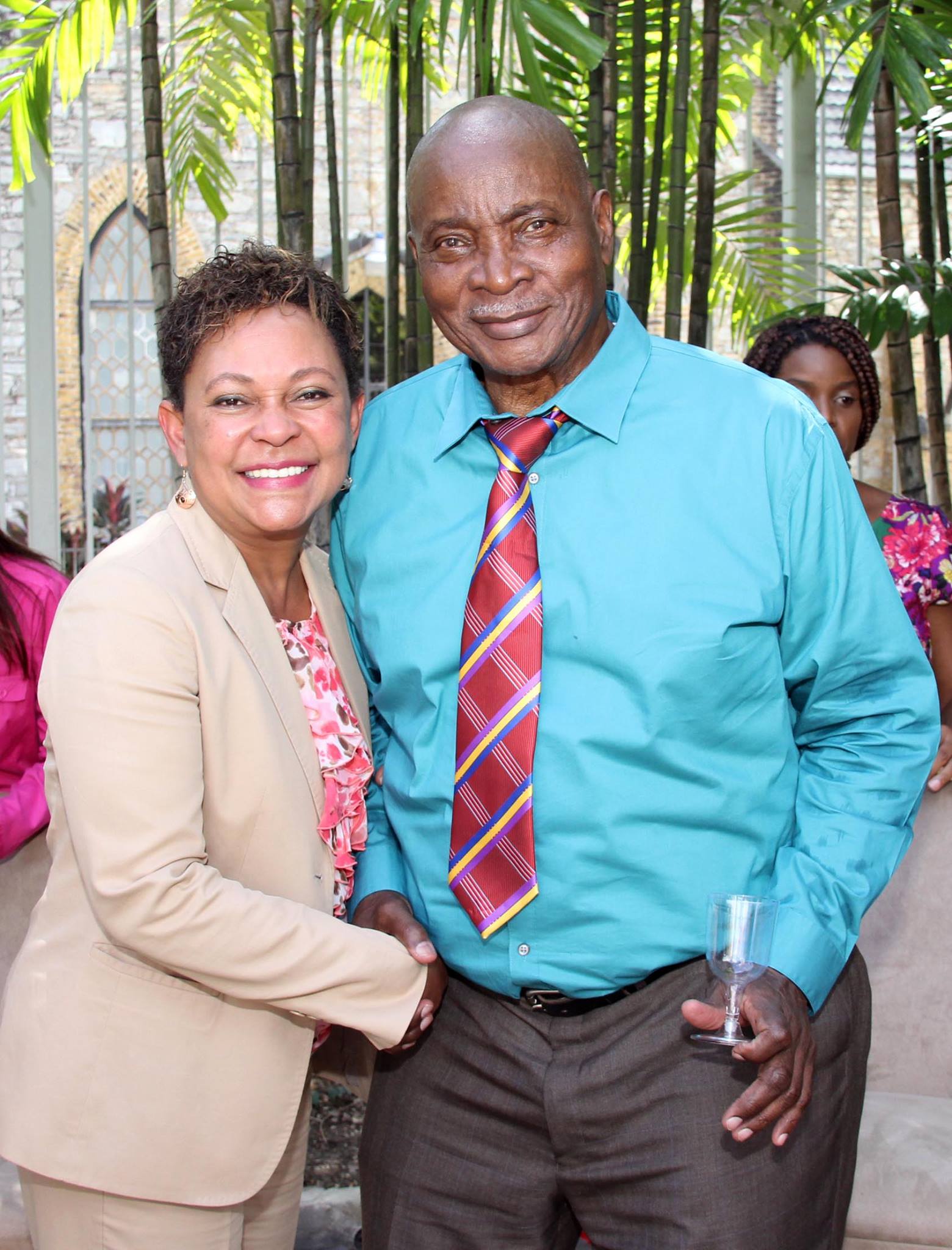
NEW YORK — For anyone raised in the Caribbean, or in a Brooklyn, Bronx, or Queens household where the radio stayed tuned to home, there was never a time without the Mighty Sparrow. His voice was simply part of the furniture of our lives: at Carnival, at weddings, at Sunday lunch, in the car on the way to JFK. On Sunday, that voice went quiet.
Slinger Francisco, known to the world as the Mighty Sparrow, died Sunday, September 27, in New York. He was 91. His family said he passed peacefully after a brief illness, with loved ones at his bedside.
He was born in Grand Roy, Grenada, in 1935, and was still a small child when his family moved to Trinidad. Port of Spain made him. Its yards, its rum shops and its calypso tents gave him his rhythm and his sharp tongue. He sang in a church choir as a boy, but the city had a louder music, and by his late teens he was performing under the name that would become a title.
The breakthrough came in 1956 with “Jean and Dinah,” his mischievous farewell to the American servicemen leaving Trinidad after the war years. The song swept Carnival, winning him both the Road March and the Calypso King crown. It introduced a young performer who could be funny and fearless at once, who could make an entire nation laugh at itself and then think hard about what it had just laughed at.
He was fearless offstage too. A year after that first crown, he refused to compete over the paltry prize money offered to calypsonians, a stand that helped push the art form toward the respect and the pay its practitioners deserved.
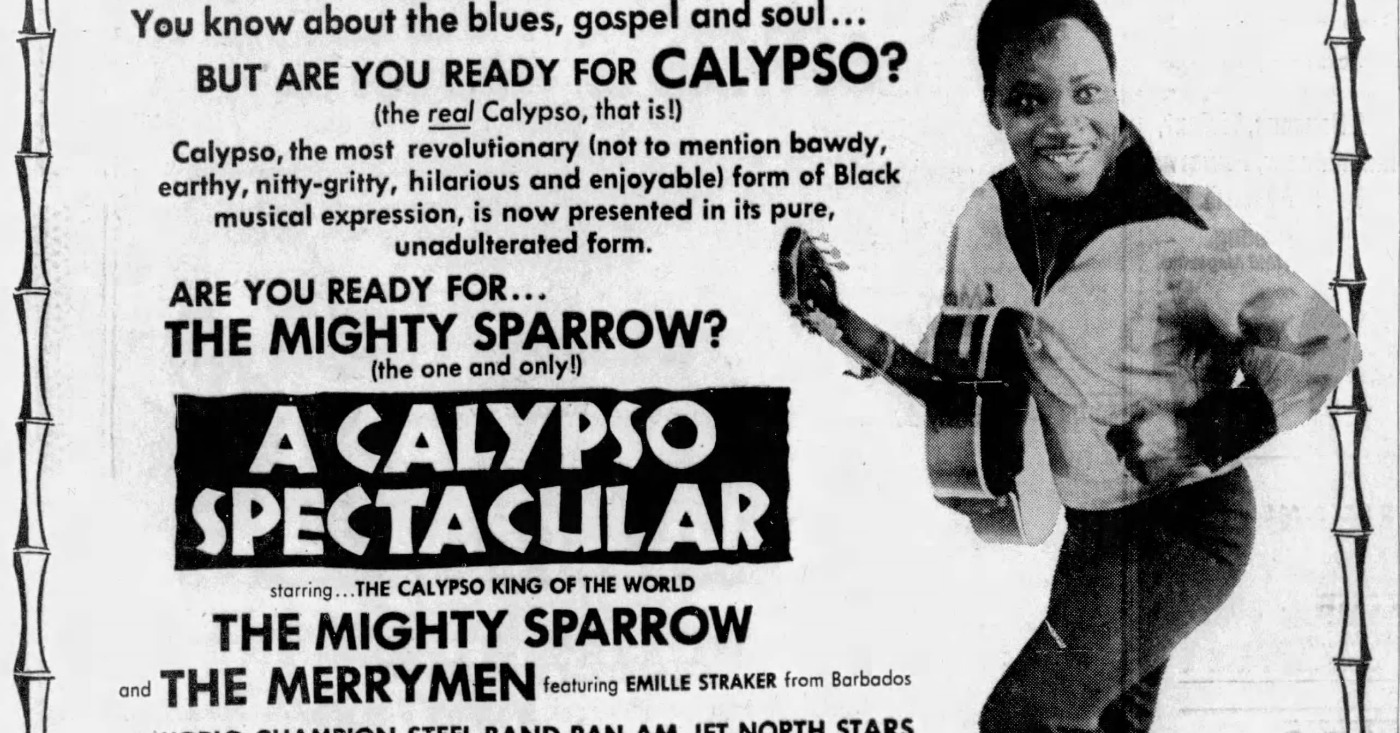
Over six decades, he recorded hundreds of songs. He could turn a love story, a boast or a bit of bedroom comedy into a hit, but he was just as formidable when the subject was power. “Dan Is the Man in the Van” took apart a colonial schooling that taught Caribbean children nonsense about themselves. “Congo Man,” “Mr. Walker,” “The Lizard” and “Both of Them” became standards sung by people who had never set foot in a calypso tent. Long before anyone printed it on a poster, audiences had already crowned him the Calypso King of the World.
For New York’s Caribbean community, Sparrow was never just a visiting star. He made this city his home for many years and played its biggest rooms, including Madison Square Garden, before crowds of immigrants who heard in his voice the islands they had left behind. A Sparrow show here was less a concert than a homecoming.
Trinidad and Tobago honored him with the Trinity Cross, then its highest national award, and generations of calypsonians and soca artists have named him as the standard they measured themselves against. Fans called him “Birdie,” and the affection in that nickname said everything.
Tributes are already pouring in from across the region and the diaspora, and they will keep coming for weeks. But perhaps the truest tribute is the simplest one: somewhere tonight, in Port of Spain, St. George’s, Flatbush and beyond, someone is putting on a Sparrow record, turning it up, and singing along.
Based on reporting by New York Carib News.


2026 Silverado High Country: Ride Quality Disappointment #shorts

Community Center: Saving Lives, Creating Safe Spaces & Boosting Local Economy! #shorts

From The Desk of The Editor 10/28/26
REBROADCAST! HE SAID, HE SAID, HE SAID: Author, Historian, Educator, Brad Pazant — FRI 10.30.26 7PM

From FREE Coaching to PAID Impact: My Community Mission #shorts

NFN Live Jumua Khatib Ismael Saleem at 2026 CDLC

Mike Tate on Building North Commons | Blacklight on Sports

Test the Buick Enclave’s Highway Acceleration Before You Buy #shorts

High Country Silverado: Upscale Crew Cab Pickup Review #shorts

Coach of the Week – Lashunta Mosley

OP-ED: Haiti TPS: Have We Lost Sense of Humanity?

All Skinfolk Ain’t Kinfolk

Latinas Deserve Equal Pay. Unions Help Make It Happen.

A $2.1 Trillion Wellness Industry Never Built a Daily Practice for Black Children. So This Atlanta Family Did.

Zakiya Jendayi Arrested, Locked Out of Home by Sheriff’s Deputies

Oakland Awarded More than $14 Million in State Funding

OP-ED: Washington Has a Chance to Save Veterans’ Lives

Practitioners of African Traditional Spirituality Offer Ancestral Reverence Ritual Oct. 31

Montclair Brewery: Brewing Culture, Community, History

Tamiko Armstead | 2026 Lifetime Achiever in Education
2026 Silverado High Country: Ride Quality Disappointment #shorts
Community Center: Saving Lives, Creating Safe Spaces & Boosting Local Economy! #shorts
From The Desk of The Editor 10/28/26
From FREE Coaching to PAID Impact: My Community Mission #shorts
NFN Live Jumua Khatib Ismael Saleem at 2026 CDLC
Mike Tate on Building North Commons | Blacklight on Sports
Test the Buick Enclave’s Highway Acceleration Before You Buy #shorts
High Country Silverado: Upscale Crew Cab Pickup Review #shorts
Coach of the Week – Lashunta Mosley

Jamal’s Take: Cowboys Crush Eagles 38–21 as Javonte Williams Goes OFF
-

 Featured1 week ago
BLACK MEN VOTE: Mobilizing 100,000 Black Men Ahead of the Midterms 📱
-

 Art3 days ago
Capturing Black Life’s Beauty
-
 Black Press5 days ago
Secretary of State Shirley Weber Pushes Back Against DOJ Demands Over California Voter Rolls
-

 Black Press1 week ago
OP-ED: For Us It’s Feel-a-Nomics
-

 Art1 week ago
OP-ED: Is Creativity a Superpower in Early Education?
-
 Black History5 days ago
Oakland Honors 60 Years of the Black Panther Party at the All Power to the People Gala
