
National
Oklahoma Incident Spotlights Race Problems at Fraternities

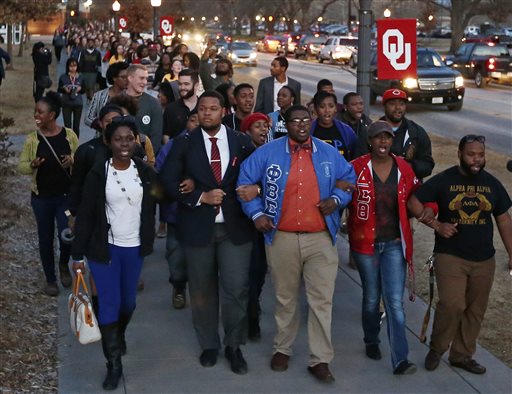
In this March 10, 2015, photo, University of Oklahoma students march to the now closed University of Oklahoma’s Sigma Alpha Epsilon fraternity house during a rally in reaction to an incident in which members of a fraternity were caught on video chanting a racial slur, in Norman, Okla. (AP Photo/Sue Ogrocki)
Kimberly Hefling and Jesse J. Holland, ASSOCIATED PRESS
WASHINGTON (AP) — Their reputations sullied by race-tainted incidents, many colleges are clamping down on campus fraternities. Despite some swift and tough actions by schools — and in some cases, public humiliation — episodes such as the racist chants by members of the Sigma Alpha Epsilon chapter at the University of Oklahoma keep surfacing.
In recent years, numerous other fraternities have been suspended and students expelled from school for racially tinged parties or behavior, such as hanging nooses or shouting racial profanities.
“All too often the outcry has been, ‘Look at those bad apples we need to root out,'” said Nolan L. Cabrera, a professor in the Center for the Study of Higher Education at the University of Arizona. “When in fact the conversation we need to have is, ‘Why is this occurring on such a widespread level throughout the country?'”
Many incidents come to light after the students themselves post pictures or videos online, drawing public attention; others are reported by onlookers or whistleblowers.
Either way, “it’s hard to ignore a current on many, many campuses of behaviors that are just offensive and disgusting at the far end and maybe just lack common sense at the other end,” said Kevin Kruger, president of NASPA: Student Affairs Administrators in Higher Education, a professional organization.
For example, Sigma Alpha Epsilon suspended all activity at Clemson University in South Carolina in December after white students dressed as gang members at a “Cripmas” party. That same month Phi Delta Theta halted its chapter at the University of Pennsylvania for issuing a holiday card with members posing with what it called a Beyonce sex doll.
Other examples:
—Arizona State University banned Tau Kappa Epsilon last year after its Martin Luther King Jr. Day party had guests flashing gang signs and holding watermelon-shaped cups.
—Kappa Sigma suspended its Duke University chapter in 2013 after students held an international-themed party that mocked Asians.
—Sigma Phi Epsilon shut its doors last year at the University of Mississippi after three of its members draped a Confederate banner and placed a noose around the statue of the school’s first black student.
—Lehigh University suspended Sigma Chi in April 2014 and expelled members after racial slurs were spray-painted and eggs thrown at a multicultural residence hall.
Sororities have had similar problems. In 2014, Chi Omega closed its Penn State chapter in connection with a photo appearing on the Internet showing members wearing sombreros and fake mustaches and holding offensive signs — one read, “Will mow lawn for weed + beer.” The University of Alabama announced in fall 2013 that more than 20 minority women were being offered membership in historically all-white sororities after accusations surfaced of black women being denied membership.
At Oklahoma, the university quickly expelled two students and banned Sigma Alpha Epsilon last week after fraternity members were filmed engaging in a racist chant that referenced lynching and indicated that black students never would be admitted to that university’s chapter. Two students identified in the video have apologized publicly.
The national fraternity condemned the incident and started investigating racism allegations at universities in Louisiana and Texas after hearing that young men at two schools sang or knew of the same racist chant.
But the damage was done. The school’s president, former Sen. David Boren, D-Okla., said the fraternity “won’t be back — at least not as long as I’m president of the university.”
Fraternities, both historically white and those mostly made up of minorities, long have been a fixture of university life. Defenders point to the system’s charitable works and social and professional benefits for members.
Research by Nella Van Dyke, a professor at University of California, Merced, found that ethnic and racially biased hate crimes are more likely to be reported at predominantly white campuses and those with a large fraternity population. She said the problems are not everywhere, but they do exist.
Beyond racism, fraternities in recent years had to confront issues of sexual assault, binge drinking and hazing among their members. “I think many fraternities have a culture that makes them prone to conflict and kind of bigoted interactions, whether it’s against women or against minorities,” Van Dyke said.
Matthew Hughey, a sociology professor at the University of Connecticut who studies racial identity, estimated that about 3 percent or 4 percent of the members of the majority-white fraternities and sororities are nonwhite. “We shouldn’t be surprised when unequal and segregated organizations say racist things. Of course they do,” Hughey said.
The national fraternities are working to eliminate this kind of behavior and to train members to speak up instead of being pressured to conform, said Peter Smithhisler, president and chief executive officer of the North-American Interfraternity Conference.
“It’s about the constant re-education of our membership,” Smithhisler said. “And we have to be diligent in addressing our community members, sharing with them our expectations, teaching them about our values and acceptable behaviors and holding individuals accountable when they stray from that.”
Fraternities have about 372,000 members among 7.7 million male undergraduate college students, according to the North-American Interfraternity Conference. They also have outsized influence on their campuses, with fraternities claiming major college donors, state lawmakers, governors, members of Congress and presidents as members. Nineteen presidents have held undergraduate or honorary fraternity membership, the conference said.
Boren’s actions may become the standard among university officials, said West Virginia University President E. Gordon Gee, who froze fraternities’ activities last fall after the death of an 18-year-old student at a fraternity house.
“We can’t blame all the ills in society, or the ills in universities, on fraternities and sororities but we can have a high level of expectation because very often these are students who are leaders on our campuses,” Gee said.
Some colleges such as Bowdoin in Maine have done away with fraternities all together, while others have forced changes. In September, Wesleyan University in Connecticut announced a requirement that all residential fraternities become coed within three years. The announcement came after several highly publicized issues at fraternity houses, including allegations of sexual assault.
Others say it’s unfair to pin all problems on fraternities that really need to be addressed within higher education as a whole. “It is really a mistake to make a blanket judgment,” said Michael Poliakoff, the vice president of policy at the American Council of Trustees and Alumni.
Education Secretary Arne Duncan told MSNBC that he thinks “the vast majority of fraternities and sororities and their members conduct themselves very well and contribute to their university communities, are leaders on campus, but where we have places where racism is part of the culture, we have to challenge that.”
___
Kimberly Hefling covers education for The Associated Press. Jesse J. Holland covers race and ethnicity for the AP. Follow them on Twitter at https://www.twitter.com/khefling and https://www.twitter.com/jessejholland.
Copyright 2015 The Associated Press. All rights reserved. This material may not be published, broadcast, rewritten or redistributed.
###









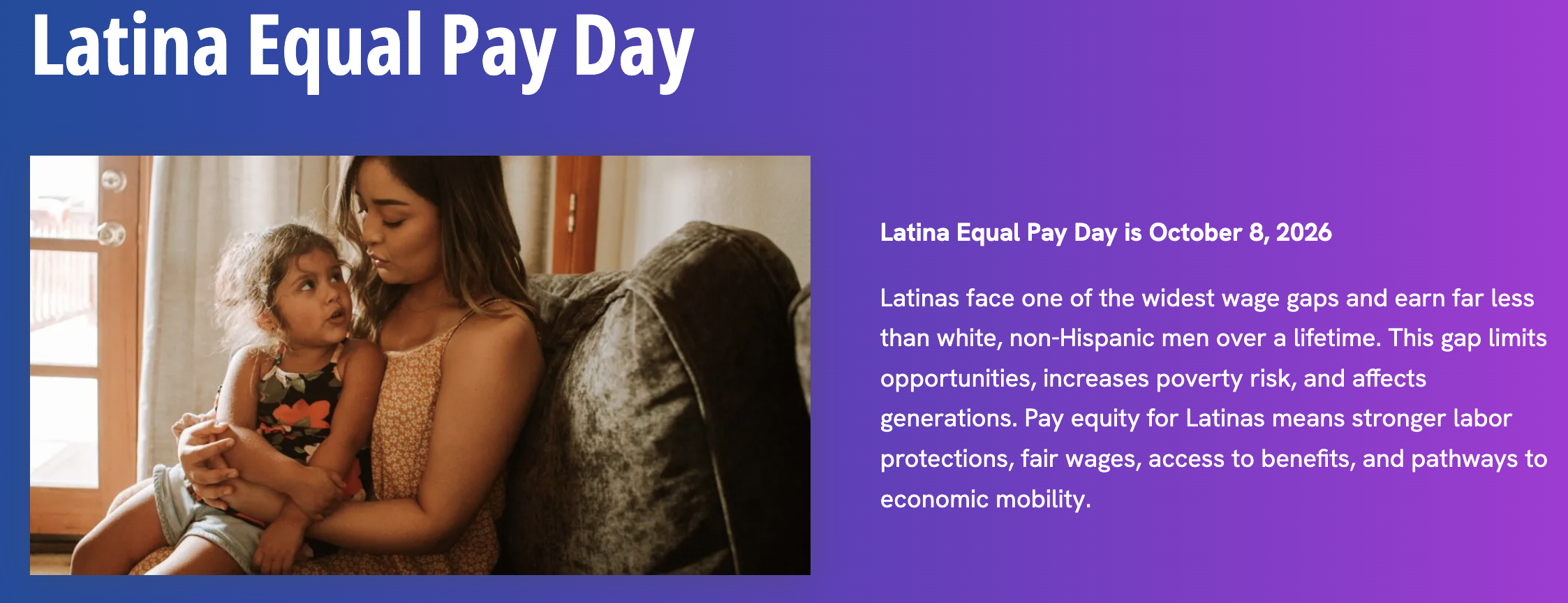
By Fred Redmond
Everywhere you look, everything costs too much. Families are stretching every paycheck to cover soaring grocery bills. Too many are struggling to make rent. Child care, health care and gas bills continue to strain household budgets. Working people are doing everything right, yet too many are still falling behind.
For Latina workers, this crisis is compounded by a persistent and unjust pay gap. That’s why we observe Latina Equal Pay Day on Oct. 8 this year. It brings attention to the fact that among full-time, year-round workers, Latinas earned just 60 cents in 2025 for every dollar earned by white men. That wage gap isn’t just a statistic—it means smaller paychecks, fewer opportunities to build wealth, less financial security and harder choices about how to provide for their families.
Latinas deserve equal pay for equal work. Full stop. Anything less hurts working families and weakens our economy. A union contract can help level the playing field.
The evidence is clear. Hispanic workers overall receive a large wage boost from union membership, with a 16.4% wage premium compared with nonunion Latino workers. Latinas in a union earn about $15,288 more per year than Latinas who are not in a union. Most importantly, union contracts also help narrow the gender pay gap: Women working full time in union jobs earn 86.2 cents for every dollar earned by men who are union members—a significantly smaller gap than among nonunion workers.
Negotiated contracts replace arbitrary decisions with clear wage scales, transparent pay systems and enforceable workplace standards. Instead of leaving pay to bias or favoritism, union contracts establish fair standards that workers can enforce.
A report from the Economic Policy Institute finds that strengthening workers’ rights to organize and increasing union density would significantly reduce racial wage gaps while strengthening our economy and our democracy. Communities with higher union membership invest more in public education, are more likely to expand access to health care and provide stronger unemployment protections when people lose their jobs.
Our labor movement has always understood that civil rights and workers’ rights are inseparable. Dr. Martin Luther King Jr. recognized that truth when he stood with striking sanitation workers in Memphis, Tennessee. Today, we carry that legacy forward by fighting for workplaces where every worker is respected, protected and paid fairly.
Latina Equal Pay Day should not simply remind us how far we still have to go. It should remind us that we already know how to make progress. Progress happens when workers organize. It happens when we bargain together. And it happens when we stand in solidarity with one another. That’s why we must elect leaders who will fight to protect workers’ rights, strengthen unions and defend our democracy.
We must recommit ourselves to building an economy where every worker is valued, every paycheck reflects the dignity of work and every Latina receives the equal pay she has long deserved. Because when Latinas are paid fairly, every family can afford to build a better future.
Fred Redmond, the highest-ranking African American labor official in history, is the secretary-treasurer of the AFL-CIO, the nation’s largest labor federation representing 65 unions and nearly 15 million workers.
Art
Houston’s ‘call Me Mother’ Exhibit Opens Today, Spotlighting Black Maternal Health
AFRICAN-AMERICAN NEWS AND ISSUES – DALLAS — The Health Museum in Houston today opens “The Call Me Mother Experience,” an exhibition spotlighting Black maternal health through art and personal storytelling. Curated by Houston’s first Black poet laureate, Deborah D.E.E.P. Mouton, the project originated from her own poem written during a miscarriage.
HOUSTON — A new exhibition opening Sunday, Oct. 4, at The Health Museum is bringing Black maternal health into public view through art and personal storytelling.
The Call Me Mother Experience will be on display through Feb. 28, 2027. The museum lists a preview reception today from 3 to 5 p.m. at 1515 Hermann Drive, with tickets priced at $5 for members and $15 for nonmembers.
A personal story becomes a community conversation
According to the museum, founder, curator and lead artist Deborah D.E.E.P. Mouton developed the project from a poem she wrote during a miscarriage. The installation combines films, recorded interviews, visual artwork and contributions created with community members.
Mouton, Houston’s first Black poet laureate, discussed the exhibition and her connection to its subject in an Oct. 1 appearance on KPRC’s Houston Life. The station described the project as addressing the unequal burden of pregnancy-related illness and death faced by Black women in Harris County.
An announcement distributed by the Call Me Mother Experience says the initiative will also reach community locations and faith-based organizations across Greater Houston. Those additional settings are intended to extend the conversation beyond a museum visit.
What visitors can expect
The museum says reception guests can explore the exhibit, hear the curator and meet participating artists. Reception admission includes general museum entry; refreshments are available while supplies last.
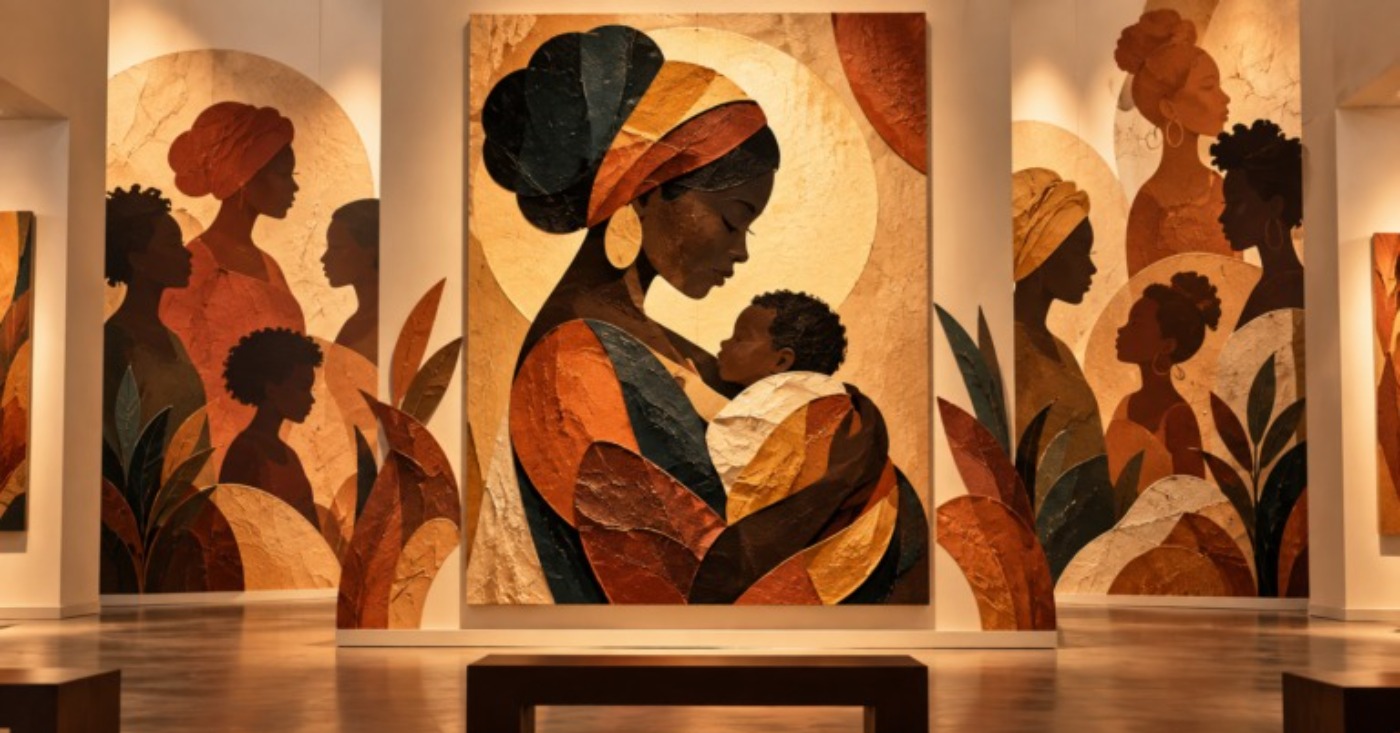
The featured image accompanying this article is an original illustrative concept, not a photograph of the exhibition or its artwork.
Sources and visitor information:The Health Museum exhibition listing; preview reception details and tickets; KPRC Houston Life; organizer announcement.
The post Houston’s ‘Call Me Mother’ Exhibit Opens Today, Spotlighting Black Maternal Health appeared first on African American News and Issues.
Based on reporting by African-American News and Issues – Dallas.
Black Press
Should You Have to Pay to Hear the Gospel?
ST. LOUIS AMERICAN — Pastor Philip Anthony Mitchell of Atlanta’s 2819 CHURCH and Tim Timberlake of Celebration Church in Jacksonville, Florida, are at the center of a social media debate. The controversy stems from ticket prices for their “Street Preachers” podcast tour, with general admission tickets reportedly costing around $60 and VIP options up to $200.

For generations, the Black church has passed the offering plate to keep the lights on, pay the preacher, help the poor and carry the Gospel beyond its walls. But what happens when the preacher leaves the sanctuary, takes a popular Christian podcast on tour — and charges admission?
That question has placed Pastor Philip Anthony Mitchell, founder and lead pastor of Atlanta’s fast-growing 2819 CHURCH, at the center of a heated social media debate.
Mitchell and Tim Timberlake, senior pastor of Celebration Church in Jacksonville, Florida, host “Street Preachers,” which its official website describes as a “raw, unfiltered podcast” committed to spreading the Gospel.
‘A brood of vipers’
The controversy began after ticket prices for the podcast’s 2026 tour circulated online. General admission tickets reportedly cost about $60 before fees, with premium options, including a VIP meet-and-greet package, priced at $200. Critics questioned whether ministers should charge people to hear the Gospel.
Others defended the pastors, arguing that Christian events require venues, transportation, security, equipment and staff.
Mitchell answered critics from the pulpit last month, calling them “a brood of vipers.” He said the podcast is a separate, personal project and that neither his church nor Timberlake’s is bankrolling it.
“Now we have decided to go on a tour to take the gospel to cities, and because that’s not funded by 2819, and it’s not funded by Celebration Church, Tim and I gotta do that with our own pockets,” Mitchell said. “It’s why there is tickets. We have to pay for venues and security and productions and staff from our own pockets.”
Mitchell called some critics “ignorant” and said they did not know that a child was healed through faith during one of the events.
“And you want to complain about a 60 ticket?” he said. “So hate on!”
Worship service vs. media event
Mitchell maintains that “Street Preachers” is an independently produced podcast tour, not a worship service, and that ticket revenue helps cover production costs.
Yet the presence of pastors, Scripture and Gospel language makes the distinction less clear to some believers.
The official tour website lists all eight 2026 stops as sold out. Promotional material announcing additional dates promised, “Better ticket options. Same Gospel. Same move of God.”
Corporate prayer gathering
The language gets to the heart of the dispute. Some Christians argue that no one should be kept outside because they cannot afford a ticket. Others say the Gospel remains free even when people pay for the venue and experience surrounding its presentation.
The paid podcast tour, however, is not Mitchell’s only large-scale gathering. On Oct. 10, 2819 CHURCH will host “ACCESS — That Powerful Hour of Prayer” at AT&T Stadium in Arlington, Texas. Admission is free.
2819 CHURCH has said 80,000 free tickets were claimed before registration reopened.
The contrast raises another question: What makes one Gospel-centered event a ministry supported by donors and another a production supported by customers?
Unfiltered preaching, youth appeal
Mitchell’s congregation, composed largely of young Black adults, grew from fewer than 200 weekly worshippers in 2023 to about 6,000, according to the church. Some worshippers arrive before sunrise to secure a place inside.
His appeal rests partly in an intense, vulnerable and raw preaching style.
“I’m preaching without watering that down, without filtering out things that we think might be too controversial,” Mitchell told The Associated Press.
That visibility has also brought scrutiny of his theology, associations, travel, security and the businesses surrounding his ministry.
But the controversy reaches beyond Mitchell and Timberlake. Christian music concerts charge admission. Seminaries charge tuition. Religious publishers sell Bibles, books and devotionals. Churches pay musicians, media teams and guest preachers. Money becomes particularly uncomfortable, however, when an event is presented simultaneously as ministry and entertainment.
Ministry vs. entertainment
Supporters should not assume every dollar collected becomes personal profit. Critics, however, question whether lower-cost seats, sponsored tickets or free admission for people who cannot pay should be part of a Gospel-centered event.
The Black church always has required resources for ministry. It also has carried a sacred responsibility to make room for people with little or nothing to give.
The sold-out “Street Preachers” tour shows people are willing to pay to attend. The free ACCESS gathering offers a different model. The challenge is preserving that open door as Christian ministry increasingly adopts the machinery — and economics — of popular entertainment.
The post Should you have to pay to hear the Gospel? appeared first on St. Louis American.
Based on reporting by St. Louis American.
Black Press
NCCU Ramping up for the 89th Ultimate Homecoming Experience
NORTH CAROLINA CENTRAL UNIVERSITY – CAMPUS ECHO — N.C. Central University is preparing for its 89th Ultimate Homecoming Experience, a week-long celebration. Thousands of students, family, friends, and alumni are expected to gather on campus for festivities including the Homecoming Countdown, parade, Miss and Mister NCCU Coronation, concerts, and the football game.
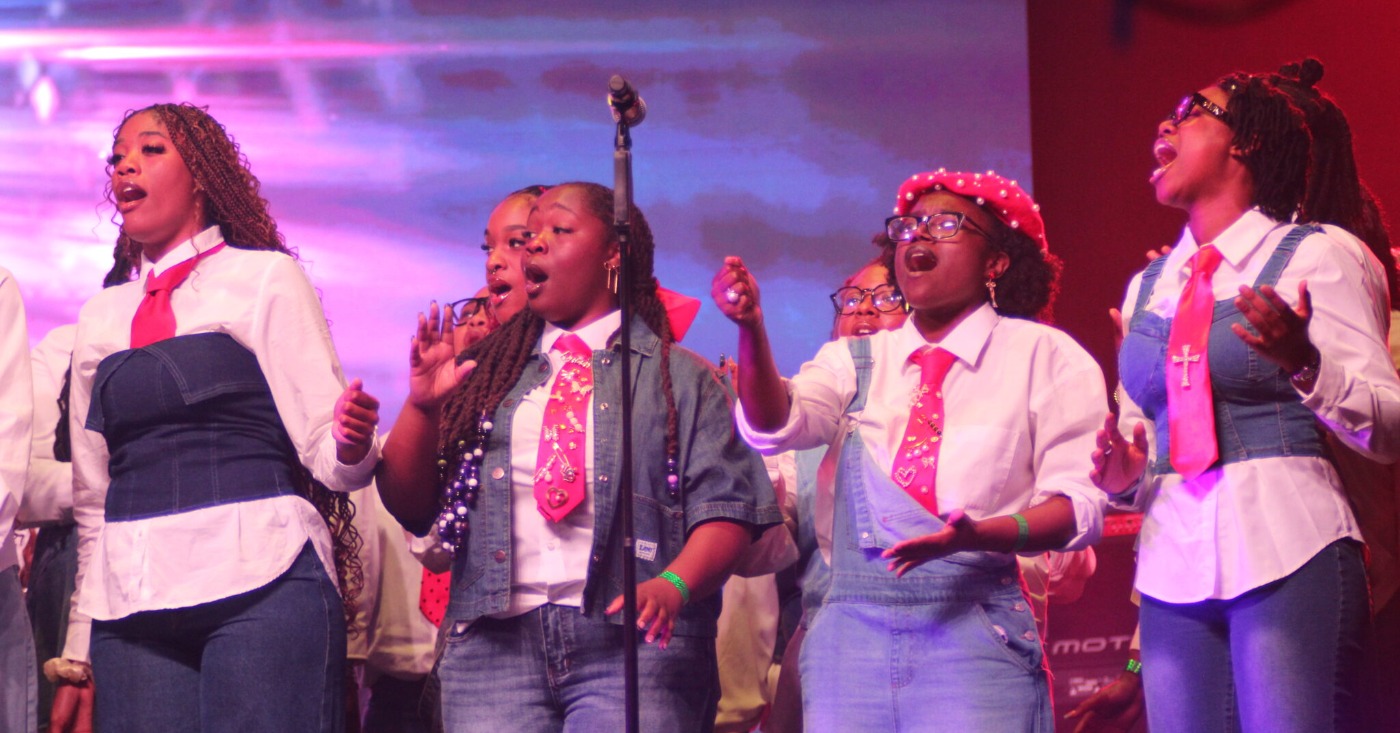
This Saturday N.C. Central University will kick off its 89th Ultimate Homecoming Experience — a week-long celebration bringing thousands of students, family, friends and alumni to campus.
This year’s festivities include the Homecoming Countdown, parade, Miss and Mister NCCU Coronation, concerts and the football game.
The number of visitors to the football game on Saturday, Oct. 10 is expected to reach at least 10,000 — O’Kelly Riddick Stadium’s capacity, with NCCU’s recent enrollment increase of more than 10,000 students.
The Eagles will face William & Mary after playing against the Campbell University’s Fighting Camels on Oct 3.
Students are already expressing excitement for the upcoming festivities.
“I’m excited for homecoming because I can meet alumni and go outside and party with my fellow eagles,” Digital Filmmaking junior Rhese Gardner said. “I’m also really looking forward to the Greek Bowl because there’s a lot going on.”
He added that even though he’s disappointed this semester’s Oil Spill was canceled, he’s still excited for the other events like the parade and concerts.
Here is a list of the week’s on-campus events:
- Oct. 3 – Homecoming Countdown
- Oct. 4 – Gospel Concert
- Oct. 5 – Coronation of Miss and Mister NCCU
- Oct. 6 – 10:40 Break
- Oct. 6 – Homecoming Experience Showcase
- Oct. 7 – Fried Chicken Wednesday
- Oct. 7 – Festival Block Party
- Oct. 7 – Late Night Breakfast
- Oct. 8 – Back to the Nest Young Alumni Mixer
- Oct. 8 – Old School Greek Stroll Off
- Oct. 8 – Hip-Hop Concert
- Oct. 9 – Step Show
- Oct. 10 – Football Game
The post NCCU ramping up for the 89th Ultimate Homecoming Experience first appeared on Campus Echo Online.
Based on reporting by North Carolina Central University – Campus Echo.
Black Press
Botham Jean’s Killer Granted Parole 7 Years After His Murder
MICHIGAN CHRONICLE — Former Dallas police officer Amber Guyger has been granted parole, seven years after her conviction for murdering Botham Jean inside his Dallas apartment. The Texas Board of Pardons and Paroles approved her release on October 1, seven years to the day after her murder conviction. Guyger was convicted in 2019 and sentenced to 10 years in prison for Jean’s 2018 death.
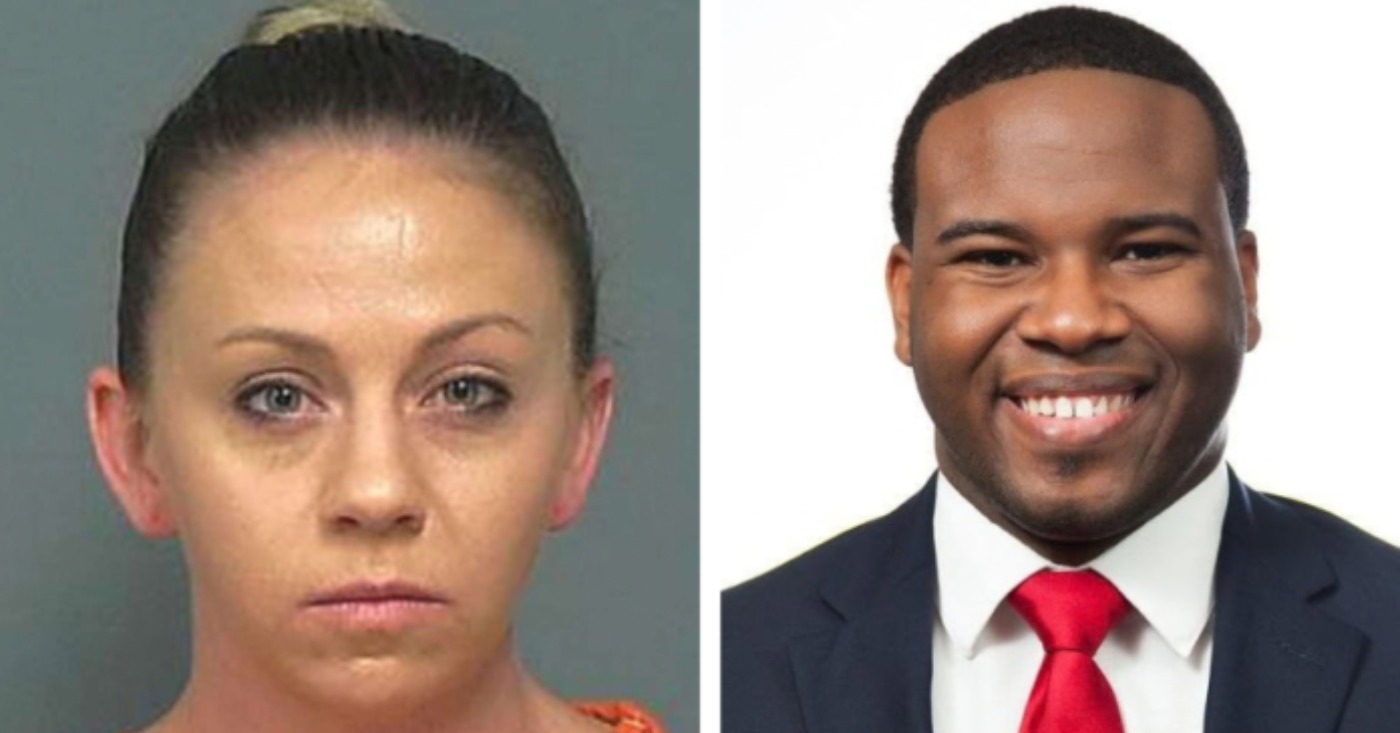
Former Dallas police officerAmber Guyger has been granted parole seven years after she was convicted of murdering her neighbor,Botham Jean, inside his Dallas apartment.
The Texas Board of Pardons and Paroles approved Guyger’s release Thursday (October 1), seven years to the day after Guyger was convicted of Jean’s murder, according to NBC News.
In 2019, a jury convicted Guyger of murder and she was sentenced to 10 years in prison for Jean’s 2018 death. Her conviction and 10-year sentence were upheld on appeal in 2022.
Geyger’s first parole request was denied in 2024, NBC Dallas-Fort Worth reported.
The Dallas Police Department fired her after the shooting. During her trial, Guyger testified that she mistakenly entered Jean’s apartment after returning home from work, believing it was her own apartment one floor below.
She said she saw Jean inside and fired her weapon because she believed he was an intruder, according to NBC News.
Jean was a 26-year-old Black man from St. Lucia who worked as an accountant. He was inside his home eating ice cream when Guyger entered and shot him, NBC DFW reported.
The parole board cited Guyger’s prison record in approving her release. According to NBC DFW, officials said she did not have a documented pattern of violent or assaultive arrests or convictions, maintained a satisfactory adjustment while incarcerated, and completed programs intended to help her obtain and maintain employment.
Jean’s family opposed the parole decision and had asked that Guyger serve her full 10-year sentence, according to NBC DFW.
Civil rights attorney Lee Merritt, who represents the family, told NBC DFW that the decision was deeply disappointing.
“They stood up again and again to ask that the full sentence be served,” Merritt said.
The Dallas Police Department told NBC DFW that the parole decision was outside its authority and that the department had no role in determining whether Guyger would be released. The department said its thoughts remained with Jean’s family and others affected by his death.
Guyger’s conviction and 10-year sentence were upheld on appeal in 2022.
A civil jury ordered Guyger to pay Jean’s family $98.6 million in damages in 2024, according to NBC DFW.
Guyger’s release date has not been announced. NBC News reported that the Texas Department of Criminal Justice will determine when she is released.
The Black Information Network is your source for Black News! Get the latest news 24/7 on The Black Information Network. Listen now on the iHeartRadio app or click HEREto tune in live.
Based on reporting by Michigan Chronicle.
Black History
Morehouse School of Medicine Fall Convocation Has Strong Ties to Nashville
TENNESSEE TRIBUNE — Morehouse School of Medicine recently held its 42nd Fall Convocation and White Coat and Pinning Ceremony, which highlighted strong connections to Nashville. Dr. Valerie Montgomery Rice, in her 12th year as president and CEO, leads the institution, which welcomed 355 new students.
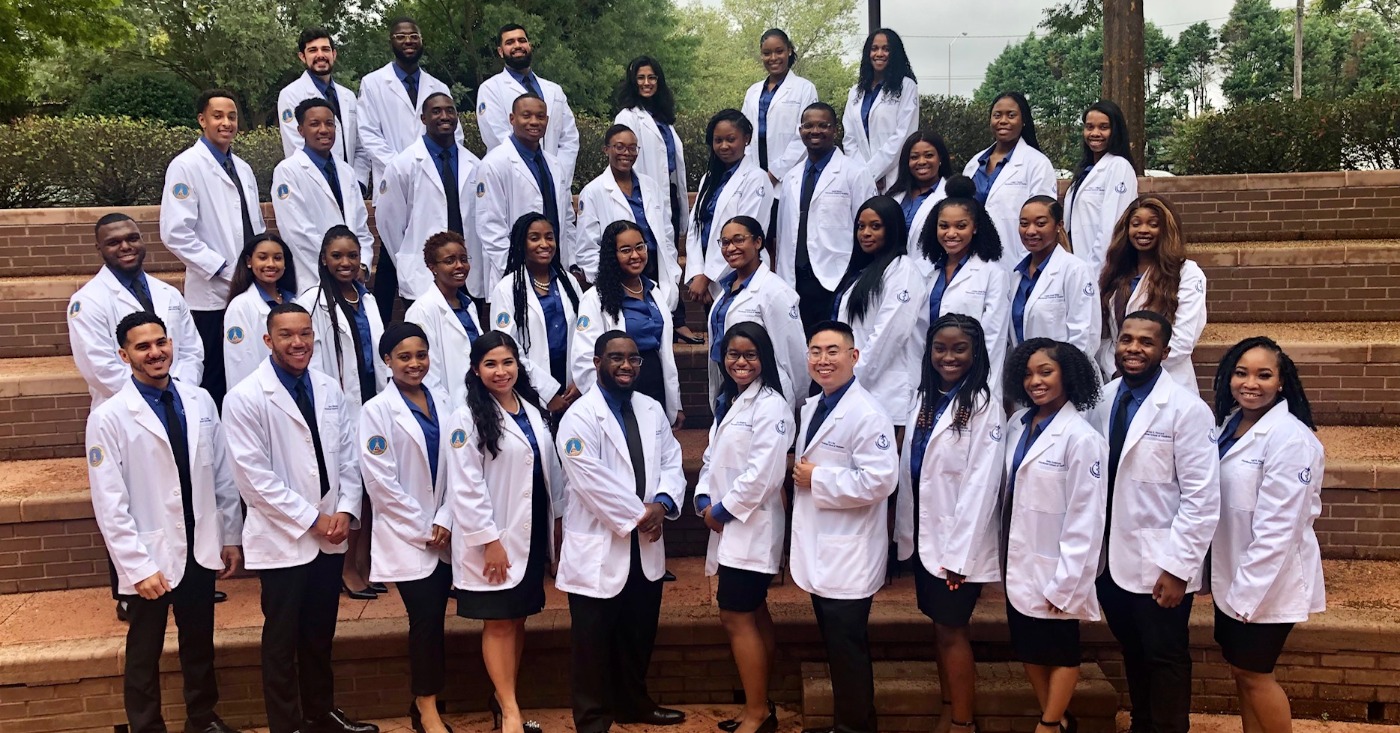
Morehouse School of Medicine held its 42nd Fall Convocation and White Coat and Pinning Ceremony on September 18, and it featured strong ties to Nashville. Dr. Valerie Montgomery Rice is completing her 12th year as president and CEO of Morehouse School of Medicine (MSM). The school boasts 355 students seeking degrees and certificates in the medical field.
“This entering class represents the future of medicine, science, public health and health care leadership,” said Valerie Montgomery Rice, MD, and FACOG. “As these students begin their journeys at Morehouse School of Medicine, they join a community grounded in excellence, service and our shared commitment to advancing health equity. We look forward to supporting their development as leaders who will transform the health and well-being of the communities they serve.”
Infectious diseases physician and scientist Dr. Barney S. Graham, MD, and PhD, served as the keynote speaker. He serves as the director of the David Satcher Global Health Equity Institute, professor of Medicine and Microbiology, Biochemistry and Immunology at Morehouse School of Medicine. He is an inventor of vaccines and monoclonal antibodies approved for human use to prevent or treat RSV, COVID-19 and Ebola. He joined MSM in 2022. He served in various positions at Vanderbilt University for 21 years.
Dr. Graham told the audience to “Embrace the Unseen” and focused on three points: Do the Best You can with what’s in front of you, Do what makes you come alive and Do the right thing even when no one is looking. He added, “Anything you do to improve mental and physical wellness and promote disease prevention will reduce health disparity by reducing the resources needed for treatment.”
His remarks commanded a roaring applause from the audience, which included his wife, Dr. Cynthia Turner Graham, and the former First Lady of Tennessee State University, Mrs. Edwina Hefner, a close friend to the family.
Based on reporting by Tennessee Tribune.


Style Takes Center Stage at the 39th Annual Salute to Excellence in Education

Car Review: Seat Comfort & Dashboard Glare Issues #shorts

134 Black-Owned Banks Founded: See How Many Remain Today! #shorts

Dr. Earleen Patterson’s 30 Year Legacy of Education and Service at SIUE

Latinas Deserve Equal Pay. Unions Help Make It Happen.

Defender ONE-on-ONE: U.S. Rep. Christian Menefee

Unlock Your Best Auto Loan: Ask These Questions! #shorts

News Observer Weekly — October 7, 2026 | Top 5 Stories of the Week

Atlas Family Comfort: Worth the Extra Cash? #shorts

Antron Brown Takes His Impact Beyond the Racetrack

Latest Massacre in Haiti Reveals Cruelty U.S. Deportations

The Youngest American Killed in the Vietnam War

Booked and Unbound: The Legacy of Black Women’s Literary Circles

Passing for White, Fighting for Black America: The Courage of Walter White

OPINION: Nolan Wells’ Death One of Several Signifying Racial Terror Lives on in U.S. South

Prostate Cancer is Twice as Likely to Kill Black Men. Talking to Your Doctor Could Help Save Your Life

OP-ED: Haiti TPS: Have We Lost Sense of Humanity?

OP-ED: If AI Is the New Language of Power, Then NAN Wants Black Communities Fluent

OP-ED: How Does Your State Rank for Pre-K?

Henry O. Flipper: A Trailblazer at West Point and Beyond
Style Takes Center Stage at the 39th Annual Salute to Excellence in Education
Car Review: Seat Comfort & Dashboard Glare Issues #shorts
134 Black-Owned Banks Founded: See How Many Remain Today! #shorts
Dr. Earleen Patterson’s 30 Year Legacy of Education and Service at SIUE
Defender ONE-on-ONE: U.S. Rep. Christian Menefee
Unlock Your Best Auto Loan: Ask These Questions! #shorts
News Observer Weekly — October 7, 2026 | Top 5 Stories of the Week
Atlas Family Comfort: Worth the Extra Cash? #shorts
Antron Brown Takes His Impact Beyond the Racetrack

Headlines and Hot Topics with Rodney Perry
-
 Black Press1 week ago
OP-ED: Haiti TPS: Have We Lost Sense of Humanity?
-

 Black History1 week ago
Why Black Artists Struggle to Sell Tours
-

 Auto1 week ago
Consumers and States Awarded $694 Million After Predatory Auto Lender Settles Lawsuit
-

 Art1 week ago
From Ma Rainey to AI: New Technology Amplifies an Old Fight over Artist Control
-

 Black Press1 week ago
TILGHMAN: Why Parents of Children with IEPs Should Know Their School Bus Driver
-

 Black Press1 week ago
COMMENTARY: Property Is Power! What Is a Gift of Equity and What Could It Mean for Black America?
