
Religion
Obama Uses Bible, Christian Faith to Defend Transgender Bathroom Directive to Schools


[CHRISTIANPOST.COM]
President Barack Obama said that his understanding of the Bible and his Christian beliefs led him to issue the directive at public schools calling on students to be allowed to use the bathroom of their choosing regardless of their biological sex.
“My reading of scripture tells me that that [the] Golden Rule is pretty high up there in terms of my Christian belief,” he said during a town hall in Elkhart, Indiana, according to Breitbart News on Thursday.
When asked why he decided to make such a big issue out of school bathrooms, Obama explained that his concern stems from the bullying that transgender students experience.
“What happened and what continues to happen is you have transgender kids in schools and they get bullied and they get ostracized and it’s tough for them,” the president explained.
Obama said that he understands not all people agree with him, and added:
“I have profound respect for everybody’s religious beliefs on this, but if you’re at a public school, the question is, how do we just make sure that, children are treated with kindness.”
Finish reading the story at ChristianPost.com.









Black History
Hundreds of Black Christian Leaders Arriving in Israel for Martin Luther King-Inspired Mission
Hundreds of African American and African Christian leaders are visiting Israel for the ‘Unfinished Business Pilgrimage,’ inspired by Dr. Martin Luther King’s plans for a pilgrimage in 1967 that was canceled due to the Six Day War. The event aims to promote pro-Israel sentiments amidst rising antisemitism and will expand to thousands of participants in 2027. Pastor Dumisani Washington emphasizes the importance of Black Americans recognizing their role in supporting Israel. Pilgrimage leaders are also delivering gifts to victims of recent violence, reiterating the historical bond between Jewish and Black communities in advocating for justice. Pastor Michael A. Stevens highlights the need for education against antisemitism while suggesting that Israel should be more attuned to issues affecting Black lives.
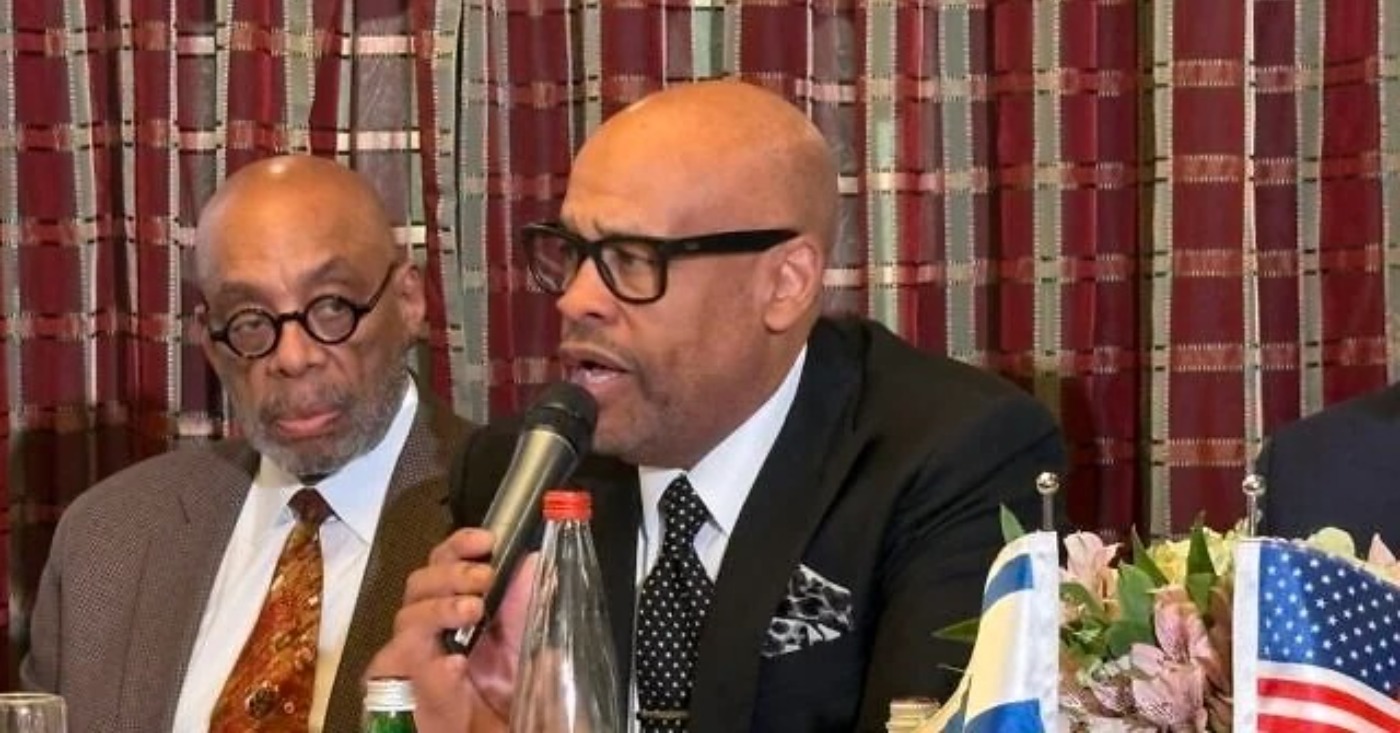
As support for Israel declines precipitously in the US, hundreds of African-American and African pastors and Christian leaders are arriving in Israel this week for a mission inspired by the slain US civil rights leader Rev. Dr. Martin Luther King.
King planned to bring thousands of pilgrims to Israel and Jordan in 1967, but that trip was postponed because of the Six Day War and the political implications of such a trip. He said he would look into coming the next year, but was assassinated in April 1968.
“There were no mass pilgrimages” back then, says Pastor Dumisani Washington, a pro-Israel activist, at a press conference in Jerusalem. “We as Black Americans recognize that Black Americans were about to start something that no one else was doing.”
The “Unfinished Business Pilgrimage” will expand to thousands of participants next year, say organizers, to mark 60 years since King’s planned visit.
“We felt a burden in our heart,” Washington continues. “We see the rising antisemitism on the right and on the left.”
There is a “mountain of support rising from the Black church,” says Pastor Michael A. Stevens, Sr.
The leaders of the pilgrimage present gifts to victims of the Hamas-led October 7, 2023, massacre, including freed hostage Elkana Bohbot; Hila Abir, whose brother Lotan was murdered at the Nova music festival; and Daniel Lischinsky, whose son Yaron was murdered alongside his fiancée Sarah Milgrim at an Israeli embassy event in Washington, DC.
Ther rest of the participants arrive tomorrow, and will visit biblical sites across the country, as well as the site of the Nova massacre.
Steven says that Jewish and Black Americans had a tradition of coming together to “establish what was right, and to set the tone for the nation and for the world.”
“If anyone should stand with our Jewish brothers and sisters, it ought to be African-Americans, it ought to be Africans,” he continues.
Though rates of antisemitism have risen among people of color, Stevens tells The Times of Israel, “I still think we are the lowest-hanging fruit to educate and to learn.” He says, “The African-American Church is still the most influential institution in all of America, in fact, at least in the Black community.”
Stevens says one of the objectives of the mission is to spread awareness that “we cannot have antisemitism in our culture, period.”
At the same time, he says that Israel could improve its approach to Black America: “I believe Israel could be more attentive to the fact that a lot of the loss of lives that we see looks like us. Whether it’s in Gaza, whether it’s Ethiopians and racism.”
Reverend Dr. Benjamin F. Chavis. Jr. is on this delegation representing the Black Press of America and Spill the Honey as a present-day fulfillment of the dream and prior plan of Reverend Dr. Martin Luther King, Jr in 1967 to lead a 5000 Black Clergy Pilgrimage to Israel.
Black History
Christianity’s Racial History
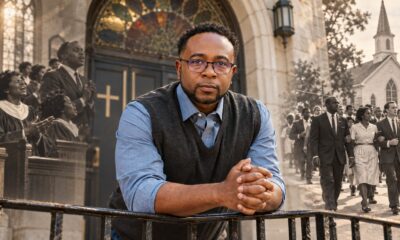
THE POSITIVE COMMUNITY — Historian and author Jemar Tisby is challenging the traditional narratives of American religious history through his acclaimed work, The Color of Compromise. His research provides a comprehensive examination of how Christian institutions have historically participated in, accommodated, or resisted racial injustice from the colonial era to the present day.
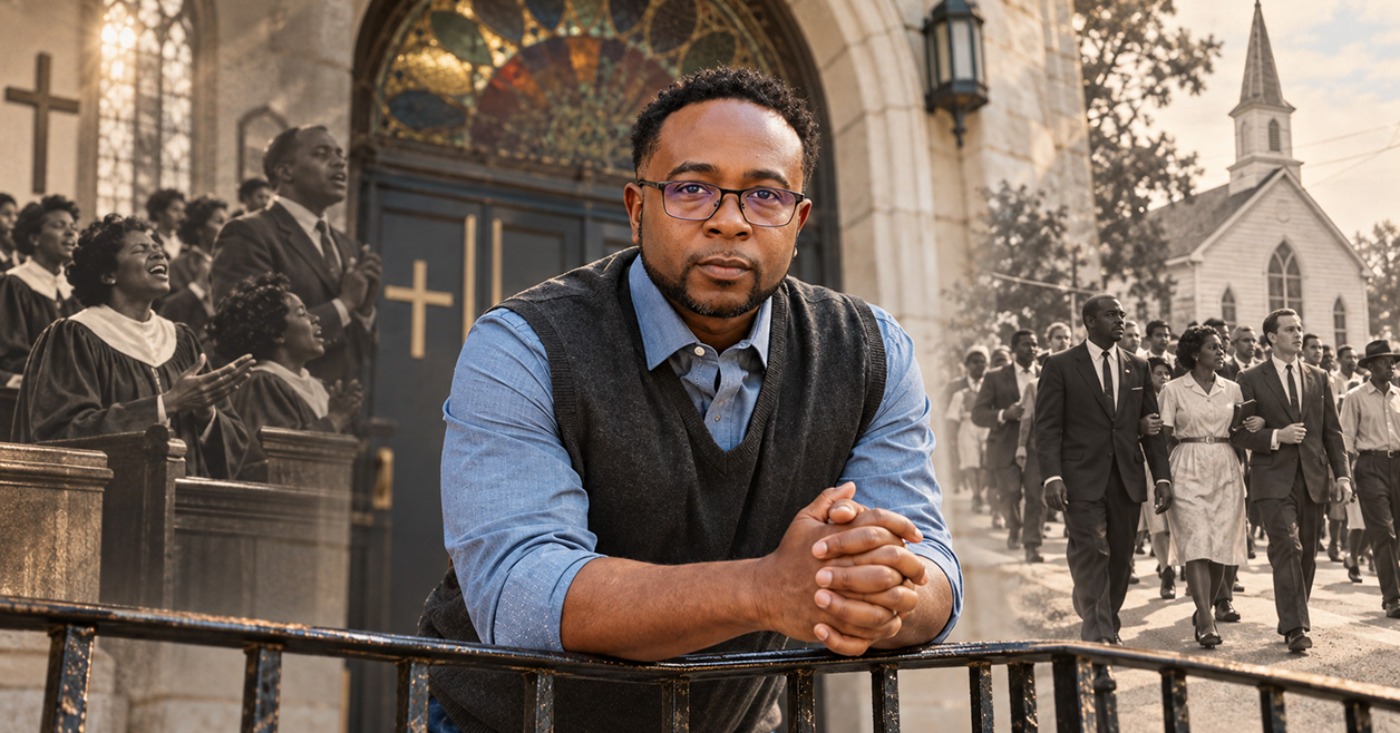
Jemar Tisby is a historian, author, and public speaker whose work examines the relationship between Christianity, racism, and American history. Through his writing, he challenges readers to reconsider the role religious institutions have played in shaping racial attitudes and social structures. His widely recognized book, The Color of Compromise: The Truth About the American Church’s Complicity in Racism, explores how Christian churches have participated in, accommodated, and sometimes resisted racial injustice throughout American history. Tisby’s work encourages readers to examine the past honestly and consider what meaningful change requires today.
One of the central arguments in The Color of Compromise is that racism in America cannot be understood without examining the influence of religious institutions. Christianity has often been associated with messages of love, justice, compassion, and equality. Yet churches and Christian leaders have sometimes supported systems that denied African Americans their freedom and dignity. Tisby examines this contradiction, demonstrating how religious beliefs and institutions could be used to justify racial oppression rather than challenge it.
The book takes readers back to the era of European colonization and slavery, when religious arguments were frequently used to defend the enslavement of Africans. Some Christian leaders claimed that slavery was compatible with biblical teachings, while others used Christianity to encourage resistance to the institution. Enslaved Africans developed their own spiritual traditions, drawing strength from their faith while enduring violence, separation from family, and the denial of basic human rights. Tisby highlights the importance of understanding how Christianity became intertwined with the development of American slavery.
Tisby also explores the role of churches during the Civil War and Reconstruction. Although emancipation ended legal slavery, it did not eliminate racial prejudice or the struggle for equal citizenship. Some religious communities supported efforts to educate formerly enslaved people and establish independent Black institutions. Others tolerated or defended segregation and white supremacy. The period demonstrates how Christian institutions faced a choice between challenging racial injustice and preserving existing social arrangements.
Another important subject in the book is the relationship between Christianity and Jim Crow segregation. During the late nineteenth and early twentieth centuries, racial segregation became deeply embedded in American society. Many churches reflected the same divisions, maintaining separate congregations and unequal opportunities for worship and leadership. Tisby argues that compromise occurred not only when Christians openly defended racism but also when they remained silent or accepted discriminatory practices to avoid conflict. This distinction is essential to understanding the book’s central message.
The civil rights movement provides another significant chapter in this history. Black churches played a vital role in organizing demonstrations, supporting community leadership, and providing spiritual encouragement to people fighting racial discrimination. Figures such as the Reverend Dr. Martin Luther King Jr. drew upon Christian teachings to challenge segregation and demand equal rights. However, not all white Christian congregations supported the movement. Tisby examines the difference between those who actively opposed racism and those who hesitated to challenge the racial status quo.
A major strength of Tisby’s writing is his attention to the difference between individual prejudice and institutional racism. A person may believe in treating others fairly while participating in organizations or traditions that produce unequal outcomes. Similarly, a church may preach love and acceptance while failing to confront discriminatory practices within its own community. Tisby encourages Christians to look beyond personal intentions and examine the consequences of their actions, their institutional policies, and their willingness to address injustice.
The book also challenges contemporary Christians to consider how the legacy of racial compromise continues to affect American religious life. Questions about church leadership, worship communities, racial representation, education, and public policy remain important. Tisby argues that acknowledging historical wrongdoing is not about assigning personal guilt to every modern Christian. Rather, it is about understanding how past decisions shaped the present and recognizing the responsibility to pursue greater fairness, accountability, and inclusion.
Tisby’s work has become an important contribution to conversations about race and religion because it asks readers to move beyond comfortable narratives about American Christianity. His historical approach encourages people to examine uncomfortable evidence, listen to the experiences of African Americans, and recognize the difference between professing moral principles and practicing them. The book also raises questions about what genuine reconciliation requires, emphasizing that meaningful progress involves more than expressions of goodwill. It requires a willingness to confront injustice and make changes that reflect the values Christians claim to uphold.
Ultimately, The Color of Compromise is a call for historical honesty, moral reflection, and meaningful action. Jemar Tisby challenges churches and individual believers to understand how Christianity has been used both to support oppression and to inspire resistance against it. His message is especially relevant in a society still wrestling with racial inequality and the consequences of its history. By examining the past with courage and integrity, readers can better understand the responsibilities of faith in the present. The book reminds us that the true test of religious conviction is not simply what people profess to believe, but whether their actions reflect justice, compassion, and respect for the dignity of every human being.
Based on reporting by The Positive Community.
Black History
COMMENTARY: Bring on the Positive Calvary
SEATTLE MEDIUM — Dr. E. Faye Williams addresses the exhaustion many Americans feel following two years of political hostility, corruption, and systemic bigotry.
(Trice Edney Wire)—Like Amy Acton, candidate for Governor in Ohio and Dr. Abdul El-sayed for U.S. Senate in Michigan, the Positive Calvary really is coming soon! Aren’t we all tired of the negative past two years we’ve experienced in the U.S.? Aren’t we tired of the atrocious accusations being thrown around, the filthy language, lies, unending corruption, hatred, racism, sexism, Islamophobia, and bigotry of all kinds. This election season has been worse than ever! I’m sick and tired of women’s names being dragged through the mud—as mine, and others have been out of hate and jealousy. I’m tired of so many people being reluctant to support women. Let’s be the ones to stop this
I’m ready to hear in detail what candidates are ready to do to win the upcoming elections and give help to the people in need—and there are a lot of things from which to choose!
My prayer is that candidates will stop bickering and just tell us what they’re planning to do to help to bring us out of this abysmal situation we’re in now. Instead of spending so much time being shocked by what the highest elected man in the land is saying and doing, let’s concentrate on how to put up guard rails for him when we vote We already know more than enough about what he has said and done. Let’s pledge to elect leaders who’ve shown they care about the people they campaign to represent. There are a lot of good candidates out there who are being overshadowed by the bickering
Let’s not leave everything to elected leaders. As community activists, Get Out the Vote workers, religious leaders and all the good people around us. Show the way to a better nation to all around us. Let’s concentrate on what we are going to do to help people in need. Let’s work on plans to make their lives better. Let’s pledge to get along with our neighbors at home, and our neighbors in Canada, our friends in Ukraine and stop being led by someone who hangs out with those set on disrupting our system of democracy. Ignore the wrecking balls who are more interested in tearing down monuments and praising themselves, supporting evil with lies and unbelievable positions on good people, those who are destroying our military and using government and our taxes on evil things.
Let’s call out corruption, but don’t participate in it. Let us ignore lies about good candidates at all levels. Let’s support the left out. Jamie Davis, a Black man in Louisiana, is a leading candidate for the U.S. Senate. We don’t have to live in Louisiana or be a Democrat or a farmer to support him when you see how much trouble the person running against him is dealing with something people don’t want.
We can vote across party lines when that candidate has expressed the good things she/he will work for when elected. Never mind that in this case she has an R after her name. I know Monique Appeaning in Louisiana who worked in my campaign for Congress when she was a very young woman. I missed winning by a few votes to become the first Black woman to represent my home state in Congress. Forty years later, there has still been no Black woman in the Louisiana delegation. Monique has chosen to pick up the challenge and give my hope life so that other young Black women can have hope in refusing to allow any good thing to be beyond their reach
You know right from wrong, so don’t be afraid to vote for what’s right in a few days. Always promote good. Dr. Abdul El-Sayed and Amy Acton deserve your vote if you are in Ohio or Michigan. Yes, you know right from wrong, so do what’s right wherever you are.
Based on reporting by Seattle Medium.
Black History
Metro Detroit Faith Leaders Call out Islamophobia in Michigan Senate Race
MICHIGAN CHRONICLE — Faith leaders from diverse religious backgrounds gathered Thursday at the downtown Detroit United Methodist Church to denounce the rise of Islamophobic rhetoric in Michigan’s U.S. Senate race. Clergy members, including representatives from Christian, Jewish, and Muslim traditions, expressed concern over religious identity being used as a weapon in the final weeks before the general election.
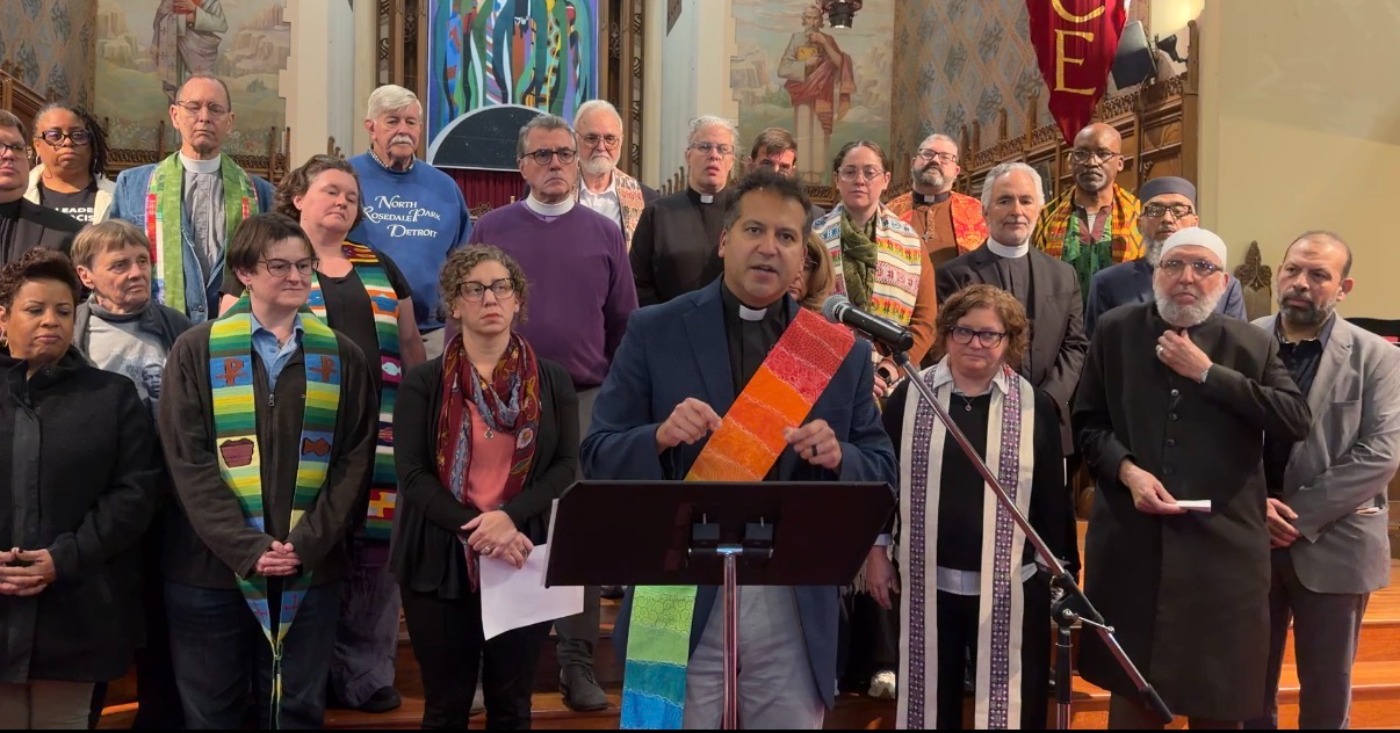
Faith leaders of different religions came together Thursday afternoon inside the downtown Detroit United Methodist Church to oppose Islamophobic rhetoric that’s ramped up ahead of the Nov. 3 general election.
“In the final weeks of Michigan’s U.S. Senate race, we have watched religious identity used as a weapon,” said Rev. Paul Perez, who leads the downtown Detroit church.
Perez and other faith leaders said at the press conference they weren’t endorsing a candidate, but compassion and understanding as Michigan voters decide who to send to the U.S. Senate.
Democratic nominee Abdul El-Sayed would be the first Muslim ever elected to the U.S. Senate. His identity is being used by supporters of Rogers’ campaign to cast doubt on his loyalty to the U.S. Constitution.
Earlier this month, El-Sayed’s Republican opponent, former U.S. Rep. Mike Rogers agreed with a social media post calling El-Sayed a terrorist.
“The charge of dual loyalty has been thrown at Jews for generations,” says Rabbi Alana Alpert, of Ferndale’s Congregation T’chiyah. “When we hear it aimed at our Muslim neighbors we recognize it. And we will not let it be used against anyone.”
At an El-Sayed event Thursday at the Wayne State Fieldhouse, an ant-Muslim activist Cam Higby interrupted his rally as El-Sayed began his remarks.
“Why do you take money from members of the Muslim Brotherhood?” Higby shouted before being escorted out of the gymnasium.
TV and digital ads echo the charge against El-Sayed that he is connected to designated terrorist organizations, which he has denied. He has disavowed and condemned Hamas, the military group controlling Gaza, and the Muslim Brotherhood, a decentralized movement with a long history in Egypt.
While tweets from his half-sister suggest she and her mother had sympathetic attitudes toward the organization, no evidence has been produced that points to El-Sayed being affiliated with the Muslim Brotherhood.
In an interview with Michigan Chronicle, Higby said he doesn’t believe Muslims belong in America. That sentiment is often found in online replies and comments from accounts run by conservative Christians.
sd Democratic voters have also expressed skepticism about El-Sayed’s faith.
Ahead of the primary election, Farmington Hills School Board member Angie Smith caused an uproar online after she told Michigan Chronicle she wasn’t sure whether El-Sayed could represent everybody.
“Don’t come out speaking only Arabic; don’t come out with your Arabic music on; represent everyone,” Smith said.
She later apologized for the comments.
At Thursday’s press conference, Imam Steve Mustapha Elturk of Warren’s Islamic Organization of North America, shared a story about how he eventually earned the trust of new neighbors who feared his congregation was bringing Sharia law when they arrived.
“When a person’s faith is treated as evidence for disloyalty, every Muslim family hears that message. Our children hear it. They come home from school and ask, ‘Are we really American?,’” Elturk said. I want to answer them today from this pulpit surrounded by our Christian and Jewish brothers and sisters, yes, we are Americans. Yes, we are Americans. Our faith is protected by the same Constitution that protects every other faith.”
Pastor Louis Forsythe II of Detroit’s Pleasant Grove Baptist Church, said that liberation of Christians, Jewish and Muslims are tied together.
“The Black church knows what it means to have our loyalty questioned,” Forsythe said. “We know what it means to be told we are less than full citizens. We are called un-American for demanding the rights of the Constitution promised us.
“Our faith carried us through that, and it was the faith of others standing beside us that helped bend this nation toward justice. Dr. Martin Luther King Jr. wrote from a Birmingham jail that injustice anywhere is a threat to justice everywhere.”
Based on reporting by Michigan Chronicle.
Black Press
When Your Faith Is Put to the Test
THE POSITIVE COMMUNITY — Reverend J. Loren Russell explores the profound challenges of maintaining faith during seasons of unexpected adversity through the biblical narrative of Job. Despite being a man of integrity who feared God, Job suffered the sudden loss of his wealth, his ten children, and his physical health.

Scripture: Job 1:20–22; Job 42:5 (NKJV)
Job 1:20–22: Then Job arose, tore his robe, and shaved his head; and he fell to the ground and worshiped. 21 And he said: “Naked I came from my mother’s womb, And naked shall I return there. The Lord gave, and the Lord has taken away; Blessed be the name of the Lord.” 22 In all this Job did not sin nor charge God with wrong.
Job 42:5: “I have heard of You by the hearing of the ear, but now my eye sees You.”
Have you ever experienced a season when everything seemed to go wrong, even though you were doing your best to live faithfully before God? Have you ever prayed, served, sacrificed, and trusted God, only to find yourself facing circumstances you could not understand? If so, you are not alone. The story of Job reminds us that faithfulness to God does not exempt us from adversity, but adversity does not have to destroy our faith.
Job was a man of integrity who feared God and turned away from evil. He was blessed with a large family, great wealth, and an excellent reputation. Yet, in a series of devastating events, he lost his possessions, his servants, and all ten of his children. Then his own health deteriorated, leaving him physically and emotionally broken.
How could such tragedy happen to a man who was faithful to God?
Job’s story challenges the assumption that good people will never experience hardship. Sometimes we mistakenly believe that if we pray enough, obey enough, and live right, we can avoid life’s painful seasons. But Scripture never promises that believers will be spared every trial.
Faith is not measured only by how loudly we praise God when life is good, but also by whether we continue to trust Him when life becomes difficult. Job grieved deeply. He tore his robe, shaved his head, and fell to the ground in worship. His grief did not cancel his faith, and his worship did not mean he was free from pain. He brought his brokenness before God while acknowledging God’s sovereignty.
We can learn from Job that faith does not require us to pretend we are not hurting. We can cry, ask questions, and seek understanding without abandoning our relationship with God.
Job’s friends made matters worse by assuming his suffering must have resulted from personal sin. Their mistake reminds us not to judge people by their circumstances. When others are hurting, they may need our compassion more than our explanations.
Eventually, God spoke to Job out of the whirlwind. God did not provide a detailed explanation for every tragedy Job had experienced. Instead, He revealed the greatness of His wisdom and the limitations of human understanding. Job responded, “I have heard of You by the hearing of the ear, but now my eye sees You” (Job 42:5).
His encounter with God changed his perspective. He came to recognize more deeply the greatness of the One he served. He was then prepared to pray for his friends and God promised He would answer.
Sometimes God changes our understanding before He changes our circumstances. We may not receive every answer we seek, but we can continue to grow in humility, trust, and compassion.
When your faith is tested, keep praying, keep trusting, keep serving, and remember that your suffering does not define the limits of God’s greatness.
Your faith may be tested by adversity, but you can continue trusting the God whose wisdom is greater than your understanding.
Be Blessed!
Rev. J. Loren Russell is an associate minister at Goodwill Baptist Church and is the clergy officiant of the Evangelical Church of God, all in the Bronx, President/CEO of The JLR Company for Church Financial & Strategic Consulting (718-328-8096), and hosts “Matters of Faith – The Radio Show” on Monday nights from 8:00–10:00 PM on Facebook Live. Be sure to Friend “Matters of Faith” on YouTube and email us at [email protected]. Order your copy of Matters of Faith: The eBook at www.smashwords.com/books/view/993177.
Based on reporting by The Positive Community.
Black History
Oakland Faith Leaders Gather to Revitalize the Interdenominational Ministerial Alliance of Oakland
Oakland faith leaders and civic officials recently gathered at the Church of All Faiths to revitalize the Interdenominational Ministerial Alliance of Oakland and Vicinity. Led by convener Pastor Mark Anthony Clifton, Sr., the meeting aimed to unite clergy around civic engagement and community restoration. The event featured a call to action for the upcoming election and presentations on workforce development, drawing support from prominent figures including Mayor Barbara Lee and local school officials. Organizers shared their vision for the alliance’s future as they prepare for new collaborative initiatives. read more.
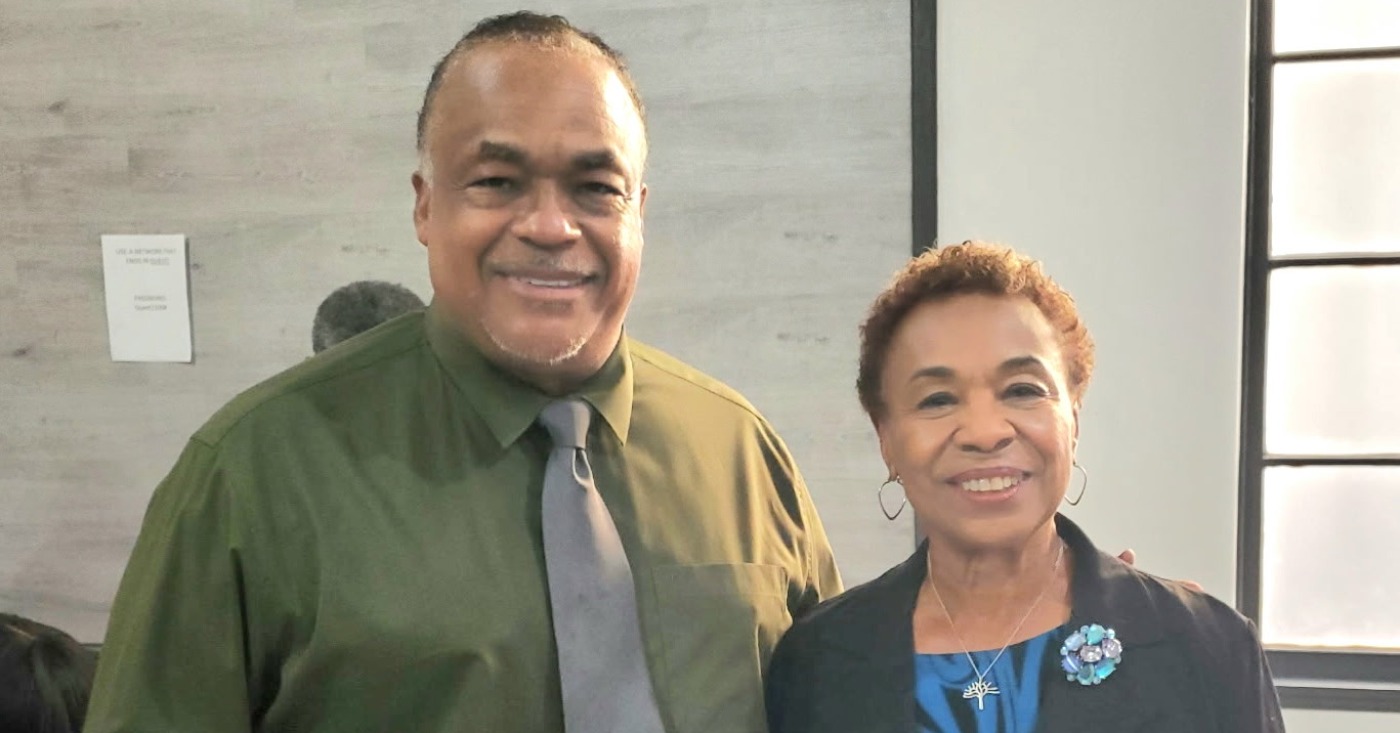
Pastors, civic leaders, and community members in the Bay Area gathered Thursday, Oct. 8, at Church of All Faiths in Oakland for a meet-and-greet marking a renewed push to revitalize the Interdenominational Ministerial Alliance (IMA) of Oakland and Vicinity.
A highlight of the evening was the “Souls to the Polls: Our Voice, Our Vote!” segment, led by Pastor Damon Owens of Genesis Church in Antioch, which urged congregations to turn out for the election. Organizers also announced a proposed joint pre-Thanksgiving worship service for Nov. 17, with the location to be announced.
Pastor Marcie Hodge of Prayer Mission Church called the program to order, and Rev. Michael Wakefield Wallace of Mt. Zion M.B. Church led the opening devotion. Pastor Cubie Finley III of Parks Chapel AME read Nehemiah 2:17-18, the passage behind the event’s rallying cry, “Let us rise up and build.”
COGIC National Evangelist Dr. Lucinda Taylor, principal of Westlake Middle School, delivered the opening welcome.
Dr. L.J. Jennings of Kingdom Builders Church gave a brief statement of purpose, explaining the alliance’s mission of ‘Voice, Vision, and Values.’ Pastor Terry Benjamin of Restoration Evangelistic Ministries then introduced the convener, Pastor Mark Anthony Clifton, Sr., who is in his 26th year leading East Oakland Church of God in Christ. Clifton has been reorganizing the alliance to unite clergy around civic engagement. He noted that IMA’s national roots in 1926 in Galveston, Texas, and honored the Oakland leaders who came before him, including his grandfather, the late Bishop Martin J. Clifton, Sr.
“The work of the IMA of Oakland is just a continuation of the work done before us. Today, working together we can continue to solve many of the issues our community faces,” said Clifton.
Members were invited to share testimonies, challenges, and ministry needs.
Other participants included Dr. Billy Dixon of At Thy Word Christian Center and Pastor Raymond Lankford, CEO of the Oakland Private Industry (OPIC) Council who shared information on the organization’s workforce development programming.
Public officials in attendance included Mayor Barbara Lee, Alameda County Supervisor Nate Miley, and Oakland Unified School District Superintendent Denise Saddler, strengthening the ties between the faith community and local government.
“We are better together and our city is stronger when we partner with our faith leaders,” said Oakland Mayor Barbara Lee.
Bishop Brondon Reems of Center of Hope Community Church provided the closing prayer and Rev. Dr. Jeffrey M. Parker, Sr., host pastor, gave final remarks and thanked attendees for coming.
“It’s an honor to serve the community and bring everyone together,” said Parker.
Dozens of pastors from Oakland, Antioch, and the greater Bay Area were recognized as supporters.
“I want our partners and attendees involved to help rebuild the city they love and this is only the beginning of a larger movement to restore our great city,” said Clifton.


Hundreds of Black Christian Leaders Arriving in Israel for Martin Luther King-Inspired Mission

Choose a Deductible You Can Actually Afford #shorts

Election Day Voting in Bakersfield

Sunnyside Capital Plan

What is the plan for success post-midterms?

Vietnam: A Black veteran’s ‘Soldiers Story’

News Observer Weekly — November 4, 2026 | Top 5 Stories of the Week
How to Turn Your App Idea Into a Profitable Business With Amanda Spann

Test the Enclave’s Sunroof Before You Buy #shorts

A NEW CHAPTER IN AMERICAN POLITICS 📱

All Skinfolk Ain’t Kinfolk

Practitioners of African Traditional Spirituality Offer Ancestral Reverence Ritual Oct. 31

A $2.1 Trillion Wellness Industry Never Built a Daily Practice for Black Children. So This Atlanta Family Did.

Latinas Deserve Equal Pay. Unions Help Make It Happen.

Oakland Awarded More than $14 Million in State Funding

Tamiko Armstead | 2026 Lifetime Achiever in Education

Montclair Brewery: Brewing Culture, Community, History

Should You Have to Pay to Hear the Gospel?

Master P Encourages Norwood Elementary Students to Dream Big, Work Hard

OP-ED: The Black Church Writes AI’s Next Chapter
Choose a Deductible You Can Actually Afford #shorts
Election Day Voting in Bakersfield
Sunnyside Capital Plan
What is the plan for success post-midterms?
Vietnam: A Black veteran’s ‘Soldiers Story’
News Observer Weekly — November 4, 2026 | Top 5 Stories of the Week
Test the Enclave’s Sunroof Before You Buy #shorts
A NEW CHAPTER IN AMERICAN POLITICS 📱

A NEW CHAPTER IN AMERICAN POLITICS

What Dexter McCoy victory means for Black Ft. Bend Co.
-
 Black Press1 week ago
Secretary of State Shirley Weber Pushes Back Against DOJ Demands Over California Voter Rolls
-

 Art1 week ago
Capturing Black Life’s Beauty
-

 Black History1 week ago
Retirement Triggers Doctor to Pen Book for Young Audience
-
 Featured2 days ago
Multi-Faith Leaders Representing 10 Million People Launch National Anti-Authoritarian Initiative
-
 Black History1 week ago
Oakland Honors 60 Years of the Black Panther Party at the All Power to the People Gala
-

 Black Press1 week ago
Fatigue, Bloating, and Inflammation: Spotting the Subtle Signs of MASLD

