
Politics
Obama on 2016: ‘I’ve got dings’ and Americans Want ‘that new car smell’



President Barack Obama speaks during a nationally televised address from the White House in Washington, Thursday, Nov. 20, 2014. (AP Photo/Jim Bourg, Pool)
Sara Fischer, CNN
WASHINGTON (CNN.com)—Drive it straight off the lot and into the Oval Office.
That’s what President Obama says the American people want, admitting Sunday that the country is ready to shift gears and hit the gas with a new leader.
“I think the American people, you know, they’re going to want that new car smell,” Obama said in an interview that aired Sunday on ABC’s “This Week.” “You know, they want to drive something off the lot that — that doesn’t have as much mileage as me.”
###









Black Press
AC Transit Labor Unions Back Director Joel Young
ATU Local 192 Vice President Nathaniel Arnold stated “our support reflects confidence in Young’s leadership and experience as the longest-serving member of AC Transit’s current Board of Directors. His experience is particularly important as AC Transit confronts serious fiscal challenges while working to preserve and strengthen service.

In the AC Transit Ward 3 election, AC Transit’s labor organizations have recently expressed their endorsement for Director Joel Young, recognizing his longstanding commitment to public transportation, workforce investment, and the employees who keep AC Transit moving every day.
Those unions include the Amalgamated Transit Union Local 192, the International Brotherhood of Electrical Workers Local 1245, and the American Federation of State, County and Municipal Employees Local 3916.
ATU Local 192 Vice President Nathaniel Arnold stated “our support reflects confidence in Young’s leadership and experience as the longest-serving member of AC Transit’s current Board of Directors. His experience is particularly important as AC Transit confronts serious fiscal challenges while working to preserve and strengthen service.
“At a time when difficult decisions lie ahead, Young brings institutional knowledge, longstanding relationships, and a demonstrated commitment to public transportation.
“Since joining the board in 2009, Young has served in key leadership roles, including president and vice president, helping guide AC Transit through periods of growth, innovation, and change.
During his tenure, he helped AC Transit secure more than $600 million in funding to support critical transportation investments. Young has also helped advance workforce development initiatives, support transit technology improvements, expand AC Transit’s zero-emission bus fleet, and strengthen the District’s national presence on transportation policy issues.
His leadership has extended beyond the Bay Area.
Young has represented AC Transit on the national stage, including participation in the White House Roundtable on Clean Bus Manufacturing, where transit leaders and policymakers discussed the future of clean transportation and domestic manufacturing.
Black Press
‘ICE-Free Marin’ Supporters Press Supervisors as County Drafts Enforcement Restrictions
“County resources are to never be used in the furtherance of federal immigration enforcement,” Johnson said, of the policy which is still in development. “The policy will require all county employees to notify the county executive within 24 hours of any immigration enforcement activity in which they become aware on county property.”
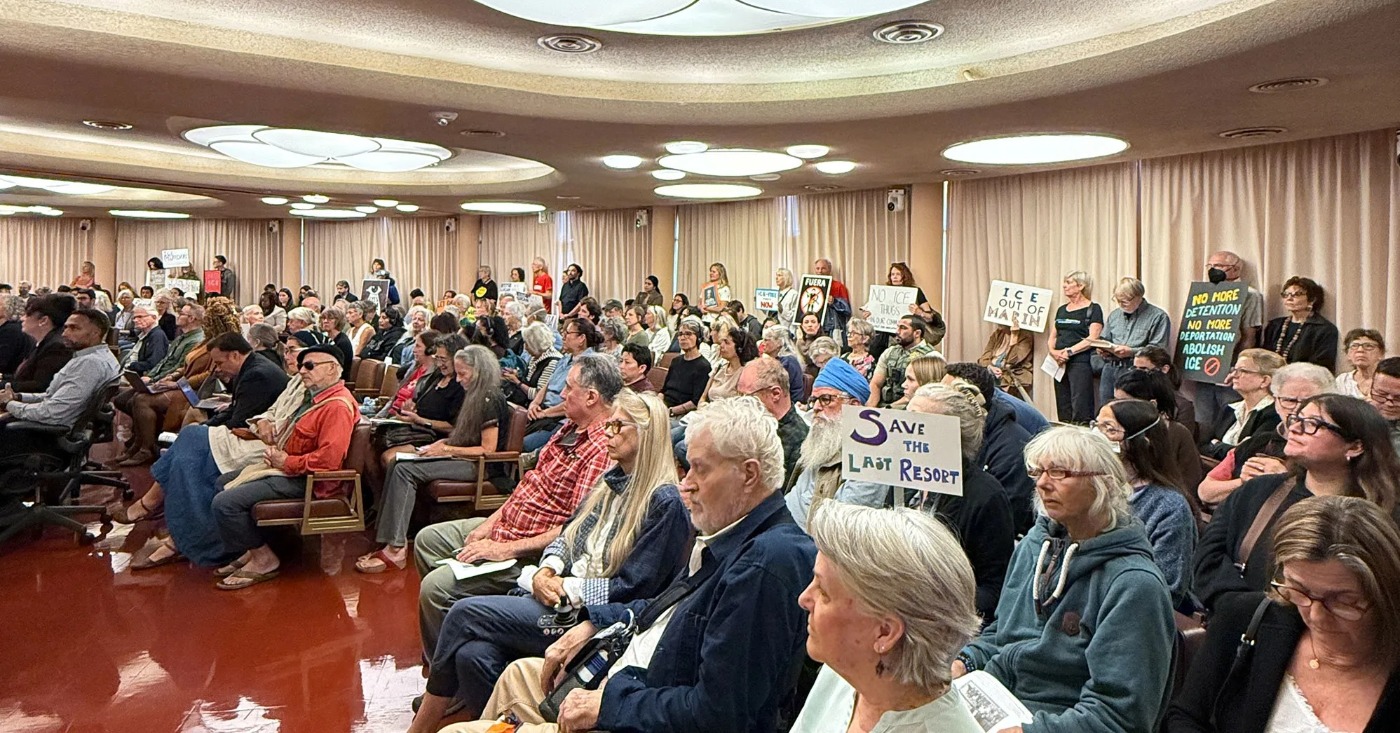
More than 100 protesters packed the Marin County Board of Supervisors chamber Sept. 29, urging supervisors to consider an ordinance restricting the actions of U.S. Immigration and Customs Enforcement officers.
County and state officials are already advancing some measures that overlap with demands the protesters have made for the past year.
“I want to share that the immigration subcommittee has been hard at work drafting important board policy as directed by the Board of Supervisors,” said Marin County Executive Derek Johnson, referring to policy that will prevent the use of county property for federal immigration enforcement activities.
“County resources are to never be used in the furtherance of federal immigration enforcement,” Johnson said, of the policy which is still in development. “The policy will require all county employees to notify the county executive within 24 hours of any immigration enforcement activity in which they become aware on county property.”
Those policy goals align with the two central provisions proposed by the No ICE in Marin Coalition, which filled the room at Tuesday’s meeting.
Their policy proposal, called ICE-Free Marin, prohibits ICE from using county property, resources or personnel without a judicial warrant and establishes clear reporting requirements whenever county department staff observe or communicate with federal immigration authorities. Those interactions may include the service of subpoenas and warrants, as well as attempts to access county facilities.
The ICE-Free Marin ordinance would require the county to post signs and barriers restricting ICE from entering county property, with county staff denying ICE officials entry and refusing to provide information and assistance. If ICE disregards directives, the county counsel would seek a court order to stop them, and if ICE unlawfully detains someone, they can be challenged in court, according to the ordinance.
Last year, the group protested the county’s participation in the State Criminal Alien Assistance Program, administered by the U.S. Department of Justice in conjunction with ICE and the U.S. Department of Homeland Security.
SCAAP funds are used to reimburse costs incurred for jailing immigrants lacking permanent legal status who have at least one felony or two misdemeanor convictions and are incarcerated for a minimum of four consecutive days.
In February, the county announced its 2026-28 budget does not include SCAAP funding.
State Takes Action on Immigrant Protections
Also on Sep.t 29, California Gov. Gavin Newsom signed a package of more than 20 bills aimed at increasing state oversight of federal immigration enforcement and protecting immigrant communities, according to a news release from the governor’s office.
The state legislation creates a 25% tax on private detention centers, expands health and safety oversight in those centers, requires additional public input and planning approvals for new facilities, and strengthens the role of state Attorney General Rob Bonta in inspecting them.
The measures also ban law enforcement from using wearable electroshock “shock gloves,” restrict flash-bang grenades and explosive breaching charges, limit the use of state-owned property for federal immigration operations, and require temporary identification decals on rental vehicles used by law enforcement.
The legislation expands access to public records involving private detention facilities and restricts former federal immigration officers who committed serious misconduct from becoming California peace officers or public employees.
Other measures allow people to sue federal officials for alleged violations of their constitutional rights and protect people traveling to and from courthouses from civil immigration arrests.
“We may not be able to dictate federal immigration enforcement policy, but we can make clear that activities taking place in California will be subject to California law,” the governor said in a video message announcing the bills.
The group leading the local campaign for the ICE-Free Marin ordinance is the Democratic Socialists of America. DSA spokesperson Courtney Sadowski said in an email that the group has spoken with supervisors Eric Lucan, Mary Sackett, Dennis Rodoni and Stephanie Moulton-Peters.
“But none have committed to introducing the ICE-Free Marin ordinance,” Sadowski said.
The group has attended numerous meetings of the Civilian Oversight Commission of the Sheriff’s Office asking for their support, she said.
“We cannot afford to wait the months or years it would take them to review and consider this item,” she said. “Even if they moved more quickly, all they can do is issue a recommendation.”
Speakers Weigh In
Hector Garcia, a community library specialist with the Marin County Free Library, spoke to the supervisors. He said that he recently completed an intense Department of Justice certification that will allow him to provide immigration services at the library.
The Recognition and Accreditation program allows qualified non-attorney staff working for eligible nonprofit organizations to legally provide immigration services for low-income and indigent individuals who cannot afford private attorneys.
“It would be impossible for me to fulfill this job with the presence of ICE,” Garcia said. “A fascist police force, they disregard the law, terrorize, assassinate and separate Black indigenous people of color and their families.”
Lisa Bennett with the Marin Rapid Response Network, a nonprofit that helps families locate detained relatives and provides other support services, said families go into shock when the major breadwinner is detained.
“Basic things like money for food, utilities, even driving are no longer a given,” she said. “They worry about their parent’s medical needs. They worry about themselves being next. They worry about what happens if the remaining parent is taken. This is what our government is doing to its own people. Silence is complicity.”
Black Press
All Skinfolk Ain’t Kinfolk
An old saying coined by Floridian Zora Neale Hurston in her final major nonfiction work, Dust Tracks on a Road, set in Florida. “All skinfolk ain’t kinfolk” is an idiom that distinguishes shared identity from shared interests.

Byron Donalds wants to be Florida’s next governor. Not on our watch.
Our stance is rooted in an old saying coined by Floridian Zora Neale Hurston in her final major nonfiction work, Dust Tracks on a Road, set in Florida. “All skinfolk ain’t kinfolk” is an idiom that distinguishes shared identity from shared interests.
The congressman has done little to advance the cause of Black workers. In fact, on the AFL-CIO’s legislative scorecard, which tracks how legislators vote on the issues and policies that matter to working people, Rep. Donalds has voted against working people every time except once – giving him a lifetime score of 1%.
He has built his political identity around his support for Donald Trump and his embrace of Gov. Ron DeSantis, two political figures whose policies have undermined, undercut and trampled on our rights and freedoms.
As governor, DeSantis has been nearly surgical with his assault on the Black community, especially in education, where he undermined the state’s Historically Black Colleges and Universities through installing crony politicians; banned books by and about us from school libraries, rejected the country’s first AP course on Black culture, and instituted the STOP WOKE Act, which 11th Circuit judge rightfully demeaned as a “breathtaking assertion of power to ban unpopular ideas from public discourse.”
But he didn’t stop there. Next was Black employment.
As national labor leaders, we have witnessed the relationship between strong worker representation and stronger communities – especially for Black communities who over index when it comes to union membership. Like us, they have experienced the power of collective bargaining to help educators advocate for classroom resources, nurses raise concerns about patient care, and public employees seek fair compensation and safer working conditions. We have also seen the consequences when workers have fewer avenues to influence decisions affecting their livelihoods.
So it should come as no surprise that in 2023, DeSantis signed Senate Bill 256, imposing new restrictions on many public-sector labor unions by creating new challenges for unions seeking to maintain their bargaining certifications. This law is a direct threat to the sovereignty of American workers who have historically used unions to negotiate wages, benefits, workplace protections and the conditions under which essential public services are delivered.
The struggle for civil rights and the struggle for workers’ rights have long intersected. From A. Philip Randolph’s organizing of the Brotherhood of Sleeping Car Porters to the 1968 Memphis sanitation workers’ strike, demands for economic dignity have stood alongside demands for equal treatment under the law.
Dr. Martin Luther King Jr. understood that the promise of civil rights could not be fully realized without economic justice. His final campaign in Memphis reflected the conviction that workers’ rights, racial equality and human dignity were inseparable.
That history offers an important lesson for the present: Political representation and substantive policy representation are not necessarily the same thing.
That is history Byron Donalds has either forgotten or refuses to consider. Either way, it lays bare his disconnect from the collective vision of America most Black people share – one that acknowledges real differences while working to reduce the negative impacts of those differences. Donalds has adopted a different vision – one that thinks it more valiant to turn a blind eye to the disparate outcomes race creates in employment, education, and health care rather than admit there are real, structural issues that need to be addressed.
One person who does seem to understand and is working to do better is Donalds’ opponent, David Jolly, a former Republican congressman now running as a Democrat. He has positioned his candidacy as an alternative to the DeSantis approach, emphasizing affordability, public schools and a different direction for state government. And while we may not share skin color or a cultural history with Jolly, we do share his commitment to fight for equality and the dignity of the American worker.
The November 3 gubernatorial election presents Floridians with a choice between candidates offering different approaches to governing. Byron Donalds has sided with DeSantis who has made their disdain for Black people loud and law, and Jolly who sided with us and our understanding of community and collective power.
Every election is an opportunity to examine not only what candidates promise, but also what their records and policy commitments reveal.
For working people, that examination must include a fundamental principle: Economic prosperity and democratic participation are strongest when the people who do the work have a meaningful voice in shaping their future.
Florida’s next chapter will be written through the decisions of its people and the accountability they demand of those entrusted with public office.
That is the enduring promise of democracy—and a responsibility that belongs to all of us.
Fredrick D. Redmond, the highest-ranking African American labor official in history, is the Secretary-Treasurer of the AFL-CIO, the nation’s largest labor federation representing 65 unions and nearly 15 million workers.
Fedrick C. Ingram is the Secretary-Treasurer of the American Federation of Teachers (AFT), representing 1.8 million educators, healthcare workers, and public employees.
Black Press
Botham Jean’s Killer Granted Parole 7 Years After His Murder
MICHIGAN CHRONICLE — Former Dallas police officer Amber Guyger has been granted parole, seven years after her conviction for murdering Botham Jean inside his Dallas apartment. The Texas Board of Pardons and Paroles approved her release on October 1, seven years to the day after her murder conviction. Guyger was convicted in 2019 and sentenced to 10 years in prison for Jean’s 2018 death.
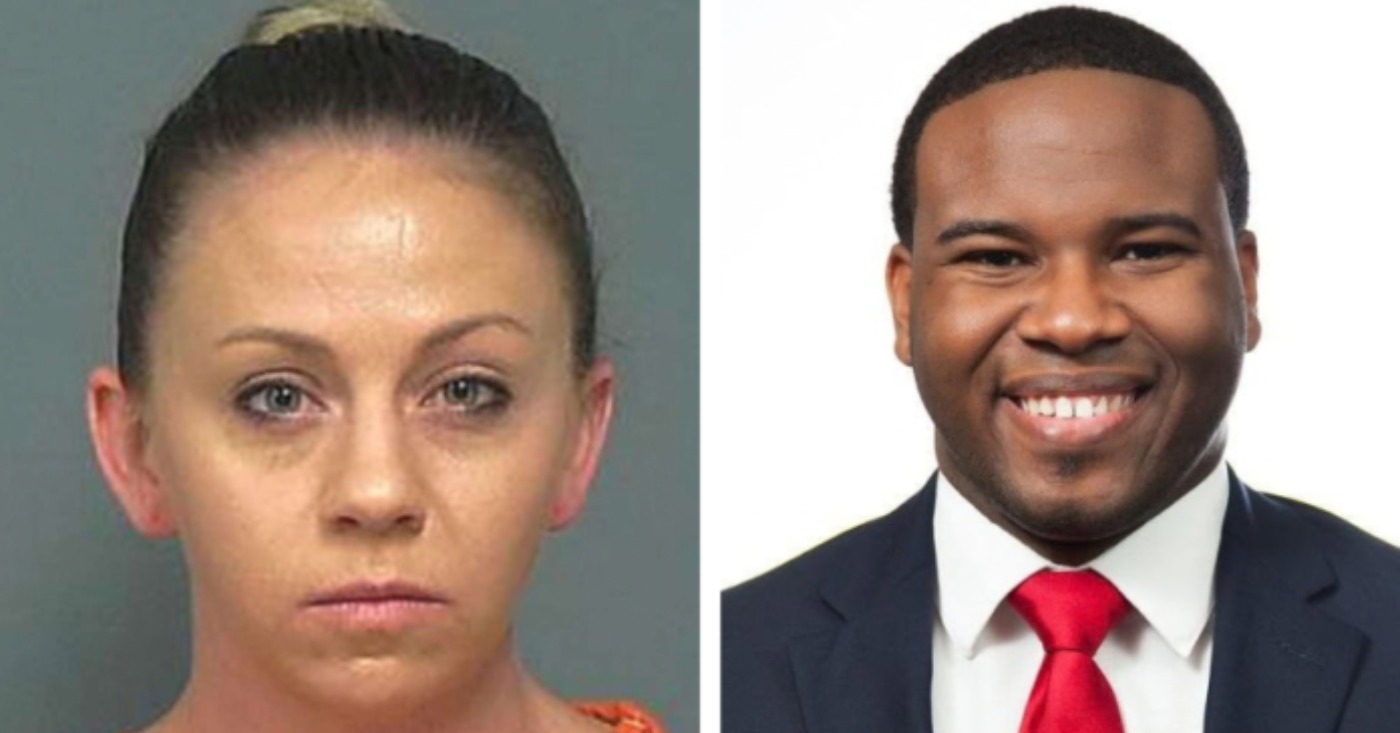
Former Dallas police officerAmber Guyger has been granted parole seven years after she was convicted of murdering her neighbor,Botham Jean, inside his Dallas apartment.
The Texas Board of Pardons and Paroles approved Guyger’s release Thursday (October 1), seven years to the day after Guyger was convicted of Jean’s murder, according to NBC News.
In 2019, a jury convicted Guyger of murder and she was sentenced to 10 years in prison for Jean’s 2018 death. Her conviction and 10-year sentence were upheld on appeal in 2022.
Geyger’s first parole request was denied in 2024, NBC Dallas-Fort Worth reported.
The Dallas Police Department fired her after the shooting. During her trial, Guyger testified that she mistakenly entered Jean’s apartment after returning home from work, believing it was her own apartment one floor below.
She said she saw Jean inside and fired her weapon because she believed he was an intruder, according to NBC News.
Jean was a 26-year-old Black man from St. Lucia who worked as an accountant. He was inside his home eating ice cream when Guyger entered and shot him, NBC DFW reported.
The parole board cited Guyger’s prison record in approving her release. According to NBC DFW, officials said she did not have a documented pattern of violent or assaultive arrests or convictions, maintained a satisfactory adjustment while incarcerated, and completed programs intended to help her obtain and maintain employment.
Jean’s family opposed the parole decision and had asked that Guyger serve her full 10-year sentence, according to NBC DFW.
Civil rights attorney Lee Merritt, who represents the family, told NBC DFW that the decision was deeply disappointing.
“They stood up again and again to ask that the full sentence be served,” Merritt said.
The Dallas Police Department told NBC DFW that the parole decision was outside its authority and that the department had no role in determining whether Guyger would be released. The department said its thoughts remained with Jean’s family and others affected by his death.
Guyger’s conviction and 10-year sentence were upheld on appeal in 2022.
A civil jury ordered Guyger to pay Jean’s family $98.6 million in damages in 2024, according to NBC DFW.
Guyger’s release date has not been announced. NBC News reported that the Texas Department of Criminal Justice will determine when she is released.
The Black Information Network is your source for Black News! Get the latest news 24/7 on The Black Information Network. Listen now on the iHeartRadio app or click HEREto tune in live.
Based on reporting by Michigan Chronicle.
Black Press
OP-ED: Proposition 44 Would Put a Price on Trust
The danger in Proposition 44 is not only its 90 percent figure. It is that the meaning of “qualifying” spending will be worked out later. A clinic preparing a budget today may not know whether a navigator, health educator, transportation program, outreach worker, technology upgrade, or other patient-support service will be counted the way it expects. Yet the financial consequence of getting it wrong could be immediate.

Black Press
OP-ED: Proposition 40: It’s Time to Play Chess, Not Checkers
Proposition 40 would impose a one-time 5 percent tax on the wealth of Californians with more than $1 billion in assets. Most of that money would go toward health care, with the remainder supporting food assistance and education-related programs.



Allen Temple Baptist Church Hosts Free Prostate Cancer Screenings on Oct. 17

AC Transit Labor Unions Back Director Joel Young

Locals Can Get Locally Grown Produce Delivered Through Urban Tilth

‘ICE-Free Marin’ Supporters Press Supervisors as County Drafts Enforcement Restrictions

Sherrell Dorsey on Tech, Black Innovation, and Impactful Businesses

Community-Centered Business: Adapting to Support a City in Need #shorts

The Conversation with Al McFarlane

Serve First: The Secret to Life and Business Success #shorts

Denise Upshaw – Founder, Black Houston Creative Network

Houston advocates breakdown Black voter fatigue

The Youngest American Killed in the Vietnam War

Latest Massacre in Haiti Reveals Cruelty U.S. Deportations

OPINION: Nolan Wells’ Death One of Several Signifying Racial Terror Lives on in U.S. South

Passing for White, Fighting for Black America: The Courage of Walter White

OP-ED: If AI Is the New Language of Power, Then NAN Wants Black Communities Fluent

OP-ED: Haiti TPS: Have We Lost Sense of Humanity?

OP-ED: How Does Your State Rank for Pre-K?

Henry O. Flipper: A Trailblazer at West Point and Beyond

Asm. Smallwood-Cuevas’s Bill Repealing ‘Racist’ CalWORKs ‘Man-in-the-House’ Rule Clears Legislature

NBA All-Star Damian Lillard Returns Home for 15th Annual Backpack Giveaway
Sherrell Dorsey on Tech, Black Innovation, and Impactful Businesses
Community-Centered Business: Adapting to Support a City in Need #shorts
The Conversation with Al McFarlane
Serve First: The Secret to Life and Business Success #shorts
Denise Upshaw – Founder, Black Houston Creative Network
Houston advocates breakdown Black voter fatigue

Digital Rearview Mirror Test: Blind Spots & Camera Views #shorts

HE SAID, HE SAID, HE SAID, Separating Fact, Fear, & Freedom w/ Allen Orr, FRI. 2.22.26 7PM EST

Hot Girl Walk at Sabathani Community Center | Ernestine Belton Playground | MSR

NEW INVESTIGATION INTO FEDERAL RESERVE GOVERNOR
-

 Black Press1 week ago
Zakiya Jendayi Arrested, Locked Out of Home by Sheriff’s Deputies
-

 Black Press1 week ago
A $2.1 Trillion Wellness Industry Never Built a Daily Practice for Black Children. So This Atlanta Family Did.
-

 BlackPressUSA5 days ago
Latinas Deserve Equal Pay. Unions Help Make It Happen.
-

 Art1 week ago
Montclair Brewery: Brewing Culture, Community, History
-

 Black History1 week ago
Listening as a Lifeline: A Doula’s Witness to Black Maternal Health
-

 Black Press1 week ago
COMMENTARY: But God!
