
Art
Oakland Director Boots Dazzles Once Again in ‘I Love Boosters’
OAKLAND POST — Riley’s creative output is influenced by progressive ideals. His work, which includes six albums, the 2018 film “Sorry to Bother You,” and the 2023 comedy series “I’m a Virgo,” always shows that the alienation working-class people feel is inevitable under capitalism, he recently told The Guardian.


“I feel lonely,” Keke Palmer’s character Corvette says in the first few minutes “I Love Boosters,” the new comedy adventure film from Oakland-based director Boots Riley.
“I wish I could feel lonely,” Naomi Ackie’s character Sade responds. “Try having kids.”
“I Love Boosters” teems with kaleidoscopic colors, sharp playful social critique, otherworldly plot twists, and fast-paced action, but it’s grounded in its main characters’ simple and relatable motivations: They want to be less isolated, and more free to pursue their own creative endeavors.
They’d like to design clothes and run a fashion boutique, but, unfortunately, they’re mostly busy surviving. Corvette and Sade, along with Mariah, played by Taylour Page, hustle and scheme through their brilliant scrappy organized crime group, the Velvet Gang. The gang regularly boosts clothes in the Bay Area and sells them at discounted prices.
Riley portrays the gang in a positive light in “I Love Boosters,” echoing the sentiment and title of a song he recorded 20 years ago with his hip-hop band, The Coup, where he praises boosters for providing poor communities with nice clothes they can afford: like a Robin Hood of the ’hood. But while morally righteous, materially, the gang is troubled. Corvette is haunted by unpaid bills and fears getting kicked out of the building where she squats, a shuttered fast-food chicken joint.
One thing that separates Riley’s film from most others about criminal gangs is that the Velvet Gang’s members work for a living. Theirs isn’t a greedy fantasy of becoming filthy rich, or for one last hit: Boosting is a job that still doesn’t pay nearly enough.
Riley’s creative output is influenced by progressive ideals. His work, which includes six albums, the 2018 film “Sorry to Bother You,” and the 2023 comedy series “I’m a Virgo,” always shows that the alienation working-class people feel is inevitable under capitalism, he recently told The Guardian.
Visually, the film is a mix of psychedelia, afro-surrealism, noir, and perhaps a comic book.
The villain, Christie Smith, played by Demi Moore, an evil genius billionaire and fashion designer who runs the expensive clothing company the gang boosts from. She repeatedly appears on the news to put a target on the Velvet Gang members’ backs. When the gang ends up connecting with those who Christie directly exploits –workers here in the Bay Area, but also those in sweatshops overseas– the fight against Christie can commence; and uncoincidentally, Corvette starts to feel less lonely.
I don’t want to say much about that fight, but it’s delightful. Sci-Fi elements (which appear connected to Marxist theory) enter into the narrative to tie what’s become a pretty scatterbrained story together. Grounded by Palmer’s acting, “I Love Boosters” is a total joy and a refreshing break from the typical narratives we see these days. It’s totally over-the-top, but it knows it is.






Art
Statue of ‘La Catrina,’ a Beloved Symbol of Dia de Los Muertos, Visits Oakland
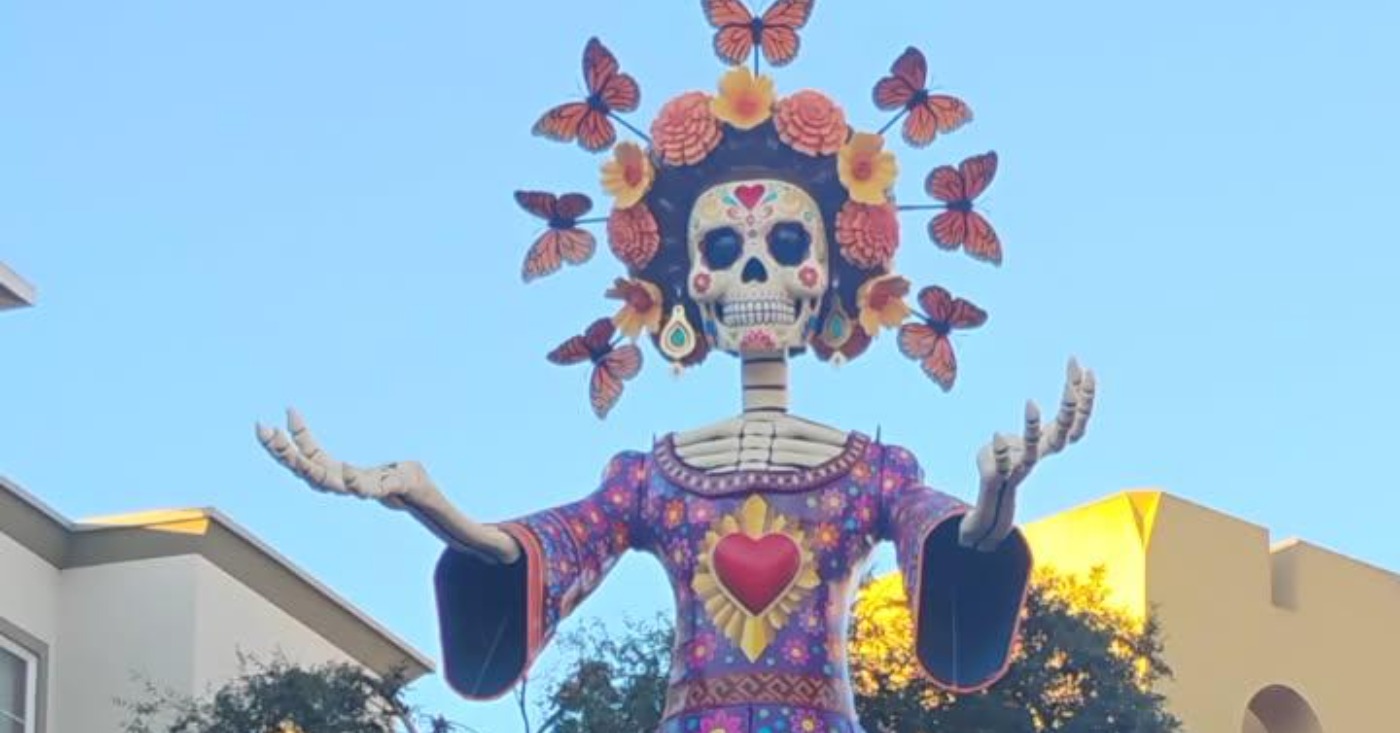
Oakland is hosting a monumental 34-foot-tall sculpture of La Catrina at the Fruitvale Transit Village to mark the 31st annual Día de Los Muertos Festival. Handcrafted by master artisans from Mexico City, the massive figure traveled 2,000 miles to serve as a centerpiece for the city’s cultural celebrations. The statue, adorned with marigolds and monarch butterflies, symbolizes the migrant experience and the enduring connections between generations. The installation will remain on public display through early November, offering visitors a unique opportunity to engage with this iconic symbol of remembrance. Read more.
Every year, the Día de Los Muertos Festival brings people together in Oakland to honor those who came before us and to celebrate the bonds that unite the living and the dead.
For the festival’s 31st observation, the Unity Council, Visit Oakland, the City of Oakland, the Consulate of Mexico, renowned artist Romain Greco of Artsumex, and cultural leaders from Mexico City, commissioned a monumental 34-foot-tall sculpture of ‘La Catrina,’ handcrafted by master artisans from the Mexican capital.
The statue that arrived in pieces was unveiled on Sept. 22 and stands at the Fruitvale Transit Village, where she rises as an impressive symbol of Mexican culture, art, and the connection between Oakland and Mexico.
She will remain on display until Nov. 5, welcoming visitors and community members during various events, before becoming one of the main attractions of the Día de Los Muertos Festival on Nov. 1.
What does La Catrina symbolize?
La Catrina is one of the most recognized symbols of Día de Los Muertos. She represents the remembrance of our loved ones, the celebration of life, and the lasting connection between generations. Wearing a crown of orange marigolds, poppies, and monarch butterflies, the Oakland sculpture has her arms outstretched, as if she wants to embrace everyone who approaches her. This gesture symbolizes a warm welcome to the migrants who arrive in the Fruitvale community and expresses shared values such as inclusion, care, a sense of belonging, and cultural pride.
La Catrina also represents another kind of journey. She reflects the experiences of many families who have traveled north to the United States in search of safety, opportunity, and a better future. Her 2,000-mile journey from Mexico City to Oakland becomes a powerful metaphor for these migration experiences. Across borders, the sculpture carries memories, culture, and identity with her.
This story is deeply connected to the history of immigration in the United States, where generations of newcomers have sought opportunity while also helping to build and sustain their communities.
In California, migrants work in the fields, care for our families, build our neighborhoods, and enrich the cultural and economic life of the region. Their contributions are an essential part of the society we live in.
That is why La Catrina is much more than an impressive work of art. She reminds us of the journeys people make, the sacrifices they make, and the lasting contributions they offer to their communities. Her presence in Oakland celebrates Mexican roots, recognizes the migrant experience, and invites us to reflect on the essential role we all play in building a shared future.
The theme for this year’s festival is “La Lucha Continúa: Aquí estamos y no nos vamos” (The Struggle Continues: We Are Here and We’re Not Leaving). The free, family friendly festival is from 10 a.m. to 5 p.m. Sunday Nov. 1 along International Boulevard between Fruitvale and 34th avenues.
Art
OP-ED: Is Creativity a Superpower in Early Education?
BLACKPRESSUSA NEWSWIRE — “This is not anything new, knowing that play is so critical to children, whether it’s dramatic play, building play, creative arts play or physical play,” said Hoisington, a STEM expert who taught preschool for decades. “But as soon as they hit kindergarten and first grade, there’s this dichotomy that sets in. Play is something you get to do after you do the learning when, in fact, we know that play is an incredible vehicle for learning.”
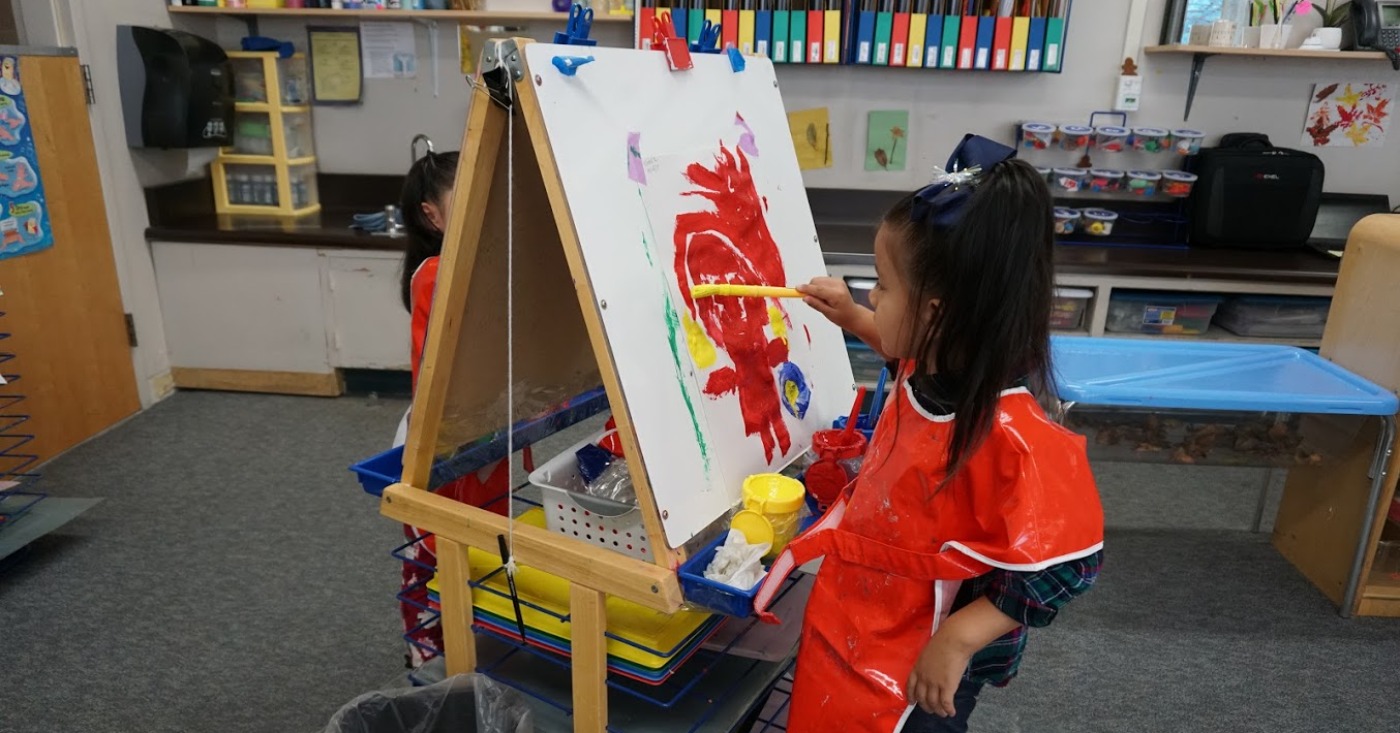
Singing the ABC song. Learning the days of the week from a nursery rhyme. Making a finger-painted collage of little handprints.
Arts education has always been center stage in early education because little children are naturally creative, filled with wonder and the burning desire to express themselves. Arts and crafts not only help nurture a child’s natural imagination, they also boost small motor skills, sharpen hand-eye coordination and feed the insatiable need to play.
“Children don’t just play, they learn fundamental skills through play,” said Daniel Mendoza, a California visual artist and specialist in early childhood education art practices. “Children are in a creative mindset all the time.”
While this may well be as true for teenagers as it is for toddlers, there is far more time and space allotted for playfulness in the early grades, when the crucial role of play in particular and creativity in general has long been a matter of common sense.
“Really, I’m just a common-sense professor, and somehow it became rogue,” said Kathryn Hirsh-Pasek, a professor of psychology at Temple University and an expert in the key role of play in learning. “What if we taught children the way we know the brain learns?”
Bringing joy back into the classroom is also what motivates Cindy Hoisington, an early childhood expert who specializes in reaching out to children from historically marginalized communities at the Education Development Center (EDC), a national education nonprofit.
“This is not anything new, knowing that play is so critical to children, whether it’s dramatic play, building play, creative arts play or physical play,” said Hoisington, a STEM expert who taught preschool for decades. “But as soon as they hit kindergarten and first grade, there’s this dichotomy that sets in. Play is something you get to do after you do the learning when, in fact, we know that play is an incredible vehicle for learning.”
Play, some experts suggest, may be the superpower of the young. A growing body of research suggests that play may even be a way to help close achievement gaps. One report, analyzing 26 studies from 18 countries, found that in communities from Rwanda to Ethiopia, children got higher learning boosts in literacy, motor skills and social-emotional development when attending child care centers that use a mix of instruction and free play as opposed to those focused solely on academics.
“Children are so naturally, intuitively ready with their curiosity, their motivation to explore the world and everything in it, to the point where that’s why the twos are so terrible, because you’re constantly chasing after them,” said Hoisington, who helps evaluate digital media for PBS. “Science, for instance, tends to have a bad rap as this dry body of knowledge that we have to learn, but really it’s a process of exploration that is very much integral with play.”
Tapping into that spirit of discovery with hands-on experiences is often best, experts say. Curiosity burns brightest in the early years, so letting kids loose to investigate the world is part of building a rich, play-based learning environment.
“Where young children are free to investigate by observing, touching and acting on the objects in their world,” said Deborah Stipek, an expert in early childhood at Stanford University. “This is how they learn about the world — for example, that some objects float and some sink. Through their own experimentation and observation, they may even arrive at hypotheses about the qualities that differentiate the two.”
From “The Wheels on the Bus” to “Baby Shark,” kiddos love to sing and love to learn, so why not teach through music? Singing the “Old MacDonald had a Farm” song can be educational, experts say, as well as a ritual for community building. Children can take turns deciding on which animal to pick, which builds vocabulary as well as sharing skills.
“Young children learn best by doing,” said Stipek. “Counting objects is better than counting dots on a worksheet because they can move the objects to help them keep track of how many they have counted. Worksheets are not all bad. They can provide opportunities to practice and consolidate skills. But children don’t develop new skills doing worksheets, and they are typically not nearly as engaging and fun.”
Tracing the alphabet in shaving cream or making tin-foil sculptures may seem like basic exercises, but they often teach sophisticated concepts. Playing make-believe games can teach numerous skills at once. Pretend restaurants need someone to write a menu, calculate a bill and greet diners, fostering literacy, numeracy and special-emotional learning all in one game, Hoisington notes.
Songs are a clever way to remember stuff because they make memorization easy and fun for little ones. Melodies and rhymes make the most of our limited working memory to help children embed basic facts into their long-term memory, bolstering depth of cognition.
“I still sing the ABC song in my head sometimes, if I want to know which letter comes before which letter,” admits Hoisington.
What’s often missed in the discussion of the role of play is that older children also need time for creativity and free play, as well as the arts. While there is much talk about the need to engage students, there is little focus on low-hanging fruit like increasing time for arts, sports and recess. Putting too much emphasis on academic skills in isolation undercuts the love of learning, some warn.
“Kids try to buck it, but certainly by first grade we’ve started to ruin them,” said Hirsh-Pasek. “We pound the curiosity right out of kids.”
Mendoza firmly believes teachers should be guides to adventure instead of taskmasters.
“You don’t have to be a dictator,” as he puts it, “you can be a Sherpa.”
So, why doesn’t the role of play get more respect in education? Why do we emphasize test scores over deep learning?
“We got to this place because people are scared,” said Hirsh-Pasek. “They’re feeling like they’re losing control, and they want to make sure their kid is ahead. We push it younger and younger and younger, and as we do that, we’re creating a situation where our kids are anxious wrecks and the parents are anxious wrecks.”
Some experts suggest that children need more time for play and creativity in the wake of the pandemic, not less. Credit: Lillian Mongeau / EdSource
Too few teachers and parents are aware that play helps build the architecture of the growing brain, experts say.
“Play is not frivolous; it enhances brain structure and function and promotes executive function (i.e., the process of learning, rather than the content), which allow us to pursue goals and ignore distractions,” as an American Academy of Pediatrics report put it. “When play and safe, stable, nurturing relationships are missing in a child’s life, toxic stress can disrupt the development of executive function and the learning of prosocial behavior; in the presence of childhood adversity, play becomes even more important.”
Some experts fear that the laser focus on falling test scores in recent years has led to a decrease in playful learning. They suggest that children need more time for play in the wake of the pandemic, not less. Amid the crisis of chronic absenteeism, engaging students on a compelling level may be more vital than ever.
Creativity is the secret formula, experts say, in a world where machines will always compute faster than humans. Drill and kill won’t help children master high-level intellectual inquiry and conceptual analysis.
“You have to ask yourself, what’s it going to take to outsmart the robots?” as Hirsh-Pasek put it. “We need kids who don’t just memorize and take tests well, which AI will do better than our kids ever will. We need kids to be explorers and problem solvers.”
Art
Kickstarter CEO Everette Taylor Shares Tips on Creating and Growing a Business
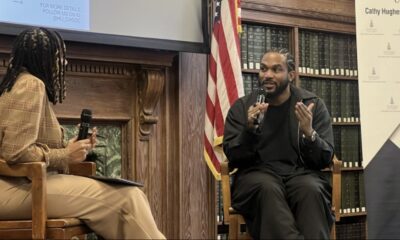
HOWARD UNIVERSITY NEWS SERVICE — Everette Taylor, the CEO of the global crowdfunding platform Kickstarter, recently visited Howard University to serve as the inaugural guest for the Cathy Hughes School of Communications’ new speaker series. Addressing students at the Founders Library, Taylor emphasized that the future of business belongs to those who are bold enough to take risks.
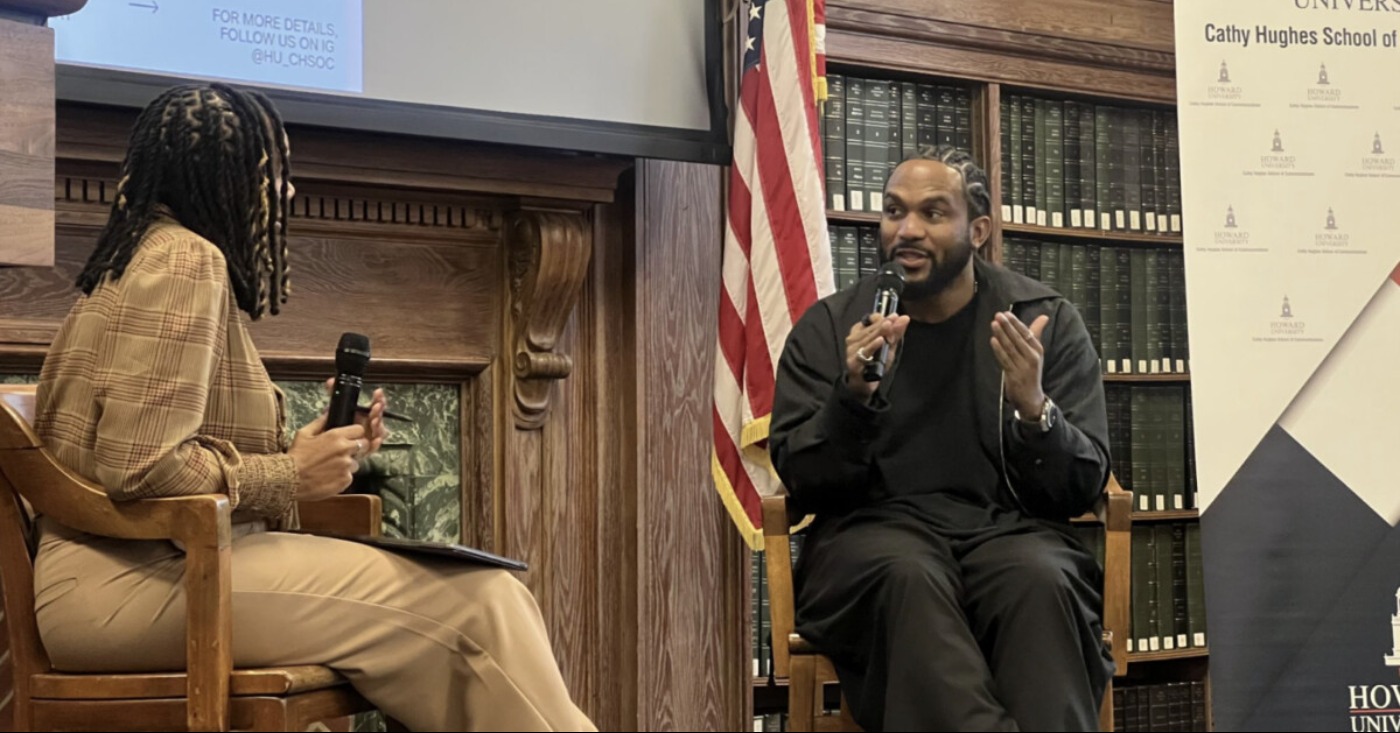
WASHINGTON (HUNS) — “The future belongs to creators who are bold,” Everette Taylor, CEO of crowdfunding platform Kickstarter, told students at Howard University during a recent visit.
As Taylor discussed his journey, he tested the boldness of students by inviting them to share their ideas during an impromptu pitch session at the Cathy Hughes School of Communications’ new speaker series in the Browsing Room of Founders Library. The inaugural speaker then shocked one group of students by pledging to invest in their thesis film, paying forward the opportunities that have lifted him as he struggled to pursue his dreams.
Taylor grew up in a low-income neighborhood in Richmond, Virginia, where he frequently encountered gang violence and drug dealing amid periods of homelessness.
Not feeling as if he conformed to conventional ideas of success, he eventually found inspiration in Jay-Z who balanced being an artist and an entrepreneur. Similarly, Taylor carved his own route, launching and growing various businesses.
He gained enough recognition to land on the 2018 Forbes’ 30 Under 30 list in marketing and advertising. In 2022, Forbes also named him as one of the top 50 most entrepreneurial CMOs when he was chief marketing officer of Artsy, an online art gallery and marketplace. That same year he took over Kickstarter, and the company reported a year-over-year revenue increase of 50% in the first quarter of 2026.
Taylor encouraged the audience through his story, but he also gave practical advice to help students who share his zeal to create and grow their business.
He explained that his mentor, Artsy CEO Mike Steib, helped him make the transition from being a CMO to becoming CEO at Kickstarter.
“These opportunities I don’t take for granted,” Taylor said, adding that Steib was “the first leader I had to take me under his wing.”
When he began his position at Kickstarter, Taylor said, “I had zero imposter syndrome, because I felt like I was ready for it, and it was because this person invested in me over the past few years.”
“A lot of my journey was me just hustling and being bold enough to ask for what I want, but I also need people to give me an opportunity.”
This idea of giving people opportunity impacts his business philosophy, as Taylor estimates that the number of African American employees grew exponentially since he’s been in leadership.
“Kickstarter was I think less than 2% Black, and at our peak I had gotten it to 20-something percent Black,” Taylor said.
Even then, Taylor also saw a need for representing other perspectives. “We still serve people globally, so we need people from different countries and cultures,” he said. “If you’re building a global company, it’s important to build a diverse base of people.”
“I always want to impact more lives, and that always leads to more results.”
Everette Taylor, CEO of Kickstarter
With the success Taylor had after becoming CEO of Kickstarter, he also found a need to prioritize his health.
“This is the first year that I’ve started the year with zero business goals,” he said. “For the first time, my goals have been centered around my health.”
He cites the illness of a friend who appeared to be healthy. Seeing his friend, who is also a successful entrepreneur, endure illness pushed him to prioritize his health.
“Business, I can do that in my sleep, but for me right now I’m so much more focused on setting goals for myself, and I know that’s going to impact the work that I do by feeling healthier and being a better version of myself.”
Samantha Housen, a sophomore public relations major and interior design minor from Harlem, attended the event to gain knowledge to grow her non-profit and for-profit businesses.
“I’m here because I want to explore more of the details of entrepreneurship from an actual professional,” Housen said, and to “see how his mindset could help me in my entrepreneurship.”
“My biggest takeaway is that I’m bold, and it’s OK to be bold,” she said. “I very much have the authority to do whatever I seek to do.”
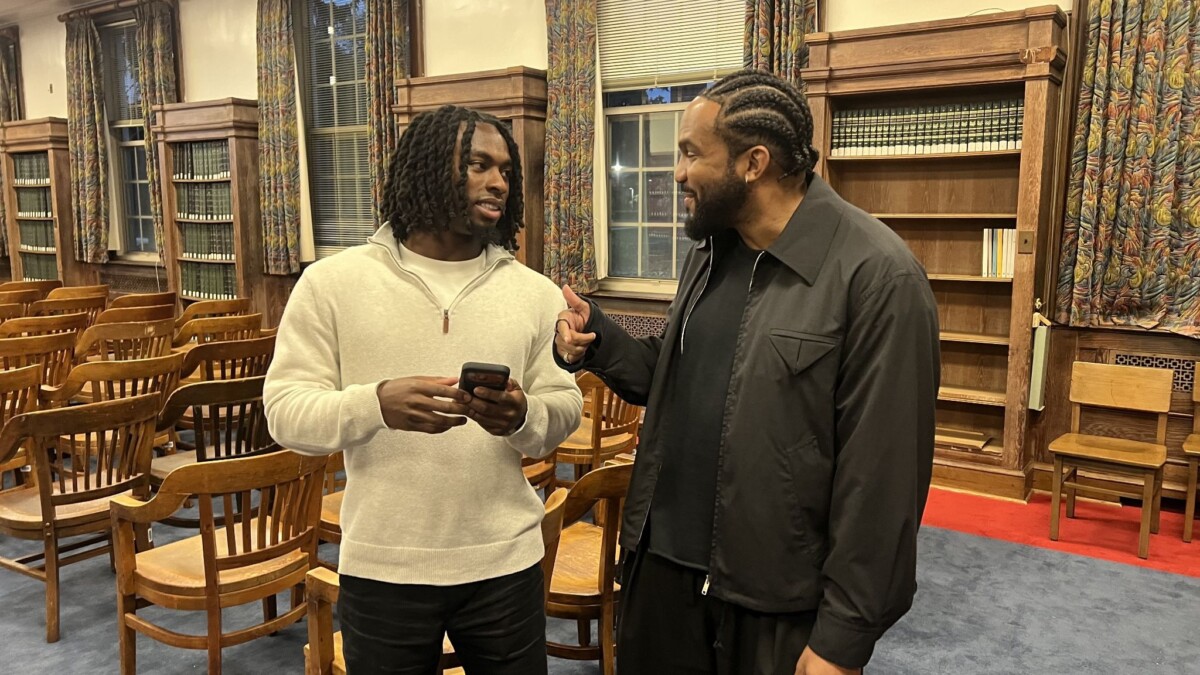
Kimberly Moffitt, Ph.D., dean of the Cathy Hughes School of Communications and host of the event, said she was excited about the speaker series.
“It’s because of students,” Moffitt said. “They felt like they weren’t hearing enough from people who are already post-graduation and successful. They wanted to hear those voices. So, this is an opportunity for me to bring folks to campus so they could reach out, talk and interact with folks that they aspire to be like or will be inspired by.”
Moffitt was excited for students to see someone who looked like them and carried themselves authentically in a position of high acclaim.
“He is showing you a different path, and letting you know that it’s OK to be who you are and show up in that space and not have to apologize,” Moffitt said of Taylor.
Moffitt also wants to encourage students to make the most of the speaker series. She gives details on upcoming speakers and the importance of hearing these people tell their stories.
“Those of you who want to be in TV and film, those jobs are different now,” she said. “You have to hustle in a different way.”
“I need our students to think about entrepreneurship in all that they do,” Moffitt added. “I want students to leave with that so that they have it in their back pocket should they need to draw on it.”
After the event. Taylor explained why boldness is essential to his success at Kickstarter.
“It’s for the grind and the ambition — not settling for status quo and mediocrity, and really going for it,” he said. “I always want to impact more lives, and that always leads to more results.”
Solomon Goins is a reporter for HUNewsService.com.
Based on reporting by Howard University News Service.
Art
Comedy and Loss Collide in Kevonstage’s ‘Grief Sucks’ at the Pageant
ST. LOUIS AMERICAN — Comedian KevOnStage brought his one-man show “Grief Sucks” to The Pageant, offering an experience that blended humor with the raw realities of loss. The show, rooted in his personal journey after the sudden death of his brother, manager, and business partner Jason Fredericks four years ago, gave the audience permission to laugh and cry, often at the same time.
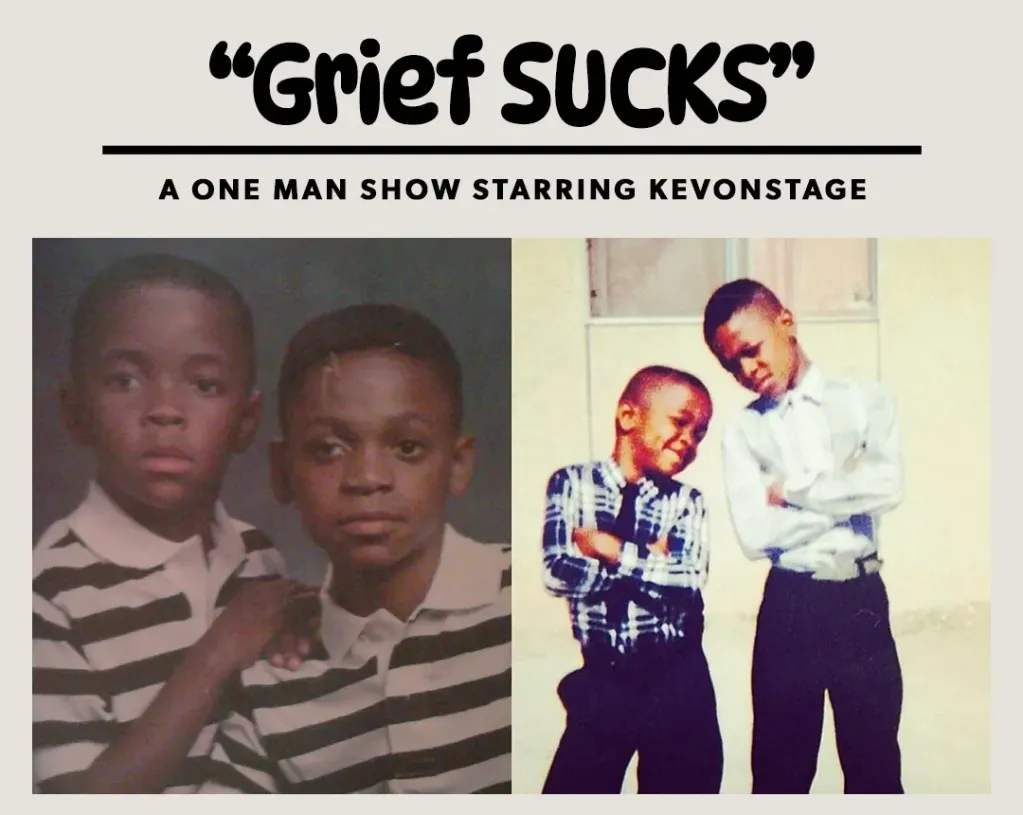
When KevOnStage took the stage at The Pageant Sunday night, his house rules let everyone know what they were in for with his one-man show “Grief Sucks.”
“Do not judge yourself. Do not judge the jokes. Just laugh,” he said.
Even within his directions, were jokes.
He gave the audience permission to cry, but quietly – because Black people have a tendency to do things at full volume.
The hour that followed provided plenty of laughter. But underneath the humor were truths that anyone who has ever lost someone could feel deep in their chest.
The show was based on his experience of losing his brother, best friend, manager and business partner Jason Fredericks. He died suddenly of a heart attack four years ago at the age of 42.
Kev warned the audience to be mindful of their social media — both the wild posts that could end up being someone’s last and the intrusive ones people make after a loved one dies. And he gave people permission to laugh at the moments that feel too outrageous to say out loud — the ones that become inside jokes for families trying to survive the worst days of their lives.
“Grief is dark humor,” he said as he walked through the story of his brother’s death — a story he jokingly blamed on Nia Long.
He found a way to give permission to laugh at the outlandish moments that often serve as inside jokes. Those who have lived through some of the worst moments of their lives and not only found a way to talk about it, but to steal a laugh in the midst.
“Grief is dark humor,” he said as he walked through the story of his brother’s death — a story he jokingly blamed on Nia Long.
“I know that sounds crazy,” he said. “It’s not her fault — but it is her responsibility.”
It was a jarring moment, but it let the audience know exactly what kind of honesty they were in for.
He said his brother’s death was “proof that she is drop‑dead gorgeous.”
“Sometimes things are funny — and sometimes things are funny because you should not be laughing,” he said.
The show moved through a series of points about grief, each one backed by a story that made the room nod in recognition. He talked about how grief can twist ordinary moments — how it can make you jealous of people with siblings or irritated by strangers having a good day.
He explained how grief can twist even the simplest moments, how it can make you jealous of people with siblings, or irritated by strangers having a good day. He brilliantly compared grief to a rock stuck in your shoe. Sometimes it’s small and manageable. Other times its jagged and unbearable – but always there.
He also talked about the unfairness of grief — how the world doesn’t stop when your loved one dies, how people still go to Raising Cane’s, still pick up their kids, still laugh. And he talked about the heartbreak of realizing his brother never got to see things he would have loved, from TV shows to cultural moments. And that he was robbed of the opportunity to engage with him about them.
“He would have loved Sinners,” Kev said. “But he never got to see it.”
At one point, he paused to show a video of his brother telling him how proud he was. The room went quiet. It wasn’t the polite kind of silence – but the kind where you can hear someone in the back sniff. The crowd assured him that it was okay for him to take a beat. His voice shook as he pushed through. Those pauses made the audience lean in even more.
Kev made grief feel communal. He made people laugh at things they didn’t think they were allowed to laugh at. And he reminded everyone in the room that grief doesn’t make sense, doesn’t follow rules, and doesn’t care about timing. And most importantly, he drove home the point that it also doesn’t have to be carried alone.
There were moments when his emotions got the best of him. There was the video he shared of his brother telling Kev how proud he was of him that compelled him to take a beat. His voice quivered as he powered through. Those pauses made the audience connect with the show all the more. Grief Sucks wasn’t just comedy. It was catharsis. It was storytelling. It was a room full of people realizing they weren’t the only ones trying to make sense of loss.
KevOnStage gave them permission to feel all of it — and to laugh anyway.
Internet personality and standup comedian KevOnStage used the sudden and unexpected loss of his brother as the foundation for a one-man show that was funny, honest and a little dark – often at the same time.
Sunday night, he brought “Grief Sucks” to The Pageant. His barometer check
KevOnStage walked onto The Pageant stage Sunday night with a promise: that the next hour would be funny, honest and a little dark. And he delivered all three — often at the same time.
His one‑man show, Grief Sucks, was as relatable as it was funny. It was the kind of performance where the audience laughed hard, then caught themselves nodding in recognition. Because beneath every punchline was a truth that anyone who has lost someone could feel in their chest.
He opened with the kind of humor that only comes from someone who has lived through the worst days of their life and somehow found a way to talk about it. He told the crowd they had permission to cry, laugh, sit still, or just breathe — but to “cry quietly,” because, as he joked, Black folks tend to do everything at full volume.
Then he went straight into the story of losing his brother — not with soft edges, but with the kind of raw honesty that made the room go still. He explained how grief can twist even the simplest moments, how it can make you jealous of people with siblings, or irritated by strangers having a good day. He compared grief to a rock stuck in your shoe: sometimes small and manageable, sometimes jagged and unbearable, but always there.
And he didn’t shy away from the intrusive thoughts that come with loss — the ones people rarely admit out loud. He shared the moment he realized he had lived longer than his older brother ever got to, and how that fact sits heavy no matter how much time passes.
Kev’s storytelling is built on the kind of humor that comes from real life — the funeral home upcharges, the family dynamics, the dark jokes that slip out at the worst possible moments. He told a story about previewing his brother’s body with his wife and grandmother, and how one unexpected comment turned into an inside joke that has carried them through four years of grief.
He also talked about the unfairness of grief — how the world doesn’t stop when your loved one dies, how people still go to Raising Cane’s, still pick up their kids, still laugh. And he talked about the heartbreak of realizing his brother never got to see things he would have loved, from TV shows to cultural moments.
The most emotional part of the night came when he recounted the day his brother died — the phone calls, the confusion, the hope, and finally the moment his nephew said, “He’s gone,” while Kev was sitting in a middle seat on a United flight. He told it plainly, without theatrics, and the room held its breath.
But even in that story, he found a way to make people laugh — not at the pain, but at the absurdity of life continuing around you when your world has just shattered.
By the end of the show, KevOnStage had done something rare: he made grief feel communal. He made people laugh at things they didn’t think they were allowed to laugh at. And he reminded everyone in the room that grief doesn’t make sense, doesn’t follow rules, and doesn’t care about timing — but it also doesn’t have to be carried alone.
Grief Sucks wasn’t just comedy. It was catharsis. It was storytelling. It was a room full of people realizing they weren’t the only ones trying to make sense of loss.
And on a Sunday night at The Pageant, KevOnStage gave them permission to feel all of it — and to laugh anyway.
Based on reporting by St. Louis American.
Art
Inside 820 S. Michigan: New Book Captures the Lost World of Ebony and Jet
CHICAGO DEFENDER — A new photography book offers a rare look inside the former Johnson Publishing Company headquarters at 820 S. Michigan Ave., the longtime home of Ebony and Jet magazines. Titled 820 Ebony/Jet: Visions of the Johnson Publishing Company, an American Icon, the book features photographs by Barbara Karant documenting the building’s interiors.

A new photography book is giving readers a rare look inside one of the most important buildings in Black media history.
820 Ebony/Jet: Visions of the Johnson Publishing Company, an American Icon, published Tuesday by MW Editions, features photographs by Chicago photographer Barbara Karant documenting the former Johnson Publishing Company headquarters at 820 S. Michigan Ave., the longtime home of Ebony and Jet magazines. Pasted markdown
The 240-page book preserves the building’s striking interiors, many of which no longer exist in their original form, while also examining the larger cultural legacy of Johnson Publishing Company and its influence on Black media, design, photography and American culture.
Designed by architect John W. Moutoussamy and completed in 1972, the building was the first, and remains the only, high-rise in downtown Chicago designed by an African American architect. Built for publisher John H. Johnson, the headquarters became a physical expression of the ambition and influence of one of the nation’s most important Black-owned media companies.
While the building’s exterior reflected Moutoussamy’s restrained modernist style, the inside told a very different story.
Designers Arthur Elrod and William Raiser filled the headquarters with bold colors, geometric patterns, mirrored surfaces, rich textures and dramatic materials across 11 floors. The result was a workplace that looked unlike the traditional corporate offices of its era. Pasted markdown
Karant began photographing the building after Johnson Publishing sold the property in 2010 and relocated in 2012. Between 2013 and 2015, and again in 2018, she documented the largely vacant interiors after employees and much of the furniture had been removed.
What remained were the colors, patterns and architectural details that had helped define the company’s visual identity.
Her photographs capture spaces ranging from the cafeteria’s orange, purple and gold designs to Eunice Johnson’s cream-and-honey office, mirrored dressing rooms and the executive floor’s expansive views of Lake Michigan and Grant Park. Pasted markdown
Among the building’s most memorable spaces was the famed Ebony Test Kitchen.
Known for its vivid colors, psychedelic patterns and distinctive cabinetry, the kitchen became a visual reflection of Ebony magazine’s influence on food, lifestyle and Black culture. Karant photographed the kitchen as part of the larger architectural story of the headquarters. Pasted markdown
“The building was almost like a portrait of Johnson Publishing Company itself,” Karant said. “Even after the people and furnishings were gone, the colors, patterns, textures and spaces still conveyed the creativity, confidence and extraordinary cultural presence of the company.”
The photographs have taken on even greater significance because much of what Karant documented has since disappeared.
Following the building’s conversion, substantial portions of the original interiors were removed. The Ebony Test Kitchen was dismantled and preserved separately, making Karant’s images one of the most extensive visual records of how the headquarters looked during Johnson Publishing Company’s decades on Michigan Avenue. Pasted markdown
The book also includes photographs of sculptor Richard Hunt’s Expansive Construction, a work commissioned for the building’s lobby, as well as images of the company’s in-house photography studio and archival views of the original interiors.
But 820 Ebony/Jet goes beyond architecture.
The book includes a foreword by photography historian Deborah Willis, six scholarly essays and personal reflections from former Johnson Publishing Company employees. Together, the contributions explore the company’s role in Black visual representation, media, photography, art and design, while offering firsthand accounts of what it was like to work inside the building. Pasted markdown
For generations, Ebony and Jet helped shape how Black America saw itself and how the country saw Black America.
The magazines documented everything from politics and the civil rights movement to fashion, entertainment, family life and culture. Johnson Publishing Company also became an influential force in photography, beauty, design and popular culture.
That legacy extended well beyond the pages of its magazines.
The new book examines Johnson Publishing Company’s continuing influence on artists including Theaster Gates, Hank Willis Thomas, Kwame Brathwaite, Lorna Simpson, Martine Syms and David Hartt. Pasted markdown
For Chicago, the book serves as both an architectural record and a cultural archive. It preserves a place where Black entrepreneurship, media, art and design converged at a scale rarely seen before or since.
820 Ebony/Jet: Visions of the Johnson Publishing Company, an American Icon is available now from MW Editions. The hardcover volume includes 150 photographs and is priced at $65. Pasted markdown
Karant is also scheduled to present the book during Modernism Week at the Palm Springs Art Museum on Feb. 15, 2027, where she will discuss the connection between the Johnson Publishing Company headquarters and the design legacy of Arthur Elrod and William Raiser.
The post Inside 820 S. Michigan: New Book Captures the Lost World of Ebony and Jet appeared first on Chicago Defender.
Based on reporting by Chicago Defender.
Art
Houston’s ‘call Me Mother’ Exhibit Opens Today, Spotlighting Black Maternal Health
AFRICAN-AMERICAN NEWS AND ISSUES – DALLAS — The Health Museum in Houston today opens “The Call Me Mother Experience,” an exhibition spotlighting Black maternal health through art and personal storytelling. Curated by Houston’s first Black poet laureate, Deborah D.E.E.P. Mouton, the project originated from her own poem written during a miscarriage.
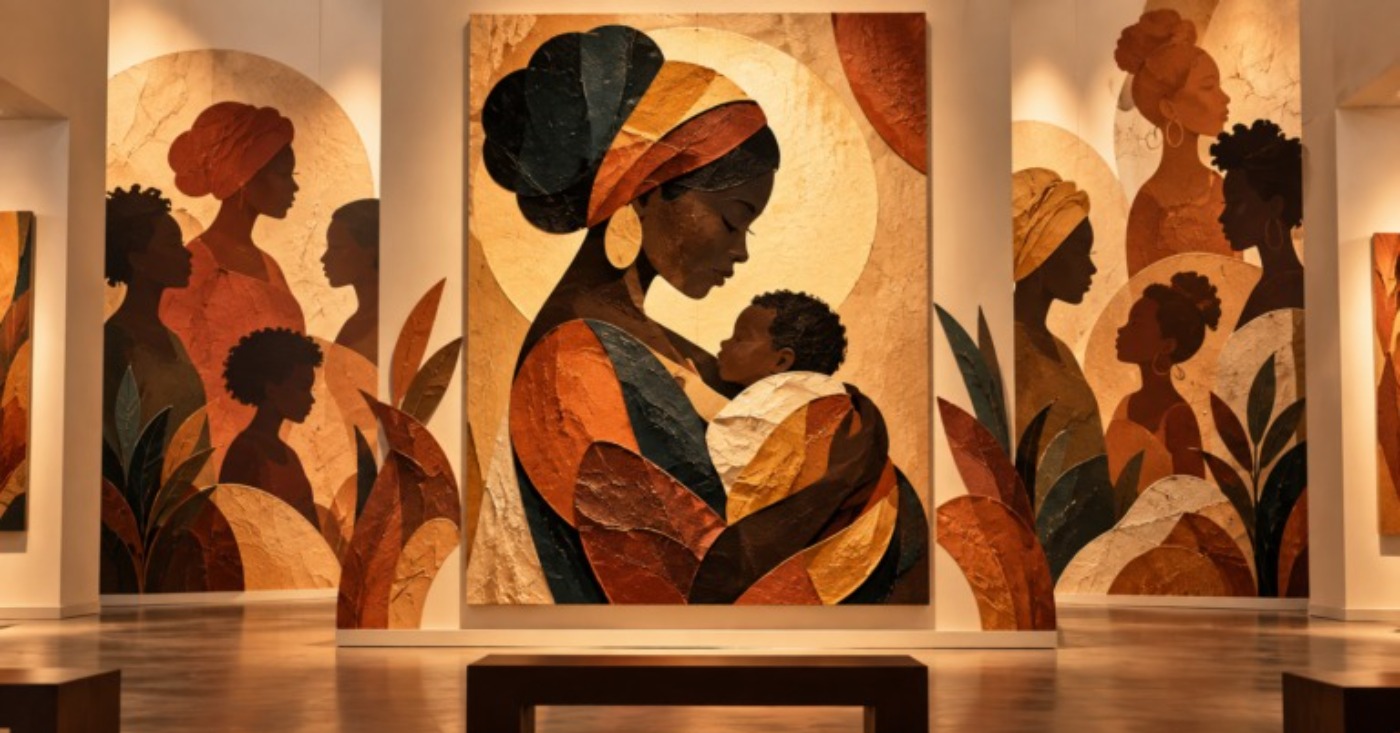
HOUSTON — A new exhibition opening Sunday, Oct. 4, at The Health Museum is bringing Black maternal health into public view through art and personal storytelling.
The Call Me Mother Experience will be on display through Feb. 28, 2027. The museum lists a preview reception today from 3 to 5 p.m. at 1515 Hermann Drive, with tickets priced at $5 for members and $15 for nonmembers.
A personal story becomes a community conversation
According to the museum, founder, curator and lead artist Deborah D.E.E.P. Mouton developed the project from a poem she wrote during a miscarriage. The installation combines films, recorded interviews, visual artwork and contributions created with community members.
Mouton, Houston’s first Black poet laureate, discussed the exhibition and her connection to its subject in an Oct. 1 appearance on KPRC’s Houston Life. The station described the project as addressing the unequal burden of pregnancy-related illness and death faced by Black women in Harris County.
An announcement distributed by the Call Me Mother Experience says the initiative will also reach community locations and faith-based organizations across Greater Houston. Those additional settings are intended to extend the conversation beyond a museum visit.
What visitors can expect
The museum says reception guests can explore the exhibit, hear the curator and meet participating artists. Reception admission includes general museum entry; refreshments are available while supplies last.
The featured image accompanying this article is an original illustrative concept, not a photograph of the exhibition or its artwork.
Sources and visitor information:The Health Museum exhibition listing; preview reception details and tickets; KPRC Houston Life; organizer announcement.
The post Houston’s ‘Call Me Mother’ Exhibit Opens Today, Spotlighting Black Maternal Health appeared first on African American News and Issues.
Based on reporting by African-American News and Issues – Dallas.

San Diego’s State Workers Demand Better Pay in Major Strike

Unscripted Sports Talk: Featuring Local Media Stars! #shorts

Par 365: Making Indoor Golf More Accessible in Minnesota #shorts

Honoring Clem Haskins: A Basketball Legend’s Legacy at UMN #shorts
NFN live presents Beyond IWDM 50 Podcast
The Hidden Cost of Insurance Loyalty

Retrospectro Talks Viral Videos, Lean Squad, Music & More | Interview

CBCF’s ALC 55 Recap | September 2026

The Washington Informer Celebrates 62 Years | Recap

Heated Seats & Sliding Window: Ultimate Truck Comfort #shorts

OP-ED: Haiti TPS: Have We Lost Sense of Humanity?

Remembering Chauncey Bailey as Student Journalists Face Threats to Truth-Telling

All Skinfolk Ain’t Kinfolk

Poll: Becerra Widens His Lead Over Hilton; Californians Split on Wealth Tax

Rulings Leave Questions Lingering in Nolan Wells Case

Latinas Deserve Equal Pay. Unions Help Make It Happen.

Zakiya Jendayi Arrested, Locked Out of Home by Sheriff’s Deputies

COMMENTARY: The Audacity of Joyce Beatty

Why Black Artists Struggle to Sell Tours

A $2.1 Trillion Wellness Industry Never Built a Daily Practice for Black Children. So This Atlanta Family Did.
San Diego’s State Workers Demand Better Pay in Major Strike
Unscripted Sports Talk: Featuring Local Media Stars! #shorts
Par 365: Making Indoor Golf More Accessible in Minnesota #shorts
Honoring Clem Haskins: A Basketball Legend’s Legacy at UMN #shorts
Retrospectro Talks Viral Videos, Lean Squad, Music & More | Interview
CBCF’s ALC 55 Recap | September 2026
The Washington Informer Celebrates 62 Years | Recap
Heated Seats & Sliding Window: Ultimate Truck Comfort #shorts

Test Subaru’s 11.6-Inch Screen in REAL Daylight #shorts

EV Range Anxiety? Your Daily Commute Needs Just One Overnight Charge #shorts
-

 Black History1 week ago
OP-ED: The Black Church Writes AI’s Next Chapter
-

 Featured7 days ago
Tamiko Armstead | 2026 Lifetime Achiever in Education
-
 Black History1 week ago
Practitioners of African Traditional Spirituality Offer Ancestral Reverence Ritual Oct. 31
-
 Art1 week ago
Kickstarter CEO Everette Taylor Shares Tips on Creating and Growing a Business
-

 Black History1 week ago
Columbus’s Oldest Businesses Still Open: 10 That Have Lasted 75+ Years
-

 Black History1 week ago
COMMENTARY: BIG MAMA SAID: Don’t Throw Away the Gift Just Because It Came Wrapped Wrong
