
Sports
Not Making the Grade: Why Big Time College Sports Continue Failing Black Male Student Athletes


by Starla Muhammad
Special to the NNPA from The Final Call
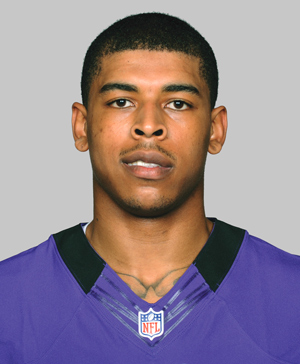
This 2012 file photo shows then-Baltimore Ravens NFL football player Michael McAdoo, who was released by the team in 2013. The former University of North Carolina football player has filed a lawsuit against the school, saying it failed to provide him and other athletes a quality education by guiding them toward sham classes.
|
A recent lawsuit filed by Michael McAdoo, a former football player at the University of North Carolina (UNC) accuses the institution of higher learning of failing to provide him with a quality education in exchange for his talents on the gridiron.
It is the latest fallout from an academic scandal that continues shedding new light on what critics argue is an old problem—the on-going exploitation of college athletes, particularly young Black male athletes.
The lawsuit, filed in U.S. District Court in Charlotte, stems from academic improprieties at UNC uncovered in a report revealing that nearly 3,000 students and student-athletes enrolled in so-called “no-show” classes in the Department of African and Afro-American Studies between 1989 and 2011. These independent study courses required students to write papers and there was little to no instructor-student interaction.
A 136-page report, “Investigation of Irregular Classes in the Department of African and Afro-American Studies at the University of North Carolina at Chapel Hill,” was released last month.
Student-athletes accounted for 47 percent of enrollment in the “no-show” or “paper” classes but make up only 4 percent of the school’s undergraduate student body, said the report. Of student-athletes enrolled in the classes, 50.9 percent were football players, 12.2 percent were men’s basketball players, 6.1 percent were women’s basketball players and 30 percent were Olympic and other sport athletes, the report continued.
“A good number of these student-athletes were ‘steered’ to the AFAM paper classes by certain academic counselors in ASPSA. This steering was most prevalent among the counselors for the revenue sports of football and men’s basketball,” noted the report. ASPSA stands for Academic Support Program for Student-Athletes.
The academic scandal that rocked UNC came to no surprise to Dr. Boyce Watkins an author and former finance professor.
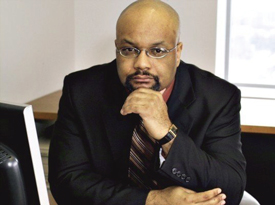
Dr. Boyce Watkins
|
“I’ve taught at four different universities with major athletics programs and at pretty much every school you see something ridiculous like this that occurs. Maybe not so broad and sustained and systemic as this but universities make it very clear that their number one priority is to make money, not to educate athletes,” said Dr. Watkins.
“What they do is they educate White kids with money earned by Black kids on the basketball court and the football field. It’s really a transfer of wealth due to the labor of what you might call indentured servants in a way but not quite the same thing of course,” he added.
While men’s college football and basketball means big bucks for universities, advertisers, athletic companies, boosters, stadiums and venues, the travel and tourism industry, restaurants and high paid coaches, players are more often than not left in the cold due to antiquated NCAA rules and regulations.
There are nearly 1,100 Division I, II and III colleges and universities that make up the NCAA. According to financial reports on ncaa.org in 2013, the NCAA raked in $912.8 million in total gross revenue which includes television and marketing rights fees, net investment income, championships and NIT tournaments, an increase from $871.6 million the previous year.
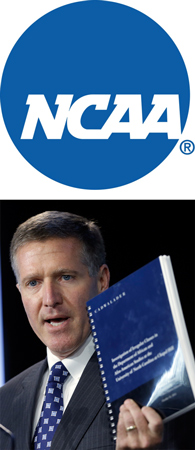
Kenneth Wainstein, lead investigator into academic irregularities at the University of North Carolina at Chapel Hill, holds a copy of his findings during a news conference following a special joint meeting of the University of North Carolina Board of Governors and the UNC-Chapel Hill Board of Trustees in Chapel Hill, N.C., Oct. 22.
|
But Mr. McAdoo was ruled ineligible to play by the NCAA in 2010 for allegedly receiving $110 in improper benefits in violation of rules. Part of the illegal benefits included an alleged prospective agent paying for an $89 hotel stay and $10 night club cover charge for Mr. McAdoo.
University of Georgia star running back Todd Gurley played Nov. 15 after serving a four game NCAA suspension for receiving money for signing autographs from memorabilia dealers.
In 2010 four football players from The Ohio State University were suspended by the NCAA for selling their own team memorabilia in exchange for a few thousand dollars and free tattoos.
According to the American Gaming Association, the FBI estimates over $2.5 billion is illegally wagered annually on March Madness and $80 million to $90 million legally wagered through legal gambling in Nevada. Last year the NCAA March Madness basketball tournament generated $1.15 billion in ad revenue. And the city of Atlanta, which hosted last year’s tournament, reportedly received a $70 million boost to its economy.
Players receive none of that money.
The “free” college education only applies to players who are able to stay academically eligible and if their scholarships are renewed annually. Players run the risk of being dropped from the team if they get injured and are unable to play.
Degree dilemmas and struggling to find a way
Of the Division I men’s basketball teams that were in the Sweet 16 tournament earlier this year, the graduation rate of White male student athletes was 98 percent, for Black male student athletes, it was an abysmal 55 percent according to The Institute for Diversity and Ethics in Sports (TIDES). The institute located at the University of Central Florida, is headed by Dr. Richard Lapchick.
The NCAA measures its Graduation Success Rates (GSR) on the percentage of players that graduate within six years of entering school.Among 70 college football teams heading to bowl games, during the 2013-14 season, the graduation rate for Black players was 65 percent versus 84 percent for White players. Nine out of 70 schools graduated less than half of their Black football players but none graduated less than half of White players.
On average, historically Black colleges and universities do not fare much better when it comes to graduating Black male student-athletes. Alabama State had a GSR of 81 percent in 2012-2013. Howard University was second at 61 percent. The average GSR of NCAA Division I HBCU football team that year was slightly over 47 percent. The University of Maryland Eastern Shore men’s basketball team led all HBCU’s in 2012-13 with a GSR of 86 percent.
Writer and professor Jessica Johnson of Central State University in Wilberforce, Ohio noted in a piece published on Online Athens that while Black colleges face problems with athletes graduating—far more pressure exists at White institutions.
“While there is pressure to win in the HBCU Division I conferences, it pales in comparison to what student-athletes face in major conferences like the Big Ten and Atlantic Coast Conference. Also, HBCUs rarely have players leaving early for the NBA draft, so that does not factor into their lower GSRs,” she said. Low GSR’s at HBCU’s need to be examined closely and concerns raised about potential hindrances to academic achievement so a stronger support system can be developed she added.
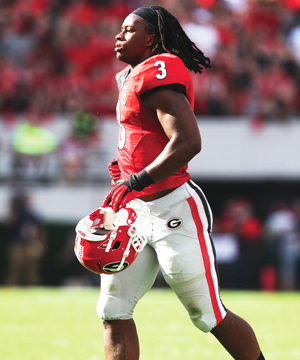
Georgia running back Todd Gurley (3) in action against South Carolina, Sept. 7, 2013 in Athens, GA.
|
College athletics is a business industry using unpaid labor and there are no incentives keeping the powerbrokers accountable to athletes providing the labor, explained Dr. Watkins.
“Coaches are not incentivized in their contracts to educate or graduate anybody. They get tiny bonuses for graduation almost just like honorariums. Their real bonuses come from winning championships,” said Dr. Watkins.
“If you are a coach and you’ve got a $5 million a year job on the line and your university has clearly stated in the contract that winning games is your number one priority; how much time are you really going to put into making sure these young men get educated? None.”
Dr. Lapchick said diversity in key decision making positions in colleges and universities could impact graduation outcomes.
“If you have all White men or overwhelmingly White men making the decisions in college sports you’re going to have a limited perspective on who to hire, on decisions to make and what’s important. It doesn’t augur well for college sports that the leadership positions in particular are overwhelmingly White,” he told The Final Call. Over 88 percent of presidents of Football Bowl Subdivision schools and conferences are White. Almost 85 percent of athletic directors and 100 percent of conference commissioners are White.
The continued educational gap between Black and White students in general is even bigger than it is on the collegiate athlete level, Dr. Lipchick pointed out. Therefore a Black student athlete in high school may end up being significantly farther behind than his White team mates. Unless schools are prepared and willing to help close that academic gap, Black athletes will continue to be at a serious disadvantage in completing their education, Dr. Lipchick added.
He has researched and studied issues in sports related to race and gender in collegiate and professional sports for over 50 years. Individual Black student athletes he has spoken to over the years told him they often feel college counselors put them in courses just to keep them eligible rather than helping athletes move toward completing a degree.
“There’s simply from (the counselors’) point of view no expectation. They’re valued clearly as basketball or football players or whatever their sport is but not so much as someone that might make a contribution in a political science class or economics class,” said Dr. Lapchick.
A change in direction?
Efforts to confront the NCAA and force changes are underway. Kain Colter, a former football player at Northwestern University, led efforts to have its players vote to form a union at the Illinois school after an official with the National Labor Relation Board ruled football players were employees and entitled to benefits such as workers compensation and a portion of revenue. The results of the April vote were impounded and will not be made public until the NLRB reviews the initial ruling. That is not expected to happen anytime soon.
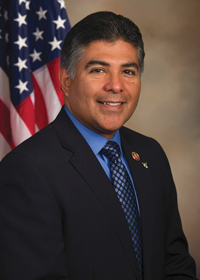
Rep Tony Cardenas (D-Calif)
|
Rep. Tony Cardenas (D-Calif.) introduced “HR 3545: The Collegiate Student-Athlete Protection Act” last November. Co-sponsored by Reps. Elijah Cummings (D-Md.), Charlie Rangel (D-N.Y.), Tim Ryan (D-Ohio), Jared Huffman (D-Calif.) and Betty McCollum (DFL-Min.) the act would ensure that an athlete’s inability to compete would not mean loss of athletic scholarships.
Among other benefits, the bill would require training in life skills and finance workshops, including explanation of the full rights provided in scholarships, concussion education and what student-athletes can expect to pay in health care costs. But a year later, there is still no movement on the bill, according to congress.gov.
It is also important that student athletes and their families understand what they are potentially getting into when accepting an athletic scholarship.
During a Nov. 14 interview on ESPN, University of Notre Dame head football coach Brian Kelly was asked what was the biggest difference he has seen over the last few years is in what recruits are looking for in a collegiate program. Recruits are concerned about getting a shot at making it to the NFL but they are also concerned about their education and life after football, he said.
“I really think the pendulum has swung back. Kids are thinking about their degree. They’re thinking about ‘how can I best have an opportunity when football is over,’ ” said Coach Kelly.
“They know and they read the stories in the NFL and how after their careers are over that they’re struggling maybe to make a career of it. So kids are thinking about the degree and success after. And I know that’s hard to do when you’re 17 but they have mentors, they have family members, they have others that are helping them and I think the pendulum has swung back over probably the last 5 or 6 years where kids are really considering that degree now,” said Mr. Kelly.
And while Notre Dame is number one in percentage of football players that graduate with degrees, it went through its own controversy earlier this year when five players, all Black, were dismissed from the squad for academic fraud. This came one year after current starting quarterback Everett Golson was suspended during the 2013 season for cheating on a test. An investigation revealed players had submitted assignments that were written or completed by others.
Eric Muhammad played two years of football at Arizona State University in 1993-94 after transferring from Pasadena City College in California. One of the biggest challenges many Black male athletes face is college is often a completely different culture and environment than they are used to. Also, if academics and school is not stressed in the home of an athlete, when they get to college they may struggle, he said. Universities need to have training programs and tools in place to help with this academic and environmental transition, said Mr. Muhammad.
He also agrees that college athletes should be paid for playing and have a right to be compensated in a fair and equitable way.
“If I can’t have my money right now, there needs to be something put aside because if 10,000 people are in the stands wearing my jersey I need to be compensated for that. The NCAA, in my humble opinion, is a complete racket and they’re raking in hundreds of millions of dollars in endorsement money from these companies and the athletes don’t see a portion. After I cashed my scholarship check, I had $80 left for the entire month. It’s insane,” he said.
Earlier this year a federal judge ruled to remove restrictions on money college athletes can get for use of their likeness, image and name but the NCAA can still cap the payments as long as the amount is not less than $5,000 a year for each year they compete.
The Honorable Elijah Muhammad of the Nation of Islam pointed out in his 1965 book “Message to the Black Man” that America more than any other country offers Black people opportunities to engage in sport and play, much to their detriment. The world of sports is causing tremendous amounts of evil and hundreds of millions of dollars change hands for the benefit of a few while hurting millions of poor people, wrote the Nation of Islam patriarch. His top student, Minister Louis Farrakhan, has repeatedly pointed out how historically, Black athletes have been used and exploited for their skills.
The reasons universities, the NCAA and others are allowed to continue to get away with what is happening is because the majority who are exploited are Blacks. Coaches and athletic departments control the academic futures of Black athletes but with that power should also come the responsibility to ensure they receive a proper education, Dr. Watkins pointed out.
“The only system in America that’s worse than the prison industrial complex is the NCAA,” said Dr. Watkins.






Black Press
NCCU Ramping up for the 89th Ultimate Homecoming Experience
NORTH CAROLINA CENTRAL UNIVERSITY – CAMPUS ECHO — N.C. Central University is preparing for its 89th Ultimate Homecoming Experience, a week-long celebration. Thousands of students, family, friends, and alumni are expected to gather on campus for festivities including the Homecoming Countdown, parade, Miss and Mister NCCU Coronation, concerts, and the football game.
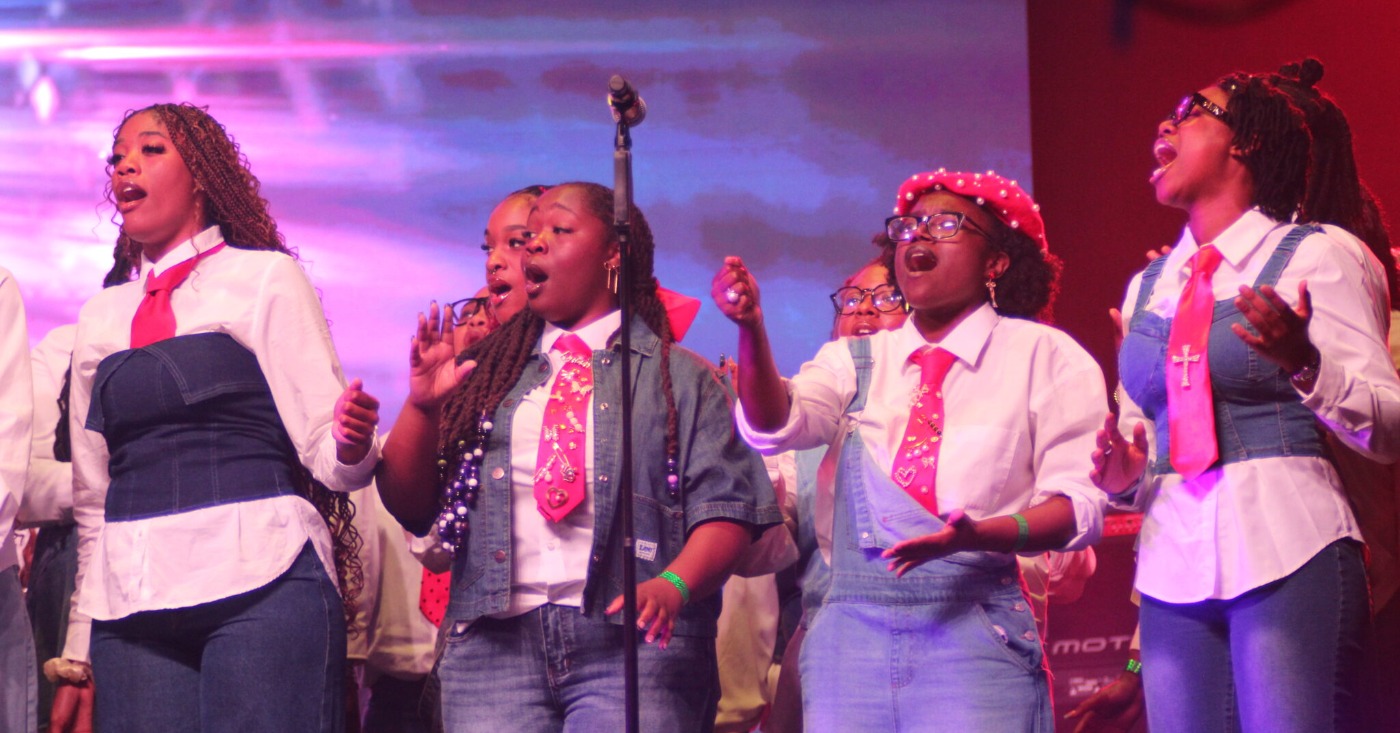
This Saturday N.C. Central University will kick off its 89th Ultimate Homecoming Experience — a week-long celebration bringing thousands of students, family, friends and alumni to campus.
This year’s festivities include the Homecoming Countdown, parade, Miss and Mister NCCU Coronation, concerts and the football game.
The number of visitors to the football game on Saturday, Oct. 10 is expected to reach at least 10,000 — O’Kelly Riddick Stadium’s capacity, with NCCU’s recent enrollment increase of more than 10,000 students.
The Eagles will face William & Mary after playing against the Campbell University’s Fighting Camels on Oct 3.
Students are already expressing excitement for the upcoming festivities.
“I’m excited for homecoming because I can meet alumni and go outside and party with my fellow eagles,” Digital Filmmaking junior Rhese Gardner said. “I’m also really looking forward to the Greek Bowl because there’s a lot going on.”
He added that even though he’s disappointed this semester’s Oil Spill was canceled, he’s still excited for the other events like the parade and concerts.
Here is a list of the week’s on-campus events:
- Oct. 3 – Homecoming Countdown
- Oct. 4 – Gospel Concert
- Oct. 5 – Coronation of Miss and Mister NCCU
- Oct. 6 – 10:40 Break
- Oct. 6 – Homecoming Experience Showcase
- Oct. 7 – Fried Chicken Wednesday
- Oct. 7 – Festival Block Party
- Oct. 7 – Late Night Breakfast
- Oct. 8 – Back to the Nest Young Alumni Mixer
- Oct. 8 – Old School Greek Stroll Off
- Oct. 8 – Hip-Hop Concert
- Oct. 9 – Step Show
- Oct. 10 – Football Game
The post NCCU ramping up for the 89th Ultimate Homecoming Experience first appeared on Campus Echo Online.
Based on reporting by North Carolina Central University – Campus Echo.
Black Press
Jaguars Do Better: Top of Ladder or Resting at the Bottom
SOUTHERN UNIVERSITY – SOUTHERNDIGEST — Southern University received a No. 48 ranking in the U.S. News annual HBCU rankings for 2027, tying with Bethune-Cookman University, Philander Smith College, Savannah State University, Stillman College, and West Virginia State University.
On September 22, U.S. News released its annual HBCU rankings for 2027. Southern University was ranked No. 48, tying with Bethune-Cookman University, Philander Smith College, Savannah State University, Stillman College, and West Virginia State University. When I first saw the ranking, I had mixed feelings about where Southern was ranked. Did I feel like Southern needed to be ranked No. 48? Yes and no. On one hand, I understand how the university received that ranking based on the factors U.S. News uses for their rankings. On the other hand, when I look at some of the other schools that ranked higher than Southern, in my humble opinion, we should have been ranked higher.
To understand why Southern was ranked No. 48, it is important to look at the factors U.S. News uses for their rankings. The rankings consider graduation rates, freshman retention rates, financial resources, faculty information, peer assessments, and student outcomes after graduation. I understand why these factors matter because they can indicate how well a university supports its students, prepares them for life after college, and how students can benefit from attending that institution.
One of the biggest factors affecting our ranking is our graduation rate. The graduation rate measures how many first-time, full-time, degree-seeking students complete their degree within four years. Based on my research, the newest official data available from Southern lists the four-year graduation rate at about 10%. Even though that number is concerning, I believe that number needs more context. Some of Southern’s major programs, including Engineering, can take students five years to complete because of their demanding requirements and how their degree flowcharts are set up. So, while the four-year graduation rate is something Southern needs to improve, I don’t think it tells the whole story of how long it takes every Southern student to graduate.
Another issue is admissions. Southern University talks frequently about the “Southern Standard,” but I think there needs to be more consistency between the standard we expect and the students we admit. Southern should continue providing the opportunities it already provides, but I also believe the university should try to recruit more students who have already shown that they can uphold a certain academic, personal, and professional standard. Additionally, students who are admitted should receive the support and resources they need to succeed.
Overall, I understand why Southern was ranked No. 48, but in my opinion, we could and should be higher. The ranking shows areas where Southern needs to improve, but it should not define the university as a whole. Instead, it should encourage Southern to look at admissions, student support, graduation rates, career opportunities, and whether every major receives the attention it deserves. Southern is more than just a number, but if we want that number to change, we have to be willing to look honestly at what is behind it, including making sure that strong programs like Nursing and Engineering continue to provide opportunities while majors such as Agriculture, Criminal Justice, Education, and Social Sciences receive the same attention and opportunities for their students. At the end of the day, the goal should not only be to move up in the rankings, but to ensure every student at Southern has the support, accessibility to opportunities, and resources they need to succeed, not only while attending Southern, but in their future post graduation careers.
Based on reporting by Southern University – SouthernDIGEST.
Sports
NFL: Bryce Young is Proving “Patience is a Virtue”
Bryce Young threw for 329 yards and two TDs as the Panthers beat the Lions 32-26 on Sunday Night Football. Is an MVP candidate emerging?

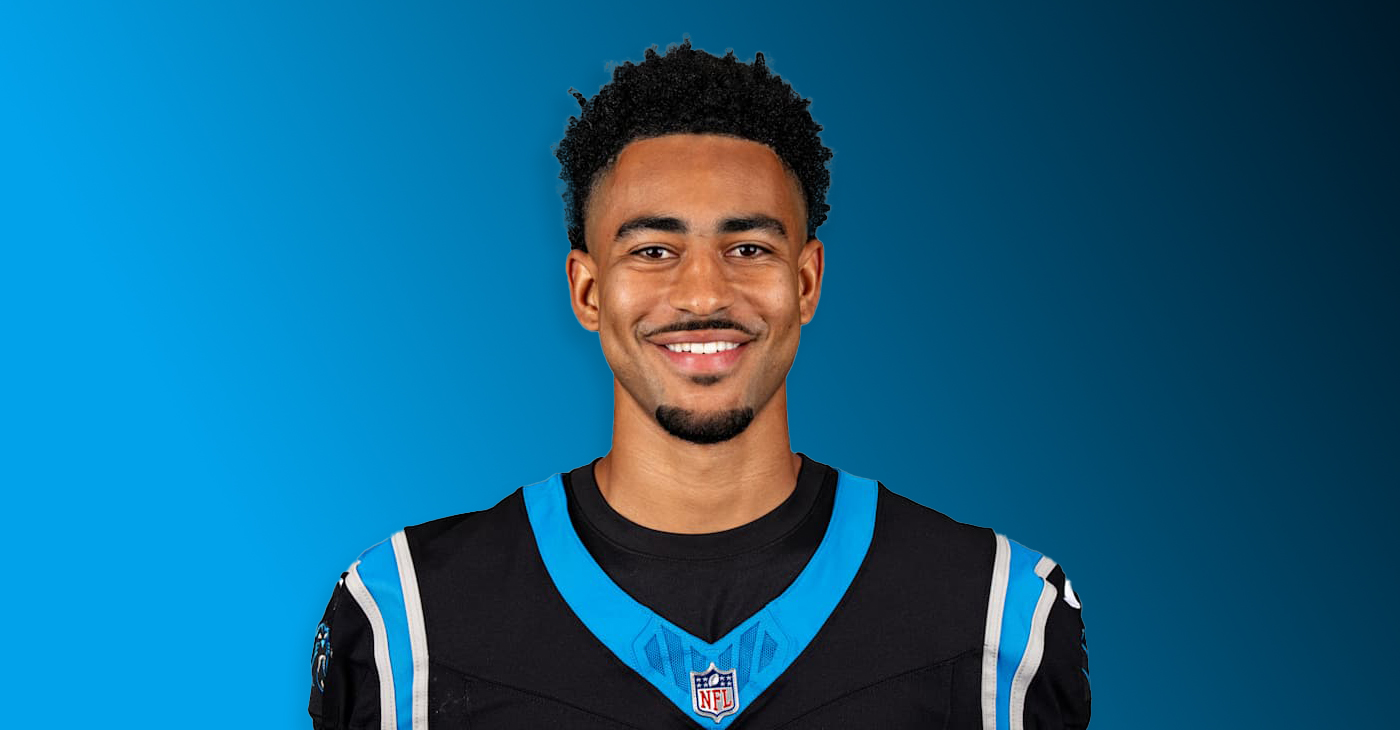
Romans 12:12 says, “Rejoice in hope, be patient in tribulation, be constant in prayer.” On Sunday night, the Carolina Panthers proved patience pays. Quarterback Bryce Young threw for 329 yards and two touchdowns as the Panthers defeated the Detroit Lions 32-26 during NBC Sports’ Sunday Night Football, the first time the Panthers were featured since 2015. And for large portions of that game, the score did not accurately indicate how dominant Bryce actually was.
Young was in total control. Calm. Decisive. Dialed in on every read. Detroit’s defense couldn’t stop a line of ants, and he shredded it anyway. It was the same point guard I photographed at Alabama not so long ago, only now with an NFL offense in his hands.
Tetairoa McMillan had 14 catches for 192 yards and two touchdowns. All the more remarkable considering Carolina was without Jalen Coker and Xavier Legette.
The numbers back it up. Through four games, Young has 1,268 yards, nine touchdowns, two interceptions, and a completion rate near 63%. Against Detroit, he hit 70%. He leads the league in passing first downs (63), completions of 10-plus yards (55), completions of 25-plus yards (13), and deep passing yards (321). His nine touchdown passes are tied for third.
So, is an MVP candidate emerging?
“Yeah, I heard it,” Young said. “In the moment, you’re just focusing on executing and trying to move the team. Obviously, a huge blessing, the support, and I mean the Bank tonight was electric. They caused some false starts. They made it hard on them, and when the Bank’s rocking like that, we take a lot of pride in that. So I’m super, super grateful for the fans.”
Yes, the Panthers have only faced the Bears, Falcons, Browns, and Lions. But Young is making the most of it. He’s building on what offensive coordinator Brad Izdik put in place: get the ball out on time and make the right read on every snap.
The critics have continually said of Young: he’s too short, he’s too light, he isn’t strong, he’s injury-prone, and he’s a bust. However, a quarterback in the NFL is only as good as the structure surrounding him. In four years, Young was sacked 128 times (including 10 this season). However, Young’s (and Carolina’s) perseverance is paying off.
During the bye week, Young and the Panthers will be reminded of Galatians 6:9. It says, “And let us not grow weary of doing good, for in due season we will reap, if we do not give up.”
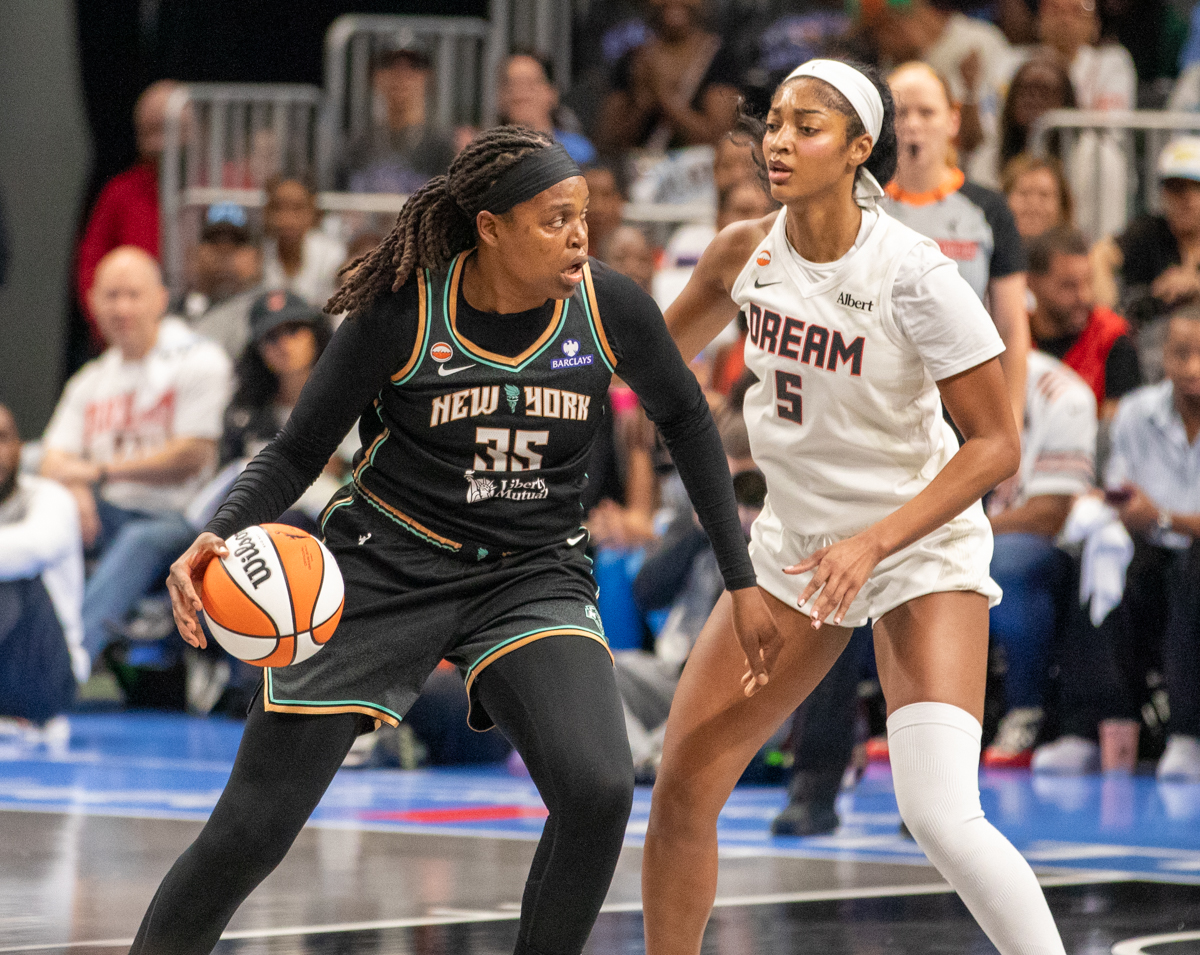
ATLANTA — DeWanna Bonner scored 23 points, and Jordin Canada added 25 points as the Atlanta Dream defeated the New York Liberty 92-82 at State Farm Arena on Sunday afternoon. Defensive Player of the Year Angel Reese contributed 17 points, seven rebounds, four steals, and three blocks.
This victory marked Atlanta’s first semifinal win since 2018, leaving them the only undefeated team remaining in the postseason. The Dream are currently on an eight-game winning streak, dating back to the regular season. Bonner’s addition on August 27th provided crucial veteran leadership as they pursue a potential championship.
“DB got into us at halftime, I’ll just say that,” said guard Jordin Canada. “We knew we didn’t play our best in the first half. We just weren’t aggressive enough on the defensive end or the offensive end. We talked about a second-half surge and emphasized that the first three minutes of the second half would be really important, so we came out ready to go.”
The Dream capitalized on New York Liberty turnovers, scoring 32 points off them, including 16 in the third quarter.
“We tried to get her a couple of times, but it just never worked out,” said Dream head coach Karl Smesko, referring to Bonner. “I thought she was exactly what we needed. Not just because she is a veteran presence, but because she still plays like she did tonight. That was a huge performance. Whenever we needed a play, she made it.”
Meanwhile, New York’s Sabrina Ionescu scored 27 points. “They increased their defensive pressure, and we were driving into lanes without creating good outlets for our teammates,” said Ionescu. “We’ll review the film and understand that points off turnovers really matter, especially against a team that thrives on them.”
Atlanta’s Allisha Gray injured her hand in the first quarter but returned to the bench after her ring finger and pinkie were taped up.
Game 2 will take place back at State Farm Arena in Atlanta on Wednesday before the series moves to New York for Game 3 on Friday and, if necessary, Game 4 on Sunday.
-
- Jonquel Jones is guarded by Angel Reese during the first half of Game 1 of the WNBA Semifinals on October 4, 2026 at State Farm Arena in Atlanta, Georgia. (Photo: Itoro N. Umontuen/Black Press USA)
-
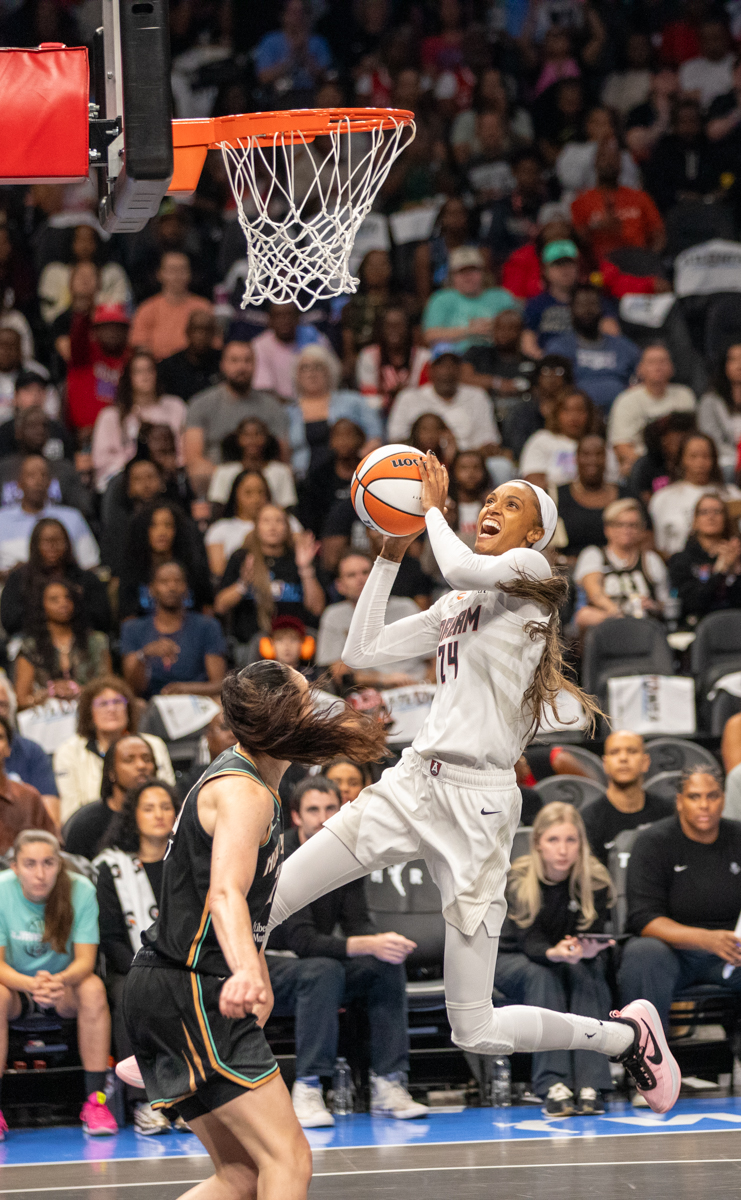
- DeWanna Bonner attempts a layup during the first half of Game 1 of the WNBA Semifinals against the New York Liberty on October 4, 2026 at State Farm Arena in Atlanta, Georgia. (Photo: Itoro N. Umontuen/Black Press USA)
-
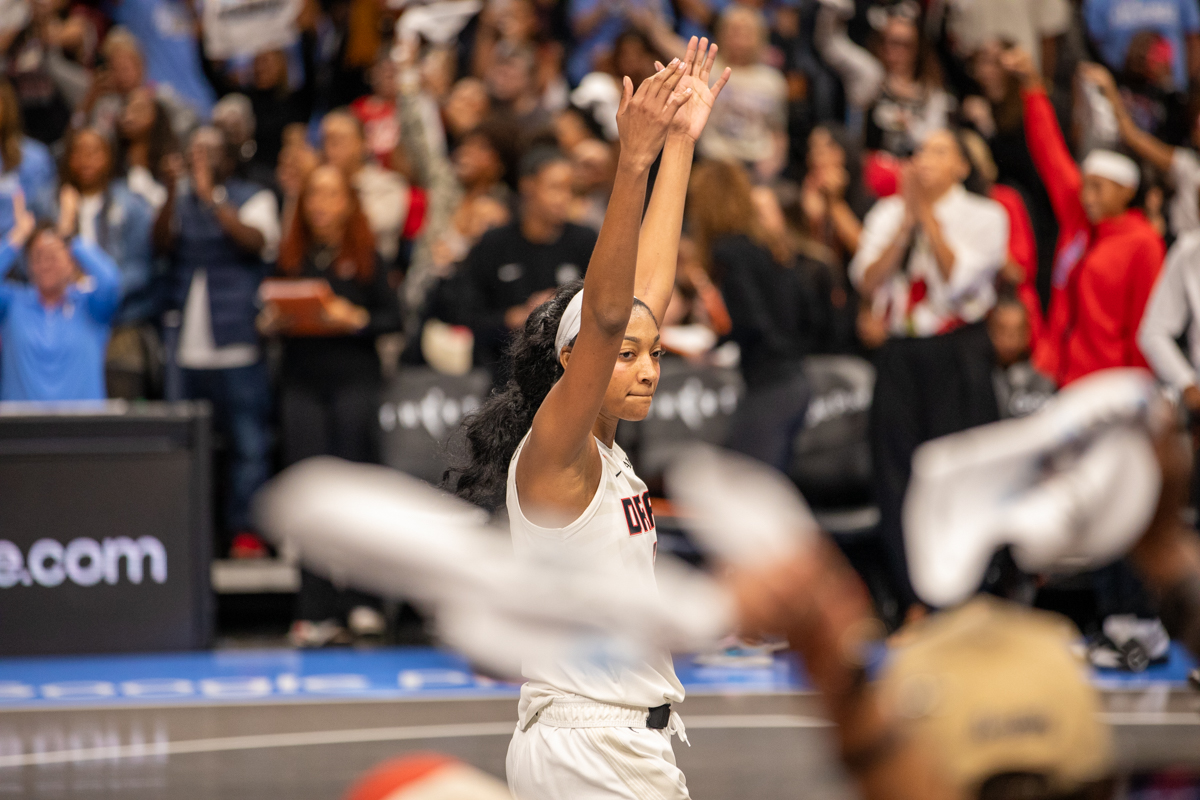
- Angel Reese gestures to the crowd during the second half of Game 1 of the WNBA Semifinals against the New York Liberty on October 4, 2026 at State Farm Arena in Atlanta, Georgia. (Photo: Itoro N. Umontuen/Black Press USA)
-
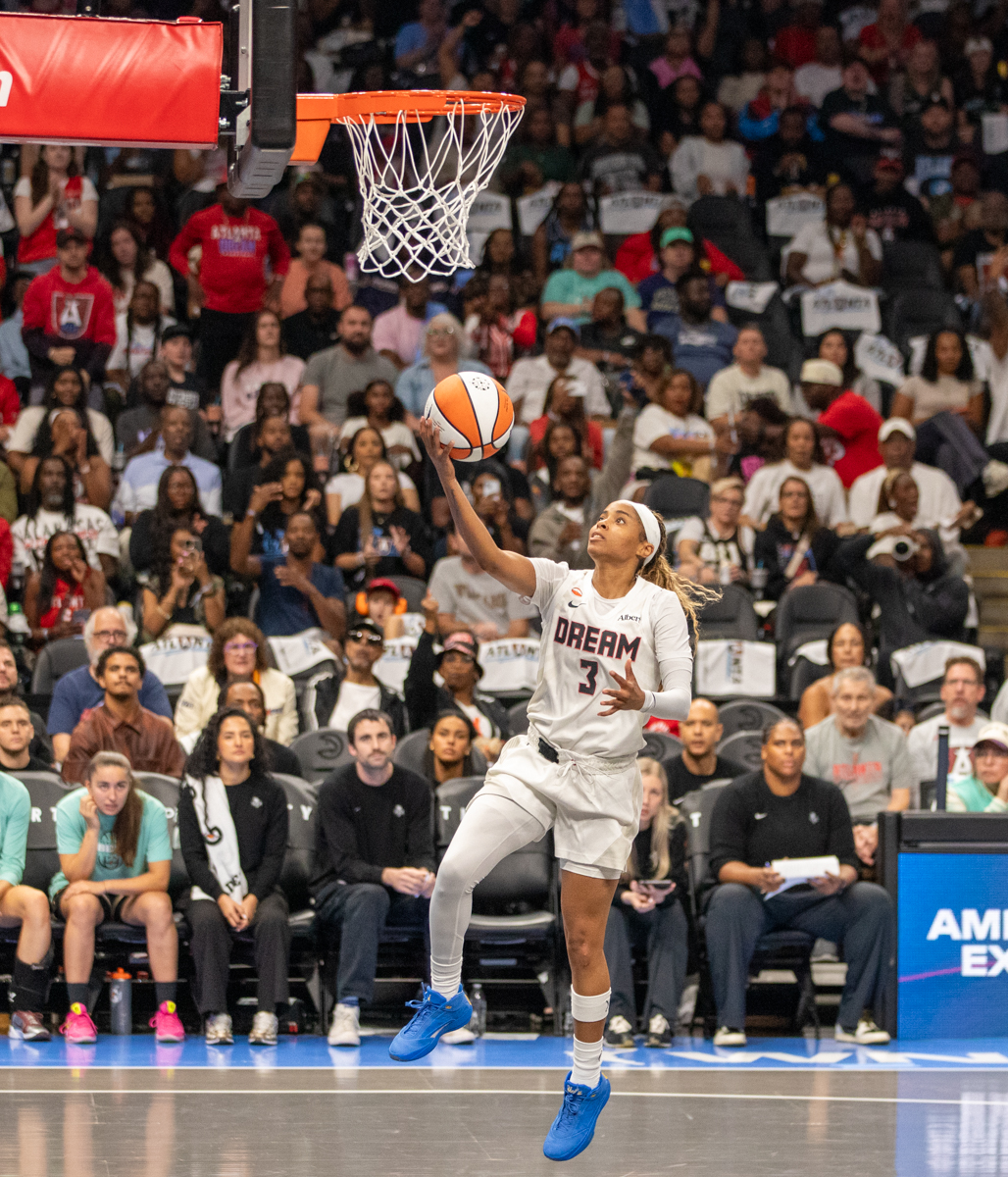
- Jordin Canada of the Atlanta Dream lays the ball up during the first half of Game 1 of the WNBA Semifinals against the New York Liberty on October 4, 2026 at State Farm Arena in Atlanta, Georgia. (Photo: Itoro N. Umontuen/Black Press USA)
-
- The WNBA Playoffs logos are displayed during Game 1 of the WNBA Semifinals against the New York Liberty on October 4, 2026 at State Farm Arena in Atlanta, Georgia. (Photo: Itoro N. Umontuen/Black Press USA)
-
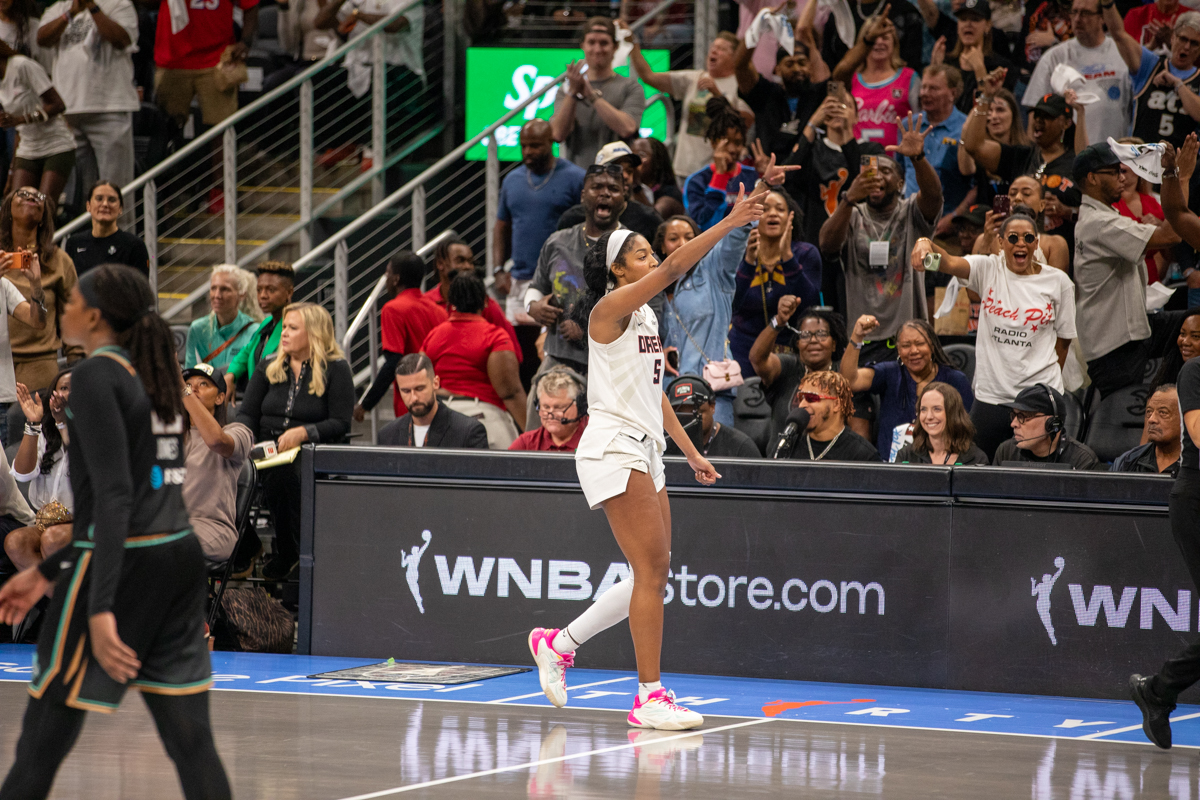
- Angel Reese gestures to the crowd during the second half of Game 1 of the WNBA Semifinals against the New York Liberty on October 4, 2026 at State Farm Arena in Atlanta, Georgia. (Photo: Itoro N. Umontuen/Black Press USA)
-
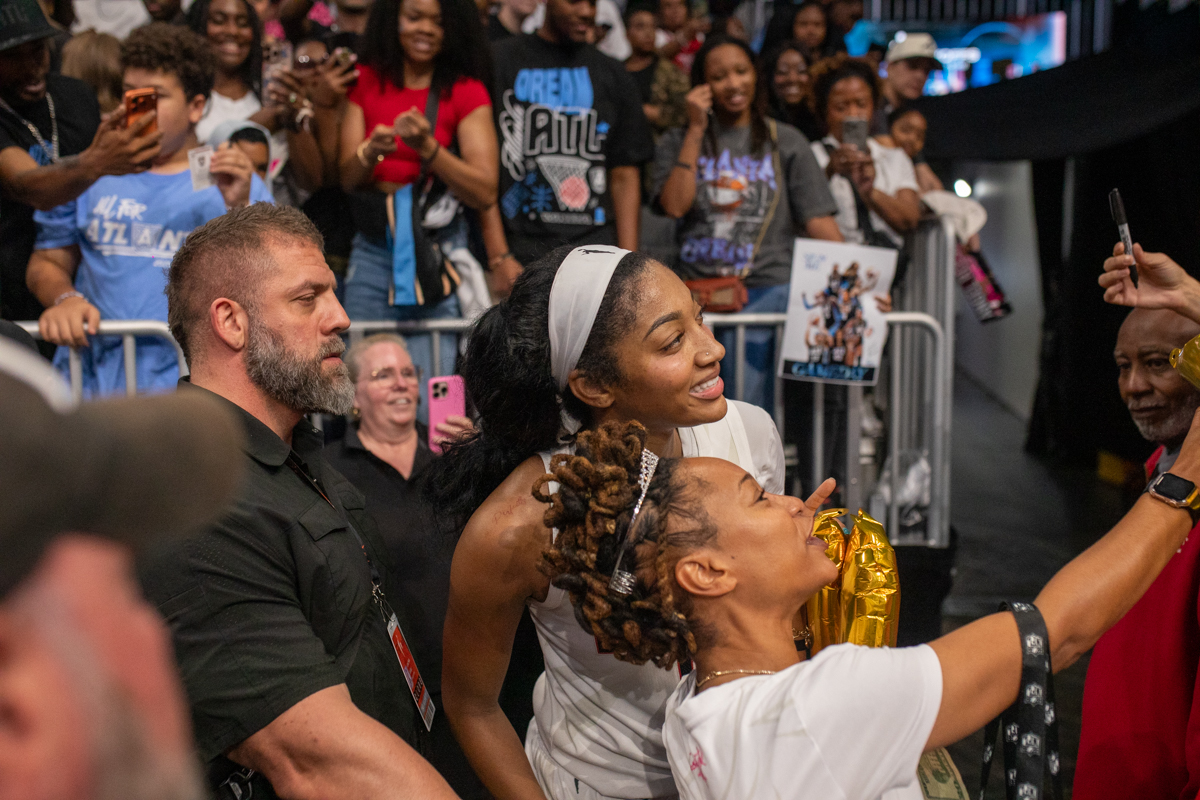
- Angel Reese takes a selfie with a fan after winning Game 1 of the WNBA Semifinals against the New York Liberty on October 4, 2026 at State Farm Arena in Atlanta, Georgia. (Photo: Itoro N. Umontuen/Black Press USA)
-
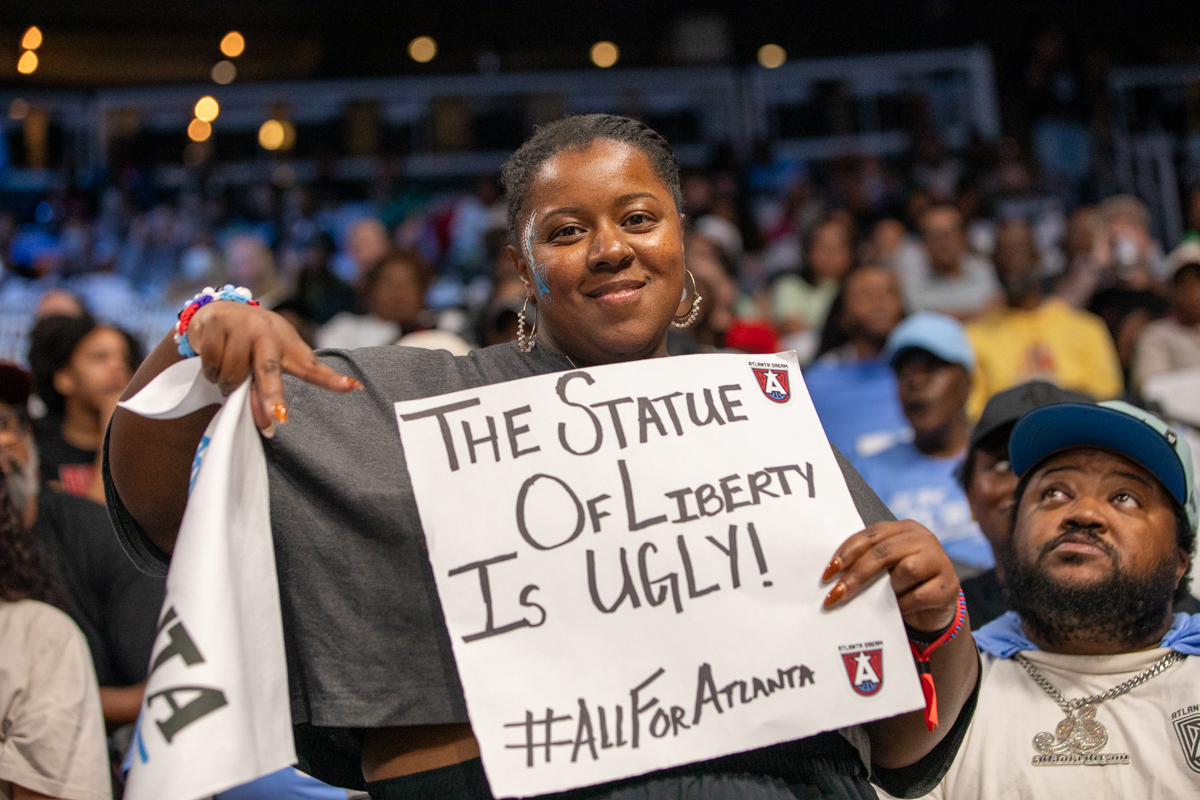
- (Photo: Itoro N. Umontuen/Black Press USA)
-
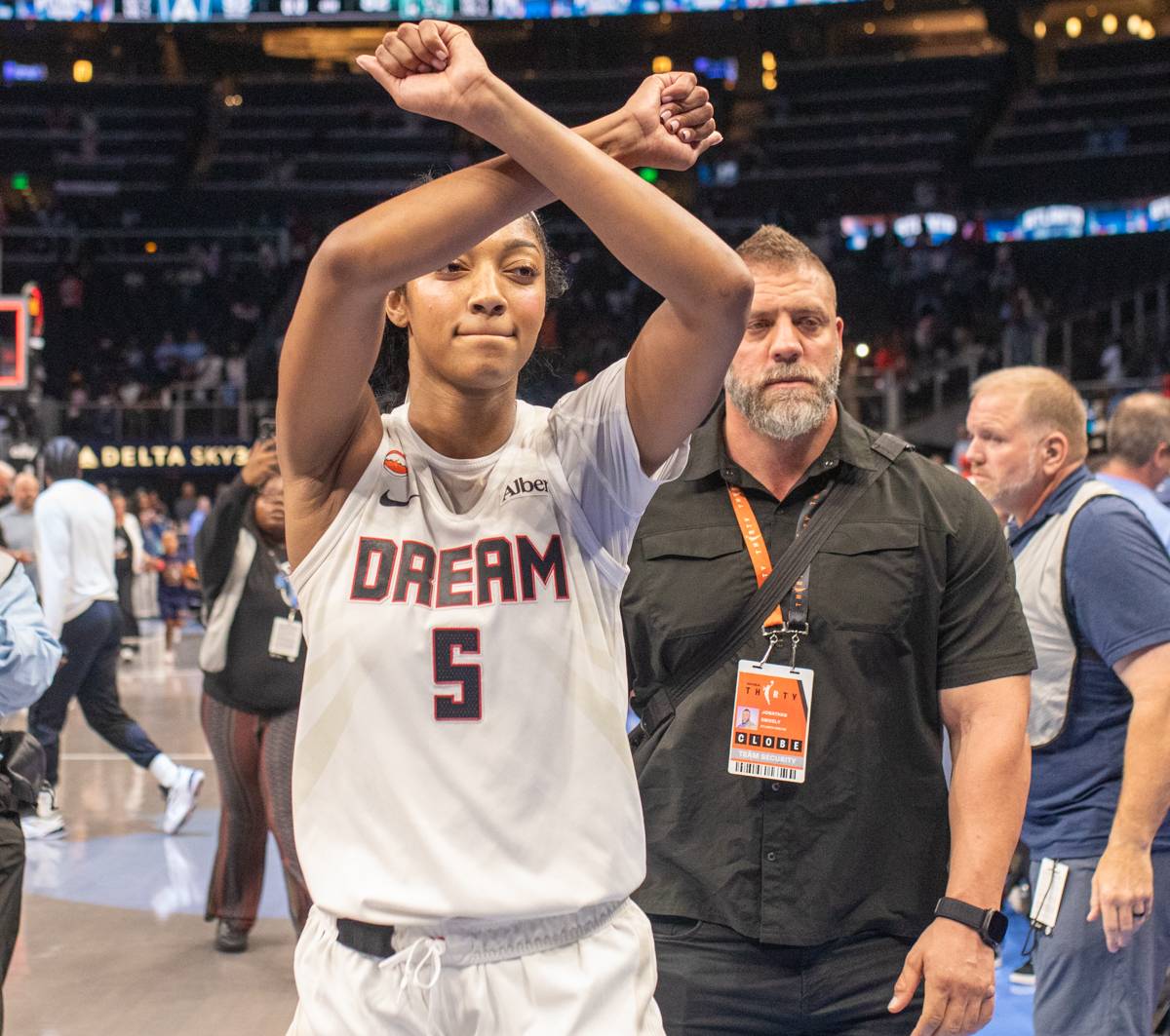
- Angel Reese gestures to the crowd after winning Game 1 of the WNBA Semifinals against the New York Liberty on October 4, 2026 at State Farm Arena in Atlanta, Georgia. (Photo: Itoro N. Umontuen/Black Press USA)
-
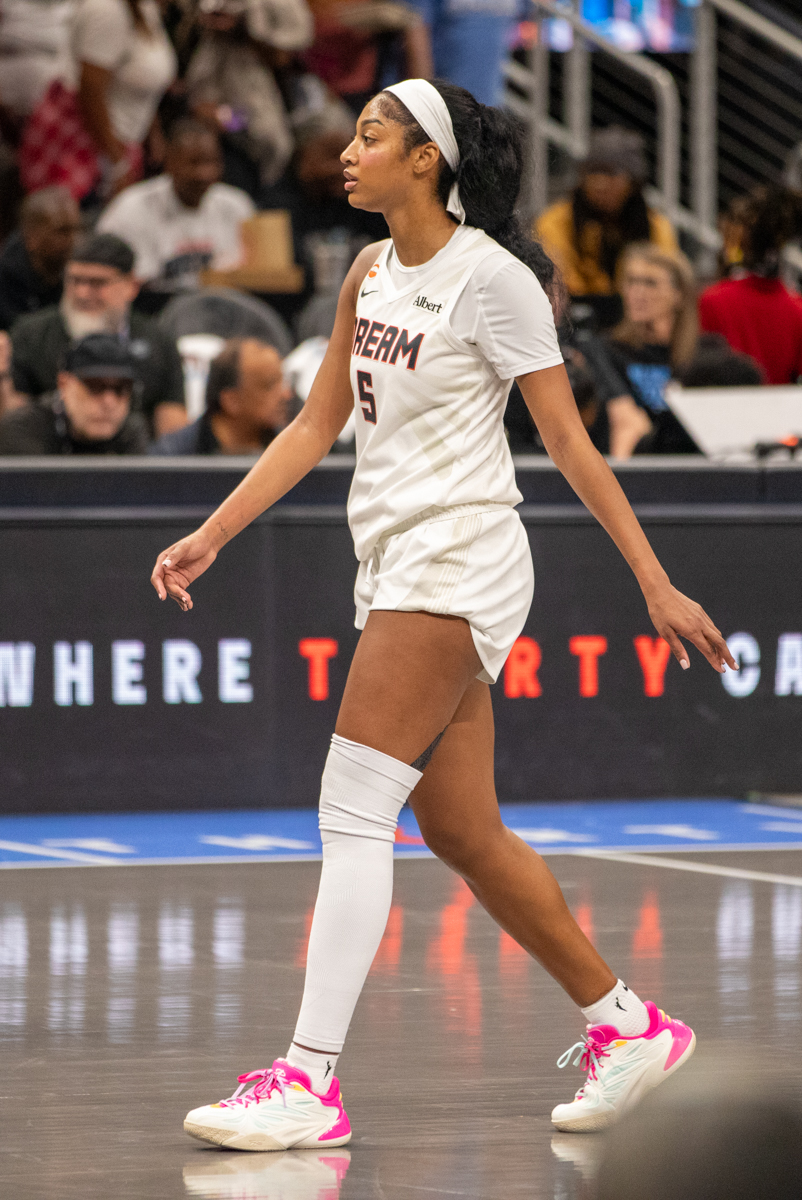
- Angel Reese walks to the defensive end of the floor during the first half of Game 1 of the WNBA Semifinals against the New York Liberty on October 4, 2026 at State Farm Arena in Atlanta, Georgia. (Photo: Itoro N. Umontuen/Black Press USA)
-
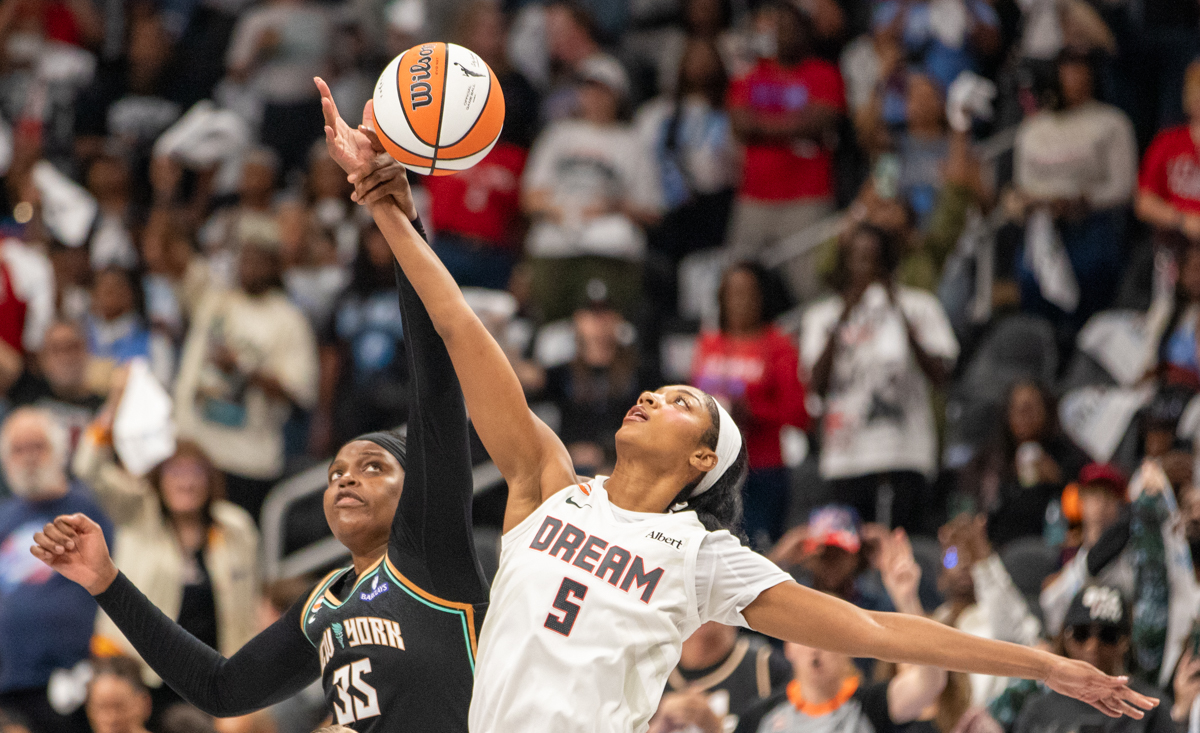
- Jonquil Jones and Angel Reese jump the ball starting Game 1 of the WNBA Semifinals on October 4, 2026 at State Farm Arena in Atlanta, Georgia. (Photo: Itoro N. Umontuen/Black Press USA)
-
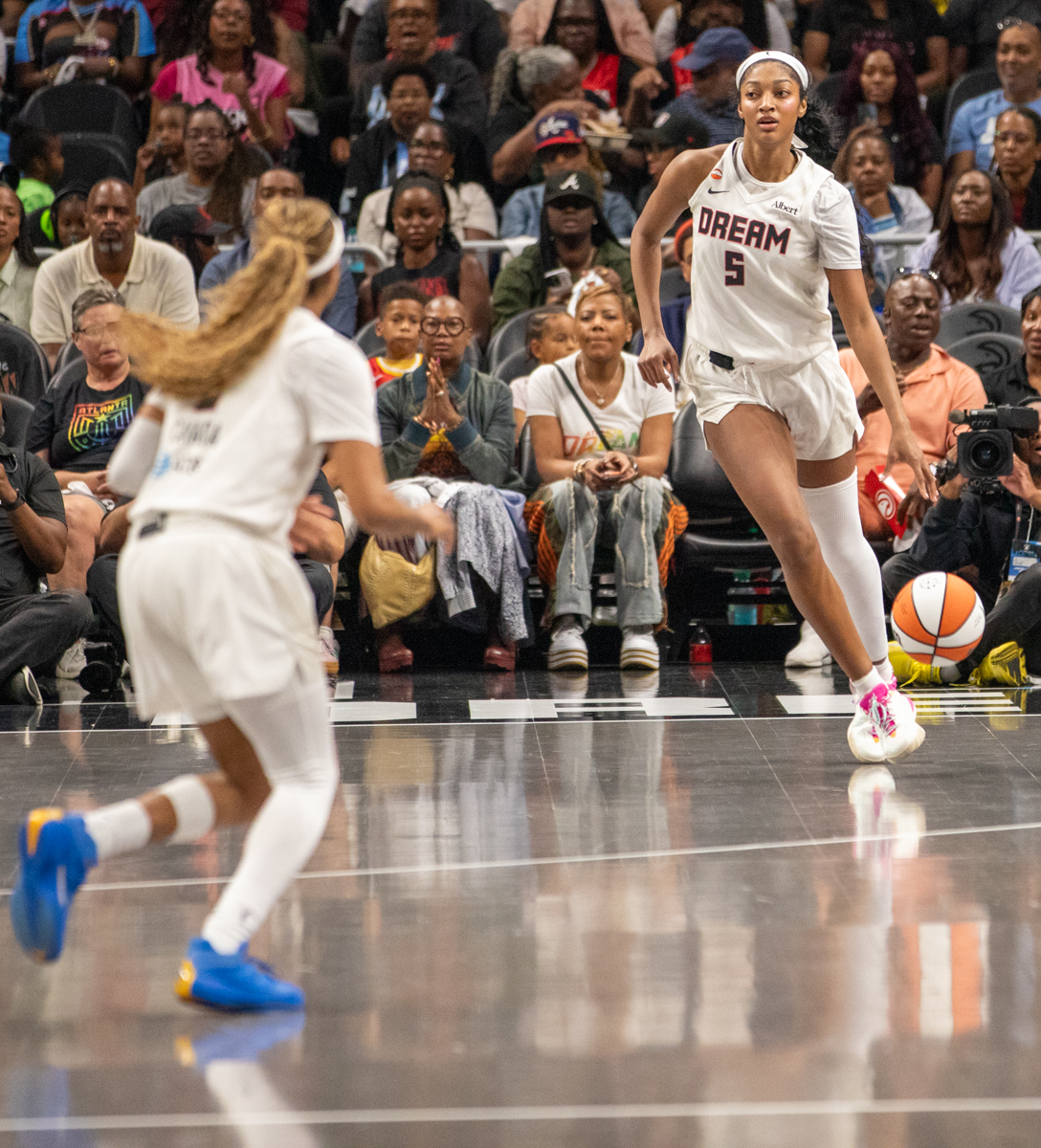
- Angel Reese initiates the offense during the second half of Game 1 of the WNBA Semifinals against the New York Liberty on October 4, 2026 at State Farm Arena in Atlanta, Georgia. (Photo: Itoro N. Umontuen/Black Press USA)
-
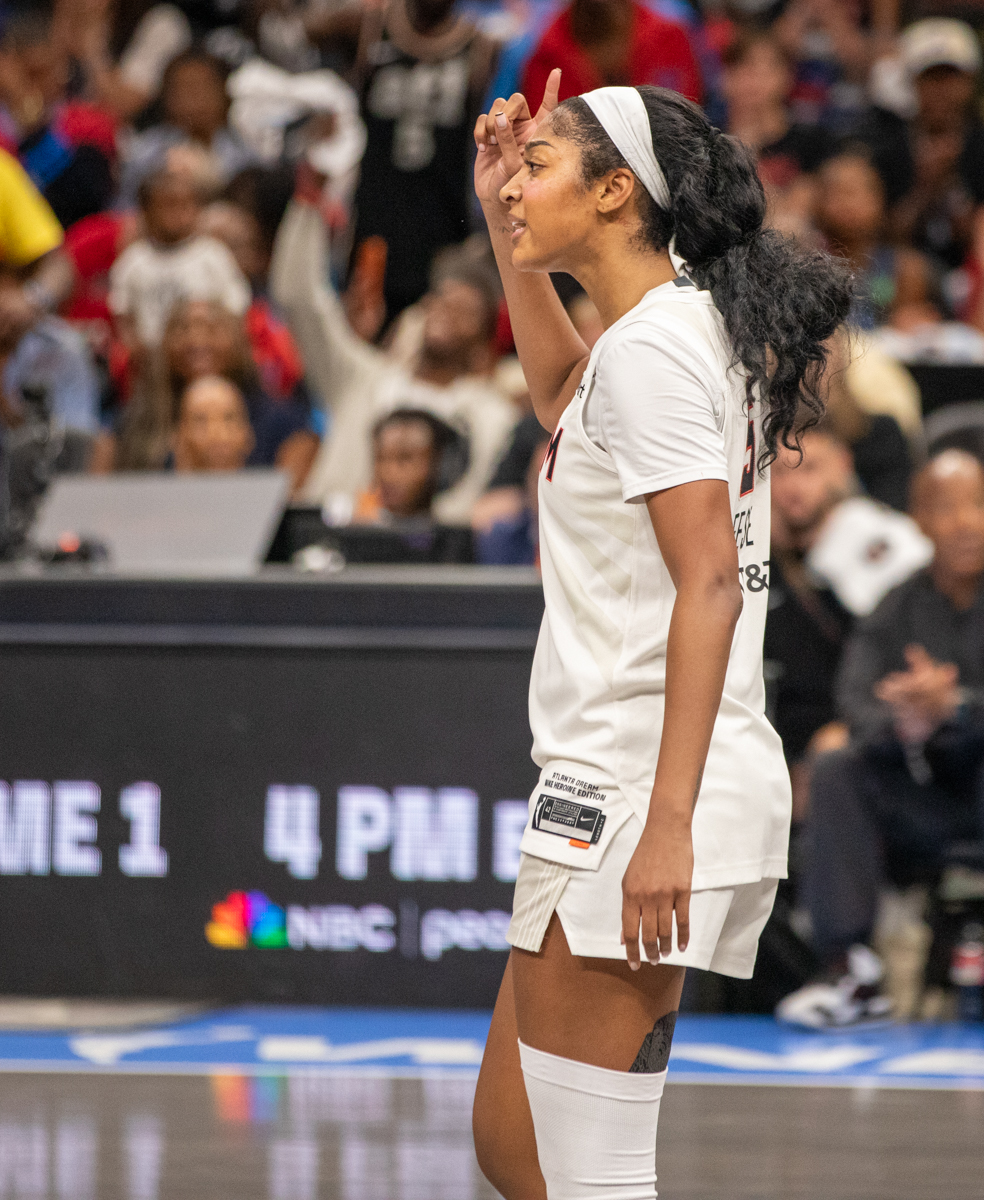
- Angel Reese asks for an official review during the second half of Game 1 of the WNBA Semifinals against the New York Liberty on October 4, 2026 at State Farm Arena in Atlanta, Georgia. (Photo: Itoro N. Umontuen/Black Press USA)
-
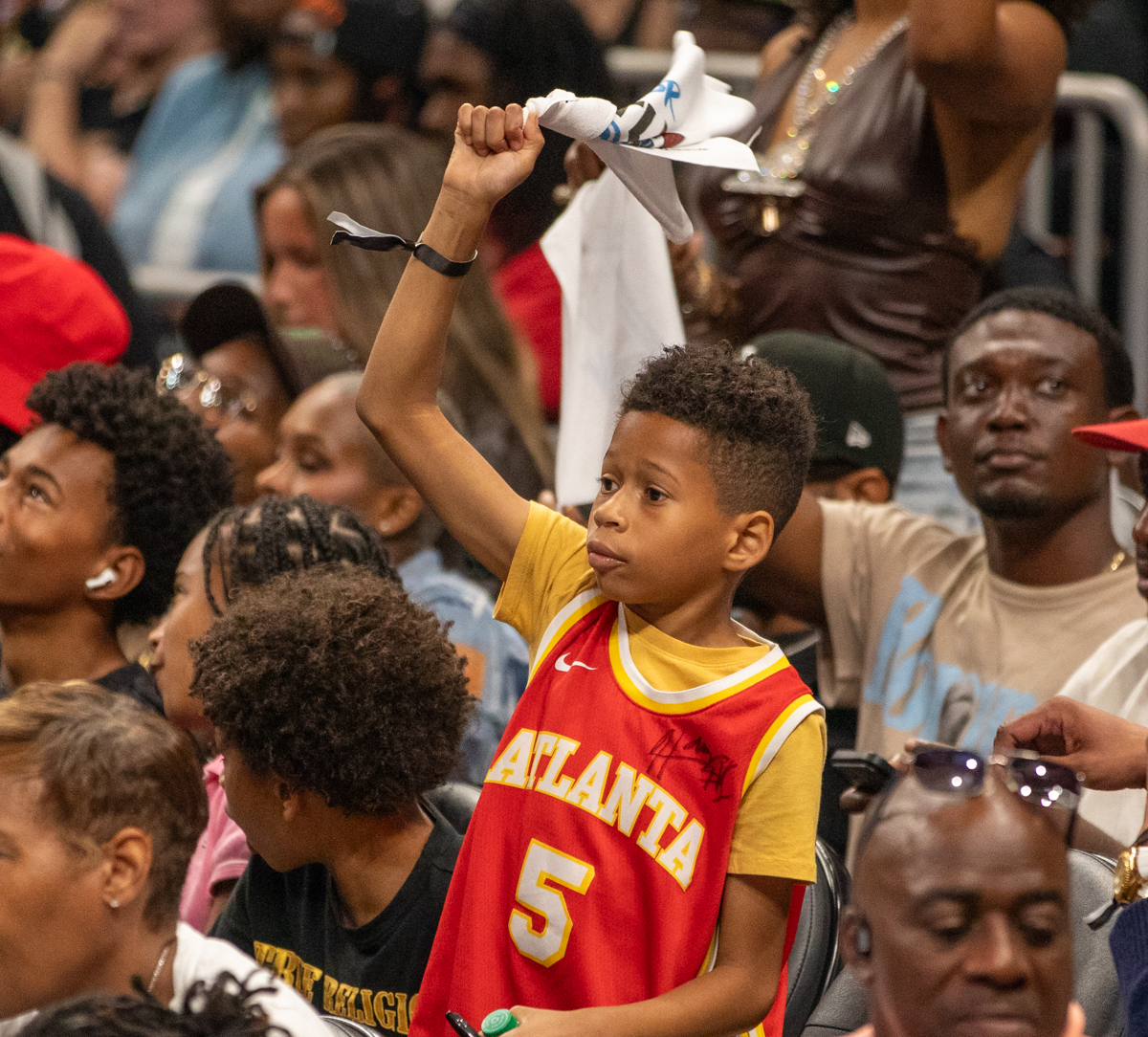
- A young Atlanta Hawks fan waves a rally towel during the second half of Game 1 of the WNBA Semifinals against the New York Liberty on October 4, 2026 at State Farm Arena in Atlanta, Georgia. (Photo: Itoro N. Umontuen/Black Press USA)
-
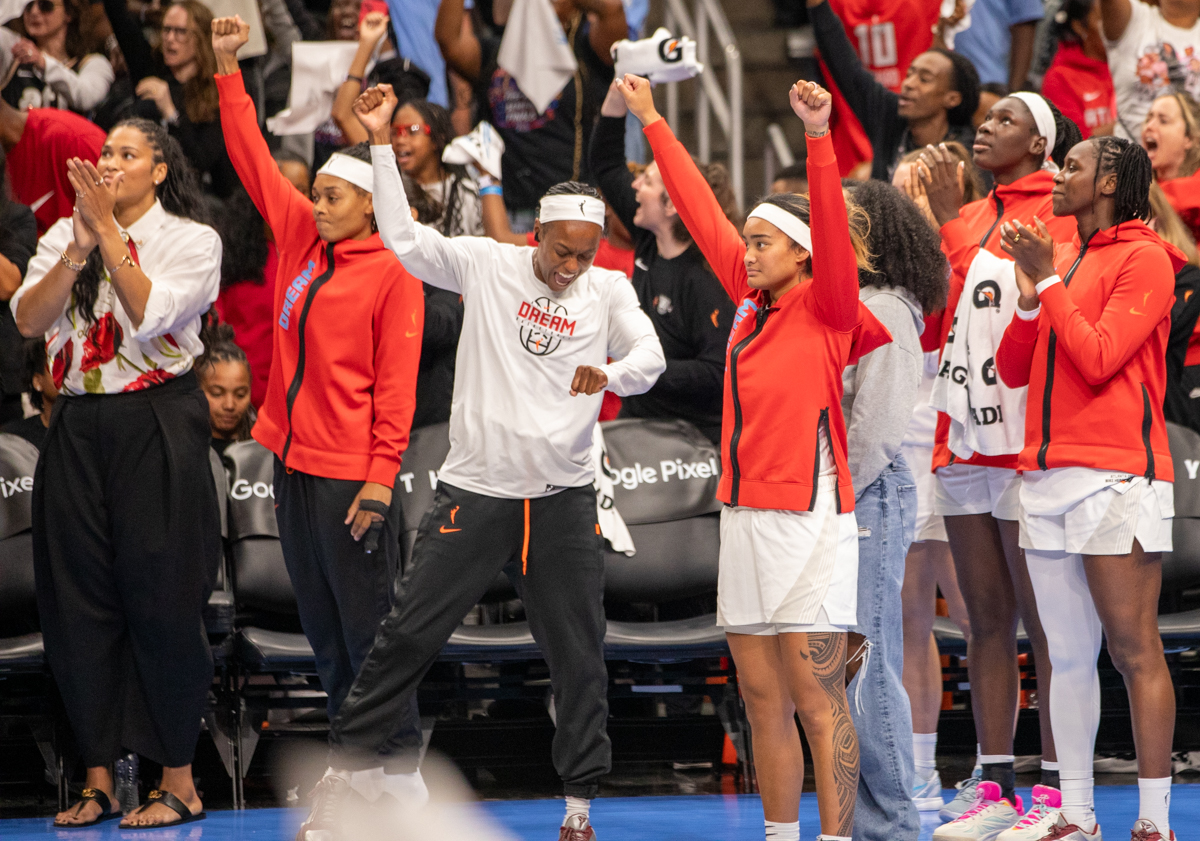
- TaHina Pao Pao and members of the Atlanta Dream celebrate during the second half of Game 1 of the WNBA Semifinals against the New York Liberty on October 4, 2026 at State Farm Arena in Atlanta, Georgia. (Photo: Itoro N. Umontuen/Black Press USA)
-
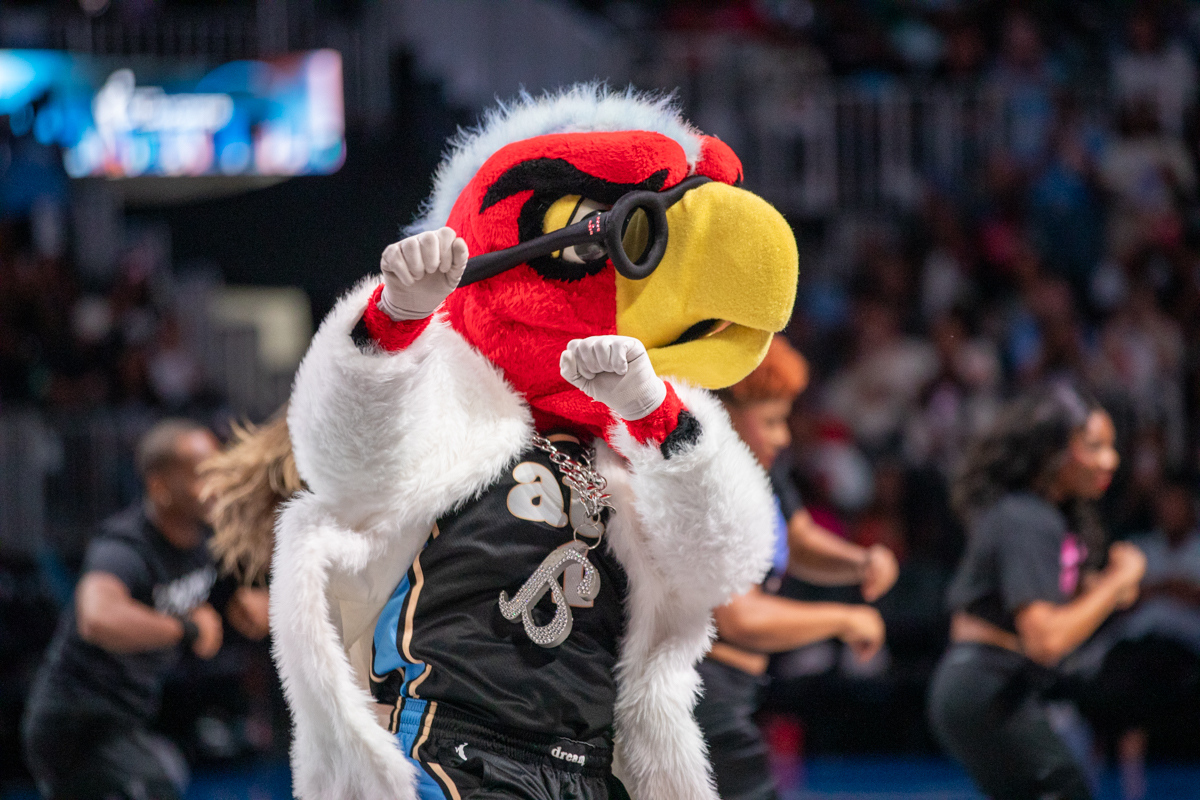
- Harry The Hawk performs during halftime of Game 1 of the WNBA Semifinals against the New York Liberty on October 4, 2026 at State Farm Arena in Atlanta, Georgia. (Photo: Itoro N. Umontuen/Black Press USA)
-
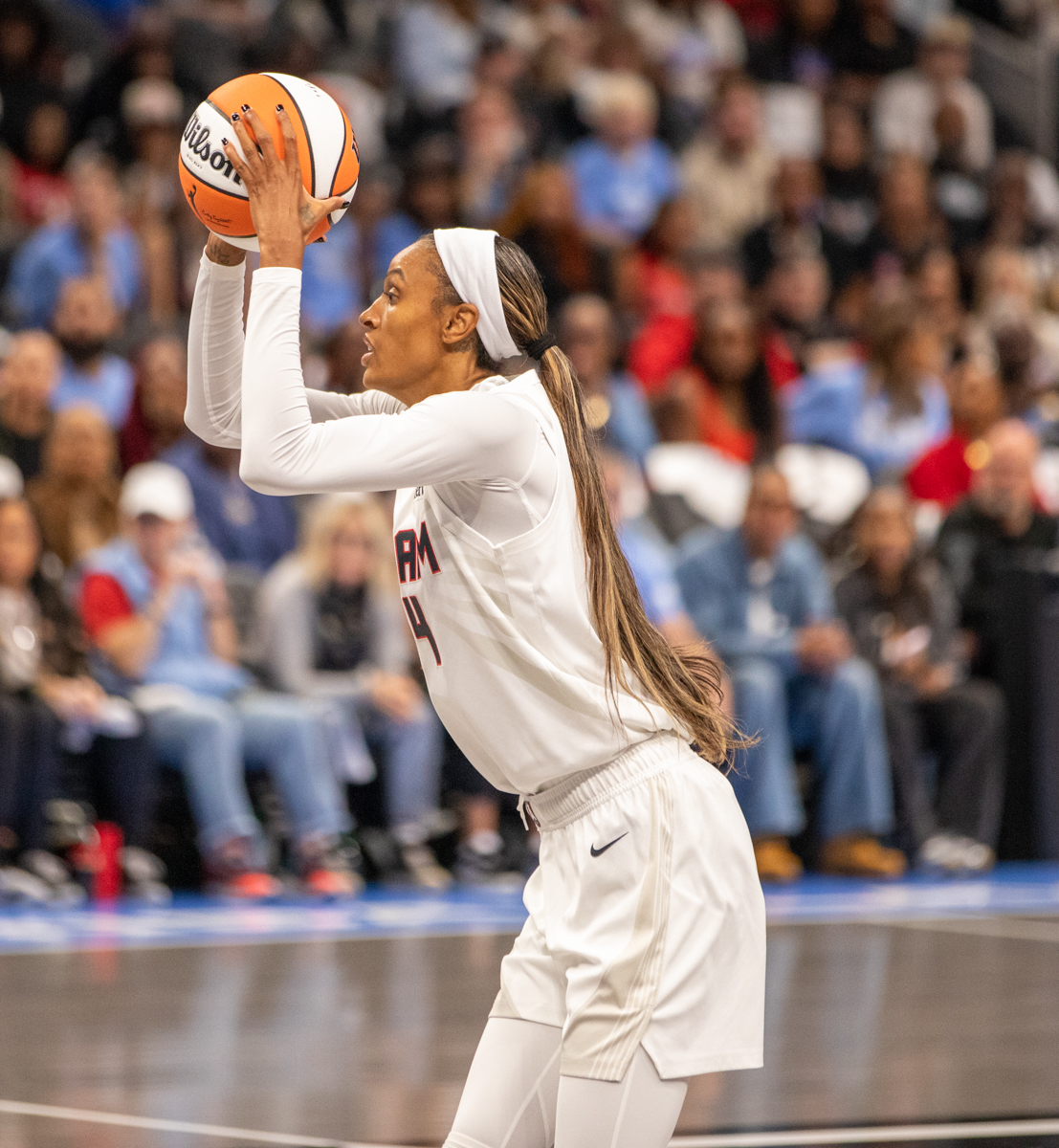
- DeWanna Bonner (24) attempts a shot during the first half of Game 1 of the WNBA Semifinals against the New York Liberty on October 4, 2026 at State Farm Arena in Atlanta, Georgia. (Photo: Itoro N. Umontuen/Black Press USA)
-
- DeWanna Bonner (24) attempts a shot during the first half of Game 1 of the WNBA Semifinals against the New York Liberty on October 4, 2026 at State Farm Arena in Atlanta, Georgia. (Photo: Itoro N. Umontuen/Black Press USA)
-
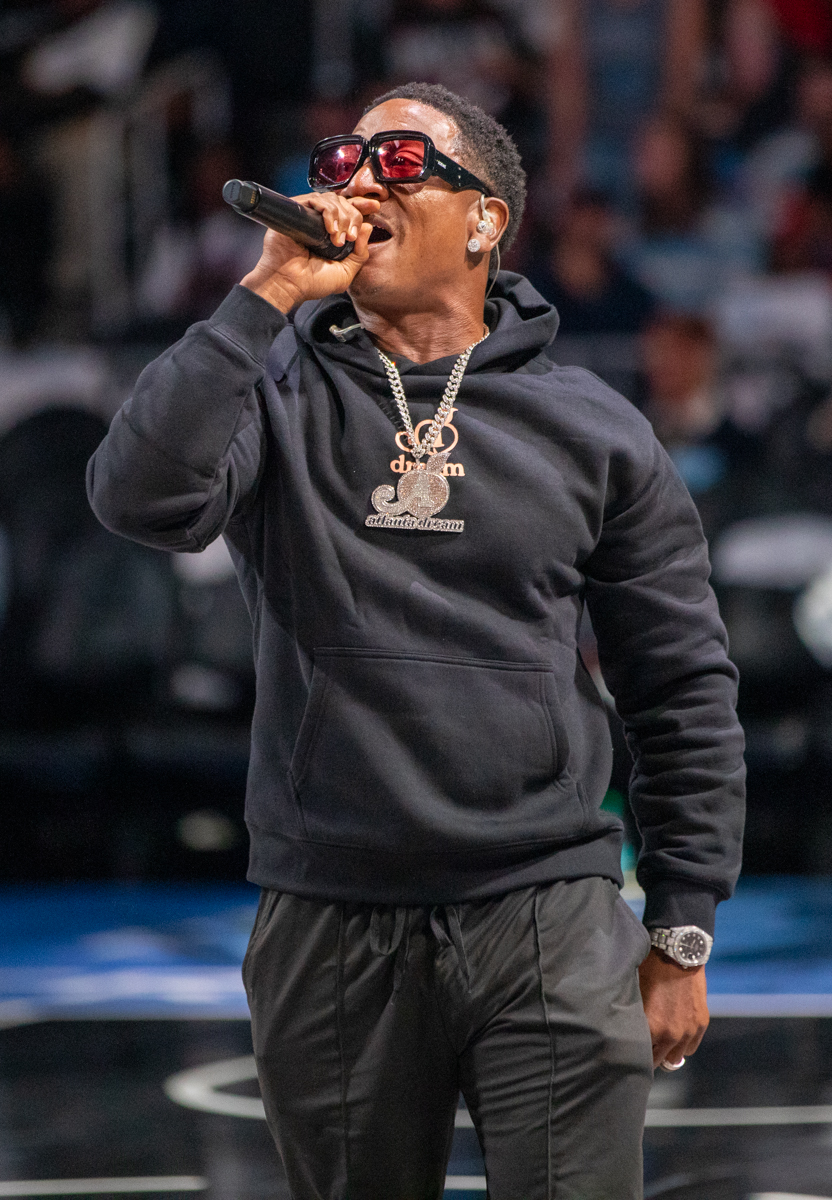
- Yung Joc performs during halftime of Game 1 of the WNBA Semifinals against the New York Liberty on October 4, 2026 at State Farm Arena in Atlanta, Georgia. (Photo: Itoro N. Umontuen/Black Press USA)
-
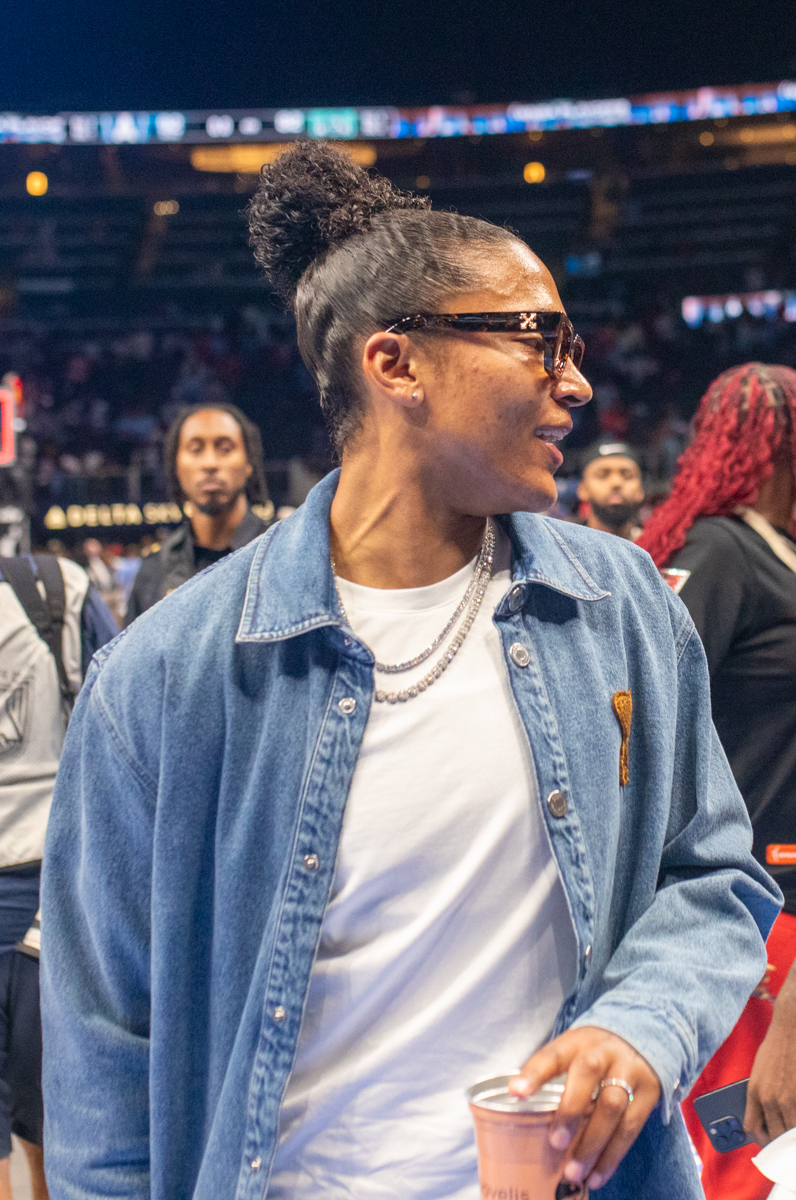
- Alyssa Thomas walks off the court after Game 1 of the WNBA Semifinals between the New York Liberty and the Atlanta Dream on October 4, 2026 at State Farm Arena in Atlanta, Georgia. (Photo: Itoro N. Umontuen/Black Press USA)
-
- The WNBA logo is displayed during Game 1 of the WNBA Semifinals against the New York Liberty on October 4, 2026 at State Farm Arena in Atlanta, Georgia. (Photo: Itoro N. Umontuen/Black Press USA)
-
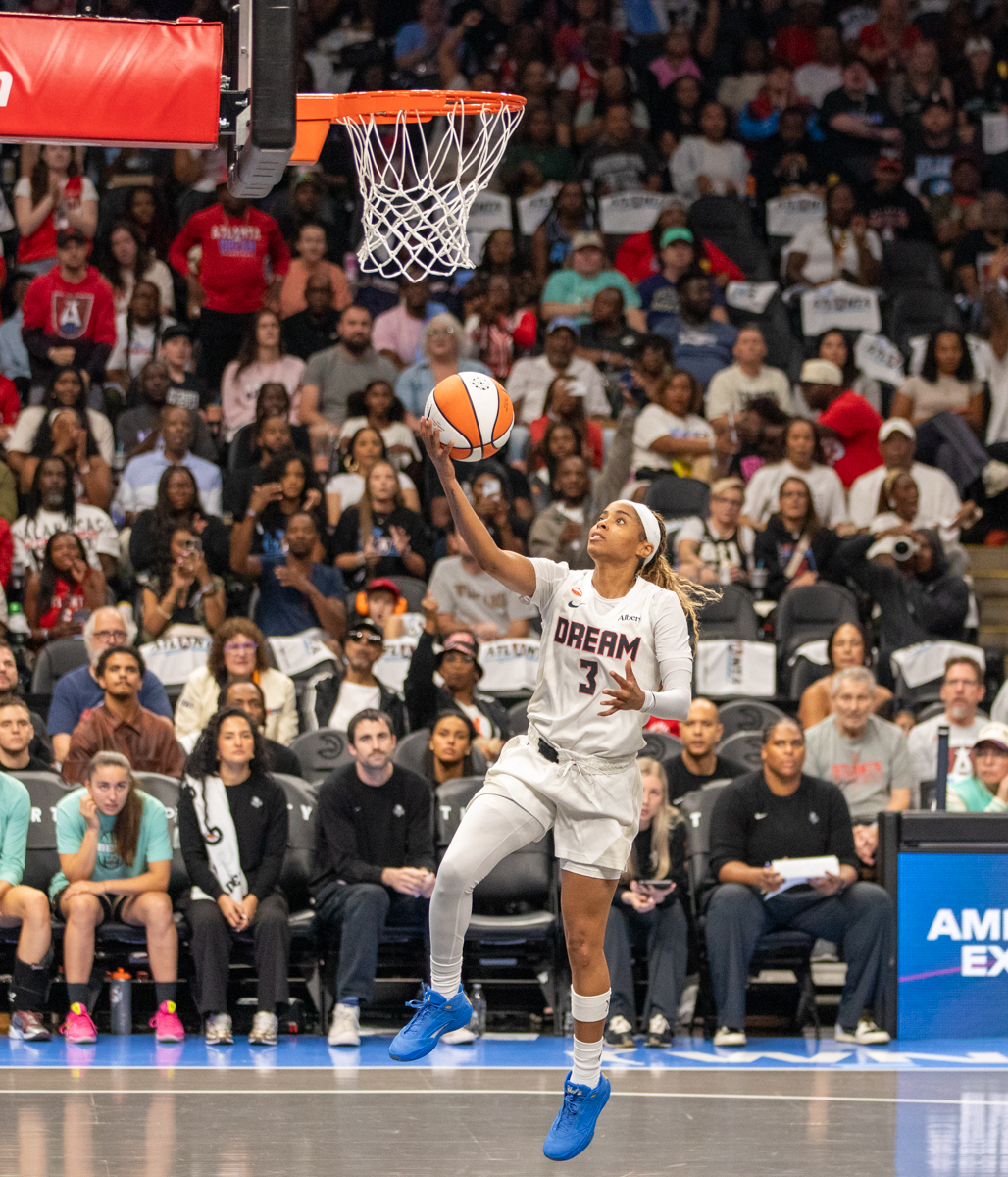
- Jordin Canada of the Atlanta Dream lays the ball up during the first half of Game 1 of the WNBA Semifinals against the New York Liberty on October 4, 2026 at State Farm Arena in Atlanta, Georgia. (Photo: Itoro N. Umontuen/Black Press USA)
-
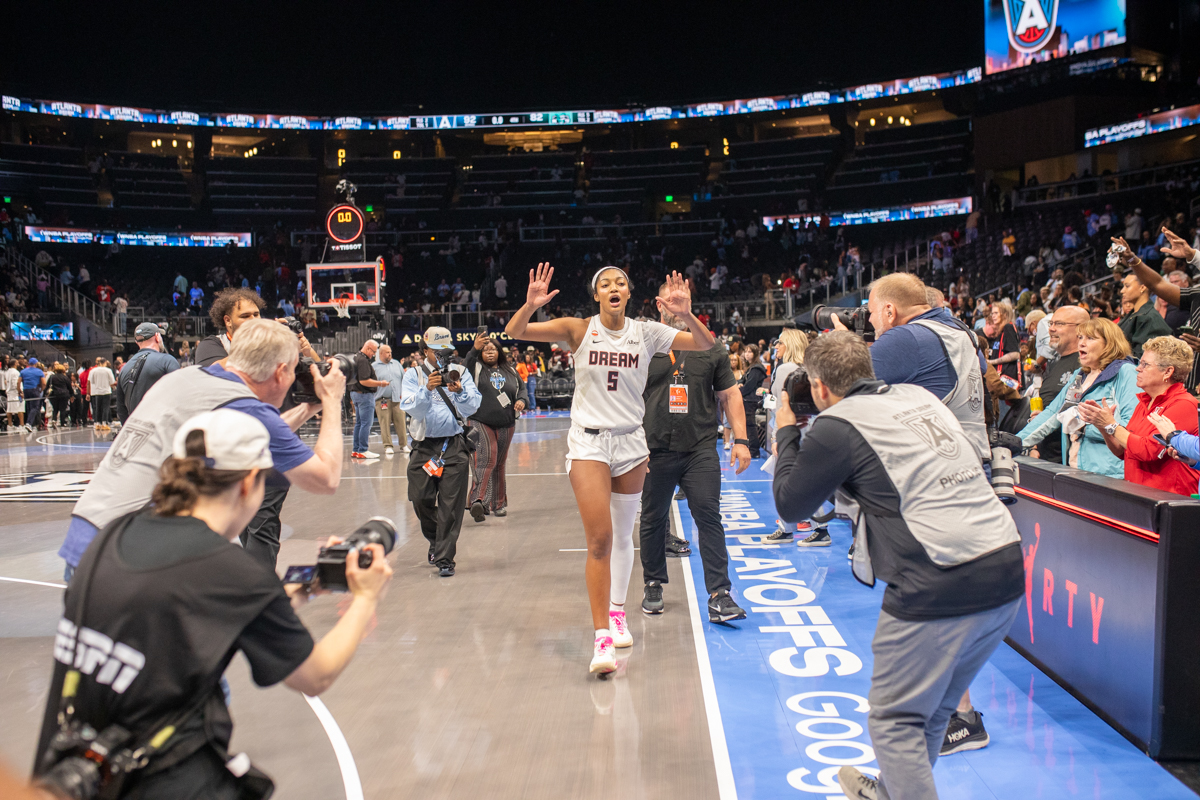
- Angel Reese gestures to the crowd after winning Game 1 of the WNBA Semifinals against the New York Liberty on October 4, 2026 at State Farm Arena in Atlanta, Georgia. (Photo: Itoro N. Umontuen/Black Press USA)
-
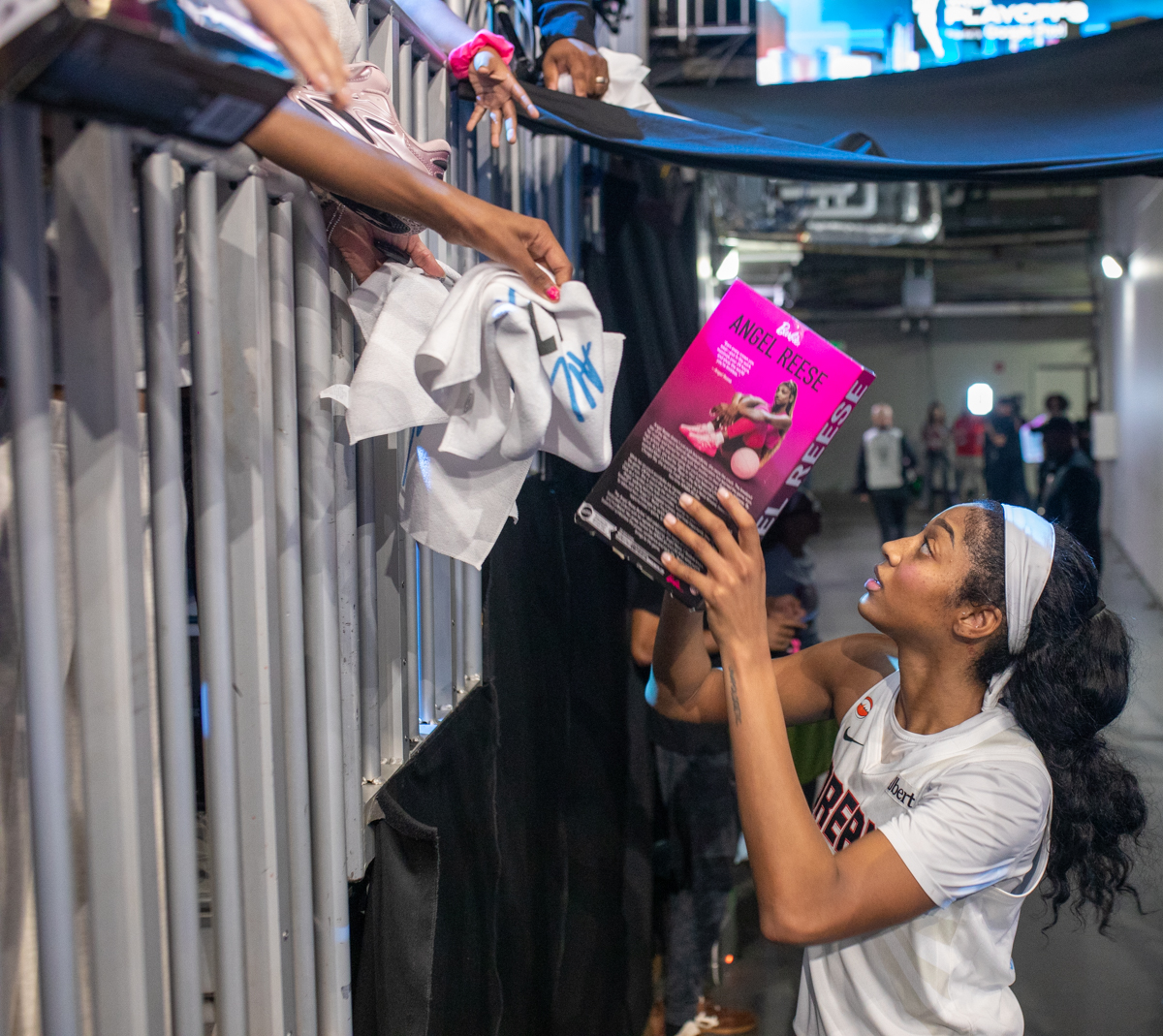
- Angel Reese signs autographs after winning Game 1 of the WNBA Semifinals against the New York Liberty on October 4, 2026 at State Farm Arena in Atlanta, Georgia. (Photo: Itoro N. Umontuen/Black Press USA)
-
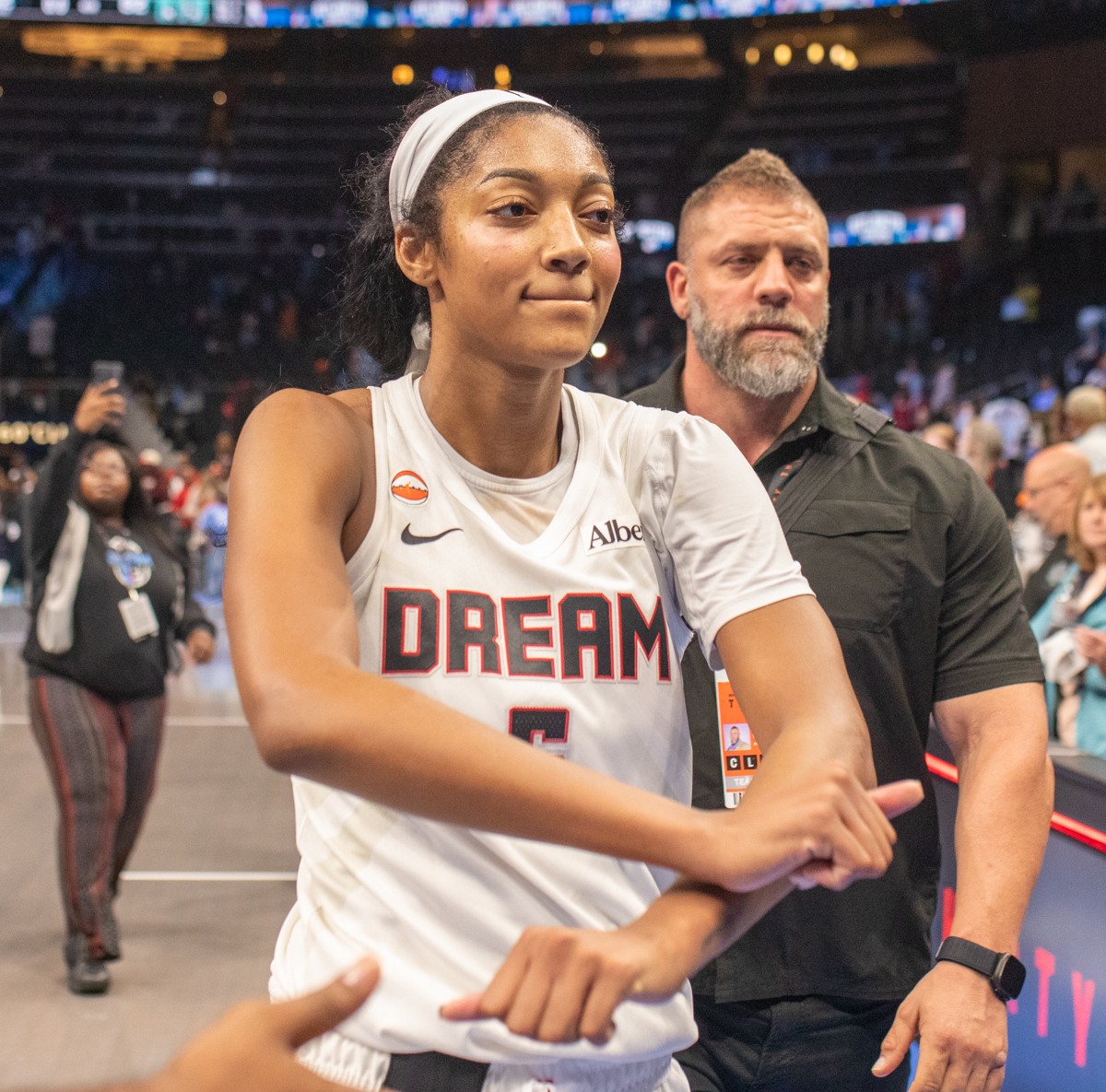
- Angel Reese gestures to the crowd after winning Game 1 of the WNBA Semifinals against the New York Liberty on October 4, 2026 at State Farm Arena in Atlanta, Georgia. (Photo: Itoro N. Umontuen/Black Press USA)
-
- The WNBA logo is displayed during Game 1 of the WNBA Semifinals against the New York Liberty on October 4, 2026 at State Farm Arena in Atlanta, Georgia. (Photo: Itoro N. Umontuen/Black Press USA)
-
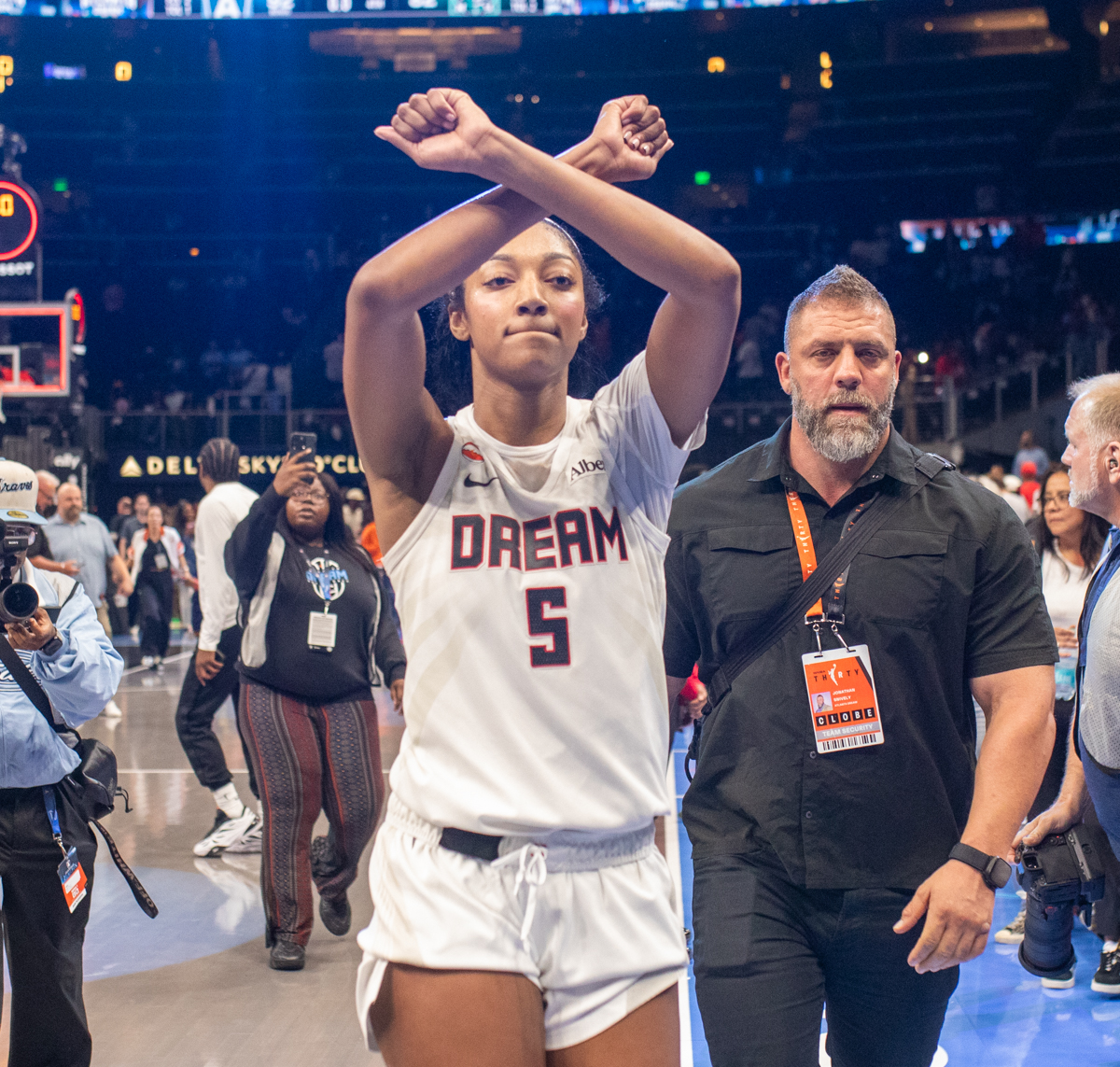
- Angel Reese gestures to the crowd after winning Game 1 of the WNBA Semifinals against the New York Liberty on October 4, 2026 at State Farm Arena in Atlanta, Georgia. (Photo: Itoro N. Umontuen/Black Press USA)
-
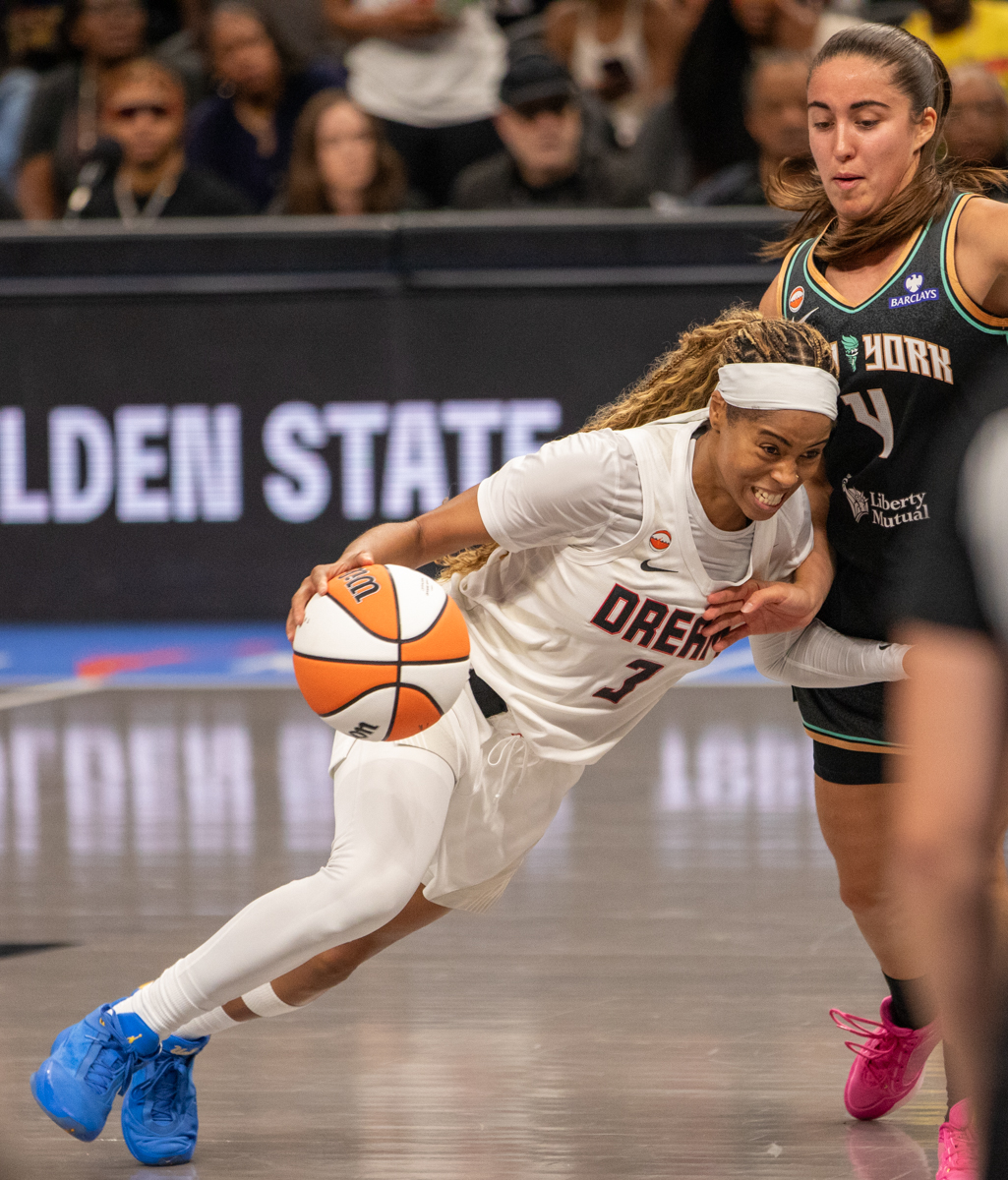
- Jordin Canada of the Atlanta Dream drives the ballduring the second half of Game 1 of the WNBA Semifinals against the New York Liberty on October 4, 2026 at State Farm Arena in Atlanta, Georgia. (Photo: Itoro N. Umontuen/Black Press USA)
-
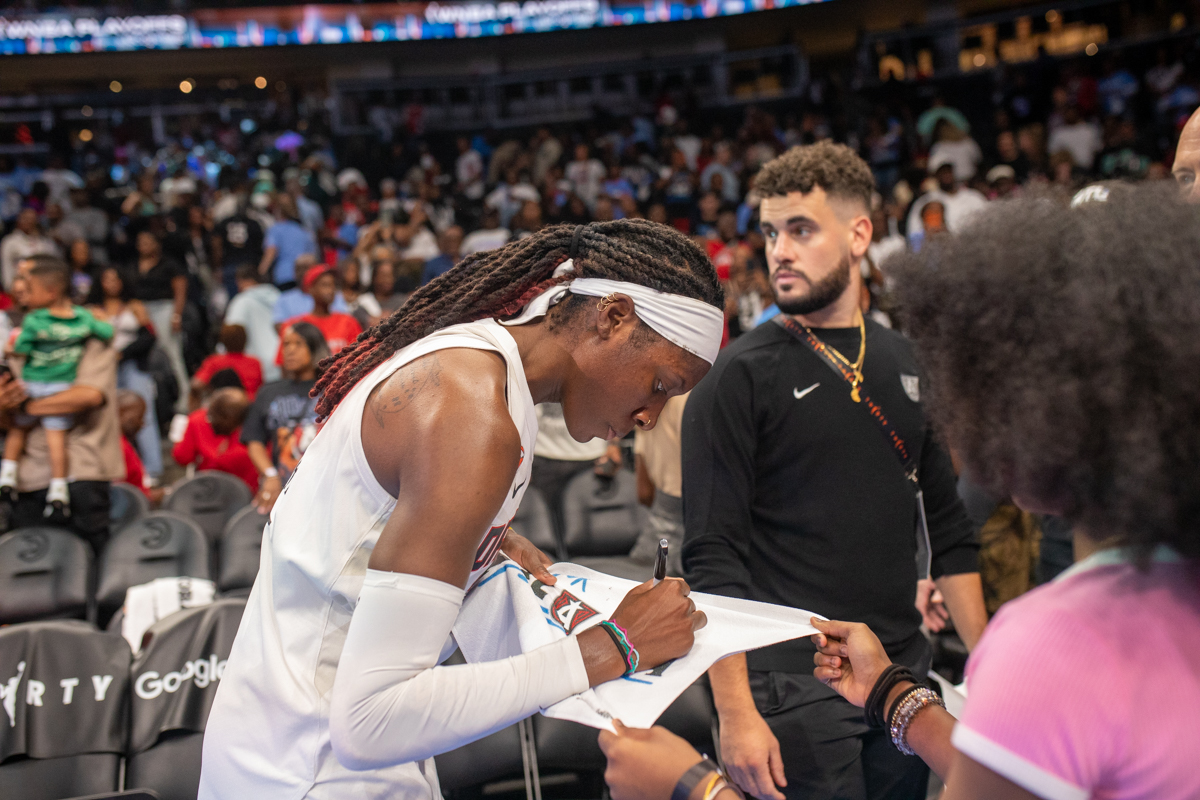
- Rhyne Howard of the Atlanta Dream signs autographs after Game 1 of the WNBA Semifinals between the New York Liberty and the Atlanta Dream on October 4, 2026 at State Farm Arena in Atlanta, Georgia. (Photo: Itoro N. Umontuen/Black Press USA)
-
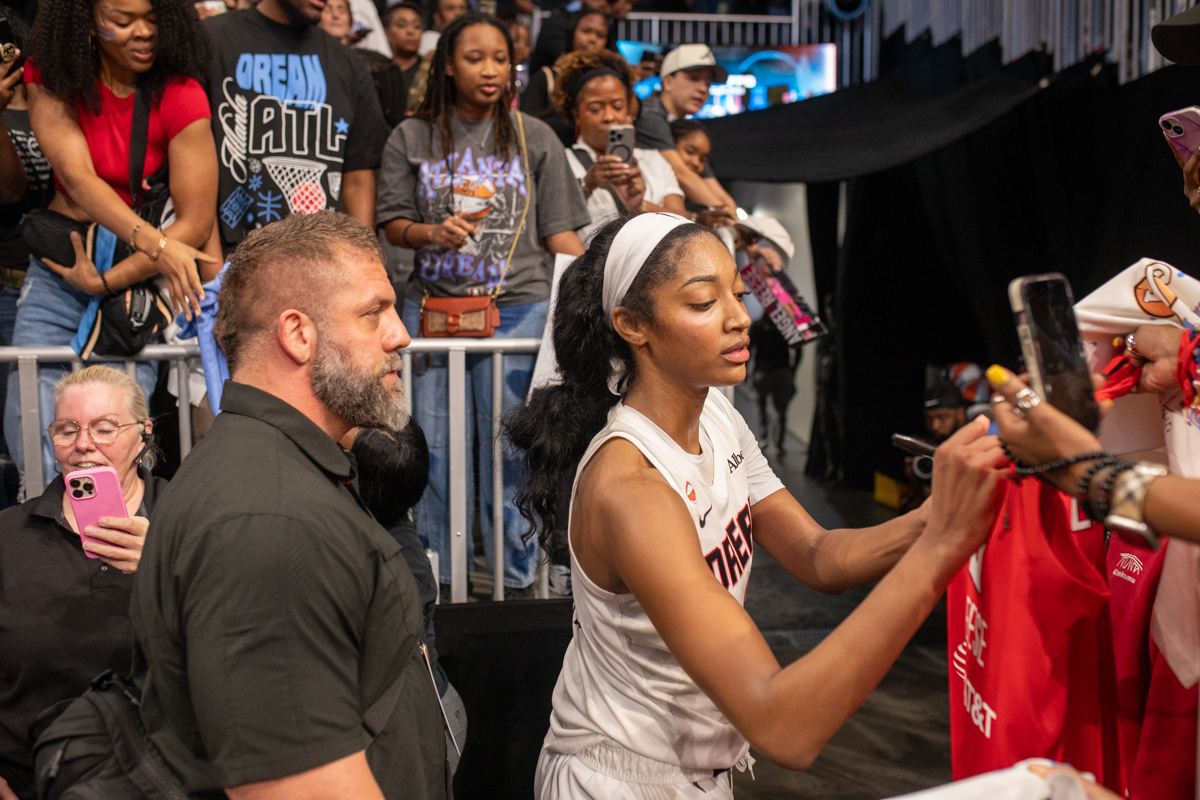
- Angel Reese signs autographs after winning Game 1 of the WNBA Semifinals against the New York Liberty on October 4, 2026 at State Farm Arena in Atlanta, Georgia. (Photo: Itoro N. Umontuen/Black Press USA)
-
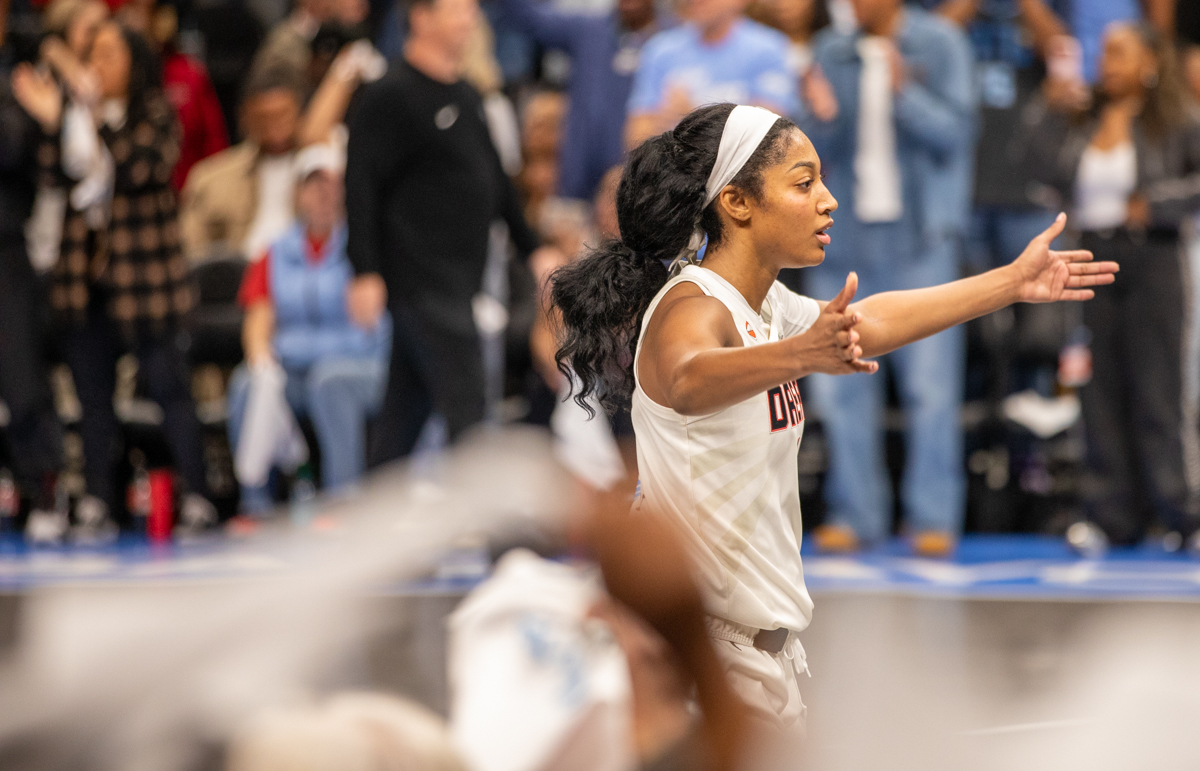
- Angel Reese gestures to the crowd during the second half of Game 1 of the WNBA Semifinals against the New York Liberty on October 4, 2026 at State Farm Arena in Atlanta, Georgia. (Photo: Itoro N. Umontuen/Black Press USA)
-
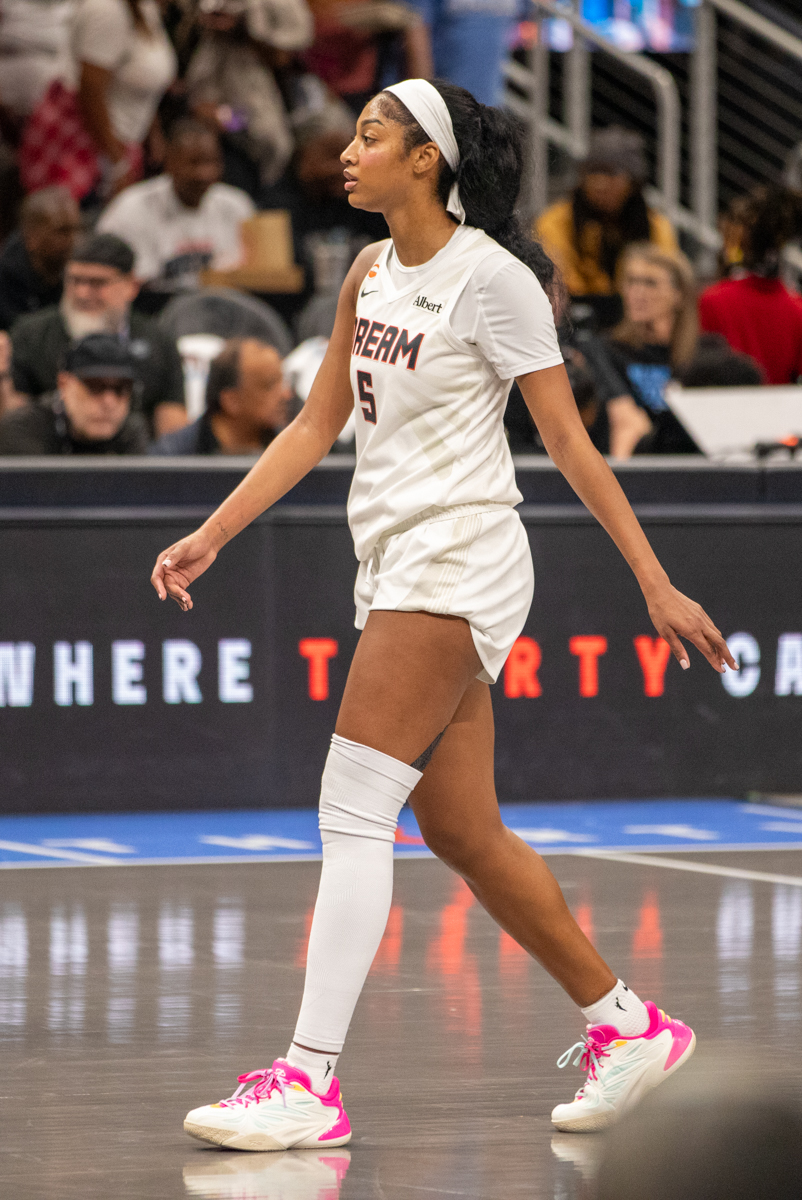
- Angel Reese walks to the defensive end of the floor during the first half of Game 1 of the WNBA Semifinals against the New York Liberty on October 4, 2026 at State Farm Arena in Atlanta, Georgia. (Photo: Itoro N. Umontuen/Black Press USA)
Sports
Angel Reese Wins 2026 WNBA Defensive Player of the Year
Angel Reese is the 2026 WNBA Defensive Player of the Year. See how the Atlanta Dream star’s rebounding records and elite defense earned the award.
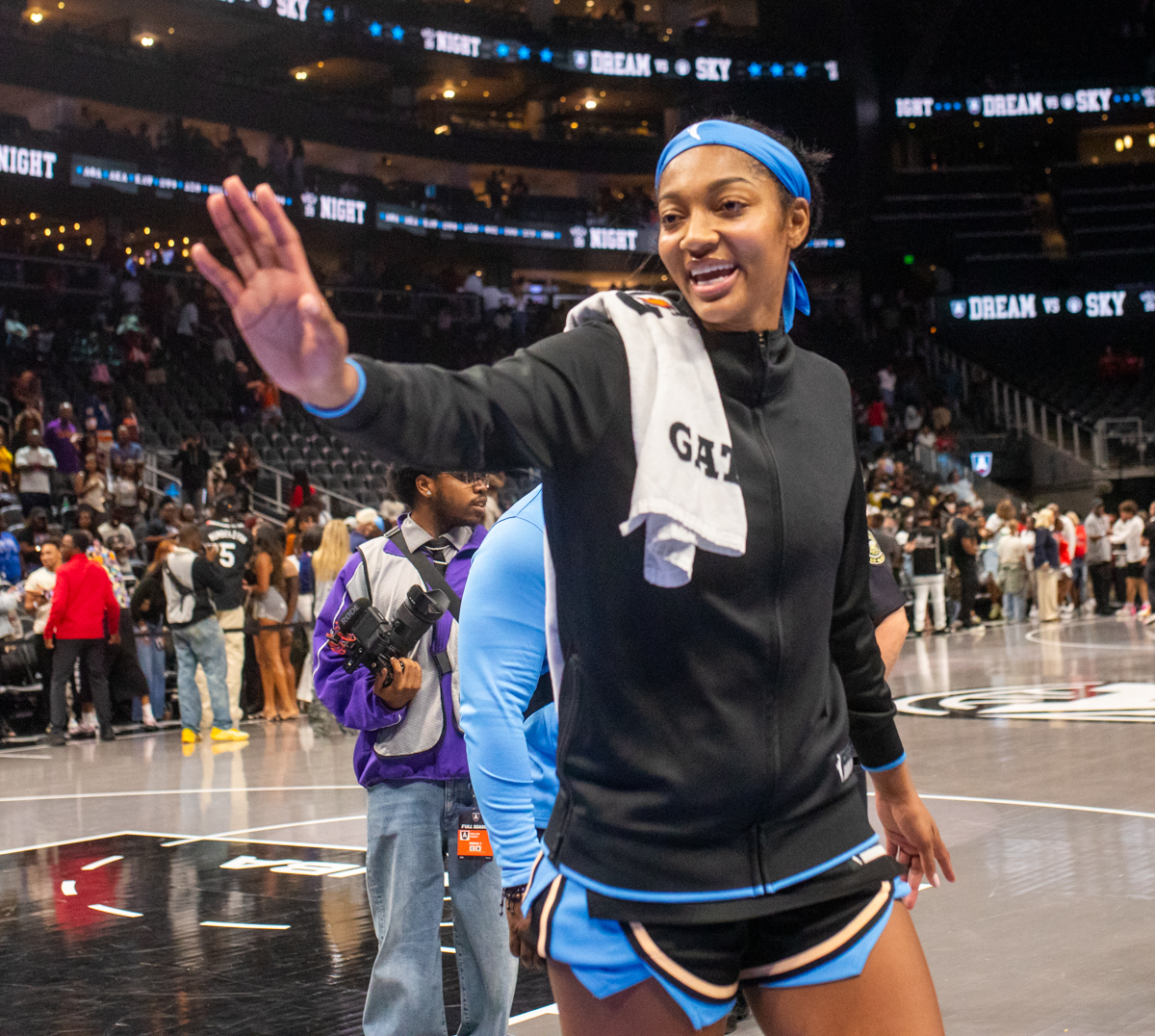
Atlanta Dream star Angel Reese has been named the 2026 WNBA Defensive Player of the Year; the honor was announced Thursday afternoon. Reese edged out Golden State Valkyries guard Gabby Williams, who finished second with 20 votes. Las Vegas Aces standout A’ja Wilson placed third. Wilson won the award in 2022 and 2023, and last season she shared it with Minnesota Lynx forward Alanna Smith.
In her first season with the Dream, the three-time All-Star helped Atlanta reach the WNBA semifinals for the first time since 2018.
Reese said she wants her teammates to share in the moment. “I have the trophy, but I definitely want Jordin [Canada] and Rhyne [Howard] to sign it because I think they deserve it just as much as I do,” she said. “I’m grateful for Atlanta, I’m grateful for my teammates and my coaches and all the supporting staff that supports us. This is just the beginning.”
Reese Leads the WNBA in Defensive Win Shares
Reese’s defensive impact showed up across the board. She led the league in Defensive Win Shares (3.39) and ranked fourth in defensive rating (100.0). Atlanta gave up 7.9 fewer points per 100 possessions with her on the court, the biggest defensive on/off swing among Dream rotation players.
Defensive Rebounding Fuels Atlanta’s Defense
Reese also finished the possession. She grabbed 7.3 defensive rebounds per game, fourth-most in the league, and Atlanta held opponents to a league-low 9.5 second-chance points per game.
Record-Setting Rebounding Season
Her work on the glass produced a historic year. Reese became the first player in WNBA history to reach 500 rebounds in a season, and she set single-season records for total rebounds, offensive rebounds, and double-doubles. She also set the league’s single-game rebounding record with 26 boards.
The WNBA named her its Peak Performer as the league’s top rebounder. She also became the first Dream player to win Eastern Conference Player of the Week three weeks in a row.
Black Press
A Viral Moment with Purpose: Keep Your Head Up Gives Back
JACKSONVILLE FREE PRESS — An encouraging exchange between Jacksonville Editor Lynn Jones and Jaguars Coach Liam Coen quickly went viral, gaining national and international attention. The Jacksonville Free Press transformed this moment into an opportunity, creating “Keep Your Head Up” T-shirts.
What began as a few encouraging words to Jacksonville Jaguars Head Coach Liam Coen has grown into a community message – and a way to help nurture the next generation of journalists.
Earlier this year, Jacksonville Editor Lynn Jones offered spontaneous encouragement, telling him to ‘keep your head up’ and ‘keep it going.’ The exchange quickly went viral, gaining national and international attention across television sports programs, podcasts, social media and online video platforms.
The Jacksonville Free Press turned the unexpected attention into an opportunity to give back, creating “Keep Your Head Up” T-shirts inspired by Jones’ words. Hundreds of shirts have since been sold, with proceeds benefiting the Jacksonville Free Press Journalism Fund, which supports efforts to nurture, encourage and develop future journalists.
For Hammock and Bolden, the words extend beyond football. They said the message also serves as a reminder to their families to remain positive and keep moving forward through life’s victories and setbacks.
The shirts have allowed a fleeting viral moment to produce a more lasting impact. Proceeds from sales are helping support a fund focused on creating opportunities for aspiring journalists and encouraging young people to learn the importance of storytelling, community news and documenting history.
Based on reporting by Jacksonville Free Press.


62 Years of Telling Our Stories: Honoring the Legacy, Celebrating the Future.

Finding Community: Minneapolis Black Experience After George Floyd #shorts

How a Nonprofit Is Building a Grassroots Movement Incubator #shorts

First Black Woman Manager at KARE 11: My Journey #shorts

Building a Flexible, Community-Led Space for Protest Support #shorts

Beyond the Job Search: DC Black MBA Invests in Helping Black Women Reclaim Their Next Chapter

Can Black Houston Create a Black Tech Corridor?

OPINION: Black Capitalism Re-Analyzed: June 5, 1971 – Huey Newton

Called to Do This: Overcoming Doubt and Finding Family #shorts

Black-Owned Banks: Community Lending is Our Business #shorts

The Youngest American Killed in the Vietnam War

Passing for White, Fighting for Black America: The Courage of Walter White

OP-ED: Haiti TPS: Have We Lost Sense of Humanity?

OP-ED: How Does Your State Rank for Pre-K?

NFL: Week Two Recap | Jalen Hurts did not fold; Caleb Williams exits game with injury

Remembering Chauncey Bailey as Student Journalists Face Threats to Truth-Telling

Obama Urges Democrats to make AI a Priority 📱

Peter Magubane: a Camera Against Apartheid

Mayor Lee Announces $1 Million Kaiser Permanente Grant for Pilot Program to Address Homelessness, Clean Up Public Spaces throughout Oakland

OP-ED: How Head Start Also Helps Parents
62 Years of Telling Our Stories: Honoring the Legacy, Celebrating the Future.
Finding Community: Minneapolis Black Experience After George Floyd #shorts
How a Nonprofit Is Building a Grassroots Movement Incubator #shorts
First Black Woman Manager at KARE 11: My Journey #shorts
Building a Flexible, Community-Led Space for Protest Support #shorts
Called to Do This: Overcoming Doubt and Finding Family #shorts
Black-Owned Banks: Community Lending is Our Business #shorts

LeBrent Speed on Building the B3 Project | MSR On the Radar

Towing Assistance Features on This Truck Explained #shorts

Keg House Commons: Black Ownership Brings New Life to the Historic Schmidt Keg House in St. Paul
-

 Black Press1 week ago
A $2.1 Trillion Wellness Industry Never Built a Daily Practice for Black Children. So This Atlanta Family Did.
-

 BlackPressUSA1 week ago
Latinas Deserve Equal Pay. Unions Help Make It Happen.
-

 Black Press4 days ago
All Skinfolk Ain’t Kinfolk
-

 Art1 week ago
Montclair Brewery: Brewing Culture, Community, History
-

 Black Press1 week ago
COMMENTARY: But God!
-
 Black Press1 week ago
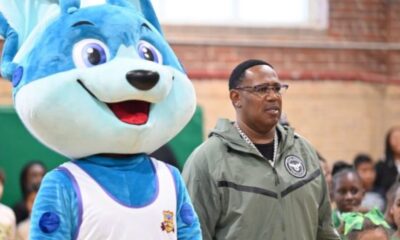
Master P Encourages Norwood Elementary Students to Dream Big, Work Hard
