
Books
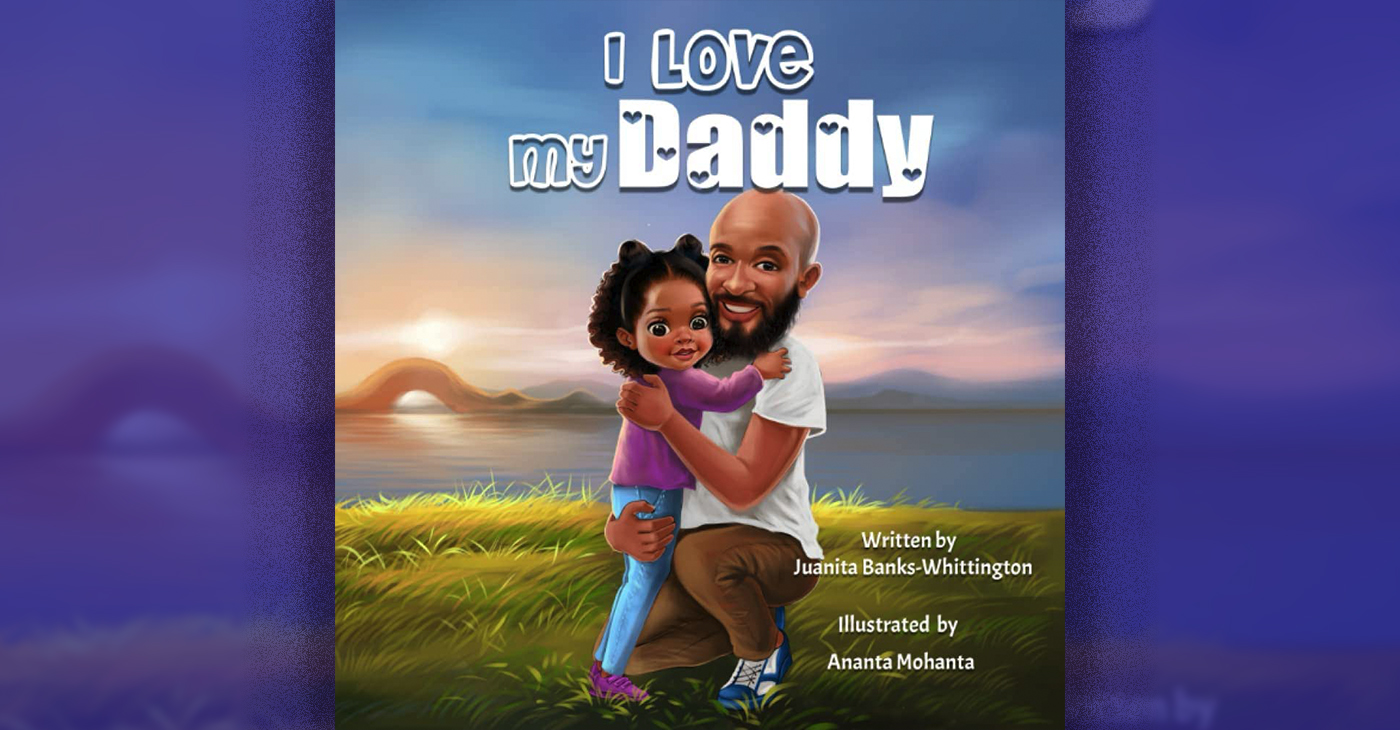
New Children’s Book, ‘I Love My Daddy,’ Further Dispels Myths about Black Fathers
The stereotype of the absent Black dad remains quite ubiquitous in popular culture. It often takes the form of a dysfunctional family unit, but in recent years, studies have proven that the stereotype is nothing more than a myth. That legend is further vaporized in the new children’s book, “I Love My Daddy,” by Maryland social worker and military veteran Juanita Banks Whittington.





Art
The Afrikan Restoration Project Marks 60 Years of Kwanzaa With New Book and Expanded Focus
THE AFRIKAN RESTORATION PROJECT FOR IMMEDIATE RELEASE | November 24, 2026 Media contact: Shujaa Baker | [email protected] | (949) 257-7133 | Media Kit – https://bit.ly/3X2tSlz The Afrikan Restoration Project Marks 60 Yea

The Afrikan Restoration Project Marks 60 Years of Kwanzaa With New Book and Expanded Focus
Events in San Diego, Detroit, and online will honor the holiday’s origins and prepare for the next sixty years of the Nguzo Saba.
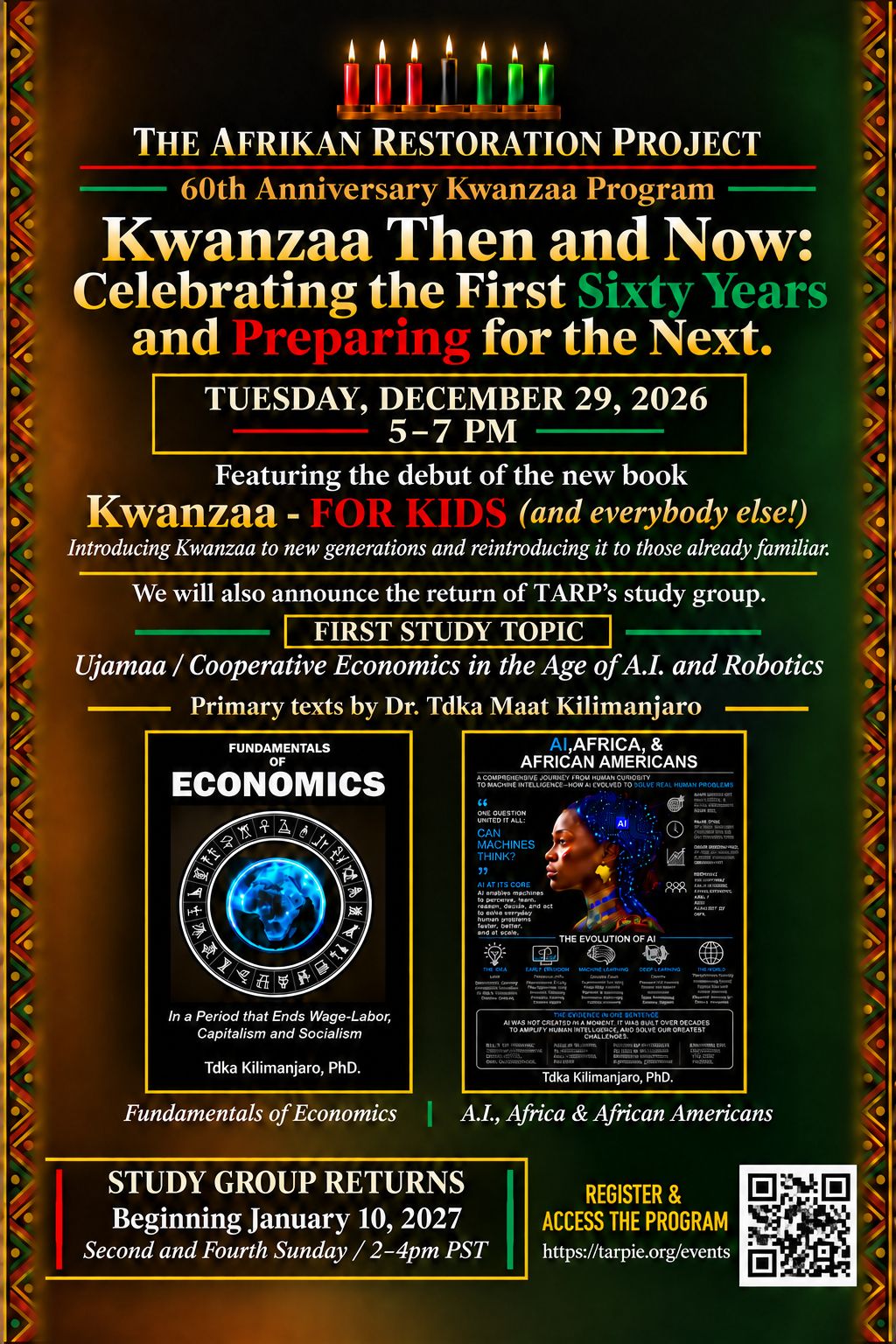
The Afrikan Restoration Project (TARP) announces its 2026 Kwanzaa anniversary season, Dec. 26–Jan. 1, marking sixty years of the African American and Pan-African holiday first observed in Los Angeles in 1966. Under the theme “Celebrating the First Sixty Years of Kwanzaa… and the Next!” the programs share an expanded understanding of the Kwanzaa creation story and thoughtfully promote year-round practice of the Nguzo Saba (Seven Principles).
Central to the celebration is the worldwide debut of the new book titled “Kwanzaa – FOR KIDS (and everybody else!),” written by Shujaa Baker, illustrated by Thad Lavalais, and based on the firsthand accounts of Kinamo and Karama Damu about the first Kwanzaa. The book traces how ten-year-old Kinamo’s questions about African holidays in 1965 inspired the creation of Kwanzaa while recounting the children’s experiences leading up to the first celebrations in 1966. Learn more at kwanzaaforkids.org.
60th Anniversary Events
Dec. 26 | San Diego | 1–4:30 p.m. PT — WorldBeat Cultural Center, Balboa Park. The children’s Kwanzaa Camp celebration and book debut features Karama Damu, a participant in the first Children’s Kwanzaa, along with a Kwanzaa Essentials lesson and lessons from the new book, art, music, drumming, and dance. Instructional content by Imagiread.
Dec. 26 | San Diego | 6–9 p.m. PT — WorldBeat Cultural Center. Umoja (Unity) Night program celebrating the First Sixty Years of Kwanzaa… and the Next! recognizes the first sixty years of Kwanzaa and the work ahead to teach the Nguzo Saba more broadly
Dec. 27 | Detroit | 2–5 p.m. ET — Charles H. Wright Museum of African American History. The Kujichagulia (Self-Determination) program explores Kwanzaa’s past, present, and future, and the role of self-determination in Elevating Blackness.
Dec. 29 | Online | 5–7 p.m. PT — Kwanzaa Then and Now: Celebrating the First Sixty Years and Preparing for the Next. TARP introduces its new book and announces the return of its study group on Jan. 10, 2027 – examining Ujamaa (Cooperative Economics) in the age of AI and robotics.
TARP is merging our work to promote African culture, S.T.E.M., manufacturing, and principled daily practice into a new online program called The Elevating Blackness Online Academy. Launching on December 5th, this site offers educational resources that build character, including curricula for Kwanzaa – FOR KIDS, the STEM ’n ’Nem children’s book series, and partner content.
Visit https://elevatingblackness.com for more info. (For beta test access – TESTER / Innovationary2026!).
TARP also invites public discussion of three position statements on Kwanzaa’s origins, the responsibilities of the next sixty years, and the daily practice of the Seven Principles found here.
Event details and registration: https://kwanzaa.org/events.html and https://tarpie.org/events. Contact Shujaa Baker for interviews, the media kit, and high-resolution images. See tarpie.org for full details.
About The Afrikan Restoration Project
TARP is an African-centered educational and cultural development initiative advancing cultural knowledge, practical capabilities, and principled community development through publications, programming, and collaborative education.
Black History
Wichita’s Only Black-Owned Bookstore Seeks $90,000 to Secure Its Future
COMMUNITY VOICE (KS) — Left on Read, believed to be the only Black-owned bookstore in Kansas, has launched a $90,000 fundraising campaign to secure its long-term future. Owner Dr. Latasha Eley Kelly initiated the “Support Left on Read: Books, Community, & Connection” appeal in October to address significant financial hurdles.
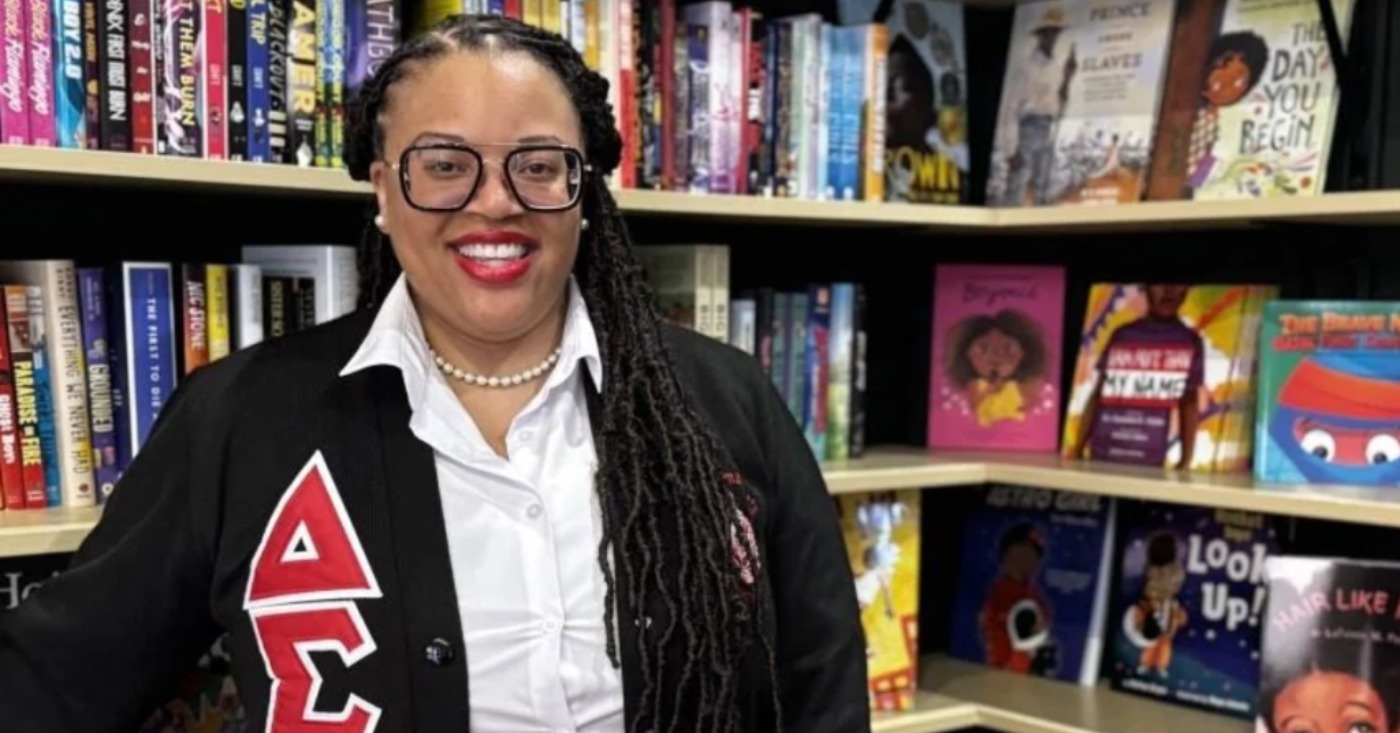
As Left on Read prepares to celebrate its second anniversary on Nov. 30, the bookstore is confronting financial challenges that have prompted owner Dr. Latasha Eley Kelly to launch a $90,000 fundraising campaign to sustain its operations.
The independent bookstore, believed to be the only Black-owned bookstore in Kansas, has become a destination for readers, authors and community gatherings since opening in 2024. But unexpected funding losses, rising operating expenses, and the costs of relocating have strained its finances.
Kelly launched the Support Left on Read: Books, Community, & Connection campaign in October, seeking contributions to cover operating expenses, staffing, inventory and community programming.
A recent snapshot of the GoFundMe campaign showed $14,410 raised from 183 donations, approximately 17% of the $90,000 goal.
Financial Setbacks Prompt Appeal
One of the bookstore’s financial challenges stems from the unexpected loss of grant funding supporting TMBP Media, one of Kelly’s interconnected business ventures. The media operation, The Millennial Black Professor and Left on Read share resources, making the funding loss significant for the bookstore.
In an October interview with KSNW-TV, Kelly also cited increasing operating and staffing costs and the need to establish more reliable revenue sources.
The bookstore relocated from its original downtown location at 612 E. Douglas Ave. to Revolutsia, a small-business development at 2721 E. Central Ave. Kelly described the move as unexpected and credited Mike Ramsey of Bokeh Development with helping facilitate the transition.
To help support the business, Kelly has continued teaching and pursuing consulting, speaking, and instructional opportunities.
The fundraising effort is designed to address immediate expenses while building a more sustainable financial structure. The bookstore has not announced plans to close, but the appeal underscores the financial pressures threatening its long-term viability.
More Than a Place to Buy Books

When Left on Read opened Nov. 30, 2024, Kelly envisioned a bookstore where African-American authors and other historically underrepresented writers would receive the visibility often missing from mainstream retail spaces.
Its selection includes fiction, nonfiction, children’s literature, poetry and history, with particular attention to Black authors and experiences.
Beyond book sales, Left on Read hosts author appearances, reading groups, cultural discussions and activities connecting local entrepreneurs with customers. The bookstore also provides space for The Blackprint, an initiative highlighting Black-owned businesses and their products.
Those activities have helped establish Left on Read as a cultural gathering place, but maintaining that role requires resources beyond revenue from book purchases alone.
Anniversary Campaign Focuses on Financial Stability
The bookstore’s annual 11.30 Campaign takes its name from its Nov. 30 opening date. While the first anniversary campaign encouraged smaller contributions to support the growing business, this year’s appeal focuses on strengthening its financial foundation.
Kelly is asking supporters to contribute financially, purchase books, recommend the store to others, and help spread awareness of the campaign.
The anniversary celebration will also feature several events intended to bring customers and community members into the bookstore.
Anniversary Celebration Events
Left on Read has scheduled the following activities from Nov. 20 through Nov. 22:
- Friday, Nov. 20, 6–7 p.m. — Malcolm Lynch’s Soulful Little Christmas Tour makes a stop at Left on Read.
- Saturday, Nov. 21, noon–1 p.m. — Launch of a free community library in partnership with a local service organization.
- Saturday, Nov. 21, noon–3 p.m. — Lemonade tasting featuring Tre’s Squeeze, presented in partnership with The Blackprint. Attendees can also purchase Squeeze Into Your Dreams by founder Tre Glasper.
- Saturday, Nov. 21, 2–4 p.m. — Public book club discussion of Children of Blood and Bone, covering chapters 1–28.
- Sunday, Nov. 22 — Ponder This at Build and Rebuild. Those purchasing tickets at Left on Read have a chance to win a Ponder This T-shirt and a bookstore gift card.
The events offer residents opportunities to experience the bookstore’s community programming while supporting a business working to overcome financial difficulties.
Community Support Could Determine What’s Next
For independent bookstores, balancing retail sales with the costs of staffing, inventory and community programming can be difficult. Left on Read faces those challenges while also working to maintain a space dedicated to Black literature, culture and entrepreneurship.
The fundraising campaign offers Wichita residents and businesses a chance to help preserve a locally owned institution that offers more than books.
Although the campaign’s outcome remains uncertain, the stakes extend beyond the bookstore’s balance sheet. Its future will determine whether Wichita continues to have a dedicated retail space where Black authors, readers and entrepreneurs are at the center of the experience.
How to Help: Supporters can donate through the 11.30 Campaign at bit.ly/supportleftonread, purchase books at leftonreadbookstore.com, or visit the store at 2721 E. Central Ave., Suite 121, Wichita.
The post Wichita’s Only Black-Owned Bookstore Seeks $90,000 to Secure Its Future appeared first on The Community Voice.
Based on reporting by Community Voice (KS).
Art
BOO REVIEW: Upcoming Book Revisits Dr. King’s 1957 Visit to St. Paul
MINNESOTA SPOKESMAN-RECORDER — A new book by researcher Jeff Olson titled “Gathering at the Rivers: Martin Luther King Jr. and Civil Rights in Minnesota” will chronicle the historic first visit of Dr. King to the state.
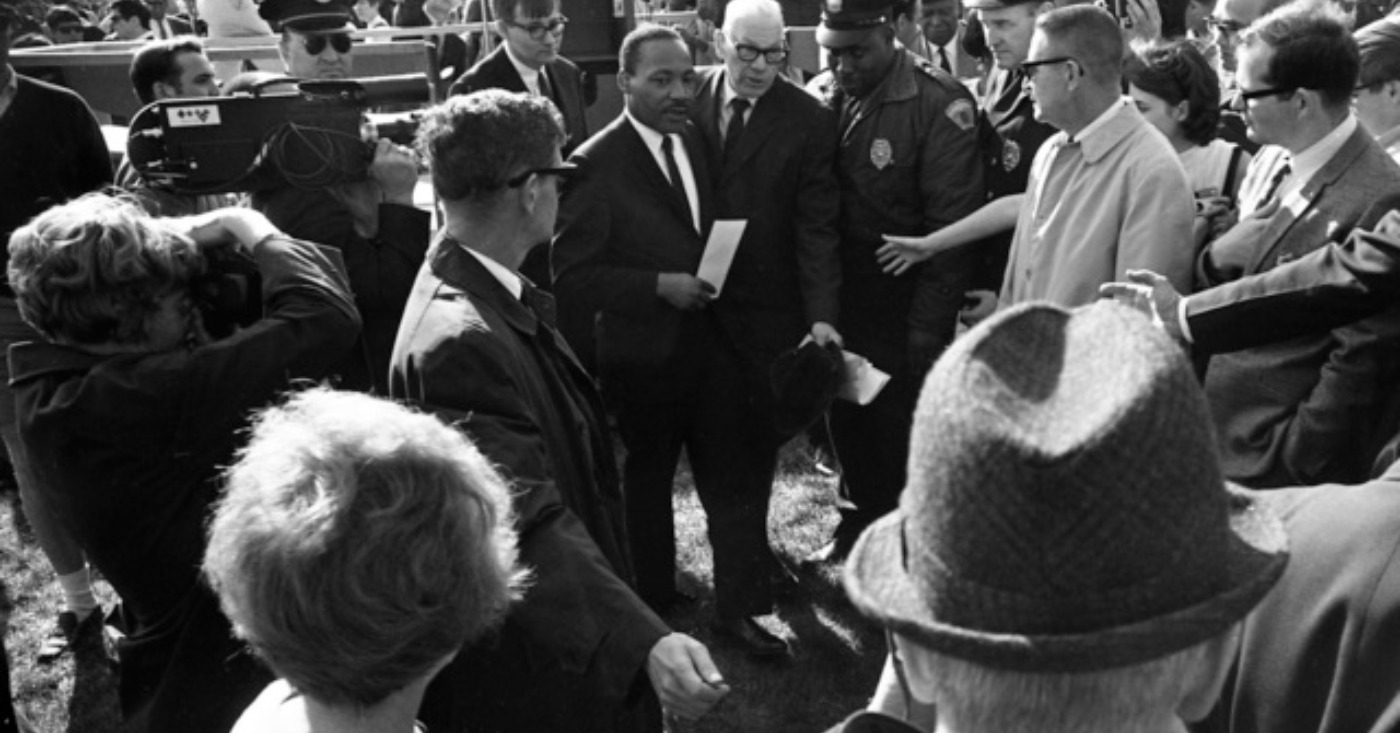
New Book Will Tell the Story of Dr. King’s First Visit to Minnesota and St. Paul’s Civil Rights Pioneers
“Gathering at the Rivers: Martin Luther King Jr. and Civil Rights in Minnesota,” by researcher Jeff Olson, will chronicle King’s Jan. 21, 1957, sermon at Gloria Dei Lutheran Church in St. Paul, his first Minnesota visit, just after the Montgomery Bus Boycott. The Rev. Dr. Floyd Massey Jr. of Pilgrim Baptist Church helped bring King to the state and hosted a reception at his Rondo home. The book’s “Twenty Treasures” chapter profiles figures including Roy Wilkins, Dred Scott, Cap Wigington, Nellie Francis, Nellie Stone Johnson and MSR founder Cecil Newman. Afton Press plans a late 2027 or early 2028 release and is seeking donor support for the $100,000 project.
On Jan. 21, 1957, the Rev. Dr. Martin Luther King Jr. stepped into the pulpit at Gloria Dei Lutheran Church in St. Paul on his first visit to Minnesota. Nearly 70 years later, a book from Minnesota publisher Afton Press aims to tell the story of that night and of the people and places that shaped it.
“Gathering at the Rivers: Martin Luther King Jr. and Civil Rights in Minnesota,” by researcher and author Jeff Olson, is in the early stages of publishing, with a release planned for late 2027 or early 2028. Former St. Paul Mayor Melvin Carter III, the city’s first Black mayor, is writing the foreword.
The book frames the visit as a turning point. King, who had turned 28 just days earlier, was fresh off the Montgomery Bus Boycott and stepping into a national leadership role. In St. Paul, Olson writes, King found himself in the hometown roots of two of his biggest supporters: NAACP leader Roy Wilkins, who grew up in St. Paul’s Frogtown neighborhood, and Ralph Helstein, president of the United Packinghouse Workers of America. Both organizations gave major support to the boycott.

The visit itself came together through local clergy. According to the book, the Rev. Dr. Floyd Massey Jr., pastor of Pilgrim Baptist Church and program chair of the Minnesota Pastors Conference, played a central role in bringing King to the state. After King’s evening sermon at Gloria Dei, Massey and his wife, Ethel, hosted a reception for him at their home in the Rondo neighborhood.
At the heart of the book is a chapter Olson calls the “Twenty Treasures of Civil Rights in Saint Paul,” profiles of the people, places and institutions that made the city fertile ground for King’s message. The list stretches from Dred Scott, who married Harriet Robinson at Fort Snelling in 1837 and later took his fight for freedom to the U.S. Supreme Court, to Pilgrim Baptist Church, founded in 1863 as Minnesota’s first Black church.
It includes architect Clarence “Cap” Wigington, who Olson notes was the nation’s first Black municipal architect; Nellie Francis, who led the campaign for Minnesota’s 1921 anti-lynching law; attorney Frederick McGhee; labor and civil rights leader Nellie Stone Johnson; and Carl Rowan, whose civil rights reporting for the Minneapolis Tribune won national journalism honors in the 1950s. It also includes Cecil Newman, who founded the Minneapolis Spokesman and St. Paul Recorder in 1934 and led the papers until 1976.
Olson argues that these civil rights firsts are striking given Minnesota’s small Black population at the time, compared with states and cities whose Black communities were many times larger.
Olson said he became fascinated by the research because he kept uncovering stories that had gone untold.
Ian Graham Leask, Afton Press’ publisher, told the MSR the book matters at a time when literacy rates are declining. A book that shows readers from marginalized communities the history of the very streets they walk today could give schools and institutions a way to spark engagement, he said, especially because the story has never been told this way before.
Bringing the book to print is expected to cost about $100,000, Leask said, and Afton Press is open to support from donors.
Afton Press has a long record of publishing Minnesota stories about people, places and events, including “Overcoming: The Autobiography of W. Harry Davis” (2002), the memoir of the prominent Black civic leader from Minneapolis.
Olson is the author of several books on hockey history and of “Kindred Spirits,” about the conservation work of Theodore Roosevelt and John Muir.
For more information or to support the book, visit https://aftonpress.com/. You can also contact Afton directly at [email protected] or 651-436-8443.
Jasmine McBride welcomes reader responses at[email protected].
Jasmine McBride is an Editor at the Minnesota Spokesman-Recorder More by Jasmine McBride
Based on reporting by Minnesota Spokesman-Recorder.
Black History
Christianity’s Racial History
THE POSITIVE COMMUNITY — Historian and author Jemar Tisby is challenging the traditional narratives of American religious history through his acclaimed work, The Color of Compromise. His research provides a comprehensive examination of how Christian institutions have historically participated in, accommodated, or resisted racial injustice from the colonial era to the present day.
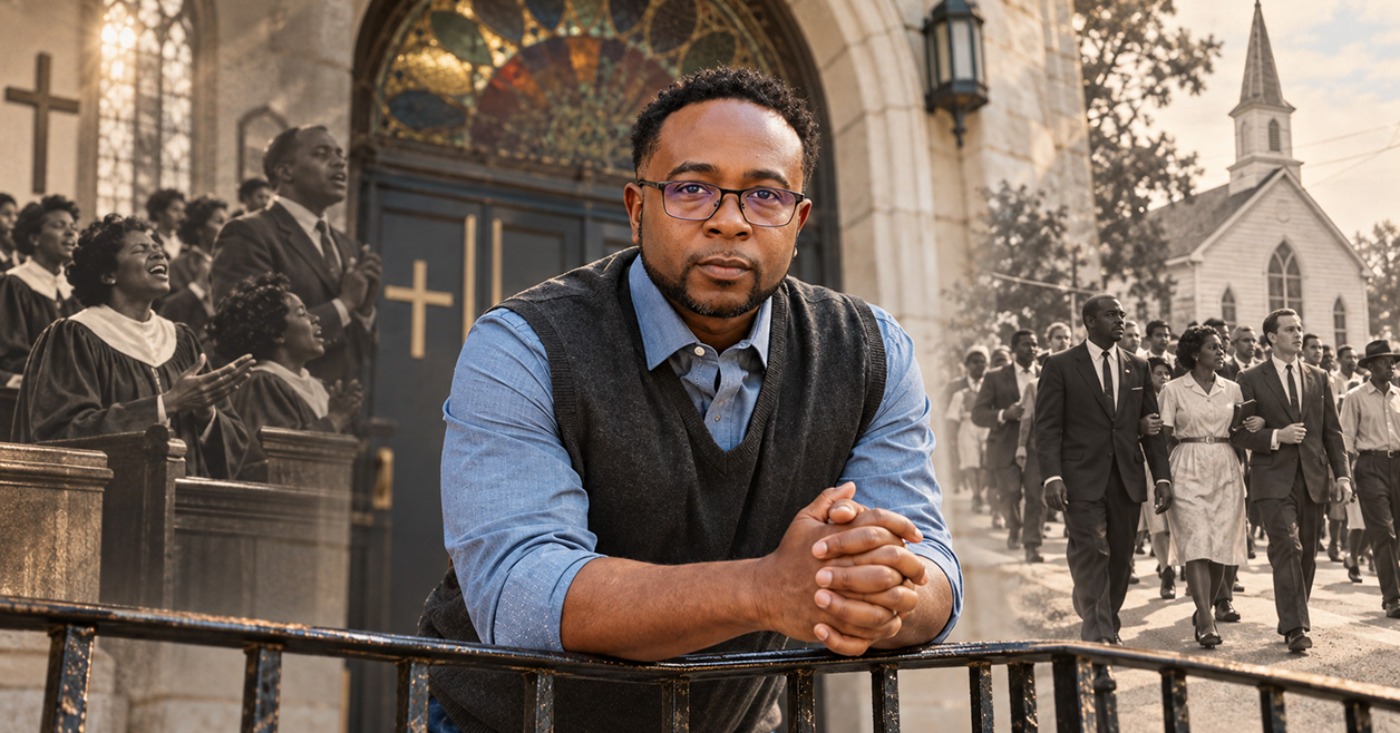
Jemar Tisby is a historian, author, and public speaker whose work examines the relationship between Christianity, racism, and American history. Through his writing, he challenges readers to reconsider the role religious institutions have played in shaping racial attitudes and social structures. His widely recognized book, The Color of Compromise: The Truth About the American Church’s Complicity in Racism, explores how Christian churches have participated in, accommodated, and sometimes resisted racial injustice throughout American history. Tisby’s work encourages readers to examine the past honestly and consider what meaningful change requires today.
One of the central arguments in The Color of Compromise is that racism in America cannot be understood without examining the influence of religious institutions. Christianity has often been associated with messages of love, justice, compassion, and equality. Yet churches and Christian leaders have sometimes supported systems that denied African Americans their freedom and dignity. Tisby examines this contradiction, demonstrating how religious beliefs and institutions could be used to justify racial oppression rather than challenge it.
The book takes readers back to the era of European colonization and slavery, when religious arguments were frequently used to defend the enslavement of Africans. Some Christian leaders claimed that slavery was compatible with biblical teachings, while others used Christianity to encourage resistance to the institution. Enslaved Africans developed their own spiritual traditions, drawing strength from their faith while enduring violence, separation from family, and the denial of basic human rights. Tisby highlights the importance of understanding how Christianity became intertwined with the development of American slavery.
Tisby also explores the role of churches during the Civil War and Reconstruction. Although emancipation ended legal slavery, it did not eliminate racial prejudice or the struggle for equal citizenship. Some religious communities supported efforts to educate formerly enslaved people and establish independent Black institutions. Others tolerated or defended segregation and white supremacy. The period demonstrates how Christian institutions faced a choice between challenging racial injustice and preserving existing social arrangements.
Another important subject in the book is the relationship between Christianity and Jim Crow segregation. During the late nineteenth and early twentieth centuries, racial segregation became deeply embedded in American society. Many churches reflected the same divisions, maintaining separate congregations and unequal opportunities for worship and leadership. Tisby argues that compromise occurred not only when Christians openly defended racism but also when they remained silent or accepted discriminatory practices to avoid conflict. This distinction is essential to understanding the book’s central message.
The civil rights movement provides another significant chapter in this history. Black churches played a vital role in organizing demonstrations, supporting community leadership, and providing spiritual encouragement to people fighting racial discrimination. Figures such as the Reverend Dr. Martin Luther King Jr. drew upon Christian teachings to challenge segregation and demand equal rights. However, not all white Christian congregations supported the movement. Tisby examines the difference between those who actively opposed racism and those who hesitated to challenge the racial status quo.
A major strength of Tisby’s writing is his attention to the difference between individual prejudice and institutional racism. A person may believe in treating others fairly while participating in organizations or traditions that produce unequal outcomes. Similarly, a church may preach love and acceptance while failing to confront discriminatory practices within its own community. Tisby encourages Christians to look beyond personal intentions and examine the consequences of their actions, their institutional policies, and their willingness to address injustice.
The book also challenges contemporary Christians to consider how the legacy of racial compromise continues to affect American religious life. Questions about church leadership, worship communities, racial representation, education, and public policy remain important. Tisby argues that acknowledging historical wrongdoing is not about assigning personal guilt to every modern Christian. Rather, it is about understanding how past decisions shaped the present and recognizing the responsibility to pursue greater fairness, accountability, and inclusion.
Tisby’s work has become an important contribution to conversations about race and religion because it asks readers to move beyond comfortable narratives about American Christianity. His historical approach encourages people to examine uncomfortable evidence, listen to the experiences of African Americans, and recognize the difference between professing moral principles and practicing them. The book also raises questions about what genuine reconciliation requires, emphasizing that meaningful progress involves more than expressions of goodwill. It requires a willingness to confront injustice and make changes that reflect the values Christians claim to uphold.
Ultimately, The Color of Compromise is a call for historical honesty, moral reflection, and meaningful action. Jemar Tisby challenges churches and individual believers to understand how Christianity has been used both to support oppression and to inspire resistance against it. His message is especially relevant in a society still wrestling with racial inequality and the consequences of its history. By examining the past with courage and integrity, readers can better understand the responsibilities of faith in the present. The book reminds us that the true test of religious conviction is not simply what people profess to believe, but whether their actions reflect justice, compassion, and respect for the dignity of every human being.
Based on reporting by The Positive Community.
Black History
Learn Black History and Win Your Next Game Night
INDIANAPOLIS RECORDER — Dr. Maxine Bryant, a culture keeper and professor, is combatting book bans and historical inaccuracies through the launch of GriotSpeaks: The Game. The new board game is designed to celebrate the African diaspora by incorporating elements of geography, literature, music, and the Gullah Geechee culture.
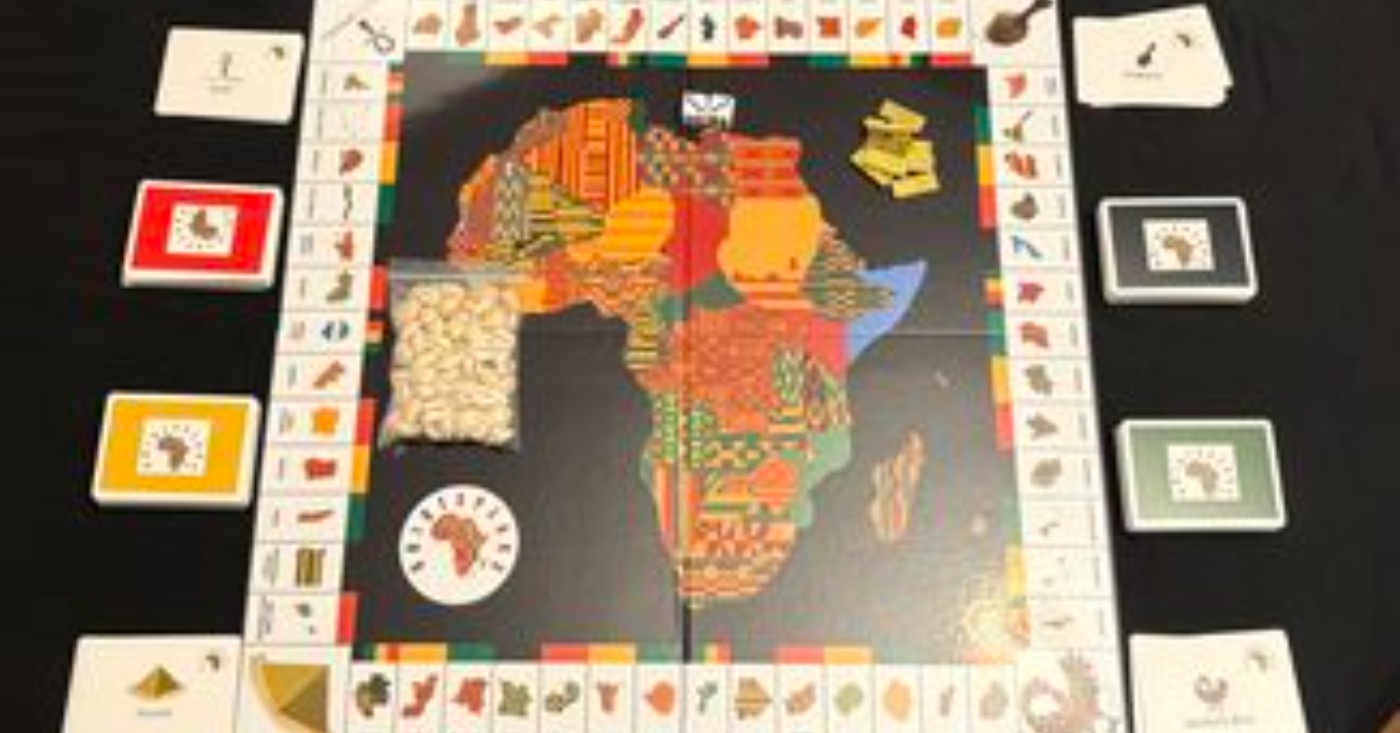
Maxine Bryant, Ph.D., creator and founder GriotSpeaks, is sharing the history of the African diaspora through her new board game.
Bryant often quotes the African proverb: “Until the lion tells the story, the hunter will always be the hero.” She said for the hunter has been telling the story of the African diaspora for “far too long.”
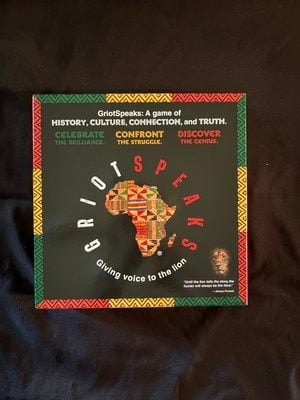
The game is based in African culture. The spaces on the board feature the countries of the African diaspora and it uses gold bars and cowrie shells as currency while special game spaces showcase symbols such as the Sankofa bird, a pyramid and an Ankh.
Bryant, a culture keeper and educator, created the game to add a bit of fun to her ongoing mission of dispelling myths and sharing accurate history. She used the history lessons she taught over the years as the foundation for the game’s trivia questions. Bryant said she is even more motivated to correct the inaccurate narratives due to recent book bans and efforts to minimize or omit the contributions of Black people.
“We can’t tell our story if we don’t know our story,” Bryant said.
History buffs may start the game with a slight advantage, but even players with limited knowledge have a chance to win with some strategic play. During one game demonstration, she said, an 11-year-old beat her with the clever use of one of the game’s wild cards.
Bryant’s goal is for people to learn new information while having a good time with one another. She sat down with the Recorder to share her inspiration for the game and how she hopes it will influence the culture.
This interview has been edited for length and clarity.
What was the inspiration for creating a game?
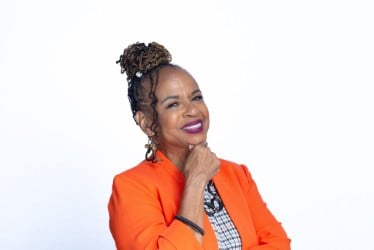
Maxine Bryant: In all honesty, God gave me the vision for the game.
I put that board game together the way God showed me in in this vision, if you will, it was to be educational, informative, and entertaining. And so, I knew I wanted it to encompass all of the diaspora and with the educational part of it. Since I am a professor, it needed to encompass the critical areas of our history.
So, it’s geography; it’s the resistance, the protest — all of that. It’s … literature, music, the Gullah Geechee culture, storytelling, the whole gamut, and then Black people.
What are some of the things people are surprised to finally learn while playing the game?
Bryant: The genius of Black people.
Many people know Madam C.J. Walker, although I’m finding out that not everybody does. But one of the questions (asks about) who invented the hot comb? Everybody thinks Madam C.J. Walker, but no, that was not her thing. Her thing was hair care and strengthening hair. It was a man (Walter H. Sammons) who created the hot comb. So, people are amazed at what they’re learning.
How do you hope that this new knowledge helps people see the world?
Bryant: So, what I hope people learn is our true history, the history of our struggle, and our resistance, the history of our greatness, and information about our culture. That positions us then to be able to stand tall in knowledge of self.
One of the things I wholeheartedly believe in is that little Black boys and little Black girls who grow up with the message that you are nothing because you are Black … it’s easy for me to take you out. But if I look at you and I know that you’re great and I’m great, I may just have a different kind of level of respect for you.
I think that having a sense of self can impact how I look at myself and how I look at people who look like me.
Is there anything else you want to share?
Bryant: In my mind, this game is a must-have. It is so unique. Now, within the culture, we have trivia games and usually they’re trivia about sports or about entertainment and some about history, right? And usually, it pertains to people in the United States or events in the United States, culture in the United States.
This game contains movement around a physical board like Monopoly, but it also encompasses the entire African diaspora so it’s not just the United States. People who played this game tell me … they’ve never seen anything like it.
GriotSpeaks: The Game is best suited for players 17 and older. The game is available for purchase through Amazon or at the GriotSpeaks website.
Contact Editor-in-Chief Camike Jones at 317-762-7850.
The post Learn Black history and win your next game night appeared first on Indianapolis Recorder.
Based on reporting by Indianapolis Recorder.
Black History
Michael Shiner: The Enslaved Man Who Wrote His Way into American History
Born into slavery in 1805, Michael G. Shiner became an essential eyewitness to 19th-century America by documenting over five decades of history in a private journal. Working at the Washington Navy Yard, Shiner recorded monumental events ranging from the British invasion during the War of 1812 to the complexities of labor and racial discrimination. His writings offer a rare, first-person perspective on the nation’s transformation from the eyes of a man who navigated both bondage and liberty. Read more to learn how Shiner secured his legacy.
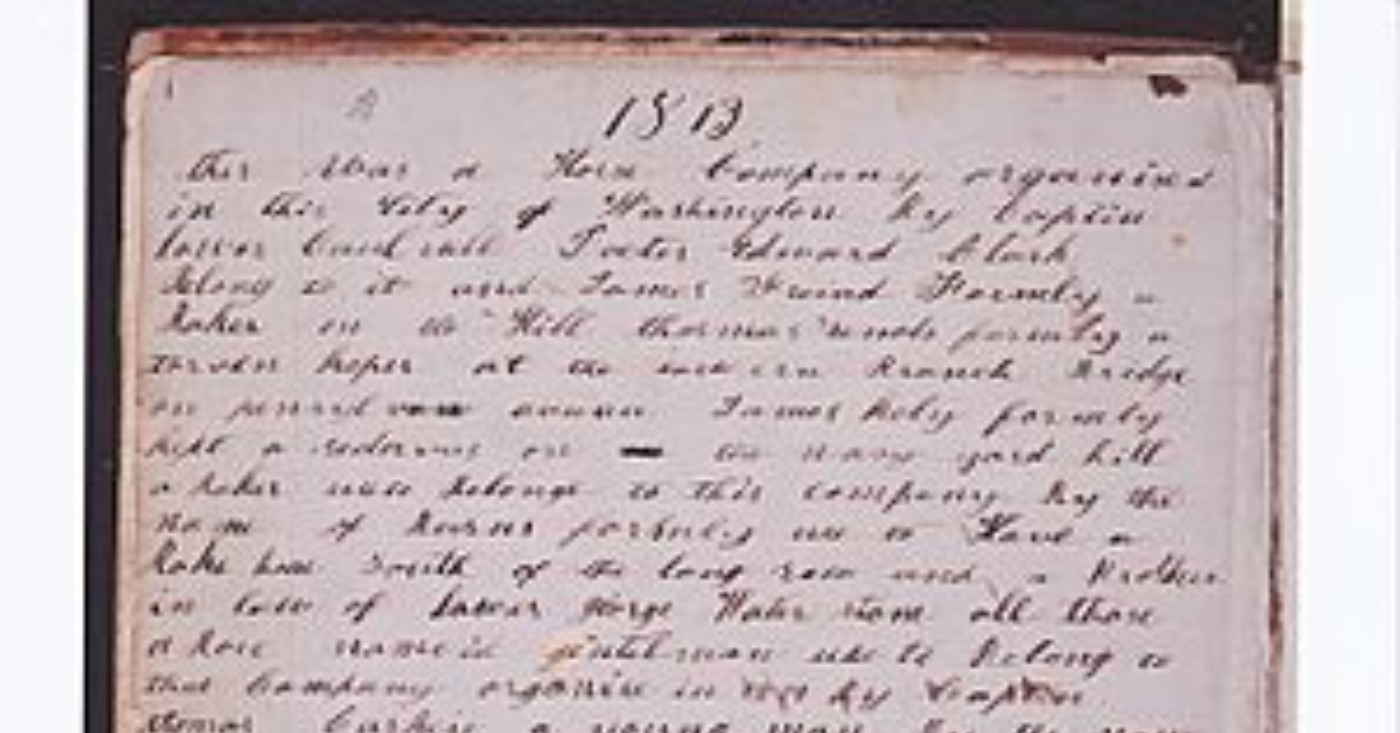
Long before African Americans could freely tell their stories, Michael G. Shiner was quietly documenting history.
Born into slavery in 1805 in Piscataway, Maryland, Shiner became one of the most remarkable eyewitness chroniclers of nineteenth-century America. His writings preserved more than five decades of Washington, D.C., history, providing an extraordinary perspective on slavery, freedom, labor, and the nation’s transformation.
He was born to William Pumphrey Jr., whose family owned property in Maryland and Washington, D.C. Around 1812, Shiner was brought to the nation’s capital, where he eventually worked at the Washington Navy Yard. Although denied the educational opportunities available to White Americans, he learned to read and write, likely through religious instruction at Washington’s First Presbyterian Church.
His literacy became a powerful instrument of historical preservation. Beginning with recollections of events in 1813, Shiner recorded significant happenings in a handwritten journal he called his “book.” His observations included the British invasion of Washington during the War of 1812, particularly the burning of the Capitol and other government buildings in August 1814. His descriptions captured the fear, destruction, and confusion surrounding one of America’s most devastating wartime attacks.
However, his writings extended far beyond military events.
In 1828, Thomas Howard, chief clerk of the Washington Navy Yard, acquired Shiner and hired out his labor. He worked in the Navy Yard’s paint shop, observing the everyday experiences of enslaved and free workers. His diary documented ship launches, workplace accidents, labor disputes, racial discrimination, and political developments.
One of his most heartbreaking experiences occurred in 1833 when slave traders threatened to separate his family. His wife, Phillis, and their children faced the possibility of being sold away. Through determined intervention and assistance from influential individuals, Shiner obtained their release from enslavement.
He petitioned for his own freedom in 1836 and subsequently lived as a free man. By 1850, census records identified him as free, living with his second wife, Jane, and their children.
His writings continued through the Civil War, documenting the changing political landscape and the struggle for African American freedom. His manuscript also revered the Emancipation Proclamation, demonstrating the importance of this historic declaration to someone who had personally experienced enslavement.
Following the Civil War, he became active in Republican politics and advocated for African American rights. His remarkable memory and detailed observations made him a respected figure throughout Washington.
Shiner died of smallpox on January 16, 1880, at approximately seventy-five years old.
Today, his 186-page manuscript, The Diary of Michael Shiner Relating to the History of the Washington Navy Yard, 1813–1869, is preserved at the Library of Congress.
What makes his achievement extraordinary is that an African American laborer, once considered property under American law, became an invaluable recorder of the nation’s history.
Shiner never achieved fame during his lifetime as a writer. Yet his determination to document the world around him ensured that future generations could understand American history through the eyes of someone who experienced both slavery and freedom.

Actress Heather Alicia Simms on Broadway and Caribbean Theater

Playfessionals: Building Real Community for Twin Cities Professionals | MSR On the Radar

Minnesota Hip-Hop’s First First Avenue Shows in 1983 #shorts

Free Shipping at $85—Plus Big Plans for Wholesale and Expansion #shorts

Where Would You Charge Your EV: At Home or in Public? #shorts

Curtis Blow’s 1982 Rap Contest: The Win That Changed Everything #shorts

Stop Selling Jeans to Everyone—Find an Underserved Niche #shorts

AI Music Is Changing How We Discover Artists #shorts

Before You Rent Retail Space, Know Your Break-Even Sales #shorts

Buying Friction: The Hidden Cost Beyond the Price #shorts

HISTORY MADE: Keisha Lance Bottoms Becomes First Black Woman Elected Governor in American History

Retirement Triggers Doctor to Pen Book for Young Audience

Multi-Faith Leaders Representing 10 Million People Launch National Anti-Authoritarian Initiative

Capturing Black Life’s Beauty

Hundreds of Black Christian Leaders Arriving in Israel for Martin Luther King-Inspired Mission

Christianity’s Racial History

Michael Shiner: The Enslaved Man Who Wrote His Way into American History

Message from the Associate Editor: Blindness, Hurts, Cops

Keisha Lance Bottoms to Govern State Where Her Great-Great-Grandfather Was Enslaved

Don’t Pass the Torch. Expand the Circle.
Playfessionals: Building Real Community for Twin Cities Professionals | MSR On the Radar
Minnesota Hip-Hop’s First First Avenue Shows in 1983 #shorts
Free Shipping at $85—Plus Big Plans for Wholesale and Expansion #shorts
Where Would You Charge Your EV: At Home or in Public? #shorts
Curtis Blow’s 1982 Rap Contest: The Win That Changed Everything #shorts
Stop Selling Jeans to Everyone—Find an Underserved Niche #shorts
AI Music Is Changing How We Discover Artists #shorts
Before You Rent Retail Space, Know Your Break-Even Sales #shorts
Buying Friction: The Hidden Cost Beyond the Price #shorts

Heated Steering Wheel & Seat Comfort: Find Your Perfect Driving Position #shorts
-

 Black Press1 week ago
COMMENTARY: Thank You, Trump, for Making America Great Again!
-

 Black Press1 week ago
Black Men Encouraged to Start Prostate Cancer Screening at 45
-

 Black History6 days ago
Black Barbershops Have Long Given Neighborhood Politics a Place to Unfold.
-

 Black Press1 week ago
Alonzo Mourning’s Affordable Senior Housing
-
 Black History1 week ago
Debunking the Myth That Europeans Alone Plotted Africa
-
 Black Press1 week ago
Computational Thinking and Young Children: It’s Not What You Might Think!
