
National
NC Inmate to Adjust to Life Outside After 30 Years


Geraldine Brown, sister of Leon Brown, celebrates outside a Robeson County courtroom where her brothers were declared innocent of the rape and murder of an 11 year old girl in 1983, Tuesday, Sept. 2, 2014 in Lumberton, N.C. On Tuesday, a judge overturned the convictions of Henry McCollum, 50, and Leon Brown, 46, in the 1983 rape and murder of the 11-year-old girl, citing the new evidence that they are innocent. (AP Photo/The News & Observer, Chuck Liddy)
MICHAEL BIESECKER, Associated Press
RALEIGH, N.C. (AP) — After walking out of prison for the first time in three decades, former death row inmate Henry McCollum tried to climb into his father’s car but put his head through the loop of the seatbelt that is supposed to cross his chest. A TV cameraman showed him how it works.
The safety gear isn’t all that’s changed since the 50-year-old McCollum and his younger half brother were sent away for a 1983 rape and killing that new DNA evidence shows they likely did not commit.
McCollum has never accessed the Internet or owned a cellphone. And he looked ill at ease Wednesday in a tie and white dress shirt, the collar at least an inch too large, shedding the red jumpsuit he wore in his cell. His relief was obvious, though.
“Right now I want to go home and take a hot bath,” McCollum said. “I want to see how that tub feel. And eat. I want to eat. I want to go to sleep and wake up the next day and see all this is real.”
McCollum hugged his weeping parents at the gates of Central Prison in Raleigh, a day after a judge ordered his release, citing new DNA evidence in the 1983 slaying of 11-year-old Sabrina Buie. His half brother, 46-year-old Leon Brown, was later freed from Maury Correctional Institution near Greenville, where he had been serving a life sentence.
“I knew one day I was going to be blessed to get out of prison, I just didn’t know when that time was going to be,” McCollum said. “I just thank God that I am out of this place”
Brown declined to be interviewed following his release, saying through his attorney he was too overwhelmed. He hugged his sister outside the prison before asking to go for a cheeseburger and milkshake.
“We were just looking at each other and just smiling,” said Ann Kirby, one of Brown’s lawyers. “We may have been smiling too hard to say anything.”
During his long years on death row, McCollum watched 42 men he describes as brothers make their last walk to the nearby death chamber to receive lethal injections. If not for a series of lawsuits that has blocked any executions in North Carolina since 2006, McCollum would have likely been put to death years ago.
He often lay awake at night in his solitary cell, thinking of the needle.
“I’d toss and turn at night, trying to sleep,” he said. “Cause I thought … these people was going to kill me.”
Superior Court Judge Douglas Sasser overturned the convictions Tuesday. He said another man’s DNA being found on a cigarette butt left near the body of the slain girl contradicted the case put forth by prosecutors.
The ruling was the latest twist in a notorious case that began with what defense attorneys said were coerced confessions from two scared teenagers with low IQs. McCollum was 19 at the time, and Brown was 15. There was no physical evidence connecting them to the crime including DNA from the cigarettes.
Defense lawyers petitioned for their release after a recent analysis from the discarded cigarette pointed to another man who lived near the Robeson County soybean field where Buie’s body was found. That man is already serving a life sentence for a similar rape and murder that happened less than a month later.
The men’s freedom hinged largely on the new local prosecutor’s acknowledgement of the strong evidence of their innocence.
Even if the men were granted a new trial, Robeson County District Attorney Johnson Britt said: “Based upon this new evidence, the state does not have a case to prosecute.” He said he is considering whether to reopen the case and file new charges against the now suspected man.
Brown and McCollum both were initially sentenced to death but those were overturned. At a second trial, McCollum was again sent to death row, while Brown was convicted of rape and sentenced to life.
Upon his release, McCollum expressed his belief that there are still other innocent men on the inside. He is at least the seventh death row inmate freed in North Carolina since 1976, the year the death penalty was reinstated by the U.S. Supreme Court.
“It’s very painful when you are attached to somebody like a brother or family, and you see that person on his last days,” McCollum said. “A lot of them don’t really want to die. … And it hurt me the most to see the state take somebody’s life, when they are committing murder their own self. But they don’t see it that way.”
___
Associated Press writer Jonathan Drew contributed to this report.
___
See AP video of McCollum’s release at https://apne.ws/1ppFim1.
___
Follow AP writer Michael Biesecker at https://Twitter.com/mbieseck.
Copyright 2014 The Associated Press. All rights reserved. This material may not be published, broadcast, rewritten or redistributed.





Black Press
Lawmakers Back Push Against Military Sexual Assault
CHICAGO CRUSADER — Illinois lawmakers and Cook County officials are pledging support for a Chicago-area veterans advocate seeking stronger protections for service members who experience sexual assault. State Rep. La Shawn K.
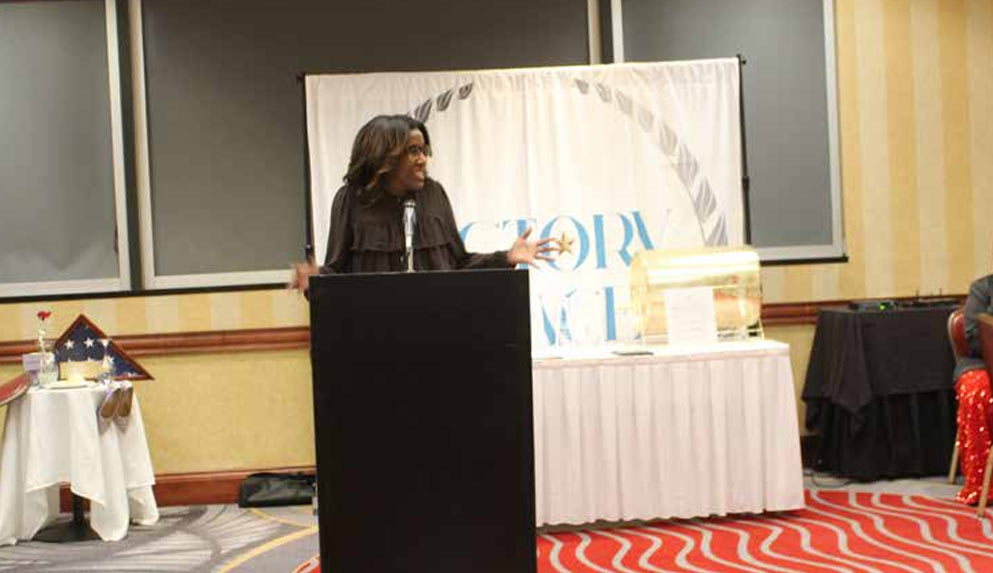
Illinois lawmakers are pledging support for a Chicago-area veterans advocate seeking stronger protections and accountability for service members who experience sexual assault, as new Pentagon data shows declines in estimated assaults but advocates warn that fear of reporting remains a serious concern.
State Rep. La Shawn K. Ford (D-8th), U.S. Reps. Danny K. Davis (D-7th) and Jonathan Jackson (D-1st), and Cook County Commissioner Donna Miller (6th) have expressed support for Dr. Renee Dickerson, an Air Force veteran, sexual assault survivor and founder and CEO of Victory Place, NFP.
Dickerson is a co-national organizer of the Million Women Veterans March on Washington, which she said is scheduled for October 27, 2027. The effort, known as “Dishonored Valor,” is being organized by National Women Veterans United, the International Association of Military Women of Color and Victory Place. Its policy priorities include military sexual trauma prevention, justice and accountability, mental health care, housing, economic equity and institutional transparency.
Ford and Miller were among veterans and supporters who attended a recent Victory Place fundraiser at the DoubleTree by Hilton in Alsip. Miller, whose father served in Vietnam, chairs the Cook County Board’s Veterans Committee.
“Sexual assault in the military is not a problem of the past. It is still happening to women and men who volunteered to serve our country,” Ford said. “Too many survivors carry that trauma home with them without the care and justice they deserve.”
Ford said he plans to help convene veterans, behavioral health professionals, educators and community partners in Illinois before the Washington march to identify state policies that could complement federal reforms.
“Those who served deserve to be safe while serving and supported when they come home,” Ford said.
Davis said he is committed to working with Dickerson’s group. He also urged voters concerned about federal policy to participate in the November 3 election.
“If people want change in this country, if they want progressive thought and progressive ideas to be actualized, then every chance that they get to put the more progressive people in decision-making places, that is the most effective way to do it,” Davis said.
Dickerson’s campaign comes as the military continues to confront sexual assault and questions about whether survivors trust the reporting system.
The Pentagon’s Fiscal Year 2025 Annual Report on Sexual Assault in the Military estimated that 20,492 active-duty service members experienced unwanted sexual contact, down from 29,061 in fiscal 2023. The estimated rate among active-duty women fell from 6.8% to 4.3%, while the rate among men declined from 1.3% to 1.0%. The Pentagon also estimated that 33% of affected service members reported an assault to military authorities, up from 25% in 2023.
Protect Our Defenders, a national advocacy organization focused on military sexual assault and harassment, cautioned that the lower estimates should not end scrutiny of the system. The organization said it continues to hear concerns from service members about fear of reporting and access to survivor protections and has criticized changes to prevention and response programs.
One case cited by the organization involves Army Maj. Blaine McGraw, an obstetrician-gynecologist facing a general court-martial at Fort Hood, Texas. According to the Army, McGraw pleaded not guilty in August to nine charges encompassing 272 specifications involving 93 alleged victims. The allegations include sexual assault and abusive sexual contact, indecent recording, assault consummated by battery and other offenses. He is presumed innocent unless proven guilty. His trial is scheduled to begin March 30, 2027.
Dickerson said her advocacy is rooted in her own experience with military sexual trauma. She said the superior who raped her was never charged, an experience that has fueled her work with veterans and their families dealing with trauma.
Through Victory Place and the Million Women Veterans March, Dickerson said she intends to press for policy changes and greater accountability for survivors who believe military systems failed them.
“I am proud to stand with Dr. Dickerson and the Million Women Veterans March,” Ford said.
Based on reporting by Chicago Crusader.
Black Press
Virginia State Dominates Shaw 76-13 Behind Explosive Second-Quarter Surge
THE CAROLINIAN — Virginia State University delivered a dominant performance against Shaw University in a Central Intercollegiate Athletic Association matchup on Saturday, Oct. 17, securing a 76-13 victory. The Trojans took full control of the contest during a devastating second-quarter surge where they scored 35 unanswered points.
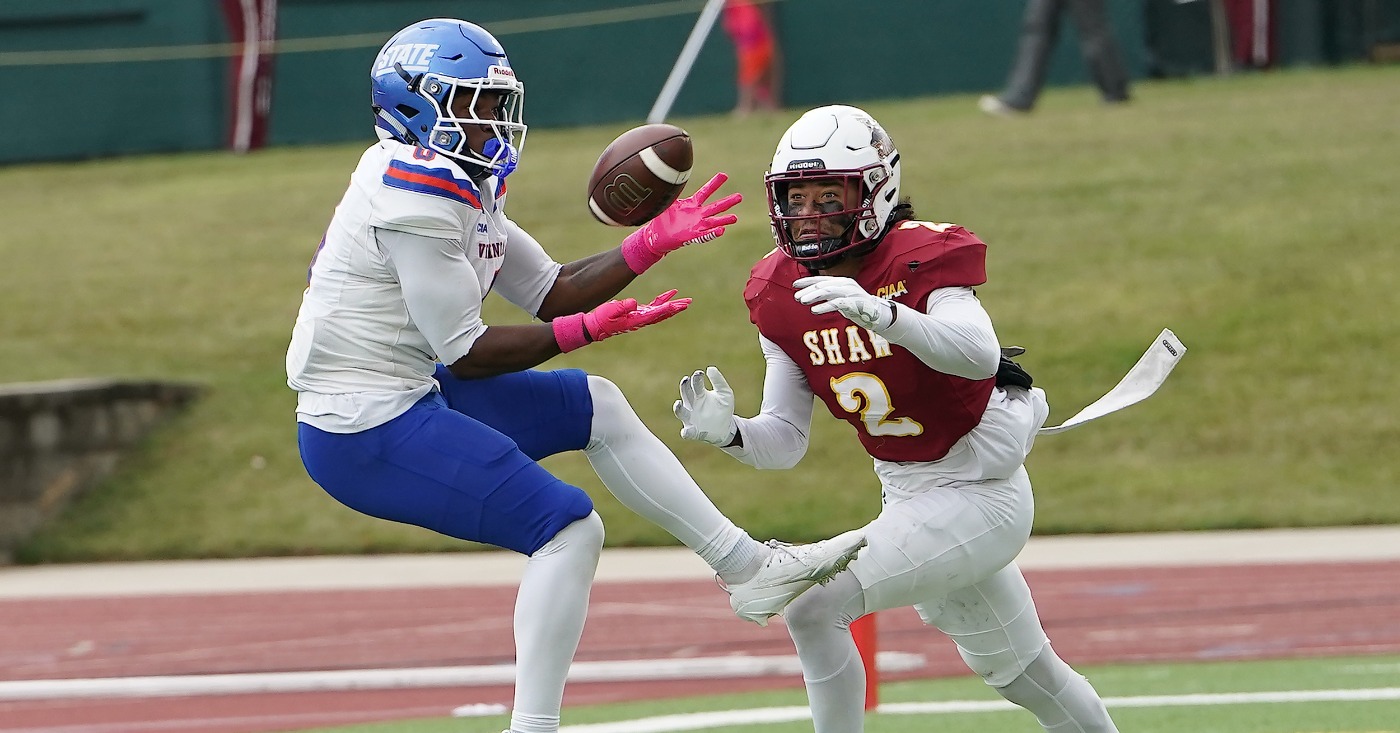
DURHAM, N.C. – Virginia State University delivered a commanding performance against Shaw University on Saturday, October 17, defeating the Bears 76-13 in a Central Intercollegiate Athletic Association (CIAA) football matchup. A devastating 35-0 scoring run in the second quarter helped Virginia State take control of the contest, leaving Shaw struggling to regain momentum.
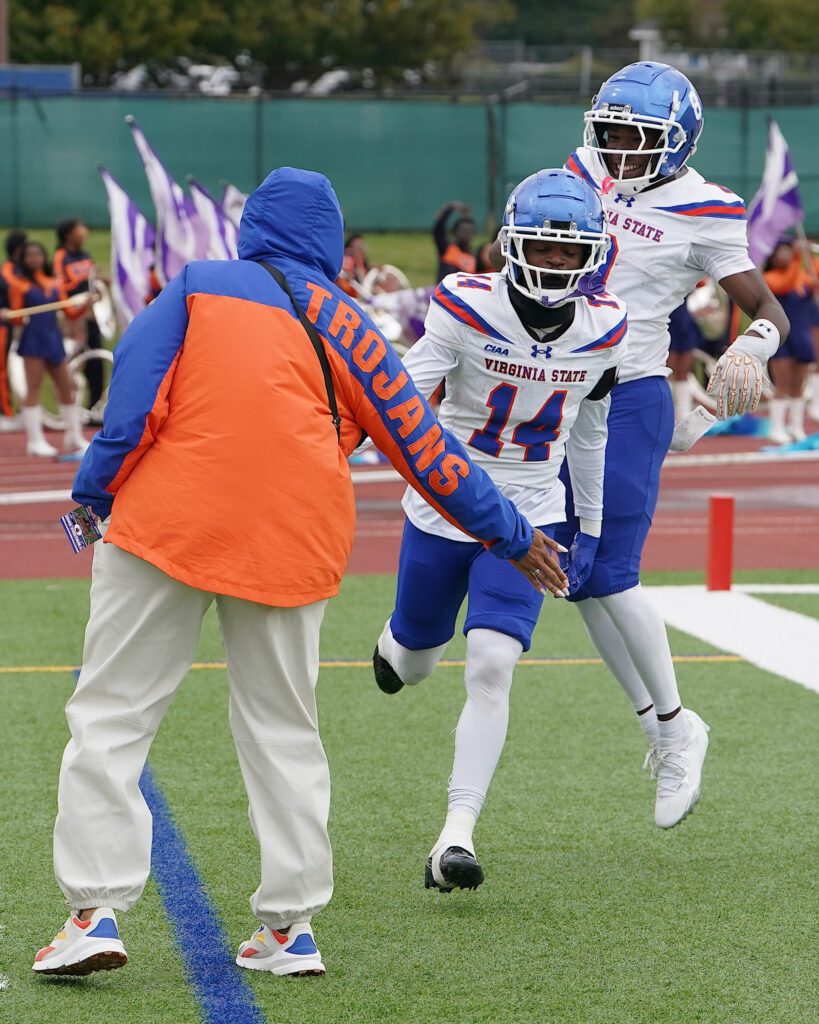
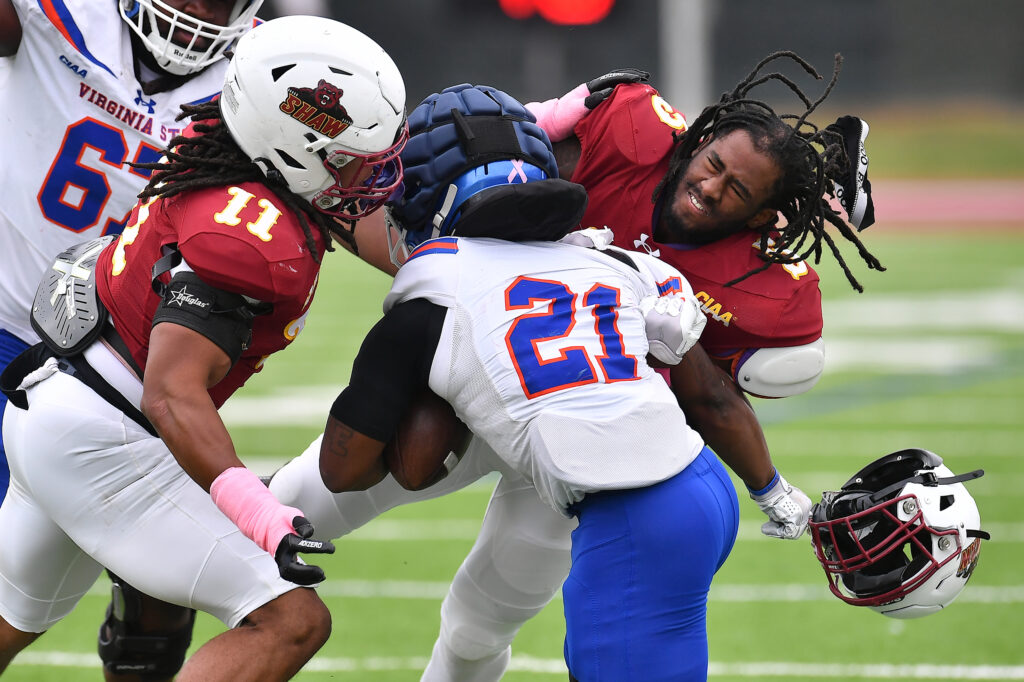
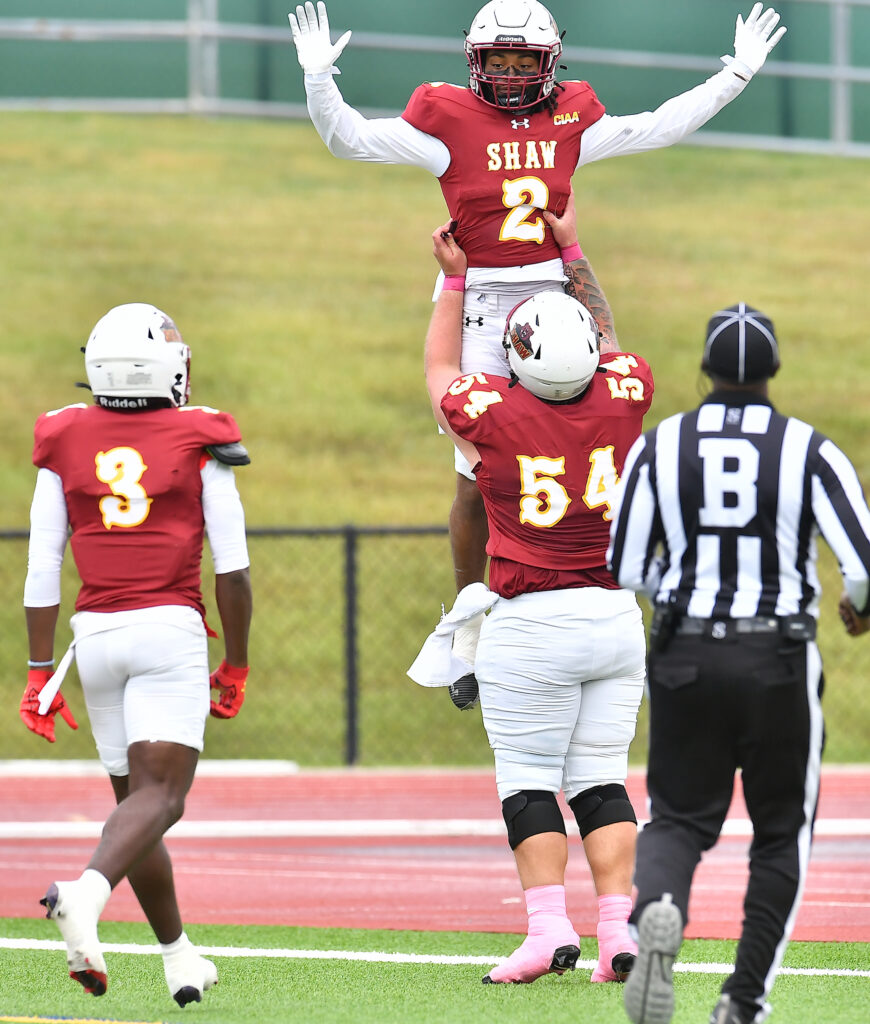
Shaw showed flashes of offensive potential early in the game, highlighted by a long touchdown reception from wide receiver Reggie King Jr. (2). King celebrated the score alongside teammate Ashton Williams (54), giving the Bears an early offensive highlight despite the eventual lopsided outcome.
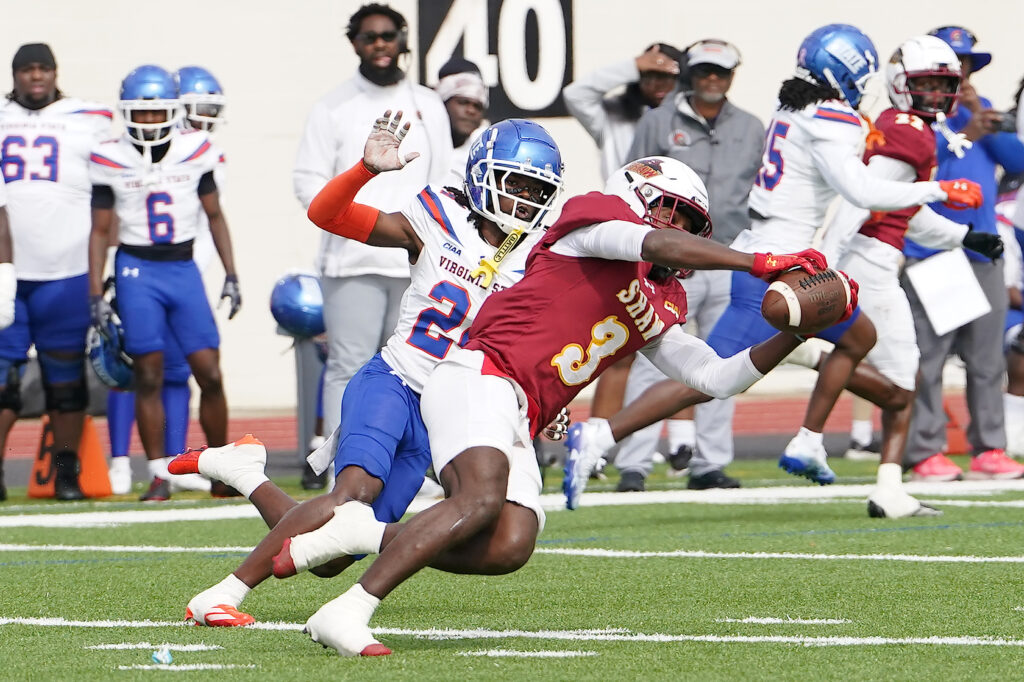
Wide receiver Floyd Lyles (3) also contributed to Shaw’s offensive efforts, securing a first-down reception while being defended by Virginia State cornerback Jamontae Dance-Anderson (24). However, the Bears struggled to sustain drives as Virginia State’s defense and special teams continued to create problems.
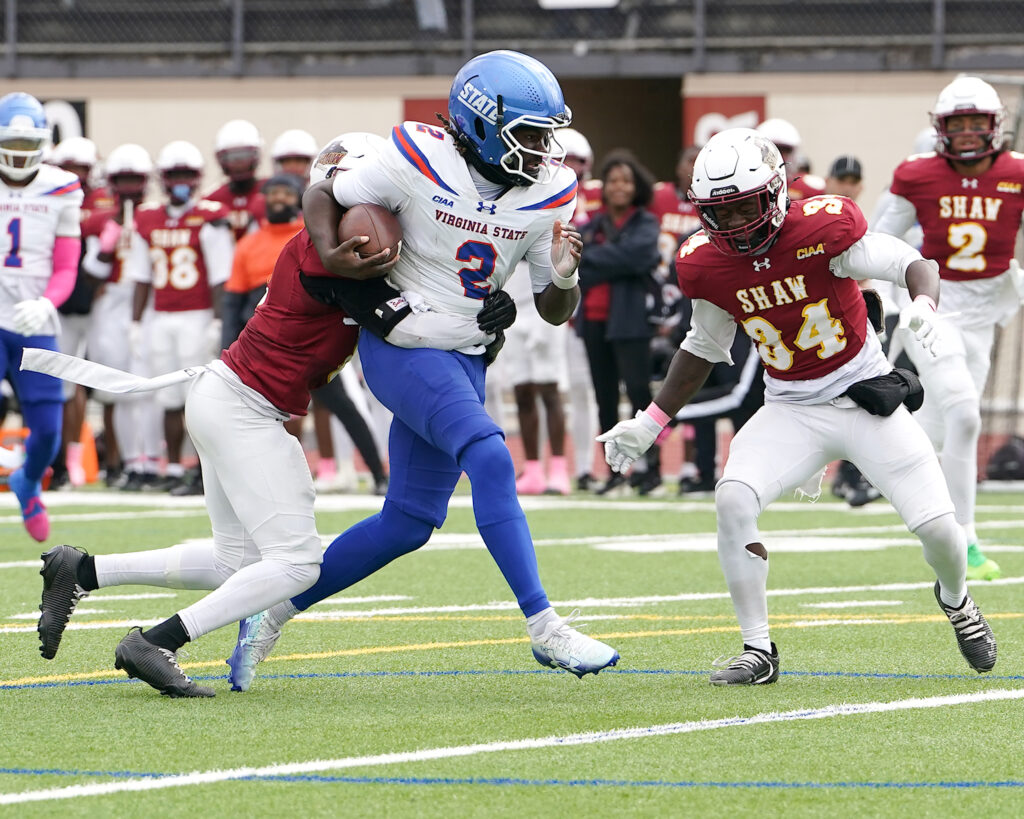
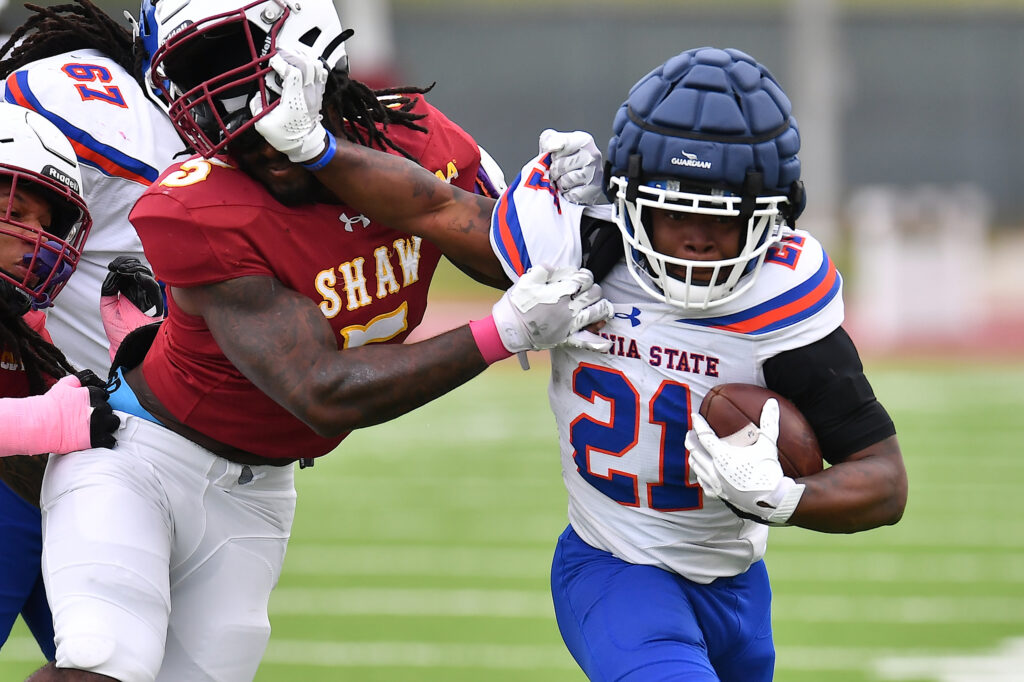
Virginia State’s offense proved difficult to contain, with quarterback Rashaan Matthews Jr. (2) extending plays with his legs and picking up a first down against the Shaw defense. Running back TJ Mordecai (21) added to the Trojans’ physical offensive attack, delivering a powerful stiff-arm against Shaw linebacker Quadir McEachin (5) during a first-half run.
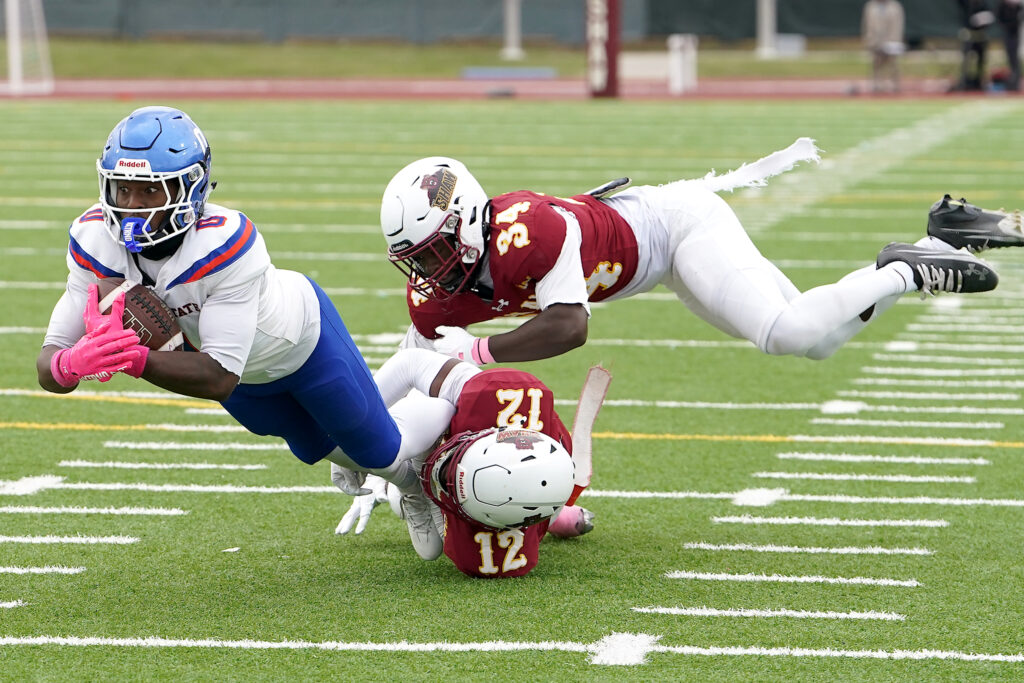
The Trojans also found success through the air. Wide receiver Kevin Gayles (0) made a first-down reception against Shaw defensive backs Sean McFadden (12) and Antonio Hardge (34). Later in the first half, Gayles hauled in a touchdown reception against Shaw cornerback Antonio Cotman (2), adding to Virginia State’s growing lead.
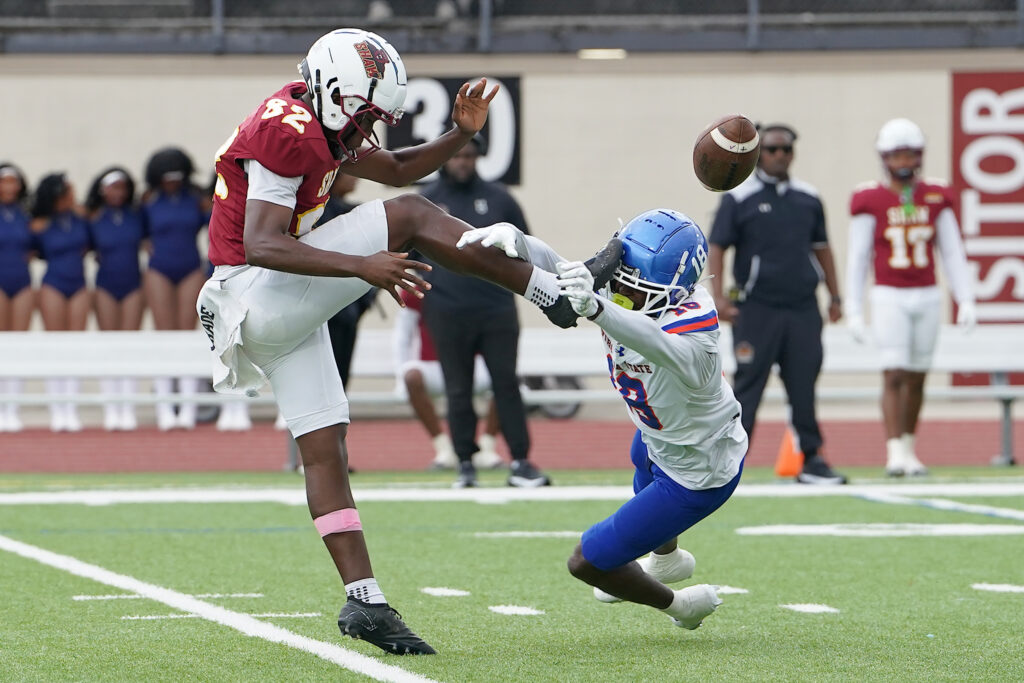
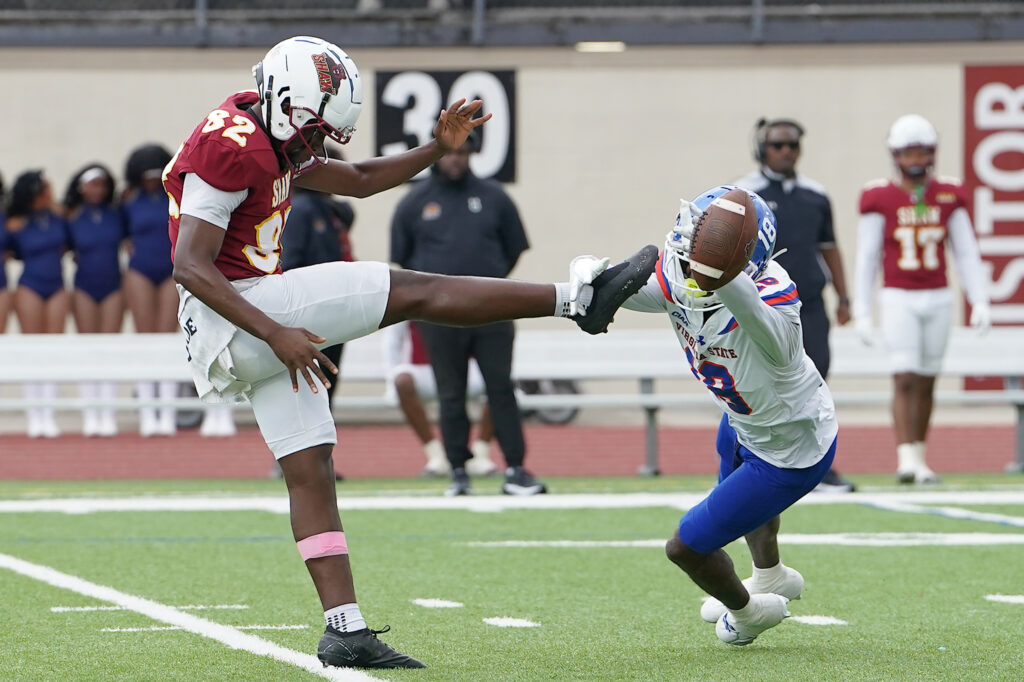
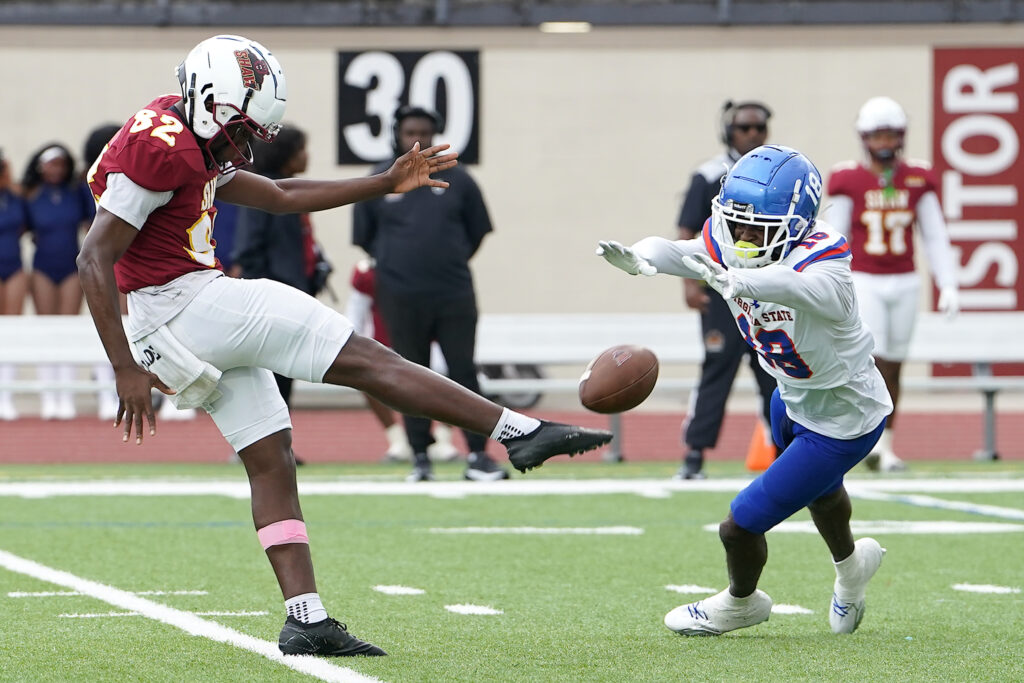
Special teams difficulties further complicated matters for the Bears. Virginia State’s Ian Wynn (18) blocked a punt attempt by Shaw punter Jethro Ommam (84) during the first half, providing another example of the Trojans’ ability to disrupt Shaw’s game plan.
The defining stretch came in the second quarter, when Virginia State erupted for 35 unanswered points. The scoring surge created a deficit Shaw could not overcome and demonstrated the Trojans’ ability to capitalize on opportunities on both sides of the ball.
Despite individual efforts from King, Lyles and several defensive players, Shaw was unable to slow Virginia State’s offensive production. The Trojans continued to build their advantage, ultimately securing a decisive 76-13 victory.
The loss highlighted the challenges facing Shaw as the Bears continue their CIAA schedule, particularly in limiting explosive plays, protecting the football on special teams and maintaining offensive consistency.
For Virginia State, the victory showcased an explosive offensive attack and a defense capable of disrupting opposing teams, reinforcing the Trojans’ competitive presence in CIAA football.
Based on reporting by The Carolinian.
Black Press
Message from the Associate Editor: Blindness, Hurts, Cops
HOUSTON DEFENDER — Reports regarding Philadelphia Eagles quarterback Jalen Hurts have raised serious concerns about the treatment of Black athletes after it was revealed he played through a medical emergency. According to team reports, Hurts was hospitalized until 4 a.m. with a blood clot prior to a Week 5 game in London, yet he was allowed to play the entire game and endure international flights.

The Jalen Hurts saga hurts
The disturbing reports surrounding Philadelphia Eagles quarterback, Houston-born Jalen Hurts, raise a troubling question: How much is a Black athlete’s life worth when winning is on the line? According to reports, the Eagles knew Hurts had a blood clot after he was hospitalized until 4 a.m. before the team’s Week 5 game against Jacksonville in London. Nevertheless, he played the entire game and endured international flights before doctors discovered the clot had progressed to deep vein thrombosis and bilateral pulmonary emboli. He was placed on blood thinners and injured reserve (out for the season). Sports medicine physician Jesse Morse warned that migrating clots could cause a fatal pulmonary blockage, heart attack, or stroke. Pulmonologist Matthew Gordon acknowledged that blood clots can be catastrophic or fatal. Beyond the medical questions, this episode reflects a disturbing American tradition: Treating Black bodies as expendable commodities. From slavery to exploitative labor practices and generations of dangerous sports, Black people have repeatedly been expected to sacrifice their well-being for others’ profits. The NFL’s predominantly Black workforce is literally “fieldhands” making their wealthy “owners” wealthier, giving serious plantation vibes. What’s crazy is, Hurts could have died. And if he had, the Eagles would have simply put another Black body to work and kept it moving.
Blind by choice
Recently, a Black woman conservative social media influencer was physically removed from a Ken Paxton voter event. And as she fought back tears, after being “dog-walked” out of the building, she kept asking, “Why?” She told her followers that she has been a faithful supporter of Donald Trump and the entire Republican ticket. She said she not only voted for Trump and crew, but also organized and volunteered for them on various campaigns. Before she got to the event, she went live on social media, bubbling with excitement about supporting Paxton, which is crazy, because no one is excited about supporting Paxton. But her MAGA-fest was abruptly ended as her live-stream followers saw her suddenly teary-eyed, being led out of the event space. “And there’s no one I can talk to about this,” she asked her exit escort, dumbfounded. She then shared with her MAGA followers, “Someone just came up to me and said Ken Paxton’s campaign manager wanted me to leave… I drove two hours to get here, and I have done nothing but support everyone on the Republican side. And this is how I get treated? I cannot believe the disrespect that I was just given.” Blackfolk in the comments section couldn’t believe that soul sister couldn’t understand what was happening. But you, if she’s been willing to play blind and support one of the most anti-Black regimes in history, and organize for a party that has gone out of its way to disrespect every ounce of Black existence, then I can understand why she couldn’t see their disrespect of her Blackness. But since she’s already given her soul to anti-Blackness, you best believe she’s still voting for Paxton. In fact, she literally said so.
Mecklenburg racist police competitions
It’s old news by now that several Charlotte-Mecklenburg cops sent text messages to each other, degrading Black people with the N-word and racist jokes, celebrating their open competition to see which racist-ass officer could pull over, harass, and even inflict the most bodily harm on Black motorists. Their Klan-ish fun and games had zero to do with Black people breaking the law. It was just white cops making a sport out of terrorizing Black people, using the authority of the state and their literal license to kill to torture Black people emotionally and physically. And they used Flock cameras to help them with their fun and games. But what’s older news is the fact that these are the very actions Blackfolk have been pointing out from cops for centuries. These six cops got caught via text messages. But police in every city and state routinely take this same approach to law enforcement.
Based on reporting by Houston Defender.
Art
Capturing Black Life’s Beauty
THE POSITIVE COMMUNITY — Deana Lawson is an acclaimed American photographer and visual artist whose work explores Black identity, family, and spirituality through powerful portraiture. Born in Rochester, New York, in 1979, Lawson developed a distinctive aesthetic that blends carefully arranged compositions with emotionally compelling subjects.

Deana Lawson is an acclaimed American photographer and visual artist whose powerful portraits explore Black identity, family, spirituality, intimacy, and the complexities of everyday life. Born in 1979 in Rochester, New York, Lawson has developed a distinctive approach to photography that combines carefully arranged compositions with emotionally compelling subjects. Her images often resemble scenes from family photo albums, yet they possess a theatrical quality that encourages viewers to look beyond the surface. Through her work, Lawson challenges conventional representations of Black people and presents images that celebrate their humanity, individuality, beauty, and cultural richness.
Lawson’s interest in photography developed partly through her family’s relationship with the medium. Her father was an enthusiastic family photographer, and the photographs he collected helped shape her understanding of how images preserve memories and communicate identity. Growing up surrounded by family pictures gave her an appreciation for the significance of documenting everyday experiences. She recognized that family photographs do more than record appearances; they capture relationships, traditions, aspirations, and moments that become part of a family’s history. These early influences would eventually become central to her artistic practice, inspiring her to examine how photographs shape our understanding of ourselves and the people around us.
Her formal education provided the foundation for a successful career in the visual arts. Lawson earned a Bachelor of Fine Arts degree in photography from Pennsylvania State University in 2001 before completing a Master of Fine Arts degree at the Rhode Island School of Design in 2004. During her studies, she developed the technical and conceptual skills necessary to create photographs that communicate complex ideas. Rather than concentrating exclusively on conventional documentary photography, Lawson explored the possibilities of staging, portraiture, lighting, and composition. Her work demonstrates that photography can occupy a space between reality and imagination, documenting actual people while constructing carefully considered scenes that communicate broader emotional and cultural truths.
One of the most recognizable characteristics of Lawson’s photography is her attention to detail. She carefully considers the positioning of her subjects, the arrangement of furniture, the colors within a room, and the relationship between people and their surroundings. Bedrooms, living rooms, and other domestic spaces frequently become important settings in her photographs. Everyday objects, including mirrors, religious items, toys, clothing, and household decorations, help establish a sense of personal history. These details give viewers the impression that they are entering an intimate environment, while the deliberate composition encourages them to consider what the image communicates about family, identity, and belonging.
Lawson frequently photographs Black individuals, couples, and families in poses that communicate dignity, confidence, vulnerability, and emotional complexity. Her subjects often look directly into the camera, establishing a powerful connection with the viewer. Their expressions may appear serious, mysterious, or quietly contemplative. This direct gaze gives the people in her photographs a strong visual presence, making it difficult to treat them as passive subjects. Instead, they appear self-possessed and fully aware of their place within the image. Lawson’s approach challenges stereotypes that have historically influenced the representation of Black people in photography and popular culture, replacing simplistic narratives with images that emphasize individuality and humanity.
Her photographs also explore spirituality, a theme that adds another dimension to her artistic vision. Religious imagery, symbolic objects, unusual gestures, and carefully controlled lighting sometimes give her compositions an almost sacred atmosphere. Lawson’s images may resemble familiar domestic scenes while simultaneously suggesting something mysterious or otherworldly. This combination encourages viewers to consider the spiritual dimensions of ordinary life and the ways people seek meaning through relationships, traditions, and personal beliefs. Her photographs do not always offer clear explanations, allowing ambiguity to become part of their emotional power. The viewer is invited to interpret the scene and consider how visible appearances may conceal deeper experiences.
Although Lawson is deeply interested in African American life, her artistic vision extends throughout the African diaspora. A Guggenheim Fellowship in 2013 supported travel that included destinations such as Haiti, Jamaica, Ethiopia, and the Democratic Republic of the Congo. These experiences expanded her perspective on the relationships connecting Black communities across different countries and cultural traditions. Her photographs explore similarities and differences in how people express identity, beauty, family, spirituality, and social belonging. Rather than suggesting that Black experiences are identical everywhere, Lawson’s work acknowledges the richness and diversity of Black life. Her international perspective places individual portraits within a broader conversation about history, migration, ancestry, and cultural connection.
Among her notable works is Roxie and Raquel, New Orleans, Louisiana (2010), a portrait featuring twin sisters positioned together on a bed. The carefully arranged composition emphasizes both their resemblance and their individuality, while the surrounding furnishings and colors contribute to the photograph’s visual balance. Another important work, Nation (2018), demonstrates Lawson’s interest in constructing images that carry symbolic and cultural significance. Her photographs often invite extended examination because their meaning emerges through the relationship between the subjects, their gestures, and the surrounding environment. These images illustrate her ability to transform seemingly ordinary moments into compositions that feel monumental, mysterious, and emotionally resonant.
Lawson’s achievements have brought her work to some of the most respected institutions in the art world. In 2020, she became the first photographer to receive the prestigious Hugo Boss Prize, an award recognizing significant contemporary artistic achievement. The recognition led to Centropy, an exhibition at the Solomon R. Guggenheim Museum in New York in 2021. Her work has also been presented at the Museum of Modern Art, MoMA PS1, the Institute of Contemporary Art in Boston, and the High Museum of Art in Atlanta. In 2022, she received the Deutsche Börse Photography Foundation Prize. Beyond her exhibitions, Lawson has contributed to art education through her work at Princeton University, where she serves as the inaugural Dorothy Krauklis ’78 Professor of Visual Arts.
Ultimately, Deana Lawson’s significance lies in her ability to make photography a powerful vehicle for cultural affirmation and artistic exploration. Her portraits challenge viewers to reconsider familiar assumptions about Black identity while celebrating the beauty, complexity, and emotional depth of Black communities. By combining elements of documentary photography, family albums, staged portraiture, and symbolic imagery, she has created a visual language that is unmistakably her own. Her work reminds audiences that photographs are never simply records of what appears before a camera; they can also express dreams, histories, relationships, and aspirations. Through her remarkable vision, Lawson continues to expand the possibilities of contemporary photography and ensure that the lives and experiences of Black people occupy a central place in the visual record of our time.
Based on reporting by The Positive Community.
Black Press
A Legacy of Service, a Future of Hope: North Carolina Juvenile Services Association Commemorates 60 Years of Empowering Youth
THE CAROLINIAN — The North Carolina Juvenile Services Association (NCJSA) recently celebrated its 60th anniversary at a diamond anniversary conference in Greensboro, marking six decades of transformation in the state’s approach to youth justice. Founded in 1966, the organization was established by dedicated practitioners who sought to move juvenile rehabilitation away from the adult correction system.
Greensboro, NC — When the North Carolina Juvenile Services Association (NCJSA) first organized in 1966, juvenile rehabilitation was largely indistinguishable from adult correction. Young offenders were often held in adult facilities, supervised by adult parole officers, and met with rigid punitive measures rather than developmental care. Six decades later, hundreds of frontline practitioners, community advocates, and statewide leaders gathered at the Embassy Suites in Greensboro from October 14–16, 2026, to celebrate sixty years of groundbreaking advocacy, service, and youth empowerment under the banner: “A Legacy of Service, A Future of Hope.”
The three-day diamond anniversary conference reflected both the historic evolution of juvenile justice across North Carolina and the urgent, modern challenges we face today. From youth mental health and social media exploitation to adult court transfer laws and systemic racial disparities, this important conference created a safe space for essential conversations.
Opening the historical retrospective, longtime leaders Pamela Stokes, Eastern Area Manager for the N.C. Department of Public Safety (NCDPS) Division of Juvenile Justice and Delinquency Prevention (DJJDP), and Johnny Wilson, President and CEO of Fayetteville Urban Ministry, walked attendees through the timeline of change.
Stokes detailed how juvenile justice advocates broke away from the adult probation system in 1966 to build specialized juvenile training, establish community youth homes, and eliminate the warehouse penal approach for minors. By 1997, NCJSA formally received its 501(c)(3) nonprofit status, continually expanding its network from court counselors to include clinicians, educators, and grassroots diversion specialists. “Rather than a single founding figure, the NCJSA was a group of dedicated people who collectively formed together to ask: What are we going to do to help our children?” Stokes noted, emphasizing that early pioneers recognized children needed rehabilitation, family support, and genuine guidance rather than adult incarceration.
The dialogue throughout the opening sessions remained uncompromisingly honest. Johnny Wilson challenged the room to recognize that what society often labels as “badness” in a child is frequently untreated trauma. Wilson, drawing on decades of community intervention, urged attendees to confront the blind spots in youth service, “Who is mentoring your child when the adults aren’t looking? Mentorship is repetition and consistent relationship. When one child is impacted by the justice system, the entire family is impacted. We have to be the voice for the voiceless and hope for the hopeless.”
Wilson pointed out that while nearly two-thirds of high school students report having an adult at school they can talk to, too many youth still feel unsafe at home and in their communities, leading them toward risky street influences and firearm possession as a misguided shield. He stressed that authentic diversion must bridge safety, accountability, and development before a child ever reaches a courtroom desk.
This protective sentiment was further echoed in a critical digital safety session on internet crimes against children. Law enforcement presenters highlighted the explosion of digital exploitation, online grooming, extortion, and non-consensual artificial intelligence imagery targeting minors, noting a 1,000% statewide increase in related investigations since 2019. Law enforcement and child protection experts urged workers to act swiftly in preserving evidence, report via the National Center for Missing & Exploited Children via MissingKids.org, CyberTipline, and the SBI, and remember above all else: “The child is the victim, not the offender.”
Another powerful keynote on policy and data briefing by Deputy Secretary William “Billy” Lassiter of the NCDPS Division of Juvenile Justice shared vital metrics shaping the state’s current juvenile justice landscape, alongside a recorded welcome address from Governor Josh Stein. Lassiter delivered welcome news: overall juvenile crime complaints across North Carolina experienced a significant decline over the past year—marking nearly 2,000 fewer youth entering the system. However, Lassiter and state analysts pointed to complex systemic dynamics beneath the topline numbers: There has been disproportionate minority contact. Deep racial disparities persist across North Carolina’s system. While African American youth make up approximately 21% of the state’s juvenile population, they accounted for over 21,000 of the complaints filed last year, compared to roughly 8,000 for white youth. Lassiter emphasized that disparities are most severe at the system’s entry and exit points (referrals and secure detention), urging practitioners and lawmakers to directly address these inequities with targeted community resources.
A major concern is the adult transfer burden. Following the implementation of recent statutory changes, including House Bill 834, which directs 16- and 17-year-olds facing Class A through E felonies into adult court, juvenile detention centers are increasingly filled with adult-transferred youth awaiting trial. Lassiter reported that these youths now make up 60% to 70% of daily detention beds, with an average length of stay reaching 276 days, compared to just 25 days for youth under juvenile jurisdiction. Strikingly, approximately 60% of transferred homicide/murder charges against juveniles are eventually dismissed due to accessory or bystander involvement rather than principal culpability.
As we know as a community, there are intensive mental health needs. More than 99% of youth held in Youth Development Centers (YDCs) have at least one mental health diagnosis, averaging nearly five distinct diagnoses per child. In response, NCDPS recently broke ground on a specialized, 10-bed juvenile crisis unit in partnership with New Hope Treatment Centers, set to open on November 1 to provide intensive stabilization and eliminate long, draining emergency room waits.
Finally, Lassiter highlighted North Carolina’s upcoming $451 million settlement from Meta, structured in $45 million annual distributions over nine years, intended to curb screen addiction, fund crisis lines like 988, and expand outdoor and community-based Juvenile Crime Prevention Council (JCPC) programs.
Celebration was central to the diamond anniversary and the overall mood of the conference. Despite such a serious subject matter, there was also a solid focus on fun and celebration. The association paid tribute to its founding and lifetime members, including pioneers like Jane Steinberg, Renee Walker, and Judy Juliet, whose early service paved the path for today’s statewide continuum.
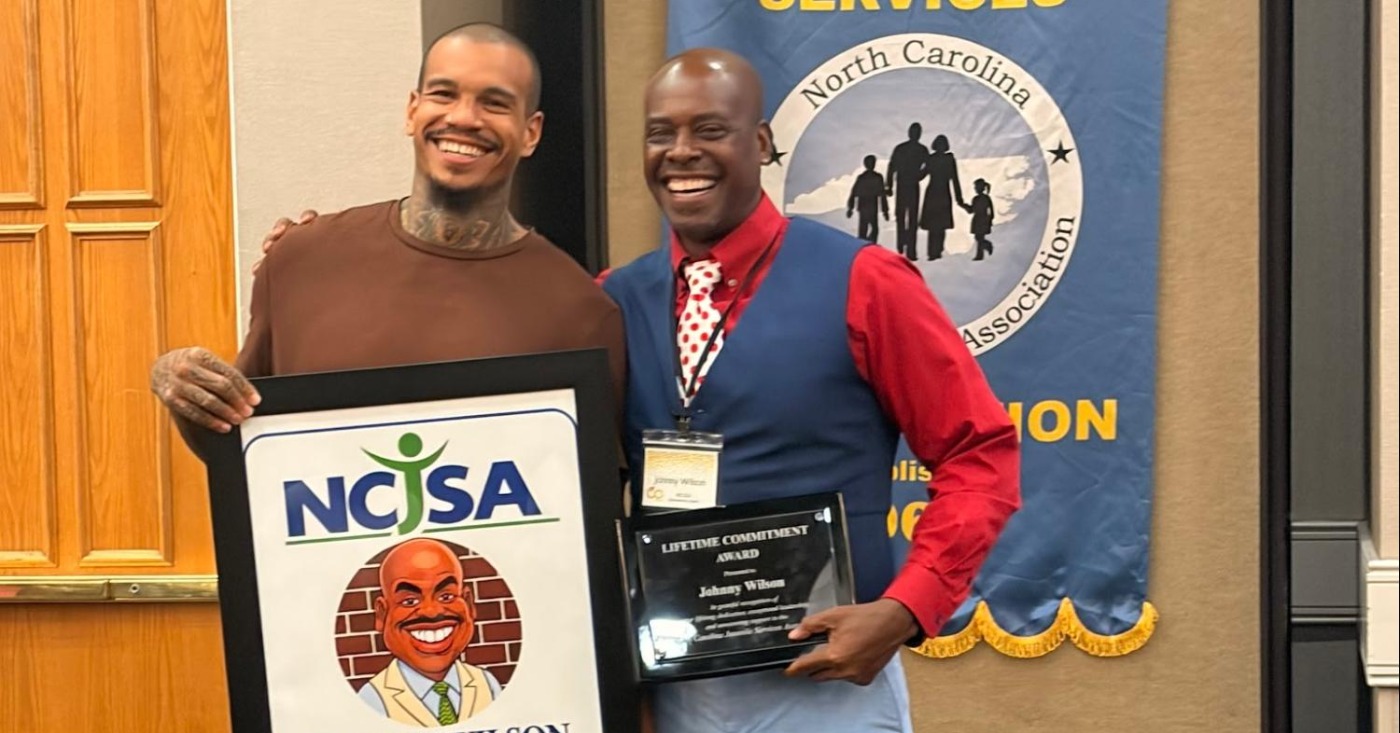
NCJSA presented several prestigious awards. In a special tribute, the NCJSA Board and Fayetteville Urban Ministry surprised Johnny Wilson with lifetime honors for his steadfast leadership, faith-driven advocacy, and deep commitment to North Carolina’s children and families since joining the association in 2006.
The conference closed with a resounding call to sustain both youth and the professionals who care for them. Keynote reflections framed the transition from mere bureaucratic compliance to genuine human connection, urging attendees to practice self-care and mutual support. Using the metaphor of an airplane’s oxygen mask, speakers reminded caseworkers, court counselors, and facility staff not to leave their own oxygen masks on the floor while rushing to save others, “We cannot serve our children and families effectively if we are operating on empty. To reach year 61 and beyond, we must see each other, celebrate our small victories, heal our own spirits, and remember our ‘why.’”
As attendees stood with linked arms across the ballroom, the message of NCJSA’s 60th anniversary was unmistakable: the past six decades prove that prevention, compassion, and community-centered intervention work. For North Carolina’s youth, the next sixty years will depend on sustaining the people and programs who refuse to give up on their promise.
Based on reporting by The Carolinian.
Black Press
Roland Martin Brings Black Votes Matter to Tallahassee
FLORIDA SUN — Roland Martin brought his “Black Votes Matter 2026” live show to The Edison in Tallahassee as part of his “Roland on the Road” series, coinciding with Florida A&M University’s homecoming celebrations. The event drew a large crowd of Rattlers to the restaurant for a broadcast focused on the upcoming November general election.
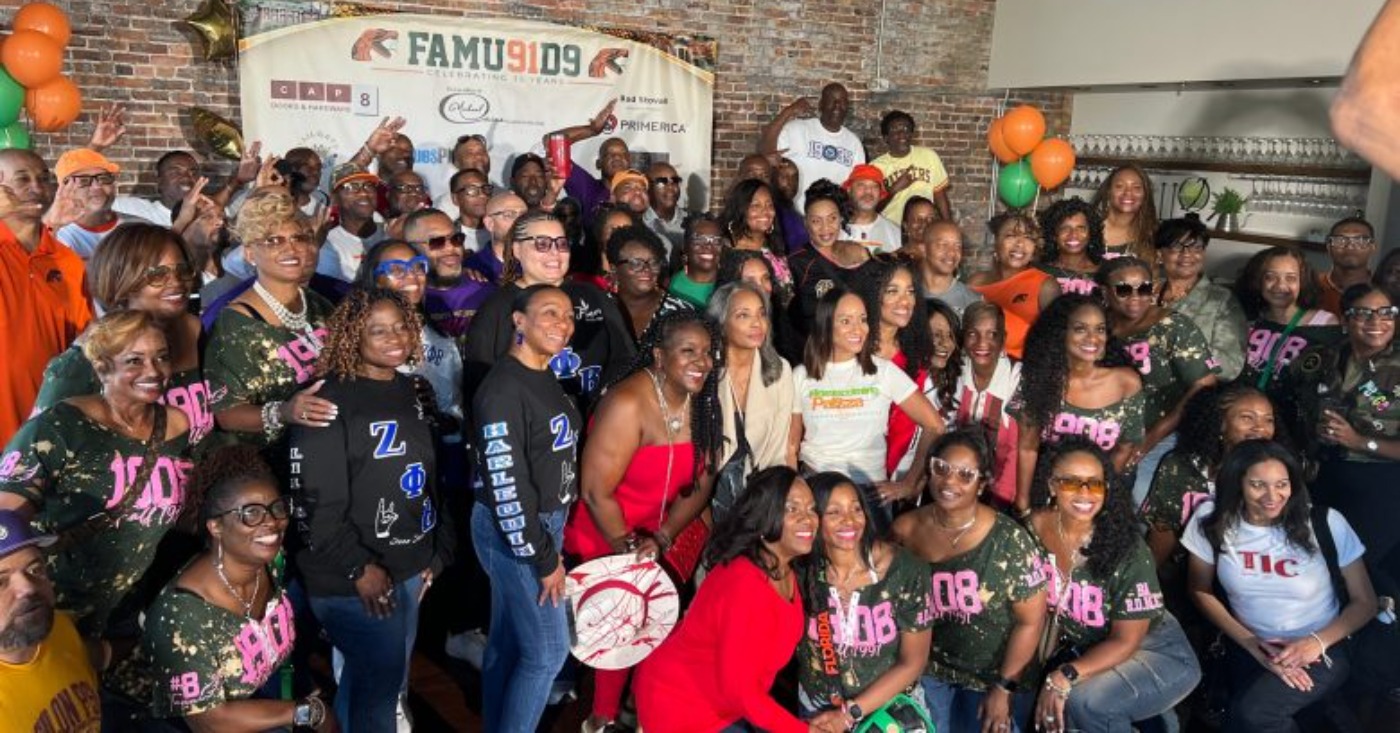
TALLAHASSEE — Roland Martin hosted his “Black Votes Matter 2026” live show at The Edison on Friday, Oct. 23, bringing an election-focused conversation to Florida A&M University’s homecoming celebrations.
Rattlers filled the restaurant to celebrate homecoming and watch the broadcast, according to event organizers. Democratic candidates, elected officials and entertainment figures joined the program as campaigns entered the final stretch before the Nov. 3 general election.
The Tallahassee stop was part of Martin’s “Roland on the Road” series. It focused on the role of Black voters in the 2026 election and issues affecting communities across Florida.
Candidates and elected officials on the program
The show’s published billing featured state Rep. Angie Nixon, Florida’s Democratic nominee for U.S. Senate; David Jolly, the Democratic nominee for governor; and film producer Will Packer.
Organizers’ confirmed guest list also included Joey Mendoza Atkins, the Democratic nominee for Florida agriculture commissioner, and state Reps. Gallop Franklin, Jervonte Edmonds and Rashon Young.
The event coincided with FAMU’s Oct. 18–25 homecoming week. The university’s schedule included Friday’s Homecoming Convocation and FAMFest marketplace, followed by Saturday’s parade and football game.
Affordability and voter participation
Briefing materials prepared for guests emphasized housing costs, property insurance, health care and voter participation. The planned interview format called for short conversations about lawmakers’ work and the issues facing Floridians.
The Florida Democratic Party framed its message around lowering household costs and supporting its candidates in November. Its briefing encouraged guests to discuss affordability and the importance of voting.
For Florida Black voters following the election, the program placed statewide campaigns alongside familiar figures from politics and entertainment. Holding the broadcast during homecoming also brought the election conversation into a gathering centered on Rattler traditions and reunions.
Florida’s general election is Tuesday, Nov. 3. Readers can find official election dates and contact information for their county elections office through the Florida Division of Elections.


TagsAngie NixonBlack Votes Matter 2026David JollyFAMU homecomingFlorida electionsFlorida legislatureJoey Mendoza Atkinsroland martinTallahasseeWill Packer
Based on reporting by Florida Sun.


Lawmakers Back Push Against Military Sexual Assault

Virginia State Dominates Shaw 76-13 Behind Explosive Second-Quarter Surge

Message from the Associate Editor: Blindness, Hurts, Cops

Capturing Black Life’s Beauty

A Legacy of Service, a Future of Hope: North Carolina Juvenile Services Association Commemorates 60 Years of Empowering Youth

Roland Martin Brings Black Votes Matter to Tallahassee

When Your Faith Is Put to the Test

2027 Buick Enclave Sport Touring worth $66,550?

2027 Buick Enclave Sport Touring Interior 360 Video

FAMU Shooting Arrest, New Trump and ICE Activity Near Florida Polling Site 📱

OP-ED: Haiti TPS: Have We Lost Sense of Humanity?

Remembering Chauncey Bailey as Student Journalists Face Threats to Truth-Telling

All Skinfolk Ain’t Kinfolk

Poll: Becerra Widens His Lead Over Hilton; Californians Split on Wealth Tax

Rulings Leave Questions Lingering in Nolan Wells Case

Latinas Deserve Equal Pay. Unions Help Make It Happen.

Zakiya Jendayi Arrested, Locked Out of Home by Sheriff’s Deputies

Why Black Artists Struggle to Sell Tours

COMMENTARY: The Audacity of Joyce Beatty

A $2.1 Trillion Wellness Industry Never Built a Daily Practice for Black Children. So This Atlanta Family Did.
2027 Buick Enclave Sport Touring worth $66,550?
2027 Buick Enclave Sport Touring Interior 360 Video

FAMU Shooting Arrest, New Trump and ICE Activity Near Florida Polling Site
FAMU Shooting Arrest, New Trump and ICE Activity Near Florida Polling Site 📱

Buying a Subaru WRX? Get the FULL Price Before You Sign #shorts

Houston Screenwriter Shannan E. Johnson on Making It in Hollywood

Golf Opportunities Beyond the Pros: Mentors, Scholarships & Mental Health #shorts

This Election Is Critical: Potecting Our Freedoms

Passion for Gopher Sports: The Podcast Origin Story! #shorts

Super Cruise: Hands-Free Driving on Your Routes #shorts
-

 Black History1 week ago
OP-ED: The Black Church Writes AI’s Next Chapter
-

 Featured1 week ago
Tamiko Armstead | 2026 Lifetime Achiever in Education
-
 Black History1 week ago
Practitioners of African Traditional Spirituality Offer Ancestral Reverence Ritual Oct. 31
-
 Art1 week ago
Kickstarter CEO Everette Taylor Shares Tips on Creating and Growing a Business
-

 Black History1 week ago
Columbus’s Oldest Businesses Still Open: 10 That Have Lasted 75+ Years
-
 Black History1 week ago
COMMENTARY: BIG MAMA SAID: Don’t Throw Away the Gift Just Because It Came Wrapped Wrong
