
Black Press
Mayor Lee Delivers 2026 State of the City Address: ‘Oakland Continues to Be on the Move’
To create a police force that better serves and protects Oakland, the city is working toward the goal of reaching 700 sworn police officers, she said. These steps include recruiting from Oakland, holding academies, reinstituting a cadet program, and increasing foot patrols.

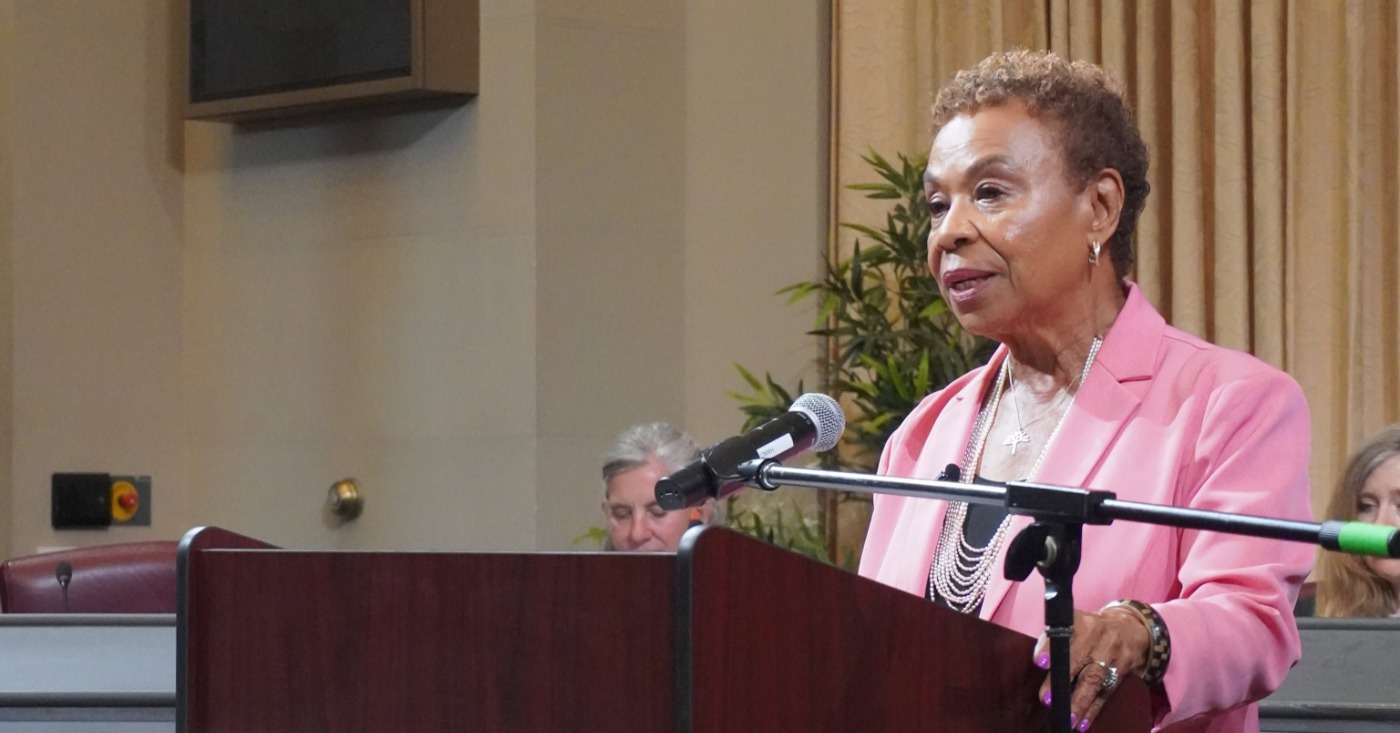
Mayor Barbara Lee, speaking this week to Oakland residents and elected leaders in City Council chambers, delivered the annual mayoral State of the City Address, highlighting the city’s accomplishments as well as the challenges Oakland is facing going forward.
Lee began her remarks praising city workers, who picketed outside City Hall before the meeting, and are currently negotiating with the city for a wage increase and ending understaffing that leaves many departments shorthanded.
“We are working very hard (not) just to get a contract, but to get a fair contract,” she said. “I know that our City Council and myself are working constantly toward that end.”
The mayor also praised Councilmember Carroll Fife for her legislation for a 45-day moratorium on data center construction, which passed unanimously at the council meeting Tuesday following Lee’s presentation.
Speaking bluntly, she said, “Oakland continues to be a city on the move, (but) I want to tell you the truth about the state of our city.”
“We have made real progress, and we still face real challenges.”
She said the city has balanced its budget but has a structural deficit, which is decreasing, and must operate within the context of federal funding cuts.
“Too many Oaklanders are unhoused, too many families are struggling with the cost of living, and too many neighborhoods still need basic services that they deserve, and too many people are living in fear,” Mayor Lee said.
“We’re not sweeping these realities under the rug,” she continued. “We are being intentional and transparent about how we must face these challenges, but we will not ignore our progress.”
Substantial progress includes:
• Bringing crime down;
• Building affordable and deeply affordable housing;
• Cleaning the streets and fixing the roads;
• Helping small businesses.
“We are bringing new investment to Oakland,” she said. “We’re making City Hall work better. There’s more to do, but make no mistake, Oakland is on the move.”
Speaking broadly about the city’s public safety initiatives, she said that crime continues to decline. Burglaries fell by 26%, and violent crime fell by 17%.
In recent years, homicides and shootings have fallen by double digits, and gun violence has dropped by more than 50% in the last 33 months.
“These aren’t just statistics: these are lives. These are families. These are people who never made it home,” Mayor Lee said.
She talked about what to expect now that federal court oversight of the Oakland Police Department ended last week after 23 years. “Ending federal oversight does not mean ending accountability; quite the opposite,” she said. “Accountability and civilian oversight must remain our standard. Community trust must be our standard.”
Mayor Lee also emphasized that Oakland remains a city of refuge.
“We do not work with ICE; we do not cooperate with ICE; our police do not cooperate with ICE; we will not be militarized,” she said.
The mayor also emphasized that investing in youth is a top priority of her administration and should be considered a public safety strategy.
“We advocated for almost $2 million to restore the mayor’s youth summer employment program,” she said. “We connected youth with Oakland businesses to develop skills that will support them for years to come, and that’s a big deal.”
To create a police force that better serves and protects Oakland, the city is working toward the goal of reaching 700 sworn police officers, she said. These steps include recruiting from Oakland, holding academies, reinstituting a cadet program, and increasing foot patrols.
The city also is strengthening other programs, including the Department of Violence Prevention and Ceasefire, she said. “We must have this comprehensive public safety strategy, because we must also prevent violence before it happens.”
Continuing, Lee said public safety is connected to unsanitary conditions in city neighborhoods.
“Illegal dumping is unacceptable, and it’s a moral disgrace,” she said. “No child should have to walk past piles of garbage on their way to school; no senior should have to live next to it; no small business should have to clean it up outside its door.”
She said the city is changing the way it fights illegal dumping, securing a $9.2 million investment to develop a new strategy. “We’re not just cleaning it up; we’re working to stop it before it starts. We have the three E’s – Eradication, enforcement, and education,” she said.
Focusing on the continuing crisis of Oakland’s unhoused residents, she said, “We consider housing a basic human right, and homelessness remains one of Okland’s greatest challenges.”
“There are two things we must do: keep people from becoming unsheltered and help people who are unsheltered get back into housing with services that they need,” Lee said.
Since 2024, homelessness in Oakland has fallen by 20%, she said. In the past year prevention programs helped keep 1,000 families in their homes, and over 1,300 affordable homes opened over the past two years.
Addressing community tensions over encampments, she said, “We should never have to choose between compassion for people experiencing homelessness and the health and safety of our neighborhoods.”
“A strong city has to deliver both,” she said. “That’s the work we’re advancing through Oakland’s new homelessness strategic action plan.”








Black History
PRESS ROOM: Delaware State University Certifies Record Fall 2026 Enrollment of 7,407 Students
“This year’s growth came from a more intentional emphasis on students who were already here and decided to keep going, a central part of our work — and from a graduate school that working adults in Delaware and across the country are choosing in record numbers,” said Tony Allen, President of Delaware State University.

Returning students and graduate programs drive 12 percent growth
Incoming class stronger academically
In-state freshman class the largest in University history; INSPIRE Scholars make up more than 80 percent of new in-state freshmen
Dual enrollment up 56 percent, anchored by the newly named Williams School
Delaware State University has certified its Fall 2026 enrollment at 7,407 students, the largest in its 135-year history and an increase of 784 students, or 11.8 percent, over the 6,623 recorded at last fall’s census.
Of that total, 5,959 students are enrolled on the University’s two Dover campuses and in its online programs—up 7.8 percent from 5,528 a year ago and a record. The balance is enrolled through the University’s international partnership programs, a growing global portfolio that spans the Caribbean, Asia and Africa. Since 2020, when the University enrolled 5,027 students, enrollment has grown more than 47 percent.
In October, the University projected that it was approaching 7,000 students. The final count exceeded that projection, as additional online sessions and semester starts at international locations were added before the October 31 census. And in its first year, eHBCU, the online consortium for HBCUs led by Delaware State, has grown to include Alabama State University; the Southern University System, the only HBCU system in the country; and Pensole Lewis College of Business and Design, the Detroit HBCU for aspiring designers.
“This year’s growth came from a more intentional emphasis on students who were already here and decided to keep going, a central part of our work — and from a graduate school that working adults in Delaware and across the country are choosing in record numbers,” said Tony Allen, President of Delaware State University. “We have a continually growing number of students who concluded that Delaware State University is a force multiplier in their lives. Our work now is to be worthy of that decision every day.”
Delaware First.
In-state undergraduate enrollment rose 8.4 percent, and out-of-state undergraduate enrollment rose 4.5 percent. The new freshman class shows strong academic rigor, with an average high school GPA of 3.13. More than half of the University’s students are Delawareans, and this year’s in-state freshman class is the largest in University history. More than 80 percent of new in-state, full-time freshmen are INSPIRE Scholars — recipients of the four-year, full-tuition award for Delaware high school graduates who enroll in the fall after graduation, maintain a 2.75 grade point average, complete ten hours of community service each semester, and file the FAFSA each year. Sponsored in 2010 by Senator Brian Bushweller and later championed for expansion by Senator Trey Paradee and alumna Representative Stephanie Bolden, the program has brought more than 2,500 Delawareans to the University as INSPIRE Scholars.
“I came in as a freshman not sure I’d make it to a second year. What kept me here was that people noticed when I was struggling and didn’t let me drift. Two years later I’m on track to graduate on time, and I know exactly who to thank,” said Alana Carter Grimes, Senior, Accounting major from Wilmington, DE.
“You feel this in the classroom before you see it in a report. Students come in prepared, they stay, and they ask harder questions by sophomore year than they used to as juniors. That changes how we teach, and it should,” said Hakeem Lawal, Professor, Biology Department.
Graduate enrollment grew fastest.
Graduate enrollment increased 27.1 percent. Continuing graduate students were up 34.1 percent, and online graduate enrollment grew 46.1 percent — the highest in University history. “Graduate students are diligent with their time, for they understand the importance of it. They are choosing Delaware State because our programs are built for people who are working, raising families and serving their communities while they earn the credential that moves them forward,” said Dr. Gwendolyn Scott-Jones, Dean of the School of Graduate, Adult and Extended Studies. “A 27 percent increase in one year tells us the model is right. Our job is to keep every one of those students on a path to finish.”
The pipeline is widening. The number of high school students taking University courses for college credit rose 56 percent to 684, including 482 Delawareans and 199 students at the HBCU Early College Prep school in Queens, N.Y. The Williams School, the University’s early college school dedicated in September in honor of former President Harry L. Williams and Dr. Robin S. Williams, sends roughly two-thirds of its graduates to Delaware State.
Built to get students to the finish line.
The University’s growth is supported by a set of programs designed to take students from arrival to career. The Braven Accelerator, a three-credit sophomore-year career-readiness course, has been completed by more than 1,000 Delaware State students, and the University announced last month that it will expand the Braven partnership into a new Center for Economic Mobility that will reach every undergraduate. In October, the College of Business hosted its largest DEEP Day on record, with 720 students, and continues to lead the University’s Black Male Initiative in partnership with the Executive Leadership Council. The College of Agriculture, Science and Technology’s annual White Coat Ceremony on September 29, 2026, welcomed 213 first-year pre-health students into the health professions pathway.
“The road ahead is about meeting our students earlier in the educational experience, giving them real-world tools to be successful, knowing their highest aspirations and showcasing them to the world,” said Dr. Kareem McLemore, Head of Strategic Enrollment and International Affairs. “We pour in; they give back. That is the formula.”
Black History
Hoodoo Heritage Month Celebrates Origins of African American Folk Medicine
BLACKPRESSUSA NEWSWIRE — Hoodoo has largely been demonized, misunderstood, and misrepresented as a “folk magic system” for trickery and harm. Hoodoo practices have often been hidden in places like the Black church and “old wives’ tales,’ abandoned as a form of separation from the racial trauma of the South, or simply forgotten because no one was able to pass them on to the next generation.

In Oakland, October is known for the Black Cowboy Association’s Annual Parade and Festival at the beginning of the month, the Life is Living Festival toward the middle, and the Día de los Muertos celebration in Fruitvale. In recent years, the month has also become known for a national observance of Hoodoo Heritage Month.
Hoodoo Heritage Month celebrates the history, legacy, and practices of Hoodoo. Hoodoo is a spiritual tradition and way of life formed by enslaved Africans in America. It encompasses plant medicines, healing herbs, rituals, prayers, ancestral reverence, protective talismans, and other practices passed down for generations.
Mama Rue and the Walking the Dikenga Collective officially founded the month in 2019 in Chicago, Illinois, to preserve the tradition and honor the endurance of our ancestors and the value of these practices.
Some practitioners created calendars that provided an activity or ancestor to honor each day. One notable example is Oct. 2, deemed Nat Turner Day to honor the birth of the leader of the 1831 uprising in Southampton County, Virginia.
This is also an encouraged time to read literary works by Black authors who helped revive interest in these spiritual practices. Among them are local authors Michele E. Lee and Luisah Teish, who wrote “Working the Roots: Over 400 Years of Traditional African American Healing” and “Jambalaya,” respectively.
Hoodoo has largely been demonized, misunderstood, and misrepresented as a “folk magic system” for trickery and harm. Hoodoo practices have often been hidden in places like the Black church and “old wives’ tales,’ abandoned as a form of separation from the racial trauma of the South, or simply forgotten because no one was able to pass them on to the next generation.
Within the last 10 to 15 years, there’s been a resurgence in African diasporic religion and spirituality as a means to navigate ongoing oppression and racial terror, just as our ancestors did.
As the veneer hiding American racism eroded with the election of President Donald Trump in 2016, Millennials and Gen Z began looking to our past to move forward.
For instance, it is becoming more widely understood that the justification for chattel slavery and European colonization led to the demonization of African diasporic worship systems, including what would eventually be termed Hoodoo.
For Jzov Stith, a young Black, Bay Area resident, observing Hoodoo Heritage Month was a time of deep reverence. “It means reconnecting with sacred traditions of storytelling, cooking, dancing, sharing, and grieving [and] being in thoughtful conversation and collaboration with my beloved dead.”
Through online and in-person workshops, events, and classes, Hoodoo practitioners are sharing history and current research from their own efforts. Bushmama Africa, an Oakland curator, artist, and initiate in the Cuban diasporan tradition known as Lucumi, teaches indigo dyeing and Hoodoo broom-making. (Indigo was one of the first crops cultivated by enslaved Africans who brought their skill to what would become South Carolina and Georgia in the 1600s.)
“Elder women in my life hailed from places where Hoodoo was worked. They were the midwives [and] the prayer warriors. It’s what I do, but it’s also who I am. It’s a deep-rooted spiritual practice of our culture that deserves to be preserved and contained within our communities.”
Other sources for information on African American ancestral practices are “Mojo Workin’” by Katrina Hazzard-Donald, “The Conjuring of America” by Lindsey Stewart, and “The Book of Juju” by Juju Bae.
Online sources were used for this article.
Black Press
OP-ED: If Food Is Medicine, Teach Doctors How to Prescribe It
BLACKPRESSUSA NEWSWIRE — Since diet is first-line therapy for many of the most common chronic diseases afflicting Americans, physicians should be as comfortable evaluating nutrition evidence as they are interpreting the science behind the medications they prescribe. That starts with understanding how nutrition research differs from many other areas of medicine.

The Department of Health and Human Services recently announced an initiative to improve nutrition education across every stage of physician education and training. As part of the effort, dozens of medical schools have pledged to include 40 hours of nutrition training — or a competency-based equivalent — in their graduation requirements.
Those pledges target a longstanding gap. Medical schools currently devote less than 1% of lecture hours to nutrition, and until recently, roughly three-quarters of schools didn’t require a dedicated nutrition course.
As a cardiologist, I welcome this initiative.
But adding hours alone won’t be enough. More nutrition education won’t meaningfully improve our nation’s chronic disease crisis unless medical schools also rethink what they teach. For decades, medical and dietetic societies — even the government — have promoted similar dietary guidance, yet metabolic disease continues to rise.
Rather than repeat the same nutrition mantra, schools should focus on two priorities: teaching physicians how to evaluate nutrition evidence and translate it into individualized patient care.
Since diet is first-line therapy for many of the most common chronic diseases afflicting Americans, physicians should be as comfortable evaluating nutrition evidence as they are interpreting the science behind the medications they prescribe. That starts with understanding how nutrition research differs from many other areas of medicine.
A conventional drug trial can often isolate a single intervention and compare it with a placebo under tightly controlled conditions. Nutrition rarely fits that model.
Nutrition science therefore relies on observational studies, controlled feeding trials, mechanistic research, and clinical interventions.
Medical schools must teach future physicians how to weigh these different forms of evidence and understand what each study design can — and cannot — tell them.
Evaluating the evidence is only half the job — physicians also need to know how to apply it to the patient in front of them.
For decades, major medical groups have recommended a one-size-fits-all approach to healthy eating: reduce saturated fat, increase whole grains, eat less, and move more. But that conventional advice has failed to stem the rise of metabolic disease.
Today, approximately 90% of Americans show at least one sign of suboptimal metabolic health, while obesity and type 2 diabetes have steadily increased. It’s increasingly clear that a dietary strategy that works for a metabolically healthy patient may not be the best starting point for someone whose body is struggling to regulate glucose and insulin.
Future physicians need a toolkit that recognizes a range of evidence-based dietary approaches. For instance, research routinely shows that low-carbohydrate and ketogenic diets can improve glycemic control, weight, and other metabolic markers for many patients. Mediterranean-style or plant-based dietary patterns that emphasize whole, nutrient-dense foods can also offer benefits.
Medical schools must therefore teach future physicians how to match the right strategy to the right patient.
With this initiative, HHS has created an opportunity to rethink nutrition education for the next generation of physicians. Now it’s up to policymakers and accrediting bodies to ensure that the new requirements define competencies, not merely hours.
Get that right, and those 40 hours can produce better doctors — and healthier Americans.
Bret Scher, MD, is a board-certified cardiologist and lipidologist, and the founding medical director of the Coalition for Metabolic Health.
Black History
Black Barbershops Have Long Given Neighborhood Politics a Place to Unfold.
BLACKPRESSUSA NEWSWIRE — For generations, Black barbershops have served as more than just places for grooming; they have functioned as essential hubs for political debate, neighborhood news, and civic connection. During the era of segregation, these community-owned spaces provided a rare environment where Black residents could gather freely to discuss matters affecting their daily lives.
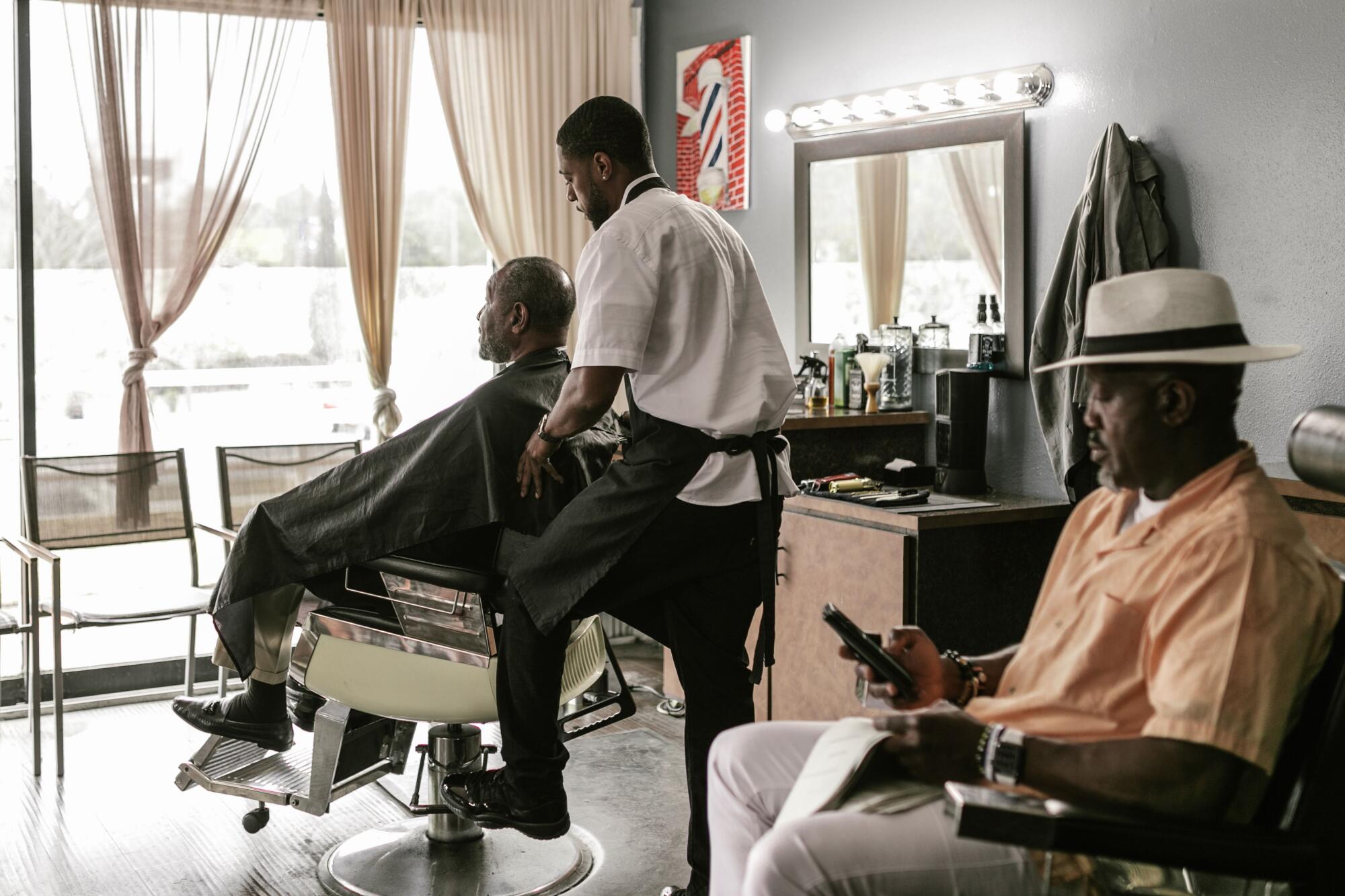
Black barbershops offer space for political debate, neighborhood news, and civic ties. The black barbershop also preserves local stories often missing from official records.
A haircut might bring you through the door. A conversation about a school closing, a city election, or a struggling business might keep you there. Inside a neighborhood shop, people can challenge opinions without needing a microphone.
A familiar storefront can hold decades of public life. Studying its past reveals people who earned a living, debated decisions, and helped neighbors interpret events.
Why Have Black Barbershops Been Important to Their Communities?
An African American barbershop has often combined a practical service with a gathering place. Under segregation, Black residents faced barriers in many public settings. Community-owned shops could offer more room for conversation and connection.
The National Museum of African American History and Culture describes barber and beauty shopsas places where customers discuss matters affecting their lives. Regular visits built relationships across generations.
Barbers often knew which families needed help or which businesses had opened. Waiting customers heard different viewpoints.
The importance of the shop came from trust built over many ordinary visits. A young customer might meet an older neighbor who understood the area’s past. Such relationships gave local conversations staying power and helped turn a routine appointment into a shared community experience.
How Did Black Barbershops Become Places for Political Discussion?
Politics often started with questions about rent, schools, jobs, or fair treatment. Customers connected those problems to elected leaders.
A University of Chicago report examined conversations inside a South Side Chicago shop. Researchers found that patrons debated:
- Political power
- Economic choices
- Leadership
They also disagreed with one another. A black barbershop did not require agreement. Customers could test ideas against those of neighbors.
Some shops supported voter registration and civic groups through personal relationships. Notices on counters or conversations with regulars could bring public issues into daily life. Yet lively debate was not the same as organized activism, and each shop had its own culture.
Black Barbers Built Businesses That Reached Beyond Haircuts
Enslaved and free Black men worked as barbers when many trades were restricted. Ownership later gave some black barbers a path toward greater financial independence, even under unfair laws.
Alonzo Herndon offers one example. According to the Georgia Historical Society, he operated Atlanta barbershops, including the Crystal Palace, and later built a major insurance business. His shops served white customers, reflecting segregation and unequal access.
Herndon’s success was unusual. Black business owners could still turn skilled work into jobs and property. Not all black companies grew large. Neighborhood shops kept commerce local.
Owners also faced rent, competition, and the challenge of building a steady customer base. Their business records can reveal how Black enterprise survived major shifts in the local economy.
Photographs and Newspapers Reveal Neighborhood History
Shop photos show storefront signs, neighboring businesses, clothing, and names painted on windows. Those clues help date images.
City directories can connect a shop name to an address, while maps show whether its block later changed. Each clue adds a piece to neighborhood history without requiring a famous owner or landmark.
Next, try the Library of Congress’s Chronicling America resources. Historic newspapers hold:
- Ads
- Openings
- Local events
- Owners’ names
Older records may use dated language. A useful starting checklist includes:
- Shop names and former street addresses
- Advertisements and business listings
- Photographs with dates or handwritten notes
- Local reporting about civic meetings
Compare records. An ad can confirm a shop’s address, not what customers discussed. Good neighborhood history separates documented facts from personal memories.
Customers’ Memories Fill Gaps in the Public Record
Customers may remember an owner’s nickname. Former barbers can explain busy hours or changes after a nearby factory closed.
Ask about routines and memorable events. Distinguish firsthand knowledge from secondhand stories.
When possible, interview more than one person. Different memories may show how workers and customers experienced the same event.
A recording can be useful, but permission comes first. Explain whether an interview will be shared publicly, kept privately, or donated to a library. Take note of:
- The date
- Place
- Speaker’s preferred name
Differences between memories are clues worth checking, not reasons to dismiss an account.
Modern Grooming Changes, but the Community Role Remains
Today’s African American barbershop operates amid appointment apps and new grooming services.
Some men also explore treatments beyond conventional haircuts. Many who are comparing long-term hair reduction with other grooming choices can learn more here.
A shop’s social value goes beyond its services. Many black barbers still:
- Listen to customers
- Pass along local information
- Create space for people of different generations to meet
The work of black business owners remains part of the wider story of black companies and community investment.
Frequently Asked Questions
How Can You Tell Whether an Old Barbershop Moved?
Start with city directories from several years. Match the owner’s name, phone number, and shop name at each address.
Property records or historical maps may show whether a street was renamed or a building was replaced. Moves may reflect development or shifting customers. Record each address and source.
Can You Share a Historic Barbershop Photo Online?
Owning a print does not guarantee copyright. Identify the:
- Photographer
- Date
- Source collection
A library may allow research access while limiting reuse. Copyright rules can vary by image and age, so avoid assuming that an old photo is free to publish.
Ask about permission when rights remain unclear. Credit the photographer and people pictured when their names are known. Respect requests from families who prefer sensitive images to remain private.
How Can You Preserve a Shop’s History After It Closes?
Collect photos, business cards, notices, and interviews. Label digital files and protect originals.
A local library, historical society, or community archive may help preserve the collection. Include the stories of workers and customers, not only the owner.
Public access can keep a vanished storefront connected to the people who remember it. A short exhibit or digital collection can help younger residents discover that history.
Keep the Black Barbershop Story Alive
A black barbershop can hold pieces of a town’s political, economic, and cultural history. Preserving those pieces starts with listening carefully and checking the record.
Continue exploring our other guides and articles for more stories about Black history, local businesses, and the communities they serve.
Content provided through ContentManagerIO.
Black History
OP-ED: Black voters made history. They laid the groundwork for a Third Reconstruction.
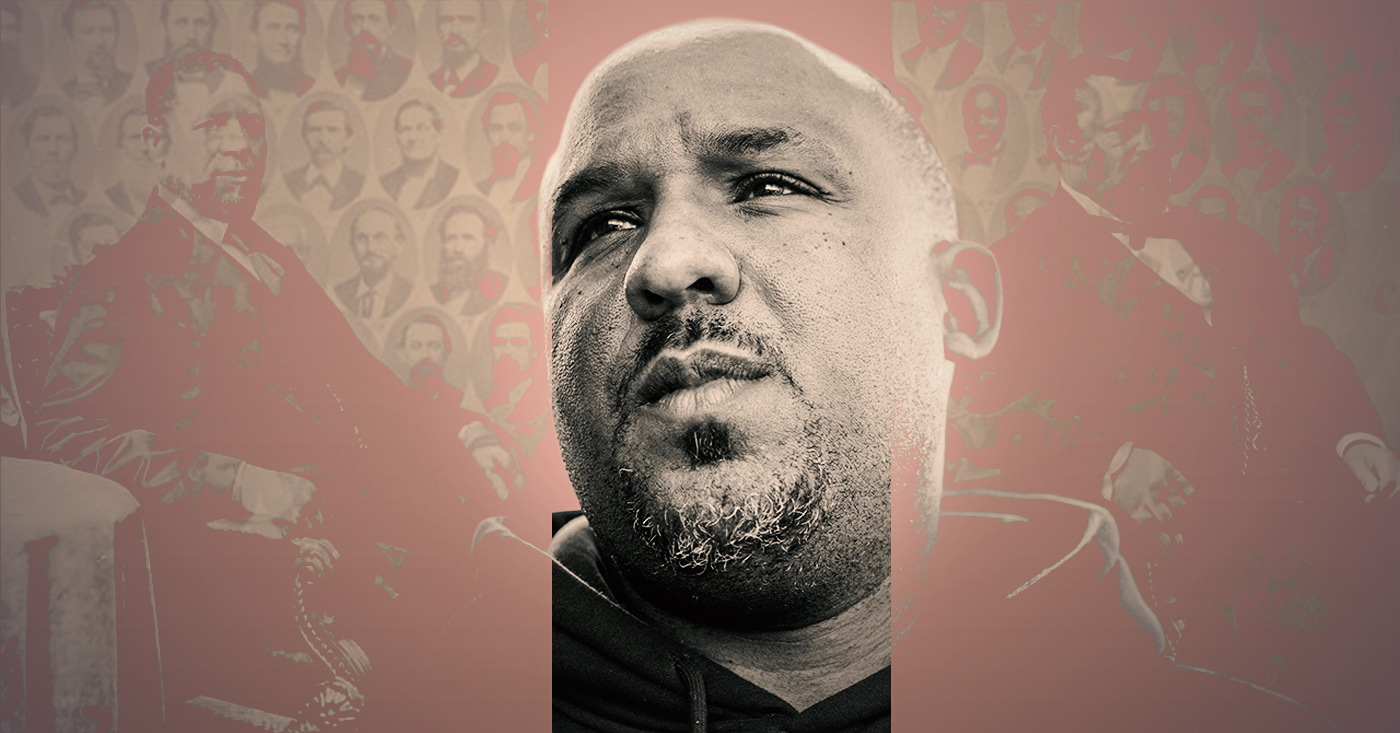
BLACKPRESSUSA NEWSWIRE—Mississippi’s election of Scott Colom was the crown jewel of a Southern mobilization led by Black women and black-led organizations. The new governing majorities must use their power to protect fair representation, expand the right to vote, and deliver on the issues that brought people to the polls.

Black Press
COMMENTARY: Money Matters — AI Can Help Your Small Business — But Is It Helping Your Bottom Line?
CHICAGO DEFENDER — Artificial intelligence has transitioned from a science fiction concept to a common resource for researching topics and developing content. While small businesses face increasing pressure to adopt these tools to save time and reduce expenses, experts warn that speed does not always guarantee accuracy.
Not long ago, most of us associated artificial intelligence with science fiction movies or technology companies in Silicon Valley. Today, its emergence in our everyday lives and business operations is impossible to ignore.
From organizing ideas and researching topics to developing content, AI has become an increasingly useful resource. But just because it can produce an answer in seconds doesn’t mean it’s always the right answer.
There’s growing pressure for small businesses to embrace AI. Everywhere you turn, another tool promises to save time, reduce expenses, attract customers or improve productivity, emerges.
But before jumping on the bandwagon, business owners should ask an important question:
Is this technology going to help my business make money, save money, or operate more efficiently?
After all, that’s what business decisions should ultimately come down to.
AI is rapidly becoming part of the small-business landscape in Michigan and across the country. A recent survey of 70 Michigan small businesses participating in Goldman Sachs’ 10,000 Small Businesses program found that 86% use AI, although many are still experimenting with its capabilities.
Clearly, interest is growing. But adoption doesn’t necessarily translate into profitability.
For small-business owners, every dollar counts. Whether investing in employees, marketing, equipment, or technology, you need to understand what you’re getting in return. AI should be no different.
Consider the possibilities. Small businesses can use AI to develop marketing campaigns, generate social media content, draft customer communications, conduct research, and streamline administrative tasks.
For an entrepreneur wearing multiple hats, those capabilities can be valuable.
Imagine reclaiming several hours each week that could instead be spent developing new business, strengthening customer relationships or pursuing sales opportunities.
Time is money, particularly when you’re running a small business.
However, purchasing an AI subscription doesn’t automatically improve your bottom line. Business owners need to evaluate its actual return on investment.
How much time is it saving? Is it reducing expenses? Helping generate sales? Improving customer retention? Making employees more productive?
Those are the measurements that matter.
A recent Federal Reserve survey found that while 46% of employer firms reported using AI, only 7% of those using it said the technology was fully integrated into their business processes. Many companies are still figuring out how to translate AI into measurable results.
My recommendation is to start small.
Identify one area where your business is spending too much time or money. Find an AI tool that might address the challenge. Test it, monitor the results and determine whether the investment makes financial sense.
You don’t need multiple subscriptions or an overhaul of your entire operation to get started.
There’s another consideration: AI is a tool, not a replacement for sound business judgment.
Accuracy, privacy and security matter. Be careful about sharing confidential customer information or proprietary business data. Always review AI-generated information before using it in customer communications or important business decisions.
A faster process isn’t necessarily better if it creates mistakes or damages customer relationships.
There’s also a competitive consideration.
Small businesses have traditionally distinguished themselves through personal service, flexibility, creativity and relationships. Those advantages shouldn’t be sacrificed in the pursuit of automation.
If every business uses AI to produce the same generic marketing messages, what makes one company stand out?
The answer should still be its people, its service and its ability to connect with customers.
AI can help develop the message, but you provide the personality. It can organize information, but you provide the judgment. It can make your operation more efficient, but you determine where the human touch remains essential.
Ultimately, AI could help level the playing field by giving smaller companies access to capabilities that once required larger budgets and bigger teams. That’s an opportunity worth exploring.
But don’t confuse keeping up with technology with running a better business.
Before investing in another AI platform, set clear objectives and decide how you’ll measure success. If it isn’t saving time, reducing costs, improving service, or contributing to revenue growth, reconsider whether you need it.
Artificial intelligence may be changing the way we do business, but the fundamentals haven’t changed. You still need customers, revenue, sound expense management, and smart investment decisions.
At the end of the day, the best technology isn’t necessarily the newest or most expensive. It’s the technology that delivers a measurable return on your investment.
That’s not just smart technology adoption. That’s smart business.
We invite readers, business owners and future entrepreneurs to follow along, ask questions and engage. If you have story ideas or questions, email Lee at [email protected] or visit leegroupinnovation.com.
The post Money Matters: AI Can Help Your Small Business—But Is It Helping Your Bottom Line? appeared first on Chicago Defender.
Based on reporting by Chicago Defender.


PRESS ROOM: Delaware State University Certifies Record Fall 2026 Enrollment of 7,407 Students

Hoodoo Heritage Month Celebrates Origins of African American Folk Medicine

OP-ED: If Food Is Medicine, Teach Doctors How to Prescribe It

NFL: Carolina now has 2-game lead in NFC South after win against Ravens

San Diego Black Judges: A Historic Shift on the Bench

She’s Turning Her Ovarian Cancer Story Into a Lifesaving Mission #shorts

Tahoe 15-Inch Head-Up Display: Can You Read It in Sunlight? #shorts

MC Scat Cat: The Story Behind Paula Abdul’s No. 1 Hit #shorts

Before You Quit Your Job, Make This Exit Plan #shorts

Black History and Freedom: A Powerful Spoken-Word Poem #shorts

HISTORY MADE: Keisha Lance Bottoms Becomes First Black Woman Elected Governor in American History

Secretary of State Shirley Weber Pushes Back Against DOJ Demands Over California Voter Rolls

Retirement Triggers Doctor to Pen Book for Young Audience

Capturing Black Life’s Beauty

Multi-Faith Leaders Representing 10 Million People Launch National Anti-Authoritarian Initiative

Christianity’s Racial History

Hundreds of Black Christian Leaders Arriving in Israel for Martin Luther King-Inspired Mission

Oakland Honors 60 Years of the Black Panther Party at the All Power to the People Gala

Message from the Associate Editor: Blindness, Hurts, Cops

Michael Shiner: The Enslaved Man Who Wrote His Way into American History
San Diego Black Judges: A Historic Shift on the Bench
She’s Turning Her Ovarian Cancer Story Into a Lifesaving Mission #shorts
Tahoe 15-Inch Head-Up Display: Can You Read It in Sunlight? #shorts
MC Scat Cat: The Story Behind Paula Abdul’s No. 1 Hit #shorts
Before You Quit Your Job, Make This Exit Plan #shorts
Black History and Freedom: A Powerful Spoken-Word Poem #shorts

Before You Quit Your Job, Build a Business That Can Support You #shorts

The Current Radio: Finding My Voice After B96 #shorts

“Gloomy Days”: A Powerful Song on Hope and Community #shorts

She Quit Her Job to Build a Smarter Business #shorts
-

 Black Press1 week ago
OP-ED: Closing the Next Digital Divide — Communities of Color Must Have a Voice in the AI Future
-

 Black History1 week ago
New NAACP Report Warns AI Could Deepen Health Disparities in Black Communities
-

 Black Press6 days ago
COMMENTARY: Thank You, Trump, for Making America Great Again!
-

 Black History1 week ago
“Blue Tsunami” Sweeps Georgia, Bottoms Makes History
-

 Black Press6 days ago
Black Men Encouraged to Start Prostate Cancer Screening at 45
-

 Black Press1 week ago
OP-ED: And Then What?
