
Politics
Maryland Man Freed from Cuba to Attend State of the Union


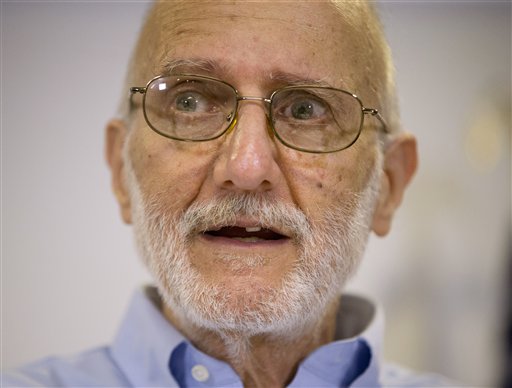
In this Dec. 17, 2014 file photo, Alan Gross speaking during a news conference at his lawyers office in Washington. Gross, who returned home last month after spending five years imprisoned in Cuba, will have a prime viewing spot for President Barack Obamas State of the Union address: a seat near first lady Michelle Obama. (AP Photo/Pablo Martinez Monsivais)
Darlene Superville, ASSOCIATED PRESS
WASHINGTON (AP) — A Maryland man who returned home last month after spending five years imprisoned in Cuba will have a prime viewing spot for President Barack Obama’s State of the Union address: a seat near first lady Michelle Obama.
Alan Gross and his wife, Judy, are among 22 special guests the White House invited to Tuesday night’s speech.
It’s become tradition for presidents to invite people whose stories of tragedy or triumph highlight an issue or public policy. President Ronald Reagan was the first to do so in 1982 and acknowledge the guests, who sit with the first lady, during the speech. Every president since has continued the tradition.
The year’s group includes astronaut Scott Kelly, the president and CEO of CVS Health and eight people who wrote letters to Obama, including four he spent time with last year.
Gross is a former federal subcontractor who was arrested in Cuba in 2009. His wife and others said he was there to set up Internet access for the small Jewish community on the communist island. He was released last month as part of a historic announcement by Obama that the U.S. would restore diplomatic relations with Cuba after five decades.
Kelly, of Houston, is preparing to blast off in March on a yearlong space mission, longer than any other U.S. astronaut. His identical twin, retired astronaut Mark Kelly, is married to former Rep. Gabrielle Giffords, D-Ariz. She was gravely wounded four years ago during a shooting at a political event she held in Tucson. Six people were killed and 13 were injured. Scientists will compare medical data from the brothers to understand how the human body responds to longer durations in space.
CVS Health pulled cigarettes, cigars and other tobacco products from its store shelves last year, a move that was applauded by Obama, a former smoker often seen chewing nicotine gum. The decision by CVS Health earned Larry Merlo, the drugstore chain’s top executive, a seat in the first lady’s box.
The other guests, as identified by the White House, are:
— Malik Bryant, of Chicago. The 13-year-old wrote a letter to Santa over the holidays asking for safety. Instead of forwarding the letter to the North Pole, a nonprofit organization redirected it to the White House. Obama wrote back to say that security was a priority for him, too.
— Chelsey Davis, of Knoxville, Tennessee. Davis is scheduled to graduate in May from Pellissippi State Community College with a bachelor’s degree in nutritional science. She met Obama when he visited her school this month to announce a plan to make two years of community college free for students who keep their grades up.
— LeDaya Epps, of Compton, California. The mother of three completed a union apprenticeship in construction, one of only two women to do so, and is on the crew building the Crenshaw/LAX light rail line. Obama has promoted apprenticeships as a way for people to get training for skilled jobs.
— Rebekah Erler, of Minneapolis. The wife and mother of two young boys wrote to Obama about how her family suffered after her husband’s construction business folded. Both are working again and recently bought their first home. Obama spent a day with Erler in Minnesota last year.
— Victor Fugate, of Kansas City. Fugate wrote to Obama to share how he went from being an unemployed new father to getting his degree and helping low-income patients obtain medical care. Fugate says he and his wife are benefiting from an Obama program that caps monthly student loan payments. Obama met Fugate in Kansas City in July.
— Retired Army Staff Sgt. Jason Gibson, of Westerville, Ohio. Gibson wrote to Obama to thank the president for visiting him as he recovered from injuries, including the loss of both legs. Gibson surfs, skis, has completed marathons on a hand cycle and earned a pilot’s license. He welcomed his first child in November.
— Nicole Hernandez Hammer, of southeast Florida. Hammer is a sea-level researcher who studies how cities and other areas most vulnerable to the effects of climate change also have large Hispanic populations. She works to raise Latinos’ awareness of climate change. Addressing climate change is an Obama priority.
— Anthony Mendez, of New York City. The University of Hartford freshman once had to rise at 4:30 a.m. to get to school after his family was evicted and forced to live in a homeless shelter. Mendez was among students who met Mrs. Obama last year. She spearheads an initiative encouraging students to pursue education after high school.
— Katrice Mubiru, of Woodland Heights, California. Mubiru, a career-technical education teacher in Los Angeles, encouraged Obama in a letter to support K-12 adult and career technical education. She met and introduced Obama in July when he visited Los Angeles Trade-Technical College to highlight technical skills programs.
— Astrid Muhammad, of Charlotte, North Carolina. Muhammad, a wife and mother of two, wrote to thank Obama for signing the Affordable Care Act. Last year, she obtained coverage under the law and had surgery to remove a potentially fatal brain tumor that was diagnosed in May 2013, when she had no health insurance.
— Kathy Pham, of Washington, D.C. Pham is a government computer scientist who works to improve health information technology, expand access to benefits for veterans and improve the way government provides services to families like hers. Her mother received cancer treatment under the new health care law and her brother earned a Purple Heart for service in Afghanistan.
—Capt. Phillip C. Tingirides, of Irvine, California. A husband and father of six, the veteran Los Angeles police officer heads the Community Safety Partnership program in the neighborhood of Watts, once scarred by race riots and subsequent gang violence. Under the program, begun in 2011, police engage with residents.
— Catherine Pugh, of Baltimore. Pugh is majority leader of the Maryland Senate who helped pass legislation increasing the state minimum wage to $10.10. She has also introduced legislation to provide the state’s workers with earned paid sick leave. Both are issues Obama is pushing at the federal level.
— Carolyn Reed, of Denver. Reed described in a letter to Obama how she expanded her submarine sandwich shop business with a loan from the Small Business Administration. Obama dined last year with Reed and other Coloradans who wrote to him. Reed also told the president she was raising her hourly employees’ wages to $10.10.
— Dr. Pranav Shetty, of Washington, D.C. Shetty is the global emergency health coordinator for International Medical Corps, a partner in the U.S.-backed effort to control the Ebola outbreak in West Africa. Shetty went to Liberia in August, returned to the U.S. late last month and is going back to West Africa later this week.
— Prophet Walker, Carson, California. While serving time for robbery, Walker started a prison program to help fellow inmates complete a two-year degree. After prison, Walker became a construction engineer and has worked to improve relations among law enforcement, community activists, parents and the children of local housing projects.
—Tiairris Woodward, of Warren, Michigan. Woodward started a second job working on Chrysler’s assembly line in 2010 to help support herself and three children, including one with special needs. She eventually began working only for Chrysler and after a year saved enough money to buy a car and rent a new apartment. The company’s tuition assistance program is aiding her pursuit of a bachelor’s degree in business management. The White House says her story is possible due to the comeback of Detroit and the U.S. auto industry.
—Ana Zamora, of Dallas. A student at Northwood University, Zamora was brought to the U.S. illegally as a child and has benefited under Obama’s program to defer deportations for eligible immigrants. Zamora wrote to Obama about her experience and says her parents will also be eligible for protection under Obama’s recent executive actions on immigration.
___
Follow Darlene Superville on Twitter: https://www.twitter.com/dsupervilleap
Copyright 2015 The Associated Press. All rights reserved. This material may not be published, broadcast, rewritten or redistributed.
###




Black History
OPINION: Black Capitalism Re-Analyzed: June 5, 1971 – Huey Newton
SF BAY VIEW — Huey P. Newton, writing on June 5, 1971, reaffirmed the Black Panther Party’s foundational stance against capitalist robbery within the Black community, a position held since October 1966. While acknowledging that many have proposed Black capitalism as a solution, Newton asserted that the community’s general acceptance of the concept does not stem from an affinity for capitalism itself.
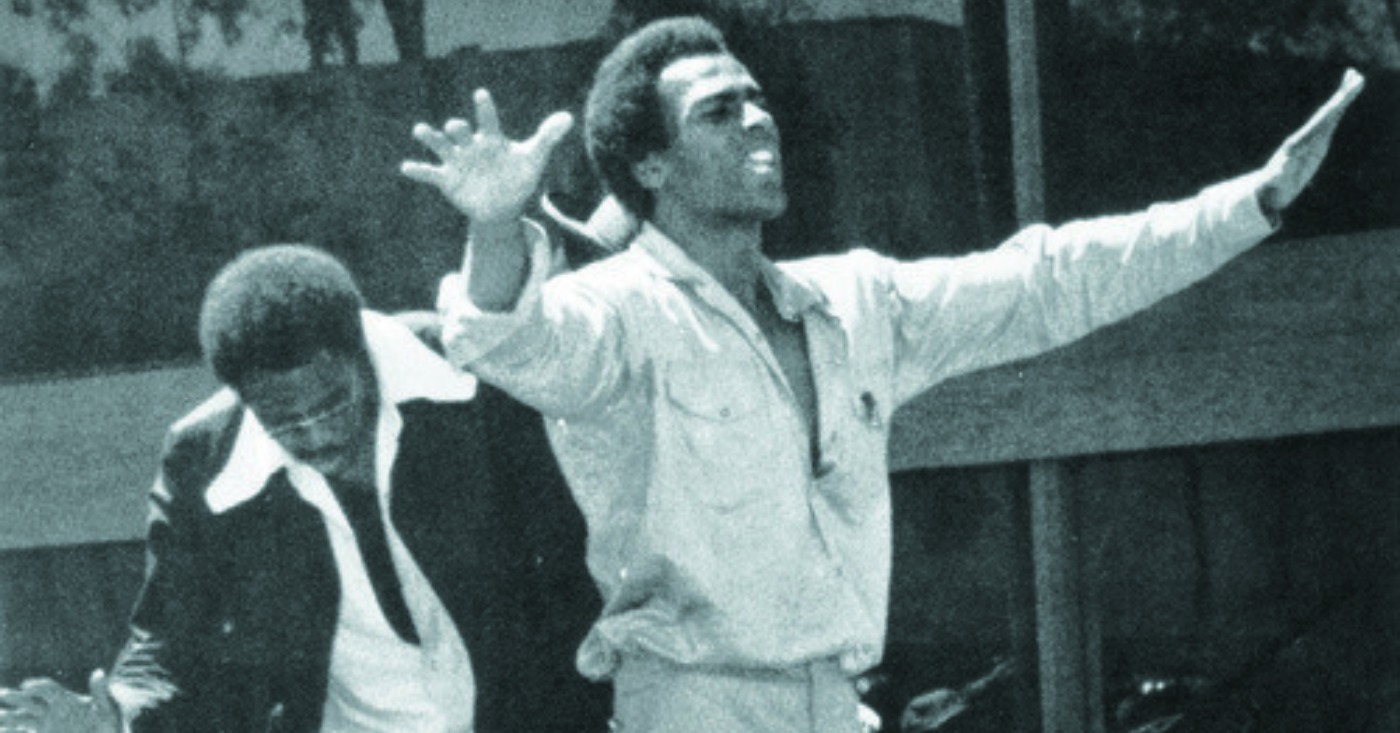
“We want an end to the robbery by the CAPITALISTS of our Black community.” That was our position in October 1966 and it is still our position … However, many people have offered the community Black capitalism as a solution to our problems. We recognize that people in the Black community have no general dislike for the concept of Black capitalism, but this is not because they are in love with capitalism. Not at all.”
The Black Panther Party, as we begin to carry out the original vision of the Party. When we coined the expression “All Power to the People,” we had in mind emphasizing the word “Power,” for we recognize that the will to power is the basic drive of man. But it is incorrect to seek power over people. We have been subjected to the dehumanizing power of exploitation and racism for hundreds of years; and the Black community has its own will to power also. What we seek, however, is not power over people, but the power to control our own destiny. For us the true definition of power is not in terms of how many people you can control. To us power is, first of all, the ability to define phenomena, and secondly the ability to make these phenomena act in a desired manner.
We see then that power has a dual character and that we cannot simply identify and define phenomena without acting, for to do so is to become an armchair philosopher. And when Bobby and I left Merritt College to organize brothers on the block, we did so because the college students were too content to sit around and analyze without acting. On the other hand, power includes action, for it is making phenomena perform in the desired manner. But action without thinking and theory is also incorrect. If the social forces at work in the community have not been correctly analyzed and defined, how can you control them in such a way that they act in a desired manner? So the Black Panther Party has always merged theory and practice in such a way as to serve the true interests of the community.

In merging theory with practice, we recognized that it was necessary to develop a theory which was valid for more than one time and place. We wanted to develop a system of thinking which was good anywhere, thus it had to be rather abstract. Yet our theory would relate to a concrete analysis of concrete conditions so that our actions would always be relevant and profitable to the people. Yet, at the same time, it had to advance their thinking so that they would move toward a transformation of their situation of exploitation and oppression. We have always insisted on good theory and good practice, but we have not always been successful in carrying this through.
‘When the Black Panther Party defected from the Black community, we became, for a while, revolutionary cultists. One of the primary characteristics of a revolutionary cultist is that he despises everyone who has not reached his level of consciousness, or the level of consciousness that he thinks he has reached, instead of acting to bring the people to that level. In that way the revolutionary cultist becomes divided from the people; he defects from the community. Instead of serving the people as a vanguard, he becomes a hero. Heroes engage in very courageous actions sometimes, and they often make great sacrifices, including the supreme sacrifice, but they are still isolated from the people. Their courageous actions and sacrifices do not lead the people to a higher level of consciousness, nor do they produce fundamental changes in the exploitation and oppression of the people. A vanguard, however, will guide the people onto higher levels of consciousness and that way bring them to the point where they will take sterner actions in their own interests and against those who continue to oppress them. As I’ve said previously, revolution is a process, not a conclusion. A true revolutionist will not only take courageous actions, he will also try to advance the people in such a manner that they will transform their situation. That I, by delivering power to the people the true revolutionist will help them define the social phenomena in their community and lead them to the point where they will seize the time and make these phenomena act in a desired manner.
Therefore, as revolutionaries we must recognize the difference between what the people can do and what they will do. They can do anything they desire to do, but they will only take those actions which are consistent with their level of consciousness and their understanding of the situation. When we raise their consciousness, they will understand even more fully what they in fact can do, and they will move on the situation in a courageous manner. This is merging your theory with your practices. Point 3 of the original Ten-Point Program of the Black Panther Party is “We want an end to the robbery by the CAPITALISTS of our Black Community.”
That was our position in October 1966 and it is still our position. We recognize that capitalism is no solution to the problems we face in our communities. Capitalist exploitation is one of the basic causes of our problem. It is the goal of the Black Panther Party to negate capitalism in our communities and in the oppressed communities throughout the world.
However, many people have offered the community Black capitalism as a solution to our problems. We recognize that people in the Black community have no general dislike for the concept of Black capitalism, but this is not because they are in love with capitalism. Not at all. The idea of Black capitalism has come to mean to many people Black control of another one of the institutions in the community. We see within this characteristic the seeds of the negation of Black capitalism and all capitalism in general. What we must do then is increase the positive qualities until they dominate the negative and therefore transform the situation.
In the past the Black Panther Party took a counter revolutionary position with our blanket condemnation of Black capitalism. Our strategy should have been to analyze the positive and negative qualities of this phenomenon before making any condemnation. Even though we recognized, and correctly so, that capitalism is no solution or answer, we did not make a truly dialectical analysis of the situation. We recognized that in order to bring the people to the level of consciousness where they would seize the time, it would be necessary to serve their interests in survival by developing programs which would help them to meet their daily needs. For a long time we have had such programs not only for survival but for organizational purposes. Now we not only have a breakfast program for schoolchildren, we have clothing programs, we have health clinics which provide free medical and dental services, we have programs for prisoners and their families, and we are opening clothing and shoe factories to provide for more of the needs of the community.In a way our new position has the simplicity and completeness of a mathematical formula.
When the Black capitalist contributes to the survival programs and makes a contribution to the community, the community will give him their support and thus strengthen his business. If he does not make any contribution to the survival of the community, the people will not support him and his enterprise will wither away because of his own negligence. By supporting the community, however, he will be helping to build the political machine that will eventually negate his exploitation of the community, but also negate his being exploited and victimized by corporate capitalism.
So we will heighten the contradiction between the Black community and corporate capitalism, while at the same time reducing the contradiction between the Black capitalist and the Black community. In this way Black capitalism will be transformed from a relationship of exploitation of the community to a relationship of service to the community, which will contribute to the survival of everyone.
Original publication: Huey P. Newton, “Black Capitalism Re-Analyzed,” The Black Panther: Intercommunal News Service, June 5, 1971 (supplement). Archival scan: https:// cdn.filepicker.io/api/file/Mum1pt7RZ6jYSUs1kh2v?fit=max
The post BLACK CAPITALISM RE-ANALYZED I: JUNE 5, 1971- HUEY NEWTON appeared first on San Francisco Bay View.
Based on reporting by SF Bay View.
Black Press
Democrats, Community Groups Back Measure EE to Change How Oakland Is Governed
Along with clearer executive responsibility, the Charter reform would also create new checks and balances, including an independent Budget and Legislative Analyst office, City Council confirmation of key appointments, expanded council hearing and subpoena authority, and give the council the ability to override a mayoral veto with six votes.
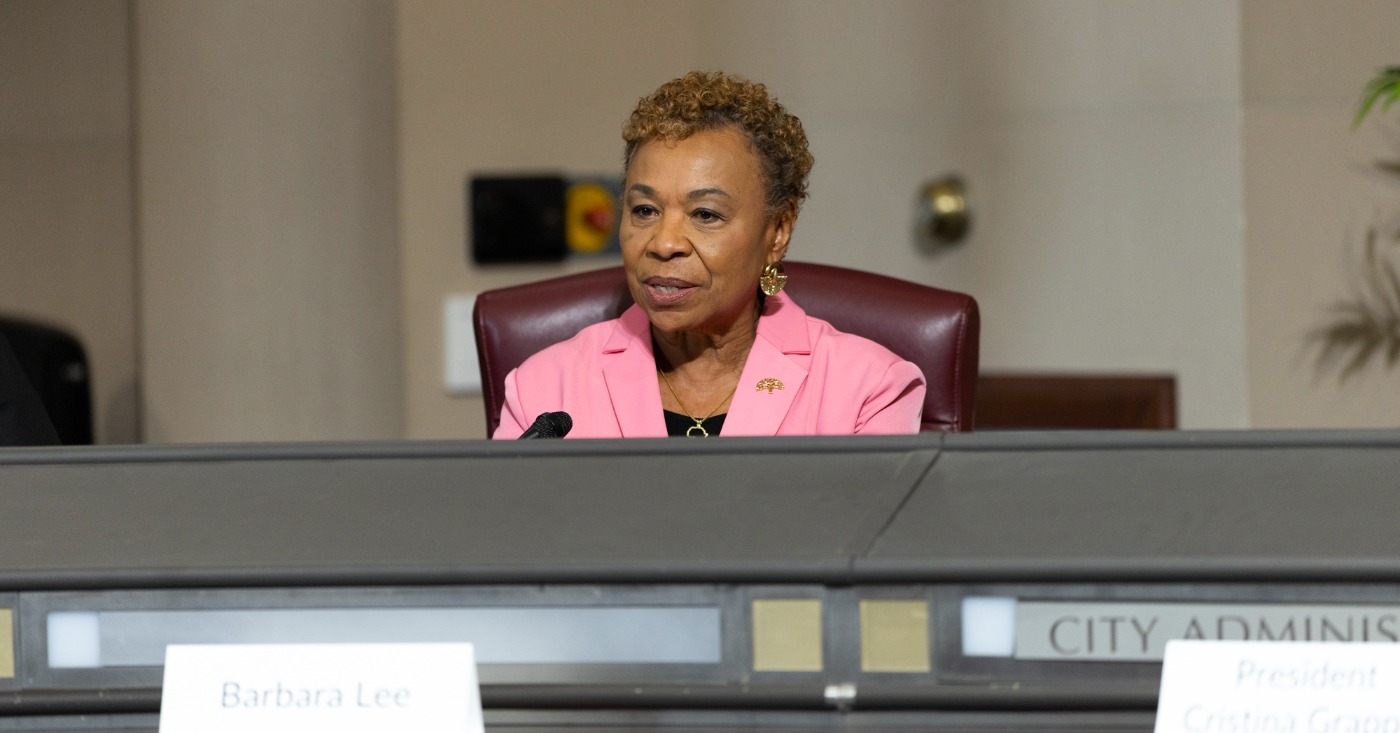
The Alameda County Democratic Party has voted to endorse Measure EE, the Oakland Charter reform measure on the November 2026 ballot. The party’s endorsement is announced alongside a broad coalition of organizations spanning labor, business, faith, and community advocacy, including Oakland Rising Action that are also supporting the measure.
Those supporters include:
- League of Women Voters of Oakland
- AFSCME Council 57
- SPUR
- Bay Area Council
- Black Women Organized for Political Action
- Faith in Action East Bay
- Oakland Chamber of Commerce
- Oakland Rising Action
- Revitalize East Bay
- Empower Oakland
Measure EE would reform Oakland’s hybrid governance system by establishing a strong-mayor structure, making the mayor the city’s chief executive, responsible for delivering effective, efficient services.
The measure would also reform and expand responsibilities of City Councilmembers.
Measure EE would create clearer lines of responsibility for the performance of city government, allowing voters to evaluate the mayor based on how effectively the city delivers services and produces results.
Along with clearer executive responsibility, the Charter reform would also create new checks and balances, including an independent Budget and Legislative Analyst office, City Council confirmation of key appointments, expanded council hearing and subpoena authority, and give the council the ability to override a mayoral veto with six votes.
“Oakland voters deserve a City Hall where they know exactly who’s responsible when something goes wrong and exactly who to credit when it gets fixed. Measure EE puts that responsibility squarely with the mayor, backed by real checks and balances, so Oakland can finally move as fast as its problems demand. That’s why the Alameda County Democratic Party is proud to stand behind it,” said Igor Tregub, chair of the Alameda County Democratic Party.
Oakland Rising Action, a collaboration of racial, economic, and environmental justice organizations, has also issued a press statement explaining its support for Measure EE.
Measure EE “represents a critical opportunity for residents to clarify the governance role of the Oakland Mayor and City Council, so we, as residents, know who to hold accountable for the execution of voter-approved and budgeted services within city departments,” the statement said.
Measure EE would reform Oakland’s Charter, which is the city’s Constitution, strengthening “the role of the mayor as the CEO of Oakland, with the city administrator being hired and managed by the mayor explicitly.”
The measure would also strengthen oversight of city departments by mandating reporting directly to the City Council and provide the mayor with veto power in approving policies and the budget.
Measure EE was placed on the ballot by the Oakland City Council in June 2026. For more than half a year, the mayor’s working group on Charter reform engaged residents and elected officials on the options for governance of Oakland, which led to Measure EE.
“Oaklanders need clarity about who is responsible for the management of our city departments, our tax dollars, and our voter-approved ballot measures,” said Pecolia Manigo, executive director of Oakland Rising.
“The average resident believes that we already have a strong mayor system,” she continued. “However, this is simply not the truth in our City Charter. It is time for us to stop talking about the Charter changes Oakland needs. This is the first of many Charter reforms that are needed to improve conditions in Oakland, especially the flatlands. It’s time all voters start paying attention to who is making decisions for Oakland. This election allows us to say how we believe Oakland should be governed.”
Black Press
Mayor Lee Delivers 2026 State of the City Address: ‘Oakland Continues to Be on the Move’
To create a police force that better serves and protects Oakland, the city is working toward the goal of reaching 700 sworn police officers, she said. These steps include recruiting from Oakland, holding academies, reinstituting a cadet program, and increasing foot patrols.
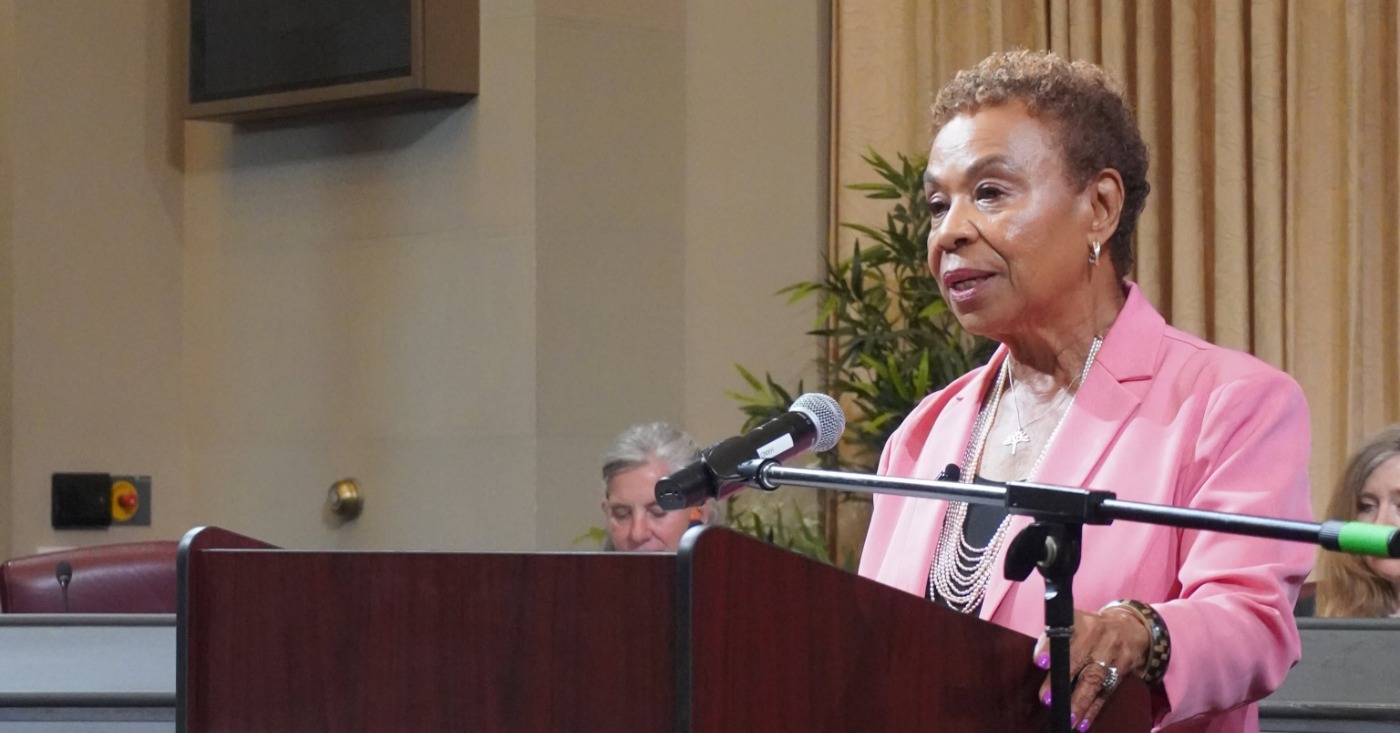
Mayor Barbara Lee, speaking this week to Oakland residents and elected leaders in City Council chambers, delivered the annual mayoral State of the City Address, highlighting the city’s accomplishments as well as the challenges Oakland is facing going forward.
Lee began her remarks praising city workers, who picketed outside City Hall before the meeting, and are currently negotiating with the city for a wage increase and ending understaffing that leaves many departments shorthanded.
“We are working very hard (not) just to get a contract, but to get a fair contract,” she said. “I know that our City Council and myself are working constantly toward that end.”
The mayor also praised Councilmember Carroll Fife for her legislation for a 45-day moratorium on data center construction, which passed unanimously at the council meeting Tuesday following Lee’s presentation.
Speaking bluntly, she said, “Oakland continues to be a city on the move, (but) I want to tell you the truth about the state of our city.”
“We have made real progress, and we still face real challenges.”
She said the city has balanced its budget but has a structural deficit, which is decreasing, and must operate within the context of federal funding cuts.
“Too many Oaklanders are unhoused, too many families are struggling with the cost of living, and too many neighborhoods still need basic services that they deserve, and too many people are living in fear,” Mayor Lee said.
“We’re not sweeping these realities under the rug,” she continued. “We are being intentional and transparent about how we must face these challenges, but we will not ignore our progress.”
Substantial progress includes:
• Bringing crime down;
• Building affordable and deeply affordable housing;
• Cleaning the streets and fixing the roads;
• Helping small businesses.
“We are bringing new investment to Oakland,” she said. “We’re making City Hall work better. There’s more to do, but make no mistake, Oakland is on the move.”
Speaking broadly about the city’s public safety initiatives, she said that crime continues to decline. Burglaries fell by 26%, and violent crime fell by 17%.
In recent years, homicides and shootings have fallen by double digits, and gun violence has dropped by more than 50% in the last 33 months.
“These aren’t just statistics: these are lives. These are families. These are people who never made it home,” Mayor Lee said.
She talked about what to expect now that federal court oversight of the Oakland Police Department ended last week after 23 years. “Ending federal oversight does not mean ending accountability; quite the opposite,” she said. “Accountability and civilian oversight must remain our standard. Community trust must be our standard.”
Mayor Lee also emphasized that Oakland remains a city of refuge.
“We do not work with ICE; we do not cooperate with ICE; our police do not cooperate with ICE; we will not be militarized,” she said.
The mayor also emphasized that investing in youth is a top priority of her administration and should be considered a public safety strategy.
“We advocated for almost $2 million to restore the mayor’s youth summer employment program,” she said. “We connected youth with Oakland businesses to develop skills that will support them for years to come, and that’s a big deal.”
To create a police force that better serves and protects Oakland, the city is working toward the goal of reaching 700 sworn police officers, she said. These steps include recruiting from Oakland, holding academies, reinstituting a cadet program, and increasing foot patrols.
The city also is strengthening other programs, including the Department of Violence Prevention and Ceasefire, she said. “We must have this comprehensive public safety strategy, because we must also prevent violence before it happens.”
Continuing, Lee said public safety is connected to unsanitary conditions in city neighborhoods.
“Illegal dumping is unacceptable, and it’s a moral disgrace,” she said. “No child should have to walk past piles of garbage on their way to school; no senior should have to live next to it; no small business should have to clean it up outside its door.”
She said the city is changing the way it fights illegal dumping, securing a $9.2 million investment to develop a new strategy. “We’re not just cleaning it up; we’re working to stop it before it starts. We have the three E’s – Eradication, enforcement, and education,” she said.
Focusing on the continuing crisis of Oakland’s unhoused residents, she said, “We consider housing a basic human right, and homelessness remains one of Okland’s greatest challenges.”
“There are two things we must do: keep people from becoming unsheltered and help people who are unsheltered get back into housing with services that they need,” Lee said.
Since 2024, homelessness in Oakland has fallen by 20%, she said. In the past year prevention programs helped keep 1,000 families in their homes, and over 1,300 affordable homes opened over the past two years.
Addressing community tensions over encampments, she said, “We should never have to choose between compassion for people experiencing homelessness and the health and safety of our neighborhoods.”
“A strong city has to deliver both,” she said. “That’s the work we’re advancing through Oakland’s new homelessness strategic action plan.”
Black Press
Oakland Awarded More than $14 Million in State Funding
Direct state investments in city programs can revitalize Oakland’s commercial corridors and foster economic growth, strengthen community violence prevention strategies, and expand transitional housing, while supporting cherished community spaces, according to a city media statement.

Money will support small businesses, public safety, transitional housing, and community partners
Mayor Barbara Lee recently announced that the City of Oakland and local community partners will receive more than $14 million in direct investments from California’s new 2026-27 state budget.
Securing $4.25 million for city programs and $10 million for local community organizations, these state funds were backed by state Senator Jesse Arreguin and Assemblymembers Mia Bonta and Buffy Wicks, with support from Governor Gavin Newsom.
The goal of securing state and federal funding and bringing in outside resources to address the city’s most pressing needs continues to be a top priority for Lee.
Direct state investments in city programs can revitalize Oakland’s commercial corridors and foster economic growth, strengthen community violence prevention strategies, and expand transitional housing, while supporting cherished community spaces, according to a city media statement.
“Thank you so much to Senator Jesse Arreguin, Assemblymember Mia Bonta, Assemblymember Buffy Wicks, and Gov. Gavin Newsom for investing in Oakland,” Lee said.
“We are fortunate to have strong, dedicated leaders representing Oakland in Sacramento who consistently deliver for our residents and businesses,” she said. “This critical funding directly addresses some of our most pressing challenges, including supporting our small businesses, building vibrant neighborhood corridors, advancing violence intervention, and housing our unsheltered neighbors.”
How the $4.25 million will be spent for city projects:
- $2.5 million will be used for the Facade and Tenant Improvement Grant Program to support small businesses;
- $1 million for the Department of Violence Prevention to enhance staffing and program capacity; and
- $750,000 for the Holland transitional housing facility, providing resources to help unhoused residents.
• How the $10 million for Oakland community groups will be spent:
- $5 million for Children’s Fairyland for essential infrastructure, accessibility, and facility upgrades.;
- $3 million for the Juntos Fruitvale Cultural Arts Center to create a multi-use space for performances, exhibitions, workshops, neighborhood meetings in the Fruitvale neighborhood; and
- $2 million for Samuel Merritt University to grow its nationally recognized Human Trafficking Prevention and Response Initiative.
“State investments in Oakland’s nonprofit and educational organizations highlight their deep value not just to our city, but their importance to the entire state,” said Lee. “Oakland has long served as a hub for inclusive arts and culture and as a community that protects its most vulnerable members.”
Said Arreguin, “This investment is a commitment to Oakland’s health, safety, and future. In partnership with my state colleagues, Mayor Lee, and our community partners, we are strengthening our response to human trafficking and gun violence, to create safer neighborhoods, and improve the quality of life of all Oakland residents.”
“Investing in Oakland means investing in California’s future. I’m proud to be a voice for the beautiful people of Oakland in the State Capitol and to deliver real funding wins that ensure our shared safety, expand housing opportunities, and preserve the artistic and cultural legacy of Oakland,” said Bonta.
Black Press
AC Transit Labor Unions Back Director Joel Young
ATU Local 192 Vice President Nathaniel Arnold stated “our support reflects confidence in Young’s leadership and experience as the longest-serving member of AC Transit’s current Board of Directors. His experience is particularly important as AC Transit confronts serious fiscal challenges while working to preserve and strengthen service.

In the AC Transit Ward 3 election, AC Transit’s labor organizations have recently expressed their endorsement for Director Joel Young, recognizing his longstanding commitment to public transportation, workforce investment, and the employees who keep AC Transit moving every day.
Those unions include the Amalgamated Transit Union Local 192, the International Brotherhood of Electrical Workers Local 1245, and the American Federation of State, County and Municipal Employees Local 3916.
ATU Local 192 Vice President Nathaniel Arnold stated “our support reflects confidence in Young’s leadership and experience as the longest-serving member of AC Transit’s current Board of Directors. His experience is particularly important as AC Transit confronts serious fiscal challenges while working to preserve and strengthen service.
“At a time when difficult decisions lie ahead, Young brings institutional knowledge, longstanding relationships, and a demonstrated commitment to public transportation.
“Since joining the board in 2009, Young has served in key leadership roles, including president and vice president, helping guide AC Transit through periods of growth, innovation, and change.
During his tenure, he helped AC Transit secure more than $600 million in funding to support critical transportation investments. Young has also helped advance workforce development initiatives, support transit technology improvements, expand AC Transit’s zero-emission bus fleet, and strengthen the District’s national presence on transportation policy issues.
His leadership has extended beyond the Bay Area.
Young has represented AC Transit on the national stage, including participation in the White House Roundtable on Clean Bus Manufacturing, where transit leaders and policymakers discussed the future of clean transportation and domestic manufacturing.
Black Press
‘ICE-Free Marin’ Supporters Press Supervisors as County Drafts Enforcement Restrictions
“County resources are to never be used in the furtherance of federal immigration enforcement,” Johnson said, of the policy which is still in development. “The policy will require all county employees to notify the county executive within 24 hours of any immigration enforcement activity in which they become aware on county property.”
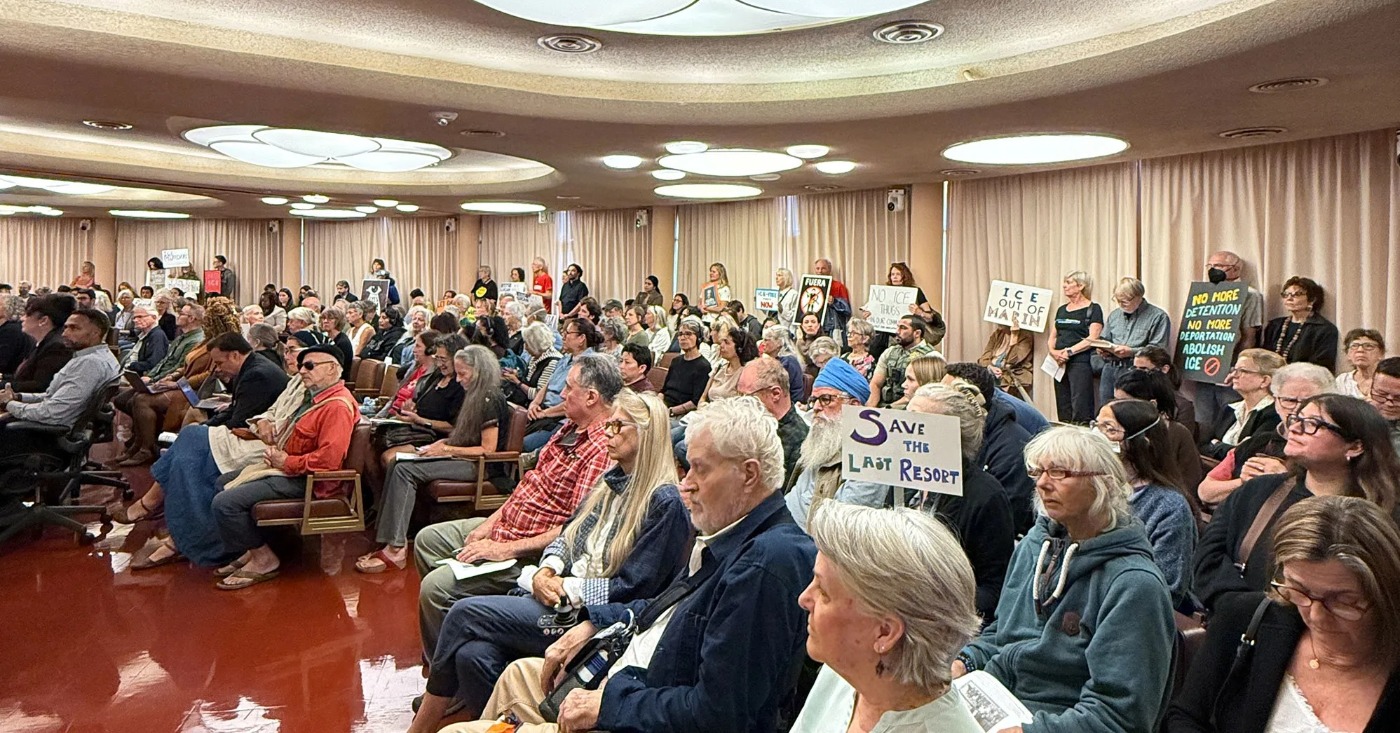
More than 100 protesters packed the Marin County Board of Supervisors chamber Sept. 29, urging supervisors to consider an ordinance restricting the actions of U.S. Immigration and Customs Enforcement officers.
County and state officials are already advancing some measures that overlap with demands the protesters have made for the past year.
“I want to share that the immigration subcommittee has been hard at work drafting important board policy as directed by the Board of Supervisors,” said Marin County Executive Derek Johnson, referring to policy that will prevent the use of county property for federal immigration enforcement activities.
“County resources are to never be used in the furtherance of federal immigration enforcement,” Johnson said, of the policy which is still in development. “The policy will require all county employees to notify the county executive within 24 hours of any immigration enforcement activity in which they become aware on county property.”
Those policy goals align with the two central provisions proposed by the No ICE in Marin Coalition, which filled the room at Tuesday’s meeting.
Their policy proposal, called ICE-Free Marin, prohibits ICE from using county property, resources or personnel without a judicial warrant and establishes clear reporting requirements whenever county department staff observe or communicate with federal immigration authorities. Those interactions may include the service of subpoenas and warrants, as well as attempts to access county facilities.
The ICE-Free Marin ordinance would require the county to post signs and barriers restricting ICE from entering county property, with county staff denying ICE officials entry and refusing to provide information and assistance. If ICE disregards directives, the county counsel would seek a court order to stop them, and if ICE unlawfully detains someone, they can be challenged in court, according to the ordinance.
Last year, the group protested the county’s participation in the State Criminal Alien Assistance Program, administered by the U.S. Department of Justice in conjunction with ICE and the U.S. Department of Homeland Security.
SCAAP funds are used to reimburse costs incurred for jailing immigrants lacking permanent legal status who have at least one felony or two misdemeanor convictions and are incarcerated for a minimum of four consecutive days.
In February, the county announced its 2026-28 budget does not include SCAAP funding.
State Takes Action on Immigrant Protections
Also on Sep.t 29, California Gov. Gavin Newsom signed a package of more than 20 bills aimed at increasing state oversight of federal immigration enforcement and protecting immigrant communities, according to a news release from the governor’s office.
The state legislation creates a 25% tax on private detention centers, expands health and safety oversight in those centers, requires additional public input and planning approvals for new facilities, and strengthens the role of state Attorney General Rob Bonta in inspecting them.
The measures also ban law enforcement from using wearable electroshock “shock gloves,” restrict flash-bang grenades and explosive breaching charges, limit the use of state-owned property for federal immigration operations, and require temporary identification decals on rental vehicles used by law enforcement.
The legislation expands access to public records involving private detention facilities and restricts former federal immigration officers who committed serious misconduct from becoming California peace officers or public employees.
Other measures allow people to sue federal officials for alleged violations of their constitutional rights and protect people traveling to and from courthouses from civil immigration arrests.
“We may not be able to dictate federal immigration enforcement policy, but we can make clear that activities taking place in California will be subject to California law,” the governor said in a video message announcing the bills.
The group leading the local campaign for the ICE-Free Marin ordinance is the Democratic Socialists of America. DSA spokesperson Courtney Sadowski said in an email that the group has spoken with supervisors Eric Lucan, Mary Sackett, Dennis Rodoni and Stephanie Moulton-Peters.
“But none have committed to introducing the ICE-Free Marin ordinance,” Sadowski said.
The group has attended numerous meetings of the Civilian Oversight Commission of the Sheriff’s Office asking for their support, she said.
“We cannot afford to wait the months or years it would take them to review and consider this item,” she said. “Even if they moved more quickly, all they can do is issue a recommendation.”
Speakers Weigh In
Hector Garcia, a community library specialist with the Marin County Free Library, spoke to the supervisors. He said that he recently completed an intense Department of Justice certification that will allow him to provide immigration services at the library.
The Recognition and Accreditation program allows qualified non-attorney staff working for eligible nonprofit organizations to legally provide immigration services for low-income and indigent individuals who cannot afford private attorneys.
“It would be impossible for me to fulfill this job with the presence of ICE,” Garcia said. “A fascist police force, they disregard the law, terrorize, assassinate and separate Black indigenous people of color and their families.”
Lisa Bennett with the Marin Rapid Response Network, a nonprofit that helps families locate detained relatives and provides other support services, said families go into shock when the major breadwinner is detained.
“Basic things like money for food, utilities, even driving are no longer a given,” she said. “They worry about their parent’s medical needs. They worry about themselves being next. They worry about what happens if the remaining parent is taken. This is what our government is doing to its own people. Silence is complicity.”


First Black Woman Manager at KARE 11: My Journey #shorts

Building a Flexible, Community-Led Space for Protest Support #shorts

Beyond the Job Search: DC Black MBA Invests in Helping Black Women Reclaim Their Next Chapter

Can Black Houston Create a Black Tech Corridor?

OPINION: Black Capitalism Re-Analyzed: June 5, 1971 – Huey Newton

Called to Do This: Overcoming Doubt and Finding Family #shorts

Black-Owned Banks: Community Lending is Our Business #shorts

LeBrent Speed on Building the B3 Project | MSR On the Radar

Towing Assistance Features on This Truck Explained #shorts

Keg House Commons: Black Ownership Brings New Life to the Historic Schmidt Keg House in St. Paul

The Youngest American Killed in the Vietnam War

Passing for White, Fighting for Black America: The Courage of Walter White

OP-ED: Haiti TPS: Have We Lost Sense of Humanity?

OP-ED: How Does Your State Rank for Pre-K?

NFL: Week Two Recap | Jalen Hurts did not fold; Caleb Williams exits game with injury

Remembering Chauncey Bailey as Student Journalists Face Threats to Truth-Telling

Headlines and Hot Topics 📱

Obama Urges Democrats to make AI a Priority 📱

Peter Magubane: a Camera Against Apartheid

Mayor Lee Announces $1 Million Kaiser Permanente Grant for Pilot Program to Address Homelessness, Clean Up Public Spaces throughout Oakland
First Black Woman Manager at KARE 11: My Journey #shorts
Building a Flexible, Community-Led Space for Protest Support #shorts
Called to Do This: Overcoming Doubt and Finding Family #shorts
Black-Owned Banks: Community Lending is Our Business #shorts
LeBrent Speed on Building the B3 Project | MSR On the Radar
Towing Assistance Features on This Truck Explained #shorts
Keg House Commons: Black Ownership Brings New Life to the Historic Schmidt Keg House in St. Paul

Reggie Wilson & Alexis Rogers on Faith, Layoffs and I Speak People | Blacklight on Sports

FTC Chair Praises Trump, NYC Calls for Target Boycott, and Jason Lee Removed as Vice Mayor 📱

FTC Chair Praises Trump, NYC Calls for Target Boycott, and Jason Lee Removed as Vice Mayor
-

 Black Press1 week ago
A $2.1 Trillion Wellness Industry Never Built a Daily Practice for Black Children. So This Atlanta Family Did.
-
 BlackPressUSA1 week ago
Latinas Deserve Equal Pay. Unions Help Make It Happen.
-

 Black Press3 days ago
All Skinfolk Ain’t Kinfolk
-

 Art1 week ago
Montclair Brewery: Brewing Culture, Community, History
-

 Black Press1 week ago
COMMENTARY: But God!
-

 Black Press1 week ago
Master P Encourages Norwood Elementary Students to Dream Big, Work Hard
