
Politics
Mario Cuomo, a Giant in NY, Liberal Politics, Dies


In this July 17, 1984, file photo, New York Gov. Mario Cuomo gives a thumbs-up gesture with both hands during his keynote address to the opening session of the Democratic National Convention in San Francisco. He was 82. (AP Photo/File)
DAVID KLEPPER, Associated Press
MICHAEL HILL, Associated Press
ALBANY, N.Y. (AP) — Mario Cuomo had a loud and liberal voice that inspired a generation of politicians to turn to public service, and a story of humble beginnings that he wove into calls for social justice during his three terms as New York governor and years as a national figure when he deflected overtures to become a presidential candidate.
Cuomo died at his home in Manhattan on Thursday of natural causes due to heart failure, just hours after his son Andrew began his second term as New York’s chief executive. He was 82.
The son of Italian immigrants, Mario Cuomo played minor league baseball before embarking on a legal and political career. His oratory and his dedication to progressive policies made him a political star, but despite calls to seek the White House, he never made a run for president.
Hours before his father’s death, the younger Cuomo delivered an inaugural address in which he honored the Democratic stalwart.
“He is in the heart and mind of every person who is here,” Andrew Cuomo said. “He is here and he is here, and his inspiration and his legacy and his experience is what has brought this state to this point. So let’s give him a round of applause.”
President Barack Obama telephoned Cuomo Thursday and offered his condolences. In a statement, the president called Mario Cuomo “a determined champion of progressive values, and an unflinching voice for tolerance, inclusiveness, fairness, dignity, and opportunity.”
Cuomo served as New York governor from 1983 through 1994 and became nationally celebrated for his ability to blend the story of his humble upbringing with ringing calls for social justice.
He was also known for the presidential races he stayed out of in 1988 and 1992. Cuomo agonized so publicly over whether to run for the White House that he was dubbed “Hamlet on the Hudson.”
In 1991, Cuomo left a plane idling on the tarmac at the Albany airport rather than fly to New Hampshire and jump into the battle for the presidential nomination at the last minute. He left the door open for a lesser-known governor, Bill Clinton of Arkansas.
“When he placed my name in nomination at the 1992 Democratic Convention, he said government had ‘the solemn obligation to create opportunity for all our people,'” the ex-president said in a joint statement with his wife, former U.S. secretary of state and U.S. Senator from New York, Hillary Rodham Clinton. “In his three terms as Governor of New York, he honored that obligation.”
Cuomo’s last public appearance came in November, when Andrew was re-elected governor of New York. The frail-looking patriarch and his son raised their arms together in victory at the election-night celebration.
Andrew Cuomo said he showed his second inaugural speech to his father, who declared it was good, “especially for a second-termer.”
Mario Cuomo’s big political break came in 1982 when, as New York’s lieutenant governor, he won the Democratic nomination for governor in an upset over New York Mayor Ed Koch. He went on to beat conservative millionaire Republican Lewis Lehrman.
His reputation for eloquence was secured at the 1984 Democratic National Convention when he delivered his “Tale of Two Cities” keynote address, in which he told of the lessons he learned as the son of a grocer in New York City.
“I watched a small man with thick calluses on both his hands work 15 and 16 hours a day,” Cuomo told the crowd. “I saw him once literally bleed from the bottoms of his feet — a man who came here uneducated, alone, unable to speak the language — who taught me all I needed to know about faith and hard work by the simple eloquence of his example.”
The electrified delegates in San Francisco cheered, “Mario! Mario! Mario!” and some wondered whether they had chosen the wrong presidential candidate in Walter Mondale.
While Mondale’s candidacy stumbled, Cuomo took his oratorical skill to Notre Dame University, where as the nation’s most famous Roman Catholic supporter of abortion rights, he argued the church should not expect him to press for outlawing abortions, given that many Catholics themselves were having them.
Cuomo was an unusually cerebral politician, given to musing at length about anything from fiscal policy to the Jesuit philosopher Pierre Teilhard de Chardin.
He was prickly as well as eloquent. Cuomo regularly sparred with reporters, Republicans, fellow Democrats and even children. He once said “I didn’t come into this business to be bland,” and he rarely was. Complaining about what he saw as anti-Italian stereotyping, Cuomo once said the Mafia was “a word invented by people” and “a lot of baloney.” He once had a little boy near tears after asking how old he was and then pressing the child on how he could be sure of that.
In early 1987, he was leading in the polls among prospective White House contenders when he said he would not be a candidate. A more protracted dance in 1991 ended with the filing deadline for the nation’s first presidential primary 90 minutes off. Cuomo walked into a packed news conference in Albany and cited a continuing budget battle with New York’s Republicans in declining to run.
Before the news conference had even ended, the national TV crews were packing up their cameras.
Cuomo easily won re-election for governor in 1986 and 1990. He repeatedly vetoed legislation that would have restored the death penalty in New York, and he closed down the Shoreham nuclear power plant on Long Island. He also built 30 new prisons. Under Cuomo, the state budget grew from $28 billion to $62 billion.
In 1993, he turned down an opportunity to be nominated by Clinton for a seat on the U.S. Supreme Court, telling the new president in a letter that “by staying active in our nation’s political process, I can continue to serve as a vigorous supporter of the good work you are doing for America and the world.”
Nineteen months later, with voters tired of him, Cuomo lost his bid for a fourth term to George Pataki, a GOP state lawmaker who had promised to cut taxes and bring back the death penalty.
“I wanted to win this more than any political contest I ever had,” Cuomo said as he prepared to leave office. “I’m not good at wanting things in life. I’ve made a habit of not wanting things too much.”
Mario Matthew Cuomo was born on June 15, 1932, and grew up behind the small grocery store run by his parents in Queens.
He attended St. John’s University in New York City, and after graduating with honors in 1953, he spent a summer playing minor league baseball in Georgia for a Pittsburgh Pirates farm team. His professional baseball career ended after he was hit in the head by a pitch and spent several days in a hospital.
Cuomo graduated from St. John’s Law School in 1956, tied for top class honors, and soon after went into private practice. He came to the attention of New York City’s political community in 1972 when he successfully mediated a housing dispute in Queens for then-Mayor John Lindsay.
In 1974, Cuomo made his first run for public office, losing a Democratic primary for lieutenant governor. Hugh Carey, the newly elected Democratic governor, appointed Cuomo as New York’s secretary of state.
He lost a race for mayor of New York City to Koch in 1977. During the campaign, posters that read “Vote for Cuomo, Not the Homo” mysteriously appeared in some neighborhoods. Cuomo denied any responsibility, but the bachelor Koch never forgave him.
Cuomo was elected lieutenant governor in 1978.
Following his tenure as governor, Cuomo joined the prestigious Willkie Farr & Gallagher law firm in Manhattan. He continued to give speeches across the country.
Cuomo and his wife, Matilda, had three daughters and two sons. Andrew was New York’s attorney general before becoming governor. His other son, Chris, is a CNN newscaster. Daughter Maria married designer Kenneth Cole. The other two daughters are Dr. Margaret I. Cuomo and Madeline Cuomo O’Donohue.
___
Retired Associated Press Political Writer Marc Humbert in Albany, New York, contributed to this report.
Copyright 2015 The Associated Press. All rights reserved. This material may not be published, broadcast, rewritten or redistributed.








Black Press
Democrats, Community Groups Back Measure EE to Change How Oakland Is Governed
Along with clearer executive responsibility, the Charter reform would also create new checks and balances, including an independent Budget and Legislative Analyst office, City Council confirmation of key appointments, expanded council hearing and subpoena authority, and give the council the ability to override a mayoral veto with six votes.
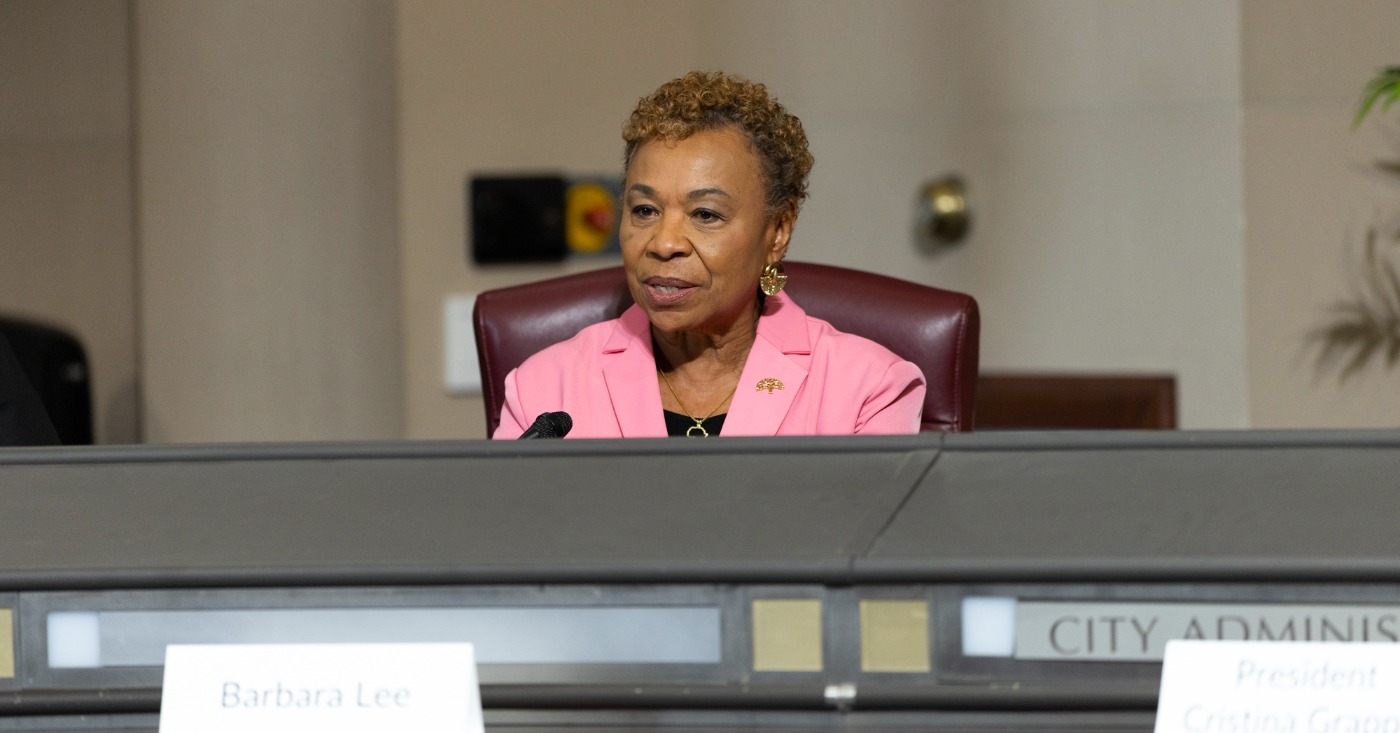
The Alameda County Democratic Party has voted to endorse Measure EE, the Oakland Charter reform measure on the November 2026 ballot. The party’s endorsement is announced alongside a broad coalition of organizations spanning labor, business, faith, and community advocacy, including Oakland Rising Action that are also supporting the measure.
Those supporters include:
- League of Women Voters of Oakland
- AFSCME Council 57
- SPUR
- Bay Area Council
- Black Women Organized for Political Action
- Faith in Action East Bay
- Oakland Chamber of Commerce
- Oakland Rising Action
- Revitalize East Bay
- Empower Oakland
Measure EE would reform Oakland’s hybrid governance system by establishing a strong-mayor structure, making the mayor the city’s chief executive, responsible for delivering effective, efficient services.
The measure would also reform and expand responsibilities of City Councilmembers.
Measure EE would create clearer lines of responsibility for the performance of city government, allowing voters to evaluate the mayor based on how effectively the city delivers services and produces results.
Along with clearer executive responsibility, the Charter reform would also create new checks and balances, including an independent Budget and Legislative Analyst office, City Council confirmation of key appointments, expanded council hearing and subpoena authority, and give the council the ability to override a mayoral veto with six votes.
“Oakland voters deserve a City Hall where they know exactly who’s responsible when something goes wrong and exactly who to credit when it gets fixed. Measure EE puts that responsibility squarely with the mayor, backed by real checks and balances, so Oakland can finally move as fast as its problems demand. That’s why the Alameda County Democratic Party is proud to stand behind it,” said Igor Tregub, chair of the Alameda County Democratic Party.
Oakland Rising Action, a collaboration of racial, economic, and environmental justice organizations, has also issued a press statement explaining its support for Measure EE.
Measure EE “represents a critical opportunity for residents to clarify the governance role of the Oakland Mayor and City Council, so we, as residents, know who to hold accountable for the execution of voter-approved and budgeted services within city departments,” the statement said.
Measure EE would reform Oakland’s Charter, which is the city’s Constitution, strengthening “the role of the mayor as the CEO of Oakland, with the city administrator being hired and managed by the mayor explicitly.”
The measure would also strengthen oversight of city departments by mandating reporting directly to the City Council and provide the mayor with veto power in approving policies and the budget.
Measure EE was placed on the ballot by the Oakland City Council in June 2026. For more than half a year, the mayor’s working group on Charter reform engaged residents and elected officials on the options for governance of Oakland, which led to Measure EE.
“Oaklanders need clarity about who is responsible for the management of our city departments, our tax dollars, and our voter-approved ballot measures,” said Pecolia Manigo, executive director of Oakland Rising.
“The average resident believes that we already have a strong mayor system,” she continued. “However, this is simply not the truth in our City Charter. It is time for us to stop talking about the Charter changes Oakland needs. This is the first of many Charter reforms that are needed to improve conditions in Oakland, especially the flatlands. It’s time all voters start paying attention to who is making decisions for Oakland. This election allows us to say how we believe Oakland should be governed.”
Black Press
Mayor Lee Delivers 2026 State of the City Address: ‘Oakland Continues to Be on the Move’
To create a police force that better serves and protects Oakland, the city is working toward the goal of reaching 700 sworn police officers, she said. These steps include recruiting from Oakland, holding academies, reinstituting a cadet program, and increasing foot patrols.
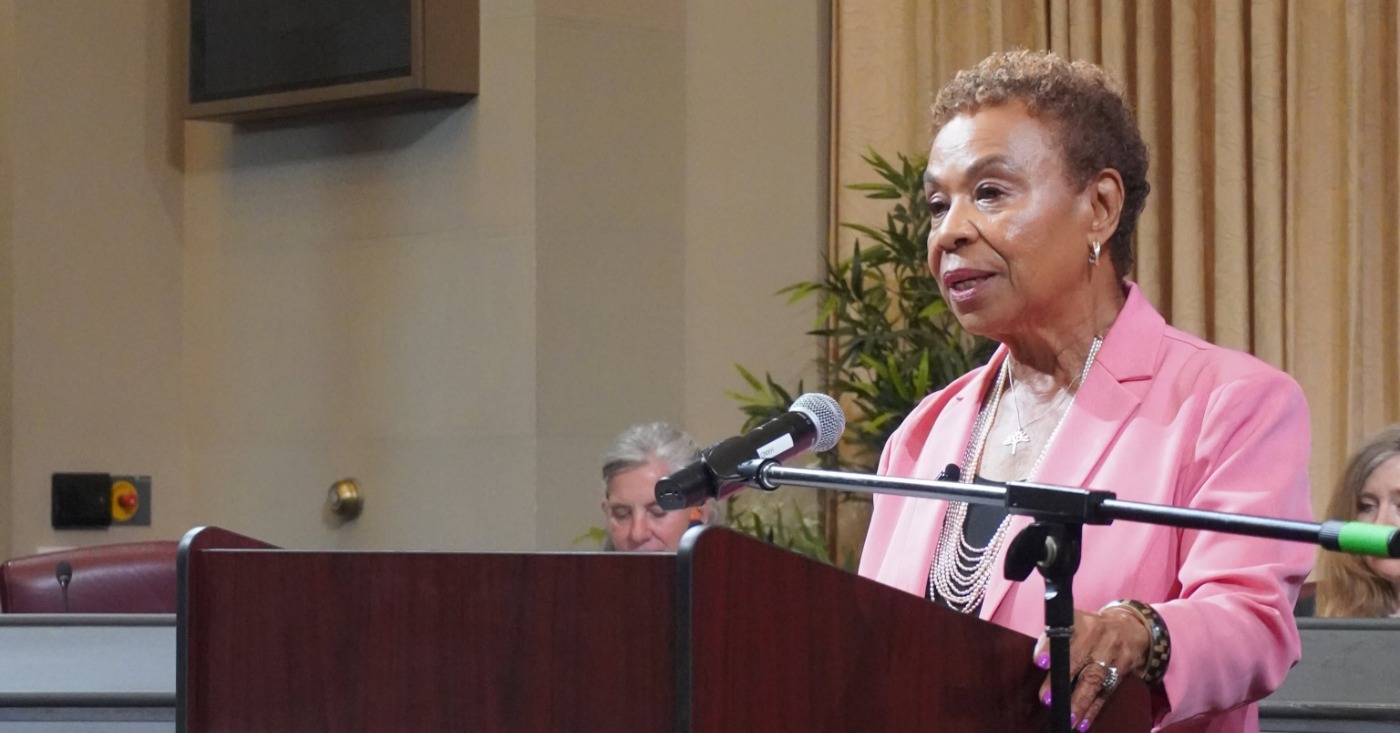
Mayor Barbara Lee, speaking this week to Oakland residents and elected leaders in City Council chambers, delivered the annual mayoral State of the City Address, highlighting the city’s accomplishments as well as the challenges Oakland is facing going forward.
Lee began her remarks praising city workers, who picketed outside City Hall before the meeting, and are currently negotiating with the city for a wage increase and ending understaffing that leaves many departments shorthanded.
“We are working very hard (not) just to get a contract, but to get a fair contract,” she said. “I know that our City Council and myself are working constantly toward that end.”
The mayor also praised Councilmember Carroll Fife for her legislation for a 45-day moratorium on data center construction, which passed unanimously at the council meeting Tuesday following Lee’s presentation.
Speaking bluntly, she said, “Oakland continues to be a city on the move, (but) I want to tell you the truth about the state of our city.”
“We have made real progress, and we still face real challenges.”
She said the city has balanced its budget but has a structural deficit, which is decreasing, and must operate within the context of federal funding cuts.
“Too many Oaklanders are unhoused, too many families are struggling with the cost of living, and too many neighborhoods still need basic services that they deserve, and too many people are living in fear,” Mayor Lee said.
“We’re not sweeping these realities under the rug,” she continued. “We are being intentional and transparent about how we must face these challenges, but we will not ignore our progress.”
Substantial progress includes:
• Bringing crime down;
• Building affordable and deeply affordable housing;
• Cleaning the streets and fixing the roads;
• Helping small businesses.
“We are bringing new investment to Oakland,” she said. “We’re making City Hall work better. There’s more to do, but make no mistake, Oakland is on the move.”
Speaking broadly about the city’s public safety initiatives, she said that crime continues to decline. Burglaries fell by 26%, and violent crime fell by 17%.
In recent years, homicides and shootings have fallen by double digits, and gun violence has dropped by more than 50% in the last 33 months.
“These aren’t just statistics: these are lives. These are families. These are people who never made it home,” Mayor Lee said.
She talked about what to expect now that federal court oversight of the Oakland Police Department ended last week after 23 years. “Ending federal oversight does not mean ending accountability; quite the opposite,” she said. “Accountability and civilian oversight must remain our standard. Community trust must be our standard.”
Mayor Lee also emphasized that Oakland remains a city of refuge.
“We do not work with ICE; we do not cooperate with ICE; our police do not cooperate with ICE; we will not be militarized,” she said.
The mayor also emphasized that investing in youth is a top priority of her administration and should be considered a public safety strategy.
“We advocated for almost $2 million to restore the mayor’s youth summer employment program,” she said. “We connected youth with Oakland businesses to develop skills that will support them for years to come, and that’s a big deal.”
To create a police force that better serves and protects Oakland, the city is working toward the goal of reaching 700 sworn police officers, she said. These steps include recruiting from Oakland, holding academies, reinstituting a cadet program, and increasing foot patrols.
The city also is strengthening other programs, including the Department of Violence Prevention and Ceasefire, she said. “We must have this comprehensive public safety strategy, because we must also prevent violence before it happens.”
Continuing, Lee said public safety is connected to unsanitary conditions in city neighborhoods.
“Illegal dumping is unacceptable, and it’s a moral disgrace,” she said. “No child should have to walk past piles of garbage on their way to school; no senior should have to live next to it; no small business should have to clean it up outside its door.”
She said the city is changing the way it fights illegal dumping, securing a $9.2 million investment to develop a new strategy. “We’re not just cleaning it up; we’re working to stop it before it starts. We have the three E’s – Eradication, enforcement, and education,” she said.
Focusing on the continuing crisis of Oakland’s unhoused residents, she said, “We consider housing a basic human right, and homelessness remains one of Okland’s greatest challenges.”
“There are two things we must do: keep people from becoming unsheltered and help people who are unsheltered get back into housing with services that they need,” Lee said.
Since 2024, homelessness in Oakland has fallen by 20%, she said. In the past year prevention programs helped keep 1,000 families in their homes, and over 1,300 affordable homes opened over the past two years.
Addressing community tensions over encampments, she said, “We should never have to choose between compassion for people experiencing homelessness and the health and safety of our neighborhoods.”
“A strong city has to deliver both,” she said. “That’s the work we’re advancing through Oakland’s new homelessness strategic action plan.”
Black Press
Oakland Awarded More than $14 Million in State Funding
Direct state investments in city programs can revitalize Oakland’s commercial corridors and foster economic growth, strengthen community violence prevention strategies, and expand transitional housing, while supporting cherished community spaces, according to a city media statement.
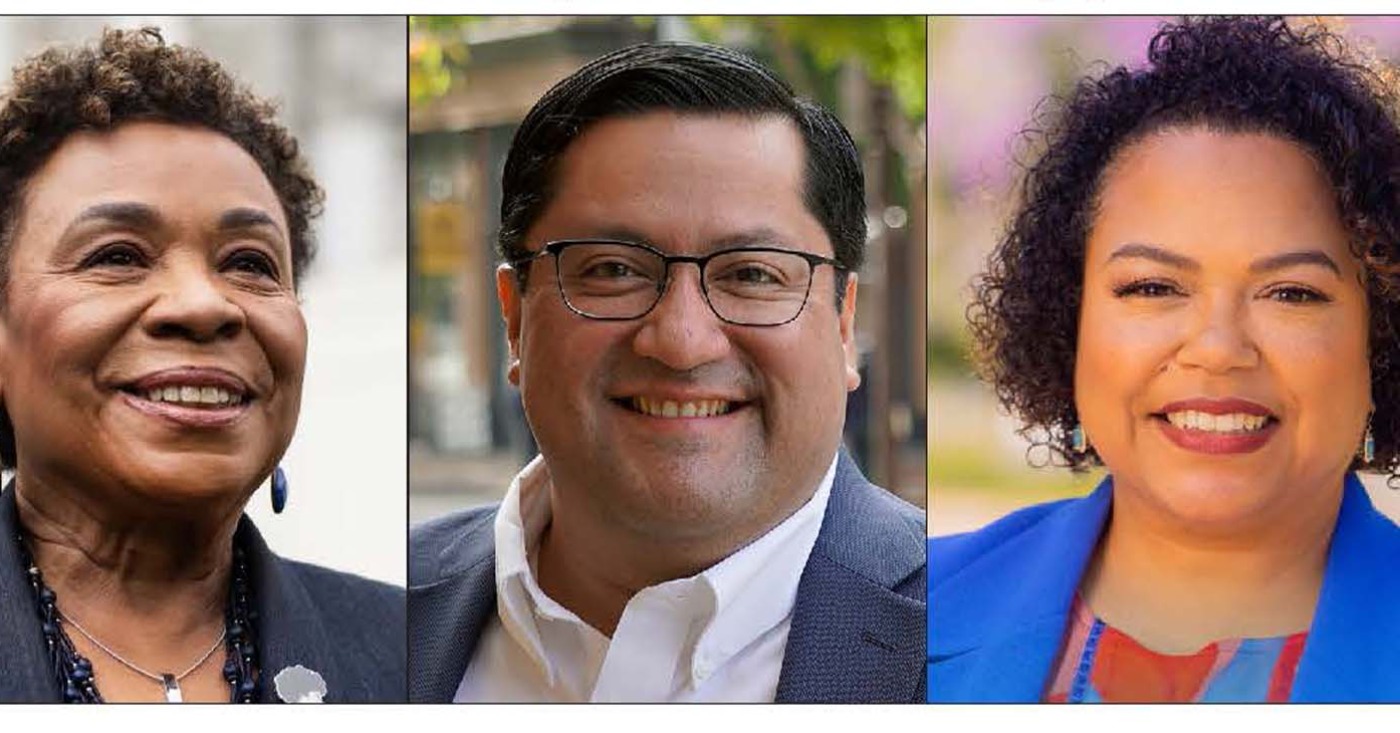
Money will support small businesses, public safety, transitional housing, and community partners
Mayor Barbara Lee recently announced that the City of Oakland and local community partners will receive more than $14 million in direct investments from California’s new 2026-27 state budget.
Securing $4.25 million for city programs and $10 million for local community organizations, these state funds were backed by state Senator Jesse Arreguin and Assemblymembers Mia Bonta and Buffy Wicks, with support from Governor Gavin Newsom.
The goal of securing state and federal funding and bringing in outside resources to address the city’s most pressing needs continues to be a top priority for Lee.
Direct state investments in city programs can revitalize Oakland’s commercial corridors and foster economic growth, strengthen community violence prevention strategies, and expand transitional housing, while supporting cherished community spaces, according to a city media statement.
“Thank you so much to Senator Jesse Arreguin, Assemblymember Mia Bonta, Assemblymember Buffy Wicks, and Gov. Gavin Newsom for investing in Oakland,” Lee said.
“We are fortunate to have strong, dedicated leaders representing Oakland in Sacramento who consistently deliver for our residents and businesses,” she said. “This critical funding directly addresses some of our most pressing challenges, including supporting our small businesses, building vibrant neighborhood corridors, advancing violence intervention, and housing our unsheltered neighbors.”
How the $4.25 million will be spent for city projects:
- $2.5 million will be used for the Facade and Tenant Improvement Grant Program to support small businesses;
- $1 million for the Department of Violence Prevention to enhance staffing and program capacity; and
- $750,000 for the Holland transitional housing facility, providing resources to help unhoused residents.
• How the $10 million for Oakland community groups will be spent:
- $5 million for Children’s Fairyland for essential infrastructure, accessibility, and facility upgrades.;
- $3 million for the Juntos Fruitvale Cultural Arts Center to create a multi-use space for performances, exhibitions, workshops, neighborhood meetings in the Fruitvale neighborhood; and
- $2 million for Samuel Merritt University to grow its nationally recognized Human Trafficking Prevention and Response Initiative.
“State investments in Oakland’s nonprofit and educational organizations highlight their deep value not just to our city, but their importance to the entire state,” said Lee. “Oakland has long served as a hub for inclusive arts and culture and as a community that protects its most vulnerable members.”
Said Arreguin, “This investment is a commitment to Oakland’s health, safety, and future. In partnership with my state colleagues, Mayor Lee, and our community partners, we are strengthening our response to human trafficking and gun violence, to create safer neighborhoods, and improve the quality of life of all Oakland residents.”
“Investing in Oakland means investing in California’s future. I’m proud to be a voice for the beautiful people of Oakland in the State Capitol and to deliver real funding wins that ensure our shared safety, expand housing opportunities, and preserve the artistic and cultural legacy of Oakland,” said Bonta.
Black Press
AC Transit Labor Unions Back Director Joel Young
ATU Local 192 Vice President Nathaniel Arnold stated “our support reflects confidence in Young’s leadership and experience as the longest-serving member of AC Transit’s current Board of Directors. His experience is particularly important as AC Transit confronts serious fiscal challenges while working to preserve and strengthen service.

In the AC Transit Ward 3 election, AC Transit’s labor organizations have recently expressed their endorsement for Director Joel Young, recognizing his longstanding commitment to public transportation, workforce investment, and the employees who keep AC Transit moving every day.
Those unions include the Amalgamated Transit Union Local 192, the International Brotherhood of Electrical Workers Local 1245, and the American Federation of State, County and Municipal Employees Local 3916.
ATU Local 192 Vice President Nathaniel Arnold stated “our support reflects confidence in Young’s leadership and experience as the longest-serving member of AC Transit’s current Board of Directors. His experience is particularly important as AC Transit confronts serious fiscal challenges while working to preserve and strengthen service.
“At a time when difficult decisions lie ahead, Young brings institutional knowledge, longstanding relationships, and a demonstrated commitment to public transportation.
“Since joining the board in 2009, Young has served in key leadership roles, including president and vice president, helping guide AC Transit through periods of growth, innovation, and change.
During his tenure, he helped AC Transit secure more than $600 million in funding to support critical transportation investments. Young has also helped advance workforce development initiatives, support transit technology improvements, expand AC Transit’s zero-emission bus fleet, and strengthen the District’s national presence on transportation policy issues.
His leadership has extended beyond the Bay Area.
Young has represented AC Transit on the national stage, including participation in the White House Roundtable on Clean Bus Manufacturing, where transit leaders and policymakers discussed the future of clean transportation and domestic manufacturing.
Black Press
‘ICE-Free Marin’ Supporters Press Supervisors as County Drafts Enforcement Restrictions
“County resources are to never be used in the furtherance of federal immigration enforcement,” Johnson said, of the policy which is still in development. “The policy will require all county employees to notify the county executive within 24 hours of any immigration enforcement activity in which they become aware on county property.”
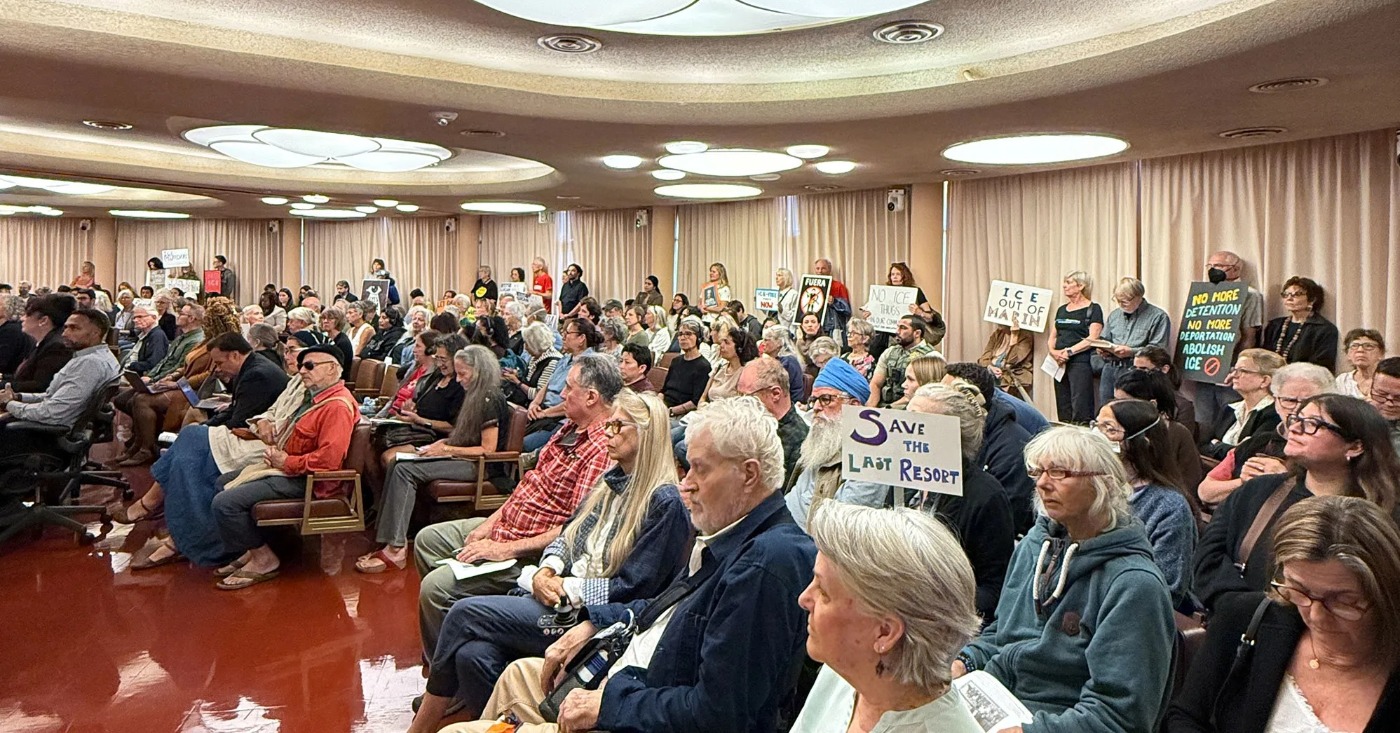
More than 100 protesters packed the Marin County Board of Supervisors chamber Sept. 29, urging supervisors to consider an ordinance restricting the actions of U.S. Immigration and Customs Enforcement officers.
County and state officials are already advancing some measures that overlap with demands the protesters have made for the past year.
“I want to share that the immigration subcommittee has been hard at work drafting important board policy as directed by the Board of Supervisors,” said Marin County Executive Derek Johnson, referring to policy that will prevent the use of county property for federal immigration enforcement activities.
“County resources are to never be used in the furtherance of federal immigration enforcement,” Johnson said, of the policy which is still in development. “The policy will require all county employees to notify the county executive within 24 hours of any immigration enforcement activity in which they become aware on county property.”
Those policy goals align with the two central provisions proposed by the No ICE in Marin Coalition, which filled the room at Tuesday’s meeting.
Their policy proposal, called ICE-Free Marin, prohibits ICE from using county property, resources or personnel without a judicial warrant and establishes clear reporting requirements whenever county department staff observe or communicate with federal immigration authorities. Those interactions may include the service of subpoenas and warrants, as well as attempts to access county facilities.
The ICE-Free Marin ordinance would require the county to post signs and barriers restricting ICE from entering county property, with county staff denying ICE officials entry and refusing to provide information and assistance. If ICE disregards directives, the county counsel would seek a court order to stop them, and if ICE unlawfully detains someone, they can be challenged in court, according to the ordinance.
Last year, the group protested the county’s participation in the State Criminal Alien Assistance Program, administered by the U.S. Department of Justice in conjunction with ICE and the U.S. Department of Homeland Security.
SCAAP funds are used to reimburse costs incurred for jailing immigrants lacking permanent legal status who have at least one felony or two misdemeanor convictions and are incarcerated for a minimum of four consecutive days.
In February, the county announced its 2026-28 budget does not include SCAAP funding.
State Takes Action on Immigrant Protections
Also on Sep.t 29, California Gov. Gavin Newsom signed a package of more than 20 bills aimed at increasing state oversight of federal immigration enforcement and protecting immigrant communities, according to a news release from the governor’s office.
The state legislation creates a 25% tax on private detention centers, expands health and safety oversight in those centers, requires additional public input and planning approvals for new facilities, and strengthens the role of state Attorney General Rob Bonta in inspecting them.
The measures also ban law enforcement from using wearable electroshock “shock gloves,” restrict flash-bang grenades and explosive breaching charges, limit the use of state-owned property for federal immigration operations, and require temporary identification decals on rental vehicles used by law enforcement.
The legislation expands access to public records involving private detention facilities and restricts former federal immigration officers who committed serious misconduct from becoming California peace officers or public employees.
Other measures allow people to sue federal officials for alleged violations of their constitutional rights and protect people traveling to and from courthouses from civil immigration arrests.
“We may not be able to dictate federal immigration enforcement policy, but we can make clear that activities taking place in California will be subject to California law,” the governor said in a video message announcing the bills.
The group leading the local campaign for the ICE-Free Marin ordinance is the Democratic Socialists of America. DSA spokesperson Courtney Sadowski said in an email that the group has spoken with supervisors Eric Lucan, Mary Sackett, Dennis Rodoni and Stephanie Moulton-Peters.
“But none have committed to introducing the ICE-Free Marin ordinance,” Sadowski said.
The group has attended numerous meetings of the Civilian Oversight Commission of the Sheriff’s Office asking for their support, she said.
“We cannot afford to wait the months or years it would take them to review and consider this item,” she said. “Even if they moved more quickly, all they can do is issue a recommendation.”
Speakers Weigh In
Hector Garcia, a community library specialist with the Marin County Free Library, spoke to the supervisors. He said that he recently completed an intense Department of Justice certification that will allow him to provide immigration services at the library.
The Recognition and Accreditation program allows qualified non-attorney staff working for eligible nonprofit organizations to legally provide immigration services for low-income and indigent individuals who cannot afford private attorneys.
“It would be impossible for me to fulfill this job with the presence of ICE,” Garcia said. “A fascist police force, they disregard the law, terrorize, assassinate and separate Black indigenous people of color and their families.”
Lisa Bennett with the Marin Rapid Response Network, a nonprofit that helps families locate detained relatives and provides other support services, said families go into shock when the major breadwinner is detained.
“Basic things like money for food, utilities, even driving are no longer a given,” she said. “They worry about their parent’s medical needs. They worry about themselves being next. They worry about what happens if the remaining parent is taken. This is what our government is doing to its own people. Silence is complicity.”
Black Press
All Skinfolk Ain’t Kinfolk
An old saying coined by Floridian Zora Neale Hurston in her final major nonfiction work, Dust Tracks on a Road, set in Florida. “All skinfolk ain’t kinfolk” is an idiom that distinguishes shared identity from shared interests.

Byron Donalds wants to be Florida’s next governor. Not on our watch.
Our stance is rooted in an old saying coined by Floridian Zora Neale Hurston in her final major nonfiction work, Dust Tracks on a Road, set in Florida. “All skinfolk ain’t kinfolk” is an idiom that distinguishes shared identity from shared interests.
The congressman has done little to advance the cause of Black workers. In fact, on the AFL-CIO’s legislative scorecard, which tracks how legislators vote on the issues and policies that matter to working people, Rep. Donalds has voted against working people every time except once – giving him a lifetime score of 1%.
He has built his political identity around his support for Donald Trump and his embrace of Gov. Ron DeSantis, two political figures whose policies have undermined, undercut and trampled on our rights and freedoms.
As governor, DeSantis has been nearly surgical with his assault on the Black community, especially in education, where he undermined the state’s Historically Black Colleges and Universities through installing crony politicians; banned books by and about us from school libraries, rejected the country’s first AP course on Black culture, and instituted the STOP WOKE Act, which 11th Circuit judge rightfully demeaned as a “breathtaking assertion of power to ban unpopular ideas from public discourse.”
But he didn’t stop there. Next was Black employment.
As national labor leaders, we have witnessed the relationship between strong worker representation and stronger communities – especially for Black communities who over index when it comes to union membership. Like us, they have experienced the power of collective bargaining to help educators advocate for classroom resources, nurses raise concerns about patient care, and public employees seek fair compensation and safer working conditions. We have also seen the consequences when workers have fewer avenues to influence decisions affecting their livelihoods.
So it should come as no surprise that in 2023, DeSantis signed Senate Bill 256, imposing new restrictions on many public-sector labor unions by creating new challenges for unions seeking to maintain their bargaining certifications. This law is a direct threat to the sovereignty of American workers who have historically used unions to negotiate wages, benefits, workplace protections and the conditions under which essential public services are delivered.
The struggle for civil rights and the struggle for workers’ rights have long intersected. From A. Philip Randolph’s organizing of the Brotherhood of Sleeping Car Porters to the 1968 Memphis sanitation workers’ strike, demands for economic dignity have stood alongside demands for equal treatment under the law.
Dr. Martin Luther King Jr. understood that the promise of civil rights could not be fully realized without economic justice. His final campaign in Memphis reflected the conviction that workers’ rights, racial equality and human dignity were inseparable.
That history offers an important lesson for the present: Political representation and substantive policy representation are not necessarily the same thing.
That is history Byron Donalds has either forgotten or refuses to consider. Either way, it lays bare his disconnect from the collective vision of America most Black people share – one that acknowledges real differences while working to reduce the negative impacts of those differences. Donalds has adopted a different vision – one that thinks it more valiant to turn a blind eye to the disparate outcomes race creates in employment, education, and health care rather than admit there are real, structural issues that need to be addressed.
One person who does seem to understand and is working to do better is Donalds’ opponent, David Jolly, a former Republican congressman now running as a Democrat. He has positioned his candidacy as an alternative to the DeSantis approach, emphasizing affordability, public schools and a different direction for state government. And while we may not share skin color or a cultural history with Jolly, we do share his commitment to fight for equality and the dignity of the American worker.
The November 3 gubernatorial election presents Floridians with a choice between candidates offering different approaches to governing. Byron Donalds has sided with DeSantis who has made their disdain for Black people loud and law, and Jolly who sided with us and our understanding of community and collective power.
Every election is an opportunity to examine not only what candidates promise, but also what their records and policy commitments reveal.
For working people, that examination must include a fundamental principle: Economic prosperity and democratic participation are strongest when the people who do the work have a meaningful voice in shaping their future.
Florida’s next chapter will be written through the decisions of its people and the accountability they demand of those entrusted with public office.
That is the enduring promise of democracy—and a responsibility that belongs to all of us.
Fredrick D. Redmond, the highest-ranking African American labor official in history, is the Secretary-Treasurer of the AFL-CIO, the nation’s largest labor federation representing 65 unions and nearly 15 million workers.
Fedrick C. Ingram is the Secretary-Treasurer of the American Federation of Teachers (AFT), representing 1.8 million educators, healthcare workers, and public employees.


HBCU Homecoming: A never-miss annual tradition

News Observer Weekly — October 14, 2026 | Top 5 Stories of the Week

Coach Tremaine Jackson Urgent Mindset- ‘Fourth and One’

Michael Jackson Returns to the Super Bowl Spotlight, Druski Heads to SNL, and Gas Drops Below $1!

Michael Jackson Returns to the Super Bowl Spotlight, Druski Heads to SNL, and Gas Drops Below $1! 📱

Secure growth by funding business expansion without taking on bad debt
Save money on storm damage repairs by addressing your property hurricane risk early in the season

Sunset Loft – The Crystal

HISD takeover “diminished, degraded, destroyed” schools – Citizen commission report

Everything You Need to know before you Vote

The Youngest American Killed in the Vietnam War

Passing for White, Fighting for Black America: The Courage of Walter White

OP-ED: Haiti TPS: Have We Lost Sense of Humanity?

OP-ED: How Does Your State Rank for Pre-K?

NFL: Week Two Recap | Jalen Hurts did not fold; Caleb Williams exits game with injury

Remembering Chauncey Bailey as Student Journalists Face Threats to Truth-Telling

Headlines and Hot Topics 📱

NEWSOM, KAMALA & 2028: THE POLITICAL CALCULUS BEGINS 📱

Peter Magubane: a Camera Against Apartheid

Obama Urges Democrats to make AI a Priority 📱
HBCU Homecoming: A never-miss annual tradition
News Observer Weekly — October 14, 2026 | Top 5 Stories of the Week
Coach Tremaine Jackson Urgent Mindset- ‘Fourth and One’
Michael Jackson Returns to the Super Bowl Spotlight, Druski Heads to SNL, and Gas Drops Below $1!
Michael Jackson Returns to the Super Bowl Spotlight, Druski Heads to SNL, and Gas Drops Below $1! 📱
Sunset Loft – The Crystal
HISD takeover “diminished, degraded, destroyed” schools – Citizen commission report
Everything You Need to know before you Vote

From Doubts to Calling: My Wife Saved My Career #shorts

HBCU Homecoming: A never-miss annual tradition
-

 Black Press1 week ago
Zakiya Jendayi Arrested, Locked Out of Home by Sheriff’s Deputies
-

 Black Press1 week ago
A $2.1 Trillion Wellness Industry Never Built a Daily Practice for Black Children. So This Atlanta Family Did.
-

 Art1 week ago
Montclair Brewery: Brewing Culture, Community, History
-
 BlackPressUSA6 days ago
Latinas Deserve Equal Pay. Unions Help Make It Happen.
-

 Black History1 week ago
Listening as a Lifeline: A Doula’s Witness to Black Maternal Health
-

 Black Press1 week ago
COMMENTARY: But God!
