
Business
Lower Emissions, Cleaner Environment: API Says ‘We’re On It’
NNPA NEWSWIRE — A new API advertising campaign highlights the natural gas and oil industry’s leadership in reducing emissions, protecting the environment, making climate progress and serving consumers. While one commercial focuses on the role of industry as problem solvers, a second highlights industry’s ability to solve complex problems.


By Stacy M. Brown, NNPA Newswire Correspondent
@StacyBrownMedia
When it comes to lowering emissions and reducing its environmental footprint in the U.S., the American Petroleum Institute (API) wants the world to know that the natural gas and oil industry is already doing it.
A new API advertising campaign highlights the natural gas and oil industry’s leadership in reducing emissions, protecting the environment, making climate progress and serving consumers. While one commercial focuses on the role of industry as problem solvers, a second highlights industry’s ability to solve complex problems.
API has already been vocal throughout the year on the climate role that industry plays in, while providing abundant, reliable, and affordable energy across the world. API President and CEO Mike Sommers notes that the industry is “laser-focused” on tackling the dual challenge of delivering energy globally and protecting the planet.
Sommers says that the industry is keeping pace with record demand for affordable fuels while reducing emissions every step of the way.
By investing in innovative technologies, developing state-of-the-art standards and supporting smart regulations that reduce emissions, Sommers says the industry is improving sustainability, particularly in the production of clean natural gas.
API counts as the only national trade association that represents all facets of the natural gas and oil industry, which supports 10.3 million U.S. jobs and nearly 8% of the U.S. economy.
The 100-year-old trade association’s focus is primarily domestic, but it notes that exported liquefied natural gas (LNG) also can help lower global emissions while addressing third-world countries’ lack of access to modern energy.
API touts the benefits of increased use of natural gas in projections by the U.S. Energy Information Administration (EIA) that energy-related carbon dioxide emissions will decline this year by 2.5%. Meanwhile anew Department of Energy report on the life cycle of greenhouse gas emissions associated with U.S. LNG exports confirmed the environmental benefits of natural gas vs. coal – which is significant given expanding markets in Asia and Europe for U.S. LNG.
EIA’s CO2 projection, along with the projected 4.9% increase in natural gas consumed for power generation relative to 2018, underscores the point that increased use of natural gas in fueling power generation lowers CO2 emissions, and that the recent trend of the U.S. recording the lowest CO2 levels in a generation will continue.
Natural gas’ competitiveness in the marketplace is a key to these national and global opportunities. The abundant, affordable fuel has driven emissions lower and helped the pocketbooks of U.S. consumers, especially low- and fixed-income households. Meanwhile, American liquified natural gas (LNG) exports are affecting the economics of power generation abroad.
While positive developments should affect all citizens, African Americans and other minorities should especially take note.
“Our industry certainly recognizes the great opportunity to enlist the talents and skills of more women, African Americans and Hispanics. A recent study projected nearly 1.9 million direct job opportunities in industry through 2035, with women and minorities accounting for hundreds of thousands of them.”
The “We’re on It” campaign underscores the commitment of the natural gas and oil industry to provide reliable and affordable energy, while reducing emissions and its footprint.
“Today, the U.S. carbon dioxide emissions are at their lowest in a generation, largely due to the increased use of natural gas, evidence that energy and climate progress can coexist,” Sommers wrote last month.
“Through continued development of sustainable energy resources and collective action toward emissions reduction, the natural gas and oil industry will continue leading efforts to improve our environment.”








Black History
Learn Black History and Win Your Next Game Night
INDIANAPOLIS RECORDER — Dr. Maxine Bryant, a culture keeper and professor, is combatting book bans and historical inaccuracies through the launch of GriotSpeaks: The Game. The new board game is designed to celebrate the African diaspora by incorporating elements of geography, literature, music, and the Gullah Geechee culture.


Maxine Bryant, Ph.D., creator and founder GriotSpeaks, is sharing the history of the African diaspora through her new board game.
Bryant often quotes the African proverb: “Until the lion tells the story, the hunter will always be the hero.” She said for the hunter has been telling the story of the African diaspora for “far too long.”
The game is based in African culture. The spaces on the board feature the countries of the African diaspora and it uses gold bars and cowrie shells as currency while special game spaces showcase symbols such as the Sankofa bird, a pyramid and an Ankh.
Bryant, a culture keeper and educator, created the game to add a bit of fun to her ongoing mission of dispelling myths and sharing accurate history. She used the history lessons she taught over the years as the foundation for the game’s trivia questions. Bryant said she is even more motivated to correct the inaccurate narratives due to recent book bans and efforts to minimize or omit the contributions of Black people.
“We can’t tell our story if we don’t know our story,” Bryant said.
History buffs may start the game with a slight advantage, but even players with limited knowledge have a chance to win with some strategic play. During one game demonstration, she said, an 11-year-old beat her with the clever use of one of the game’s wild cards.
Bryant’s goal is for people to learn new information while having a good time with one another. She sat down with the Recorder to share her inspiration for the game and how she hopes it will influence the culture.
This interview has been edited for length and clarity.
What was the inspiration for creating a game?

Maxine Bryant: In all honesty, God gave me the vision for the game.
I put that board game together the way God showed me in in this vision, if you will, it was to be educational, informative, and entertaining. And so, I knew I wanted it to encompass all of the diaspora and with the educational part of it. Since I am a professor, it needed to encompass the critical areas of our history.
So, it’s geography; it’s the resistance, the protest — all of that. It’s … literature, music, the Gullah Geechee culture, storytelling, the whole gamut, and then Black people.
What are some of the things people are surprised to finally learn while playing the game?
Bryant: The genius of Black people.
Many people know Madam C.J. Walker, although I’m finding out that not everybody does. But one of the questions (asks about) who invented the hot comb? Everybody thinks Madam C.J. Walker, but no, that was not her thing. Her thing was hair care and strengthening hair. It was a man (Walter H. Sammons) who created the hot comb. So, people are amazed at what they’re learning.
How do you hope that this new knowledge helps people see the world?
Bryant: So, what I hope people learn is our true history, the history of our struggle, and our resistance, the history of our greatness, and information about our culture. That positions us then to be able to stand tall in knowledge of self.

One of the things I wholeheartedly believe in is that little Black boys and little Black girls who grow up with the message that you are nothing because you are Black … it’s easy for me to take you out. But if I look at you and I know that you’re great and I’m great, I may just have a different kind of level of respect for you.
I think that having a sense of self can impact how I look at myself and how I look at people who look like me.
Is there anything else you want to share?
Bryant: In my mind, this game is a must-have. It is so unique. Now, within the culture, we have trivia games and usually they’re trivia about sports or about entertainment and some about history, right? And usually, it pertains to people in the United States or events in the United States, culture in the United States.
This game contains movement around a physical board like Monopoly, but it also encompasses the entire African diaspora so it’s not just the United States. People who played this game tell me … they’ve never seen anything like it.
GriotSpeaks: The Game is best suited for players 17 and older. The game is available for purchase through Amazon or at the GriotSpeaks website.
Contact Editor-in-Chief Camike Jones at 317-762-7850.
The post Learn Black history and win your next game night appeared first on Indianapolis Recorder.
Based on reporting by Indianapolis Recorder.
Black History
Five Hospitals Said No! Who Will Help Annette Henry Recover?
Annette Henry, a 67-year-old Oakland woman, is struggling to access essential medical care after a devastating stroke left her with a rare neuropathic pain syndrome. Despite medical documentation confirming her need for inpatient rehabilitation, five different Bay Area hospitals have denied her admission, often citing her inability to meet rigid therapy thresholds. Her family’s efforts to seek intervention from state and federal lawmakers have yielded no results, leaving Henry at home without a clear path to recovery. To see how these systemic failures are impacting her health, read more.

A tangle of red tape and contradictions between health providers and Medicare rules have impeded an Oakland woman’s ability to recover from a stroke she had last year.
Her family – who are her caretakers – have reached out to various professionals and state and federal lawmakers for help to no avail.
At 67, Annette Henry needs inpatient stroke rehabilitation after a devastating stroke in May 2025. Since then, multiple Bay Area hospitals have denied it. She was accepted into a rehabilitation facility in June 2025 but discharged prematurely in July, in essentially the same condition.
Three hospitals where she was a patient pushed skilled nursing over inpatient rehabilitation. Two more declined referrals.
Now at home, Henry is caught in a system that measures her need for treatment against the limitations treatment should address.
Medical professionals have documented her need for a higher level of care.
In August 2025, a Medicare Quality Improvement Organization (QIO) overturned Henry’s discharge from an inpatient rehabilitation facility (IRF).
The QIO’s independent physician reviewer found she had not received the “intensive therapy program outlined on admission,” according to the Aug. 30, 2025, determination letter. Yet the decision did not secure her readmission or guarantee continued rehabilitation.
Henry has central post-stroke pain, a rare neuropathic pain syndrome that can make movement and touch intensely painful. Her pain specialist recommended inpatient rehabilitation alongside pain management.
Nevertheless, facilities have cited her inability to tolerate three hours of daily therapy as a reason to deny inpatient rehabilitation.
That practice raises questions about Medicare coverage policy. In Hooper v. Sullivan, No. H-80-99 (D. Conn. 1989), the court recorded the parties’ agreement that denials based on numerical utilization screens, diagnostic screens, treatment norms, the “three-hour rule,” or other “rules of thumb” were not appropriate.
CMS subsequently cited Hooper in its Aug. 7, 2009, final rule (74 Fed. Reg. 39762, 39794). The policy is also addressed in the Medicare Benefit Policy Manual, Chapter 1, Section 110, and CMS’s June 1 Review Choice Demonstration for IRF Services: Operational Guide.
These authorities underscore the need for individualized assessments rather than rigid numerical thresholds.
The central contradiction is stark: the pain and disability that make rehabilitation necessary have been cited as reasons to deny it. UCSF Stanyan’s April 7 discharge summary for Henry states that acute rehabilitation unit (ARU) placement was declined for “inability to tolerate three hours of therapy daily.” Without appropriate treatment, Henry risks further decline.
Her records document complications associated with prolonged immobility.
Orthopedics documented flexion contractures of the small and ring fingers on March 19.
Chest imaging on April 1 showed bibasilar dependent atelectasis, a condition involving reduced inflation of the lower portions of both lungs. These concerns can be examined through her medical records and photographs.
“What does a ‘not reasonable’ discharge look like?” her family asks. For them, it looks like an appeal decision recognizing a problem without ensuring a remedy: repeated referrals, denials and a patient still without the rehabilitation her treating professionals have recommended.
The family has sought help from the California Department of Public Health and the federal Office for Civil Rights to no avail. They contacted U.S. Rep. Lateefah Simon in June 2025, while Henry was in rehabilitation; Senator Alex Padilla in May 2026; and Senator Adam Schiff in September 2026.
DeCuir says the family received no meaningful assistance and was redirected to the QIO or advised working with a social worker after Henry had already been discharged.
The consequences extend beyond rehabilitation. The family reports that Henry has struggled to attend in-person specialist or any appointments and needs in-person evaluation and treatment for complications, recommended evaluations, health screenings and preventive care.
Her mobility limitations have become barriers to broader medical care. Every office tells her their office is not set up to accommodate her. This has happened with specialty care, out-patient services, screenings and physical therapy.
Henry is a Black woman on Medicare, and her family believes her experience raises concerns about unequal access to intensive rehabilitation. Research has documented disparities in discharge to inpatient rehabilitation rather than skilled nursing, underscoring the importance of individualized review.
CMS, state regulators and healthcare providers should examine Henry’s records, assess her needs on their clinical merits and explain how the applicable coverage standards were applied, and whether they are being enforced.
Rehabilitation is not a reward for patients who can already tolerate treatment. It is care intended to help people recover function. Henry’s case asks whether a system designed to support recovery can leave a patient without a path to it.
Black History
From Backyard Grilling to Jack London Square: Jamale Carlyle’s Chicken Wing Success Story
Jamale Carlyle turned a backyard hobby into a flourishing business after using grilling to cope with the loss of his mother and sister. The former corporate executive and CPA transitioned from a twenty-year career in the power industry to selling chicken wings at farmers’ markets in Tracy and Oakland. Following immediate success and viral social media attention, Carlyle opened two permanent storefronts and established a charitable partnership to support local youth. His journey highlights a unique path from internal auditing to community entrepreneurship. Read more.
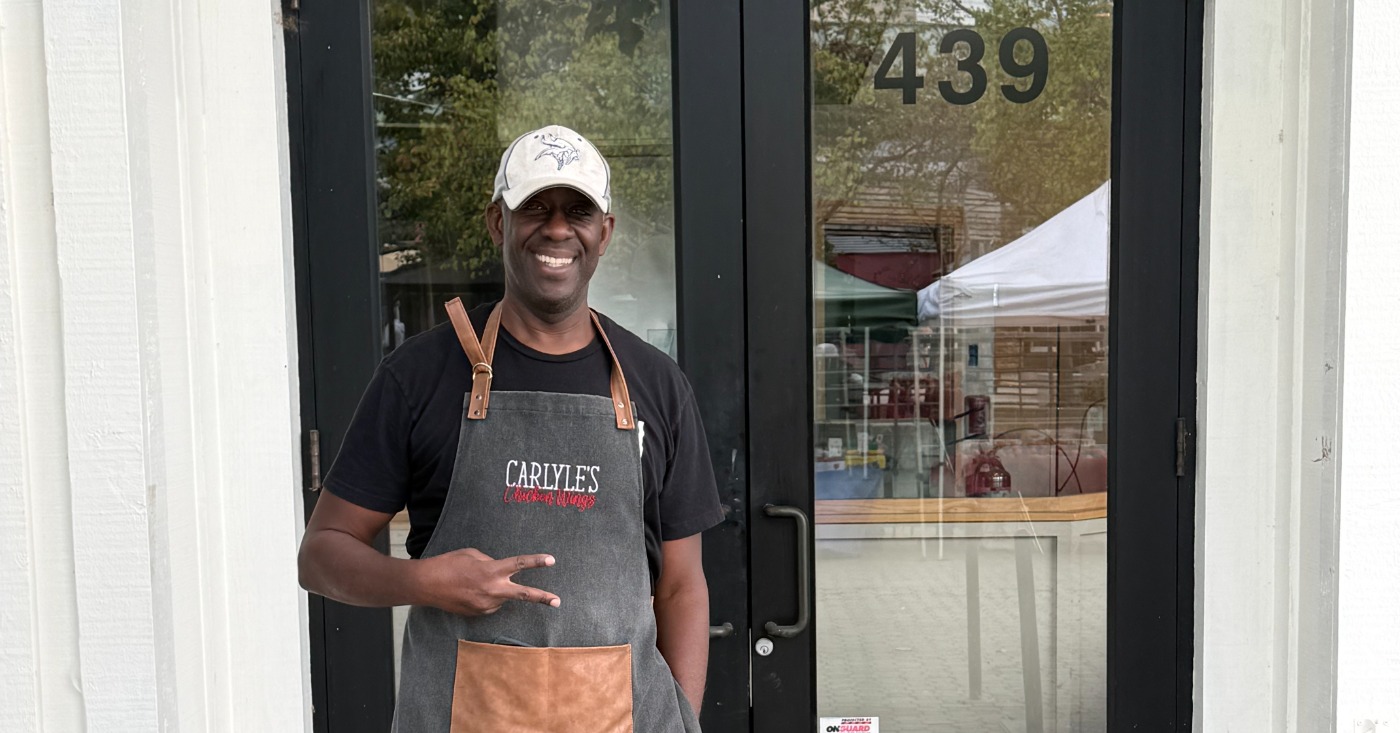
For Jamale Carlyle, what began as a way to cope with personal loss has grown into a thriving chicken wing business with locations in Tracy and Oakland’s Jack London Square.
Raised in Los Angeles, Carlyle remains a southern kid at heart, guided by the values and principles instilled in him growing up. In 2020, he lost his sister, and two months later, his mother passed away. The losses left him grieving half of his immediate family and searching for a way forward.
He turned to God, and to two favorite pastimes: grilling chicken wings and deep sea fishing. Friends who gathered in his backyard encouraged him to turn his chicken wings into a business.
Carlyle had built a successful corporate career before becoming an entrepreneur. An economics graduate of the University of California, Irvine, he earned a master’s degree in accounting from the University of Southern California and became a certified public accountant (CPA).
He spent more than 20 years in the power industry, including working for Edison International in Los Angeles and Boston. He later joined JP Energy Partners in Dallas, helping its team take the company public.
After moving to San Francisco in 2016, Carlyle spent 10 years with Pattern Energy, a wind energy company, where he served as vice president of Internal Audit and took on numerous corporate responsibilities.
But in 2025, grilling became more than a hobby. Carlyle began selling his wings at farmers’ markets, initially dedicating four hours every Saturday. Nervous about his first outing in Tracy, he wondered whether his friends had simply been encouraging. Instead, he sold out on opening day.
He later brought his business to Jack London Square’s Farmers Market, where he again sold out on his first day. As demand grew, he expanded into catering before opening his Tracy storefront in May 2026 and his Jack London Square location in July.
Social media helped fuel the momentum. In Tracy, enthusiastic reviews on the community’s Rants and Raves Facebook page brought customers through the door. His Jack London Square debut also gained traction online, generating approximately 100,000 views on social media on his on opening day.
Still processing the rapid growth, Carlyle describes the business as something that began in his backyard as a stress reliever and became an unexpected calling, and a way of giving back.
“Giving back” has led to a partnership with Mike Jenkins, owner of Oakland Strong, a nonprofit gym known for Olympic style weight lifting and developing national and international champions. After Jenkins visited Carlyle’s store with members of his team, Carlyle returned the visit, and the two began discussing ways to partner to support the community.
“I’m really big on charity. I believe in giving back to the community,” Carlyle said. “I knew before I opened my store, I’d be doing something like this, this is what God wants me to do.”
Their collaboration will introduce the “Oakland Strong Bowl,” featuring 10 dry-rub Cajun wings and a vegetable-rice bowl for $17.99, with $2 from each purchase donated to the Oakland Strong Foundation. The initiative is expected to launch in early November.
“This builds community in Oakland and Jack London Square,” Carlyle said.
Looking ahead, Carlyle plans to expand the menu with chicken thighs, chicken tacos and additional sides. He is also pursuing a liquor license to create a destination where customers can enjoy wings while watching sports.
For now, he is focused on growing his two locations. But with customers embracing his food and his commitment to giving back, Carlyle sees the possibility of bringing his chicken wings to more communities throughout the Bay Area.
Black Press
SEIU Local 1000 and State of California Will Continue to Negotiate New Labor Contract
Thousands of California state employees represented by SEIU Local 1000 recently staged a one-day walkout to protest stalled contract negotiations with Governor Gavin Newsom’s administration. The union, which represents approximately 100,000 public workers, is demanding a 20% wage increase over three years and an end to mandatory four-day in-person work requirements. While the initial strike has concluded, union leadership warns that further demonstrations are likely if the state continues to reject their demands for better pay and telework flexibility. Negotiations are expected to continue as both sides seek a resolution. Read more.
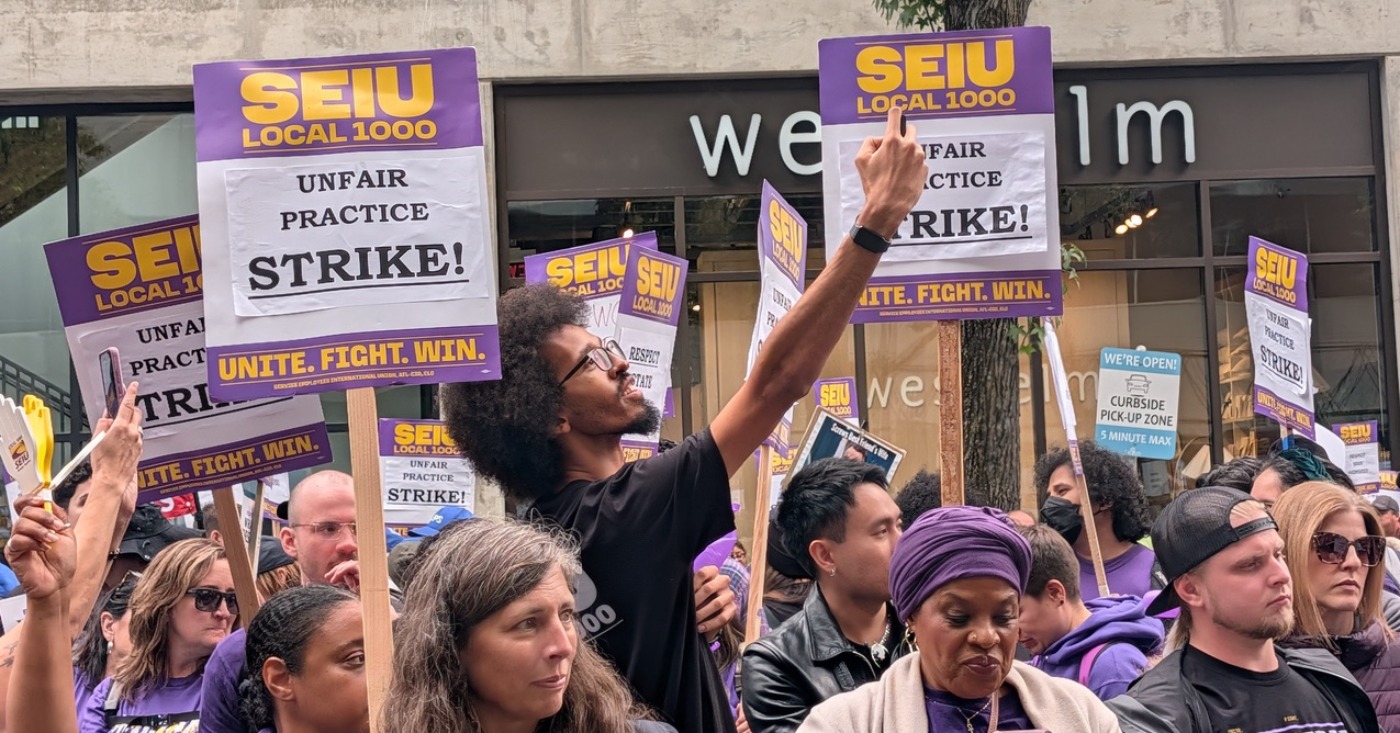
After the Service Employees International Union (SEIU) Local 1000 labor contract expired June 30 and talks with Gov. Gavin Newsom’s administration stalled, the union stepped up its efforts to secure a new agreement, saying its demands had gone unheeded.
On Oct. 21, thousands of state employees represented by SEIU Local 1000 staged a one-day walkout to protest alleged unfair labor practices during negotiations with Gov. Gavin Newsom’s administration.
Although the strike has ended, SEIU Local 1000 President Anica Walls said further demonstrations or an expanded strike are highly likely if contract negotiations remain stalled. The union represents approximately 100,000 public employees statewide.
“We are out here because our jobs matter,” Wells said. “If they continue to refuse to bargain with us in good faith, we are prepared to escalate.”
Sen. Lola Smallwood-Cuevas (D-Los Angeles) expressed support for SEIU Local 1000’s labor action in an Instagram post, emphasizing the importance of fair treatment for workers.
“I stand in complete solidarity with SEIU Local 1000,” Smallwood-Cuevas stated. “More than 100,000 state workers they represent are on strike today fighting for good-faith bargaining, fair treatment, and a contract that reflects the value of the essential public services they provide every day—all things that should be a given for the workers our state relies on the most.”
Smallwood-Cuevas, a member of the California Legislative Black Caucus (CLBC) added, “When California’s workers hold the line, the whole nation pays attention.”
According to union representatives, SEIU Local 1000 is seeking a contract that addresses rising living costs and provides greater workplace flexibility. The union is demanding a 20% wage increase over three years and an end to Gov. Gavin Newsom’s requirement that state employees work in person four days a week.
The union is also seeking increased state contributions toward employee health care benefits to reduce workers’ out-of-pocket costs.
On Sept. 18, Newsom vetoed Assembly Bill 1729, authored by Assemblymember Alex Lee (D-San Jose), which sought to expand telework opportunities for state employees.
The bill would have required state agencies to offer telework options or provide written justifications for requiring employees to work in person. Supporters argued that telework could save taxpayers approximately $225 million annually by reducing office space and parking costs while lowering vehicle emissions and improving employee retention.
Newsom said the legislation would limit state departments’ flexibility to manage their workforces and evaluate telework exemptions individually. He has also emphasized the benefits of in-person collaboration.
“I want people to come back to work, reengage, rediscover, collaborate, coordinate, develop relationships, friendships, and fall in love,” Newsom said in July. “You get three-day weekends. Four years ago, that would’ve been a triumph. Now it’s a burden.”
Union organizers described the Oct. 21 walkout as a one-day unfair labor practice strike, rather than an indefinite work stoppage. The action was intended to demonstrate solidarity and increase pressure on the state during negotiations.
SEIU Local 1000 has been without a contract since its previous three-year agreement expired June 30. Negotiations are expected to resume.
Responding to the statewide walkout, the California Department of Human Resources (CalHR) said it “remains focused on achieving a fair and responsible agreement with SEIU Local 1000 and continues to be available at the bargaining table.”
Black Press
AG Bonta Announces Action on Cryptocurrency, Sextortion Fraud – Increasingly Targeting Gen-Z
California Attorney General Rob Bonta is warning residents about a surge in cryptocurrency fraud and online sextortion schemes that increasingly target Gen Z through social media platforms. With internet-based scams costing Americans nearly $21 billion in 2023, Bonta highlighted how artificial intelligence and deepfakes allow criminals to impersonate loved ones and promote fraudulent investment groups. The Attorney General’s Office has already shut down over 100 fraudulent websites and is now utilizing new legislative tools to recover assets for victims. Read more.

California Attorney General Rob Bonta warned residents about rising cryptocurrency fraud and online sextortion scams, urging Californians to recognize warning signs and protect themselves as scammers increasingly target younger people through social media.
Speaking at a news conference on Oct. 19, Bonta said Americans lost $20.9 billion to internet-based scams in 2025, including $11.4 billion to cryptocurrency scams. He said artificial intelligence, deepfakes, and malicious smart contracts have made fraud easier to carry out and more difficult to detect and prevent.
While older Californians remain targets, Bonta said his office has seen a sharp rise in reports of Gen Z consumers being targeted on platforms such as Twitch, TikTok, and Instagram.
One growing scheme involves so-called rug-pull scams, in which fraudsters promote low-priced stocks or volatile cryptocurrencies through online investment groups and streaming communities. After generating interest and driving up prices, scammers sell their holdings, causing values to collapse and leaving investors with losses.
Bonta also warned about sextortion, in which scammers trick or coerce victims into sharing explicit images before threatening to distribute them to friends and family unless they pay. He advised victims not to give in to demands, saying scammers often do not release the images when victims refuse to pay. Instead, he recommended ignoring and blocking the perpetrators.
Another scheme, known as recovery fraud, targets people who have already lost money to cryptocurrency scams. Fraudsters impersonate blockchain recovery specialists or law enforcement officials and demand additional payments while promising to recover stolen assets.
Bonta urged Californians to be skeptical of promises of large returns on small investments, fake cryptocurrencies resembling established ones, and celebrity endorsements that may have been generated using artificial intelligence. He also warned that scammers can use AI to impersonate loved ones through manipulated video and audio.
“Never use a crypto ATM,” Bonta said, emphasizing that transactions can be difficult to trace and reverse and that the machines lack adequate consumer protections.
His office has shut down more than 100 fraudulent websites over the past two years that collectively scammed victims out of at least $8.3 million, he said.
Bonta also highlighted Senate Bill 1208, which he said was recently signed into law. The measure allows law enforcement to petition a court to return seized cryptocurrency to victims, including when alleged perpetrators are outside U.S. jurisdiction.
Residents who have fallen victim to scams can report them to the California Department of Justice at oag.ca.gov/report.
Bonta also urged victims not to feel embarrassed, stressing that scammers are responsible for the harm they cause.
Black Press
21st Annual Taste of Soul: California’s Largest Black Street Festival Comes Alive With Culture, Music and Connections
The 21st annual Taste of Soul Family Festival drew over 300,000 attendees to South Los Angeles for a massive celebration of Black culture, food, and music. Spanning the Crenshaw Boulevard corridor, the free event featured roughly 350 vendors, offering everything from Southern cuisine to professional health services and job recruitment opportunities. While headlining musical acts performed across three stages, the festival also served as a vital platform for small business entrepreneurs to reach a vast audience. Organizers are now addressing reports regarding several incidents that occurred during the festivities. Read more.

The 21st annual Taste of Soul Family Festival brought hundreds of thousands to Crenshaw Boulevard in South Los Angeles on Oct. 17 for food, music and a celebration of Black culture. Visitors could shop with small businesses, enjoy live music performances, speak with health professionals and learn about job opportunities.
Presented by Bakewell Media and the Los Angeles Sentinel, the free festival stretched along the corridor from Stocker Street to Obama Boulevard. The Sentinel estimated attendance at more than 300,000. The day also marked founder Danny J. Bakewell Sr.’s 80th birthday.
“We call it a party with a purpose,” Pam Bakewell, the founder’s sister and a longtime festival organizer, told California Black Media (CBM).
The enticing aromas of barbecue, fried chicken and catfish filled the air as food vendors served up a tempting array of Southern favorites, including cobbler and other desserts. Vendors also offered clothing, jewelry, books and beauty products. About 350 vendors and sponsors participated, including approximately 80 food vendors, Bakewell said. Businesses came from across Southern California and as far away as Chicago and Atlanta.
“In one day, an entrepreneur has the opportunity to showcase their business to hundreds of thousands of people,” Danny J. Bakewell Jr., president of the Sentinel.
Chase offered vendors training in marketing and financial management, followed by a reception.
Experienced vendors also helped newcomers. Pam Bakewell cited Cobbler King, a longtime participant who shares lessons from his early festivals about preparing for crowds and building a business.
“We want everybody to be successful,” she said. “We can’t guarantee that, but we give you the crowd.”
Kaiser Permanente served as the festival’s main medical provider. St. John’s Community Health sponsored Children’s World, where children played games while families received preventive care and information about follow-up services.
St. John’s provided flu shots, fluoride treatments for children and clinic sign-ups for physical examinations. It also reported distributing more than 10,400 bags of diapers.
CBM hosted a booth as part of its California Black Health Journalism Project, a yearlong, solutions-oriented reporting initiative to advance health equity for Black Californians.
Dr. Deidra Beckles, who practices family and internal medicine, and Adriana Westby-Trent, Ph.D., a licensed clinical psychologist, held “Ask the Doc” conversations. Both are with Divinely Restored Health & Wellness. The booth drew steady traffic as they answered attendees’ health questions. Visitors received a “Your Wellness Matters” T-shirt.
The Sentinel promoted a developing jobs platform, inviting attendees to post resumes and connect with employers. Bakewell said about 350 people signed up along the boulevard.
Three stages offered music for different generations. The Bakewell Media Sounds of the Soul Stage featured Thelma Houston, Switch and headliner Midnight Star. Tony Cornelius, son of “Soul Train” creator Don Cornelius, introduced Midnight Star and appeared with eight veteran dancers from the television show.
The Radio Free KJLH Music Stage featured Lucky Daye, Alex Isley, Allen Stone and Terisa Griffin. On the Brenda Marsh-Mitchell Gospel Stage, MAJOR. served as host and performer. The lineup included Deitrick Haddon, local choirs and a youth performing arts ensemble.
During the festivities, ABC7 reported two stabbings and an hours long Los Angeles Police Department citywide tactical alert.
Pam Bakewell said police told organizers the incidents occurred outside the festival boundaries. She said organizers are reviewing safety measures with security personnel and police.


Christianity’s Racial History

Learn Black History and Win Your Next Game Night

DOJ Fights to Keep Rep. Ilhan Omar’s Search Warrant Sealed: Report

Five Hospitals Said No! Who Will Help Annette Henry Recover?

Oakland NAACP, BWOPA Speak Out Against Alleged Harassment of Black Women Political Leaders

COMMENTARY: Oakland’s Black Students Have Gained Ground: We Shouldn’t Stop Now

From Backyard Grilling to Jack London Square: Jamale Carlyle’s Chicken Wing Success Story

SEIU Local 1000 and State of California Will Continue to Negotiate New Labor Contract

TCWAM: Get Out And VOTE (11/03/2026)

OPINION: We Can Restore Checks and Balances on Trump

All Skinfolk Ain’t Kinfolk

Practitioners of African Traditional Spirituality Offer Ancestral Reverence Ritual Oct. 31

Latinas Deserve Equal Pay. Unions Help Make It Happen.

A $2.1 Trillion Wellness Industry Never Built a Daily Practice for Black Children. So This Atlanta Family Did.

Oakland Awarded More than $14 Million in State Funding

Tamiko Armstead | 2026 Lifetime Achiever in Education

Should You Have to Pay to Hear the Gospel?

Montclair Brewery: Brewing Culture, Community, History

Master P Encourages Norwood Elementary Students to Dream Big, Work Hard

OP-ED: The Black Church Writes AI’s Next Chapter
TCWAM: Get Out And VOTE (11/03/2026)

Test Buick’s Head-Up Display, Wireless Charger & Bose Audio #shorts

Maintenance As A Money Move

Buick Enclave Safety Tech: What It Can—and Can’t—Do #shorts

ELECTION DAY 2026: Black Voter Turnout, Trump’s Clemency Controversy & a $495M Prison Deal 📱

ELECTION DAY 2026: Black Voter Turnout, Trump’s Clemency Controversy & a $495M Prison Deal

Trump as a Distraction…Focus on the Ballot and 2028

Kids Escape City Chaos for Camp Paradise #shorts

Don’t Name Things After Me If I Can’t Enjoy Them! #shorts

EVs Cost Less Than Half as Much to Fuel—Check Your Local Savings #shorts
-
 Black Press1 week ago
Secretary of State Shirley Weber Pushes Back Against DOJ Demands Over California Voter Rolls
-

 Art1 week ago
Capturing Black Life’s Beauty
-

 Black History7 days ago
Retirement Triggers Doctor to Pen Book for Young Audience
-
 Black History1 week ago
Oakland Honors 60 Years of the Black Panther Party at the All Power to the People Gala
-

 Featured23 hours ago
Multi-Faith Leaders Representing 10 Million People Launch National Anti-Authoritarian Initiative
-

 Black Press7 days ago
Fatigue, Bloating, and Inflammation: Spotting the Subtle Signs of MASLD
