
National
Lawyer: Officer Didn’t Target Black Teens at Texas Pool


Demonstrators gather near a community pool Monday, June 8, 2015, during a protest in response to an incident at the pool involving McKinney police officers in McKinney, Texas. (AP Photo/Ron Jenkins)
DAVID WARREN, Associated Press
DALLAS (AP) — A white Texas police officer was not targeting minorities when he wrestled a black teenage girl to the ground and brandished his gun outside a pool party, his lawyer said, but rather was fraught with emotion after responding earlier to two suicide calls.
Phone videos taken by people at the pool show the officer running after black teens and ordering them to the ground, then forcing the teen girl onto her stomach and placing his knees on her back. At one point, he drew his firearm after two young black men charged forward in apparent protest of the girl’s treatment but holstered the weapon when two other officers intervened. The incident was the latest to prompt protests against police treatment of African-Americans.
As activists demanded Wednesday that prosecutors charge former officer David Eric Casebolt, his attorney Jane Bishkin said Casebolt apologizes for his treatment of the girl and to others offended by his actions Friday at a community pool in the Dallas suburb of McKinney.
“With all that happened that day, he allowed his emotions to get the better of him,” Bishkin said of her client, who is known to friends and family as Eric.
However, the attorney for Dajerria Becton, the 15-year-old girl whom Casebolt subdued, said that while her client’s family appreciated Casebolt’s apology, his stress is not an adequate defense.
“There are appropriate ways to handle stress, and Officer Casebolt’s actions were in no way appropriate,” Hannah Stroud said Wednesday. Stroud also said the family will not decide on a next step until she and the city have completed their fact-finding, but they believe excessive force violated Dajerria’s civil rights.
Casebolt’s first call that day was to an apartment complex where a man had fatally shot himself in front of his wife and children, Bishkin said. The former officer of the year, who resigned Tuesday, then went to a home where a teenager was threatening to kill herself by jumping from the roof of her parents’ home.
Police say officers were responding to reports of teens unauthorized to use the pool who were jumping a fence to gain entry. Residents of the middle-class neighborhood have said teens attending an end-of-school party at the pool and adjacent park were acting unruly.
Local and national civil rights groups held a protest Wednesday in front of the McKinney Police Department, asking that prosecutors charge the 41-year-old ex-corporal for his actions. Police Chief Greg Conley has called his actions “indefensible.”
Grand juries too often have sided with police accounts of violent encounters with minorities, according to Pamela Meanes, president of the Washington, D.C.-based National Bar Association, America’s oldest association of predominantly black lawyers and judges. That pattern has changed with the proliferation of mobile phones, she told media.
Bishkin said Casebolt was “not targeting minorities,” adding, “he also detained a white female, who you do not see on the video.”
The protesters did not specify what charge should be filed against Casebolt, but Heath Harris, a former Dallas County prosecutor who’s representing the one person charged in the fracas, said video appears to show Casebolt could be accused of a misdemeanor count of official oppression, which covers the mistreatment or unlawful detention of people by a public servant. The Collin County district attorney’s office did not respond to a call seeking comment.
Meanwhile, Bishkin said death threats against Casebolt have forced him and his family to leave their home for an undisclosed location.
Copyright 2015 The Associated Press. All rights reserved. This material may not be published, broadcast, rewritten or redistributed.








Black Press
Roland Martin Brings Black Votes Matter to Tallahassee
FLORIDA SUN — Roland Martin brought his “Black Votes Matter 2026” live show to The Edison in Tallahassee as part of his “Roland on the Road” series, coinciding with Florida A&M University’s homecoming celebrations. The event drew a large crowd of Rattlers to the restaurant for a broadcast focused on the upcoming November general election.

TALLAHASSEE — Roland Martin hosted his “Black Votes Matter 2026” live show at The Edison on Friday, Oct. 23, bringing an election-focused conversation to Florida A&M University’s homecoming celebrations.
Rattlers filled the restaurant to celebrate homecoming and watch the broadcast, according to event organizers. Democratic candidates, elected officials and entertainment figures joined the program as campaigns entered the final stretch before the Nov. 3 general election.
The Tallahassee stop was part of Martin’s “Roland on the Road” series. It focused on the role of Black voters in the 2026 election and issues affecting communities across Florida.
Candidates and elected officials on the program
The show’s published billing featured state Rep. Angie Nixon, Florida’s Democratic nominee for U.S. Senate; David Jolly, the Democratic nominee for governor; and film producer Will Packer.
Organizers’ confirmed guest list also included Joey Mendoza Atkins, the Democratic nominee for Florida agriculture commissioner, and state Reps. Gallop Franklin, Jervonte Edmonds and Rashon Young.
The event coincided with FAMU’s Oct. 18–25 homecoming week. The university’s schedule included Friday’s Homecoming Convocation and FAMFest marketplace, followed by Saturday’s parade and football game.
Affordability and voter participation
Briefing materials prepared for guests emphasized housing costs, property insurance, health care and voter participation. The planned interview format called for short conversations about lawmakers’ work and the issues facing Floridians.
The Florida Democratic Party framed its message around lowering household costs and supporting its candidates in November. Its briefing encouraged guests to discuss affordability and the importance of voting.
For Florida Black voters following the election, the program placed statewide campaigns alongside familiar figures from politics and entertainment. Holding the broadcast during homecoming also brought the election conversation into a gathering centered on Rattler traditions and reunions.
Florida’s general election is Tuesday, Nov. 3. Readers can find official election dates and contact information for their county elections office through the Florida Division of Elections.


TagsAngie NixonBlack Votes Matter 2026David JollyFAMU homecomingFlorida electionsFlorida legislatureJoey Mendoza Atkinsroland martinTallahasseeWill Packer
Based on reporting by Florida Sun.
Black Press
When Your Faith Is Put to the Test
THE POSITIVE COMMUNITY — Reverend J. Loren Russell explores the profound challenges of maintaining faith during seasons of unexpected adversity through the biblical narrative of Job. Despite being a man of integrity who feared God, Job suffered the sudden loss of his wealth, his ten children, and his physical health.

Scripture: Job 1:20–22; Job 42:5 (NKJV)
Job 1:20–22: Then Job arose, tore his robe, and shaved his head; and he fell to the ground and worshiped. 21 And he said: “Naked I came from my mother’s womb, And naked shall I return there. The Lord gave, and the Lord has taken away; Blessed be the name of the Lord.” 22 In all this Job did not sin nor charge God with wrong.
Job 42:5: “I have heard of You by the hearing of the ear, but now my eye sees You.”
Have you ever experienced a season when everything seemed to go wrong, even though you were doing your best to live faithfully before God? Have you ever prayed, served, sacrificed, and trusted God, only to find yourself facing circumstances you could not understand? If so, you are not alone. The story of Job reminds us that faithfulness to God does not exempt us from adversity, but adversity does not have to destroy our faith.
Job was a man of integrity who feared God and turned away from evil. He was blessed with a large family, great wealth, and an excellent reputation. Yet, in a series of devastating events, he lost his possessions, his servants, and all ten of his children. Then his own health deteriorated, leaving him physically and emotionally broken.
How could such tragedy happen to a man who was faithful to God?
Job’s story challenges the assumption that good people will never experience hardship. Sometimes we mistakenly believe that if we pray enough, obey enough, and live right, we can avoid life’s painful seasons. But Scripture never promises that believers will be spared every trial.
Faith is not measured only by how loudly we praise God when life is good, but also by whether we continue to trust Him when life becomes difficult. Job grieved deeply. He tore his robe, shaved his head, and fell to the ground in worship. His grief did not cancel his faith, and his worship did not mean he was free from pain. He brought his brokenness before God while acknowledging God’s sovereignty.
We can learn from Job that faith does not require us to pretend we are not hurting. We can cry, ask questions, and seek understanding without abandoning our relationship with God.
Job’s friends made matters worse by assuming his suffering must have resulted from personal sin. Their mistake reminds us not to judge people by their circumstances. When others are hurting, they may need our compassion more than our explanations.
Eventually, God spoke to Job out of the whirlwind. God did not provide a detailed explanation for every tragedy Job had experienced. Instead, He revealed the greatness of His wisdom and the limitations of human understanding. Job responded, “I have heard of You by the hearing of the ear, but now my eye sees You” (Job 42:5).
His encounter with God changed his perspective. He came to recognize more deeply the greatness of the One he served. He was then prepared to pray for his friends and God promised He would answer.
Sometimes God changes our understanding before He changes our circumstances. We may not receive every answer we seek, but we can continue to grow in humility, trust, and compassion.
When your faith is tested, keep praying, keep trusting, keep serving, and remember that your suffering does not define the limits of God’s greatness.
Your faith may be tested by adversity, but you can continue trusting the God whose wisdom is greater than your understanding.
Be Blessed!
Rev. J. Loren Russell is an associate minister at Goodwill Baptist Church and is the clergy officiant of the Evangelical Church of God, all in the Bronx, President/CEO of The JLR Company for Church Financial & Strategic Consulting (718-328-8096), and hosts “Matters of Faith – The Radio Show” on Monday nights from 8:00–10:00 PM on Facebook Live. Be sure to Friend “Matters of Faith” on YouTube and email us at [email protected]. Order your copy of Matters of Faith: The eBook at www.smashwords.com/books/view/993177.
Based on reporting by The Positive Community.
Black Press
Oakland Probate Dispute Raises Questions About Court-Ordered Property Transfer and Missing Notice
A legal dispute over an Oakland property has intensified following a tentative ruling that favored occupant Zakiya Jendayi, who claimed she was not properly notified before a judge ordered the property transferred into an estate. After the ruling, the estate’s administrator successfully challenged the presiding judge and requested the case be returned to the judge who signed the original transfer order. The First District Court of Appeal has now intervened to review the disqualification process and recent changes to the court docket. Read more.

Opinion and documentary analysis | Part 2 of 2
A tentative ruling found that Oakland property occupant Zakiya Jendayi had not received notice before a judge ordered its transfer into an estate.
The ruling was not final. Attention shifted to the assigned judge.
The estate’s special administrator, Phillip Campbell, invoked California Code of Civil Procedure Section 170.6 to disqualify Judge Stephanie Sato. The trial court granted the challenge Sept. 9, 2026.
Five days later, Campbell requested reassignment specifically to Judge Sandra Bean, who had signed the property order Jendayi sought to overturn.
The sequence raises questions about procedural fairness.
A Challenge After an Unfavorable Ruling
Sato’s Sept. 8 tentative ruling concluded that California’s notice requirement protected Jendayi as an occupant, regardless of whether Jendayi held a valid ownership interest.
Her proposed decision would have vacated Bean’s Oct. 8, 2025, order.
Section 170.6 permits challenges under certain circumstances. Whether Campbell’s challenge was timely was disputed.
On Sept. 14, Campbell sought Bean’s reassignment, citing her familiarity with related trust litigation, judicial economy and consistency. Jendayi opposed the request the following day.
The timing invites serious public scrutiny but does not establish misconduct.
The Appellate Court Intervenes
In Kaiser Foundation Hospitals v. Superior Court (1987), a California appellate court examined the danger of allowing litigants to learn a judge’s likely decision before seeking disqualification.
The decision also recognized that changed assignments and insufficient notice can affect when a challenge is permissible.
On Sept. 17, 2026, the First District Court of Appeal stayed the order granting Campbell’s challenge and requested briefing addressing Kaiser.
That intervention did not vacate Bean’s property order, restore the invalidated trust or conclusively decide whether Campbell’s challenge was improper.
It did place the reassignment dispute under appellate review.
Questions in the Docket
Two versions of the court docket present another unresolved issue.
A printout preserved through Sept. 15 lacked reassignment entries that appeared in a later version. The later docket listed reassignment to Bean and a clerk’s notice under Sept. 9.
The difference warrants an explanation of when the entries were created, entered and made publicly accessible.
It does not establish deliberate backdating.
Accountability Beyond an Order
Judges generally enjoy immunity from damages claims arising from judicial acts, even when serious error is alleged. That protection does not make their decisions immune from review.
Appellate courts can correct legal errors; California’s Commission on Judicial Performance can investigate misconduct but cannot reverse judgments.
For Jendayi, the central concern remains practical: How much litigation must an occupant undertake to enforce a notice requirement intended to protect participation before property rights are adjudicated?
The U.S. Supreme Court’s decision in Mullane v. Central Hanover Bank & Trust Co. underscores the importance of meaningful notice and an opportunity to object.
The record establishes contested filings, a tentative ruling and appellate intervention, not anyone’s private motives.
The public deserves a transparent, documented explanation of this consequential judicial process.
A judge’s signature should resolve a lawful dispute, not silence legitimate questions about how the decision was reached.
The case is Estate of Laura Dean Head, Alameda County Superior Court case RP20066047. Records are available through the court’s eCourt Public Portal.
Featured
‘Raising a Child Shouldn’t Break the Bank’: California Is Helping Families Save on Childcare Costs
California has implemented new fee schedules and expanded programs to reduce the financial burden of childcare for families across the state. Under recent reforms, many households qualifying for subsidized care have seen their annual fees eliminated entirely. The state has also introduced universal transitional kindergarten and increased access to before- and after-school enrichment. Despite these investments in facilities and provider benefits, affordability remains a persistent challenge for many residents as the state works to bridge existing gaps in care. Read more.

California families are paying less for subsidized childcare under new fee schedules introduced since 2019, according to information from the Public Policy Institute of California (PPIC).
The state has expanded subsidized childcare, introduced free transitional kindergarten for 4-year-olds, and increased access to before- and after-school programs as part of broader efforts to reduce the financial burden of raising children. However, childcare affordability remains a challenge for many families.
According to a PPIC chart cited by the administration, a family of three earning $60,000 annually would have paid approximately $7,000 a year in fees for full-time subsidized childcare under the 2019-20 schedule. Under the 2025-26 schedule, the annual fee is zero. The figures are adjusted for inflation.
“Raising a child shouldn’t break the bank,” Newsom said. He added that the state has lowered costs, expanded access to affordable care, and increased educational opportunities to help parents and children thrive.
Since 2019, California has added approximately 149,000 subsidized childcare slots and awarded 3,800 grants to providers to improve facilities and expand capacity. The state has also expanded before-and after-school care and summer programs for students in transitional kindergarten through sixth grade, offering activities such as homework assistance, arts, music, and science enrichment.
Universal transitional kindergarten is another major component of the state’s strategy. The free program is available to all 4-year-olds in California, providing early education while helping families avoid some childcare expenses. California enrolled 213,313 children in transitional kindergarten during the 2025-26 school year. The Newsom administration says the state has invested $12.5 billion since 2019 to implement the program statewide.
Other initiatives include expanding paid family leave from six weeks to eight weeks and increasing wage replacement for eligible workers.
Those earning less than $65,000 annually can receive up to 90% of their regular wages while on leave.
California has also provided free meals to public school students and established the CalKIDS savings program, which provides eligible children with accounts to help cover future college and career training expenses.
The state has further supported childcare providers through collective bargaining, committing more than $800 million to health, retirement, and training benefits for members of Child Care Providers United.
While these initiatives have expanded support for families, the PPIC figures specifically illustrate changes in subsidized childcare fees, not the full cost of care for every household. Ensuring that affordable, accessible childcare is available to families across income levels remains an ongoing challenge for California.
Black Press
Secretary of State Shirley Weber Pushes Back Against DOJ Demands Over California Voter Rolls
California Secretary of State Shirley N. Weber is pushing back against U.S. Department of Justice demands to investigate voters suspected of being noncitizens shortly before the general election. Federal authorities are seeking to block mail-in ballots from approximately 20,000 registered voters, but Weber argues the request is an unlawful attempt to purge voter rolls and incite public distrust. Tensions have escalated further following a specific security dispute involving a thumb drive delivered to Los Angeles County officials. Read more for details on the state’s response.

California Secretary of State Shirley N. Weber criticized the U.S. Department of Justice (DOJ)for demanding that state election officials investigate voters suspected of being noncitizens just weeks before the Nov. 3 general election.
“The U.S. DOJ’s relentless efforts to unlawfully gain access to states’ protected voter data and purge voter rolls serve only to cause chaos and fuel public distrust in our elections,” Weber said in an Oct. 14 statement.
Weber said her office received a demand to investigate an unspecified number of individuals the federal government believes are “likely noncitizens.” However, the DOJ did not provide her office with the list and gave California just 48 hours to obtain it, investigate and take action.
The demand comes as the DOJ, working with the Department of Homeland Security (DHS), seeks to block California from counting mail-in ballots from approximately 20,000 registered voters whose citizenship status the federal government has questioned.
“State-facilitated voter fraud is unacceptable in the United States of America,” said U.S. Attorney General Todd Blanche. “If found responsible in a court of law, the State of California will have seriously undermined confidence in our electoral system and violated laws that protect our nation’s representative system of government.”
According to Weber’s office, the Los Angeles County Registrar-Recorder/County Clerk received the federal government’s list on a password-protected thumb drive, with the password written on a sticky note.
Registrar-Recorder/County Clerk Dean C. Logan said his office declined to access the files because the device did not meet established security standards.
“We have not accessed the drive because doing so would conflict with established data privacy and information security protocols,” Logan said. “We do not consider the device a secure medium.”
Weber also challenged earlier federal allegations that California had 190,000 noncitizens on its voter rolls, saying the Trump administration had failed to provide evidence or explain its methodology despite requests from her office.
“California has robust state law requirements that only U.S. citizens can register to vote and that any non-eligible registrants are removed from the state’s voter rolls,” Weber said. “My office and California election officials remain committed – as always – to ensuring a fair and smooth 2026 general election.”
The DOJ’s letters to the California secretary of state and Los Angeles County election officialsoutline the federal government’s demands.
Black Press
Chase Launches Fraud & Scam Prevention Month
JPMorganChase is launching Chase Fraud & Scam Prevention Month this November to help consumers protect their personal information and finances. As the holiday season approaches, the nationwide initiative provides education on avoiding sophisticated tactics used by criminals, such as phishing and impersonation scams. The program features free workshops hosted by community managers across the lower 48 states and builds on existing financial wellness efforts that have reached over one million customers. Read more to learn how these new resources and technologies aim to stop financial crimes.

New initiative builds on Chase’s longstanding commitment to fraud and scam prevention education nationwide.
NEW YORK, Oct. 19, 2026 – Scams can happen to anyone. That’s why Chase is dedicating November to helping consumers protect themselves.
As consumers prepare for the holiday season, criminals are increasingly using sophisticated tactics to pressure people into sending money, sharing personal information and making decisions they’ll later regret.
This November, JPMorganChase is launching Chase Fraud & Scam Prevention Month, a nationwide consumer education initiative designed to help people recognize common scams, avoid in-the-moment mistakes and better protect their money and personal information during the holiday season.
The initiative builds on Chase’s longstanding efforts to help consumers navigate fraud and scams through education, awareness and community-based programming. Through its financial wellness initiatives, Chase has served more than 1 million customers and continues to host more than 1,000 fraud and scam prevention workshops annually across the country.
Throughout November, Chase Community Managers will host free educational workshops in all lower 48 states, as Chase continues to expand digital resources and consumer awareness efforts focused on helping people spot scams and take practical steps to protect themselves. Programming will address scams commonly seen during the holiday season, including impersonation scams, package delivery phishing attempts, gift card scams, fake online deals and fraudulent charity solicitations.
“Scammers are constantly adapting their tactics, making education and awareness more important than ever,” said Jennifer Roberts, CEO of Consumer Banking at Chase. “For years, JPMorganChase has invested in helping consumers recognize scams, understand warning signs and feel empowered to protect themselves. Chase Fraud & Scam Prevention Month builds on that commitment by providing practical guidance that can help people make safer decisions during the holiday season.”
Fraud and scam prevention remains a key component of Chase’s broader commitment to consumer financial wellness. Through educational workshops, local partnerships and community outreach, Chase helps communities build financial confidence and stay informed about evolving fraud and scam threats. The firm also works closely with law enforcement to share scam trends and insights and help drive more effective interventions as agencies work to combat financial crime.
Ongoing Fraud and Scam Prevention Efforts
Beyond consumer education, Chase continues to invest in technology, partnerships and customer protections designed to help prevent fraud and scams before they occur.
Scam prevention is embedded throughout the customer experience, from account opening and authentication to payments and customer service interactions. Chase continues to strengthen protections across the customer journey through targeted warnings, risk-based interventions, behavioral science-informed approaches and frontline employee training. These efforts help employees identify potential scams, recognize warning signs and better support customers who may be at risk of fraud or scams.
In addition, the firm continues to invest in next-generation security tools, including expanded use of passkeys and other authentication technologies designed to help defend against phishing, social engineering and account takeover attempts, as well as Trusted Contact Person, which allows customers to designate a trusted adult who may be notified of certain transactions to help guard against potential fraud or financial exploitation.
Earlier this year, JPMorganChase also announced nearly $14 million in philanthropic investments focused on consumer awareness, real-time prevention and victim support.
For more information about Chase’s fraud and scam prevention efforts and tips, visit Chase.com/security and attend a local fraud and scam prevention workshop.
About Chase
Chase is the U.S. consumer and commercial banking business of JPMorgan Chase & Co. (NYSE: JPM), a leading financial services firm based in the United States of America with operations worldwide, assets of $5 trillion and $375 billion in stockholders’ equity as of June 30, 2026. Chase serves more than 87 million consumers and 7.5 million small businesses with a broad range of financial services, including personal banking, credit cards, mortgages, auto financing, investment advice, small business loans and payment processing. Customers can choose how and where they want to bank: 5,100 branches in 48 states and the District of Columbia, 14,500 ATMs, mobile, online and by phone. For more information, go to chase.com.


Roland Martin Brings Black Votes Matter to Tallahassee

When Your Faith Is Put to the Test

2027 Buick Enclave Sport Touring Interior 360 Video

FAMU Shooting Arrest, New Trump and ICE Activity Near Florida Polling Site 📱

FAMU Shooting Arrest, New Trump and ICE Activity Near Florida Polling Site

Buying a Subaru WRX? Get the FULL Price Before You Sign #shorts

Houston Screenwriter Shannan E. Johnson on Making It in Hollywood

Golf Opportunities Beyond the Pros: Mentors, Scholarships & Mental Health #shorts

This Election Is Critical: Potecting Our Freedoms

Passion for Gopher Sports: The Podcast Origin Story! #shorts

OP-ED: Haiti TPS: Have We Lost Sense of Humanity?

Remembering Chauncey Bailey as Student Journalists Face Threats to Truth-Telling

All Skinfolk Ain’t Kinfolk

Poll: Becerra Widens His Lead Over Hilton; Californians Split on Wealth Tax

Rulings Leave Questions Lingering in Nolan Wells Case

Latinas Deserve Equal Pay. Unions Help Make It Happen.

Zakiya Jendayi Arrested, Locked Out of Home by Sheriff’s Deputies

Why Black Artists Struggle to Sell Tours

COMMENTARY: The Audacity of Joyce Beatty

A $2.1 Trillion Wellness Industry Never Built a Daily Practice for Black Children. So This Atlanta Family Did.
2027 Buick Enclave Sport Touring Interior 360 Video
FAMU Shooting Arrest, New Trump and ICE Activity Near Florida Polling Site
FAMU Shooting Arrest, New Trump and ICE Activity Near Florida Polling Site 📱
Buying a Subaru WRX? Get the FULL Price Before You Sign #shorts
Houston Screenwriter Shannan E. Johnson on Making It in Hollywood
Golf Opportunities Beyond the Pros: Mentors, Scholarships & Mental Health #shorts
This Election Is Critical: Potecting Our Freedoms
Passion for Gopher Sports: The Podcast Origin Story! #shorts

Super Cruise: Hands-Free Driving on Your Routes #shorts

The People’s Revival GOTV 2026 Tour | Atlanta
-

 Black History1 week ago
OP-ED: The Black Church Writes AI’s Next Chapter
-

 Featured1 week ago
Tamiko Armstead | 2026 Lifetime Achiever in Education
-

 Black History1 week ago
Practitioners of African Traditional Spirituality Offer Ancestral Reverence Ritual Oct. 31
-
 Art1 week ago
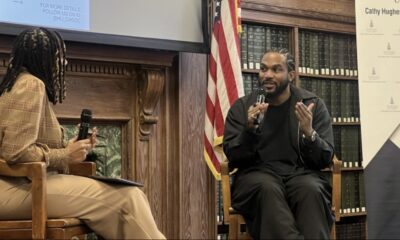
Kickstarter CEO Everette Taylor Shares Tips on Creating and Growing a Business
-

 Black History1 week ago
Columbus’s Oldest Businesses Still Open: 10 That Have Lasted 75+ Years
-

 Black History1 week ago
COMMENTARY: BIG MAMA SAID: Don’t Throw Away the Gift Just Because It Came Wrapped Wrong
