
Government
Lake Calhoun renaming heads to MN Supreme Court
MINNESOTA SPOKESMAN-RECORDER — In its ruling Monday, the Minnesota Court of Appeals reversed the Minnesota Department of Natural Resources’ (DNR) January 2018 approval of Hennepin County’s request to rename Lake Calhoun as Bde Maka Ska.


In its ruling Monday, the Minnesota Court of Appeals reversed the Minnesota Department of Natural Resources’ (DNR) January 2018 approval of Hennepin County’s request to rename Lake Calhoun as Bde Maka Ska.
Today the DNR has announced that it will appeal the Minnesota Court of Appeals’ decision. The DNR will submit its petition for review to the Minnesota Supreme Court by May 29.
According to Minnesota DNR Commissioner Sarah Strommen, “DNR is very concerned with the implications of the Appeals Court’s ruling for our ability to work with county boards to reflect community standards in how the state’s waters are named. We have long worked with counties in eliminating offensive or derogatory names.
“We are also concerned with another aspect of the Appeals Court’s decision. Specifically, it opens the door for people to challenge a range of final agency decisions well after established appeals periods. This presents the potential for considerable disruption in the normal order of government decision making.”
DNR based its approval on the longstanding understanding of its authority under relevant state statute, the fact that Bde Maka Ska meets all state naming criteria and the fact that Hennepin County met all public process and other procedural requirements in asking DNR to approve the name change request.
—Information provided by the Minnesota Department of Natural Resources
This article originally appeared in the Minnesota Spokesman-Recorder.











Black History
Black Women’s Roundtable Unveils Its First 100 Days Federal Policy Agenda Priorities & Congratulates Congressman Hakeem Jeffries on Historic House Speaker Nomination
BLACKPRESSUSA NEWSWIRE — Developed under Campbell’s leadership, the BWR’s Policy Priorities draw from the Black Women’s Roundtable 2027 Federal Policy Agenda. They translate Black women voters’ concerns into specific legislative demands and a clear standard for holding newly elected members and returning lawmakers accountable.
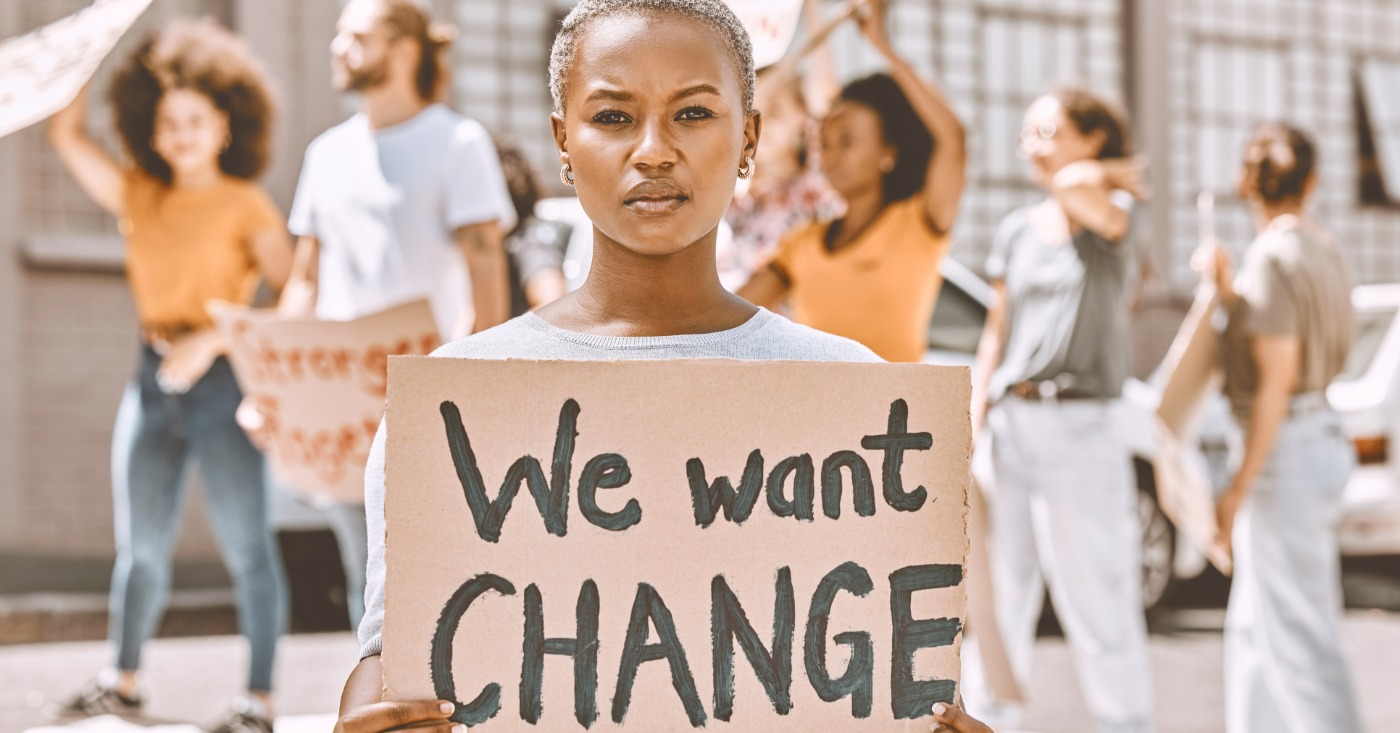
“Black Women Didn’t Just Mobilize to Change Who Holds Office. We Organized to Change What Government Delivers”
Grounded in the 2026 Power of the Sister Vote Poll, BWR Outlines Seven Congressional Priorities Addressing Black Women Voters’ Concerns About Economic Security, Health Care, Voting Rights and Opportunities
Following the House Democratic Caucus’s nomination of Hakeem Jeffries for speaker, bringing him one step closer to becoming the first Black American to lead the U.S. The House of Representatives, the Black Women’s Roundtable today released its sevenpriorities for the first 100 days of the 120th Congress. The full House will elect its speaker when the new Congress convenes in January 2027. The BWR is the women and girls’ empowerment arm of the National Coalition on Black Civic Participation (NCBCP).
“For Black women who organized, mobilized their communities and helped elect the incoming Congress, the prospect of the nation’s first Black speaker carries profound historical significance, and an opportunity to turn representation into results,” states Melanie L. Campbell, NCBCP president and CEO and National Convener of the Black Women’s Roundtable.
Developed under Campbell’s leadership, the BWR’s Policy Priorities draw from the Black Women’s Roundtable 2027 Federal Policy Agenda. They translate Black women voters’ concerns into specific legislative demands and a clear standard for holding newly elected members and returning lawmakers accountable.
Working alongside state affiliates and coalition partners, NCBCP and the Black Women’s Roundtable led a multigenerational GOTV & Democracy Defense Campaign to engage and mobilize thousands of Black voters and protect access to the ballot across The South and in key states including: AL, FL, GA, MI, MS, NC, OH, PA, and SC (see www.UnityCampaign.org).
Black women helped mobilize voters and shape the outcome of the 2026 Midterm Elections. Now, they are sending a clear message to elected officials on a national, state and local level: Deliver on the issues that matter to our families and communities or answer to the voters who put you there.
The BWR Policy Priorities are informed by the The 2026 BWR Power of the Sister Vote Poll, a national survey of 1,000 registered Black women voters conducted during the 2026 midterm cycle. The findings underscore the urgency: 47% identified protecting the social safety net as a top federal priority, 43% cited rising prices, and 31% prioritized lowering health care and prescription drug costs.
Building on its nationwide voter mobilization and democracy protection efforts, NCBCP and BWR are now turning that organizing power toward holding elected officials accountable.
“Today’s vote brings Hakeem Jeffries one step closer to becoming the first Black speaker of the House – a historic milestone built on generations of struggle for representation and the organizing that Black women carried into this election,” said Melanie L. Campbell, NCBCP president and CEO and national convener of the Black Women’s Roundtable. “We recognize the significance of this moment, and we intend to build on it. Black women didn’t just mobilize to change who holds office. We organized to change what the government delivers.”
THE SEVEN PRIORITIES: WHAT BLACK WOMEN EXPECT FROM CONGRESS
NCBCP and BWR are calling on the 120th Congress to:
- Protect the Social Safety Net: Reverse Medicaid and SNAP cuts and protect Social Security and Medicare.
- Lower the Cost of Living: Expand the Child Tax Credit, increase affordable housing opportunities and address policies driving up family costs.
- Make Health Care Affordable and Save Black Mothers and Babies: Restore ACA tax credits, lower prescription drug costs, expand postpartum Medicaid coverage and protect maternity care.
- Create Jobs, Raise Wages & Expand Business Opportunities: Invest in job creation and apprenticeships, establish a $25 federal minimum wage, end the subminimum wage for tipped workers, advance paid family leave and expand access to entrepreneurship, small business development capital and federal contracting and procurement opportunities.
- Protect Voting Rights and Defend Democracy: Pass the John R. Lewis Voting Rights Advancement Act and the Freedom to Vote Act, protect ballot access and reject legislation that threatens voting rights.
- Reduce Gun Violence and Keep Communities Safe: Advance common-sense gun safety legislation, police accountability and protections for survivors of domestic violence.
- Combat Racism and Protect Equal Opportunity: Protect Black women and girls, defend civil rights and lawful diversity, equity and inclusion initiatives, and advance equal opportunity.
The broader federal policy agenda also calls for repealing the One Big Beautiful Bill Act, reversing cuts to federal programs and services, protecting federal workers and advancing economic, environmental and racial justice.
On immigration, Congress should provide no additional funding for U.S. Immigration and Customs
Enforcement (ICE). It should instead redirect the $75 billion the Department of Homeland Security received for ICE through 2029 toward addressing the affordability crisis and require the Department of Homeland Security to enforce civil rights protections.
The message to Congress is unmistakable: Black women did not mobilize simply to change who holds office. They mobilized to change what the government delivers.
Read the full Black Women’s Roundtable 2027 Federal Policy Agenda:HERE
About NCBCP: The National Coalition on Black Civic Participation (NCBCP) is a nonpartisan, nonprofit organization that, for 50 years, has worked to increase civic engagement and political participation in Black communities. Through its national network of organizations and grassroots partners, NCBCP strengthens civic leadership, promotes voter participation and advances policies that support equity and opportunity.
About the Black Women’s Roundtable: The Black Women’s Roundtable (BWR) is the women and girls’ empowerment arm of NCBCP. BWR brings together Black women leaders and organizations to advance civic engagement, economic security, leadership development and public policy priorities impacting Black women, girls and their families.
Black History
PRESS ROOM: Donalds Transition Website Now Open to All Floridians Who Want to Serve
BLACKPRESSUSA NEWSWIRE — Governor-elect Byron Donalds and Lieutenant Governor-elect Bryan Avila are looking for talented, mission-driven people from every corner of Florida to help carry out the agenda voters approved this month.
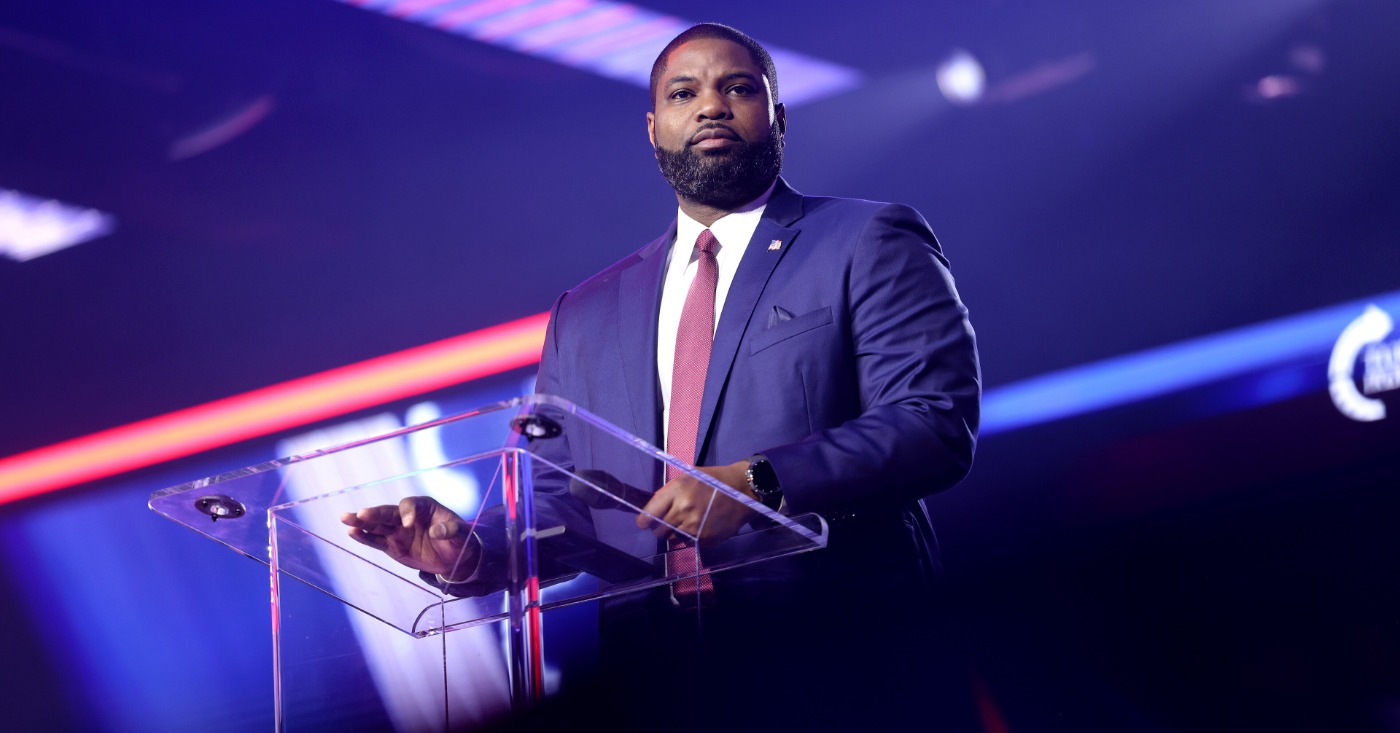
The Donalds-Avila Transition Team has announced that its official transition website is now open for anyone who wants to apply to serve in the incoming administration.
Governor-elect Byron Donalds and Lieutenant Governor-elect Bryan Avila are looking for talented, mission-driven people from every corner of Florida to help carry out the agenda voters approved this month.
Through the website, Floridians can:
Apply for positions across state agencies and the Executive Office of the Governor
Volunteer for boards and commissions
Share ideas on how to keep Florida the freest, safest, and most affordable state in the nation
“Florida’s best days are ahead, and building this administration starts with our greatest strength: our people,” said Governor-elect Byron Donalds. “We want the hardest-working, most committed people in this state on our team. If you’re ready to serve, we want to hear from you.”
Applications are being accepted on a rolling basis. Interested applicants are encouraged to apply early at DonaldsTransition2026.com
Black History
Black Barbershops Have Long Given Neighborhood Politics a Place to Unfold.
BLACKPRESSUSA NEWSWIRE — For generations, Black barbershops have served as more than just places for grooming; they have functioned as essential hubs for political debate, neighborhood news, and civic connection. During the era of segregation, these community-owned spaces provided a rare environment where Black residents could gather freely to discuss matters affecting their daily lives.
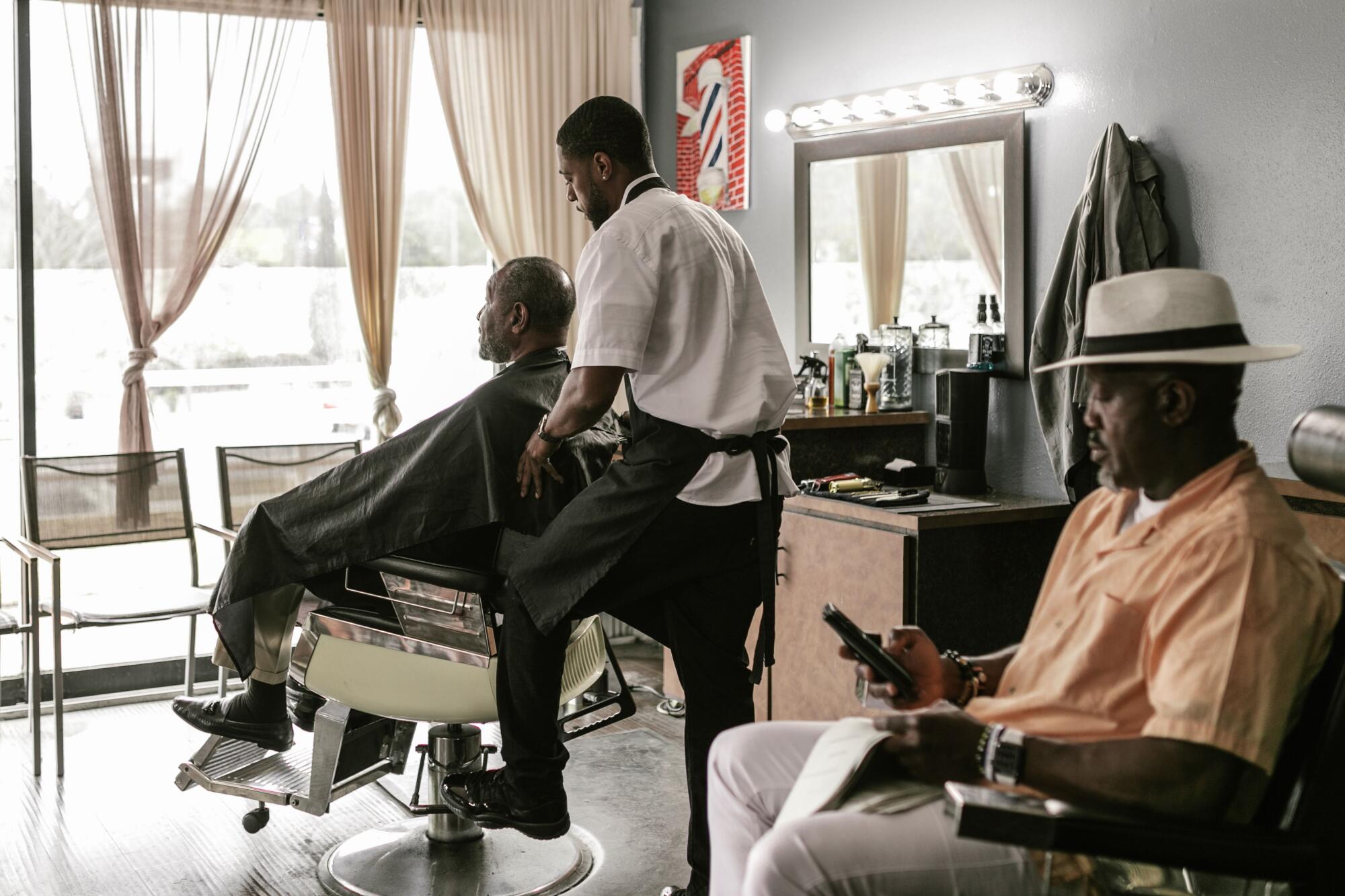
Black barbershops offer space for political debate, neighborhood news, and civic ties. The black barbershop also preserves local stories often missing from official records.
A haircut might bring you through the door. A conversation about a school closing, a city election, or a struggling business might keep you there. Inside a neighborhood shop, people can challenge opinions without needing a microphone.
A familiar storefront can hold decades of public life. Studying its past reveals people who earned a living, debated decisions, and helped neighbors interpret events.
Why Have Black Barbershops Been Important to Their Communities?
An African American barbershop has often combined a practical service with a gathering place. Under segregation, Black residents faced barriers in many public settings. Community-owned shops could offer more room for conversation and connection.
The National Museum of African American History and Culture describes barber and beauty shopsas places where customers discuss matters affecting their lives. Regular visits built relationships across generations.
Barbers often knew which families needed help or which businesses had opened. Waiting customers heard different viewpoints.
The importance of the shop came from trust built over many ordinary visits. A young customer might meet an older neighbor who understood the area’s past. Such relationships gave local conversations staying power and helped turn a routine appointment into a shared community experience.
How Did Black Barbershops Become Places for Political Discussion?
Politics often started with questions about rent, schools, jobs, or fair treatment. Customers connected those problems to elected leaders.
A University of Chicago report examined conversations inside a South Side Chicago shop. Researchers found that patrons debated:
- Political power
- Economic choices
- Leadership
They also disagreed with one another. A black barbershop did not require agreement. Customers could test ideas against those of neighbors.
Some shops supported voter registration and civic groups through personal relationships. Notices on counters or conversations with regulars could bring public issues into daily life. Yet lively debate was not the same as organized activism, and each shop had its own culture.
Black Barbers Built Businesses That Reached Beyond Haircuts
Enslaved and free Black men worked as barbers when many trades were restricted. Ownership later gave some black barbers a path toward greater financial independence, even under unfair laws.
Alonzo Herndon offers one example. According to the Georgia Historical Society, he operated Atlanta barbershops, including the Crystal Palace, and later built a major insurance business. His shops served white customers, reflecting segregation and unequal access.
Herndon’s success was unusual. Black business owners could still turn skilled work into jobs and property. Not all black companies grew large. Neighborhood shops kept commerce local.
Owners also faced rent, competition, and the challenge of building a steady customer base. Their business records can reveal how Black enterprise survived major shifts in the local economy.
Photographs and Newspapers Reveal Neighborhood History
Shop photos show storefront signs, neighboring businesses, clothing, and names painted on windows. Those clues help date images.
City directories can connect a shop name to an address, while maps show whether its block later changed. Each clue adds a piece to neighborhood history without requiring a famous owner or landmark.
Next, try the Library of Congress’s Chronicling America resources. Historic newspapers hold:
- Ads
- Openings
- Local events
- Owners’ names
Older records may use dated language. A useful starting checklist includes:
- Shop names and former street addresses
- Advertisements and business listings
- Photographs with dates or handwritten notes
- Local reporting about civic meetings
Compare records. An ad can confirm a shop’s address, not what customers discussed. Good neighborhood history separates documented facts from personal memories.
Customers’ Memories Fill Gaps in the Public Record
Customers may remember an owner’s nickname. Former barbers can explain busy hours or changes after a nearby factory closed.
Ask about routines and memorable events. Distinguish firsthand knowledge from secondhand stories.
When possible, interview more than one person. Different memories may show how workers and customers experienced the same event.
A recording can be useful, but permission comes first. Explain whether an interview will be shared publicly, kept privately, or donated to a library. Take note of:
- The date
- Place
- Speaker’s preferred name
Differences between memories are clues worth checking, not reasons to dismiss an account.
Modern Grooming Changes, but the Community Role Remains
Today’s African American barbershop operates amid appointment apps and new grooming services.
Some men also explore treatments beyond conventional haircuts. Many who are comparing long-term hair reduction with other grooming choices can learn more here.
A shop’s social value goes beyond its services. Many black barbers still:
- Listen to customers
- Pass along local information
- Create space for people of different generations to meet
The work of black business owners remains part of the wider story of black companies and community investment.
Frequently Asked Questions
How Can You Tell Whether an Old Barbershop Moved?
Start with city directories from several years. Match the owner’s name, phone number, and shop name at each address.
Property records or historical maps may show whether a street was renamed or a building was replaced. Moves may reflect development or shifting customers. Record each address and source.
Can You Share a Historic Barbershop Photo Online?
Owning a print does not guarantee copyright. Identify the:
- Photographer
- Date
- Source collection
A library may allow research access while limiting reuse. Copyright rules can vary by image and age, so avoid assuming that an old photo is free to publish.
Ask about permission when rights remain unclear. Credit the photographer and people pictured when their names are known. Respect requests from families who prefer sensitive images to remain private.
How Can You Preserve a Shop’s History After It Closes?
Collect photos, business cards, notices, and interviews. Label digital files and protect originals.
A local library, historical society, or community archive may help preserve the collection. Include the stories of workers and customers, not only the owner.
Public access can keep a vanished storefront connected to the people who remember it. A short exhibit or digital collection can help younger residents discover that history.
Keep the Black Barbershop Story Alive
A black barbershop can hold pieces of a town’s political, economic, and cultural history. Preserving those pieces starts with listening carefully and checking the record.
Continue exploring our other guides and articles for more stories about Black history, local businesses, and the communities they serve.
Content provided through ContentManagerIO.
Black History
California Legislative Black Caucus Grows to 14, Women Hold 12 Seats
SAN DIEGO VOICE & VIEWPOINT — SAN DIEGO VOICE & VIEWPOINT — The California Legislative Black Caucus (CLBC) is preparing for a historic expansion following the Nov. 3 general election, with its membership set to grow from 12 to 14 members. This shift marks a significant milestone for political representation in the state, as Black women are expected to hold 12 of the 14 seats in the upcoming legislative session.
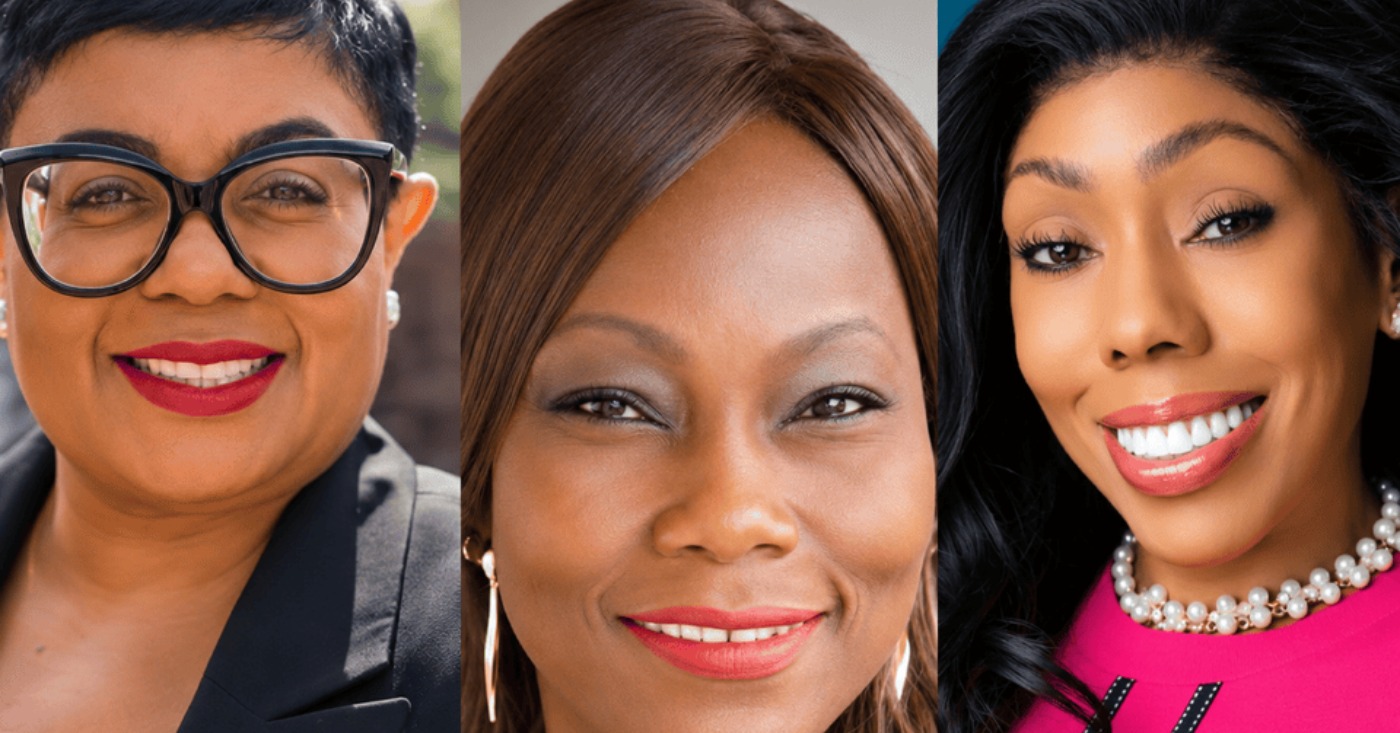
The California Legislative Black Caucus (CLBC) is preparing for a historic expansion, growing from 12 to 14 members following the Nov. 3 general election.
Black women are expected to hold 12 of the caucus’s 14 seats. The shift marks a significant milestone for Black women’s political representation in California and creates new opportunities to influence legislation, state resources and public policy.
Three incoming assemblymembers — Ayanna Davis (D-Compton), Jackie Elward (D-Rohnert Park) and Paula Swift (D-Westminster) — are expected to join the caucus when the new legislative session begins. Their victories, coupled with the departure of longtime Assemblymember Mike Gipson (D-Carson), will reshape the caucus’s membership and further elevate the role of Black women in the Legislature.
Davis, who won the 65th Assembly District seat representing Compton and surrounding communities, previously served on the Compton Unified School District Board of Education. An educator and former school principal with the Los Angeles Unified School District, Davis has focused much of her public service on education and opportunities for children and families. She will succeed Gipson, who is leaving the Legislature because of term limits.
Elward, who won the 12th Assembly District race in the North Bay, is a first-generation immigrant from the Democratic Republic of Congo. An educator, labor organizer and former mayor of Rohnert Park, she became the first Black woman elected to the city’s council in 2020. Her local government experience included policy related to affordable housing, homelessness and environmental justice, among other issues.
Swift defeated Republican incumbent Tri Ta in the 70th Assembly District race in Orange County. An educator and small business owner with a doctorate in Organizational Change and Leadership from the University of Southern California, Swift brings experience across nonprofit, government and private-sector organizations.
Although Davis replaces Gipson, Elward and Swift add two seats to the caucus, bringing its membership to 14. With all three incoming members being women, the caucus will move from nine women among its current 12 members to 12 women among next session’s 14 members.
The achievement builds on a milestone reached at the beginning of the 2025-26 legislative session, when women first became the majority of the CLBC. At that time, nine of the 12 members were Black women, the highest number in the organization’s history.
For LaNiece Jones, state president and CEO of Black Women Organized for Political Action (BWOPA-CA), the election results reflect generations of organizing and advocacy that have helped create opportunities for Black women in politics.
“We are celebrating an exciting moment for Black women’s political leadership across California. From local and regional offices to statewide leadership, these victories represent generations of Black women who have organized, advocated, mentored and opened doors for others to follow,” Jones told California Black Media (CBM).
Jones emphasized that electoral victories must translate into tangible improvements for Black communities.
“Winning elections is an important milestone, but building and sustaining political power is the greater mission. Representation must translate into meaningful influence, equitable policies, expanded opportunities, and tangible improvements in the lives of Black women, families, and our communities,” she said.
Jones also pointed to persistent barriers facing Black women seeking political leadership, including campaign financing, access to political networks, institutional support and opportunities for advancement.
The challenges extend beyond electoral politics, according to Black women leaders.
The 2025 State of Black Women in California Report, published by the California Black Women’s Collective Empowerment Institute (CBWCEI), founded by Kellie Todd Griffin, documents persistent disparities in economic opportunity and social outcomes for Black women. Its findings reinforce the importance of ensuring that increased political representation addresses issues such as economic mobility, housing stability, health care and opportunities for Black women and girls.
“The number of Black women elected to public office across California in 2026 represents more than electoral victories.” said Todd Griffin, who is also president and CEO of CBWCEI.
“From city halls and school boards to the State Capitol and beyond, Black women are claiming their rightful place at decision-making tables,” continued Todd Griffin. “Every victory expands representation, strengthens our communities, and opens doors for the next generation of leaders. When Black women lead, California’s democracy grows stronger.”
The caucus is also preparing for a leadership transition. State Sen. Dr. Akilah Weber Pierson (D-San Diego), its outgoing chair, will pass the leadership position to Assemblymember Corey Jackson (D-Moreno Valley) for the 2027-28 legislative session.
In August, the caucus announced its incoming executive leadership team. State Sen. Laura Richardson (D-Inglewood) will serve as vice chair, Assemblymember LaShae Sharp-Collins (D-San Diego) as secretary, and Assemblymember Mia Bonta (D-Oakland) as treasurer.
Reflecting on her tenure, Weber Pierson said she was proud of the caucus’s work both inside and outside the Capitol.
“Serving as chair of the California Legislative Black Caucus has been an incredible honor. I am proud of the difference we have made not only through legislation, but by showing up in our communities and creating meaningful change for Black Californians,” Weber Pierson said in the caucus’s August announcement.
Founded in 1967, the CLBC was established to give Black lawmakers a unified voice in California government. Over nearly six decades, the caucus has helped advance legislation addressing racial equality, economic security, health care and criminal justice.
For BWOPA-CA, which has spent more than five decades developing Black women leaders and strengthening civic participation, the moment represents both progress and responsibility.
“Our success is not measured simply by how many seats we win, but by how many doors we open, how much opportunity we create, and how effectively we use our collective power to advance our communities,” Jones said.
Based on reporting by San Diego Voice & Viewpoint.
Black History
Ramon G. Griffin: A Morehouse Man on a Mission
WASHINGTON INFORMER — Ramon G. Griffin, an African-American history instructor at Thurgood Marshall Academy Public Charter School in Southeast D.C., was recently named the 2027 D.C. Teacher of the Year.
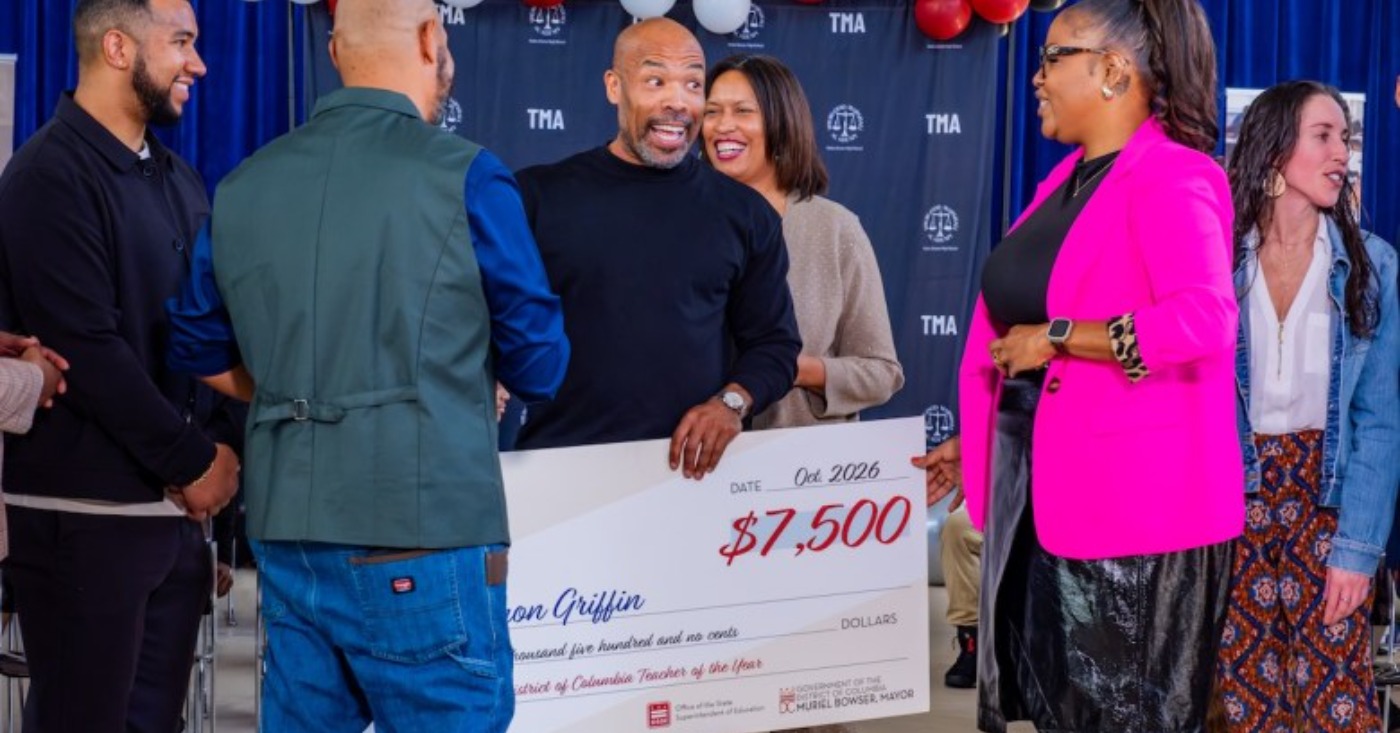
Shortly after becoming 2027 D.C. Teacher of the Year, Ramon G. Griffin appeared on WHUR 96.3 FM, where his story reached thousands of listeners, including a mother who he said later wrote him a two-page letter in request of guidance for her teenage son.
“I look forward to reaching out to her and assisting her in that process and that goal,” said Griffin, an African-American history instructor at Thurgood Marshall Academy Public Charter School in Southeast. “The meaning of this Teacher of the Year award is that I am able to have a voice and representation on a larger scale so that others can be inspired and so that I can help individuals. It’s my objective to work more closely with young teachers to aid them in their skill set, to make sure our children are being educated properly and effectively.”
On Oct. 26, D.C. Mayor Muriel Bowser — flanked by D.C. State Superintendent Dr. Antoinette Mitchell, Ward 8 D.C. State Board of Education Representative Dr. LaJoy Johnson Law, and others — announced Griffin as 2027 D.C. Teacher of the Year during what several students, faculty and staff at Thurgood Marshall Academy PCS thought was an assembly organized in celebration of the school’s 100% college acceptance rate since its inception.
“In my spirit, I can honestly say I knew I won,” Griffin told The Informer. “When she switched it up and said ‘I’m here for a teacher,’ the first thing that came to mind was that this may be it. Then she stated a quote from a documentary that was done on me last year, and she stated where I originate from, and I said I’m about to be awarded D.C. Teacher of the Year. That’s when it set in.”
Griffin, a self-described griot, has 13 years of teaching under his belt, seven of which have been at Thurgood Marshall Academy PCS. That’s where he currently serves as an instructor of AP African-American Studies and African American History through Film and Music. Both courses, he told The Informer, allow him to engage students in storytelling.
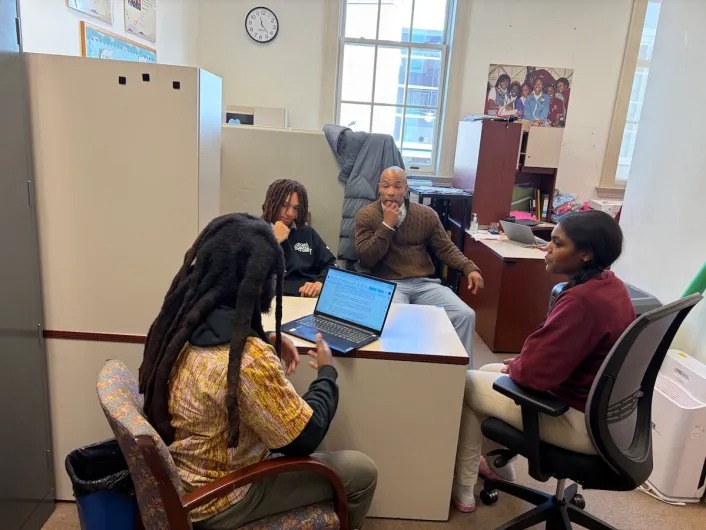
Within a couple of months, Griffin’s endeavor to shape the minds of youth continues when Thurgood Marshall Academy PCS hosts yet another “Morehouse Day.” This event, held at several District schools, connects male students with members of the Morehouse Alumni Association Washington, DC Chapter, many of whom graduated from District public and public charter schools before pursuing higher education.
“We have Morehouse men who come in: those who are elders to me, those who were there during my tenure and those who are younger,” said Griffin, a member of Morehouse’s Class of 1998 and key influence in at least three Thurgood Marshall Academy PCS alumni’s matriculation to the HBCU. “What it shows is that we as Black men are not what they portray in the news. We’re not about bringing each other down. We’re about standing out, building, and making sure that our race is looked upon proudly, not for others, but for self and for the next generation.”
An Inside Look: ‘Morehouse Day’ at Thurgood Marshall Academy PCS
The upcoming “Morehouse Day” at Thurgood Marshall Academy PCS is scheduled to take place on Jan. 15, which would’ve been the 98th birthday of Morehouse alumnus the Rev. Dr. Martin Luther King Jr. This intergenerational gathering also happens around the same time that Howard University men’s basketball team plays its home game against Morehouse College.
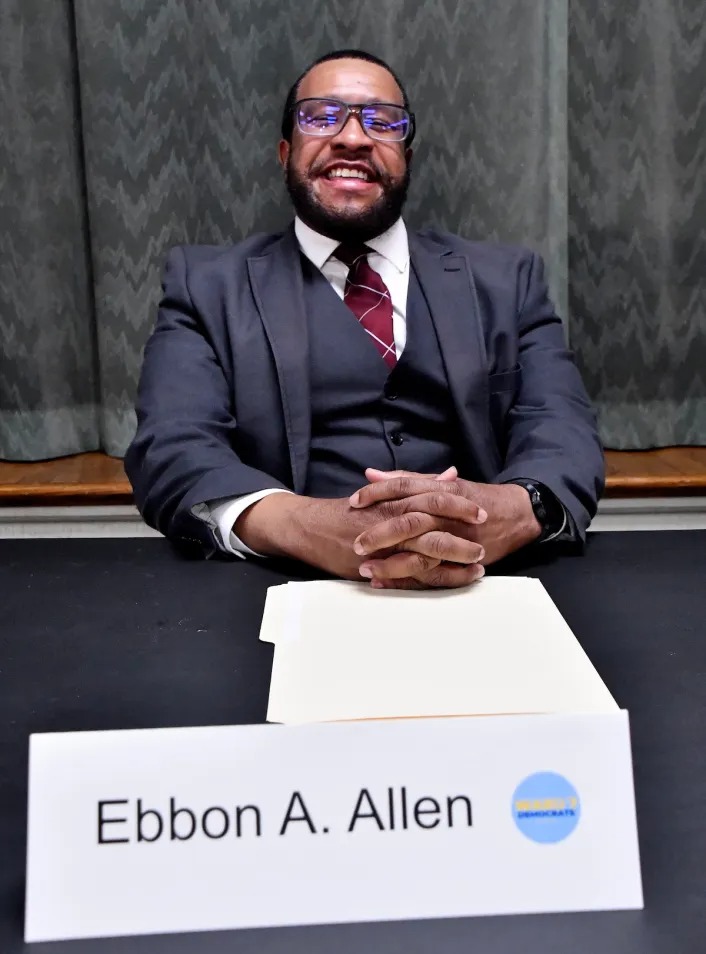
For Morehouse alumnus and “Morehouse Day” brainchild Ebbon Allen, it was a perfect storm that only Griffin could help make happen.
“Before we even knew that Ramon was going to be awarded and honored, we’ve been on ‘Morehouse Day’ as teammates for the last two years,” Allen told The Informer. “We definitely had a meeting within the last two or three months to designate ‘Morehouse Day’ for MLK’s birthday weekend. Ramon just shows the epitome of a Morehouse man: well-versed, well-traveled, and definitely educated.”
Speaking more about his fellow Morehouse alumnus, Allen said that Griffin has long put in the work to boost college enrollment among young Black men.
“He’s had a lot of young men going to attend Morehouse College,” Allen told The Informer. “We’re still trying to work on a pipeline to send more young men from Thurgood Marshall Academy down to Atlanta.”
Since the inception of “Morehouse Day” in 2021, Allen and other members of the Morehouse Alumni Association Washington, DC Chapter have spoken to more than 2,000 young men attending: Calvin Coolidge High School; Dunbar High School; Eastern Senior High School; Friendship Technology Preparatory High School; H.D. Woodson High School; Kelly Miller Middle School; and Ron Brown College Preparatory High School.
The upcoming “Morehouse Day” at Thurgood Marshall Academy PCS will be the second seminar of its kind on school grounds. Allen said that students will delve into violence prevention, entrepreneurship, college and career readiness, and the scholarship application process. His goal, he said, centers on providing them space to imagine how to achieve their dreams.
“We wanted young Black men to understand that they can learn about self-advocacy and learn the value of being a Black male in today’s society,” Allen told The Informer. “There’s going to be a new [mayoral] administration so our young men need to get well-versed and become well-educated about their rights and the opportunities to create a space of learning about strong advocacy.”
Allen, who followed in his three uncles’ footsteps to attend Morehouse College, credited the HBCU with exposing him to the different caliber of Black men. He told The Informer that, like him and other Morehouse men, Griffin has embedded in him a passion for working hard and laying a foundation for those coming after him.
“Ramon Griffin sets the bar for other Black male educators about how much of an impact and difference they can make,” Allen told The Informer. “By coming to Thurgood Marshall Academy in Southeast Washington, D.C., he’ll make more young Black men…find out what it takes to get back in a positive light. You don’t always have to be an entertainer. You don’t always have to be in athletics, but you can take an education pathway and still be awarded for your service, commitment and dedication.”
Out of the Mouths of Babes
C’khai Morgan, a senior at Thurgood Marshall Academy PCS, said he counts Morehouse College among his top choices for business management and human resource management, thanks to Griffin.
“He literally embodies the meaning of a Morehouse Man,” C’khai told The Informer. “You go in any classroom he ever had, you’re going to see something Morehouse. You catch him on a good day, he’s probably wearing a Morehouse sweater.”
C’khai, who also applied to Fayetteville State University, North Carolina Agricultural & Technical State University, and Temple University in Philadelphia, was a student in Griffin’s AP African-American Studies course last school year. On his way to scoring a 4 on the Advanced Placement exam and clinching college credits, he participated in Thurgood Marshall Academy PCS’ “My Brother’s Keeper” program, where he got to learn more about the man he now regards as an uncle.
“I started seeing a different side of Mr. Griffin that I never heard of,” C’khai said. “He always wants the best for somebody, but other students who lack maturity or just lack the understanding of his purpose would be like ‘Mr. Griffin be trying hard. He be pressed to get somebody in trouble.’ It reminded me that you can’t let somebody else’s opinions refer to someone as such.”
Students who take Griffin’s African-American History through Film and Music course take a trip through the Jim Crow, the Great Migration, and Harlem Renaissance, among other time periods, to understand how the blues genre originated from Africa, came into form during enslavement, and traveled with African Americans who moved into northern U.S. cities.
Although Griffin has a curriculum, he often deviates from it, as Thurgood Marshall Academy PCS student Kailani Marshall noted, by recounting his family history. She told The Informer about learning African-American history through stories of Griffin’s grandmother who migrated from Mississippi to Detroit, where he was born and raised.
“He makes sure that students actually retain the information and it’s entertaining as well,” said Kailani, a senior who hopes to study sociology either at Georgetown University, Howard University, Spelman College, or Temple University. “I can’t say that about a lot of classes. The way he teaches really allows students to understand topics fully.”
During her junior year, Kailani took Griffin’s AP African-American Studies and African-American History through Film and Music courses. She, too, scored a 4 on her AP exam, due to what she called Griffin’s demand for excellence.
“You can’t be mediocre. It’s not an option,” Kailani said about Griffin. “He’s passionate about instilling confidence and success into students. You can’t say that about a lot of teachers. He really is one of the few teachers who actually care for their students and care for their future.”
During Griffin’s first year of teaching AP African-American Studies at Thurgood Marshall Academy PCS, 87.5% of his students passed the AP exam. This feat follows other achievements at Dunbar High School, where he directed climate and culture, and at Kingman Academy Public Charter School, where he served as a founding member.
Even with Thurgood Marshall Academy PCS’ 100% college acceptance rate, Griffin acknowledged that it takes great effort to earn a bachelor’s degree. That’s what he said he emphasizes to his students as he shares his coming-of-age story and integrates writing and math enrichment into his assignments.
“You don’t want to be a 20-year-old counting on your fingers. You don’t want to be a 20-year-old starting a sentence and ending it at the end of the page with one period,” Griffin said. “You just have to put in the work, and I give them examples of times during my high school years and during my college years. Whatever you want in life, you can have. You definitely will accomplish it, but you have to have a plan. It’s not going to be given to you.”
Based on reporting by Washington Informer.
Black Press
‘It’s as if He Doesn’t Exist’: In Mississippi, People Jailed Months Without Formal Charges
TEXAS METRO NEWS — In the capital city of Jackson, Mississippi, hundreds of defendants remain behind bars for months or even years without being formally charged with a crime. A new investigative analysis has revealed a systemic crisis in Hinds County, where individuals are often stuck in an indefinite legal limbo known as “unindicted” status.
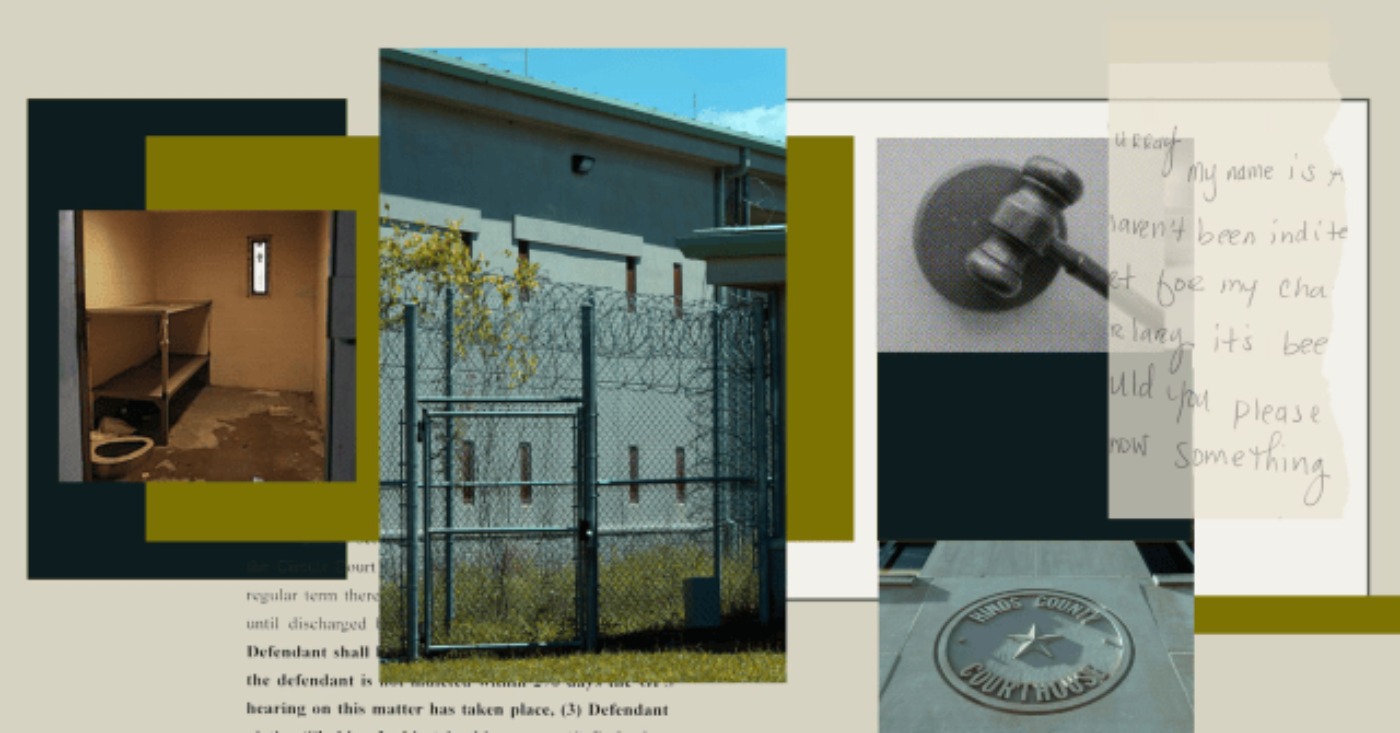
In the capital city, hundreds of defendants wait in jail for an indictment, sometimes as long as a year or more.
When Vicki Sands learned that her son, Carson, was in a county jail near Jackson, Mississippi, more than 600 miles away from her home in North Carolina, she felt, at first, a strange kind of relief.
Months before his arrest, he left Asheville, launching on a road trip with a new acquaintance he had met in the mountain city’s street-life scene. The journey had ended with a falling out in the Deep South that left Carson homeless.
“I was glad he was off the streets,” said Vicki Sands in an interview with The Marshall Project. “I was glad he was out of the woods.”
ADVERTISEMENT
That feeling didn’t last long.
Since an initial appearance before a judge on Nov. 3, just days after his Halloween night arrest last year, Carson Sands has not been inside a courtroom again. No attorney has requested a preliminary hearing or filed a motion to reduce his $300,000 bond on charges stemming from an alleged gas station robbery. There’s been no routine status conference where a judge might probe the reason for delays and prod prosecutors to move things along. He has not been indicted, convicted, or sentenced — but is stuck in an indefinite legal limbo.
“It’s as if he doesn’t exist,” his mother said.
As of June 30 of this year, Sands was one of 131 people being held for more than six months without an indictment: 56 of whom had been held for more than a year, an analysis by The Marshall Project found.
This article was published in partnership with The Howard Center for Investigative Journalism, an investigative reporting unit and early-career journalism training program based at the University of Maryland Philip Merrill College of Journalism, which is supported by the Scripps Howard Foundation.
ADVERTISEMENT
Such long periods of pre-trial incarceration with no formal charges from a prosecutor are almost unheard of in many other parts of the country, where prosecutors are given a limited amount of time to indict before a defendant must be released — 40 days in Florida, 60 days in Louisiana. In fact, Mississippi is one of only six states with no limits at all, according to a 2023 law review analysis.
In all, almost half of the people in custody at the end of June who had been held for at least 30 days on felony charges were not indicted, the analysis found.
State and local officials have argued and deflected blame about slow-moving criminal cases, backlogs and people literally getting lost in jail for years. A labyrinth of record systems, and questions about their accuracy, has often stymied those conversations. The Marshall Project’s findings are the first of their kind to be released publicly.
Critics say the analysis raises serious questions about whether the court system is depriving individuals of their constitutional right to due process before taking away their liberty.
Those critics include Brad McCullouch, a Hinds County assistant district attorney who was promoted to interim officeholder in July by the state’s governor.
ADVERTISEMENT
He went so far as to compare time spent in jail by some Hinds County prisoners to detention practices seen under authoritarian governments.
“This is not what we do as a country,” McCullouch said. “It’s not based on constitutional principles.”
McCullough touted his efforts to put more resources toward the grand jury process and to help secure the release of people from custody where he thinks appropriate. But he can’t run in next Tuesday’s special election because he doesn’t live in Hinds County, and is in office at most about six more weeks.
One of the five people running to replace McCullouch will help determine whether anything changes. Several have promised reforms, while others have not made it a central focus of their campaign.
Meanwhile, for Carson and others, the wait continues.
ADVERTISEMENT
“Lost in the System”
Carson Sands’ journey into legal purgatory began on Halloween night 2025, when he walked into a Jackson gas station near LeFleur’s Bluff State Park. Far from home, he’d marked his 31st birthday just days earlier, on the streets and huddled in the woods.
Sands placed a water, an energy drink, and a Cayman Jack beverage on the counter. The clerk told him he couldn’t use an EBT card for the alcohol, according to a police report written later. In a scene captured on security video, police said Sands pulled a can of bear spray from a backpack he was wearing. He put the items into the backpack, threatened to rifle through the cash register, and then displayed a knife on his way out of the store with the drinks.
A Capitol Police officer found Sands and arrested him not far away, in some woods near a baseball field.
An arrest like this is only the beginning of a criminal case. In most jurisdictions, a prosecutor must next consider the charges lodged by law enforcement and then decide whether to pursue formal charges in court. In Mississippi, district attorneys must obtain an indictment from a grand jury to prosecute someone for a felony.
During Sands’ initial — and only — court appearance, on Nov. 3, the judge ruled that he would need to post a secured bond of $300,000 to be released from jail while waiting for the next steps in his case. Using a bondsman, that would typically require a cash payment of about $30,000 — a sum he doesn’t have the means to pay.
The inability to pay does not necessarily lead to indefinite detention in many other states. Instead, after a certain amount of time, people in these states can ask a judge to reduce their bond or to outright release them from jail without having to pay any cash.
In Texas, after 90 days, Carson Sands could have asked for a lower bond or to be released without paying any money at all by the end of January.
There are constitutional reasons that many states put time limits on pre-trial detention, but also practical considerations. When a case stalls waiting for an indictment, victims must wait for resolution to their cases. Evidence can go stale or even be missing, making it harder for prosecutors to win a once solid case or for the accused to defend themselves. Defendants with few financial resources, like Sands, are forced to sit out the long wait times in a dangerous jail, while defendants with greater financial means get to spend that time at home.
This gray zone of detention without legal limits sits at the intersection of multiple dysfunctional systems stretched beyond their limits in Hinds County — including a decrepit and deadly jail under federal receivership and a public defender’s office still reeling from a staffing and caseload crisis.
But it’s the district attorney’s office — rocked by recent scandals — that is responsible for taking cases to the grand jury to seek an indictment. It’s also the office most subject to immediate oversight by voters, through next week’s special election. The office has been operating under an interim leader since July, when the previous prosecutor, Jody Owens, resigned as part of a plea deal in a federal corruption case.
Amid this tangle, Vicki Sands has found it very difficult to determine basic facts about her son’s detention, or to discern how to help. She considered trying to file a habeas corpus petition — which can be used to challenge the basis for someone’s detention — but doesn’t even know how to start.
“Carson is simply lost in the system,” said his mother. “He hasn’t been convicted, and yet he is detained going on a year with no end in sight.”
One Day in Court
Over the course of this year, as The Marshall Project conducted its analysis, a reporter spent several days in the county court. The reporter saw a series of unindicted defendants appear before a judge for a thicket of initial appearances, preliminary hearings, bond reductions and status hearings.
Felony cases in Mississippi must move through a series of different courts that don’t always intersect. In Hinds County, the county court is a frequent venue where attorneys bring motions and arguments on behalf of defendants without indictments. But with only a single judge hearing these cases, this is a major chokepoint.
As of April 15, Carson Sands had already been jailed for almost six months. His mother worried he was deteriorating within a dangerous and overwhelming environment. The lights in the jail were always on. A TV blared. She couldn’t mail him books, which had long been a source of calm to him. She sent meditation guides and other reading material through the jail messaging system, but some of her messages were blocked.
“He does not belong in prison,” Vicki had written around this time to a reporter with The Marshall Project. “He needs behavioral health treatment. He needs support for his psychiatric needs. Instead, he is in an environment that is crushing and traumatizing him.”
Carson — yet again — did not make it onto Judge Johnnie McDaniels’ slate of felony cases that day.
But several other people did, people just like him –– arrested, jailed, and simply waiting. Court officials called the case of LaShanti Esco. She’d been arrested last August on serious charges — armed carjacking and armed robbery. She faced a $1 million bond.
As the case was called, Wendy Wilson White, an assistant district attorney, said that the proceedings were moot — the case had finally been indicted, she said, paving the way for a formal arraignment in a higher court.
But Judge McDaniels saw a problem as he flipped through the papers in front of him. He’d heard this claim before.
“It is April,” he said. “The same representation was made in January. Why wasn’t an indictment that occurred in January filed by now? What would be the explanation?”
That can sometimes happen when law enforcement can’t locate a defendant to serve the papers. But Esco had been in the county’s custody the entire time.
“I don’t know that I have an explanation,” White said.
Ultimately, the indictment wasn’t served on Esco until about five days after the hearing, according to court records. It had only been signed by a grand jury that month, not in January.
White is one of five candidates now running in a special election to be the next district attorney in Hinds County.
White told The Marshall Project last week that she will never knowingly misrepresent a case to a judge and emphasized that when handling a case in court, she sometimes has limited information immediately available to her.
“I’m representing the state, and I have to take accountability when there are shortcomings in a case,” White said.
Next up was Jeremy Jordan, arrested in August 2025 on a drug possession charge. Jordan was held without bond due to prior charges from 2022 and 2023 that were still open and not indicted.
That meant, his attorney said, that Jordan had been in jail for 237 days with three criminal charges and not a single indictment on any of them.
In at least some of the cases, the defense attorney said, prosecutors were waiting on results from the state crime lab.
“We know the issues with the state crime lab,” McDaniels said. “Surely three or four years is enough time to get something back?”
McDaniels set a secured bond for $75,000 for Jordan — still a high bond. Jordan stayed in jail for months more, and in June submitted his own motions to dismiss the case for violation of due process.
The cases continued. Adetdrick Burton had been held almost a year on a murder charge and a $1 million bond, with no indictment.
“This case has not been presented to a grand jury,” said White, the assistant district attorney. “The DA’s office is not in possession of the file. The DA’s office requires, or prefers, to have the completed investigative file.”
In response to a question from the judge, White could not say whether the file had been requested from law enforcement by the DA’s office.
“A case is not solved just because an arrest is made,” said McDaniels. “When I’m being told more than a year later that you don’t know what stage a case is at, that should be troubling to us all.”
Next up was Justin Porter, held 609 days without an indictment on home burglary charges. White acknowledged the long delay in securing an indictment, but urged caution, alleging that the burglary in question had been carried out, she claimed, as “an attempt to terrorize the victims.”
“Surely there is an explanation why a defendant charged with attempted burglary of a dwelling has been detained for 609 days without being indicted,” McDaniels asked White. “There has to be an explanation.”
“That’s definitely a good question,” White said. “I don’t know that the state is prepared to offer an explanation that would be satisfactory.”
When cases stall like this, there are several possible reasons in play. Sometimes law enforcement makes an arrest but, as White suggested in court, simply does not turn over the file to the prosecutors, leaving those prosecutors without evidence to present to a grand jury. Sometimes the case has been forgotten, and the district attorney’s office simply hasn’t asked for it. Other times, the investigation may still be ongoing, even after an arrest has been made, or officers are waiting on forensic tests or other evidence.
But even when prosecutors don’t have an explanation at hand, or when defense attorneys haven’t given a case much attention, an area’s senior circuit judge has a responsibility under the state’s rules of criminal court: They must monitor the circumstances and release conditions of people detained in the local jail.
Senior Circuit Judge Winston Kidd and McDaniels, whom Kidd has designated to oversee felony cases before an indictment, did not respond to questions from The Marshall Project about how they handle review of the jail lists.
This requirement was written to prevent people from falling through the cracks, said William Waller Jr., a retired chief justice of the Mississippi Supreme Court who helped write the state’s rules of criminal procedure.
“That was the whole purpose for it,” said Waller. “It was supposed to be a safety net to catch cases.”
A Maze of Faulty Data
A month before Carson Sands was arrested, a jail operations consultant based in Maryland named Wendell France took over management of Hinds County’s Raymond Detention Center on the order of a federal judge.
That followed a decade of litigation brought by the U.S. Department of Justice over unending constitutional violations inside the county’s jail — widespread brutality, deaths and beatings at the hands of other prisoners, rampant contraband, open sewage, and poor or nonexistent medical care.
Once France began to examine the roster of detainees, he noticed something that alarmed him: Significant numbers of people in the jail were held only based on an arrest charge, with no indictment.
He dispatched a letter to local justice system officials, including Owens, who was then the DA. A former civil rights litigator, Owens ran for office in 2019, promising to be a “decarceral prosecutor.”
“I am writing to formally request your office’s immediate attention to the status of pre-trial detainees who have been held without indictment for extended periods,” France wrote to Owens in an Oct. 10, 2025 letter. “These are not merely administrative concerns but fundamental constitutional violations that expose the county to significant legal liability.”
As he had done before when similar concerns had surfaced, Owens responded by pointing out that jail rosters supplied by local jail administration are often riddled with errors.
“I am committed to reducing the delays for criminal detainees wherever possible, but caution you that the conclusions you have drawn in your correspondence are based on inaccurate data,” Owens wrote.
Owens also warned that law enforcement agencies, and not his office, often drive delays by failing to complete investigations promptly, even after an arrest has been made. Those agencies, Owens said, do not quickly turn over files to the DA’s office and sometimes do not even notify the office of cases that are open or arrests that have been made.
Nine months later, Owens resigned as part of a plea deal with federal prosecutors on conspiracy charges involving a bribery scheme.
Not long after these letters were dispatched, an assistant district attorney was also sounding the alarm, claiming that management of the grand jury process had fallen into near complete disarray.
“Cases are lost, defendants are lost, indictments have errors, hundreds of cases have been presented to the Grand Jury but never turned in,” wrote Gwen Agho in December 2025, according to an email she provided.
Agho is also now running for district attorney in Hinds County.
Locally, the accuracy of jail and court records has been a flashpoint in long-running clashes over jail crowding and case delays. Money from the state flowed into Hinds County beginning in 2022 to help reduce a pandemic-linked backlog, but local officials could not reach consensus about where the backlog was. This disagreement was driven, in part, by jail systems, court records, and case management that don’t talk to each other, said State Public Defender André de Gruy.
He identified unindicted cases as a key problem, but acknowledged he was dealing with jail lists widely known to be faulty, with errors in case numbers and indictment status. He didn’t have the resources to laboriously correct and verify those lists line by line.
But that’s exactly what The Marshall Project did.
The news organization started with a list provided by the county of the 848 people in custody on June 30 and then excluded people who had been there for less than 30 days — which is within detention norms nationwide — as well as people held on suspected or confirmed probation violations or other kinds of post-sentencing matters. The analysis also excluded people likely being held on misdemeanor charges and those under the age of 18 when they were arrested. That left 628 held in custody while facing criminal charges.
The Marshall Project examined several thousand pages of public court records, obtained through the Mississippi Electronic Courts portal, including dockets and filings, to match public indictments or circuit court cases to people detained at the jail. Almost half did not have any.
Even those who were indicted while in jail had often waited months for it to finally happen. More than two-thirds of the people who were still waiting for an indictment on June 30, or who had been indicted while held, had gone three months or more without an indictment.
How long had people in the Hinds County jail waited for an indictment?
Hundreds of people who were in jail in Hinds County, Miss., on June 30 of this year had waited more than 30 days in custody without receiving an indictment. Most of them waited more than 90 days.

McCullouch said The Marshall Project’s analysis reached findings similar to those his staff conducted after he took over the office in July.
In a letter to France in September, he touted the role of his office in securing release for 59 people held on non-violent charges. By October, McCullouch told the county’s Board of Supervisors that number had risen to 74.
He called this the “low-hanging fruit” that needed to happen quickly to relieve pressure on the jail before a more careful sifting of cases with violent charges follows. That work will take longer, he said, because of the potential stakes for broader public safety.
In doing that careful sifting, McCullouch — and White, speaking separately about her plans if elected — also touted the significance of new funding from the county for an additional assistant prosecutor’s position.
But the maze of often-faulty data doesn’t help either, said McCullouch.
Justice system officials should have access to reliable, current data of the sort that it took The Marshall Project weeks to produce, said Andrew Davies, research director with the Deason Criminal Justice Reform Center at Southern Methodist University.
“Hinds County urgently needs better systems for tracking this information,” Davies said. “Without them, courts and jails lack the tools they need to deliver justice and treat people with dignity.”
The interlocking nature of the problem, cutting across different systems and different branches of government, means it’s hard to identify one point of failure that can be easily fixed. But it also means that there are several people empowered to push solutions or force the issue onto the agenda — including judges, legislators, and the local district attorney.
And that’s where, McCullouch said, regardless of what judges or police detectives do, or how faulty the jail data happens to be, a prosecutor has power — if they will use it.
Sometimes, he said, that means taking a case with no file to the grand jury, expecting the grand jury to decline an indictment.
So what happens next for Sands?
Earlier this month, The Marshall Project asked McCullouch about the status of the case and why there’d been such a long delay in securing an indictment.
McCullouch turned around in his chair and faced his computer — “You said Sands?” he asked, double-checking as he typed — opening the system prosecutors use to track case files submitted by law enforcement agencies.
There was nothing for Carson’s case. Just an empty screen. McCullouch told The Marshall Project he’d never heard of the case until the news outlet asked. He said his office would try to find out more and take some action.
Capitol Police turned the case file over to prosecutors the next day, according to a spokesperson for the agency.
After 349 days in jail, Sands had been found.
In this article:‘It’s as if He Doesn’t Exist’: In Mississippi, People Jailed Months Without Formal Charges
 ADVERTISEMENT

ADVERTISEMENT
You May Also Like


News
‘It’s as if He Doesn’t Exist’: In Mississippi, People Jailed Months Without Formal Charges
When Vicki Sands learned that her son, Carson, was in a county jail near Jackson, Mississippi, more than 600 miles away from her home…
Texas Metro NewsNovember 1, 2026 Advertisement
Based on reporting by Texas Metro News.



Black Women’s Roundtable Unveils Its First 100 Days Federal Policy Agenda Priorities & Congratulates Congressman Hakeem Jeffries on Historic House Speaker Nomination

Staying Ready: What Every Californian Should Know About Preparing for El Niño

Experts Convene to Make the ‘Early Connections’ that Matter for Children’s Health, Learning

PRESS ROOM: Donalds Transition Website Now Open to All Floridians Who Want to Serve

Delay Motherhood: What you need to know about egg freezing

Car Buying Tips: 5 Steps to Get a Better Deal #shorts

Massive Chevy Tahoe Interior Tour: The Cup Test Challenge #shorts

Scott Colom’s Nike Challenge Goes National, Freshman Democrats Get a Surprise 📱

Scott Colom’s Nike Challenge Goes National, Freshman Democrats Get a Surprise

MLGW offers up to $7,500 per home to help builders connect to the grid

HISTORY MADE: Keisha Lance Bottoms Becomes First Black Woman Elected Governor in American History

Secretary of State Shirley Weber Pushes Back Against DOJ Demands Over California Voter Rolls

Retirement Triggers Doctor to Pen Book for Young Audience

Capturing Black Life’s Beauty

Multi-Faith Leaders Representing 10 Million People Launch National Anti-Authoritarian Initiative

Christianity’s Racial History

Hundreds of Black Christian Leaders Arriving in Israel for Martin Luther King-Inspired Mission

Oakland Honors 60 Years of the Black Panther Party at the All Power to the People Gala

Message from the Associate Editor: Blindness, Hurts, Cops

Michael Shiner: The Enslaved Man Who Wrote His Way into American History
Delay Motherhood: What you need to know about egg freezing
Car Buying Tips: 5 Steps to Get a Better Deal #shorts
Massive Chevy Tahoe Interior Tour: The Cup Test Challenge #shorts
Scott Colom’s Nike Challenge Goes National, Freshman Democrats Get a Surprise 📱
Scott Colom’s Nike Challenge Goes National, Freshman Democrats Get a Surprise
MLGW offers up to $7,500 per home to help builders connect to the grid

San Diego Black Judges: A Historic Shift on the Bench

She’s Turning Her Ovarian Cancer Story Into a Lifesaving Mission #shorts

Tahoe 15-Inch Head-Up Display: Can You Read It in Sunlight? #shorts

MC Scat Cat: The Story Behind Paula Abdul’s No. 1 Hit #shorts
-
 Black Press1 week ago
OP-ED: Closing the Next Digital Divide — Communities of Color Must Have a Voice in the AI Future
-

 Black History1 week ago
New NAACP Report Warns AI Could Deepen Health Disparities in Black Communities
-

 Black Press7 days ago
COMMENTARY: Thank You, Trump, for Making America Great Again!
-

 Black History1 week ago
“Blue Tsunami” Sweeps Georgia, Bottoms Makes History
-

 Black Press6 days ago
Black Men Encouraged to Start Prostate Cancer Screening at 45
-

 Black Press1 week ago
OP-ED: And Then What?
