
National
Justice Dept. to Investigate NYC Chokehold Death


U.S. Attorney General Eric Holder, center, sits next to Rev. Raphael G. Warnock, pastor of Ebenezer Baptist Church, left, and U.S. Attorney Sally Quillian Yates, right, while meeting with law enforcement and community leaders for a roundtable discussion at Ebenezer Baptist Church, Monday, Dec. 1, 2014, in Atlanta. President Barack Obama instructed Holder to set up regional meetings on building trust between law enforcement and the communities they serve in the wake of clashes between protesters and police in Ferguson, Missouri. (AP Photo/David Goldman)
ERIC TUCKER, Associated Press
WASHINGTON (AP) — The Justice Department will conduct a federal investigation into the chokehold death of an unarmed black man after a grand jury in New York City declined to indict the white police officer who applied the move, Attorney General Eric Holder said Wednesday.
The investigation will look for potential civil rights investigations in the July 17 death of Eric Garner, 43, who was confronted by the officer on suspicion of selling loose, untaxed cigarettes. A video shot by an onlooker showed Garner telling officers to leave him alone as they tried to arrest him and one then responded by wrapping his arm around Garner’s neck in what appeared to be a chokehold.
Calling the death a “tragedy,” Holder said it was one of “several recent incidents that have tested the sense of trust that must exist between law enforcement and the communities they are charged to serve and protect.” The death occurred weeks before the deadly police shooting in Ferguson, Missouri, a case also under investigation by the Justice Department and in which a local grand jury last week also cleared an officer of wrongdoing. The cases together have contributed to a national discussion about use of excessive force by police and their treatment of minorities.
“This is not a New York issue or a Ferguson issue alone,” Holder told reporters late Wednesday. “Those who have protested peacefully across our great nation following the grand jury’s decision in Ferguson have made that clear.”
Separately, New York Mayor Bill de Blasio said he had spoken with Holder and Loretta Lynch, the U.S. attorney for the eastern district of New York who has been nominated as Holder’s successor, and was told that the federal investigation into the death will now move forward.
The federal investigation was announced hours after a New York grand jury chose not to indict Officer Daniel Pantaleo, who remains on desk duty. The grand jury could have considered multiple charges, from murder to a lesser offense such as reckless endangerment, but Staten Island District Attorney Daniel Donovan said jurors found “no reasonable cause” to bring charges.
Chokeholds are banned under New York Police Department policy. But police union officials and Pantaleo’s lawyer argued that the officer used a legal takedown move taught by the police department because Garner was resisting arrest. The medical examiner ruled Garner’s death a homicide and found that a chokehold contributed to it.
The Justice Department had been monitoring the outcome of the local investigation before announcing its own probe. That investigation will be similar to a separate federal one already underway into the Aug. 9 shooting death in Ferguson of Michael Brown, an unarmed black 18-year-old. A county grand jury in that case decided last week to not indict the white officer, Darren Wilson.
To mount a federal prosecution in police misconduct cases, officials have to satisfy an extremely difficult legal standard — that the officer willfully violated a victim’s civil rights and used more force than the law allowed. Though the legal standard will be the same in both the Ferguson and New York cases, there are important differences between the two investigations, said William Yeomans, a former Justice Department civil rights official.
“One big difference, and one thing I think makes this an easier investigation, is the existence of videotape,” Yeomans said. “We didn’t have that in Ferguson, and we would know much more about what happened in Ferguson if we had.”
He said that while he did not know all the facts in the case, an argument that the force was necessary seemed harder to reasonably make in Garner’s death.
“(Garner) was helpless, and of course, in the videotape, you can hear him saying repeatedly, that he couldn’t breathe,” he said. “He was clearly not in any kind of threatening posture.”
___
Follow Eric Tucker on Twitter at https://www.twitter.com/etuckerAP
Copyright 2014 The Associated Press. All rights reserved. This material may not be published, broadcast, rewritten or redistributed.













Black History
Ramon G. Griffin: A Morehouse Man on a Mission
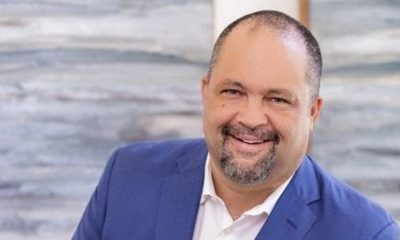
WASHINGTON INFORMER — Ramon G. Griffin, an African-American history instructor at Thurgood Marshall Academy Public Charter School in Southeast D.C., was recently named the 2027 D.C. Teacher of the Year.
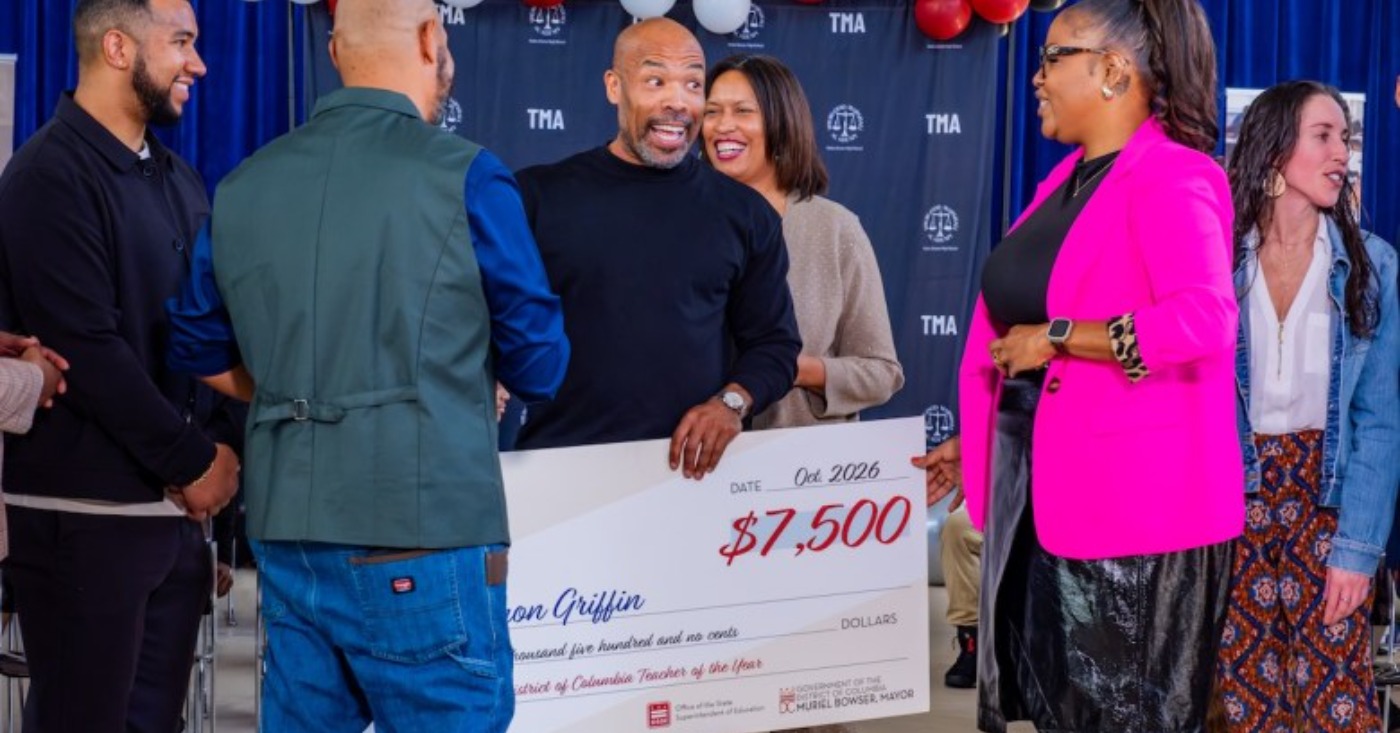
Shortly after becoming 2027 D.C. Teacher of the Year, Ramon G. Griffin appeared on WHUR 96.3 FM, where his story reached thousands of listeners, including a mother who he said later wrote him a two-page letter in request of guidance for her teenage son.
“I look forward to reaching out to her and assisting her in that process and that goal,” said Griffin, an African-American history instructor at Thurgood Marshall Academy Public Charter School in Southeast. “The meaning of this Teacher of the Year award is that I am able to have a voice and representation on a larger scale so that others can be inspired and so that I can help individuals. It’s my objective to work more closely with young teachers to aid them in their skill set, to make sure our children are being educated properly and effectively.”
On Oct. 26, D.C. Mayor Muriel Bowser — flanked by D.C. State Superintendent Dr. Antoinette Mitchell, Ward 8 D.C. State Board of Education Representative Dr. LaJoy Johnson Law, and others — announced Griffin as 2027 D.C. Teacher of the Year during what several students, faculty and staff at Thurgood Marshall Academy PCS thought was an assembly organized in celebration of the school’s 100% college acceptance rate since its inception.
“In my spirit, I can honestly say I knew I won,” Griffin told The Informer. “When she switched it up and said ‘I’m here for a teacher,’ the first thing that came to mind was that this may be it. Then she stated a quote from a documentary that was done on me last year, and she stated where I originate from, and I said I’m about to be awarded D.C. Teacher of the Year. That’s when it set in.”
Griffin, a self-described griot, has 13 years of teaching under his belt, seven of which have been at Thurgood Marshall Academy PCS. That’s where he currently serves as an instructor of AP African-American Studies and African American History through Film and Music. Both courses, he told The Informer, allow him to engage students in storytelling.
Within a couple of months, Griffin’s endeavor to shape the minds of youth continues when Thurgood Marshall Academy PCS hosts yet another “Morehouse Day.” This event, held at several District schools, connects male students with members of the Morehouse Alumni Association Washington, DC Chapter, many of whom graduated from District public and public charter schools before pursuing higher education.
“We have Morehouse men who come in: those who are elders to me, those who were there during my tenure and those who are younger,” said Griffin, a member of Morehouse’s Class of 1998 and key influence in at least three Thurgood Marshall Academy PCS alumni’s matriculation to the HBCU. “What it shows is that we as Black men are not what they portray in the news. We’re not about bringing each other down. We’re about standing out, building, and making sure that our race is looked upon proudly, not for others, but for self and for the next generation.”
An Inside Look: ‘Morehouse Day’ at Thurgood Marshall Academy PCS
The upcoming “Morehouse Day” at Thurgood Marshall Academy PCS is scheduled to take place on Jan. 15, which would’ve been the 98th birthday of Morehouse alumnus the Rev. Dr. Martin Luther King Jr. This intergenerational gathering also happens around the same time that Howard University men’s basketball team plays its home game against Morehouse College.
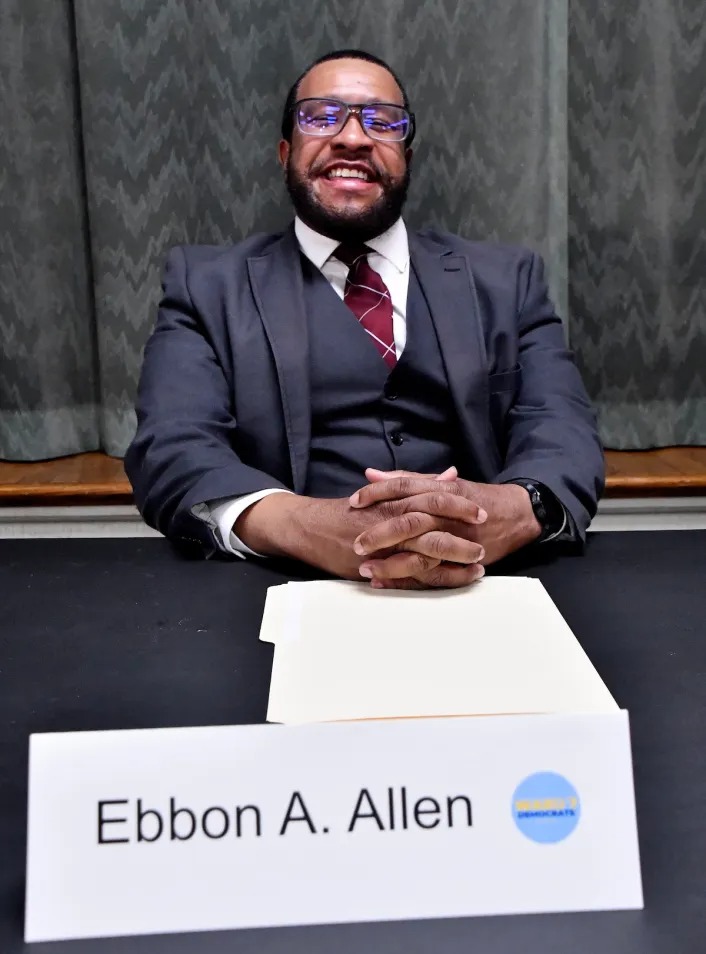
For Morehouse alumnus and “Morehouse Day” brainchild Ebbon Allen, it was a perfect storm that only Griffin could help make happen.
“Before we even knew that Ramon was going to be awarded and honored, we’ve been on ‘Morehouse Day’ as teammates for the last two years,” Allen told The Informer. “We definitely had a meeting within the last two or three months to designate ‘Morehouse Day’ for MLK’s birthday weekend. Ramon just shows the epitome of a Morehouse man: well-versed, well-traveled, and definitely educated.”
Speaking more about his fellow Morehouse alumnus, Allen said that Griffin has long put in the work to boost college enrollment among young Black men.
“He’s had a lot of young men going to attend Morehouse College,” Allen told The Informer. “We’re still trying to work on a pipeline to send more young men from Thurgood Marshall Academy down to Atlanta.”
Since the inception of “Morehouse Day” in 2021, Allen and other members of the Morehouse Alumni Association Washington, DC Chapter have spoken to more than 2,000 young men attending: Calvin Coolidge High School; Dunbar High School; Eastern Senior High School; Friendship Technology Preparatory High School; H.D. Woodson High School; Kelly Miller Middle School; and Ron Brown College Preparatory High School.
The upcoming “Morehouse Day” at Thurgood Marshall Academy PCS will be the second seminar of its kind on school grounds. Allen said that students will delve into violence prevention, entrepreneurship, college and career readiness, and the scholarship application process. His goal, he said, centers on providing them space to imagine how to achieve their dreams.
“We wanted young Black men to understand that they can learn about self-advocacy and learn the value of being a Black male in today’s society,” Allen told The Informer. “There’s going to be a new [mayoral] administration so our young men need to get well-versed and become well-educated about their rights and the opportunities to create a space of learning about strong advocacy.”
Allen, who followed in his three uncles’ footsteps to attend Morehouse College, credited the HBCU with exposing him to the different caliber of Black men. He told The Informer that, like him and other Morehouse men, Griffin has embedded in him a passion for working hard and laying a foundation for those coming after him.
“Ramon Griffin sets the bar for other Black male educators about how much of an impact and difference they can make,” Allen told The Informer. “By coming to Thurgood Marshall Academy in Southeast Washington, D.C., he’ll make more young Black men…find out what it takes to get back in a positive light. You don’t always have to be an entertainer. You don’t always have to be in athletics, but you can take an education pathway and still be awarded for your service, commitment and dedication.”
Out of the Mouths of Babes
C’khai Morgan, a senior at Thurgood Marshall Academy PCS, said he counts Morehouse College among his top choices for business management and human resource management, thanks to Griffin.
“He literally embodies the meaning of a Morehouse Man,” C’khai told The Informer. “You go in any classroom he ever had, you’re going to see something Morehouse. You catch him on a good day, he’s probably wearing a Morehouse sweater.”
C’khai, who also applied to Fayetteville State University, North Carolina Agricultural & Technical State University, and Temple University in Philadelphia, was a student in Griffin’s AP African-American Studies course last school year. On his way to scoring a 4 on the Advanced Placement exam and clinching college credits, he participated in Thurgood Marshall Academy PCS’ “My Brother’s Keeper” program, where he got to learn more about the man he now regards as an uncle.
“I started seeing a different side of Mr. Griffin that I never heard of,” C’khai said. “He always wants the best for somebody, but other students who lack maturity or just lack the understanding of his purpose would be like ‘Mr. Griffin be trying hard. He be pressed to get somebody in trouble.’ It reminded me that you can’t let somebody else’s opinions refer to someone as such.”
Students who take Griffin’s African-American History through Film and Music course take a trip through the Jim Crow, the Great Migration, and Harlem Renaissance, among other time periods, to understand how the blues genre originated from Africa, came into form during enslavement, and traveled with African Americans who moved into northern U.S. cities.
Although Griffin has a curriculum, he often deviates from it, as Thurgood Marshall Academy PCS student Kailani Marshall noted, by recounting his family history. She told The Informer about learning African-American history through stories of Griffin’s grandmother who migrated from Mississippi to Detroit, where he was born and raised.
“He makes sure that students actually retain the information and it’s entertaining as well,” said Kailani, a senior who hopes to study sociology either at Georgetown University, Howard University, Spelman College, or Temple University. “I can’t say that about a lot of classes. The way he teaches really allows students to understand topics fully.”
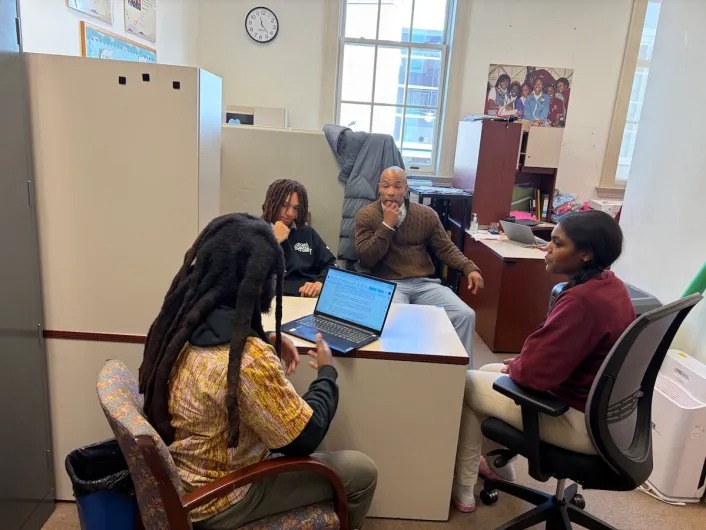
During her junior year, Kailani took Griffin’s AP African-American Studies and African-American History through Film and Music courses. She, too, scored a 4 on her AP exam, due to what she called Griffin’s demand for excellence.
“You can’t be mediocre. It’s not an option,” Kailani said about Griffin. “He’s passionate about instilling confidence and success into students. You can’t say that about a lot of teachers. He really is one of the few teachers who actually care for their students and care for their future.”
During Griffin’s first year of teaching AP African-American Studies at Thurgood Marshall Academy PCS, 87.5% of his students passed the AP exam. This feat follows other achievements at Dunbar High School, where he directed climate and culture, and at Kingman Academy Public Charter School, where he served as a founding member.
Even with Thurgood Marshall Academy PCS’ 100% college acceptance rate, Griffin acknowledged that it takes great effort to earn a bachelor’s degree. That’s what he said he emphasizes to his students as he shares his coming-of-age story and integrates writing and math enrichment into his assignments.
“You don’t want to be a 20-year-old counting on your fingers. You don’t want to be a 20-year-old starting a sentence and ending it at the end of the page with one period,” Griffin said. “You just have to put in the work, and I give them examples of times during my high school years and during my college years. Whatever you want in life, you can have. You definitely will accomplish it, but you have to have a plan. It’s not going to be given to you.”
Based on reporting by Washington Informer.
Black Press
‘It’s as if He Doesn’t Exist’: In Mississippi, People Jailed Months Without Formal Charges
TEXAS METRO NEWS — In the capital city of Jackson, Mississippi, hundreds of defendants remain behind bars for months or even years without being formally charged with a crime. A new investigative analysis has revealed a systemic crisis in Hinds County, where individuals are often stuck in an indefinite legal limbo known as “unindicted” status.

In the capital city, hundreds of defendants wait in jail for an indictment, sometimes as long as a year or more.
When Vicki Sands learned that her son, Carson, was in a county jail near Jackson, Mississippi, more than 600 miles away from her home in North Carolina, she felt, at first, a strange kind of relief.
Months before his arrest, he left Asheville, launching on a road trip with a new acquaintance he had met in the mountain city’s street-life scene. The journey had ended with a falling out in the Deep South that left Carson homeless.
“I was glad he was off the streets,” said Vicki Sands in an interview with The Marshall Project. “I was glad he was out of the woods.”
ADVERTISEMENT
That feeling didn’t last long.
Since an initial appearance before a judge on Nov. 3, just days after his Halloween night arrest last year, Carson Sands has not been inside a courtroom again. No attorney has requested a preliminary hearing or filed a motion to reduce his $300,000 bond on charges stemming from an alleged gas station robbery. There’s been no routine status conference where a judge might probe the reason for delays and prod prosecutors to move things along. He has not been indicted, convicted, or sentenced — but is stuck in an indefinite legal limbo.
“It’s as if he doesn’t exist,” his mother said.
As of June 30 of this year, Sands was one of 131 people being held for more than six months without an indictment: 56 of whom had been held for more than a year, an analysis by The Marshall Project found.
This article was published in partnership with The Howard Center for Investigative Journalism, an investigative reporting unit and early-career journalism training program based at the University of Maryland Philip Merrill College of Journalism, which is supported by the Scripps Howard Foundation.
ADVERTISEMENT
Such long periods of pre-trial incarceration with no formal charges from a prosecutor are almost unheard of in many other parts of the country, where prosecutors are given a limited amount of time to indict before a defendant must be released — 40 days in Florida, 60 days in Louisiana. In fact, Mississippi is one of only six states with no limits at all, according to a 2023 law review analysis.
In all, almost half of the people in custody at the end of June who had been held for at least 30 days on felony charges were not indicted, the analysis found.
State and local officials have argued and deflected blame about slow-moving criminal cases, backlogs and people literally getting lost in jail for years. A labyrinth of record systems, and questions about their accuracy, has often stymied those conversations. The Marshall Project’s findings are the first of their kind to be released publicly.
Critics say the analysis raises serious questions about whether the court system is depriving individuals of their constitutional right to due process before taking away their liberty.
Those critics include Brad McCullouch, a Hinds County assistant district attorney who was promoted to interim officeholder in July by the state’s governor.
ADVERTISEMENT
He went so far as to compare time spent in jail by some Hinds County prisoners to detention practices seen under authoritarian governments.
“This is not what we do as a country,” McCullouch said. “It’s not based on constitutional principles.”
McCullough touted his efforts to put more resources toward the grand jury process and to help secure the release of people from custody where he thinks appropriate. But he can’t run in next Tuesday’s special election because he doesn’t live in Hinds County, and is in office at most about six more weeks.
One of the five people running to replace McCullouch will help determine whether anything changes. Several have promised reforms, while others have not made it a central focus of their campaign.
Meanwhile, for Carson and others, the wait continues.
ADVERTISEMENT
“Lost in the System”
Carson Sands’ journey into legal purgatory began on Halloween night 2025, when he walked into a Jackson gas station near LeFleur’s Bluff State Park. Far from home, he’d marked his 31st birthday just days earlier, on the streets and huddled in the woods.
Sands placed a water, an energy drink, and a Cayman Jack beverage on the counter. The clerk told him he couldn’t use an EBT card for the alcohol, according to a police report written later. In a scene captured on security video, police said Sands pulled a can of bear spray from a backpack he was wearing. He put the items into the backpack, threatened to rifle through the cash register, and then displayed a knife on his way out of the store with the drinks.
A Capitol Police officer found Sands and arrested him not far away, in some woods near a baseball field.
An arrest like this is only the beginning of a criminal case. In most jurisdictions, a prosecutor must next consider the charges lodged by law enforcement and then decide whether to pursue formal charges in court. In Mississippi, district attorneys must obtain an indictment from a grand jury to prosecute someone for a felony.
During Sands’ initial — and only — court appearance, on Nov. 3, the judge ruled that he would need to post a secured bond of $300,000 to be released from jail while waiting for the next steps in his case. Using a bondsman, that would typically require a cash payment of about $30,000 — a sum he doesn’t have the means to pay.
The inability to pay does not necessarily lead to indefinite detention in many other states. Instead, after a certain amount of time, people in these states can ask a judge to reduce their bond or to outright release them from jail without having to pay any cash.
In Texas, after 90 days, Carson Sands could have asked for a lower bond or to be released without paying any money at all by the end of January.
There are constitutional reasons that many states put time limits on pre-trial detention, but also practical considerations. When a case stalls waiting for an indictment, victims must wait for resolution to their cases. Evidence can go stale or even be missing, making it harder for prosecutors to win a once solid case or for the accused to defend themselves. Defendants with few financial resources, like Sands, are forced to sit out the long wait times in a dangerous jail, while defendants with greater financial means get to spend that time at home.
This gray zone of detention without legal limits sits at the intersection of multiple dysfunctional systems stretched beyond their limits in Hinds County — including a decrepit and deadly jail under federal receivership and a public defender’s office still reeling from a staffing and caseload crisis.
But it’s the district attorney’s office — rocked by recent scandals — that is responsible for taking cases to the grand jury to seek an indictment. It’s also the office most subject to immediate oversight by voters, through next week’s special election. The office has been operating under an interim leader since July, when the previous prosecutor, Jody Owens, resigned as part of a plea deal in a federal corruption case.
Amid this tangle, Vicki Sands has found it very difficult to determine basic facts about her son’s detention, or to discern how to help. She considered trying to file a habeas corpus petition — which can be used to challenge the basis for someone’s detention — but doesn’t even know how to start.
“Carson is simply lost in the system,” said his mother. “He hasn’t been convicted, and yet he is detained going on a year with no end in sight.”
One Day in Court
Over the course of this year, as The Marshall Project conducted its analysis, a reporter spent several days in the county court. The reporter saw a series of unindicted defendants appear before a judge for a thicket of initial appearances, preliminary hearings, bond reductions and status hearings.
Felony cases in Mississippi must move through a series of different courts that don’t always intersect. In Hinds County, the county court is a frequent venue where attorneys bring motions and arguments on behalf of defendants without indictments. But with only a single judge hearing these cases, this is a major chokepoint.
As of April 15, Carson Sands had already been jailed for almost six months. His mother worried he was deteriorating within a dangerous and overwhelming environment. The lights in the jail were always on. A TV blared. She couldn’t mail him books, which had long been a source of calm to him. She sent meditation guides and other reading material through the jail messaging system, but some of her messages were blocked.
“He does not belong in prison,” Vicki had written around this time to a reporter with The Marshall Project. “He needs behavioral health treatment. He needs support for his psychiatric needs. Instead, he is in an environment that is crushing and traumatizing him.”
Carson — yet again — did not make it onto Judge Johnnie McDaniels’ slate of felony cases that day.
But several other people did, people just like him –– arrested, jailed, and simply waiting. Court officials called the case of LaShanti Esco. She’d been arrested last August on serious charges — armed carjacking and armed robbery. She faced a $1 million bond.
As the case was called, Wendy Wilson White, an assistant district attorney, said that the proceedings were moot — the case had finally been indicted, she said, paving the way for a formal arraignment in a higher court.
But Judge McDaniels saw a problem as he flipped through the papers in front of him. He’d heard this claim before.
“It is April,” he said. “The same representation was made in January. Why wasn’t an indictment that occurred in January filed by now? What would be the explanation?”
That can sometimes happen when law enforcement can’t locate a defendant to serve the papers. But Esco had been in the county’s custody the entire time.
“I don’t know that I have an explanation,” White said.
Ultimately, the indictment wasn’t served on Esco until about five days after the hearing, according to court records. It had only been signed by a grand jury that month, not in January.
White is one of five candidates now running in a special election to be the next district attorney in Hinds County.
White told The Marshall Project last week that she will never knowingly misrepresent a case to a judge and emphasized that when handling a case in court, she sometimes has limited information immediately available to her.
“I’m representing the state, and I have to take accountability when there are shortcomings in a case,” White said.
Next up was Jeremy Jordan, arrested in August 2025 on a drug possession charge. Jordan was held without bond due to prior charges from 2022 and 2023 that were still open and not indicted.
That meant, his attorney said, that Jordan had been in jail for 237 days with three criminal charges and not a single indictment on any of them.
In at least some of the cases, the defense attorney said, prosecutors were waiting on results from the state crime lab.
“We know the issues with the state crime lab,” McDaniels said. “Surely three or four years is enough time to get something back?”
McDaniels set a secured bond for $75,000 for Jordan — still a high bond. Jordan stayed in jail for months more, and in June submitted his own motions to dismiss the case for violation of due process.
The cases continued. Adetdrick Burton had been held almost a year on a murder charge and a $1 million bond, with no indictment.
“This case has not been presented to a grand jury,” said White, the assistant district attorney. “The DA’s office is not in possession of the file. The DA’s office requires, or prefers, to have the completed investigative file.”
In response to a question from the judge, White could not say whether the file had been requested from law enforcement by the DA’s office.
“A case is not solved just because an arrest is made,” said McDaniels. “When I’m being told more than a year later that you don’t know what stage a case is at, that should be troubling to us all.”
Next up was Justin Porter, held 609 days without an indictment on home burglary charges. White acknowledged the long delay in securing an indictment, but urged caution, alleging that the burglary in question had been carried out, she claimed, as “an attempt to terrorize the victims.”
“Surely there is an explanation why a defendant charged with attempted burglary of a dwelling has been detained for 609 days without being indicted,” McDaniels asked White. “There has to be an explanation.”
“That’s definitely a good question,” White said. “I don’t know that the state is prepared to offer an explanation that would be satisfactory.”
When cases stall like this, there are several possible reasons in play. Sometimes law enforcement makes an arrest but, as White suggested in court, simply does not turn over the file to the prosecutors, leaving those prosecutors without evidence to present to a grand jury. Sometimes the case has been forgotten, and the district attorney’s office simply hasn’t asked for it. Other times, the investigation may still be ongoing, even after an arrest has been made, or officers are waiting on forensic tests or other evidence.
But even when prosecutors don’t have an explanation at hand, or when defense attorneys haven’t given a case much attention, an area’s senior circuit judge has a responsibility under the state’s rules of criminal court: They must monitor the circumstances and release conditions of people detained in the local jail.
Senior Circuit Judge Winston Kidd and McDaniels, whom Kidd has designated to oversee felony cases before an indictment, did not respond to questions from The Marshall Project about how they handle review of the jail lists.
This requirement was written to prevent people from falling through the cracks, said William Waller Jr., a retired chief justice of the Mississippi Supreme Court who helped write the state’s rules of criminal procedure.
“That was the whole purpose for it,” said Waller. “It was supposed to be a safety net to catch cases.”
A Maze of Faulty Data
A month before Carson Sands was arrested, a jail operations consultant based in Maryland named Wendell France took over management of Hinds County’s Raymond Detention Center on the order of a federal judge.
That followed a decade of litigation brought by the U.S. Department of Justice over unending constitutional violations inside the county’s jail — widespread brutality, deaths and beatings at the hands of other prisoners, rampant contraband, open sewage, and poor or nonexistent medical care.
Once France began to examine the roster of detainees, he noticed something that alarmed him: Significant numbers of people in the jail were held only based on an arrest charge, with no indictment.
He dispatched a letter to local justice system officials, including Owens, who was then the DA. A former civil rights litigator, Owens ran for office in 2019, promising to be a “decarceral prosecutor.”
“I am writing to formally request your office’s immediate attention to the status of pre-trial detainees who have been held without indictment for extended periods,” France wrote to Owens in an Oct. 10, 2025 letter. “These are not merely administrative concerns but fundamental constitutional violations that expose the county to significant legal liability.”
As he had done before when similar concerns had surfaced, Owens responded by pointing out that jail rosters supplied by local jail administration are often riddled with errors.
“I am committed to reducing the delays for criminal detainees wherever possible, but caution you that the conclusions you have drawn in your correspondence are based on inaccurate data,” Owens wrote.
Owens also warned that law enforcement agencies, and not his office, often drive delays by failing to complete investigations promptly, even after an arrest has been made. Those agencies, Owens said, do not quickly turn over files to the DA’s office and sometimes do not even notify the office of cases that are open or arrests that have been made.
Nine months later, Owens resigned as part of a plea deal with federal prosecutors on conspiracy charges involving a bribery scheme.
Not long after these letters were dispatched, an assistant district attorney was also sounding the alarm, claiming that management of the grand jury process had fallen into near complete disarray.
“Cases are lost, defendants are lost, indictments have errors, hundreds of cases have been presented to the Grand Jury but never turned in,” wrote Gwen Agho in December 2025, according to an email she provided.
Agho is also now running for district attorney in Hinds County.
Locally, the accuracy of jail and court records has been a flashpoint in long-running clashes over jail crowding and case delays. Money from the state flowed into Hinds County beginning in 2022 to help reduce a pandemic-linked backlog, but local officials could not reach consensus about where the backlog was. This disagreement was driven, in part, by jail systems, court records, and case management that don’t talk to each other, said State Public Defender André de Gruy.
He identified unindicted cases as a key problem, but acknowledged he was dealing with jail lists widely known to be faulty, with errors in case numbers and indictment status. He didn’t have the resources to laboriously correct and verify those lists line by line.
But that’s exactly what The Marshall Project did.
The news organization started with a list provided by the county of the 848 people in custody on June 30 and then excluded people who had been there for less than 30 days — which is within detention norms nationwide — as well as people held on suspected or confirmed probation violations or other kinds of post-sentencing matters. The analysis also excluded people likely being held on misdemeanor charges and those under the age of 18 when they were arrested. That left 628 held in custody while facing criminal charges.
The Marshall Project examined several thousand pages of public court records, obtained through the Mississippi Electronic Courts portal, including dockets and filings, to match public indictments or circuit court cases to people detained at the jail. Almost half did not have any.
Even those who were indicted while in jail had often waited months for it to finally happen. More than two-thirds of the people who were still waiting for an indictment on June 30, or who had been indicted while held, had gone three months or more without an indictment.
How long had people in the Hinds County jail waited for an indictment?
Hundreds of people who were in jail in Hinds County, Miss., on June 30 of this year had waited more than 30 days in custody without receiving an indictment. Most of them waited more than 90 days.

McCullouch said The Marshall Project’s analysis reached findings similar to those his staff conducted after he took over the office in July.
In a letter to France in September, he touted the role of his office in securing release for 59 people held on non-violent charges. By October, McCullouch told the county’s Board of Supervisors that number had risen to 74.
He called this the “low-hanging fruit” that needed to happen quickly to relieve pressure on the jail before a more careful sifting of cases with violent charges follows. That work will take longer, he said, because of the potential stakes for broader public safety.
In doing that careful sifting, McCullouch — and White, speaking separately about her plans if elected — also touted the significance of new funding from the county for an additional assistant prosecutor’s position.
But the maze of often-faulty data doesn’t help either, said McCullouch.
Justice system officials should have access to reliable, current data of the sort that it took The Marshall Project weeks to produce, said Andrew Davies, research director with the Deason Criminal Justice Reform Center at Southern Methodist University.
“Hinds County urgently needs better systems for tracking this information,” Davies said. “Without them, courts and jails lack the tools they need to deliver justice and treat people with dignity.”
The interlocking nature of the problem, cutting across different systems and different branches of government, means it’s hard to identify one point of failure that can be easily fixed. But it also means that there are several people empowered to push solutions or force the issue onto the agenda — including judges, legislators, and the local district attorney.
And that’s where, McCullouch said, regardless of what judges or police detectives do, or how faulty the jail data happens to be, a prosecutor has power — if they will use it.
Sometimes, he said, that means taking a case with no file to the grand jury, expecting the grand jury to decline an indictment.
So what happens next for Sands?
Earlier this month, The Marshall Project asked McCullouch about the status of the case and why there’d been such a long delay in securing an indictment.
McCullouch turned around in his chair and faced his computer — “You said Sands?” he asked, double-checking as he typed — opening the system prosecutors use to track case files submitted by law enforcement agencies.
There was nothing for Carson’s case. Just an empty screen. McCullouch told The Marshall Project he’d never heard of the case until the news outlet asked. He said his office would try to find out more and take some action.
Capitol Police turned the case file over to prosecutors the next day, according to a spokesperson for the agency.
After 349 days in jail, Sands had been found.
In this article:‘It’s as if He Doesn’t Exist’: In Mississippi, People Jailed Months Without Formal Charges
 ADVERTISEMENT

ADVERTISEMENT
You May Also Like


News
‘It’s as if He Doesn’t Exist’: In Mississippi, People Jailed Months Without Formal Charges
When Vicki Sands learned that her son, Carson, was in a county jail near Jackson, Mississippi, more than 600 miles away from her home…
Texas Metro NewsNovember 1, 2026 Advertisement
Based on reporting by Texas Metro News.
Black History
Wichita’s Only Black-Owned Bookstore Seeks $90,000 to Secure Its Future
COMMUNITY VOICE (KS) — Left on Read, believed to be the only Black-owned bookstore in Kansas, has launched a $90,000 fundraising campaign to secure its long-term future. Owner Dr. Latasha Eley Kelly initiated the “Support Left on Read: Books, Community, & Connection” appeal in October to address significant financial hurdles.
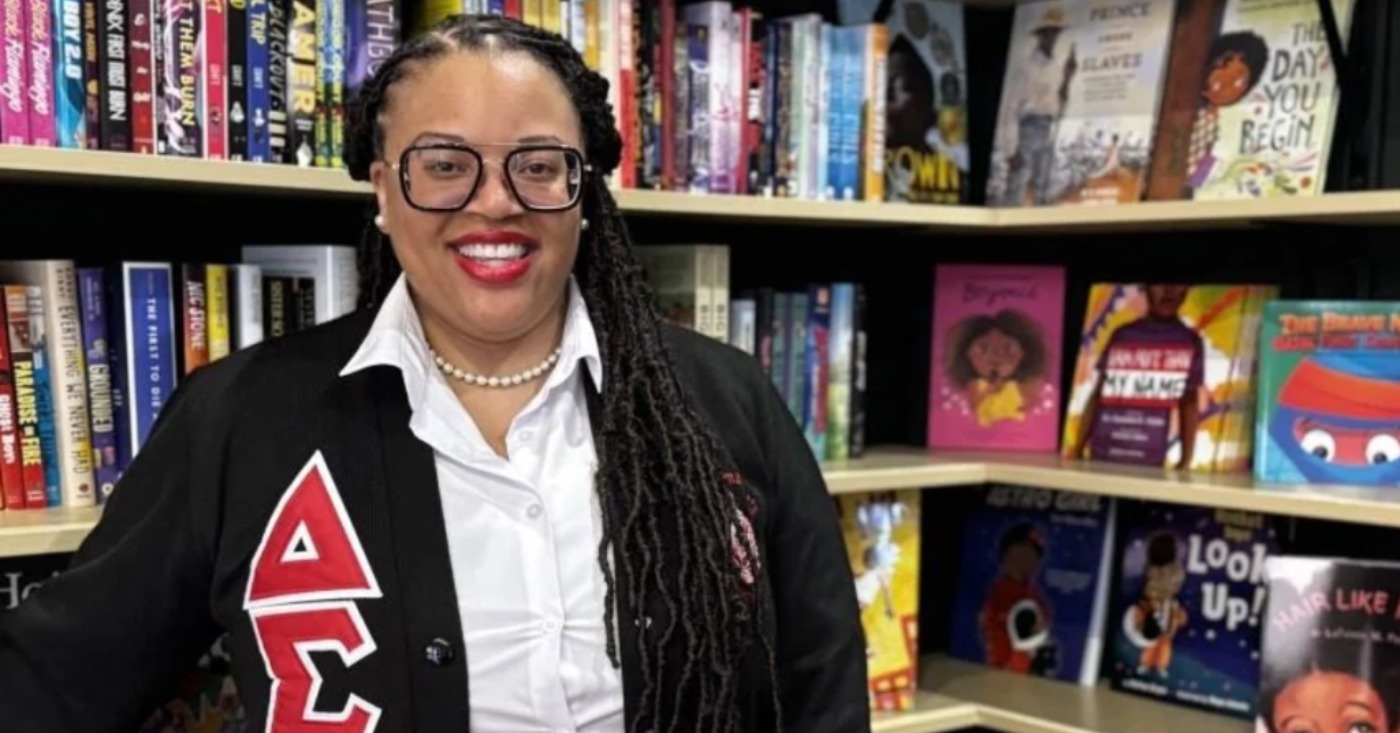
As Left on Read prepares to celebrate its second anniversary on Nov. 30, the bookstore is confronting financial challenges that have prompted owner Dr. Latasha Eley Kelly to launch a $90,000 fundraising campaign to sustain its operations.
The independent bookstore, believed to be the only Black-owned bookstore in Kansas, has become a destination for readers, authors and community gatherings since opening in 2024. But unexpected funding losses, rising operating expenses, and the costs of relocating have strained its finances.
Kelly launched the Support Left on Read: Books, Community, & Connection campaign in October, seeking contributions to cover operating expenses, staffing, inventory and community programming.
A recent snapshot of the GoFundMe campaign showed $14,410 raised from 183 donations, approximately 17% of the $90,000 goal.
Financial Setbacks Prompt Appeal
One of the bookstore’s financial challenges stems from the unexpected loss of grant funding supporting TMBP Media, one of Kelly’s interconnected business ventures. The media operation, The Millennial Black Professor and Left on Read share resources, making the funding loss significant for the bookstore.
In an October interview with KSNW-TV, Kelly also cited increasing operating and staffing costs and the need to establish more reliable revenue sources.
The bookstore relocated from its original downtown location at 612 E. Douglas Ave. to Revolutsia, a small-business development at 2721 E. Central Ave. Kelly described the move as unexpected and credited Mike Ramsey of Bokeh Development with helping facilitate the transition.
To help support the business, Kelly has continued teaching and pursuing consulting, speaking, and instructional opportunities.
The fundraising effort is designed to address immediate expenses while building a more sustainable financial structure. The bookstore has not announced plans to close, but the appeal underscores the financial pressures threatening its long-term viability.
More Than a Place to Buy Books

When Left on Read opened Nov. 30, 2024, Kelly envisioned a bookstore where African-American authors and other historically underrepresented writers would receive the visibility often missing from mainstream retail spaces.
Its selection includes fiction, nonfiction, children’s literature, poetry and history, with particular attention to Black authors and experiences.
Beyond book sales, Left on Read hosts author appearances, reading groups, cultural discussions and activities connecting local entrepreneurs with customers. The bookstore also provides space for The Blackprint, an initiative highlighting Black-owned businesses and their products.
Those activities have helped establish Left on Read as a cultural gathering place, but maintaining that role requires resources beyond revenue from book purchases alone.
Anniversary Campaign Focuses on Financial Stability
The bookstore’s annual 11.30 Campaign takes its name from its Nov. 30 opening date. While the first anniversary campaign encouraged smaller contributions to support the growing business, this year’s appeal focuses on strengthening its financial foundation.
Kelly is asking supporters to contribute financially, purchase books, recommend the store to others, and help spread awareness of the campaign.
The anniversary celebration will also feature several events intended to bring customers and community members into the bookstore.
Anniversary Celebration Events
Left on Read has scheduled the following activities from Nov. 20 through Nov. 22:
- Friday, Nov. 20, 6–7 p.m. — Malcolm Lynch’s Soulful Little Christmas Tour makes a stop at Left on Read.
- Saturday, Nov. 21, noon–1 p.m. — Launch of a free community library in partnership with a local service organization.
- Saturday, Nov. 21, noon–3 p.m. — Lemonade tasting featuring Tre’s Squeeze, presented in partnership with The Blackprint. Attendees can also purchase Squeeze Into Your Dreams by founder Tre Glasper.
- Saturday, Nov. 21, 2–4 p.m. — Public book club discussion of Children of Blood and Bone, covering chapters 1–28.
- Sunday, Nov. 22 — Ponder This at Build and Rebuild. Those purchasing tickets at Left on Read have a chance to win a Ponder This T-shirt and a bookstore gift card.
The events offer residents opportunities to experience the bookstore’s community programming while supporting a business working to overcome financial difficulties.
Community Support Could Determine What’s Next
For independent bookstores, balancing retail sales with the costs of staffing, inventory and community programming can be difficult. Left on Read faces those challenges while also working to maintain a space dedicated to Black literature, culture and entrepreneurship.
The fundraising campaign offers Wichita residents and businesses a chance to help preserve a locally owned institution that offers more than books.
Although the campaign’s outcome remains uncertain, the stakes extend beyond the bookstore’s balance sheet. Its future will determine whether Wichita continues to have a dedicated retail space where Black authors, readers and entrepreneurs are at the center of the experience.
How to Help: Supporters can donate through the 11.30 Campaign at bit.ly/supportleftonread, purchase books at leftonreadbookstore.com, or visit the store at 2721 E. Central Ave., Suite 121, Wichita.
The post Wichita’s Only Black-Owned Bookstore Seeks $90,000 to Secure Its Future appeared first on The Community Voice.
Based on reporting by Community Voice (KS).
Black History
Carolyn Hugley Could Become Georgia’s First Black Woman House Speaker
ATLANTA DAILY WORLD — Georgia House Democrats have selected State Representative Carolyn Hugley as their nominee for speaker, positioning the Columbus legislator to potentially become the first Black woman to lead the chamber. The nomination follows a shift in party control for the first time in over two decades.
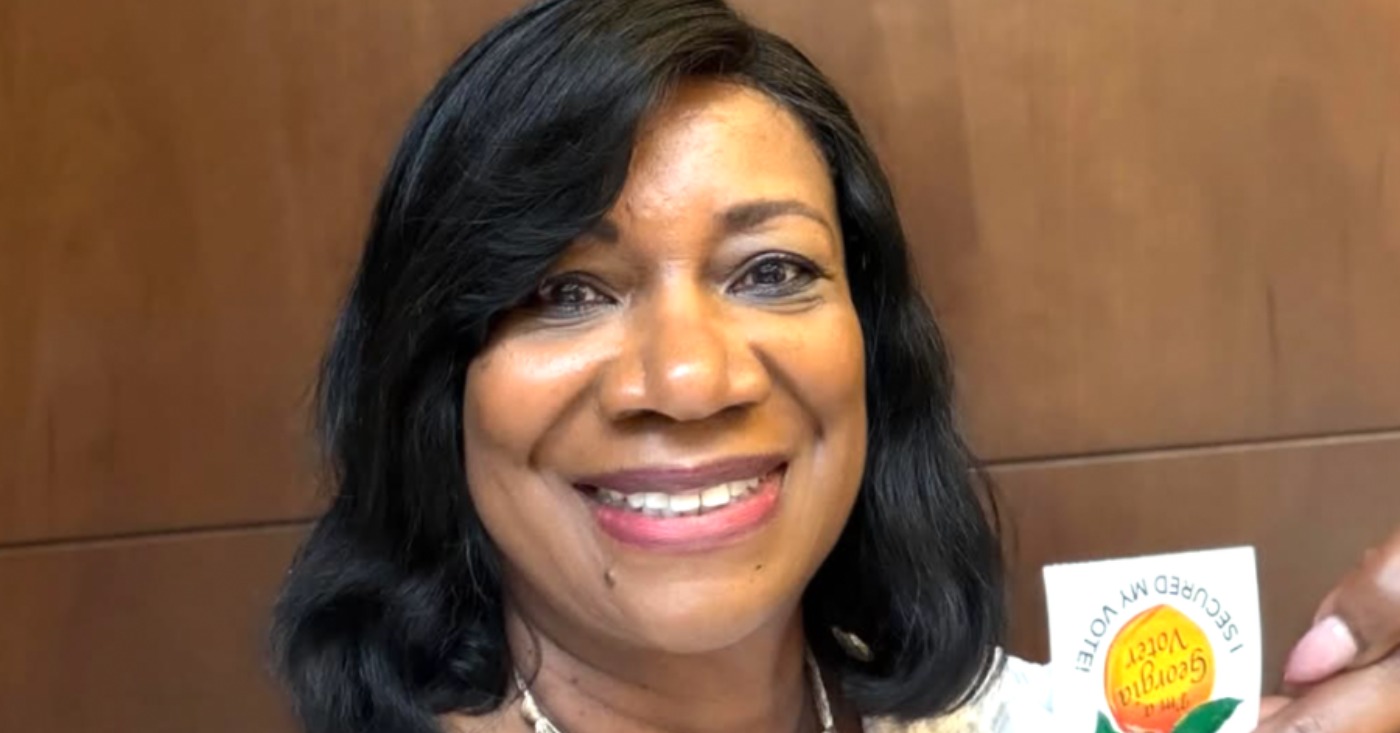
Georgia House Democrats have selected State Rep. Carolyn Hugley as their nominee for speaker, positioning her to become the first Black woman to hold the position.
According to CBS News Atlanta, Hugley, a Democrat representing Columbus, was chosen Thursday (November 12) after her party secured control of the House for the first time in more than two decades. The full chamber is scheduled to vote on her nomination January 11, 2027.
Hugley, who has served in the Georgia General Assembly since 1993, currently holds the position of House minority leader, CBS News Atlanta reported. If elected, she would succeed Republican Jon Burns, who has led the chamber since 2023.
During her time in the legislature, Hugley became the first Black lawmaker to serve as House minority whip, a position she held from 2003 to 2018, according to her website. She has also chaired the Legislative and Congressional Reapportionment Committee and the Women’s Legislative Caucus.
Her legislative work has included sponsoring bills addressing bullying, anti-stalking protections and protections for veterans’ widows, according to her official state biography.
Speaking at a press conference at the state Capitol Thursday, Hugley said Democrats must deliver on the opportunity Georgia voters had given them.
“We cannot settle for business as usual after all the what we’ve done to get here,” she said, according to Georgia Public Broadcasting. “We didn’t come this far to settle into new titles and new offices and get that new letterhead. We’re here because Georgia has given us the opportunity to deliver for them.”
Hugley’s potential election would also bring greater representation to one of the state’s most powerful political positions, which has historically been held by white men. The Courier News emphasized the significance of a Black woman from the Chattahoochee Valley reaching that level of leadership, particularly for young Black girls who rarely see people who look like them in positions of political power.
Republicans will retain control of the state Senate, meaning Democrats will need to work across party lines to advance their legislative agenda.
The Black Information Network is your source for Black News! Get the latest news 24/7 on The Black Information Network. Listen now on the iHeartRadio app or click HEREto tune in live.
The post Carolyn Hugley Could Become Georgia’s First Black Woman House Speaker appeared first on Atlanta Daily World.
Based on reporting by Atlanta Daily World.
Art
BOO REVIEW: Upcoming Book Revisits Dr. King’s 1957 Visit to St. Paul
MINNESOTA SPOKESMAN-RECORDER — A new book by researcher Jeff Olson titled “Gathering at the Rivers: Martin Luther King Jr. and Civil Rights in Minnesota” will chronicle the historic first visit of Dr. King to the state.

New Book Will Tell the Story of Dr. King’s First Visit to Minnesota and St. Paul’s Civil Rights Pioneers
“Gathering at the Rivers: Martin Luther King Jr. and Civil Rights in Minnesota,” by researcher Jeff Olson, will chronicle King’s Jan. 21, 1957, sermon at Gloria Dei Lutheran Church in St. Paul, his first Minnesota visit, just after the Montgomery Bus Boycott. The Rev. Dr. Floyd Massey Jr. of Pilgrim Baptist Church helped bring King to the state and hosted a reception at his Rondo home. The book’s “Twenty Treasures” chapter profiles figures including Roy Wilkins, Dred Scott, Cap Wigington, Nellie Francis, Nellie Stone Johnson and MSR founder Cecil Newman. Afton Press plans a late 2027 or early 2028 release and is seeking donor support for the $100,000 project.
On Jan. 21, 1957, the Rev. Dr. Martin Luther King Jr. stepped into the pulpit at Gloria Dei Lutheran Church in St. Paul on his first visit to Minnesota. Nearly 70 years later, a book from Minnesota publisher Afton Press aims to tell the story of that night and of the people and places that shaped it.
“Gathering at the Rivers: Martin Luther King Jr. and Civil Rights in Minnesota,” by researcher and author Jeff Olson, is in the early stages of publishing, with a release planned for late 2027 or early 2028. Former St. Paul Mayor Melvin Carter III, the city’s first Black mayor, is writing the foreword.
The book frames the visit as a turning point. King, who had turned 28 just days earlier, was fresh off the Montgomery Bus Boycott and stepping into a national leadership role. In St. Paul, Olson writes, King found himself in the hometown roots of two of his biggest supporters: NAACP leader Roy Wilkins, who grew up in St. Paul’s Frogtown neighborhood, and Ralph Helstein, president of the United Packinghouse Workers of America. Both organizations gave major support to the boycott.

The visit itself came together through local clergy. According to the book, the Rev. Dr. Floyd Massey Jr., pastor of Pilgrim Baptist Church and program chair of the Minnesota Pastors Conference, played a central role in bringing King to the state. After King’s evening sermon at Gloria Dei, Massey and his wife, Ethel, hosted a reception for him at their home in the Rondo neighborhood.
At the heart of the book is a chapter Olson calls the “Twenty Treasures of Civil Rights in Saint Paul,” profiles of the people, places and institutions that made the city fertile ground for King’s message. The list stretches from Dred Scott, who married Harriet Robinson at Fort Snelling in 1837 and later took his fight for freedom to the U.S. Supreme Court, to Pilgrim Baptist Church, founded in 1863 as Minnesota’s first Black church.
It includes architect Clarence “Cap” Wigington, who Olson notes was the nation’s first Black municipal architect; Nellie Francis, who led the campaign for Minnesota’s 1921 anti-lynching law; attorney Frederick McGhee; labor and civil rights leader Nellie Stone Johnson; and Carl Rowan, whose civil rights reporting for the Minneapolis Tribune won national journalism honors in the 1950s. It also includes Cecil Newman, who founded the Minneapolis Spokesman and St. Paul Recorder in 1934 and led the papers until 1976.
Olson argues that these civil rights firsts are striking given Minnesota’s small Black population at the time, compared with states and cities whose Black communities were many times larger.
Olson said he became fascinated by the research because he kept uncovering stories that had gone untold.
Ian Graham Leask, Afton Press’ publisher, told the MSR the book matters at a time when literacy rates are declining. A book that shows readers from marginalized communities the history of the very streets they walk today could give schools and institutions a way to spark engagement, he said, especially because the story has never been told this way before.
Bringing the book to print is expected to cost about $100,000, Leask said, and Afton Press is open to support from donors.
Afton Press has a long record of publishing Minnesota stories about people, places and events, including “Overcoming: The Autobiography of W. Harry Davis” (2002), the memoir of the prominent Black civic leader from Minneapolis.
Olson is the author of several books on hockey history and of “Kindred Spirits,” about the conservation work of Theodore Roosevelt and John Muir.
For more information or to support the book, visit https://aftonpress.com/. You can also contact Afton directly at [email protected] or 651-436-8443.
Jasmine McBride welcomes reader responses at[email protected].
Jasmine McBride is an Editor at the Minnesota Spokesman-Recorder More by Jasmine McBride
Based on reporting by Minnesota Spokesman-Recorder.
Black Press
Mom Com & Co Is Building a Village for DFW Mothers, One Connection at a Time
THE DALLAS WEEKLY — Founder Jordan Thompson is transforming the landscape of motherhood in the Dallas-Fort Worth area through her new initiative, Mom Com & Co. Inspired by her own feelings of isolation during pregnancy, Thompson created the organization to provide “child-inclusive” spaces where mothers can connect without the fear of judgment or the need for childcare.

Founder Jordan Thompson’s launch social made room for babies, honest connection and the women navigating motherhood together.
During a doula-led stretch session at Mom Com & Co’s launch social, one mother paused to feed her baby. Founder Jordan Thompson held her own sleeping daughter in her arms. The gathering continued without anyone missing a beat.
For Thompson, that moment captured exactly what she wanted to create: a space where mothers could enjoy themselves with their children’s needs fully welcomed.
“That’s what child-inclusive means: no judgment, and no feeling embarrassed for bringing your baby along,” Thompson said to Dallas Weekly.

The launch introduced her vision for Mom Com & Co, a community connecting mothers across Dallas–Fort Worth through intentional gatherings and ongoing support. Its name carries the mission: “Com” stands for community. And while the social offered thoughtful touches, from grazing boxes to a signature mocktail, Thompson’s measure of success was more personal. According to the founder, every mother left with at least one new contact.
For someone who once searched for answers about pregnancy alone at 4 a.m., those connections represent the beginning of the village she had been looking for.
Thompson recalls attending some prenatal appointments by herself and spending early mornings online trying to understand what was happening inside her body. Early in her pregnancy, she did not have a connection to a doula and had to research how to find one.
Those experiences helped her recognize the kind of support she wanted: people willing to sit with a mother through difficult moments, along with knowledgeable guidance during pregnancy and recovery.
“Funny enough, the name Mom Com & Co came to me at 4 a.m. too,” Thompson said. “That hour used to be the loneliest part of my night. Now it’s where all of this began.”
Motherhood also brought an unexpected desire to heal and connect. The joy she found with her daughter made her want to bridge the distance between mothers whose circumstances might differ but whose need for dependable support could overlap.
“People assume that if you’re pregnant, you have a partner, and if you have a partner, you have a village,” she said. “There’s an assumption that everyone has a built-in support system. That’s a misconception. Even partnered moms can feel alone.”
Her background producing television and podcasts helped shape how she introduced the community. Thompson describes her career as finding meaningful ways to bring stories to the right audiences. Now, she applies that experience to Mom Com & Co’s marketing while putting particular emphasis on meeting women face to face.
“Marketing can introduce you to a mom. Real connection is what brings her back,” she said.
At the launch, that connection began with an intimate gathering where attendees could learn names, remember one another’s babies and discover whose children were close in age.

Thompson said the mothers arrived with different reasons for seeking community. Some did not have family nearby. One had friends but had entered motherhood later than they had and wanted to meet women raising babies. Another attended after encouragement from her lactation consultant. Another simply needed to get out of the house.
The event gave those different needs room to exist together. Alongside the stretch session, mothers enjoyed desserts and received goodie bags with custom bibs, tumblers and other items. Attendance was free for mothers and babies.
Thompson’s approach to an “elevated” experience is to treat the mother as the guest of honor while planning for her child. She said events are designed around specific age ranges so that babies’ needs are considered in advance.
Before attendees left, she gave them a challenge: exchange phone numbers and make an effort to get to know someone beyond social media.
“It’s kind of like dating, honestly,” Thompson said.
That invitation is central to what she hopes will happen after the gatherings end. A private Facebook group gives mothers a place to continue conversations between events, while future programming will include opportunities to bring their babies, spend time with other women and volunteer.
“A beautiful event opens the door, but the village is built in the follow-up,” she said.
Accessibility is also part of the plan. Thompson said future events will include both free and paid offerings, with partnerships and sponsorships helping support access. She is developing Mom Com Cares, the initiative’s giving arm, which she said has already delivered its first care box to a Texas mother.

Next, Thompson said, Mom Com & Co plans to host Sips & Storytime on Sunday, Dec. 6, at The COACH Coffee Shop in Allen. The shop will open early for the group, and mothers are encouraged to bring a new or gently used book to donate to local families for the holidays.
As the community grows, Thompson imagines its impact showing up in everyday life: two mothers grocery shopping together, an invitation to a baby’s birthday party or a phone call on an ordinary Tuesday.
“That’s success: when the village shows up in the ordinary days, not only the big ones,” she said.
For the mother who wants that connection but feels nervous about walking into a new space, Thompson offers an invitation with room to move at her own pace.
“So come when you’re ready. Come home when you’re ready.”
Learn more at momcomco.app, follow @momcomco on Instagram, Facebook and TikTok, or join the Mom Com & Co Facebook group.
The post Mom Com & Co Is Building a Village for DFW Mothers, One Connection at a Time appeared first on Dallas Weekly.
Based on reporting by The Dallas Weekly.


Ramon G. Griffin: A Morehouse Man on a Mission

‘It’s as if He Doesn’t Exist’: In Mississippi, People Jailed Months Without Formal Charges

Wichita’s Only Black-Owned Bookstore Seeks $90,000 to Secure Its Future

Carolyn Hugley Could Become Georgia’s First Black Woman House Speaker

BOO REVIEW: Upcoming Book Revisits Dr. King’s 1957 Visit to St. Paul

Mom Com & Co Is Building a Village for DFW Mothers, One Connection at a Time

Debunking the Myth That Europeans Alone Plotted Africa

COMMENTARY: Property Is Power! the Black Family Meeting

Alonzo Mourning’s Affordable Senior Housing

Black Men Encouraged to Start Prostate Cancer Screening at 45

Practitioners of African Traditional Spirituality Offer Ancestral Reverence Ritual Oct. 31

HISTORY MADE: Keisha Lance Bottoms Becomes First Black Woman Elected Governor in American History

Tamiko Armstead | 2026 Lifetime Achiever in Education

Kickstarter CEO Everette Taylor Shares Tips on Creating and Growing a Business

BLACK MEN VOTE: Mobilizing 100,000 Black Men Ahead of the Midterms 📱

NFN live presents 🎙️ THE ROAD TO BEYOND IWDM 50: WE CANNOT STOP NOW! 8-Week Podcast

Black Household Wealth Plummeted 25% in Three Years, New Data Shows

Secretary of State Shirley Weber Pushes Back Against DOJ Demands Over California Voter Rolls

COMMENTARY: BIG MAMA SAID: Don’t Throw Away the Gift Just Because It Came Wrapped Wrong

Columbus’s Oldest Businesses Still Open: 10 That Have Lasted 75+ Years

Filmmaker Joy Adenike brings Nollywood romance to Houston

Filmmaker Joy Adenike brings Nollywood romance to Houston

2026 Best of Black Business Awards Recap: Meet the Winners

LIVE! — ASK ALMA — TUES. 11.24.26 7PM EST

Charles Cave turns community service into Houston legacy

Houston ISD board: Transition to local control can start ‘mid-January’

400 days – Fifth Ward awaits cancer cluster EPA report

The Hidden Cost of Friction in Car Buying

Truck Test Drive: Is Heavy Steering a Warning Sign? #shorts

Nationwide Flight Chaos, Democratic Leadership Battles 📱
-
 Black History1 week ago
Keisha Lance Bottoms to Govern State Where Her Great-Great-Grandfather Was Enslaved
-

 Black History1 week ago
Don’t Pass the Torch. Expand the Circle.
-
 Black Press3 days ago
OP-ED: Closing the Next Digital Divide — Communities of Color Must Have a Voice in the AI Future
-
 Black History1 week ago
Meet Scott Colom, the Mississippi Democrat Leading Tight Mississippi Senate Race
-

 Black Press1 week ago
Eight Black Women Win Georgia Statewide Offices
-

 Black History4 days ago
New NAACP Report Warns AI Could Deepen Health Disparities in Black Communities
