
Government
Julia Means Appointed to the City of Milwaukee’s Board of Health
MILWAUKEE COURIER — Mayor Tom Barrett appointed Julia Means, Registered Nurse, to the City of Milwaukee’s newly created Board of Health last month on June 27. The nine-member commission will advise the Health Department on policy and advocate for public health practices that improve health outcomes for all Milwaukeeans. The citizen oversight board was created by legislation adopted by the Milwaukee Common Council and signed by the Mayor in February of 2019.


By The Milwaukee Courier
Mayor Tom Barrett appointed Julia Means, Registered Nurse, to the City of Milwaukee’s newly created Board of Health last month on June 27. The nine-member commission will advise the Health Department on policy and advocate for public health practices that improve health outcomes for all Milwaukeeans. The citizen oversight board was created by legislation adopted by the Milwaukee Common Council and signed by the Mayor in February of 2019.
Means, a Community Health Ministry Nurse with Ascension Columbia St. Mary’s Hospital, part of Ascension Wisconsin, touches countless lives everyday through her faith-based work promoting education around chronic disease management, food security, infant mortality in our community and health navigation. Through Mean’s tireless work and dedication, she has made an incredible impact on many in the community.
“I don’t know Julia Means personally, but when I hear her name, the first word that comes to my mind is mentor,” said Kymm Robinson, Sherman Park neighborhood.
The importance of maternal and infant health cannot be overemphasized because it determines the health of the next generation and can help predict future public health challenges for families and our community.
“My cousin was a participant in the Blanket of Love Program and my auntie isn’t around to help her, so the program was important,” said neighbor Justin Patterson. “Julia Means is a teacher, a protector, a rescuer and a second mother. She’s a guardian angel. Without her, I don’t know where my baby cousin would be right now.”
Means is an instrumental mentor to young women and men because she had powerful mentors in her own life.
“I would never be where I am today without someone pushing me,” Means said. “I can help others because I had help.
By combining her nursing skills and her faith, Means has made an impact on Ascension Columbia St. Mary’s and across Ascension Wisconsin. She created an innovative collaboration with church congregations, city officials, homeless shelters, neighborhood centers, community partners and programs to create the “Blanket of Love” program in 2004. The program connects participants to resources that can help lower stress, support wellness and eliminate the two most preventable causes of infant death in Milwaukee: premature births and unsafe sleeping environments.
In 1996, Means became the first Parish Nurse at Ebenezer Church of God Christ. As a Parish Nurse, Means connected the church with the community.
“I’m blessed to work for an organization that fosters and encourages people to have faith in God. Ascension Wisconsin not only allows but encourages me to do my work and not hide my faith,” said Means. “If you take care of God’s business, He’ll take care of your business.” Means truly believes this is due to the countless examples of how God continues to work in her life and the lives of her participants.
“I see myself as the bridge between the community and the hospital. I’m an advocate for people in the community that feel they have no voice,” she added.
While Means is out and about, people always approach her and tell her how she’s impacted their lives. Children even run to her and call her grandma. “I have a new grandchild every day,” Means said.
Means is honored and thankful to wake up every day and do this work. Although people give Means recognition for the work she does daily, Means credits God.
“It’s not my work, It’s God’s work. I am grateful He chose me,” said Means.
Ascension St. Joseph Hospital is holding their 22nd Annual Concerts in the Park Series, Celebrating 140 years of service to the community. All concerts run from 5:30 p.m. to 7:30 p.m. Ballpark food will be on sale at all concerts, with proceeds benefiting a different neighborhood school each concert. There will also be free blood pressure and diabetes screening, fresh farmer’s market, courtesy of Mount Cavalry, and fun activities for children.
July 24 Eddie Butts Band August 7 Christopher’s Project
August 21 Joe Richter Band
This article originally appeared in the Milwaukee Courier.











Black History
Three Black Physicians Lead Women’s Health Care
ST. LOUIS AMERICAN — Three Black women now lead the obstetrics and gynecology departments at major medical institutions across St. Louis, bringing extensive expertise in clinical care, public health, and research to their roles. Dr.
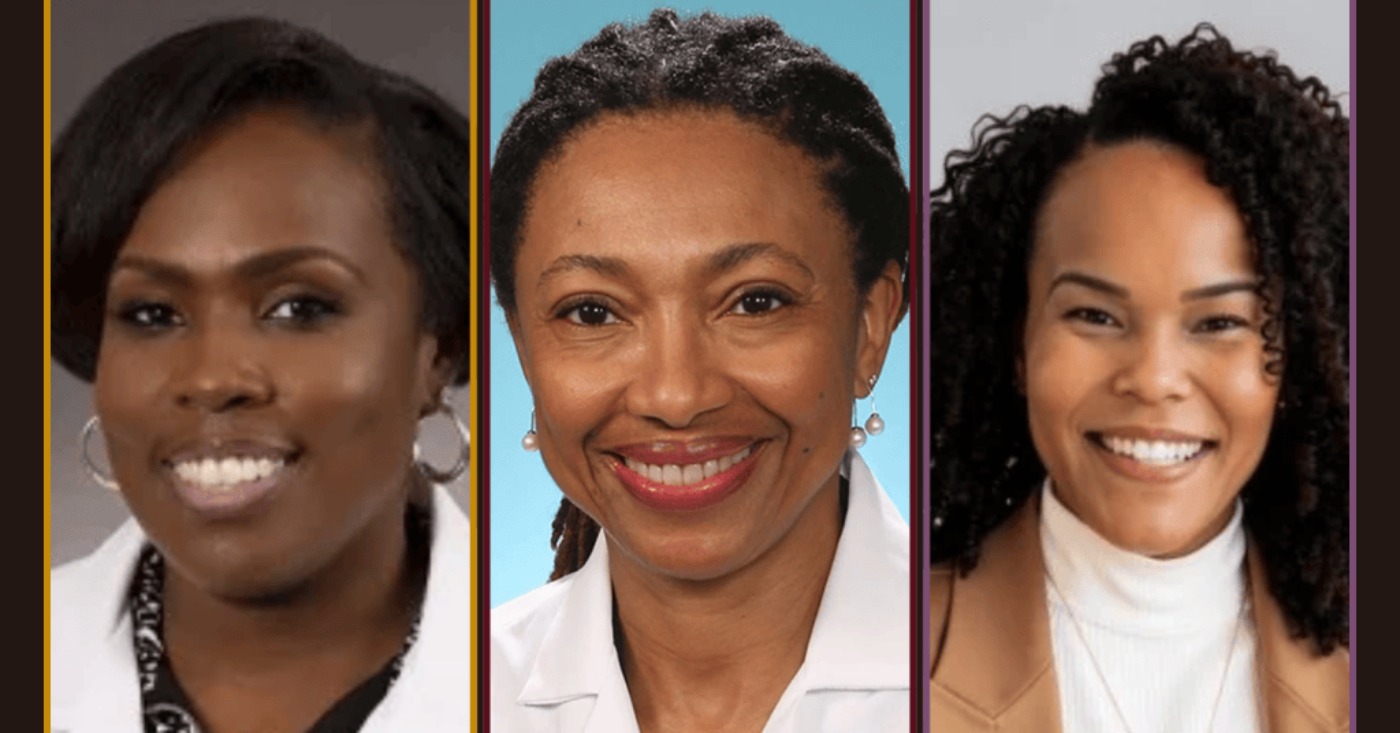
Three Black women chair obstetrics and gynecology departments at major St. Louis medical institutions, bringing experience in patient care, public health, research and medical education to their roles.
Dr. Monique V. Swain chairs the Department of Obstetrics, Gynecology and Women’s Health at Saint Louis University School of Medicine and SSM Health SLUCare Physician Group. Dr. Dineo Khabele chairs the Department of Obstetrics & Gynecology at Washington University School of Medicine. Dr. Jade James-Halbert chairs the Department of Obstetrics and Gynecology at SSM Health DePaul Hospital in Bridgeton.
Their leadership is particularly significant in Missouri, where Black women were 2.5 times more likely than White women to die from pregnancy-related causes from 2019 to 2023, according to the Missouri Department of Health and Senior Services. The state’s Pregnancy-Associated Mortality Review Board determined that 79% of pregnancy-related deaths were preventable.
A 2023 St. Louis County Department of Public Health report found that Black women experienced pregnancy-associated deaths at 2.4 times the rate of White women in the county from 2017 to 2021.
Dr. Kanika A. Cunningham, director of the St. Louis County Department of Public Health, said having Black women in OB/Gyn leadership positions can help influence hospital policies and reduce discriminatory treatment.
“Thinking about the disparities that we see among our Black moms and babies in St. Louis County and even in the city — having a Black OB/Gyn chair means they’re going to advocate and make sure when women go into labor and delivery units they receive fair access to treatment,” Cunningham said.
Swain, who became chair in September, said she was drawn to SSM Health and SLU because of their “genuine commitment to closing health inequities and understanding the social factors that affect care.”
A specialist in breast health and cancer genetics, Swain previously directed Henry Ford Hospital’s obstetrics and gynecology residency program in Michigan. At SLU, she oversees clinical, research and educational programs and nearly 50 faculty members across six subspecialties.
Swain described her position as “more than a title but rather a responsibility to ensure cultural humility, enforce equitable and quality care of all patients, and support the professional development of those that come behind me.”
Her priorities include improving care for aging women through collaboration with specialists treating cardiovascular disease, cancer, osteoporosis and menopause.
“I became a physician to help people and make sure every patient has access to equitable, high-quality care,” Swain said. “I look forward to working with our multidisciplinary teams and communities to improve maternal outcomes, strengthen breast cancer screening, and build a women’s health program that supports patients throughout their lives.”
Khabele is a physician-scientist whose ovarian cancer research explores chemotherapy resistance and how new treatments might overcome it.
She made history in 2020 as the first Black department chair at Washington University School of Medicine.
Khabele previously told The St. Louis American about efforts to diversify the medical workforce, improve training on health disparities and help patients overcome barriers to treatment, including transportation problems.
“I am deeply committed to driving institutional change, conducting research that improves care, training the next generation, and advancing OBGYN and women’s health care in St. Louis and across the region,” she said.
In a 2023 interview with Curiosus, a publication of Barnes-Jewish Hospital and Washington University School of Medicine, she discussed training OB/Gyn specialists to provide “compassionate, culturally sensitive and leading-edge care.”
“That mission aligns with my personal motivation,” Khabele said. “I want to make a difference. The job I have makes it possible for me to help instigate change. I think we have a unique opportunity in St. Louis to lead the nation in developing new ways to address disparities in health care.”
James-Halbert brings more than two decades of experience in women’s health and community medicine to DePaul.
A St. Louis native, James-Halbert attended two historically Black institutions — Fisk University and Meharry Medical College. Her early influences included her childhood pediatrician, Dr. Helen Nash, a pioneer among Black physicians in St. Louis.
James-Halbert spent several years caring for women at Betty Jean Kerr People’s Health Centers and Myrtle Hilliard Davis Comprehensive Health Centers.
She joined SSM Health in 2011 as an OB/Gyn hospitalist, caring for pregnant women and supervising residents and medical students. She chaired DePaul’s obstetrics and gynecology department from 2013 to 2015 and returned to the position in January 2023.
James-Halbert earned a master’s degree in public health from Saint Louis University and later served as director of research and medical services for the St. Louis County health department.
A past president of the Mound City Medical Forum, an organization of Black physicians, James-Halbert has advocated for patients through her involvement with the St. Louis Regional Health Commission.
In an interview published through the commission’s partnership with Humans of St. Louis, she discussed why she pursued public health.
“As much as I love taking care of patients, you do it one patient at a time,” James-Halbert said. “I bumped my head enough to realize we need systems change. The system is what helps more people.”
Sylvester Brown Jr. is the Deaconess Foundation Community Advocacy Fellow.
The post Three Black physicians lead women’s health care appeared first on St. Louis American.
Based on reporting by St. Louis American.
Black History
A Brief History of the San Francisco Bay View National Black Newspaper
SF BAY VIEW — Founded in 1976 by Muhammad Al-Kareem, the San Francisco Bay View National Black Newspaper began as a local effort to promote Black self-improvement and small businesses in the Bayview Hunters Point neighborhood. Originally titled The New Bay View, the publication was modeled after the Nation of Islam’s Muhammad Speaks but focused on secular community news.
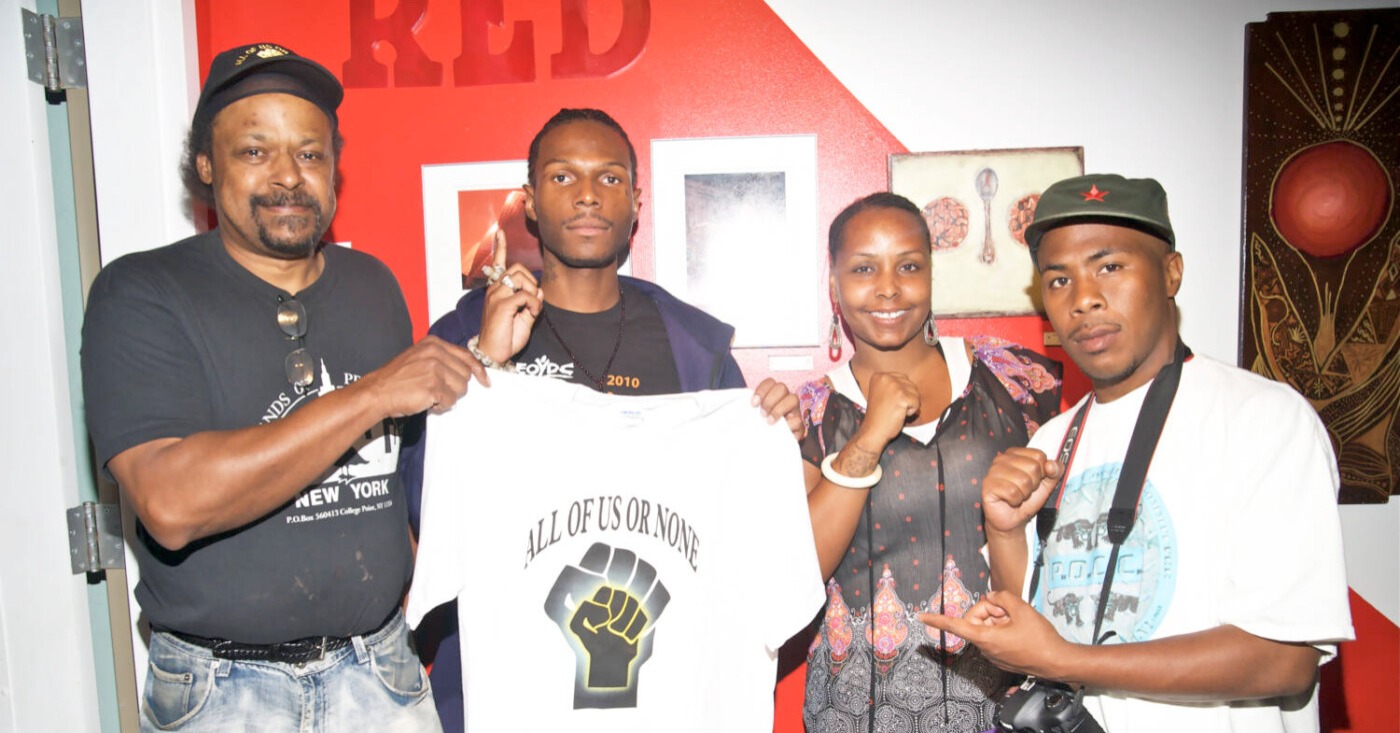
“I tell everybody that the Bay View is the successor to the Black Panther Party’s newspaper” – veteran Black Panther member and BPP archivist Billy X, aka Bill Jennings.
I’m sure that when Muhammad Al-Kareem founded The New Bay View Newspaper in 1976, he did not think that it would be celebrating its birthday a half-century later.
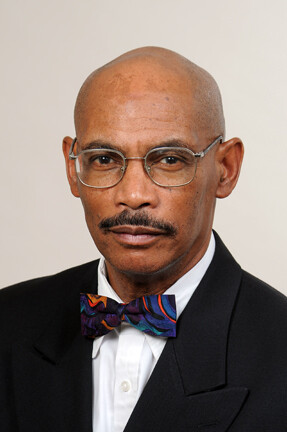
A member of the Nation of Islam and a resident of Bayview Hunters Point, Al-Kareem wanted to create a local version of Muhammad Speaks, which later became The Final Call. He wanted his newspaper to be a local, Black, self-improvement-driven publication without the spirituality.
He produced it sporadically, mostly covering small Black businesses up and down Third Street. In 1991, Muhammad Al-Kareem approached a biracial couple from Alaska, who had recently moved to the area, to query their interest in acquiring the newspaper.
That couple consisted of Dr. Willie and Mary Ratcliff, who had a construction company and were constantly fighting the racist, decades-old San Francisco policy of refusing to give city contracts for construction projects to Black construction companies. So when Al-Kareem offered to sell them The New Bay View, the multibillion-dollar construction industry in San Francisco and the Bay Area was at the top of their hit list.
Al-Kareem sold them the newspaper for $2,000. They changed The New Bay View’s name to The San Francisco Bay View National Black Newspaper. At this time, the paper was black, white and red. In this era, Willie Ratcliff oversaw the distribution of the newspaper, which included distributing 10,000 of the 20,000 newspapers by hand, door to door, in San Francisco.
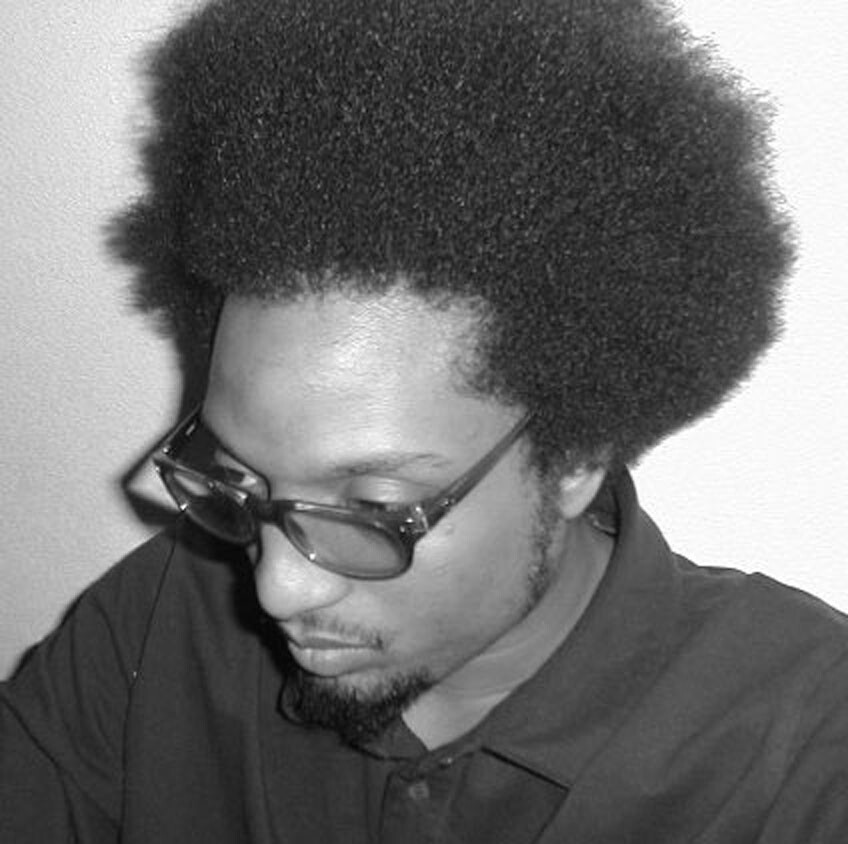
In 1998-99, young veteran Black writers Kevin Weston and Malcolm Marshall approached the SF Bay View about getting a full page regularly for political poetry. They were in their mid-20s, yet I was being mentored by them in a San Francisco-based youth journalism program called Youth Outlook. I was intrigued by the idea of a local Black newspaper because at that time I had only seen The Final Call, the official newspaper of the Nation of Islam.
I watched what Kevin and Malcolm were doing, and I soon jumped into the fray. When I arrived, the newspaper was bustling with the writings of veteran activists like Marie Harrison, who was leading the fight against PG&E’s policy of polluting Hunters Point, and Dr. Ahimsa Sumchai, who was leading the fight against the Navy, which has refused to clean up the radioactive pollution, in Hunter’s Point, created when it participated in building, testing and disposing of material related to the atomic bombs dropped on Nagasaki and Hiroshima, Japan, in World War II. This conscious neglect effectively made the area a super-fund site, a designation as one of the most poisonous places in the country. I met Pierre Labossiere, co-founder of the Haiti Action Committee and a passionate leader in the fight to end the U.S., U.N. and other foreign occupations in Haiti, his beloved homeland.
I had already known Kiilu from working in the community, but I ran into the writings of the late Black Panther Kiilu Nyasha, who had dedicated her life to the movement to free political prisoners. She corresponded regularly with political prisoners and prisoners of war like Mumia Abu-Jamal, Hugo “Yogi” Pinell, Warren Wells, Romaine “Chip” Fitzgerald and Ruchell Magee.
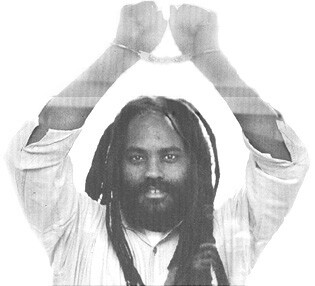
Through the pages of the Bay View, I quickly learned that being a conscious writer who shared my progressive opinion was acceptable at a beginner’s level, but the top level of “freedom-fighter reporting” required the writer to be a direct part of the organizing. The writers that I respect the most were involved in the fight, like El Hajj Malik el Shabazz aka Malcolm X, Mumia Abu Jamal, Huey P. Newton, George Jackson, Steven Biko and Winnie Mandela. The alternative form of reporting is “spectator journalism,” which colleges and universities teach and the mainstream media practices. This is where the reporter creates distance from the subject, supposedly to remain “objective.” While there is a war on Black people, remaining “objective” while our people are being murdered, enslaved, tortured and done unjustly is selling out. It is important for a journalist to understand the political, social and emotional nuance that comes with being engaged in organizing and becoming vulnerable to losing and winning battles with the people being reported on. The Bay View has always been full of freedom fighter writers since I have been around.
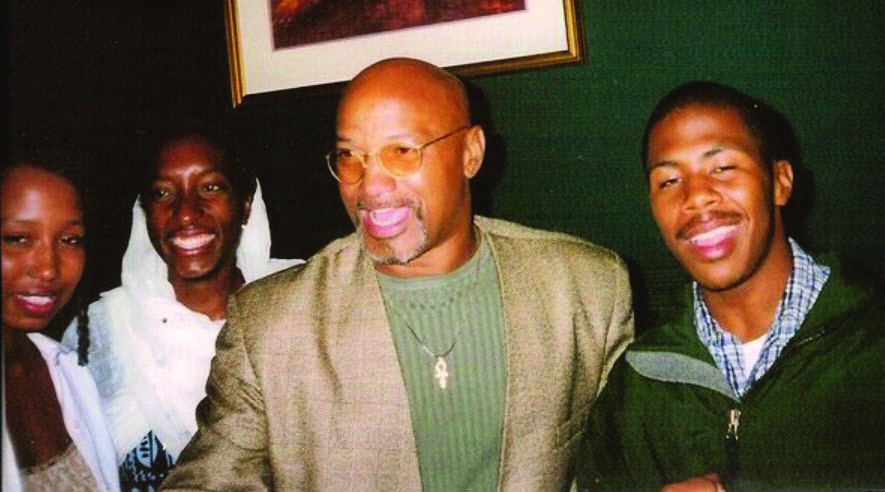
In 2003, graphic designer Terone Ward came aboard and became the creative spine of the paper. At Willie Ratcliff’s suggestion, we added the rising sun from the Black national anthem to the logo, and Terone changed the newspaper’s colors to green and yellow. This was the year that the Behind Enemy Lines section was added to the newspaper, giving incarcerated writers a section to write about their movement, struggles and lives.
This was also the year when Pierre Labossiere and the Haiti Action Committee invited me on a trip to Haiti. I had never met such a determined and resolute group of Black people who were surviving and living in crushing poverty solely because they desired to be free. That week or so I spent in Haiti that year, changed my worldview profoundly. I hadn’t been shaken up mentally like that since I had been to Cuba five years earlier. This was in 2003, and it happened to be approximately six months prior to the U.S. overthrow of the first democratically elected president, Jean-Bertrand Aristide.
Locally, I was becoming a reporter who specialized in police terrorism. Mary and Willie encouraged the hard-hitting, detail-laden, traumatic stories about Black life in the U.S. Over my career at the Bay View, I wrote about police terrorism cases like Idriss Stelley, Terrance Mearis, Laronte Studdesville, Gary King, Oscar Grant, Casper Banjo, Anita Gaye, Nadra Foster, Lovelle Mixon, Kenneth Harding, Mario Woods, Raheim Brown, Aiyana Jones, Sahleem Tindle, Mike Brown, Tamir Rice, Banko Brown and more. In the early 2000s, we were the only newspaper in the Bay Area writing from our people’s perspective – the victims’ – on this topic. And we are still the only publication consistently publishing stories about police terrorism and murder in the Black community. We have recently expanded that coverage to include ICE agents kidnapping Black immigrants and unwarranted government sponsored AI surveillance tools such as flock and axiom cameras, police drones, and data centers.
Back in this time, the internet was starting to really take off. We were the first Black newspaper in the Bay to have a website. The back cover was filled with local activists, artists and community people; we played the part in the society of social media, before social media was even invented. At one point around 2006, we were getting 2.3 million hits a month. Then we were targeted and hacked, and our internet archive up to that point was destroyed.
In 2006, I won an ethnic media award at the New America Media Awards for my coverage of refugee families migrating from Katrina affected areas to San Francisco. The Bay View was the only newspaper in the Bay to appoint a Katrina editor, who lived in the affected zone, allowing us regular access to accurate information.
In 2007, a woman in the community called me to hear how the Oakland Police were exploiting club owners in downtown Oakland. When I was leaving after interviewing her, reporter Chauncey Bailey walked in to interview her for the Oakland Post. The next day, Chauncey Bailey was dead. The Chauncey Bailey Project formed. It was a consortium of journalists from all walks of life who came together to investigate Chauncey Bailey’s murder. I was invited to the first couple of meetings, then I discovered that some of this journalism work was being used by the police to build a case. I wanted to investigate police involvement prior to the murders, which was not a road that the Chauncey Bailey Project was interested in pursuing.
Because I knew one of the suspects and the victim, the Chauncey Bailey Project editors from The Center for Investigative Journalism asked me to be an informant for them. I refused. They then utilized one of their well-known mainstream Black muppet reporters to write a hit piece on me in the Oakland Tribune. Then shortly after, a cover-story hit piece in the East Bay Express soon followed. The newspapers’ writers lied by inferring that I was somehow involved in setting Chauncey Bailey up, and they were attempting to damage my reputation and character. These two hit pieces were retaliation for refusing to play ball.
In August 2008, longtime Black KPFA broadcaster Nadra Foster got into a shouting match with a white manager at KPFA named Lois Withers. Flustered, Withers called and lied to the Berkeley police, saying that Nadra was a crazy woman who had run into the KPFA studios and refused to leave. This was a total lie; Nadra had been a broadcaster at KPFA for over a decade at that point. She was viciously beaten to the ground, kicked in the head, had her arm and vagina stomped on by police, then she was hogtied and taken to jail. Certain broadcasters saw it happen. I was not there, but within hours I received the call that the broadcasters who witnessed the ordeal were waiting on me to break the story because they feared for their jobs. I broke the story by interviewing the witnesses on air at KPFA and, days later, in the San Francisco Bay View.
KPFA tried in every way to get me off covering Nadra’s police beating at KPFA, from passive-aggressive tactics all the way down to direct peer pressure. When that did not work, Pacifica staff and the infamous and dead KPFA lawyer Dan Siegel engineered an internal complaint against me for “intimidating staff.” My real crime was not letting KPFA listeners forget how Nadra Foster was lied about, beaten, hogtied, incarcerated and how she lost her lawsuit. For years, I reported on the minute developments in Nadra’s case in the SF Bay View. The white liberals running KPFA repaid me with a lifetime ban from the station. Despite that, throughout 2024, I was part of the radio show staff and produced news pieces weekly on the Pacifica Radio network, which includes KPFA, on “Capitalism, Race, and Democracy.” They voted me off the show in my absence, after I argued against the non-Black producers wanting to put a white reporter over reporting on the Pan Afrikan revolution in Africa, being led by the Sahel States.
To my knowledge, the widely known case of Nadra Foster, a local Black woman being beaten by Berkeley police after a KPFA white liberal manager lied on her, was not reported anywhere else in the print media.
On New Year’s Day in 2009, BART police murdered Oscar Grant at a BART station in East Oakland, and rebellions followed, week after week, in downtown Oakland. I was initially involved with the street organizing, then I started reporting on the story for the SF Bay View and KPFA. I soon became a defendant after being swept up by police during the initial rebellion. I became one of over 100 defendants, known as the Oakland 100, who were arrested after fighting for the indictment of the policemen involved in murdering Grant. During my arrest, I was stripped of my camera that I used for newspaper photography. OPD refused to return it after I went to court and received a court order. The person responsible for helping me, at the police station, was “sick” or “out for an unspecified amount of time” every time I tried to retrieve my belongings. The Oakland Police Department essentially stole my camera. That was a very small price to pay, during this era, for all of the people who were awakened to police terrorism in the Black community and the lack of police accountability, because of our embedded coverage. The arson charge I faced from the rebellion was dismissed after a 13-month legal fight. The SF Bay View covered the Oscar Grant rebellions, the cases of the Oakland 100, the murder trial of Johannes Mehserle, and the police execution of Lovelle Mixon, extensively within our pages.
Around the time my case ended, I connected with the Haiti Action Committee and Walter Riley of the Haiti Emergency Relief Fund and was on a flight to Port-au-Prince for a second time. This time, Anhk Marketing, run by longtime friends of mine Kamel Bell and Tom Flannery, talked to rappers Yasiin Bey and Jay Electronica about donating $6,000 to a delegation that consisted of doctors, nurses and journalists whose job would be to document the Haitian earthquake of 2010 from the ground, as well as offer free health care to the survivors and people in general. We brought over 35 boxes of medicine donated by the medical community in the Bay Area. When we got to Haiti, the despair was on another level, almost beyond comprehension. There was rubble from fallen buildings everywhere littering the capital, and you could smell the stench of people who were crushed beneath the rubble, whose corpses could not be reached without heavy machinery. You saw armies of rats and flies infesting those areas.
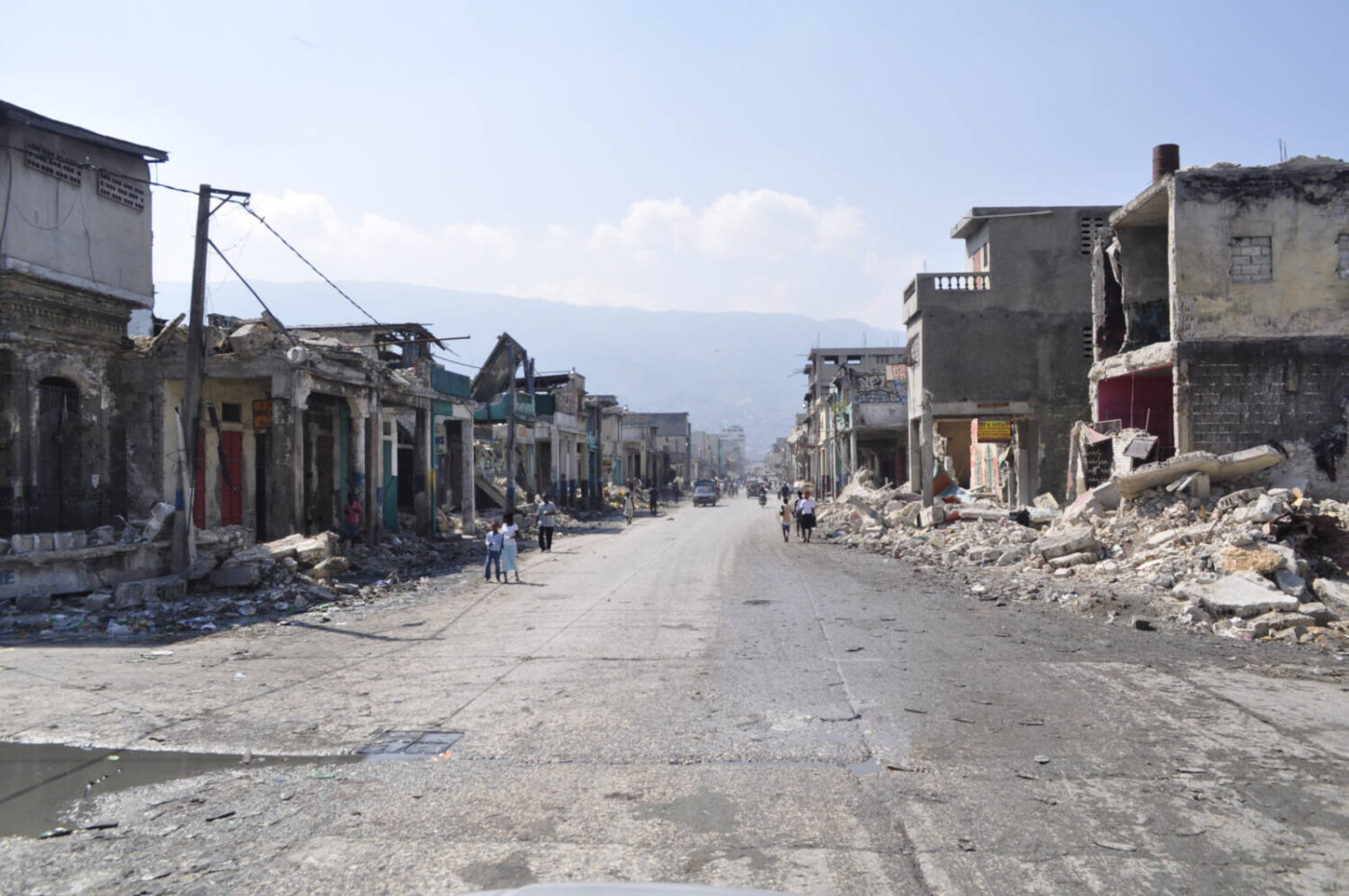
We had the opportunity to work with legendary Haitian freedom fighters and community workers like Rhea Doll and the late Jean Ristil, whom the journalists in the delegation assisted in water distribution throughout Cité Soleil, a prominent neighborhood in Port-au-Prince. We saw the unbearable desperation in the eyes of a people who are/were being robbed of everything through imperialist means. Haiti was once called the jewel of the Antilles by its French colonizers because it was the most profitable colony that France ever had. Now Haiti is considered the poorest country in the Western Hemisphere and one of the poorest in the world.
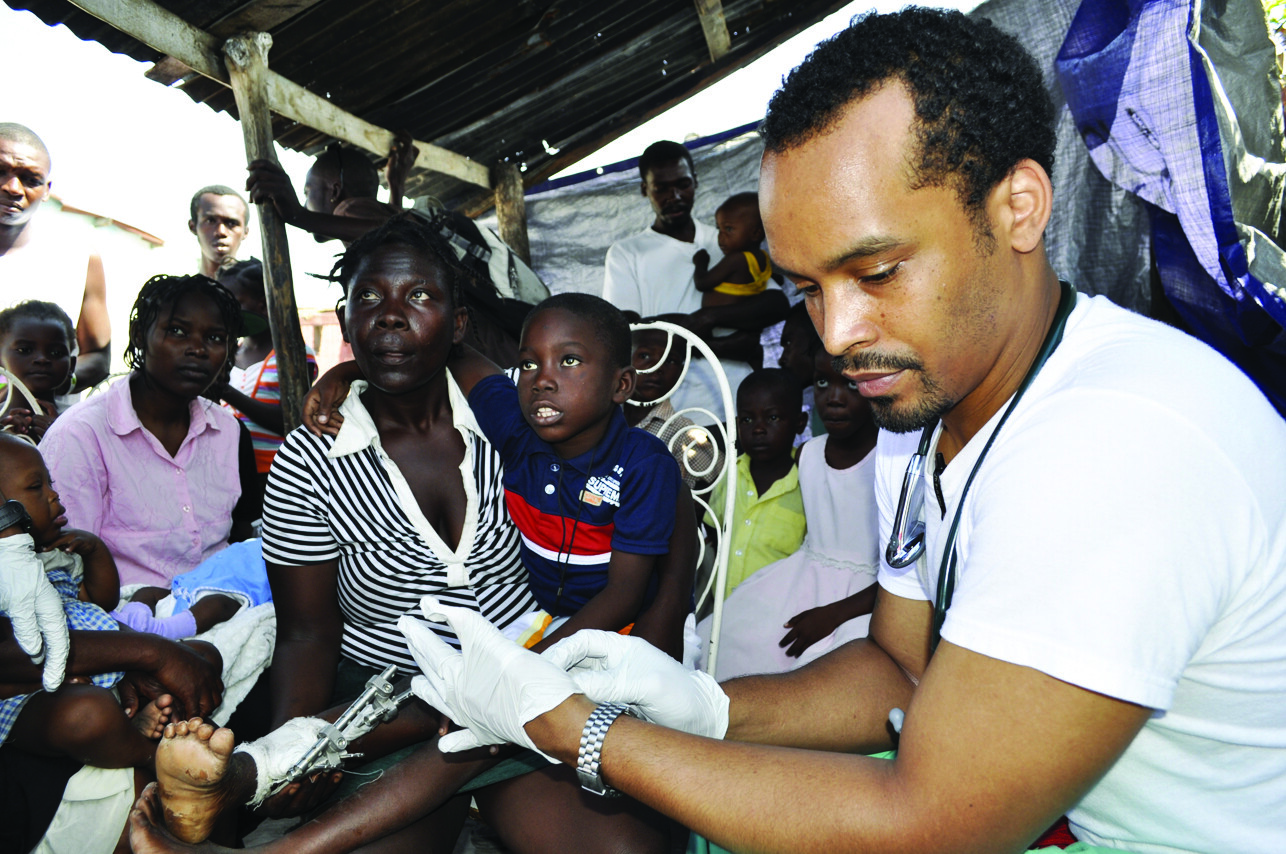
The medical half of our delegation set up a makeshift tent in the middle of a block and started offering free health care. Led by Dr. Chris Zamani, they worked on people hurt by the earthquake as well as people suffering from the physical conditions that imperialism and extreme poverty create.
It seemed as if they worked a taxing eight hours straight a day in the beaming, tropical, Caribbean sun. When it was time to leave the land of the Haitian Revolution, we all had tears in our eyes because it was difficult to say goodbye to people who had become our family and desperately needed what we could offer. Haiti for me is what Africa is for a lot of people. I felt a strong kinship with the people I met, and many times I saw my own reflection in their spirits.

In 2006, Malcolm Shabazz, the grandson of Malcolm X, was introduced to me by the legendary Japanese activist Yuri Kochiyama. Initially, she asked me to help publish Young Malcolm’s words in the Bay View while he was incarcerated. I agreed. He ended up thanking me, then in 2010, followed up by coming to the Bay to meet my comrade Rashida and me in person. Soon after we met, he made the Bay home and never left for an extended period. While based in the Bay, Malcolm spoke at a number of masjids and community centers locally and around the nation while developing his politics and his speaking style. His work was covered extensively in the Bay View. One of the most memorable people that we met together was the late prisoner of war, veteran Panther and member of the Black Liberation Army Sekou Odinga, who was being held captive in New York for his role in liberating Assata Shakur. Our trip was made possible by community organizer and WBAI veteran radio broadcaster Dequi Kioni-Sadiki. Another memorable person we met was veteran Black Panther, political prisoner, award-winning journalist and author Mumia Abu-Jamal, who is still being held captive to this day in a concentration camp in Pennsylvania. Both of these encounters were documented in the Bay View.
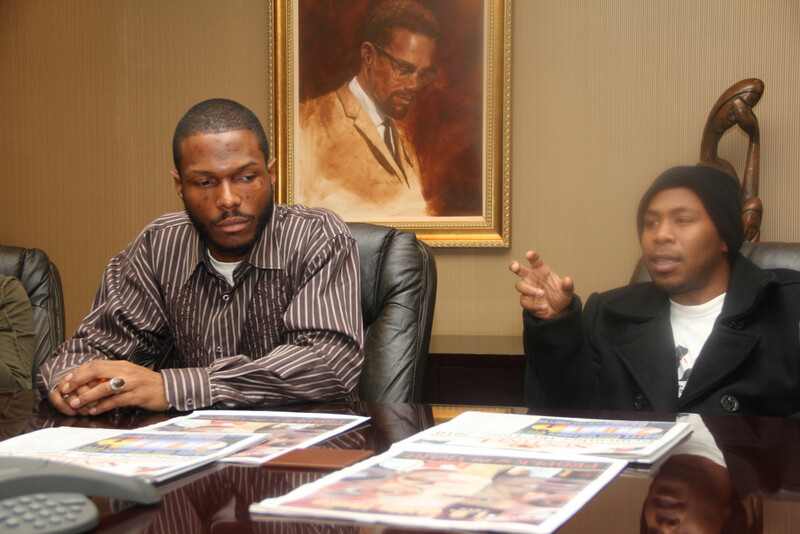
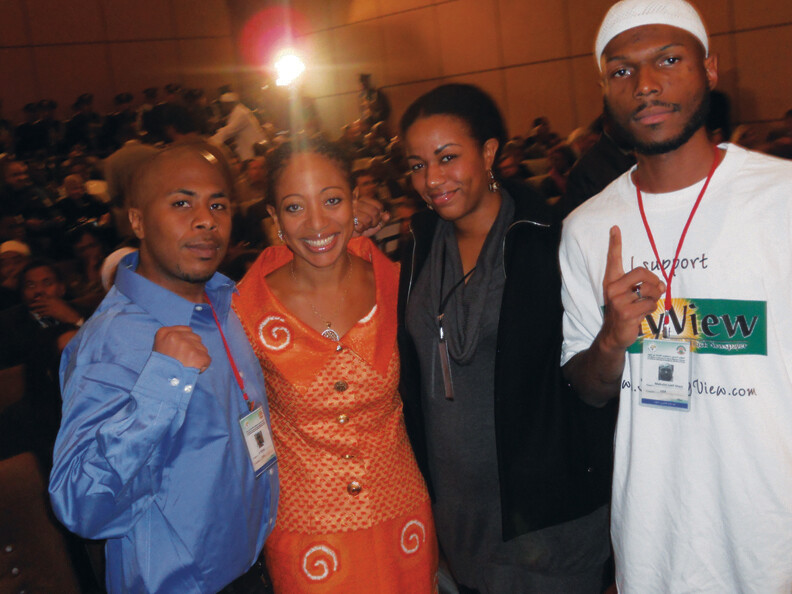
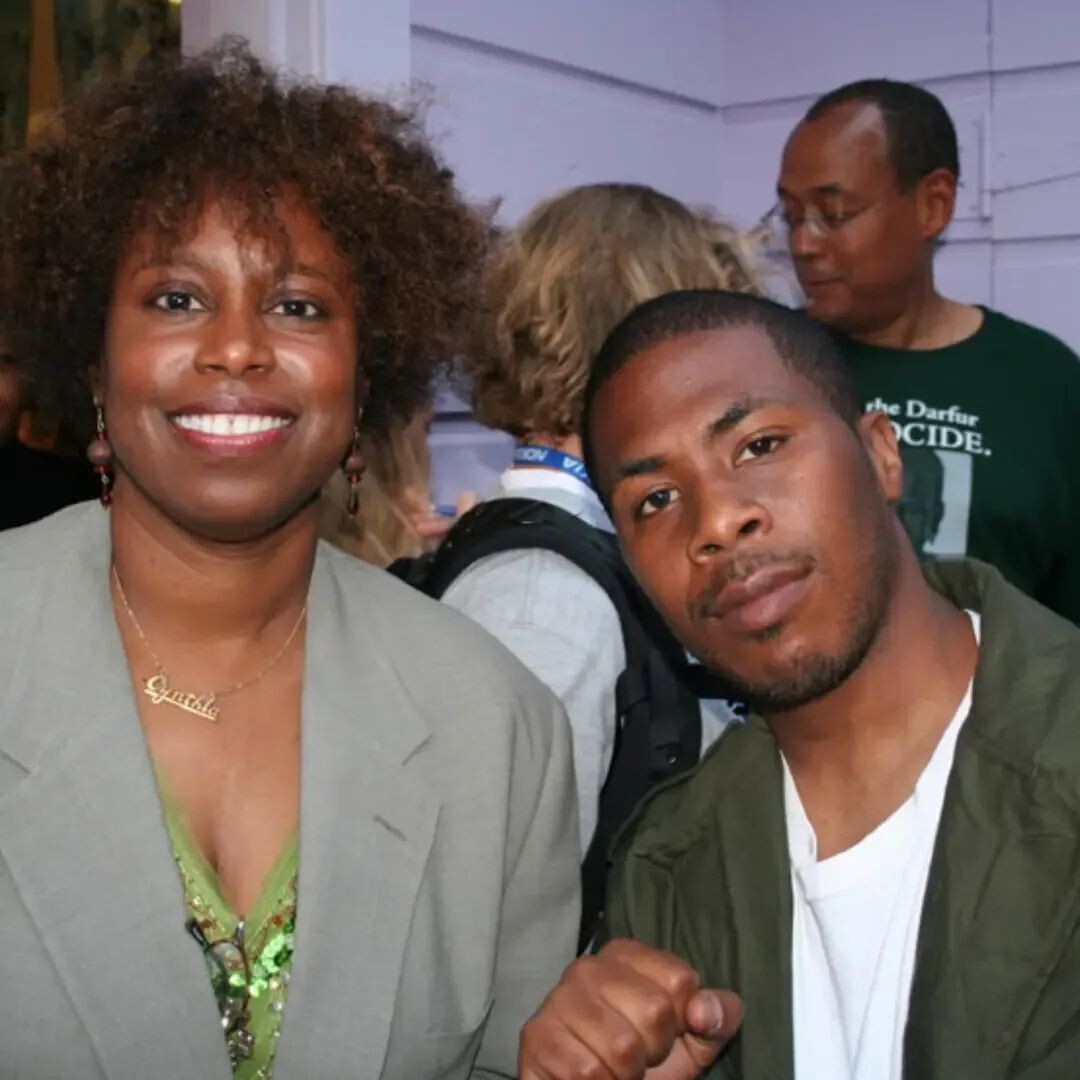
Malcolm’s Hajj to Mecca, as well as our trip with former Congresswoman and presidential candidate Dr. Cynthia McKinney to Tripoli, Libya, were major milestones in our lives, and the details were all intricately recorded in the San Francisco Bay View. When El Hajj Malcolm Latif Shabazz was assassinated in Mexico City under mysterious circumstances in 2013, the Bay View connected with Afro-Mexican activists looking for answers.
In 2015, prisoner of war Hugo “Yogi” Pinell of the San Quentin 6 was assassinated in the California concentration camp system, after more than 40 years in solitary confinement. The Bay View covered this event and the memorials that followed. No other media platform covered this event as thoroughly or as promptly as the Bay View did.
We are definitely proud to have played a part in the California Prison Strikes of 2011 and 2013, where all organized formations united to protest the hellish conditions of indefinite solitary confinement in California’s SHU program. We wrote supporting stories that included the voices of elected officials, nonprofit leaders and activists, while we also published stories from prisoners describing how important and historic these strikes were.
In 2012, I got shot in East Oakland after getting into an argument in the streets. I was down for about four to six months. After that, occasionally I would write for the newspaper, primarily for money because I was unemployed, although I was given some help from my family. For a long time, I had lost the fire to be a reporter.
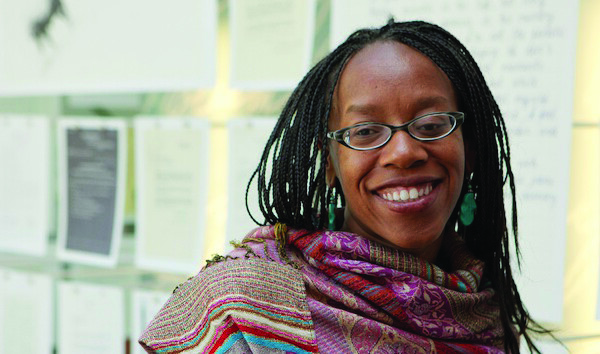
In 2023, I returned to the San Francisco Bay View after a few years’ hiatus from writing. I applied for several grants with the help of Lateefah Simon, who later became the East Bay congresswoman. The Bay View received funding to create the Mumia Abu-Jamal School of Journalism, which notably included students who became staff writers like Zaire Saunders, Robbie and Leah Harmony. I was also able to hire the very talented graphic designer Tasin Sabir, who was one of my early journalistic colleagues at Youth Radio. One of the highlights of this era for me was that my daughter Xion joined the journalism school and the staff. This was also when attorney Allyssa Victory joined the staff as our legal editor.
After six months at the head, I disagreed with the Ratcliffs on some key issues regarding the newspaper and left. Kevin Epps became the executive editor and served in that role for about a year and a half. After he was convicted in a case stemming from a 2016 incident, I returned. I was given back the job of editor in chief and started working alongside Leah Harmony and Tabari Morris, the other two components of the executive staff.
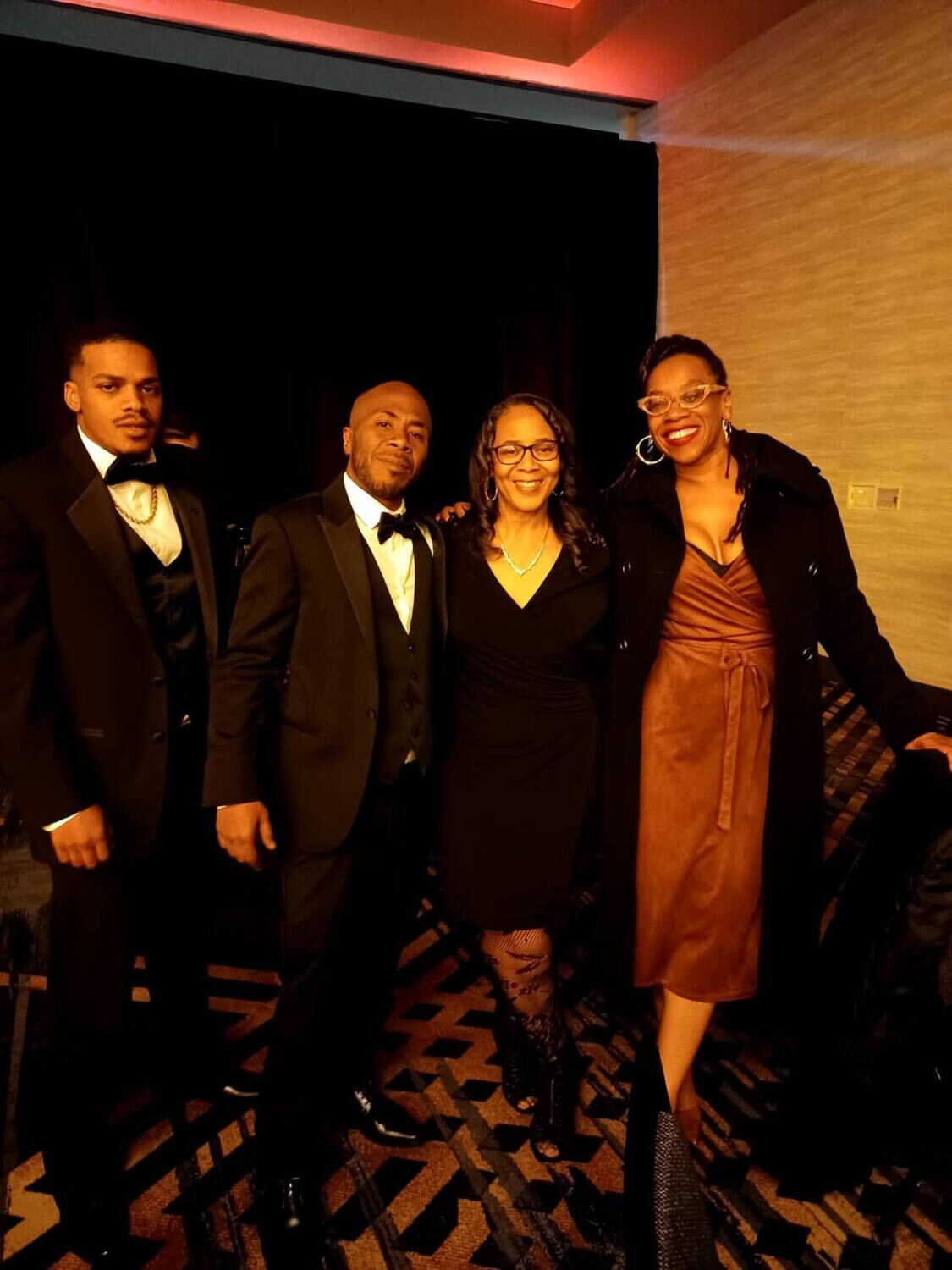
At this point, the San Francisco Bay View is rich in culture, politics and, as you read in this historical piece, experience; but advertisements are not making enough money to pay the bills. We appreciate donations, but we truly need benefactors and community sponsors who can financially help to foot the bills involved in producing a monthly community print newspaper that is free. During the most fascist period of our lives up until now, we have to decide if we will do our part to ensure that Black people have an unbought and unfiltered voice to educate ourselves and to fight the power. In the words of the late Black Panther and Black Liberation Army veteran Assata Shakur, “we don’t have nothing to lose but our chains.”
Please consider donating generously to the SF Bay View during Black Friday, Giving Tuesday and during this holiday season. Also the community is invited to attend the 50th Anniversary Party of the San Francisco Bay View Newspaper on Saturday, Dec. 5, at 6 p.m. at the Black Panther Party Museum in downtown Oakland. Don’t meet us there, beat us there. All Power to the People!
JR Valrey is a veteran journalist and Editor in Chief at the San Francisco Bay View. He can be reached at [email protected]
The post A Brief History of the San Francisco Bay View National Black Newspaper appeared first on San Francisco Bay View.
Based on reporting by SF Bay View.
Black History
IN MEMORIAM: Andrea Stewart-Cousins, New York’s First Woman Senate Leader, Dies at 76
NEW YORK AMSTERDAM NEWS — New York state Senate Majority Leader Andrea Stewart-Cousins, a trailblazing legislator who broke historical barriers as the first woman and first Black woman to lead the chamber, has died at the age of 76. Senate officials confirmed her passing occurred on November 27, noting her decades of public service representing the 35th Senate District.

Andrea Stewart-Cousins, the longtime New York state Senate majority leader who made history as the first woman and first Black woman to lead the chamber, has died. She was 76.
Senate Majority Communications Director Mike Murphy confirmed her death in a statement released Friday:
“It is with profound sadness that I announce the passing of New York State Senate Temporary President and Majority Leader Andrea Stewart-Cousins, who died on November 27, 2026, at the age of 76.
Serving the people of the 35th Senate District was one of the greatest honors of her life. Throughout her decades in public service, Stewart-Cousins made a profound impact on the lives of New Yorkers. She was a groundbreaking leader who shattered one of New York’s highest glass ceilings, becoming the first woman to lead the New York State Senate.
She is survived by her brother Robert Stewart Jr and her three children, Kevin, Steven, and Candice, and her six grandchildren. She was preceded in death by her husband, Thomas Cousins.
We ask that you keep Majority Leader Stewart-Cousins’ family, friends, and staff in your thoughts and prayers during this difficult time. Information regarding memorial services and public tributes will be shared in the coming days. We will have further information about the legislative succession in the coming weeks.”
No cause of death has been announced. Funeral arrangements are pending.
The post Andrea Stewart-Cousins, New York’s first woman Senate leader, dies at 76 appeared first on New York Amsterdam News.
Based on reporting by New York Amsterdam News.
Black Press
Iowa’s State Black and Brown Caucus Demand Investigation into Lead Azine Detonation
The Iowa Legislative Black and Brown Caucus is demanding a full independent investigation following the U.S. Army’s controlled detonation of 10,000 pounds of degraded lead azide at the Iowa Army Ammunition Plant. Legislators expressed serious concerns regarding environmental justice and public health, questioning why the toxic material was allowed to deteriorate for decades until it became too unstable to move. The caucus is calling for transparency regarding potential lead contamination of local soil, water, and agricultural products that sustain rural and working-class communities. Read more.

Note: On Nov. 25, after court and state-requested delays, the U.S. Army completed two simultaneous controlled detonations of about 10,000 pounds of degraded lead azide which had been stored in the Army Ammunition Plant in Middletown. The detonation followed the discovery in March that the material was too unstable to move. In October, local residents were informed of the plan, and the Environmental Protection Agency approved it on Nov. 13. The Army ordered evacuations for residents within a five-mile radius. Protests ensued, and the Eighth Circuit Court paved the way for today’s detonation within a concrete bunker. The states of Illinois and Missouri are also activated monitoring and emergency coordination.
Portions of the statement by the Black and Brown Caucus of Iowa’s state legislators are below:
Lead is highly toxic, and there is no known safe level of lead exposure. The projected release of lead-containing dust raises serious concerns about the health of our children, pregnant people, agricultural workers, livestock, and anyone who may come into contact with contaminated air, soil, water, or surfaces.
Iowans deserve answers and accountability. The Army’s failure to address this material sooner has left our communities facing a dangerous situation, and at the very least, Iowans deserve full transparency, accountability, and every possible safeguard to protect our people, our land, and our future.
The consequences of this failure have been placed on the shoulders of Iowa families and communities.
The Iowa Legislative Black and Brown Caucus is calling for a full, independent
investigation into how nearly 10,000 pounds of lead azide were allowed to deteriorate at the Iowa Army Ammunition Plant for more than two decades, ultimately reaching a point where the Army claims it is too dangerous to safely move or dispose of through alternative methods.
This situation raises serious questions about environmental justice, public health, government
transparency, and the responsibility of public institutions to protect the people they serve.
For generations, Black, Latin, immigrant, rural, and working-class communities have experienced the consequences of environmental hazards and industrial pollution in Iowa. This is a matter of public health, economic security, and basic human dignity.
What happens when lead-containing particles settle on farmland, contaminate water sources, or
accumulate on crops and produce? What protections are in place for livestock, farm animals, and the people who work with, consume, and depend on these agricultural products? These are questions that deserve clear, science-based answers, not assumptions or reassurances.
Every Iowan deserves clear information, meaningful protections, and confidence that their health and safety are being prioritized. We call upon state and federal authorities to ensure:
- Timely, accessible information about the planned operation, potential exposure, and scientific evidence
- Safety advisories and emergency information reach all affected communities, including through Spanish-language and other accessible communications
- Assessment of potential impacts on farmland, crops, livestock, water sources, and agricultural operations, with clear guidance for producers and appropriate testing and remediation
- Independent air, soil, and environmental monitoring with findings made publicly available
- Prioritization of children, pregnant individuals, older adults, outdoor workers, wildlife, and households facing barriers to transportation, healthcare, or emergency services
- Clear expectations for long-term environmental testing, remediation, public health follow-up, and continued communication after the operation
- Full accounting of oversight and decision-making including a documented timeline of how hazardous materials were stored, when deterioration and associated risks were identified, what actions were considered, and how federal, state, local, and civilian personnel were notified and protected

State Rep. Ruth Ann Gaines
State Rep. Rob Johnson
State Rep. Mary Madison
State Rep. Jerome Amos
State Senator Renee Hardman
State Rep. Angel Ramirez
State Rep. Megan Srinivas
State Rep. Ross Wilburn
State Rep. Elect Vincent Collis
State Senator Elect Samy El-Baroudi
State Rep. Elect Ivette Muhammad
State Rep. Elect Shawn Olorundami
State Rep. Elect Nick Salazar
State Senator-Elect Nikhil Wagle
Former State Rep. Ako Abdul-Samad
The source for this statement is the Facebook page for the Iowa Black and Brown Caucus of State Legislators.
Black Press
Iowa’s State Black and Brown Caucus Demand Investigation into Lead Azine Detonation
The Iowa Legislative Black and Brown Caucus is demanding a full independent investigation following the U.S. Army’s controlled detonation of 10,000 pounds of degraded lead azide at the Iowa Army Ammunition Plant. Legislators expressed serious concerns regarding environmental justice and public health, questioning why the toxic material was allowed to deteriorate for decades until it became too unstable to move. The caucus is calling for transparency regarding potential lead contamination of local soil, water, and agricultural products that sustain rural and working-class communities. Read more.

Note: On Nov. 25, after court and state-requested delays, the U.S. Army completed two simultaneous controlled detonations of about 10,000 pounds of degraded lead azide which had been stored in the Army Ammunition Plant in Middletown. The detonation followed the discovery in March that the material was too unstable to move. In October, local residents were informed of the plan, and the Environmental Protection Agency approved it on Nov. 13. The Army ordered evacuations for residents within a five-mile radius. Protests ensued, and the Eighth Circuit Court paved the way for today’s detonation within a concrete bunker. The states of Illinois and Missouri are also activated monitoring and emergency coordination.
Portions of the statement by the Black and Brown Caucus of Iowa’s state legislators are below:
Lead is highly toxic, and there is no known safe level of lead exposure. The projected release of lead-containing dust raises serious concerns about the health of our children, pregnant people, agricultural workers, livestock, and anyone who may come into contact with contaminated air, soil, water, or surfaces.
Iowans deserve answers and accountability. The Army’s failure to address this material sooner has left our communities facing a dangerous situation, and at the very least, Iowans deserve full transparency, accountability, and every possible safeguard to protect our people, our land, and our future.
The consequences of this failure have been placed on the shoulders of Iowa families and communities.
The Iowa Legislative Black and Brown Caucus is calling for a full, independent
investigation into how nearly 10,000 pounds of lead azide were allowed to deteriorate at the Iowa Army Ammunition Plant for more than two decades, ultimately reaching a point where the Army claims it is too dangerous to safely move or dispose of through alternative methods.
This situation raises serious questions about environmental justice, public health, government
transparency, and the responsibility of public institutions to protect the people they serve.
For generations, Black, Latin, immigrant, rural, and working-class communities have experienced the consequences of environmental hazards and industrial pollution in Iowa. This is a matter of public health, economic security, and basic human dignity.
What happens when lead-containing particles settle on farmland, contaminate water sources, or
accumulate on crops and produce? What protections are in place for livestock, farm animals, and the people who work with, consume, and depend on these agricultural products? These are questions that deserve clear, science-based answers, not assumptions or reassurances.
Every Iowan deserves clear information, meaningful protections, and confidence that their health and safety are being prioritized. We call upon state and federal authorities to ensure:
- Timely, accessible information about the planned operation, potential exposure, and scientific evidence
- Safety advisories and emergency information reach all affected communities, including through Spanish-language and other accessible communications
- Assessment of potential impacts on farmland, crops, livestock, water sources, and agricultural operations, with clear guidance for producers and appropriate testing and remediation
- Independent air, soil, and environmental monitoring with findings made publicly available
- Prioritization of children, pregnant individuals, older adults, outdoor workers, wildlife, and households facing barriers to transportation, healthcare, or emergency services
- Clear expectations for long-term environmental testing, remediation, public health follow-up, and continued communication after the operation
- Full accounting of oversight and decision-making including a documented timeline of how hazardous materials were stored, when deterioration and associated risks were identified, what actions were considered, and how federal, state, local, and civilian personnel were notified and protected

State Rep. Ruth Ann Gaines
State Rep. Rob Johnson
State Rep. Mary Madison
State Rep. Jerome Amos
State Senator Renee Hardman
State Rep. Angel Ramirez
State Rep. Megan Srinivas
State Rep. Ross Wilburn
State Rep. Elect Vincent Collis
State Senator Elect Samy El-Baroudi
State Rep. Elect Ivette Muhammad
State Rep. Elect Shawn Olorundami
State Rep. Elect Nick Salazar
State Senator-Elect Nikhil Wagle
Former State Rep. Ako Abdul-Samad
The source for this statement is the Facebook page for the Iowa Black and Brown Caucus of State Legislators.
Black Press
Harlem Neighbors Feed Neighbors, Senator Cleare’s Thanksgiving Giveaway Brings Hope to the Table
HARLEM COMMUNITY NEWSPAPERS — State Senator Cordell Cleare partnered with local businesses and community activists to host her annual Turkey and Produce Giveaway on Friday, Nov. 22. Held at the Adam Clayton Powell Jr.
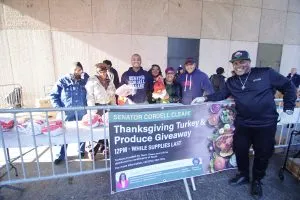
The spirit of Thanksgiving came alive in Harlem on Friday, November 20, as State Senator Cordell Cleare and community partners brought neighbors together for her annual Turkey and Produce Giveaway at the Adam Clayton Powell Jr. State Office Building Plaza.
Beginning at noon, residents visited the plaza at 163 West 125th Street to receive free food on a first-come, first-served basis. The holiday distribution included hundreds of donated turkeys and boxed meals, along with hot turkey dinners, fresh produce and traditional fixings to help families prepare for Thanksgiving.
For households working to stretch their budgets, the giveaway offered practical support during a season when grocery bills and other necessities can place added pressure on family finances.
“Times are particularly harsh economically, there is a lot of anxiety and uncertainty, and if we can help in any way, this is what we do,” Cleare said.
The senator credited local businesses, community organizations and activists with answering her office’s call for donations and assistance. Their contributions helped provide constituents of the 30th District with food for their holiday tables.
“Typically once again, we have Harlem neighbors helping fellow Harlemites,” Cleare said, highlighting the community cooperation behind the annual effort.
Beyond distributing turkeys, the event offered several forms of food assistance, including prepared meals for residents seeking an immediate dinner and produce and fixings for those planning to cook at home.
Cleare expressed gratitude for the partners who contributed, describing the gathering as an opportunity to ease financial strain while helping residents enjoy the upcoming holiday.
With neighbors leaving the plaza carrying bags of food, the giveaway reflected Harlem’s enduring tradition of mutual support. Through donated meals, shared resources and community commitment, Cleare and her partners helped bring Thanksgiving comfort to local households, demonstrating how collective generosity can make a meaningful difference for families.
Based on reporting by Harlem Community Newspapers.


Cardinal Ritter is headed back to the state championship!

COMMENTARY: My Truth — We Can Realize the Dream Together

‘i Hope It Makes People Want to Be 100 Percent Themselves’

COMMENTARY: What’s the Best Meal Served During Thanksgiving?

Queen Latifah Turns Affordable Housing Mission into New Doc

Three Black Physicians Lead Women’s Health Care

COMMENTARY: Who Can Afford to Be Generous Anymore?

A Brief History of the San Francisco Bay View National Black Newspaper

Bennett College Pockets $12 Million for Aaron Douglass Harriet Tubman Painting Sale at Sotheby’s

IN MEMORIAM: Andrea Stewart-Cousins, New York’s First Woman Senate Leader, Dies at 76

HISTORY MADE: Keisha Lance Bottoms Becomes First Black Woman Elected Governor in American History

Multi-Faith Leaders Representing 10 Million People Launch National Anti-Authoritarian Initiative

Christianity’s Racial History

Hundreds of Black Christian Leaders Arriving in Israel for Martin Luther King-Inspired Mission

Keisha Lance Bottoms to Govern State Where Her Great-Great-Grandfather Was Enslaved

Michael Shiner: The Enslaved Man Who Wrote His Way into American History

Don’t Pass the Torch. Expand the Circle.

Superb Woman: Destiny B. Sadler

DOJ Fights to Keep Rep. Ilhan Omar’s Search Warrant Sealed: Report

OP-ED: Closing the Next Digital Divide — Communities of Color Must Have a Voice in the AI Future
Cardinal Ritter is headed back to the state championship!

How We’ve Kept Our Events Fresh Since 2009 #shorts

How Mentorship Made Sustainable Real Estate Development Possible #shorts

The Missing Link That Brought Playprofessionals Together #shorts

Preparation: The Key to Sustaining Success #shorts

Why Strong Connections Matter in the Black Business Ecosystem #shorts

Life After Football: How I Rediscovered the Joy of Learning #shorts

Chevy Tahoe: What’s Worth Keeping—and What Isn’t? #shorts

Car Buying Takes 14 Hours—What’s Your Time Worth? #shorts

Cadillac VISTIQ Road Noise: Test This Before You Buy #shorts
-

 Black History1 week ago
Black Barbershops Have Long Given Neighborhood Politics a Place to Unfold.
-
 Featured1 week ago
How Sick Must America Get Before Saying Enough to RFK
-

 Black History6 days ago
Hoodoo Heritage Month Celebrates Origins of African American Folk Medicine
-

 Black History6 days ago
PRESS ROOM: Donalds Transition Website Now Open to All Floridians Who Want to Serve
-

 Featured6 days ago
Scott Colom’s Nike Challenge Goes National, Freshman Democrats Get a Surprise 📱
-

 Featured1 week ago
How to Rob a Bank
