
Movies
Janelle Monae to star In upcoming live action Disney movie
ROLLINGOUT.COM — Janelle Monae is set to provide new music for the live-action remake of a Disney classic.


By Rollingout.com
Janelle Monae is set to provide new music for the live-action remake of a Disney classic.
The 33-year-old singer and actress already has a voice acting role as a Pekingese dog named Peg in the upcoming reboot of the 1955 Lady and the Tramp animated movie, but it has now been revealed she will lend her voice to the production’s soundtrack too.
According to Variety magazine, Monae will perform two original songs for the film, and her artist collective Wondaland is also “reinventing” the “Siamese Cat Song” from the original movie.
The song – which features the refrain “We are Siamese if you please / We are Siamese if you don’t please” – has long been considered an offensive representation of Asian culture, and will be reworked by Wondaland contributors Nate “Rocket” Wonder and Roman GianArthur for the remake.
Kaylin Frank, a vice president in Creative Music and Soundtracks at Disney, told Variety: “We’re dealing with Wondaland, her team of incredibly creative writers and producers that she works with. So our director has engaged with her in terms of what the storytelling [of] the song needs to be.”
She then added that although the film is set in 1910 and has a blues-ragtime vibe, Monae’s personal sound will be represented.
Lady and the Tramp is set to star Tessa Thompson as Lady and Justin Theroux as Tramp, as well as Yvette Nicole Brown, Benedict Wong, Kiersey Clemons, Ashley Jensen, Thomas Mann and Sam Elliott.
The movie will be available exclusively on Disney’s streaming service Disney Plus, shortly after the platform launches in mid-November.








Featured
How to Rob a Bank
(**½) Like Robin Hood and his band of Merry Men, these thieves steal from the rich to give to the poor. But for how long? That depends on screenwriter Mark Bianculli’s crime-thriller script and whether the storyline can sustain its carefree robbery approach without tiring its target Gen Z audience. Frustrated teens and those grievance-heavy […]
(**½)
Like Robin Hood and his band of Merry Men, these thieves steal from the rich to give to the poor.
But for how long? That depends on screenwriter Mark Bianculli’s crime-thriller script and whether the storyline can sustain its carefree robbery approach without tiring its target Gen Z audience. Frustrated teens and those grievance-heavy twentysomethings who feel locked out of the American Dream might take a break from social media binging long enough to go on this crime spree. They may stick with this eclectic band of thieves, led by a bleached blonde, bad-attitude prince who’s got an ax to grind against banks and how they treat the less fortunate. Or they may just do a drive by and move on.
The very contemporary premise gets a big boost from wacky pop-up graphics, overlays, digital avatars and QR codes. The kind that hypnotize viewers on TikTok and YouTube, sending them down rabbit holes where algorithms keep them entrapped. Costume designer Jocelyn Pierce starts the cast of robbers off in odd clothes from construction worker garb to security guard uniforms and animal outfits. Art director Marika Stephens and supervising art director Jeremy Woolsey pick bright, animated colors as images of the real-life characters metamorphose into cartoonish figures.
Production designer David Scheunemann pulls viewers into this altered universe, whether the characters are in loft spaces, tenement apartments or big banks. Makeup artists apply exaggerated shadows around eyes and top off looks with quirky platinum-blonde wigs. In a crucial bridge scene, the oversaturated hues of yellow and blue heighten the pop-art sensibility captured by cinematographer Jonathan Sela (Bullet Train). It’s a good thing that the visuals are alluring and that composer Dominic Lewis (The Fall Guy) provides a soundtrack with verve. All that almost makes up for the times when the film loses momentum.
The Wolf, aka Ryan (Nicholas Hoult, The Great and The Favourite), has a deep-seated grudge. That’s what drives him to lead a group of misfits as they rob banks and share their exploits live on social media video rants. Not just to show off, but to show others how it’s done. He wants his followers to walk in his footsteps. He isn’t alone. His girlfriend Emi (Anna Sawai, Shōgun) supports his criminal endeavors and is becoming a top-notch getaway driver who can spin a car with the best of them. Vince (Pete Davidson), a military vet with health issues who struggles to support his family, teaches her the finer points of speeding off and evading after a bank robbery. The tight-knit crew is augmented by Hugo (Rhenzy Feliz, The Penguin), a Latino tech whiz and supreme hacker who captures Ryan’s rages against the machine and broadcasts them to the world.
Bank heist movies are as common as rain. Setting a crime film apart from the legions of others in the genre isn’t easy. Tarantino did it with Reservoir Dogs, using extreme graphic violence and an unconventional narrative structure. Set It Off featured an all-Black female cast. Dog Day Afternoon combined a bank robbery intended to finance the robber’s partner’s gender-affirming surgery with Al Pacino’s bravura performance. Director David Leitch (Bullet Train, The Fall Guy) and the film’s producers try to distinguish their project through pop-culture visuals and the desire for revenge among those hurt by insensitive banks. Their approach has more potential than the film ultimately realizes. There’s a social commentary about rebelling against today’s injustices, but it’s thin. Even thinner than the commentary in One Battle After Another.
Leitch is a pro at creating and shooting over-the-top action scenes. Anyone who witnessed Bad Bunny, Brian Tyree Henry and Brad Pitt aboard that speeding locomotive in Bullet Train, with its elaborate, eye-catching action sequences, may wonder why Leitch didn’t unleash that kind of spectacle here. There are plenty of opportunities for outrageously choreographed heists and escapes, but those that make it onscreen are neither spectacular or indelible. The pop visuals are striking in a smirky way, but still not enough to redefine the genre.
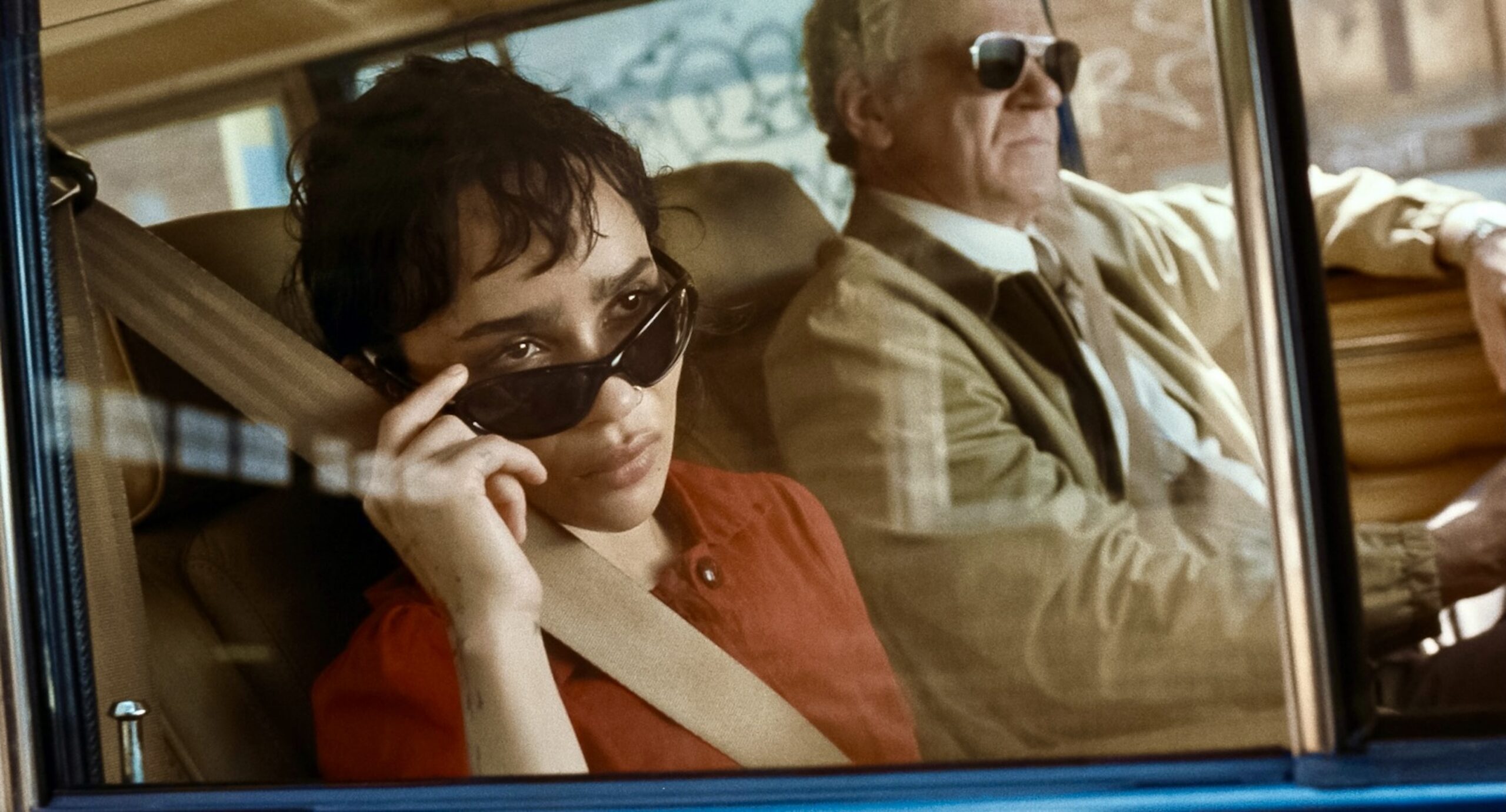
The young crooks don’t go unnoticed. Stuck-in-the-past FBI Agent West (John C. Reilly) is on the case. Which is something like assigning Sherlock Holmes to investigate a cryptocurrency crime spree. For this older gent, analog is his game; digital is not. He needs someone to bring him into the 21st century world of gadgets and tech, which is why he tracks down Reagan (Zoë Kravitz, Blink Twice). She’s a professional software developer with expertise in digital tracking—and she’s easy to find. Why? She’s on lockdown. The two meet, and like Holmes and Watson, they follow the clues in hopes of tracking down the crooks.
Much of what unfolds consists of short, fast-paced scenes, adroitly assembled by editor ElísabetRonaldsdóttir. However, the loss of momentum becomes noticeable during conversations between West and Reagan. These are moments when audience attention may waver, although the performances occasionally perk up the lackluster exchanges. Reilly’s version of the doddering sleuth gives his character a fish-out-of-water awkwardness that’s fun. Kravitz is cooler than ice as Reagan, the sardonic tech genius. She has an odd secondary characteristic: she’s endlessly munching on snack foods. As she noshes her way through the movie, it’s almost like watching a French actress smoke cigarettes incessantly as a character trait or acting crutch.
Feliz’s take on Hugo is very blasé and informed. Easy to like him, his family and neighbors. Davidson’s interpretation of Vince may be his most accomplished performance yet. He’s sarcastic at times, but never outlandish. Instead, he seems to be hiding emotions beneath a veneer of humor. His line delivery is fluid, his emotions run deep and it’s easy to believe in and care about his predicament. Sawai’s delight as Emi learns to perform spins in what look like a 1970s Oldsmobile is charming.
The weight of the movie rests on Hoult’s shoulders. He must convince audiences that Ryan is so deeply wounded he’s compelled to retaliate against the institutions who have robbed him of something important. His despair is so profound that it carries him from heist to heist, searching for the chance to stick it to the man: “When justice isn’t given, we take it!” For the most part, his blend of boldness and vulnerability is effective and convincing—a feat the film as a whole cannot claim.
The pop-culture sensibility and real-time social media commentary make this crime story different, but never extraordinary. That could hurt its box-office prospects during a theatrical run. On the other hand, once the film lands on Amazon Prime and viewers plop themselves on their couches with a bag of chips in one hand and a joint or beer in the other, this little story about those who steal from the rich to give to the poor may find its real home. Bank on it.
Trailer: https://www.youtube.com/watch?v=ORxw68y3lyw
Visit Film Critic Dwight Brown at DwightBrownInk.com.
Featured
Soul Patrol
(***1/2) It’s a soldier’s story. Veterans in this poignant documentary revisit their past and contemplate the present as writer/director J.M. Harper archives their experiences. Home life, combat and the aftermath of the unpopular Vietnam War are up for discussion. Grainy Super 8 footage shot in the 1960s, other archival footage, present-day interviews and compelling reenactments vividly share […]
(***1/2)
It’s a soldier’s story.
Veterans in this poignant documentary revisit their past and contemplate the present as writer/director J.M. Harper archives their experiences. Home life, combat and the aftermath of the unpopular Vietnam War are up for discussion. Grainy Super 8 footage shot in the 1960s, other archival footage, present-day interviews and compelling reenactments vividly share the details in this carefully assembled scrapbook.
Editors Byron Leon, Niles Howard and Gabriela Tessitore weave the material together seamlessly. The back-and-forth between times and places is fascinating and easy to follow. All elements are elevated by a musical soundtrack that embodies times gone by. Old soul music blares throughout, with feisty toe-tapping songs by James Brown that evoke the rebellious feel of the 1960s Black experience. The more calming, moody sounds of Jimmy Ruffin’s “What Becomes of the Brokenhearted” articulate their thoughts: “As I walk this land with broken dreams, I have visions of many things. But happiness is just an illusion, filled with sadness and confusion…I know I’ve got to find, some kind of peace of mind.” The music becomes a spiritual guide, connecting the young soldiers to the lives and communities they left behind. Even overseas, it kept home within reach.
Back in the ’60s, when they were young, these men dealt with racism and segregation in the United States. Martin Luther King’s assassination was a devastating blow to humanity and their sense of self. Then Robert F. Kennedy’s assassination compounded their despair. Despite the gains of the civil rights movement, equality remained elusive. The chaos was obvious; the solutions not so much.
One by one, and sometimes collectively, the survivors deliver testimony as compelling as anything heard in a formal inquiry. These are stories the government or the press should have sought out decades ago. In Vietnam, bigoted commanding officers and fighting the Viet Cong put them under pressure. Fighting and killing brown-skinned people was a perplexing part of their job—like it or not. Then those who’d risked their lives and could come home on their own two feet, and not in a casket, returned to an indifferent and disrespectful America. That was the final insult. Anger, sadness and frustration followed. The boys became men; the men became elders, and the wisdom of their experiences became indispensable.
Audiences may not hear it explicitly, but the parallels between the treatment of Black soldiers then and now are alarming. These heroes’ achievements received little fanfare, as if they were invisible. Years later, the current controversy over the Department of Defense’s removal of historical content celebrating minority veterans raises troubling questions about how much America has learned. After so much progress, with Black service members reaching the highest ranks, their accomplishments and contributions deserve recognition, not erasure. Seeing and hearing what happened back then makes today’s issues all the more apparent. It’s another reason this enlightening documentary has such far-reaching significance.
The joy and camaraderie forged in barracks, bunkers and on battlefields break up the sobering tone of this historical war documentary. The members of the Vietnam War’s first special operations all-Black Long Range Reconnaissance Patrol (LRRP) unit found happiness in their friendships. The brotherhood that began in their teens and twenties has endured into their 80s. As the veterans reflect on their PTSD, share anecdotes and reveal their struggles, the footage becomes therapeutic. It’s a cleansing experience, one that has a healing effect and will warm viewers’ hearts.
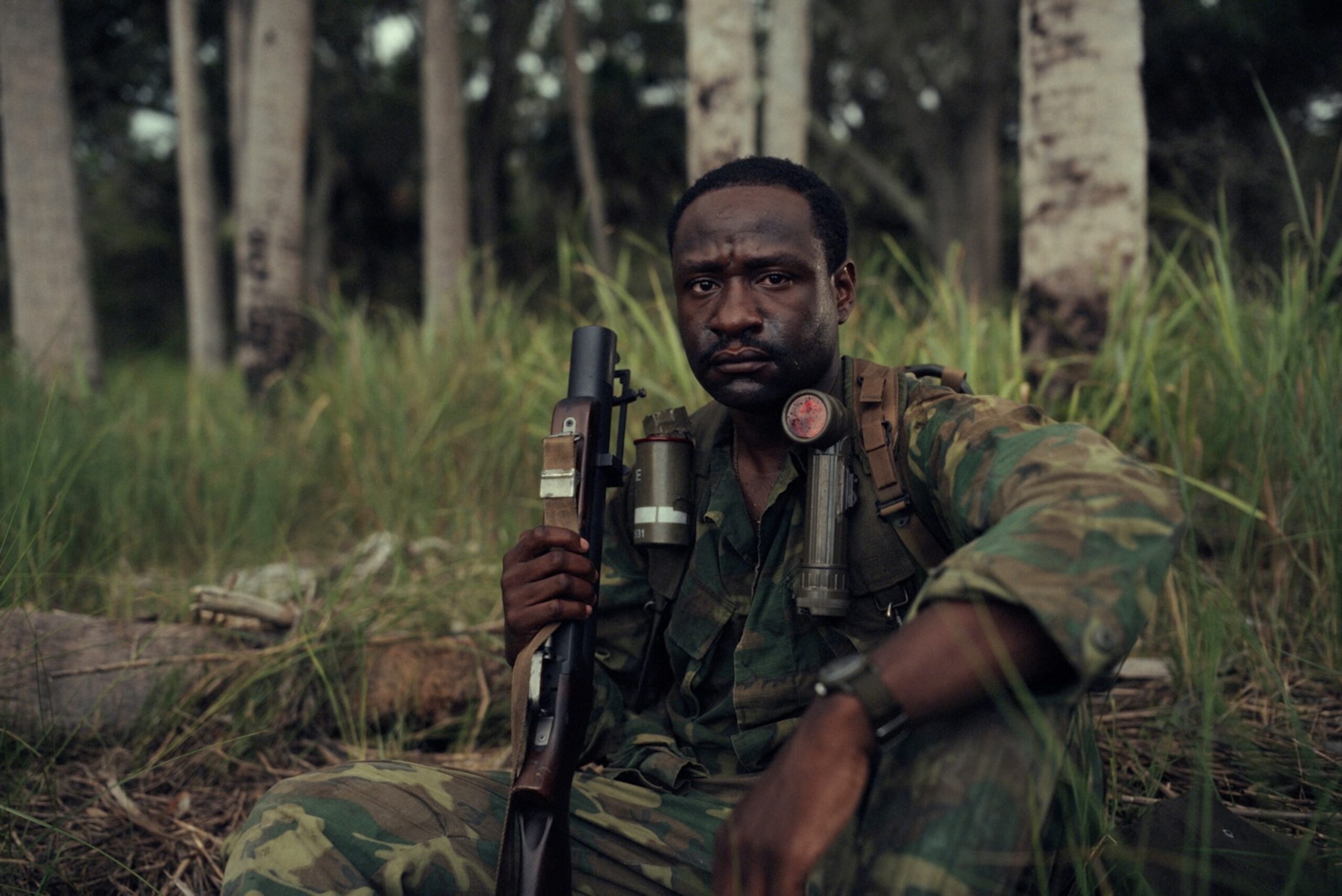
Harper’s thoughtful direction is evident in the way he brings the veterans together. He gives them room to reminisce, express themselves and reclaim the dignity they were once denied. He keeps the proceedings engaging, sets the stage then builds curiosity before embracing the reunion and its cathartic moments. He wisely guides the dramatizations, too. Haunting scenes featuring young actors Myles Simms-Aur, Okea Eme-Awari, Deion Smith, Elijah Richardson and Michael Oloyede unfold in dense, tropical jungle-like surroundings, carry an Apocalypse Now vibe. The silence as the reenactment soldiers stare into the distance is eerie and speaks volumes.
The unfairness of it all is duly noted and catalogued. Logan Triplett’s sensitive cinematography captures every smile, tear or embrace. Audiences become witnesses to the bad and the good. They’ll appreciate the honesty and forthrightness that these old soldiers carry like a survival kit. They speak their truths right up until the end. They don’t hold back. They lay their heavy burdens down. “We busted our asses to kill and got nothing for it!” “I relive that mission every single day of my life!”
The history of these unsung heroes was first recorded by one of their own, Ed Emanuel, in his 2003 memoir, Soul Patrol. That book helped reunite the men who’d lost touch over the years. Now their journeys have been sensitively and respectfully chronicled for the screen by filmmaker J.M. Harper.
After the final credits roll on this soldier’s story, expect audiences to collectively say, “Thank you for your service.”
Trailer: https://www.youtube.com/watch?v=D8LIYqag82E
Photos courtesy of the Sundance Film Festival and Kino Lorber
Visit Film Critic Dwight Brown at DwightBrownInk.com.
Featured
Wicker
(**1/2) Sticks and stones won’t break her bones, but words will really hurt her. It’s easy to sympathize with Fisherwoman (Olivia Colman), a hardworking, well-known member of her village who’s constantly ridiculed. Folks can smell her coming from a mile away as she sells her catch of the day. Some take great joy in degrading […]

(**1/2)
Sticks and stones won’t break her bones, but words will really hurt her.
It’s easy to sympathize with Fisherwoman (Olivia Colman), a hardworking, well-known member of her village who’s constantly ridiculed. Folks can smell her coming from a mile away as she sells her catch of the day. Some take great joy in degrading her and her occupation, especially the Tailor’s Wife (Elizabeth Debicki), who leads the other mean girls in making Fisherwoman’s life miserable. All the lonely woman wants is what they seem to have: love, affection and a man.
Ursula Wills’ short story “The Wicker Husband” thoughtfully explores a protagonist so desperate for companionship that she wants a spouse custom-built. The me-against-the-world setup, coupled with the ingenuity of breaking the mold, makes a compelling premise. Set in the 17th century, the story unfolds in a fictional rural village where folks don’t have names and are called by their professions. The setting is ripe for a fable, in the tradition of the Grimm fairy tales, with lessons to impart, villains who bully the innocent and a touch of magic and whimsy.
Writers-directors Alex Huston Fischer and Eleanor Wilson unevenly bring this medieval story to life. Some scenes are fantastical. Others are too stagey and talky, especially the village scenes, which look more like a backlot than a lived-in community. Cinematographer Lol Crawley (The Brutalist) fares better with intimate firelit interiors and captivating pastoral landscapes. Production designer Renátó Cseh likewise makes the homes and barns more convincing than the town itself.
Costume designers Tóth András Dániel and Attila Godena-Juhász dress Fisherwoman simply and appropriately, while the Basketmaker’s wardrobe features an eye-catching mix of fabrics and colors. Many villagers’ clothes, however, look too new and clean for the rustic setting. Editor Sofi Marshall effectively weaves together gossipy village chatter, erotic scenes and agrarian life. Anna Meredith’s musical score, with its dissonant strings, embellishes the story’s sorrow, joy and menace. All in all, it feels like someone is turning the pages of a storybook—but not one meant for a kindergarten class.
Desperate but determined, Fisherwoman approaches the local Basketmaker (Peter Dinklage) with an unusual request: “I want you to make me a husband.” He obliges, and it turns out that her handful of coins buys her a whole lot of man. The Wicker Husband (Alexander Skarsgård) is tall, dark and handsome. A hunk of sticks. They retreat to her little farmhouse. And as new lovers do, after feeling each other out emotionally, physically and sexually, they make wild, passionate love. In fact, the villagers can hear Fisherwoman’s moans and groans throughout the valley. Their sexcapades are so vigorous that they break her bed! Even after the townspeople learn to accept the new, unusual couple, jealousy persists. And the Tailor’s Wife? She, like a witch, venomously plots their downfall.
The script gets some aspects right, sustaining interest while raising questions about tolerance, acceptance and conventional notions about love and marriage. Fisherwoman’s rejection of the town’s tradition of a bride wearing a matrimonial collar shows her defiant nature. Her romance also challenges the expectation that people should only date within their own race, religion or social class. These are noble themes.
The screenplay’s two main structural weaknesses become more apparent around the 45-minute mark, after the novelty of the premise wears off. First, the villagers’ cruelty provides the story’s most compelling source of dramatic tension. Yet Fisherwoman’s insecurity becomes a primary antagonist in its own right, shifting attention away from that stronger external conflict without developing her inner struggles sufficiently. Second, protagonists have to slay their own dragons. Relying on someone else to settle the score denies Fisherwoman the opportunity to claim her victory—and deprives the audience of the satisfaction of watching her do so.
The directors’ interpretation of this romantic comedy-drama is competent, though at times a looser, more improvisational approach—with the comic timing of an SNL skit and less dialogue—might have made the characters feel more natural. For example, Dinklage’s long-winded monologues seem out of place, better suited to a West End play. The Basketmaker is far more interesting when he’s weaving wicker figures and toying with the mean villagers than when delivering extended speeches.
Fisherwoman is a complex character filled with anxiety, self-doubt, hope, lust and frustration. Colman gets to the heart of her character, making her humor, outrage, vulnerability and desire feel authentic. Skarsgård turns the man-made man into the town stud, radiating love, sex appeal and sensitivity. Beneath his wooden façade, he reveals a gentle, intelligent nature, far removed from the lumbering brute audiences might associate with Frankenstein’s monster. He declares, “You are the reason I live and breathe,” conveying that tenderness with ease, even while wearing an eye-catching wicker bodysuit and mask created by Joe Dunckley and Wētā Workshop (Avatar). Debicki makes the disgruntled wife suitably malicious, while Dinklage brings wisdom to the Basketmaker. The supporting cast (Richard E. Grant, Nabhaan Rizwan, Ella Bruccoleri and Kiell Smith-Bynoe) blends into the film’s storybook atmosphere, like members of a traveling theater troupe.
Yes, Wicker is a feminist story, and Fisherwoman challenges the social order that expects her to conform. But a stronger feminist allegory would give her a more active role in outsmarting her tormentors. She needn’t break bones with sticks and stones; she needs to shape her own destiny. That’s a triumph that audiences could cheer.
Trailer: https://www.youtube.com/watch?v=job8V254NAE
Visit Film Critic Dwight Brown at DwightBrownInk.com.
Art
Kickstarter CEO Everette Taylor Shares Tips on Creating and Growing a Business
HOWARD UNIVERSITY NEWS SERVICE — Everette Taylor, the CEO of the global crowdfunding platform Kickstarter, recently visited Howard University to serve as the inaugural guest for the Cathy Hughes School of Communications’ new speaker series. Addressing students at the Founders Library, Taylor emphasized that the future of business belongs to those who are bold enough to take risks.
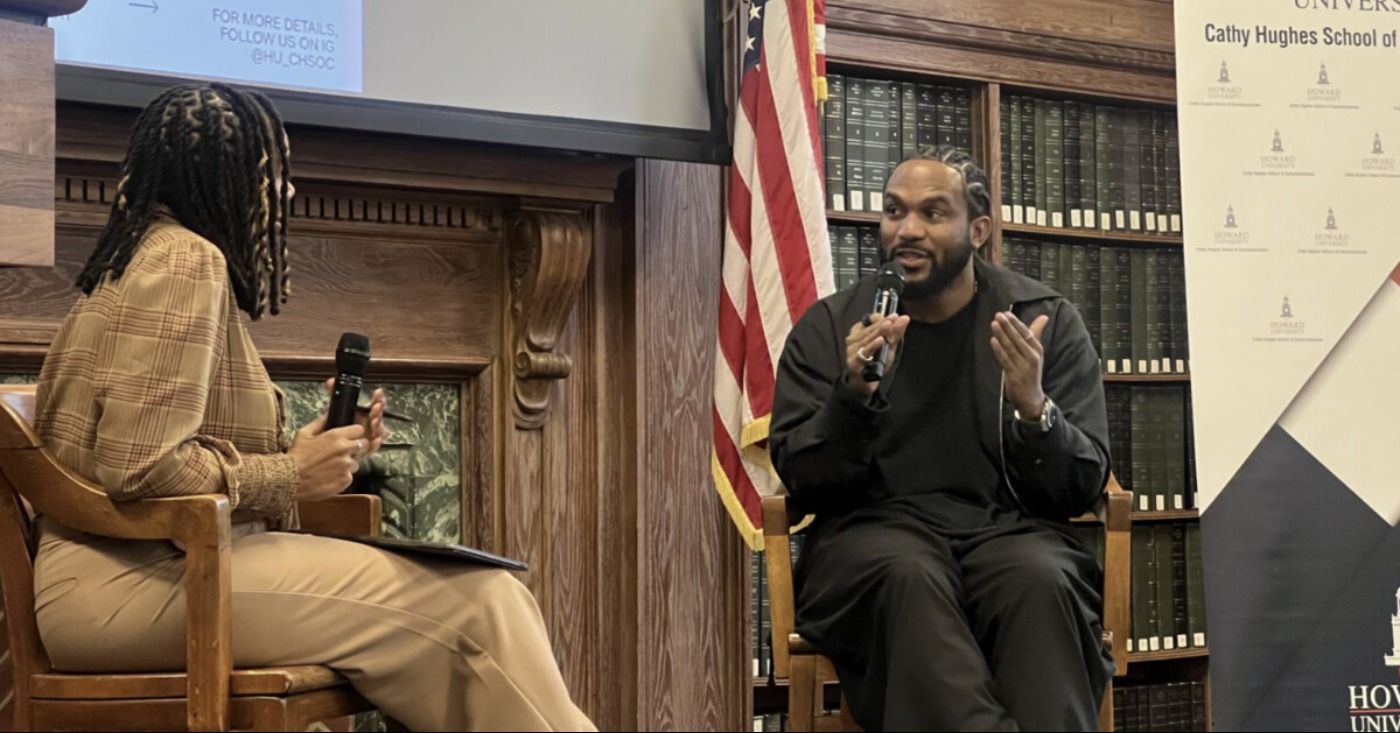
WASHINGTON (HUNS) — “The future belongs to creators who are bold,” Everette Taylor, CEO of crowdfunding platform Kickstarter, told students at Howard University during a recent visit.
As Taylor discussed his journey, he tested the boldness of students by inviting them to share their ideas during an impromptu pitch session at the Cathy Hughes School of Communications’ new speaker series in the Browsing Room of Founders Library. The inaugural speaker then shocked one group of students by pledging to invest in their thesis film, paying forward the opportunities that have lifted him as he struggled to pursue his dreams.
Taylor grew up in a low-income neighborhood in Richmond, Virginia, where he frequently encountered gang violence and drug dealing amid periods of homelessness.
Not feeling as if he conformed to conventional ideas of success, he eventually found inspiration in Jay-Z who balanced being an artist and an entrepreneur. Similarly, Taylor carved his own route, launching and growing various businesses.
He gained enough recognition to land on the 2018 Forbes’ 30 Under 30 list in marketing and advertising. In 2022, Forbes also named him as one of the top 50 most entrepreneurial CMOs when he was chief marketing officer of Artsy, an online art gallery and marketplace. That same year he took over Kickstarter, and the company reported a year-over-year revenue increase of 50% in the first quarter of 2026.
Taylor encouraged the audience through his story, but he also gave practical advice to help students who share his zeal to create and grow their business.
He explained that his mentor, Artsy CEO Mike Steib, helped him make the transition from being a CMO to becoming CEO at Kickstarter.
“These opportunities I don’t take for granted,” Taylor said, adding that Steib was “the first leader I had to take me under his wing.”
When he began his position at Kickstarter, Taylor said, “I had zero imposter syndrome, because I felt like I was ready for it, and it was because this person invested in me over the past few years.”
“A lot of my journey was me just hustling and being bold enough to ask for what I want, but I also need people to give me an opportunity.”
This idea of giving people opportunity impacts his business philosophy, as Taylor estimates that the number of African American employees grew exponentially since he’s been in leadership.
“Kickstarter was I think less than 2% Black, and at our peak I had gotten it to 20-something percent Black,” Taylor said.
Even then, Taylor also saw a need for representing other perspectives. “We still serve people globally, so we need people from different countries and cultures,” he said. “If you’re building a global company, it’s important to build a diverse base of people.”
“I always want to impact more lives, and that always leads to more results.”
Everette Taylor, CEO of Kickstarter
With the success Taylor had after becoming CEO of Kickstarter, he also found a need to prioritize his health.
“This is the first year that I’ve started the year with zero business goals,” he said. “For the first time, my goals have been centered around my health.”
He cites the illness of a friend who appeared to be healthy. Seeing his friend, who is also a successful entrepreneur, endure illness pushed him to prioritize his health.
“Business, I can do that in my sleep, but for me right now I’m so much more focused on setting goals for myself, and I know that’s going to impact the work that I do by feeling healthier and being a better version of myself.”
Samantha Housen, a sophomore public relations major and interior design minor from Harlem, attended the event to gain knowledge to grow her non-profit and for-profit businesses.
“I’m here because I want to explore more of the details of entrepreneurship from an actual professional,” Housen said, and to “see how his mindset could help me in my entrepreneurship.”
“My biggest takeaway is that I’m bold, and it’s OK to be bold,” she said. “I very much have the authority to do whatever I seek to do.”
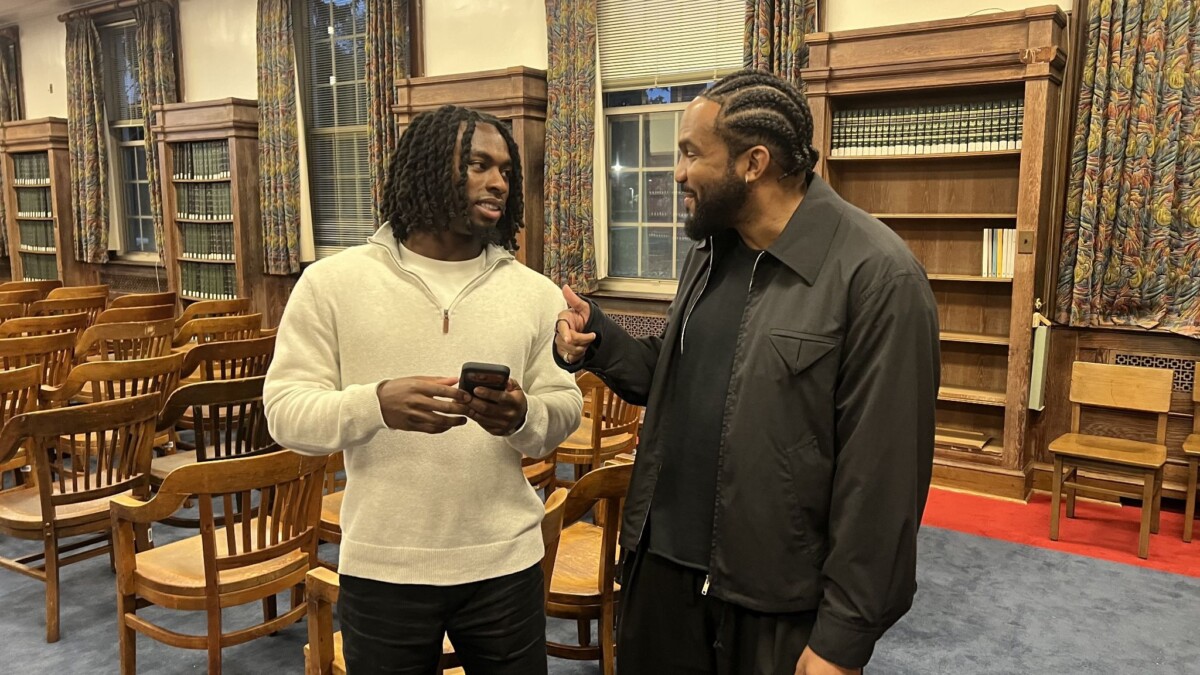
Kimberly Moffitt, Ph.D., dean of the Cathy Hughes School of Communications and host of the event, said she was excited about the speaker series.
“It’s because of students,” Moffitt said. “They felt like they weren’t hearing enough from people who are already post-graduation and successful. They wanted to hear those voices. So, this is an opportunity for me to bring folks to campus so they could reach out, talk and interact with folks that they aspire to be like or will be inspired by.”
Moffitt was excited for students to see someone who looked like them and carried themselves authentically in a position of high acclaim.
“He is showing you a different path, and letting you know that it’s OK to be who you are and show up in that space and not have to apologize,” Moffitt said of Taylor.
Moffitt also wants to encourage students to make the most of the speaker series. She gives details on upcoming speakers and the importance of hearing these people tell their stories.
“Those of you who want to be in TV and film, those jobs are different now,” she said. “You have to hustle in a different way.”
“I need our students to think about entrepreneurship in all that they do,” Moffitt added. “I want students to leave with that so that they have it in their back pocket should they need to draw on it.”
After the event. Taylor explained why boldness is essential to his success at Kickstarter.
“It’s for the grind and the ambition — not settling for status quo and mediocrity, and really going for it,” he said. “I always want to impact more lives, and that always leads to more results.”
Solomon Goins is a reporter for HUNewsService.com.
Based on reporting by Howard University News Service.
Featured
Once Upon a Time in Harlem — 2026 Toronto International Film Festival
(****) Read the room. Intellectuals, artists, politicians, librarians and others gather in 1972 at an NYC brownstone owned by Duke Ellington. They discuss politics, history, and culture—the past, present and future—as they relate to the Harlem Renaissance. One participant sums up his credentials: “The Renaissance period was a period through which I lived!” Hard to […]
(****)
Read the room.
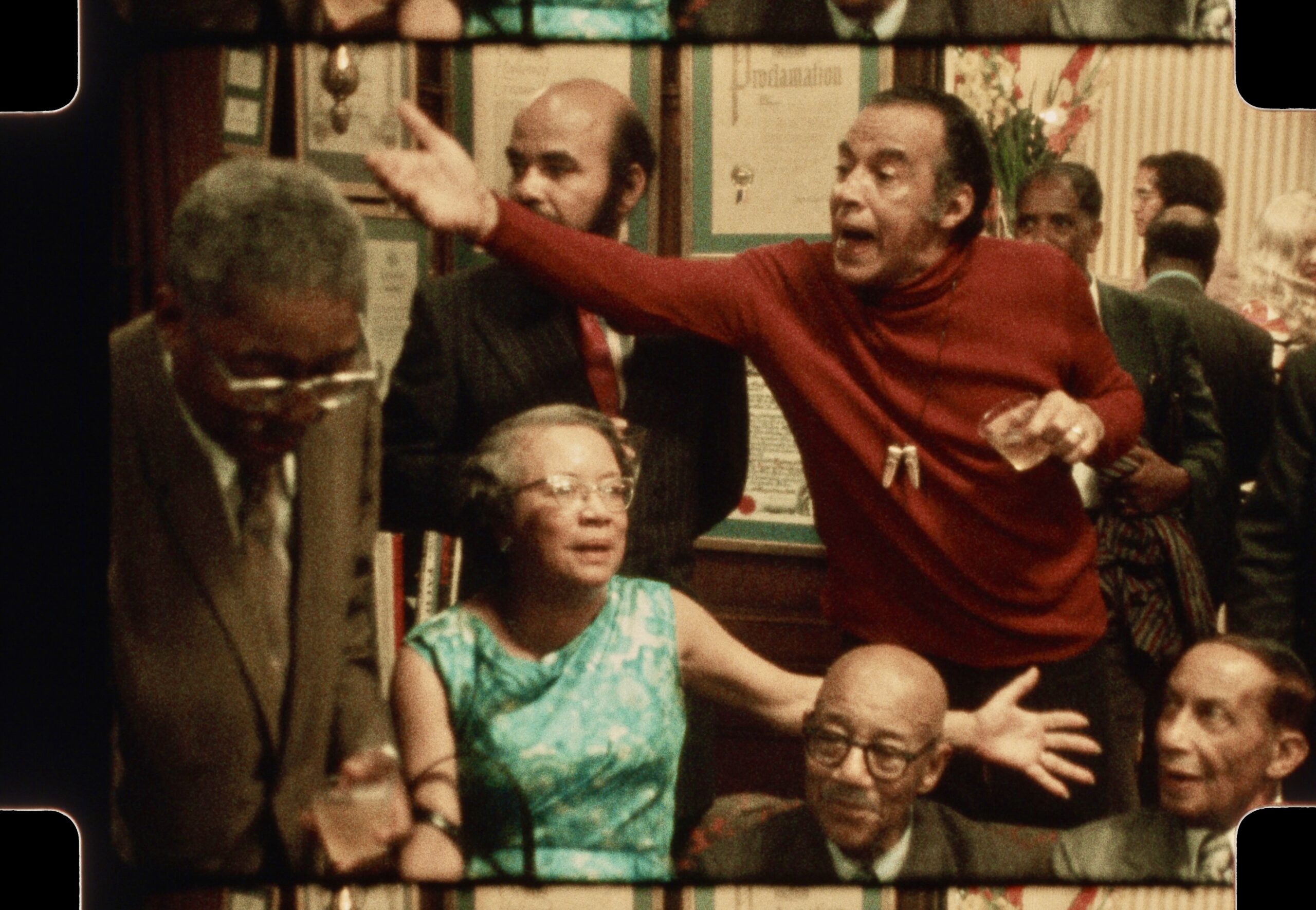
Intellectuals, artists, politicians, librarians and others gather in 1972 at an NYC brownstone owned by Duke Ellington. They discuss politics, history, and culture—the past, present and future—as they relate to the Harlem Renaissance. One participant sums up his credentials: “The Renaissance period was a period through which I lived!” Hard to gauge who’s the most intelligent, expressive or aware in the bunch. They all give as good as they get, each expressing their personal views, experiences and observations at a scholarly level generally reserved for Ph.D.s.
Race and other issues facing the African American community get an intense examination that’s filtered through the prism of the 1920s Renaissance. At this gathering, filmmaker William Greaves captured the profound conversations. After Greaves died in 2014, his son David took on the project. Working with co-director and producer Liani Greaves and editors Anne de Mare and Lynn True, he brought his father’s dream project to completion.
Harlem’s who’s who share anecdotes and memories in a perceptive, head-spinning informal roundtable. Voices rise, not in anger but to emphasize points. Greaves’ original 16mm camerawork is so inviting that audiences feel like welcome guests, privileged to listen as they absorb the conversations. Viewers will likely feel honored to be in the company of showman Eubie Blake, artist Romare Bearden, Ida Mae Cullen (widow of Harlem Renaissance poet Countee Cullen) and photographer James Van Der Zee, among others. Revelations flow for a captivating 100 minutes.
One of the most astonishing stories belongs to actor Leigh Whipper, who was in his 90s at the time. Remarkably alert, he recalls working in minstrel shows, vaudeville and drama before helping establish the groundbreaking Negro Actors Guild. Another unforgettable moment comes when an attendee reveals that his mother was a slave. A hush falls over the room—and will fall over theater audiences, too—as the gathering’s enormity becomes evident. Wisdom about Marcus Garvey’s Back-to-Africa movement and whether to use the terms Negro, Black or African American are debated. Also of note are playwright Regina Andrews’s recollections of writers who found refuge in the 135th Street Branch of the New York Public Library, where she was a librarian. The 135th became the first NYPL branch with an integrated staff and housed the Division of Negro Literature, History and Prints, established in 1925.
Grainy footage takes you back 50 years. Black-and-white photos, archival images and paintings transport viewers to the heart of the 1920s Harlem Renaissance, when a burst of creativity in art, music and literature both reflected and helped reshape American culture. Like they were piecing together a quilt, the directors, producers and editors clipped a three-hour gathering down to a 100-minute theatrical movie that preserves the original footage as a cultural touchstone. One with a rhythm as steady as a bass in a jazz trio. Toward the end, when the pace flickers a bit and momentum wanes, another stream of thought saves the day, and length issues disappear. Composer Tamar-kali finds the right music to bridge the gaps between the ‘20s, ‘70s and present day. The music and sounds envelop you.
A son’s determination to fulfill his father’s artistic vision is a product of tenacity and focus. Completing the project was a gargantuan undertaking that had eluded others. Capturing the spirit of that day in a way that appeals to current adult viewers is a testament to good instincts in documentary filmmaking. What’s been left on the cutting room floor is not missed. What’s on screen is so relevant today in the most casual yet deliberate ways.
For those curious about the Harlem Renaissance and its creators, including legends like Zora Neale Hurston and Langston Hughes, this immersive film offers a rewarding journey through a cultural revolution that rejuvenated a neighborhood and influenced future generations. It will appeal to audiences in theaters or in PBS-style programming, where history is examined and appreciated and wisdom is revered: “There are those of us who are now old, who have struggled, had no civil rights and worked. Some of us died doing it.”
Reach into the past through firsthand accounts, explore a cultural explosion and meet those who ignited it. Then reflect on what you’ve learned. That’s what’s superlative documentaries do.
What began more than 50 years ago arrives right on time. It’s a treasure. A national treasure. Everyone will know when they read the room.
Trailer: https://www.youtube.com/watch?v=ESnX3LQbCVI
Photo courtesy of the Toronto International Film Festival
For more information about the Toronto International Film Festival, go to https://tiff.net/.
Visit Film Critic Dwight Brown at DwightBrownInk.com.
Featured
Ava DuVernay’s 14th Closes 2026 New YorkFilm Festival
(***1/2) “Who’s in charge? We’re in charge!” U.S. Representative Alexandria Ocasio-Cortez’s call to action sums up the lessons offered by Ava DuVernay’s illuminating, rousing documentary. Learn the virtues of the 14th Amendment, take its lessons to heart and put them into action. When the film sticks to that theme, it’s on message, informative and brilliant. When […]
(***1/2)
“Who’s in charge? We’re in charge!”
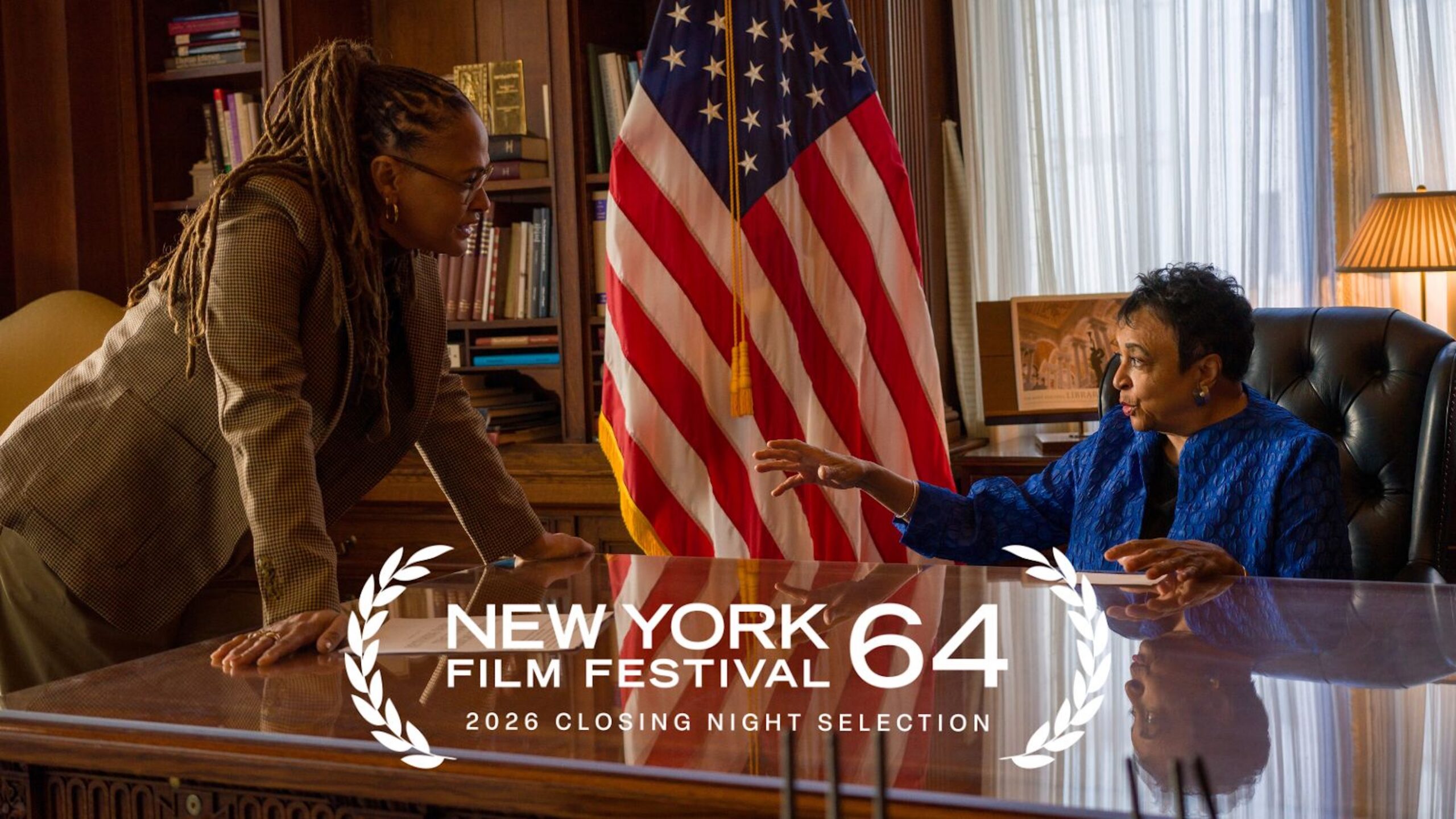
U.S. Representative Alexandria Ocasio-Cortez’s call to action sums up the lessons offered by Ava DuVernay’s illuminating, rousing documentary. Learn the virtues of the 14th Amendment, take its lessons to heart and put them into action. When the film sticks to that theme, it’s on message, informative and brilliant. When it wanders, it takes away from its core.
This production is a follow-up to the 2016 documentary 13th. That film examined the legacy of the U.S. Constitution’s 13th Amendment, which abolished slavery, and its relation to the mass incarceration of Black Americans today. This project reveals that the cornerstone rights under the 14th Amendment are under threat. But its foundation is still intact enough so viewers can see what was, what is and what could be.
Passed by Congress on June 13, 1866, and ratified by the states on July 9, 1868, the 14th amendment emerged from Reconstruction to establish citizenship and equal protection for formerly enslaved people while placing constitutional limits on the states. This film traces the amendment’s central principles and the framers’ efforts to anticipate how Southern states might undermine the new rights of freed Black Americans. In particular, this production highlights key provisions of the amendment, including birthright citizenship, due process and the clause addressing disqualification from office for insurrection for people who previously swore an oath to support the Constitution.
Those basic talking points prompt discussion, anecdotes, observations and calls to action. Over its 108 minutes, the film examines the amendment’s origin, significance and implementation. Its splintering interpretations and uneven enforcement are also exposed with urgency. It’s like a tag-team lecture in which no one will pass the exam without listening, pondering and processing the repercussions.
Wisely, this project has assembled a bright, multicultural, bipartisan group of experts. Among the most versed contributors is Sherrilyn Ifill, founder of the 14th Amendment Center for Law & Democracy and Vernon Jordan Jr. Distinguished Professor in Civil Rights at the Howard University School of Law. Activist Stacey Abrams offers an insightful perspective on contemporary implications. The most circumspect may be retired GOP Senator Jeff Flake (R-AZ), who’s been critical of the current Republican Party and administration.
Comic interludes provide oases in the midst of sobering historical accounting, as socially conscious comedians use humor to address immigration, racism and civil rights. George Carlin, Hasan Minhaj, Ronny Chieng and the thunderously funny Paul Mooney offer comic asides amid the serious discourse. Mooney jokes about white racism: “They don’t want us in their neighborhoods, but when we were slaves, we lived in their houses!”
The film highlights Reconstruction’s achievements: Black colleges, businesses and publications emerged and flourished, while more than 1,000 Black men held public office between 1865 and 1877, according to historian Eric Foner. Setbacks and horrific tragedies are documented too, including efforts to eliminate Black representation through redistricting and other forms of political disenfranchisement, the 1921 Tulsa Massacre, thousands of lynchings and subversive propaganda by the United Daughters of the Confederacy.
As the film becomes more personal, it becomes more compelling and less like a class. According to the information presented, when Virginia Governor Ralph Northam asked for help dismantling Robert E. Lee’s monument in Richmond, white contractors turned him down. Devon Henry, who ran a Black-owned construction firm responsible for removal projects, took the job despite threats to him and his family. Henry is the epitome of an everyday hero, risking his safety to help bring change. His actions embody the activism the film views as necessary to advance the spirit of the amendment.
DuVernay is the consummate facilitator. She brings knowledgeable contributors together, makes them comfortable in their surroundings and lets them speak their truths. Some are stiff. Some political. Others specialize in history or current events. It’s a lot for an audience to absorb, but its main arguments are understandable and have a sense of concern and urgency that’s maintained for the film’s length.
If there’s an error in approach, it’s the moment the current president’s on-screen remarks interrupt the film’s momentum. The film has built its case commandingly, weaving history together with the present day. The intrusion is jarring. Viewers can connect the dots: rights like birthright citizenship are under attack, and the principal actors are identifiable. And, more attentive viewers will recognize that all three branches of government have roles in constitutional disputes. Let viewers do the homework and apply what they’ve learned. The teacher doesn’t have to do the assignment for them.
Kinetic graphics keep the footage from feeling like a mere PowerPoint presentation, while photographs, archival clips and interviews add visual variety. Jason Moran’s (Selma) score features percussively plucked string instruments, a driving bass and steady drums that push the pace. Music by Robert Glasper and Brittany Howard adds further texture to the soundtrack. Cinematographers Clifford Charles and Michael Fernandez (Daughters) give scenes a polished look. Editor Spencer Averick (13th) brings sequences together cohesively.
This largely academic approach may appeal to teachers, students and intellectuals, but it risks missing a broader audience that could benefit from its message. Borrowing from Michael Moore’s more street-level approach might have made the material even more accessible. Moore employed this style in Fahrenheit 9/11, which reached a broad audience and grossed approximately $222.4 million worldwide.
Knowledge and civic engagement seem to be the way forward in DuVernay’s perceptive documentary. Its closing message echoes Ocasio-Cortez’s declaration: “Who’s in charge? We’re in charge!”
Photo courtesy of Netflix.
For more information about the New York Film Festival go to https://www.filmlinc.org/nyff/
Visit Film Critic Dwight Brown at DwightBrownInk.com.



Georgia Clinches 6th Straight SEC Championship Game Berth; 3 Teams Chase Final Spot

How to Rob a Bank

Healthcare Legend Dr. L. Natalie Carroll Continues to Shine

The African Cultural Film Festival Returns to Houston

Athlete of the Week – Gabe Sampson

NSA Hacked; A Wake Up Call About Intelligence Security

Derrick “Delite” Stevens on 40 Years in Radio, MC Skat Kat & Twin Cities Hip-Hop

Car Buying Checklist: 6 Steps to Shop Smarter #shorts

Chevy Tahoe Entry Test: Is the Driver’s Grab Handle Awkward? #shorts

Las Vegas GP: Ferrari Struggles During Qualifying; Verstappen Captures Pole

HISTORY MADE: Keisha Lance Bottoms Becomes First Black Woman Elected Governor in American History

Secretary of State Shirley Weber Pushes Back Against DOJ Demands Over California Voter Rolls

Retirement Triggers Doctor to Pen Book for Young Audience

Capturing Black Life’s Beauty

Multi-Faith Leaders Representing 10 Million People Launch National Anti-Authoritarian Initiative

Christianity’s Racial History

Hundreds of Black Christian Leaders Arriving in Israel for Martin Luther King-Inspired Mission

Oakland Honors 60 Years of the Black Panther Party at the All Power to the People Gala

Message from the Associate Editor: Blindness, Hurts, Cops

Michael Shiner: The Enslaved Man Who Wrote His Way into American History
Healthcare Legend Dr. L. Natalie Carroll Continues to Shine
The African Cultural Film Festival Returns to Houston
Athlete of the Week – Gabe Sampson
NSA Hacked; A Wake Up Call About Intelligence Security
Derrick “Delite” Stevens on 40 Years in Radio, MC Skat Kat & Twin Cities Hip-Hop
Car Buying Checklist: 6 Steps to Shop Smarter #shorts
Chevy Tahoe Entry Test: Is the Driver’s Grab Handle Awkward? #shorts

How Sick Must America Get Before Saying Enough to RFK

Tahoe 6.2L EcoTec3 V8: Surprising Acceleration in a Full-Size SUV #shorts

From The Desk of The Editor 11/18/26
-

 Black Press1 week ago
OP-ED: Closing the Next Digital Divide — Communities of Color Must Have a Voice in the AI Future
-

 Black History1 week ago
New NAACP Report Warns AI Could Deepen Health Disparities in Black Communities
-

 Black Press6 days ago
COMMENTARY: Thank You, Trump, for Making America Great Again!
-

 Black History1 week ago
“Blue Tsunami” Sweeps Georgia, Bottoms Makes History
-
 Black Press1 week ago
OP-ED: And Then What?
-

 Black Press5 days ago
Black Men Encouraged to Start Prostate Cancer Screening at 45
