
Featured
Is the FBI’s New Focus on “Black Identity Extremists” the New COINTELPRO?


By Rep. Cedric L. Richmond (D-LA-02) (Chairman, Congressional Black Caucus)
If you’ve been to a Black Lives Matter rally or tweeted the related hashtag recently, then the FBI might consider you a “Black Identity Extremist,” at least according to a report published by one of the nation’s top law enforcement agencies.
In October, an internal FBI report titled “Black Identity Extremists Likely Motivated to Target Law Enforcement Officers,” was leaked to the public, raising concerns of activists, civil rights groups, and policy makers, including myself and other members of the Congressional Black Caucus.
The report concludes, based on a limited total number of incidents, that:
“…it is very likely Black Identity Extremist (BIE) perceptions of police brutality against African Americans spurred an increase in premeditated, retaliatory lethal violence against law enforcement and will very likely serve as justification for such violence. The FBI assess[es] it is very likely this increase began following the 9 August 2014 shooting of Michael Brown in Ferguson, Missouri, and the subsequent Grand Jury November 2014 declination to indict the police officers involved.”
These unsubstantiated conclusions are troubling, especially in the context of the FBI’s history of targeting African American activists and leaders, including Martin Luther King, Jr., and members of the Congressional Black Caucus. But what is more troubling is the FBI’s creation of the term “Black Identity Extremist” and the definition of it.
According to the report, Black Identity Extremists are individuals who, “in response to perceived racism and injustice,” commit violent acts in the name of those beliefs, and, in some cases, desire a “separate Black homeland…social institutions, communities, or governing organizations within the United States.”
The report continues: “The mere advocacy of political or social positions, political activism, use of strong rhetoric, or generalized philosophic embrace of violent tactics ‘may not’ (emphasis mine) constitute extremism, and may be constitutionally protected.”
I think the words “may not” leave people who organize under the Black Lives Matter movement and other well-meaning African American activist groups vulnerable to the type of monitoring and manipulation that the FBI engaged in as part of COINTELPRO, a counter intelligence program that unfairly and, in some cases, unlawfully destroyed movements, careers, relationships, and lives.
I’m also concerned about the FBI’s definition of “extremism.” The question becomes: What does the FBI consider extreme? The report never provides an answer to that question and further complicates the issue on page 4 in talking about the case of Micah Johnson, the African American man who shot 11 police officers in downtown Dallas, Texas, on July 7, 2016:
“Johnson searched and liked social media pages of BIE and Black separatist groups, and had been ousted from a local BIE group for being too radical, according to an open source news article.”
I agree that Johnson was an extremist, but here are some questions I have: What group kicked him out? Was it Black Lives Matter, a non-extremist group? Does the FBI consider this group representative of extremism? If so, then its definition of Black Identity Extremists is extreme and ineffective. Also, what does the FBI mean by “perceived racism and injustice” and “perceived past police brutality incidents?” Does the FBI believe racism, injustice, and police brutality don’t exist?
Here are some other questions I have: Why is one of the most powerful federal law enforcement organizations in the nation relying on news articles to figure out whether Johnson was kicked out of a local Black Identity Extremist group? Also, if this is a problem that’s on the rise as the FBI indicates, why isn’t clear and convincing incident data illustrating this included in the report? Finally, is the FBI devoting as much time on this issue as it is on White extremism? If they are, then they are not spending their time wisely when it comes to domestic extremists.
According to a 2015 report by the Anti-Defamation League, when it comes to extremist movements in the United States:
“…White supremacists are by far the most violent, committing about 83 percent of the extremist-related murders in the United States in the past 10 years and being involved in about 52 percent of the shootouts between extremists and police. White supremacists also regularly engage in a variety of terrorist plots, acts and conspiracies.”
White supremacist violence is even more concerning in the context of the 2016 election, the current political climate, and President Trump’s decision after zehite supremacist violence in Charlottesville, Va., to morally equate zehite supremacists with anti-racist protesters. In regard to the 2016 presidential election specifically, the Southern Poverty Law Center found:
“…in the 34 days after the election, there were 1,094 incidents involving bias and almost 80 percent of them were anti-immigrant (315), anti-Black (221), anti-Muslim (112), swastika (108), White nationalist (47), anti-Semitic (33) or involved the KKK (7). Approximately 37 percent of the 1,094 incidents, directly referenced either then President-elect Donald Trump, his campaign slogans, or his infamous remarks about sexual assault.”
A few weeks after the FBI’s “Black Identity Extremists” report was leaked, the Congressional Black Caucus met with Facebook about ads that Russian operatives purchased through the social media platform to target the Black Lives Matter movement. During the meeting, the caucus explained to Facebook that their social media platform plays a role in how African Americans are perceived across the country and around the world. In this case, the perception Facebook played a role in creating was negative and could have had life and death consequences.
The FBI’s “Black Identity Extremist” report is an example of how perception becomes reality and affects people’s lives on the ground. We don’t need Facebook and other social media platforms playing a role in creating negative perceptions of African Americans and we don’t need the FBI and other law enforcement organizations buying into these perceptions. In response to a letter from the Congressional Black Caucus, FBI Director Christopher Wray agreed to meet. We hope he walks away from the meeting with this understanding. We also hope he’s able to answer our questions.
Congressman Cedric L. Richmond (D-LA-02) is the chair of the Congressional Black Caucus. He represents the 2nd District of Louisiana, which includes parts of New Orleans and Baton Rouge. You can follow him on Twitter at @RepRichmond and you can follow the CBC on Twitter at @OfficialCBC.







Featured
Black Resilience: The Powerful Story of George Wallace’s Redemption
How did a staunch segregationist end up in a Black church? Explore the transformative power of Black resilience in this week’s episode of From the Desk of the Editor.

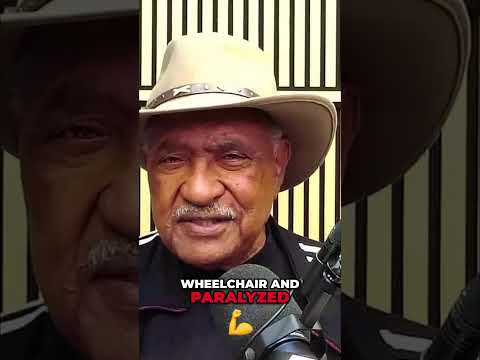
What brought George Wallace, a staunch segregationist, into Black churches? From the Desk of the Editor revisits that moment and reflects on what it reveals about Black resilience. Watch this week’s episode now!
#BlackHistory #BlackResilience #FromTheDeskOfTheEditor #VoiceAndViewpoint
Featured
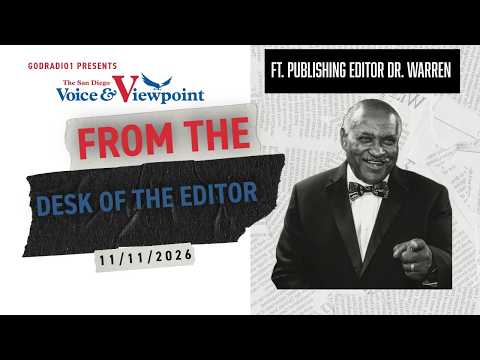
From The Desk of The Editor 11/11/26
This week’s editorial explores the nobility of Black veterans and the path forward following the recent election results. Join us for a candid conversation.
0:00 – Intro
10:00 – Reading this week’s editorial
20:00 – Respect of Black Veterans
30:00 – Blacks have been so noble under adverse conditions.
40:00 – The Heritage Group have accepted it’s a blue wave, so now we have 2 years to re-group.
50:00 – People used to come together and have conversations.
60:00 – Outro
Featured
Credit Builder Loans Offer a Fresh Start #shorts
Don’t let a credit setback define your future. Discover how credit-builder loans can provide a fresh start and put you back on the path to financial wellness.
A credit setback shouldn’t define someone’s future. Credit-builder loans can offer a path to rebuild, with responsible lending that balances opportunity and repayment. #MN #Minnesota #Mpls #Minneapolis #StPaul #HennepinCounty #RamseyCounty #CreditBuilding #CreditBuilderLoan #FinancialWellness #Microloans #ResponsibleLending
Featured
Small Savings Build Lasting Financial Peace #shorts
Small, consistent savings build habits that reduce debt and create lasting peace of mind. Start your journey to financial confidence today.
Putting aside even $5 or $10 each week can build saving habits, confidence, and peace of mind—helping cover bills and reach goals without relying on debt. #MN #Minnesota #Mpls #Minneapolis #StPaul #HennepinCounty #RamseyCounty #FinancialPlanning #SavingMoney #BehavioralFinance #FinancialWellness #MoneyHabits
Black History
New NAACP Report Warns AI Could Deepen Health Disparities in Black Communities
The NAACP and Sanofi’s ACE Your Health StoryMap was released during AfroTech 2026, finding that healthcare deserts, broadband gaps, and distrust could keep Black Americans from benefiting from the AI boom in medicine. Read more.

Every day, Americans put about 50 million health questions to Microsoft’s Copilot and Bing. More than eight in 10 physicians say they already use AI in their work and believe that proof of safety for these tools is essential. According to a new NAACP report, the emerging technology has quietly become part of how healthcare gets delivered in this country. But the nation’s largest civil rights organization is warning that Black communities may be at risk of being left behind or even harmed by it.
The NAACP and the pharmaceutical company Sanofi released “AI Fluency is a Challenge on Both Sides of the Exam Room” during the AfroTech Conference 2026 in Houston. It is the third installment of the groups’ ACE Your Health StoryMap series, an interactive, data-driven look at how AI, internet access and long-standing healthcare inequities are shaping the future of health in Black America.
The report warns that new technology does not instantly erase old gaps on its own.
“Too many Black communities continue to face healthcare deserts, provider shortages, clinic closures, inadequate internet access, and concerns about racial bias,” said Dr. Chris T. Pernell, Director of the NAACP Center for Health Equity. “If these gaps remain unaddressed, AI could inadvertently widen existing healthcare disparities instead of helping close them. Equity and fairness must be intentionally designed into the future of healthcare AI from the very beginning, not as patchwork fixes.”
The numbers show why. Nineteen percent of people who use AI for health information say they turned to it because they could not afford to see a provider, according to the report. Black adults are significantly more likely than White adults to use AI for mental health advice.
Meanwhile, the report finds, the health system many Black Americans rely on remains hard to reach. One in three Americans lives in a healthcare desert. In the Mississippi Delta, all 154,000 Black residents live more than 25 miles from a hospital rated four or five stars. About 3.8 million Black Americans live in homes without a broadband subscription, which limits their access to digital health tools and AI-enabled resources. Safety-net providers are likewise concerned about having access to these tools due to limited funding and training in their systems.
Trust may be the toughest barrier, says the NAACP. Nearly two-thirds of Black adults believe racial bias remains a major problem in healthcare, the report found, and one-third expect AI to make that bias worse.
The findings draw on the ACE Your Health initiative, national datasets and input from nearly 23,000 community members across 47 states, the District of Columbia and Puerto Rico. The initiative launched in 2024 as a collaboration between the NAACP and Sanofi, which describes itself as an R&D driven, AI-powered biopharma company. The StoryMap follows the NAACP’s AI White Paper on designing AI for health equity and its Policy Framework for Equitable Health AI.
“Scientific innovation is transforming healthcare in ways that were unimaginable just a few years ago, but innovation must be matched by intentional efforts to expand access, build trust, and address barriers that prevent communities from fully benefiting from these advances,” said Tanisha M. Sullivan, Head of External Engagement & Health Equity Strategy at Sanofi.
She added that pharmaceutical companies should do more than develop breakthrough medicines and technologies. “Pharmaceutical companies have an important role to play, not only in developing breakthrough medicines and technologies, but also in partnering with community organizations, healthcare providers, and policymakers to ensure those innovations reach the people who need them most, ensuring no community gets left behind.”
The report also lays out steps communities can take, including expanding broadband adoption, building AI fluency and digital skills, strengthening community-based health education and advocating for equitable technology policies. It also invites community members to add their voices to the StoryMap.
The full report and other ACE Your Health resources are available at naacp.org.
Featured
Brett McNeal on Becoming a College AD and the State of Minneapolis Sports | Blacklight on Sports
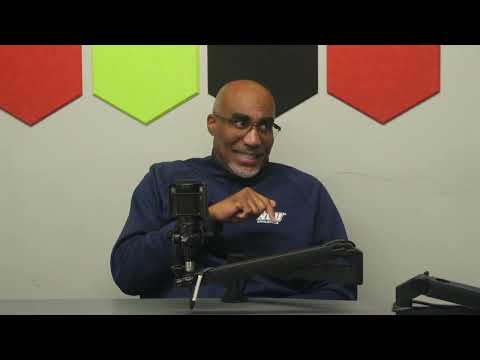
North Central AD Brett McNeal joins Blacklight on Sports to discuss his career journey, faith-based athletics, and the state of Minneapolis sports today.
What does it take to build young athletes into whole people, on and off the court?
On this episode of Blacklight on Sports, hosts Charles Hallman and Dr. Mitchell Palmer McDonald sit down with Brett McNeal, the new athletic director at North Central University in downtown Minneapolis. McNeal has done nearly everything in Minnesota sports: Mr. Basketball, college player, coach and athletic director at Edison, South and Henry, plus two years in the Minneapolis Public Schools district office.
McNeal explains why he finally made the jump to college athletics, what sets North Central apart as a faith-based Division III school, and how he measures success by getting students in, keeping them and graduating them. He also shares hard truths about Minneapolis athletics, from the talent gap with other states and undervalued strength training to slipping coaching fundamentals and a budget share he says falls far short of what students need.
In this episode, you’ll hear about:
Making the move from high school to college athletic director
Why North Central University is a hidden gem in downtown Minneapolis
Recruiting, the transfer portal and Division III financial aid
Why McNeal left Minneapolis for college and what he tells families now
Four issues holding Minneapolis athletics back
Why athletes in activities are better students
His message to young athletes about identity beyond the game
Subscribe for more episodes of Blacklight on Sports, where Charles Hallman and Dr. Mitchell Palmer McDonald bring you the stories, voices and history of Black sports in Minnesota and beyond.


Black Resilience: The Powerful Story of George Wallace’s Redemption

From The Desk of The Editor 11/11/26

Credit Builder Loans Offer a Fresh Start #shorts

Small Savings Build Lasting Financial Peace #shorts

Help Another Black Family Buy a Car—Leave a Review #shorts

New NAACP Report Warns AI Could Deepen Health Disparities in Black Communities

Brett McNeal on Becoming a College AD and the State of Minneapolis Sports | Blacklight on Sports

Kern County Veterans Day Parade Honors Veterans in Downtown Bakersfield

How Fleet Purchases Build Black Community Wealth #shorts

✨ Throwback Thursday: A Salute to Excellence! ✨

Practitioners of African Traditional Spirituality Offer Ancestral Reverence Ritual Oct. 31

Tamiko Armstead | 2026 Lifetime Achiever in Education

HISTORY MADE: Keisha Lance Bottoms Becomes First Black Woman Elected Governor in American History

OP-ED: The Black Church Writes AI’s Next Chapter

OP-ED: If the ‘Cornell 7’ Were Black Men at an HBCU — America Wouldn’t Be This Sympathetic

Inside 820 S. Michigan: New Book Captures the Lost World of Ebony and Jet

Kickstarter CEO Everette Taylor Shares Tips on Creating and Growing a Business

While Black Families Pay More for Power, Some Attorneys General Fight to Save High-Cost Coal

BLACK MEN VOTE: Mobilizing 100,000 Black Men Ahead of the Midterms 📱

NFN live presents 🎙️ THE ROAD TO BEYOND IWDM 50: WE CANNOT STOP NOW! 8-Week Podcast
Black Resilience: The Powerful Story of George Wallace’s Redemption
From The Desk of The Editor 11/11/26
Credit Builder Loans Offer a Fresh Start #shorts
Small Savings Build Lasting Financial Peace #shorts
Help Another Black Family Buy a Car—Leave a Review #shorts
Brett McNeal on Becoming a College AD and the State of Minneapolis Sports | Blacklight on Sports
Kern County Veterans Day Parade Honors Veterans in Downtown Bakersfield
How Fleet Purchases Build Black Community Wealth #shorts
✨ Throwback Thursday: A Salute to Excellence! ✨

Debt Relief Can Restore Hope #shorts
-
 Black History1 week ago
HISTORY MADE: Keisha Lance Bottoms Becomes First Black Woman Elected Governor in American History
-
 Black History1 week ago
Hundreds of Black Christian Leaders Arriving in Israel for Martin Luther King-Inspired Mission
-
 Black History6 days ago
Keisha Lance Bottoms to Govern State Where Her Great-Great-Grandfather Was Enslaved
-
 Black History1 week ago
IN MEMORIAM: Marcia Ann Gillespie, Editor of Essence and Ms. Magazines, Dies at 82
-
 Featured1 week ago
A NEW CHAPTER IN AMERICAN POLITICS 📱
-
 Black History4 days ago
Don’t Pass the Torch. Expand the Circle.
