
Featured
Hurricane Harvey Wreaks Havoc on Gulf Coast


By Stacy M. Brown and D. Kevin McNeir (The Washington Informer/NNPA Member)
As more and more inches of rain fell this week in the Houston-Galveston area, the wrath of Hurricane Harvey, downgraded to a tropical storm, continued along the Gulf Coast toward Louisiana, sparking more evacuations and further heightening concerns of residents and local and state officials.
Rainfall numbers have broken national records at 51.88 inches as of Wednesday, August 30.
President Donald Trump, along with his wife, White House staff and elected officials, met in Corpus Christi on Tuesday afternoon, August 29 for a briefing led by Texas Governor Greg Abbott.
Trump applauded the efforts of first responders in Texas and promised to make sure the recovery efforts would be swift and serve as a subsequent model for the world. He closed with comments about the impressive size of the crowd that turned out to hear him.
However, critics fault him for saying nothing to the millions of victims who remain homeless, lost or dead.
Houston has emerged as Ground Zero with record-breaking rainfall, unprecedented flooding and over 17,000 people displaced and forced to seek refuge in three mega-centers: the Houston Convention Center, the NRG Center and the Toyota Center—all three at or beyond capacity.
Red Cross CEO American Red Cross Gulf Coast Texas Region on Wednesday said his organization has opened close to 100 smaller shelters in Texas. Cities like San Antonio and Dallas, both spared from the fury of the storm, have opened centers to accommodate the overflow of citizens.
In a twist of irony, with thousands still stranded and at least 22 reported dead, including a 61-year-old veteran Houston Police Department officer, Tuesday also marked the 12th anniversary of Hurricane Katrina. Katrina touched down in 2005, devastating the U.S. Gulf Coast, killing more than 1,800 people and resulting in over $100 billion in damage.
In the Houston area, the U.S. Coast Guard reported on Tuesday that cries for help still had not abated as officials recorded as many as 1,000 calls per hour. As of Tuesday afternoon, they had rescued more than 3,000 people via boat and air. Between Sunday and Tuesday, the Houston Fire Department reported receiving more than 2,300 calls, including 400 from individuals seeking to be rescued from the great flood waters.
Meanwhile, the Houston police reported that between Monday and Tuesday, they had rescued 1,000 people, bringing the total to more than 3,000 since the flood began.
National Newspaper Publishers Association (NNPA) member and Houston Defender publisher Sonny Messiah-Jiles counted among the many rescued from their homes, as water poured through her house forcing them to higher ground.
“It’s been a hell of a day,” Messiah-Jiles said on Sunday. “Some neighbors came down from about four or five blocks from us and ended up rescuing everyone from our gated community—about 60 people—and it was my first time in an airboat, but I’m alive and well and okay.”
Messiah-Jiles noted that she’s now safe in a hotel.
“I’m just hoping we don’t have what they had in Louisiana with the levees,” Messiah-Jiles said.
Karen Carter-Richards, the publisher of The Houston Forward Times and 1st vice president of the NNPA, said that she and her family and the offices of the Forward Times remain intact.
“Thank God we’re okay. There’s no water in our house and we’re safe and dry,” said Carter-Richards, noting that the Forward Times building did receive minor water damage.
Flooding from Tropical Storm Harvey, described by the National Weather Service (NWS) as “unprecedented,” has overloaded resources as authorities in and around Houston continue scrambling to save those still trapped by the high waters.
“The breadth and intensity of this rainfall are beyond anything experienced before,” the NWS said. “Catastrophic flooding is now underway and expected to continue for days.”
Service Disruptions Abound
The Houston Independent School District has canceled school for the week and the Houston Astros baseball team has moved its home games to Florida.
Houston’s William P. Hobby Airport closed, because of flooding.
Ben Taub Hospital, which houses a Level I trauma center, faced evacuation after flooding in the basement “disrupted the power source.”
Some 316,000 customers lost electricity and the Red Cross said it has kept busy serving about 130,000 meals a day.
Harris County Sheriff Ed Gonzalez said he understands the compulsion to find safer ground, but urged people to think twice before venturing out into high water and to consider unforeseen dangers, such as manhole covers being lifted from their holes.
Lt. Craig Cummings of the Texas Department of Public Safety said attempts to drive to safety may be futile anyway, as it took him two-and-a-half hours to drive 20 miles in Houston on Sunday.
“There’s 60 barricaded locations as of midnight. Most thoroughfares are impassable. Several hundred structures are flooded, and we are expecting that number to rise,” he told CNN.
Harvey blasted ashore as a Category 4 hurricane just north of Corpus Christi late Saturday, August 26 and early Sunday, August 27. It brought with it 132-mph winds but would be quickly downgraded to a tropical storm. Still, it continued to spawn tornadoes and lightning causing fires throughout the city.
Houston’s mayor did not immediately call for a required evacuation but many residents attempted to flee as waters surged.
“Rainfall of this magnitude will cause catastrophic and life-threatening flooding,” the NWS said.
The Washington Informer is a member publication of the National Newspaper Publishers Association. Learn more about becoming a member at www.nnpa.org.












Featured
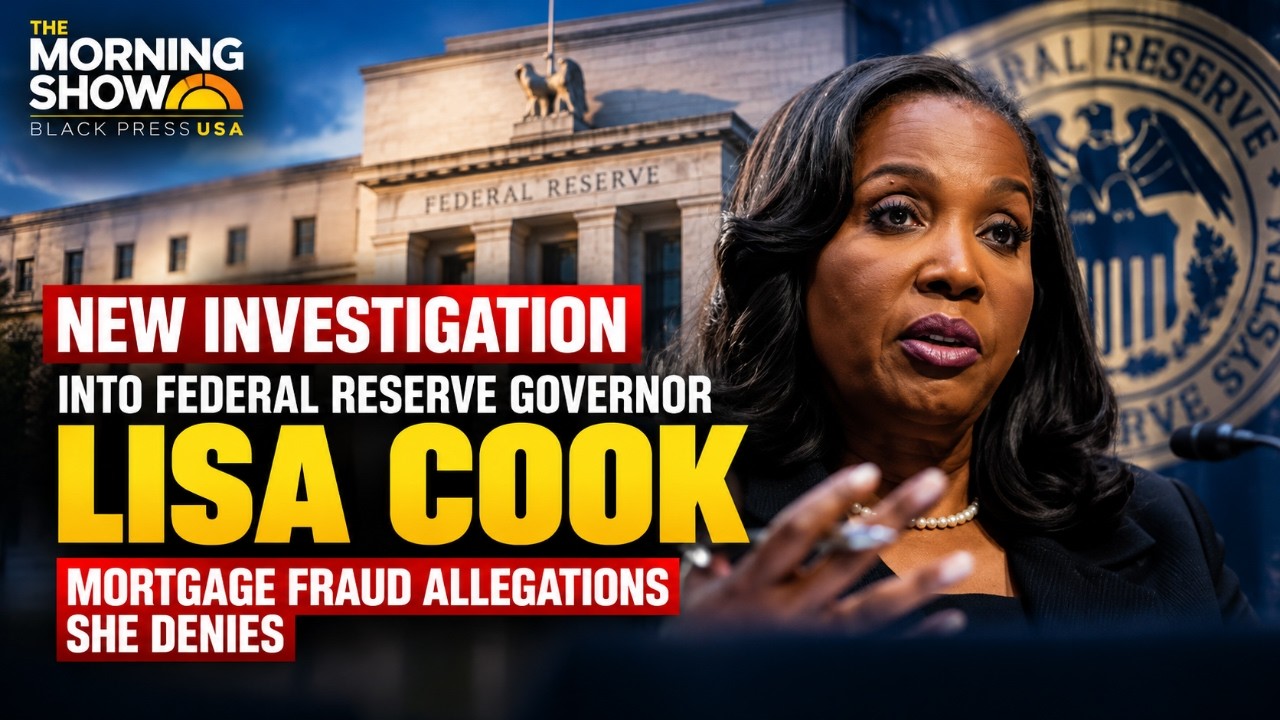
NEW INVESTIGATION INTO FEDERAL RESERVE GOVERNOR
Trump orders new investigation into Fed Governor Lisa Cook. Plus, Elon Musk’s massive Republican donations and more top stories.


President Donald Trump renews his effort to remove Federal Reserve Governor Lisa Cook, ordering a new investigation into mortgage fraud allegations she denies.
Meanwhile, Elon Musk reportedly pours more than $276 million into Republican efforts ahead of the 2026 midterms, a federal judge halts tree cutting at Washington, D.C.’s East Potomac Golf Course, and the Pentagon updates U.S. military casualty figures tied to the war on Iran.
Plus, Harlem prepares to say farewell to R&B legend Freddie Jackson.
Join us on Black Press USA’s Morning Show as we break down the headlines, the politics, and the stories shaping our communities.
Watch Monday through Friday, 8–9 AM ET.
#BlackPressUSA #MorningShow #LisaCook #FederalReserve #Trump #ElonMusk #BlackNews
Featured
NEW INVESTIGATION INTO FEDERAL RESERVE GOVERNOR 📱
Trump orders a new investigation into Fed Gov. Lisa Cook over mortgage fraud claims she denies. Plus, Elon Musk’s massive GOP donations & more on the Morning Show.
https://www.youtube.com/watch?v=hjLHKp3W0PU
President Donald Trump renews his effort to remove Federal Reserve Governor Lisa Cook, ordering a new investigation into mortgage fraud allegations she denies.
Meanwhile, Elon Musk reportedly pours more than $276 million into Republican efforts ahead of the 2026 midterms, a federal judge halts tree cutting at Washington, D.C.’s East Potomac Golf Course, and the Pentagon updates U.S. military casualty figures tied to the war on Iran.
Plus, Harlem prepares to say farewell to R&B legend Freddie Jackson.
Join us on Black Press USA’s Morning Show as we break down the headlines, the politics, and the stories shaping our communities.
Watch Monday through Friday, 8–9 AM ET.
#BlackPressUSA #MorningShow #LisaCook #FederalReserve #Trump #ElonMusk #BlackNews
Featured
Ballot Breakdown Your Vote Explained by Expert
Confused by your ballot? Every vote counts, but understanding what you’re voting for is crucial. Learn more in this episode!


🗳️👀 Do you really know what’s on your ballot? Every vote counts, but understanding what you’re voting for matters just as much!
🎙️ Get informed! Watch last week’s From The Desk of the Editor podcast episode on YouTube channlel! ☝🏾
#YourVoteMatters #KnowYourBallot #FromTheDeskOfTheEditor #VoiceAndViewpoint
Black Press
All Skinfolk Ain’t Kinfolk
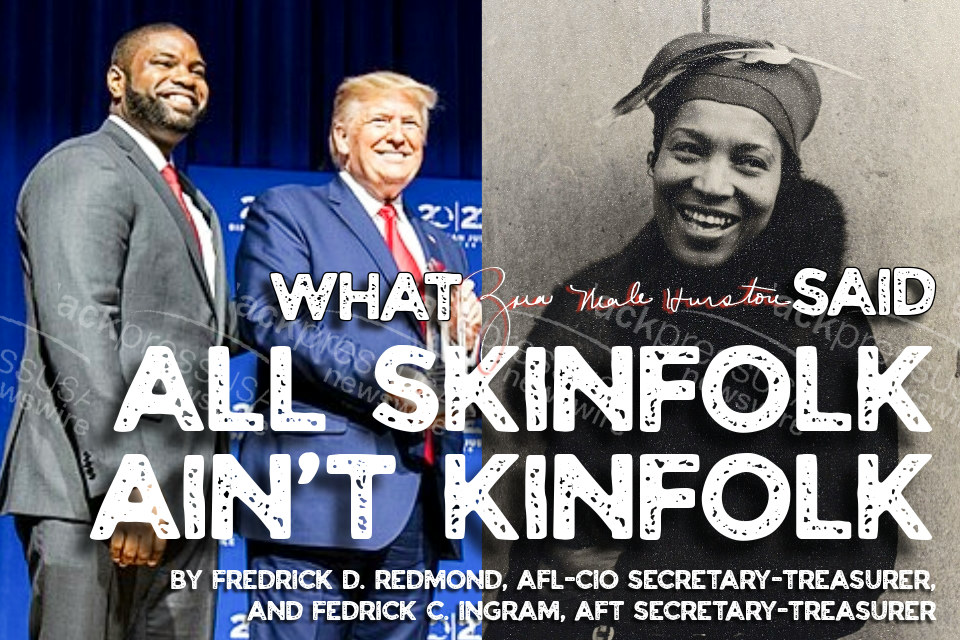
An old saying coined by Floridian Zora Neale Hurston in her final major nonfiction work, Dust Tracks on a Road, set in Florida. “All skinfolk ain’t kinfolk” is an idiom that distinguishes shared identity from shared interests.
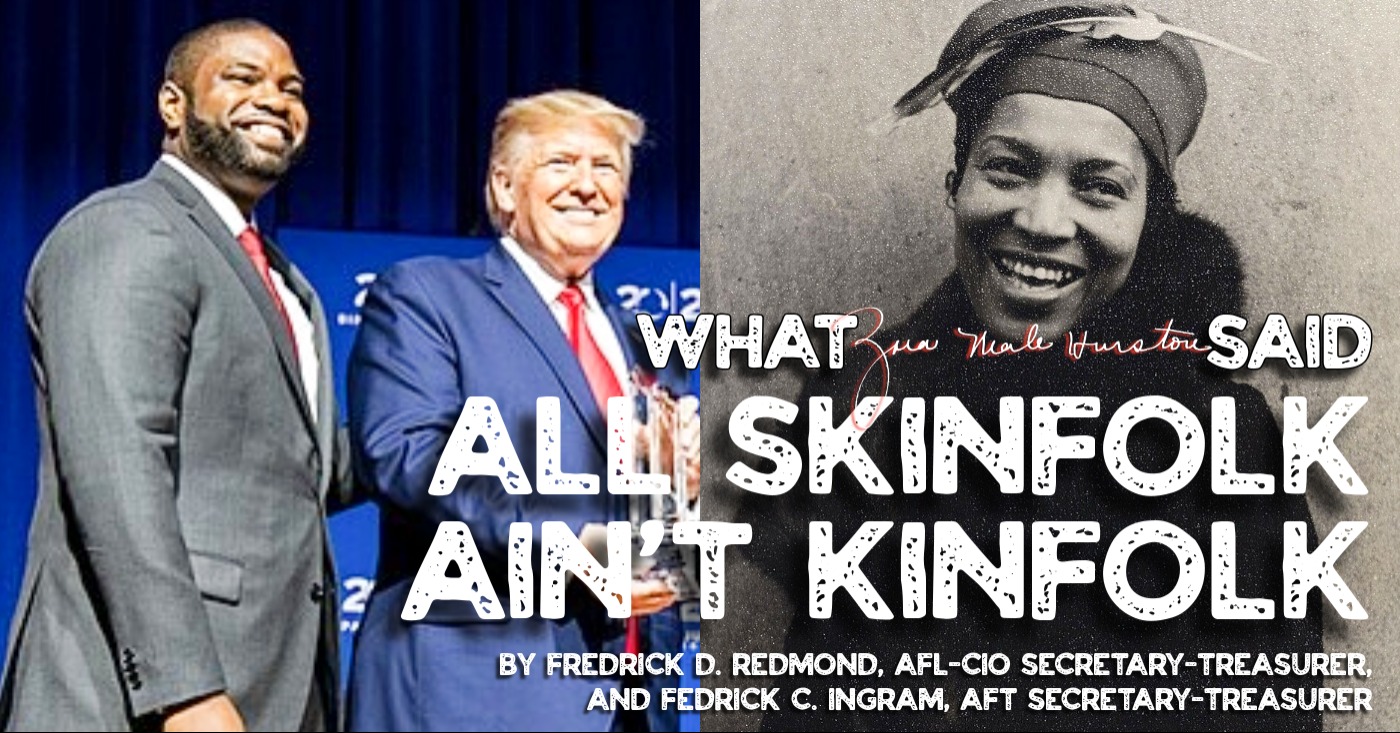
Byron Donalds wants to be Florida’s next governor. Not on our watch.
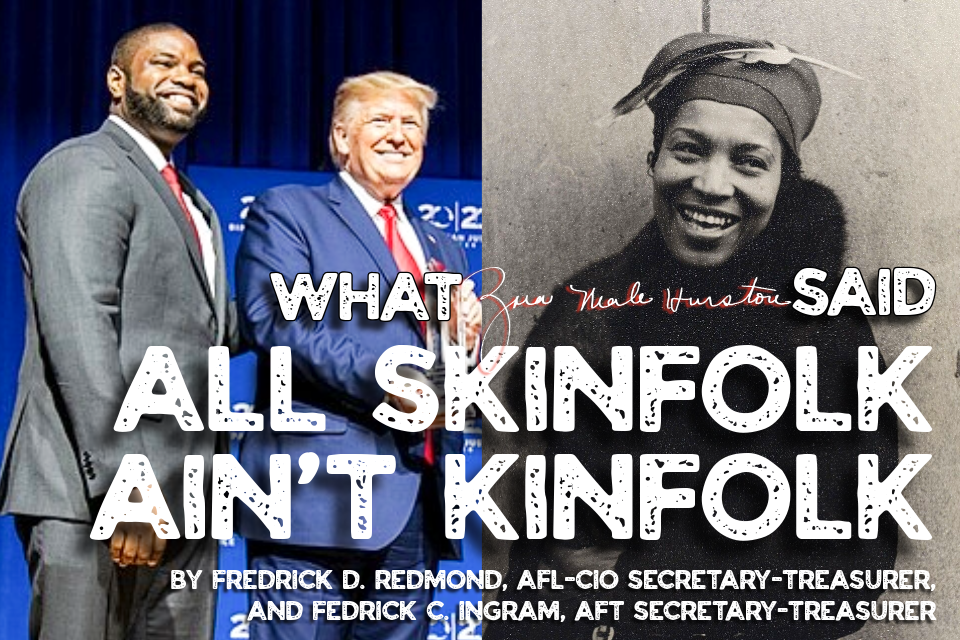
Our stance is rooted in an old saying coined by Floridian Zora Neale Hurston in her final major nonfiction work, Dust Tracks on a Road, set in Florida. “All skinfolk ain’t kinfolk” is an idiom that distinguishes shared identity from shared interests.
The congressman has done little to advance the cause of Black workers. In fact, on the AFL-CIO’s legislative scorecard, which tracks how legislators vote on the issues and policies that matter to working people, Rep. Donalds has voted against working people every time except once – giving him a lifetime score of 1%.
He has built his political identity around his support for Donald Trump and his embrace of Gov. Ron DeSantis, two political figures whose policies have undermined, undercut and trampled on our rights and freedoms.
As governor, DeSantis has been nearly surgical with his assault on the Black community, especially in education, where he undermined the state’s Historically Black Colleges and Universities through installing crony politicians; banned books by and about us from school libraries, rejected the country’s first AP course on Black culture, and instituted the STOP WOKE Act, which 11th Circuit judge rightfully demeaned as a “breathtaking assertion of power to ban unpopular ideas from public discourse.”
But he didn’t stop there. Next was Black employment.
As national labor leaders, we have witnessed the relationship between strong worker representation and stronger communities – especially for Black communities who over index when it comes to union membership. Like us, they have experienced the power of collective bargaining to help educators advocate for classroom resources, nurses raise concerns about patient care, and public employees seek fair compensation and safer working conditions. We have also seen the consequences when workers have fewer avenues to influence decisions affecting their livelihoods.
So it should come as no surprise that in 2023, DeSantis signed Senate Bill 256, imposing new restrictions on many public-sector labor unions by creating new challenges for unions seeking to maintain their bargaining certifications. This law is a direct threat to the sovereignty of American workers who have historically used unions to negotiate wages, benefits, workplace protections and the conditions under which essential public services are delivered.
The struggle for civil rights and the struggle for workers’ rights have long intersected. From A. Philip Randolph’s organizing of the Brotherhood of Sleeping Car Porters to the 1968 Memphis sanitation workers’ strike, demands for economic dignity have stood alongside demands for equal treatment under the law.
Dr. Martin Luther King Jr. understood that the promise of civil rights could not be fully realized without economic justice. His final campaign in Memphis reflected the conviction that workers’ rights, racial equality and human dignity were inseparable.
That history offers an important lesson for the present: Political representation and substantive policy representation are not necessarily the same thing.
That is history Byron Donalds has either forgotten or refuses to consider. Either way, it lays bare his disconnect from the collective vision of America most Black people share – one that acknowledges real differences while working to reduce the negative impacts of those differences. Donalds has adopted a different vision – one that thinks it more valiant to turn a blind eye to the disparate outcomes race creates in employment, education, and health care rather than admit there are real, structural issues that need to be addressed.
One person who does seem to understand and is working to do better is Donalds’ opponent, David Jolly, a former Republican congressman now running as a Democrat. He has positioned his candidacy as an alternative to the DeSantis approach, emphasizing affordability, public schools and a different direction for state government. And while we may not share skin color or a cultural history with Jolly, we do share his commitment to fight for equality and the dignity of the American worker.
The November 3 gubernatorial election presents Floridians with a choice between candidates offering different approaches to governing. Byron Donalds has sided with DeSantis who has made their disdain for Black people loud and law, and Jolly who sided with us and our understanding of community and collective power.
Every election is an opportunity to examine not only what candidates promise, but also what their records and policy commitments reveal.
For working people, that examination must include a fundamental principle: Economic prosperity and democratic participation are strongest when the people who do the work have a meaningful voice in shaping their future.
Florida’s next chapter will be written through the decisions of its people and the accountability they demand of those entrusted with public office.
That is the enduring promise of democracy—and a responsibility that belongs to all of us.
Fredrick D. Redmond, the highest-ranking African American labor official in history, is the Secretary-Treasurer of the AFL-CIO, the nation’s largest labor federation representing 65 unions and nearly 15 million workers.
Fedrick C. Ingram is the Secretary-Treasurer of the American Federation of Teachers (AFT), representing 1.8 million educators, healthcare workers, and public employees.
Byron Donalds wants to be Florida’s next governor. Not on our watch.
Our stance is rooted in an old saying coined by Floridian Zora Neale Hurston in her final major nonfiction work, Dust Tracks on a Road, set in Florida. “All skinfolk ain’t kinfolk” is an idiom that distinguishes shared identity from shared interests.
The congressman has done little to advance the cause of Black workers. In fact, on the AFL-CIO’s legislative scorecard, which tracks how legislators vote on the issues and policies that matter to working people, Rep. Donalds has voted against working people every time except once – giving him a lifetime score of 1%.
He has built his political identity around his support for Donald Trump and his embrace of Gov. Ron DeSantis, two political figures whose policies have undermined, undercut and trampled on our rights and freedoms.
As governor, DeSantis has been nearly surgical with his assault on the Black community, especially in education, where he undermined the state’s Historically Black Colleges and Universities through installing crony politicians; banned books by and about us from school libraries, rejected the country’s first AP course on Black culture, and instituted the STOP WOKE Act, which 11th Circuit judge rightfully demeaned as a “breathtaking assertion of power to ban unpopular ideas from public discourse.”
But he didn’t stop there. Next was Black employment.
As national labor leaders, we have witnessed the relationship between strong worker representation and stronger communities – especially for Black communities who over index when it comes to union membership. Like us, they have experienced the power of collective bargaining to help educators advocate for classroom resources, nurses raise concerns about patient care, and public employees seek fair compensation and safer working conditions. We have also seen the consequences when workers have fewer avenues to influence decisions affecting their livelihoods.
So it should come as no surprise that in 2023, DeSantis signed Senate Bill 256, imposing new restrictions on many public-sector labor unions by creating new challenges for unions seeking to maintain their bargaining certifications. This law is a direct threat to the sovereignty of American workers who have historically used unions to negotiate wages, benefits, workplace protections and the conditions under which essential public services are delivered.
The struggle for civil rights and the struggle for workers’ rights have long intersected. From A. Philip Randolph’s organizing of the Brotherhood of Sleeping Car Porters to the 1968 Memphis sanitation workers’ strike, demands for economic dignity have stood alongside demands for equal treatment under the law.
Dr. Martin Luther King Jr. understood that the promise of civil rights could not be fully realized without economic justice. His final campaign in Memphis reflected the conviction that workers’ rights, racial equality and human dignity were inseparable.
That history offers an important lesson for the present: Political representation and substantive policy representation are not necessarily the same thing.
That is history Byron Donalds has either forgotten or refuses to consider. Either way, it lays bare his disconnect from the collective vision of America most Black people share – one that acknowledges real differences while working to reduce the negative impacts of those differences. Donalds has adopted a different vision – one that thinks it more valiant to turn a blind eye to the disparate outcomes race creates in employment, education, and health care rather than admit there are real, structural issues that need to be addressed.
One person who does seem to understand and is working to do better is Donalds’ opponent, David Jolly, a former Republican congressman now running as a Democrat. He has positioned his candidacy as an alternative to the DeSantis approach, emphasizing affordability, public schools and a different direction for state government. And while we may not share skin color or a cultural history with Jolly, we do share his commitment to fight for equality and the dignity of the American worker.
The November 3 gubernatorial election presents Floridians with a choice between candidates offering different approaches to governing. Byron Donalds has sided with DeSantis who has made their disdain for Black people loud and law, and Jolly who sided with us and our understanding of community and collective power.
Every election is an opportunity to examine not only what candidates promise, but also what their records and policy commitments reveal.
For working people, that examination must include a fundamental principle: Economic prosperity and democratic participation are strongest when the people who do the work have a meaningful voice in shaping their future.
Florida’s next chapter will be written through the decisions of its people and the accountability they demand of those entrusted with public office.
That is the enduring promise of democracy—and a responsibility that belongs to all of us.
Fredrick D. Redmond, the highest-ranking African American labor official in history, is the Secretary-Treasurer of the AFL-CIO, the nation’s largest labor federation representing 65 unions and nearly 15 million workers.
Fedrick C. Ingram is the Secretary-Treasurer of the American Federation of Teachers (AFT), representing 1.8 million educators, healthcare workers, and public employees.
Byron Donalds wants to be Florida’s next governor. Not on our watch.
Our stance is rooted in an old saying coined by Floridian Zora Neale Hurston in her final major nonfiction work, Dust Tracks on a Road, set in Florida. “All skinfolk ain’t kinfolk” is an idiom that distinguishes shared identity from shared interests.
The congressman has done little to advance the cause of Black workers. In fact, on the AFL-CIO’s legislative scorecard, which tracks how legislators vote on the issues and policies that matter to working people, Rep. Donalds has voted against working people every time except once – giving him a lifetime score of 1%.
He has built his political identity around his support for Donald Trump and his embrace of Gov. Ron DeSantis, two political figures whose policies have undermined, undercut and trampled on our rights and freedoms.
As governor, DeSantis has been nearly surgical with his assault on the Black community, especially in education, where he undermined the state’s Historically Black Colleges and Universities through installing crony politicians; banned books by and about us from school libraries, rejected the country’s first AP course on Black culture, and instituted the STOP WOKE Act, which 11th Circuit judge rightfully demeaned as a “breathtaking assertion of power to ban unpopular ideas from public discourse.”
But he didn’t stop there. Next was Black employment.
As national labor leaders, we have witnessed the relationship between strong worker representation and stronger communities – especially for Black communities who over index when it comes to union membership. Like us, they have experienced the power of collective bargaining to help educators advocate for classroom resources, nurses raise concerns about patient care, and public employees seek fair compensation and safer working conditions. We have also seen the consequences when workers have fewer avenues to influence decisions affecting their livelihoods.
So it should come as no surprise that in 2023, DeSantis signed Senate Bill 256, imposing new restrictions on many public-sector labor unions by creating new challenges for unions seeking to maintain their bargaining certifications. This law is a direct threat to the sovereignty of American workers who have historically used unions to negotiate wages, benefits, workplace protections and the conditions under which essential public services are delivered.
The struggle for civil rights and the struggle for workers’ rights have long intersected. From A. Philip Randolph’s organizing of the Brotherhood of Sleeping Car Porters to the 1968 Memphis sanitation workers’ strike, demands for economic dignity have stood alongside demands for equal treatment under the law.
Dr. Martin Luther King Jr. understood that the promise of civil rights could not be fully realized without economic justice. His final campaign in Memphis reflected the conviction that workers’ rights, racial equality and human dignity were inseparable.
That history offers an important lesson for the present: Political representation and substantive policy representation are not necessarily the same thing.
That is history Byron Donalds has either forgotten or refuses to consider. Either way, it lays bare his disconnect from the collective vision of America most Black people share – one that acknowledges real differences while working to reduce the negative impacts of those differences. Donalds has adopted a different vision – one that thinks it more valiant to turn a blind eye to the disparate outcomes race creates in employment, education, and health care rather than admit there are real, structural issues that need to be addressed.
One person who does seem to understand and is working to do better is Donalds’ opponent, David Jolly, a former Republican congressman now running as a Democrat. He has positioned his candidacy as an alternative to the DeSantis approach, emphasizing affordability, public schools and a different direction for state government. And while we may not share skin color or a cultural history with Jolly, we do share his commitment to fight for equality and the dignity of the American worker.
The November 3 gubernatorial election presents Floridians with a choice between candidates offering different approaches to governing. Byron Donalds has sided with DeSantis who has made their disdain for Black people loud and law, and Jolly who sided with us and our understanding of community and collective power.
Every election is an opportunity to examine not only what candidates promise, but also what their records and policy commitments reveal.
For working people, that examination must include a fundamental principle: Economic prosperity and democratic participation are strongest when the people who do the work have a meaningful voice in shaping their future.
Florida’s next chapter will be written through the decisions of its people and the accountability they demand of those entrusted with public office.
That is the enduring promise of democracy—and a responsibility that belongs to all of us.
Fredrick D. Redmond, the highest-ranking African American labor official in history, is the Secretary-Treasurer of the AFL-CIO, the nation’s largest labor federation representing 65 unions and nearly 15 million workers.
Fedrick C. Ingram is the Secretary-Treasurer of the American Federation of Teachers (AFT), representing 1.8 million educators, healthcare workers, and public employees.


NEW INVESTIGATION INTO FEDERAL RESERVE GOVERNOR

NEW INVESTIGATION INTO FEDERAL RESERVE GOVERNOR 📱

2024 Luxury SUV: Price, MPG & Fuel Cost Analysis #shorts

Ballot Breakdown Your Vote Explained by Expert

All Skinfolk Ain’t Kinfolk

All Skinfolk Ain’t Kinfolk

Banking Black: A Smart Strategy for Your Money #shorts

All Skinfolk Ain’t Kinfolk

Car Seat Comfort: Rear Space vs. Front Seat Support #shorts

395 HP Turbo 6-Cyl: Smooth Power for Merging & Passing! #shorts

The Youngest American Killed in the Vietnam War

Latest Massacre in Haiti Reveals Cruelty U.S. Deportations

OPINION: Nolan Wells’ Death One of Several Signifying Racial Terror Lives on in U.S. South

Passing for White, Fighting for Black America: The Courage of Walter White

OP-ED: Haiti TPS: Have We Lost Sense of Humanity?

OP-ED: If AI Is the New Language of Power, Then NAN Wants Black Communities Fluent

OP-ED: How Does Your State Rank for Pre-K?

Henry O. Flipper: A Trailblazer at West Point and Beyond

Asm. Smallwood-Cuevas’s Bill Repealing ‘Racist’ CalWORKs ‘Man-in-the-House’ Rule Clears Legislature

NBA All-Star Damian Lillard Returns Home for 15th Annual Backpack Giveaway
NEW INVESTIGATION INTO FEDERAL RESERVE GOVERNOR
NEW INVESTIGATION INTO FEDERAL RESERVE GOVERNOR 📱
2024 Luxury SUV: Price, MPG & Fuel Cost Analysis #shorts
Ballot Breakdown Your Vote Explained by Expert
Banking Black: A Smart Strategy for Your Money #shorts
Car Seat Comfort: Rear Space vs. Front Seat Support #shorts
395 HP Turbo 6-Cyl: Smooth Power for Merging & Passing! #shorts

Nearly 1 in 4 Third Ward voters in ‘suspense.’ Here’s why you can still vote

HBCU Homecoming: A never-miss annual tradition

Jamika Phillips, Founder of Shades The Nail Bar
-

 Black Press1 week ago
Zakiya Jendayi Arrested, Locked Out of Home by Sheriff’s Deputies
-

 Black Press1 week ago
A $2.1 Trillion Wellness Industry Never Built a Daily Practice for Black Children. So This Atlanta Family Did.
-
 BlackPressUSA5 days ago
Latinas Deserve Equal Pay. Unions Help Make It Happen.
-

 Art7 days ago
Montclair Brewery: Brewing Culture, Community, History
-

 Black History1 week ago
Listening as a Lifeline: A Doula’s Witness to Black Maternal Health
-

 Black Press7 days ago
COMMENTARY: But God!
