
Featured
Houston Mayor Annise Parker Behind The Scenes Photo Shoot
Go behind the scenes with Houston Mayor Annise Parker during a past photo shoot! See a side of the mayor you’ve never seen before.







Featured
Minnesota’s Black Cable Radio: A Community Built on Culture #shorts
Discover how Minnesota’s Black Cable Radio transformed a need for representation into a thriving, culture-driven community hub.
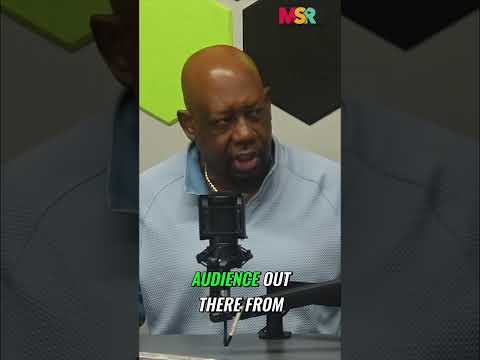
True community impact starts by serving the people around you. By identifying a need for cultural representation, a unique cable radio station was born in Minnesota, proving that authentic connection builds its own massive audience. #CommunityBuilding #MediaHistory #Entrepreneurship #CulturalRepresentation
Featured
How Black-Owned Businesses Build Stronger Communities #shorts
Discover how Black-owned businesses are transforming neighborhoods by building sustainable networks and driving collective local success.

Local businesses are proving that community support is the ultimate strategy for success. By cross-promoting and sharing resources, Black-owned shops and community spaces create a sustainable network that makes services more accessible for everyone. #CommunitySupport #SmallBusiness #LocalImpact #BusinessCollaboration #SupportLocal
Black Enterprise
From Rattler Grad to Retail Guru
From Florida A&M grad to CEO of The Mane Choice, Chasity Monroe shares her inspiring journey of scaling a multi-million dollar beauty empire.

Chasity Monroe is balancing beauty and business while being a successful Black woman entrepreneur focused on culturally-resonant brands. She has successfully glowed up from Florida A&M University Rattler grad to a major retail guru, having worked across sales, fundraising and marketing in her career. As the new CEO of The Mane Choice, she’s growing a multi-million dollar brand with textured haircare products sold in Walmart, Sally Beauty, Target and Amazon. Bringing her 15 years of consumer and beauty experience, including at Procter & Gamble, she’ll discuss her journey from HBCU FAMU to owning the only Black-woman-owned hair store in Memphis–Pink Noire– to now leading this major brand into its next chapter.
Black History
COMMENTARY: We’ve Got Some Difficult Days Ahead
GARY CRUSADER — The present administration and those driving a malicious agenda of anti-human policies driven by greed will likely ratchet up the rhetoric of ruin against safety-net programs. These are the very programs that support the people who actually do the living and dying in this country.

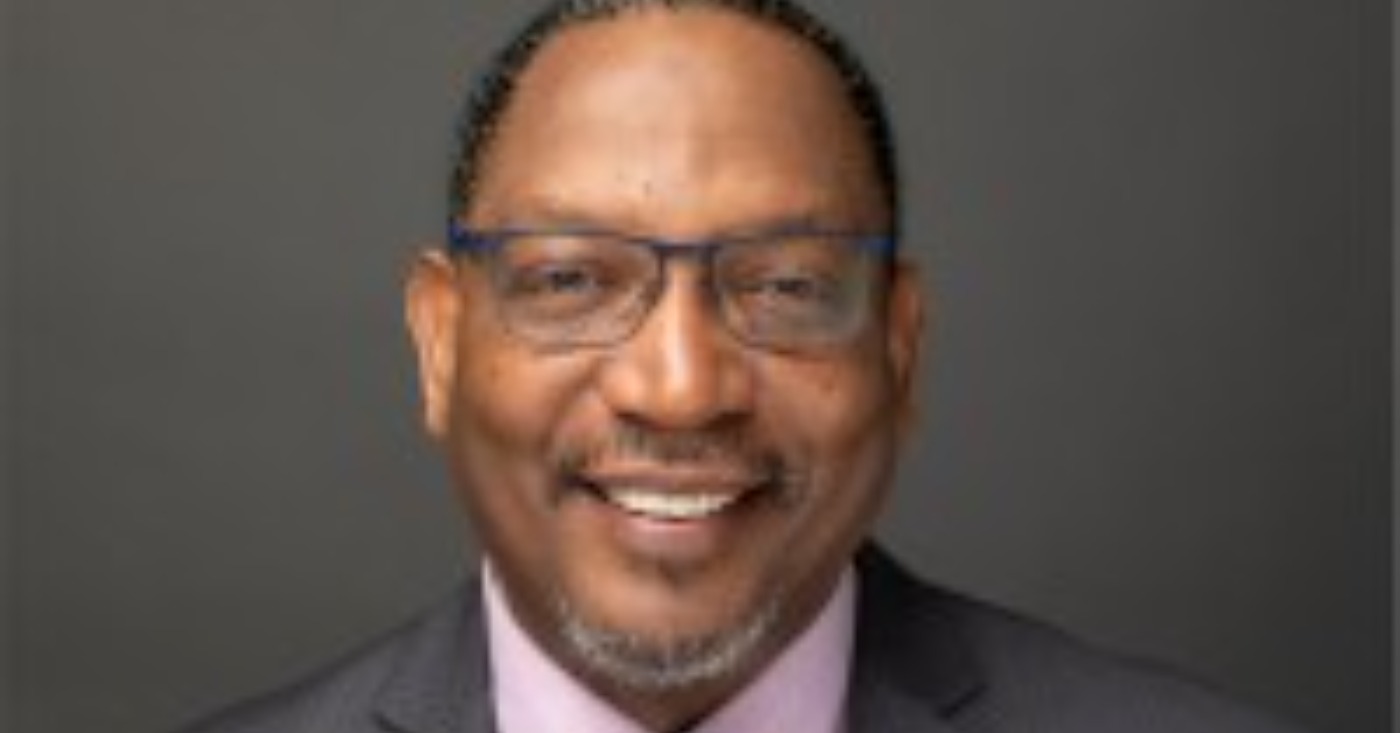
On April 3, 1968, at Mason Temple in Memphis, Dr. Martin Luther King Jr. delivered his famous “I’ve Been to the Mountaintop” sermon.
As he prepared to close, he told the overflowing crowd: “We’ve got some difficult days ahead.”
Those words ring just as true today as they did nearly six decades ago. We, too, have some difficult days ahead.
By the time this article hits the newsstands (I’m dating myself), the midterm elections will be over. Regardless of the outcome, the fight for justice and humanity will continue with full force.
We’ve got some difficult days ahead.
The present administration and those driving a malicious agenda of anti-human policies driven by greed will likely ratchet up the rhetoric of ruin against safety-net programs. These are the very programs that support the people who actually do the living and dying in this country.
We’ve got some difficult days ahead.
Following the midterms, people who believe in the sacredness of humanity must turn their attention to holding elected officials accountable. Senators and representatives promised to protect the people’s agenda: health care for all, quality education for all, and ensuring billionaires pay their fair share of taxes to fund programs for “the least of these.”
If sober, principled leaders are not elected, and the hounds of hell break through the gates of Congress, then those who believe that every person has inherent dignity, regardless of race, ethnicity, gender, sexuality, age, or economic status, will have to redouble their efforts. We must resist the fanatical intent of those who believe one race is superior to others.
We’ve got some difficult days ahead.
Churches must stand in the tradition of the prophet Amos. They must declare to wannabe kings and sycophants who trade human principles for profit that God says: “Let justice roll down like waters, and righteousness like an ever-flowing stream.”
Black churches in particular must make a Sankofa move, reaching back to reclaim the lessons of ancestors who waged heroic battles against white supremacy and settler colonialism, forcing this country to make drastic changes for the better.
We’ve got some difficult days ahead.
Black churches and people of goodwill must reclaim the narrative. We must prevent the masses, often captivated by social media talking heads who lack the bandwidth for deep theology, ideology, or political literacy, from falling under the influence of rampant ignorance online.
We’ve got some difficult days ahead.
Those who have always wondered what they would have done during the Civil Rights Movement will soon confront a hard truth: what they are doing right now is exactly what they would have done back then. For many, that means doing nothing but talking. Others will realize they are the kind of people Harriet Tubman would have left behind, because they did nothing but get in the way.
We must answer the question Dr. King posed in the title of his final book: Where Do We Go from Here: Chaos or Community?
We’ve got some difficult days ahead.
That sentiment reflects the words Jesus left with His disciples, hours before He was executed by the Roman Empire on a cross. In John 16:33, Jesus told them: “I have told you these things, so that in me you may have peace. In this world you will have trouble. But take heart! I have overcome the world.”
Yes, we have difficult days ahead, but we have truth on our side. We have justice on our side. We have our ancestors on our side. We have history on our side.
And for those of us who follow that barefoot preacher from the northeast African region of biblical Palestine, Jesus of Nazareth, we know that victory ultimately triumphs over defeat, because resurrection is a living reality.
Be vigilant, be authentic, and stay woke. Uhuru Sasa!
The Rev. Dr. John E. Jackson, Sr. Senior Pastor of Trinity United Church of Christ-Gary, 1276 W. 20th Ave. Gary, IN. Contact the church at [email protected] or by phone at 219-944-0500.
Based on reporting by Gary Crusader.
Black Press
Eight Black Women Win Georgia Statewide Offices
COMMUNITY VOICE (KS) — Georgia voters made history on Nov. 3 by electing eight Democratic women to statewide offices, securing seven of the state’s eight major executive positions. Among the victors, Penny Brown Reynolds defeated her Republican opponent to become the first Black woman elected as Georgia’s secretary of state.
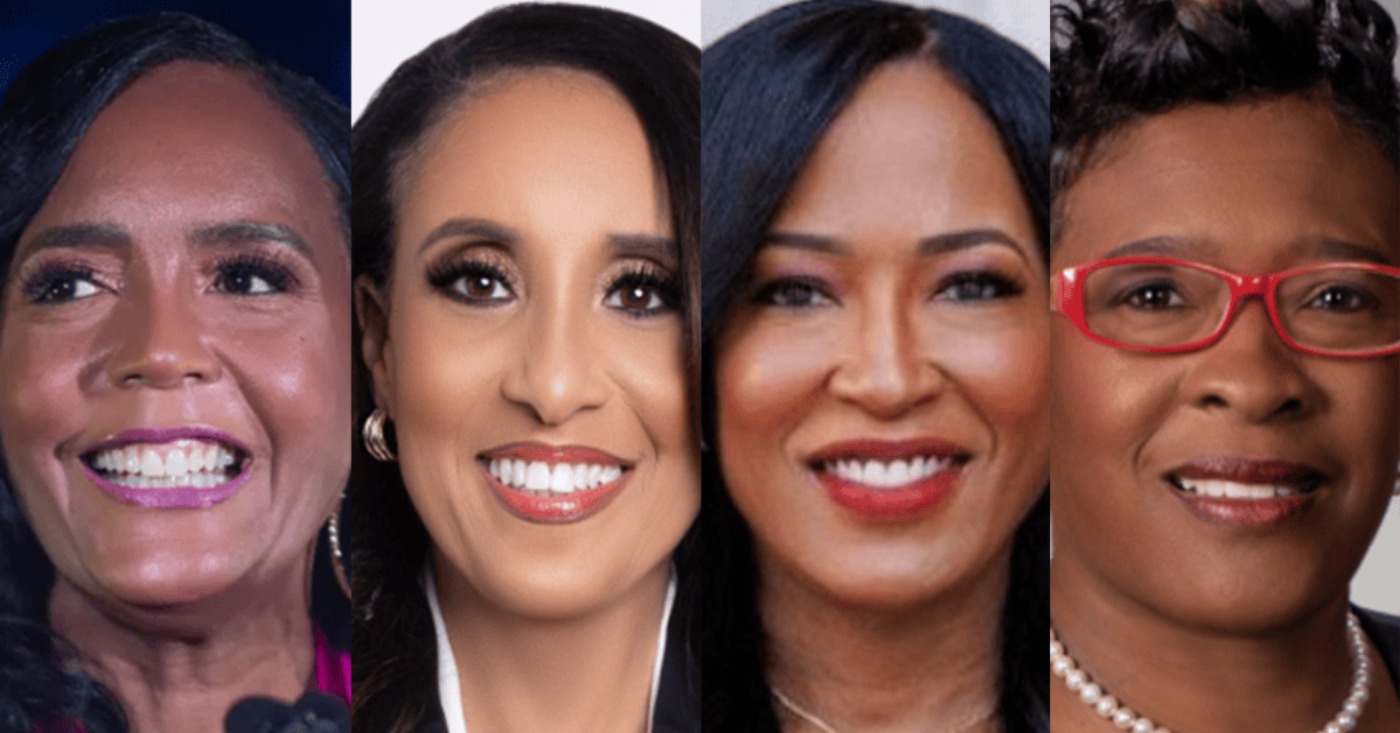
Georgia voters elected eight Democratic women to statewide offices Nov. 3, giving women seven of the state’s eight major executive positions and a seat on its utility regulatory commission.
The winners are:
- Keisha Lance Bottoms: Governor
- Penny Brown Reynolds: Secretary of state
- Tanya Miller: Attorney general
- Keisha Sean Waites: Insurance and safety fire commissioner
- Nikki Porcher: Labor commissioner
- Katherine Juhan-Arnold: Agriculture commissioner
- Lydia Powell: State school superintendent
- Shelia Edwards: Public Service Commission, District 5.
Brown Reynolds, a lawyer and former Fulton County judge, defeated Republican Tim Fleming to become the first Black woman elected Georgia secretary of state. She succeeds Republican Brad Raffensperger, who ran unsuccessfully for governor. The office gained national attention after Donald Trump pressured Raffensperger in a January 2021 phone call to “find 11,780 votes” to overturn his Georgia defeat. Raffensperger refused. Brown Reynolds will now serve as the state’s top elections official.
Miller, a state representative and former federal and county prosecutor, defeated Republican Brian Strickland to become Georgia’s first Black female attorney general. Waites, a former Atlanta city councilor and state representative, unseated Republican Insurance Commissioner John King.
The post Eight Black Women Win Georgia Statewide Offices appeared first on The Community Voice.
Based on reporting by Community Voice (KS).
Black History
THE RELIGION CORNER: We Stand on Their Shoulders — the Sacred Duty of the Ballot Box
WASHINGTON INFORMER — As millions of citizens reflect on the results of the recent election, the weight of history and the tension of a divided nation remain prevalent. For Black Americans and marginalized communities, the act of voting is far more than a political calculation; it is a sacred inheritance paid for through the blood and sacrifice of ancestors who refused to accept second-class citizenship.
As this edition of The Washington Informer hits the stands, millions of citizens have cast their ballots, made their voices heard, and begun reflecting on the election’s outcome. The atmosphere this election season has been heavy. We feel the weight of history, the tension of a divided nation, and anxiety about tomorrow. In this issue, I remind Gen Z voters of the past struggles that secured this right.
I voted early, which reminded me that votingisn’t a mere political calculation. For people of faith, it is a profound act of stewardship, a tool for community survival and an expression of our deepest moral values.
For Black Americans, low-income families and marginalized communities, the ballot is a sacred inheritance. The right to vote was not a gift; it was paid for in blood, sacrifice, and the determination of people whorefused toaccept second-class citizenship. We must never forget that for decades, our ancestors faced systemic terror just to register. They were met with violent police dogs, high-pressure fire hoses, mandatory literacy tests designed to make them fail, and the constant threat of white supremacist violence.
Historians estimate that dozens of documented freedom fighters were murdered during the voting rights campaigns of the 1950s and 1960s, with countless other deaths unrecorded or unpunished. Millions more endured brutal beatings and dehumanizing jail cells. The protections we rely on today were forged in the heat of protest, through the 1961 Freedom Rides, the dangerous 1964 Freedom Summer registration drives, and the brutal crossing of the Edmund Pettus Bridge during the Selma-to-Montgomery march on “Bloody Sunday” in 1965.
Today, we stand on the broad shoulders of giants who put their lives on the line so we could walk into a voting booth with our heads held high.
We remember Fannie Lou Hamer, asharecropper’s daughter who was brutally beaten in a Mississippi jail for her voting rights activism and famously declared that she was “sick and tired of being sick and tired.”
We remember John Lewis, who, as a student leader, had his skull fractured by police batons in Selma and spent his life protecting what he called the most powerful nonviolent tool we have.”
We honor Jimmie Lee Jackson, a 26-year-old church deacon and veteran who was shotand killedby an Alabama state trooper while protecting his family during a peaceful march.
We honor Medgar Evers, the NAACP field secretary who was assassinated in his driveway for his civil rights and voter registration work.
Lastly, we honor Viola Liuzzo, a mother of five who traveled from Detroit to Alabama to shuttle Selma marchers before she was targeted and killed by Ku Klux Klan members.
When we view the ballot box through the lens of history and faith, the narrative shifts from partisan warfare to spiritual responsibility. Voting becomes a tangible way to love our neighbors as ourselves.
The policies shaped by our votes directly affect the vulnerable, the poor, and the stranger. InMicah6:8, we are asked: “What does the Lord require of you but to do justice, and to love kindness, and to walk humbly with your God?”Notice the action words. We are commanded to do justice. Castinga ballot with the collectivecommunity in mind helps fulfill that requirement. Similarly, Proverbs 29:2teaches, “When the righteous are in authority, the people rejoice.”Righteousness in public policy is about fairness, equity, and protecting human dignity.
No matter what the election results show, our assignment remains unchanged. If your candidate won, your job now is to hold them accountable to justice and mercy. If your candidate lost, your job is to remain resilient, keeping your hands on the plow to protect the vulnerable and speak truth to power. Our ultimate hope does not rest in any political party or elected official.
If you have already voted, I commend you for honoring the ancestors. If you did not cast your ballot,I urge you to reflect on this election not with fear or cynicism, but as a reminder of our ongoing sacred responsibility.
For information on local election results and future voting opportunities, consult your official local election authorities. Continue to engage in the democratic process with a heart centered on love for your community, carry the names of those who died for your right to be there, and let us resolve to bind up our nation’s wounds together.
Please do not think this inhumane treatment is over. Though this column reminds readers of the past, everything is not perfect yet.
According to civil rights groups and a report by the organization JULIAN, which documentedmore than70 cases of suspected modern-daylynchings across seven Southern states between2000 and 2025, systemic violence persists. Furthermore, independent tracking by groups such as Black Lives Matter of Atlanta reportedly recorded a recent uptick between March 2025and August 2026, finding at least22 Blackindividuals dead under suspicious or unusual hanging circumstances across the country.
Each vote helps bring about the necessary change, and that change begins at the ballot box. Make that change!
Lyndia Grant is a speaker/writer living in the D.C. area. Her radio show, “Think on These Things,” airs Fridays at 6 p.m. on 1340 AM (WYCB), a Radio One station. To reach Grant, go to her website, www.lyndiagrant.com, email [email protected] or call 240-602-6295. Follow her on X @LyndiaGrant and on Facebook.
Based on reporting by Washington Informer.


Save on Car Insurance With These Common Discounts #shorts

Minnesota’s Black Cable Radio: A Community Built on Culture #shorts

How Black-Owned Businesses Build Stronger Communities #shorts

From Rattler Grad to Retail Guru

COMMENTARY: We’ve Got Some Difficult Days Ahead

Eight Black Women Win Georgia Statewide Offices

THE RELIGION CORNER: We Stand on Their Shoulders — the Sacred Duty of the Ballot Box

New Computer Lab Adds to MLK Catholic Student Center’s Sense of Home

Keisha Lance Bottoms to Govern State Where Her Great-Great-Grandfather Was Enslaved

A Command Through the Culture

All Skinfolk Ain’t Kinfolk

Practitioners of African Traditional Spirituality Offer Ancestral Reverence Ritual Oct. 31

Tamiko Armstead | 2026 Lifetime Achiever in Education

Oakland Awarded More than $14 Million in State Funding

OP-ED: The Black Church Writes AI’s Next Chapter

HISTORY MADE: Keisha Lance Bottoms Becomes First Black Woman Elected Governor in American History

Inside 820 S. Michigan: New Book Captures the Lost World of Ebony and Jet

Jendayi Arrest Raises Community Concerns Regarding Sheriff’s Chain of Command

OP-ED: If the ‘Cornell 7’ Were Black Men at an HBCU — America Wouldn’t Be This Sympathetic

Kickstarter CEO Everette Taylor Shares Tips on Creating and Growing a Business
Save on Car Insurance With These Common Discounts #shorts
Minnesota’s Black Cable Radio: A Community Built on Culture #shorts
How Black-Owned Businesses Build Stronger Communities #shorts
From Rattler Grad to Retail Guru

Why Recognizing Artists Matters More Than Awards #shorts

Why I Created a Black-Centered Community Coffee Shop #shorts

How EVs Create Opportunity for Black Communities #shorts

Don’t Accept Your Auto Insurance Renewal Before Comparing Quotes #shorts

Pete Pioneered Cable Radio—The Story Behind His Breakthrough #shorts

How a Social Enterprise Café Invests in Young People #shorts
-
 Black History4 days ago
HISTORY MADE: Keisha Lance Bottoms Becomes First Black Woman Elected Governor in American History
-

 Featured6 days ago
Multi-Faith Leaders Representing 10 Million People Launch National Anti-Authoritarian Initiative
-
 Black History5 days ago
Christianity’s Racial History
-
 Black History6 days ago
Michael Shiner: The Enslaved Man Who Wrote His Way into American History
-
 Black History6 days ago
Five Hospitals Said No! Who Will Help Annette Henry Recover?
-
 Black History5 days ago
Hundreds of Black Christian Leaders Arriving in Israel for Martin Luther King-Inspired Mission
