
Politics
Holder Seeks to Force Texas to ‘Preclear’ Voting Changes

By George E. Curry
NNPA Editor-in-Chief
PHILADELPHIA (NNPA) – Fulfilling a pledge to aggressively protect the voting rights of people of color in the wake of the Supreme Court striking down a key section of the Voting Rights Act, Attorney General Eric H. Holder, Jr. has announced that the Justice Department will sue the state of Texas to compel it to preclear any planned changes in its voting procedures before they can go into effect.
In Shelby County v. Holder, a sharply divided Supreme Court gutted Section 4 of the Voting Rights Act of 1965, the part of the law that describes the formula to be used to determine which states or political subdivisions are subjected to preclearance requirements. President Obama has stated that his administration will press Congress for new legislation that will override the court’s decision that weakens the landmark legislation. Holder called the court’s 5-4 vote “a deeply disappointing – and flawed – decision.”
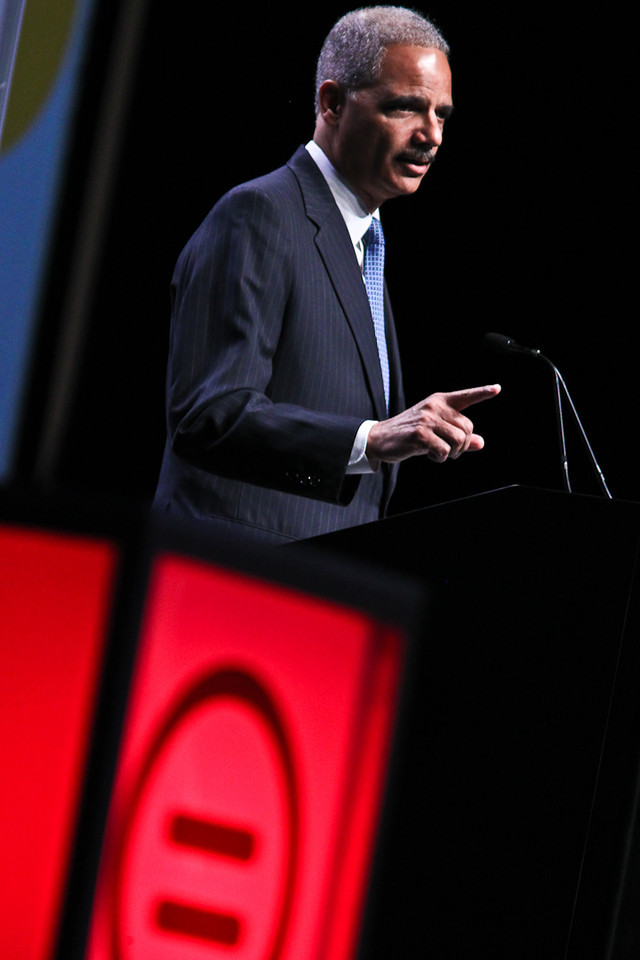
Speaking at the National Urban League’s annual convention here last Thursday, Holder said, “And today I am announcing that the Justice Department will ask a federal court in Texas to subject the state of Texas to a preclearance regime similar to the one required by Section 5 of the Voting Rights Act. This request to ‘bail in’ the state – and require it to obtain “pre-approval” from either the Department or a federal court before implementing future voting changes – is available under the Voting Rights Act when intentional voting discrimination is found. Based on the evidence of intentional racial discrimination that was presented last year in the redistricting case, Texas v. Holder – as well as the history of pervasive voting-related discrimination against racial minorities that the Supreme Court itself has recognized – we believe that the state of Texas should be required to go through a preclearance process whenever it changes its voting laws and practices.”
In its Shelby County v. Holder ruling last month, the Supreme Court struck down the requirement that nine states, most of them in the Deep South, and portions of others to obtain permission from the Justice Department or a federal court before changing election procedures.
Under the Voting Rights Act, states can ‘bail out’ of the preclearance provision if they can prove that they have not discriminated against disadvantaged groups in a decade. Under the rarely used Section 3 ( c ) of the law, which was not overturned by the court, states not previously covered by the Voting Rights Act can be added or bailed in if it is proven that they are discriminating on the basis of race or ethnicity.
Within two hours after the Supreme Court ruling, Texas Attorney General Greg Abbott announced that he will restore a controversial Voter ID requirement that was frozen by the Justice Department. Under the provision, student IDs are not accepted to verify the identities of voters, but gun registration is an accepted document.
Abbott, who is running for governor next year to succeed outgoing Rick Perry, also announced that the state will implement a controversial redistricting plan that dilutes Black and Latino political clout.
Texas appears to be an ideal target for the Justice Department because a federal court in Washington ruled last year that the state had intentionally discriminated against Latinos when it re-drew its congressional districts. The court threw out the map saying both parties had “provided more evidence of discriminatory intent than we have space, or need, to address here.”
In announcing his upcoming action against Texas, Holder told delegates to the National Urban League convention, “This is the Department’s first action to protect voting rights following the Shelby County decision, but it will not be our last. Even as Congress considers updates to the Voting Rights Act in light of the Court’s ruling, we plan, in the meantime, to fully utilize the law’s remaining sections to ensure that the voting rights of all American citizens are protected.”
After Texas, the next likely showdown will be between the Justice Department and the state of North Carolina.
The state legislature there had passed legislation that, if enacted, would cut early voting by a week, eliminate same-day registration, require strict voter ID and end a popular program that pre-registers high school students before their 18th birthday.
According to Bob Hall, executive director of Democracy North Carolina, House Bill 589 also:
• Eliminates flexibility in opening early voting sites at different hours within a county;
• Eliminates straight party ticket voting;
• Authorizes vigilante poll observers, lots of them, with expanded range of interference;
• Expands the scope of who may examine registration records and challenge voters;
• Repeals out-of-precinct voting;
• Makes it more difficult to add satellite polling sites for the elderly or voters with disabilities;
• Limits who can assist a voter adjudicated to be incompetent by court;
• Repeals three public financing programs;
• Raises contribution limits to $5,000; and the limit increases every two years with inflation and
• Repeals some of the disclosure requirements of outside money.
The measure, rushed through in the closing days of the legislative session, was sent to Republican Gov. Pat McCrory for his expected signature.
In his address to the National Urban League, Attorney General Holder said, “Although mandated by the Constitution, voting rights are not always guaranteed – in practice – without robust enforcement. That’s why, despite the court’s decision, I believe we must regard this setback not as a defeat, but as an historic opportunity: for Congress to restore, and even to strengthen, modern voting protections.”
The 1965 Voting Rights Act expired after five years, but was extended by Congress in 1970, 1975, 1982 and for another 25 years in 2006. The last time, it passed the House 390-3 and the Senate 98-0.
However, in the current political climate, many are worried if Congress will continue to act in a bipartisan manner on voting rights.
Holder explained, “… This has never been a partisan issue. Every re-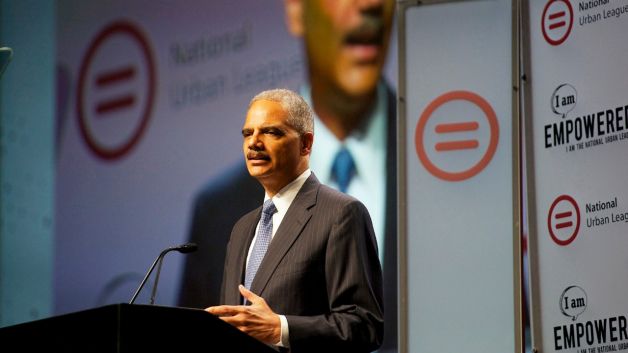

AG Eric Holder takes aim at Texas voter laws (Urban League Photo by Sharon Farmer)
authorization of the Voting Rights Act was signed into law by a Republican president. It’s a question of our values as a nation. It goes to the heart of who we are as a people. And it’s incumbent upon Congressional leaders from both parties to guarantee that every eligible American will always have equal access to the polls; to ensure that we will never turn our back on the hard-won progress of the last hundred years; and to consider new solutions that are equal to the challenges of the 21st century. As this debate unfolds, it’s important for all Americans to note that – despite the Supreme Court’s flawed ruling – our voting rights remain fully intact.”
###


Black Press
On Your November Ballot: Prop 38 Would Allocate $8.4 Billion to Immunology and Immunotherapy Funding
“Yes on 38”, with the tagline “Californians for Life-Saving Immunology Research and Cures,” is leading the campaign for the support side of the proposition.


California voters will decide in November whether Proposition (Prop) 38 should authorize substantial state funding for immunology and immunotherapy research.
The initiative would fund immunology and immunotherapy research aimed at harnessing the body’s immune system to develop new treatments, medical procedures and potential cures for diseases such as cancer, Alzheimer’s disease and heart disease.
More specifically, Prop 38, titled the Immunology and Immunotherapy Research Funding Initiative, is split into three main components that would go into effect if passed.
First, the initiative would authorize the state to issue $8.4 billion in general obligation bonds to support immunology and immunotherapy research. At least half of the bond proceeds, or $4.2 billion, would be dedicated exclusively to research.
Additionally, Prop 38 would make it mandatory for the state to enter into an agreement with a qualified nonprofit institute focused and dedicated to researching immunology and immunotherapy within 90 days of the initiative’s effective date. The research institute must be affiliated with the University of California.
The third component mandates that the remaining bond revenue must be directed to California-based public and nonprofit medical institutions through a peer-reviewed grant process.
“Yes on 38”, with the tagline “Californians for Life-Saving Immunology Research and Cures,” is leading the campaign for the support side of the proposition.
Along with the campaign, organizations that have publicly supported the ballot initiative include the California Democratic Party, The ALS Association, Alzheimer’s treatment and advocacy organizations, California Black Health Network, Parkinson Association of Northern California and Reform California among others.
“California has an opportunity to accelerate lifesaving medical breakthroughs. Immunotherapies work differently than traditional treatments. Instead of attacking cells directly, they empower the body’s own immune system to recognize and stop disease. Today, these therapies are already treating certain cancers and chronic conditions — and researchers continue to expand what’s possible. This initiative invests in proven science so cures can move from the lab to patients faster,” said the campaign.
No on Proposition 38 is leading the campaign against the measure, with support from the League of Women Voters of California. Opponents argue that California cannot afford to assume $8.4 billion in debt for medical research that may not produce definitive results. They also object to directing more than half of the bond proceeds — $4.2 billion — to a single qualifying nonprofit research institute, arguing that funding decisions of this magnitude should be made through the state’s regular budget process.
“Medical research can save lives, but Prop 38 is the wrong way to fund it. It would authorize $8.4 billion in borrowing for immunology and immunotherapy research and require the state to make $500 million to $600 million in annual debt payments for about 20 years. Those payments would come from the General Fund, which also pays for schools, health care, and other public services,” the League of Women Voters of California said.
A “yes” vote would authorize $8.4 billion in state bonds to fund immunology and immunotherapy medical research.
A “no” vote would reject the proposed bond funding.
Black Press
Asm. Isaac Bryan’s Bill Banning California Police From ICE Side Jobs Reaches Newsom’s Desk
The legislation comes as ICE ramps up efforts to recruit law enforcement personnel under the Trump administration. Bryan said the federal agency is offering financial incentives to attract officers, raising concerns about the impact on local law enforcement agencies and the communities they serve.
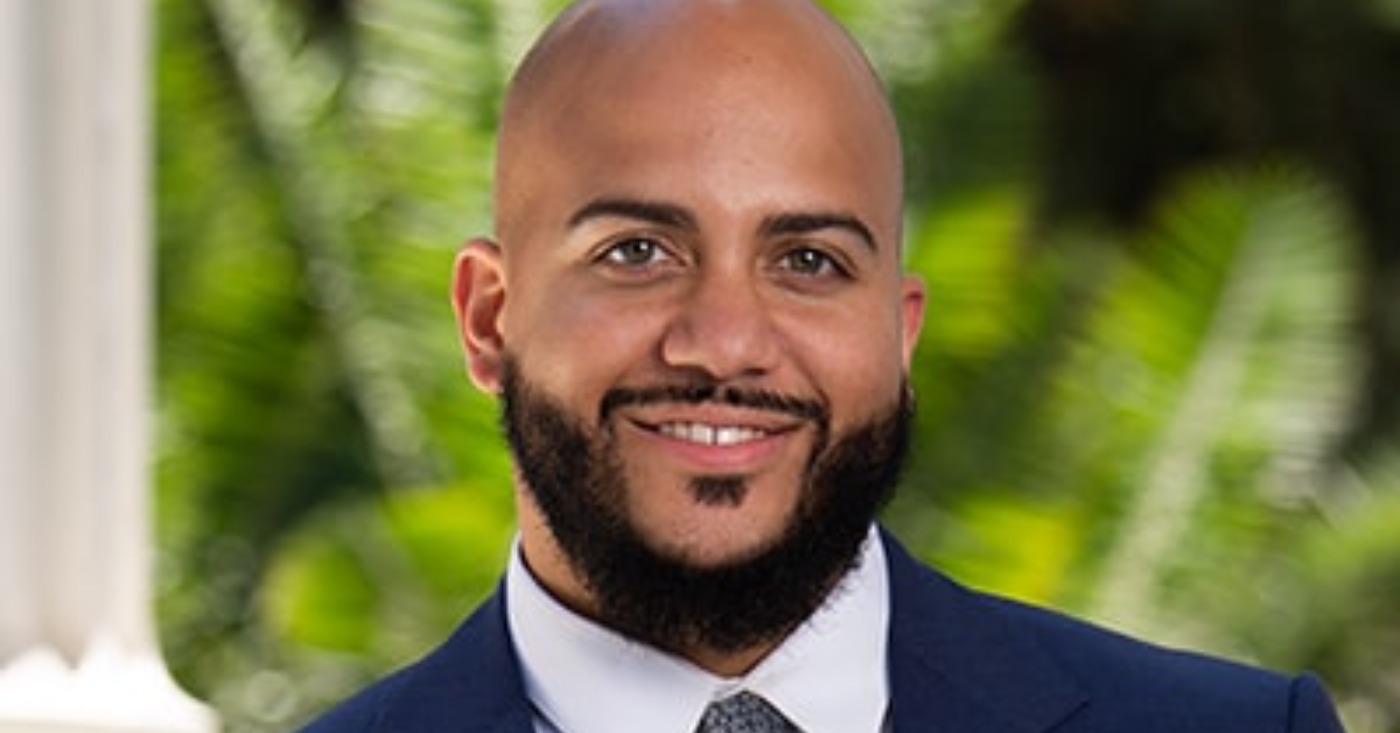
A bill by California Assemblymember Isaac Bryan (D-Ladera Heights) that would prevent state and local police officers from taking second jobs with federal immigration enforcement agencies is headed to Gov. Gavin Newsom after clearing the Legislature.
AB 1537 would bar California peace officers from accepting secondary employment related to immigration enforcement, including work with U.S. Immigration and Customs Enforcement (ICE). The measure also would require officers to report offers for immigration enforcement-related outside employment to their employing agencies.
The legislation comes as ICE ramps up efforts to recruit law enforcement personnel under the Trump administration. Bryan said the federal agency is offering financial incentives to attract officers, raising concerns about the impact on local law enforcement agencies and the communities they serve.
“They are trying to recruit our law enforcement personnel. They are offering these insane bonuses,” Bryan said.
Bryan said he is particularly concerned about efforts to recruit experienced law enforcement personnel while questions have been raised about ICE’s hiring standards.
“They want better skilled, better trained folks because their untrained and uneducated goons go through a very low threshold,” Bryan added.
The legislation would create consequences for California officers who violate its restrictions. Officers who fail to report offers of secondary employment related to immigration enforcement could face decertification as peace officers in California.
Bryan has framed the bill as a measure to establish boundaries between local law enforcement and federal immigration enforcement, particularly as immigration enforcement has become a major source of conflict between the Trump administration and California.
“This is a rogue agency that is harming the American people,” said Bryan. “It should be abolished, but in the meantime, we’ve got to do everything we can to put guardrails around our communities and protect our neighbors.”
AB 1537 previously received approval from the Assembly Public Safety Committee in March before advancing through the Legislature. The bill now awaits Newsom’s decision. The Governor can sign it into law, veto it or allow it to become law without his signature.
Black Press
Assemblymember LaShae Sharp-Collins’s Bill Would Pause Law Enforcement’s Use of Shock Gloves Pending Study
The device at the center of the debate is known as the G.L.O.V.E., an acronym for Generated Low Output Voltage Emitter. U.S. Immigration and Customs Enforcement awarded a $16.7 million contract for 6,000 pairs of the gloves, which are designed to deliver an electric shock through an officer’s hand.
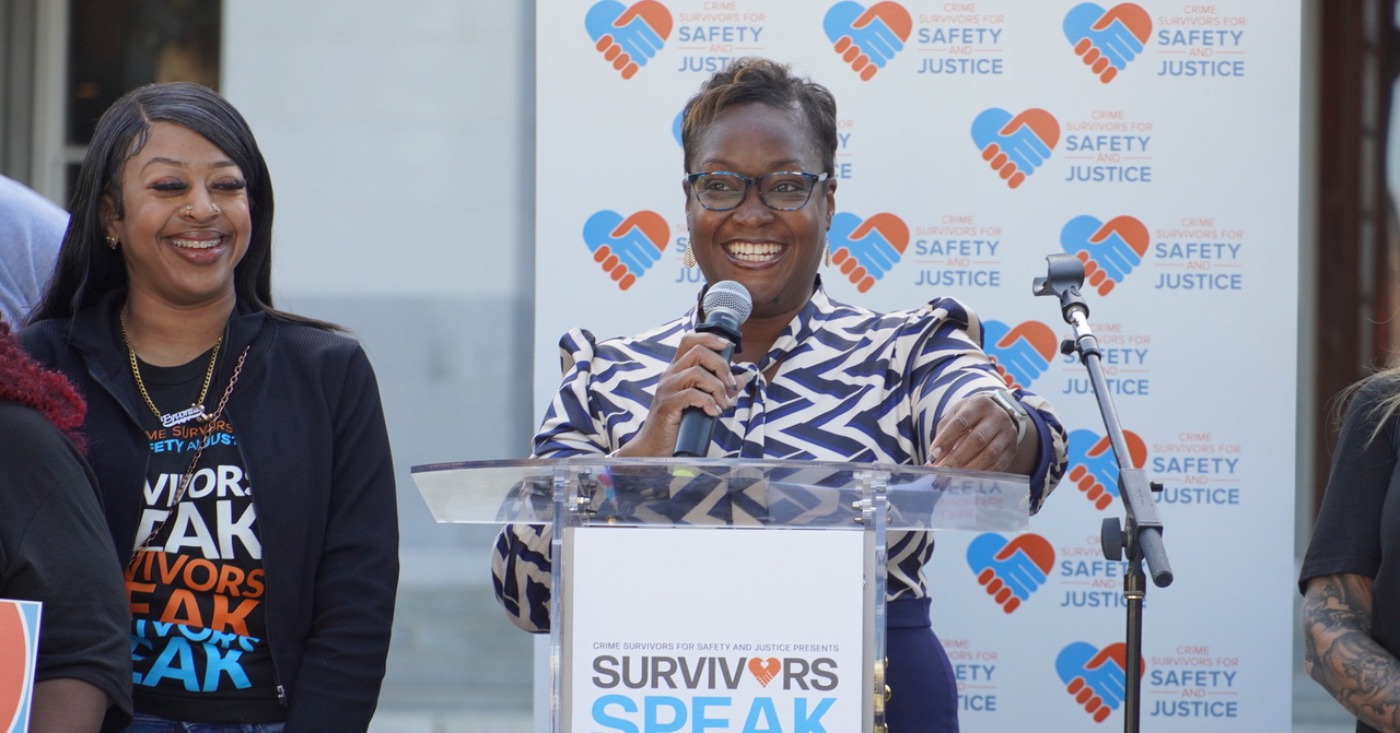
A bill temporarily prohibiting law enforcement agencies from using electric shock gloves in California is awaiting action by Gov. Gavin Newsom.
Assembly Bill (AB) 2760, authored by Assemblymember LaShae Sharp-Collins (D-San Diego), passed the Senate 29-9 on Aug. 31. The Assembly concurred in Senate amendments the same day on a 55-16 vote.
The bill would prohibit state, local and federal law enforcement agencies from using wearable electroshock devices in California until Jan. 1, 2030. It would also bar agencies from using state funds to purchase the devices and require them to update their use-of-force policies accordingly.
Traditional handheld devices, including tasers and stun guns, are exempt.
Newsom has until Sept. 30 to sign or veto the bill. If he takes no action, it will become law without his signature.
Sharp-Collins introduced the measure after reviewing information indicating that the devices could cause serious injury or death if used without adequate safeguards and training.
“AB 2760 draws a line that public safety technology must be proven safe and accountable before it is employed. Not after someone is killed or injured,” said Sharp-Collins, a member of the California Legislative Black Caucus (CLBC).
“Our commitment is to protect our communities, especially the most vulnerable. That is what AB 2760 is about and that is what AB 2760 will do,” Sharp-Collins told her colleagues.
The device at the center of the debate is known as the G.L.O.V.E., an acronym for Generated Low Output Voltage Emitter. U.S. Immigration and Customs Enforcement awarded a $16.7 million contract for 6,000 pairs of the gloves, which are designed to deliver an electric shock through an officer’s hand.
During the Assembly debate, Assemblymember Rhodesia Ransom (D-Stockton), also a CLBC member, thanked law enforcement representatives for helping negotiate amendments to the bill.
“This is something new to us (and) it’s something that absolutely should be studied,” Ransom said. “I appreciate law enforcement for agreeing to work with the legislature to figure out if this is an appropriate tool to be used.”
Neither the Los Angeles County Sheriff’s Department nor the Los Angeles Police Department has reported using electric shock gloves. However, the Santa Monica and El Monte police departments have obtained devices for testing.
The Sacramento County Sheriff’s Office purchased 10 shock gloves as part of a $35,000 acquisition that also included 10 remotely activated shock bands. Sheriff’s officials had been developing training and policies for the devices before AB 2760 advanced.
State Sen. Tony Strickland (R-Huntington Beach) opposed the legislation, arguing that it would unnecessarily force agencies to change their use-of-force policies and could compromise public safety.
“I don’t disagree with the author that the electric shocks are not a great option, but at the end of the day, I think it’s important to understand that we need to give law enforcement the tools they need to keep themselves safe and the community safe,” Strickland said.
Supporters countered that wearable electroshock devices have not been sufficiently studied and could pose particular risks to immigrants, children, older adults and other vulnerable groups.
“People who are Black or Brown could be test subjects for these gloves of torment,” Mark González (D-Los Angeles) said. “I appreciate law enforcement for agreeing to work with the legislature.”
Black History
Passing for White, Fighting for Black America: The Courage of Walter White
White personally investigated 41 lynchings and eight race riots. On several occasions, his identity was discovered, forcing him to flee for his life. The evidence he collected helped the NAACP expose the brutality of lynching to Americans and strengthen its campaign for federal anti-lynching legislation. His experiences also influenced his 1929 book, “Rope and Faggot: A Biography of Judge Lynch.”
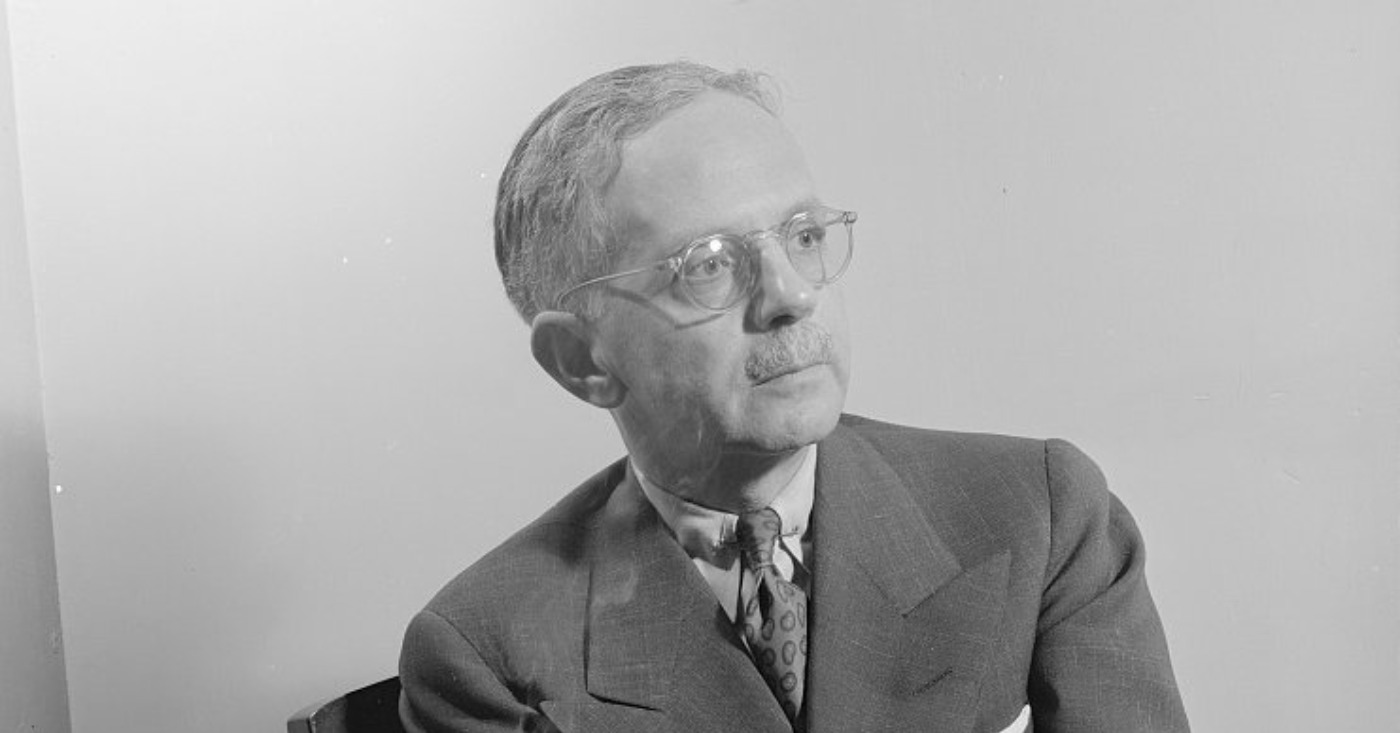
Walter Francis White was one of the most important civil rights leaders of the first half of the 20th century. For more than three decades, he helped transform the National Association for the Advancement of Colored People (NAACP) into one of the nation’s most powerful organizations fighting racial discrimination, segregation, and violence against African Americans.
Walter White was born in Atlanta, Georgia, in 1893 and grew up in a middle-class African American family. His parents, George and Madeline White, had been born into slavery. Although Walter had blond hair, blue eyes, very light skin and could easily have passed as white, he firmly identified as Black. As a teenager, he witnessed the Atlanta Race Massacre of 1906, when white mobs attacked African Americans throughout the city. The experience strengthened his determination to fight racial hatred and injustice.
After graduating from Atlanta University in 1916, White worked in insurance and became active in the Atlanta branch of the NAACP. His abilities caught the attention of NAACP leader James Weldon Johnson, who recruited him to the organization’s national staff in 1918.
He soon became known for his extraordinarily dangerous investigations of lynchings. Because many white Southerners assumed he was white, he was able to enter communities where Black investigators would have faced immediate danger. He spoke with witnesses, law enforcement officials, and even members of lynch mobs, often pretending to share their racial attitudes so they would reveal information.
White personally investigated 41 lynchings and eight race riots. On several occasions, his identity was discovered, forcing him to flee for his life. The evidence he collected helped the NAACP expose the brutality of lynching to Americans and strengthen its campaign for federal anti-lynching legislation. His experiences also influenced his 1929 book, “Rope and Faggot: A Biography of Judge Lynch.”
By the early 1930s, Walter had risen to the NAACP’s top administrative position. As executive secretary, he helped build the organization into a major national political and legal force. Under his leadership, the NAACP challenged discrimination in voting, employment, education, transportation, the military, and other areas of American life.
White also recruited attorney Charles Hamilton Houston to lead the NAACP’s legal strategy. Houston and his protégé, Thurgood Marshall, developed the courtroom campaign that eventually helped produce the Supreme Court’s historic 1954 decision in Brown v. Board of Education, declaring racial segregation in public schools unconstitutional.
White used his relationships with national political leaders as another weapon against discrimination. He worked with First Lady Eleanor Roosevelt, President Franklin D. Roosevelt, and President Harry S. Truman. He supported efforts to end employment discrimination and encouraged Truman to establish the President’s Committee on Civil Rights.
Walter White remained an NAACP leader until his death in 1955. His courage, political skill, investigative work, and relentless commitment to equality helped establish the foundation upon which the modern Civil Rights Movement would build.
Black Press
Oakland People’s Arms Embargo Coalition Demands End to Military Shipments Thru Oakland
Backing the demand for an arms embargo are 150 local businesses and over 300 local organizations, including the faith community as well as more than 20 labor unions and the Alameda Labor Council, which unanimously endorsed the campaign.
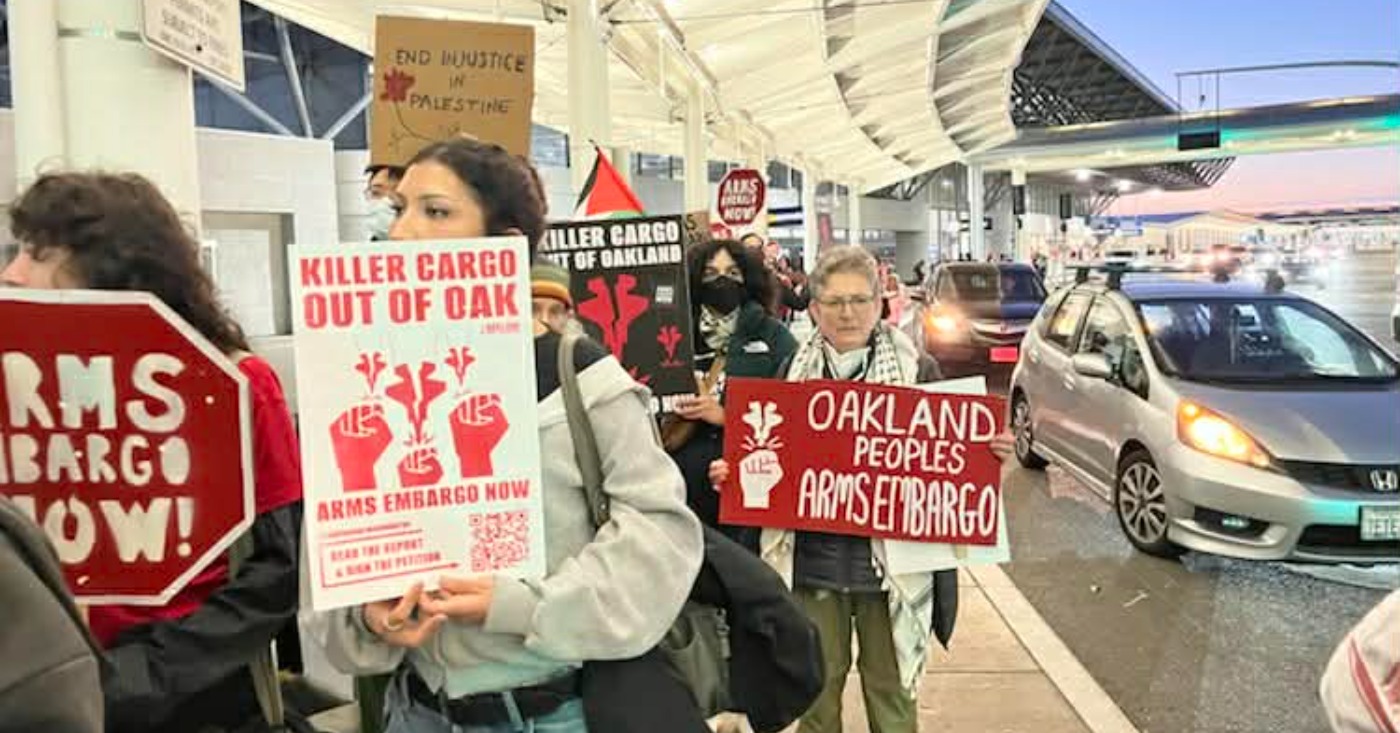
A growing coalition, the Oakland People’s Arms Embargo, has gained broad support in the Bay Area as it organizes to demand to end FedEx shipments of military equipment to Israel through the Oakland International Airport (OAK).
Especially significant, according to the coalition, is the delivery of military hardware to Israel for the U.S. F-35 fighter jet, which has been used to drop 2,000-pound bombs on civilians in Gaza, Lebanon, and Iran.
In an interview with the Oakland Post, Rami Abdelkarim, a spokesperson for the Oakland People’s Arms Embargo and a member of the Bay Area chapter of the Palestinian Youth Movement (PYM), discussed the goals and the organizing work of the coalition, which has expanded rapidly since it began in August 2025.
Besides, PYM, other groups involved in organizing the coalition are the Arab Resource and Organizing Center (AROC), and the U.S. Palestinian Community Network.
Backing the demand for an arms embargo are 150 local businesses and over 300 local organizations, including the faith community as well as more than 20 labor unions and the Alameda Labor Council, which unanimously endorsed the campaign.
Support for the demand has also come from Oakland Mayor Barbara Lee and U.S. Rep. Lateefah Simon, Port Commissioner Alvina Wong and Alameda County Supervisor Nikki Fortunato Bas.
Abdelkarim said the coalition has been tracking “how our roads, our airports, and our infrastructure are being used to facilitate the Israeli military’s genocidal campaign against the Palestinian people, and not just the Palestinian people, but also in Lebanon and Iran.”
“We were able to uncover what is Oakland’s complicity in this genocide, and what it looks like for our tax dollars to serve the Israeli military,” he said.
The coalition’s findings were published in a 15-page report on the website of the Oakland People’s Arms Embargo (armsembargonow.com), titled “Exposing Oakland Airport’s Military Cargo Shipments to Israel.”
“Since January 2025, at least 280 military cargo shipments to Israel have been identified departing from OAK, with Nevatim Airbase being the primary final destination,” the report said.
The shipments have occurred multiple times per week for nearly the whole year, “including F-35 fighter jet components used to carry and release munitions, guide weapons, power surveillance and targeting systems, and support critical flight operations—all essential to sustaining the combat readiness of Israel’s Air Force,” according to the report.
“The frequency of these shipments, particularly when compared to other U.S. airports, positions OAK as one of the few consistently active logistical nodes in the U.S. military supply chain to Nevatim Airbase (in Israel),” the report said.
According to the report, a sample of 500 shipments to Israel transported through FedEx’s Global Superhub in Memphis, Tennessee, between April and June 2025, OAK was the second-most frequent transit point nationwide, after Fort Worth, Texas.
Among the items that were shipped were “bomb release units, weapons bay adapters, surveillance sensors, and flight-critical electronics … “the mechanisms that enable the F-35 to fly its bombing missions and to identify, target, and strike with lethal accuracy.”
These components were supplied or contracted through Lockheed Martin and “have been used extensively by the Israeli Air Force in bombing campaigns in Gaza, including the airstrike on Al-Mawasi in July 2024, during which Israel dropped three 2,000-pound bombs on a designated humanitarian safe zone—killing at least 90 people.”
In a section of the report on the F‑35 Lightning II fighter jet, the airplane is described as “a highly advanced combat aircraft utilized in Israel’s bombardment of Palestinians in Gaza.”
“The F‑35 can carry up to 18,000 pounds of munitions—including 2,000-pound ‘bunker buster’ bombs—and uses advanced sensor systems to identify targets, guide bombs, and conduct precision attacks,” the report said.
“These shipments typically arrive at OAK’s FedEx cargo facility between Monday and Friday and are consolidated into outbound freight flights routed through hubs in other states. The flights identified in the report “used for these transfers are civilian-operated cargo planes, not military aircraft. While they do not carry passengers, these FedEx Express flights operate out of a commercial airport shared with public air traffic, serving the broader Bay Area.”
“This means that military cargo destined for the Israeli Air Force is routinely shipped through infrastructure embedded in densely populated civilian areas,” with data showing that “shipments departed OAK on multiple days every week.”
FedEx has strongly denied allegations that it transports military supplies.
A FedEx spokesperson stated, “FedEx is committed to complying with applicable laws and regulations. We do not ship weapons or ammunition internationally and have put in place strict screening procedures to prevent such shipments.”
International Amnesty International and European civil society groups have filed a criminal complaint against FedEx Belgium, alleging the unauthorized transit of F-35 fight jet parts without required regional licenses. Further, the Jewish anti-Zionist group France Action has filed a genocide claim against FedEx in France over cargo transporting through Paris.
In a statement released in February, Mayor Lee said, “As you know, for decades, I have been opposed to the use of public property to militarize arms shipments, federal immigration enforcement, and public safety, whether it is in Oakland or anywhere else,” she said. “Thus, I share your concerns about weapons and military cargo being shipped through the Oakland International Airport.”
Congresswoman Simon in September 2025, announced she is supporting a federal bill, the “Block the Bombs Act,” to withhold the transfer of offensive weapons to Israel and demanding Israel’s compliance with U.S. and international law.
“I come to Congress from a lineage of folks who know that war does not make us stronger, from a lineage of Ron Dellums and Barbara Lee, who were very clear that we as a nation cannot kill and slaughter our way to peace, that we cannot fund the machinery of death, and that safety is found in care – and not conquest.”
Black Press
Barbara Lee Mourns Gloria Steinem, Remembers a Friendship Rooted in Equality
Steinem became one of the country’s most recognizable advocates for women’s rights, reproductive alternatives and political representation. Lee said one of the most persistent inequities confronting Black women was inadequate access to reproductive healthcare, an issue Lee addressed throughout her years in the California Legislature and Congress.

Oakland Mayor Barbara Lee is mourning the death of her longtime friend Gloria Steinem, remembering the feminist icon as a devoted ally who understood that the struggles for racial justice and gender equality were inseparable.
Steinem died Sept. 2 in New York City at the age of 92. A pioneering journalist, author and political activist, she spent more than six decades advocating for women’s equality and reproductive choices. She also co-founded Ms. magazine and the National Women’s Political Caucus.
“I called her recently and could hear the weakness in her voice,” Lee said. “She was also very fragile at my New York event, but she remained supportive.”
The friendship between Lee and Steinem grew from their connections to the late U.S. Rep. Shirley Chisholm, the first Black woman elected to Congress and the first Black candidate to seek a major political party’s presidential nomination.
Chisholm was Lee’s mentor and inspired her to enter politics. Lee worked on Chisholm’s historic 1972 presidential campaign and served as one of her delegates at the Democratic National Convention.
According to Lee, Chisholm helped Steinem deepen her understanding of racial inclusion and recognize that the women’s movement could not succeed without addressing the experiences of Black women and other women of color.
“Gloria really understood what racial equity was about as a white woman and knew the value of building coalitions,” Lee said.
Steinem became one of the country’s most recognizable advocates for women’s rights, reproductive alternatives and political representation. Lee said one of the most persistent inequities confronting Black women was inadequate access to reproductive healthcare, an issue Lee addressed throughout her years in the California Legislature and Congress.
Lee considered Steinem a genuine ally who recognized the intersections of race, gender, healthcare and economic opportunity. Steinem also understood the importance of elevating women into leadership positions and encouraging them to claim their rightful places at decision-making tables.
Their relationship extended beyond politics and public advocacy. Lee recalled joining Steinem and her husband for dinner in Manhattan Beach with Lee’s son, Tony.
“It was beautiful to see how she could be a wonderful wife, feminine and be a strong woman,” Lee said.
Tony Lee also had a professional connection to Steinem through the rerelease of “The Road to Galveston,” the 1996 television film he wrote about the life of his grandmother, Mildred Parish Massey. The film starred Cicely Tyson.
“My son’s tribute to Gloria on Facebook is very touching,” Lee said.
Lee expressed profound heartbreak over losing her friend and gratitude for Steinem’s support throughout her political career, including during reelection campaigns.
As Lee continues carrying forward the lessons of Chisholm and Steinem, she has also helped encourage a new generation of women leaders, including U.S. Reps. Lateefah Simon and Jasmine Crockett.


On Your November Ballot: Prop 38 Would Allocate $8.4 Billion to Immunology and Immunotherapy Funding

Ask California: Golden State Releases New AI Chatbot

Asm. Isaac Bryan’s Bill Banning California Police From ICE Side Jobs Reaches Newsom’s Desk

OP-ED: How Head Start Also Helps Parents

Assemblymember LaShae Sharp-Collins’s Bill Would Pause Law Enforcement’s Use of Shock Gloves Pending Study

LIVE! — ASK ALMA! — TUS. 9.22.26 7PM EST

BOOK REVIEW: ‘Laws of Solomon’ Reveals Tender Heart of Former Child Soldier

OPINION: The New American Fear – From 9-11 to AI

Passing for White, Fighting for Black America: The Courage of Walter White

Oakland People’s Arms Embargo Coalition Demands End to Military Shipments Thru Oakland

You Had Me at Hello: the Love and Legacy of Grace Nail and James Weldon Johnson

Arnold Perkins: At 85, a Life of Service, Faith and Giving Back

Young Black Men Suffering in Silence A curse that can be Broken

Young Black Men Suffering in Silence A curse that can be Broken

🎷 Jazz is taking over D.C.!

BSPNTX Announces 2026-27 Scholarships Recipients

Women Learned Their Jail Strip Searches Were Recorded. Their Outrage Changed the Law

Black Americans Have Doubts About the U.S. Food System

Barbados – Julius Garvey, Son of Marcus Garvey, Joins PM Mottley in the Rededication of the Garvey Amphitheater

IN MEMORIAM: Dolly Parton Dead at 80 — How She Built a Legacy of Love and Earned Her Place in Black Culture
LIVE! — ASK ALMA! — TUS. 9.22.26 7PM EST

The People’s Revival National Campaign Launch

Interior 2026 GMC Acadia Denali Ultimate AWD 360 Video

Mazda CX-90 Tech: Huge Displays, Bose Audio & Wireless CarPlay #shorts

NAACP Sues to Block Federal Agents at the Polls

NAACP Sues to Block Federal Agents at the Polls 📱

2024 Audi Q3 S line Quattro: Base MSRP & Features #shorts

Subaru Outback Turbo: Real Power Unleashed! #shorts

DON’T Buy the 2027 Seltos X Line SX Until You Watch This

Headlines and Hotlines
-

 Black History1 week ago
Latest Massacre in Haiti Reveals Cruelty U.S. Deportations
-
 Black History1 week ago
Henry O. Flipper: A Trailblazer at West Point and Beyond
-
 Black History1 week ago
OP-ED: If AI Is the New Language of Power, Then NAN Wants Black Communities Fluent
-
 Black Press1 week ago
Asm. Smallwood-Cuevas’s Bill Repealing ‘Racist’ CalWORKs ‘Man-in-the-House’ Rule Clears Legislature
-
 Black Press1 week ago
California Legislature Sends Historic Native American Apology Bill to Gov. Newsom’s Desk
-

 Black Press6 days ago
OP-ED: How Does Your State Rank for Pre-K?
