
Government
Gov. Evers’ Budget Includes Support for Alzheimer’s
MILWAUKEE COURIER — As the new governor, Evers’ budget included several proposals


By Ana Martinez–Ortiz
Gov. Tony Evers recently released his proposed budget. As the new governor, Evers’ budget included several proposals, which aim to change the lives of Wisconsin residents throughout the state.
Included in the budget, were several objectives directly aimed at people living with Alzheimer’s disease and their caregivers – both familial and professional.
Recently, the Centers for Disease Control called Alzheimer’s disease a public health crisis. Currently, it is believed that 50,000 people living in Southeastern Wisconsin are affected by Alzheimer’s disease.
The Alzheimer’s Association has been advocating for more support for caregivers. With programs like Res Care, caregivers have an opportunity to take some time for themselves if only for a couple of hours. A majority of caregivers, who watch over their loved ones suffering from dementia or Alzheimer’s, are unpaid.
The association has also advocated for ways to keep individuals diagnosed with memory loss in their homes since it is where they feel more comfortable. In the past, experts through the dementia care specialist program determined if a patient could stay in their home as long as they were safe and cared for. If that is the case, caregiving becomes a full-time job, which is why the Alzheimer’s Association believes it is so important to support caregivers.
Michael Bruhn, the state public policy director for the Alzheimer’s Association, praised Evers’ budget, which proposed to expand the dementia care specialist program.
“[It] is a cost-effective way to assist individuals with Alzheimer’s to maintain the highest quality of life possible while remaining in their homes,” Bruhn said.
The budget also included funding for an “Academic Detailing,” a training program. The funding would allow for a pilot program with the end goal being to improve patient care. Additionally, five regional crisis stabilization facilities would be established.According to the Alzheimer’s Association’s press release, the facilities would specifically help individuals in a crisis. A crisis center would also lower the number of involuntary commitments.
Furthermore, the governor’s proposal would expand the definition of crisis to include “substance abuse and dementia, which would greatly reduce the number of individuals with Alzheimer’s and dementia being taken to state run institutions.” Although the budget isn’t official yet, these proposals could mean big changes for individuals – both those living with the disease and those who care for them. The proposals could also bring changes for Wisconsinites in terms of what they pay when it comes to taxes.
If you or a loved one is suffering from Alzheimer’s Disease, please visit www.alz.org or call the Alzheimer’s Association’s helpline at 800-272- 3900.
This article originally appeared in the Milwaukee Courier.














Black Press
All Skinfolk Ain’t Kinfolk
An old saying coined by Floridian Zora Neale Hurston in her final major nonfiction work, Dust Tracks on a Road, set in Florida. “All skinfolk ain’t kinfolk” is an idiom that distinguishes shared identity from shared interests.

Byron Donalds wants to be Florida’s next governor. Not on our watch.
Our stance is rooted in an old saying coined by Floridian Zora Neale Hurston in her final major nonfiction work, Dust Tracks on a Road, set in Florida. “All skinfolk ain’t kinfolk” is an idiom that distinguishes shared identity from shared interests.
The congressman has done little to advance the cause of Black workers. In fact, on the AFL-CIO’s legislative scorecard, which tracks how legislators vote on the issues and policies that matter to working people, Rep. Donalds has voted against working people every time except once – giving him a lifetime score of 1%.
He has built his political identity around his support for Donald Trump and his embrace of Gov. Ron DeSantis, two political figures whose policies have undermined, undercut and trampled on our rights and freedoms.
As governor, DeSantis has been nearly surgical with his assault on the Black community, especially in education, where he undermined the state’s Historically Black Colleges and Universities through installing crony politicians; banned books by and about us from school libraries, rejected the country’s first AP course on Black culture, and instituted the STOP WOKE Act, which 11th Circuit judge rightfully demeaned as a “breathtaking assertion of power to ban unpopular ideas from public discourse.”
But he didn’t stop there. Next was Black employment.
As national labor leaders, we have witnessed the relationship between strong worker representation and stronger communities – especially for Black communities who over index when it comes to union membership. Like us, they have experienced the power of collective bargaining to help educators advocate for classroom resources, nurses raise concerns about patient care, and public employees seek fair compensation and safer working conditions. We have also seen the consequences when workers have fewer avenues to influence decisions affecting their livelihoods.
So it should come as no surprise that in 2023, DeSantis signed Senate Bill 256, imposing new restrictions on many public-sector labor unions by creating new challenges for unions seeking to maintain their bargaining certifications. This law is a direct threat to the sovereignty of American workers who have historically used unions to negotiate wages, benefits, workplace protections and the conditions under which essential public services are delivered.
The struggle for civil rights and the struggle for workers’ rights have long intersected. From A. Philip Randolph’s organizing of the Brotherhood of Sleeping Car Porters to the 1968 Memphis sanitation workers’ strike, demands for economic dignity have stood alongside demands for equal treatment under the law.
Dr. Martin Luther King Jr. understood that the promise of civil rights could not be fully realized without economic justice. His final campaign in Memphis reflected the conviction that workers’ rights, racial equality and human dignity were inseparable.
That history offers an important lesson for the present: Political representation and substantive policy representation are not necessarily the same thing.
That is history Byron Donalds has either forgotten or refuses to consider. Either way, it lays bare his disconnect from the collective vision of America most Black people share – one that acknowledges real differences while working to reduce the negative impacts of those differences. Donalds has adopted a different vision – one that thinks it more valiant to turn a blind eye to the disparate outcomes race creates in employment, education, and health care rather than admit there are real, structural issues that need to be addressed.
One person who does seem to understand and is working to do better is Donalds’ opponent, David Jolly, a former Republican congressman now running as a Democrat. He has positioned his candidacy as an alternative to the DeSantis approach, emphasizing affordability, public schools and a different direction for state government. And while we may not share skin color or a cultural history with Jolly, we do share his commitment to fight for equality and the dignity of the American worker.
The November 3 gubernatorial election presents Floridians with a choice between candidates offering different approaches to governing. Byron Donalds has sided with DeSantis who has made their disdain for Black people loud and law, and Jolly who sided with us and our understanding of community and collective power.
Every election is an opportunity to examine not only what candidates promise, but also what their records and policy commitments reveal.
For working people, that examination must include a fundamental principle: Economic prosperity and democratic participation are strongest when the people who do the work have a meaningful voice in shaping their future.
Florida’s next chapter will be written through the decisions of its people and the accountability they demand of those entrusted with public office.
That is the enduring promise of democracy—and a responsibility that belongs to all of us.
Fredrick D. Redmond, the highest-ranking African American labor official in history, is the Secretary-Treasurer of the AFL-CIO, the nation’s largest labor federation representing 65 unions and nearly 15 million workers.
Fedrick C. Ingram is the Secretary-Treasurer of the American Federation of Teachers (AFT), representing 1.8 million educators, healthcare workers, and public employees.
Black Press
Botham Jean’s Killer Granted Parole 7 Years After His Murder
MICHIGAN CHRONICLE — Former Dallas police officer Amber Guyger has been granted parole, seven years after her conviction for murdering Botham Jean inside his Dallas apartment. The Texas Board of Pardons and Paroles approved her release on October 1, seven years to the day after her murder conviction. Guyger was convicted in 2019 and sentenced to 10 years in prison for Jean’s 2018 death.

Former Dallas police officerAmber Guyger has been granted parole seven years after she was convicted of murdering her neighbor,Botham Jean, inside his Dallas apartment.
The Texas Board of Pardons and Paroles approved Guyger’s release Thursday (October 1), seven years to the day after Guyger was convicted of Jean’s murder, according to NBC News.
In 2019, a jury convicted Guyger of murder and she was sentenced to 10 years in prison for Jean’s 2018 death. Her conviction and 10-year sentence were upheld on appeal in 2022.
Geyger’s first parole request was denied in 2024, NBC Dallas-Fort Worth reported.
The Dallas Police Department fired her after the shooting. During her trial, Guyger testified that she mistakenly entered Jean’s apartment after returning home from work, believing it was her own apartment one floor below.
She said she saw Jean inside and fired her weapon because she believed he was an intruder, according to NBC News.
Jean was a 26-year-old Black man from St. Lucia who worked as an accountant. He was inside his home eating ice cream when Guyger entered and shot him, NBC DFW reported.
The parole board cited Guyger’s prison record in approving her release. According to NBC DFW, officials said she did not have a documented pattern of violent or assaultive arrests or convictions, maintained a satisfactory adjustment while incarcerated, and completed programs intended to help her obtain and maintain employment.
Jean’s family opposed the parole decision and had asked that Guyger serve her full 10-year sentence, according to NBC DFW.
Civil rights attorney Lee Merritt, who represents the family, told NBC DFW that the decision was deeply disappointing.
“They stood up again and again to ask that the full sentence be served,” Merritt said.
The Dallas Police Department told NBC DFW that the parole decision was outside its authority and that the department had no role in determining whether Guyger would be released. The department said its thoughts remained with Jean’s family and others affected by his death.
Guyger’s conviction and 10-year sentence were upheld on appeal in 2022.
A civil jury ordered Guyger to pay Jean’s family $98.6 million in damages in 2024, according to NBC DFW.
Guyger’s release date has not been announced. NBC News reported that the Texas Department of Criminal Justice will determine when she is released.
The Black Information Network is your source for Black News! Get the latest news 24/7 on The Black Information Network. Listen now on the iHeartRadio app or click HEREto tune in live.
Based on reporting by Michigan Chronicle.
Black Press
OP-ED: Proposition 44 Would Put a Price on Trust
The danger in Proposition 44 is not only its 90 percent figure. It is that the meaning of “qualifying” spending will be worked out later. A clinic preparing a budget today may not know whether a navigator, health educator, transportation program, outreach worker, technology upgrade, or other patient-support service will be counted the way it expects. Yet the financial consequence of getting it wrong could be immediate.

Black Press
OP-ED: Proposition 40: It’s Time to Play Chess, Not Checkers
Proposition 40 would impose a one-time 5 percent tax on the wealth of Californians with more than $1 billion in assets. Most of that money would go toward health care, with the remainder supporting food assistance and education-related programs.

Black Press
OP-ED: How One State Invests in Fast-Track Training to Overcome Childcare Worker Shortages, Center Closures
BLACKPRESSUSA NEWSWIRE — “If North Carolina is going to produce the qualified workforce necessary to meet the demand for high-quality childcare services in a timely manner, the state must lean less heavily on higher education to train and prepare early childhood professionals and more heavily on strategies that are more accessible, affordable, flexible, and expeditious,” the report’s authors wrote.
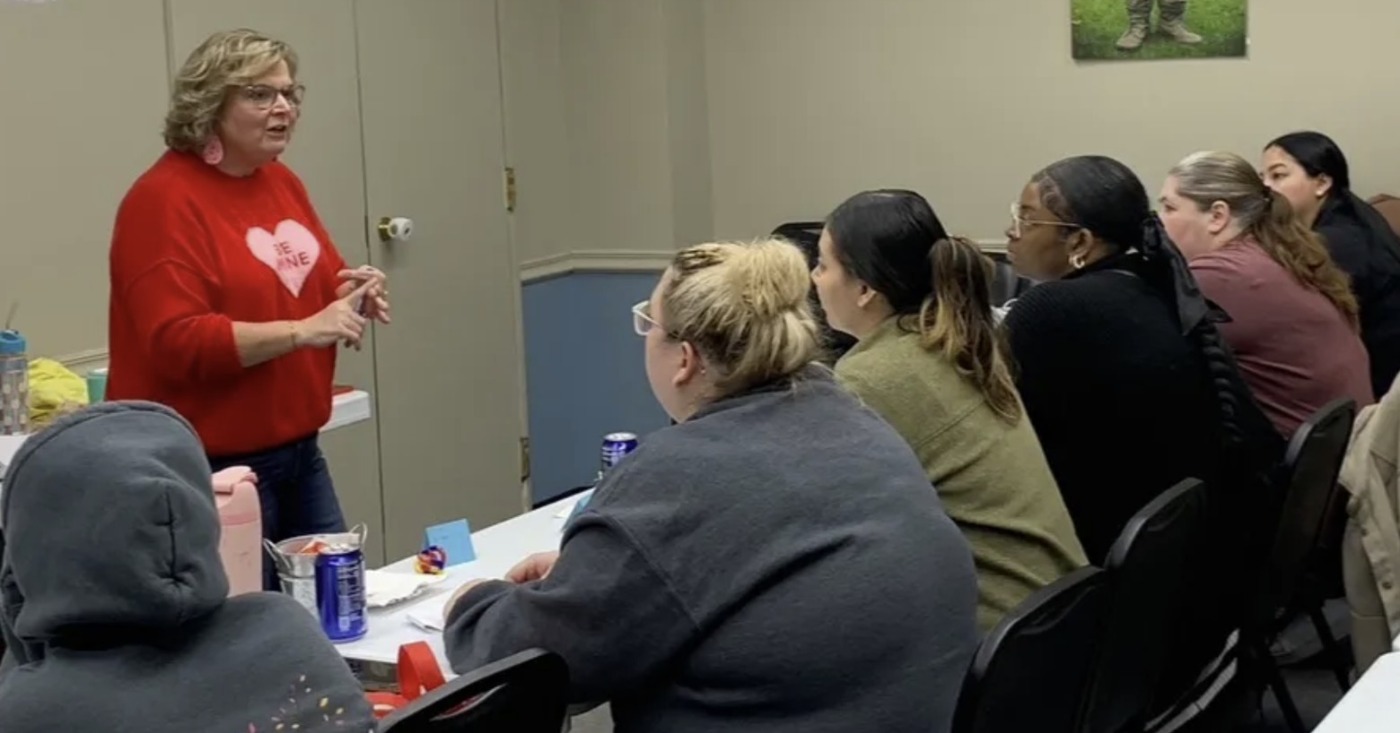
About a week after finishing the Early Childhood Workforce Ready Academy in Wayne County, North Carolina, Dominque McBride walked into Little Bulldogs Academy in Goldsboro.
She carried a packet filled with certifications — such as CPR, first aid, playground safety — that she earned while undergoing intensive training during the two-week academy in February 2024.
At the end of the interview, McBride walked out with a job.
Typically, that type of training can take months to a year to complete, said Shelly Willis, director of program coordination and evaluation with Partnership for Children of Wayne County, which offers the academy.
On top of that, students would have had to pay for the various certifications and classes and squeeze them in between jobs and their lives at home.
But McBride and more than 100 other people got the training for free over the past two years, thanks to grants from the Camber Foundation, according to Valerie Wallace, executive director of the Partnership for Children of Wayne County. She said the organization, which supports community projects in 41 eastern North Carolina counties, has pumped $145,000 into the childcare academies in Wayne and Johnston counties.
McBride said the academy prepared her for her first job in childcare, and made it easy to get all the required certifications and training in one place, in a short time.
“If I had to do it on my own, I think I would have been overwhelmed,” McBride told NC Health News.
Now, state legislators want to take that model and expand it across the state. They included $1.5 million in one-time funding in the state budget passed in July. The training support is part of a slate of efforts added to this year’s budget to tackle staffing shortages and long waitlists for childcare in North Carolina.
From March 2018 to June 2026, North Carolina has lost a net 1,072 childcare sites, according to the NC Early Care and Learning dashboard. Enrollment dropped by 28,183 children — or 11.5% — during that same time.
The NC Chamber touted such academies as a way to address chronic staffing shortages driving those closures in a February 2025 report.
“If North Carolina is going to produce the qualified workforce necessary to meet the demand for high-quality childcare services in a timely manner, the state must lean less heavily on higher education to train and prepare early childhood professionals and more heavily on strategies that are more accessible, affordable, flexible, and expeditious,” the report’s authors wrote.
‘At a crossroads’
The National Conference of State Legislatures also recently highlighted such academies for quick training to alleviate workforce shortages.
The recommendation is included in the report “Childcare at a Crossroads: A State Legislative Framework for Strengthening Childcare Systems,” released on July 27. The report was developed by a bipartisan work group of 13 state legislators from across the country that included North Carolina state Sen. Jim Burgin, R-Harnett.
The legislators wrote that childcare has become “one of the most urgent and complex challenges facing states.”
“It affects children’s development and well-being, parents’ ability to work, employers’ access to a stable workforce and the economic vitality of communities large and small,” they said in the report. “Rural and urban. Red and blue. No state is unaffected, and no ideology holds all the answers.
“As costs rise, workforce shortages persist and demand remains strong, state policymakers face important decisions,” the report’s authors continued. “The childcare system is at a crossroads, and decisions made now will shape how well systems meet the needs of families and economies in the years ahead.”
North Carolina has struggled to meet the need. Lack of childcare costs the state $5.65 billion every year in economic activity, according to a 2024 report from the U.S. Chamber of Commerce Foundation, the NC Chamber Foundation, and advocacy organization NC Child.
Since 2018, childcare employment in the state rose by just 1%, or 419 people, even as the state’s population grew by around a million people.
Where that growth has occurred has been uneven.
Small centers and family childcare homes make up most of the closures, according to research shared July 9 by Afton Partners, an Illinois-based consultant firm that specializes in several areas, including early education. The group presented the findings earlier in the year to members of the North Carolina Task Force on Child Care and Early Education.
Meanwhile, more large centers have opened, mainly in urban areas, according to the Afton research.
Many counties, including Wayne, have lost workers and childcare slots from 2018 to 2026.
In Wayne County, state data shows there are nine fewer childcare facilities than in 2018. Average monthly enrollment dropped by more than 1,000 kids during that same time. And average monthly employment is down by 420 workers.
The state faces a double whammy: demand for more childcare slots and a lack of workers.
The biggest problem in childcare is having qualified teachers, Burgin said as part of a panel discussion on the “Childcare at a Crossroads” report at the National Conference of State Legislatures conference in Chicago last month.
“We’ve made the restrictions so high that by the time that they get enough qualified people on board, those people will go find other jobs, usually in the school system,” he said.
He told the audience that North Carolina directed millions of dollars to tackling the childcare workforce issue in the state’s latest budget.
The bipartisan work group’s report highlighted North Carolina’s childcare academies, like the program in Wayne County.
Other efforts in the report included a high school student training program in South Dakota, scholarships and stipends for people pursuing childcare degrees in Delaware, and a pilot program in New Mexico that gives stipends to people in workforce training for childcare.
In West Virginia and Rhode Island, there are also apprenticeships that target the childcare work force.
Like some other states, North Carolina included in its recent budget stipends for graduates who stay with an employer for at least a year.
‘A huge step forward’
The N.C. Child Fatality Task Force has been recommending since 2024 that North Carolina support efforts to improve the childcare system, including increasing subsidies to childcare centers, especially in the wake of additional federal childcare stabilization grants that sunsetted as the COVID pandemic wound down.
Childcare funding was one of the four task force recommendations for this year.
In July, the General Assembly passed a budget with $97 million in federal funding to increase reimbursement rates to providers of subsidized childcare and to create a much-welcomed floor rate. The budget also transfers $16.8 million from the federal Temporary Assistance for Needy Families block grant to the state’s childcare subsidy program.
Creating a rate floor means that, for the first time, all facilities will get at least the statewide average for subsidized care. Without that base rate, subsidies have ranged widely across the state, which has made it difficult for some facilities to survive.
The state’s childcare subsidy program uses state and federal money to help pay for childcare for low- to moderate-income families who qualify. Families still have to cover a co-pay. The subsidy can be used for children through age 12, or up to age 18 for children with special needs.
While the state doesn’t set salaries for childcare workers, increasing the subsidy gives providers the flexibility to pay workers more.
Low pay has been an issue in attracting and maintaining childcare workers. Starting median hourly wages for childcare teachers in 2023 was $14 per hour, according to the 2023 North Carolina Child Care Workforce Study by Early Years (formerly Child Care Services Association.) That’s the same or less than entry-level jobs at retail stores such as Target and Walmart and fast food restaurants such as Five Guys and Whataburger.
“With our current economic situation and the prices of everything increasing, it is very difficult to stay in the field of childcare and make ends meet with the average pay offered,” McBride said in an email.
“It’s not only about attracting people to the field, but encouraging them to stay,” she added.
To quickly train childcare workers, legislators funneled $1.5 million in one-time funding to replicate childcare academies modeled after the program in Wayne County across the state. Two-thirds of that funding will cover tuition costs. The remaining $500,000 will pay for stipends of $500 for every student hired within three months of graduating and who stays employed for at least one year at the same childcare program.
“This funding for child care is a huge step forward in helping to stabilize North Carolina’s child care system,” Kella Hatcher, executive director of the Child Fatality Task Force, said in an email.
A model program
In Wayne County, Wallace and Willis with the Partnership for Children are hoping the increased subsidy rate, along with a new rate floor, will ease high turnover while the academies help train new childcare workers more quickly.
They’ve had about a dozen people sign up for each session, the most recent of which ran from Aug. 3 through Aug. 14. It was the first of three planned for this year under the Camber grant.
“Those may not seem like high numbers, but if you can put that many people to work, it makes a huge difference in a childcare,” said Wallace. “Our numbers are going to be fewer, but they’re mighty if we give these folks the necessary training that they need.”
Wallace said they’ve tweaked their academy a little bit every year to make it stronger and attract more people.
“We’ve learned with each academy that we’ve done, and last year we worked with the North Carolina Partnership for Children to try to get this to be aligned,” in anticipation of the state creating a pilot program, Wallace said. “So if people were doing it across the state, everybody was doing the same curriculum, and it was going to be consistent with what people were coming out of the academies with.”
They’re not sure if they’ll add more academy classes this year based on what was passed in the state budget. It depends on whether their program is considered aligned with the state plan. They could add up to three more sessions later in the fiscal year based on that state plan, Wallace said.
The training allows students like McBride to be hired immediately.
McBride, 29, was working for the Wayne County Department of Social Services when her mother saw a notice in 2024 about the free training to become a childcare worker. It came at a perfect time for McBride, who was disillusioned with the paperwork involved in her DSS job.
And she always wanted to teach and work with children, she said. In her now-former job at Little Bulldogs, she worked with the 2-year-olds.
“It can be very chaotic,” she said, describing children that age as wanting to be more autonomous but not quite ready for that. “But I enjoyed every bit of it.”
Every day, she saw the need for more childcare workers.
“We weren’t getting enough childcare teachers as much as we were getting kids,” McBride said. “We couldn’t keep up.”
Her work at Little Bulldogs inspired McBride to go back to school for a degree in early childhood education with a focus on special education. She now works with children on the autism spectrum at Action Behavior Center in Clayton.
She’s grateful for Wayne County’s childcare academy.
“It definitely helps you prepare,” she said. “The one thing that can deter you is feeling like you’re not equipped to do it.”
This article first appeared on North Carolina Health News and is republished here under a Creative Commons Attribution-NoDerivatives 4.0 International License.
Black Press
Master P Encourages Norwood Elementary Students to Dream Big, Work Hard
BIRMINGHAM TIMES — Music mogul Percy Miller, known as Master P, visited Norwood Elementary School on Friday alongside his mascot sidekick, Captain Ace. Teachers and students, dressed in school colors, welcomed Miller, who shared lessons on education, consistency, networking, and the importance of not letting circumstances define one’s future.

Music mogul Percy Miller, better known as Master P, visited Norwood Elementary School on Friday with his mascot sidekick, Captain Ace. (Birmingham City Schools) ”
The sounds of students singing filled Norwood Elementary School Friday morning as teachers dressed in camouflage and students wearing their school colors of green welcomed a special guest whose career has been built on music, entrepreneurship and perseverance.
Before taking the stage at the Birmingham-Jefferson Convention Complex (BJCC) Friday night, music mogul and entrepreneur Percy “Master P” Miller spent the morning with Birmingham students, sharing lessons about education, consistency, networking and the importance of refusing to let circumstances determine their futures.
Miller was joined by Captain Ace, the blue-dog mascot and educational character associated with his school visits and assemblies. Together, they turned the celebrity appearance into a lesson centered on positive choices, learning, and believing in one’s potential.
The visit also brought together Birmingham city and school leaders, including Mayor Randall L. Woodfin, Birmingham City Schools Superintendent Dr. Mark Sullivan and members of the school system’s staff and leadership.
At the conclusion of the assembly, Woodfin and Sullivan presented Miller with a proclamation honoring his visit to Norwood Elementary.

For Miller, however, the morning was less about recognition and more about the children sitting in front of him.
“I love the kids,” Miller told the students. “Even though I got a show, I’m like, no, I got to come and touch the kids because that’s the future.”
Miller said his focus is on what he described as “saving the next generation” and educating young people so they can recognize their potential.
“I want these kids to know that they can fly over all this negative,” he said.
That message became personal when Miller reflected on his own childhood.
He told students he grew up living with his grandparents, who had 12 children. His family lived in a three-bedroom housing project, but Miller said he refused to allow his circumstances to define what was possible for him.
“I didn’t let my condition stop me, and I don’t want you guys to let your condition stop you,” he told the students.
Miller repeatedly returned to the idea that dreams require action.
“There’s no limit to your dreams,” he said, emphasizing that success requires work and that students cannot “cheat the game of life.”
He then asked the students how many of them wanted to be successful. The room responded.
Miller used a familiar example to explain one of his central lessons: McDonald’s.
After asking students what the restaurant sells, he shifted the conversation from hamburgers to consistency.
“McDonald’s is selling consistency,” Miller said.
He explained that a Big Mac is expected to taste the same wherever it is purchased, using that familiarity as an analogy for persistence.
“Keep doing something, not giving up,” he told the students. “Keep chasing your dreams, doing something every day to get that, even when it don’t look like it’s gonna happen.”

“Somebody’s gonna make it big.”
Miller also challenged the students to think about the relationships they are building now. He asked whether they understood what networking means before explaining that the people sitting beside them today could become important figures in their lives tomorrow.
Miller shared a story about a girl he knew when he was in school — someone he said other people did not like or treated negatively. Years later, she became a bank president. When Miller needed a loan, he said, she remembered how kind he had been to her when they were younger.
“You never know who’s gonna be what in here,” Miller said.
He encouraged students to introduce themselves to others, learn their names and treat people well.
“That’s networking,” he said.
For Miller, the lesson went beyond professional connections. He encouraged students to recognize the possibility within one another.
“Who’s gonna be a doctor? Who’s gonna be a lawyer? Who gonna be a teacher?” he asked. “Who gonna be the president of the bank? Who gonna be the mayor? Who gonna be the superintendent?”
Miller said students cannot know where their classmates will end up, which makes how they treat one another today important.
“Somebody’s gonna make it big,” he said. “And it could be all you guys.”

Moments of Celebration
The visit was also filled with moments of celebration. Before Miller addressed the students, Norwood teachers and scholars welcomed him with a robust singalong to “The Affirmation Song,” creating an energetic introduction to the morning’s message.
The appearance of Captain Ace added another layer to the program. The character is part of Miller’s educational work with children, with school assemblies and musical programs addressing topics including anti-bullying, stranger danger and mental health awareness.
Miller said he has spent years making time for young people because he sees them as the future.
The message aligned with the presence of Birmingham’s education and civic leadership throughout the morning. Woodfin and Birmingham City Schools leadership have increasingly emphasized connecting children with educational, enrichment and career opportunities across the city. Earlier this year, the city announced its Children and Youth Commission’s Cradle-to-Career Roadmap, a strategy designed to connect the systems and resources influencing children from early education through adulthood.
For Norwood students, however, the morning offered a more immediate lesson: the opportunity to see someone who built a career from a childhood that did not necessarily predict the future he ultimately created.
As Miller prepared to leave, he encouraged students to keep working, keep learning and keep believing in themselves.
“I kept going,” he told them, reflecting on the people who once told him he would not succeed. “That’s what I want you guys to do. Keep going, no matter what your conditions is. No matter what your environment is.”
Based on reporting by Birmingham Times.


Ballot Breakdown Your Vote Explained by Expert

All Skinfolk Ain’t Kinfolk

All Skinfolk Ain’t Kinfolk

Banking Black: A Smart Strategy for Your Money #shorts

All Skinfolk Ain’t Kinfolk

Car Seat Comfort: Rear Space vs. Front Seat Support #shorts

395 HP Turbo 6-Cyl: Smooth Power for Merging & Passing! #shorts

Nearly 1 in 4 Third Ward voters in ‘suspense.’ Here’s why you can still vote

HBCU Homecoming: A never-miss annual tradition

Jamika Phillips, Founder of Shades The Nail Bar

The Youngest American Killed in the Vietnam War

Latest Massacre in Haiti Reveals Cruelty U.S. Deportations

OPINION: Nolan Wells’ Death One of Several Signifying Racial Terror Lives on in U.S. South

Passing for White, Fighting for Black America: The Courage of Walter White

OP-ED: Haiti TPS: Have We Lost Sense of Humanity?

OP-ED: If AI Is the New Language of Power, Then NAN Wants Black Communities Fluent

OP-ED: How Does Your State Rank for Pre-K?

Henry O. Flipper: A Trailblazer at West Point and Beyond

Asm. Smallwood-Cuevas’s Bill Repealing ‘Racist’ CalWORKs ‘Man-in-the-House’ Rule Clears Legislature

NBA All-Star Damian Lillard Returns Home for 15th Annual Backpack Giveaway
Ballot Breakdown Your Vote Explained by Expert
Banking Black: A Smart Strategy for Your Money #shorts
Car Seat Comfort: Rear Space vs. Front Seat Support #shorts
395 HP Turbo 6-Cyl: Smooth Power for Merging & Passing! #shorts
Nearly 1 in 4 Third Ward voters in ‘suspense.’ Here’s why you can still vote
HBCU Homecoming: A never-miss annual tradition
Jamika Phillips, Founder of Shades The Nail Bar

What is up with the Black male vote?

Should Parents Charge their Children Rent?

Resilience & Opportunity: Banking Explained Simply #shorts
-

 Black Press1 week ago
Zakiya Jendayi Arrested, Locked Out of Home by Sheriff’s Deputies
-

 Black Press7 days ago
A $2.1 Trillion Wellness Industry Never Built a Daily Practice for Black Children. So This Atlanta Family Did.
-
 BlackPressUSA5 days ago
Latinas Deserve Equal Pay. Unions Help Make It Happen.
-

 Art7 days ago
Montclair Brewery: Brewing Culture, Community, History
-

 Black History1 week ago
Listening as a Lifeline: A Doula’s Witness to Black Maternal Health
-

 Black Press7 days ago
COMMENTARY: But God!
