
Education
Ford Announces New STEAM Column for the Black Press Focused on Opportunities
Ford Motor Company announced that it will provide a new column dedicated to Science, Technology Engineering, the Arts and Mathematics, also known as STEAM, exclusively to BlackPressUSA.com and members of the NNPA via the NNPA Newswire.


By Stacy M. Brown (NNPA Newswire Contributor)
In an effort to encourage young people to pursue and succeed in STEAM careers (Science, Technology Engineering, the Arts and Mathematics), Ford announced a new quarterly column dedicated to showcasing opportunities in STEAM. The column will appear on BlackPressUSA.com and will be available to NNPA members through the NNPA Newswire.
The NNPA is a trade group that represents more than 200 Black-owned media companies, operating in the United States; the member publications reach more than 20 million readers, combined, in print and online, every week.
The new column will begin in March.
“Rest assured, this will not be a self-serving platform,” said Renah Carlisle, a sales zone manager for Ford’s Phoenix Region. “Both Ford and the NNPA support STEAM initiatives and it is a reminder to our children, that the impossible is possible.”
This year, there will be more than 8 million jobs available in STEAM and the federal government alone will need an additional 10,000 workers for information technology and cybersecurity, Carlisle said.
“In tandem with other programs and initiatives, with the launch of this new STEAM column, we’re excited to not only put a focus on an important issue impacting our youth, but to also offer [another avenue] to increase awareness, consideration and participation in exciting, dynamic career opportunities available to all young people everywhere,” said Carlisle, in a press statement about the new STEAM column.
NNPA President and CEO Dr. Benjamin F. Chavis Jr., said that the NNPA was excited to join Ford in this important conversation about the future of our youth.

(From left-right) Dr. Benjamin F. Chavis, Jr., the president and CEO of the NNPA, Renah Carlisle, the sales zone manager for Ford’s Phoenix Region, and Dorothy Leavell, the chairman of the NNPA pose for a photo during the 2018 NNPA Mid-Winter Conference in Las Vegas, Nevada. (Marty Frierson/NNPA)
“Across the country, our members serve as the voice and advocate for the communities they serve,” said Chavis, in a press statement about the new STEAM column. “The unsettling fact that every 26 seconds a student drops out of high school should be impetus enough for leaders, mentors and all who care about the future of our youth to develop a pipeline for future leaders in STEAM careers.”
The statement continued: “Both NNPA and Ford share a mutual commitment and support for STEAM initiatives and are excited to support innovation, differentiation and opportunities that help our youth ‘Go Further’ in tech,” and explore the limitless potential of the future.









Black History
Ramon G. Griffin: A Morehouse Man on a Mission
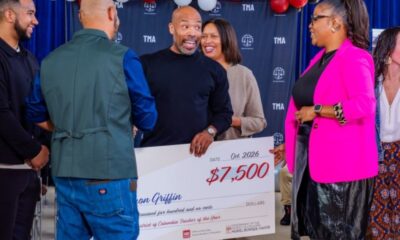
WASHINGTON INFORMER — Ramon G. Griffin, an African-American history instructor at Thurgood Marshall Academy Public Charter School in Southeast D.C., was recently named the 2027 D.C. Teacher of the Year.
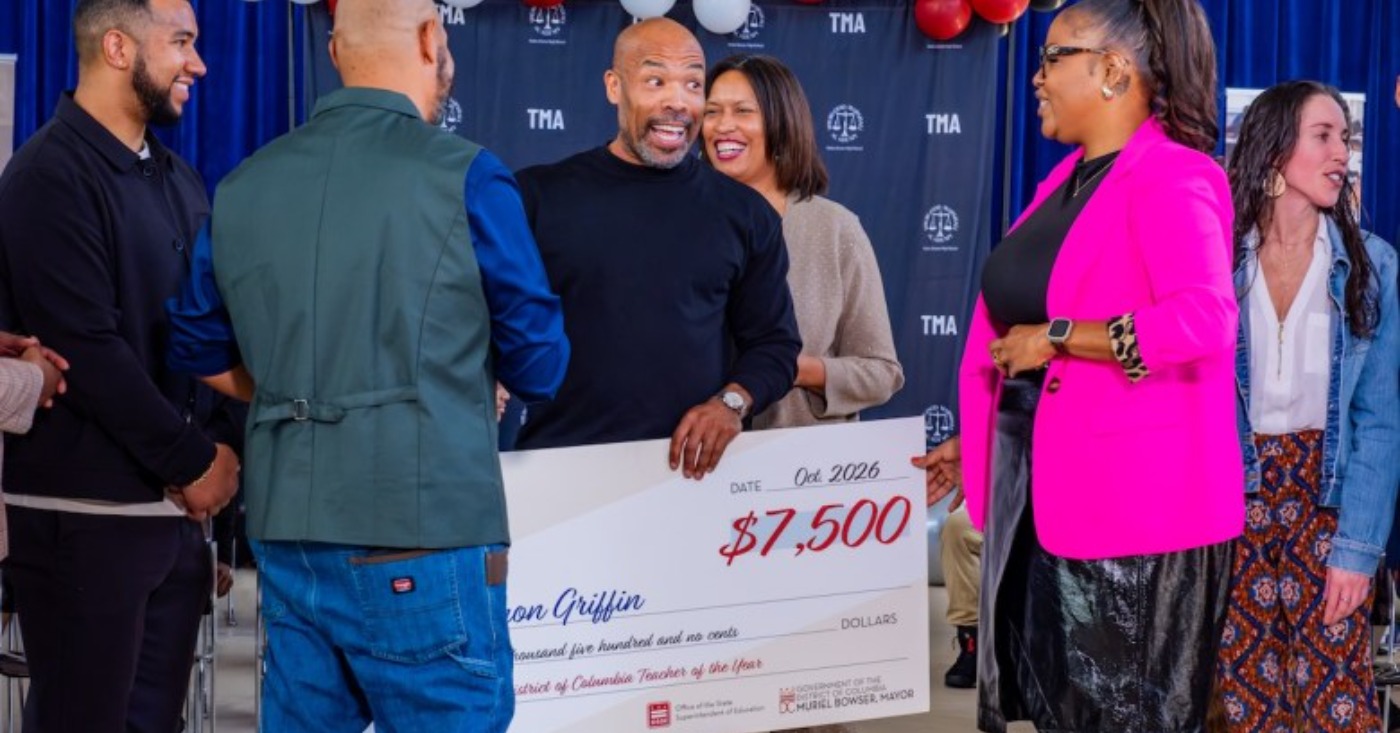
Shortly after becoming 2027 D.C. Teacher of the Year, Ramon G. Griffin appeared on WHUR 96.3 FM, where his story reached thousands of listeners, including a mother who he said later wrote him a two-page letter in request of guidance for her teenage son.
“I look forward to reaching out to her and assisting her in that process and that goal,” said Griffin, an African-American history instructor at Thurgood Marshall Academy Public Charter School in Southeast. “The meaning of this Teacher of the Year award is that I am able to have a voice and representation on a larger scale so that others can be inspired and so that I can help individuals. It’s my objective to work more closely with young teachers to aid them in their skill set, to make sure our children are being educated properly and effectively.”
On Oct. 26, D.C. Mayor Muriel Bowser — flanked by D.C. State Superintendent Dr. Antoinette Mitchell, Ward 8 D.C. State Board of Education Representative Dr. LaJoy Johnson Law, and others — announced Griffin as 2027 D.C. Teacher of the Year during what several students, faculty and staff at Thurgood Marshall Academy PCS thought was an assembly organized in celebration of the school’s 100% college acceptance rate since its inception.
“In my spirit, I can honestly say I knew I won,” Griffin told The Informer. “When she switched it up and said ‘I’m here for a teacher,’ the first thing that came to mind was that this may be it. Then she stated a quote from a documentary that was done on me last year, and she stated where I originate from, and I said I’m about to be awarded D.C. Teacher of the Year. That’s when it set in.”
Griffin, a self-described griot, has 13 years of teaching under his belt, seven of which have been at Thurgood Marshall Academy PCS. That’s where he currently serves as an instructor of AP African-American Studies and African American History through Film and Music. Both courses, he told The Informer, allow him to engage students in storytelling.
Within a couple of months, Griffin’s endeavor to shape the minds of youth continues when Thurgood Marshall Academy PCS hosts yet another “Morehouse Day.” This event, held at several District schools, connects male students with members of the Morehouse Alumni Association Washington, DC Chapter, many of whom graduated from District public and public charter schools before pursuing higher education.
“We have Morehouse men who come in: those who are elders to me, those who were there during my tenure and those who are younger,” said Griffin, a member of Morehouse’s Class of 1998 and key influence in at least three Thurgood Marshall Academy PCS alumni’s matriculation to the HBCU. “What it shows is that we as Black men are not what they portray in the news. We’re not about bringing each other down. We’re about standing out, building, and making sure that our race is looked upon proudly, not for others, but for self and for the next generation.”
An Inside Look: ‘Morehouse Day’ at Thurgood Marshall Academy PCS
The upcoming “Morehouse Day” at Thurgood Marshall Academy PCS is scheduled to take place on Jan. 15, which would’ve been the 98th birthday of Morehouse alumnus the Rev. Dr. Martin Luther King Jr. This intergenerational gathering also happens around the same time that Howard University men’s basketball team plays its home game against Morehouse College.
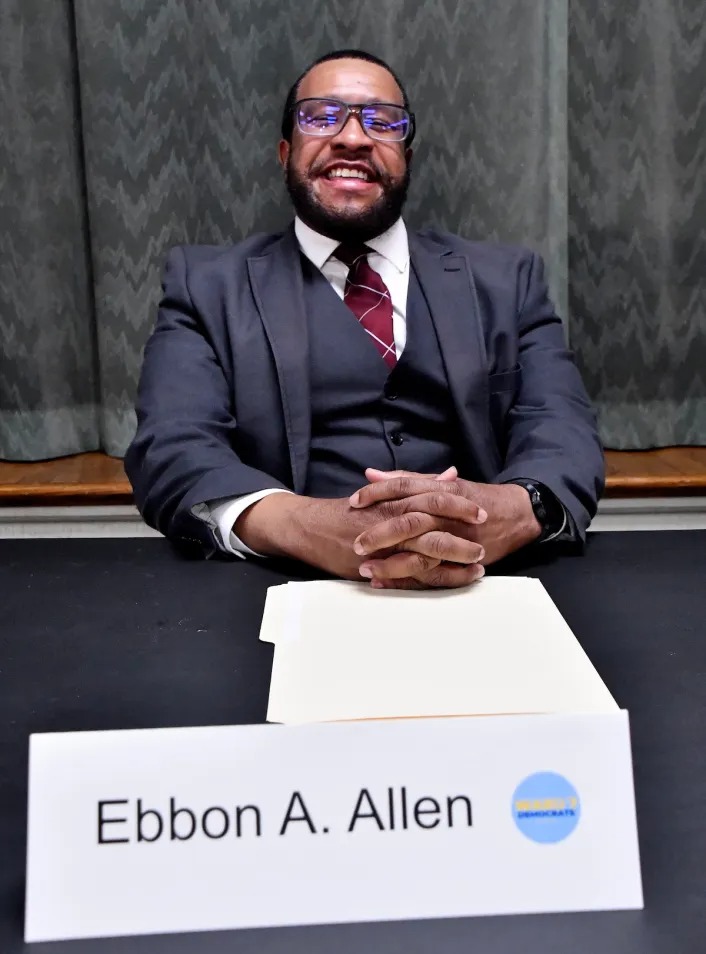
For Morehouse alumnus and “Morehouse Day” brainchild Ebbon Allen, it was a perfect storm that only Griffin could help make happen.
“Before we even knew that Ramon was going to be awarded and honored, we’ve been on ‘Morehouse Day’ as teammates for the last two years,” Allen told The Informer. “We definitely had a meeting within the last two or three months to designate ‘Morehouse Day’ for MLK’s birthday weekend. Ramon just shows the epitome of a Morehouse man: well-versed, well-traveled, and definitely educated.”
Speaking more about his fellow Morehouse alumnus, Allen said that Griffin has long put in the work to boost college enrollment among young Black men.
“He’s had a lot of young men going to attend Morehouse College,” Allen told The Informer. “We’re still trying to work on a pipeline to send more young men from Thurgood Marshall Academy down to Atlanta.”
Since the inception of “Morehouse Day” in 2021, Allen and other members of the Morehouse Alumni Association Washington, DC Chapter have spoken to more than 2,000 young men attending: Calvin Coolidge High School; Dunbar High School; Eastern Senior High School; Friendship Technology Preparatory High School; H.D. Woodson High School; Kelly Miller Middle School; and Ron Brown College Preparatory High School.
The upcoming “Morehouse Day” at Thurgood Marshall Academy PCS will be the second seminar of its kind on school grounds. Allen said that students will delve into violence prevention, entrepreneurship, college and career readiness, and the scholarship application process. His goal, he said, centers on providing them space to imagine how to achieve their dreams.
“We wanted young Black men to understand that they can learn about self-advocacy and learn the value of being a Black male in today’s society,” Allen told The Informer. “There’s going to be a new [mayoral] administration so our young men need to get well-versed and become well-educated about their rights and the opportunities to create a space of learning about strong advocacy.”
Allen, who followed in his three uncles’ footsteps to attend Morehouse College, credited the HBCU with exposing him to the different caliber of Black men. He told The Informer that, like him and other Morehouse men, Griffin has embedded in him a passion for working hard and laying a foundation for those coming after him.
“Ramon Griffin sets the bar for other Black male educators about how much of an impact and difference they can make,” Allen told The Informer. “By coming to Thurgood Marshall Academy in Southeast Washington, D.C., he’ll make more young Black men…find out what it takes to get back in a positive light. You don’t always have to be an entertainer. You don’t always have to be in athletics, but you can take an education pathway and still be awarded for your service, commitment and dedication.”
Out of the Mouths of Babes
C’khai Morgan, a senior at Thurgood Marshall Academy PCS, said he counts Morehouse College among his top choices for business management and human resource management, thanks to Griffin.
“He literally embodies the meaning of a Morehouse Man,” C’khai told The Informer. “You go in any classroom he ever had, you’re going to see something Morehouse. You catch him on a good day, he’s probably wearing a Morehouse sweater.”
C’khai, who also applied to Fayetteville State University, North Carolina Agricultural & Technical State University, and Temple University in Philadelphia, was a student in Griffin’s AP African-American Studies course last school year. On his way to scoring a 4 on the Advanced Placement exam and clinching college credits, he participated in Thurgood Marshall Academy PCS’ “My Brother’s Keeper” program, where he got to learn more about the man he now regards as an uncle.
“I started seeing a different side of Mr. Griffin that I never heard of,” C’khai said. “He always wants the best for somebody, but other students who lack maturity or just lack the understanding of his purpose would be like ‘Mr. Griffin be trying hard. He be pressed to get somebody in trouble.’ It reminded me that you can’t let somebody else’s opinions refer to someone as such.”
Students who take Griffin’s African-American History through Film and Music course take a trip through the Jim Crow, the Great Migration, and Harlem Renaissance, among other time periods, to understand how the blues genre originated from Africa, came into form during enslavement, and traveled with African Americans who moved into northern U.S. cities.
Although Griffin has a curriculum, he often deviates from it, as Thurgood Marshall Academy PCS student Kailani Marshall noted, by recounting his family history. She told The Informer about learning African-American history through stories of Griffin’s grandmother who migrated from Mississippi to Detroit, where he was born and raised.
“He makes sure that students actually retain the information and it’s entertaining as well,” said Kailani, a senior who hopes to study sociology either at Georgetown University, Howard University, Spelman College, or Temple University. “I can’t say that about a lot of classes. The way he teaches really allows students to understand topics fully.”
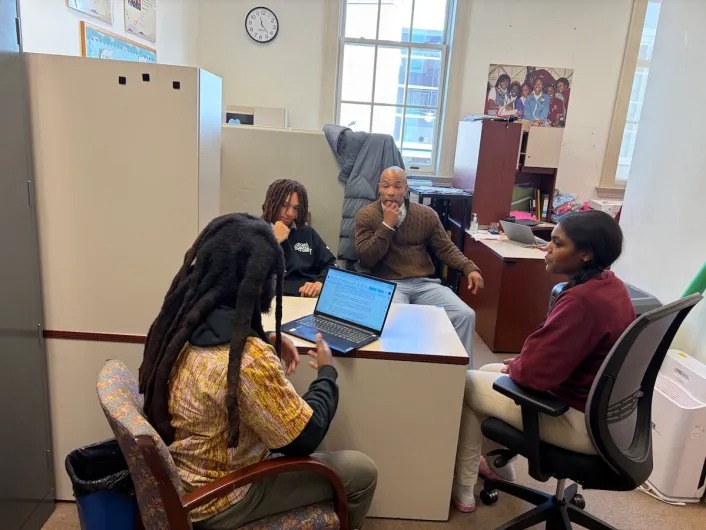
During her junior year, Kailani took Griffin’s AP African-American Studies and African-American History through Film and Music courses. She, too, scored a 4 on her AP exam, due to what she called Griffin’s demand for excellence.
“You can’t be mediocre. It’s not an option,” Kailani said about Griffin. “He’s passionate about instilling confidence and success into students. You can’t say that about a lot of teachers. He really is one of the few teachers who actually care for their students and care for their future.”
During Griffin’s first year of teaching AP African-American Studies at Thurgood Marshall Academy PCS, 87.5% of his students passed the AP exam. This feat follows other achievements at Dunbar High School, where he directed climate and culture, and at Kingman Academy Public Charter School, where he served as a founding member.
Even with Thurgood Marshall Academy PCS’ 100% college acceptance rate, Griffin acknowledged that it takes great effort to earn a bachelor’s degree. That’s what he said he emphasizes to his students as he shares his coming-of-age story and integrates writing and math enrichment into his assignments.
“You don’t want to be a 20-year-old counting on your fingers. You don’t want to be a 20-year-old starting a sentence and ending it at the end of the page with one period,” Griffin said. “You just have to put in the work, and I give them examples of times during my high school years and during my college years. Whatever you want in life, you can have. You definitely will accomplish it, but you have to have a plan. It’s not going to be given to you.”
Based on reporting by Washington Informer.
Black History
Wichita’s Only Black-Owned Bookstore Seeks $90,000 to Secure Its Future
COMMUNITY VOICE (KS) — Left on Read, believed to be the only Black-owned bookstore in Kansas, has launched a $90,000 fundraising campaign to secure its long-term future. Owner Dr. Latasha Eley Kelly initiated the “Support Left on Read: Books, Community, & Connection” appeal in October to address significant financial hurdles.
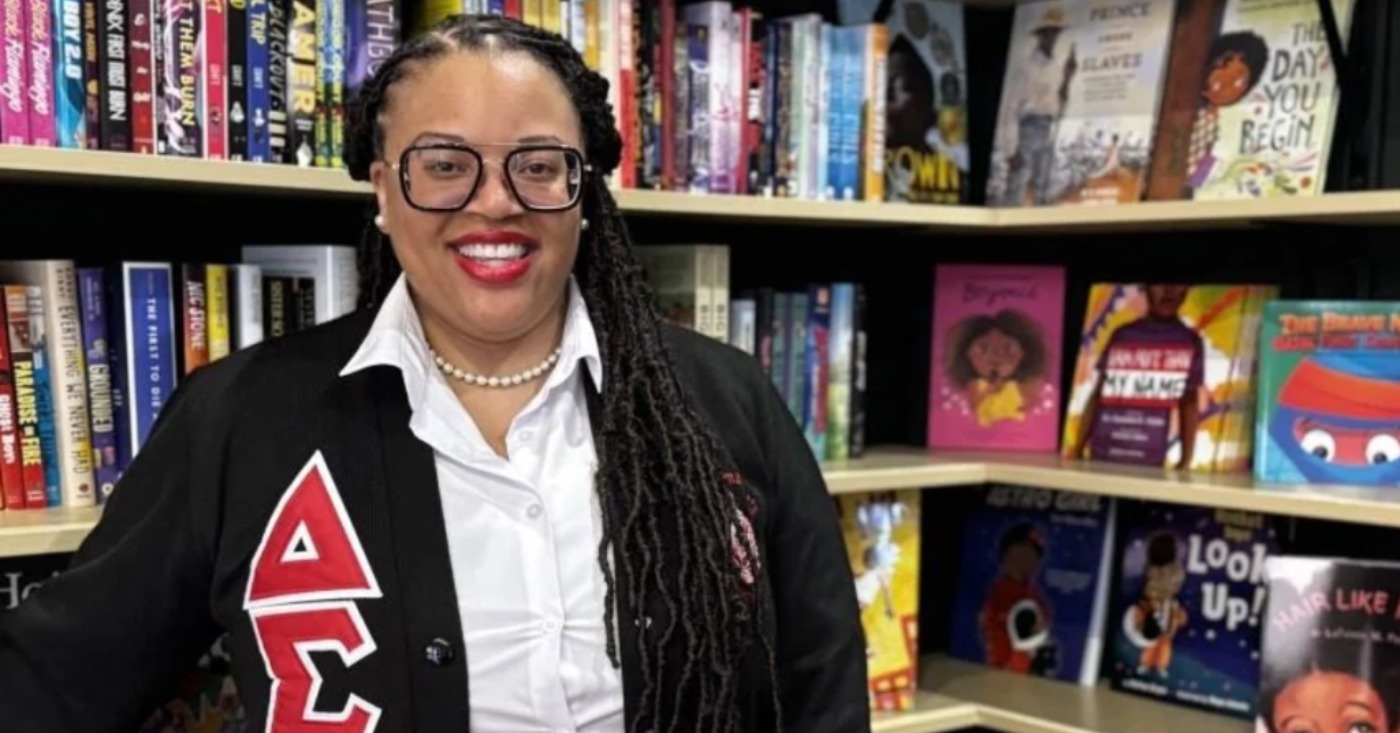
As Left on Read prepares to celebrate its second anniversary on Nov. 30, the bookstore is confronting financial challenges that have prompted owner Dr. Latasha Eley Kelly to launch a $90,000 fundraising campaign to sustain its operations.
The independent bookstore, believed to be the only Black-owned bookstore in Kansas, has become a destination for readers, authors and community gatherings since opening in 2024. But unexpected funding losses, rising operating expenses, and the costs of relocating have strained its finances.
Kelly launched the Support Left on Read: Books, Community, & Connection campaign in October, seeking contributions to cover operating expenses, staffing, inventory and community programming.
A recent snapshot of the GoFundMe campaign showed $14,410 raised from 183 donations, approximately 17% of the $90,000 goal.
Financial Setbacks Prompt Appeal
One of the bookstore’s financial challenges stems from the unexpected loss of grant funding supporting TMBP Media, one of Kelly’s interconnected business ventures. The media operation, The Millennial Black Professor and Left on Read share resources, making the funding loss significant for the bookstore.
In an October interview with KSNW-TV, Kelly also cited increasing operating and staffing costs and the need to establish more reliable revenue sources.
The bookstore relocated from its original downtown location at 612 E. Douglas Ave. to Revolutsia, a small-business development at 2721 E. Central Ave. Kelly described the move as unexpected and credited Mike Ramsey of Bokeh Development with helping facilitate the transition.
To help support the business, Kelly has continued teaching and pursuing consulting, speaking, and instructional opportunities.
The fundraising effort is designed to address immediate expenses while building a more sustainable financial structure. The bookstore has not announced plans to close, but the appeal underscores the financial pressures threatening its long-term viability.
More Than a Place to Buy Books

When Left on Read opened Nov. 30, 2024, Kelly envisioned a bookstore where African-American authors and other historically underrepresented writers would receive the visibility often missing from mainstream retail spaces.
Its selection includes fiction, nonfiction, children’s literature, poetry and history, with particular attention to Black authors and experiences.
Beyond book sales, Left on Read hosts author appearances, reading groups, cultural discussions and activities connecting local entrepreneurs with customers. The bookstore also provides space for The Blackprint, an initiative highlighting Black-owned businesses and their products.
Those activities have helped establish Left on Read as a cultural gathering place, but maintaining that role requires resources beyond revenue from book purchases alone.
Anniversary Campaign Focuses on Financial Stability
The bookstore’s annual 11.30 Campaign takes its name from its Nov. 30 opening date. While the first anniversary campaign encouraged smaller contributions to support the growing business, this year’s appeal focuses on strengthening its financial foundation.
Kelly is asking supporters to contribute financially, purchase books, recommend the store to others, and help spread awareness of the campaign.
The anniversary celebration will also feature several events intended to bring customers and community members into the bookstore.
Anniversary Celebration Events
Left on Read has scheduled the following activities from Nov. 20 through Nov. 22:
- Friday, Nov. 20, 6–7 p.m. — Malcolm Lynch’s Soulful Little Christmas Tour makes a stop at Left on Read.
- Saturday, Nov. 21, noon–1 p.m. — Launch of a free community library in partnership with a local service organization.
- Saturday, Nov. 21, noon–3 p.m. — Lemonade tasting featuring Tre’s Squeeze, presented in partnership with The Blackprint. Attendees can also purchase Squeeze Into Your Dreams by founder Tre Glasper.
- Saturday, Nov. 21, 2–4 p.m. — Public book club discussion of Children of Blood and Bone, covering chapters 1–28.
- Sunday, Nov. 22 — Ponder This at Build and Rebuild. Those purchasing tickets at Left on Read have a chance to win a Ponder This T-shirt and a bookstore gift card.
The events offer residents opportunities to experience the bookstore’s community programming while supporting a business working to overcome financial difficulties.
Community Support Could Determine What’s Next
For independent bookstores, balancing retail sales with the costs of staffing, inventory and community programming can be difficult. Left on Read faces those challenges while also working to maintain a space dedicated to Black literature, culture and entrepreneurship.
The fundraising campaign offers Wichita residents and businesses a chance to help preserve a locally owned institution that offers more than books.
Although the campaign’s outcome remains uncertain, the stakes extend beyond the bookstore’s balance sheet. Its future will determine whether Wichita continues to have a dedicated retail space where Black authors, readers and entrepreneurs are at the center of the experience.
How to Help: Supporters can donate through the 11.30 Campaign at bit.ly/supportleftonread, purchase books at leftonreadbookstore.com, or visit the store at 2721 E. Central Ave., Suite 121, Wichita.
The post Wichita’s Only Black-Owned Bookstore Seeks $90,000 to Secure Its Future appeared first on The Community Voice.
Based on reporting by Community Voice (KS).
Art
BOO REVIEW: Upcoming Book Revisits Dr. King’s 1957 Visit to St. Paul
MINNESOTA SPOKESMAN-RECORDER — A new book by researcher Jeff Olson titled “Gathering at the Rivers: Martin Luther King Jr. and Civil Rights in Minnesota” will chronicle the historic first visit of Dr. King to the state.
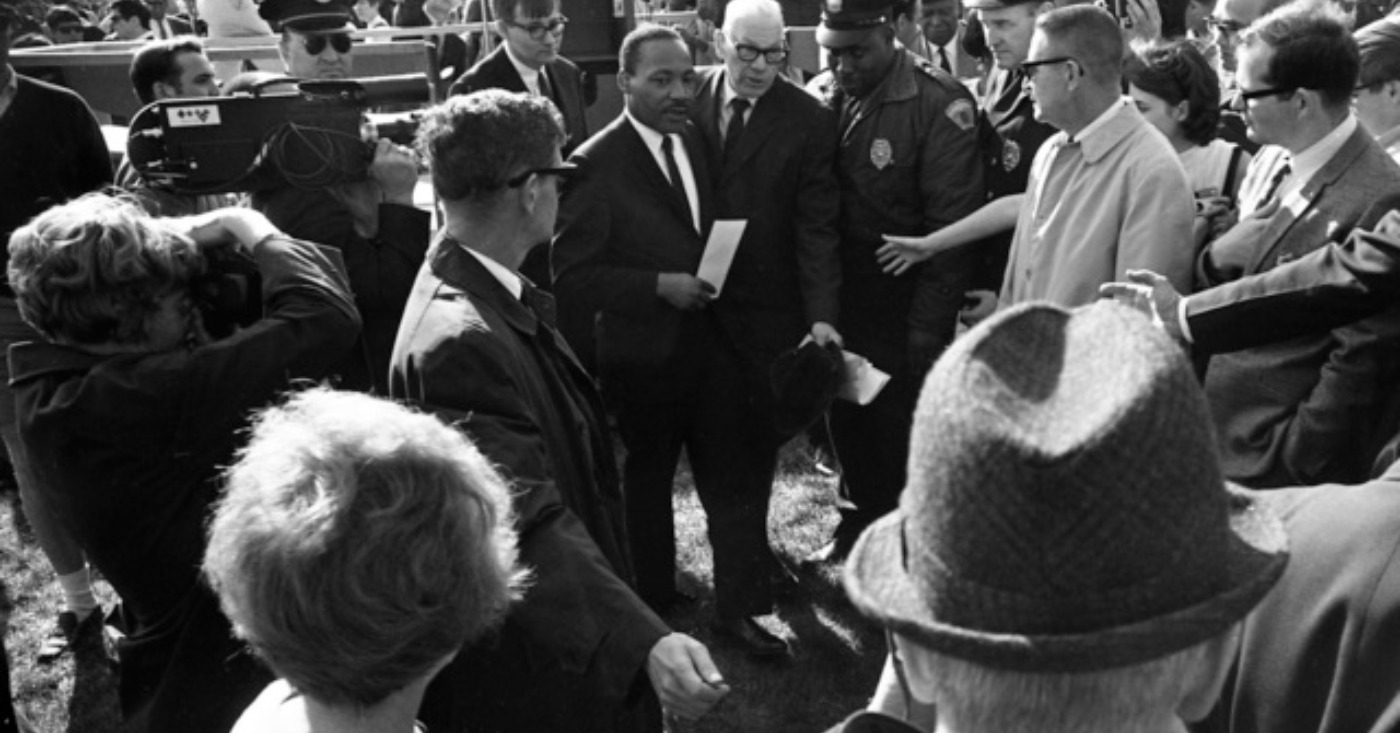
New Book Will Tell the Story of Dr. King’s First Visit to Minnesota and St. Paul’s Civil Rights Pioneers
“Gathering at the Rivers: Martin Luther King Jr. and Civil Rights in Minnesota,” by researcher Jeff Olson, will chronicle King’s Jan. 21, 1957, sermon at Gloria Dei Lutheran Church in St. Paul, his first Minnesota visit, just after the Montgomery Bus Boycott. The Rev. Dr. Floyd Massey Jr. of Pilgrim Baptist Church helped bring King to the state and hosted a reception at his Rondo home. The book’s “Twenty Treasures” chapter profiles figures including Roy Wilkins, Dred Scott, Cap Wigington, Nellie Francis, Nellie Stone Johnson and MSR founder Cecil Newman. Afton Press plans a late 2027 or early 2028 release and is seeking donor support for the $100,000 project.
On Jan. 21, 1957, the Rev. Dr. Martin Luther King Jr. stepped into the pulpit at Gloria Dei Lutheran Church in St. Paul on his first visit to Minnesota. Nearly 70 years later, a book from Minnesota publisher Afton Press aims to tell the story of that night and of the people and places that shaped it.
“Gathering at the Rivers: Martin Luther King Jr. and Civil Rights in Minnesota,” by researcher and author Jeff Olson, is in the early stages of publishing, with a release planned for late 2027 or early 2028. Former St. Paul Mayor Melvin Carter III, the city’s first Black mayor, is writing the foreword.
The book frames the visit as a turning point. King, who had turned 28 just days earlier, was fresh off the Montgomery Bus Boycott and stepping into a national leadership role. In St. Paul, Olson writes, King found himself in the hometown roots of two of his biggest supporters: NAACP leader Roy Wilkins, who grew up in St. Paul’s Frogtown neighborhood, and Ralph Helstein, president of the United Packinghouse Workers of America. Both organizations gave major support to the boycott.

The visit itself came together through local clergy. According to the book, the Rev. Dr. Floyd Massey Jr., pastor of Pilgrim Baptist Church and program chair of the Minnesota Pastors Conference, played a central role in bringing King to the state. After King’s evening sermon at Gloria Dei, Massey and his wife, Ethel, hosted a reception for him at their home in the Rondo neighborhood.
At the heart of the book is a chapter Olson calls the “Twenty Treasures of Civil Rights in Saint Paul,” profiles of the people, places and institutions that made the city fertile ground for King’s message. The list stretches from Dred Scott, who married Harriet Robinson at Fort Snelling in 1837 and later took his fight for freedom to the U.S. Supreme Court, to Pilgrim Baptist Church, founded in 1863 as Minnesota’s first Black church.
It includes architect Clarence “Cap” Wigington, who Olson notes was the nation’s first Black municipal architect; Nellie Francis, who led the campaign for Minnesota’s 1921 anti-lynching law; attorney Frederick McGhee; labor and civil rights leader Nellie Stone Johnson; and Carl Rowan, whose civil rights reporting for the Minneapolis Tribune won national journalism honors in the 1950s. It also includes Cecil Newman, who founded the Minneapolis Spokesman and St. Paul Recorder in 1934 and led the papers until 1976.
Olson argues that these civil rights firsts are striking given Minnesota’s small Black population at the time, compared with states and cities whose Black communities were many times larger.
Olson said he became fascinated by the research because he kept uncovering stories that had gone untold.
Ian Graham Leask, Afton Press’ publisher, told the MSR the book matters at a time when literacy rates are declining. A book that shows readers from marginalized communities the history of the very streets they walk today could give schools and institutions a way to spark engagement, he said, especially because the story has never been told this way before.
Bringing the book to print is expected to cost about $100,000, Leask said, and Afton Press is open to support from donors.
Afton Press has a long record of publishing Minnesota stories about people, places and events, including “Overcoming: The Autobiography of W. Harry Davis” (2002), the memoir of the prominent Black civic leader from Minneapolis.
Olson is the author of several books on hockey history and of “Kindred Spirits,” about the conservation work of Theodore Roosevelt and John Muir.
For more information or to support the book, visit https://aftonpress.com/. You can also contact Afton directly at [email protected] or 651-436-8443.
Jasmine McBride welcomes reader responses at[email protected].
Jasmine McBride is an Editor at the Minnesota Spokesman-Recorder More by Jasmine McBride
Based on reporting by Minnesota Spokesman-Recorder.
Black History
Debunking the Myth That Europeans Alone Plotted Africa
THE CAROLINIAN — Following the United Nations’ recent adoption of a resolution endorsing more accurate global maps, scholars are reexamining historical misconceptions regarding the cartography of Africa.
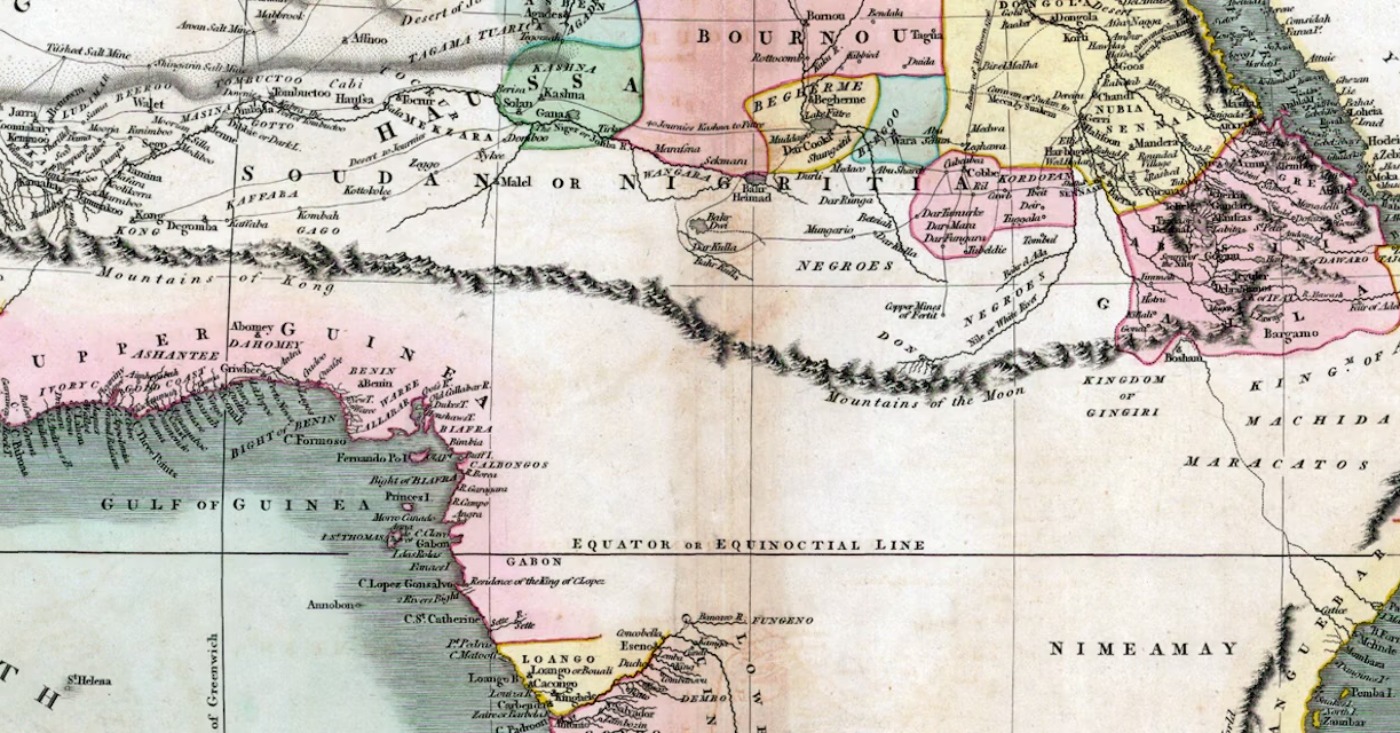
THE CONVERSATION – After the United Nations adopted a resolution in September 2026 endorsing a map that more fairly represents the size of Earth’s landmasses, author and journalist Moky Makura of Africa No Filter – a main sponsor of the Correct the Map initiative – asked: “What else about Africa is the world underestimating that’s also hidden in plain sight?”
It is a fair question.
The initiative brought attention to the way continents are distorted by projections that display our rotund planet on two-dimensional maps, something that has long made Africa especially appear far smaller than it actually is. But it left another assumption untouched: that European maps of Africa – which became the basis of how we see African countries today – are based solely on the observations of the Europeans who made them.
As an expert on the map history of Africa, I know that this is a misconception which deserves rethinking. Recent research by myself and others on colonial-era mapping of West Africa demonstrates that much of the geographical information these maps show is based on African observations. It’s just that Europeans largely took the credit.
A line in the sand
Most African map traditions are undocumented or ephemeral. But ground and oral mapping was common in the pre-colonial period, and often highly valued. European explorers relied upon these indigenous mapping practices during their travels and sometimes incorporated them into their own maps.
For example, sections of French explorer Henri Duveyrier’s 1861 map of the Sahara owed much to the maps drawn in the sand by his guide, Cheikh-‘Othmàn. Indeed, more than a third of Duveyrier’s map is based on information provided by local sources.
A common objective of mapping is to solve a spatial problem. Route mapping is all about finding one’s way between points A and B and determining the distances between them. For Europeans, it was important to know where African leaders resided or the most direct route to important trade centers.
When European explorers and soldier-surveyors inquired, African guides, interpreters and merchants described the road ahead and often drew these routes on the ground with a stick. Europeans valued African oral and ground-mapping practices for their contributions to knowledge; they were also useful for empire building.
In his 1892 travel memoir, French Navy Lt. Louis-Gustave Binger reproduced the plan of Niellé, a city in contemporary northern Ivory Coast that was drawn on the ground by his interpreter, Fofana Diawé.
Niellé’s chief prohibited Binger from visiting the town, making Diawé’s drawing particularly valuable. In another instance, Binger reports that an African intermediary placed varied lengths of straw on the ground to indicate the distances between localities in the Kong region.
In his exploration of the area between the Niger River and the Gulf of Guinea in the early 1890s, Navy Lt. Jean-Baptiste Marchand routinely collected route information from local inhabitants about places he could not visit. This “locally sourced route information,” as he described it, appears as dashed lines on his landmark map of the region. The routes of Marchand and other European explorers appear as solid lines.
When the total distance of all routes is calculated, African sources account for 65% of routes on Marchand’s map.
Thanks to African intermediaries guiding these military explorers, Binger discovered that the fabled Kong Mountains, which stretched across most 19th-century maps, did not exist.
And Marchand learned that the savanna penetrated more deeply into the rainforest in south-central Ivory Coast. The elimination of the imaginary Kong Mountains and knowledge of a shorter travel distance through the dense tropical forest accelerated French colonization of the region.
But this practice of displaying locally sourced route information on European maps was debated among European geographers and military officers. Some mapmakers refused to display African mapping because it did not follow the standards of scientific cartography.
They argued that the geographical information was based on hearsay rather than measurement. Others, particularly military officers trying to expand colonial boundaries, appreciated locally made maps’ practical value. Embedded in this debate was the self-claimed civilizing mission ideology underpinning colonialism, which assumed the superiority of European knowledge. The dashed lines suggest that locally sourced information was tentative and would eventually be replaced by solid lines based on European measurements.
Filling in the blanks
The appearance of blank spaces on maps is typically seen as demonstrating the scientific standard of accuracy: Cartographers don’t show what we don’t know.
Blank spaces were also viewed as instrumental to imperial expansion. That’s because they suggested vacant areas open to colonization.
The common denominator of both views is that Europeans determine what is shown and not shown on maps of Africa. But a closer look at explorers’ and soldier-surveyors’ reports indicates that blank spaces often emerged from the refusal of African authorities to allow Europeans to travel through their territory.
Wisely, these African rulers understood the ultimate goals of European soldier-surveyors – to map the road to colonial conquest. In the memoir of his exploration of contemporary Mali, Ivory Coast and Burkina Faso, Binger explained the blank spaces on his four-sheet map as deriving from his lack of “a good guide and a travel permit [from African authorities].”
To try to overcome this lack of access, colonial officials employed Africans to explore and map. Traces of their little-known expeditions appear in late 19th- and early 20th-century compilation maps assembled by European mapmakers. The travel routes of two Senegalese explorers, Roger Panet in 1850 and Bou El Mogdad Seck around a decade later, appear in Hermann Habenicht’s ten-sheet map of Africa published in 1885-1886.
The central Africa mapping of two Africans working as Portuguese trade agents, Pedro Joao Baptista and Amaro José, is depicted on the “Kabébé” sheet of Régnauld de Lannoy de Bissy’s 63-sheet map of Africa.
The display of their itineraries in solid lines alongside those of Europeans indicates their equal treatment by Lannoy. Lannoy also used the dashed-line symbol to show locally sourced geographical information. More than two-thirds of the route information displayed in his 1882 Segou-Sikoro sheet stems from African mapping practices.
Both maps were used at the Berlin Africa Conference of 1884-85 to determine the boundaries of free trade zones in the Congo and Niger river basins.
The conference kick-started the “scramble for Africa” that was to last into the 20th century. Paradoxically, the maps that Africans helped construct were later used to divide their territories into European colonies.
Decades after decolonization, when we open the drawers of national archives, we find these remarkable maps with their solid and dashed lines. And map historians are finally acknowledging that these maps, cataloged as purely European achievements, are in fact hybrid productions that emerged from complex intercultural encounters. The evidence was hidden in plain sight.
Based on reporting by The Carolinian.
Black History
COMMENTARY: Property Is Power! the Black Family Meeting
CHICAGO DEFENDER — For more than 30 years in the mortgage industry, experts have observed that the primary obstacle to Black homeownership is often not just the cost of housing or the availability of financing. Instead, many families miss out on building generational wealth because they lack meaningful conversations about the mechanics of property ownership.
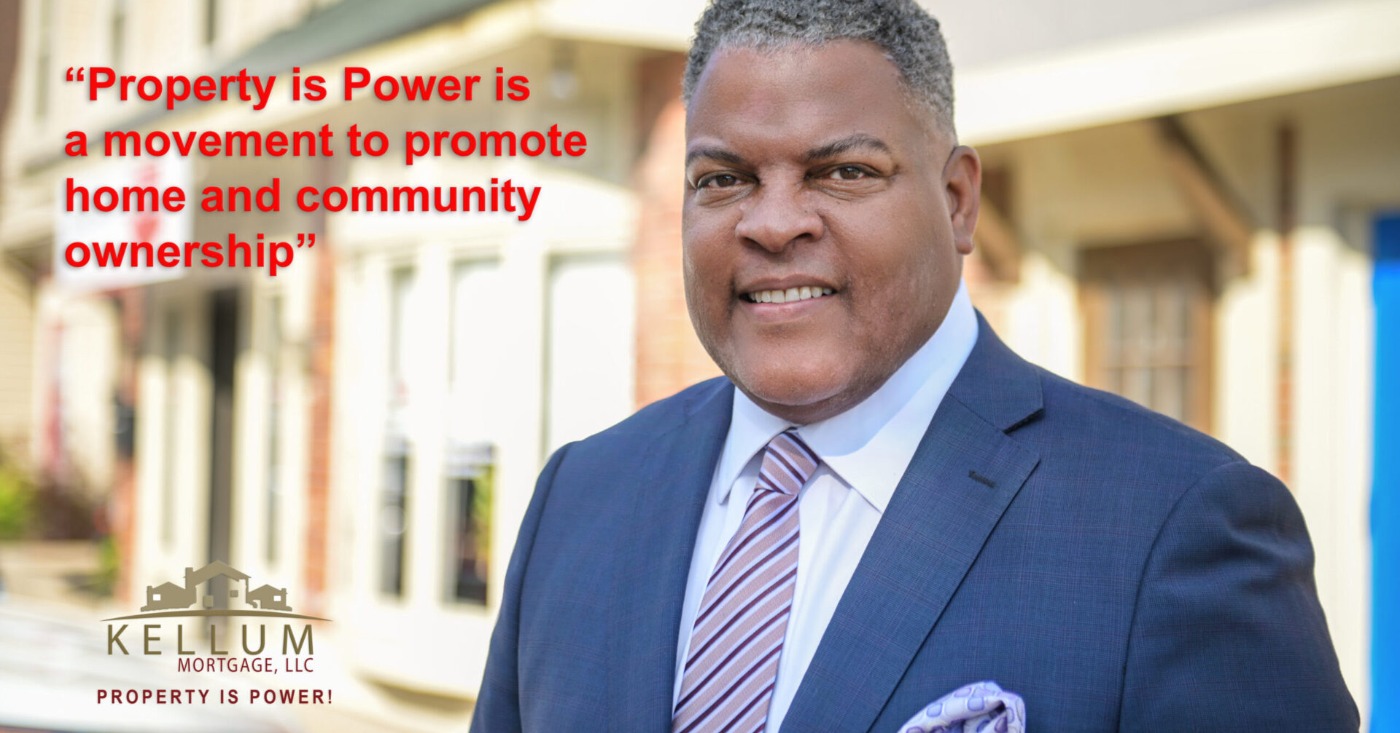
Some conversations can change the financial direction of a family. They rarely happen in a bank, a mortgage office, or even at the closing table. More often, they begin around a kitchen table, where parents, children, and grandparents can discuss something that can shape generations: ownership.
After more than 30 years in the mortgage business, I have come to understand that one of the greatest obstacles to Black homeownership is not simply the cost of housing, the availability of financing, or the qualifications lenders require. It is that too many families have never had a meaningful conversation about the economics of owning property. We discuss education, employment, and the importance of working hard. Yet we do not always discuss how money works, how credit creates access, how real estate builds equity, or how ownership can change a family’s financial circumstances.
I founded Property is Power out of a conviction that economic advancement must include a deeper understanding of real estate ownership. Over the years, I have sat across the desk from people who worked for decades, raised families, paid rent faithfully, and fulfilled every financial obligation expected of them. Yet, after 15 or 20 years, they had little to show for the money they had spent on housing. Their labor had sustained someone else’s investment, while their own opportunity to accumulate wealth remained largely untouched.
I do not suggest that renting is always a mistake or that homeownership is appropriate for everyone. But I have encountered too many people who wanted to own, could have positioned themselves to own, and simply lacked the information, preparation, or guidance to make it happen.
Information is not a small thing. In the marketplace of wealth creation, information often determines who participates and who remains on the sidelines.
The Conversation We Are Not Having
I want to challenge Black families to do something that may seem simple but could have lasting consequences: schedule a family meeting devoted to financial preparation and property ownership.
Bring the generations together. Invite the adult children. Include the grandparents. Let the teenagers listen. Put the phones away and have an honest discussion about where the family stands financially and where it intends to go. The objective is not to make everyone a real estate investor overnight. It is to establish a different understanding of money, credit, savings, and ownership. It is to move from discussing what the family earns to discussing what the family is building.
I would begin with three subjects: credit, savings, and a plan for ownership.
Credit: Your Financial Reputation Has an Economic Consequence
We often speak about credit as though it were merely a number. It is much more than that. Credit is a record of how the financial marketplace perceives your borrowing history. That perception can influence whether you receive financing, how much you can borrow, and the interest rate you pay.
Creditworthiness is developed over time. Treat it as a financial asset that requires maintenance, discipline, and attention. We cannot expect the next generation to make informed financial decisions if we do not teach them how the system works.
Savings: Income Is Important, but What You Keep Matters
A family may have a respectable income and still lack the resources to purchase a home. Earning money and accumulating money are two different disciplines. Homeownership requires more than the ability to make a monthly payment. There may be a down payment, closing costs, inspections, insurance, and the inevitable repairs that accompany maintaining a property.
Families should establish a dedicated ownership fund. It doesn’t have to start with thousands of dollars. An automatic deposit from every paycheck, a portion of a tax refund, or a reduction in unnecessary spending can establish the foundation.
Families should also discuss whether they can help one another responsibly. A parent may be able to assist an adult child with a documented down-payment gift. A grandparent may have resources to help a grandchild begin saving. There is nothing wrong with families using their collective knowledge and resources to create opportunities for their family members. We have to stop thinking exclusively as individuals when the objective is to strengthen generations.
The Plan: Turn Good Intentions into an Economic Strategy
What kind of property are we pursuing? Where do we want to live? What can we reasonably afford? Are we preparing to purchase a primary residence, an investment property, or perhaps a multifamily property that could generate rental income? What needs to happen over the next twelve or twenty-four months to make that possible?
Establish savings targets. Identify credit issues that need attention. Research available homebuyer assistance programs. Speak with a knowledgeable mortgage professional before making major financial commitments.
A family meeting should not be a one-time event that produces enthusiasm for a week and then disappears. It should become a regular conversation about financial progress, obstacles, and opportunities. The larger objective is to establish a culture in which ownership is discussed, planned, and pursued with the same seriousness families traditionally give to education and career advancement.
Ownership Does Not End at the Closing Table
Buying a home is an accomplishment. Maintaining it is an obligation. Protecting its value is an investment in both the household and the surrounding community. Take care of the property. Maintain the lawn. Repair the porch. Keep the sidewalks clean. Replace the exterior light that has been out for months. Pay attention to the roof, foundation, plumbing, and exterior.
These may seem like ordinary household responsibilities, but they reflect something larger: an understanding that property ownership carries responsibilities beyond the four walls of a house. A neighborhood’s value is influenced by the collective behavior of its residents. Neglect can become normalized just as pride can become contagious. When homeowners invest in maintaining their properties, they contribute to the stability and economic health of the surrounding community.
We should understand that neighborhood improvement is not solely the government’s responsibility. Public investment and fair housing policies matter, but residents also have a role. Ownership should inspire participation, not isolation.
The Home Is an Economic Institution
We sometimes underestimate the economic significance of a home because we have become accustomed to thinking of it primarily as a place to live. But a home is also an asset. Over time, mortgage payments can reduce principal and build equity. Property may appreciate, although appreciation is never guaranteed. That equity can provide financial options for education, business development, or other family needs, provided it is accessed responsibly.
A home can also provide stability that extends beyond the individual borrower. Children may remain in the same school district, develop lasting friendships, and benefit from continuity in their educational environment. Parents become invested in the quality of local schools, the condition of their streets, and the vitality of nearby businesses. Homeowners support local economies by purchasing materials, hiring contractors, using neighborhood services, and supporting entrepreneurs. Their presence can help sustain commercial corridors and strengthen surrounding communities.
The Inheritance We Should Be Discussing
Perhaps the most important reason to hold a family meeting is the conversation about legacy. For generations, too many Black families have had to build their financial lives from the ground up, with limited assets to transfer and fewer opportunities to benefit from the accumulated wealth of previous generations.
That history did not happen by accident. Redlining, restrictive covenants, discriminatory housing practices, and unequal access to mortgage financing systematically limited the ability of Black households to acquire and retain property. Their economic consequences did not disappear when those practices became illegal. We should understand that history without allowing it to define the limits of our future.
The home can become one of the instruments through which families change that equation. But inheritance requires preparation. Families need wills, trusts when appropriate, clear title, and conversations about how property will be managed and transferred. Too many families have lost valuable property because nobody addressed the legal and financial responsibilities of passing it down.
We should not spend thirty years building equity only to leave the next generation with a title dispute or an unresolved estate. Legacy is not simply what we leave behind. It is what we prepare the next generation to receive, protect, and build upon.
Bring the Family to the Table
I have spent more than three decades in the mortgage business, and one lesson has remained constant: families rarely stumble into lasting financial progress. It requires information, preparation, discipline, and a willingness to make decisions that may not produce immediate gratification.
The Black homeownership conversation must become more intentional. We cannot discuss the racial wealth gap without discussing property. We cannot discuss generational wealth without discussing assets. And we cannot talk about changing the economic circumstances of our communities while overlooking the importance of what families own, what they retain, and what they pass forward. Property is not the only path to wealth, but it remains one of the most consequential wealth-building opportunities for families who prepare, purchase responsibly, and protect what they acquire.
So, call the meeting. Set a date. Bring the generations together. Talk about credit, savings, homeownership, investment property, and estate planning. Talk about the kind of financial foundation you want your children and grandchildren to inherit.
The family meeting may be the most important financial meeting you ever hold.
Property is Power! Dr. Anthony O. Kellum is CEO of Kellum Mortgage, LLC, a homeownership advocate, speaker, and author. NMLS #1267030 / #1567030. www.KellumMortgage.com
Property is Power! is a movement to promote home and community ownership. Studies indicate homeownership leads to higher graduation rates, family wealth, and community involvement.
The post Property is Power! The Black Family Meeting appeared first in the Chicago Defender.
Based on reporting by Chicago Defender.
Black Press
Computational Thinking and Young Children: It’s Not What You Might Think!
BLACKPRESSUSA NEWSWIRE — Skepticism about CT in early childhood is not uncommon. Critics often argue that CT is too advanced, abstract, or inappropriate for young learners. My neighbor voiced similar concerns, questioning how concepts from a technical domain could be meaningfully adapted for children ages 3 to 5.
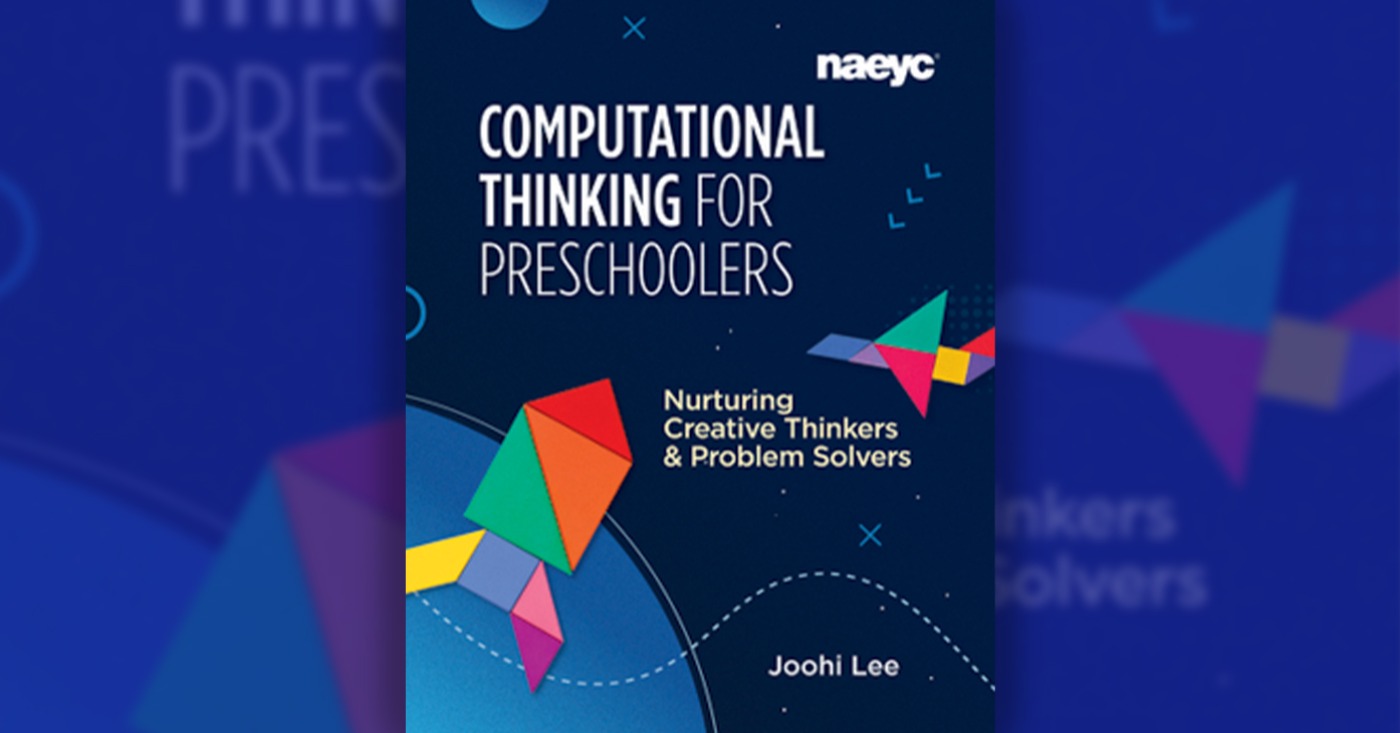
NAEYC recently published “Computational Thinking for Preschoolers: Nurturing Creative Thinkers and Problem Solvers,” written by Joohi Lee as part of its new suite of STEM products.
As an educator and researcher, I have spent years exploring how to integrate computational thinking (CT) into early childhood education in ways that feel natural and meaningful to young children.
One evening, I had a conversation with my neighbor—a computer scientist and father of two daughters, ages 4 and 5—about the idea of CT for preschoolers. His initial reaction was one of surprise, and he asked, “Really? Isn’t that a bit early?” This simple question kicked off an engaging hour-long exchange of perspectives.
We discussed what CT really means—things like breaking problems into steps, spotting patterns, and figuring out how to solve challenges. I described how young children learn these concepts through play, stories, and hands-on exploration, and he shared how those same ideas show up in computer science.
The longer we talked, the more we realized we were speaking the same language. By the end of our conversation, my neighbor smiled and said, “You know, I never thought of it that way, but it makes perfect sense.” That moment reminded me how universal CT skills really are—and how powerful it can be to start nurturing them in the preschool years.
When hearing the term computational thinking, many people immediately associate it with computing numbers, computer science, or programming.
Skepticism about CT in early childhood is not uncommon. Critics often argue that CT is too advanced, abstract, or inappropriate for young learners. My neighbor voiced similar concerns, questioning how concepts from a technical domain could be meaningfully adapted for children ages 3 to 5.
Some early childhood educators also share this viewpoint, perceiving CT as complex and disconnected from the developmental realities of young children. This initial hesitation is completely understandable and often stems from limited information about CT, as well as a lack of clear examples demonstrating its applicability in early learning settings.
On the other hand, some teachers are eager to integrate CT but feel somewhat intimidated by the term itself and are uncertain about where to start or how to effectively incorporate it into their teaching.
When approaching CT for young children, the first step is to understand that, while closely interconnected, CT is not the same as or interchangeable with computing, computer science, or programming. CT is a cognitive framework for problem solving. It falls under the umbrella of computing and is integral to computer science and to programming, which is a branch of computer science.
CT is also an independent skill set that leverages concepts that overlap with computer science and can be applied more broadly to problem solve in other contexts and academic disciplines. In other words, CT is not limited to any specific field or to individuals pursuing careers in computer science—it is a universal skill set for everyone.
CT equips children with the ability to think logically, analyze problems, and develop solutions systematically, making it an essential competency for navigating the complexities of our increasingly digital society.
From morning circle time to building block structures to navigating obstacle courses, the routines and play-based learning experiences that young children engage in every day inherently incorporate CT. Understanding this foundational principle can help educators get their early learning settings buzzing with curiosity, where every question, every game, and every playful moment becomes a stepping stone toward building powerful CT skills.
Example 1: Computational Thinking and Morning Interactions with Children
Mr. Miyazaki: Good morning, Angelica!
Angelica: Good morning, Mr. Miyazaki!
Mr. Miyazaki: How are you?
Angelica: Good!
Mr. Miyazaki: Tell me what is making you feel good.
The prompt Mr. Miyazaki uses (“Tell me what is making you feel good”) guides Angelica to logically think about her own feelings. Angelica may have responded “good” out of habit, but when asked to consider the cause of this feeling, she needs to contemplate what exactly is making her feel good in order to answer. This is a question that Angelica may not think of often on her own. It also requires her to engage with the important CT skills involving cause-and-effect—in other words, what (the cause) is leading to her happiness (effect). It may not be possible for educators to have exchanges like this with every child since mornings are such a busy time for greeting children and their families. However, when you find a chance to ask, this question functions as a tool to promote children’s CT. This question can also be integrated during morning whole-group time.
Example 2: Computational Thinking, Sequencing and Ordering, and Patterns in Music and Dance
Understanding that patterns are sequences helps children grasp the concept of logical progression and structure. Learning experiences that involve arranging objects or performing actions in a specific sequence reinforce this idea. For instance, teachers can invite children to follow a sequence of dance movements to the music, such as clap, stomp, jump, clap, stomp, jump, clap, stomp, jump (abc pattern). As the music plays, children perform the movements in the correct progression, helping them internalize the concept of sequencing and ordering. To support learning, the teacher may begin by demonstrating the sequence of movements slowly, ensuring the children understand each step. Once the children are familiar with the sequence, the teacher can play a lively song and encourage the children to perform the movements along with the music. To add complexity, variations in the sequence can later be introduced, such as clap, clap, stomp, jump, clap, clap, stomp, jump (aabc pattern). This not only reinforces sequencing and ordering but also engages children physically and rhythmically, making the learning process both effective and enjoyable. Through hands-on activities, children develop a stronger understanding of sequences and order, which are fundamental concepts in pattern recognition.
NAEYC recently published “Computational Thinking for Preschoolers: Nurturing Creative Thinkers and Problem Solvers,” written by Lee as part of its new suite of STEM products. She’s a professor of teacher and administrator preparation at the University of Texas at Arlington.


Why Texas and Florida Dominate College Football #shorts

COMMENTARY: Money Matters — AI Can Help Your Small Business — But Is It Helping Your Bottom Line?

California Legislative Black Caucus Grows to 14, Women Hold 12 Seats

How Finance Became My Purpose: Building Paths to Opportunity #shorts

Ramon G. Griffin: A Morehouse Man on a Mission

‘It’s as if He Doesn’t Exist’: In Mississippi, People Jailed Months Without Formal Charges

Wichita’s Only Black-Owned Bookstore Seeks $90,000 to Secure Its Future

Carolyn Hugley Could Become Georgia’s First Black Woman House Speaker

BOO REVIEW: Upcoming Book Revisits Dr. King’s 1957 Visit to St. Paul

Mom Com & Co Is Building a Village for DFW Mothers, One Connection at a Time

Practitioners of African Traditional Spirituality Offer Ancestral Reverence Ritual Oct. 31

HISTORY MADE: Keisha Lance Bottoms Becomes First Black Woman Elected Governor in American History

Tamiko Armstead | 2026 Lifetime Achiever in Education

Kickstarter CEO Everette Taylor Shares Tips on Creating and Growing a Business

BLACK MEN VOTE: Mobilizing 100,000 Black Men Ahead of the Midterms 📱

NFN live presents 🎙️ THE ROAD TO BEYOND IWDM 50: WE CANNOT STOP NOW! 8-Week Podcast

Black Household Wealth Plummeted 25% in Three Years, New Data Shows

Secretary of State Shirley Weber Pushes Back Against DOJ Demands Over California Voter Rolls

COMMENTARY: BIG MAMA SAID: Don’t Throw Away the Gift Just Because It Came Wrapped Wrong

Columbus’s Oldest Businesses Still Open: 10 That Have Lasted 75+ Years
Why Texas and Florida Dominate College Football #shorts
How Finance Became My Purpose: Building Paths to Opportunity #shorts

Renay Dossman on Clearing the Path for Entrepreneurs of Color at NDC | On The Radar | MSR

Filmmaker Joy Adenike brings Nollywood romance to Houston

Filmmaker Joy Adenike brings Nollywood romance to Houston

2026 Best of Black Business Awards Recap: Meet the Winners

LIVE! — ASK ALMA — TUES. 11.24.26 7PM EST

Charles Cave turns community service into Houston legacy

Houston ISD board: Transition to local control can start ‘mid-January’

400 days – Fifth Ward awaits cancer cluster EPA report
-
 Black History1 week ago
Keisha Lance Bottoms to Govern State Where Her Great-Great-Grandfather Was Enslaved
-
 Black History1 week ago
Don’t Pass the Torch. Expand the Circle.
-
 Black Press3 days ago
OP-ED: Closing the Next Digital Divide — Communities of Color Must Have a Voice in the AI Future
-
 Black History1 week ago
Meet Scott Colom, the Mississippi Democrat Leading Tight Mississippi Senate Race
-
 Black Press1 week ago
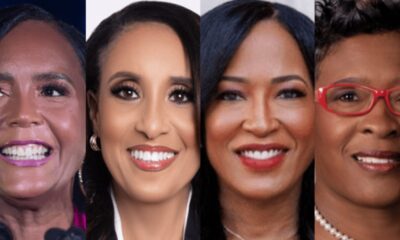
Eight Black Women Win Georgia Statewide Offices
-

 Black History4 days ago
New NAACP Report Warns AI Could Deepen Health Disparities in Black Communities
