
Food
For The First Time Since 1866, There Won’t Be Any Sweetheart Conversation Hearts This Valentine’s Day
MICHIGAN CHRONICLE — You’ll have to find another way to ask out your crush this year.


By Rebecah Jacobs
Valentine’s Day can be an amazing day for some, and for others, it’s the most annoying day of the year. But whether or not you enjoy the holiday, chances are you associate those little candy hearts with February 14th–but this year, thing’s are going to be a little bit different.
For the first time since 1866, the world will be celebrating Valentine’s Day without SweetHeart’s Conversation Hearts. The New England Confectionary Company (which you might more commonly know as ‘Necco’) is no longer producing the classic Valentine’s Day candy, which means all of us are going to have to find another way to tell our crush how we feel about them.
SweetHearts first began making these ever-popular conversation hearts all the way back in 1866. The operation was then taken over by Necco in 1901, and since then, they’ve become the most popular Valentine’s Day candy in approximately 21 states. Last year, CandyStore.com reported that they were the most popular Valentine’s Day candy in America.
With all those statistics going in SweetHearts’ favor–why are they not being sold in 2019?
Until 2018, Necco was the oldest continually operating candy company—but in July, the company abruptly closed and announced they needed to sell. Someone either needed to buy all of Necco or purchase the brands individually and in September, Necco was purchased by Round Hill Investments, who then sold the SweetHearts brand to Spangler Candy Company.
One thing most people probably don’s know about the popular Valentine’s Day candy is how long they take to produce. Because of the insane timespan it takes to create the supply of conversation hearts, Spangler Candy Company didn’t have enough time to make the hearts for 2019. It took Necco 11 months to produce 8 billion conversation hearts—all of which would be sold in the 6 weeks leading up to the holiday.
Since Necco’s factories were closed down in July and Spangler didn’t take over until a few months later in September, they weren’t able to keep up with the insane demand for 2019. But there’s some good news for all the Conversation Heart lovers out there: Spangler’s CEO has already announced the hearts will be back on shelves next year in 2020.
CandyStore.com is now reporting that sales of the hearts are down 80 percent from last year, and while you may be able to find a few leftover boxes from 2018, new hearts won’t be hitting shelves at all. If you do find boxes on store shelves—or somewhere online like on Amazon—just keep in mind that these treats have likely been sitting in a warehouse since last year.
But all the lovers out there won’t be left completely empty handed for 2019. Sour Patch Kids made their own conversation hearts this year, which could be a great alternative to the classic we’re doing without.
This article originally appeared in the Michigan Chronicle.











Black Press
Marin County Supes Expand Small Business Options with Home Kitchen Pilot Program
“This will deliver immediate financial relief to entrepreneurs in areas like Marin City, West Marin and the Canal neighborhood, removing barriers right where economic opportunity is needed the most,” said Shannon Bell, consumer protection supervisor with Marin County Environmental Health Services, at the meeting.
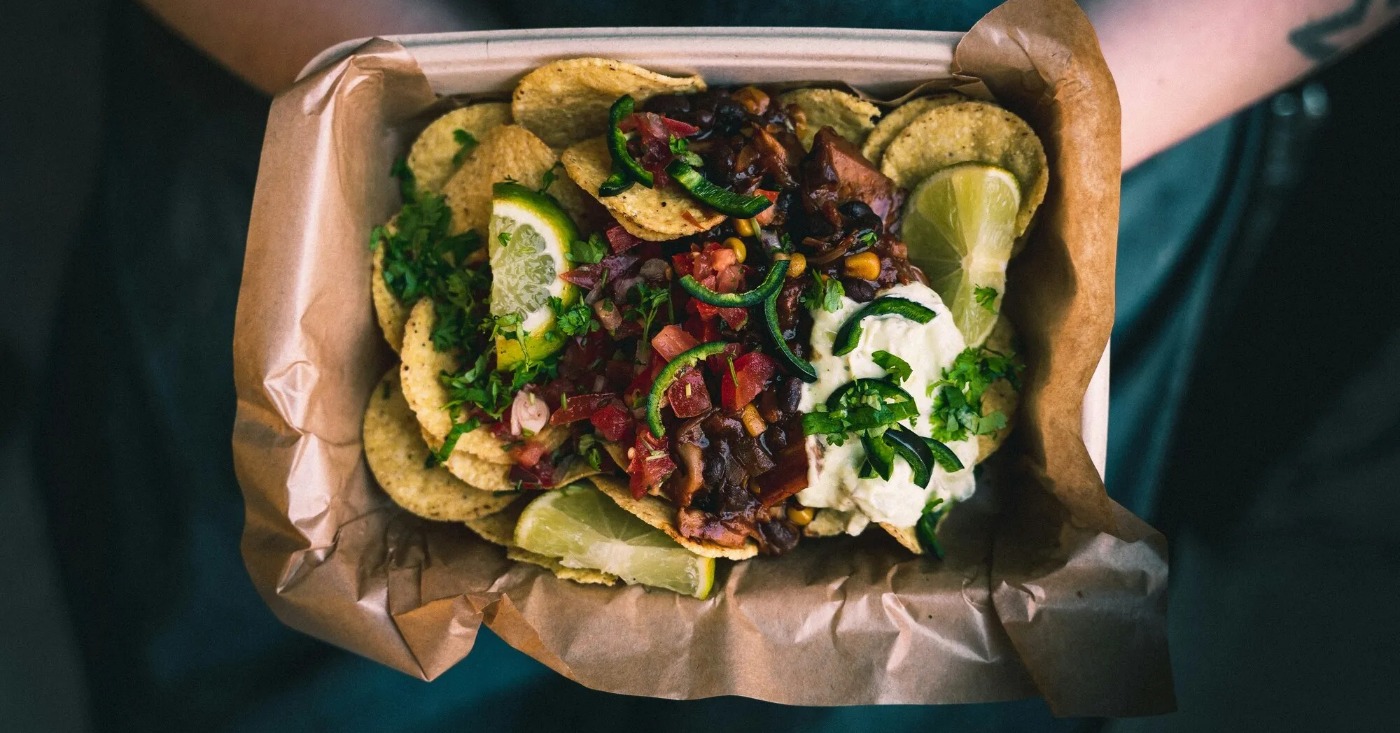
The Marin County Board of Supervisors adopted a three-year pilot program that will allow cooks and food entrepreneurs to prepare and sell meals from their homes on Sept. 29
The Microenterprise Home Kitchen Operation program, or MEHKO, will establish a permitting process for small-scale home food businesses. California state law allows licenses if local governments opt in.
“This will deliver immediate financial relief to entrepreneurs in areas like Marin City, West Marin and the Canal neighborhood, removing barriers right where economic opportunity is needed the most,” said Shannon Bell, consumer protection supervisor with Marin County Environmental Health Services, at the meeting.
MEHKO licenses fill the gap between cottage food permits, which only apply to non-potentially hazardous foods like baked goods and jams, and full commercial kitchens.
Microenterprises can serve as commissaries for up to two mobile food operations; they require food to be prepared and served the same day. They are exempt from commercial facility requirements, such as industrial grease traps and commercial stove hoods.
The program allows takeout or on-site dining with strict limits of 30 meals per day, or 90 meals per week, and an annual sales cap of $100,000.
The pilot would begin March 1, 2027, and permits would be capped at 100 per year. Application fees are $725 with an annual renewal fee of $414, but fee waivers for a third of the permits are reserved for low-income communities.
After two years, supervisors will consider making the program permanent.
“By eliminating the need for commercial leases and expensive equipment, entrepreneurs can safely test their businesses and ideas with minimal financial risk,” Bell said. According to statewide data from the Cook Alliance, 85% of MEHKO operators are women, immigrants, and people of color, and over 70% rely on this income to support their families, she said.
Bell also said unpermitted sales are already happening in areas like the Canal.
Local Vendors Seek a Legal Path
Marina Palma advocates for San Rafael’s Canal neighborhood, which is home to a vulnerable community of over 13,000 low-income residents. About 84% are Latino and roughly half of all households spend more than 50% of their income on housing.
Palma told the board that the pandemic caused many Canal residents to lose their jobs, and that’s why the neighborhood has so many vendors selling food in public. Because they have no license, enforcement actions can be harsh.
“They have really high tickets of $600, and their food has been thrown away,” said Palma.
She said MEHKO would help vendors get an official license, but she questions whether vendors will need a Social Security number and be legally in the country.
According to the home-chef’s national nonprofit Cook Alliance, MEHKO applicants need no proof of citizenship nor a Social Security number to obtain a permit.
“I’m from Mexico, and I’m one of the mobile vendors,” said Elsie Vega through a Spanish translator. “I have two jobs. Everything is pricey — house, food, everything. I am here to work hard, to pay taxes. I don’t make enough money to pay the community kitchens.”
MEHKO license holders must pass inspection under the oversight of the Marin County Department of Environmental Health Services and comply with local zoning, parking and noise ordinances.
California authorized MEHKO programs in 2019. Seventeen counties have since adopted them, including Sonoma, San Mateo, Solano, Contra Costa, Alameda and Santa Clara counties.
Other commenters who spoke in favor of the program represented a range of food system and small business organizations. They included the Agricultural Institute of Marin, which operates nine Bay Area farmers markets, the University of California Cooperative Extension, the Cook Alliance, the West Marin Food Systems Group, which coordinates farm-to-school food access, and the Marin Small Business Development Center.
Black Press
Locals Can Get Locally Grown Produce Delivered Through Urban Tilth
The standard price is $50 per week, which Urban Tilth says reflects the true cost of fresh, sustainably sourced, locally grown produce. Urban Tilth offers a subsidized “Food for All” price of $15 per week for individuals and families with extremely limited financial resources. Both options provide the same produce and service.
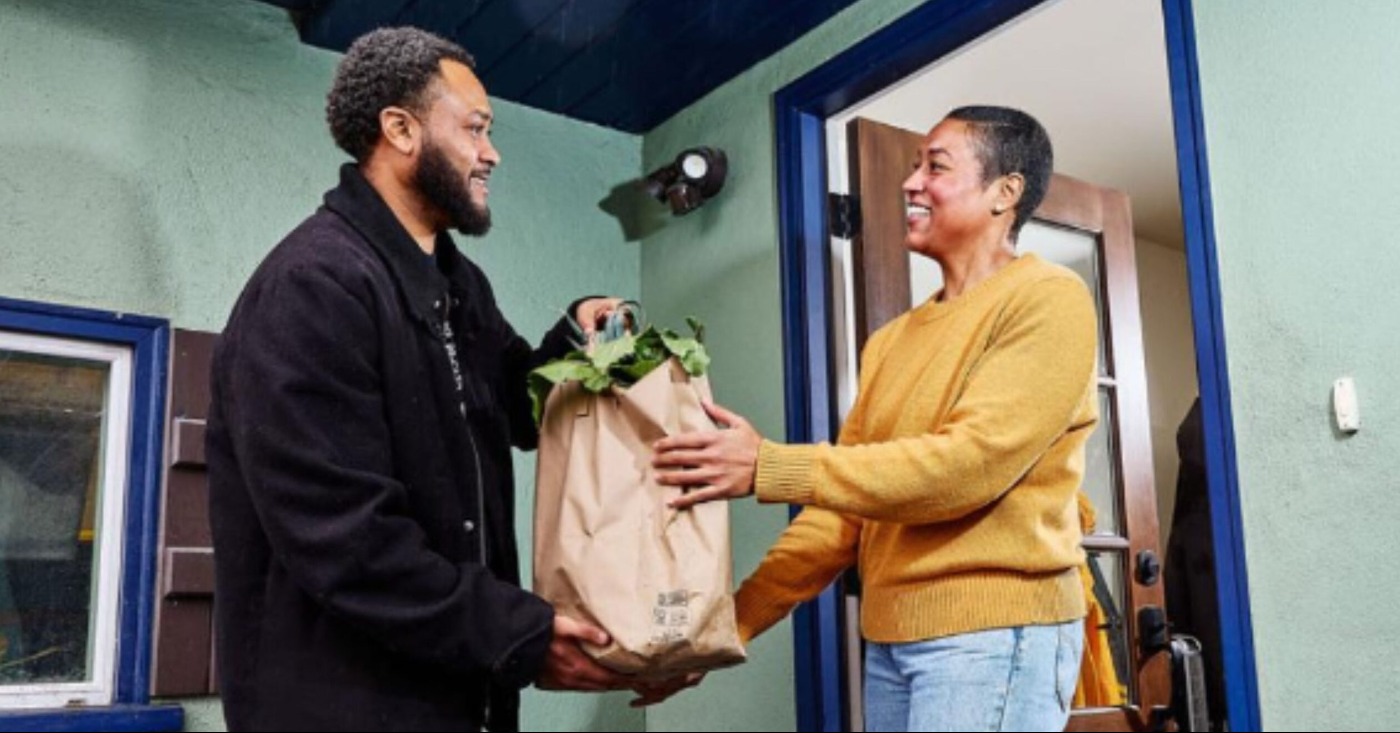
West County residents can receive locally grown produce through Urban Tilth’s Farm to Table Community Supported Agriculture (CSA) program, with home delivery and pickup options available.
Contra Costa County Supervisor John Gioia highlighted the program in his newsletter, pointing out that his district office in El Cerrito serves as a pickup location.
Weekly or bi-weekly subscriptions include seasonal greens, vegetables, fruits and herbs. Produce comes from Urban Tilth’s North Richmond Farm and farms within 200 miles of Richmond, including small family farms and those owned by BIPOC, women and LGBTQIA+ growers.
Subscriptions also support hands-on job training for local youth and volunteer opportunities.
The standard price is $50 per week, which Urban Tilth says reflects the true cost of fresh, sustainably sourced, locally grown produce. A subsidized “Food for All” price of $15 per week is available for individuals and families with extremely limited financial resources. Both options provide the same produce and service.
Gioia’s office is located at 11780 San Pablo Ave., Suite D, in El Cerrito. To sign up or learn more about pickup and delivery options, visit urbantilth.org/heal/csa.
Black Press
Students from Stonecrest Help Families Grow Food
THE CHAMPION NEWSPAPER — Two Georgia college students from Stonecrest are utilizing agriculture, technology, and community education to help families across Georgia grow their own food, even without traditional farming spaces. Mason Wright, a Morris Brown College student and founder of Plant It Georgia Vertical Institute, and Kosey Henley, a University of Georgia student, developed a mobile agricultural laboratory.
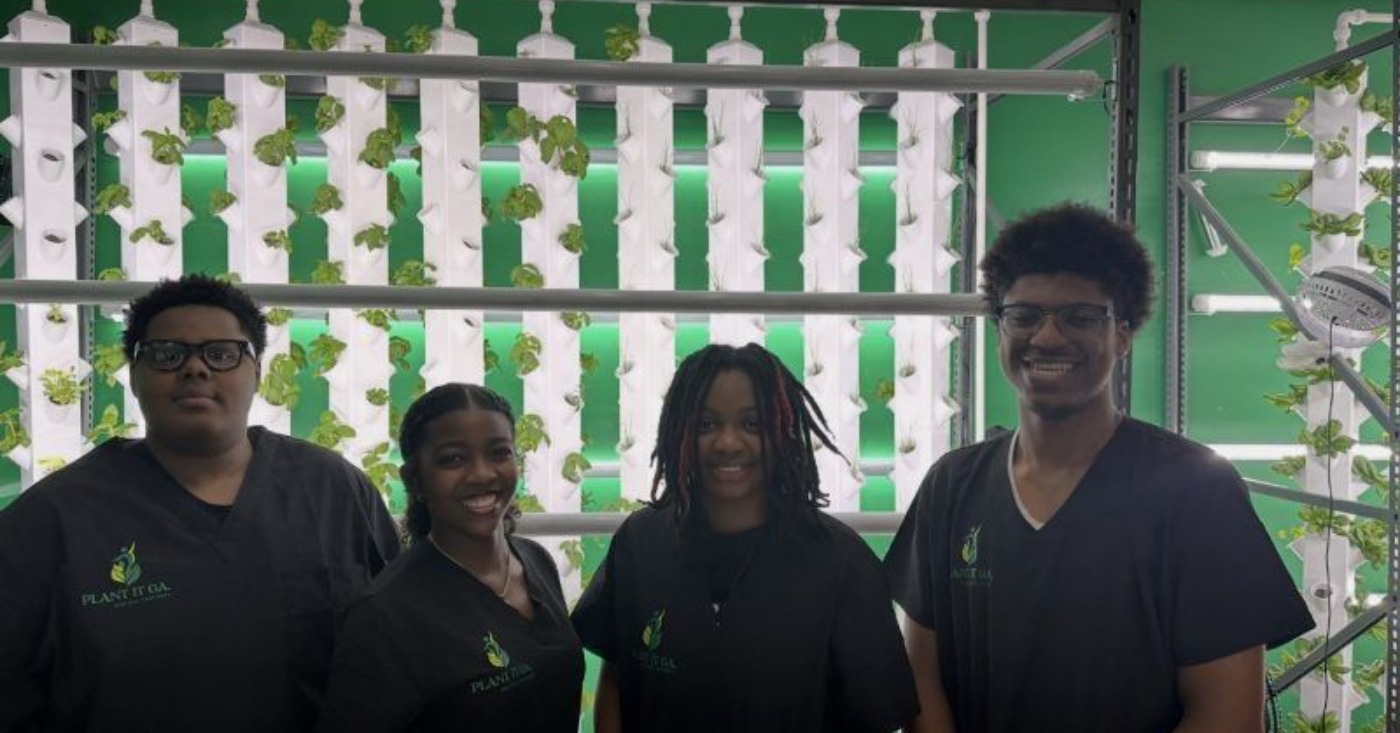
Two Georgia college students from Stonecrest are combining agriculture, technology, and community education to help families throughout Georgia grow their own food — even those without access to traditional growing spaces and equipment.
The two students recently completed the first prototype of Plant It Georgia’s mobile agricultural laboratory, which they said is an enclosed trailer equipped to introduce young people and families to growing food without relying on traditional farmland.
Mason Wright—a youth entrepreneur and a student at Morris Brown College—is the founder of Plant It Georgia Vertical Institute. The institute is an “educational initiative created to train young people in vertical farming, hydroponics, and other modern agricultural technologies,” according to Wright. Kosey Henley, a student at the University of Georgia, worked alongside Wright on the mobile lab.

The students said the idea came in response to an obstacle challenging many communities: transportation. Instead of requiring students to travel to the Plant It Georgia Vertical Institute, the program can take its lessons and growing systems directly into neighborhoods, schools, recreation centers, and other community spaces to teach students and their families about growing food in urban communities.
Inside the prototype, visitors will find hydroponic growing channels, lighting, and other equipment that show them how plants can grow in controlled environments. The laboratory aims to support hands-on lessons covering seed germination, water circulation, plant nutrition, lighting, harvesting, and the technology used to manage indoor crops, according to Wright.
The project comes as Georgia and the nation face an aging agricultural workforce.
According to the U.S. Department of Agriculture’s 2022 Census of Agriculture, Georgia had 63,492 agricultural producers, but only 4,770 were younger than 35. Nationally, the USDA counted 296,480 producers younger than 35, approximately 9 percent of all U.S. producers.
At the Plant It Georgia Vertical Institute, students are taught that farming does not always require acres of open land or heavy machinery. Vertical farming allows crops to grow upward in stacked systems while hydroponics uses nutrient-rich water instead of soil to feed the plants. These tactics make food production possible in classrooms, buildings, trailers, and densely populated urban communities, according to Wright.
Plant It Georgia’s growing systems can cultivate lettuce, tomatoes, collard greens, peppers, and a variety of culinary herbs, according to the news release. Students are taught the entire growing process — from placing seeds into starter materials and monitoring water and nutrients to caring for mature plants and harvesting fresh produce.
The program also introduces participants to careers connected to agricultural technology, plant science, environmental sustainability, food systems, and entrepreneurship.
Wright’s role as a Morris Brown College student and founder represents the connection between HBCU leadership, entrepreneurship, and community service, according to a news release. Wright also made headlines for opening Mason’s Super Dogs in Stonecrest in 2020 — which he now also operates on the Atlanta Beltline’s Eastside Trail. Henley brings another important academic connection through the University of Georgia, one of the state’s leading institutions in agriculture and agricultural research, according to the news release.
For event locations and more information, follow Plant It Georgia on Instagram (@plantitGA).
13 total views
Based on reporting by The Champion Newspaper.
Art
Montclair Brewery: Brewing Culture, Community, History
THE POSITIVE COMMUNITY — Montclair Brewery, located in Montclair, New Jersey, has evolved beyond a craft beer destination into a community gathering place. Founded by husband-and-wife team Leo and Denise Sawadogo, the brewery connects its beers to African, Caribbean, and African American history and culture.
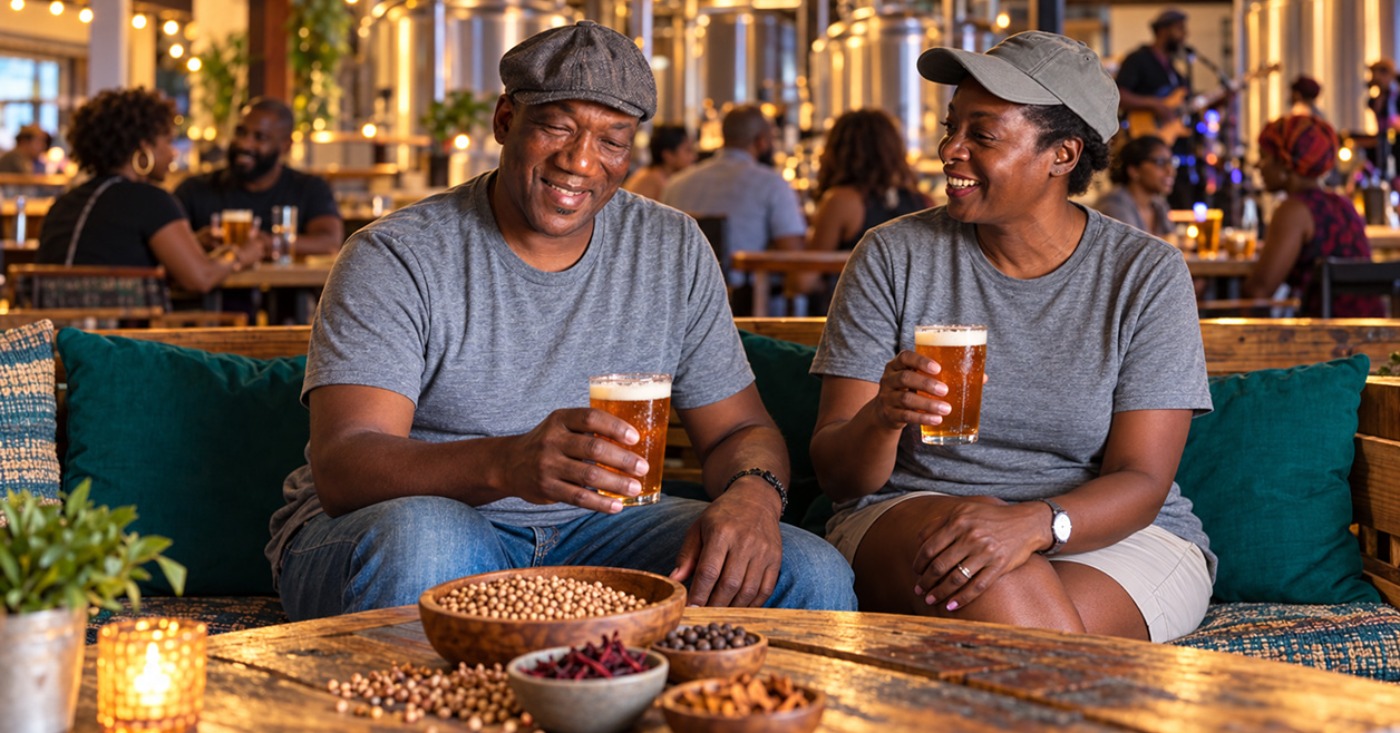
Montclair Brewery has become much more than a place to enjoy a craft beer. Located on Walnut Street in Montclair, New Jersey, the family-owned microbrewery has developed into a gathering place where beer, music, culture, history and community come together. Founded by husband-and-wife team Leo and Denise Sawadogo, the brewery has established a distinctive identity by connecting its beers to African, Caribbean and African American history and culture.
The story began with Leo Sawadogo’s passion for home brewing. Originally from Burkina Faso in West Africa, Leo grew up watching his mother brew traditional beverages using grains, herbs and spices. Brewing was part of his cultural experience long before craft beer became a major American trend. After years of making beer at home and sharing it with friends and family, Leo and Denise began imagining how they could transform that passion into a business. The company was established in 2014, and after years of planning and nearly a year of construction, Montclair Brewery opened its doors in October 2018.
The brewery represented an important milestone for Montclair because it became the town’s first microbrewery. But its significance extended beyond being a new business. Leo and Denise brought together two different cultural backgrounds: Leo’s West African heritage and Denise’s Jamaican roots. Those influences became part of the brewery’s personality and, importantly, part of the beers themselves. Instead of treating culture as something separate from the business, the couple made it an essential ingredient in their approach to brewing.
One of the brewery’s most distinctive traditions is its annual Black History Month beer series. These beers are often inspired by prominent figures, historical events and cultural traditions. Over the years, the brewery has created beers honoring people such as Harriet Tubman, Larry Doby, Maya Angelou, Chadwick Boseman and journalist Gil Noble. The brewery has also used its beers to celebrate African heritage and important moments in Black history. In 2026, for example, its series included beers inspired by Patrice Lumumba and Larry Doby.
The story behind each beer is almost as important as the beer itself. Montclair Brewery demonstrates how food and beverages can become vehicles for storytelling. A beer named for Larry Doby can introduce customers to the history of the baseball pioneer who broke the American League’s color barrier and later made Montclair his home. A beer inspired by Patrice Lumumba can encourage people to learn about African independence and the history of the Democratic Republic of Congo. In this way, the brewery turns a visit to a taproom into an opportunity for cultural discovery.
Montclair Brewery has also connected its business to local history. One example is the Howe House, one of Montclair’s historic homes associated with the town’s African American history. The brewery created a Belgian-style ale honoring James Howe and committed a portion of sales from the beer toward efforts to preserve the historic property. This illustrates a larger philosophy behind the brewery: its identity is not simply based on selling beer, but on using the business as a platform to recognize people, places and stories that deserve greater attention.
The brewery’s importance also comes from its role as a community gathering place. Its taproom offers indoor and outdoor seating and hosts a variety of events and activities. Music, entertainment, cultural programs and community gatherings have helped make the brewery part of Montclair’s social landscape. During the COVID-19 pandemic, when gathering in public spaces became difficult, the brewery adapted its business model by shifting toward bottling and outdoor operations. Its ability to adapt helped it survive a period that was devastating for many small businesses.
Another important part of Montclair Brewery’s story is representation within the craft-beer industry. Black-owned breweries remain a small portion of the American craft-brewing landscape, making the visibility of businesses like Montclair Brewery particularly significant. Denise has also become an important voice for women in the brewing industry, while Leo’s background and approach have helped challenge traditional ideas about who a brewer is supposed to be. Together, they demonstrate that the craft-beer industry can reflect a much broader range of cultures and experiences.
The brewery’s success has also allowed its reach to extend beyond Montclair. Its beers have received attention from regional and national media, and the company has participated in collaborations with other breweries and cultural organizations. One collaboration celebrated the 50th anniversary of hip-hop with the legendary DJ duo Awesome 2. Other beers have incorporated ingredients such as baobab fruit, sorghum and spices connected to African and Caribbean traditions. These collaborations and unusual ingredients help distinguish Montclair Brewery from breweries whose identities are based primarily on conventional beer styles.
Ultimately, Montclair Brewery represents an example of how a small business can become part of the cultural fabric of a community. Leo and Denise Sawadogo created a brewery from a personal passion, but they built something larger than a place to drink. Their beers tell stories about Africa, the Caribbean, Black America and Montclair itself. The brewery demonstrates that entrepreneurship can preserve history, celebrate culture and bring people together. In Montclair, every pint can become part of a larger conversation about heritage, creativity, community and the continuing evolution of Black-owned businesses in America.
Based on reporting by The Positive Community.
Black History
Tradition Comes to the Streets in 11th Annual Black-Eyed Pea Festival at the Freedom Farmers Market
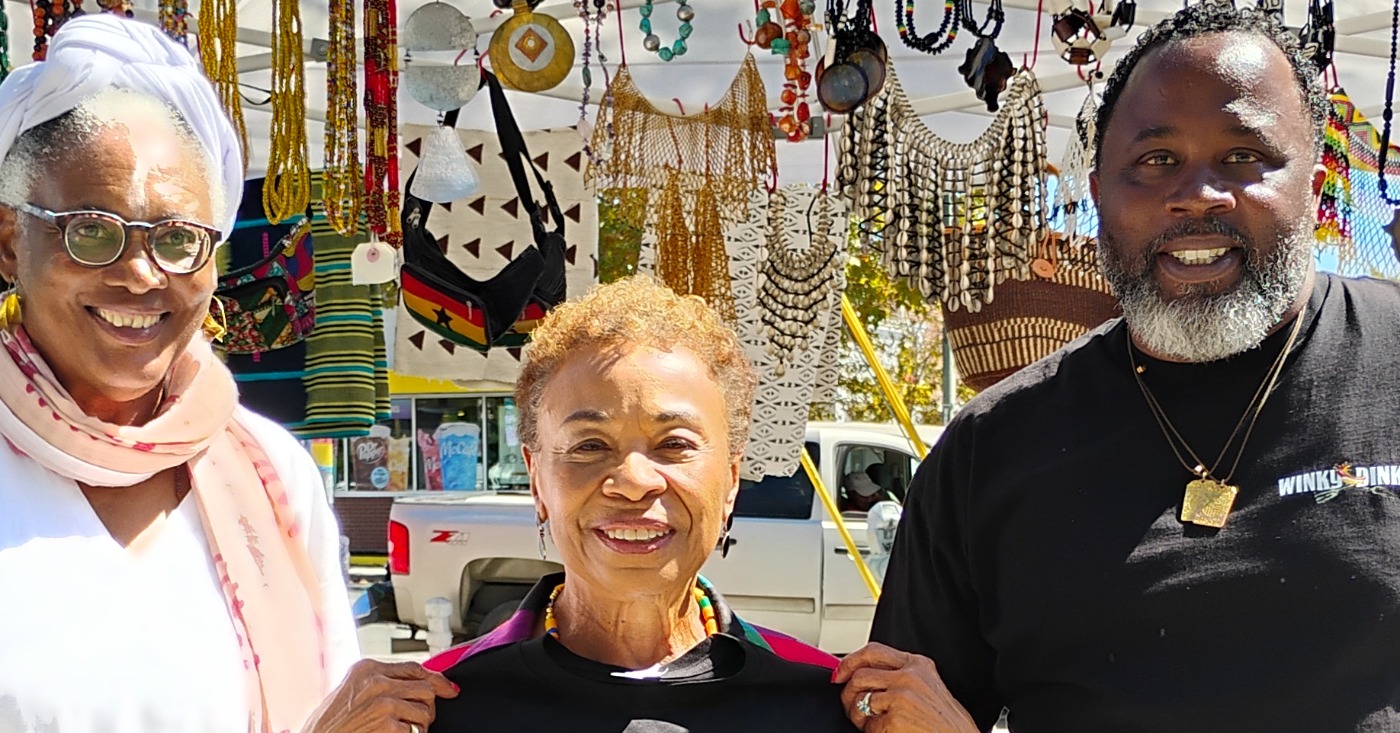
Mayor Barbara Lee stops by to support vendors, Winky Dinky Dogs owner Tyranny Allen
A streamlined Oakland Black-Eyed Pea Festival took place on Sat. Sept. 12 in the lower Temescal neighborhood on the blocked off street that connect Shattuck and Telegraph avenues.
An early start brought together vendor regulars from festival partner, the Freedom Farmers’ Market, and vendors who have supported the festival at its previous location at Marston Campbell Park.
Wanda Ravernell, the festival producer/director was on the verge of cancelling the festival because of funding limitations in May before reaching out to Elaine Smith, president of Farms to grow, Inc., which supervisors the market.
From its start in 2014, the festival has focused on the traditions of African American culture through music, food and art. That emphasis included fresh food vendors, particularly growers of African American legacy crops like black-eyed peas, yams, watermelon, collard greens and okra, which all originate in Africa.
To Fresno farmer Will Scott of Scott Family Farms, the Freedom Farmers’ Market allows him to bring those crops to the inner city – and support the nutrition of African Americans.
Shortly after the festival opened Saturday morning with prayers and salutes to the ancestors by Wakan Wiya Two-Spirit Drum and Awon Ohun Omnira, led M. Zamora and Otobaji Stewart respectively, 86-year-old Scott, the son of a sharecropper, announced that he will put other endeavors aside to dedicate the rest of his life to raise those foods.
Smith shared that Farms to Grow assists Black farmers in helping them overcome one of their main impediments to success – distribution – while creating alliances to help Black people maintain farmland and make it prosperous for younger generations to keep farming and farmland in the family.
As the morning progressed to afternoon, a steady stream of visitors drifted from booth to booth, chatting with vendors and each other.
Scott noted that a market day like this was what he was accustomed to in his youth, where the market was not just about buying things but also a place for valuable social exchange.
The social aspect became even pronounced shortly after midday when Oakland Mayor Barbara Lee stopped by to shop and visit with some of the vendors, including Ellen Bimpeh of Sankofa, and Ravernell who was selling T-shirts designed by Stewart.
Lee is also a fan of Winky Dinky Dogs, an eatery owned by Tyranny Allen whose second brick-and-mortar venture further anchors a hub of businesses at that corner.
As he has in previous years, Andre Thierry of Accordion Soul, closed the festival with a 90-minute set that brought young and the young-at-heart on their feet to dance in a line or as impromptu couples.
And, surprisingly, the man Allen refers to as the mayor of 45th Street, came out on cane and chair to sit by the curb in the sun and listen to music reminiscent of his Louisiana roots. His appearance seemed to echo Scott’s observance about the market: to bring people together.
The Freedom Farmers’ Market is located at 4521 Telegraph Avenue in Oakland and is open on the second and fourth Saturdays of each month until Nov. 14. For more information and to apply to be a vendor, go to https://www.farmstogrow.org/freedomfarmersmarket
Art
At This Black Church Cafe, Your Brunch Helps Feed Someone Else
SEATTLE MEDIUM — A popular brunch spot inside a historic Black church in South Philadelphia is helping to revive a community soup kitchen that has served the neighborhood since the 1920s. Tindley Tea Cafe, located within the educational building of Tindley Temple United Methodist Church, draws visitors with its freshly prepared meals, live jazz, local artwork, and welcoming atmosphere.
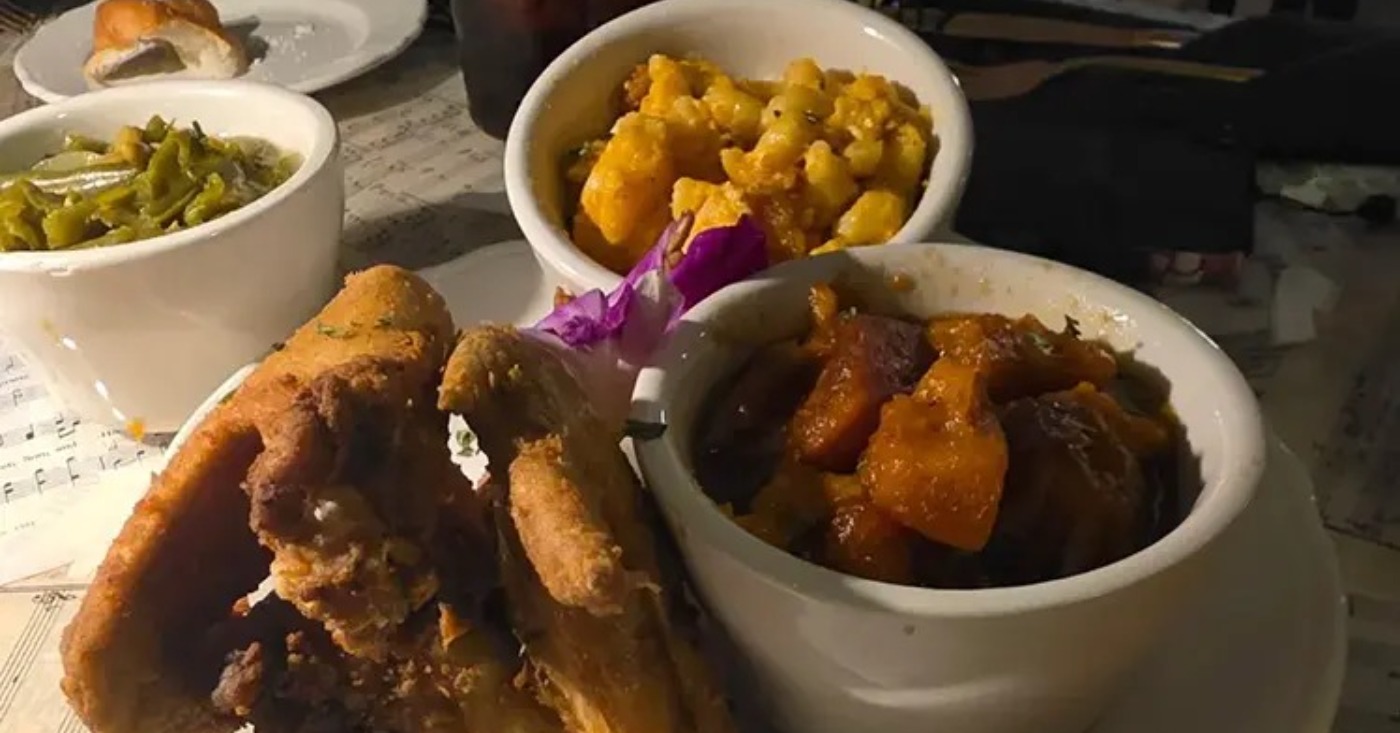
In a neighborhood where conversations about food insecurity often center on scarcity, Philadelphia’s Tindley Tea Cafe offers a different narrative: abundance with purpose.
Located inside the educational building of historic Tindley Temple United Methodist Church in South Philadelphia — named after a pioneering Black minister, scholar, and theologian — the cafe is a popular brunch destination. Freshly prepared meals, live jazz, local artwork, and a welcoming atmosphere draw foodies from across the city.
But behind every reservation, every cup of tea and every plate served is a singular mission. The profits from Tindley Tea Cafe help fund a ministry that feeds neighbors experiencing hunger.
– Advertisement –
Pioneering Namesake

Vicki Baker, business manager for Tindley Temple and a retired educator, says the cafe is the brainchild of Pastor John T. Bryce, the temple’s lead minister.
Two years ago, Bryce and church leaders realized two things about food in their community. First, they recognized that few quality, sit-down dining options existed in the neighborhood south of South Street — a majority-Black community that had suffered from underinvestment and been overlooked for decades. They also noted that hunger was a big problem in the community.
“We decided as a leadership team that we wanted to select people that we could bless in some way every month,” Baker told Word In Black in a recent interview. “So we chose those with food insecurity.”
Rather than simply opening a restaurant, Baker says, Tindley’s brain trust repurposed underused church space into a community gathering space with music, art, and food good enough to entice Philadelphia’s foodies. It then paired that enterprise with a mission to provide free, high-quality meals to the hungry—what could be called the church’s “food ministry.”
We decided as a leadership team that we wanted to select people that we could bless in some way every month. So we chose those with food insecurity.”
Vicki Baker, Business Manager, Tindley Temple
– Advertisement –
“Tindley Temple’s soup kitchen actually started in the 1920s under Dr. Tindley and had run continuously until the pandemic,” Baker says, referring to the church’s program to feed the homeless and food-insecure. “We wanted to bring it back, and one of the ministries the cafe supports is that soup kitchen.”
Proceeds from Tindley Tea Cafe help support the church’s twice-weekly soup kitchen, which resumed full operations after the pandemic and now serves dozens of people each Tuesday and Thursday evening. The ministry has expanded through partnerships with local organizations, grants addressing food insecurity, and a growing network of volunteers who sign up online to prepare and serve meals.
Art, Jazz, Legacy
The cafe itself reflects the church’s commitment to community.
Artwork showcases Philadelphia artists, and tables feature musical scores honoring the legacy of Tindley, a formerly enslaved man who taught himself scripture and wrote hymns. Visitors often arrive because they’ve heard about the food, only to discover the history of one of America’s most remarkable pastors and influential Black churches.
That history continues to grow. Tindley Temple recently completed construction of the Charles Albert Tindley Legacy Preservation Center, an archive and exhibition space designed to preserve nearly two centuries of church history while introducing new generations to Tindley’s life and ministry.
Word In Black’s interview with Baker has been edited for length and clarity.
Word in Black: What’s your position with the cafe?
Vicki Baker: So I am the business administrator, business manager for the church. So I do a little bit of everything, in everything. I don’t run the cafe, but through the beauty of technology, the church’s phone rings on a special phone that I have, so we never have to miss a call. I do get a lot of calls for bookings at the cafe or even if people just want a reservation.
WIB: How did the idea for Tindley Tea Cafe come about?
Baker: About two years ago the cafe opened. When Pastor John [Bryce] looked at what was available in South Philadelphia as far as eating establishments, we found that when you got south of South, there weren’t a lot of places. We thought this is an area where we could provide service.

The building that it’s in is the educational building. It was built in 1964. The floor where the cafe is was the general meeting room. Pastor Bryce and First Lady Ebony [Brice] really had the vision. They painted, brought in artwork from Philadelphia artists, and created a very comfortable space. It’s become a place for jazz, poetry, community meetings, worship and so much more.
WIB: Who’s doing the cooking? My foodie friend said the food was fabulous.
Baker: We have a team that works. There are two or three chefs, depending on the day, and sous chefs that do the prep. Food is made to order. It’s not pre-done or reheated or bought. They fix the food there and serve it.
WIB: Tell me how the cafe funds are used for the community.
Baker: We decided as a leadership team that we wanted to select people that we could bless in some way every month. So we chose those with food insecurity. The soup kitchen actually started in the 1920s under Dr. Tindley and had run continuously until the pandemic. We wanted to bring it back and one of the ministries the cafe supports is that soup kitchen.
WIB: How did the church rebuild the soup kitchen ministry?
Baker: When the [city transit] strike was being threatened and SNAP benefits were changing, we decided to push up our timetable to reopen the soup kitchen because we knew there would be a need.
We partnered with Broad Street Love to learn best practices. Through them we connected with Carversville Farm, which delivers meat and vegetables every week. Then the chef figures out the menu based on what arrives. We also received a grant from the District Attorney’s Office for food insecurity, which has helped us augment the ministry.
WIB: What would visitors see today that reflects Bishop Tindley’s legacy?
Baker: The soup kitchen is still his legacy. During his time, there was a soup kitchen, a clothes closet and people even slept in the sanctuary during the Depression and the Great Migration while they got established.
We’ve also just completed construction on the Charles Albert Tindley Legacy Preservation Center. We received a grant to build an archive and exhibition center. We have nearly 100-year-old artifacts that are now being preserved in a temperature- and humidity-controlled archive. We hope to open it in the fall so people can learn about Tindley’s life and the church’s history.
WIB: Why is it important to keep telling Charles Tindley’s story?
Baker: “Our children need to hear these stories because many of them don’t know who they are or who they’ve come from. They hear about famous people who hit it big, but they don’t always hear about the work and grit.
Charles Tindley taught himself to read and write. He taught himself Greek and Hebrew. He was born free, but because his mother died and his father was enslaved, he lived as a slave. That’s an amazing story. There’s nothing God can’t do. We want to keep telling that story.
Based on reporting by Seattle Medium.


Mayor Lee Delivers 2026 State of the City Address: ‘Oakland Continues to Be on the Move’

Oakland Awarded More than $14 Million in State Funding

Jendayi Arrest Raises Community Concerns Regarding Sheriff’s Chain of Command

Marin County Supes Expand Small Business Options with Home Kitchen Pilot Program

Allen Temple Baptist Church Hosts Free Prostate Cancer Screenings on Oct. 17

AC Transit Labor Unions Back Director Joel Young

Locals Can Get Locally Grown Produce Delivered Through Urban Tilth

‘ICE-Free Marin’ Supporters Press Supervisors as County Drafts Enforcement Restrictions

Sherrell Dorsey on Tech, Black Innovation, and Impactful Businesses

Community-Centered Business: Adapting to Support a City in Need #shorts

The Youngest American Killed in the Vietnam War

Latest Massacre in Haiti Reveals Cruelty U.S. Deportations

OPINION: Nolan Wells’ Death One of Several Signifying Racial Terror Lives on in U.S. South

Passing for White, Fighting for Black America: The Courage of Walter White

OP-ED: If AI Is the New Language of Power, Then NAN Wants Black Communities Fluent

OP-ED: Haiti TPS: Have We Lost Sense of Humanity?

OP-ED: How Does Your State Rank for Pre-K?

Henry O. Flipper: A Trailblazer at West Point and Beyond

Asm. Smallwood-Cuevas’s Bill Repealing ‘Racist’ CalWORKs ‘Man-in-the-House’ Rule Clears Legislature

NBA All-Star Damian Lillard Returns Home for 15th Annual Backpack Giveaway
Sherrell Dorsey on Tech, Black Innovation, and Impactful Businesses
Community-Centered Business: Adapting to Support a City in Need #shorts

The Conversation with Al McFarlane

Serve First: The Secret to Life and Business Success #shorts

Denise Upshaw – Founder, Black Houston Creative Network

Houston advocates breakdown Black voter fatigue

Digital Rearview Mirror Test: Blind Spots & Camera Views #shorts

HE SAID, HE SAID, HE SAID, Separating Fact, Fear, & Freedom w/ Allen Orr, FRI. 2.22.26 7PM EST

Hot Girl Walk at Sabathani Community Center | Ernestine Belton Playground | MSR

NEW INVESTIGATION INTO FEDERAL RESERVE GOVERNOR
-

 Black Press1 week ago
Zakiya Jendayi Arrested, Locked Out of Home by Sheriff’s Deputies
-

 Black Press1 week ago
A $2.1 Trillion Wellness Industry Never Built a Daily Practice for Black Children. So This Atlanta Family Did.
-

 BlackPressUSA5 days ago
Latinas Deserve Equal Pay. Unions Help Make It Happen.
-

 Art1 week ago
Montclair Brewery: Brewing Culture, Community, History
-

 Black History1 week ago
Listening as a Lifeline: A Doula’s Witness to Black Maternal Health
-

 Black Press1 week ago
COMMENTARY: But God!
