
Commentary
FILM REVIEW: What Men Want
NNPA NEWSWIRE — Twenty minutes into it, the outrageous sight-gag sex scenes, flippant dialogue and over-the-top performances yank the old premise firmly into the 21st century with a brand of humor fans of Bridesmaids will enjoy. There isn’t one subtle comic turn in this entire film. That gives Henson a chance to show her Tiffany Haddish side, which is more than willing to do anything to make viewers laugh.


By Dwight Brown, NNPA News Wire Film Critic

Taraji P. Henson in What Men Want from Paramount Pictures and Paramount Players.
It’s about time Taraji P. Henson, after a string of B-movies (Proud Mary, Acrimony), rocked a bonafide comedy. On talk shows her innate sense of humor is evident. On the big screen (Hidden Figures, The Curious Case of Benjamin Button) and small one (Empire) she’s built a solid, award-winning rep in drama. Now she’s digging into ribald humor and has surrounded herself with the right producers (Girls Trip), director (Adam Shankman, The Wedding Planner, Hairspray), screenwriters (Tina Gordon, ATL; Peter Huyck, Veep) cast and crew. If most of the ingredients are right, the cake will turn out just fine.
The source material for this flagrant, shameless comedy is What Women Want (2000), directed by Nancy Meyers and starring Mel Gibson. (Remember the days when he was loved?). He played a chauvinistic advertising executive who, after a freak head injury, could hear what women thought. He used that advantage to rally against a female exec who got a promotion he wanted. In the process he learned life lessons. Hold that thought.
Fast forward 19 years. Ali Davis (Henson) is a top agent at an elite sports management firm. She drives a Porsche (leased), has an overly-attentive assistant (Josh Brener, The Front Runner), whom she treats like a dog and a bevy of girlfriends (Tamala Jones, Wendi McLendon-Convey, Phoebe Robinson) she counts on for moral support. Ali needs all those trappings if she is to survive the constant stream of disappointments and derision she encounters with her male peers at Summit Worldwide Management.

Josh Brener and Taraji P. Henson in What Men Want from Paramount Pictures and Paramount Players.
The source of Ali’s biggest frustration is that she can’t make partner and is constantly over-looked by her boss Nick (Brain Bosworth, former Seattle Seahawk), who stifles her: “You don’t connect well with men. You do well in your lane. Stay in your own lane.” Even though she handles top star athletes like Lisa Leslie and Serena Williams, her achievements are marginalized by her colleagues.
The agency is trying to land the next big basketball draft pick, a skinny talented young player named Jamal Barry (Shane Paul McGhie). That’s the easy part. He’s managed by his pushy, stage-dad, health-freak father Joe “Dolla” Barry (Tracy Morgan), who is a pain in the ass. That’s the difficulty. The agent who signs Barry will be the next hot shot at Summit. Can Ali take the crown?
What Women Want, was a genteel, safe romantic comedy. What Men Want, is not. Twenty minutes into it, the outrageous sight-gag sex scenes, flippant dialogue and over-the-top performances yank the old premise firmly into the 21st century with a brand of humor fans of Bridesmaids will enjoy. There isn’t one subtle comic turn in this entire film. That gives Henson a chance to show her Tiffany Haddish side, which is more than willing to do anything to make viewers laugh.
Tucked into the debauchery are moral-to-the-story subplots that are somewhat touching. Ali’s romance with the hunky bartender Will (Aldis Hodge, Straight Outta Compton) involves his young son Ben (Auston John Moore) and Ali’s selfish deceit. Her egocentric antics test her friendship with her girlfriends. And, the way she treats her assistant Brandon, who is gay, goes from patronizing and vile to dehumanizing. Ali’s got issues. Lots. And when she’s being introspective, she admits it: “Winning doesn’t matter if you’re a horrible person.”

Erykah Badu and Taraji P. Henson in What Men Want from Paramount Pictures and Paramount Players.
The inciting incident that changes her trajectory comes when she meets a weird psychic named Sister (Erykah Badu) who gives her a cup of a magical, drug-laden tea. The mysterious potion, along with a head injury, makes Ali hear what men are thinking. As she hones this new talent, she picks up the hidden feelings of her fellow workers (no wonder they never invite her to their weekly poker game), her assistant (he really wants a promotion) and even her supportive dad (Richard Roundtree).
The script was developed by writers whose wheelhouse is sitcoms, so this modern tale is told in broad strokes. If you’re looking for a demented and sophisticated comedy (The Favourites), look elsewhere. Every situation here is meant to make the targets (urban and female audiences) laugh until they lose bladder control.
Initial scenes lack the kind of dazzling cinematography (Jim Denault) audiences expect from a motion picture, making sets and exterior scenes look like they belong on a TV show. Certainly, Shankman’s unimaginative direction (too many scenes are shot in rooms, offices, cars) lacks the style and creativity top feature film directors display.
The better tech elements belong to: Sekinah Brown’s (Ride Along) costume design; Emma E. Hickox’s (Kinky Boots) judicious editing, which after a few initial slow scenes, makes the footage breeze by in 1hr and 57min; Brian Tyler’s (Iron Man 3) fun musical score is aided greatly by a hip playlist with vibrant songs like Jill Scott’s very upbeat and cool tune “Golden.”
Tracy Morgan is clearly in his element as the dodo-brain dad. Can’t tell how much of his dialogue is based on the script or improvised, but fair to say he’s never been funnier. The girlfriend trio is quite humorous. SNL’s Pete Davidson milks laughs as a lecherous officer worker. Hodge may be the new Morris Chestnut. And it is a gift whenever Richard Roundtree appears in a film.

Taraji P. Henson, Auston Moore and Aldis Hodge in What Men Want from Paramount Pictures and Paramount Players.
Back to Henson. Given the chance, in a decently thought-out and developed comedy, she ups her game. Her Ali is manic and bossy with her assistant (bordering on distasteful), deceitful with her paramour, insensitive to her gal pals and able to stand up to the brutal, self-entitled co-workers who play her for a wuss. The scattered string of emotions and feelings don’t stump Henson. She towers over all the other cast members with her bravura performance.
Except, the scenes in which she deals with the very enigmatic Sister. Somewhere hidden under a gigantic wig that would even embarrass Diana Ross, lurks the very shrewd and hysterical Erykah Badu, who portrays the psychic who launches Ali’s outer and inner trek to salvation. Smug, ethereal, dizzy and flaky as a pothead, the “Tyrone” singer displays an astute comic nature that equals Henson’s.
Girls Trip is the alpha raunchy female comedy. What Men Want is not as strong. But it grazes that high standard thanks to Taraji P. Henson’s over-the-top performance.
Visit NNPA News Wire Film Critic Dwight Brown at DwightBrownInk.com and BlackPressUSA.com.










Black History
COMMENTARY: Bring on the Positive Calvary
SEATTLE MEDIUM — Dr. E. Faye Williams addresses the exhaustion many Americans feel following two years of political hostility, corruption, and systemic bigotry.

(Trice Edney Wire)—Like Amy Acton, candidate for Governor in Ohio and Dr. Abdul El-sayed for U.S. Senate in Michigan, the Positive Calvary really is coming soon! Aren’t we all tired of the negative past two years we’ve experienced in the U.S.? Aren’t we tired of the atrocious accusations being thrown around, the filthy language, lies, unending corruption, hatred, racism, sexism, Islamophobia, and bigotry of all kinds. This election season has been worse than ever! I’m sick and tired of women’s names being dragged through the mud—as mine, and others have been out of hate and jealousy. I’m tired of so many people being reluctant to support women. Let’s be the ones to stop this
I’m ready to hear in detail what candidates are ready to do to win the upcoming elections and give help to the people in need—and there are a lot of things from which to choose!
My prayer is that candidates will stop bickering and just tell us what they’re planning to do to help to bring us out of this abysmal situation we’re in now. Instead of spending so much time being shocked by what the highest elected man in the land is saying and doing, let’s concentrate on how to put up guard rails for him when we vote We already know more than enough about what he has said and done. Let’s pledge to elect leaders who’ve shown they care about the people they campaign to represent. There are a lot of good candidates out there who are being overshadowed by the bickering
Let’s not leave everything to elected leaders. As community activists, Get Out the Vote workers, religious leaders and all the good people around us. Show the way to a better nation to all around us. Let’s concentrate on what we are going to do to help people in need. Let’s work on plans to make their lives better. Let’s pledge to get along with our neighbors at home, and our neighbors in Canada, our friends in Ukraine and stop being led by someone who hangs out with those set on disrupting our system of democracy. Ignore the wrecking balls who are more interested in tearing down monuments and praising themselves, supporting evil with lies and unbelievable positions on good people, those who are destroying our military and using government and our taxes on evil things.
Let’s call out corruption, but don’t participate in it. Let us ignore lies about good candidates at all levels. Let’s support the left out. Jamie Davis, a Black man in Louisiana, is a leading candidate for the U.S. Senate. We don’t have to live in Louisiana or be a Democrat or a farmer to support him when you see how much trouble the person running against him is dealing with something people don’t want.
We can vote across party lines when that candidate has expressed the good things she/he will work for when elected. Never mind that in this case she has an R after her name. I know Monique Appeaning in Louisiana who worked in my campaign for Congress when she was a very young woman. I missed winning by a few votes to become the first Black woman to represent my home state in Congress. Forty years later, there has still been no Black woman in the Louisiana delegation. Monique has chosen to pick up the challenge and give my hope life so that other young Black women can have hope in refusing to allow any good thing to be beyond their reach
You know right from wrong, so don’t be afraid to vote for what’s right in a few days. Always promote good. Dr. Abdul El-Sayed and Amy Acton deserve your vote if you are in Ohio or Michigan. Yes, you know right from wrong, so do what’s right wherever you are.
Based on reporting by Seattle Medium.
Black Press
Message from the Associate Editor: Blindness, Hurts, Cops
HOUSTON DEFENDER — Reports regarding Philadelphia Eagles quarterback Jalen Hurts have raised serious concerns about the treatment of Black athletes after it was revealed he played through a medical emergency. According to team reports, Hurts was hospitalized until 4 a.m. with a blood clot prior to a Week 5 game in London, yet he was allowed to play the entire game and endure international flights.

The Jalen Hurts saga hurts
The disturbing reports surrounding Philadelphia Eagles quarterback, Houston-born Jalen Hurts, raise a troubling question: How much is a Black athlete’s life worth when winning is on the line? According to reports, the Eagles knew Hurts had a blood clot after he was hospitalized until 4 a.m. before the team’s Week 5 game against Jacksonville in London. Nevertheless, he played the entire game and endured international flights before doctors discovered the clot had progressed to deep vein thrombosis and bilateral pulmonary emboli. He was placed on blood thinners and injured reserve (out for the season). Sports medicine physician Jesse Morse warned that migrating clots could cause a fatal pulmonary blockage, heart attack, or stroke. Pulmonologist Matthew Gordon acknowledged that blood clots can be catastrophic or fatal. Beyond the medical questions, this episode reflects a disturbing American tradition: Treating Black bodies as expendable commodities. From slavery to exploitative labor practices and generations of dangerous sports, Black people have repeatedly been expected to sacrifice their well-being for others’ profits. The NFL’s predominantly Black workforce is literally “fieldhands” making their wealthy “owners” wealthier, giving serious plantation vibes. What’s crazy is, Hurts could have died. And if he had, the Eagles would have simply put another Black body to work and kept it moving.
Blind by choice
Recently, a Black woman conservative social media influencer was physically removed from a Ken Paxton voter event. And as she fought back tears, after being “dog-walked” out of the building, she kept asking, “Why?” She told her followers that she has been a faithful supporter of Donald Trump and the entire Republican ticket. She said she not only voted for Trump and crew, but also organized and volunteered for them on various campaigns. Before she got to the event, she went live on social media, bubbling with excitement about supporting Paxton, which is crazy, because no one is excited about supporting Paxton. But her MAGA-fest was abruptly ended as her live-stream followers saw her suddenly teary-eyed, being led out of the event space. “And there’s no one I can talk to about this,” she asked her exit escort, dumbfounded. She then shared with her MAGA followers, “Someone just came up to me and said Ken Paxton’s campaign manager wanted me to leave… I drove two hours to get here, and I have done nothing but support everyone on the Republican side. And this is how I get treated? I cannot believe the disrespect that I was just given.” Blackfolk in the comments section couldn’t believe that soul sister couldn’t understand what was happening. But you, if she’s been willing to play blind and support one of the most anti-Black regimes in history, and organize for a party that has gone out of its way to disrespect every ounce of Black existence, then I can understand why she couldn’t see their disrespect of her Blackness. But since she’s already given her soul to anti-Blackness, you best believe she’s still voting for Paxton. In fact, she literally said so.
Mecklenburg racist police competitions
It’s old news by now that several Charlotte-Mecklenburg cops sent text messages to each other, degrading Black people with the N-word and racist jokes, celebrating their open competition to see which racist-ass officer could pull over, harass, and even inflict the most bodily harm on Black motorists. Their Klan-ish fun and games had zero to do with Black people breaking the law. It was just white cops making a sport out of terrorizing Black people, using the authority of the state and their literal license to kill to torture Black people emotionally and physically. And they used Flock cameras to help them with their fun and games. But what’s older news is the fact that these are the very actions Blackfolk have been pointing out from cops for centuries. These six cops got caught via text messages. But police in every city and state routinely take this same approach to law enforcement.
Based on reporting by Houston Defender.
Black Press
When Your Faith Is Put to the Test
THE POSITIVE COMMUNITY — Reverend J. Loren Russell explores the profound challenges of maintaining faith during seasons of unexpected adversity through the biblical narrative of Job. Despite being a man of integrity who feared God, Job suffered the sudden loss of his wealth, his ten children, and his physical health.

Scripture: Job 1:20–22; Job 42:5 (NKJV)
Job 1:20–22: Then Job arose, tore his robe, and shaved his head; and he fell to the ground and worshiped. 21 And he said: “Naked I came from my mother’s womb, And naked shall I return there. The Lord gave, and the Lord has taken away; Blessed be the name of the Lord.” 22 In all this Job did not sin nor charge God with wrong.
Job 42:5: “I have heard of You by the hearing of the ear, but now my eye sees You.”
Have you ever experienced a season when everything seemed to go wrong, even though you were doing your best to live faithfully before God? Have you ever prayed, served, sacrificed, and trusted God, only to find yourself facing circumstances you could not understand? If so, you are not alone. The story of Job reminds us that faithfulness to God does not exempt us from adversity, but adversity does not have to destroy our faith.
Job was a man of integrity who feared God and turned away from evil. He was blessed with a large family, great wealth, and an excellent reputation. Yet, in a series of devastating events, he lost his possessions, his servants, and all ten of his children. Then his own health deteriorated, leaving him physically and emotionally broken.
How could such tragedy happen to a man who was faithful to God?
Job’s story challenges the assumption that good people will never experience hardship. Sometimes we mistakenly believe that if we pray enough, obey enough, and live right, we can avoid life’s painful seasons. But Scripture never promises that believers will be spared every trial.
Faith is not measured only by how loudly we praise God when life is good, but also by whether we continue to trust Him when life becomes difficult. Job grieved deeply. He tore his robe, shaved his head, and fell to the ground in worship. His grief did not cancel his faith, and his worship did not mean he was free from pain. He brought his brokenness before God while acknowledging God’s sovereignty.
We can learn from Job that faith does not require us to pretend we are not hurting. We can cry, ask questions, and seek understanding without abandoning our relationship with God.
Job’s friends made matters worse by assuming his suffering must have resulted from personal sin. Their mistake reminds us not to judge people by their circumstances. When others are hurting, they may need our compassion more than our explanations.
Eventually, God spoke to Job out of the whirlwind. God did not provide a detailed explanation for every tragedy Job had experienced. Instead, He revealed the greatness of His wisdom and the limitations of human understanding. Job responded, “I have heard of You by the hearing of the ear, but now my eye sees You” (Job 42:5).
His encounter with God changed his perspective. He came to recognize more deeply the greatness of the One he served. He was then prepared to pray for his friends and God promised He would answer.
Sometimes God changes our understanding before He changes our circumstances. We may not receive every answer we seek, but we can continue to grow in humility, trust, and compassion.
When your faith is tested, keep praying, keep trusting, keep serving, and remember that your suffering does not define the limits of God’s greatness.
Your faith may be tested by adversity, but you can continue trusting the God whose wisdom is greater than your understanding.
Be Blessed!
Rev. J. Loren Russell is an associate minister at Goodwill Baptist Church and is the clergy officiant of the Evangelical Church of God, all in the Bronx, President/CEO of The JLR Company for Church Financial & Strategic Consulting (718-328-8096), and hosts “Matters of Faith – The Radio Show” on Monday nights from 8:00–10:00 PM on Facebook Live. Be sure to Friend “Matters of Faith” on YouTube and email us at [email protected]. Order your copy of Matters of Faith: The eBook at www.smashwords.com/books/view/993177.
Based on reporting by The Positive Community.
Black Press
Oakland Probate Dispute Raises Questions About Court-Ordered Property Transfer and Missing Notice
A legal dispute over an Oakland property has intensified following a tentative ruling that favored occupant Zakiya Jendayi, who claimed she was not properly notified before a judge ordered the property transferred into an estate. After the ruling, the estate’s administrator successfully challenged the presiding judge and requested the case be returned to the judge who signed the original transfer order. The First District Court of Appeal has now intervened to review the disqualification process and recent changes to the court docket. Read more.

Opinion and documentary analysis | Part 2 of 2
A tentative ruling found that Oakland property occupant Zakiya Jendayi had not received notice before a judge ordered its transfer into an estate.
The ruling was not final. Attention shifted to the assigned judge.
The estate’s special administrator, Phillip Campbell, invoked California Code of Civil Procedure Section 170.6 to disqualify Judge Stephanie Sato. The trial court granted the challenge Sept. 9, 2026.
Five days later, Campbell requested reassignment specifically to Judge Sandra Bean, who had signed the property order Jendayi sought to overturn.
The sequence raises questions about procedural fairness.
A Challenge After an Unfavorable Ruling
Sato’s Sept. 8 tentative ruling concluded that California’s notice requirement protected Jendayi as an occupant, regardless of whether Jendayi held a valid ownership interest.
Her proposed decision would have vacated Bean’s Oct. 8, 2025, order.
Section 170.6 permits challenges under certain circumstances. Whether Campbell’s challenge was timely was disputed.
On Sept. 14, Campbell sought Bean’s reassignment, citing her familiarity with related trust litigation, judicial economy and consistency. Jendayi opposed the request the following day.
The timing invites serious public scrutiny but does not establish misconduct.
The Appellate Court Intervenes
In Kaiser Foundation Hospitals v. Superior Court (1987), a California appellate court examined the danger of allowing litigants to learn a judge’s likely decision before seeking disqualification.
The decision also recognized that changed assignments and insufficient notice can affect when a challenge is permissible.
On Sept. 17, 2026, the First District Court of Appeal stayed the order granting Campbell’s challenge and requested briefing addressing Kaiser.
That intervention did not vacate Bean’s property order, restore the invalidated trust or conclusively decide whether Campbell’s challenge was improper.
It did place the reassignment dispute under appellate review.
Questions in the Docket
Two versions of the court docket present another unresolved issue.
A printout preserved through Sept. 15 lacked reassignment entries that appeared in a later version. The later docket listed reassignment to Bean and a clerk’s notice under Sept. 9.
The difference warrants an explanation of when the entries were created, entered and made publicly accessible.
It does not establish deliberate backdating.
Accountability Beyond an Order
Judges generally enjoy immunity from damages claims arising from judicial acts, even when serious error is alleged. That protection does not make their decisions immune from review.
Appellate courts can correct legal errors; California’s Commission on Judicial Performance can investigate misconduct but cannot reverse judgments.
For Jendayi, the central concern remains practical: How much litigation must an occupant undertake to enforce a notice requirement intended to protect participation before property rights are adjudicated?
The U.S. Supreme Court’s decision in Mullane v. Central Hanover Bank & Trust Co. underscores the importance of meaningful notice and an opportunity to object.
The record establishes contested filings, a tentative ruling and appellate intervention, not anyone’s private motives.
The public deserves a transparent, documented explanation of this consequential judicial process.
A judge’s signature should resolve a lawful dispute, not silence legitimate questions about how the decision was reached.
The case is Estate of Laura Dean Head, Alameda County Superior Court case RP20066047. Records are available through the court’s eCourt Public Portal.
Black Press
Chase Launches Fraud & Scam Prevention Month
JPMorganChase is launching Chase Fraud & Scam Prevention Month this November to help consumers protect their personal information and finances. As the holiday season approaches, the nationwide initiative provides education on avoiding sophisticated tactics used by criminals, such as phishing and impersonation scams. The program features free workshops hosted by community managers across the lower 48 states and builds on existing financial wellness efforts that have reached over one million customers. Read more to learn how these new resources and technologies aim to stop financial crimes.

New initiative builds on Chase’s longstanding commitment to fraud and scam prevention education nationwide.
NEW YORK, Oct. 19, 2026 – Scams can happen to anyone. That’s why Chase is dedicating November to helping consumers protect themselves.
As consumers prepare for the holiday season, criminals are increasingly using sophisticated tactics to pressure people into sending money, sharing personal information and making decisions they’ll later regret.
This November, JPMorganChase is launching Chase Fraud & Scam Prevention Month, a nationwide consumer education initiative designed to help people recognize common scams, avoid in-the-moment mistakes and better protect their money and personal information during the holiday season.
The initiative builds on Chase’s longstanding efforts to help consumers navigate fraud and scams through education, awareness and community-based programming. Through its financial wellness initiatives, Chase has served more than 1 million customers and continues to host more than 1,000 fraud and scam prevention workshops annually across the country.
Throughout November, Chase Community Managers will host free educational workshops in all lower 48 states, as Chase continues to expand digital resources and consumer awareness efforts focused on helping people spot scams and take practical steps to protect themselves. Programming will address scams commonly seen during the holiday season, including impersonation scams, package delivery phishing attempts, gift card scams, fake online deals and fraudulent charity solicitations.
“Scammers are constantly adapting their tactics, making education and awareness more important than ever,” said Jennifer Roberts, CEO of Consumer Banking at Chase. “For years, JPMorganChase has invested in helping consumers recognize scams, understand warning signs and feel empowered to protect themselves. Chase Fraud & Scam Prevention Month builds on that commitment by providing practical guidance that can help people make safer decisions during the holiday season.”
Fraud and scam prevention remains a key component of Chase’s broader commitment to consumer financial wellness. Through educational workshops, local partnerships and community outreach, Chase helps communities build financial confidence and stay informed about evolving fraud and scam threats. The firm also works closely with law enforcement to share scam trends and insights and help drive more effective interventions as agencies work to combat financial crime.
Ongoing Fraud and Scam Prevention Efforts
Beyond consumer education, Chase continues to invest in technology, partnerships and customer protections designed to help prevent fraud and scams before they occur.
Scam prevention is embedded throughout the customer experience, from account opening and authentication to payments and customer service interactions. Chase continues to strengthen protections across the customer journey through targeted warnings, risk-based interventions, behavioral science-informed approaches and frontline employee training. These efforts help employees identify potential scams, recognize warning signs and better support customers who may be at risk of fraud or scams.
In addition, the firm continues to invest in next-generation security tools, including expanded use of passkeys and other authentication technologies designed to help defend against phishing, social engineering and account takeover attempts, as well as Trusted Contact Person, which allows customers to designate a trusted adult who may be notified of certain transactions to help guard against potential fraud or financial exploitation.
Earlier this year, JPMorganChase also announced nearly $14 million in philanthropic investments focused on consumer awareness, real-time prevention and victim support.
For more information about Chase’s fraud and scam prevention efforts and tips, visit Chase.com/security and attend a local fraud and scam prevention workshop.
About Chase
Chase is the U.S. consumer and commercial banking business of JPMorgan Chase & Co. (NYSE: JPM), a leading financial services firm based in the United States of America with operations worldwide, assets of $5 trillion and $375 billion in stockholders’ equity as of June 30, 2026. Chase serves more than 87 million consumers and 7.5 million small businesses with a broad range of financial services, including personal banking, credit cards, mortgages, auto financing, investment advice, small business loans and payment processing. Customers can choose how and where they want to bank: 5,100 branches in 48 states and the District of Columbia, 14,500 ATMs, mobile, online and by phone. For more information, go to chase.com.
Black Press
COMMENTARY: Valarie Bachelor and Jennfier Brouhard are Excellent School Board Members and Deserve to Be Reelected
The Oakland Unified School District recently achieved a major milestone by escaping 22 years of state control and opening the school year with a teacher in every classroom. Incumbents Jennifer Brouhard and Valarie Bachelor are seeking reelection to the school board after overseeing balanced budgets, averting labor strikes, and reversing previous decisions to close local elementary schools. While the board now focuses on student-centered programs and school-based health facilities, a new wave of opposition candidates backed by wealthy tech donors has emerged. Read more about the shifting dynamics in this local election.

The Oakland schools have excellent leadership right now. I know it’s hard to believe – because there is so much wrong with the national education picture. But sometimes good things do happen locally.
This school year:
- The Oakland Unified School District escaped from state control after 22 years.
- Every classroom had a teacher at the beginning of the year, unlike past years when many classes started the year with day-to-day substitute teachers.
- Dr. Denise Saddler, an African American woman, is leading the district as superintendent now. She was an excellent choice with vast understanding of Oakland, of schools, and of educational systems locally and nationally.
- The school board and teachers managed to avert a teachers’ strike by some strategizing, listening and compromising.
- The school board does not plan to close more schools. For the first time in decades, those in charge of the district were not discussing closures.
The two women leading the school board are excellent educators themselves.
Board President Jennifer Brouhard (District 2) served as an Oakland teacher and was awarded a Fulbright Distinguished Award in Teaching and the U.C. Berkeley Social Science Project Teacher of the Year Award.
When Brouhard joined the board four years ago, she voted to reverse the decision of the previous board which had planned to close Brookfield, Carl B. Munck, Grass Valley, Fred T. Korematsu Discovery Academy and Horace Mann elementary. Half the students at Carl Munck and at least a third of the students at several others were African American.
In refusing to close schools, she pointed out that in Oakland and other districts it has been Black and Brown students who have been most affected and that closing schools does not save money.
Then, she focused funding on classrooms rather than paying outside consultants. For that, she and her colleagues have incurred the wrath of real estate developers and school privatizers who want to get their hands on public property.
Board Vice President Valerie Bachelor (District 6) has worked on important facilities projects. She helped to set up the first school-based dental project at Frick United Academy of Language, an Oakland middle school. She championed the Melrose Leadership Academy groundbreaking and the Skyline dining facilities.
Bachelor facilitated a balanced budget, which was pivotal in helping the district finally end state control. She also worked to direct funding toward student-centered programs like the Black Thriving Community Schools Program, instead of spending money on the never-ending. highly paid outside consultants.
The people financing the opposition candidates are Ryan Graciano, co-founder of Credit Karma, which made $ 2.7 billion last year; and Gagan Biyani, who says he became a millionaire at age 25.
The literature produced on behalf of the opposition supports closing schools, which harms students, and advocates expenditures that would put OUSD back under state control.
To read more, go to Education Week, “The Harm of School Closures Can Last a Lifetime, New Research Shows” (2024), www.edweek.org/leadership/the-harm-of-school-closures-can-last-a-lifetime-new-research-shows/2024/06
Dr. Kitty Kelly is a Professor of Education and Urban Studies. Dr. Kimberly Mayfield is Dean at Kalmanovitz School of Education, Saint Mary’s College of California.


Loyalty Could Be COSTING You on Car Insurance—Compare Rates Every Year #shorts

Gopher Basketball: Can Medved Fill The Barn Again? #shorts

Will Your Cargo Fit With All 7 Seats in the Buick Enclave? #shorts

Small Business Adaptation: How to Grow Without Big Changes #shorts

Vince Wright: From Stats to Conversations – Podcast Secrets! #shorts

U.S. Senate Forum @ Sabathani Community Center

First Black Bank: True Reformers vs. Capital Savings #shorts
Let’s Talk – Fresh AIR: Artists in Residence Class of 2027 Debut Concert

Golf Partnerships: The Strategy Driving Community Growth #shorts
17th Annual Reflections on the Legacy of Imam W. D. Mohammed

OP-ED: Haiti TPS: Have We Lost Sense of Humanity?

All Skinfolk Ain’t Kinfolk

Latinas Deserve Equal Pay. Unions Help Make It Happen.

Why Black Artists Struggle to Sell Tours

Zakiya Jendayi Arrested, Locked Out of Home by Sheriff’s Deputies

A $2.1 Trillion Wellness Industry Never Built a Daily Practice for Black Children. So This Atlanta Family Did.

Oakland Awarded More than $14 Million in State Funding

OP-ED: Washington Has a Chance to Save Veterans’ Lives

Consumers and States Awarded $694 Million After Predatory Auto Lender Settles Lawsuit

From Ma Rainey to AI: New Technology Amplifies an Old Fight over Artist Control
Loyalty Could Be COSTING You on Car Insurance—Compare Rates Every Year #shorts
Gopher Basketball: Can Medved Fill The Barn Again? #shorts
Will Your Cargo Fit With All 7 Seats in the Buick Enclave? #shorts
Small Business Adaptation: How to Grow Without Big Changes #shorts
Vince Wright: From Stats to Conversations – Podcast Secrets! #shorts
U.S. Senate Forum @ Sabathani Community Center
First Black Bank: True Reformers vs. Capital Savings #shorts
Golf Partnerships: The Strategy Driving Community Growth #shorts

Chevy Silverado 2-Tone: $82K Truck Features #shorts

Mahmoud El-Kati Street Sign Unveiled | Rondo Community | St. Paul | MSR
-

 Featured1 week ago
Tamiko Armstead | 2026 Lifetime Achiever in Education
-

 Featured1 week ago
NFN live presents 🎙️ THE ROAD TO BEYOND IWDM 50: WE CANNOT STOP NOW! 8-Week Podcast
-
 Black Press4 days ago
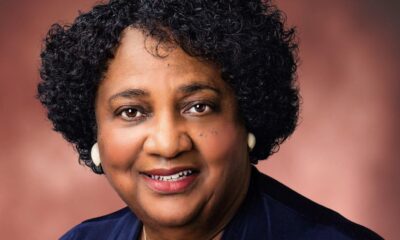
Secretary of State Shirley Weber Pushes Back Against DOJ Demands Over California Voter Rolls
-

 Black Press7 days ago
OP-ED: For Us It’s Feel-a-Nomics
-

 Featured1 week ago
BLACK MEN VOTE: Mobilizing 100,000 Black Men Ahead of the Midterms 📱
-

 Art2 days ago
Capturing Black Life’s Beauty
